Bengal Cat Size & Growth: How Big Do They Really Get?
Bengal cats grow to 8-15 pounds as adults, with males significantly larger than females. A month-by-month growth chart and what affects final size.

Petful is reader supported. As an affiliate of platforms like Amazon and Chewy, we may earn a commission when you buy through links on this page. There is no extra cost to you.
- 1Adult Bengal cats weigh 8-15 pounds on average, with males typically 20-40% larger than females.
- 2Bengals are medium-to-large cats, not giants. If you want a huge cat, look at Maine Coon or Savannah.
- 3Full adult size is reached between 18 and 24 months; Bengals grow longer than most breeds.
- 4Body length runs 13-16 inches plus 12-17 inches of tail. They look bigger than they weigh.
- 5Generation matters: F1 and F2 Bengals often run larger (12-20 lbs) due to closer wild ancestry.
"How big do Bengal cats get?" is one of the most asked breed questions. The short answer: not as big as the internet pictures make them look. Bengal cat size is medium to large, athletic and muscular rather than chunky or oversized. This guide walks through weight, length, growth timeline, male vs female differences, and what affects final size.
- Bengal cat size lands in the medium-to-large range for domestic cats. Adult males typically weigh 10 to 18 pounds and stand 10 to 12 inches at the shoulder, with body length of 15 to 18 inches excluding the tail. Adult females are smaller, weighing 8 to 12 pounds with heights of 9 to 11 inches at the shoulder. Bengal cat size is misleading because their dense muscle makes them feel heavier than they look, and they continue filling out until 18 months to 2 years old, with some males reaching peak size at 3 years. The Wikipedia Bengal article lists males reaching up to 15 kilograms (33 pounds) in rare cases, though that is far outside the typical Bengal cat size range. Females stay leaner and more athletic across their lifespan.
Bengal cat size is one of the most-searched breed questions. For the full breed profile, see our complete Bengal cat breed guide. Larger Bengals require more food and bigger setup gear, which directly affects budget, see our Bengal cat price and cost breakdown. And for new owners tracking growth milestones, our Bengal kitten care guide maps the first 12 months month-by-month.

Sign up for expert-backed reviews and safety alerts all in one place.
What Is the Adult Bengal Cat Size Range?

63-inch multi-level cat tree with scratch posts, hammock, plush perches, and dangling toys. Vertical territory is non-negotiable for high-energy climbing breeds like the Bengal.
Petful may earn a commission when you click through to Chewy, at no extra cost to you.
| Measurement | Female | Male |
|---|---|---|
| Weight | 8-12 lbs | 10-15 lbs |
| Body length | 13-15 inches | 14-16 inches |
| Tail length | 12-15 inches | 13-17 inches |
| Height at shoulder | 10-12 inches | 11-14 inches |
| Age at full size | 18-22 months | 22-26 months |
Bengals are longer and leaner than typical domestic cats. They are built for athletic movement: deep chest, long body, muscular hindquarters, and a proportionally long tail. At 12 pounds, a Bengal looks larger than a 12-pound domestic shorthair because the body is more elongated.

How Does Bengal Cat Size Develop from Kitten to Adult?
| Age | Weight (Female) | Weight (Male) | Milestones |
|---|---|---|---|
| Birth | 3-4 oz | 3.5-4.5 oz | Born in litter of 3-5 |
| 4 weeks | 1 lb | 1.2 lbs | Starting solids, still nursing |
| 8 weeks | 2 lbs | 2.3 lbs | Fully weaned, first vaccines |
| 12 weeks | 3 lbs | 3.5 lbs | Ready to go to new home |
| 6 months | 5-6 lbs | 6-7 lbs | Spay/neuter age |
| 12 months | 7-9 lbs | 8-11 lbs | Transition to adult food |
| 18 months | 8-11 lbs | 9-13 lbs | Approaching full size |
| 2 years | 8-12 lbs | 10-14 lbs | Full adult size (females) |
| 2.5 years | 8-12 lbs | 10-15 lbs | Full adult size (males) |
- These are averages. A small-framed Bengal might peak at 7 pounds; a large-framed male could reach 16 or 17. If your Bengal seems small or large compared to the chart, that's usually genetics, not a health issue.
What Affects Bengal Cat Size
Bengal cat size data is documented by several authority sources. The ASPCA Pet Insurance Bengal cat facts page puts the typical range at 8 to 15 pounds and 13 to 16 inches tall, while Daily Paws' Bengal breed profile gives pet height as 8 to 10 inches. The Wikipedia Bengal cat entry notes males can reach 15 kg fully mature in exceptional cases.
Genetics and lineage
The biggest factor in Bengal size is the parents' size. Two small parents produce small kittens; two large parents produce large kittens. Show-bred lines often run slightly larger than pet-line Bengals. Check the parents' adult weights when you view a litter.

108-oz stainless steel pet fountain with quiet pump and water-level window. Bengals are notoriously water-obsessed; a flowing fountain encourages hydration and pulls them away from sinks and toilets.
Petful may earn a commission when you click through to Chewy, at no extra cost to you.
Generation (F1 through F5)
Earlier Bengal generations run larger because they retain more Asian Leopard Cat body structure. F1 Bengals often reach 12-20 pounds. F2s average 10-15 pounds. By F4 and F5 (the typical pet Bengal), size settles into the 8-15 pound range. For more on the generational differences, see our F1 through F5 Bengal generation guide.
Sex
Male Bengals are consistently 20-40% larger than females. Neutered males are slightly smaller than intact males but still larger than females. If you want a larger Bengal, pick a male.
Nutrition in kittenhood
Underfed or poorly-fed kittens grow smaller than their genetic potential. Well-fed, properly-nourished kittens reach the upper end of the expected range. Bengal kittens need a high-protein, meat-first kitten food until 12 months.
Spay/neuter timing
Early spay/neuter (before 4 months) is associated with slightly longer adult body length because growth plates stay open longer. The effect is modest (often less than half an inch) and does not change welfare or health outcomes. Standard 4-6 month spay/neuter is completely fine.
How Does Bengal Cat Size Compare to Other Breeds?
Bengal cat size varies more than most domestic breeds because of the breed's foundation lineage. Early-generation Bengals (F1, F2) inherit more wild Asian Leopard Cat traits and often run larger; fourth-generation SBT Bengals settle into a more predictable Bengal cat size range. If you're comparing breeds for a specific home setup, knowing the Bengal cat size at 12 months matters as much as the adult target weight, because most growth happens in that first year.
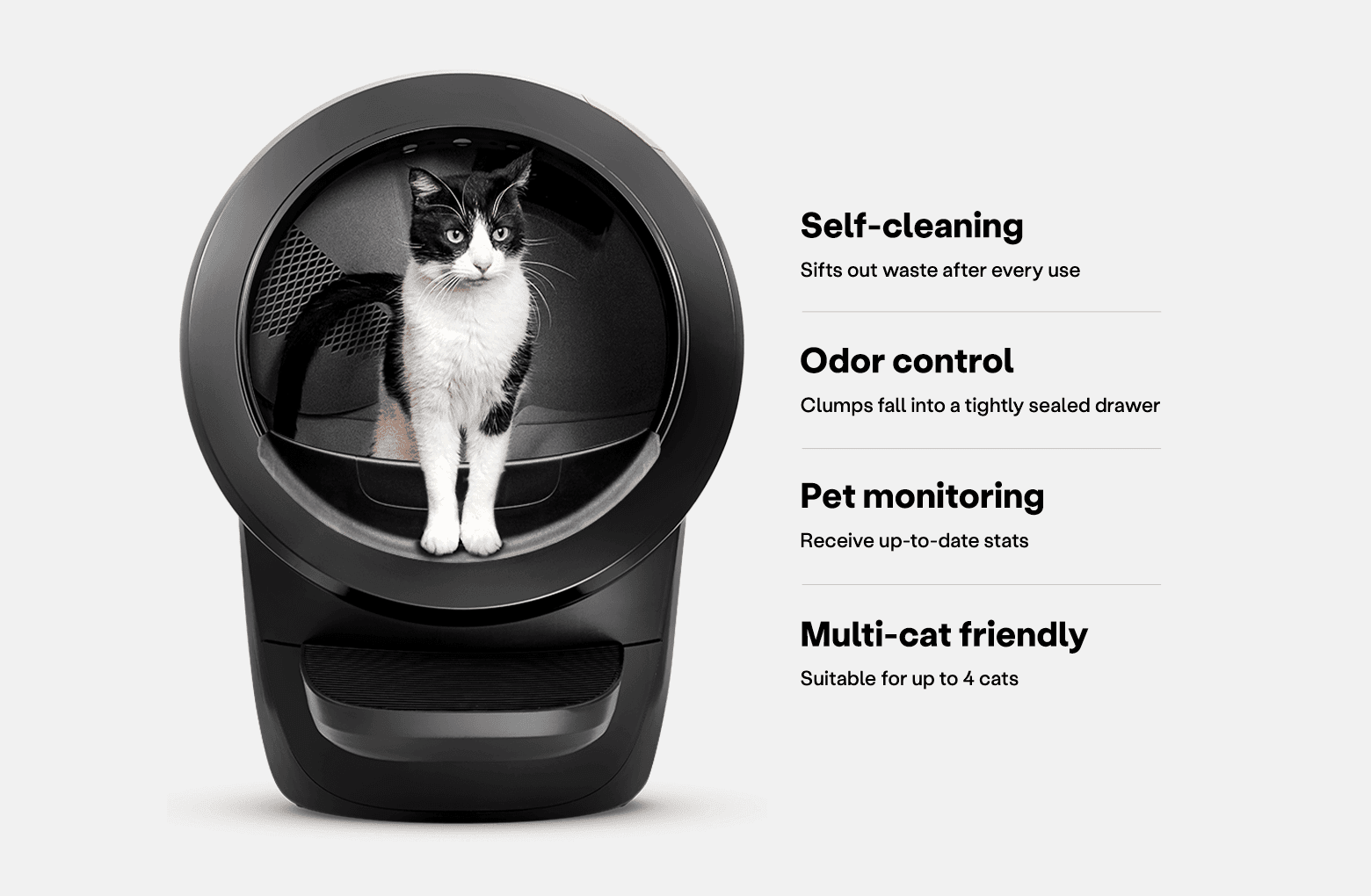
The proven Litter-Robot trusted by 1.8M+ households, with real-time litter and waste tracking in the Whisker app. The established pick if you want Litter-Robot reliability for less.
Petful may earn a commission when you click through to Whisker, at no extra cost to you.
| Breed | Weight (lbs) | Typical Build |
|---|---|---|
| Domestic Shorthair (average) | 8-10 | Compact, medium |
| Bengal | 8-15 | Long, athletic, lean muscular |
| Maine Coon | 10-25 | Very large, dense coat makes them look bigger |
| Savannah (F1-F4) | 12-25+ | Tall, long-legged |
| Ragdoll | 10-20 | Large, long, relaxed body |
| Siamese | 5-10 | Small, slender |
| British Shorthair | 9-18 | Compact, very dense build |
- Don't plan for a Bengal the way you would a dainty lap cat. A 13-pound Bengal with a 15-inch body and long tail needs serious vertical space, a tall cat tree, and plenty of room to run. Apartments can work but require thoughtful setup.
Is Your Bengal Cat Size Too Big or Too Small?

Feathered teaser wand with catnip-stuffed bird. Pairs perfectly with the no-bite training policy: redirect Bengal play drive into a 10-minute interactive session with the wand.
Petful may earn a commission when you click through to Chewy, at no extra cost to you.
Body condition matters more than weight. A healthy Bengal has:
- Visible but not prominent ribs when you run a hand along the side.
- A visible waist when looking down from above.
- A slight belly tuck visible from the side.
- No fat pads on the lower back or base of the tail.
If your Bengal does not fit this profile, discuss with your vet. Obesity is common in indoor Bengals who don't get enough exercise, and it dramatically increases the risk of diabetes, joint problems, and early death.
In real-world terms, a 12-pound adult Bengal is roughly the length of a small to medium beagle but with a much leaner build. The athletic body composition means Bengals look bigger than the scale suggests, especially in motion. Owners frequently report that visitors are surprised the cat is only 12 pounds because the long body and confident posture create the impression of a larger animal. The high muscle mass also affects how Bengals move: they jump higher, run faster, and push off harder than typical domestic cats of equivalent weight. This is why a five-foot cat tree is the minimum recommended height for a Bengal household; many adult Bengals can clear that in a single jump from the floor. For more on how this athletic build shapes Bengal behavior and exercise needs, see our complete Bengal cat breed guide.
Bengal size has direct implications for daily care and household setup. The longer body needs a bigger litter box than standard breeds; aim for at least 18 inches long, with high sides for males who tend to spray. Cat carriers labeled for large cats or small dogs fit Bengals more comfortably than standard cat carriers, especially for vet visits. Cat trees should be sturdy enough to support a 15-pound cat leaping onto them at full speed; lightweight trees often tip over with adult Bengals. Harnesses fit best in the small-dog size range rather than typical cat sizes. None of this is expensive, but the gear that works for an 8-pound domestic shorthair often falls short for an athletic 12-pound Bengal. For broader insight into Bengal personality at full adult size, the bonding with a Bengal cat guide covers behavioral expectations once your cat reaches maturity.
Frequently Asked Questions
Adult Bengals weigh 8-15 pounds and measure 13-16 inches in body length plus 12-17 inches of tail. Males are larger than females, typically by 20-40%. Full adult size is reached around 18-26 months.
Slightly. Bengals average 10-12 pounds versus 8-10 for a typical domestic shorthair. The bigger difference is body shape: Bengals are longer and more muscular, so they look larger than weight alone suggests.
Yes. Male Bengals are consistently 20-40% heavier than females. Males average 10-15 pounds at maturity; females 8-12 pounds. Males also tend to be longer in body.
Females reach full size around 18-22 months. Males take longer, reaching full size around 22-26 months. Growth is fastest in the first 6 months and slows dramatically after the first year.
F1 Bengals (first-generation hybrids) can reach 20 pounds. The largest recorded pet-line Bengal was over 25 pounds, though obesity likely played a role. For genuinely large purebred cats, Maine Coons and Savannahs dwarf Bengals.
Look for a visible waist from above and a slight belly tuck from the side. Ribs should be palpable under light pressure but not visible. If you can't feel ribs or see a waist, the cat is likely overweight. Consult your vet for a body condition score assessment.
The Bottom Line
Bengals are medium-to-large athletic cats, not giants. They look larger than they weigh because of the long, lean body shape. Plan for 8-15 pounds of muscular, high-energy cat and size-appropriate climbing space. For the broader care context, see our complete Bengal cat breed guide, and for what to expect through the fast-growing kitten stage, our Bengal kitten care guide. Plan for an athletic, intelligent companion that needs more enrichment than typical cats but rewards the investment with personality and presence in equal measure. The right setup at home from day one prevents most behavior problems and makes the size feel manageable rather than overwhelming.

Coreen Saito is a pet writer and longtime shelter volunteer with more than a decade in animal rescue. She covers cat behavior, breed care, and the small, ordinary science of sharing a life with companion animals, with a particular focus on honest takes about the products and decisions that actually matter. At home in Arizona, she's outranked by Mac (a dog with the loudest opinion in the house), Rebel (a cat who governs by quiet authority), and Meri (an orange tabby who runs the late shift and the laundry basket). She writes about all three, plus the rescues that keep coming through her life, at LifeWithMinty.com.
Sign up for expert-backed reviews and safety alerts all in one place.