Bengal Cat Health Issues: HCM, PRA & PK Deficiency Explained
Three genetic conditions define Bengal cat health: hypertrophic cardiomyopathy (HCM), progressive retinal atrophy (PRA-b), and pyruvate kinase deficiency. A detailed breakdown.

Veterinarian · BVMS, MRCVS

Petful is reader supported. As an affiliate of platforms like Amazon and Chewy, we may earn a commission when you buy through links on this page. There is no extra cost to you.
- 1Three genetic conditions define Bengal health: HCM (heart), PRA-b (eyes), and PK Deficiency (anemia).
- 2All three are DNA-testable. Reputable breeders screen both parents before breeding.
- 3HCM is the leading cause of premature death in Bengals. Annual cardiac ultrasounds after age 2 are strongly recommended.
- 4PRA-b and PK Def are inherited as simple recessive. Two-carrier pairings produce affected kittens; testing prevents them.
- 5Beyond genetics, Bengals face the same common cat conditions: dental disease, IBD, FLUTD, obesity.
Bengals are generally healthy, but the breed carries three well-documented hereditary conditions. Understanding Bengal cat health issues before buying means walking away from breeders who skip genetic testing, and scheduling the right preventative care for the cat you bring home. This guide covers the three breed-specific issues plus the general cat conditions every Bengal owner should know.
- Bengal cat health issues fall into three main categories: hereditary conditions, gastrointestinal sensitivities, and breed-prone disorders. The most serious hereditary Bengal cat health issues are Hypertrophic Cardiomyopathy (HCM, a thickening of the heart muscle), Progressive Retinal Atrophy variant b (PRA-b, a degenerative eye disease leading to blindness), and Pyruvate Kinase Deficiency (PK-Def, an inherited anemia). Common non-hereditary Bengal cat health issues include chronic gastrointestinal upset, inflammatory bowel disease, feline lower urinary tract disease (FLUTD), and a documented higher risk of intestinal lymphoma. The average Bengal lifespan is 12 to 16 years when these conditions are managed proactively. Reputable breeders screen breeding parents for HCM annually and DNA-test for PRA-b and PK-Def before mating.
Bengal cat health issues are real but mostly manageable when you start with the right kitten. The pillar complete Bengal cat breed guide covers temperament and lifespan baselines, our reputable Bengal cat breeders guide details the three genetic tests (HCM, PRA-b, PK-Def) every reputable breeder runs, and our Bengal kitten care guide walks through preventive care month-by-month.

Sign up for expert-backed reviews and safety alerts all in one place.
What Are the Three Major Bengal Cat Health Issues from Genetics?

63-inch multi-level cat tree with scratch posts, hammock, plush perches, and dangling toys. Vertical territory is non-negotiable for high-energy climbing breeds like the Bengal.
Petful may earn a commission when you click through to Chewy, at no extra cost to you.
1. Hypertrophic Cardiomyopathy (HCM)
HCM is the thickening of the heart's left ventricle muscle, which reduces the heart's ability to pump blood efficiently. It is the most common cardiac disease in cats overall, and Bengals show it at higher-than-average rates. Symptoms often do not appear until the disease is advanced: labored breathing, lethargy, sudden collapse, or sudden death. Early-stage HCM produces no outward signs.
HCM in Bengals is complex. Unlike PRA-b and PK Def (simple recessive conditions with clean DNA tests), HCM is polygenic and has no fully predictive DNA test. A Ragdoll-specific and Maine Coon-specific HCM gene have been identified, but the Bengal-specific gene has not. Screening relies on annual cardiac ultrasounds (echocardiograms) by a board-certified veterinary cardiologist.
- A proper HCM screen is an echocardiogram by a cardiologist, not a standard auscultation (stethoscope listening) by a general-practice vet. Ask your breeder: "Can I see the most recent cardiologist ultrasound report on both parents?" Annual rescreens matter because HCM can develop over time.

 Sponsored
Have a health question about your cat?
Talk to a licensed vet at Dutch over video or message, including nights and weekends.
Use code Pets60
Plans start at $12/month · covers up to 5 pets
- Licensed vets in most states
- Rx for 150+ conditions
- 4.7 on Trustpilot
2. Progressive Retinal Atrophy, Bengal Type (PRA-b)
PRA-b is a genetic eye disorder specific to Bengals. Affected cats lose their retinal photoreceptor cells starting as early as 7 weeks of age, with rapid progression to substantial vision loss by about 1 to 2 years of age. PRA-b is inherited as a simple autosomal recessive: a kitten needs two copies of the mutated gene (one from each parent) to develop the disease.
The good news: PRA-b has a clean DNA test offered by UC Davis VGL and Wisdom Panel. Testing parents before breeding is the gold standard. A Bengal kitten whose parents are both clear (N/N) or one clear and one carrier (N/PRA-b) will not develop the disease. Only two-carrier pairings (N/PRA-b × N/PRA-b) or affected-parent pairings produce affected kittens.
3. Pyruvate Kinase Deficiency (PK Def)
PK Deficiency is a red blood cell enzyme disorder. Affected cats cannot produce enough pyruvate kinase, which is essential for red blood cell energy metabolism. The result is intermittent hemolytic anemia: lethargy, pale gums, jaundice, and weight loss. PK Def can be managed but not cured.
Like PRA-b, PK Def is a simple autosomal recessive with a clean DNA test. Breeding strategy is identical: test both parents, avoid two-carrier pairings, and kittens from a clear-by-pedigree line should test N/N without testing.

108-oz stainless steel pet fountain with quiet pump and water-level window. Bengals are notoriously water-obsessed; a flowing fountain encourages hydration and pulls them away from sinks and toilets.
Petful may earn a commission when you click through to Chewy, at no extra cost to you.
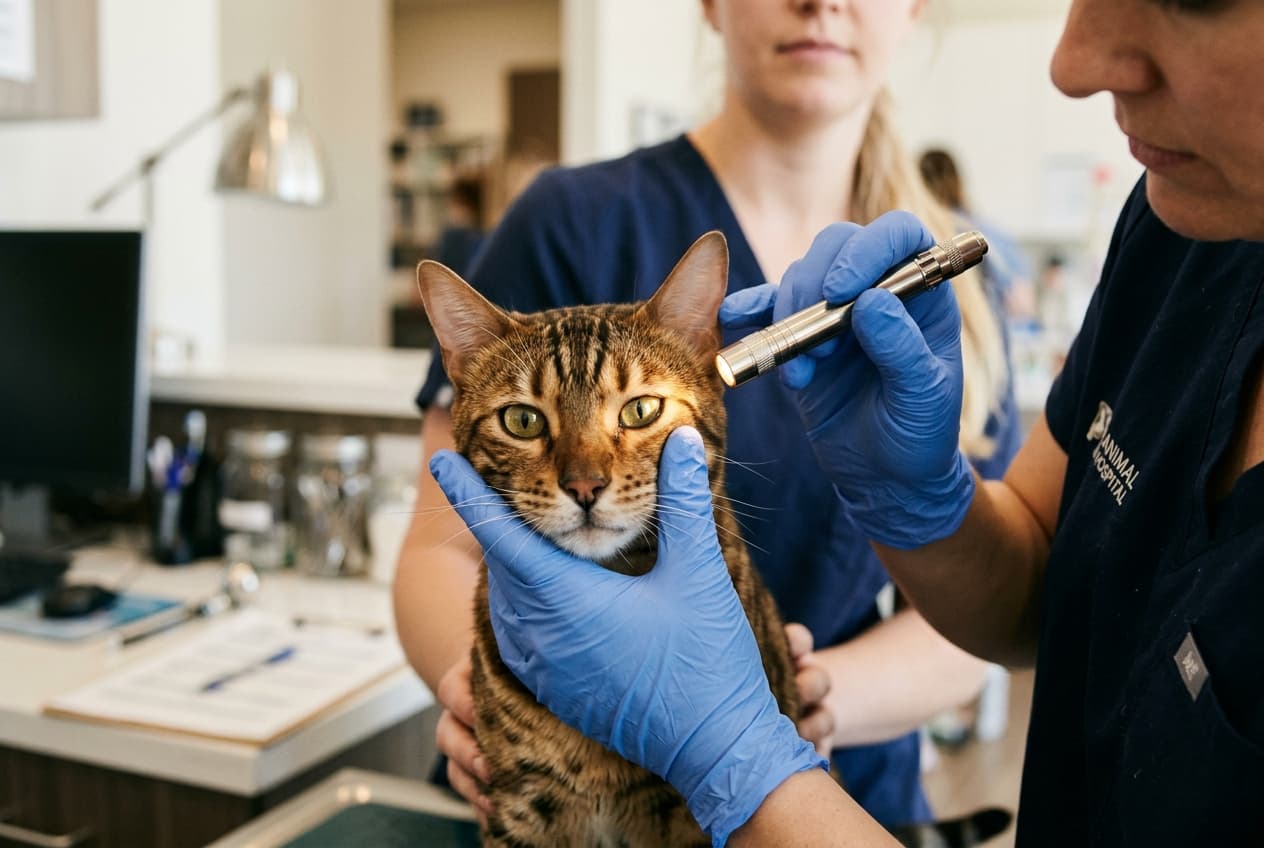
What Do Reputable Breeders Do About Bengal Cat Health Issues?
Every Bengal breeder worth buying from will provide written documentation of:
- Annual echocardiogram reports on both parents (HCM screening)
- DNA test results for PRA-b and PK Def on both parents
- Routine FIV and FeLV testing
- A written health guarantee, typically 1 to 2 years, covering genetic conditions
- Current vaccinations (FVRCP, rabies) and deworming records
If a breeder cannot produce those documents, walk away. Our reputable Bengal cat breeder guide covers the full vetting process in detail.
SponsoredVet care that's always there
Unlimited video calls and messaging with licensed vets for less than a typical vet visit. One membership covers up to five pets.
Use code Pets60
Plans start at $12/month · covers up to 5 pets
- Licensed vets in most states
- Rx for 150+ conditions
- 4.7 on Trustpilot
What Other Common Bengal Cat Health Issues Exist?
Bengal cat health issues are documented by veterinary authorities and peer-reviewed research. The PetMD Bengal Cat Breed Health and Care page lists the major hereditary risks and lifespan. The 2021 peer-reviewed study Behavior and health issues in Bengal cats as perceived by their owners published in ScienceDirect provides a research-grade catalogue of Bengal-specific health risks including flat-chested kitten syndrome. The National Library of Medicine (PubMed) Bengal health research index is the gold-standard for breed-specific health literature.
| Condition | Details | Prevention / Management |
|---|---|---|
| Inflammatory Bowel Disease (IBD) | Bengals are prone to food sensitivities | Novel protein diets, limited ingredients, wet or raw food |
| FLUTD / urinary issues | Common in all cats; worse with dry-only diets | Wet food, multiple water stations, regular litter box checks |
| Dental disease | Gingivitis and tooth resorption | Annual dental checks, dental treats, brushing |
| Obesity | Overfeeding + apartment living | Measured feeding, puzzle feeders, active play |
| Flat-chested kitten syndrome | Rare congenital deformity in newborn kittens | Responsible breeders monitor and treat early |
How to Prevent Bengal Cat Health Issues with Care Scheduling
When evaluating Bengal cat health issues for a prospective kitten, demand documented HCM screening from the breeder for both parents within the last 12 months. HCM is the leading cause of sudden death in Bengal cats and is the single most preventable item in the Bengal cat health issues category. PRA-b and PK-Def are DNA-tested once per cat and are non-negotiable for any reputable breeder. The cumulative Bengal cat health issues risk drops dramatically when these three tests are run.

Feathered teaser wand with catnip-stuffed bird. Pairs perfectly with the no-bite training policy: redirect Bengal play drive into a 10-minute interactive session with the wand.
Petful may earn a commission when you click through to Chewy, at no extra cost to you.
| Age | Recommended Care |
|---|---|
| 8-16 weeks | Kitten vaccines (FVRCP series), deworming, first vet visit, initial weight check |
| 4-6 months | Spay/neuter, rabies vaccine, second-dose kitten boosters, microchip if not done |
| 6-12 months | Dental baseline check, first full wellness exam |
| 1-2 years | Annual wellness, booster vaccines, start cardiac auscultation |
| Age 2+ | Annual cardiologist echocardiogram (HCM screen) recommended |
| Age 7+ | Senior bloodwork panel, kidney monitoring, urinalysis |
| Age 10+ | Semi-annual exams, full senior panel yearly |
- HCM often develops after sexual maturity. Kitten-age cardiac exams are clean in most affected Bengals. Screening starts at age 2 and continues annually for life. Insurance may not cover the ultrasound, but catching HCM early extends lifespan by years.
HCM echocardiograms, PRA-b and PK Def DNA test results, vaccine records, and insurance claims. Store everything in a single pet record so your vet always has the full picture.
Create a free pet recordHow Do Bengal Cat Health Issues Affect Lifespan?
Healthy Bengals typically live 12 to 16 years, with well-cared-for indoor Bengals often reaching 18 or 20. The biggest lifespan-shortener is undetected HCM. The second is obesity. Keep up with annual exams, feed a high-protein meat-first diet, and schedule cardiology screens from age 2 onward to hit the upper end of the range.
Beyond the three breed-specific genetic conditions, Bengals share most general feline health risks with other domestic cats. Routine concerns include dental disease (which affects an estimated 70 percent of cats by age 3), upper respiratory infections (especially in multi-cat households or after stressful events), parasite exposure if any outdoor access is allowed, and the gradual kidney function decline common in cats over age 10. Bengals are also prone to inflammatory bowel disease at higher rates than the general feline population, often presenting as chronic vomiting, weight loss, or diarrhea. A novel-protein diet (rabbit, venison, or duck), digestive supplements, and ruling out food sensitivities through elimination diets are first-line interventions. If your Bengal develops chronic gastrointestinal symptoms, a vet workup typically includes bloodwork, fecal analysis, and sometimes ultrasound or biopsy. For broader context on the health issues affecting cats of all breeds, see our comprehensive guide to common cat diseases, and for general Bengal care planning, our complete Bengal cat breed guide covers daily routines that support long-term health.
Frequently Asked Questions
Three genetic conditions define Bengal health: hypertrophic cardiomyopathy (HCM), progressive retinal atrophy Bengal type (PRA-b), and pyruvate kinase deficiency (PK Def). Bengals are also prone to IBD, dental disease, and FLUTD.
HCM often shows no symptoms until advanced. Annual echocardiograms by a veterinary cardiologist starting at age 2 are the only reliable way to detect HCM early. Symptoms in advanced cases include labored breathing, sudden collapse, and lethargy.
Yes. Healthy Bengals live 12 to 16 years on average, with some reaching 18 to 20 in excellent conditions. Regular vet care, proper diet, and early HCM screening significantly extend lifespan.
At minimum: PRA-b (progressive retinal atrophy, Bengal type) and PK Def (pyruvate kinase deficiency). Both are simple recessive conditions with clean DNA tests offered by UC Davis VGL and Wisdom Panel. HCM does not yet have a Bengal-specific DNA test, so it requires annual echocardiogram screening.
Strongly recommended. HCM treatment alone can cost $3,000 to $8,000 in year-one cardiologist visits and medications. Insurance premiums of $300 to $700 per year typically pay for themselves in a single major claim.
A high-protein, meat-first diet is strongly preferred. Many Bengals have food sensitivities, so novel proteins and limited ingredient diets are common. Wet or raw food is generally better than dry kibble due to urinary tract and hydration concerns.
The Bottom Line
Bengal health is mostly in your hands. Buy from a breeder who tests and documents. Schedule annual cardiac screens from age 2. Keep a record of every lab result so your vet can spot trends. For broader care context, see our complete Bengal cat breed guide, and for the financial planning side, our Bengal cat price and lifetime cost guide covers insurance and medical budgeting in detail. Routine care, regular cardiac screening, and the right insurance plan together keep Bengal health predictable instead of catastrophic over the cat's full lifespan.

Coreen Saito is a pet writer and longtime shelter volunteer with more than a decade in animal rescue. She covers cat behavior, breed care, and the small, ordinary science of sharing a life with companion animals, with a particular focus on honest takes about the products and decisions that actually matter. At home in Arizona, she's outranked by Mac (a dog with the loudest opinion in the house), Rebel (a cat who governs by quiet authority), and Meri (an orange tabby who runs the late shift and the laundry basket). She writes about all three, plus the rescues that keep coming through her life, at LifeWithMinty.com.
Veterinarian · BVMS, MRCVS
Dr. Pippa Elliott, BVMS, MRCVS, is a veterinarian with nearly 30 years of experience in companion animal practice. Dr. Elliott earned her Bachelor of Veterinary Medicine and Surgery from the University of Glasgow. She was also designated a Member of the Royal College of Veterinary Surgeons. Married with 2 grown-up kids, Dr. Elliott has a naughty Puggle named Poggle, 3 cats and a bearded dragon.
Sign up for expert-backed reviews and safety alerts all in one place.