Selkirk Rex Cat: Personality, Price & Care Guide
The Selkirk Rex is the curly-coated 'cat in sheep's clothing': a plush, mellow, teddy-bear breed. Here is the full guide to its personality, shorthair and longhair coats, colors, shedding, health, lifespan and kitten price.

Veterinarian · BVMS, MRCVS

Petful is reader supported. As an affiliate of platforms like Amazon and Chewy, we may earn a commission when you buy through links on this page. There is no extra cost to you.
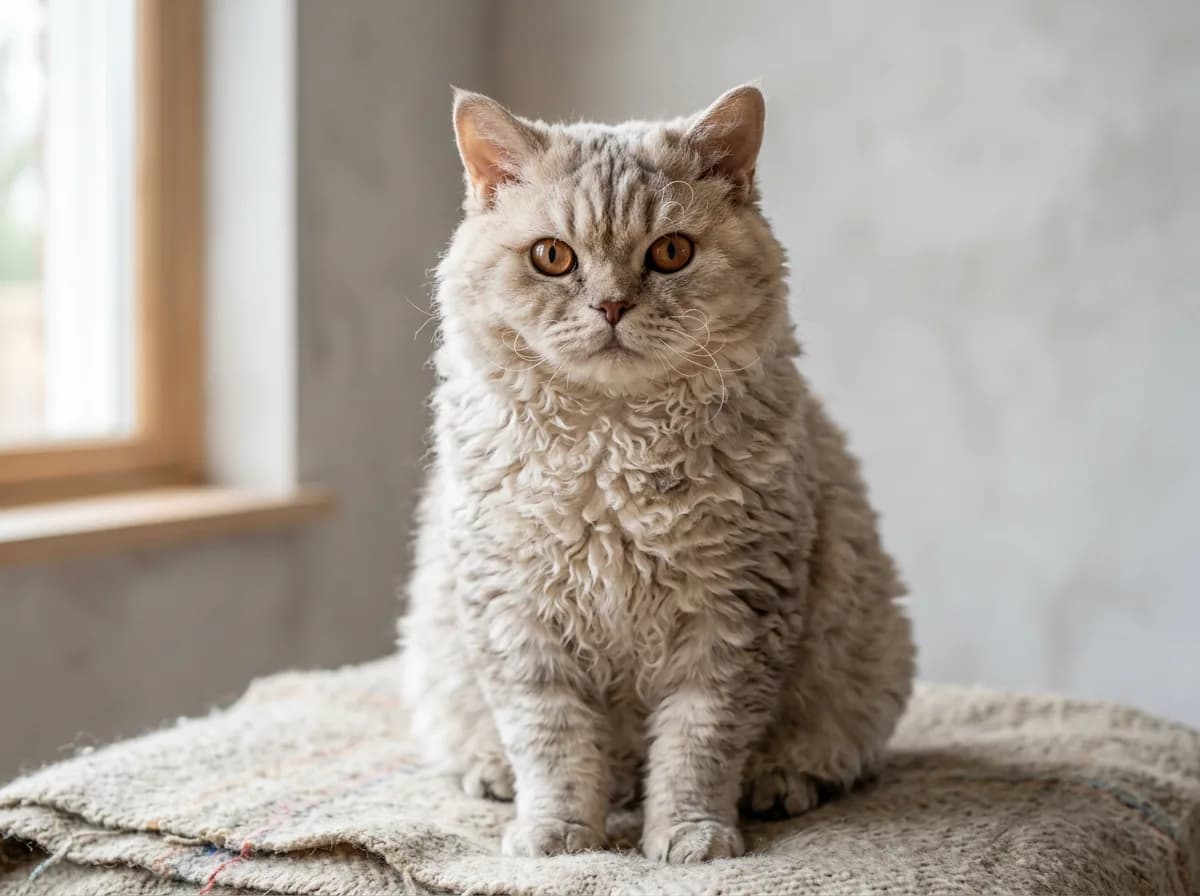
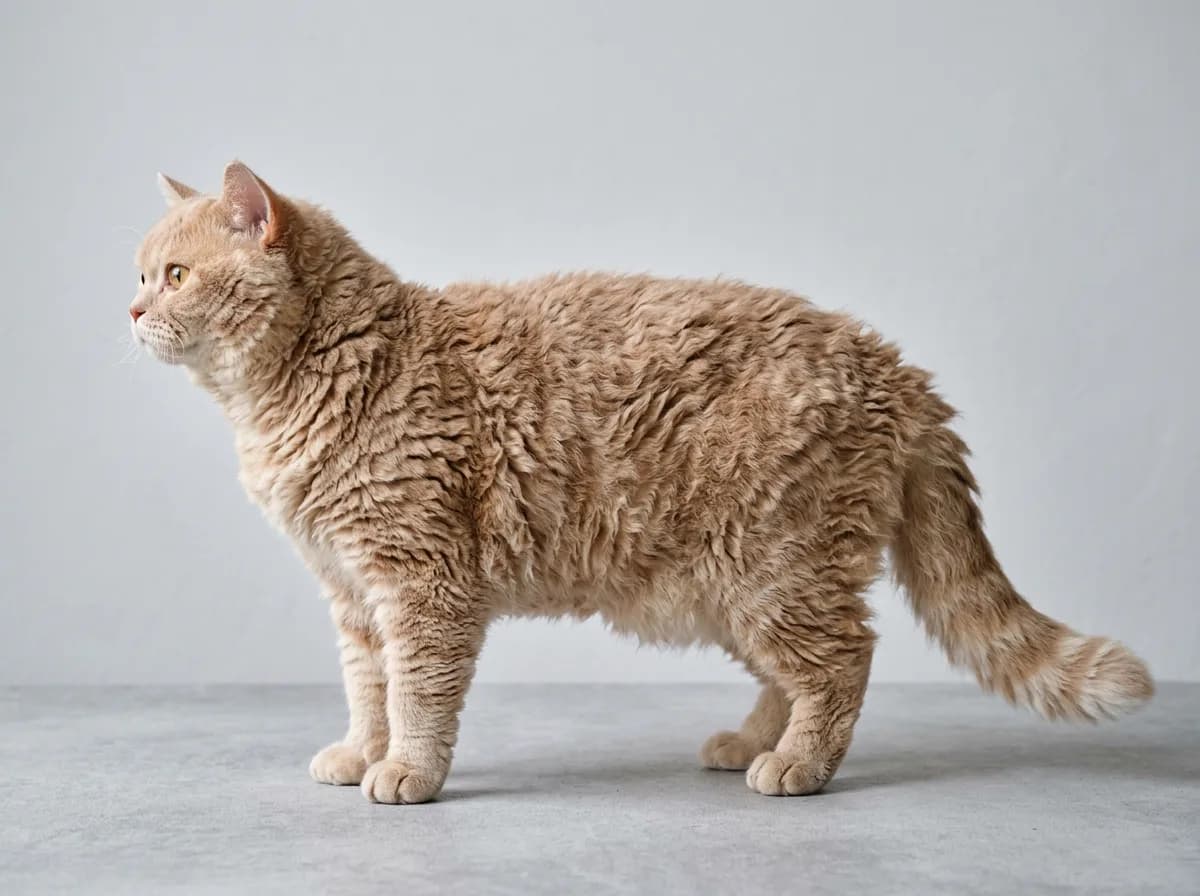
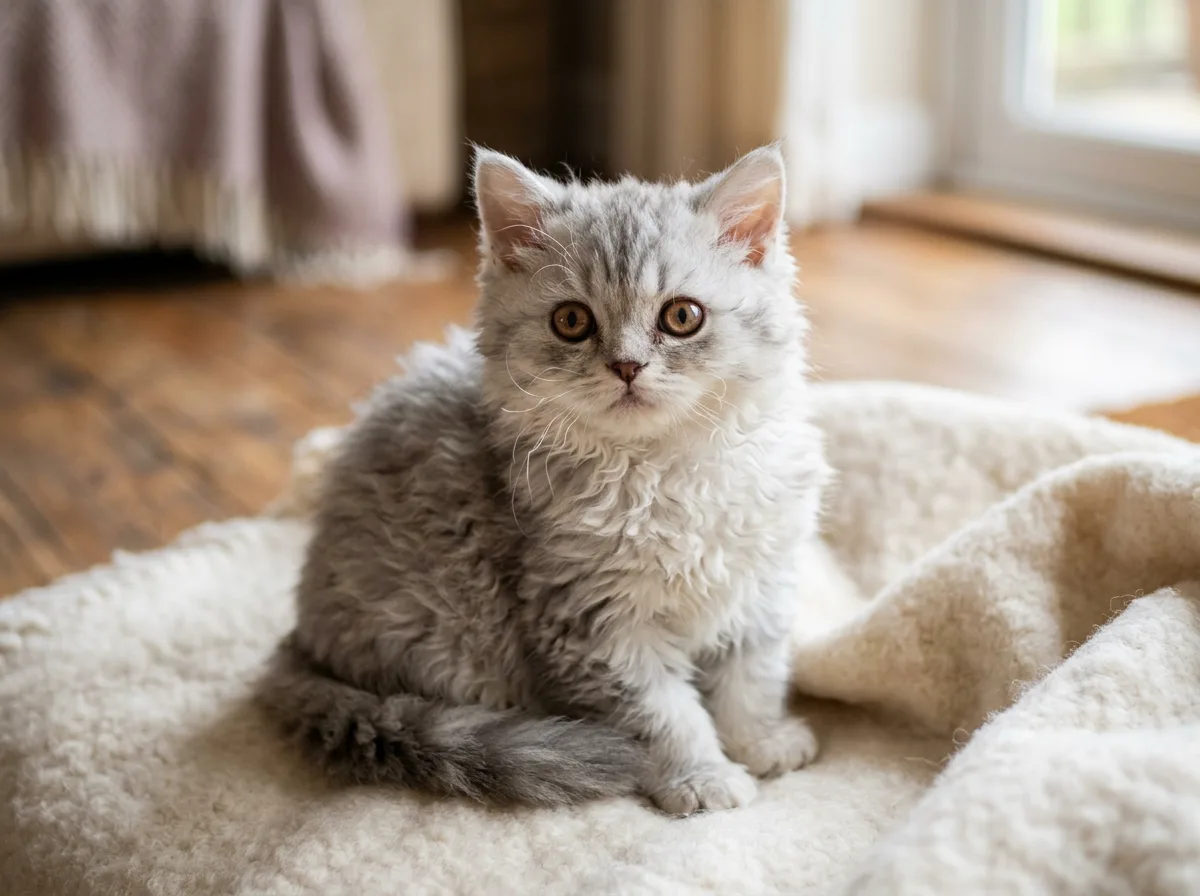
The Selkirk Rex cat is a stocky, plush-coated breed instantly recognized by its dense, woolly curls, the trait that earned it the nickname "the cat in sheep's clothing." Curly from the soft baby fur right down to the crimped whiskers, the Selkirk Rex pairs a teddy-bear look with a famously easygoing, patient and affectionate personality. Developed in Montana in 1987, it is one of only a handful of natural curly-coated breeds, and unlike the lean Cornish and Devon Rex, it is a heavy-boned, muscular cat that feels as solid as it looks soft.
This guide covers everything you need to decide whether a Selkirk Rex is right for you: temperament, the shorthair and longhair coat varieties, colors, whether they are hypoallergenic (they are not), shedding and grooming, genetic health screening, lifespan, what a kitten costs, and how the breed stacks up against the other Rex cats. Everything below is grounded in breed-registry standards and reviewed by our veterinary team.
- 1The Selkirk Rex is the only Rex breed with a thick, plush, woolly coat; the Cornish and Devon Rex are thin and short-haired.
- 2Curly whiskers present at birth are the breed's signature, and the coat comes in both a shorthair and a longhair variety.
- 3They are NOT hypoallergenic; the dense triple-layer coat and normal Fel d1 levels mean allergy sufferers can still react.
- 4Lifespan is 10 to 15 years; responsible breeders screen for PKD, HCM and hip dysplasia.
- 5Expect to pay roughly $800 to $2,500 for a kitten from a reputable breeder, plus ongoing curly-coat grooming.

Sign up for expert-backed reviews and safety alerts all in one place.
Selkirk Rex at a Glance
Before we get into the details, here is the quick-reference breed profile. The Selkirk Rex is a medium-to-large cat with surprising heft for its size, thanks to a heavy, muscular frame under all that curl.
| Trait | Detail |
|---|---|
| Weight | 9 to 16 lb (males larger than females) |
| Height | 9 to 11 inches at the shoulder |
| Lifespan | 10 to 15 years |
| Coat | Curly and plush; shorthair or longhair varieties |
| Colors | All colors and patterns, including solids, tabby, tortoiseshell and pointed |
| Temperament | Calm, patient, affectionate, people-oriented |
| Hypoallergenic | No |
| Shedding | Moderate; heavier in spring and summer |
| Origin | Montana, United States, 1987 |
| Good with | Children, dogs, other cats, first-time owners |
- A Selkirk Rex is a curly-coated cat breed that originated in Montana in 1987 from a single naturally curly kitten. It has a dense, plush, woolly coat in either a short or long length, a stocky muscular body, a rounded head with full cheeks, large round eyes and distinctive curly whiskers. Calm and affectionate by nature, it is often described as a living teddy bear. It is one of the few cat breeds whose curl is caused by a dominant gene, so only one curly parent is needed to produce curly kittens.
History and Origin
The Selkirk Rex traces back to a single curly kitten born in 1987 in Montana, in a litter at an animal shelter. A Persian breeder named Jeri Newman took the unusual curly-coated female and named her Miss DePesto (often shortened to "Pest"). When Newman bred Miss DePesto to a black Persian cat, three of the six kittens were born curly, which proved the curl was carried by a dominant gene, unlike the recessive curl of the Cornish and Devon Rex.
Newman named the breed after her stepfather, Selkirk, making the Selkirk Rex the only cat breed named after a real person. To build a healthy gene pool, early breeders outcrossed to Persians, Exotic Shorthairs, British Shorthairs and American Shorthairs, which is why the Selkirk Rex inherited its round face, sturdy bone and gentle temperament. The Cat Fanciers' Association (CFA) granted the breed full championship status in 2000, and The International Cat Association (TICA) recognizes it as well.
- Because the Selkirk Rex curl is dominant, breeders need only one curly parent to produce curly kittens, and a Selkirk Rex can carry a straight-coated (non-curly) variety too. This is the opposite of the Cornish and Devon Rex, whose curls are recessive and require two carrier parents. It is the single biggest genetic difference between the Selkirk and the other Rex breeds.
The Curly Coat: Shorthair vs Longhair
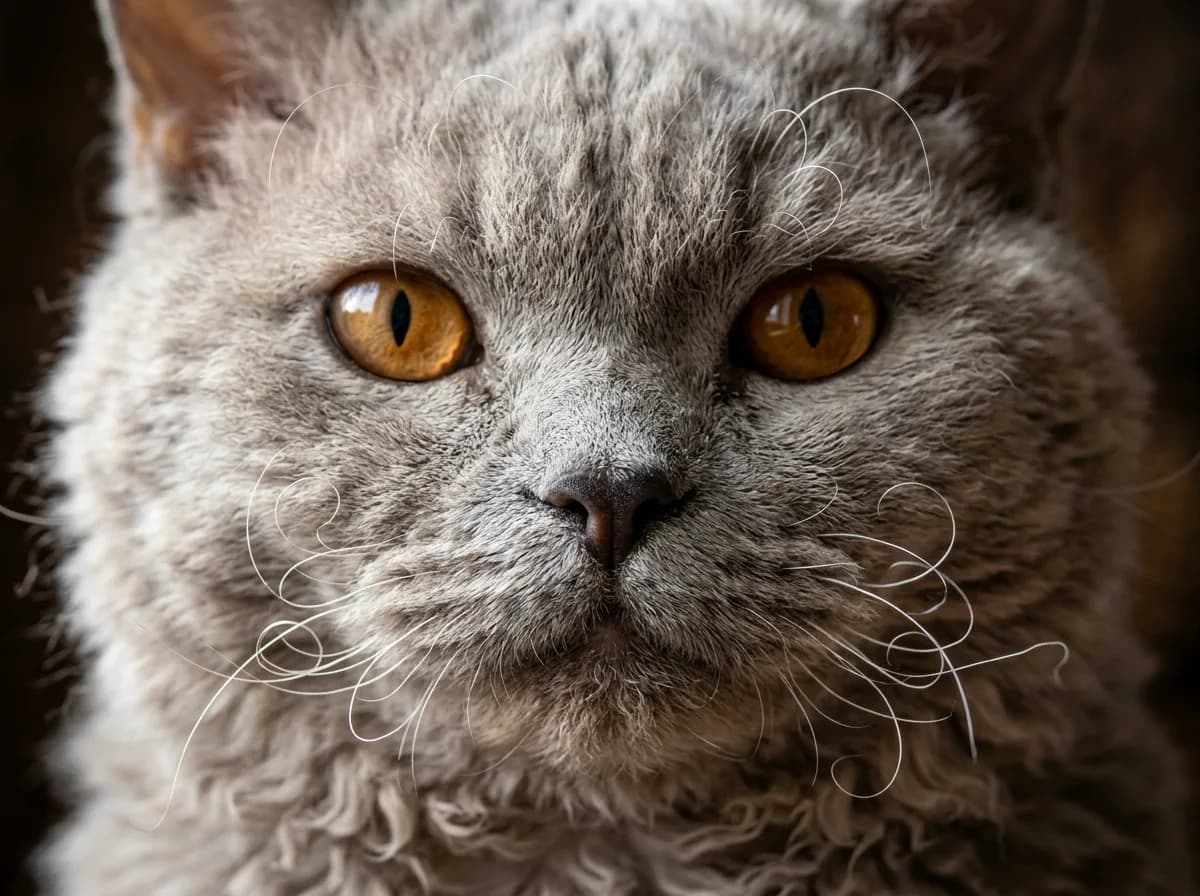
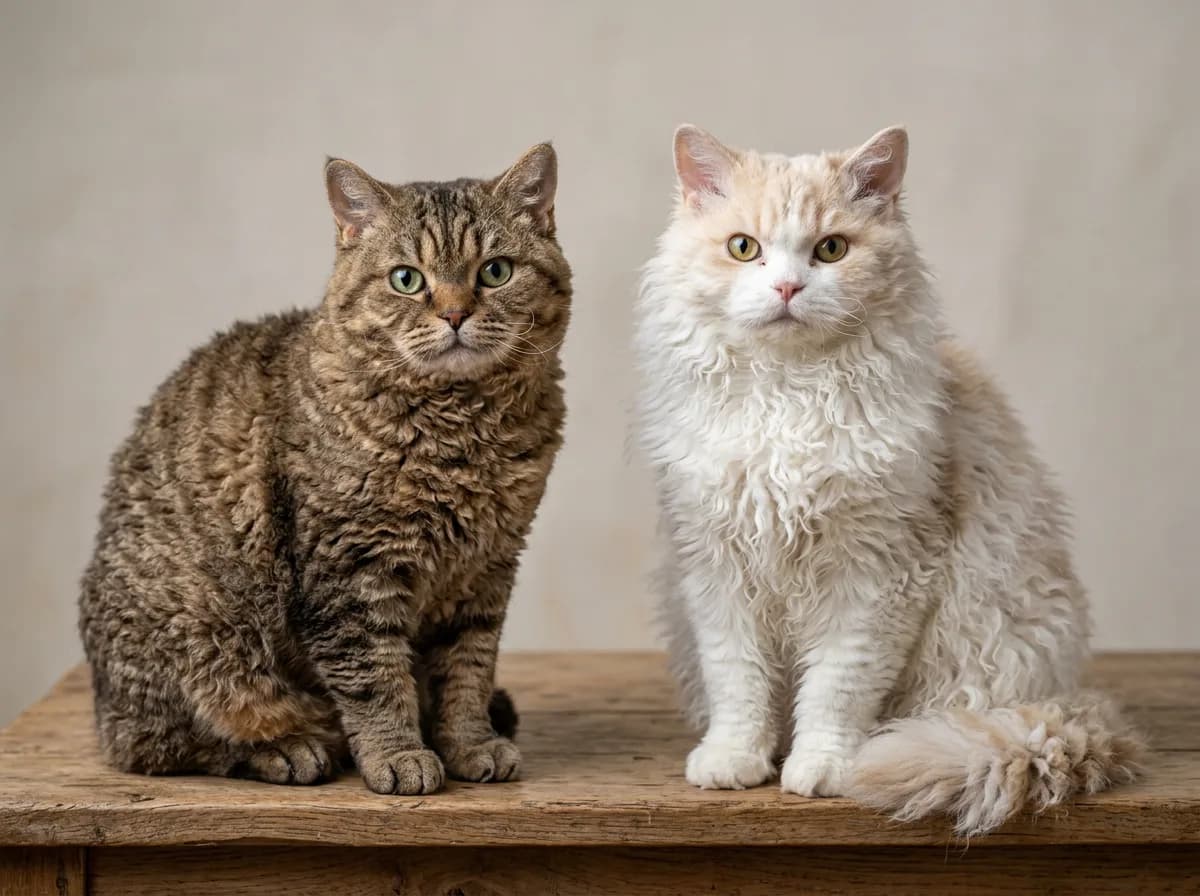
The curly coat is the whole point of the Selkirk Rex, and it comes in two lengths. Both varieties share the same soft, loose, unstructured curls that fall in random waves rather than the tight, uniform marcel waves of the Cornish Rex. The curl is most pronounced around the neck, belly and tail, and it loosens and tightens with the seasons and with the cat's age.
Color-changing crystal litter that flags pH shifts in your cat's urine, an early warning sign of UTIs, kidney issues, and more.
Petful may earn a commission when you click through to Chewy, at no extra cost to you.
Shorthair Selkirk Rex
The shorthair (or short-haired) Selkirk Rex has a dense, plush coat that sits close to the body and feels like crushed velvet or a teddy bear. The curl reads as a soft, all-over wave and is lower-maintenance than the longhair, needing only weekly combing to stay tidy.
Longhair Selkirk Rex
The longhair (or long-haired) Selkirk Rex carries longer fur that forms looser, more dramatic ringlets and corkscrew curls, especially in the ruff, belly and plumed tail. The longer coat is more prone to tangles, so it needs more frequent grooming to prevent a dull, matted coat. Kittens are sometimes born curly, go through a near-straight "awkward" phase as juveniles, then re-curl as they mature, which can make coat length hard to judge before about eight to ten months.
Underneath the curl, the Selkirk Rex has a true triple-layer coat (guard hairs, awn hairs and a soft down undercoat), all three of which are curly. This is unusual: the Cornish Rex has only the down undercoat, and the Devon Rex has a sparse, fragile coat. The Selkirk's full, dense coat is exactly why it sheds more than the other Rex breeds and why it is not hypoallergenic.
Colors and Patterns
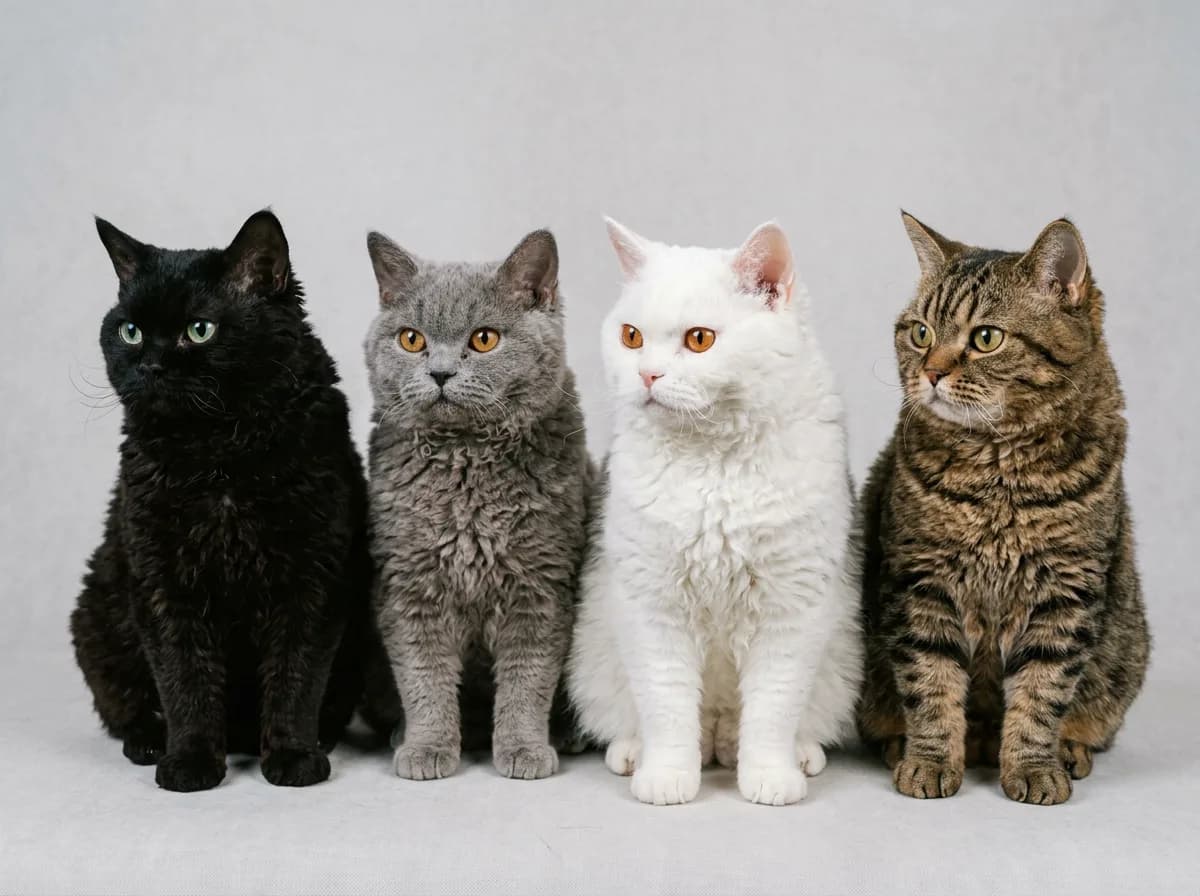
Because the Selkirk Rex was developed using several established breeds, it comes in essentially every color and pattern recognized in cats. The curl can make patterns look softer or more blended than they would on a straight-coated cat, but the underlying genetics are the same. Here are the most common color families you will see.

Petful may earn a commission when you click through to Chewy, at no extra cost to you.
| Color / Pattern | Description |
|---|---|
| Black | Solid dense black; curls can give a slightly brown-tipped look in sunlight |
| Blue (gray) | Soft blue-gray, one of the most sought-after Selkirk colors |
| White | Pure white, sometimes with odd or blue eyes |
| Cream and red | Warm cream through to deep red, often in tabby |
| Tabby | Classic, mackerel, spotted or ticked striping over any base color |
| Tortoiseshell and calico | Mottled or patched black and red, usually in females |
| Pointed (colorpoint) | Darker points on the face, ears, legs and tail, inherited from Persian and Himalayan lines |
No color is more or less healthy than another, so choose for personality and breeder quality first. Coat color has no bearing on the curl, lifespan or temperament.
Personality and Temperament
If the coat is what gets people in the door, the personality is what keeps them. The Selkirk Rex is famously patient, mellow and people-oriented, frequently compared to a "soft stuffed toy" not just for looks but for its laid-back nature. It inherited the calm of the Persian and British Shorthair and the cuddliness of the breeds in its background. Most Selkirk Rex love to be held, will follow their people from room to room, and are happy to learn how to pet a cat on your lap for hours.
They are sociable without being demanding, playful without being hyperactive, and tolerant enough to do well with children, dogs and other cats. That easygoing temperament, combined with a forgiving coat, makes the Selkirk Rex an excellent choice for first-time cat owners and for multi-pet households. They do form strong bonds and prefer company, so a Selkirk Rex left alone all day every day may get lonely; a companion pet or an enriched environment helps.
- Like most pedigree breeds, Selkirk Rex should be kept indoors. Their friendly, trusting nature and eye-catching curly coat make them a target for theft, and they lack the wariness of feral-descended cats. An indoor life with vertical space, scratching posts and interactive play keeps them safe and stimulated.
Are Selkirk Rex Cats Hypoallergenic?
No, Selkirk Rex cats are not hypoallergenic. This is one of the most common myths about curly-coated breeds, and it is worth being clear about before you commit. Cat allergies are not caused by fur length or curl; they are caused by a protein called Fel d1, which cats produce in their saliva and skin glands and spread across their coat when they groom. The Selkirk Rex produces Fel d1 at normal levels.
In fact, the Selkirk Rex is one of the least allergy-friendly Rex breeds, because it has a full, dense triple-layer coat that sheds and holds more dander than the sparse coats of the Cornish or Devon Rex. If you have a known cat allergy, spend extended time with an adult Selkirk Rex before bringing one home, and do not rely on the curl to protect you. No cat breed is truly hypoallergenic, though some individuals produce less Fel d1 than others.

108-oz stainless steel pet fountain with quiet pump and water-level window. Bengals are notoriously water-obsessed; a flowing fountain encourages hydration and pulls them away from sinks and toilets.
Petful may earn a commission when you click through to Chewy, at no extra cost to you.
Shedding and Grooming
Yes, Selkirk Rex cats shed. Because they carry a complete triple-layer coat rather than the partial coat of other Rex breeds, they shed a moderate amount year-round, with a heavier seasonal shed in spring and summer. Over-grooming or harsh brushing can actually damage and loosen the curl, so the goal with a Selkirk Rex is gentle, low-frequency grooming, not aggressive daily brushing.
How to groom a Selkirk Rex's curly coat
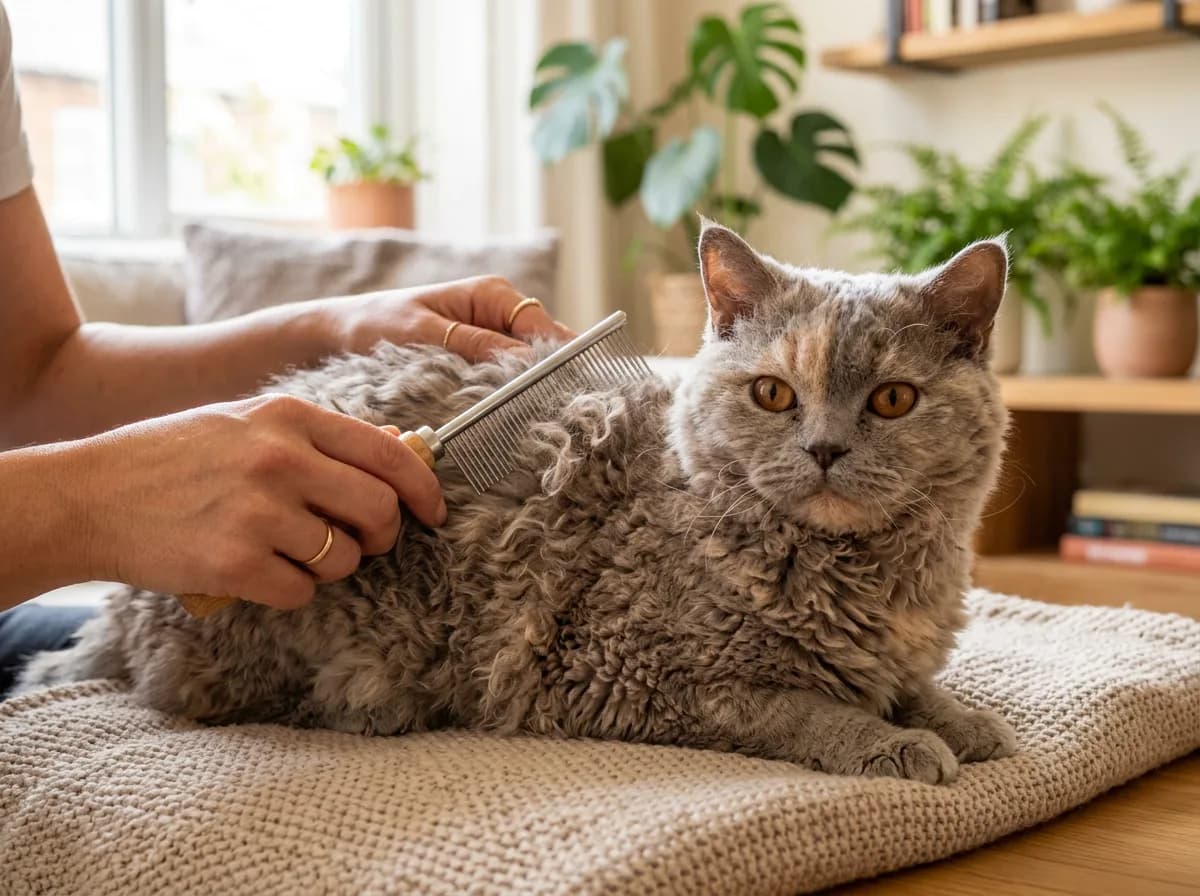
Use a wide-tooth comb or a soft-bristle brush once or twice a week, working gently to remove loose hair without pulling the curls straight. Avoid slicker brushes and excessive combing, which can leave the coat frizzy or limp. Bathe only occasionally, and let the coat air-dry or scrunch-dry rather than blow-drying it straight, which relaxes the curl. The longhair variety needs more frequent attention around the ruff, armpits and tail to prevent mats; the shorthair is largely wash-and-wear.
- The same genes that curl the coat can give Selkirk Rex slightly greasier skin and curlier hair inside the ears, so they may need their ears checked and gently cleaned more often than a straight-coated cat. Wipe tear stains and check skin folds during your weekly grooming session.
Selkirk Rex Health Problems
The Selkirk Rex is generally a robust, healthy breed, but because Persians and British Shorthairs were used in its development, it can inherit some of their genetic health risks. Reputable breeders DNA-test and screen breeding cats to keep these out of their lines, which is one of the biggest reasons to buy from a responsible breeder rather than a backyard source. The main conditions to be aware of are below.
| Condition | What it is | Screening / Management |
|---|---|---|
| Polycystic Kidney Disease (PKD) | Inherited cysts in the kidneys, carried from Persian ancestry, that can lead to kidney failure | DNA test for the PKD1 gene; reputable breeders test parents |
| Hypertrophic Cardiomyopathy (HCM) | Thickening of the heart muscle, the most common feline heart disease | Annual cardiac ultrasound (echocardiogram) in breeding cats |
| Hip dysplasia | Malformation of the hip joint, more common in heavy-boned breeds | Breeder screening; keep cats at a healthy weight |
| Obesity | The breed's mellow, low-activity nature makes weight gain easy | Measured feeding, interactive play, multiple water sources |
| Dental disease | Gingivitis and tooth resorption, common in all cats | Annual dental checks, brushing, dental diets |
Some lines also carry the gene for hypotrichosis (patchy hairlessness), so well-bred Selkirk Rex are tested for it. Because cat kidney problems from PKD are progressive and can be silent for years, ask any breeder for proof of PKD-negative parents, and consider periodic kidney screening as your cat ages. With good genetics and routine veterinary care, most Selkirk Rex live full, comfortable lives of 10 to 15 years.
Price and Cost of Ownership
A Selkirk Rex is a relatively rare breed, so kittens are not cheap. From a reputable, health-testing breeder, expect to pay roughly $800 to $2,500 for a pet-quality Selkirk Rex kitten, with show- or breeding-quality cats and rarer colors running higher. Price varies with the breeder's reputation, the kitten's lineage, coat length, color and your region. Be wary of unusually low prices, which often signal unscreened parents and a higher risk of the inherited conditions above.
| Expense | Estimated Cost |
|---|---|
| Kitten from a reputable breeder | $800 to $2,500 |
| Initial setup (litter box, beds, carrier, scratchers) | $150 to $400 |
| Spay or neuter (if not already done) | $150 to $500 |
| Food (annual, quality diet) | $300 to $600 |
| Routine vet care and vaccines (annual) | $200 to $500 |
| Grooming tools and supplies (annual) | $50 to $150 |
| Pet insurance (annual, optional but recommended) | $200 to $600 |
Across a 10-to-15-year lifespan, plan for a meaningful ongoing investment on top of the purchase price. Adoption is also possible: Selkirk Rex occasionally turn up in breed-specific rescues and at shelters, usually for a fraction of breeder pricing, though purebred curly cats are uncommon in rescue.

Never Scoop Again® with the Whisker Litter-Robot, the smart self-cleaning automatic litter box. Monitor visits and track weights for better overall care in the Whisker® app. Multi-cat friendly.
Petful may earn a commission when you click through to Whisker, at no extra cost to you.
Finding and Adopting a Selkirk Rex
Because the breed is uncommon, finding a Selkirk Rex usually means a wait and some travel. Start with the breeder directories maintained by the CFA and TICA, and look for catteries that focus specifically on Selkirk Rex rather than churning out many breeds. A good breeder is the single best predictor of a healthy, well-socialized kitten.
When you contact a breeder or cattery, ask to see proof of PKD and HCM screening on both parents, ask how the kittens are raised and socialized, and expect to be screened yourself with an application or interview. Reputable breeders rarely have kittens "ready now" and will often place you on a waitlist. Avoid sellers who ship kittens sight-unseen, refuse health documentation, or always have curly kittens available, all classic warning signs. If you would rather adopt, contact Rex-breed and purebred-cat rescues and let them know you are open to a Selkirk Rex or a curly mix.
- Because the curl gene is dominant, Selkirk Rex are sometimes crossed with other breeds (a British Shorthair or Persian, for example) to produce curly mixed kittens. These cats can be wonderful companions but are not pedigreed Selkirk Rex and should be priced accordingly. Whatever you adopt, prioritize a healthy, well-socialized cat over a perfect pedigree.
Selkirk Rex vs Cornish Rex vs Devon Rex vs LaPerm
Google clusters the curly-coated breeds together for good reason: people shopping for one are often comparing all four. The Selkirk Rex stands apart as the only one with a thick, plush coat and a dominant curl gene. Here is how it compares with the Cornish Rex, the Devon Rex, and the LaPerm cat.
| Breed | Coat | Curl Gene | Build | Temperament |
|---|---|---|---|---|
| Selkirk Rex | Thick, plush, woolly; short or long | Dominant | Heavy, stocky, muscular | Calm, patient, cuddly |
| Cornish Rex | Short, fine, tight marcel waves; no guard hairs | Recessive | Slender, fine-boned, arched | Active, playful, busy |
| Devon Rex | Short, sparse, soft; fragile | Recessive | Slim, large-eared, pixie-like | Mischievous, energetic, clingy |
| LaPerm | Springy ringlets and curls; short or long | Dominant | Medium, lean to moderate | Affectionate, curious, active |
In short: choose the Selkirk Rex if you want a mellow, substantial, plush teddy-bear cat; the Cornish or Devon Rex if you want a lean, high-energy clown; and the LaPerm if you want curls on a more active, medium-build cat. All four share the curly charm, but they are very different cats to live with day to day.
Frequently Asked Questions
A Selkirk Rex is a curly-coated cat breed that originated in Montana in 1987. It has a dense, plush, woolly coat in a short or long length, a stocky muscular body, a rounded head and curly whiskers, and a calm, affectionate personality. It is nicknamed the cat in sheep's clothing and is the only Rex breed whose curl comes from a dominant gene.
A Selkirk Rex kitten from a reputable, health-testing breeder typically costs about $800 to $2,500, depending on lineage, coat length, color and region. Show- or breeding-quality cats cost more. Very low prices often signal unscreened parents, which raises the risk of inherited disease.
Yes. Unlike the sparse-coated Cornish and Devon Rex, the Selkirk Rex has a full triple-layer coat and sheds a moderate amount year-round, with a heavier shed in spring and summer. Gentle weekly combing controls loose hair without damaging the curl.
No. Selkirk Rex cats are not hypoallergenic. Allergies come from the Fel d1 protein in a cat's saliva and skin, not from fur, and the Selkirk's dense coat actually holds more dander than other Rex breeds. Allergy sufferers should spend time with an adult before adopting.
Selkirk Rex are generally healthy but can inherit polycystic kidney disease (PKD) and hypertrophic cardiomyopathy (HCM) from their Persian and British Shorthair ancestry, plus hip dysplasia and a tendency toward obesity. Responsible breeders DNA-test and screen parents to keep these out of their lines.
Selkirk Rex cats typically live 10 to 15 years. Good genetics from a health-testing breeder, a healthy weight, routine veterinary care and indoor living all help them reach the upper end of that range.
Selkirk Rex are medium-to-large cats. Most weigh 9 to 16 pounds, with males larger than females, and stand about 9 to 11 inches at the shoulder. They feel heavier than they look because of their dense bone and muscle.
Selkirk Rex are calm, patient and affectionate. They are people-oriented lap cats that get along well with children, dogs and other cats, and they are playful without being hyperactive. Their easygoing nature makes them a great fit for first-time owners and busy households.
The Selkirk Rex has a thick, plush, woolly coat and a heavy, stocky body, and its curl is dominant. The Cornish Rex has a short, fine, tightly waved coat on a slender body, and the Devon Rex has a sparse, soft coat and large ears; both of their curls are recessive. The Selkirk is the calmest and most substantial of the three.
Yes, Selkirk Rex are relatively rare. The breed was only established in 1987 and recognized by the CFA in 2000, so there are far fewer breeders than for common breeds. Expect a waitlist and possibly some travel to find a kitten.
Comb gently with a wide-tooth comb once or twice a week to remove loose hair without straightening the curls. Avoid slicker brushes and over-grooming, bathe only occasionally, and let the coat air-dry rather than blow-drying it. Longhairs need extra attention around the ruff and tail to prevent mats.
Is a Selkirk Rex Right for You?
The Selkirk Rex offers a rare combination: the striking, head-turning curls of a Rex breed paired with the mellow, sturdy, lap-loving temperament of a Persian or British Shorthair. If you want an affectionate, low-drama cat that is good with kids and other pets and does not mind being part of a busy home, the Selkirk Rex is hard to beat, as long as you can handle the moderate shedding, occasional grooming and the wait to find a reputable kitten. Browse more cat breeds to compare it with other curly and plush-coated options before you decide.

Kristine Lacoste has been researching dog and cat breeds for nearly a decade and has observed the animals up close at dog shows in both the United States and the United Kingdom. She is the author of the book One Unforgettable Journey, which was named as a finalist for a Maxwell Award from the Dog Writers Association of America, and was host of a weekly pet news segment on the National K-9 Academy Radio Show. In addition, she was the New Orleans coordinator for Dogs on Deployment, a nonprofit that helps military members and their pets, for 3 years. Kristine has researched and written about pet behaviors and care for many years. She holds a bachelor’s degree in psychology, another bachelor’s degree in English and a Master of Business Administration degree.
Veterinarian · BVMS, MRCVS
Dr. Pippa Elliott, BVMS, MRCVS, is a veterinarian with nearly 30 years of experience in companion animal practice. Dr. Elliott earned her Bachelor of Veterinary Medicine and Surgery from the University of Glasgow. She was also designated a Member of the Royal College of Veterinary Surgeons. Married with 2 grown-up kids, Dr. Elliott has a naughty Puggle named Poggle, 3 cats and a bearded dragon.
Sign up for expert-backed reviews and safety alerts all in one place.