American Shorthair vs Domestic Shorthair: Key Differences
American Shorthair and Domestic Shorthair are different labels. Compare pedigree, history, body, coat, temperament, health planning, sourcing, and the evidence needed to identify ancestry.
Petful is reader supported. As an affiliate of platforms like Amazon and Chewy, we may earn a commission when you buy through links on this page. There is no extra cost to you.
American Shorthair vs Domestic Shorthair is mainly a question of documented ancestry, not hair length. The American Shorthair is a standardized registered breed with traceable pedigrees. Domestic Shorthair is a broad population label for shorthaired cats of mixed or unknown ancestry. A Domestic Shorthair can look nearly identical to the breed without becoming an American Shorthair.
Body, face, coat, and personality can support a description, but none can replace records. This guide compares the two labels through identity, history, appearance, temperament, health expectations, and household fit, then grades how much confidence different evidence deserves.

Sign up for expert-backed reviews and safety alerts all in one place.
American Shorthair vs Domestic Shorthair: the short answer
The CFA American Shorthair profile describes a specific breed selected around a powerful balanced body, broad head, substantial legs, short dense coat, and documented population. The ASPCA Pet Health Insurance Domestic Shorthair overview describes Domestic Shorthairs as a highly varied population rather than one standardized breed.
That taxonomy affects what can be predicted. A pedigreed American Shorthair should be broadly consistent with its written standard, though individual size, behavior, and health still vary. A Domestic Shorthair can inherit almost any combination of body type, coat, color, activity, and social behavior from an unknown background. The label therefore signals greater trait variability rather than a lesser cat, and it should never be treated as a diagnosis or quality grade.
Lead with the taxonomy difference instead of burying it below trait tables because it controls every later comparison. American Shorthair vs Domestic Shorthair, Domestic Shorthair vs American Shorthair, domestic vs American Shorthair, and American vs Domestic Shorthair cat searches all resolve to the same distinction: one is a registered breed and the other is a broad population label. Starting with taxonomy prevents later body, color, personality, and health comparisons from turning visual resemblance into an unsupported ancestry claim.
The distinction in one step
Use the simple distinction:
- American Shorthair: A registered breed identity supported by pedigree and registry documentation.
- Domestic Shorthair: A descriptive label for a shorthaired cat without a documented breed pedigree.
Neither label measures worth. A mixed-ancestry Domestic Shorthair can be an outstanding companion, and a pedigree cannot guarantee a cat will fit a particular household.
Petful may earn a commission when you click through to Chewy, at no extra cost to you.
- 1American Shorthair is a registered breed with documented ancestry
- 2Domestic Shorthair is a broad population label, not a standardized breed
- 3Physical resemblance can be strong but cannot establish pedigree
- 4Choose the individual cat around health, behavior, history, and household fit
| Question | American Shorthair | Domestic Shorthair |
|---|---|---|
| Identity | Registered standardized breed | Broad shorthaired population label |
| Ancestry evidence | Traceable pedigree and registry record | Often mixed or unknown ancestry |
| Body and coat | Expected to align broadly with a written standard | Can vary across nearly every body, color, and pattern combination |
| Temperament | Breed-level tendencies with individual variation | Individual behavior and history carry more weight than the population label |
| Health expectations | Family history and breeder records may add context | Health planning relies on the individual and known family or medical history |
| Availability | Responsible breeder, documented rehome, or occasional rescue | Common in shelters, rescues, community populations, and homes |
Breed, pedigree, and ancestry are the main difference
American Shorthair identity begins with documentation. A pedigree records ancestors, while a registry record connects the cat to an organized breed population. Those records should match the same cat across name, sex, color, birth date, breeder, parents, and identification.
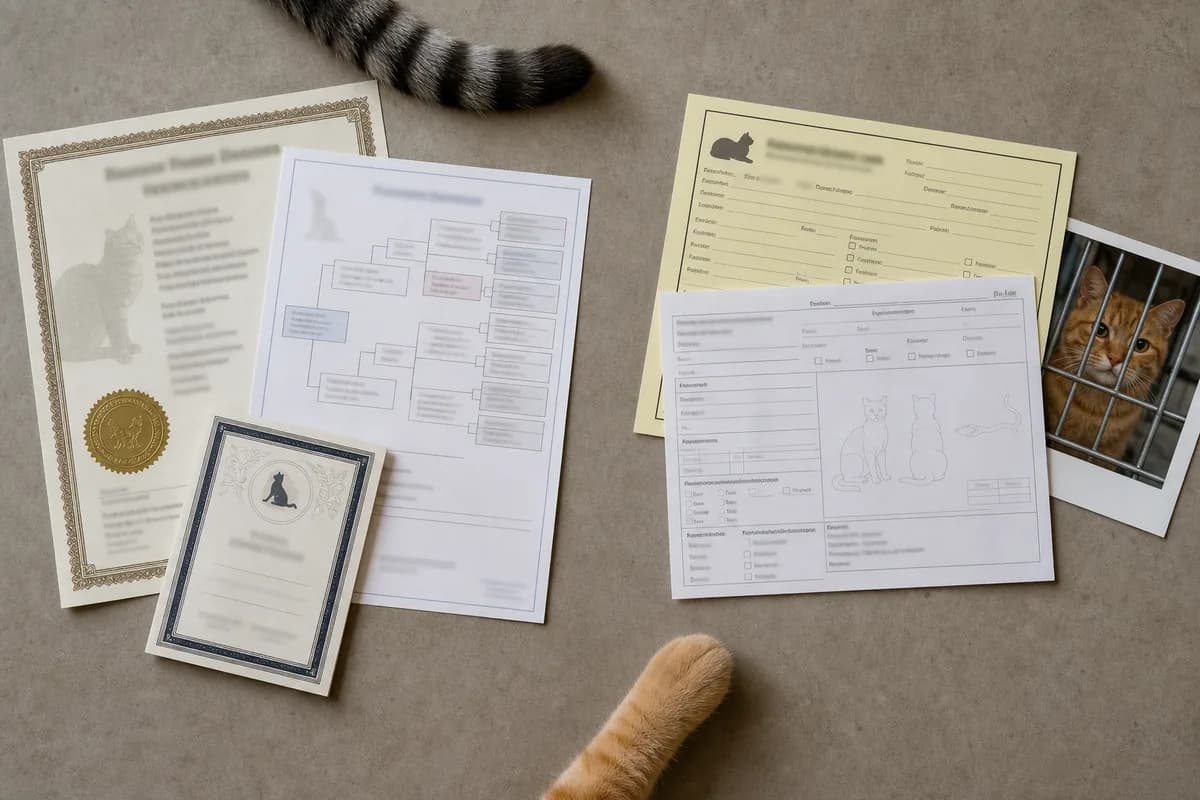
Domestic Shorthair is useful precisely because it does not pretend to know what is unknown. A shelter may use the label when the cat has a short coat and no traceable pedigree. It communicates an observable coat type while leaving ancestry open.
Four records can tell different stories:
- Shelter intake card: Describes the cat and the history available at intake.
- Veterinary record: Documents health observations, treatment, and sometimes the reported breed label.
- Pedigree: Lists named ancestors and registration details.
- Registry document: Connects the individual with the registered breed population.
A veterinarian may carry forward “American Shorthair” from an owner's statement. That makes the label part of the record, but it does not create independent ancestry evidence. Ask where the original identification came from.
What a pedigree does and does not establish
A pedigree supports ancestry when it is genuine and connected to the same cat. It does not guarantee adult size, affection, freedom from disease, or compatibility with another animal. Registration shows participation in a documented population, not a promise that every trait will match an average.
Check internal consistency before relying on the record. Names, registration identifiers, sex, color, birth date, breeder, and parents should align across the pedigree, registration, contract, microchip, and veterinary documents. Resolve unexplained differences through independently found registry or clinic contact details.
History explains the name confusion
The pedigreed population was historically called Domestic Shorthair before the name American Shorthair was adopted. The change helped distinguish the standardized breed from the broad population of shorthaired domestic cats. Older language and casual use still blur the terms.
The registered breed developed from working cats brought to North America and later selected through organized breeding. Domestic Shorthairs are not one parallel breed with a separate standard. They are a diverse population that can include many ancestry combinations.
This history supports two statements at once:
- American Shorthairs and Domestic Shorthairs share broad domestic-cat ancestry and can resemble one another.
- Modern breed identity still depends on documented descent within the registered population.
The first statement explains similarity. The second explains why similarity is not proof.
Shelter teams often need to choose a useful label quickly from limited history. “Domestic Shorthair” is not an inferior conclusion. It is usually the more accurate description when a shorthaired cat has no traceable pedigree. Owners can still record a resemblance without replacing uncertainty with a false identity.
For the distinction between two named breeds, see our European Shorthair vs. American Shorthair comparison.
Body, head, coat, and size differences
The official CFA American Shorthair standard calls for a medium-to-large, powerful, balanced cat with a broad chest, substantial legs, rounded paws, a broad head, full cheeks, and a short dense coat. The body should look functional rather than extreme.
Petful's American Shorthair breed guide owns the full American Shorthair characteristics, American Shorthair traits, American Shorthair cat size, American Shorthair personality, and American Shorthair temperament discussion. Here those general traits are comparison clues only, never ancestry proof.
A Domestic Shorthair may be large or small, lean or stocky, round-faced or wedge-faced, fine-coated or densely coated. Some individuals fall close to the American Shorthair outline by chance. Others look entirely different.
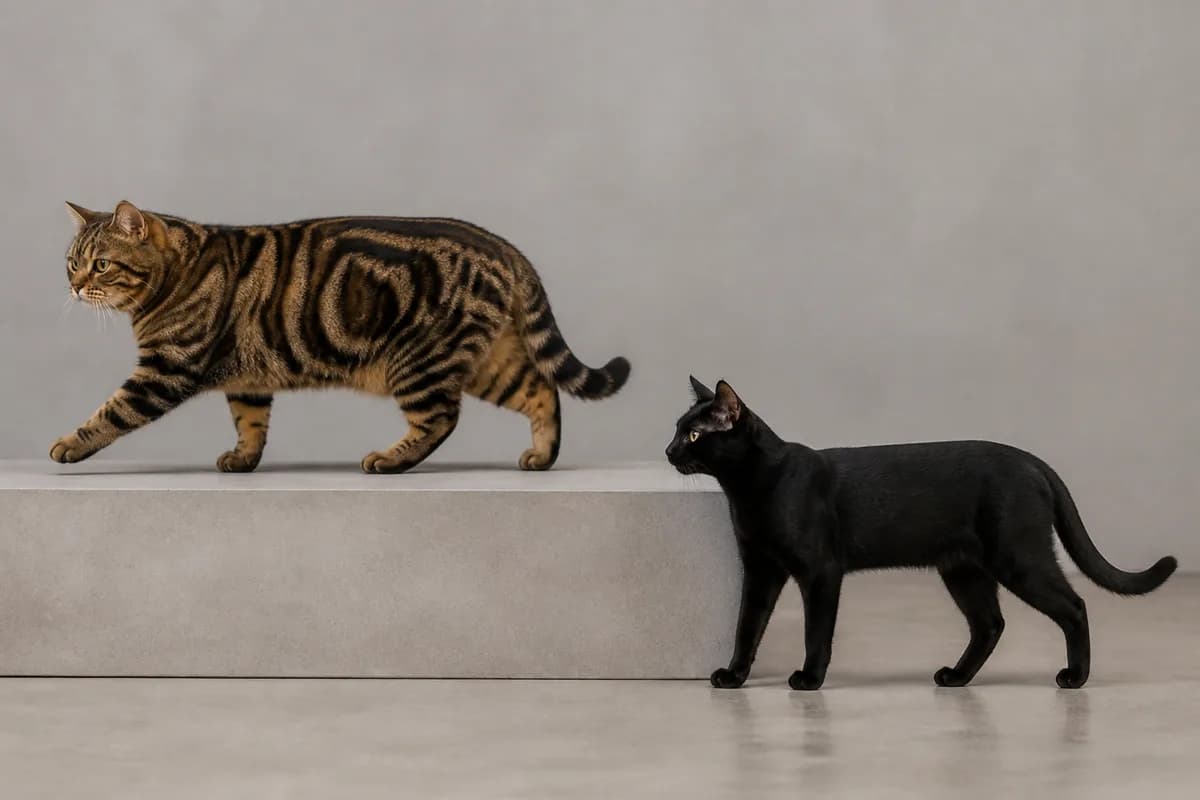
Compare observations carefully:
- Body: American Shorthair standard favors substantial balanced muscle; Domestic Shorthair bodies span a much wider range.
- Head: Full cheeks and a broad head can fit the American Shorthair, but similar faces occur in undocumented cats.
- Coat: American Shorthair coat should be short and dense; Domestic Shorthair coat texture and density vary.
- Size: Breed averages cannot identify an individual, and body condition can distort visual comparisons.
- Movement: Comfortable, symmetrical movement matters for every cat; pain or gait change is a health question, not ancestry evidence.
Do not overfeed a lookalike to make the body appear more “breed correct.” Muscle and skeletal frame are not created by excess calories. Track body condition with a veterinarian.
For a fair visual comparison, observe both cats standing naturally on a level surface. Photographs taken from above can shorten the body, wide-angle lenses can enlarge the head, and excess weight can make a Domestic Shorthair look more substantial. Record measurements only when they serve care, such as carrier fit or weight monitoring, not as a home breed test.
Petful may earn a commission when you click through to Chewy, at no extra cost to you.
An unusual wiry texture raises a separate comparison. Our American Wirehair guide and Wirehair vs. American Shorthair comparison explain the coat distinction and why appearance alone cannot establish pedigree.
Why tabby, tuxedo, and color do not identify breed
Tabby is a pattern family, tuxedo is an informal black-and-white distribution, and calico, tortoiseshell, orange, blue, black, white, smoke, and bicolor are coat descriptions. These appearances cross breed and non-pedigreed populations.
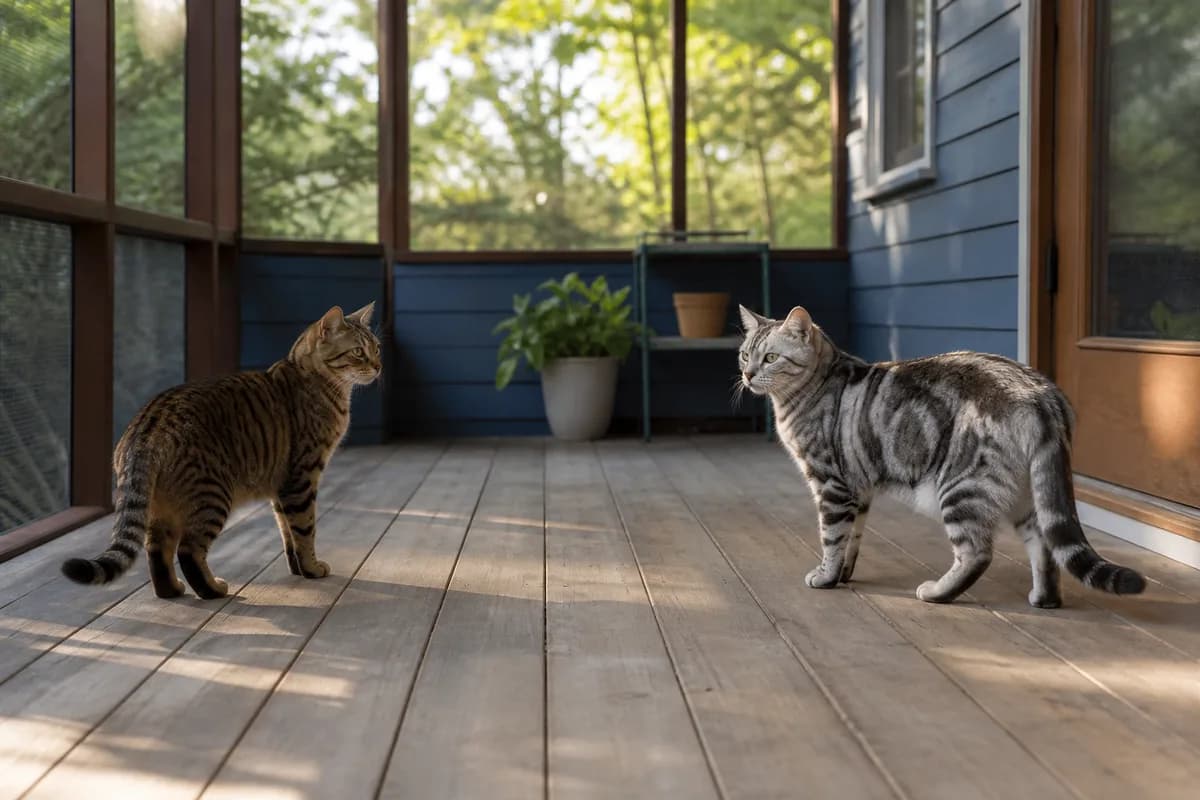
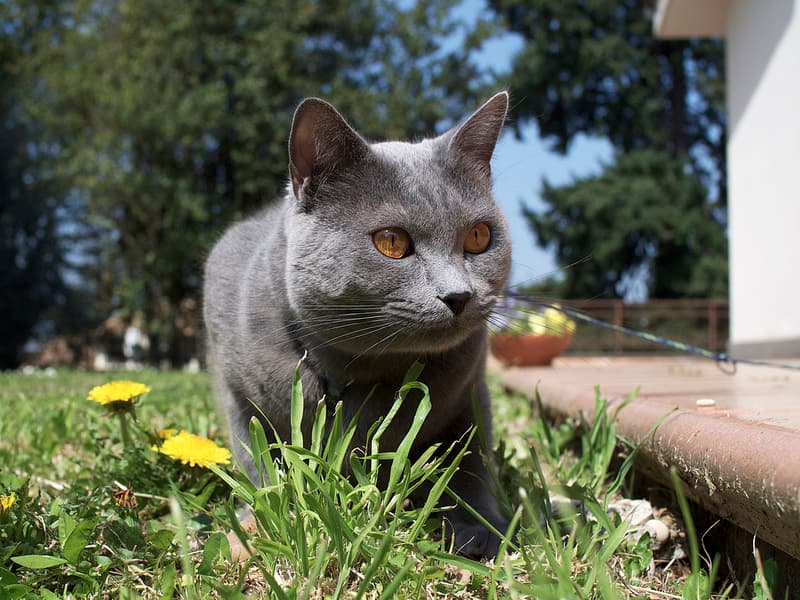
Silver classic tabby is strongly associated with the American Shorthair because it displays the broad body and coat contrast dramatically. A silver tabby Domestic Shorthair can still look convincing in one photograph. The same problem applies to black cats with broad faces or neat tuxedo markings.
Petful's American Shorthair colors and patterns guide owns the full coat map. Its central identity rule is simple: color describes what is visible, while pedigree records establish ancestry.
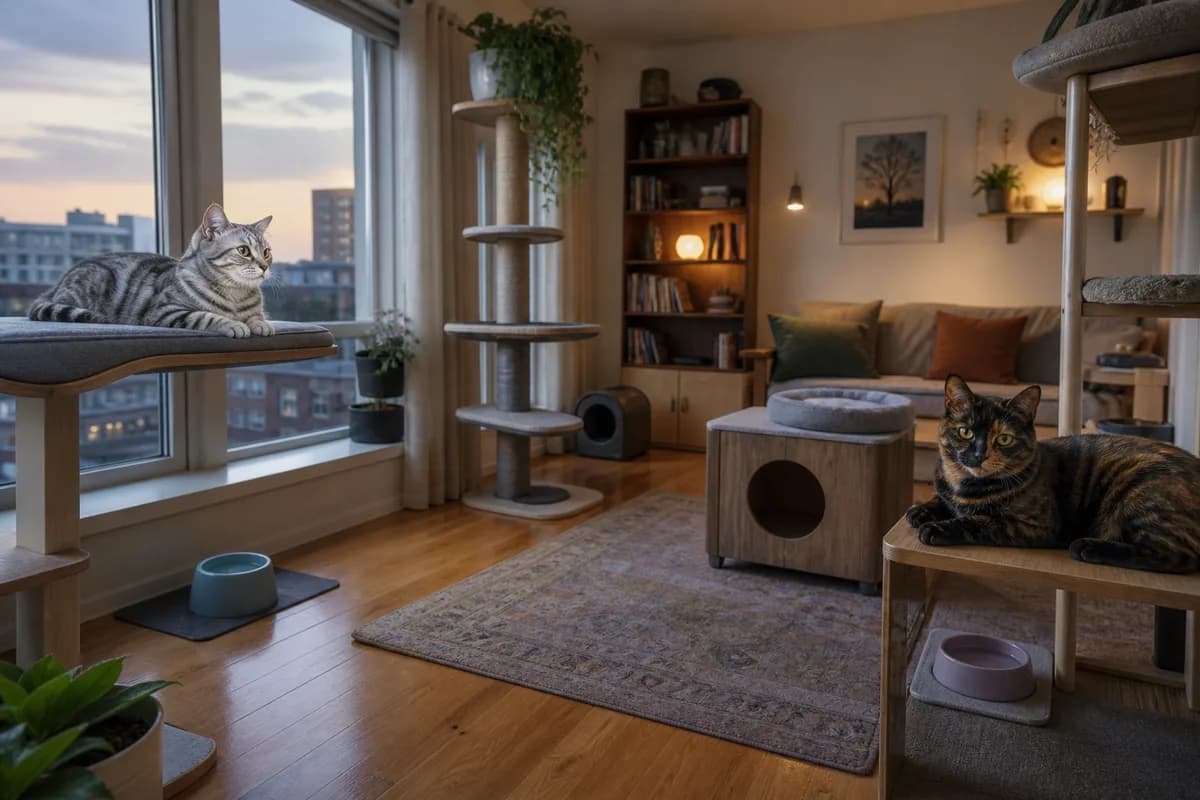
A stable Yaheetech multi-level cat tree can provide both cats with vertical options, but do not use one posed image on a perch to infer body type. Observe the cat standing and moving naturally from several angles. Anchor tall furniture and provide more than one route in a multi-cat home.
Personality and household fit
American Shorthairs are often described as adaptable, companionable, intelligent, and moderately playful. That summary can help a prospective owner ask better questions, but it cannot predict whether a specific cat likes laps, children, dogs, handling, visitors, or schedule changes.
Domestic Shorthair personality is even less meaningfully predicted by the population label because the group is so diverse. Age, health, socialization, prior experience, genetics, environment, and current stress matter more than short coat length.
Temperament cannot be diagnosed from a label. American Shorthair vs Domestic Shorthair personality and American Shorthair vs Domestic Shorthair temperament comparisons can frame questions, while repeated individual behavior and known history should control the household decision. Observe the same cat during quiet time, play, feeding, handling, and recovery from change, and give those repeated observations more weight than a generalized breed summary or shelter label.
Evaluate individual evidence
Use these observations:
- Does the cat approach people voluntarily?
- Can the cat eat, play, groom, and rest in the current environment?
- Which touch does the cat seek or avoid?
- How does the cat respond to other animals at a safe distance?
- What do foster, breeder, shelter, and veterinary records say consistently?
A covered Best Friends by Sheri cat bed can offer a protected resting choice to either cat. Some individuals prefer open beds or high perches. Provide options and never use a preferred hiding place to label one cat shy or the other breed-typical.
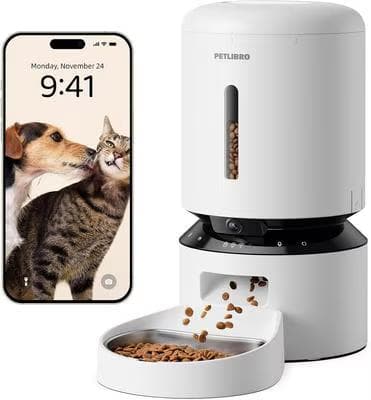
The Petlibro Granary WIFI automatic feeder can help schedule measured dry-food portions in either household. In a multi-cat home, it cannot prove which cat ate which meal. Separate feeding or direct observation may be necessary when appetite, weight, medication, or conflict matters.
Compare behavior in context
One interaction can mislead. A cat may hide during a shelter visit, seek constant contact after a stressful move, or refuse play in a noisy room. Ask for repeated observations across feeding, rest, handling, visitors, and quiet time.
Use neutral language such as “approached after ten minutes,” “accepted cheek touch,” or “left when lifted.” These observations are more useful than calling a cat aloof, dog-like, or typical for the breed.

63-inch multi-level cat tree with scratch posts, hammock, plush perches, and dangling toys. Vertical territory is non-negotiable for high-energy climbing breeds like the Bengal.
Petful may earn a commission when you click through to Chewy, at no extra cost to you.
How to tell what evidence you actually have
Treat identification as a confidence ladder rather than a yes-or-no face-matching exercise.
This confidence ladder grades identification from observation and reported history through pedigree records and registry documentation. It does not turn resemblance into certainty; it shows exactly which evidence supports each level and where honest uncertainty remains. Pedigree records reduce ancestry uncertainty for a registered breed, while a Domestic Shorthair's greater trait variability means appearance and behavior should be described directly without inventing a lineage.
- Observation: “This cat has a silver classic tabby coat, broad face, and sturdy body.” This is accurate and low-risk.
- Resemblance: “This cat resembles an American Shorthair.” This communicates uncertainty.
- Reported history: “The previous owner said the cat was an American Shorthair.” This identifies the source but still needs verification.
- Pedigree evidence: Named ancestors and registry identifiers add traceable support.
- Registry confirmation: A record tied to the individual offers the strongest practical breed evidence.
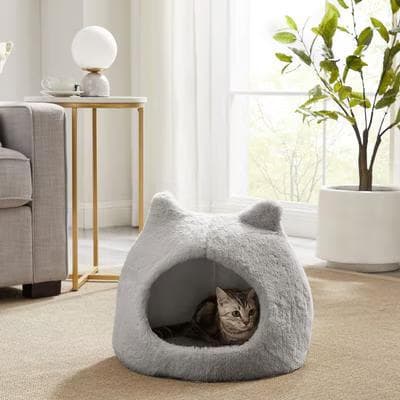
Covered, igloo-style cat bed in soft plush with a water-resistant bottom, giving cats a cozy enclosed spot to curl up. Grey.
Petful may earn a commission when you click through to Chewy, at no extra cost to you.
- A cat can match several American Shorthair features and still be a Domestic Shorthair. Use records for ancestry, veterinary assessment for health, and direct behavior for household fit. Honest uncertainty is more useful than a confident guess.
Consumer DNA results should be interpreted cautiously. Ask what reference population, validation, and question the test actually supports. A percentage presented by an app does not automatically equal registry ancestry.
Health and lifespan expectations
Breed identity changes the amount of family-history information available, but it does not change the urgency of symptoms. A pedigreed American Shorthair may come with parent and lineage records. A Domestic Shorthair may have limited family history. Both still need individualized veterinary care.
The dedicated American Shorthair health and lifespan guide owns the breed-level range, weight management, life-stage care, shedding, and urgent changes. A Domestic Shorthair's plan should likewise follow age, examination findings, body and muscle condition, diet, exposure, dental health, and known medical history.
Monitor the same fundamentals in either cat:
- Appetite and actual food intake.
- Water use and urination.
- Stool frequency and consistency.
- Weight, muscle, and mobility trends.
- Grooming, coat, skin, and nail changes.
- Breathing, energy, sleep, and social behavior.
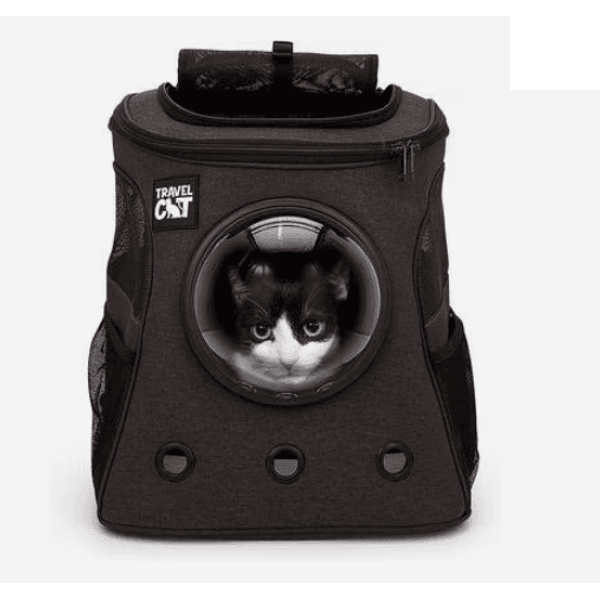
The Travel Cat Fat Cat carrier can support secure veterinary transport for either cat if it fits the individual. Practice voluntary entry, keep the carrier accessible, and secure it during vehicle travel. Breed certainty should never delay a visit.
A second Petlibro automatic feeder mention is useful only as a monitoring reminder. Timed dispensing does not confirm consumption. If one cat suddenly eats less, isolate meals long enough to observe and contact a veterinarian based on the clinical context.
Which cat fits your household?
Choose between actual cats, not between idealized labels. A well-assessed adult Domestic Shorthair may provide more reliable behavior information than a young pedigreed kitten. A breeder-raised American Shorthair may come with deeper ancestry and early-care records, but future personality and health remain individual.
Compare practical needs:
- Current health and veterinary findings.
- Observed activity and play style.
- Comfort with touch, carriers, grooming, and change.
- History with children, cats, dogs, or quiet homes.
- Resource needs and tolerance of shared space.
- Acquisition, setup, recurring, and emergency budget.
- Pedigree can provide traceable ancestry and a more consistent trait range
- Breed records may add family-history context
- Domestic Shorthairs are widely available through adoption
- Adult adoption can provide detailed observed behavior
- Neither label guarantees affection, health, or compatibility
- American Shorthair identity requires documentation, not resemblance
- Domestic Shorthair traits vary too widely for one personality profile
- Any multi-cat home needs separate resources and gradual introductions
Use the Yaheetech cat tree as one vertical resource, then add separate routes and rest zones so one cat cannot control the whole structure. A second Best Friends by Sheri covered bed link is relevant when creating distributed retreats, but at least one open and one elevated resting option may serve cats with different preferences better.
Cost and sourcing differences
A documented American Shorthair kitten may carry a breeder price because it comes from a registered program. A Domestic Shorthair is commonly adopted for a shelter or rescue fee. Acquisition price does not determine lifetime veterinary, food, litter, dental, or emergency cost.
Compare the full first-year package. A breeder placement may include pedigree, registration, microchip, vaccinations, and a contract, while a shelter fee may include sterilization and initial care. Verify the actual documents in either route rather than assigning value from the label.
An adult Domestic Shorthair with foster notes can offer more behavior evidence than a young pedigreed kitten. Conversely, a well-documented breed program can offer deeper ancestry and early-life records. Decide which evidence matters for the household instead of treating one route as automatically superior.
Compare the complete acquisition package
Use Petful's American Shorthair price guide for purchase, adoption, first-year, and lifetime scenarios. If considering a kitten, the American Shorthair breeder and adoption guide separates breed evidence from seller-practice evidence.
The second Travel Cat carrier reference belongs in every acquisition budget because secure transport is required regardless of pedigree. Do not accept a seller's unsafe handoff because the trip is short. Verify closures and never transport a loose cat in a vehicle.
The same principle applies after adoption. A breed label may change what history is available, but it does not change the need for gradual introductions, separate resources, measured feeding, preventive care, and an emergency plan. Build the household around the cat's observed needs.
Reassess after the transition
Reassess fit after the transition period. Behavior in a breeder home, foster room, shelter, or first week may change as the cat gains safety and learns the household routine. Keep expectations flexible enough to respond to the individual rather than defending the original label.
American Shorthair vs Domestic Shorthair FAQs
These answers resolve the captured identification question and two common label errors without using appearance as ancestry proof.
How do I tell if my cat is an American Shorthair with defensible evidence? Start with pedigree and registry records tied to the individual cat, then compare the whole cat with the official CFA standard as a consistency check. A broad face, sturdy body, dense short coat, or silver tabby pattern can support resemblance but cannot confirm ancestry. Without documented pedigree or registry confirmation, Domestic Shorthair or a descriptive American Shorthair lookalike label is more accurate and preserves what is genuinely known.
Some American Shorthairs are tabbies, including the famous silver classic tabby, but the breed also occurs in many other colors and patterns. Tabby is a coat pattern across many cats, not a breed identity.
No. A shelter label may summarize appearance or reported history. Ask what records support it. A transferred pedigree or registry document can add evidence, while a visual label alone should be treated as a useful description rather than proof.

Coreen Saito is a pet writer and longtime shelter volunteer with more than a decade in animal rescue. She covers cat behavior, breed care, and the small, ordinary science of sharing a life with companion animals, with a particular focus on honest takes about the products and decisions that actually matter. At home in Arizona, she's outranked by Mac (a dog with the loudest opinion in the house), Rebel (a cat who governs by quiet authority), and Meri (an orange tabby who runs the late shift and the laundry basket). She writes about all three, plus the rescues that keep coming through her life, at LifeWithMinty.com.
Sign up for expert-backed reviews and safety alerts all in one place.