American Wirehair vs American Shorthair: Coat, Care, and Personality
Coat texture is the clearest distinction between these related breeds. Compare grooming needs, identification limits and everyday routines before choosing an individual cat.

BVMS, MRCVS
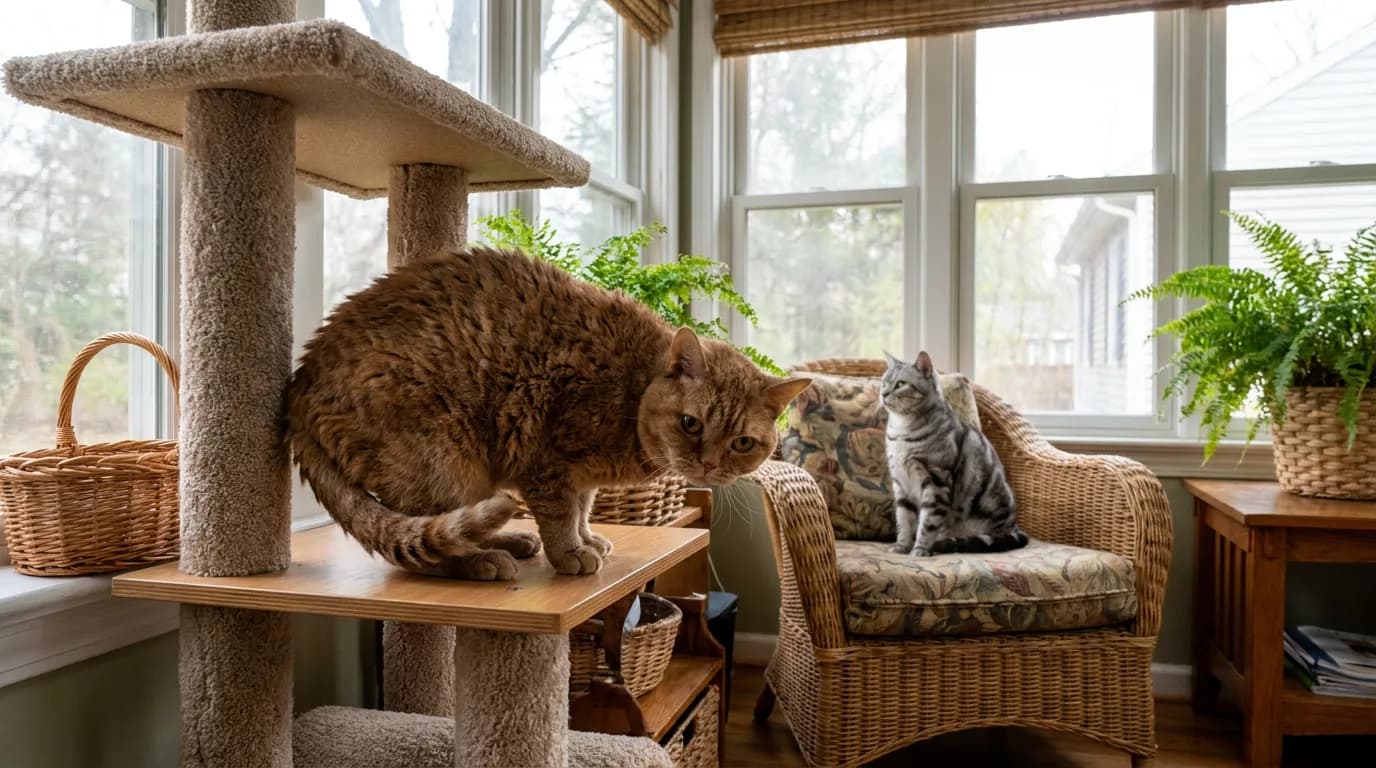
American Wirehair on a climbing platform with an American Shorthair on a nearby chair.
Petful is reader supported. As an affiliate of platforms like Amazon and Chewy, we may earn a commission when you buy through links on this page. There is no extra cost to you.
The American Wirehair vs American Shorthair choice largely comes down to coat texture and the care it needs. The characteristic Wirehair coat is crimped and springy; the Shorthair has a regular short coat. Both breeds can make affectionate companions, so choosing between them takes more than ranking one as the friendlier cat.
Look at documented ancestry, meet the individual and ask how its coat is currently maintained. A photograph of a silver or brown tabby can be attractive without answering any of those questions. This guide separates the visible differences from the everyday needs the two breeds share.

Sign up for expert-backed reviews and safety alerts all in one place.
American Wirehair vs. American Shorthair at a glance
Their shared ancestry includes an ongoing breeding connection: CFA permits American Shorthair outcrosses for American Wirehair. Shared ancestry does not make the two registered breed identities interchangeable.
- 1The main distinction is coat texture, which changes the grooming approach.
- 2The breeds have a breeding connection, but American Shorthair and American Wirehair are separate identities.
- 3Personality and handling preferences vary within each breed; meet the individual before choosing.
TICA’s American Wirehair profile describes the two breeds as similar in appearance and personality apart from coat type, with the Wirehair needing less grooming. That is a useful starting point for comparison. It does not mean every cat behaves identically or that one shared care routine will suit every individual.

63-inch multi-level cat tree with scratch posts, hammock, plush perches, and dangling toys. Vertical territory is non-negotiable for high-energy climbing breeds like the Bengal.
Petful may earn a commission when you click through to Chewy, at no extra cost to you.
| Decision | American Wirehair | American Shorthair |
|---|---|---|
| Characteristic coat | Springy, crimped or bent hairs | Regular short coat |
| Grooming approach | Gentle care that protects the unusual texture | Routine suited to the short coat and current shedding |
| Breed evidence | Pedigree and registration records | Pedigree and registration records |
| Personality choice | Observe contact, play and handling preferences | Observe the same individual behaviors |
| Home preparation | Stable climbing, scratching, rest and play options | The same core indoor resources |
| Best reason to choose | You like the individual and can maintain its coat | You like the individual and can meet its daily needs |
Which difference should decide your choice?
If coat maintenance is your deciding factor, ask for a demonstration on each cat: preserving the Wirehair’s crimp is a different goal from removing loose hair from a regular short coat. If companionship is the deciding factor, compare observed lap sitting, handling and play instead. Neither a patterned coat nor the breed name answers both questions.
If you are choosing between two tabby photographs, pause the breed comparison until you know the source of each label. A documented American Shorthair, a documented Wirehair and a domestic shorthair with an estimated breed label are three different evidence situations. The comparison below helps with care; it cannot turn resemblance into a pedigree.
Both cats benefit from usable vertical space. A Yaheetech 63-inch multi-level cat tree is one option for a room with sufficient floor space and an appropriate place to secure it. Compare platform sizes and access routes, not only the total height. A cat who struggles to reach the upper levels may use a lower arrangement more comfortably.
How can you tell if a cat is an American Wirehair?
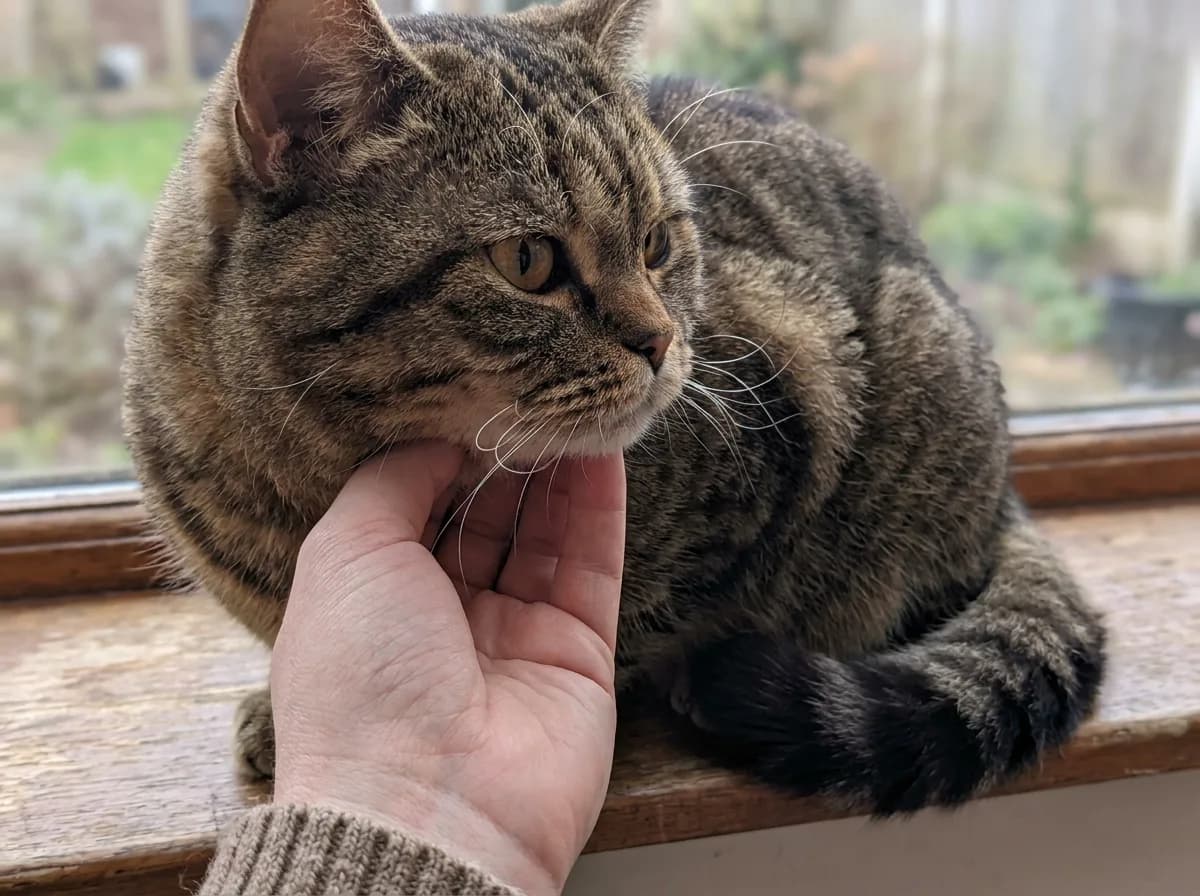
The characteristic wired coat contains hairs that are crimped, hooked or bent, and curled whiskers may also be visible. The current CFA standard additionally recognizes a straight-coat variation. For that reason, neither an unusual texture nor the absence of an obvious curl settles pedigree identity by itself.
Ask for records that connect the cat to its claimed parents and registration. Compare the names, identifying details and dates with the written placement agreement. A breeder or registry can explain the documentation; a photo-identification app cannot establish that chain of ancestry.
Color is a separate feature
A brown tabby pattern, silver markings or a solid color is not a breed test. Two cats may share a similar pattern while having different coat texture and ancestry. Likewise, a domestic shorthair can resemble a pedigreed American Shorthair without documentation establishing that breed.
If you are simply curious about your adopted cat, it is reasonable to describe the features you can observe: short coat, tabby markings, crimped whiskers or an unusual texture. You do not need a confirmed rare-breed label to understand its behavior or provide appropriate care. Keep an uncertain identification separate from a fact in medical and ownership records.
Our American Shorthair vs. Domestic Shorthair comparison explains the pedigree distinction in more detail. A familiar-looking short-haired cat is not automatically an American Shorthair, just as an unusual coat alone cannot establish a Wirehair pedigree.
Petful may earn a commission when you click through to Chewy, at no extra cost to you.
Grooming: the difference that matters most
The grooming difference comes from crimped versus smooth hair, not a proven difference in friendliness. Avoid intensive brushing that tries to straighten a wired coat. Use the individual cat’s texture and the current carer’s demonstrated routine to choose a tool.
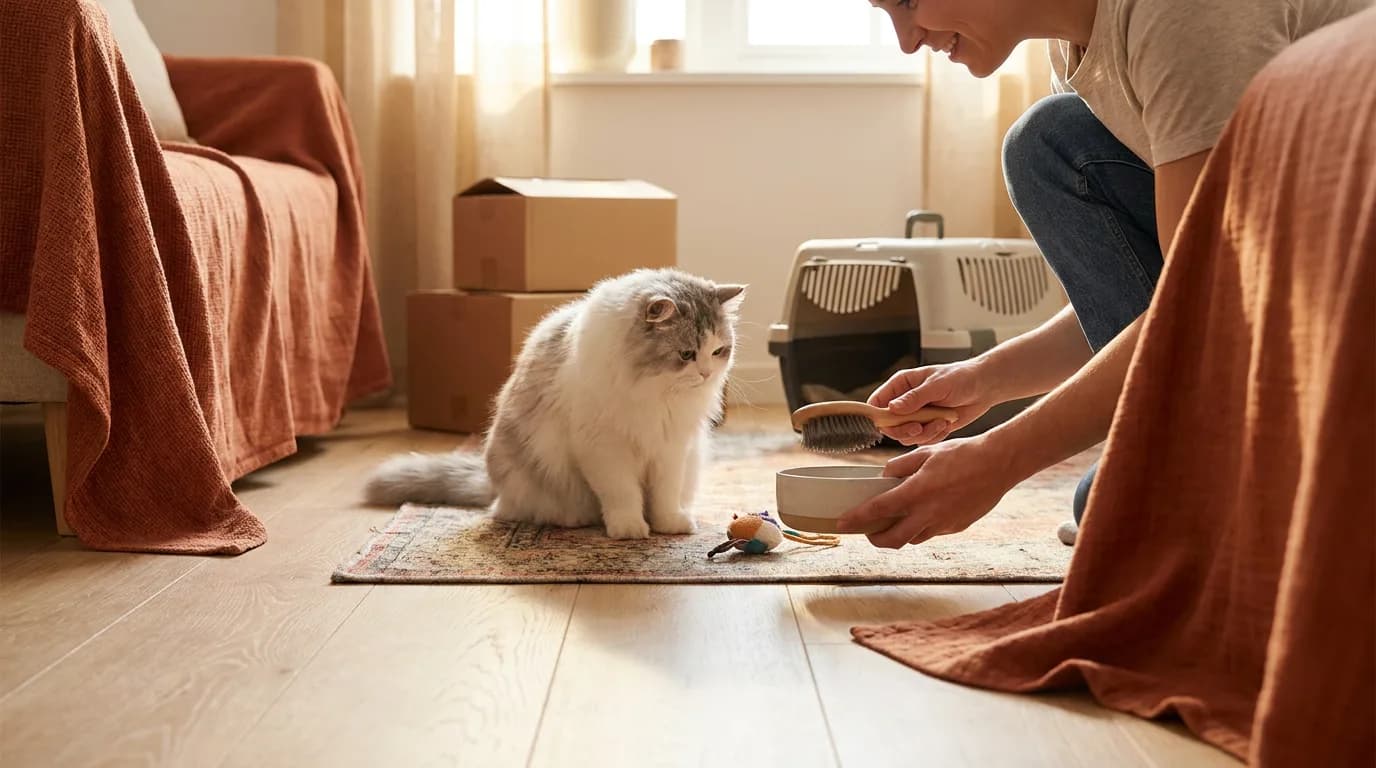
For a Wirehair, the goal is a comfortable, clean coat with its natural texture intact. Repeatedly trying to brush the hair smooth defeats that purpose. Ask the current carer to demonstrate the tool and technique already used, and avoid assuming that a deshedding rake designed for another coat is a suitable default.
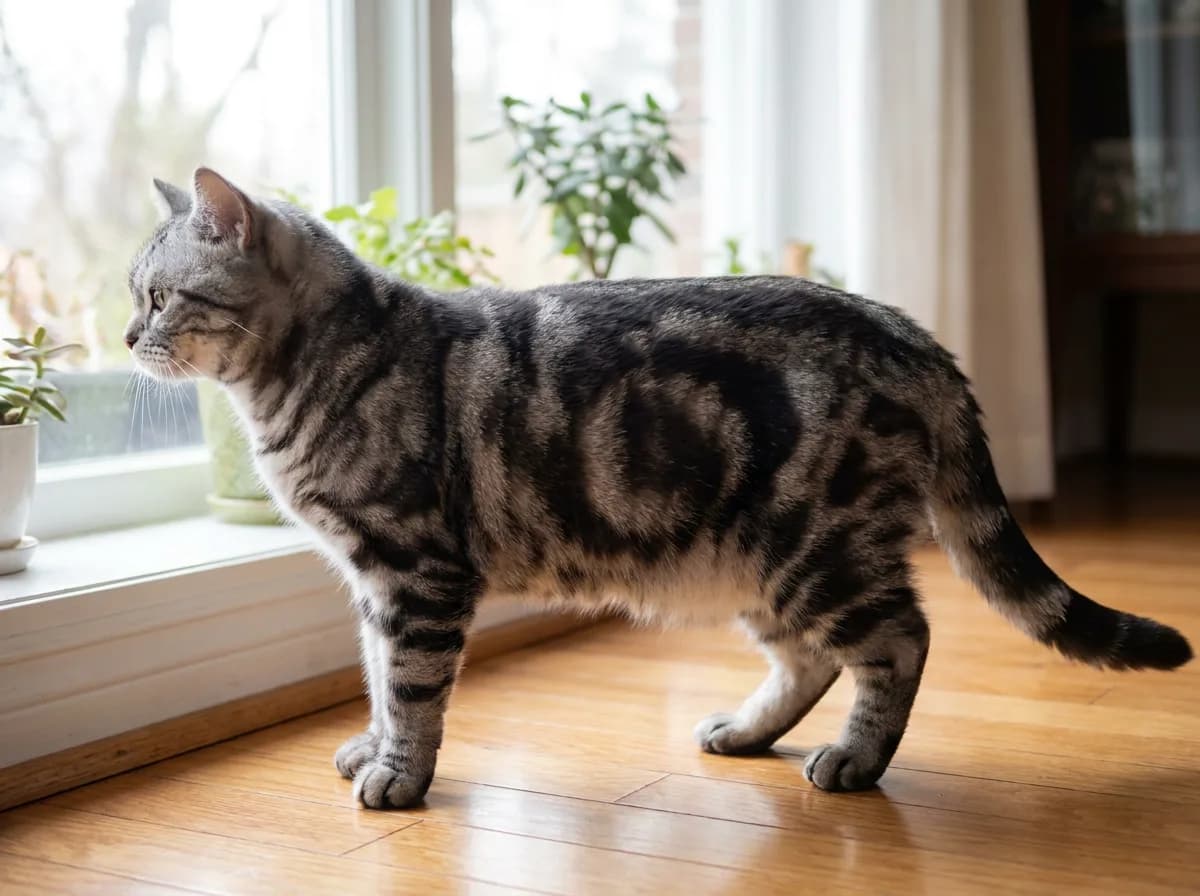
For a Shorthair, choose a routine based on the actual coat, shedding and tolerance for handling. Brief, comfortable sessions give you a chance to notice debris, tangles or a change in skin condition. Neither breed’s name establishes a universal schedule or means that vigorous grooming is better.
Use these questions when discussing coat care:
- Which tool does this individual tolerate and benefit from?
- How much loose hair is normal for this cat?
- Has the routine changed because of coat condition or discomfort?
- Which changes should prompt advice from the veterinary practice?
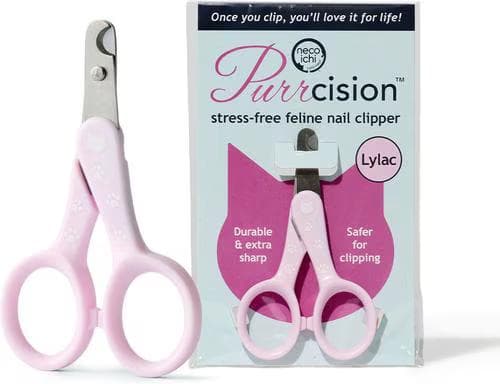
Keep nail care and coat care separate. If you are comfortable trimming claws and have been shown how, Necoichi cat nail clippers are a small-tool option to assess. Use them only on the claw tip with a clear view; stop if the cat becomes distressed or you cannot identify a safe place to cut. A professional demonstration can be more useful than buying several tools and experimenting.
Neither coat is an allergy guarantee
Both breeds can shed, and neither should be selected as an allergy-free pet. A lower-maintenance texture does not demonstrate lower allergen exposure. If allergies affect your choice, discuss the household's situation with an allergist and separate that decision from how often you expect to brush the cat.
Petful may earn a commission when you click through to Chewy, at no extra cost to you.
When comparing care, ask to see the routine on the actual cat. A Wirehair may need less brushing to preserve its texture, while a Shorthair may benefit from a different tool for loose hair. That is a practical grooming difference, not evidence that one breed is universally cleaner or healthier.
Which breed fits your household?
Either breed may fit a home that can provide predictable care, play and voluntary social contact. TICA notes that many Wirehairs enjoy laps while others prefer being nearby, illustrating why “affectionate” does not always mean “likes to be carried.” Apply that same distinction when meeting a Shorthair. Ask for examples of the individual’s behavior rather than accepting a one-word temperament label.
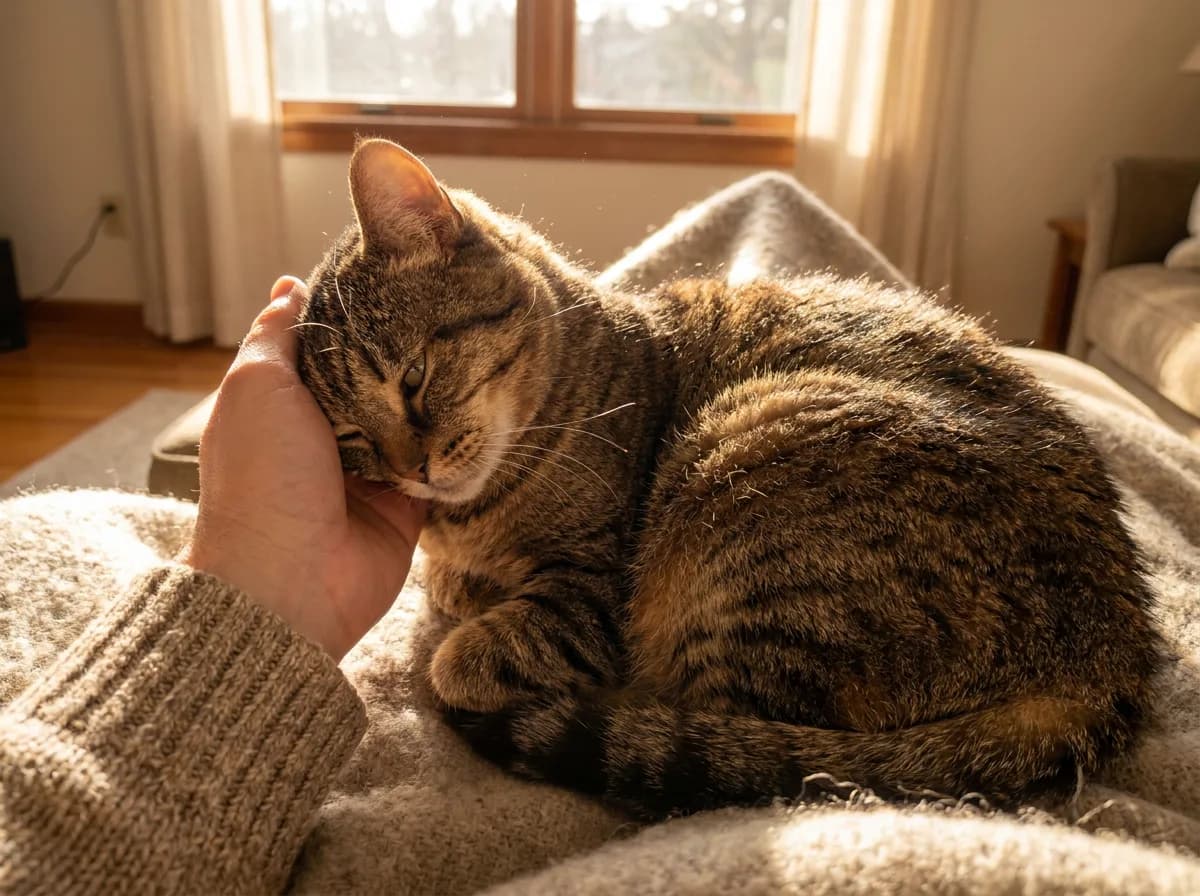
Consider your household’s actual activity. A quiet adult home and a busy home with children present different experiences, even when both offer good care. Discuss visitors, handling, noise and other pets with the current carer. Arrange gradual introductions and protected retreats rather than expecting either breed to accept every situation immediately.
A practical meeting checklist
Watch the cat while it has room to make choices. Does it approach a seated person, investigate a toy, settle nearby or seek a hiding place? Ask whether that behavior is typical and what happens after the cat becomes familiar with someone. One short meeting in an unfamiliar setting does not reveal every trait.
If cuddling is a priority, say what you mean: lap sitting, sleeping nearby and tolerating being picked up are different preferences. If you work away from home, ask about the cat’s existing routine and plan daily interaction around it. Choosing a breed described as independent does not remove the need for attention and care.

Feathered teaser wand with catnip-stuffed bird. Pairs perfectly with the no-bite training policy: redirect Bengal play drive into a 10-minute interactive session with the wand.
Petful may earn a commission when you click through to Chewy, at no extra cost to you.
Food, play and shared daily needs
Neither coat type creates a reason to buy a diet simply because it is marketed toward an unusual breed. Choose food appropriate for the individual’s life stage and needs, measure portions and discuss concerns with the veterinary practice. Keep familiar food available during the transition to a new home rather than changing everything at once.
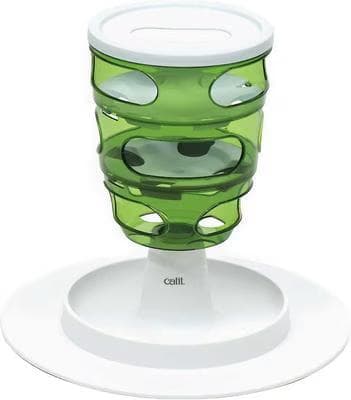
A Catit Senses 2.0 Food Tree can make part of a meal an activity for a cat who enjoys it. Introduce an easy arrangement first and check that the cat can retrieve the food comfortably. Do not rely on a difficult puzzle as the only feeding opportunity for a cat who has not learned to use it.
WebVet’s cat puzzle-feeder guide compares the kinds of interaction different designs require. Your cat’s response should guide the choice. If a puzzle is ignored, try a simpler activity or a different time rather than assuming the breed ought to enjoy it.
Shared play and safe toy storage
Shared play does not need expensive equipment. A Frisco feather teaser wand provides a way to vary movement and let the cat stalk, chase and catch during supervised sessions. Put it away afterward, especially if it has strings or parts the cat might chew off. Rotate a few suitable toys instead of leaving every toy on the floor until none attracts attention.
Wirehair availability and lifetime care
American Wirehairs are uncommon, so documented availability may limit your choice more than a coat preference does. Confirm whether a contact has an available cat, an expected litter or a waiting list. A registry listing provides a starting point for inquiry, not proof that a particular kitten is ready for placement.
Our American Wirehair breed guide covers sourcing questions, costs and the limitations of published lifespan estimates. For either breed, obtain a written quote that identifies the cat, included care and records, and any additional transport charges. Do not let a claim of rarity rush that comparison.
Set aside time and funds for ongoing care as well as acquisition. Equipment such as the cat tree is a setup expense; food, litter and veterinary care continue. Reassess the home as the cat ages, making access to food, litter and comfortable resting places easier when needed.
Size and health: useful context for either choice
The CFA describes the American Wirehair as medium to large, with males generally larger than females. The American Shorthair is also a substantial, proportionate cat; coat texture is a clearer distinction than trying to identify either breed from weight alone. Measure the individual when choosing a carrier, and use body-condition assessment for feeding decisions.
For Wirehairs, published lifespan estimates vary: Hill's gives 7–12 years, while Zoetis gives 13–17. Those profile ranges are not interchangeable survival studies and should not be averaged into a precise prediction. The American Wirehair guide explains these sources, size context and screening questions. For either cat, request the actual examination and family health records rather than relying on a 'healthy breed' label.
The Wirehair's distinctive coat is not a guarantee of lower medical costs. Ask about current treatment, prior problems and which screening results belong to the parents. Then compare the two individual cats on known needs and temperament, with a budget for ordinary and unexpected care.
Check identity before comparing prices
When an American Wirehair cat is offered for sale, ask for documentation that connects the individual to its claimed ancestry before comparing prices. Curled whiskers may support the visible description, but American Wirehair whiskers are not a pedigree certificate. The breed guide linked above explains identification and availability in detail; this comparison helps you decide which coat-care routine and individual temperament fit your home.
Choosing an individual cat
Use coat preference to narrow your interest, then use evidence about the individual to make the decision. If you enjoy a textured coat and can follow a gentle routine, a Wirehair may appeal. If you prefer a regular short coat, an American Shorthair may appeal. Neither preference should outweigh a poor match between the cat’s known behavior and your household.
Before committing, be able to describe the daily routine you will provide: feeding, litter care, shared play, quiet time and gradual introductions. Confirm the records and practical arrangements in writing. Those steps make the choice more useful than declaring a universal winner between two breeds with many shared needs.
Wirehair and Shorthair questions
No. Domestic shorthair describes a short-coated domestic cat without specifying American Shorthair pedigree. An American Shorthair is a recognized breed whose identity depends on documented ancestry. Similar tabby markings or body shape cannot establish that pedigree on their own.
Yes, cats from the two breeds can have similar colors and patterns, including tabby markings. The characteristic distinction concerns coat texture, not a single exclusive color. Records matter when determining breed identity, especially because appearance alone can overlap with domestic cats.
Photographs can show color and some visible texture, but they do not establish pedigree, handling preferences or a care routine. Ask for records and a demonstration of grooming, and discuss the individual cat's behavior before deciding.
BVMS, MRCVS
Dr. Pippa Elliott, BVMS, MRCVS, is a veterinarian with nearly 30 years of experience in companion animal practice. Dr. Elliott earned her Bachelor of Veterinary Medicine and Surgery from the University of Glasgow. She was also designated a Member of the Royal College of Veterinary Surgeons. Married with 2 grown-up kids, Dr. Elliott has a naughty Puggle named Poggle, 3 cats and a bearded dragon.
Sign up for expert-backed reviews and safety alerts all in one place.