American Shorthair Colors and Patterns: Complete Guide
American Shorthair colors include silver tabby, black, tuxedo, calico, tortie, red, cream, white, blue, smoke, and bicolor. Learn the coat layers without mistaking color for pedigree.
Petful is reader supported. As an affiliate of platforms like Amazon and Chewy, we may earn a commission when you buy through links on this page. There is no extra cost to you.
American Shorthair colors include far more than the familiar silver classic tabby. The registered breed can appear in solid black, white, blue, red, and cream; multiple tabby colors and patterns; tortoiseshell and calico combinations; smoke and shaded effects; and coats with white spotting. The best way to read a coat is in layers: identify the base color, pattern, silver or smoke effect, and amount of white.
Color cannot confirm breed ancestry. Many Domestic Shorthairs share the same tabby, tuxedo, calico, tortoiseshell, or solid coats. Use this guide to describe a documented American Shorthair accurately, then use pedigree and registry records to establish identity.

Sign up for expert-backed reviews and safety alerts all in one place.
American Shorthair colors at a glance
The CFA American Shorthair profile says the breed is recognized in dozens of colors and patterns. Silver tabby is especially well known, but it is not the only correct coat and it is not mandatory. The standard evaluates color together with the complete cat, including body, head, coat texture, and balance.
The most useful coat-reading sequence has four layers:
- Base color: black, blue, red, cream, or white, plus standard-recognized shaded and silver expressions.
- Pattern: solid, classic tabby, mackerel tabby, patched tabby, tortoiseshell, calico, smoke, shaded, or another recognized expression.
- White spotting: none, a small amount, bicolor distribution, or the broad white areas seen in calico and dilute calico coats.
- Modifiers: silver, smoke, shading, or dilution can change how the base color looks without creating a new breed.
This framework is more accurate than trying to memorize a gallery of isolated labels. It also explains why two cats described as black and white can look very different: one may be a high-white bicolor, another may have a tuxedo-style distribution, and a third may be a smoke whose pale hair bases appear only when the coat moves.
Petful may earn a commission when you click through to Chewy, at no extra cost to you.
- 1American Shorthairs occur in many standard-recognized colors and patterns
- 2Read the coat through base color, pattern, silver or smoke effect, and white spotting
- 3Silver classic tabby is famous but not required
- 4Color and pattern describe appearance, while pedigree records establish ancestry
| Coat layer | What to look for |
|---|---|
| Base color | Black, blue, red, cream, white, and standard-recognized silver or shaded expressions |
| Tabby pattern | Classic swirls, narrower mackerel stripes, or patched combinations |
| Parti-color | Tortoiseshell, calico, and dilute calico distributions |
| White spotting | White paws, chest, face, underside, or larger bicolor areas |
| Hair-shaft effect | Smoke has pale roots beneath a stronger surface color; shaded coats have lighter overall tipping |
| Identity limit | The same colors occur in many cats, so coat appearance cannot prove pedigree |
How American Shorthair colors and patterns work
Color names are a description system, not a list of separate types of American Shorthair cats. A silver tabby, black bicolor, calico, and red tabby still belong to the same breed when their ancestry is documented. Coat labels help breeders, registries, veterinarians, and owners communicate what is visible.
This guide organizes the large color universe by four coat layers instead of presenting a flat list: base color, tabby or other pattern, white spotting, and silver or smoke effects. Each high-demand modifier receives a visible photo and its own evidence boundary, while the TICA American Shorthair profile and registered standard remain the classification authorities.
Begin in neutral daylight. Warm indoor bulbs can make cream look redder, blue look brownish, and silver look golden. Then part the coat gently to see whether the hair is one color from base to tip or pale near the skin. Finally, step back and read the large-scale pattern across the sides, legs, face, and tail.
Four questions for reading a coat
Ask four questions:
- What color is the hair closest to the skin and across most of the body?
- Are there stripes, broad swirls, patches, tipping, or a solid surface?
- Is white spotting present, and where is it distributed?
- Does the description remain consistent across the coat, or is lighting creating an illusion?
The CFA American Shorthair breed standard PDF is the controlling reference for show terminology and accepted combinations. The standard also excludes certain colors or patterns associated with hybridization. That boundary belongs to registry classification and should not be turned into a health or personality claim.
Registered color versus the coat you see today
A registration record usually names the color assessed when the cat entered the registry. Everyday appearance can shift with age, seasonal coat, sunlight, grooming, camera processing, and health. Kittens can develop stronger contrast as the coat changes, while mature cats may show scattered white hairs that do not rewrite ancestry.
Use the registered description as documentary evidence and current observation as a separate record. If they appear inconsistent, ask the breeder or registry how the terminology was assigned rather than altering documents yourself. When health or skin condition changes the coat, veterinary assessment comes before show classification.
Good descriptions are specific without becoming overconfident:
- “Black-and-white bicolor with a white chest and paws” is more useful than “tuxedo breed.”
- “Brown classic tabby with broad side swirls” is more useful than “American tabby.”
- “Blue-gray coat with white spotting” is more useful than assuming every gray cat is blue under a registry standard.
- “Possible smoke effect visible at the roots” preserves uncertainty until the coat can be examined in suitable light.
Write the date and lighting with the description. That small note makes later coat comparisons far more reliable.
Black, tuxedo, and bicolor American Shorthairs
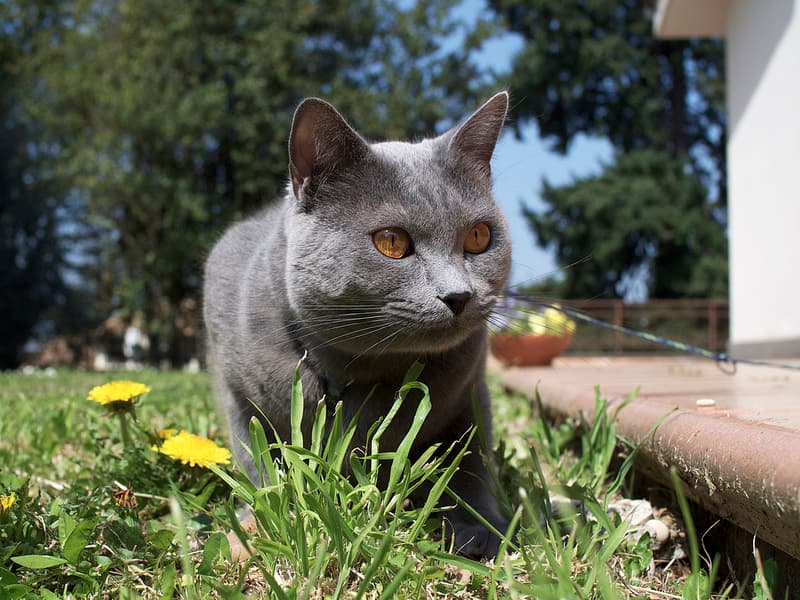
A black American Shorthair cat should show a rich, even black surface color with no intentional tabby pattern. The short dense coat can reflect light and reveal temporary rusty tones from sun exposure, old shedding hair, or lighting. A new patch of discoloration, thinning, scaling, or broken hair is a skin-and-coat observation to discuss with a veterinarian rather than a reason to rename the color.
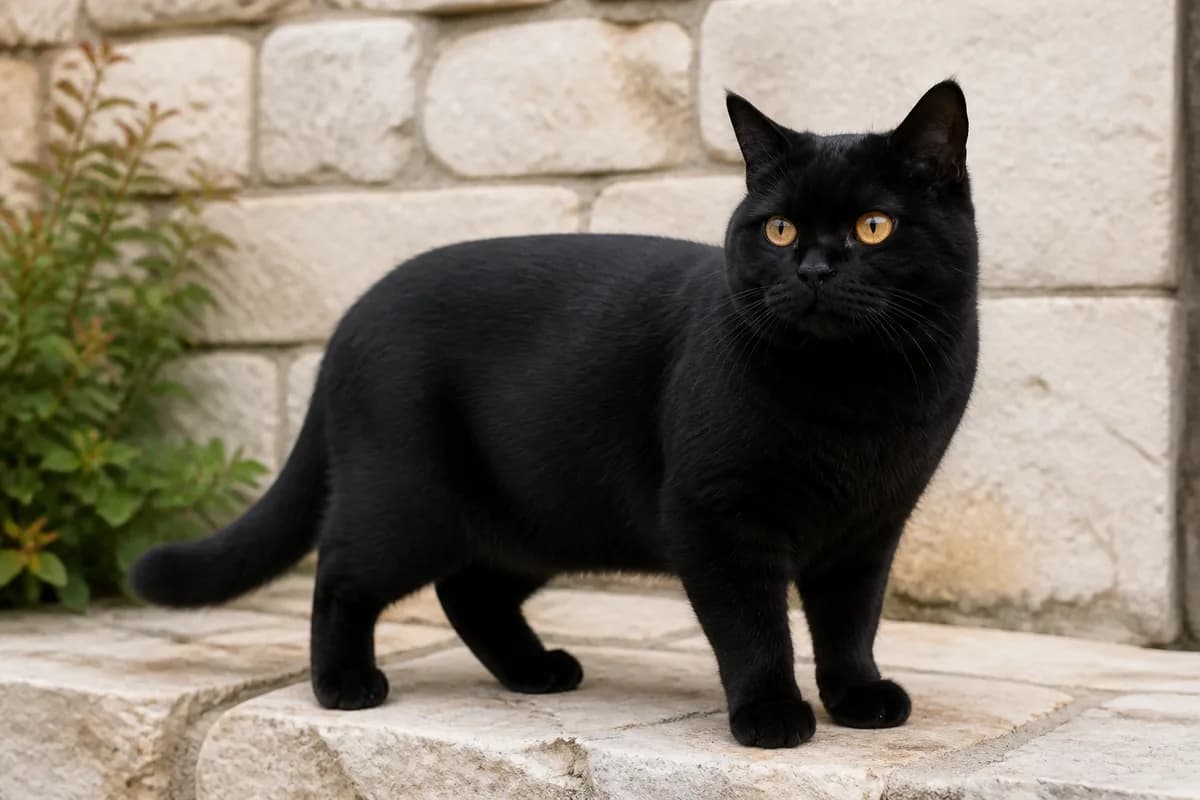
Black is striking because the breed's broad face, substantial body, and gold or copper-toned eyes can stand out against the uniform coat. Yet black shorthaired cats are common across mixed-ancestry populations. A solid black coat is fully compatible with American Shorthair ancestry, but it is not proof of it.
An American Shorthair tuxedo cat is better described as black and white bicolor with a tuxedo-style distribution. “Tuxedo” is an everyday pattern name, not a separate breed. White may appear on the chest, belly, paws, muzzle, or face, while the remaining coat is black.
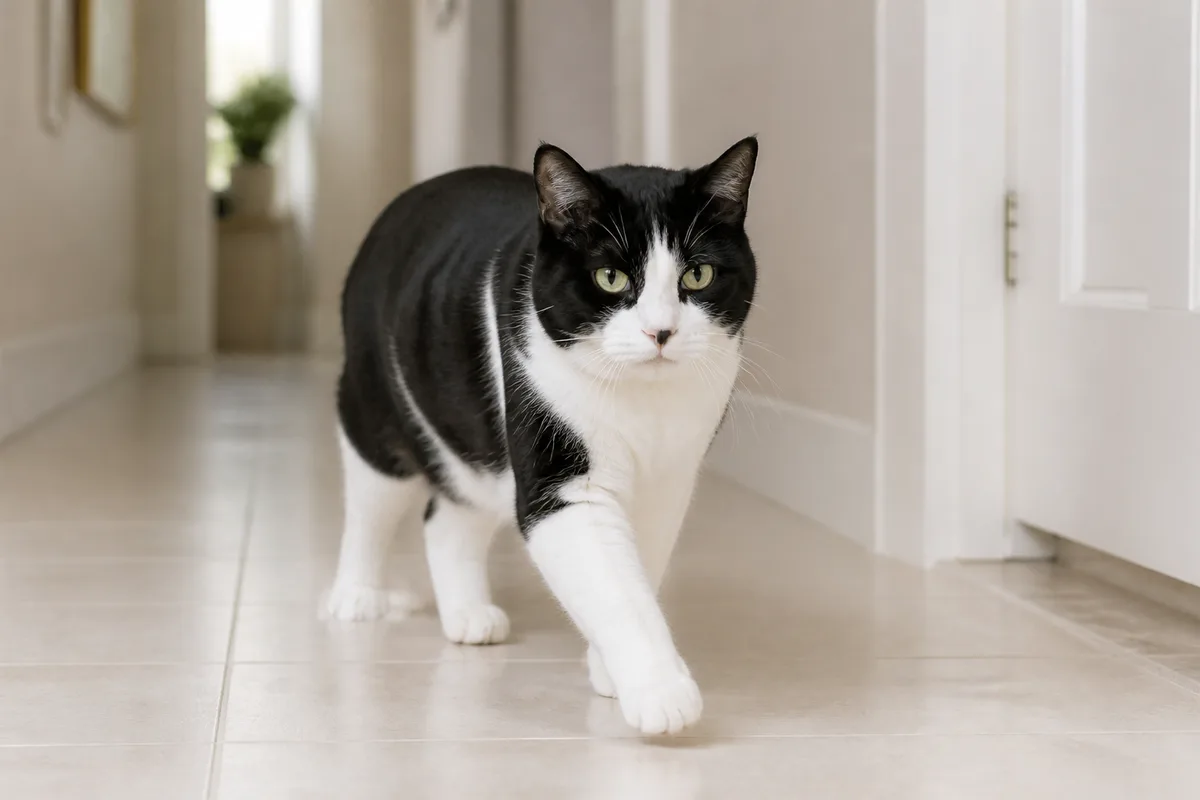
White spotting can be highly symmetrical or irregular. Do not judge ancestry by a neat bib, white socks, or a blaze. Petful's guide to tuxedo cat colors explains how the same visual shorthand appears across many cats.
Reading bicolor distribution
Describe where white appears before deciding which informal nickname fits. Start at the face, move across the chest and underside, then note each leg and the percentage of the body that remains colored. This approach works for black-and-white, blue-and-white, red-and-white, cream-and-white, and other standard-recognized bicolors.
A white marking can be charming without being symmetrical. Show evaluation uses the written standard, while a pet owner can simply record the visible distribution. Neither symmetry nor an unusual face blaze establishes rarity, value, or pedigree.
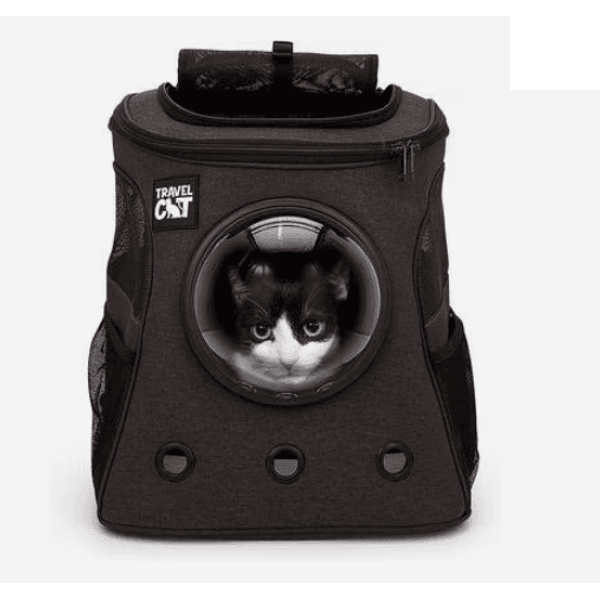
A secure Travel Cat Fat Cat backpack carrier can make coat checks and veterinary visits less stressful when carrier entry is practiced voluntarily. Carrier color has no effect on a cat's coat, but good daylight and a calm setup make photographs and observations more reliable. Choose ventilation and dimensions for the individual cat, not for the aesthetic of the coat.

63-inch multi-level cat tree with scratch posts, hammock, plush perches, and dangling toys. Vertical territory is non-negotiable for high-energy climbing breeds like the Bengal.
Petful may earn a commission when you click through to Chewy, at no extra cost to you.
Calico, tortoiseshell, and dilute American Shorthairs
An American Shorthair cat calico has red and black areas combined with white. Patch size and distribution vary. Some cats show broad, clearly separated color areas, while others have smaller intermingled patches. The label describes the coat, not personality.
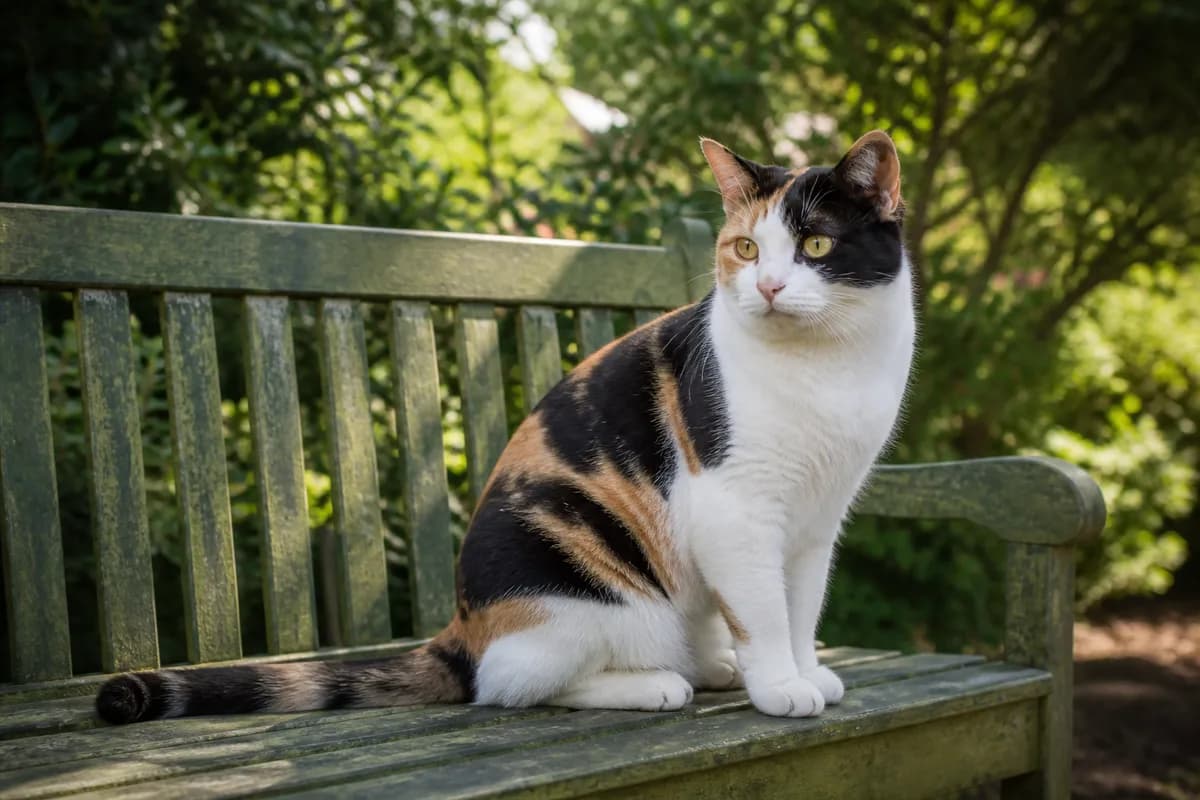
Most calico and tortoiseshell cats are female because the primary orange-versus-black color information is carried on the X chromosome. Rare male calicos can occur through uncommon chromosomal or developmental pathways. A coat photograph cannot determine sex, fertility, chromosomes, or health, so veterinary records and examination remain the appropriate evidence.
Tortoiseshell combines black and red without the broad white spotting that defines calico in everyday use. The colors may form distinct patches or a finely mottled mix. A tortoiseshell American Shorthair can have the same muscular breed structure as any other color.
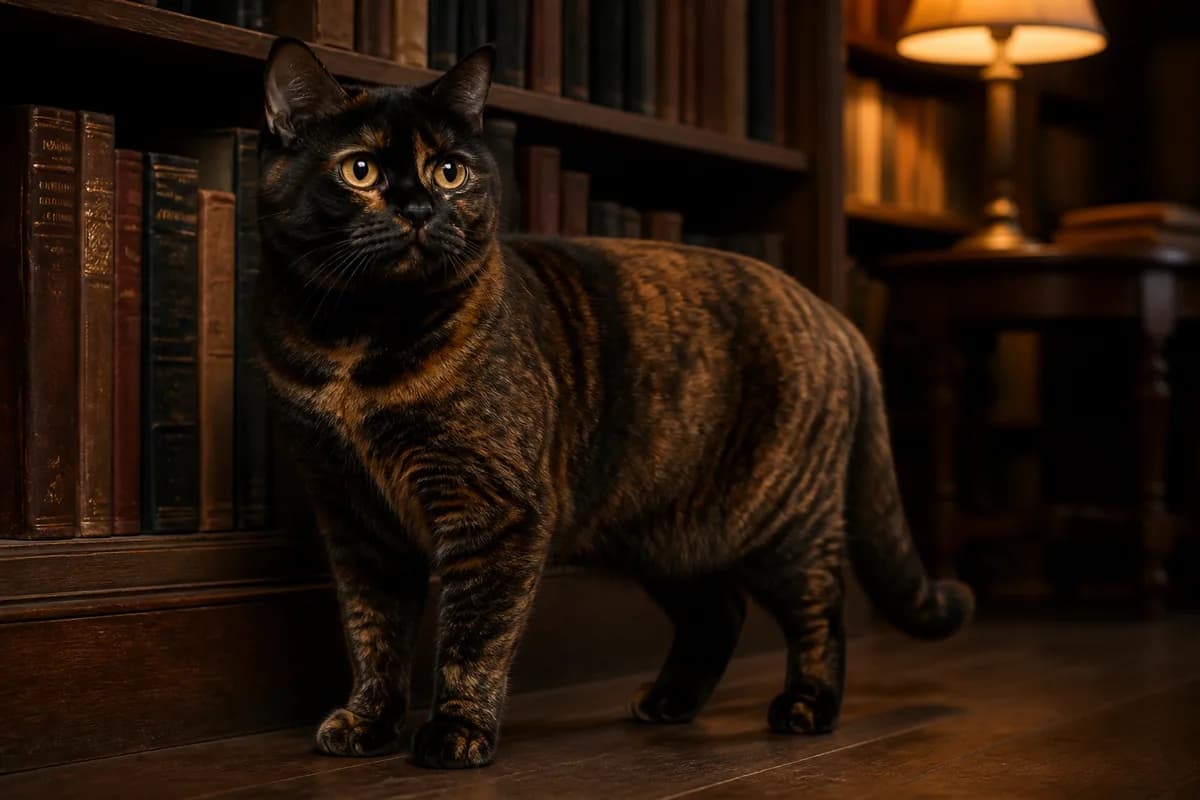
Dilution changes black toward blue-gray and red toward cream. A dilute calico therefore shows blue, cream, and white rather than black, red, and white. Dilute describes pigment intensity, not a washed-out coat, poor nutrition, or a weaker cat.
Keep three boundaries clear:
- Calico, tortoiseshell, and dilute calico are color descriptions, not breeds.
- Coat color cannot predict a cat's affection, confidence, trainability, or tolerance of handling.
- A rare-looking distribution does not increase documentary confidence or justify skipping seller verification.
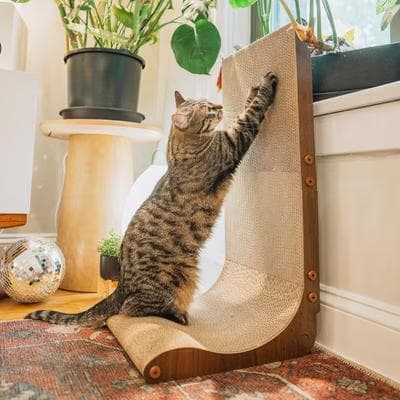
Curved cardboard wall scratcher with a wood frame that protects walls and gives cats a satisfying vertical scratch surface.
Petful may earn a commission when you click through to Chewy, at no extra cost to you.
Tabby American Shorthair patterns and colors
Tabby is a pattern family found across many breeds and mixed-ancestry cats. It is not another word for American Shorthair. A pedigreed American Shorthair can be tabby, while most tabby cats are not documented American Shorthairs.
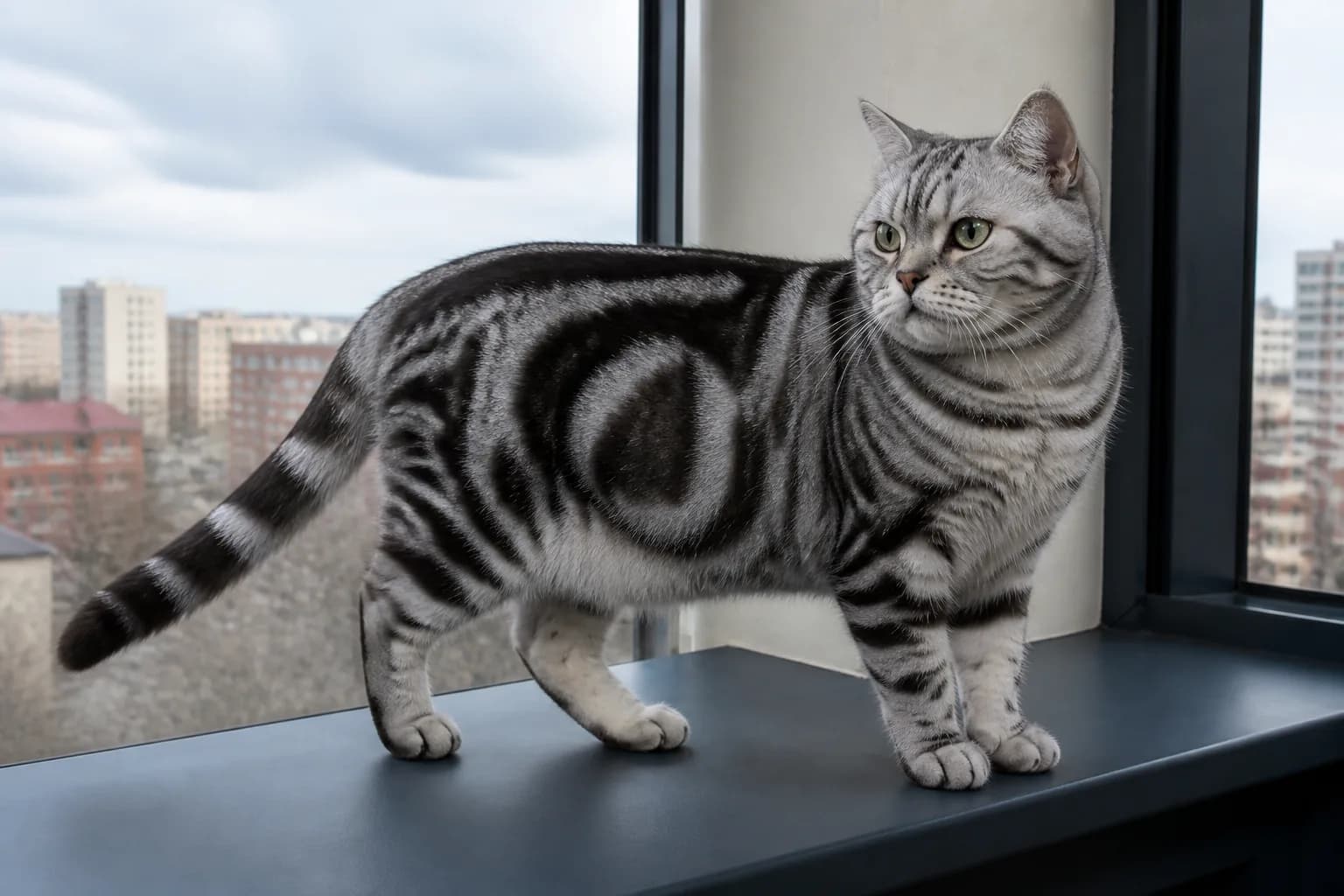
The classic tabby pattern has broad, flowing markings that may form a bull's-eye or oyster-shaped swirl on the side. Mackerel tabby markings are narrower and run more vertically from the spine. Patched tabby adds areas of red or cream to another tabby color.
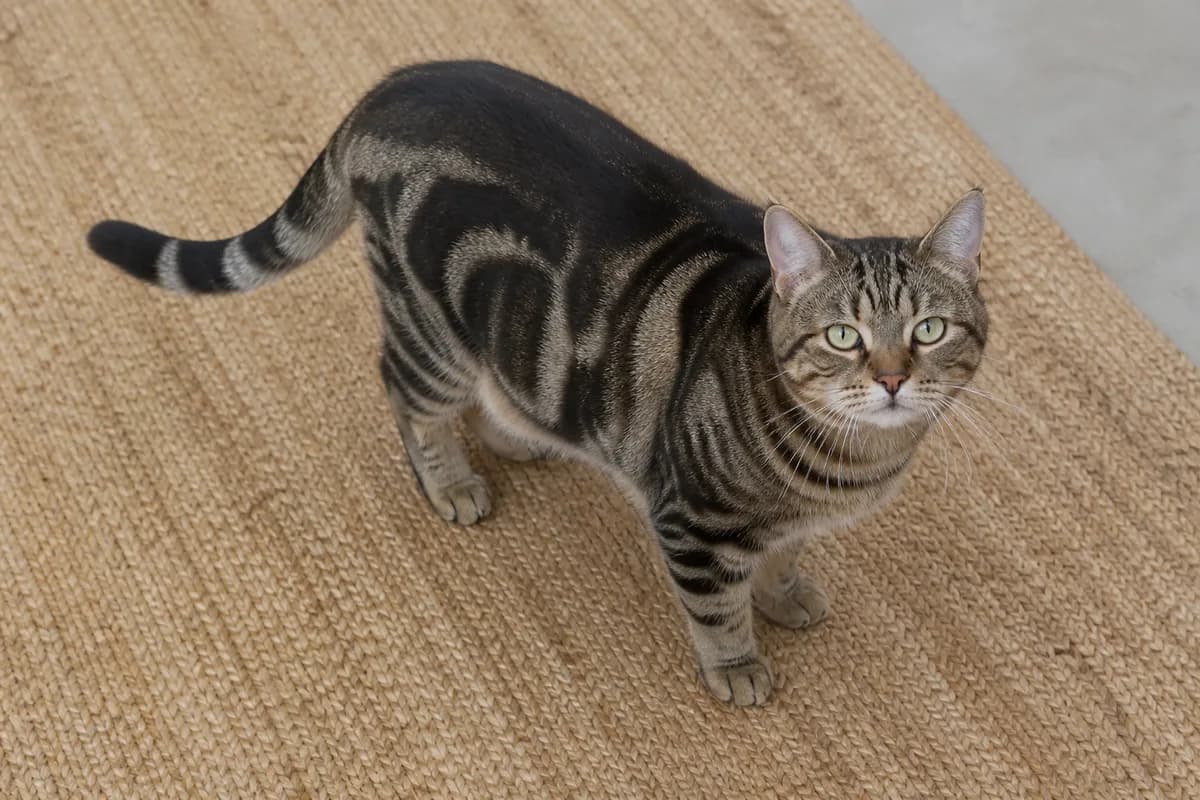
Common American Shorthair tabby descriptions include:
- Silver tabby: Black markings over a clear silver ground, often with high contrast.
- Brown tabby: Black or dark brown markings over a warm brown ground.
- Blue tabby: Deeper blue-gray markings over a paler blue ground.
- Red tabby: Deeper red markings over a red or orange ground.
- Cream tabby: Deeper cream markings over a paler cream ground.
- Patched tabby: Tabby markings combined with defined red or cream patches.
Silver classic tabby became visually associated with the breed because the pattern shows the broad body and dense coat dramatically. That recognition creates two risks: people may assume every silver tabby is an American Shorthair, or assume a non-silver pedigreed cat is less authentic. Both are wrong.
Petful's complete tabby cat guide covers classic, mackerel, spotted, ticked, and patched patterns across cats. This page owns how those visual layers appear within the American Shorthair standard.
A practical tabby-reading exercise
Start with the side of the body. Broad circular swirls support a classic description, while many narrow vertical bars support mackerel. Then check the legs and tail for rings, the face for cheek lines, and the forehead for the familiar tabby marking. Pattern can be less obvious on red and cream coats or in photographs with flat light.
Next identify ground color separately from markings. A brown tabby is not merely “brown,” and a silver tabby is not a gray solid. The contrast between ground and markings is part of the description. Patched tabbies add areas of red or cream, so record both the tabby color and the patches.
Avoid using a broken stripe as proof of a spotted pattern from one image. Movement, coat direction, and camera compression can make narrow markings appear interrupted. Observe both sides and use several natural positions.
Pattern-friendly enrichment surfaces
A sturdy Yaheetech multi-level cat tree can provide climbing and scratching while keeping a tabby coat visible in natural household behavior. Photograph the cat without forcing a pose, flash, or restraint. Anchor the tree as directed and keep the background simple if the goal is to document pattern.
Silver, smoke, shaded, and cameo effects
Silver, smoke, and shaded terms describe how pigment is distributed along the hair shaft and across the coat. They can be hard to distinguish in a single photograph because surface color, undercoat, movement, and light all matter.
In a smoke coat, the outer surface can look strongly colored while the base of the hair is pale or white. The contrast becomes more obvious as the cat moves or when the coat is parted gently. A shaded coat has a lighter overall appearance because the colored tipping covers less of each hair. Chinchilla or shell expressions are lighter still, with color concentrated near the tips.
Inspecting hair-shaft effects
Cameo descriptions apply red or cream-related pigment to a silver or shaded effect. The terminology is precise in a registry context. Owners do not need to guess a show classification from snapshots. A breeder or registry record should supply the registered color, and a judge evaluates it under the complete standard.
To inspect these effects safely:
- Use indirect daylight rather than flash.
- Let the cat stand or walk naturally.
- Part a small area of coat with fingers instead of tugging hair.
- Compare roots, mid-shaft color, and tips.
- Stop if the cat moves away or shows tension.
The goal is descriptive accuracy, not winning an argument about a photo online. If the coat changes suddenly, focus first on health, grooming, diet, parasites, or environmental exposure rather than registry vocabulary.
Photographing silver and smoke accurately
Photograph the cat beside a neutral gray or beige surface, turn off strong color filters, and expose for the coat rather than the bright background. Capture one full-body image and one gentle close view with the hair naturally separated by movement. Do not blow air, backcomb, or repeatedly part a sensitive area to reveal pale roots.
Save the original file. Automatic phone enhancement can increase contrast, cool the color temperature, or brighten shadows enough to change the apparent classification. A consistent unedited reference is more useful for comparing coat changes over time.
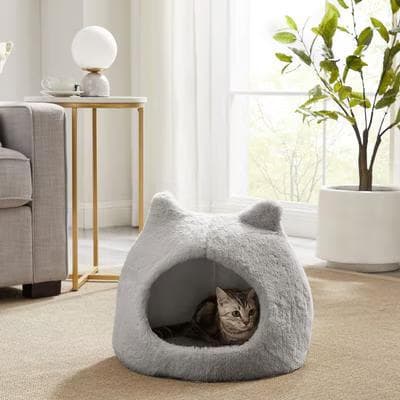
Covered, igloo-style cat bed in soft plush with a water-resistant bottom, giving cats a cozy enclosed spot to curl up. Grey.
Petful may earn a commission when you click through to Chewy, at no extra cost to you.
Red, orange, cream, white, and blue American Shorthairs
Red is the formal color term often called orange or ginger in everyday speech. A red American Shorthair commonly shows visible tabby markings, even when the overall impression is a rich orange coat. Cream is the dilute expression of red and appears paler and softer.
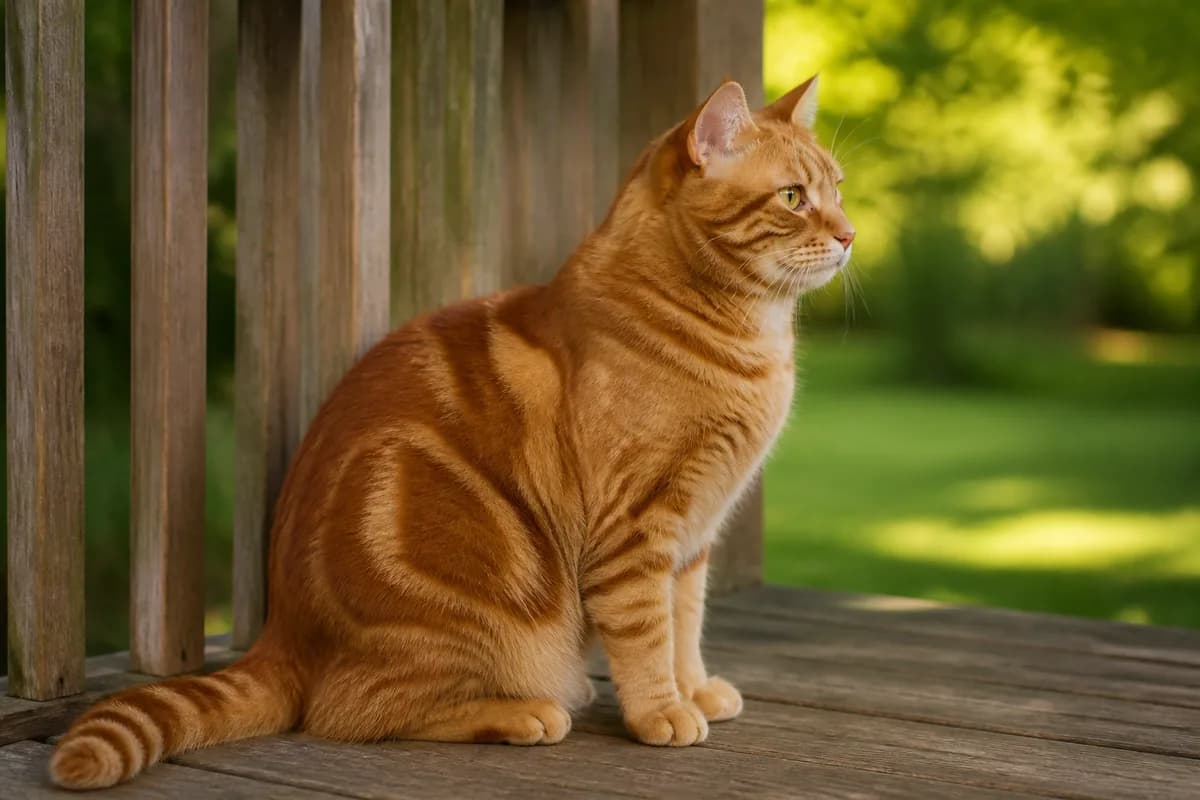
White American Shorthairs have an unpigmented coat rather than a pale version of another color. Eye color can vary within allowed combinations. White coat and blue eyes can be associated with congenital deafness risk in cats generally, but appearance cannot diagnose hearing status. Ask a veterinarian about objective hearing assessment when there is a concern.
Blue is the registry term for a diluted black that appears blue-gray. It should not be confused with silver, which involves pale hair bases or ground color contrasted with darker markings or tipping. A blue-and-white cat has blue pigmented areas plus white spotting.
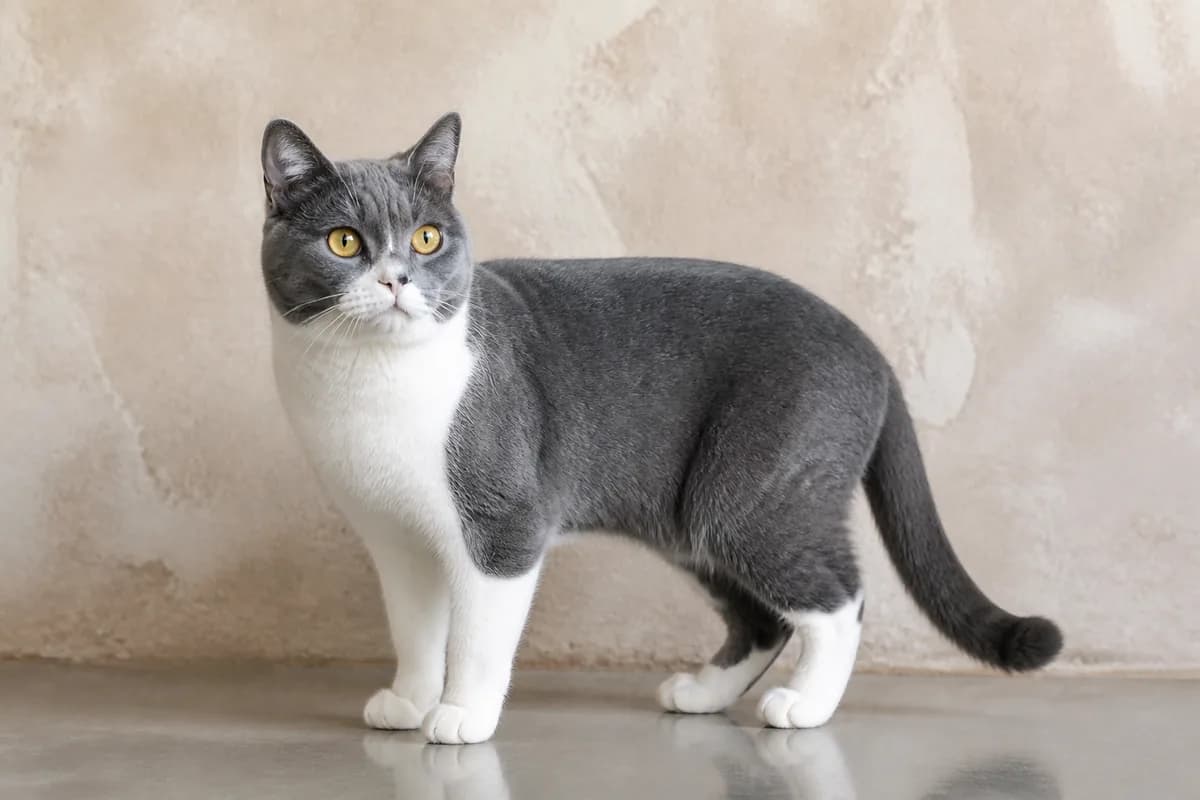
Helpful distinctions include:
- Red versus cream: Cream is the dilute expression and looks paler.
- Black versus blue: Blue is the dilute expression and looks gray-blue.
- Blue versus silver: Blue affects the pigment color; silver affects pigment distribution and contrast along the hair.
- White versus very pale cream: White has no cream pigment in the coat.
Eye color belongs to the complete description
Eye color can complement a coat description, and the breed standard specifies allowed relationships for particular colors. Gold and copper tones are familiar in many American Shorthairs, while other accepted combinations occur. White cats may have blue, gold, or odd-colored eyes within the appropriate standard context.
Do not use eye color as an ancestry shortcut. Gold eyes occur in many cats, and blue eyes do not make a white shorthaired cat a particular breed. Photograph eyes without flash, which can create reflection and false color. Squinting, discharge, cloudiness, unequal pupils, or a sudden color change is a veterinary concern rather than a coat-classification puzzle.
A Best Friends by Sheri covered cat bed gives a cat a warm resting choice, but fabric color can alter how the coat appears in photographs. Neutral backgrounds and daylight are more useful when documenting white, cream, blue, or silver. Keep the bed clean and let the cat choose whether to use the enclosed space.
Can coat color identify an American Shorthair?
No. Coat color can tell you what a cat looks like, not where its ancestors were registered. Black, tuxedo, calico, tortoiseshell, tabby, orange, white, cream, blue, smoke, and bicolor coats all occur outside the breed.
Use a whole-evidence approach:
- Appearance: Observe coat, body, head, legs, tail, and movement without treating any one feature as proof.
- History: Ask where the cat came from and whether names, dates, and veterinary records are consistent.
- Pedigree: Review traceable ancestors and registration information tied to the cat.
- Registry: Confirm the documentation through the appropriate registry when identity affects a purchase or breeding claim.
- A silver classic tabby, black coat, tuxedo pattern, calico coat, or broad face cannot establish American Shorthair ancestry. The dedicated American Shorthair versus Domestic Shorthair comparison explains how to grade evidence without guessing.
Petful's American Shorthair vs Domestic Shorthair guide owns this identification decision. The central distinction is documentary: American Shorthair is a standardized registered breed, while Domestic Shorthair is a broad population label.
The broader American Shorthair breed guide explains the registered breed's history, body, personality, and care. Use it with pedigree records so a coat description never becomes an unsupported breed claim.
Color-specific marketing should receive the same scrutiny as any other seller claim. “Rare black,” “tuxedo bloodline,” or “exclusive calico” wording does not replace a pedigree, health records, a written contract, and independent seller verification. The American Shorthair kitten guide explains the before-deposit checks.
Coat care across colors and patterns
Every recognized color has the same basic coat-care needs. Weekly combing is a practical starting point for many American Shorthairs, with more frequent attention during seasonal shedding or when an older cat grooms less effectively. Black and blue coats may show dandruff clearly, while white coats can show dirt or staining, but visibility does not equal severity.
- Choose grooming frequency for the individual coat and cat, not for a color stereotype. New hair loss, redness, odor, sores, scaling, matting, excessive licking, or sensitivity deserves veterinary attention regardless of whether the coat is black, silver, calico, or white.
Use a simple routine:
- Comb in the direction the coat lies and stop before pulling becomes uncomfortable.
- Check the skin while separating hair gently.
- Avoid human shampoo, dye, bleach, brightening agents, and essential oils.
- Photograph a new coat change in the same light and location for comparison.
- Record appetite, behavior, medications, grooming changes, and environmental exposures.
A securely mounted Necoichi wall scratcher supports normal scratching and stretching while keeping loose fibers away from food and water areas. Match the angle to the cat's observed preference and inspect mounting points. Scratching benefits every coat color because it is about claws, muscles, marking, and behavior rather than fur.
The Travel Cat carrier is useful a second time when a skin or coat change needs examination. Practice voluntary entry before a concern appears, line the base with a washable surface, and secure the carrier in the vehicle. A clear photograph helps, but it cannot replace hands-on veterinary assessment.
Choosing a color without compromising buying safety
It is reasonable to admire a particular coat. It is not reasonable to let color override health, socialization, seller transparency, or household fit. Popular modifiers such as black American Shorthair kitten, tuxedo kitten, or grey American Shorthair kitten often lead to image-heavy listings where ancestry is the least verified part.
Use Petful's American Shorthair kitten and breeder guide to verify the seller, pedigree, health records, environment, contract, and payment request. A black American Shorthair kitten, American Shorthair tuxedo kitten, or grey American Shorthair kitten should pass the same buying-safety checks as any other coat.
Tell a responsible breeder that color is a preference, not a deadline. Litters cannot be ordered like a catalog, and ethical placement may prioritize temperament, home needs, and the breeder's knowledge of each kitten. A buyer who will accept only one marking should be prepared to wait without pressuring a breeder to promise an unborn coat.
Put evidence before a preferred coat
When meeting a kitten, look beyond color. Observe comfortable movement, curiosity, recovery after a small surprise, litter and food access, handling choices, and the relationship with the mother and littermates. Then verify the documents and seller practices independently.
The American Shorthair price guide helps compare acquisition and lifetime costs without treating a fashionable color as proof of value. Color-specific demand can affect a seller's asking price, but it does not replace health, ancestry, and welfare evidence.
Use this priority order:
- Verify seller identity, records, contract, health care, and the kitten's environment.
- Confirm documented American Shorthair ancestry if the breed claim affects the decision.
- Evaluate the individual kitten's behavior, comfort, and household fit.
- Treat color as a preference only after the higher-priority evidence is sound.
Prepare the home for the cat rather than for the coat. The Yaheetech cat tree provides vertical territory across colors, while the Necoichi wall scratcher adds a different scratching orientation. Place resources according to traffic flow and feline preference, not where they best match a room palette.
A second Best Friends by Sheri covered bed reference is relevant for providing an optional protected rest area during decompression. Some cats prefer an open perch, so offer choices and never pull a hiding cat from an enclosed bed. Color does not predict whether a cat will use a cave-style space.
American Shorthair color FAQs
These answers resolve the captured identification question and the most useful color follow-ups without turning coat appearance into ancestry evidence.
You cannot confirm American Shorthair ancestry from color alone. How can I tell if my cat is an American Shorthair with reasonable confidence? Start with pedigree records and registry documentation tied to the individual, then compare the whole cat with the official standard as a consistency check. A silver tabby, broad face, short dense coat, or sturdy body can support a resemblance description, but those visible traits also occur outside the breed and cannot prove ancestry.
Silver tabby is the breed's most recognizable color and pattern combination, especially the bold classic tabby with black swirls over a silver ground. Recognition should not be confused with a complete population count, and many other colors are standard-recognized.
Yes. Solid black is compatible with the American Shorthair standard when the cat also belongs to the documented breed population. A black coat by itself is common across cats and does not establish pedigree.

Coreen Saito is a pet writer and longtime shelter volunteer with more than a decade in animal rescue. She covers cat behavior, breed care, and the small, ordinary science of sharing a life with companion animals, with a particular focus on honest takes about the products and decisions that actually matter. At home in Arizona, she's outranked by Mac (a dog with the loudest opinion in the house), Rebel (a cat who governs by quiet authority), and Meri (an orange tabby who runs the late shift and the laundry basket). She writes about all three, plus the rescues that keep coming through her life, at LifeWithMinty.com.
Sign up for expert-backed reviews and safety alerts all in one place.