Tuxedo Cat Colors and Markings: Grey Tuxedo Cats and Beyond
A grey tuxedo cat is a black-and-white tuxedo softened to smoke by the dilution gene. See every tuxedo color and the bicolor marking grades from locket to van, with the genetics behind each one.
Petful is reader supported. As an affiliate of platforms like Amazon and Chewy, we may earn a commission when you buy through links on this page. There is no extra cost to you.
A grey tuxedo cat is not a breed or even a separate color, but a black-and-white tuxedo whose dark coat has been softened to smoke or blue by a single recessive gene, and according to the geneticists who mapped feline coat color at the University of Bath and University of Edinburgh in their 2016 study, the entire tuxedo look comes down to one thing: a white-spotting gene that lets pigment cells cover only part of the body. Tuxedo cat colors run far past the classic black-and-white that most people picture. The same bicolor pattern shows up in grey and white, orange and white, brown, and long-haired coats, and it sorts into a tidy scale of white-spotting grades from a tiny chest locket all the way to the mostly-white van. This page is the full color and marking hub for the tuxedo pattern, with one labeled photo for every variant so you can match the cat in front of you to its exact name.
- 1A grey tuxedo cat is a black-and-white tuxedo turned smoky by the dilution gene; it is a coat pattern, not a breed.
- 2The tuxedo look comes from the white-spotting (piebald) gene in the KIT family, graded low to high from locket to van.
- 3Tuxedo coats come in grey, orange, brown, and long-haired versions; only the orange ones skew heavily male.
- 4Unlike calico and tortoiseshell, the tuxedo pattern is not sex-linked, so tuxedo cats are roughly 50/50 male and female.
- 5Color and markings do not set price or personality; a tuxedo from a shelter typically costs $50-200.

Sign up for expert-backed reviews and safety alerts all in one place.
What Is a Grey Tuxedo Cat?
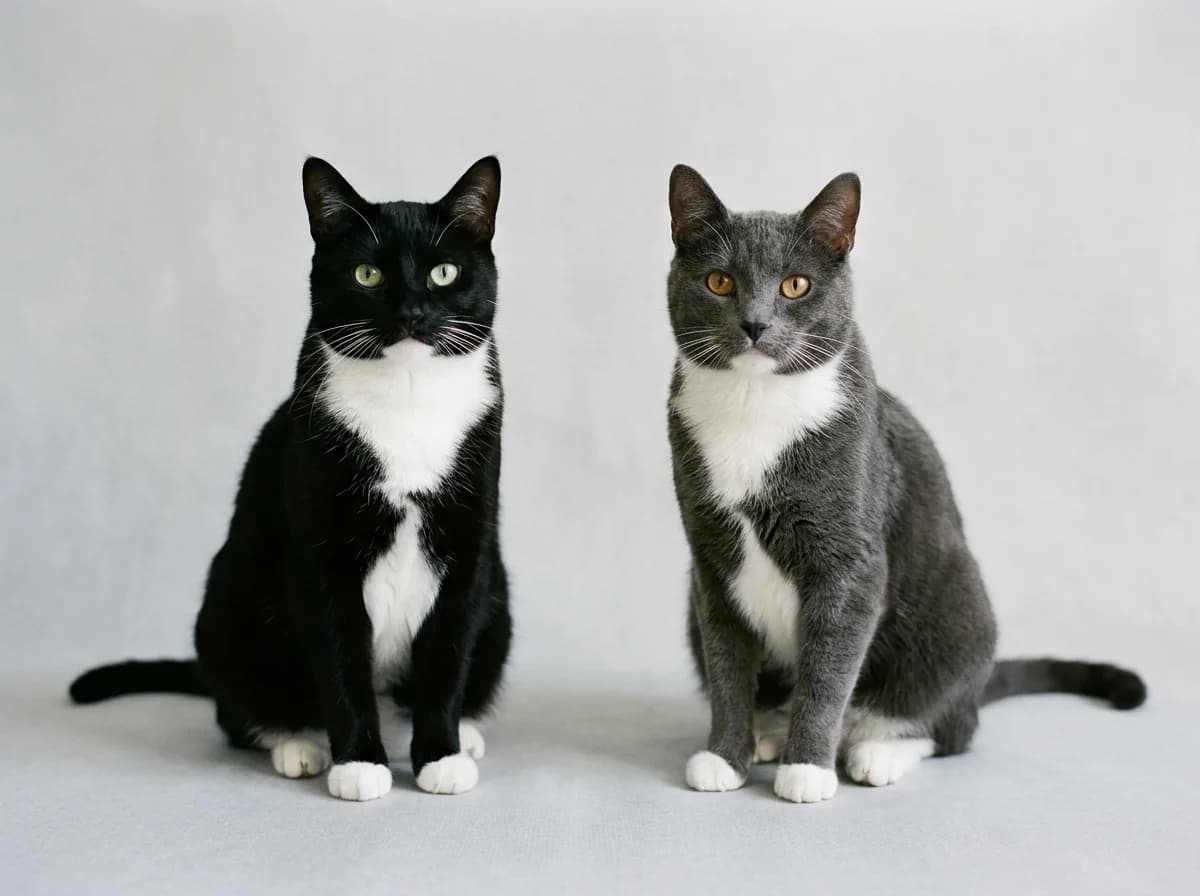
A grey tuxedo cat is a cat that wears the tuxedo pattern (a dark coat with white on the chest, belly, paws, and often the chin) where the dark color happens to be grey or blue-grey instead of jet black. The word "tuxedo" describes a marking layout, not a coat color and not a breed. Any cat whose white is limited to the underside and feet, with color over the back, shoulders, and head, reads as a tuxedo because it looks like a person in black-tie formalwear.
That distinction matters, because people search for a "grey tuxedo cat breed" and there is no such thing. The Cat Fanciers' Association (CFA) and The International Cat Association (TICA) recognize bicolor coats within dozens of breeds, but neither registers "tuxedo" as a breed of its own. A grey tuxedo cat can be a random-bred domestic shorthair, a British Shorthair, a Maine Coon, or a Norwegian Forest Cat. The pattern is the costume; the breed is who is wearing it.
The classic tuxedo is black-and-white. The grey version is simply that same cat with its black pigment diluted, which is why the formal cat-fancy term for a grey tuxedo is a "blue and white bicolor." Casual owners say grey or gray (both spellings describe the same coat, and Google treats gray tuxedo cat and grey tuxedo cat as the same query), while breeders and registries say blue.
- A tuxedo is a specific amount of white spotting (color over the back and head, white on the chest, belly, and paws). It is a point on a sliding scale that runs from a tiny locket up to a nearly all-white van pattern, and it can appear in any breed.
Tuxedo Cat Colors: Every Variation Beyond Black and White
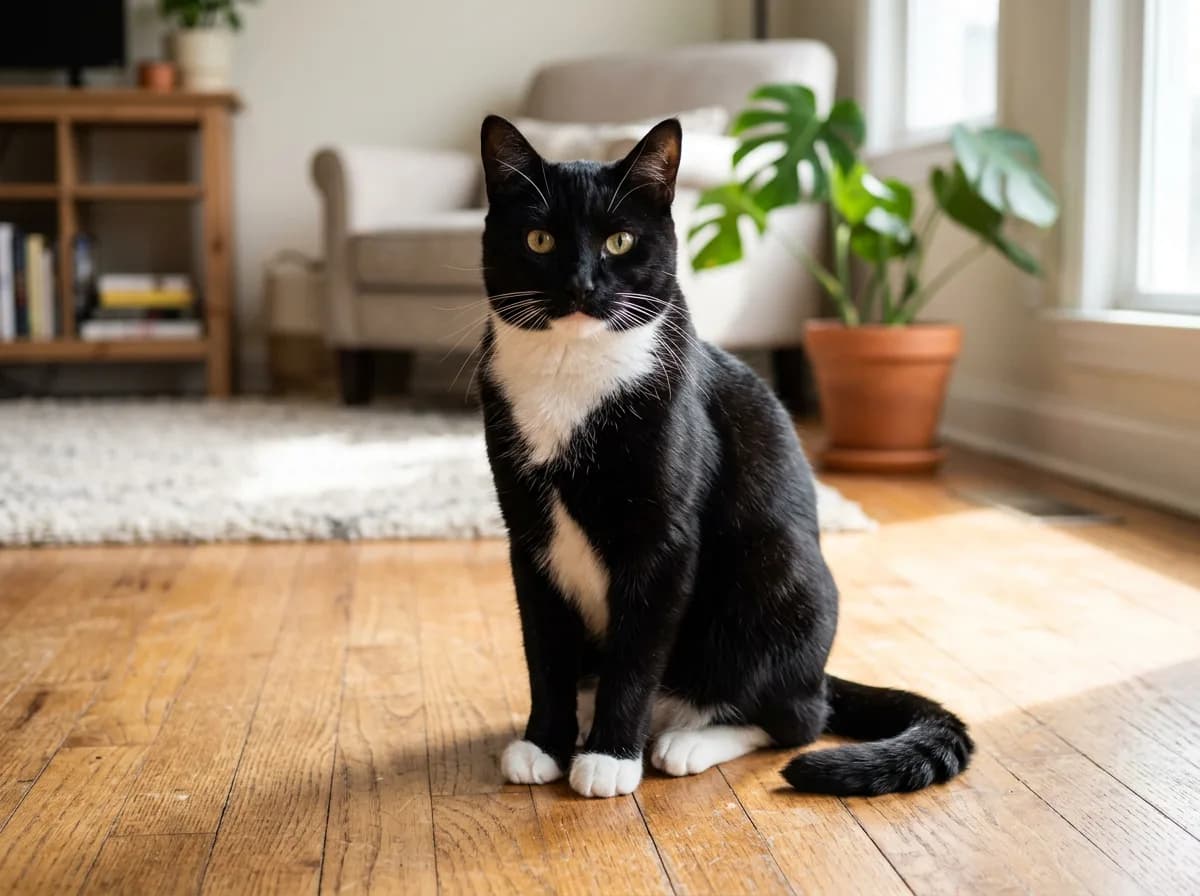
Tuxedo cat colors are far broader than the black-and-white default. Because the tuxedo pattern is just white spotting laid over whatever base color a cat carries, the dark half of the coat can be any color a cat's genetics produce. Here is the full range, from common to genuinely rare, so you can see where a grey coat sits among the rest.
| Color Variant | Genetics Behind It | How Common |
|---|---|---|
| Black and white | Standard black (eumelanin) plus white spotting | Most common tuxedo by far |
| Grey and white (blue and white) | Black diluted by the recessive dilution gene | Common but rarer than black and white |
| Orange and white | Sex-linked orange gene, mostly males | Common, strongly male-skewed |
| Cream and white | Orange diluted by the dilution gene | Less common, soft pale version of orange |
| Brown and chocolate | Recessive brown variants of black | Rare, mostly in specific breed lines |
| Lilac and cinnamon | Diluted chocolate and diluted cinnamon | Among the rarest tuxedo colors |
| Tabby and white | A tabby-patterned base under the white spotting | Common, sometimes called a "tuxedo tabby" |
The black-and-white tuxedo is the original and still the most common. The white sits exactly where a dinner jacket would expose a shirt front, and the contrast is sharpest in this version, which is why "tuxedo cat" almost always brings a black-and-white cat to mind first.

Never Scoop Again® with the Whisker Litter-Robot, the smart self-cleaning automatic litter box. Monitor visits and track weights for better overall care in the Whisker® app. Multi-cat friendly.
Petful may earn a commission when you click through to Whisker, at no extra cost to you.
Grey Tuxedo Cats and the Dilution Gene
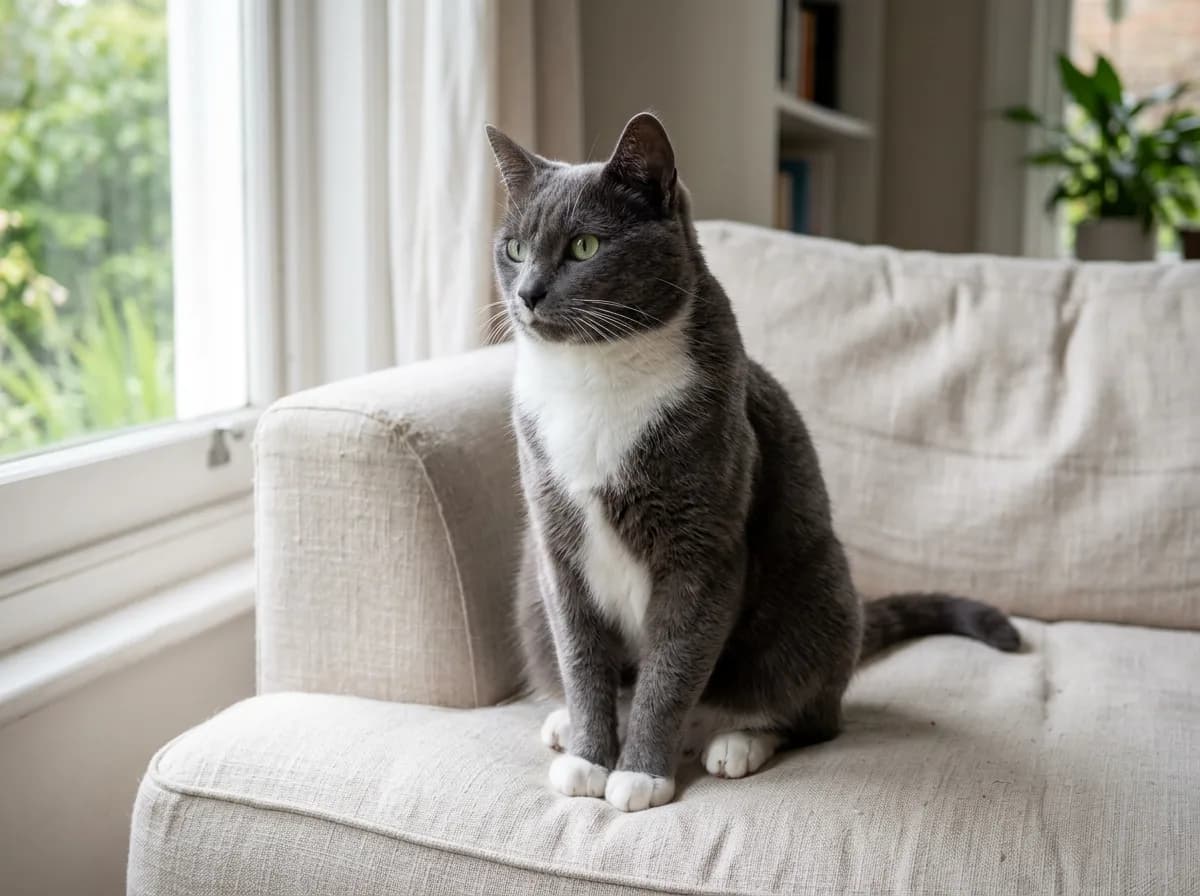
A grey tuxedo cat exists because of the dilution gene, properly the MLPH (melanophilin) gene. Dilution is recessive, so a cat needs two copies (d/d) for it to show. When a cat inherits two diluted copies, the gene changes how pigment granules clump in each hair, scattering them so the eye reads the color as paler. Black becomes blue-grey, and orange becomes cream.
So a grey-and-white tuxedo is genetically a black-and-white tuxedo with the dilution gene turned on. The cat would have been black were it not for those two recessive copies. This is the single fact no top-ranking page explains clearly, even though it is the exact question behind the head term: why is my tuxedo grey instead of black?
Dark Grey vs Blue Tuxedo Cat: The Terminology
People describe these cats three ways, and all three point at the same coat. A "dark grey tuxedo cat" is a blue tuxedo whose grey reads deep and slate-like rather than pale. A "blue tuxedo cat" is the cat-fancy name for any grey-and-white tuxedo, because registries call diluted black "blue." A casual owner just says grey. There is no genetic difference between a dark grey tuxedo cat and a blue tuxedo cat; the shade you see depends on coat length, lighting, and the individual cat's depth of pigment, not on a separate gene.
- Grey and blue describe a solid diluted-black coat. A "smoke" coat is different: the hair is dark at the tip and white at the root, caused by a silver gene, not by dilution. A true grey tuxedo is solid-colored to the root.
If a grey tuxedo also carries the tabby pattern, you will see faint tabby striping inside the grey areas, which is sometimes called a blue tabby and white. The white spotting still defines the tuxedo layout; the tabby just patterns the colored half. There is more on this in Petful’s guide to Grey Tabby kitten.
Orange Tuxedo Cats
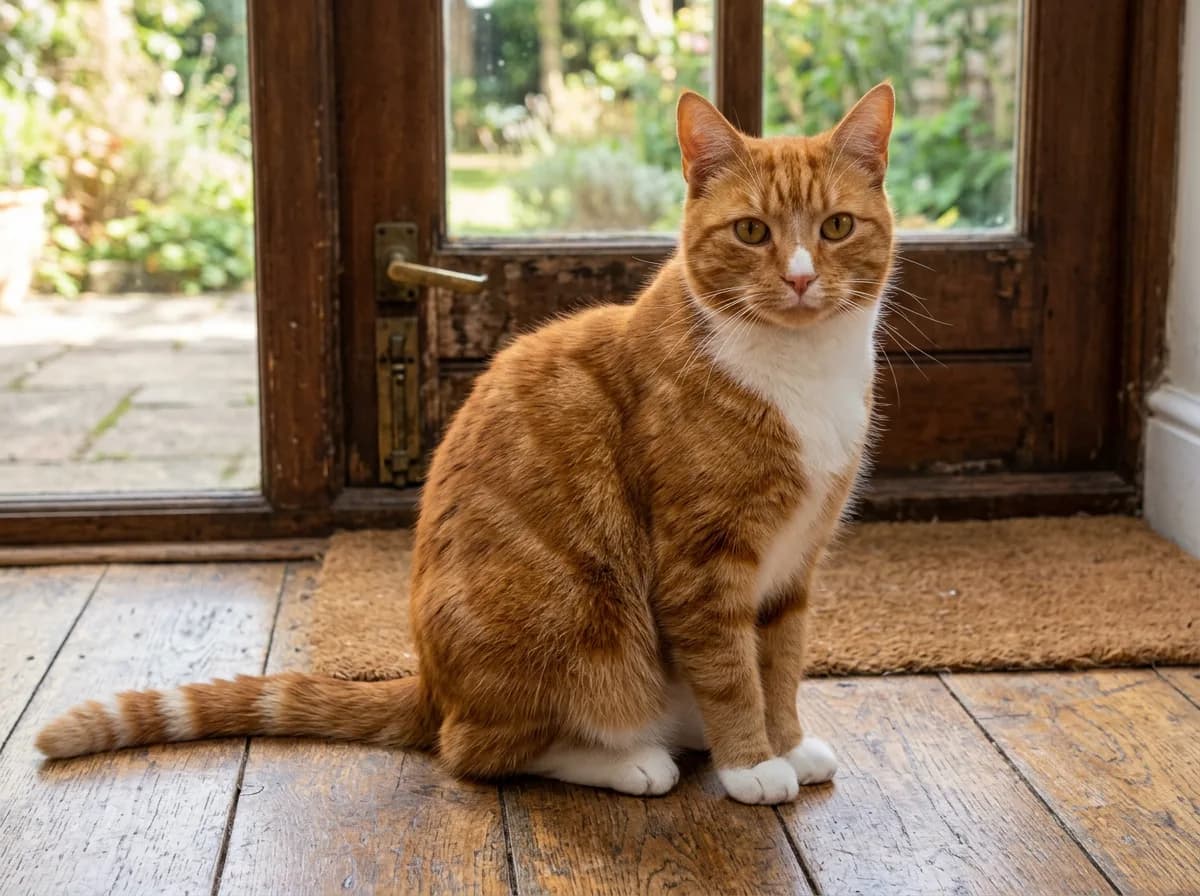
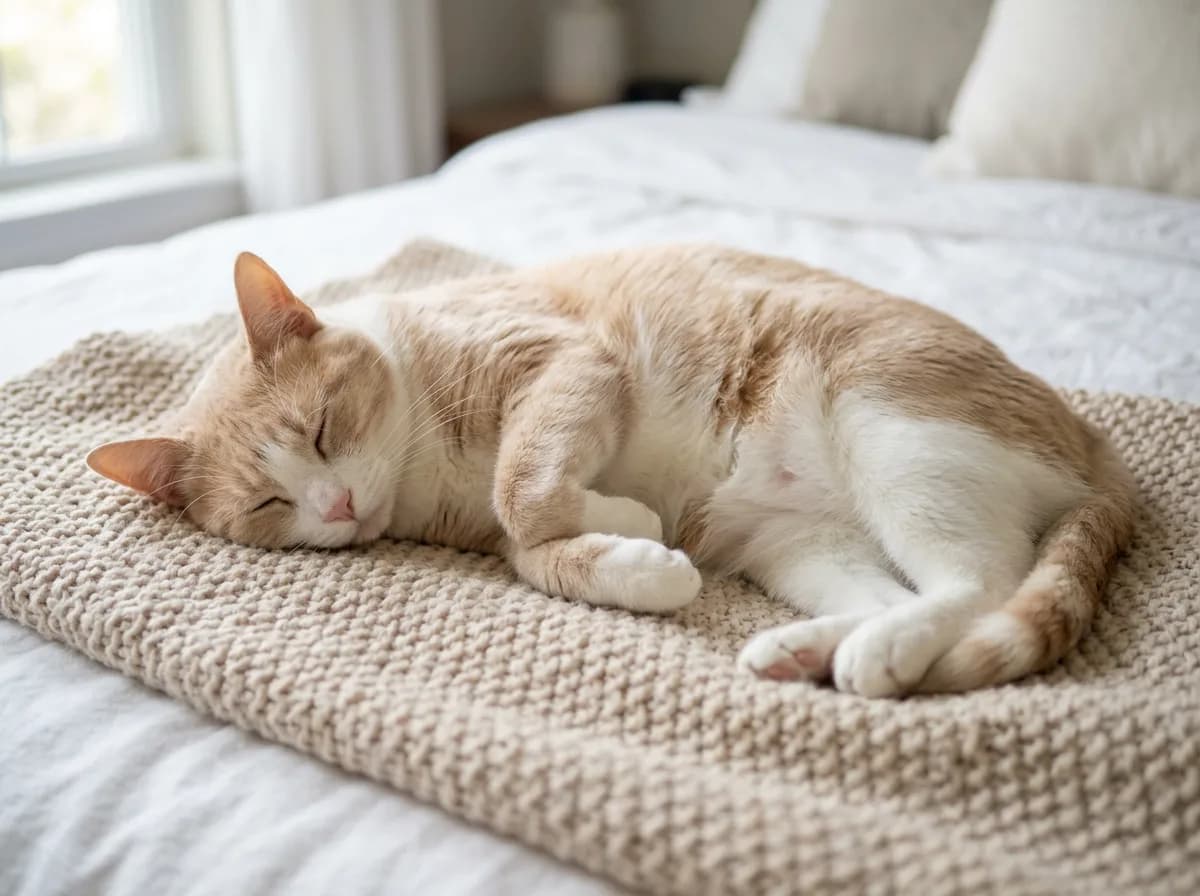
An orange tuxedo cat is a tuxedo whose dark color is the warm red-orange produced by the sex-linked orange gene rather than black. Because the orange gene sits on the X chromosome, orange coats follow a different math than every other tuxedo color: most orange cats, tuxedo or not, are male. A male needs only one copy of orange (he has one X) to be fully orange, while a female needs two, so orange tuxedos lean strongly male.
Orange almost always carries visible tabby striping, because the gene that would erase the striping (a non-agouti modifier) does not fully hide it in red coats. That is why an orange tuxedo usually looks like a ginger tabby wearing a white shirt. The dilute version of orange is cream, so a cream-and-white tuxedo is to an orange tuxedo what a grey tuxedo is to a black one: the same cat with the dilution gene switched on.
- The orange gene is sex-linked on the X chromosome. The white-spotting gene that makes the tuxedo pattern is NOT sex-linked, so it is only the orange color, not the tuxedo layout, that skews these cats male. Black, grey, and brown tuxedos stay roughly 50/50.
Brown, Chocolate, and Other Rare Tuxedo Colors
Beyond black, grey, and orange, the tuxedo pattern can sit over the rarer base colors a cat carries. A brown tuxedo cat (a real and frequently searched variant) has a deep warm-brown dark half instead of black. Chocolate and its diluted form, lilac, come from recessive variants of the black pigment gene and show up mostly in deliberately bred lines such as some Oriental and Devon Rex cats. Cinnamon and its dilute, fawn, are rarer still.
These colors are uncommon in random-bred cats because they need recessive copies from both parents. When you do see a chocolate or lilac tuxedo, it is usually a purebred or a cat with purebred ancestry, which is also why these colors carry a touch of breed pricing rather than the pattern itself adding value.
- A rare tuxedo color (brown, lilac, cinnamon) is simply an uncommon combination of normal coat-color genes. It does not make a cat more fragile, and the pattern adds no premium. Price tracks the breed, not the rarity of the coat color.
Long-Haired Tuxedo Cats
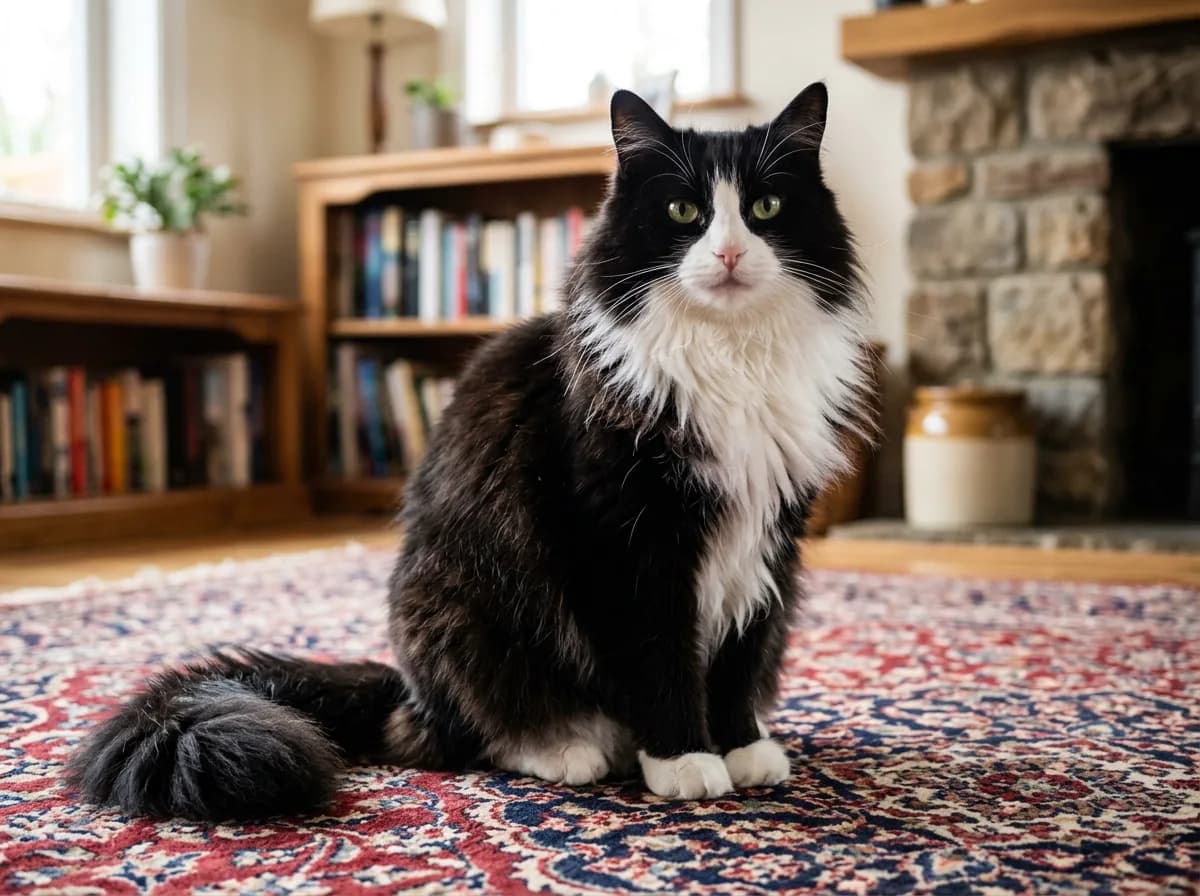
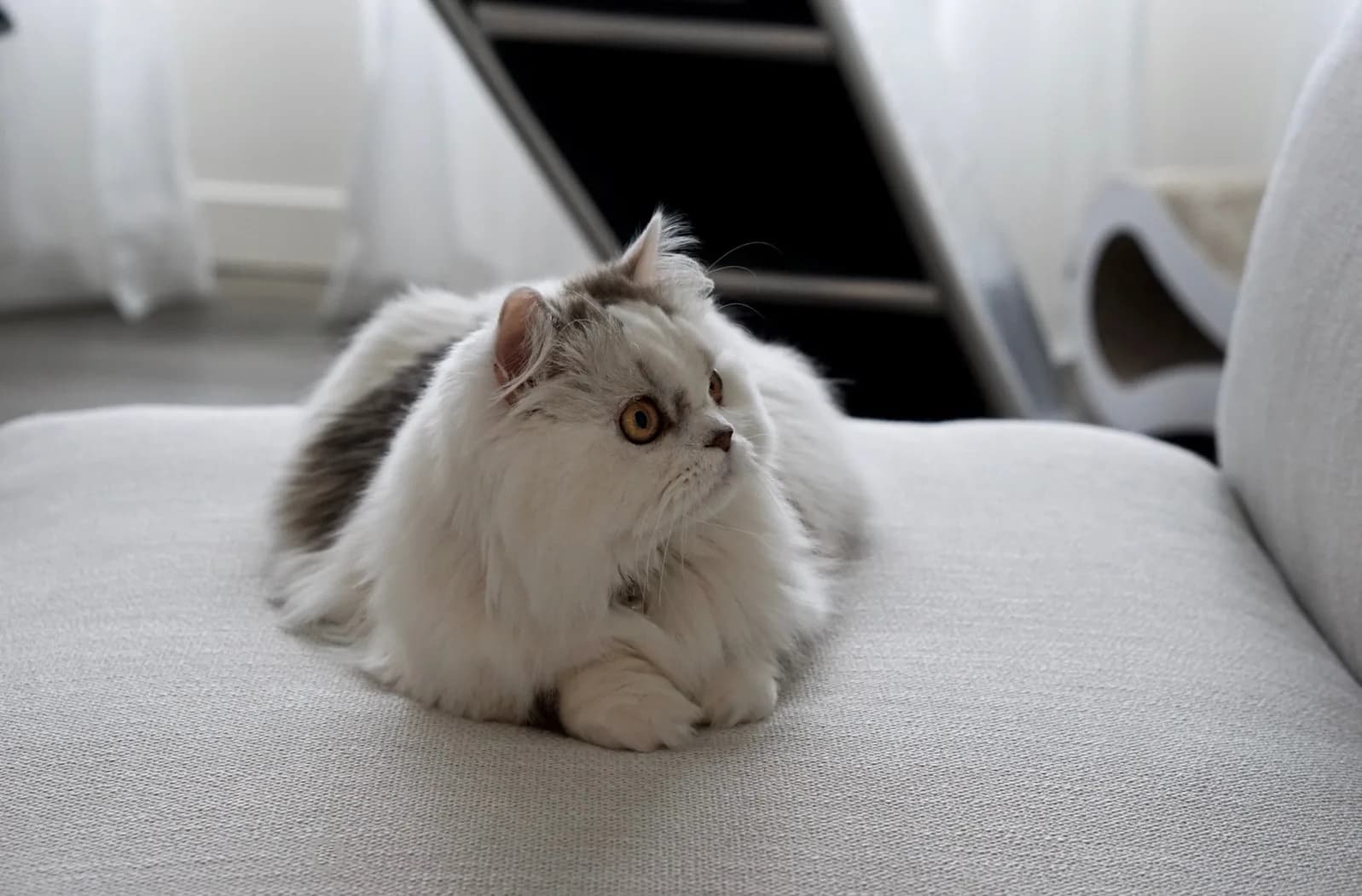
A long haired tuxedo cat wears the exact same bicolor pattern, just on a long, plush coat instead of a short one. A fluffy grey tuxedo cat, for example, is a blue-and-white tuxedo whose hair length comes from a separate recessive gene (the long-hair variant of FGF5) that has nothing to do with either the white spotting or the dilution. Coat length and coat pattern are inherited independently, which is why you can find a tuxedo in every length from sleek to extravagantly fluffy.
Several breeds carry the tuxedo pattern in a long coat. The Maine Coon is the best known, a large breed in which CFA recognizes bicolor, so a black-and-white or blue-and-white Maine Coon is a genuine tuxedo Maine Coon. The Norwegian Forest Cat and Siberian both produce dense, water-resistant tuxedo coats, and the Persian appears in bicolor as well, often as a calico-or-bicolor Persian rather than a high-contrast tuxedo. Shorter-coated breeds that wear the tuxedo pattern include the British Shorthair (whose famous blue coat makes a striking grey tuxedo when paired with white), the American Shorthair, the Manx, the Turkish Angora, and the Cornish Rex.

63-inch multi-level cat tree with scratch posts, hammock, plush perches, and dangling toys. Vertical territory is non-negotiable for high-energy climbing breeds like the Bengal.
Petful may earn a commission when you click through to Chewy, at no extra cost to you.
- A long-haired tuxedo needs two or three brushings a week to prevent mats, especially in the white belly and "armpit" areas where tangles hide. The pattern does not change grooming needs; coat length does. The white sections show dirt faster, so a damp cloth wipe keeps the "shirt front" looking crisp.
Bicolor Marking Grades: From Locket to Van
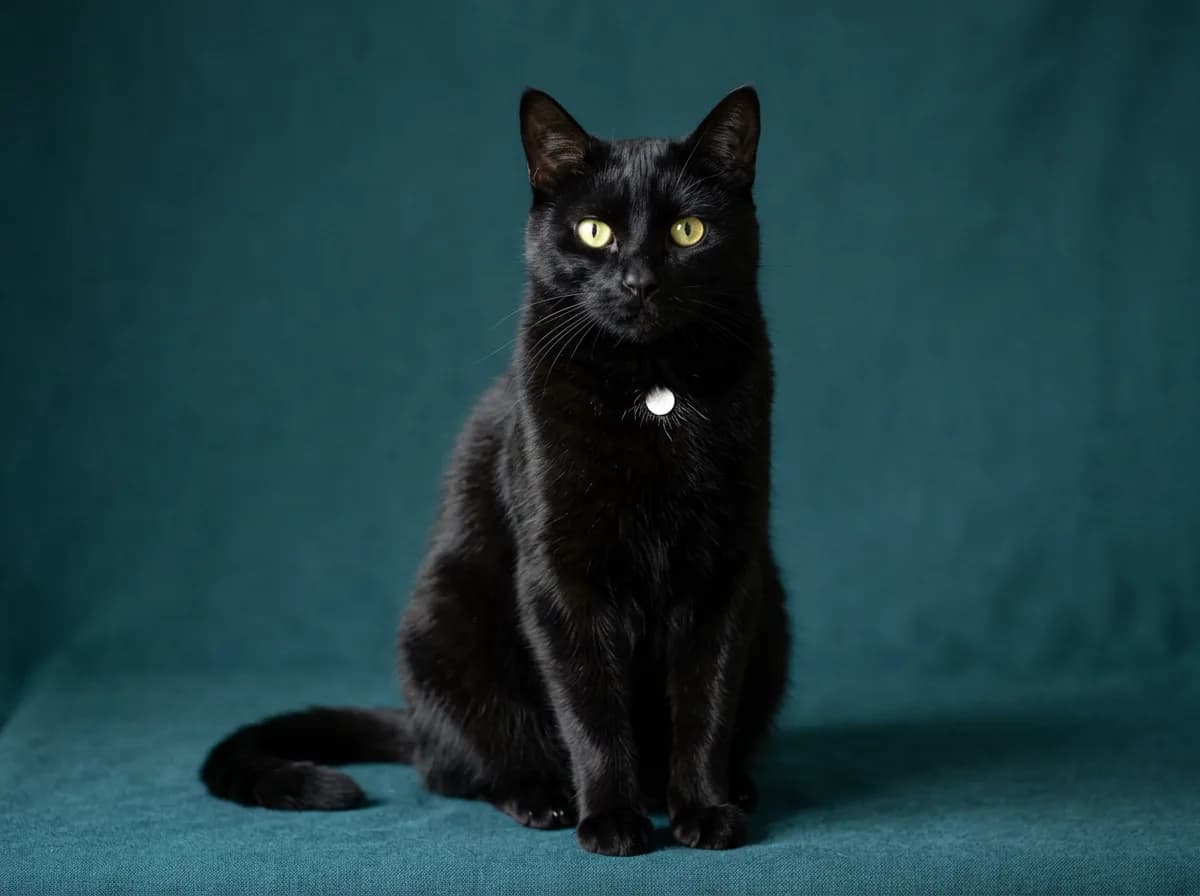
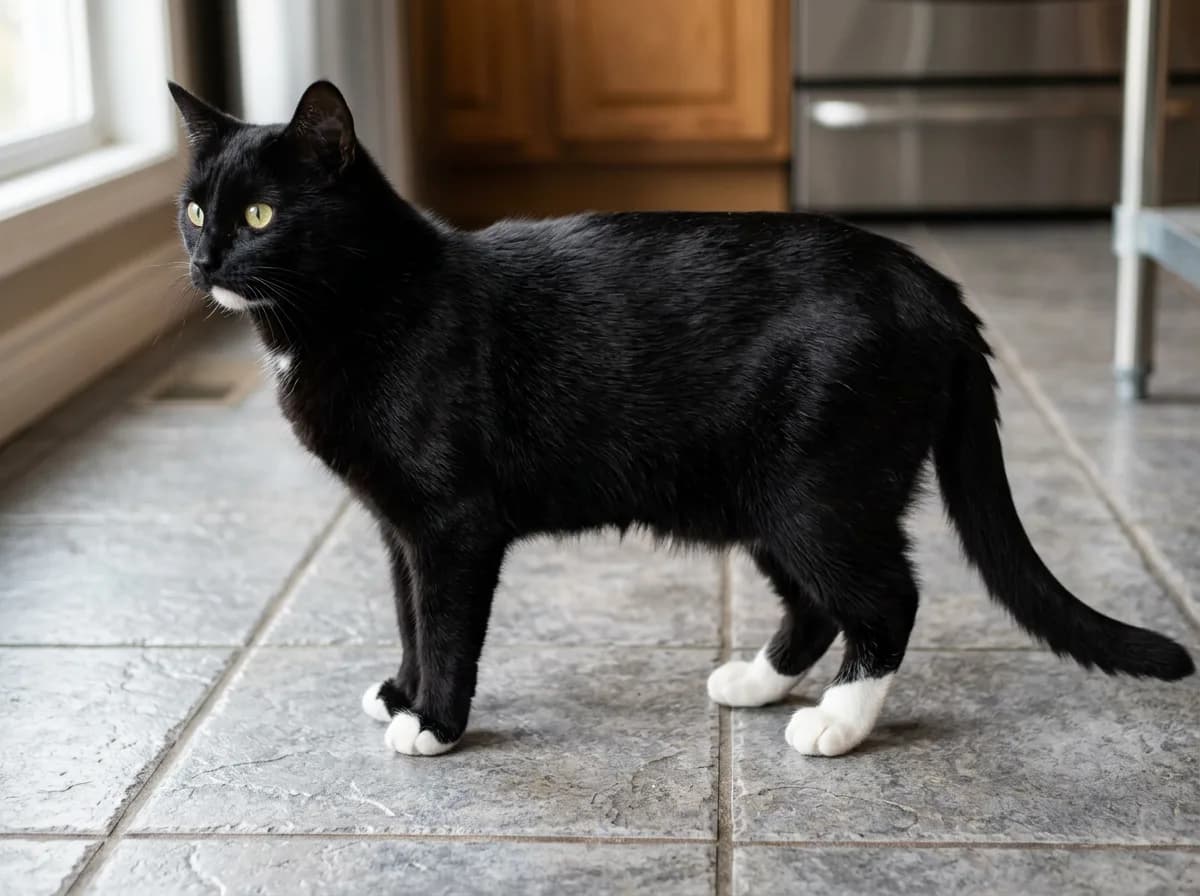
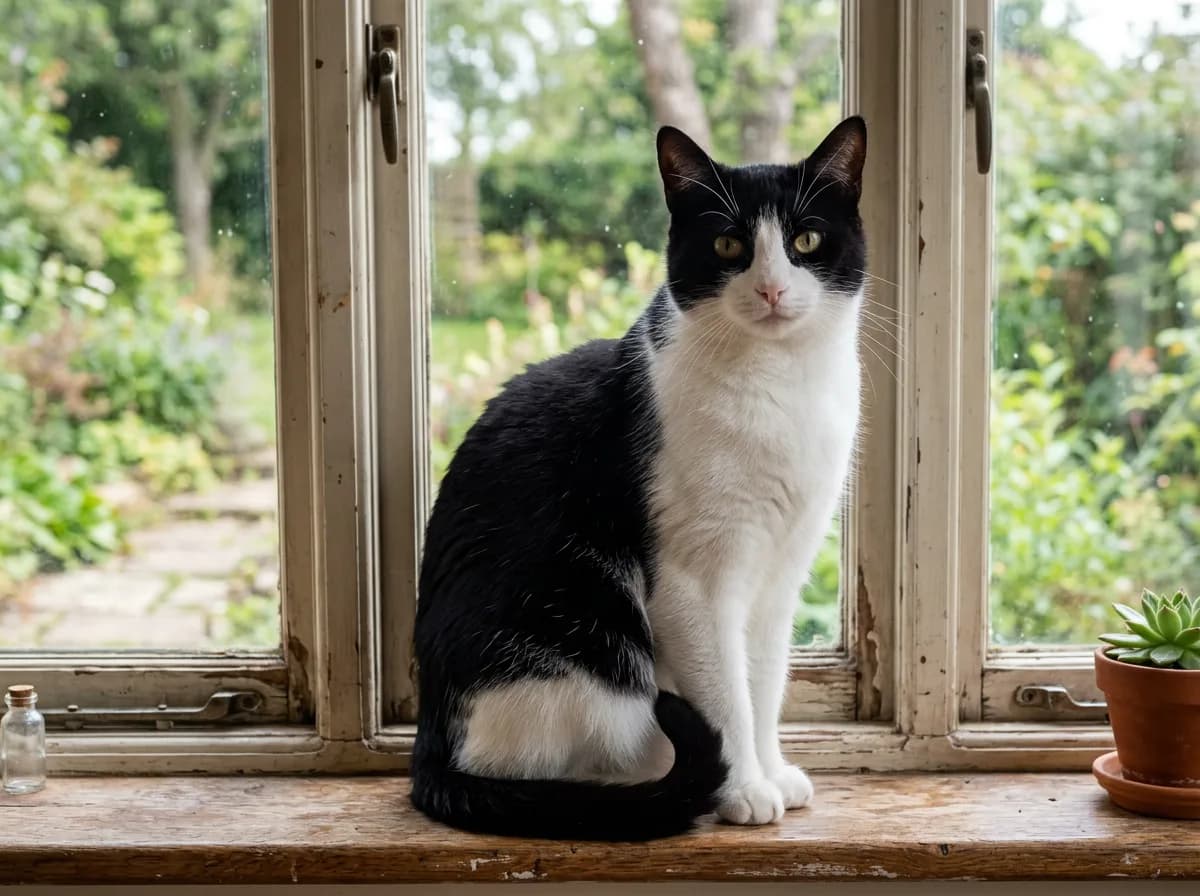
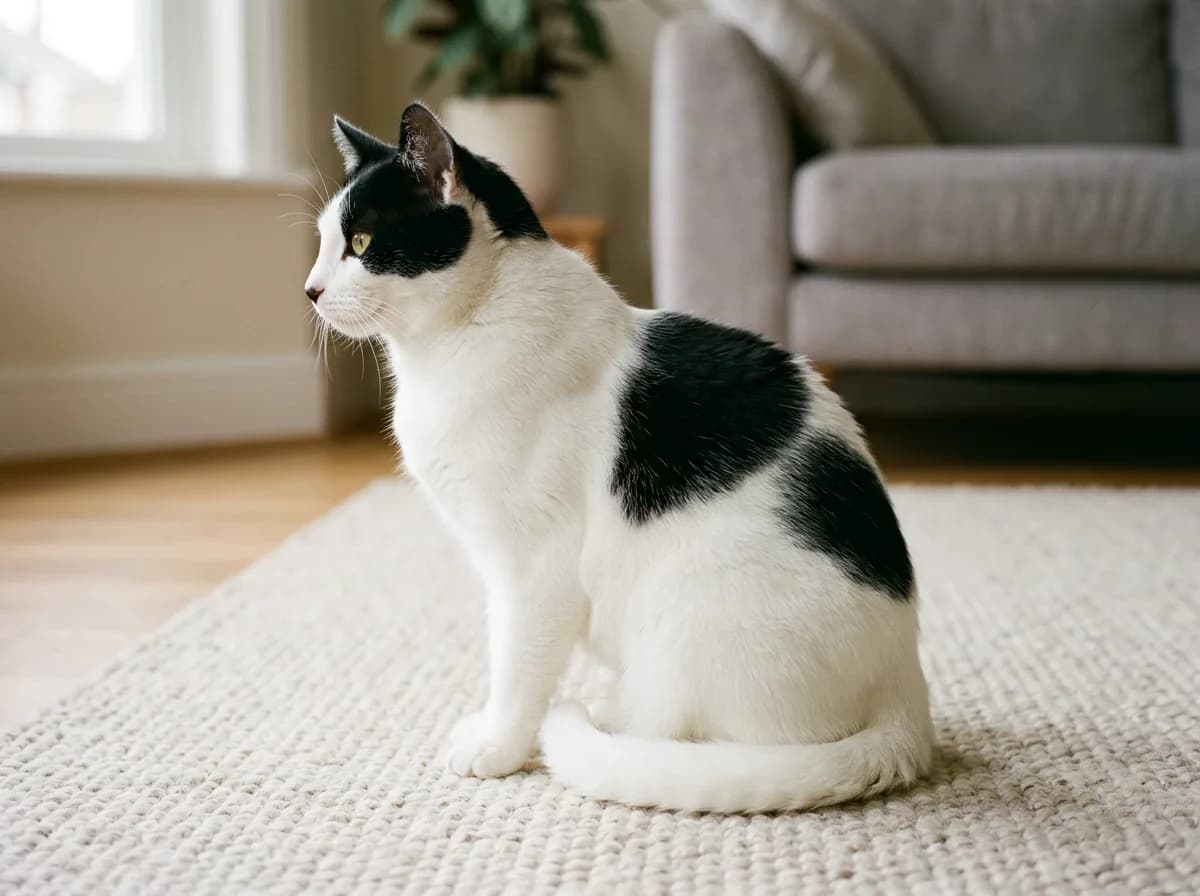
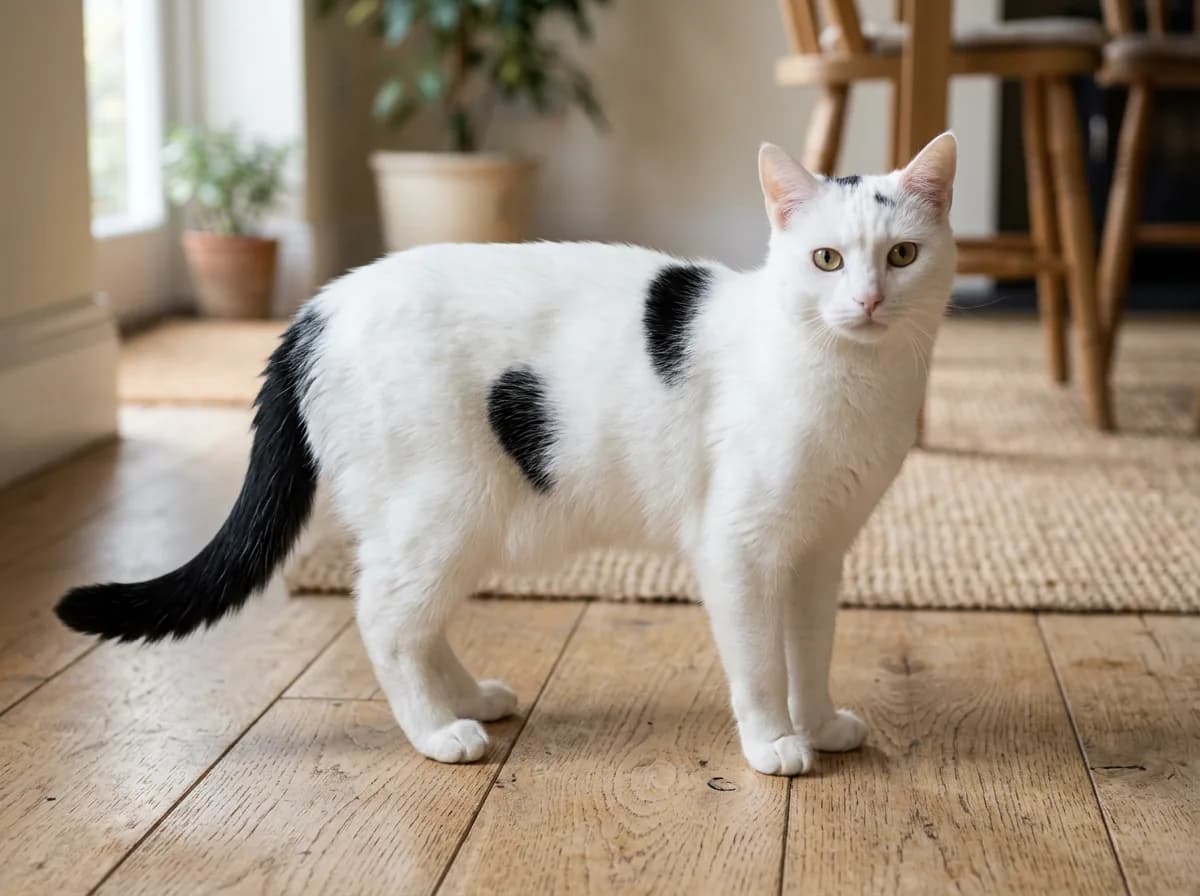
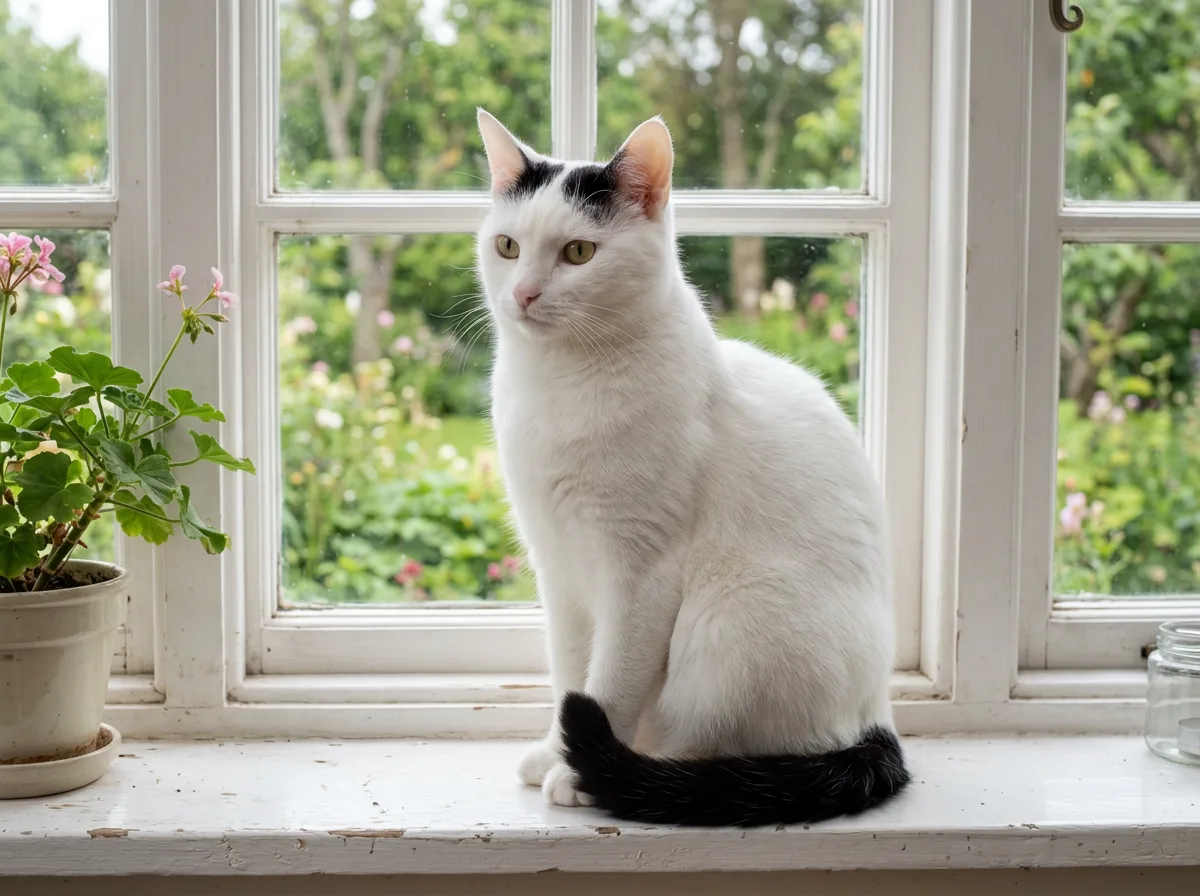
Tuxedo is one point on a continuous scale of white spotting, and understanding that scale is the key to naming any bicolor cat you meet. Geneticists and cat fanciers measure white spotting on a roughly 1 to 10 grade, where 1 is almost no white and 10 is almost all white. A tuxedo sits in the low-to-mid range: enough white for a chest and paws, but color still owns the back and head. As the grade climbs, the white spreads up the body until only the head and tail keep their color (the van pattern).
Every cat below is a bicolor cat, meaning a cat showing two colors where one of them is white from the spotting gene. "Bicolor" and "bicolor tuxedo cat" are often used loosely for any white-and-color cat, but the grades let you be precise.
| Grade Name | How Much White | The Look |
|---|---|---|
| Locket | Tiny, just a spot | A single small white patch on the chest or belly, otherwise solid-colored |
| Mitted / low-grade | A little (white paws) | White confined to the paws and maybe the chin, like white socks |
| Tuxedo | Low to mid | White chest, belly, and paws; color over the back and head (black-tie look) |
| True bicolor | About half | Roughly 50/50 white and color, white usually on the lower body and face |
| Mask and mantle / cap and saddle | Mid to high | Color forms a "cap" over the head and a "saddle" over the back; the rest is white |
| Harlequin | High | Mostly white with a few random colored patches and usually a colored tail |
| Van | Highest | White everywhere except color on the head (between the ears) and the tail |
A locket is the smallest amount of white spotting that still counts. It is a single white spot, usually on the chest, on an otherwise solid-colored cat. A locket is the genetic whisper of the same gene that, turned up, makes a full tuxedo.
A mitted or low-grade pattern adds white to the paws, so the cat looks like it is wearing socks or mittens. The Ragdoll and the Snowshoe are breeds where mitted white markings are part of the standard.
A true bicolor is the midpoint: about half white, half color. This is where casual use of "bicolor cat" lands most often, and it is one full grade past the classic tuxedo.
In a mask and mantle (or cap and saddle) coat, the color pulls back into a cap over the head and a mantle draped across the back and shoulders, while white claims the legs, chest, and underside. It is the bridge between a true bicolor and the high-white harlequin.
A harlequin cat is high-grade spotting: mostly white with just a few scattered colored patches and, almost always, a colored tail. It is the pattern just below the most extreme grade.
A van pattern is the top of the scale, named for the Turkish Van breed. The cat is white except for color on the head (typically between the ears) and on the tail. Everything in between (mask-and-mantle and cap-and-saddle) describes coats where color forms a cap on the head and a mantle or saddle across the back while white claims the rest.

108-oz stainless steel pet fountain with quiet pump and water-level window. Bengals are notoriously water-obsessed; a flowing fountain encourages hydration and pulls them away from sinks and toilets.
Petful may earn a commission when you click through to Chewy, at no extra cost to you.
- Locket, tuxedo, harlequin, and van are not separate genes. They are the same white-spotting (piebald) gene expressed at different strengths, modified by other genes and by the random way pigment cells spread during development. That randomness is why no two tuxedos have identical white patterns.
The Genetics Behind the Tuxedo Pattern
The tuxedo pattern is created by the white-spotting gene, also called the piebald spotting gene, which lives in the KIT gene family. It is the same gene family responsible for the white in a calico or a bicolor Persian. White spotting works by limiting where pigment-producing cells (melanocytes) end up. Areas the pigment cells reach grow colored fur; areas they never reach grow white fur.
For years the textbook explanation was that pigment cells simply moved too slowly to cover the whole embryo before the skin formed. The 2016 study by mathematicians and geneticists at the University of Bath and the University of Edinburgh overturned that. They showed the cells do not crawl in any directed way at all; they move and multiply at random, and the white belly appears because there are too few pigment cells dividing fast enough to populate the whole skin before development closes the window. In short, the white patches are an accident of timing, not a careful design, which is exactly why every tuxedo's white markings are unique.
Why a Tuxedo Can Be Grey
The grey of a grey tuxedo cat comes from a second, separate gene acting on top of the white spotting: the dilution gene (MLPH), described earlier. White spotting decides where the color goes; the dilution gene decides what shade that color is. Pair high-grade dilution with mid-grade white spotting and you get a soft blue-grey cat in a white shirt. The two genes are inherited independently, so any color of cat can also be any grade of tuxedo.
- This is the single most-repeated mistake about tuxedos. The "nearly all female" rule belongs to calico and tortoiseshell cats, because the orange color is sex-linked. The white-spotting gene that makes the tuxedo pattern affects males and females equally, so tuxedo cats are roughly 50/50 male and female. Only an orange tuxedo skews male, and that is the orange color doing it, not the tuxedo pattern.
Because the pattern is not breed-linked or sex-linked, you find tuxedos everywhere: in random-bred shelter cats, in pedigreed Maine Coon color lines, and across breeds from the British Shorthair to the Cornish Rex. Bicolor coats are among the most common in domestic cats, which is why tuxedo cats are common rather than rare.
Does Coat Color Affect Personality?
A common search is "grey tuxedo cat personality," and the honest answer is that coat color does not create a personality. There is no scientific basis for a tuxedo-specific or grey-specific temperament. Because tuxedo cats span dozens of breeds and the entire random-bred population, their personalities track breed, individual wiring, and socialization, not the bicolor coat.
The one relevant data point is a 2016 University of California, Davis owner survey (Stelow, Bain, and Kass, published in the Journal of Applied Animal Welfare Science). Owners reported modestly higher aggression during handling and vet visits in a few coat groups, including grey-and-white and black-and-white cats. It is important to read that carefully: these are owner-reported perceptions, the effect was small, and individual variation dominated. The study did not find that grey tuxedos are aggressive cats; it found that some owners perceived a slight tendency. Pattern does not determine personality.
- Choosing a grey tuxedo because you heard they are "smart" or "affectionate" sets you up for disappointment. Meet the individual cat. Temperament comes from genetics, early socialization, and handling, not from the color of the coat.
Are Grey Tuxedo Cats Rare and What Do They Cost?
A grey tuxedo cat is rarer than a black-and-white tuxedo, but not rare in absolute terms. The dilution gene that makes a coat grey is recessive, so a cat needs two copies for it to show, which makes grey coats less frequent than black ones. But the dilution gene is widespread in the cat population, so blue-and-white cats turn up regularly. Orange tuxedos are common (skewed male); brown, lilac, and cinnamon tuxedos are the genuinely rare ones because they need rarer recessive base colors.
On price, the pattern adds nothing. The color and the markings do not set the cost; the breed does. A tuxedo cat of any color from a shelter typically costs $50-200 in adoption fees. A purebred cat that happens to be a tuxedo follows its breed's pricing, roughly $800-2,500 for most pedigreed kittens. There is no premium for a grey tuxedo over a black one, and any seller charging more "because it is a rare grey tuxedo" is charging for a coat color that costs nothing extra to produce.
- Tuxedo cats of every color fill shelters because the pattern is so common. If you want a grey tuxedo, ask local rescues to flag blue-and-white bicolors; you will pay an adoption fee, not a breeder premium, and the cat will be exactly as healthy as any other.
Grey Tuxedo Cat Names
A grey tuxedo's smoky coat and formalwear markings invite names that play on the "dressed up" look or the soft grey color. Here are ideas in both directions:
- Formalwear and dapper names: Tux, Alfred, Pierce, Bond, Gatsby, Duke, Earl, Maestro, Onyx (ironic for grey), Penguin.
- Grey and smoke names: Smokey, Ash, Slate, Sterling, Misty, Pewter, Dove, Stormy, Cinder, Bluebell.
- Playful pop-culture nods: Sylvester, Felix, Mistoffelees, Jeeves, Figaro.
The names that stick usually match the cat's behavior more than its coat, so live with the cat a few days before you commit.
Frequently Asked Questions
Grey tuxedo cats are rarer than black-and-white tuxedos because the dilution gene that makes a coat grey is recessive and needs two copies to show, but they are not rare overall. The dilution gene is common in the cat population, so blue-and-white tuxedos appear regularly. Brown, lilac, and cinnamon tuxedos are the genuinely rare ones.
There is no grey tuxedo cat breed. Tuxedo is a coat pattern, not a breed. A grey tuxedo can be a random-bred domestic shorthair or longhair, or a purebred such as a British Shorthair, Maine Coon, or Norwegian Forest Cat. The breed is separate from the pattern.
No. Coat color does not create a personality. Tuxedo cats span many breeds, so temperament tracks breed, individual nature, and socialization. A 2016 UC Davis owner survey reported modestly higher owner-perceived aggression during handling in some coat groups including grey-and-white, but the effect was small and individual variation dominated.
The pattern adds no premium. A grey tuxedo from a shelter typically costs $50-200 in adoption fees. A purebred cat that happens to be a grey tuxedo follows its breed's pricing, roughly $800-2,500 for most pedigreed kittens. You pay for the breed, not the coat color.
A blue tuxedo cat is the cat-fancy name for a grey-and-white tuxedo. Registries call diluted black "blue," so a blue tuxedo and a grey tuxedo are the same cat: a black tuxedo whose coat has been softened to blue-grey by the recessive dilution gene.
Yes. An orange tuxedo cat has the warm red-orange color from the sex-linked orange gene instead of black. Because that gene is on the X chromosome, most orange tuxedos are male. The dilute version of orange is cream, giving a cream-and-white tuxedo.
Yes. A long-haired tuxedo wears the same bicolor pattern on a long coat. Coat length is controlled by a separate recessive gene, so a fluffy grey tuxedo is just a blue-and-white tuxedo with the long-hair gene. Maine Coons, Norwegian Forest Cats, Siberians, and Persians all produce long-haired tuxedos.
A tuxedo is a specific low-to-mid grade of bicolor: white limited to the chest, belly, and paws with color over the back and head. "Bicolor" is the broader term for any cat showing white plus one color. A true bicolor (about half white) is one grade more white than a tuxedo.
A locket is the smallest amount of white spotting: a single small white patch, usually on the chest, on an otherwise solid-colored cat. It is the lowest grade of the same white-spotting gene that, expressed more strongly, produces a full tuxedo.
A harlequin is a high-grade bicolor: a mostly white cat with a few random colored patches and almost always a colored tail. It sits near the top of the white-spotting scale, one step below the van pattern.
A van pattern is the highest grade of white spotting, named for the Turkish Van breed. The cat is white except for color on the head, usually between the ears, and on the tail. Everything else is white.
Roughly 50/50. The white-spotting gene that makes the tuxedo pattern is not sex-linked, so it affects males and females equally. Only orange tuxedos skew male, because the orange color (not the tuxedo pattern) is sex-linked. A grey tuxedo is just as likely to be female as male.
Names that suit a grey tuxedo play on the formalwear look (Tux, Alfred, Bond, Gatsby, Duke) or the smoky color (Smokey, Ash, Slate, Sterling, Misty, Pewter). Pop-culture tuxedo names like Sylvester, Felix, and Mistoffelees are popular too.

Coreen Saito is a pet writer and longtime shelter volunteer with more than a decade in animal rescue. She covers cat behavior, breed care, and the small, ordinary science of sharing a life with companion animals, with a particular focus on honest takes about the products and decisions that actually matter. At home in Arizona, she's outranked by Mac (a dog with the loudest opinion in the house), Rebel (a cat who governs by quiet authority), and Meri (an orange tabby who runs the late shift and the laundry basket). She writes about all three, plus the rescues that keep coming through her life, at LifeWithMinty.com.
Sign up for expert-backed reviews and safety alerts all in one place.