Tuxedo Cat Personality: What Owners and Science Say
A tuxedo is a coat pattern, not a breed, so there is no single tuxedo cat personality. Here are the traits owners report, what the 2016 UC Davis survey actually found, how males and females compare, and why breed and socialization matter most.
Petful is reader supported. As an affiliate of platforms like Amazon and Chewy, we may earn a commission when you buy through links on this page. There is no extra cost to you.
The only peer-reviewed study to put numbers behind a tuxedo cat personality, a 2016 University of California, Davis owner survey of 1,274 cats (Stelow, Bain and Kass), found that owners reported black-and-white cats as slightly MORE aggressive toward people during handling and vet visits, the exact opposite of the easygoing, dog-like "tuxie" so many websites sell you. That single finding tells you the most important truth on this page before you read another word: a tuxedo is a coat pattern, not a breed, and there is no scientific basis for a personality that comes packaged with the black-and-white suit. What owners adore about their tuxedo cats is real, but it traces to breed, individual character, and how the cat was raised, not the markings.
- 1A tuxedo is a bicolor coat pattern (the white-spotting gene), not a breed, so there is no single tuxedo cat personality.
- 2Owners commonly report tuxedos as outgoing, talkative, clever, and affectionate, but these are anecdotes, not measured traits.
- 3The one relevant study, the 2016 UC Davis owner survey, found black-and-white cats scored slightly higher for owner-reported aggression, not friendliness.
- 4Breed, individual temperament, and early socialization shape behavior far more than coat color.
- 5Tuxedo cats are roughly 50/50 male and female because white spotting is not sex-linked.
If you came here asking whether tuxedo cats are friendlier, smarter, or more vocal than other cats, this guide gives you both sides: the warm, widely shared owner reports AND the actual evidence, cleanly labeled so you can tell the difference. We will cover the genetics behind the pattern, the traits owners describe most, what the science genuinely shows, how male and female tuxedos compare, how they stack up against the famous orange-cat reputation, the behavior problems that come with a bored clever cat, and how to bring out the best in whatever cat happens to be wearing the tuxedo.

Sign up for expert-backed reviews and safety alerts all in one place.
What Is a Tuxedo Cat? A Coat Pattern, Not a Breed
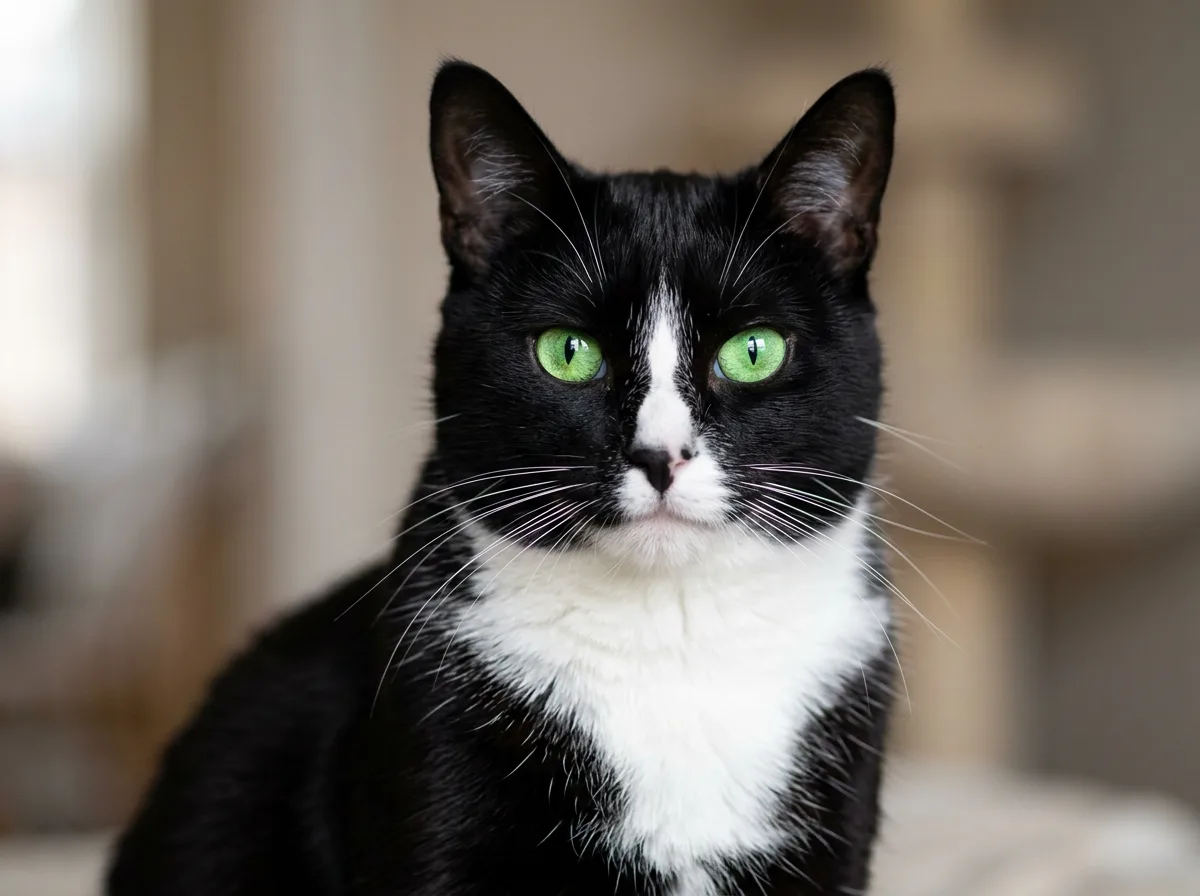
A tuxedo cat is a bicolor cat: a dark coat (classically black, but also gray or blue, orange or red, or a tabby pattern) with white limited to the chest, belly, paws, and often the chin and muzzle. The look resembles formal black-tie evening wear, which is where the name comes from. The classic tuxedo is black-and-white, but a gray-and-white or orange-and-white cat with the same distribution is still a tuxedo.
Crucially, "tuxedo" is not a recognized breed. No cat registry issues a tuxedo pedigree. The pattern shows up across dozens of breeds and in countless random-bred cats, which is exactly why no two tuxedos share a guaranteed temperament. A pedigreed cat is pedigreed because of its breed, never because of its coat pattern.
The white-spotting gene behind the pattern
The white in a tuxedo coat comes from the white-spotting gene, a piebald-spotting trait in the KIT gene family. It works by limiting where pigment-producing cells end up in the skin during fetal development. Where the pigment cells reach, you get color; where they do not, you get white. The amount of white is graded from low to high. A tuxedo sits at the low-to-mid end of that scale: white on the underside, chest, and paws, with color blanketing the back and head.
Push the grade higher and the white spreads. Higher grades give mitted and bicolor cats, then harlequin (mostly white with a few color patches), and finally van (color only on the head and tail). So a tuxedo and a high-white "cow cat" are the same gene dialed to different settings, not different cats.
A 2016 study from the University of Bath and the University of Edinburgh (Mort, Yates and colleagues) examined how these white patches form. The researchers found that pigment cells move and multiply at random during early development rather than following a careful plan, and that a faulty KIT gene reduces the rate at which those cells multiply, so they cannot cover the whole embryo before the skin forms. The white patches are the gaps the pigment cells never reached. In other words, your tuxedo's dapper markings are a beautiful accident of cell math, not a blueprint, which is one more reason no behavior is "built in" to the pattern.
- Bicolor coats are among the most common patterns in domestic cats, so the tuxedo "look" is everywhere. Rarity is not what makes your tuxedo special; the individual cat is.
Breeds that wear the tuxedo pattern
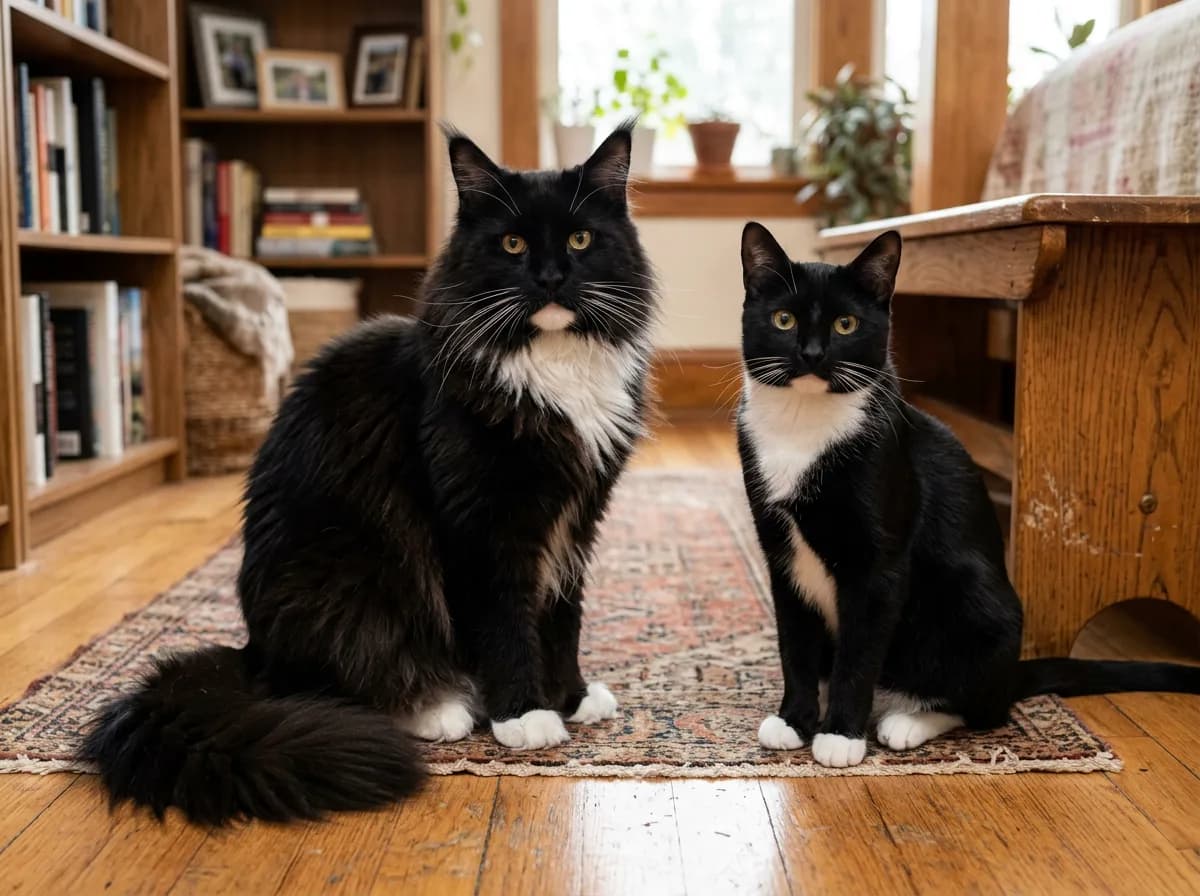
Because the white-spotting gene appears so widely, the tuxedo pattern turns up in random-bred domestic shorthairs and longhairs and in many pedigreed breeds, including the Maine Coon, British Shorthair, American Shorthair, Manx, Turkish Angora, and Cornish Rex, among others. A black-and-white Maine Coon is simply a bicolor Maine Coon (the Cat Fanciers' Association recognizes bicolor within the breed), and its size, voice, and famously sociable nature come from being a Maine Coon, not from the tuxedo markings. If you want a tuxedo with a predictable temperament, you choose the breed first and accept the coat second. You can compare temperaments across the big, chatty Maine Coon, the calm British Shorthair, and the laid-back Ragdoll to see how much the breed, not the pattern, sets the tone.
- Two cats can wear identical tuxedo markings and have opposite personalities. If a breeder, seller, or website promises you a specific personality "because it is a tuxedo," that claim has no scientific basis. Judge the individual cat and, for a pedigree, the breed.
Tuxedo Cat Personality Traits Owners Report Most
Ask a room full of tuxedo owners to describe their cats and you will hear the same words over and over: bold, chatty, smart, busy, and bonded. These owner-reported traits are why the "tuxitude" reputation exists. They are worth taking seriously as lived experience, and they are also not measured science. Read this section as a warm, honest summary of what tuxedo cat temperament tends to look like in homes, with the clear caveat that the same descriptions get applied to plenty of cats that are not tuxedos.

Never Scoop Again® with the Whisker Litter-Robot, the smart self-cleaning automatic litter box. Monitor visits and track weights for better overall care in the Whisker® app. Multi-cat friendly.
Petful may earn a commission when you click through to Whisker, at no extra cost to you.
Outgoing and social
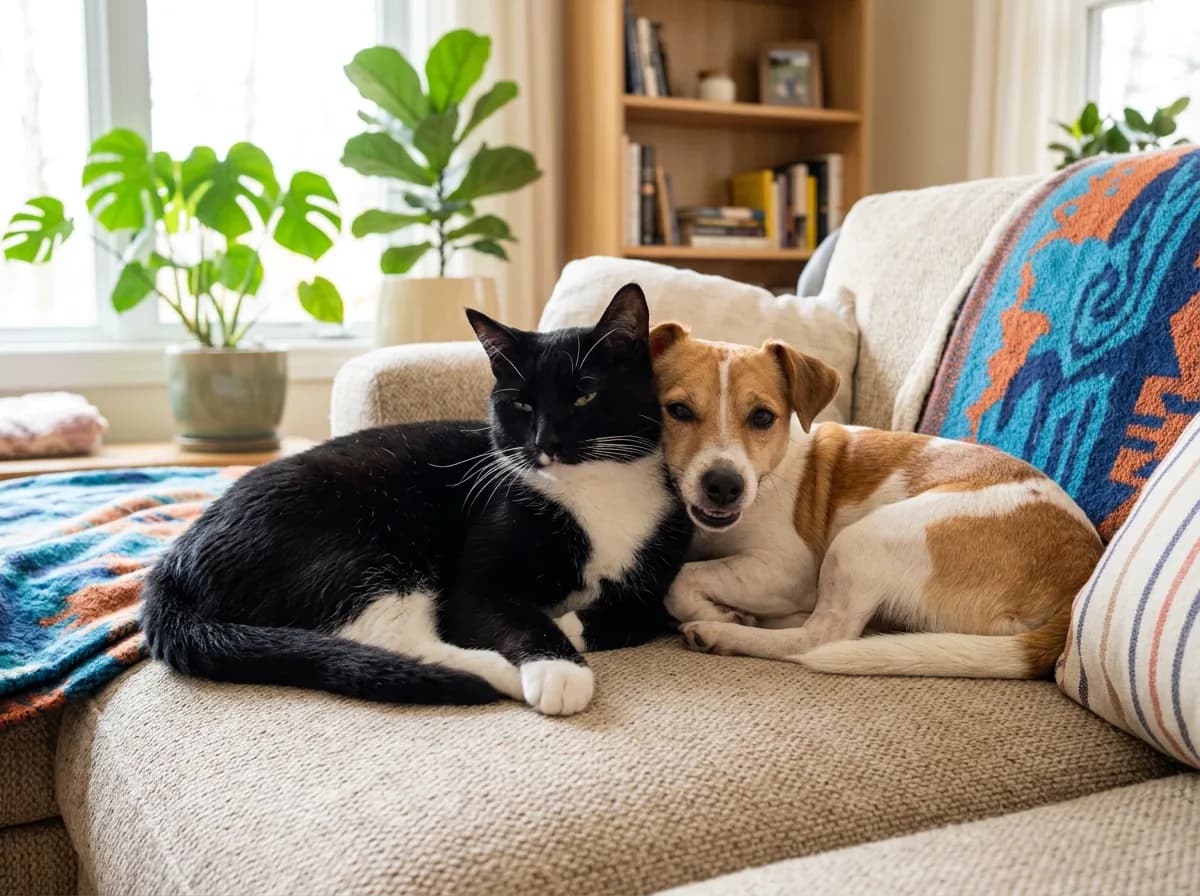
The single most common report is that tuxedo cats are friendly and people-oriented. Owners describe cats that greet visitors at the door, follow them from room to room, and want to be in the middle of whatever is happening. Are tuxedo cats friendly? Many owners say yes, enthusiastically, and a sociable cat that seeks out human company is a real and lovely thing. Just remember that sociability is shaped overwhelmingly by early handling and the cat's individual nature. A well-socialized random-bred tabby can be every bit as outgoing as the friendliest tuxedo.
Talkative and opinionated
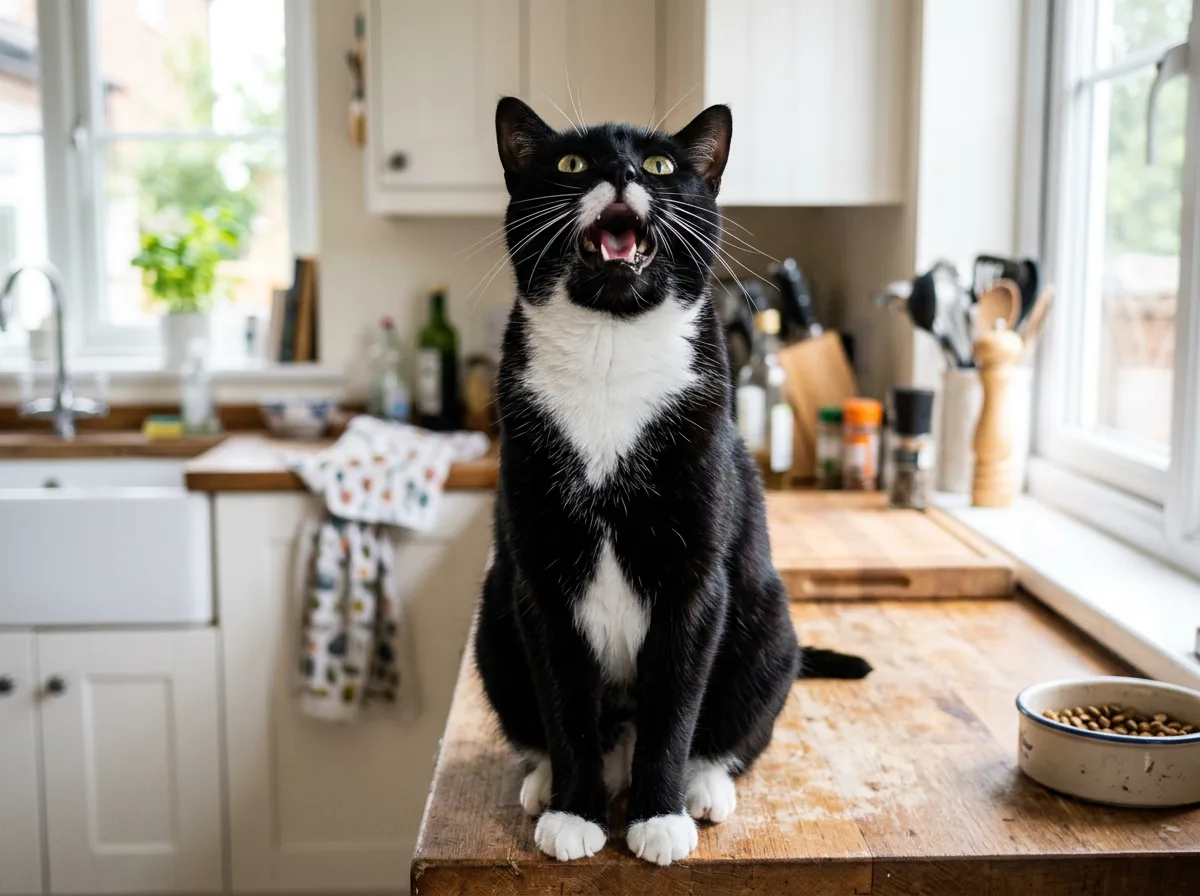
Tuxedo owners frequently describe a cat that comments on everything: the empty bowl, the closed door, the late dinner, your return from work. Are tuxedo cats talkative? Owners often say their tuxedos are notably vocal, with a wide vocabulary of chirps, trills, and demands.
Vocalness, though, tracks much more closely with breed (Siamese and Oriental lines are famously chatty) and with individual learning (a cat that gets fed when it meows learns to meow) than with a black-and-white coat. If you want a reliably talkative cat, a Siamese is a far surer bet than betting on a pattern.
Clever problem-solvers
A huge share of tuxedo lore centers on intelligence. Are tuxedo cats smart? Owners regularly report cats that open cabinets, learn routines, solve puzzle feeders quickly, and even respond to their names or simple cues. There is no evidence that the white-spotting gene influences cognition, and feline intelligence research does not track coat color at all. What is likely happening is that engaged, well-stimulated cats look smart, and tuxedo owners who adore their cats tend to interact with them a lot. Give any cat enrichment and attention and its cleverness shows.
- If your tuxedo seems "too smart," that is a cue to add enrichment, not a personality quirk to manage. Puzzle feeders, food-finding games, and short daily training sessions (yes, cats learn tricks) turn restless intelligence into good behavior.
Playful and energetic
Many tuxedo households describe high-energy cats: zoomies at dawn, an appetite for fetch, and a need for real daily play. Energy level is largely a function of age (kittens and young adults are rockets), breed, and how much stimulation the cat gets. A bored tuxedo will invent its own entertainment, which is where the behavior problems later in this guide come from.
Affectionate "velcro" cats
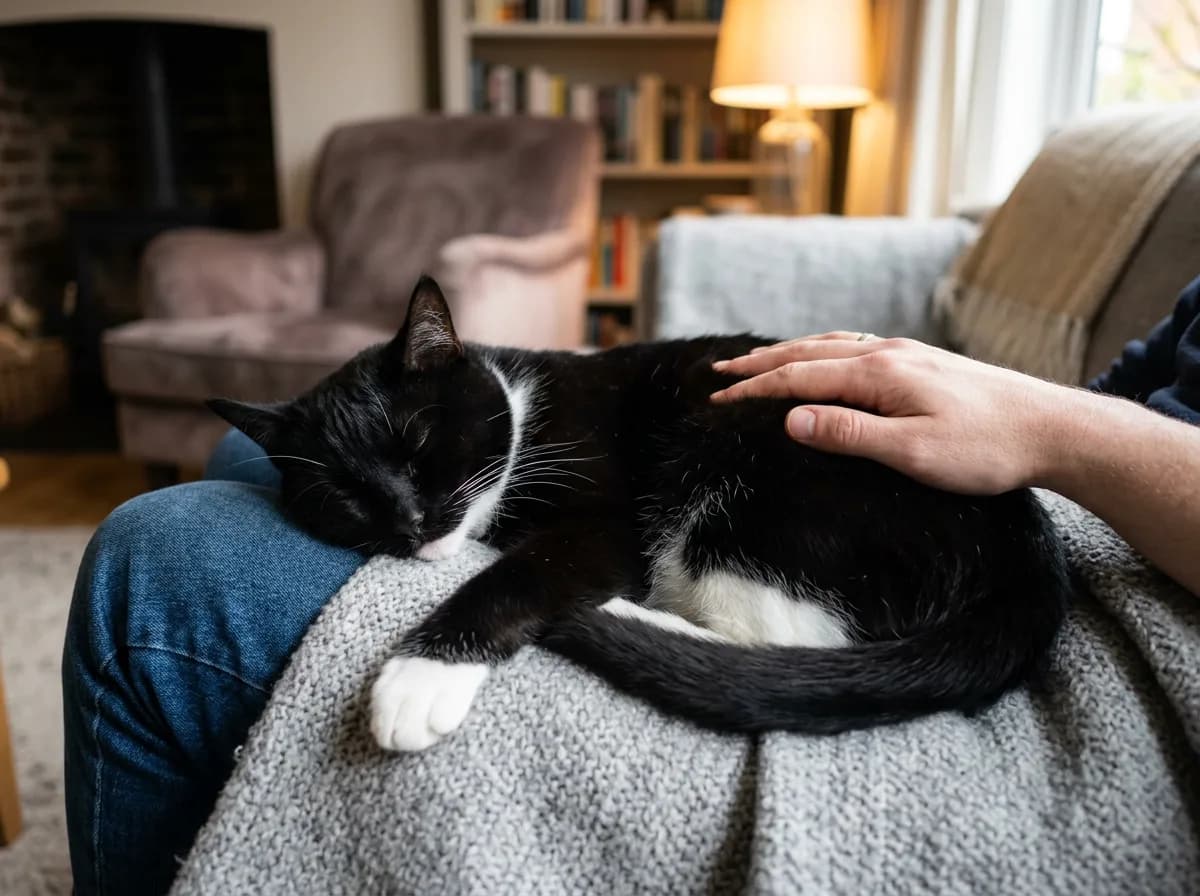
The final pillar of the tuxedo reputation is devotion. Do tuxedo cats like to cuddle? Owners commonly describe lap cats that sleep on their chests and shadow them around the house. Attachment style varies enormously from cat to cat, and the most reliable predictors of a cuddly adult are gentle handling during the kitten socialization window and a calm, trusting home, not the color of the fur. If a snuggly cat is your priority, breeds bred for it, like the Ragdoll, are the dependable route.
| Reported Trait | What Owners Say | What the Evidence Actually Shows |
|---|---|---|
| Friendly and social | Greets people, follows owners, loves company | No coat-color link; sociability is driven by socialization and individual nature |
| Talkative and vocal | Chatty, opinionated, big vocabulary | Vocalness tracks breed (Siamese/Oriental) and learned habits, not the pattern |
| Highly intelligent | Opens doors, solves puzzles, learns routines | No evidence the white-spotting gene affects cognition; engaged cats look smart |
| Energetic and playful | Zoomies, fetch, needs lots of play | Driven by age and breed; bored cats act out regardless of color |
| Affectionate "velcro" cat | Lap cat, sleeps on owner, shadows them | Attachment varies per cat; early handling predicts it, not coat color |
| Slightly more aggressive at handling | Some owners note feistiness at the vet | This is the one MEASURED finding (2016 UC Davis owner survey), and it is modest |
What Science Actually Says About Coat Color and Personality
Here is the gap every competing page skips, and the most honest thing on this guide. The "tuxitude" reputation sells a friendly, mellow, dog-like cat. The only peer-reviewed data on coat color and behavior points the other way.
In 2016, researchers at the University of California, Davis (Mikel Delgado is sometimes confused for the authors here, so to be precise: Elizabeth Stelow, Melissa Bain and Philip Kass) published "The Relationship Between Coat Color and Aggressive Behaviors in the Domestic Cat" in the Journal of Applied Animal Welfare Science (Volume 19, Issue 1). They ran an internet survey of cat guardians; 1,432 people completed it and 1,274 responses were analyzed after exclusions. Guardians rated their cats' aggression toward humans in three settings: everyday interactions, handling, and veterinary visits.
The finding that matters here: owners reported that black-and-white cats, along with sex-linked-orange females (tortoiseshells, calicos, and torbies) and gray-and-white cats, were slightly MORE aggressive toward people in those settings than cats of other colors. There is no measured finding anywhere that black-and-white cats are friendlier, calmer, or more dog-like. If anything, the data nudges the opposite direction from the popular tuxie myth.
- This was an owner-survey, not an observation study. It relied on people's perceptions, did not control for breed, and the effect was small. It does NOT mean your tuxedo will be aggressive. It means the cheerful "tuxedos are extra-friendly" claim has no scientific support, and the only real data leans the other way, modestly.
Why does this matter? Because owner perception is powerful and self-reinforcing. A person who expects a feisty cat may interpret normal behavior as feisty; a person who expects a sweetheart may forgive the same behavior. The honest takeaway is not "tuxedos are aggressive" and not "tuxedos are angels." It is that coat color is a poor predictor of personality, and any website telling you otherwise, in either direction, is selling a story the evidence does not back.
Why Breed and Socialization Matter More Than Coat Color
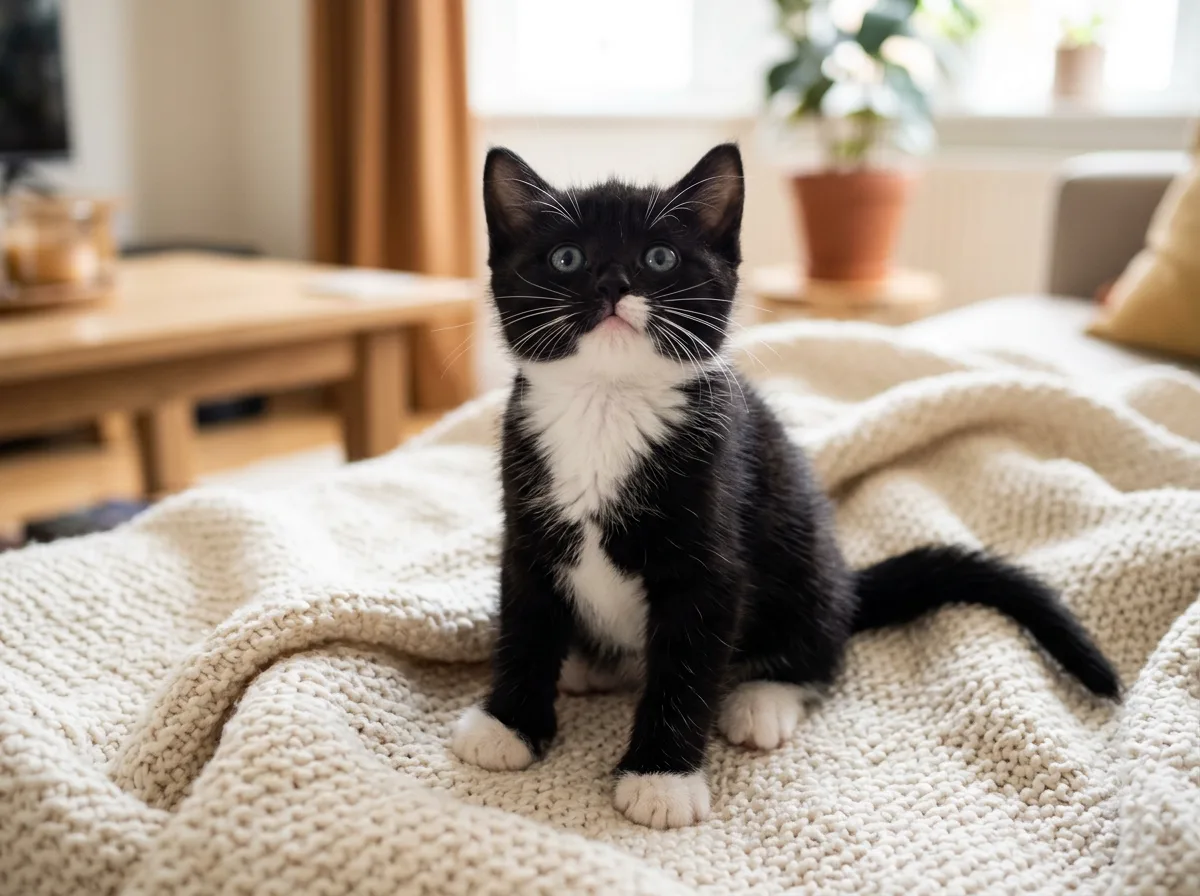
If the pattern does not set the personality, what does? Three things, in roughly this order: breed, individual temperament, and early socialization.
Breed sets the baseline. Centuries of selective breeding gave us the talkative Siamese, the placid Ragdoll, the busy Bengal, and the gentle-giant Maine Coon. When a tuxedo cat happens to be one of these breeds, its temperament follows the breed, not the markings. A tuxedo Maine Coon acts like a Maine Coon.
Individual temperament is the wild card. Just like people, cats are born with a range of boldness and sensitivity. Within a single litter you can find an explorer and a wallflower wearing the same coat.
Socialization is the lever you can actually pull. The critical socialization window for kittens runs roughly from 2 to 7 weeks of age, with gentle handling, gradual exposure to people, sounds, and routines paying lifelong dividends. A kitten handled kindly and often in those early weeks tends to grow into a confident, people-friendly adult, whatever its color. A kitten that misses that window may stay shy or reactive no matter how charming its tuxedo.
- Forget the pattern and watch the cat. Does it approach or retreat? Does it solicit petting or tolerate it? Does it play hard or nap most of the day? Two weeks of honest observation tells you more about your tuxedo's personality than every "tuxitude" article combined.
Male vs Female Tuxedo Cat Personality
This is a top related search, and most competitors ignore it. The honest answer: there is no reliable, color-specific personality difference between male and female tuxedos, because the tuxedo pattern is not sex-linked. For more, see Petful’s guide to differences between male and female cats.
That last point is important and often confused. The orange and tortoiseshell colors ARE sex-linked (carried on the X chromosome), which is why nearly all tortoiseshell and calico cats are female. The white-spotting gene that makes a tuxedo is NOT sex-linked, so tuxedo cats are split roughly 50/50 between males and females. Is it rare for a tuxedo cat to be a girl? Not at all. A female tuxedo is just as common as a male one.
Do male and female tuxedo cats have different personalities? Any general differences people notice (some owners describe males as a touch more laid-back and "goofy" and females as a little more reserved or selective) are broad, heavily overlapping tendencies that apply to cats of every color, and they are dwarfed by the effect of one factor: spay/neuter status. An unneutered tom of any color is more likely to roam, spray, and show territorial aggression; an intact female cycles and calls. Once a cat is spayed or neutered, those hormone-driven differences largely fade and individual temperament takes over.

63-inch multi-level cat tree with scratch posts, hammock, plush perches, and dangling toys. Vertical territory is non-negotiable for high-energy climbing breeds like the Bengal.
Petful may earn a commission when you click through to Chewy, at no extra cost to you.
- If you are choosing between a male and female tuxedo for temperament reasons, the more useful question is whether the cat is fixed. A spayed or neutered cat of either sex, well socialized, makes a calmer, easier companion than an intact cat of the "right" sex.
Tuxedo Cat Behavior Problems and How to Prevent Them
Search "tuxedo cat personality problems" and you will find frustrated owners of bright, busy cats. The pattern itself causes zero behavior problems (it is just color), but the kind of cat people often pick for its lively reputation, an active, intelligent, attention-seeking cat, will absolutely act out if it is under-stimulated. Tuxedo cat behavior issues are almost always boredom and unmet needs in disguise.
The classic complaints:
- Destructive mischief: knocking things off shelves, shredding furniture, opening cabinets and drawers. A clever, bored cat treats your home as a puzzle box.
- Attention-seeking yowling: especially early morning or around mealtimes, often accidentally trained by owners who respond to it.
- Rough play and biting: common in cats that were weaned or separated too early and never learned bite inhibition, and in young cats with no acceptable outlet for predatory energy.
- Litter box protest: usually stress, a dirty box, or a medical issue, never a "tuxedo trait."
The fixes are the same enrichment fundamentals that prevent problems in any smart cat:
1. Daily interactive play. Two or three short wand-toy sessions that end with a "catch" satisfy the hunt-catch-kill-eat sequence and burn real energy.
2. Puzzle feeders and foraging. Make the cat work for some of its food to occupy that problem-solving brain.
3. Vertical territory and scratching outlets. Cat trees, shelves, and tall scratchers give a busy cat legal places to climb and scratch.
4. Routine and consistency. Predictable feeding and play times reduce the anxious, demanding behavior that drives a lot of "problem" yowling.
5. Rule out medical causes. Sudden behavior changes, litter box lapses, or new aggression warrant a vet visit before you assume it is personality.
- Before labeling your cat difficult, audit its day. Most tuxedo behavior problems vanish once the cat gets enough play, climbing space, and mental work. If problems persist despite real enrichment, ask your veterinarian to rule out pain or illness.
Living With a Tuxedo Cat: Care and Enrichment
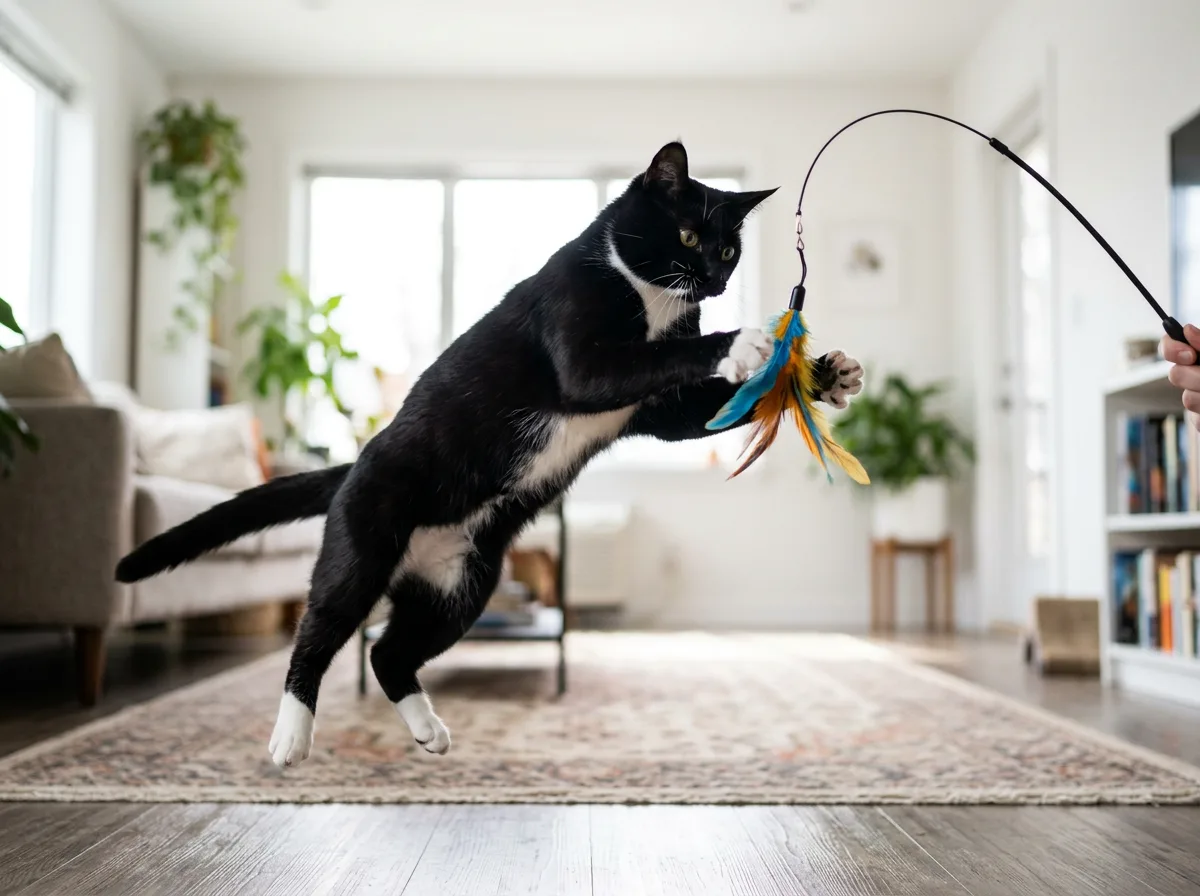
Caring for a tuxedo is caring for whatever breed and individual the cat is; the coat pattern adds nothing special to the to-do list. Still, a few practical notes help the bicolor look and the busy temperament owners love.
Grooming. A short-haired tuxedo needs little more than a weekly brush; a long-haired one (a tuxedo Maine Coon, for instance) needs regular combing to prevent mats, especially the white belly and "trousers" that show dirt. The white patches can pick up tear-staining near the eyes and the occasional yellow tinge on the chest, so a gentle wipe keeps the formalwear looking sharp.

108-oz stainless steel pet fountain with quiet pump and water-level window. Bengals are notoriously water-obsessed; a flowing fountain encourages hydration and pulls them away from sinks and toilets.
Petful may earn a commission when you click through to Chewy, at no extra cost to you.
Diet. Feed for life stage and health, not for color. Kittens need kitten food, seniors benefit from senior formulas, and fresh water should always be available. Use food in puzzle feeders to double it as enrichment.
Enrichment. This is where tuxedo owners get the most return. Vertical space, daily interactive play, rotating toys, window perches, and a clean, well-placed litter box (one per cat plus one) keep a clever, active cat content. A Sphynx tuxedo and a Siberian tuxedo will have very different grooming and energy needs, another reminder that you are caring for the breed, not the pattern.
Tuxedo Cat Personality vs Orange Cat Personality and Other Coat Colors
No two coat-color reputations are more talked about than the "friendly tuxedo" and the "goofy orange cat." So how does tuxedo cat personality compare to orange cat personality? The honest answer cuts against both stereotypes equally: neither reputation is established science.
Orange (ginger) cats carry a famously affectionate, dim-but-lovable "orange cat behavior" reputation online. Like tuxitude, it is anecdote. The same 2016 UC Davis owner survey that nudged black-and-white cats slightly higher for owner-reported aggression also reported that sex-linked-orange females scored higher on that aggression measure, while it did not crown any color the "friendliest." There is no measured basis for orange cats being uniquely sweet or tuxedos being uniquely outgoing.
A useful real difference does exist between the two, but it is about sex, not temperament: roughly 80 percent of orange cats are male (the orange gene is sex-linked), whereas tuxedos are an even 50/50 male-female split. So a lot of what people chalk up to "orange cat personality" may really be "male cat tendencies," and once cats are neutered even that thins out.
| Coat Color | Popular Reputation | Sex Skew | What Evidence Shows |
|---|---|---|---|
| Tuxedo (black-and-white) | Outgoing, talkative, dog-like | ~50/50 male/female (not sex-linked) | Slightly higher owner-reported aggression at handling; no friendliness link |
| Orange / ginger | Goofy, affectionate, laid-back | ~80% male (sex-linked) | No measured personality link; "orange" traits may be male traits |
| Tortoiseshell / calico | "Tortitude," sassy, strong-willed | ~99.9% female (sex-linked) | Slightly higher owner-reported aggression; modest effect, individual variation dominates |
| Solid black | Mellow, mysterious, "voids" | No skew | No reliable personality link; faces adoption bias, not behavior issues |
| Gray-and-white | Calm, sweet | No skew | Also scored slightly higher for owner-reported aggression in the 2016 survey |
The takeaway for anyone weighing a tuxedo against an orange cat: pick the individual cat whose temperament you actually observe and like, and if you want predictability, pick the breed. Color is the least reliable signal in the room.
Tuxedo Cat Lifespan and Health
There are no tuxedo-specific diseases. The white-spotting gene that creates the pattern does not carry health risks the way, say, the dominant-white gene linked to deafness in some all-white cats can. A tuxedo's health and lifespan are set by its breed, its genetics, its weight, its diet, and above all whether it lives indoors.
Healthy cats typically live 12 to 16 years, and many indoor cats reach 18 to 20. Keeping a tuxedo indoors (or in a safe enclosed space), feeding for its life stage, maintaining a healthy weight, and keeping up with veterinary care and dental health do far more for longevity than anything about the coat. A purebred tuxedo will follow its breed's known health profile, so if you are choosing a breed, read up on that breed's specific considerations.
- An indoor, well-fed, vet-checked tuxedo has the same long-life odds as any cat of its breed. The pattern neither adds nor subtracts years.
Famous Tuxedo Cats and the Tuxitude Legend
If tuxedo cats have an outsized reputation, pop culture deserves much of the credit. The pattern is so striking and so common that tuxedos have starred as cats and as cartoon cats for over a century, and those characters quietly shaped what people expect from a real one.
- Socks, the Clinton family's tuxedo cat, was the First Cat from 1993 to 2001 after being adopted as a stray in Little Rock, Arkansas. He drew fan mail, his own jokes from the President, and a level of press attention no White House cat had seen.
- Felix the Cat, the silent-era cartoon star, is one of the earliest and most famous animated tuxedos.
- Sylvester, the lisping Looney Tunes cat forever chasing Tweety, is a tuxedo.
- Tom, of Tom and Jerry, wears a gray-and-white version of the pattern.
- Mr. Mistoffelees, the magical black-and-white cat from T.S. Eliot's "Old Possum's Book of Practical Cats" and the musical Cats, is a tuxedo.
- Simon's Cat and Jess from Postman Pat round out a long list of beloved fictional tuxedos.
Notice the pattern in the pattern: these characters are clever, bold, expressive, and a little mischievous, exactly the "tuxitude" traits owners report. It is worth asking whether tuxedo cats earned that reputation, or whether a century of charismatic cartoon tuxedos taught us to see those traits in any cat wearing the suit. The honest answer is probably some of both, and none of it is genetics.
- The tuxitude reputation is a fun cultural story and a fine reason to fall for the look. Just do not let it set your expectations for a specific cat. Meet the cat, watch the cat, choose the cat.
Should You Adopt a Tuxedo Cat?
Yes, with eyes open. A tuxedo can be a wonderful companion, but adopt for the individual cat and (if it matters to you) the breed, not for a guaranteed personality. And there is a genuinely good reason to give a black-and-white cat a second look at the shelter.
Why are tuxedo cats overlooked in shelters? Black and black-and-white cats are adopted at lower rates and tend to wait longer for homes than lighter or more "colorful" cats. Several factors drive it: dark coats photograph poorly in adoption listings (a huge disadvantage in an era of online browsing), lingering superstition around black fur, and the simple fact that black-and-white cats are so common that they blend together to browsers. None of this reflects anything about the cats themselves. A shelter full of overlooked tuxedos is a shelter full of perfectly wonderful cats who happen to take a bad photo.
That makes tuxedos one of the best-value, highest-reward adoptions you can make: common, easy to find, often waiting longer than they should, and every bit as loving as the cats that get scooped up first. Meet a few, watch how each one interacts with you, and pick the one whose personality, the real, observed one, fits your home.
- If you are adopting, ask your shelter which cats have waited longest. There is a good chance a friendly black-and-white cat is near the top of that list, not because anything is wrong with it, but because the world is biased toward flashier coats.
Frequently Asked Questions
The most special thing is the striking black-tie look itself, created by the white-spotting gene. Beyond appearance, owners often report tuxedos as outgoing, clever, and affectionate, but there is no scientific basis for a tuxedo-specific personality. What makes any tuxedo special is the individual cat, not the pattern.
Black and black-and-white cats are adopted less often and wait longer for homes. Dark coats photograph poorly in online listings, old superstitions about black fur linger, and tuxedos are so common they blend together to browsers. None of it reflects the cats, who make excellent, loving companions.
No. The white-spotting gene that creates the tuxedo pattern is not sex-linked, so tuxedo cats are split roughly 50/50 between males and females. Female tuxedos are just as common as males. (This is different from tortoiseshell and calico cats, which are nearly always female because their colors are sex-linked.)
No coat color or single breed wins "nicest." For affection, breeds like the Ragdoll are reliably gentle; for sociability, well-socialized cats of any color tend to be friendliest. The nicest cat is the one whose observed temperament fits your home, which is why meeting the individual cat beats choosing by color.
Many owners describe their tuxedos as very friendly and people-oriented, and a sociable tuxedo is real. But friendliness is shaped by early socialization and individual nature, not the coat. The only relevant study did not find black-and-white cats friendlier; if anything it found slightly more owner-reported aggression at handling.
Owners frequently report clever tuxedos that open cabinets and solve puzzles, but there is no evidence the white-spotting gene affects intelligence, and feline cognition research does not track coat color. Engaged, well-stimulated cats of any color look smart. Give your cat enrichment and its cleverness will show.
Many owners say yes, describing chatty, opinionated cats. Vocalness, though, tracks much more with breed (Siamese and Oriental lines are famously talkative) and learned habits (a cat fed when it meows learns to meow) than with the tuxedo pattern.
Some do and some do not, just like cats of every color. Cuddliness depends on the individual cat, gentle handling during the kitten socialization window, and a calm home, not on the markings. If a lap cat is your goal, a breed bred for affection (like the Ragdoll) is a more reliable bet than a coat pattern.
Not as a rule. The 2016 UC Davis owner survey found owners reported black-and-white cats as slightly more aggressive toward people during handling and vet visits, but the effect was small, it was owner-perceived, and it does not predict any individual cat. Most aggression is fear, pain, or under-stimulation, not coat color.
There is no reliable color-specific difference, because the tuxedo pattern is not sex-linked. Any general male-versus-female tendencies apply to all cats and are far outweighed by spay/neuter status: a fixed cat of either sex is typically calmer and easier than an intact one.
Both reputations (outgoing tuxedo, goofy orange cat) are anecdote, not science. The 2016 UC Davis survey did not crown either color friendliest. The real difference is sex: about 80 percent of orange cats are male, while tuxedos are 50/50, so some "orange cat" traits may really be male-cat traits.
The pattern causes no behavior problems. But active, clever cats (which many tuxedos are) act out when bored: destructive mischief, attention yowling, rough play. The fixes are daily interactive play, puzzle feeders, vertical space, routine, and ruling out medical causes. A "bad" tuxedo is usually an under-stimulated one.

Coreen Saito is a pet writer and longtime shelter volunteer with more than a decade in animal rescue. She covers cat behavior, breed care, and the small, ordinary science of sharing a life with companion animals, with a particular focus on honest takes about the products and decisions that actually matter. At home in Arizona, she's outranked by Mac (a dog with the loudest opinion in the house), Rebel (a cat who governs by quiet authority), and Meri (an orange tabby who runs the late shift and the laundry basket). She writes about all three, plus the rescues that keep coming through her life, at LifeWithMinty.com.
Sign up for expert-backed reviews and safety alerts all in one place.