Best Cat Litter Boxes: 6 Picks for Every Cat and Home
Compare six cat litter boxes by type, from open-top and hooded to high-sided, extra-large, low-entry and stainless steel, with a fit check that matches the box to your cat, space and cleaning habits.
Petful is reader supported. As an affiliate of platforms like Amazon and Chewy, we may earn a commission when you buy through links on this page. There is no extra cost to you.
The best cat litter box is the one your cat will use every single time, and that has less to do with price or features than with size, entry height and where the box sits in your home. A box that is too small, too tall to step into or tucked beside a noisy washer can send a perfectly clean cat to the carpet instead.
This guide narrows the field to six picks that cover the main box types: open, hooded, high-sided, extra-large, low-entry and stainless steel. It is a research-based comparison built from documented product features, catalog details and published cat-care guidance, followed by a simple fit check so you can match a box to your cat, your space and your cleaning habits.

Sign up for expert-backed reviews and safety alerts all in one place.
Compare the cat litter boxes
Which litter box is the best? For most healthy adult cats, a roomy open box with sides tall enough to hold litter is the best starting point, and the right size matters more than any single brand. Pick a covered box only if you want to hide the box from view, choose low-entry for kittens and seniors, and choose a tall-sided pan if your cat digs hard or sprays.
The table lists each box by exact model, box type, who it suits, entry style, size and catalog price. Prices are what the Chewy catalog showed at the time of writing and can change.
| Exact model and variant | Box type | Best for | Entry style | Size | Catalog price |
|---|---|---|---|---|---|
| IRIS Open Top Cat Litter Box with Scatter Shield, XX-Large, Gray | Open top with scatter shield | Big cats and multi-cat homes | Low entry point | XX-Large | $39.99 |
| Nature's Miracle JFC Advanced Hooded Corner Cat Litter Box | Hooded corner with charcoal filter | Odor and privacy in tight spaces | Hooded opening | Corner footprint | $61.69 |
| Frisco High Sided Cat Litter Box, Extra Large, Navy, 24-in | Open with high sides | Diggers and sprayers on a budget | Step-in front entry | Extra large, 24 in | $23.99 |
| Litter Genie Products Cat Litter Box, Gray, XX-Large, 30-in | Open top, extra roomy | Large and extra-large breeds | Open top | XX-Large, 30 in | $42.99 |
| KittyGoHere Senior Cat Litter Box, Green, Large | Low entry | Kittens and senior or arthritic cats | 3-inch entry point | Large | $49.95 |
| Frisco Stainless Steel Cat Litter Box, Large, 23-in | Stainless steel | Easy cleaning and odor resistance | Open top | Large, 23 in | $45.99 |
If you only want a quick answer, veterinary and behavior guidance points to an uncovered, large, easy-to-enter pan that is scooped daily. The sections below explain why, and how to adjust that default when your cat is a kitten, a senior, a big breed, a sprayer or one of several cats in the house.
- 1Run a fit check before you shop: the best cat litter box matches the length of your cat, because a box about 1.5 times that length leaves room to turn and dig.
- 2Match entry height to age and mobility, and match wall height to digging and spray height, so open and high-sided boxes suit most cats, hooded boxes help people more than cats, and low-entry boxes matter for kittens and seniors.
- 3Plan on one box per cat plus one extra in quiet spots, and scoop daily whatever you buy.
Our cat litter box picks
Each pick below was chosen to be the clear answer for one situation, so you are not left comparing near-identical pans. The details come from product catalog listings and label information, not from hands-on testing, so treat them as documented features rather than performance claims.
Four questions shaped the slate:
- Is the box big enough for the length of your cat, or can it be sized up in the same line?
- Is the entry height reasonable for the age and mobility of the cat that will use it?
- Do the walls suit a digger or a sprayer, and does the surface stay smooth enough to clean?
- Does the price make sense for what the box does, compared with other boxes in its category?
Nothing on the list is a miracle product. Each box solves one problem well, and the right pick depends on which problem is yours, so read the matching section before you buy.
Best open-top litter box: IRIS Open Top with Scatter Shield
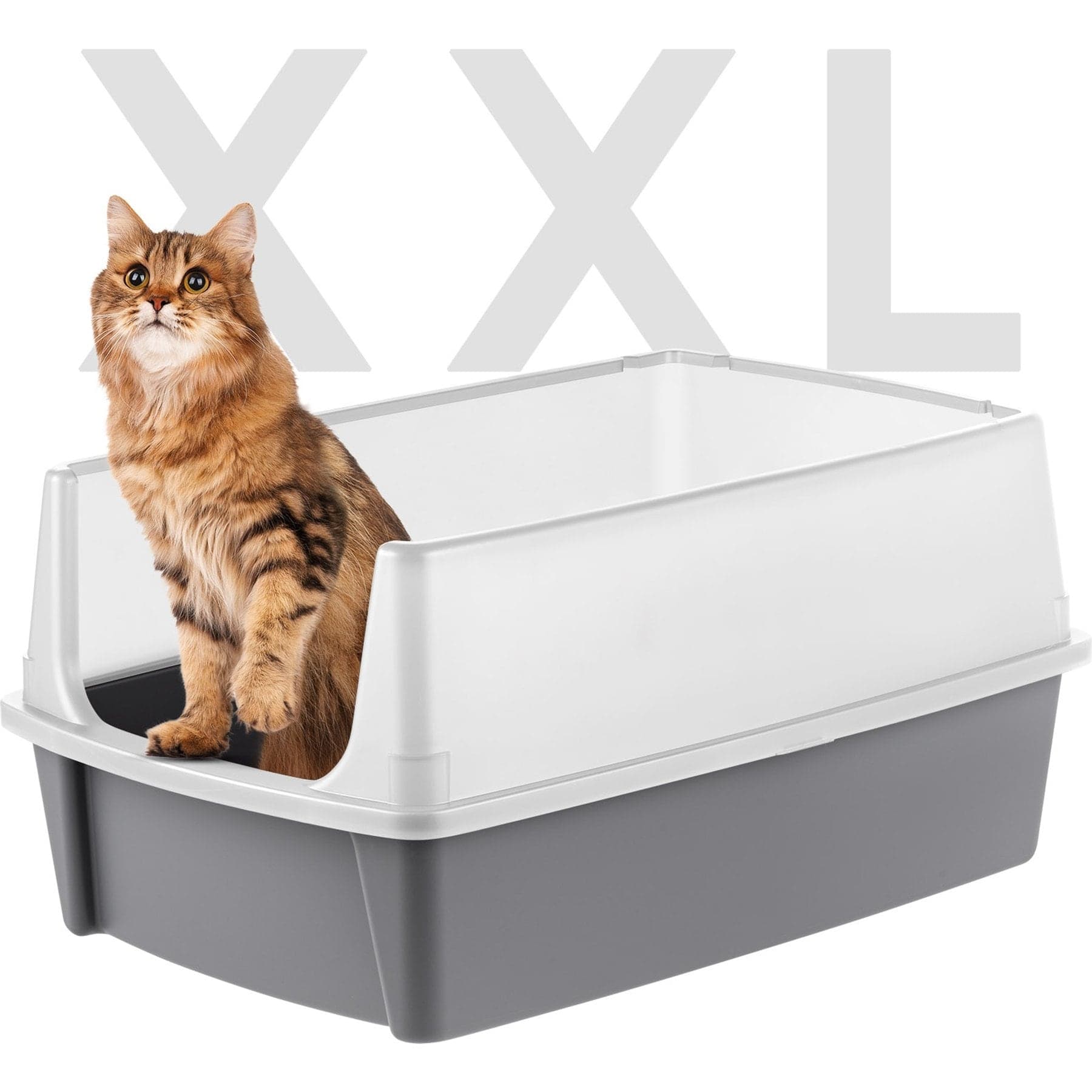
Open-top XX-Large pan with tall walls and a three-sided scatter shield, a low entry point, and a polished interior that wipes clean. The catalog lists it for Maine Coons, Ragdolls and other large breeds.
Petful may earn a commission when you click through to Chewy, at no extra cost to you.
The IRIS Open Top Cat Litter Box with Scatter Shield, XX-Large, Gray is an XX-Large pan with tall walls and a shield that wraps three sides. It is about $39.99 at Chewy at the time of writing, and the listing names Maine Coons, Ragdolls and other large breeds as the cats it is built for.
The open design means no hood to trap smells or make a nervous cat feel cornered, and the shield is there for the cat that kicks litter backward. The entry is a low point in the wall instead of a full-height side, which matters for a heavy cat that does not want to jump.
- Box type: open top with a three-sided scatter shield
- Size: XX-Large, listed for big breeds
- Interior: polished surface that the listing says wipes clean
- Best for: large cats, multi-cat homes and cats that dislike hoods
The honest limitation is footprint. An XX-Large box takes real floor space, so measure the spot first, and the open front means odor control depends on how often you scoop.
Best hooded litter box: Nature's Miracle Hooded Corner
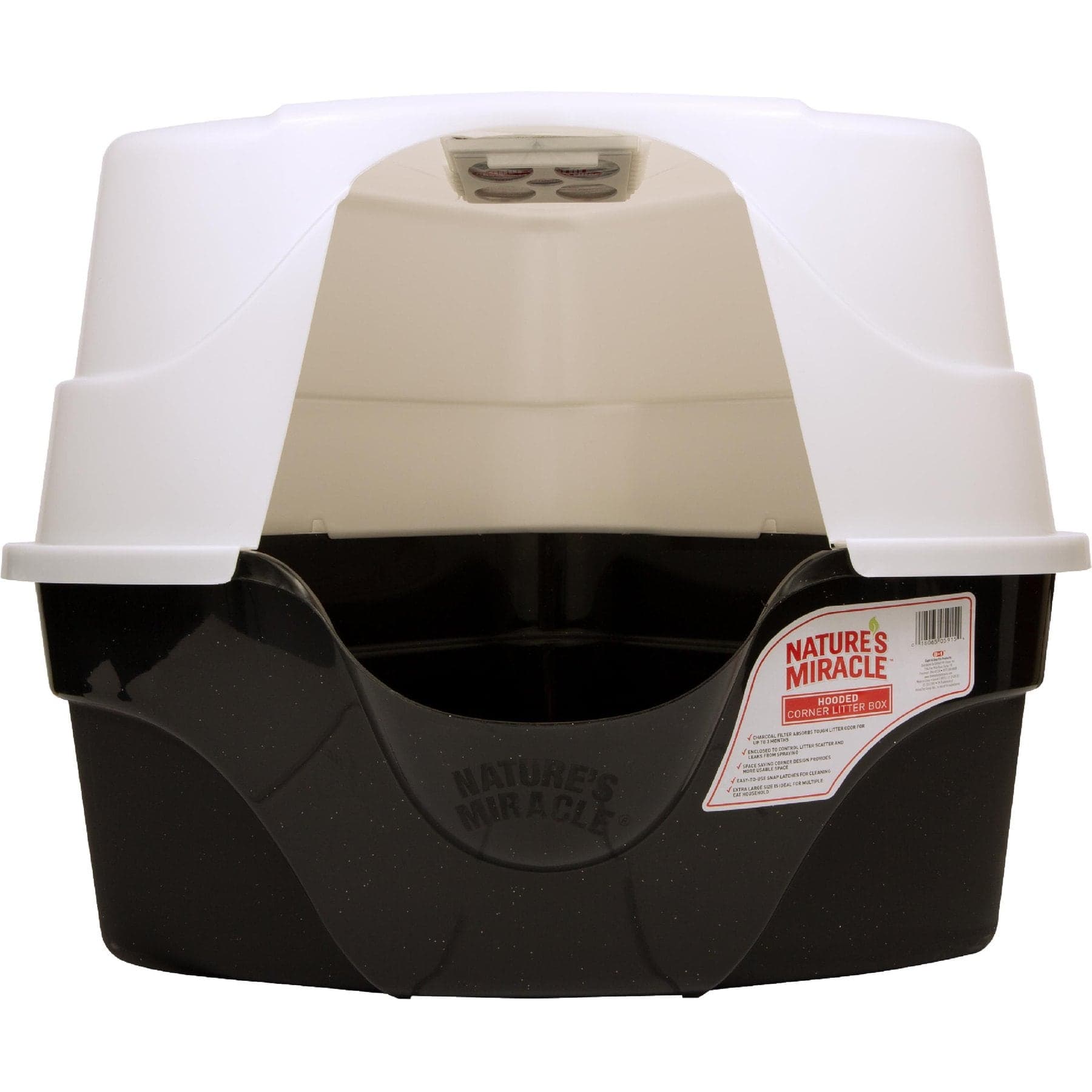
Enclosed corner hood with a charcoal filter the catalog rates for up to three months, antimicrobial plastic, a non-stick surface and snap latches for cleaning.
Petful may earn a commission when you click through to Chewy, at no extra cost to you.
The Nature's Miracle JFC Advanced Hooded Corner Cat Litter Box is the hooded pick for homes where a box sits in a bedroom, living area or small apartment. It is about $61.69 at Chewy at the time of writing, the highest price on this list, and the corner shape uses space that a rectangular pan would waste.
The catalog describes an enclosed hood with a charcoal filter rated for up to three months, antimicrobial plastic, a non-stick surface and snap latches that open the hood for cleaning. Those are the features that make a hooded box easier on the person scooping it.
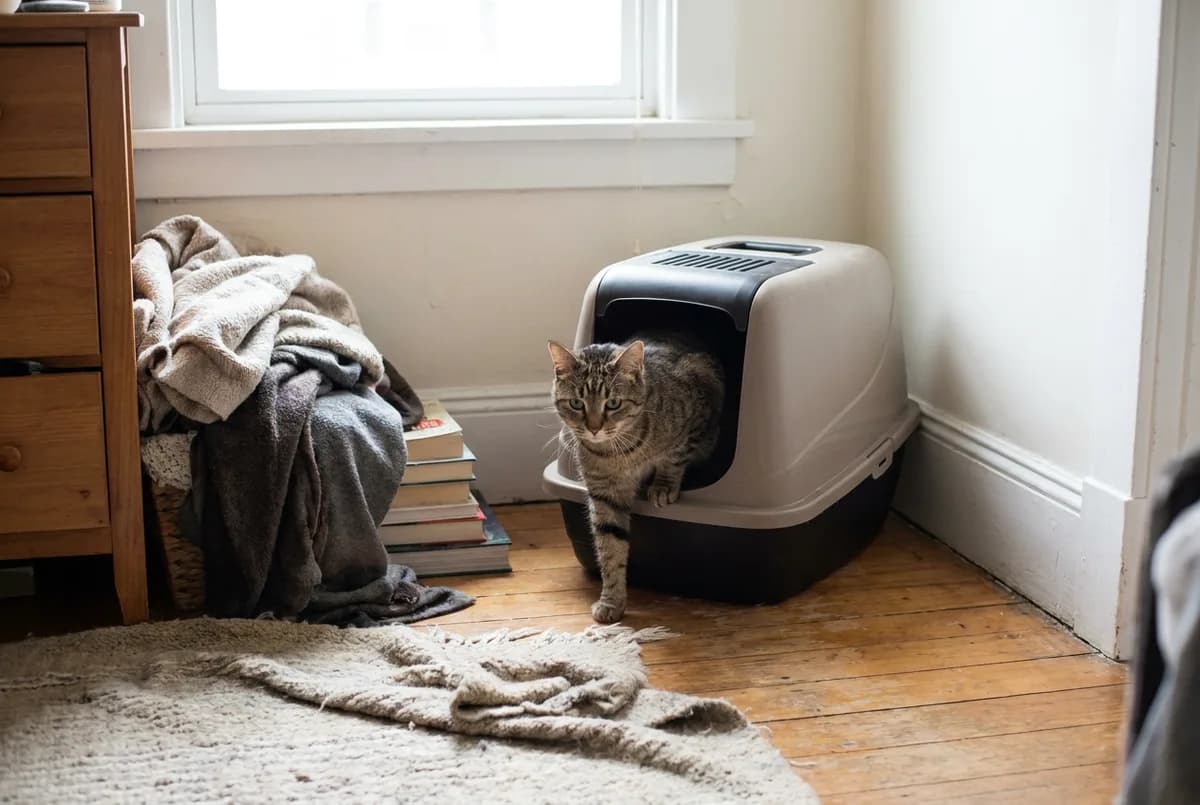
- Box type: hooded corner box with a charcoal filter
- Surface: antimicrobial, non-stick plastic
- Cleaning: snap latches release the hood
- Best for: odor and visual privacy in a tight space
The limitation is the hood itself. Some cats refuse an enclosed box, and a hood traps ammonia inside, so a daily scoop matters even more. If your cat has never used a covered box, introduce it next to the old one.
Best high-sided litter box: Frisco High Sided XL
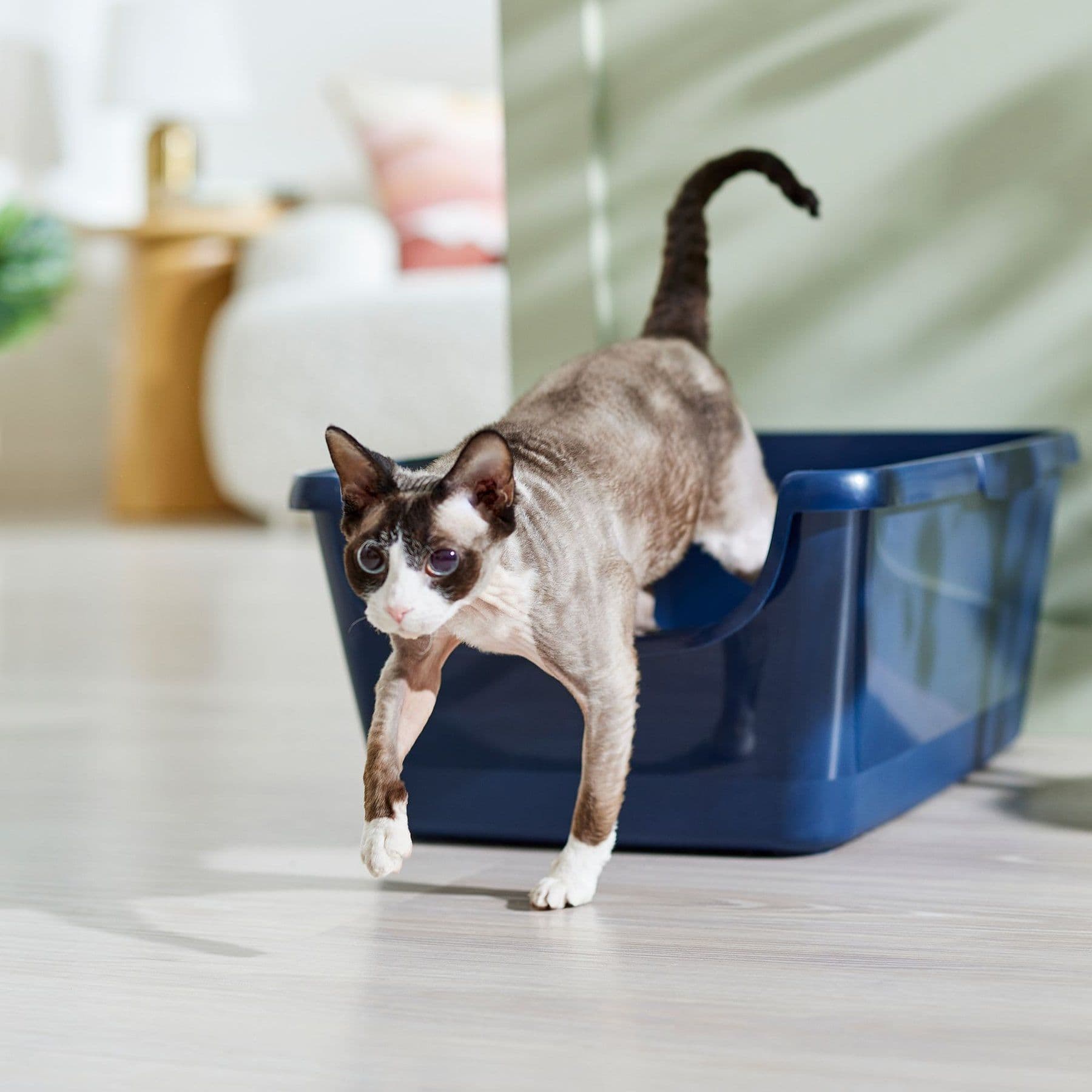
Open extra-large pan with high sides that reduce scatter and contain spray, a step-in front entry, and recyclable BPA-free plastic.
Petful may earn a commission when you click through to Chewy, at no extra cost to you.
The Frisco High Sided Cat Litter Box, Extra Large, Navy, 24-in is the budget answer for cats that dig and spray. At about $23.99 at Chewy at the time of writing, it is the lowest price here, and it pairs an open top with sides tall enough to reduce scatter and contain spray.
The listing describes a step-in front entry and recyclable, BPA-free plastic. Because the sides stay high on three edges, litter that gets flung during a vigorous dig tends to land back in the pan instead of across the floor.
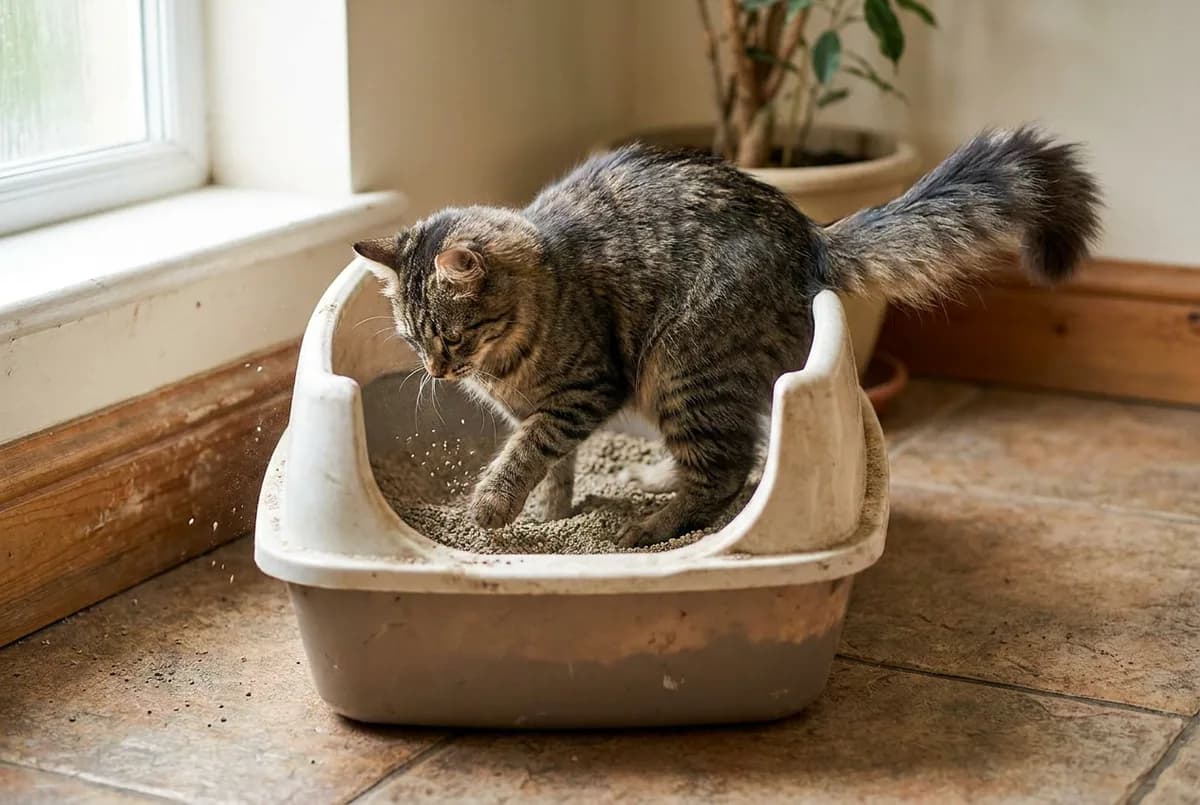
- Box type: open pan with high sides
- Size: extra large, 24 inches
- Entry: step-in front opening
- Best for: diggers, sprayers and anyone tired of sweeping litter
The tradeoff is that a high wall is a barrier for a kitten or an older cat with stiff joints. If mobility is a concern, look at the low-entry pick instead.
Best litter box for large cats: Litter Genie XX-Large
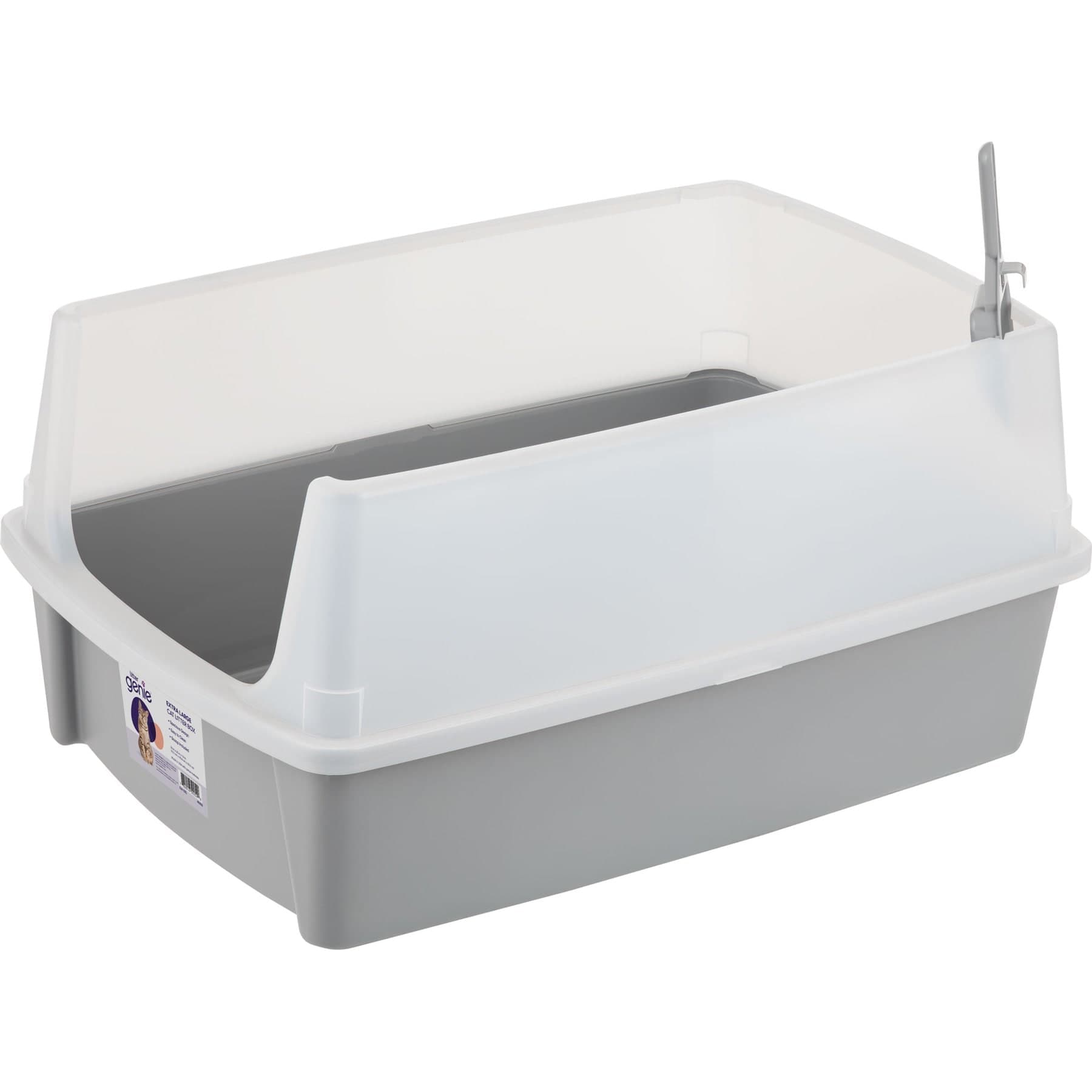
A 30-inch open-top box built for large and extra-large breeds, with room to turn, dig and stretch and a smooth interior for easy cleaning.
Petful may earn a commission when you click through to Chewy, at no extra cost to you.
The Litter Genie Products Cat Litter Box, Gray, XX-Large, 30-in is a 30-inch open-top box built for large and extra-large breeds. It is about $42.99 at Chewy at the time of writing, and the listing highlights room to turn, dig and stretch.
That length is the point. A big cat that has to fold itself into a standard pan tends to perch on the edge or step out early, and an oversized box removes that problem. The smooth interior is described as easy to clean, which helps when a box this size holds a lot of litter.
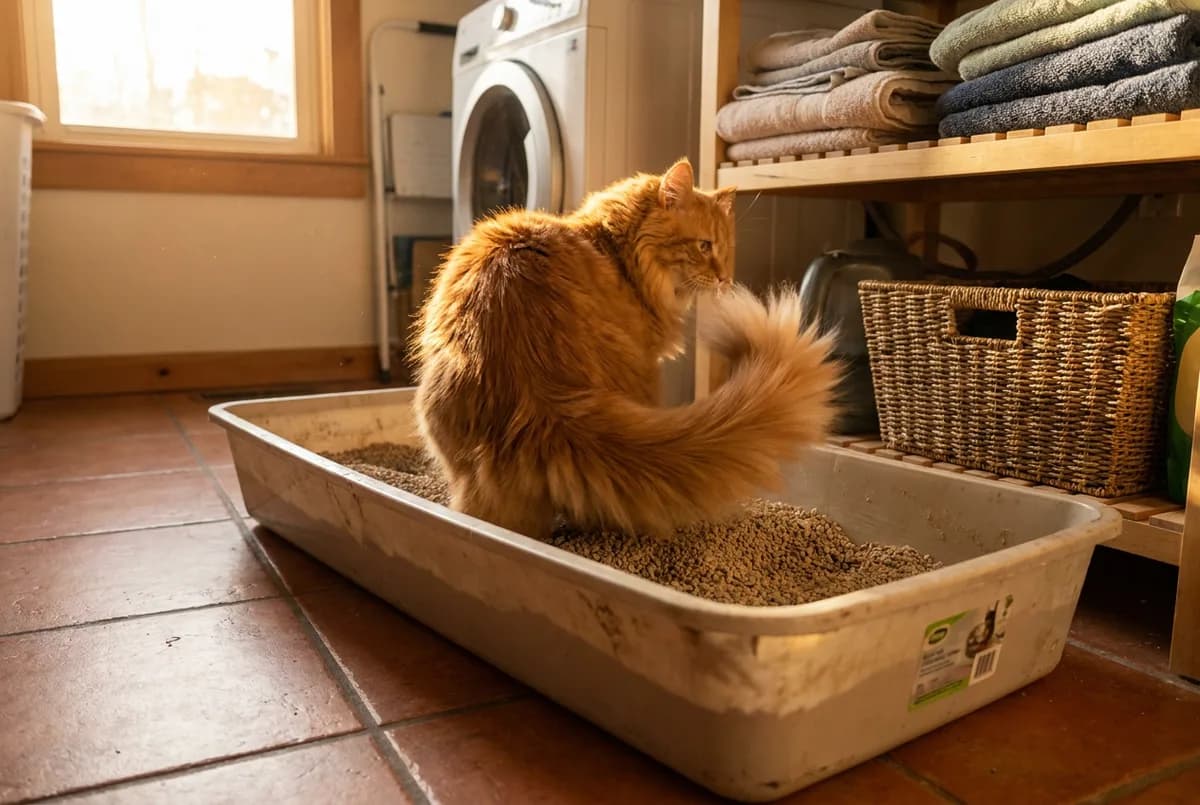
- Box type: open top, extra roomy
- Size: XX-Large, 30 inches long
- Interior: smooth surface for easier wiping
- Best for: Maine Coons, Ragdolls and other big or long cats
The limitation is bulk. A 30-inch pan needs a bathroom or laundry room with real floor space, and it holds enough litter that scooping and refilling take a little longer.
Best low-entry litter box: KittyGoHere Senior
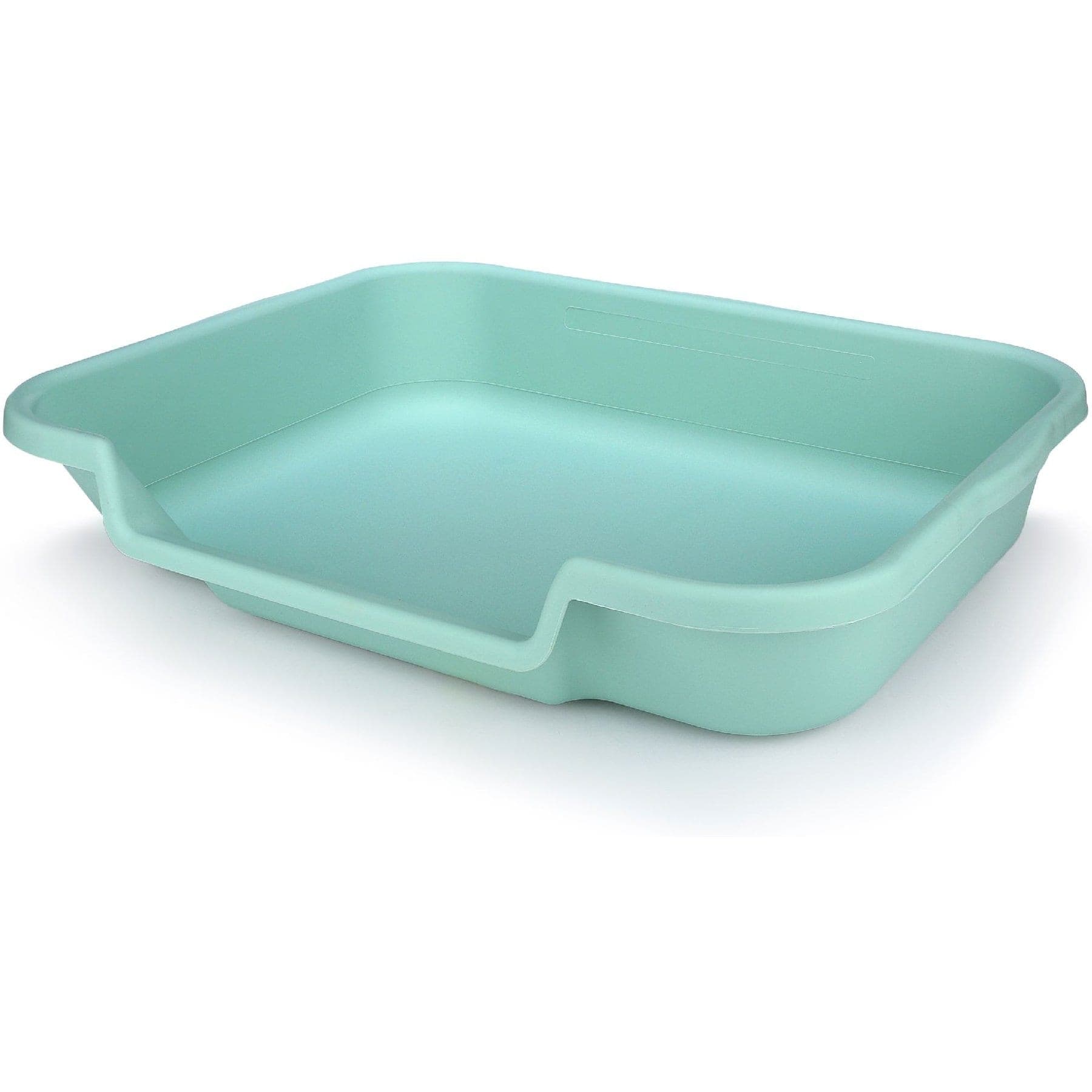
Three-inch entry point so a kitten or an arthritic senior can step in without jumping; the catalog says it works for young, old or mobility-challenged cats.
Petful may earn a commission when you click through to Chewy, at no extra cost to you.
The KittyGoHere Senior Cat Litter Box, Green, Large is the low-entry pick, with a 3-inch entry point that a kitten or an arthritic senior can step into without jumping. It is about $49.95 at Chewy at the time of writing, and the catalog says it works for young, old or mobility-challenged cats.
Entry height is the single feature most standard boxes ignore. A cat with sore hips may stop using a box long before an owner notices the cause, and a lower threshold removes one common reason for accidents.
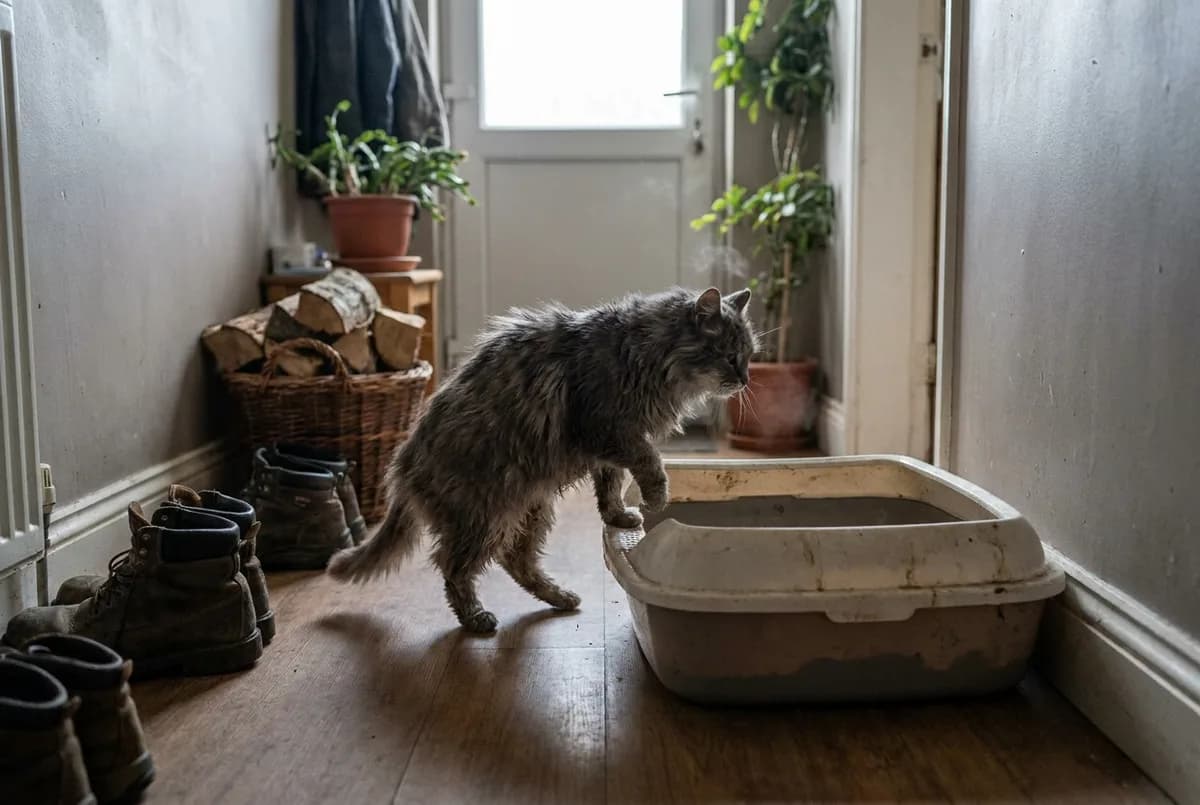
- Box type: low-entry pan
- Entry: 3-inch entry point
- Size: large
- Best for: kittens, seniors and cats with mobility problems
The tradeoff is that a low front lets litter escape more easily when a cat digs hard, so a litter mat under the front edge helps. If a senior cat is suddenly avoiding the box, a vet visit comes first, since pain and urinary problems often look like a box problem.
Best stainless steel litter box: Frisco Stainless Steel
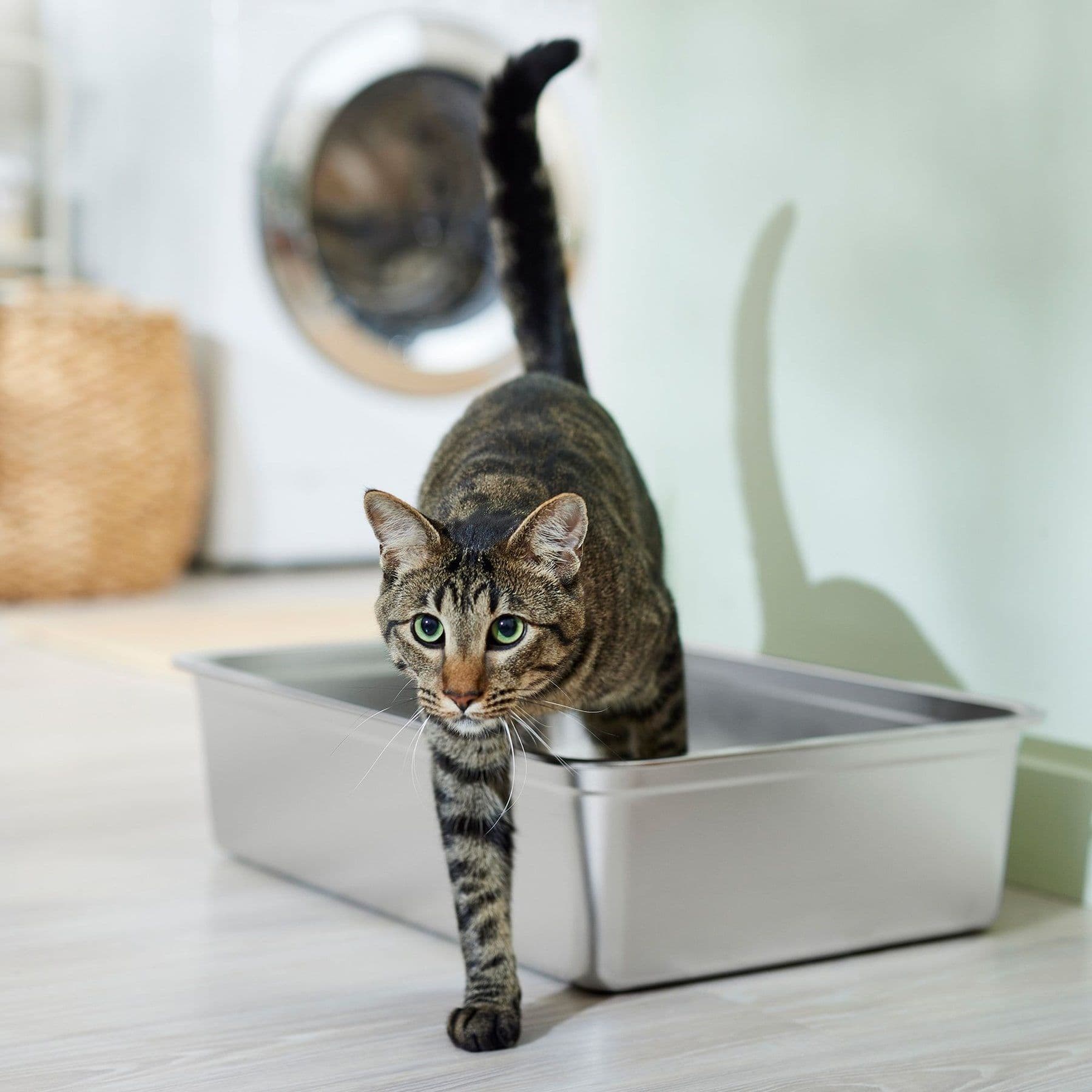
Large 23-inch stainless steel frame that resists cracking and has an easy-to-clean surface that does not hold onto odors the way scratched plastic can.
Petful may earn a commission when you click through to Chewy, at no extra cost to you.
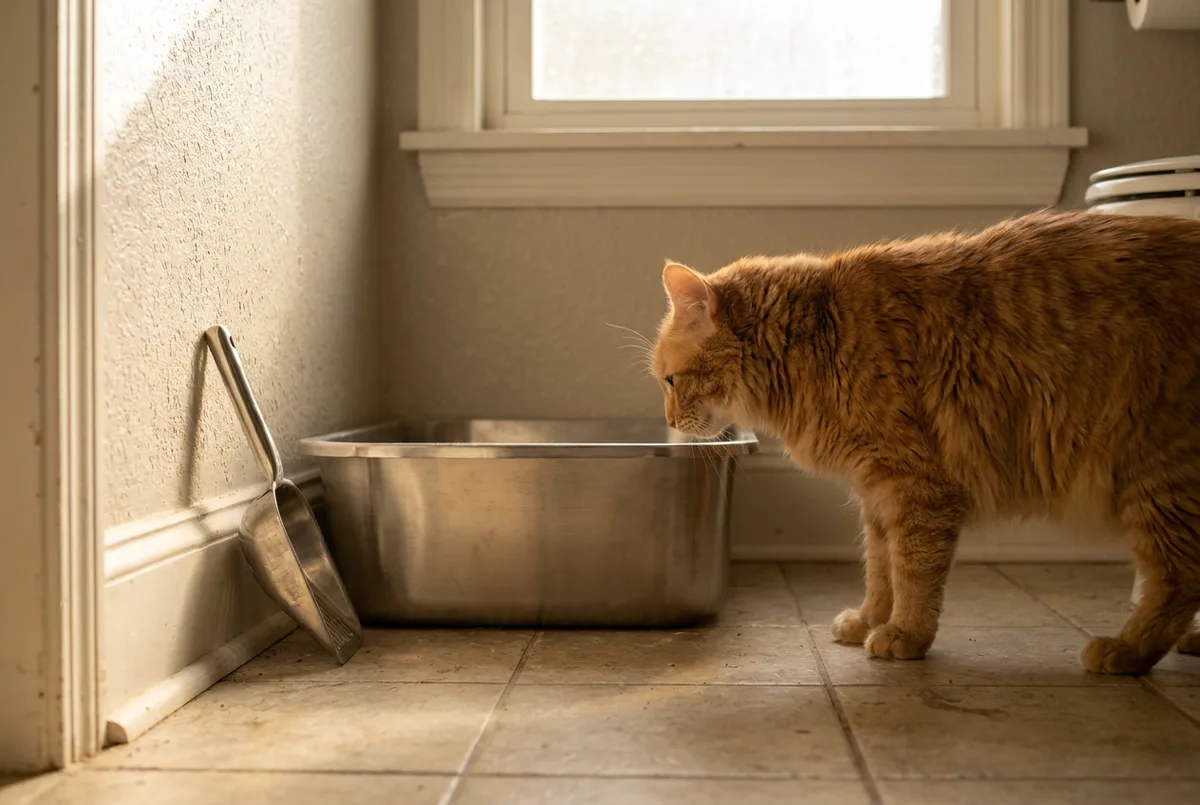
The Frisco Stainless Steel Cat Litter Box, Large, 23-in has a 23-inch stainless steel frame that the listing describes as less likely to crack, with an easy-to-clean surface that does not pick up odors. It is about $45.99 at Chewy at the time of writing.
The appeal is the surface. Plastic picks up scratches from claws and scoops, and those scratches can hold urine odor even after washing, while stainless steel stays smooth. For an owner whose box keeps smelling after cleaning, a metal pan is a practical fix.
- Box type: stainless steel pan
- Size: large, 23 inches
- Surface: smooth metal that the listing says does not pick up odors
- Best for: owners who want easy cleaning and a long-lasting box
Metal is heavier and can be noisy when a cat digs, and a few cats dislike the feel of it. A normal two to three inch layer of litter takes some of the clatter out of digging.
Open vs covered litter boxes: what cats prefer
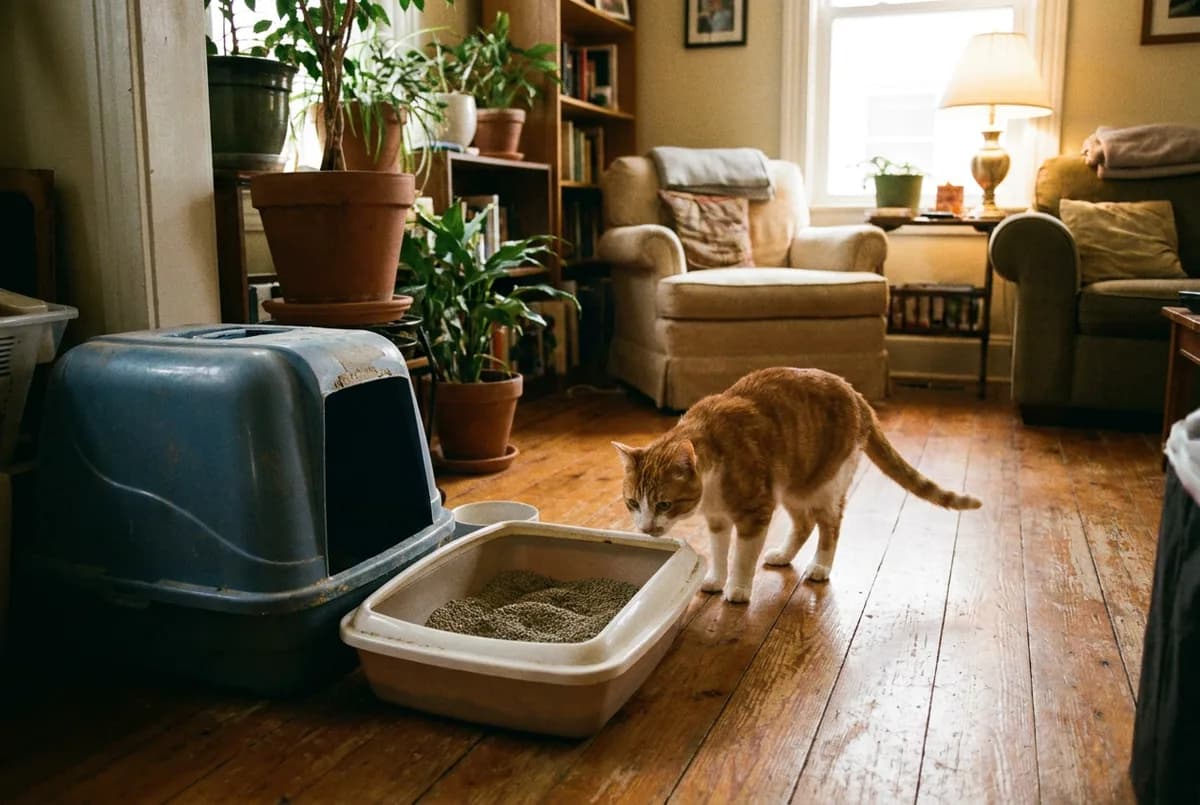
Whether a cat prefers open or covered mostly comes down to the individual. A 2013 study in the Journal of Feline Medicine and Surgery (Grigg and colleagues) offered cats a covered and an uncovered box and found that most showed no preference between them.
Because many cats accept either, feline veterinary guidance usually suggests starting with an uncovered box and watching what your cat does. International Cat Care and the American Association of Feline Practitioners (AAFP) both discuss box type and placement in their environmental needs guidance, and the pattern is consistent: cats want space and an easy exit.
The next four answers take each common question in turn, starting with what cats like best.
What kind of litter box do cats like best?
Cats do best with a large box that is easy to enter and kept clean, and an open top is the simplest way to deliver that. It gives a cat room to turn around, a clear view of its surroundings and a quick way out, which suits a cat that feels vulnerable while using the toilet.
An open box also lets you see at a glance when a scoop is due, which helps keep the box clean enough that your cat keeps using it. The tradeoff is that you see and smell more of the box too, so placement in a quiet, ventilated spot matters more with an open design.
- A roomy open box with low or moderate sides is the safe default
- Add taller sides if your cat digs or sprays
- Add a lower entry if your cat is young, old or stiff
Do cats prefer closed or open litter boxes?
Many cats do fine with either. In controlled preference research, most cats showed no preference between a covered and an uncovered box, so the choice matters most for the cat that does object. A covered box holds odor and dims the light inside, and an enclosed box can feel like a trap to a shy or anxious cat.
A hooded box looks tidy in a living room, but the benefit is mostly for the person. If you want to try one, put it beside the old open box for a week and watch which one your cat chooses.
- Covered boxes hide litter and mess from view
- Hoods can hold ammonia and make a dirty box worse for the cat
- A cat that starts avoiding a covered box is telling you something
What kind of litter box do vets recommend?
Vets generally recommend a large, uncovered box that is scooped daily, with one box per cat plus one extra. Feline veterinary guidance such as the Cornell Feline Health Center materials links litter box avoidance to both medical and environmental causes, so a clean, easy-to-use box is a health matter and not only a preference.
Do vets recommend covered litter boxes?
Vets do not generally recommend covered litter boxes as the first choice, although they accept them when a cat uses one comfortably. The usual advice is to start with an open box, and keep a hood only if your cat clearly likes it and you clean it often.
If you want the privacy and odor containment of a hood, the Nature's Miracle corner pick above is the model to consider, and a daily scoop is still required.
How to choose a litter box for your cat
Picking a box gets easy once you stop shopping by brand and start with four observable facts about your cat. This fit check turns them into a box type, and then into a specific pick from the list above.
- Length of your cat: measure from the nose to the base of the tail. The box should be about 1.5 times that number, so a 16-inch cat needs a pan near 24 inches, and a very long cat moves up to an XX-Large pan.
- Age and mobility: kittens and cats with arthritis need a low entry height, around 3 inches, so choose the low-entry pan. Healthy adults can handle a standard wall.
- Digging or spraying habit: a cat that flings litter needs high sides, and a cat that sprays needs wall height above where the stream lands. Both point to a tall-sided pan, with the spray height set by the cat's posture.
- Odor tolerance in your home: if smell bothers you more than it bothers your cat, a hooded box with a filter or a stainless steel pan that does not hold odor are the realistic options, with daily scooping on top.
The sections below give the deciding number for each factor.
What size litter box does a cat need?
The standard rule is that a litter box should be about 1.5 times the length of your cat, measured from the nose to the base of the tail. That sizing guidance appears in feline environmental guidance from the American Association of Feline Practitioners and the International Society of Feline Medicine, and it explains why many standard boxes feel cramped to adults.
- Measure from the tip of the nose to the base of the tail, then multiply by 1.5 to get the minimum length of the box. A cat that cannot turn around comfortably may stop using the box.
Box sizes on store shelves vary widely, and a small box is fine for a young kitten but outgrown within months. Many standard boxes are shorter than the 1.5 times rule asks for, which works for a petite cat and feels tight for a long adult. Since most owners pick the biggest box that fits their space, you rarely regret going bigger.
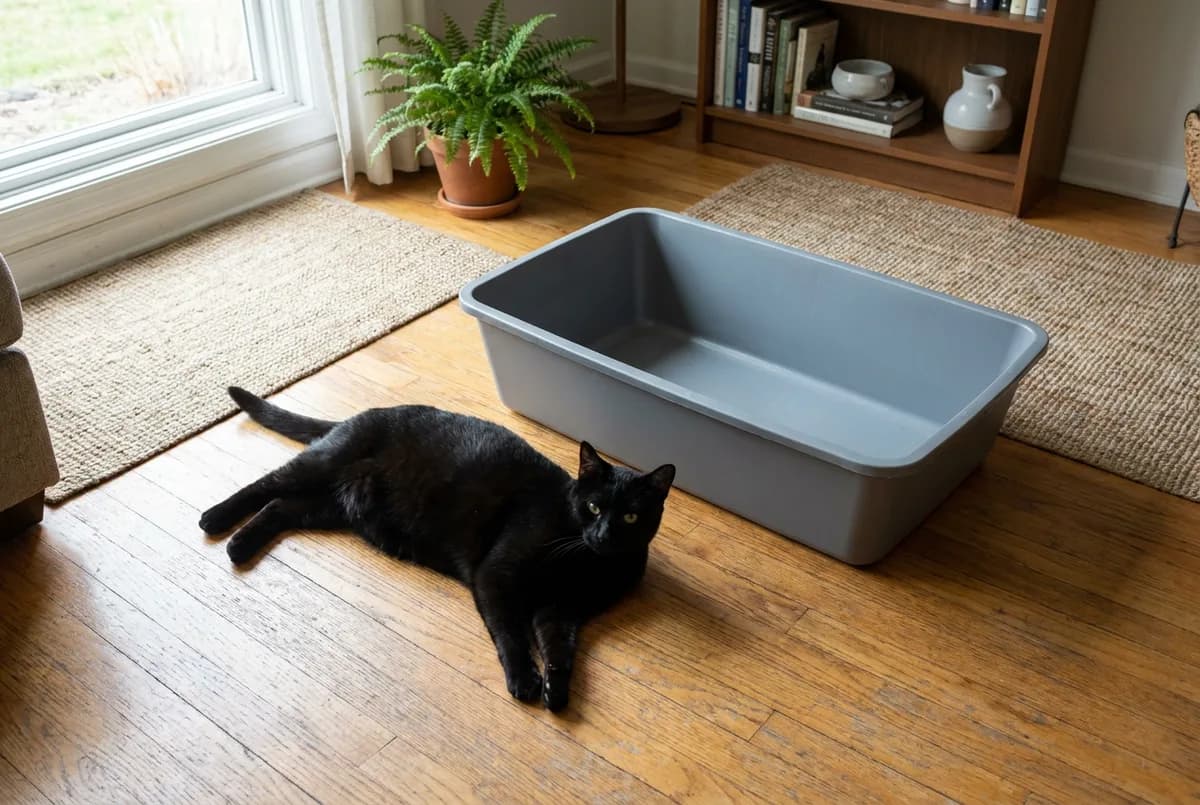
Cats vary a lot more than box sizes do. A short, small cat may be happy in a standard pan, while a long, heavy cat needs far more room, and the number on the label is only a starting point. If a cat perches on the rim, steps out partway or never settles to dig, the box is probably too small, and a longer box is the first thing to try.
Width and depth matter too. The box should be wide enough for the cat to turn in a full circle, and the litter should be deep enough to dig but not so deep that a small cat struggles to climb out.
Best litter box for large cats
The right box for a large cat is simply a pan that matches the cat's length, and for a big breed that usually means an extra-large pan in the 24 to 30 inch range. It should be long enough to stretch, wide enough to turn and open enough that the cat never feels wedged in.
A roomy pan is not a luxury for a Maine Coon or a heavy shorthair. It lets the cat posture naturally, and it holds more litter, so it tolerates a long day better. Measure the floor space before you order, because the 30-inch Litter Genie needs about two and a half feet of clear room.
- The Litter Genie XX-Large pick is the roomiest option at 30 inches
- The IRIS XX-Large pick adds a scatter shield for big diggers
- The Frisco 24-inch pan is the budget option for mid-size to large cats
If your large cat also has long fur that drags through the litter, our guide to litter boxes for long-haired cats covers the added cleaning issues in detail.
High-sided boxes for diggers and sprayers
Some cats dig as if they were trying to reach the other side of the world, and others spray urine backward against a wall. A pan with high sides, or a tall box with a shield, keeps both from becoming a daily cleanup. The scatter and spray problem is physical, so the fix is physical: more wall.
- If your cat sprays, watch where the stream lands and compare it with the wall height of the box. A wall that stops below that point will not contain it, no matter how large the box is.
For a spraying cat, the walls should reach at least as high as the spray point, which often means tall walls on at least three sides. Sprayers also benefit from a vet check, because urinary problems and stress can both cause marking.
If litter still ends up outside, read our advice on keeping litter inside the box, where we cover mats, litter type and box placement. WebVet's roundup of the best cat litter mats is the place to start for the floor around the box.
- High sides stop litter flung backward during a dig
- Shields extend wall height only where the cat tends to aim
- A taller front can be a barrier, so check the entry height for older cats
Litter boxes for kittens and senior cats
A kitten needs a box small enough to climb into, and a senior cat needs a low entry for stiff joints. A low entry serves both ends of life, which is why it is the most useful single feature for those cats.
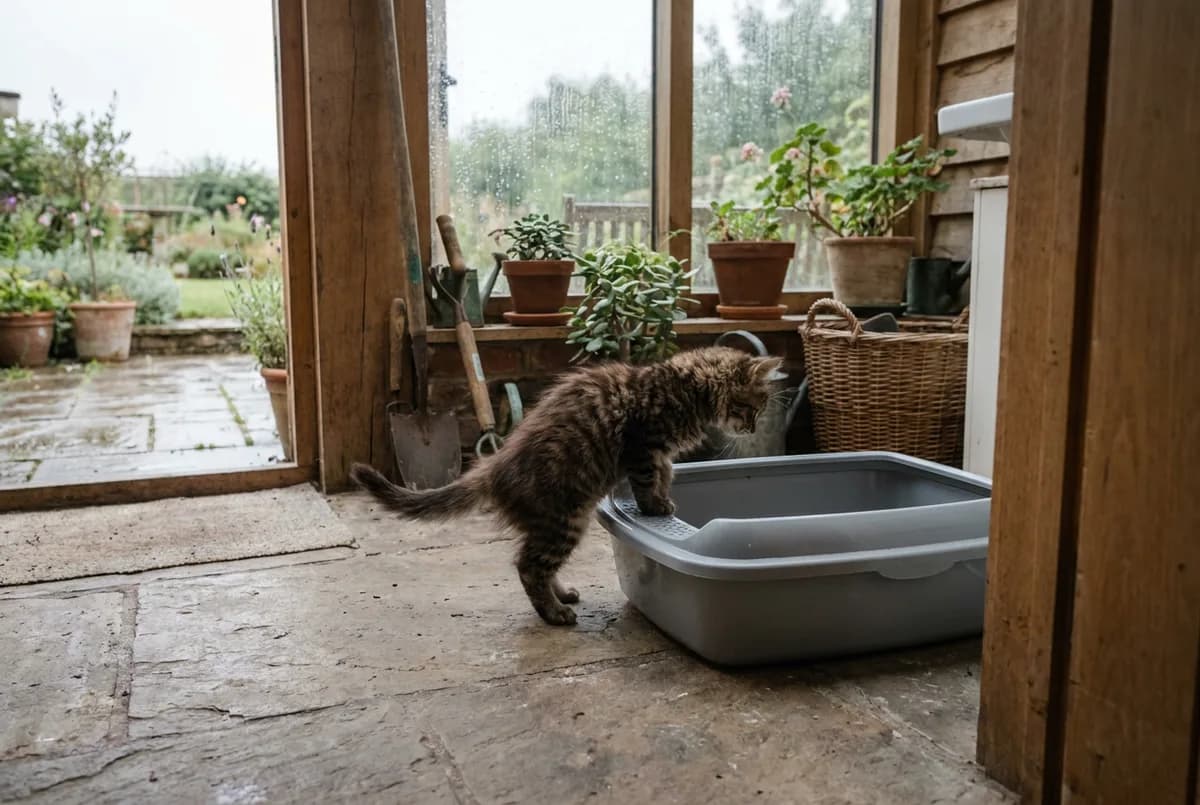
For a kitten, look for a front threshold of around 3 inches or lower, since a kitten that cannot get in will go on the floor. A shallow pan or a low-entry box you grow into works well, and a senior cat benefits from the same low front with extra length so a stiff cat has room to turn.
Low entry for seniors is the biggest quality-of-life change you can make. Arthritis and stiffness are common in older cats, and a high step is exactly what a sore hip avoids. The KittyGoHere Senior pick above is the model on this list built around that need.
- Keep the box on the same floor your senior cat lives on
- Use a mat to catch the extra litter a low entry lets out
- Put one box in each area the cat uses most
Best litter boxes for multiple cats
For several cats, the best setup is large, open boxes in plentiful numbers. A single giant pan does not solve it. Several boxes in different places do, because cats often will not share space with a housemate.
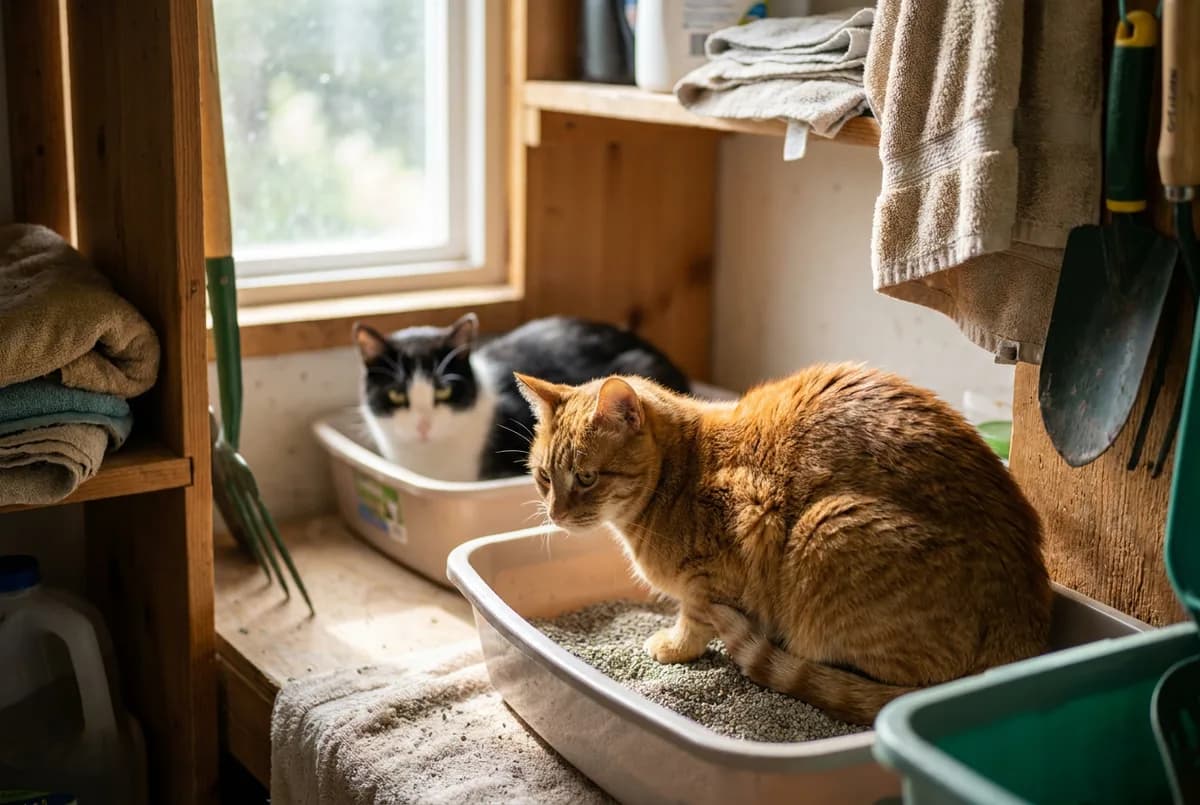
The common rule of one box per cat plus one extra applies directly here. Open XX-Large pans like the IRIS or Litter Genie picks suit the extra boxes, since the open layout makes it harder for one cat to block another.
Watch the cats rather than assuming. These signs often mean a box is occupied, unclean or guarded by another cat:
- Waiting at the door of the room where the box sits.
- Sitting near the box without going in.
- Eliminating right beside the box instead of in it.
Adding another box in a different room is usually the quickest fix, and it costs less than replacing carpet.
Mixed ages call for mixed boxes. A household with a young adult cat and a senior can run a tall-sided pan for the digger and a low-entry box for the older cat, which beats forcing both onto the same compromise.
Litter choice matters when several cats use the same boxes, and our roundup of litter for multiple cats compares clumping options that stand up to heavy use.
Stainless steel vs plastic litter boxes
A stainless steel litter box wins on durability and cleaning, while plastic wins on price and weight. Stainless steel has a smooth surface, so urine does not soak into scratches the way it does in worn plastic.
The reason is that scratched plastic holds odor. Claws and scoops leave tiny grooves in a plastic pan, urine residue settles in them, and a box can smell even after a thorough wash. For a home where the box keeps smelling after a wash, a metal pan that stays smooth is the practical fix.
- Stainless steel: smooth, durable, heavier, higher price, can be louder
- Plastic: lighter, cheaper, easy to find in every size, needs replacing when scratched
- Replace scratched plastic once odor persists after a full wash with unscented soap
The Frisco Stainless Steel pick is the metal option here, and a plastic box is perfectly fine if you replace it when it is worn.
Where to put a litter box and how many you need
Location causes more litter box trouble than any product feature. A great box in the wrong spot is a box your cat will avoid, and a cat that avoids the box usually does not announce it politely. The two decisions that matter are where each box goes and how many boxes the household needs.
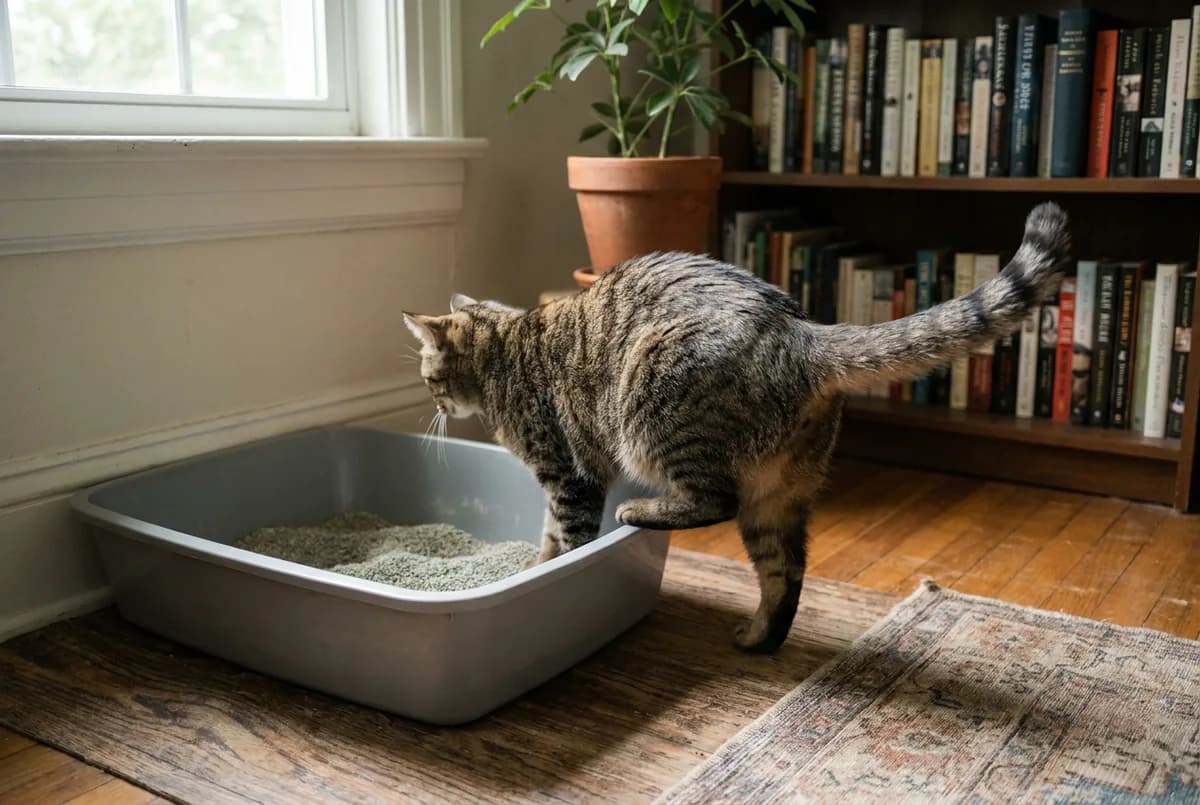
- Veterinary groups advise one litter box for every cat in the home, plus one extra. Spread the boxes across different rooms or floors so one cat cannot guard them all.
Both rules come from feline environmental guidance and apply whether you live in a house or a studio. If a cat is already going outside the box, our guides to a cat pooping outside the litter box and a cat peeing outside the litter box walk through the medical and behavioral causes, and a vet visit is the first step when the change is sudden.
Where is the most sanitary place to put a litter box?
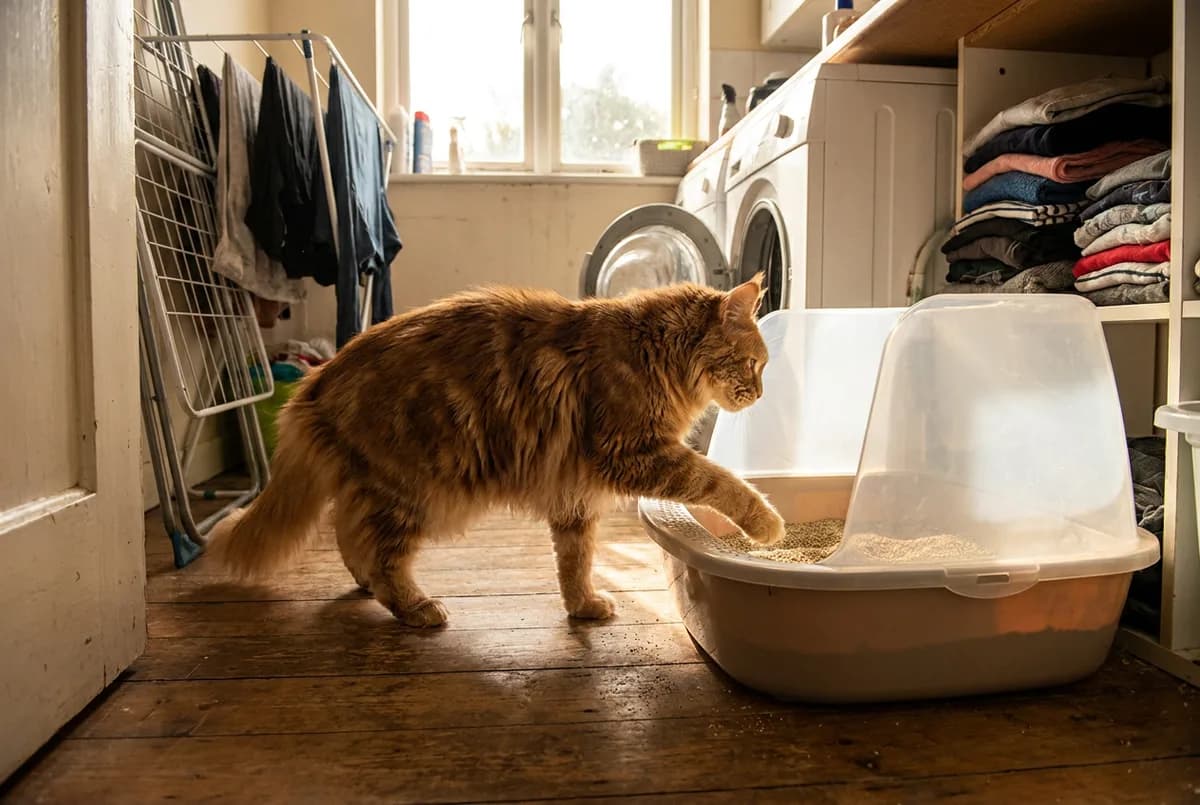
The most sanitary place for a litter box is a quiet, low-traffic spot that is easy to reach and away from food and water. Cats do not want to eliminate near where they eat, and they do not want to be startled by a washing machine, a door slamming or a barking dog.
The best spot has two things: an easy exit and a little privacy. A corner of a spare room, a bathroom with the door propped open or a quiet hallway nook usually works. International Cat Care advises placing boxes away from noisy appliances and busy walkways, and keeping them separate from feeding areas.
- Avoid the laundry room if the washer or dryer runs often
- Keep the box away from the food and water bowls
- Choose a spot your cat can reach without climbing stairs, especially for seniors
- Do not hide the box so well that you forget to scoop it
Small apartments make quiet corners scarce. A bathroom corner, the space beside a closet or a hooded corner box tucked behind a door can work, as long as the footprint leaves enough room for your cat to turn around and the box is not pushed against the cat's food. Airflow matters too, so avoid a sealed closet that traps smell.
How many litter boxes do you need?
The usual rule is one box per cat plus one extra, so two cats get three boxes and three cats get four. The extra box matters because cats can block each other, and a single box becomes a point of conflict.
Some cats share a box without trouble, especially bonded pairs, and many tolerate it for a while. Sharing often works until one cat becomes ill, stressed or older, and then the quieter cat may stop using the box. Having the extra box in place gives each cat an out.
- Put boxes in different rooms, not side by side, so they do not count as one big toilet
- Keep one box on each floor of a multi-level home
- If one cat is guarding a box, add another box in a new location
- Scoop every box every day, whatever the count
Spreading boxes out and using large open pans is the most reliable way to prevent conflict, and it is the setup the XX-Large picks above are built for.
Keeping a litter box clean and odor under control
The cleanest box is the one scooped every day and washed on a schedule. Hardware helps, but the habit does most of the work, and a cat will often decide a box is unusable long before you can smell it.

The three questions below take hygiene, health and odor in turn, with the practical answer first.
What is the most hygienic cat litter box?
The most hygienic litter box is one with a smooth, non-porous surface that is scooped daily and washed regularly, and stainless steel and polished plastic with no cracks are the easiest to keep clean. A box with deep scratches, stained corners or a damaged hood cannot be cleaned properly, because bacteria and residue sit in the damage.
For the routine, follow our step-by-step guide on how to clean a litter box, which covers soap choice, how often to dump and wash, and why strong scented cleaners can put cats off.
- Scoop solids and clumps daily
- Empty and wash the whole box with mild, unscented soap on a regular schedule
- Dry the box fully before adding fresh litter
- Replace a box that stays smelly after cleaning
What is the healthiest litter box for cats?
The healthiest litter box for cats is a large, clean, easy-to-enter box that the cat uses without hesitation. For most cats, that means an open top with sides tall enough to hold litter, filled with a litter the cat tolerates and scooped daily.
Health is mostly about avoiding stress and inactivity at the box. Cornell's Feline Health Center materials point out that litter box problems and urinary disease often overlap, so a cat that suddenly strains, cries at the box or goes outside it needs a vet. WebVet's guide to when changes in litter box habits signal a medical problem covers which changes point to a medical cause. A box that is too small, dirty or hard to enter can make a cat hold urine too long, which is a health risk.
Litter box odor control that works
For odor control, the short answer is a covered box or an easy-clean surface, plus a daily scoop. A covered box with a charcoal filter traps some smell, a smooth or stainless steel pan resists absorbing urine, and scooping daily is the habit that makes the biggest difference.
- Removing clumps and waste once or twice a day does more for smell than any box feature. Odor builds when waste sits, so frequent scooping beats a stronger filter.
No box removes odor on its own, whatever the packaging promises. A design built for odor control, such as the Nature's Miracle hooded corner with its charcoal filter, helps contain smell, while an open stainless steel pan avoids the odor that scratched plastic holds. The box that smells least is the one you can clean easily and often.
Litter choice matters as much as the box. Clumping litter makes daily scooping effective, and our guide to the best cat litter helps you choose one your cat accepts. If smell is your main concern, see our picks of cat litter for odor control, which pair well with any box above.
- Scoop at least once a day, and twice if possible
- Use a clumping litter at a depth your cat can dig in
- Wash the box on a schedule and replace it when plastic is scratched
- Keep the box in a ventilated area, not a sealed cabinet
Specialty litter boxes we cover separately
This guide focuses on the everyday boxes most cats use. Several box types answer narrower questions, and each has its own page. Here is what each one is for and where to read more.
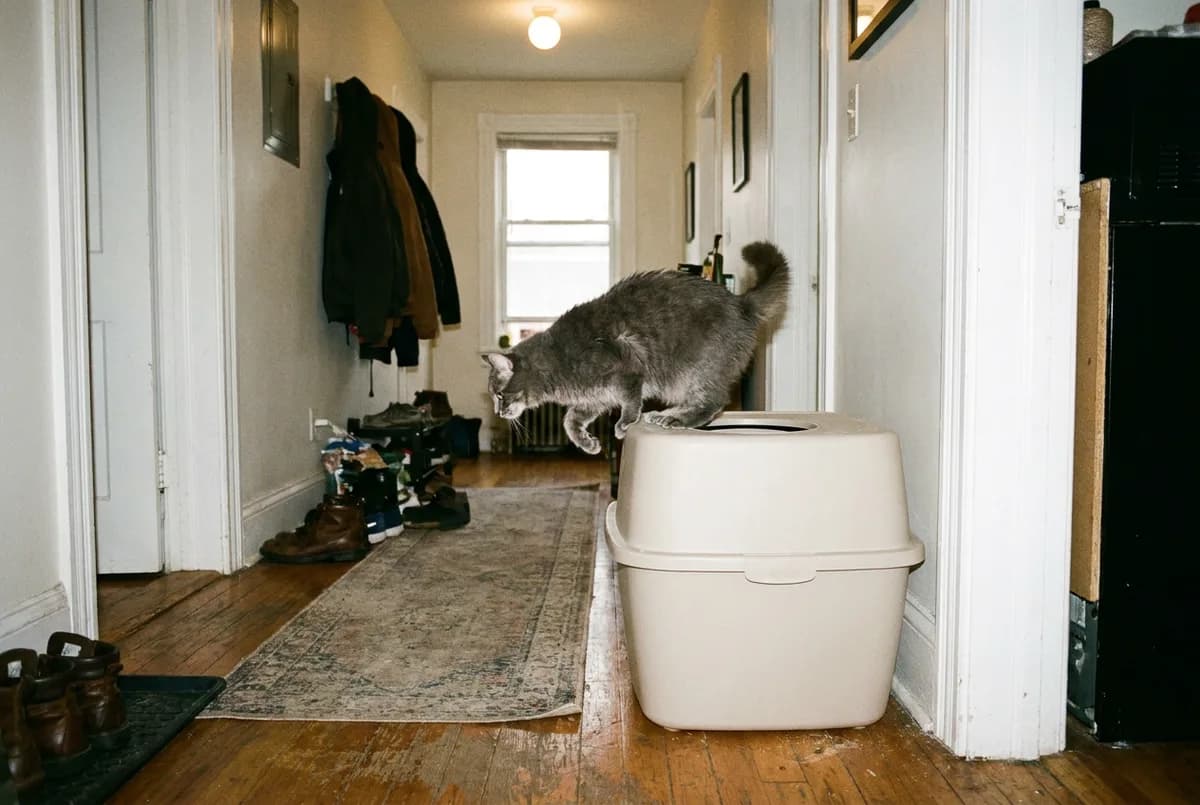
Top-entry litter boxes
A top entry litter box has a lid with an opening on top, so the cat jumps in from above and litter stays contained when the cat digs. It suits energetic, healthy cats and homes with dogs or toddlers, but it is a poor fit for kittens and seniors. Our guide to top-entry litter boxes compares the options.
Disposable litter boxes
A disposable litter box is a cardboard or paper tray you throw away when it is dirty, which suits travel, fostering, a sick cat or a short stay. It is not a long-term box for most cats. Our page on disposable litter boxes compares disposable options and explains when they make sense.
Dog-proof litter boxes
Dogs often raid litter boxes, which upsets cats and is unhealthy for the dog. A dog-proof box uses a small entrance, a top entry or a protected spot so only the cat can get in. See our page on dog-proof litter boxes for boxes with small entrances or top entries that keep dogs out.
Automatic and self-cleaning litter boxes
Automatic boxes scoop waste for you with a motorized rake or rotating drum, and they range from simple self-cleaning pans to app-connected models. They can save daily work, but they cost far more than a regular pan, and the waste drawer or bag still needs emptying. Our dedicated guide to the best automatic litter boxes covers the options and the tradeoffs.
Litter boxes for long-haired cats
Long fur picks up litter and tracks it through the house, so a long-haired cat benefits from a roomy box, higher sides and a litter that does not cling. Our page on litter boxes for long-haired cats covers box choices and grooming habits that keep the box and the cat cleaner.
Cat litter box questions
These are the remaining questions buyers ask most often, answered once here so the sections above can stay focused on choosing a box.
Most clumping litter works best at a depth of about two to three inches, which gives the cat enough to dig and bury waste without hitting the floor of the pan. Too little litter lets urine reach the bottom and stick, while too much makes a small cat struggle. Start there, then adjust to your cat. A depth that clumps cleanly also makes the daily scoop easier.
Litter box liners can make dumping a hooded or plastic box faster and keep the pan cleaner between washes. The catch is that many cats scratch hard, and claws tear liners, which lets urine slip underneath and defeats the point. If your cat digs hard, skip liners or try a heavier one, and always wash the box on a schedule. Never force a liner on a cat that dislikes the feel.
A corner litter box is often the best fit, because it uses dead space that a rectangular pan wastes. Hooded corner models also hide the box from view. Check the small apartment footprint against the length of your cat, because the box must still be about 1.5 times that length. If space is tight, choose one good box over a cramped pair and keep it scooped.
Replace plastic boxes when they are scratched, stained or cracked, and when odor persists after a full wash. Scratched plastic holds odor, because urine residue settles into the grooves that claws and scoops leave behind. Many owners replace a plastic box about once a year, though a smooth box that cleans well can last longer. A stainless steel pan avoids this problem.
A box too big is rarely a problem for an adult cat, since most boxes are smaller than cats need. The exception is a kitten or senior, where a tall box with high walls can be hard to enter. Look for low sides: kittens and seniors can then use a larger box comfortably. Otherwise, bigger is better, as long as it fits the space.

Coreen Saito is a pet writer and longtime shelter volunteer with more than a decade in animal rescue. She covers cat behavior, breed care, and the small, ordinary science of sharing a life with companion animals, with a particular focus on honest takes about the products and decisions that actually matter. At home in Arizona, she's outranked by Mac (a dog with the loudest opinion in the house), Rebel (a cat who governs by quiet authority), and Meri (an orange tabby who runs the late shift and the laundry basket). She writes about all three, plus the rescues that keep coming through her life, at LifeWithMinty.com.
Sign up for expert-backed reviews and safety alerts all in one place.