Best Cat Litter for Multiple Cats: 7 Strong Picks
Compare seven litter picks for multi-cat homes by clump strength, odor load, dust, tracking, and value, with practical guidance for box count, placement, and cleaning frequency.
Petful is reader supported. As an affiliate of platforms like Amazon and Chewy, we may earn a commission when you buy through links on this page. There is no extra cost to you.
The best cat litter for multiple cats forms clumps that survive heavier use, helps control odor between scoops, and fits the cats, boxes, and cleaning routine in your home. For many households, our strongest all-around starting point is Arm & Hammer Clump & Seal Slide Multi-Cat Clumping Cat Litter. It combines a familiar clumping-clay texture with a formula positioned for multi-cat odor load and easier box cleanup.
That does not mean one bag can solve every shared-box problem. Two cats create more urine, more solid waste, more digging, and more traffic than one. If they have too few boxes or those boxes are not scooped often enough, even an excellent multi-cat formula will struggle. Some cats also prefer walnut, wood, wheat, or another texture over clay.
Petful did not conduct hands-on tests of these products. We compared seven exact formulas through expert editorial analysis of material, format, stated use, clumping approach, dust and tracking tradeoffs, package size, and likely household fit. Use this guide to create a short list, then let each cat's consistent box use decide whether a product truly works in your home.

Sign up for expert-backed reviews and safety alerts all in one place.
What is the best cat litter for multiple cats?
Arm & Hammer Clump & Seal Slide Multi-Cat is our conditional best overall pick for a typical multi-cat home that wants strong clumps under heavier use, odor-focused performance, and a conventional clay texture. The Slide formula is also designed to reduce litter sticking to the box, which can make full cleanouts less frustrating.
The condition matters. The best litter to use for multiple cats depends on four connected variables: how many cats live in the home, how many usable boxes they can reach, how often waste is removed, and whether they accept the litter. Box count still matters even when the formula is built for heavy use. A multi-cat label increases the formula's relevance to a busy box, but it does not make one box adequate for every group or guarantee that a particular cat will like the scent, texture, or feel.
- 1Arm & Hammer Clump & Seal Slide Multi-Cat is our strongest all-around starting point for multi-cat homes that want familiar clumping clay, odor-focused performance, and easier box cleanup
- 2More cats increase maintenance demand, so box count and scoop frequency still determine whether any multi-cat formula succeeds
- 3A litter only earns a place in your home if every cat uses it comfortably and consistently
How we chose litter for multi-cat homes
We started with the pressure that several cats place on a litter setup. More use means clumps have less undisturbed time to set, damp fragments can contaminate clean litter faster, and odor can build between routine scoops. A useful comparison must therefore look beyond whether a package says multi-cat. The best rated cat litter for multiple cats is only relevant when its shared-box load, cleaning demand, and texture fit the real household.
Our seven picks were assessed across these practical factors:
- Clump integrity: A clump should lift without breaking into many wet pieces. Stronger, compact clumps can preserve more clean litter and reduce the residue that contributes to odor.
- Odor strategy: Moisture absorption and prompt waste removal matter first. Added fragrance can make a room smell different without making a neglected box clean.
- Dust and tracking: Fine or lightweight particles may leave the box on paws, while larger particles may be less comfortable for some cats. No formula can promise zero dust or zero tracking in every setup.
- Cat acceptance: Texture, scent, litter depth, and prior experience all affect use. A technically impressive litter fails if even one cat begins avoiding the box.
- Package and value: A low price per pound is not automatically economical. Broken clumps, frequent full changes, wasted clean litter, shipping, storage, and package weight affect real cost.
- Transition difficulty: Moving from one fine clumping clay to another is usually a smaller change than moving from clay to walnut, wheat, or wood.
We also kept a clear distinction between litter formula and automatic litter-box hardware. This article compares the substrate that goes into a box: clumping strength, odor control, dust, tracking, cost, and cat acceptance. Hardware introduces sensors, cycle timing, entry height, waste capacity, safety, and model compatibility. If you are deciding between current Whisker models, use Petful's Litter-Robot 4 vs. 5 vs. EVO comparison instead.
Our multi-cat litter picks at a glance
| Product | Best for | Material and format | Main tradeoff |
|---|---|---|---|
| Arm & Hammer Clump & Seal Slide Multi-Cat | Best overall for familiar texture, strong clumps, and easier box cleanup | Clumping clay | Dense clay is heavy, and the formula may not suit every scent-sensitive cat |
| Catalyst Pet Multi-Cat Formula | Lightweight natural-material option | Clumping softwood | Different wood texture calls for a gradual trial |
| Naturally Fresh Multi-Cat Unscented | Unscented plant-based clumping | Clumping walnut shell | Light dark granules may track and make waste less visible |
| sWheat Scoop Multi-Cat | Wheat-based alternative without added dyes or perfumes | Clumping wheat | Soft clumps can need patient scoop timing |
| Dr. Elsey's Clean Tracks | Low-tracking priority with familiar clay | Clumping clay | Fine particles can still travel beyond the mat |
| Tidy Cats Free & Clean Unscented | Large-pail value for a busy household | Clumping clay | Heavy pail and recurring storage needs |
| Whisker GreatLitter | Low-dust formula for compatible automatic-box homes | Clumping clay | Direct-brand purchase and hardware compatibility should be confirmed |
- Use this table to identify two or three plausible fits. Then compare them against your current litter rather than judging them in isolation. The lowest-risk trial usually keeps a familiar texture while changing one problem, such as weaker clumps, added fragrance, or excessive tracking.
The 7 best cat litter picks for multiple cats
Best overall: Arm & Hammer Clump & Seal Slide Multi-Cat Clumping Cat Litter
Arm & Hammer Clump & Seal Slide Multi-Cat is our first choice for a conventional multi-cat setup because it addresses the two daily frustrations that scale fastest with added cats: odor load and material stuck to the pan. Its clumping-clay texture will also feel familiar to many cats already using fine scoopable litter.
The Slide positioning is especially relevant during a full box change. Urine that reaches the bottom of a shallow litter bed can make many clumping products adhere to the plastic. A formula designed to release more readily may reduce scraping, but setup still matters. Maintain the depth recommended on the package, scoop on schedule, and wash the empty box with a cat-safe routine when buildup remains. Petful's guide to how to clean a litter box covers the complete sanitation process.
This is not automatically the right litter for scent-sensitive cats or owners who want to avoid clay. It is also a 28-pound box, so consider whether the regular caregiver can lift, store, and pour it safely. Choose it when your cats already accept clay and your main problems are clump performance, odor between scoops, and stuck-on residue.
- Material: clumping clay
- Best for: clay-using multi-cat homes that want an odor-focused all-around formula
- Main strength: familiar format with easier-release box cleanup
- Watch for: package weight, tracking, and individual scent sensitivity
- Transition: usually straightforward from another fine clumping clay
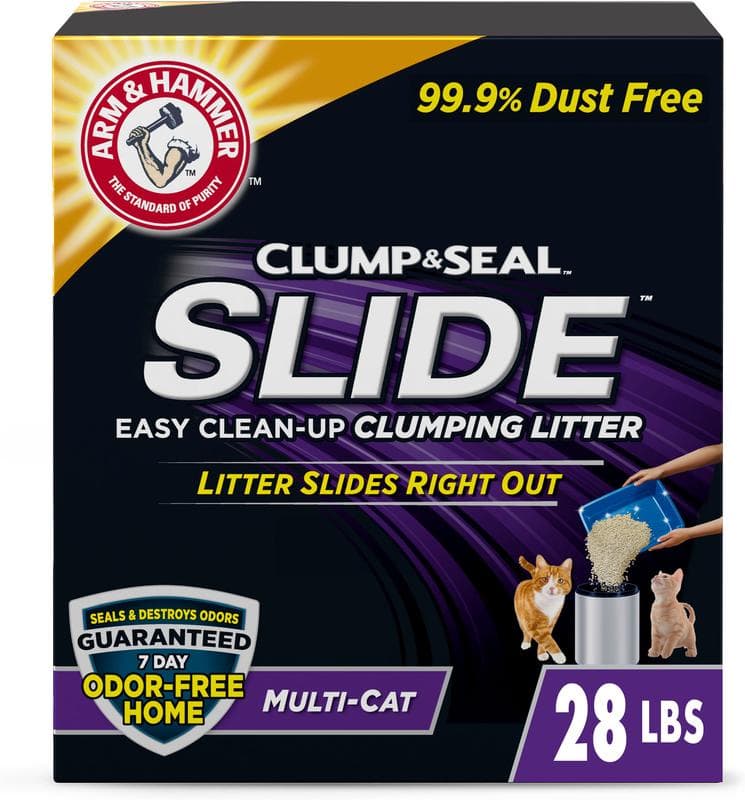
Budget multi-cat clay with baking soda odor sealing and slide-out cleanup that never cements to the pan.
Petful may earn a commission when you click through to Chewy, at no extra cost to you.
Best lightweight wood formula: Catalyst Pet Multi-Cat Formula Cat Litter
Catalyst Pet Multi-Cat Formula is a clumping softwood option for caregivers who want to move away from dense clay without adopting a non-clumping pellet routine. Its 20-pound package may be easier to carry than a large clay box or pail, an important practical benefit when several boxes need regular top-ups.
Wood changes the color, natural odor, weight, and under-paw feel of the litter. Those differences can be appealing to the person buying the bag and unfamiliar to a cat. Offer it in one box beside the accepted litter before converting the entire household. If two cats prefer the new substrate but a third continues choosing clay, that is useful information, not stubbornness.
The lighter particles may travel beyond the box, especially with energetic diggers or long-haired cats. Put a mat across the actual traffic path and keep the box far enough from carpet that loose material can be swept easily. This product is best for a home that prioritizes lower carrying weight and a plant-based clumping format. Readers deciding among wood, grass, wheat, paper, and other materials should use the dedicated best natural cat litter comparison.
- Material: clumping softwood
- Best for: households seeking a lighter natural-material formula that still clumps
- Main strength: lower package weight than many bulk clay options
- Watch for: wood texture, natural material odor, and light-particle tracking
- Transition: moderate, with a side-by-side box trial recommended
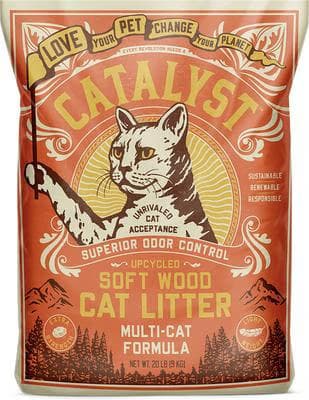
Upcycled soft-wood cat litter with superior odor control, very low dust, and a simple natural composition (no clay, no synthetic fragrance) - a gentler box for cats that nibble at their litter.
Petful may earn a commission when you click through to Chewy, at no extra cost to you.
Best walnut litter: Naturally Fresh Multi-Cat Unscented Clumping Walnut Cat Litter
Naturally Fresh Multi-Cat Unscented uses walnut shell material in a scoopable format. It is a strong match for a caregiver who wants an unscented plant-based litter but does not want to give up daily urine-clump removal. The multi-cat formula is positioned for the higher odor burden of a busy household.
Walnut litter is dark. That can make some waste or color changes less visually obvious than they are against pale clay, so attentive scooping matters. The granules are also lighter than many clay products and may ride out on paws. A wide mat and regular sweeping are more realistic controls than expecting any bag to eliminate tracking.
Its 26-pound size can serve a multi-box home, but buying in volume only creates value if all cats accept the material. Start with one open box in a quiet location and keep other familiar boxes available. Choose Naturally Fresh when unscented, plant-based clumping is a higher priority than maintaining the exact look and feel of clay.
- Material: clumping walnut shell
- Best for: caregivers seeking unscented plant-based clumping for heavier use
- Main strength: combines a non-clay material with familiar scoopable maintenance
- Watch for: dark color, lighter tracking, and individual texture preference
- Transition: moderate to high from pale fine clay
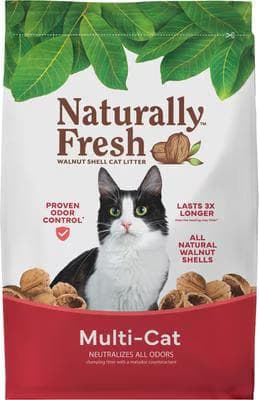
Unscented clumping walnut-shell litter designed for multi-cat odor control.
Petful may earn a commission when you click through to Chewy, at no extra cost to you.
Best wheat formula: sWheat Scoop Multi-Cat Natural Clumping Wheat Cat Litter
sWheat Scoop Multi-Cat is a wheat-based clumping litter made without added dyes or perfumes. It gives multi-cat caregivers another plant-derived option while preserving the scoopable format that simplifies daily urine removal.
Wheat does not behave exactly like mineral clay. Clumps may need adequate time to form before scooping, and a shallow bed can allow damp litter to stick to the bottom. The right scoop rhythm is to remove waste often without attacking a fresh clump the moment a cat exits. If clumps repeatedly crumble, consider whether depth, scoop timing, or the household's volume is the actual limiting factor.
The 14-pound bag is easier to handle than a large clay package but may require more frequent purchasing in a home with several boxes. Compare delivered price, amount used per week, and clean litter lost during scooping before calling any option cheap or expensive. Choose sWheat Scoop when an unscented wheat formula appeals to you and your cats accept a different plant-based texture.
- Material: clumping wheat
- Best for: homes that want a dye-free, perfume-free plant-based clumping option
- Main strength: scoopable natural-material format in a manageable package
- Watch for: clump set time, bag turnover, and texture acceptance
- Transition: moderate, with a gradual trial in one box
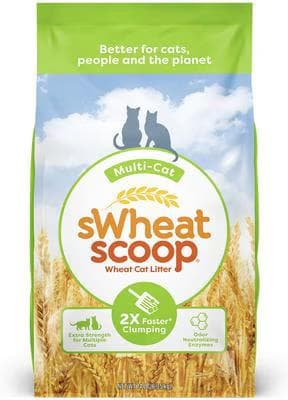
Natural wheat-based clumping litter for multi-cat homes, with no added dyes or perfumes.
Petful may earn a commission when you click through to Chewy, at no extra cost to you.
Best for a low-tracking priority: Dr. Elsey's Clean Tracks Clumping Clay Cat Litter
Dr. Elsey's Clean Tracks is the pick for a household that wants to stay with familiar clumping clay while making tracking a leading selection factor. It avoids the much larger sensory jump from clay to pellets or plant fibers, which can make a trial easier for cats that are cautious about substrate changes.
Low tracking is a goal, not a guarantee. Particle weight and shape matter, but so do paw fur, digging style, litter depth, box height, and the first surface a cat steps onto. A cat that launches over a small mat can carry litter farther regardless of the label. Place a wide, textured mat where the cats actually exit and vacuum or sweep before tracked grains spread.
The 40-pound bag offers useful capacity for a high-use home, but it is the heaviest package in this lineup. Decanting into a smaller sealed container can make top-ups easier, provided the container stays dry and clearly identified. Choose Clean Tracks when cats already use clay comfortably and floor scatter is the problem you most want to reduce.
- Material: clumping clay
- Best for: clay-accepting cats in homes where tracking is a leading concern
- Main strength: lower-disruption change from another fine clumping clay
- Watch for: heavy package and the limits of any low-tracking claim
- Transition: usually low from another unscented clumping clay
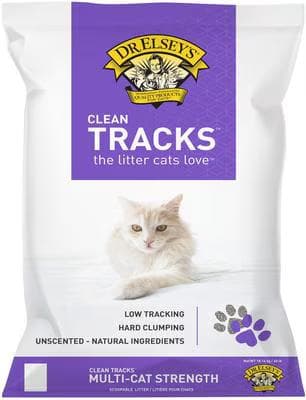
Unscented hard-clumping clay litter designed to reduce tracking in multi-cat homes.
Petful may earn a commission when you click through to Chewy, at no extra cost to you.
Best large-pail value: Tidy Cats Free & Clean Unscented Clumping Clay Cat Litter
Tidy Cats Free & Clean Unscented comes in a 35-pound pail, making it a practical inventory choice for a home that refills several clay boxes and has room to store a rigid container. Its unscented formula avoids using perfume as the central odor strategy, and the familiar clumping format suits cats already comfortable with clay.
The pail can simplify storage and protect unused litter from humidity, but it is still heavy. A package that costs less per pound is not good value if lifting it is unsafe or if weak scooping technique sends too much clean litter into the trash. Use a smaller scoop or transfer container for top-ups rather than repeatedly lifting the full pail over the box.
Choose this formula when predictable supply and an unscented clay routine matter more than minimizing package weight. It also makes sense for a stable household that already knows its cats accept clay. A newly adopted cat or a household exploring new materials should test a smaller amount before making volume the deciding factor.
- Material: clumping clay
- Best for: established clay users who need a larger household supply
- Main strength: reusable rigid pail and bulk capacity
- Watch for: lifting weight, storage footprint, and tracking
- Transition: low from another unscented clumping clay
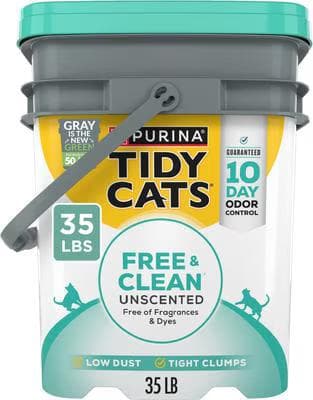
Unscented low-dust clumping clay litter, free of fragrances and dyes, with 10-day odor control.
Petful may earn a commission when you click through to Chewy, at no extra cost to you.
Best for compatible automatic boxes: Whisker GreatLitter Low-Dust Clumping Cat Litter
Whisker GreatLitter is a clumping clay formula designed with Litter-Robot's sifting system in mind. Its fit in this roundup is specific: a household already using compatible automatic-box hardware may value a fast, firm clump and particles intended to pass through a sifting screen.
Hardware compatibility is a separate decision from litter quality. An automatic box has capacity limits, cycle settings, waste-drawer maintenance, sensor requirements, and cat-size considerations. Confirm the current litter specifications for your exact machine rather than assuming that every clumping product or every Whisker device works identically.
Automatic cycling also does not eliminate the need for observation. Check waste output, clean the globe or tray as directed, monitor the drawer, and keep another accessible box when a cat is learning the system. Cats that avoid the machine need an ordinary alternative. Choose GreatLitter when you already have a compatible automatic setup and want a low-dust clumping formula built around that use case.
- Material: clumping clay
- Best for: multi-cat homes using compatible Litter-Robot hardware
- Main strength: firm-clumping format designed for a sifting system
- Watch for: direct-brand purchase, machine compatibility, and cat acceptance
- Transition: low in substrate terms, potentially higher if the box hardware is also new
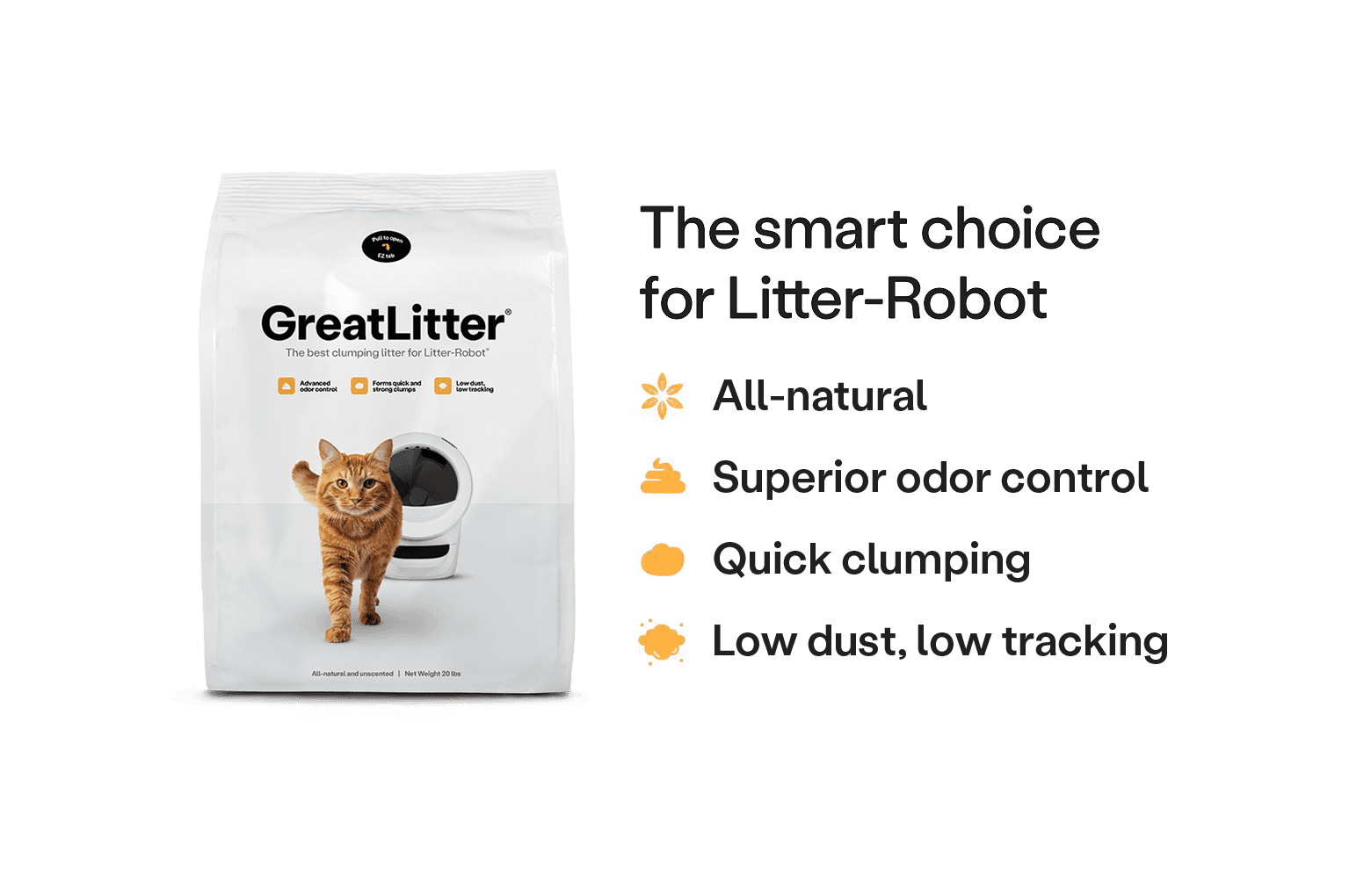
Whisker's own low-dust, low-tracking clumping clay litter, designed for Litter-Robot's sifting screen: fast, firm clumps that keep sensors accurate and odor locked down.
Petful may earn a commission when you click through to Whisker, at no extra cost to you.
Clump strength matters more with multiple cats
In a busy box, a clump may be stepped on, buried, or disturbed by another cat before the caregiver arrives. When it breaks, damp crumbs remain mixed with clean litter. Those fragments make later scoops less efficient and can contribute to lingering odor. This is why clumping strength matters and why the best clumping cat litter for multiple cats needs reliable integrity under the household's real schedule, not simply the ability to clump in ideal conditions.
Three setup choices influence performance:
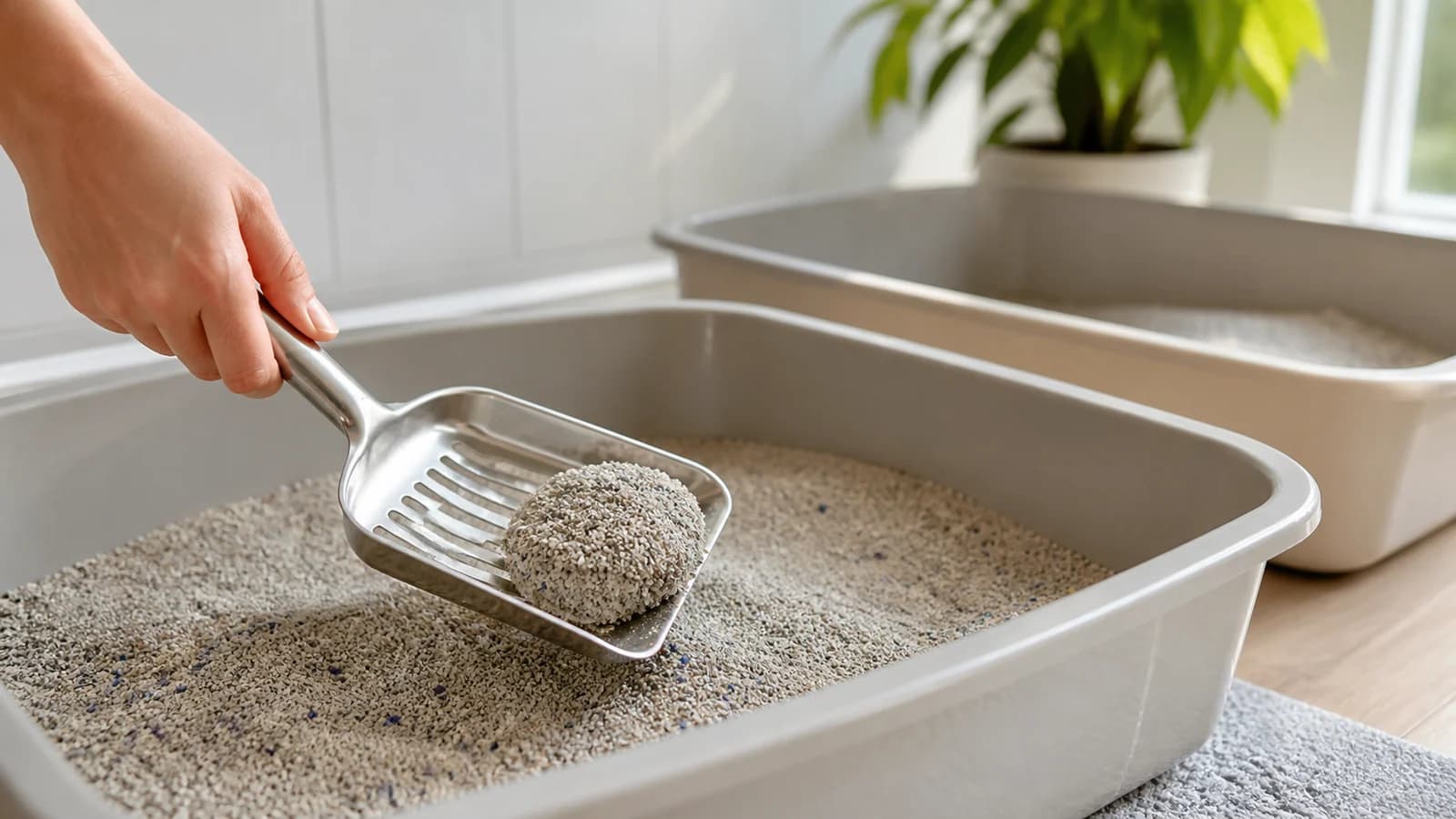
- Maintain adequate litter depth. If urine reaches the bare box floor, the clump can spread and adhere instead of forming a compact mass.
- Give a fresh clump time to set when practical. Immediate scooping may split soft material, although leaving all waste until the end of the day creates a different problem.
- Use a scoop that matches the granule size. Slots that are too wide lose usable litter. Slots that are too narrow slow the job and may encourage rough shaking.
Judge clumps by how much wet material they remove and how much clean litter they waste. Rock-hard is not the only definition of good. A compact clump that releases cleanly may produce better value than a huge clump that carries a large halo of dry litter into the trash.
Managing odor in a multi-cat litter setup
The best odor control cat litter for multiple cats is still only one layer of odor management. Removing urine clumps and solid waste reduces the source. Adequate box count spreads the load. Ventilation helps the room. Correct litter depth supports absorption and cleaner scooping. A fragrance can mask a smell briefly, but it cannot reverse a dirty box.
Ammonia odor is a sign to review the full setup. Ask whether urine clumps are breaking, whether one popular box receives nearly all the traffic, whether litter is being topped up without periodic emptying and washing, and whether the room traps odor. If one cat suddenly urinates more often or produces unusually large clumps, talk with a veterinarian rather than assuming the litter has failed.
This guide owns the way odor load changes in a multi-cat household. It does not attempt to rank every odor-focused formula or odor-control technology. For that deeper brand and formula comparison, see Petful's specialist roundup of the best odor-control cat litter.
Dust and tracking in high-traffic litter areas
Multiple cats mean more paws entering and leaving the box, so a small amount of tracking per visit can become a noticeable floor problem. Particle weight, shape, static, paw fur, digging behavior, and room layout all influence the result. Product labels are only one input.
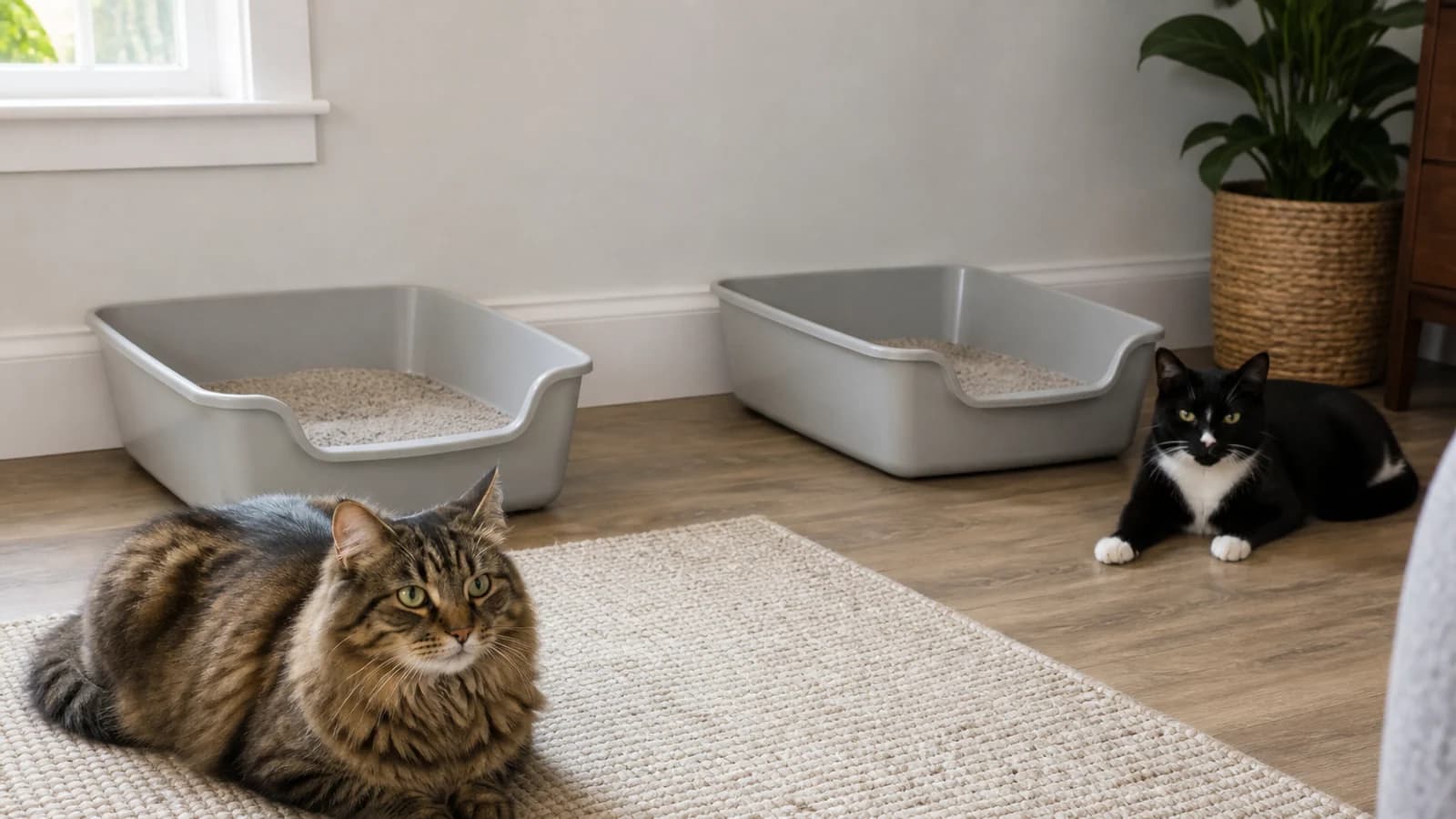
Build a tracking zone around actual cat movement:
- Choose a mat wide enough to catch at least the first two or three steps.
- Keep food and water away from litter traffic.
- Place the box where loose granules can be swept or vacuumed easily.
- Use a high-sided open box for enthusiastic diggers when mobility allows.
- Pour new litter slowly and close to the surface to reduce airborne dust.
- Trim only excess paw fur when a veterinarian or groomer advises it. Never cut close to the pads.
Dust deserves the same practical observation. Watch what happens during pouring, digging, and scooping. If a cat or person coughs, wheezes, or shows persistent irritation around the box, stop relying on a marketing percentage and discuss the symptoms with an appropriate medical professional.
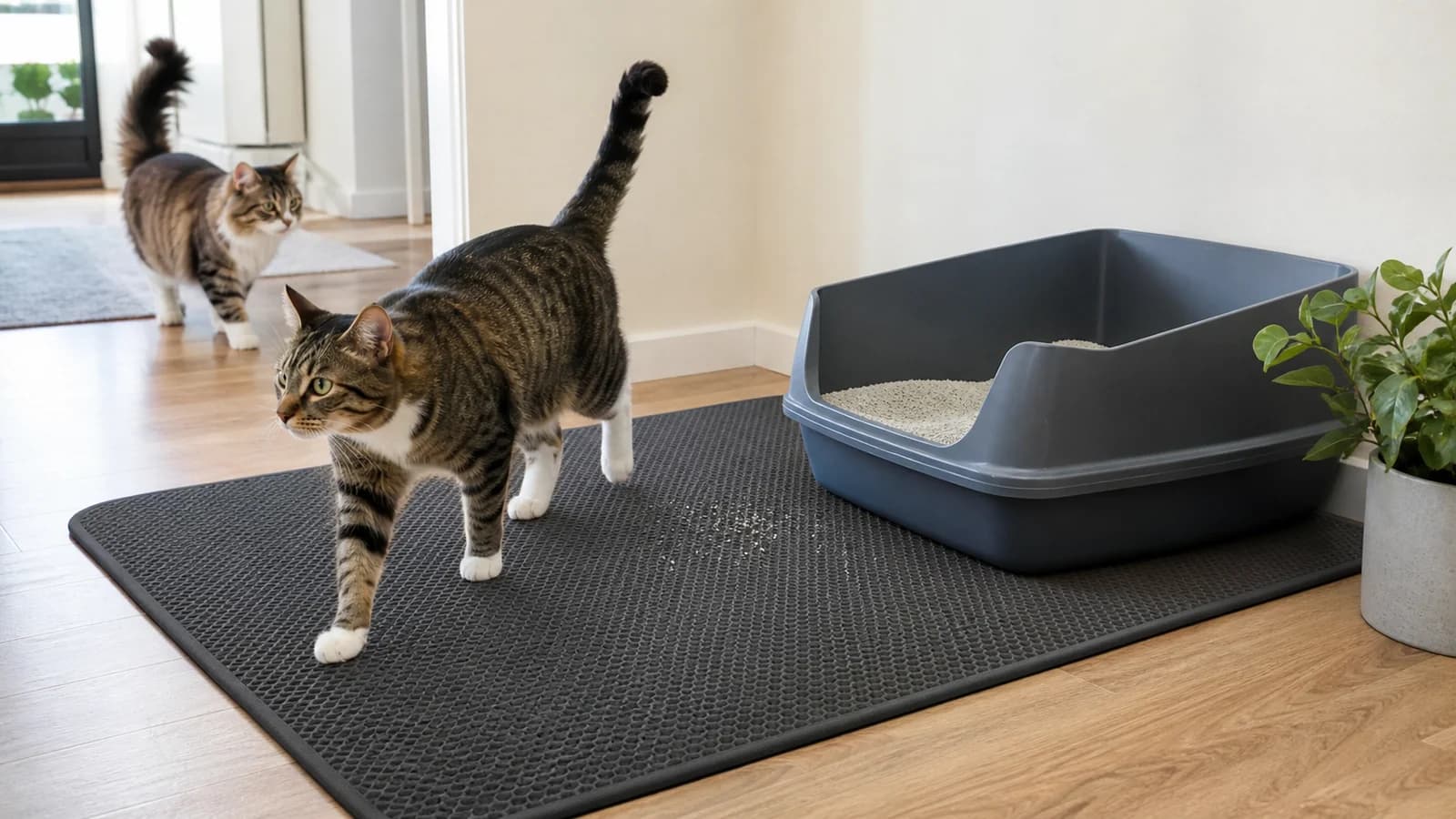
How many litter boxes do multiple cats need?
A common starting guideline is one litter box per cat, plus one extra. That means three boxes for two cats and four boxes for three cats. The extra box gives cats another option if one is occupied, dirty, hard to reach, or socially guarded.
Treat that number as a starting point, not a promise. Some compatible cats use several boxes without conflict. Others avoid a resource that another cat can monitor from a hallway. Boxes placed side by side may function like one large litter station rather than separate resources, so distribute them across accessible locations when the home allows.
- Start with one box per cat plus one extra, place them in separate accessible locations, and make sure one cat cannot block every route | Add or relocate a box when you see waiting, guarding, ambushing, hovering, or elimination outside the box
For older cats or cats with limited mobility, at least one box should be available without a long stair trip or a high entry. In a multi-level home, place resources on more than one floor. In a home with dogs or children, provide quiet access without trapping the cat in a dead end.
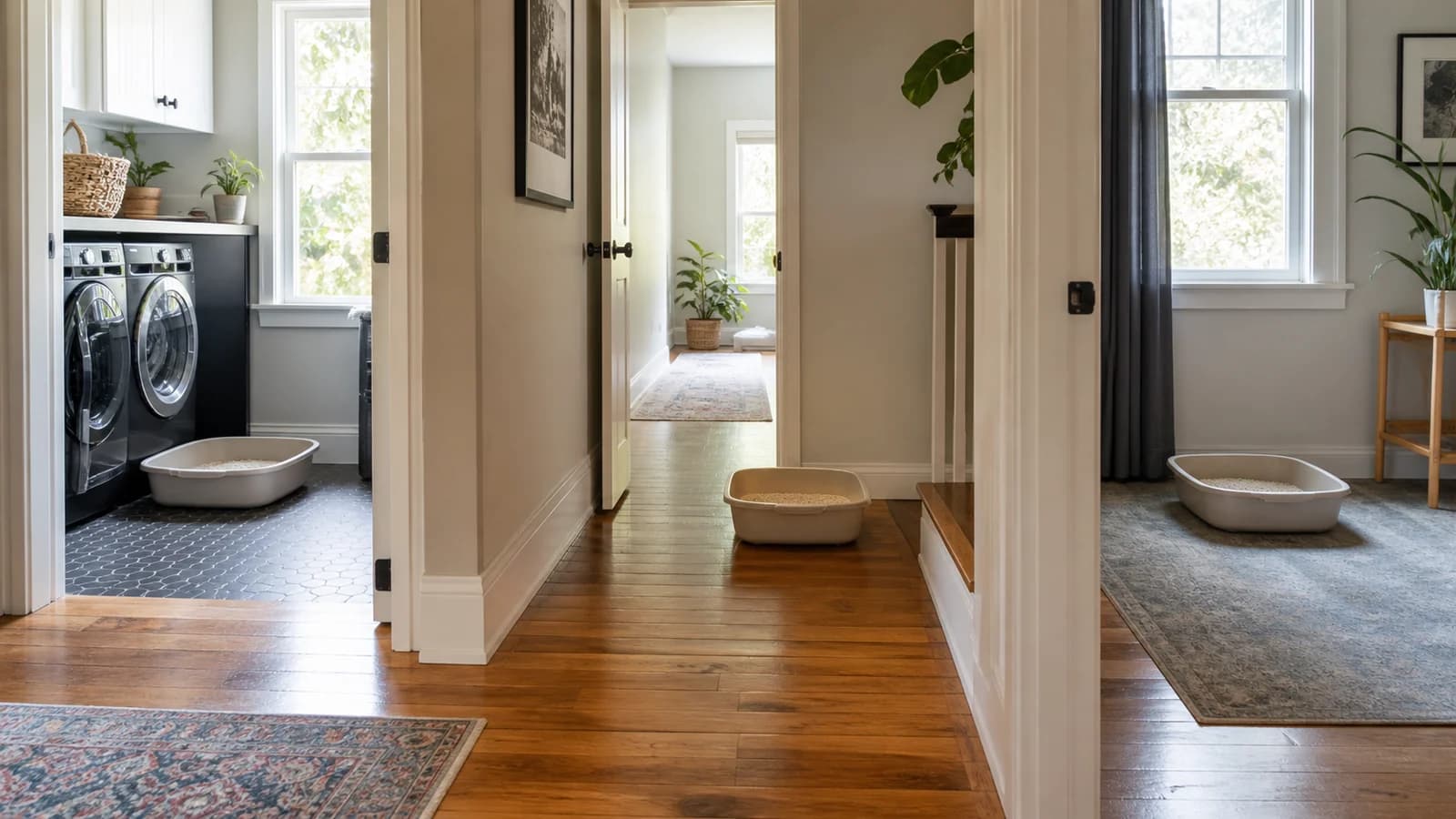
The household litter-load framework
The household-load framework connects number of cats, box count, scoop frequency, and litter performance. In plain language, household litter load means the cats, usable boxes, daily visits, and time between scoops acting together. This explains why the same formula can perform well in one home and poorly in another, and why cats, boxes, and scoop frequency must be evaluated before blaming the product alone.
Scenario 1: Two cats, three distributed boxes, twice-daily scooping
This is a comparatively manageable load. Waste is spread across several locations, and removal happens before many clumps are repeatedly disturbed. Cat acceptance and tracking may become the tie-breakers. A conventional unscented clay or a well-accepted plant-based clumping litter can both work.
Scenario 2: Three cats, two popular boxes, once-daily scooping
This is a concentrated load even though two boxes exist. Stronger clumps and odor performance become more important because each box receives more visits. The first improvement may be another well-positioned box or an added scoop session, not a more heavily fragranced litter.
Scenario 3: Four cats, several boxes, mixed preferences
This is a fit-management problem. One cat may prefer fine clay while another readily uses softwood. Forcing every cat onto one material can create avoidable risk. Maintain enough boxes to support more than one accepted substrate, then choose the strongest-performing litter within each cat's comfort range.
These scenarios are a planning tool, not a score. Count which boxes the cats actually use, not merely which boxes exist. A pristine box in a noisy laundry room may contribute little usable capacity. A popular box may require more frequent scooping than the others.
Regular versus multi-cat litter formulas
The difference between regular cat litter and multi-cat litter is usually a formula or positioning intended for heavier waste and odor load. A multi-cat version may emphasize stronger clumping, faster odor binding, different absorbent ingredients, or a larger package. The label is not a regulated guarantee that one box can safely or comfortably serve several cats.
A regular formula can work in a multi-cat home when cats accept it, boxes are plentiful, and maintenance is excellent. A multi-cat formula can fail when there are too few boxes, clumps are left to break down, or one cat avoids the substrate. Compare the actual material and format rather than assuming the words multi-cat settle the decision.
For broad questions such as which materials to avoid, what veterinarians consider, or what the number one litter is across every household type, use Petful's main best cat litter guide. This article stays focused on performance under shared-household load.
Best litter setup for two cats
For two cats, begin with three boxes in at least two separate areas. Use the litter both cats already accept while you establish the layout. If you are solving a specific problem, trial one new formula in one box and leave the others stable. This reveals preference without removing every familiar option.
The best litter for two cats is often an unscented clumping formula with firm, compact clumps and manageable dust. Arm & Hammer Slide Multi-Cat suits a home prioritizing clay, odor, and easier box release. Dr. Elsey's Clean Tracks may better fit a clay-using home where floor scatter leads the decision. Naturally Fresh, Catalyst, or sWheat Scoop may fit cats that accept plant-based textures.
Observe the group, not only the boxes. One cat may wait for another to leave. A confident cat may rest near the only route. One box may stay clean because its location feels unsafe. The best product cannot compensate for social pressure around the resource.
Cost per usable pound matters more than sticker price
Comparing shelf price or package weight alone can mislead a multi-cat household. A less expensive litter may produce broad fragile clumps that remove a large amount of clean material. A higher-priced formula may form compact clumps and last longer. A lightweight bag may contain more usable volume than its pound count suggests, while a dense clay may require less storage space per pound but be harder to lift.
Track one full purchase cycle:
- Record the delivered price, including any shipping or membership cost.
- Note how many boxes the package fills to the proper depth.
- Count the days until you need the next package.
- Watch how much clean litter leaves with each scoop.
- Include premature full changes caused by odor, residue, or contamination.
This produces a household-specific cost per usable cycle. It is more honest than calling the cheapest bag the best value without measuring waste or replacement frequency.
How often should you scoop in a multi-cat home?
Scoop every box at least daily, and many multi-cat homes benefit from twice-daily removal. A morning and evening routine reduces the time waste remains available to smell, break apart, or discourage another cat. High-use boxes may need an extra pass even when quieter boxes do not.
Top up after scooping when the bed falls below the product's recommended depth. Do not use topping up as a substitute for periodic emptying and cleaning. Wipe spills promptly, wash the scoop, and replace a deeply scratched plastic box when rough surfaces retain residue. If odor returns immediately after cleaning, check for trapped material around seams, mats, nearby flooring, and waste containers.
How to switch litter in a multi-cat household
Use a gradual transition and preserve choice. A sudden whole-house conversion makes it difficult to identify which cat rejected the new litter and removes the accepted fallback at the same time. Begin with one trial box, observe every cat's entry, digging, elimination, covering, and return behavior, and change another box only after consistent use. Keep at least one familiar option throughout the trial.
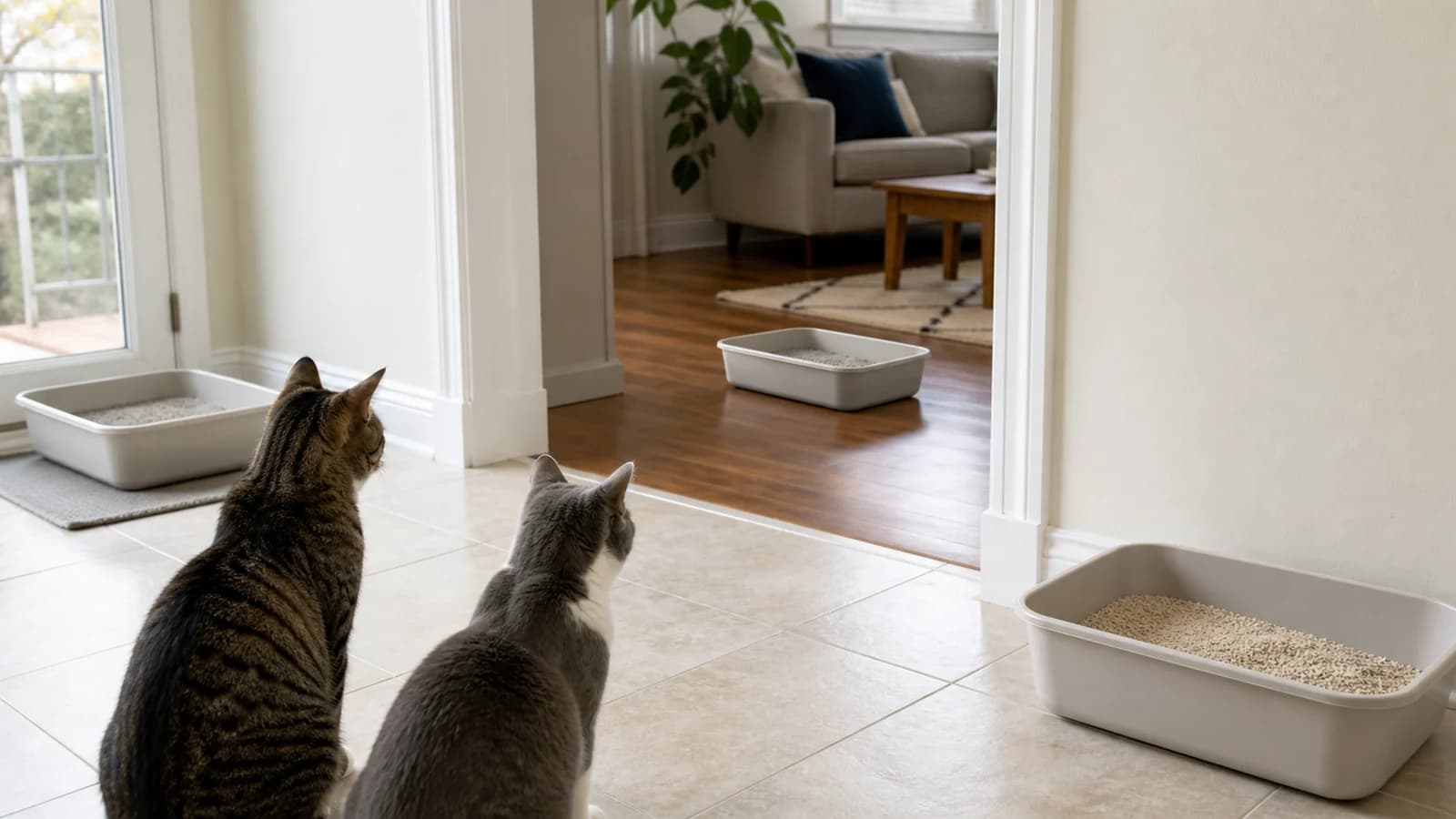
Start with one trial box
Put the candidate litter in one clean box near, but not directly beside, a familiar setup. Keep the box style, location quality, and litter depth otherwise comparable. This makes substrate the main new variable.
Watch each cat's behavior
Look for ordinary entry, digging, elimination, covering, and return. Edge-perching, prolonged sniffing, rapid exits, vocalizing, or choosing rugs and tubs can signal that the transition is moving too fast or the setup is not acceptable.
Expand only after consistent use
When all cats use the trial box comfortably over time, convert one additional box. Keep at least one familiar option during the change. If one cat refuses the new material, preserve an accepted box and reconsider whether a single household-wide litter is necessary.
Do not assume an elimination change is behavioral. Straining, frequent attempts, blood, crying in the box, constipation, diarrhea, increased urine volume, or little to no urine requires veterinary attention. A male cat producing little or no urine can have a life-threatening obstruction.
Automatic litter boxes for multiple cats
Automatic boxes may reduce the time waste sits exposed, but they create hardware questions that a litter comparison cannot answer. Capacity, cycle delay, sensor design, minimum cat weight, entry height, drawer size, cleaning access, and substrate rules vary by machine.
GreatLitter is included here only as a litter formula for compatible automatic-box homes. For the equipment decision itself, compare current Whisker models in Petful's Litter-Robot 4 vs. 5 vs. EVO guide. Even with a self-cleaning unit, keep an ordinary box available during training and check waste output daily so health changes are not hidden by automation.
Readers looking for the best automatic cat litter box for multiple cats or the best self-cleaning cat litter box for multiple cats should evaluate the machine separately from the substrate. A compatible litter cannot correct a sensor, capacity, entry-height, or training mismatch, and an automatic cycle does not remove the need to monitor each cat's elimination and keep a conventional fallback box available. There is more on this in Petful’s guide to best automatic litter box.
Common multi-cat litter mistakes
Expecting the label to replace maintenance
Multi-cat does not mean scoop-optional. The formula may be designed for heavier use, but waste still needs prompt removal and boxes still need periodic cleaning.
Placing every box together
Three boxes in one tight row may offer less practical choice than three boxes in separate locations. A cat that cannot approach the station safely has no alternative.
Changing every box at once
This removes the familiar substrate and makes preference difficult to measure. Trial one box first, especially when changing material.
Choosing fragrance over source removal
A strong scent may be pleasant to a person and overwhelming to a cat. Remove waste, improve the setup, and use adequate box count before treating perfume as the answer.
Ignoring the least confident cat
The confident cat's use does not prove the setup works for the group. Watch for waiting, blocking, ambushing, edge-perching, and accidents in quiet locations.
Buying bulk before the trial succeeds
A large pail or bag only creates value after the cats accept the formula. Test first, then buy for efficiency.
Final verdict
Arm & Hammer Clump & Seal Slide Multi-Cat is our best overall starting point for a typical multi-cat home that already uses clumping clay. Catalyst is the lightweight wood alternative, Naturally Fresh offers unscented walnut clumping, and sWheat Scoop covers wheat. Dr. Elsey's Clean Tracks focuses on a lower-tracking goal, Tidy Cats Free & Clean supplies bulk unscented clay, and Whisker GreatLitter fits compatible automatic-box households.
The real winner is the formula that survives your household load without compromising cat acceptance. Give each cat enough accessible boxes, remove waste at least daily, measure clump waste and package turnover, and switch gradually. Those choices do more for long-term performance than the words on the front of a bag.
Frequently Asked Questions
Yes, three litter boxes are a sound starting point for two cats because the common guideline is one box per cat plus one extra. Place the three boxes in separate accessible locations rather than one tight row, where they may function as one guarded station. Layout and cat relationships still matter, so add or relocate a box if you see waiting, guarding, ambushing, edge-perching, or elimination outside the box.
The best cat litter for two cats is usually an unscented clumping formula that forms firm clumps and that both cats already accept. Arm & Hammer Clump & Seal Slide Multi-Cat is our overall pick when odor load and easier box cleanup lead the decision. Dr. Elsey's Clean Tracks may suit a lower-tracking priority, while Catalyst, Naturally Fresh, or sWheat Scoop can fit cats that accept plant-based textures and a gradual trial.

Coreen Saito is a pet writer and longtime shelter volunteer with more than a decade in animal rescue. She covers cat behavior, breed care, and the small, ordinary science of sharing a life with companion animals, with a particular focus on honest takes about the products and decisions that actually matter. At home in Arizona, she's outranked by Mac (a dog with the loudest opinion in the house), Rebel (a cat who governs by quiet authority), and Meri (an orange tabby who runs the late shift and the laundry basket). She writes about all three, plus the rescues that keep coming through her life, at LifeWithMinty.com.
Sign up for expert-backed reviews and safety alerts all in one place.