Best Natural Cat Litter: 8 Picks by Material
Compare eight natural cat litter picks by material, including clumping wood, pine and paper pellets, grass, wheat, pea husk, and corn-cassava blends for your home.
Petful is reader supported. As an affiliate of platforms like Amazon and Chewy, we may earn a commission when you buy through links on this page. There is no extra cost to you.
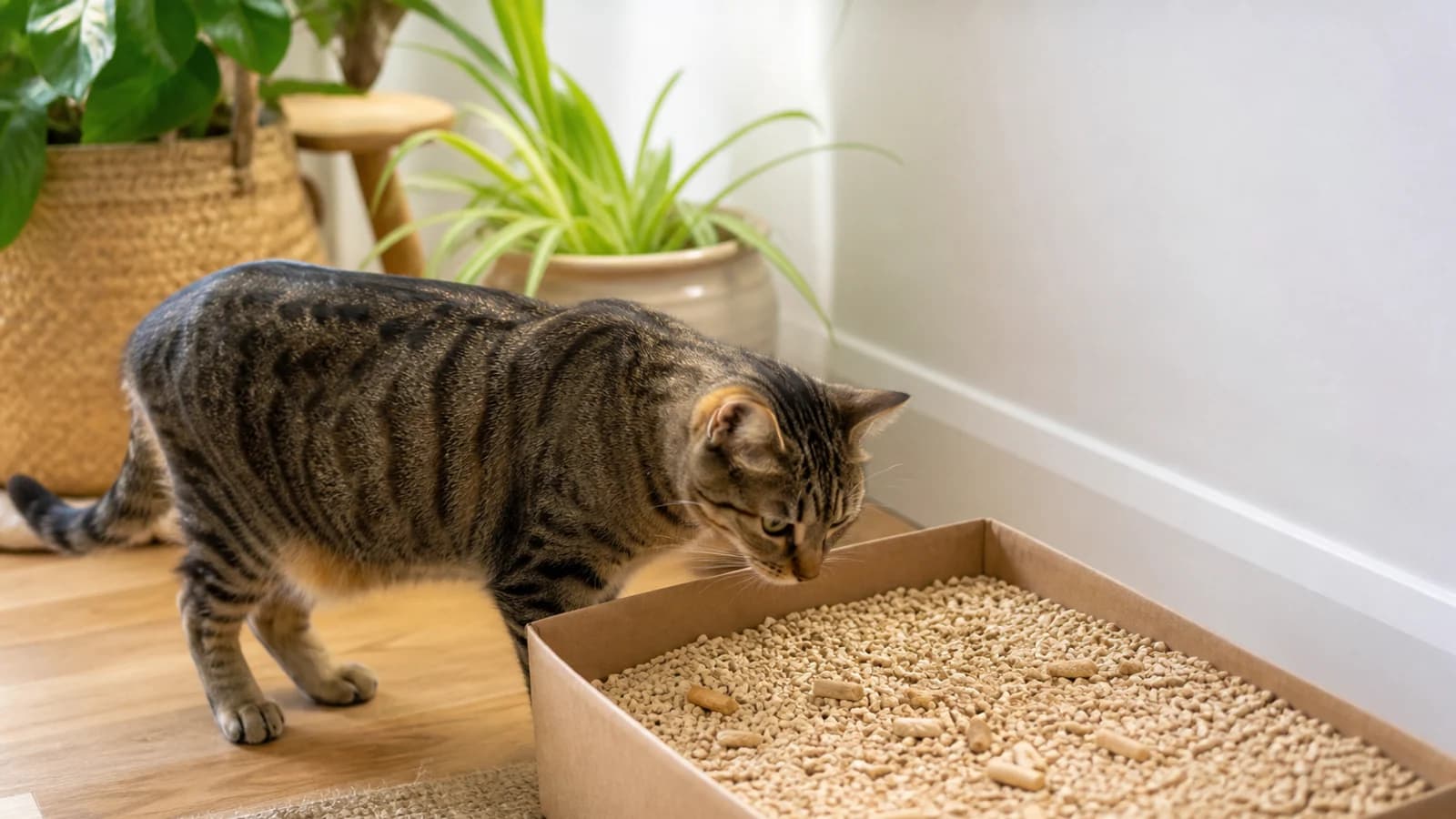
The best natural cat litter is not simply the bag with the greenest design or the longest list of environmental claims. Wood fiber, pine pellets, recycled paper, grass seed, wheat, pea husk, corn, and cassava can all behave differently in the box. Some form tight scoopable clumps. Others absorb urine and break down into damp material. Fine granules may feel familiar to a cat but travel farther across the floor. Larger pellets usually scatter less but can be a difficult texture change.
That is why this guide compares natural litter by material and everyday function. The eight picks below cover distinct combinations of clumping, dust, tracking, odor management, package weight, and cat acceptance. We selected them from current Petful affiliate inventory and evaluated the attributes disclosed for each product. We did not conduct hands-on testing, and a product's inclusion does not guarantee that every cat will accept it.

Sign up for expert-backed reviews and safety alerts all in one place.
How we chose the best natural cat litter
We started with the question a cat actually answers: will I use this substrate consistently? A litter cannot be the best choice for a household if the cat avoids it, balances on the edge of the box, eliminates nearby, or waits unusually long to urinate. Material and marketing claims matter only after basic acceptance, safe access, and reliable litter-box use.
- 1Natural describes a litter's source material, not one guaranteed performance class
- 2Judge clumping, dust, tracking, odor control, cleaning routine, and cat acceptance separately
- 3Introduce a new texture gradually and keep a familiar box available until the cat uses the new litter comfortably
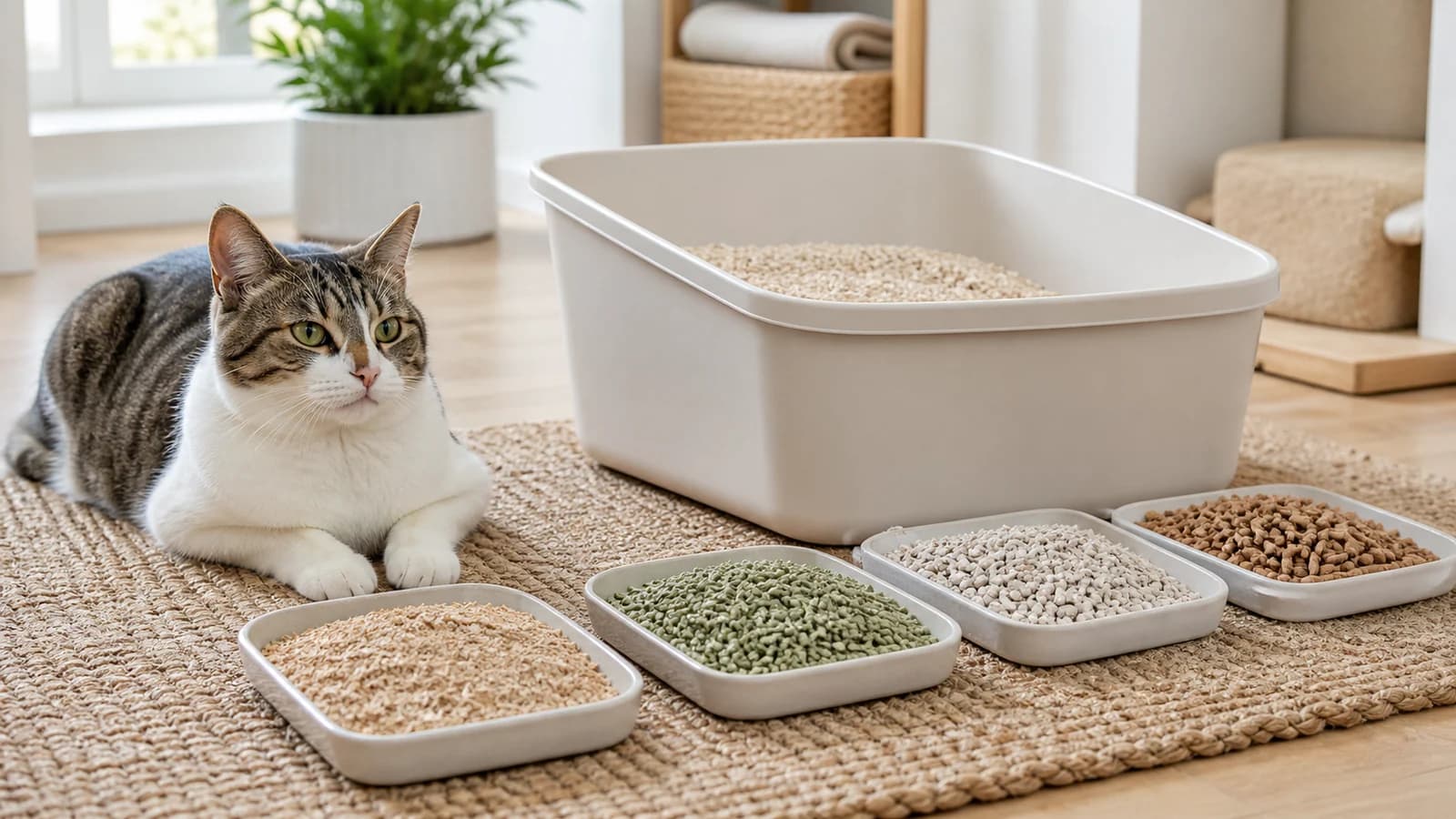
Our comparison uses five practical filters. A natural material choice is useful only when performance depends on substrate, particle size, cleaning routine, and the cat's acceptance rather than the word natural alone. That distinction lets readers compare material performance without turning plant origin into an unsupported promise about health or environmental impact:
- Material and format: We identify what the litter is made from and whether it is a fine granule, coarse granule, fiber, or pellet. Material affects weight and cleaning, while particle size can influence both tracking and paw feel.
- Clumping behavior: A clumping litter should form a scoopable mass that can be removed without leaving excessive damp crumbs. A non-clumping litter needs a different routine, usually frequent solid-waste removal plus timely replacement of urine-saturated material.
- Dust and tracking: These are related but not interchangeable. A light, fine litter may produce little visible airborne dust yet still cling to paws and travel. A large pellet may stay near the box but feel unfamiliar to a cat accustomed to sandlike clay. Petful’s guide to Tuft and Paw litter has the full breakdown.
- Odor strategy: Litter works best when it absorbs moisture and allows waste to be removed promptly. Fragrance may change what a person smells, but it does not remove urine or feces. We favor clear cleaning expectations over promises that suggest a box can go unattended.
- Household fit: Package weight, box style, number of cats, storage space, cleaning frequency, and the cat's medical or behavioral needs can change the right answer.
This is a material-focused roundup, not a full environmental lifecycle ranking. Plant origin, biodegradability, sourcing, processing, packaging, transportation, local waste rules, and disposal method are different questions. Petful's eco-friendly cat litter guide explains those broader considerations. If you want to compare natural litter with clay, silica, and other mainstream formats, start with our guide to the best cat litter overall.
Our natural cat litter picks at a glance
- The table separates material from household fit so “natural” does not become a shortcut for performance. Prices and availability can change. The most useful first purchase is usually a trial-size quantity, even if a larger bag appears cheaper per pound.
| Product | Best for | Material and format | Clumping | Main tradeoff |
|---|---|---|---|---|
| Catalyst Pet Softwood Original | Homes wanting a lighter clumping wood option | Lightweight softwood fiber | Yes | Pine scent and texture may require a gradual transition |
| Catit Go Natural Pea Husk | Caregivers prioritizing light plant-based clumps | Pea-husk granules with vanilla scent | Yes | Added scent may not suit fragrance-sensitive cats |
| Feline Pine Original | Budget-minded pellet users who value low scatter | Pine pellets | No | Different cleaning routine and a major texture change |
| Fresh News Unscented | Cats needing a soft unscented pellet format | Recycled-paper pellets | No | Does not provide scoopable urine clumps |
| Frisco All Natural Unscented Grass | A larger-bag unscented grass option | Grass-seed granules | Yes | Lightweight particles can travel beyond the box |
| SmartCat Unscented Grass | Cats that prefer a fine, lightweight clumping texture | Grass-seed granules | Yes | Fine light granules can scatter during digging |
| sWheat Scoop Multi-Cat | Multi-cat homes wanting an unscented wheat formula | Wheat granules | Yes | Food-based substrate may not fit every cat or household |
| Sustainably Yours Large Grains | Homes seeking plant-based clumping with a larger particle | Corn and cassava large grains | Yes | Granule feel and tracking pattern differ from clay |
The 8 best natural cat litter picks
These picks are organized by their most useful decision point. “Best” means best aligned with that stated need, based on current disclosed product information, not a universal winner. Check the current package before purchase because formulas, bag sizes, directions, and claims can change.
Best softwood clumping litter: Catalyst Pet Softwood Natural Clumping Cat Litter
Catalyst Pet Softwood Natural Clumping Cat Litter, Original Formula, is the clumping wood-fiber choice in this lineup. The 15-pound bag is positioned as a lightweight alternative to dense clay. The current offer describes a softwood formula, a light pine scent, clumping action, and reduced airborne dust compared with clay. Those are manufacturer-facing claims rather than results from Petful testing.
Its strongest fit is a household that wants plant-based material and scoopable urine clumps without lifting a very heavy bag. A clumping format also makes it easier to remove urine-soiled material daily while leaving clean litter behind. The formula may be less disruptive than large pine pellets for a cat accustomed to fine clay, although any change in smell, particle shape, or footing can still matter.
The key tradeoff is the pine scent. “Natural” does not mean fragrance-free, and even a scent derived from wood can be noticeable to a cat. Start with a separate trial box rather than converting every box immediately. Watch whether the cat enters normally, digs comfortably, covers waste, and continues its usual urination and defecation pattern.
Petful has a dedicated Catalyst natural litter review for readers who want more product-specific context. The broader wood cat litter guide explains why fibers, granules, and pellets should not be treated as one format.
- Best for: People who want a lighter clumping softwood option and can introduce a mild pine-scented substrate carefully.
- Think twice if: Your cat has rejected scented litter or unfamiliar wood textures before.
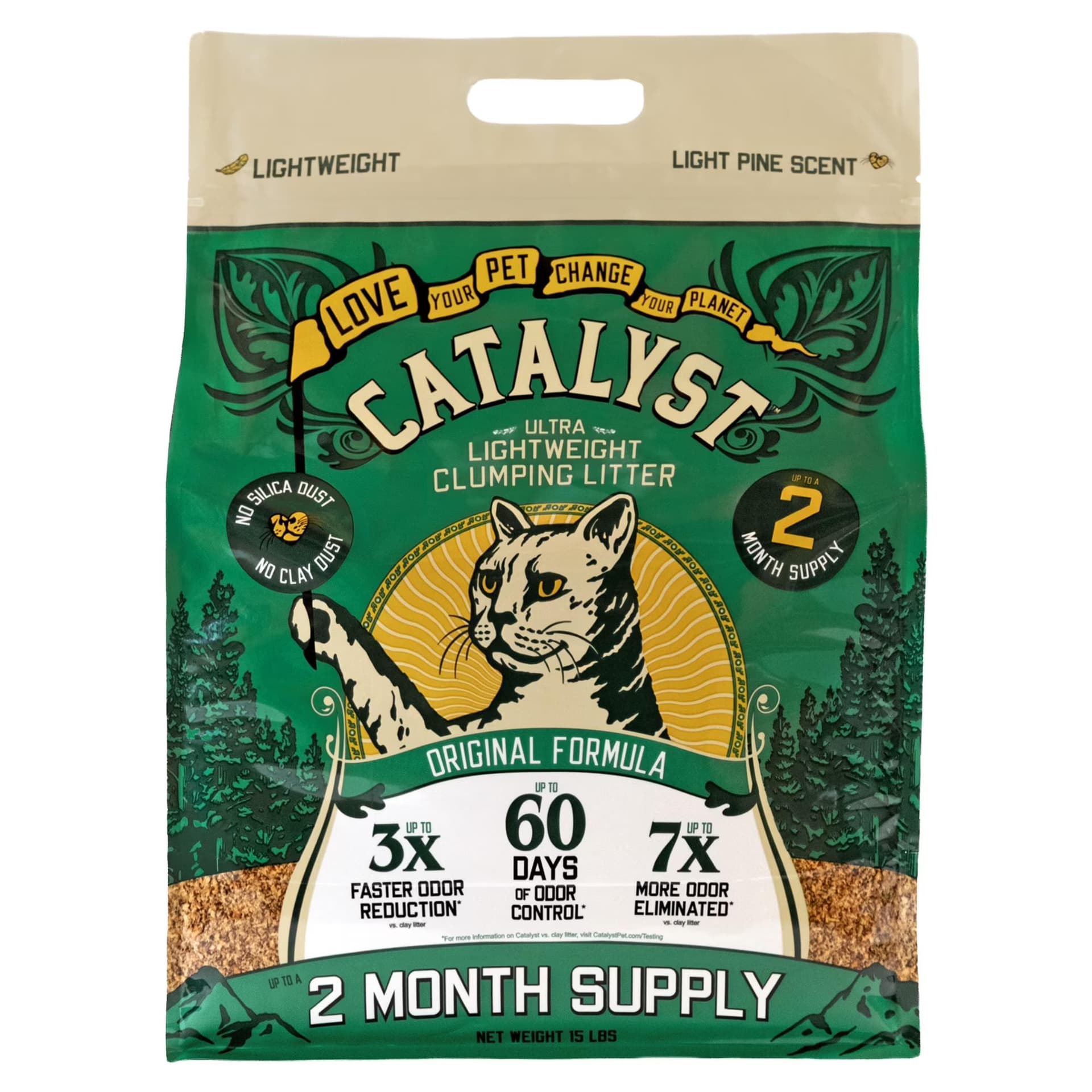
Lightweight softwood clumping cat litter that delivers up to a 2-month supply per 15-lb bag. Up to 7x more odor reduction and 3x faster odor elimination than clay, with up to 95% less airborne dust. No clay, no silica, light pine scent.
Petful may earn a commission when you click through to Walmart, at no extra cost to you.
Best pea-husk litter: Catit Go Natural Pea Husk Clumping Cat Litter
Catit Go Natural Pea Husk Clumping Cat Litter uses pea-husk material in a scoopable granule. The current 12.3-pound offer describes it as biodegradable, virtually dust-free, gentle on paws, and capable of clumping. It is also the vanilla version, which is an important part of the decision rather than a minor label detail.
Pea husk gives shoppers another clumping plant material beyond wood, grain, and grass. A lightweight bag may be easier to carry, pour, and store than dense mineral litter. For a cat that accepts the granule size, the clumping format supports daily removal of urine and feces without replacing the full box every time.
The added vanilla scent is the limiting factor. A person may find it pleasant, while a cat may consider it an unfamiliar odor layered over a resource that is supposed to smell predictable. Cats with a history of fragrance aversion, box avoidance, respiratory sensitivity, or highly selective substrate preferences may be better served by an unscented option. Do not assume a “virtually dust-free” marketing statement means zero particles under every pouring or digging condition.
- Best for: A fragrance-tolerant cat whose caregiver wants a lightweight, scoopable pea-husk formula.
- Think twice if: Unscented litter is a priority or the cat has previously avoided fragranced boxes.
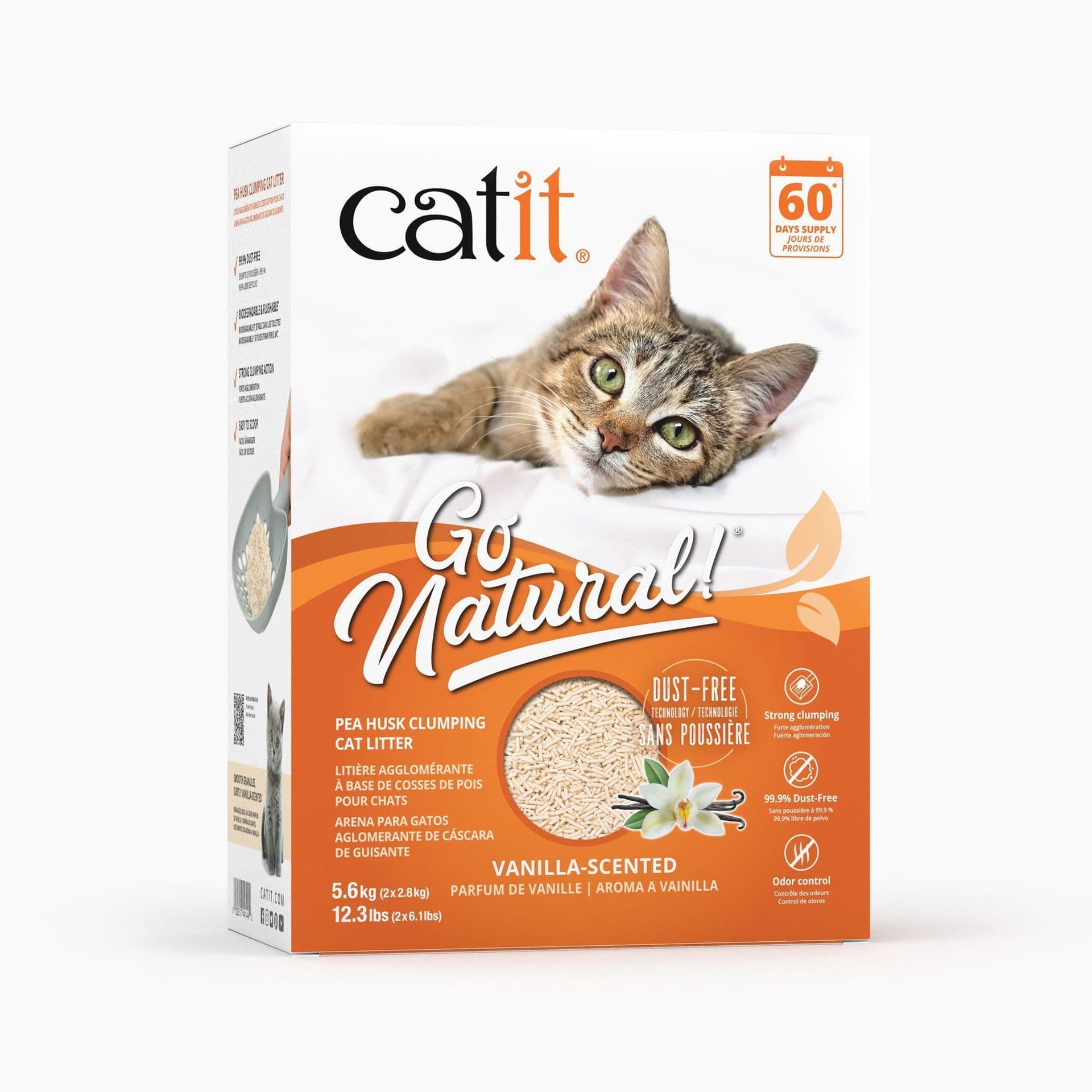
Pea-husk clumping cat litter that is biodegradable, virtually dust-free, and gentle on paws. A 12.3-lb box delivers about 60 days of supply for one cat.
Petful may earn a commission when you click through to Chewy, at no extra cost to you.
Best budget pine pellet litter: Feline Pine Original Non-Clumping Wood Cat Litter
Feline Pine Original is a non-clumping pine-pellet litter. The current offer is a 7-pound bag and describes a natural pine formula without clumping. Its straightforward format makes it a useful benchmark for shoppers specifically looking for inexpensive wood pellets rather than fine clumping fibers.
Pellets tend to remain closer to the box than very light, fine granules because the individual pieces are larger. They also use a cleaning routine that differs from clumping litter. Urine is absorbed by the wood, and saturated pellets may soften or break down. Solid waste still needs prompt removal, while damp material and the box itself need attention according to the product directions and the cat's use.
The larger issue is acceptance. A cat accustomed to digging in a soft sandlike bed may dislike the size, firmness, sound, or movement of pellets. Senior cats, cats with sore paws, and cats recovering from a procedure may have individual substrate needs that should be discussed with a veterinarian. Pellet litter can be an excellent fit when a cat accepts it, but the low price should not justify forcing the transition.
- Best for: A pellet-friendly cat in a home that wants a low-cost pine format and is comfortable with non-clumping maintenance.
- Think twice if: The cat is strongly attached to fine litter or has painful, sensitive, or recently treated paws.
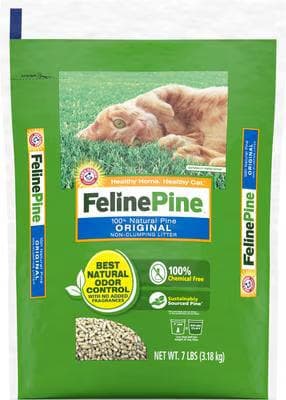
Non-clumping wood-pellet litter made from natural pine for cats.
Petful may earn a commission when you click through to Chewy, at no extra cost to you.
Best recycled-paper pellet litter: Fresh News Unscented Non-Clumping Paper Cat Litter
Fresh News Unscented Non-Clumping Paper Cat Litter is the recycled-paper option in this comparison. The current offer identifies an unscented, non-clumping paper pellet in a 25-pound bag. It is a distinct choice from pine pellets because the source material, odor, softness, absorbency pattern, and breakdown behavior may feel different in use.
Paper pellets can make sense when a caregiver wants an unscented pellet and does not need scoopable urine clumps. The large pieces are easier to see around the box than tiny granules, and the absence of added fragrance removes one potential acceptance barrier. Paper also gives shoppers a recycled-material option without implying that every disposal route is environmentally neutral.
Non-clumping maintenance remains the tradeoff. Because urine does not form a discrete scoopable ball, the caregiver must monitor wet areas and refresh the litter before the box becomes damp or odorous. A deep bed of paper pellets does not excuse delayed cleaning. Cats that prefer fine substrates may also resist the pellet texture, so offer it as a choice and judge actual use.
- Best for: Cats that accept pellets and households seeking an unscented recycled-paper format.
- Think twice if: You rely on tight urine clumps to monitor output or simplify daily scooping.
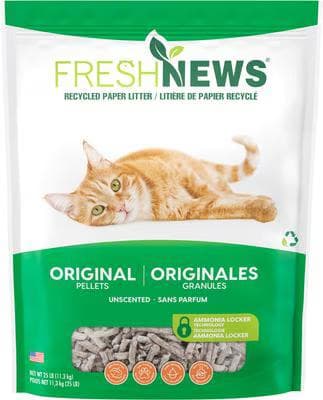
Unscented recycled-paper pellet litter for cats that does not clump.
Petful may earn a commission when you click through to Chewy, at no extra cost to you.
Best value grass litter: Frisco All Natural Unscented Clumping Grass Cat Litter
Frisco All Natural Unscented Clumping Grass Cat Litter is a 20-pound grass-seed formula. The current offer describes it as unscented, lightweight, low-dust, and hard-clumping. That mix targets shoppers who want a plant-based clumping litter in a larger bag without added fragrance.
Grass litter often has a fine texture that may be easier for some clay-accustomed cats to investigate than large pellets. Tight clumps, when the product performs as intended under the conditions in the box, can make urine removal direct. The lack of added scent is also useful for households that want odor control to come from waste removal and moisture management rather than perfume.
The main tradeoff comes from the same low weight that makes the bag easier to handle. Light particles can leave the box on paws or be kicked out during vigorous digging. A high-sided box and a textured litter mat may help, but do not make the entrance so high that an older or mobility-limited cat struggles to enter. “Low-dust” and “low-tracking” are different goals, and one does not guarantee the other.
- Best for: Households wanting an unscented grass formula in a larger bag with scoopable clumps.
- Think twice if: The box is in a carpeted area where lightweight tracked granules are especially difficult to manage.
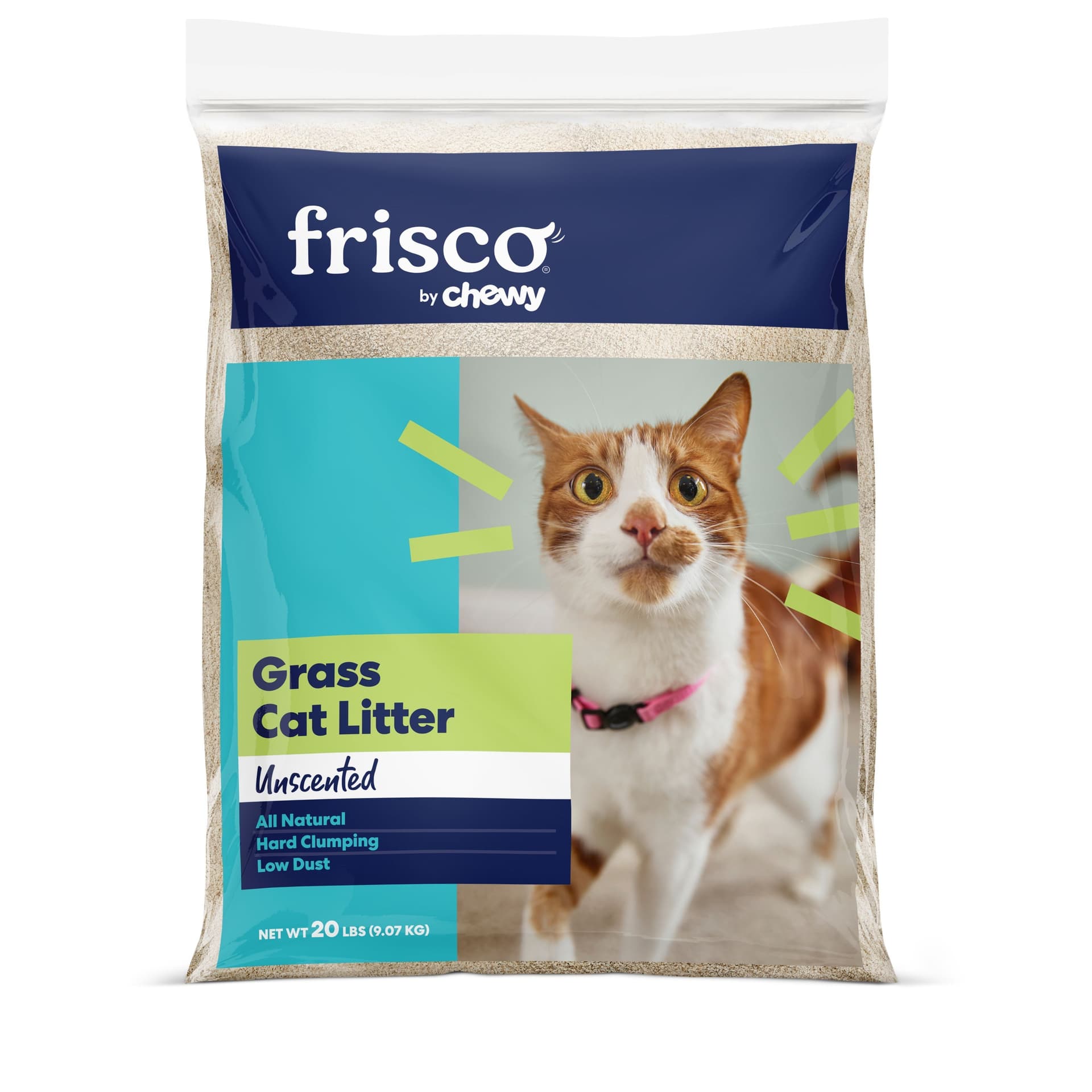
All-natural grass-seed clumping cat litter that is lightweight, low-dust, and unscented. Hard-clumping for easy scooping and gentle on cats with sensitive paws.
Petful may earn a commission when you click through to Chewy, at no extra cost to you.
Best premium grass litter: SmartCat Unscented Clumping Grass Cat Litter
SmartCat Unscented Clumping Grass Cat Litter is another 20-pound grass-based option. The current offer describes an unscented, lightweight, clay-free clumping formula. Its role in this list is not to pretend that two grass litters are interchangeable. It gives shoppers a second grass choice when package availability, current price, or a cat's response makes one formula a better household fit.
The fine, light texture may appeal to cats that enjoy digging and dislike coarse pellets. Unscented litter also avoids adding a strong masking fragrance to the box. A clumping grass litter can fit a daily scoop routine familiar to people moving away from clumping clay.
As with the Frisco grass pick, tracking is the natural counterweight to low package weight and fine texture. Compare actual particle size, box scatter, and clump integrity during a small trial. Do not combine two similar-looking grass formulas in an uncontrolled test and then guess which one the cat preferred. Change one variable at a time and keep notes.
- Best for: Caregivers seeking an established unscented grass option with a fine clumping format.
- Think twice if: The household's primary goal is maximum resistance to tracking rather than low weight or soft texture.
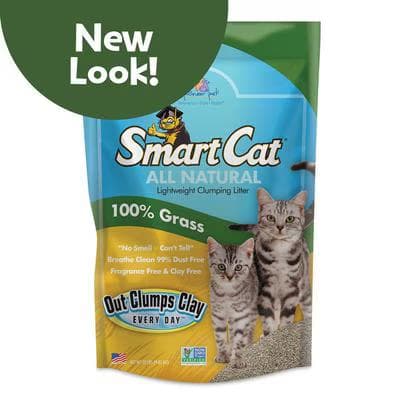
Unscented grass-based clumping litter for cats, with a lightweight clay-free formula.
Petful may earn a commission when you click through to Chewy, at no extra cost to you.
Best wheat litter for multi-cat homes: sWheat Scoop Multi-Cat Natural Clumping Wheat Cat Litter
sWheat Scoop Multi-Cat Natural Clumping Wheat Cat Litter uses wheat in an unscented clumping formula. The current offer is a 14-pound bag and states that it contains no added dyes or perfumes. Its multi-cat positioning makes it the wheat-based candidate for homes where several cats share the cleaning workload, even though resource setup remains more important than a label.
A scoopable wheat litter can support frequent waste removal without relying on added fragrance. That matters in a busy home because odor prevention starts with enough clean boxes, convenient placement, and daily attention. “Multi-cat” does not mean one box becomes sufficient for several cats or that the litter can remain dirty longer.
Wheat is a food-derived substrate, which some shoppers prefer and others avoid. Any cat that persistently eats litter needs veterinary advice, regardless of whether the material is wheat, clay, paper, wood, or another substance. Store the bag securely away from moisture and pests, follow package directions, and stop using any litter that appears contaminated or has an unusual change in odor or texture.
- Best for: Multi-cat households wanting an unscented wheat-based clumping formula and a familiar scooping routine.
- Think twice if: A cat eats litter or the household cannot store a grain-based product dry and securely.
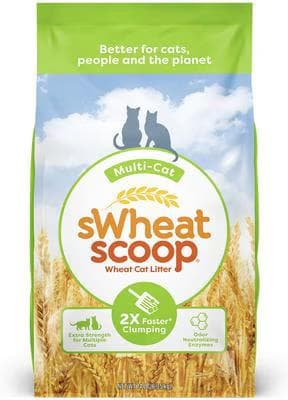
Natural wheat-based clumping litter for multi-cat homes, with no added dyes or perfumes.
Petful may earn a commission when you click through to Chewy, at no extra cost to you.
Best corn and cassava blend: Sustainably Yours Large Grains Cat Litter
Sustainably Yours Large Grains Cat Litter combines corn and cassava in a plant-based clumping formula. The current 10-pound offer describes strong clumping, odor control, and very low dust. The larger-grain version is the relevant differentiator here because particle size can affect paw feel, scatter, and what reaches the floor.
This pick suits a shopper who wants a plant blend and prefers a larger granule over the finest grass or grain textures. A firm clump can support efficient daily scooping when the litter reaches adequate depth and has time to absorb. Larger grains may behave differently on a mat than powder-fine particles, but no litter is guaranteed not to track. Box height, exit direction, coat length, paw fur, and digging style all contribute.
Corn and cassava are food-derived materials. That does not automatically make the litter edible, flushable, compostable, or appropriate for a cat that consumes substrate. The product must still be used and discarded according to its label, local rules, and sensible hygiene. Any repeated litter eating deserves a veterinary conversation.
- Best for: Homes seeking a clumping corn-cassava blend with a larger particle size.
- Think twice if: The cat prefers very fine litter or has a history of eating substrate.
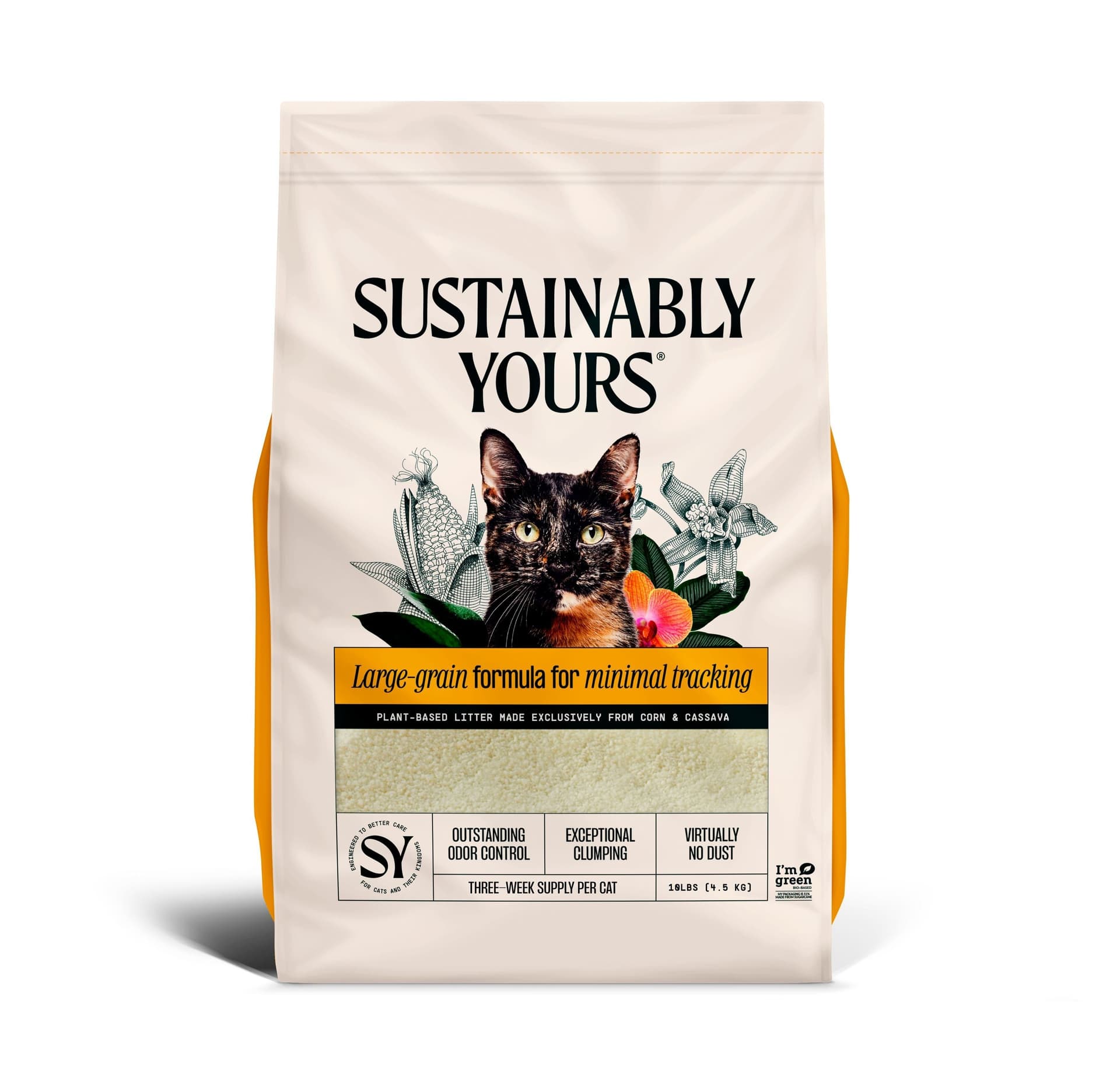
Plant-based clumping cat litter made from corn and cassava. Outstanding odor control, exceptional clumping, and virtually no dust.
Petful may earn a commission when you click through to Chewy, at no extra cost to you.
Natural cat litter materials compared
“Plant-based” is a sourcing description, not a prediction of what happens under a cat's paws. This material-by-material decision framework separates performance from broad environmental marketing claims. The material-specific tradeoff matrix below gives each family a bounded strength and limitation, including performance versus disposal. It is meant to narrow a trial, clarify material performance, and define eco-claim boundaries, not assign a universal environmental or health score.
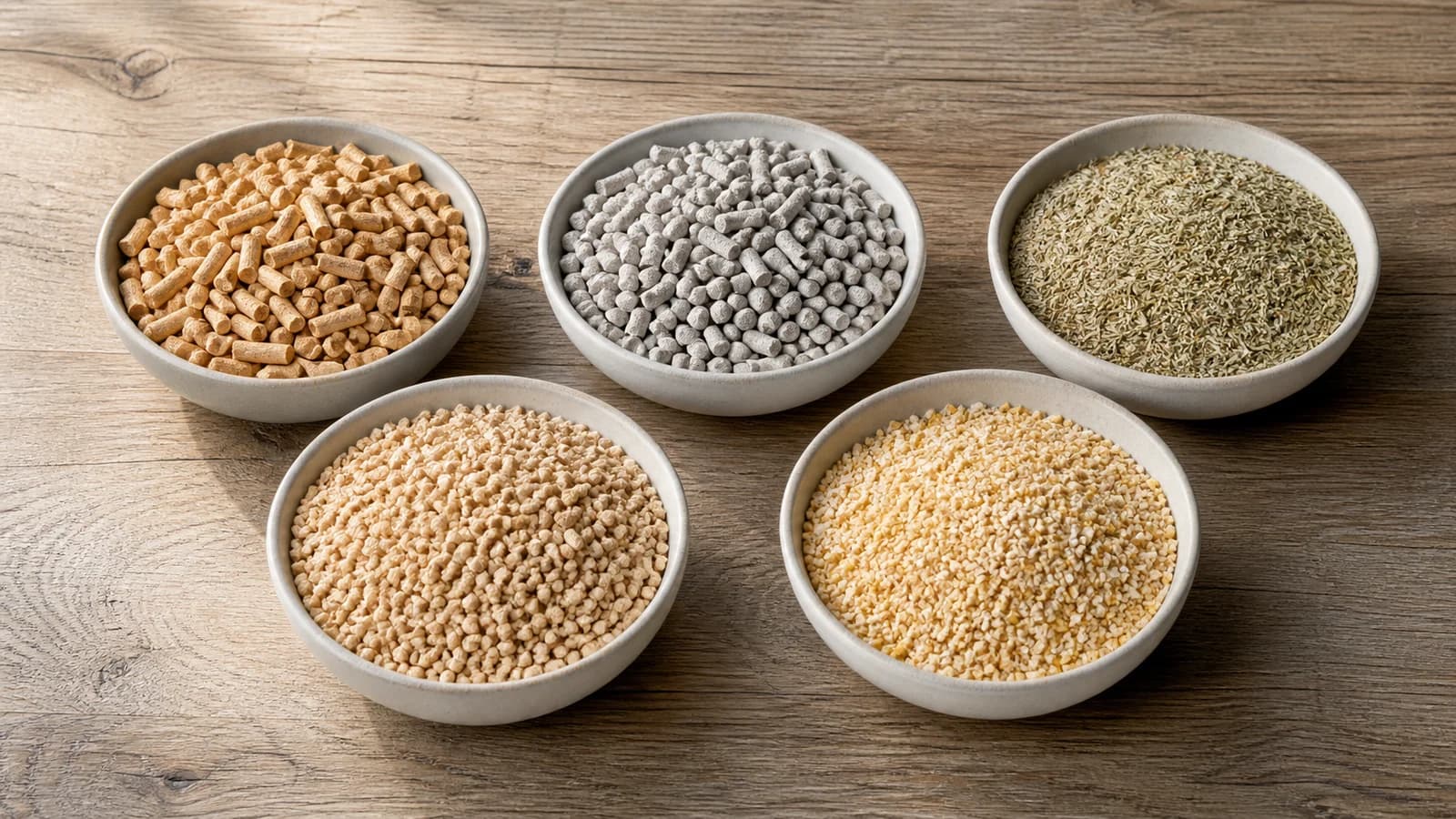
Softwood fiber
Processed softwood fiber can be made into a relatively fine clumping litter. Compared with a rigid pellet, the texture may be less abrupt for a cat that expects to dig in small particles. The material can also be light relative to dense clay. Its behavior depends on processing, granule shape, absorbency, and binders, so a wood source alone does not prove clump strength or low dust. Natural wood odor may be noticeable even when no synthetic perfume is added.
Pine pellets
Pine pellets are larger and generally non-clumping. Urine is absorbed into the pellet and can cause it to soften or break into sawdust-like material. Their size may reduce how far intact pieces travel, but the firm footing can be unfamiliar. Pellet-compatible boxes and sifting routines may help some homes, yet the cat's willingness to stand and dig on pellets remains decisive.
Recycled paper pellets
Paper pellets offer an unscented option with a different feel from wood. They are commonly non-clumping, so they absorb rather than isolate urine in a scoopable ball. This can work for caregivers prepared to identify damp material and refresh the box often. Paper sourcing may appeal to waste-conscious shoppers, but the used litter still contains animal waste and must be discarded responsibly.
Grass-seed litter
Grass-based litter is typically sold as a lightweight clumping granule. Fine particles can produce a soft bed and firm clumps, depending on the formula and box conditions. That same low mass can make particles easier to kick or carry. Compare two grass formulas as individual products rather than assuming identical performance from a shared ingredient.
Wheat litter
Wheat litter provides plant-based clumping with a grain substrate. Unscented formulas can manage moisture without added perfume, but package storage matters because food-derived material should stay dry and protected. A multi-cat label may describe odor or clumping positioning. It does not replace adequate box number, location, or cleaning.
Pea-husk litter
Pea-husk litter turns an agricultural material into a lightweight clumping substrate. The Catit pick in this guide is vanilla scented, so material and fragrance must be evaluated together. A cat may accept the texture but reject the odor, or the reverse. That is why a separate trial box reveals more than the ingredient list alone.
Corn and cassava blends
Corn and cassava can form clumps in a plant-derived blend. Particle size varies by product, and a large-grain formula may feel and scatter differently from a fine one. Food origin does not make used litter safe to eat, flush, or add casually to a home compost pile.
Tofu and other plant fibers
Tofu litter is usually made from processed soy or pea fiber and often arrives as narrow pellets. It is outside this eight-offer lineup, but shoppers will encounter it while comparing plant formats. Petful's explainer on what tofu cat litter is covers that material without expanding this roundup beyond its locked inventory.
Natural clumping litter: what actually holds together
The best natural clumping cat litter creates a removable mass without cementing to the box, fragmenting into many damp crumbs, or pulling so much dry litter into the scoop that the bag disappears quickly. The source material alone cannot guarantee that result. Moisture volume, pour depth, time before scooping, scoop-slot size, humidity, and the cat's digging can all change what a caregiver sees.
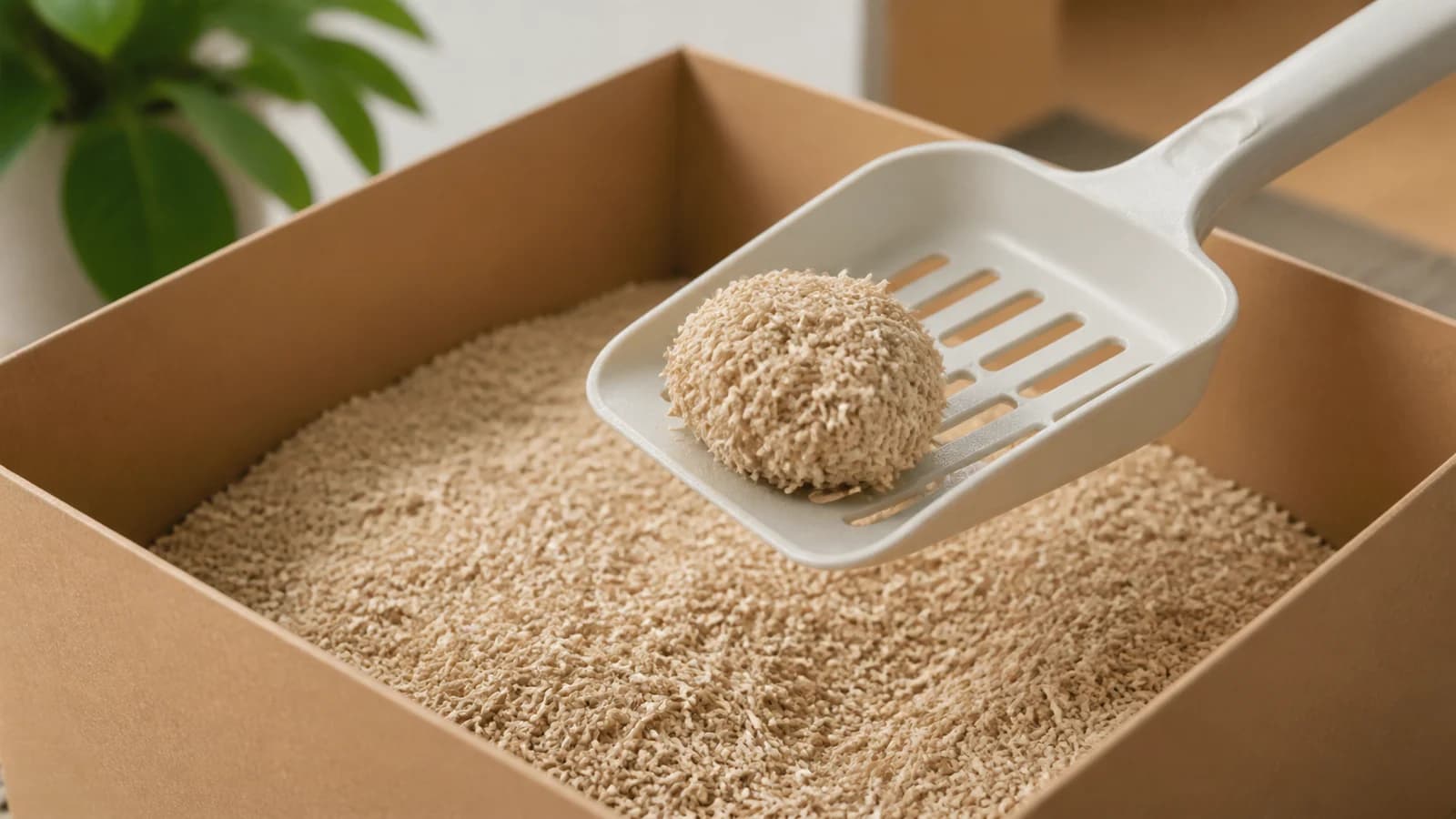
Use a consistent trial to compare clumping behavior:
- Fill one clean trial box to the depth recommended on the package.
- Keep the box, room, and cleaning schedule as stable as possible.
- Scoop on the package's recommended timing rather than immediately disturbing a fresh wet area.
- Note whether the clump lifts intact, leaves damp residue, sticks to the bottom, or collects excessive clean litter.
- Track how quickly the usable bed becomes shallow and how much clean litter must be added.
Do not manufacture a laboratory-style test with water and assume it predicts a cat's experience. Urine location, volume, repeated visits, digging, and box geometry matter. The meaningful household measure is whether the litter stays cleanable and acceptable during normal use.
Non-clumping litter is not failed clumping litter. It is a different system. Pine and paper pellets absorb moisture throughout the material and require the caregiver to remove solids, locate or separate saturated material, and replace litter before odors accumulate. Some people prefer that routine. Others need the visual clarity of distinct urine clumps, particularly when monitoring a cat's output under veterinary guidance.
Low-dust and low-tracking natural litter tradeoffs
The best dust-free natural cat litter does not exist in a literal, universal sense. Pouring, shipping, storage, batch variation, box depth, and digging can release some particles even from a product marketed as low dust. “Virtually dust-free” and “low-dust” should be read as comparative claims, not promises of a particle-free room.
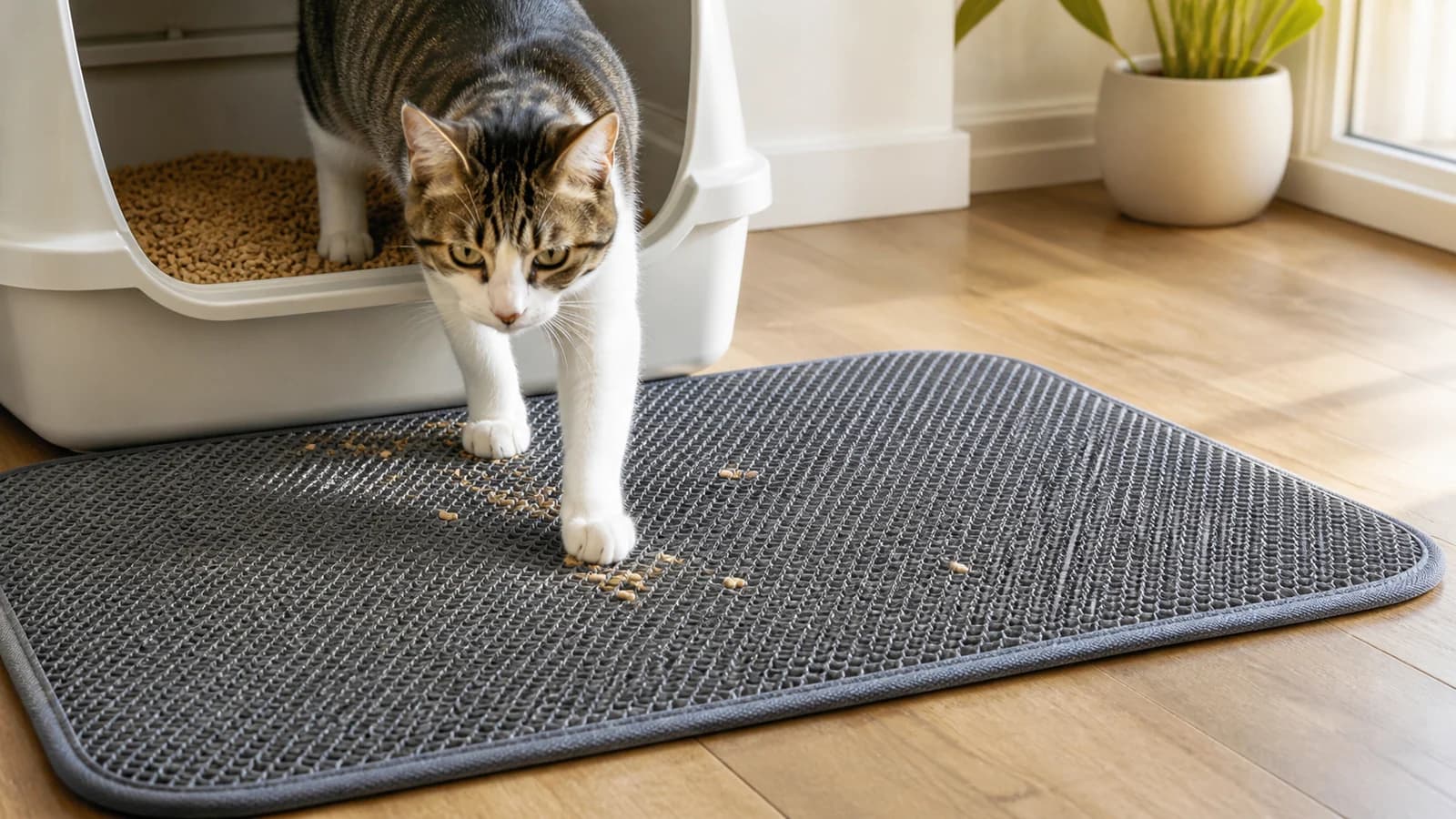
Dust is the fine material that can become airborne during pouring or digging. Tracking is material carried out on paws or fur, or kicked out of the box. A large pine pellet may produce little airborne material when new and stay near the box, then break into finer wood particles as it absorbs. A fine grass litter may look clean when poured but travel across a smooth floor. A larger-grain corn-cassava litter may reduce some fine scatter while still leaving visible pieces near the exit.
For a practical low-dust trial:
- Pour slowly near the box surface instead of dropping litter from height.
- Ventilate the room without aiming a fan directly across the box.
- Keep the box away from food preparation and sleeping areas.
- Stop and reassess if a cat or person coughs, wheezes, develops eye irritation, or has another concerning response.
- Ask a veterinarian about substrate choice for a cat with respiratory disease or a recent procedure.
For a practical low-tracking setup:
- Choose a box large enough for the cat to turn without throwing litter over every edge.
- Put a washable textured mat across the cat's natural exit route.
- Vacuum or sweep loose particles regularly instead of allowing a gritty path to build.
- Trim paw fur only if a groomer or veterinary professional advises it and the cat tolerates handling.
- Do not trap the cat in a covered maze solely to keep the floor clean.
The best non-tracking natural cat litter is therefore the accepted product that produces the least manageable mess in your exact setup. Granule size helps predict behavior, but it does not override the cat's coat, paws, digging style, route through the room, or box design.
Odor control without perfume or delayed cleaning
Natural litter controls odor through moisture absorption, clump removal, and the caregiver's cleaning routine. Some wood materials have a noticeable native scent. Some products add fragrance. Unscented grass, wheat, and paper options avoid perfume but still need frequent waste removal.
The most effective odor plan is operational:
- Scoop solid waste and urine clumps at least daily, and more often when several cats use the same area.
- Remove saturated non-clumping material before the damp zone spreads.
- Maintain enough litter depth for absorption and digging without overfilling the box.
- Wash the empty box with a cat-safe method and dry it fully before refilling.
- Replace a deeply scratched or damaged plastic box if retained odor persists.
- Provide enough boxes in separate useful locations so one dirty or guarded box is not the only option.
If urine suddenly smells stronger, the clumps become much larger or smaller, or a cat visits repeatedly with little output, do not solve the change by buying a stronger-scented litter. Changes in urination can carry medical significance. Repeated straining with little or no urine, especially in a male cat, is an emergency.
Healthiest natural litter depends on the individual cat
Which cat litter is the healthiest? The safest answer is the one that fits the individual cat's health, age, mobility, behavior, and reliable box use. No single material is automatically healthiest for every cat because “natural” is not a medical certification.
An adult cat with no known sensitivities may do well on an unscented clumping grass or wheat litter. A pellet-friendly cat may use paper or pine comfortably. A cat with respiratory disease may need a veterinary recommendation focused on minimizing airborne particles. A cat with painful paws may avoid hard pellets. A kitten or cat that eats litter needs individual advice rather than a broad material slogan.
Evaluate health fit through observable outcomes:
- The cat enters without hesitation and assumes a normal posture.
- Urination and defecation remain regular for that individual.
- There is no new coughing, sneezing, eye irritation, paw irritation, or excessive grooming.
- The cat does not chew or swallow the litter.
- Waste can be seen and removed often enough to notice meaningful changes.
- The box is accessible, clean, and located where another pet cannot guard it.
A litter trial should stop if elimination moves outside the box, the cat strains, cries, visits repeatedly, stops producing normal urine or stool, or develops other concerning signs. Restore the last accepted setup and contact a veterinarian when the change is sudden or persistent.
What veterinarians consider before recommending litter
What litter do vets recommend for cats? Veterinarians generally need more context than a material name. The recommendation may account for the cat's established preference, respiratory and skin health, paw comfort, age, mobility, ingestion risk, surgical recovery, urinary monitoring, and any history of elimination outside the box.
They may also ask about the whole litter-box system:
- How many cats and boxes are in the home?
- Are the boxes spread across separate locations or clustered together?
- Can every cat enter and leave without being cornered?
- Is the box large enough for normal turning and digging?
- Is the entrance low enough for the cat's mobility?
- How often is waste removed and the box fully refreshed?
- Was the litter, box, location, or cleaning product changed recently?
- Does another animal stare, chase, block, or ambush near the box?
This is why replacing one litter with a supposedly healthier material may not fix a problem caused by pain, fear, poor access, inter-cat conflict, or an unclean box. Bring the product name, a photo of the setup, and a timeline of changes to the appointment. If possible, note urine clump number and approximate size without delaying care for a cat that is straining or unable to urinate.
Low-toxicity claims, fragrance, and dust
The least toxic cat litter cannot be identified by a single front-of-bag word. “Natural,” “plant-based,” “biodegradable,” “unscented,” and “low-dust” describe different attributes. None proves that a litter is harmless if swallowed, inhaled in large amounts, contaminated, or used against instructions.
For a lower-exposure decision, start with plain questions:
- Does the product disclose its primary material and whether fragrance is added?
- Does the cat produce coughing, sneezing, eye irritation, paw irritation, or unusual grooming after introduction?
- Is there visible dust when the litter is poured or disturbed?
- Does the cat lick or eat granules?
- Can the caregiver keep the box clean without using strong deodorizers?
- Does the manufacturer provide clear handling and disposal directions?
Unscented does not mean odorless because raw materials can have their own smell. Scented does not mean toxic, but added fragrance can become an acceptance or sensitivity issue for some cats and people. Low-dust does not mean no dust. Food-derived does not mean safe to eat. Treat any package claim as one data point and observe the cat.
Natural litter claims and ingredients to approach carefully
What cat litter should you stay away from? There is no responsible universal blacklist based only on whether the material is clay, wood, grass, grain, paper, or another substrate. Avoid products that are damaged, wet, moldy, contaminated, recalled, improperly stored, or incompatible with the cat's health and behavior. Also avoid any litter the cat repeatedly refuses when a suitable accepted alternative is available.
Be skeptical of claims that:
- Promise zero dust under all conditions.
- Suggest fragrance makes infrequent cleaning acceptable.
- Call a product flushable without explaining plumbing, wastewater, septic, and local-rule limits.
- Treat “biodegradable” as permission to discard cat waste anywhere.
- Imply plant ingredients cannot cause irritation or gastrointestinal problems if eaten.
- Claim one format is universally preferred by all cats.
- Promise that a color, odor, or clump change can diagnose disease.
Do not add essential oils, concentrated fragrance, disinfectant powder, or improvised deodorizing ingredients to the box unless a veterinarian has confirmed the specific product and use are safe. Cats contact litter with paws and fur, then groom themselves. The simplest accepted substrate and a reliable cleaning routine usually create fewer variables.
Can natural cat litter be composted or flushed?
Natural origin does not make used litter safe for every waste stream. Disposal limits begin once a cat urinates or defecates in the box because the material then contains animal waste and potential pathogens. Local compost programs may prohibit pet waste. Home compost may not reach the temperature or management standard needed for pathogens, and compost containing cat waste should not be used on edible crops unless qualified local guidance explicitly supports the practice. These local compost restrictions outweigh a general biodegradable claim.
- Do not flush natural cat litter by default. Even a package marked flushable cannot guarantee compatibility with every plumbing system, septic tank, wastewater rule, or local restriction. Bag and discard used litter according to the product label and local waste guidance unless your utility and veterinarian support another method.
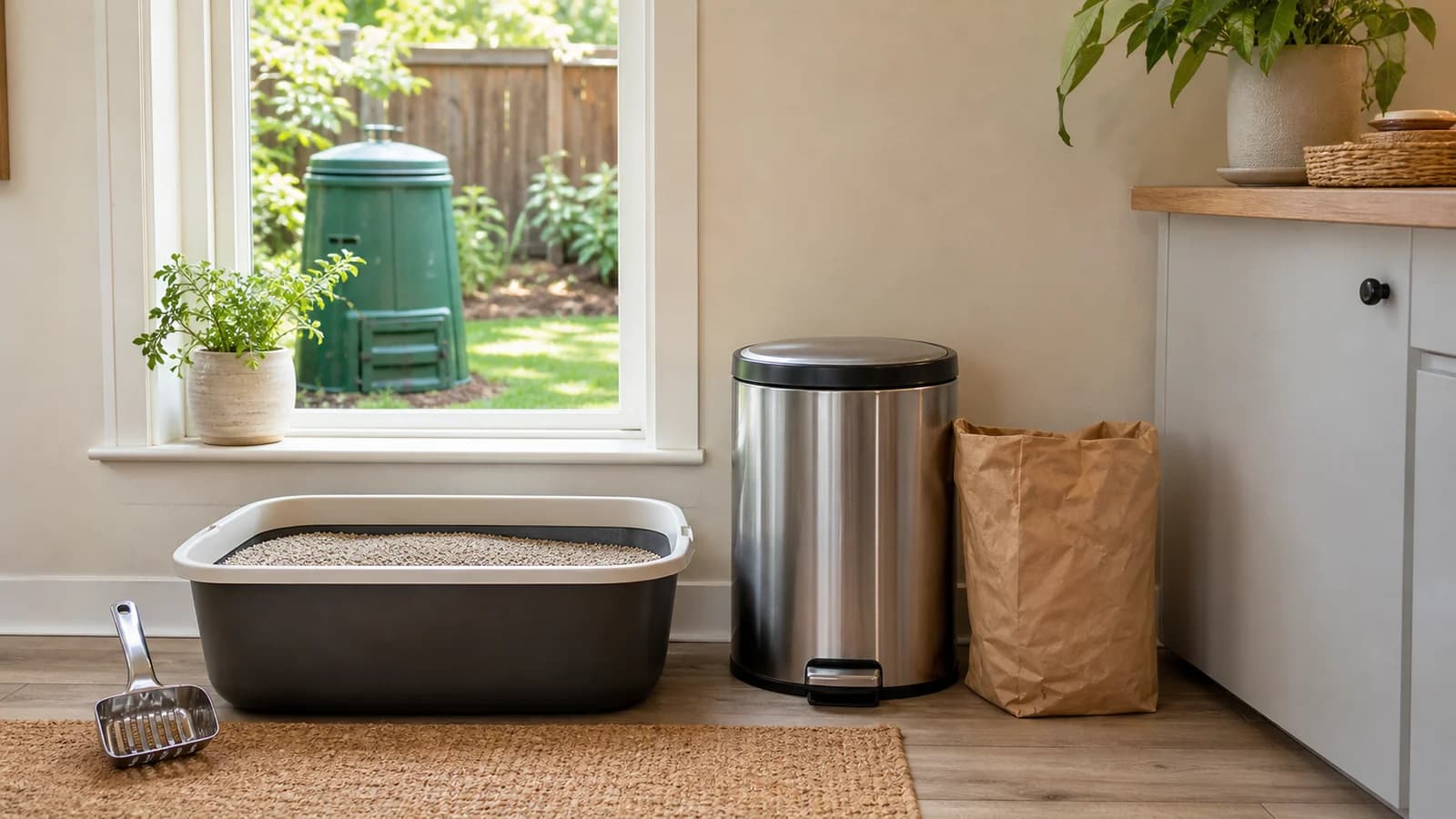
Flushing introduces three separate questions: will the material break down, can the plumbing carry it, and does the wastewater system permit animal waste? A “yes” to one is not a yes to all three. Pellets, clumps, and fibers can expand or settle. Septic systems have their own limits. Municipal rules vary.
Composting also requires more than a biodegradable ingredient. Packaging claims may refer to the unused substrate under certain conditions, not a pathogen-free result after use. When rules are unclear, sealed trash disposal is the conservative choice. Never dump litter outdoors, in storm drains, or where wildlife, children, or other pets can contact it.
How to switch to natural cat litter
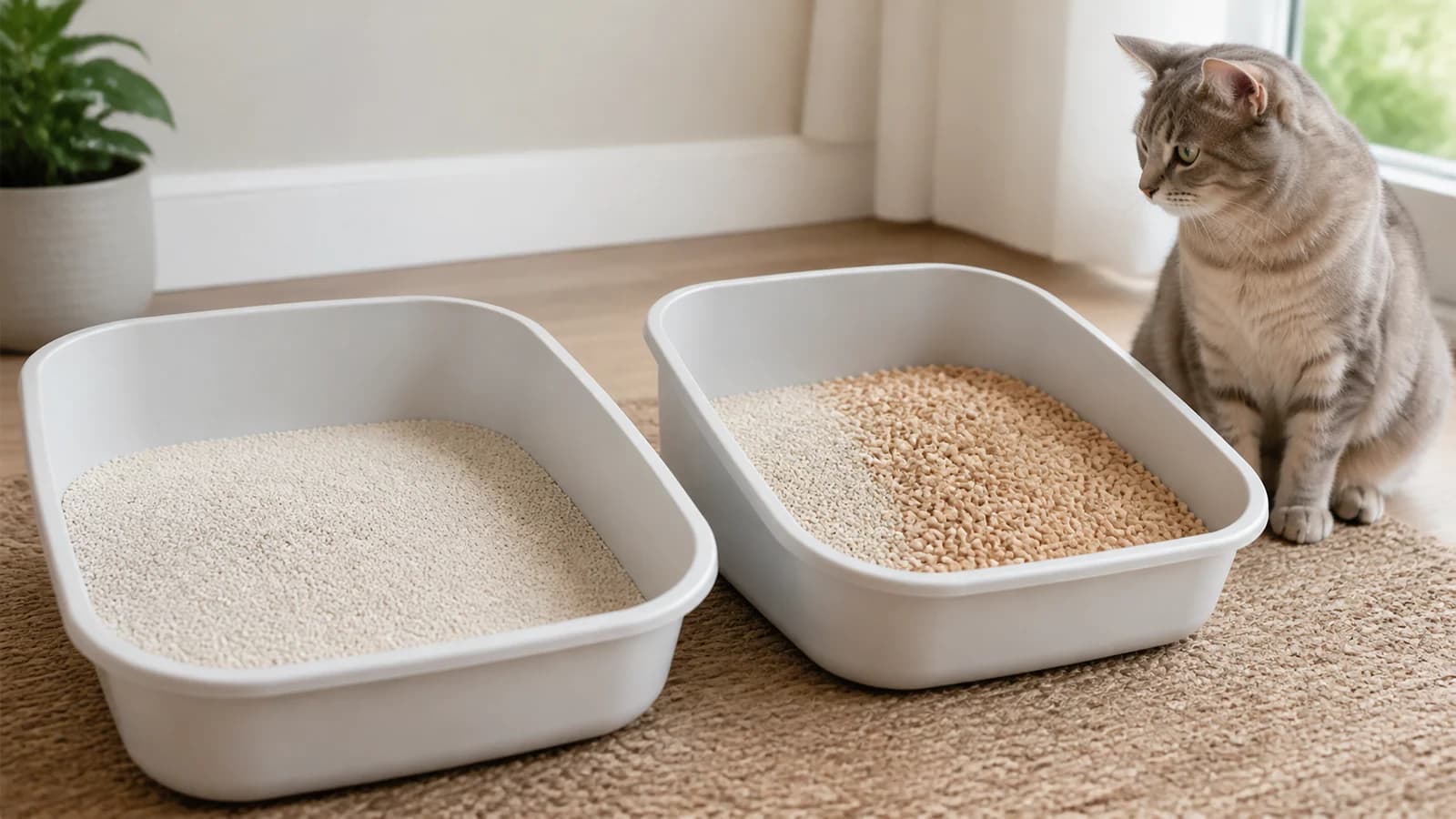
Exact transition guidance for cats moving from fine clay to pellets, fibers, or larger plant granules begins with a separate trial box and one familiar option left unchanged. A gradual substrate transition protects the cat's sense of control. The goal is not to complete the switch on a preset calendar. It is to let the cat demonstrate comfortable, consistent use before another box changes, with the accepted setup restored if avoidance appears.
- 1Make a gradual natural litter transition by changing one variable at a time
- 2Offer the new substrate in a separate box when possible and preserve one familiar box
- 3Advance only after comfortable consistent use, and restore the accepted setup if avoidance begins
Step 1: Keep the rest of the setup stable
Use the cat's familiar box style, location, cleaning schedule, and access route. Do not change from open to covered, move the box, switch cleaners, and introduce a radically different litter on the same day. Too many simultaneous changes make it impossible to identify what the cat accepts or rejects.
Step 2: Offer a separate trial box
Place a clean box with the new litter near the accepted box without blocking either entrance. A separate box gives the cat a real choice and lets you see which substrate was used. This is clearer than mixing immediately, especially when comparing fine clay with pine or paper pellets.
Step 3: Use a trial quantity
Buy enough to reach the package's recommended depth but avoid committing to the largest package before the cat has used it. Pour slowly and allow the substrate to settle. Do not place the cat in the box or move its paws through the material.
Step 4: Observe complete behavior
Look beyond whether waste appears once. Does the cat approach normally, step in fully, dig, assume a comfortable posture, cover waste, and return later? Hesitation, perching, stepping only on the edge, frantic jumping out, or elimination beside the box are meaningful signals.
Step 5: Advance at the cat's pace
If the cat repeatedly uses the new box comfortably, maintain both choices for a stable period before removing the familiar substrate. If separate boxes are impossible and the product permits mixing, change the proportion slowly. Pellet transitions often need more time than a switch between similar fine granules.
Step 6: Stop when avoidance begins
Restore the last accepted setup if use declines. Clean accidents without punishment. A sudden elimination change, straining, frequent trips, pain signs, appetite change, or reduced urine output warrants veterinary attention. Never assume the transition is the only explanation.
Natural litter for kittens, seniors, and sensitive cats
Life stage and health can outweigh every roundup category.
Kittens
Young kittens explore with their mouths and may taste substrate. Ask a veterinarian or rescue team what format fits the kitten's age, health, and current training. Keep the box easy to enter and the litter clean. Do not choose a product solely because a food-derived ingredient sounds edible.
Senior and mobility-limited cats
A low box entrance and stable footing may matter more than material. Large hard pellets can be uncomfortable for some cats, while very light granules may shift underfoot. Provide easy routes, avoid stairs when possible, and discuss new elimination behavior with a veterinarian because arthritis, kidney disease, diabetes, cognitive changes, constipation, and other conditions can affect box use.
Cats with respiratory or skin sensitivity
Choose a product with clear material disclosure and low-dust positioning, pour it gently, and observe actual exposure. Fragrance-free may reduce one variable, but unscented litter can still release particles. Coughing, wheezing, persistent sneezing, eye irritation, paw inflammation, or excessive grooming deserves veterinary advice.
Long-haired cats
Fine, light granules may cling to paw and leg fur. Larger grains or pellets can reduce some adhesion but may be less comfortable. A washable mat and frequent grooming can help, provided the cat tolerates both. Never sacrifice reliable box use solely to reduce floor cleanup.
Cats that eat litter
Repeated litter eating is not solved by changing to a plant ingredient and declaring the material safe. It can be associated with curiosity, stress, diet, gastrointestinal issues, anemia, or other medical concerns. Contact a veterinarian and restrict access only in a way that still allows safe elimination.
Multi-cat households need more than multi-cat litter
A multi-cat formula may be designed for odor or clump demands, but it cannot resolve competition over access. Cats can share a room while silently avoiding the same doorway, hallway, or box. One cat may stare from across the room or ambush another as it exits.
Provide multiple boxes in separate, usable locations. Boxes side by side may function like one resource because another cat can guard the whole station. Every cat should have a route to enter and leave without being trapped. Scoop frequently enough that no individual is forced to use a heavily soiled box.
When testing a new natural litter, avoid switching every box at once. Keep accepted substrate available and identify who uses the trial box. A camera aimed only at the box area can sometimes clarify patterns, but it should preserve privacy, avoid stressful lights or sounds, and never replace veterinary assessment when elimination changes.
- The sWheat Scoop pick carries a multi-cat label, yet its success still depends on those environmental basics. The Frisco and SmartCat grass options, Catalyst wood fiber, and Sustainably Yours blend may also work in multi-cat homes if the cats accept them and the cleaning routine keeps pace. Material is only one layer of the system.
How much natural litter should you buy first?
Start with enough for one properly filled trial box plus normal top-ups. A tiny dusting does not represent the product fairly because the cat cannot dig normally and urine may reach the box bottom immediately. At the other extreme, buying months of supply before testing acceptance can turn an apparent bulk discount into waste.
Estimate trial value using useable time, not price per pound alone. Natural materials differ in density, so a lighter bag may fill as much space as a heavier mineral bag. Clump quality changes how much clean litter leaves with each scoop. Non-clumping pellets use a different replacement pattern. Number of cats and box count can dominate all of those differences.
During the trial, record:
- Initial fill amount and bed depth
- Daily top-up amount
- Whether clumps remain intact
- How much dry litter is discarded with wet material
- Frequency of full replacement
- Tracking cleanup time
- Any avoidance or behavior change
After two to four weeks of comfortable use, the household will have a better basis for comparing recurring cost and convenience. Stop sooner if the cat rejects the material or shows a health concern.
Common mistakes when choosing natural cat litter
Treating natural as a performance standard
Wood, paper, grass, wheat, pea husk, corn, and cassava do not share one clump strength, dust level, or paw feel. Compare the product and format, not only the ingredient category.
Assuming biodegradable means flushable
Breakdown under one set of conditions does not prove plumbing, septic, wastewater, or public-health compatibility. Follow the label and local guidance, and use trash disposal when uncertain.
Changing every box at once
A complete overnight switch can leave a selective cat without an acceptable place to eliminate. Preserve a familiar box and let behavior determine the pace.
Choosing fragrance for the person
Perfume can mask odor perception without removing waste. A scented litter such as the vanilla Catit option needs a deliberate acceptance trial. Unscented choices still require cleaning.
Confusing low dust with low tracking
Airborne particles and floor scatter are different. Light fine litter may score well on one and poorly on the other. Evaluate both in the actual room.
Ignoring the cleaning system
Clumping and non-clumping formats require different work. Select a routine the household will perform reliably, then verify that the cat accepts the result.
Forcing a pellet transition
Pellets can reduce some scatter and offer simple plant materials, but their size and firmness are a large sensory change. A low price or attractive waste claim does not make refusal stubbornness.
Final verdict
The best natural cat litter depends first on the cat's acceptance and then on the household's priority. Catalyst is the softwood clumping pick for people who want a light wood fiber. Catit supplies a pea-husk alternative for cats that tolerate vanilla scent. Feline Pine and Fresh News cover non-clumping pine and paper pellets. Frisco and SmartCat offer two unscented clumping grass choices. sWheat Scoop represents wheat for a busy multi-cat home, while Sustainably Yours provides a larger-grain corn-cassava blend.
No material wins every category. Fine grass may clump well and feel familiar but track. Pellets may stay closer to the box but require a bigger texture and maintenance change. Scent may please one person and deter one cat. Disposal language may sound simple until local rules and animal-waste hygiene enter the picture.
Choose a format that solves the household's biggest practical problem without creating a box-use problem for the cat. Start small, keep a familiar option, observe complete behavior, and involve a veterinarian when health, pain, ingestion, breathing, or sudden elimination changes enter the decision.
Frequently Asked Questions
Which cat litter is the healthiest depends on the individual cat rather than one material label. A good choice is accepted consistently, easy to keep clean, appropriate for the cat's paws and mobility, and compatible with respiratory, skin, urinary, and ingestion concerns. Unscented and low-dust options may reduce some exposures, but those labels are not universal safety guarantees. Ask a veterinarian about kittens, cats that eat litter, cats with respiratory disease, and any sudden elimination change.
“Natural” does not identify a universally least-toxic litter. Look for clear material disclosure, avoid unnecessary fragrance when a cat is sensitive, minimize visible dust, use the product as directed, and prevent ingestion. Food-derived or biodegradable material is not automatically safe to eat, flush, or compost after use. Stop the trial and contact a veterinarian if a cat coughs, develops irritation, eats litter, strains, or stops using the box normally.
Sources

Coreen Saito is a pet writer and longtime shelter volunteer with more than a decade in animal rescue. She covers cat behavior, breed care, and the small, ordinary science of sharing a life with companion animals, with a particular focus on honest takes about the products and decisions that actually matter. At home in Arizona, she's outranked by Mac (a dog with the loudest opinion in the house), Rebel (a cat who governs by quiet authority), and Meri (an orange tabby who runs the late shift and the laundry basket). She writes about all three, plus the rescues that keep coming through her life, at LifeWithMinty.com.
Sign up for expert-backed reviews and safety alerts all in one place.