Best Cat Litter: 7 Picks for Every Cat and Home
Compare seven cat litter picks across clumping, dust, tracking, odor, texture, and cat acceptance, then use a fit-first framework to choose the right option for your cat and home.
Petful is reader supported. As an affiliate of platforms like Amazon and Chewy, we may earn a commission when you buy through links on this page. There is no extra cost to you.
The best cat litter is the one your cat will use consistently and you can maintain every day. For many homes, that means an unscented clumping litter with firm clumps, manageable dust, and a texture the cat accepts. Other cats and households do better with walnut, softwood, silica crystals, grass, pine pellets, or a stronger odor-control clay formula.
There is no honest universal winner because litter performance is a chain. The material affects texture and weight. Texture influences cat acceptance and tracking. Clump behavior affects scooping. Cleaning frequency affects odor more than a fragrance claim ever can. Price matters only after you compare how quickly a bag is used and how much clean litter leaves the box with each scoop.
This guide compares seven exact products across those decisions. Petful did not conduct a hands-on test of these litters. Our picks are expert analysis based on product format, stated use, material tradeoffs, household fit, and the practical questions a caregiver should answer before switching.

Sign up for expert-backed reviews and safety alerts all in one place.
What is the best cat litter overall?
For most cats and homes, Dr. Elsey's Ultra Unscented Clumping Clay Cat Litter is the conditional best overall choice in this roundup. It offers the familiar fine-grained texture many cats accept, forms scoopable clumps, and avoids added fragrance. It is a practical baseline when you do not yet know whether your cat needs a specialty material.
That answer has an important limit. The best overall for most homes is not automatically best for your cat. A cat who dislikes the texture, avoids a covered box full of fine clay, coughs around dust, or has a history of eliminating outside the box needs a different decision. Choose by cat acceptance first, then use owner priorities such as clump strength, weight, tracking, odor control, and price to break the tie.
A sound first choice should pass five tests:
- Your cat enters, digs, eliminates, and covers without hesitation.
- The litter can be scooped without the clump breaking into damp fragments.
- Dust does not visibly billow during pouring or routine digging.
- Tracking remains manageable for your flooring and box location.
- The ongoing cost fits the amount your household actually uses.
- 1Dr. Elsey's Ultra Unscented is our conditional best overall for most homes because it combines a familiar texture, clumping convenience, and no added fragrance
- 2Cat acceptance matters more than any feature list, so a cat who hesitates or avoids the box needs a different litter
- 3Compare household fit separately from cat acceptance before committing to a large bag
How we chose the best cat litter
We started with the two parties that have to live with the choice: the cat and the person maintaining the box. A product can look excellent on paper and still fail if the cat rejects its texture. It can also be acceptable to the cat but exhausting for the owner if clumps crumble, litter spreads through the house, or a heavy package is difficult to lift. The best cat litter for indoor cats therefore depends on both material type and day-to-day fit, not one front-of-bag claim.
Our analysis used five decision factors. These are not laboratory scores, and they are not claims that Petful personally tested each product. They are a structured way to compare clearly different litter formats without pretending that clay, pellets, grass, walnut, wood, and silica behave identically.
1. Cat acceptance checkpoint
The cat acceptance checkpoint comes first. Many cats prefer a soft, sand-like substrate that is easy to dig and cover with. Some tolerate or prefer larger granules or pellets. A sudden change in material, fragrance, depth, or box setup can make even a well-designed litter feel unfamiliar.
We therefore treat texture as a fit question, not a universal quality score. Fine clumping litter earns convenience points, but pellets may reduce scatter. Grass can feel light and soft, while silica crystals have a distinct feel. A product cannot be called a successful choice until the individual cat uses it comfortably.
2. Clump and scoop behavior
Clumping litter should create a unit that lifts without leaving many wet crumbs behind. Firmer clumps can help preserve clean litter and simplify daily maintenance. Very fast-setting clumps can also stick firmly to a box if urine reaches the bottom, especially when the litter bed is shallow.
Non-clumping pellets are judged differently. They absorb moisture and break down rather than creating a removable urine clump. That can be a good match for caregivers who like the pellet system, but it changes the maintenance routine and makes a direct clump score meaningless.
3. Dust and tracking tradeoffs
Dust and tracking are related to particle size, weight, paw shape, coat, digging style, box geometry, and floor surfaces. A light litter may be easy to carry but more likely to travel on paws. A heavy clay can stay closer to the box yet be harder to pour. Large pellets often track less, but some cats dislike stepping on them.
We favored products with an understandable tradeoff rather than repeating broad marketing claims. A low-tracking claim does not guarantee a clean floor, and a low-dust claim does not guarantee zero airborne particles. The box entry, litter depth, mat, scooping technique, and pouring height all affect the result.
4. Odor management without masking the box
Litter can absorb moisture, bind odor, or add fragrance, but it cannot replace daily waste removal. We give unscented options an advantage for cats and people who are sensitive to perfume. A stronger odor-control formula can make sense in a small home or for a caregiver who prioritizes odor performance, provided the cat accepts it.
The decisive odor questions happen between product claims:
- Are urine clumps removed before they break apart?
- Is solid waste scooped promptly?
- Is the litter depth adequate for absorption and covering?
- Is the box large enough for the cat to turn and dig?
- Are enough boxes available for the number of cats?
5. Household fit decision
The household fit decision considers package weight, storage, recurring cost, disposal routine, box type, number of cats, and cleaning schedule. A lightweight litter may be worth more per pound to someone carrying it upstairs. A dense clay may be economical for another household because it forms compact clumps and is sold in a large package.
We also considered whether a litter is easy to trial without disrupting the cat. Products that differ sharply in texture deserve a slower transition. Health-monitoring color systems require careful interpretation. Automatic boxes may have narrow substrate requirements. These details matter more than a generic label such as premium, natural, or advanced.
Our top cat litter picks at a glance
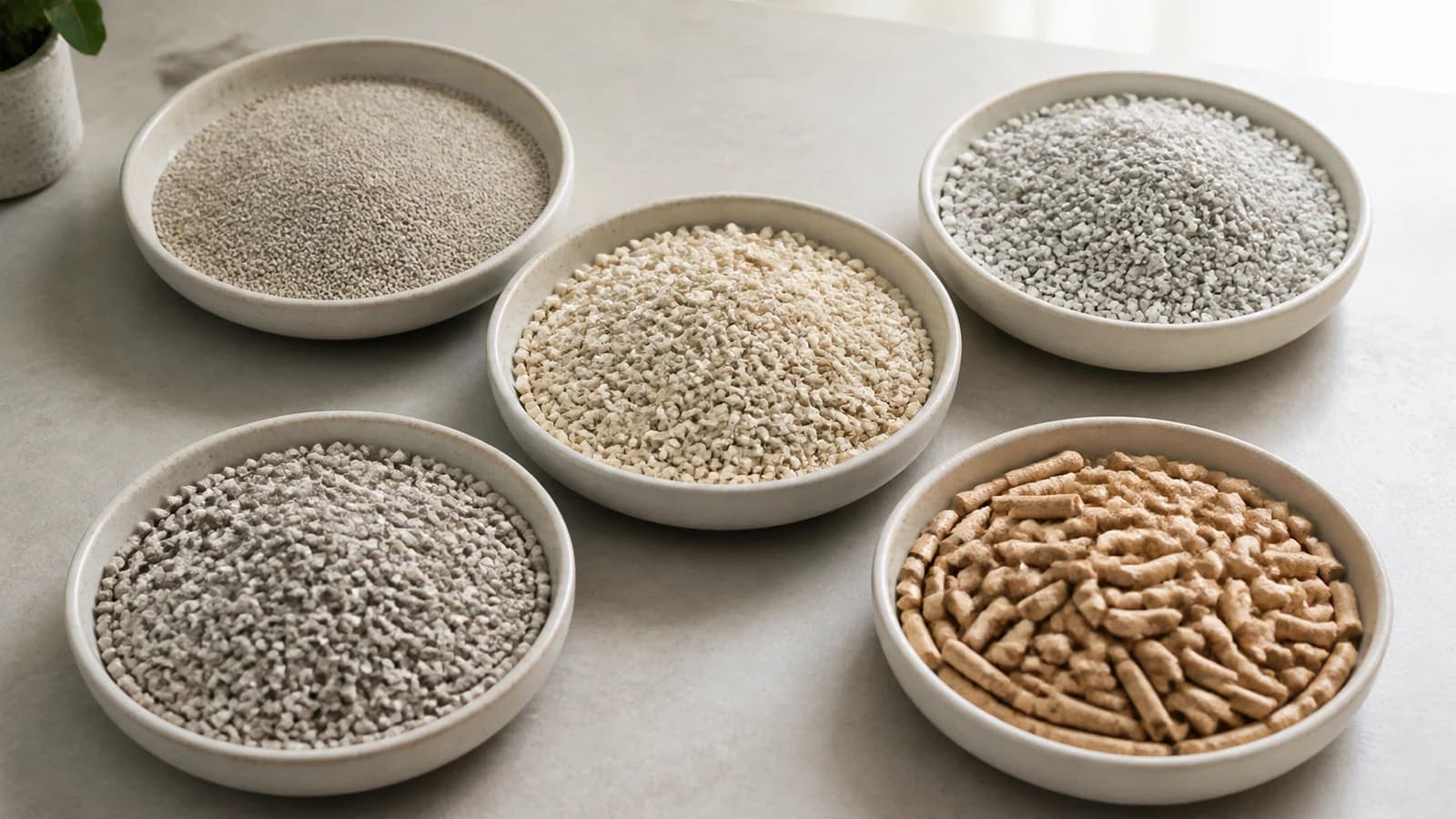
| Product | Best for | Material and format | Main tradeoff |
|---|---|---|---|
| Dr. Elsey's Ultra Unscented | Best overall baseline for most homes | Clumping clay | Heavy package and fine particles can track |
| Naturally Fresh Multi-Cat Unscented | Plant-based clumping for busy households | Clumping walnut | Lighter granules may travel beyond the box |
| Catalyst Pet Healthy Formula | Lightweight natural-material option | Clumping softwood | Wood texture and scent may require a transition |
| PrettyLitter Health Monitoring | Caregivers interested in urine color cues | Non-clumping silica crystals | Color changes are not a diagnosis and crystals feel different |
| SmartCat Unscented Clumping Grass | Soft, lightweight plant-based litter | Clumping grass | Light granules can scatter with vigorous digging |
| Feline Pine Original | Budget pellet users who value low scatter | Non-clumping pine pellets | Requires a pellet-friendly cat and different cleaning routine |
| Ever Clean Extra Strength Unscented | Strong odor-control priority without fragrance | Clumping clay | Dense clay is heavier and may be more than a low-use home needs |
Use the table to narrow the field, not to skip the cat acceptance checkpoint. If two products suit your household, begin with the texture closest to the litter your cat already uses. If the current litter causes a clear problem, change one feature at a time when possible. Moving from scented to unscented clay is a smaller transition than moving from fine clay to large pine pellets.
The 7 best cat litter picks
Best overall: Dr. Elsey's Ultra Unscented Clumping Clay Cat Litter
Dr. Elsey's Ultra Unscented is our broad starting point because it uses a familiar clumping-clay format and avoids added fragrance. For a cat already comfortable with fine-grained litter, this is a lower-disruption choice than a sudden move to crystals or pellets. The large 40-pound bag also suits a household that wants to buy less often and has a dry place to store it.
Its core advantage is predictability. Clumping clay is easy for many caregivers to understand: scoop urine clumps and solid waste daily, top up the box as needed, and replace the litter when normal maintenance no longer keeps the box clean. The unscented format also avoids making perfume the primary odor strategy.
The main compromises are weight and tracking. A 40-pound package can be awkward to lift or pour, and fine particles can leave the box on paws. Pouring slowly from close to the box surface and using a generous textured mat can reduce the mess. A high-sided open box may help a vigorous digger without trapping odor inside a hood.
- Choose this pick when you want a conventional baseline before experimenting with a specialty material. It is especially sensible for a newly adopted adult cat whose previous shelter or foster used clumping clay. Keeping the substrate familiar can remove one variable during an already disruptive move.
- Material: clumping clay
- Best for: most adult cats already comfortable with fine, sand-like litter
- Owner priority: familiar use and straightforward daily scooping
- Potential drawback: a heavy package and some fine-particle tracking
- Transition need: usually low if the current litter is also unscented clumping clay
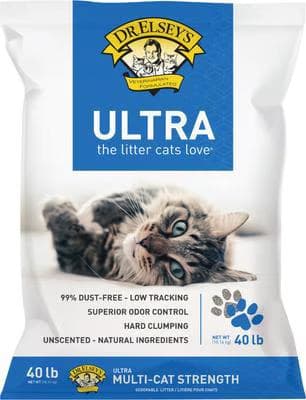
99% dust-free, low-tracking clumping clay litter with superior odor control and hard clumping. Unscented, natural ingredients, multi-cat strength.
Petful may earn a commission when you click through to Chewy, at no extra cost to you.
Best walnut litter for busy homes: Naturally Fresh Multi-Cat Unscented Clumping Walnut Cat Litter
Naturally Fresh Multi-Cat Unscented uses walnut shell material in a clumping format. It is the fit-first alternative for someone who wants a plant-based substrate without giving up the familiar scoop-and-remove routine. The multi-cat positioning also makes it a practical candidate for a household with higher daily waste volume, though box number and scooping frequency still matter more than the label.
Walnut litter differs from clay in color, weight, texture, and natural material odor. Those differences can be appealing to an owner and surprising to a cat. A gradual side-by-side transition is smarter than replacing every box overnight, particularly in a multi-cat home where each cat may respond differently.
The 26-pound package offers more capacity than a small trial bag, so confirm that your cat accepts the material before building a bulk supply. Light plant-based granules can travel farther from the box with an energetic digger. A large litter mat and a box positioned away from long carpet help contain the path.
- Choose Naturally Fresh when clumping convenience and plant-based material are both priorities. Do not choose it solely because the front of the bag says multi-cat. If two or more cats share the home, the real performance test is whether every cat has reliable box access and whether clumps remain intact under the actual scooping schedule.
- Material: clumping walnut shell
- Best for: caregivers seeking plant-based clumping in a higher-use home
- Owner priority: an alternative to clay that still produces scoopable clumps
- Potential drawback: the color and lightweight texture are a meaningful change for some cats
- Transition need: moderate when moving from pale clay or crystals
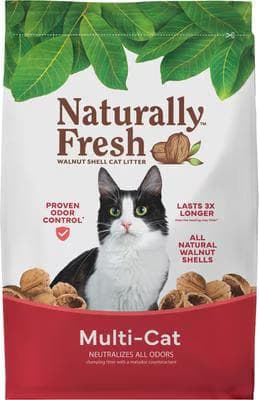
Unscented clumping walnut-shell litter designed for multi-cat odor control.
Petful may earn a commission when you click through to Chewy, at no extra cost to you.
Best lightweight softwood option: Catalyst Pet Healthy Formula Cat Litter
Catalyst Pet Healthy Formula is a clumping softwood litter and the most direct choice here for someone who wants a lighter natural material without adopting a non-clumping pellet routine. It occupies a useful middle ground: wood-based, but shaped for ordinary daily scooping rather than the breakdown-and-sift pattern associated with pine pellets. There is more on this in Petful’s guide to Catalyst Pet natural cat litter.
Softwood changes the sensory profile of the box. The material has a different color and natural wood character than clay, and it may move differently under a cat's paws. That does not make it better or worse. It means a cat acceptance checkpoint is essential before the household commits.
The lighter format can help a caregiver who carries litter up stairs or struggles with a large clay package. The other side of that advantage is that light particles may scatter more easily. Put the mat where the cat's first two or three steps land, not where it looks most symmetrical in the room.
Catalyst is the broad-roundup choice for a wood-curious household, but it is not the place to decide every natural-material question. Readers comparing wood, grass, wheat, paper, corn, cassava, and other plant substrates should use Petful's dedicated guide to the best natural cat litter. That specialist article owns the deeper material-by-material comparison.
- Material: clumping softwood
- Best for: caregivers who want a lighter wood-based litter with scoopable clumps
- Owner priority: natural material without switching to a pellet maintenance system
- Potential drawback: light particles and a new texture can require more transition work
- Transition need: moderate to high when moving from fine clay
Natural softwood clumping cat litter that absorbs ammonia at the source. Lighter than clay, lung-friendly, and biodegradable.
Petful may earn a commission when you click through to Chewy, at no extra cost to you.
Best health-monitoring format: PrettyLitter Health Monitoring Cat Litter
PrettyLitter is a non-clumping silica crystal litter with a color-changing feature intended to provide urine-related cues. Its place in this roundup is narrow and practical: it may appeal to a caregiver who wants a lightweight crystal format and is prepared to observe changes responsibly.
The color system is not a diagnosis. Urine appearance can be affected by more than one factor, and a litter color cannot tell you the cause of a change. A persistent or concerning change, especially when paired with straining, frequent box visits, vocalizing, blood, reduced urine output, lethargy, vomiting, or appetite loss, needs veterinary attention. A male cat who repeatedly strains and produces little or no urine may have a life-threatening obstruction and requires emergency care.
Silica also creates a different maintenance pattern. Urine is absorbed rather than lifted out as a clay-style clump, so the litter needs regular mixing and close attention to the manufacturer's replacement instructions. Solid waste still needs prompt removal. Some cats readily accept crystals, while others object to the feel or sound underfoot.
- Choose PrettyLitter for the crystal format first and consider the color cue a prompt to observe, not a replacement for veterinary care. If your cat already avoids coarse particles, a smaller trial and a slow transition are more sensible than changing every box at once.
- Material: non-clumping silica crystals
- Best for: caregivers who want a lightweight crystal format and can interpret color cues cautiously
- Owner priority: an absorbent non-clumping system with an added observation feature
- Potential drawback: distinct under-paw texture and no scoopable urine clump
- Transition need: high when moving from fine clumping litter
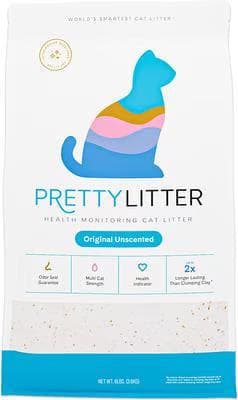
Color-changing crystal litter that flags pH shifts in your cat's urine, an early warning sign of UTIs, kidney issues, and more.
Petful may earn a commission when you click through to Chewy, at no extra cost to you.
Best grass litter: SmartCat Unscented Clumping Grass Cat Litter
SmartCat Unscented Clumping Grass Cat Litter offers a soft, lightweight plant-based texture while keeping the clumping routine many caregivers prefer. It is a reasonable candidate for a cat who accepts fine particles and an owner who wants to move away from clay without moving to pellets or crystals.
The grass granules are light enough to make carrying and pouring easier. That same quality can work against a household with a determined digger, long-haired cat, or smooth floors around the box. A roomy mat and enough open floor space to capture the first few steps matter. Sweeping a small test area for several days tells you more about household fit than a general low-tracking claim.
Clump performance also depends on box depth and scoop timing. A litter bed that is too shallow can allow urine to reach the box bottom, where any clumping material may adhere. Scooping before a clump has set can break it. The goal is not the hardest possible mass; it is a clean lift that removes wet material without wasting a large amount of dry litter.
- Choose SmartCat when you want a plant-based clumping option with a relatively familiar fine texture. If a cat is already comfortable with clay but you want to change the material, this can be a smaller sensory leap than large pellets.
- Material: clumping grass
- Best for: cats that prefer a fine texture and homes seeking a lightweight plant-based option
- Owner priority: easy carrying with an unscented clumping routine
- Potential drawback: light granules can scatter and ride on paws
- Transition need: moderate, even when the particle size feels familiar
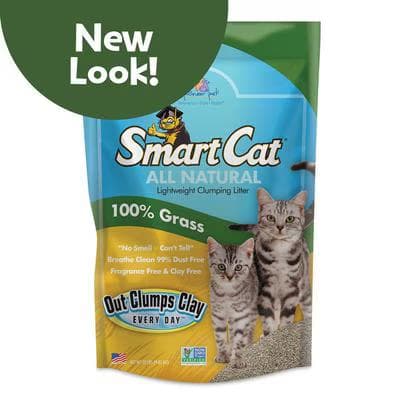
Unscented grass-based clumping litter for cats, with a lightweight clay-free formula.
Petful may earn a commission when you click through to Chewy, at no extra cost to you.
Best budget pellet option: Feline Pine Original Non-Clumping Wood Cat Litter
Feline Pine Original uses non-clumping pine pellets, making it the most structurally different litter in our seven picks. The pellets are larger than fine clay or grass granules. They absorb urine and gradually break down rather than forming a clump that can be lifted whole.
That format has real household advantages. Large pellets generally stay closer to the box, and the 7-pound package is easier to carry than a large clay bag. Pellet users may also appreciate the simple material and the ability to see when portions have broken down. None of those benefits matter if the cat dislikes standing or digging on pellets, so acceptance deserves more patience here than with a near-like-for-like switch.
The cleaning routine must match the material. Remove solid waste promptly, monitor the absorbed and broken-down litter, and refresh according to the product instructions and the actual box condition. A slotted or pellet-compatible setup can make the routine easier, but litter-box hardware is outside this product roundup's job.
- Choose Feline Pine when low scatter, manageable package weight, and a non-clumping pellet system appeal to you. Avoid treating it as a quick substitute for clay in every box. Offer a gradual choice and watch the cat's posture, digging, covering, and willingness to return.
- Material: non-clumping pine pellets
- Best for: cats that accept pellets and caregivers who prefer larger, lower-scatter pieces
- Owner priority: simple wood material and a lightweight package
- Potential drawback: very different texture and maintenance from clumping litter
- Transition need: high, with one familiar box kept available
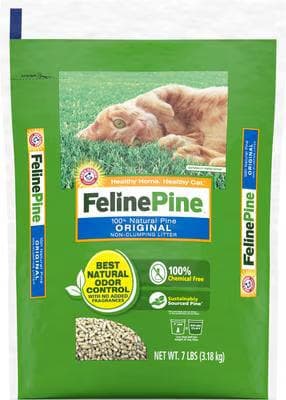
Non-clumping wood-pellet litter made from natural pine for cats.
Petful may earn a commission when you click through to Chewy, at no extra cost to you.
Best premium odor-control clay: Ever Clean Extra Strength Unscented Clumping Cat Litter
Ever Clean Extra Strength Unscented is the premium clay choice for a household that wants stronger odor-focused performance without selecting a fragranced formula. It keeps the familiar clumping-clay format, so the transition may be relatively small for a cat already using unscented clay.
This is a better fit for a small home, a high-use box location, or a caregiver who values dense clumping performance enough to accept a heavier product. It may be unnecessary for a single cat whose ordinary unscented litter and cleaning routine already control odor well. More product technology cannot compensate for a box that is too small, rarely scooped, or shared by cats that need separate resources.
Dense clay can be efficient when clumps stay compact, but it remains heavy to carry and may produce fine tracking. Use the same practical controls as with other clay: pour close to the surface, maintain enough depth, place a textured mat at the real exit path, and scoop with a tool that separates clean granules instead of throwing them away.
Choose Ever Clean when odor control is a leading owner priority and the cat already accepts clay. For a full comparison across formulas and box routines, see Petful's specialist guide to the best litter for odor control. That article owns the deeper odor-control decision rather than this broad master roundup.
- Material: clumping clay
- Best for: clay-accepting cats in homes where odor performance is a leading priority
- Owner priority: extra-strength odor control without added fragrance
- Potential drawback: premium dense clay can be heavy and may still track
- Transition need: low when replacing another unscented clumping clay
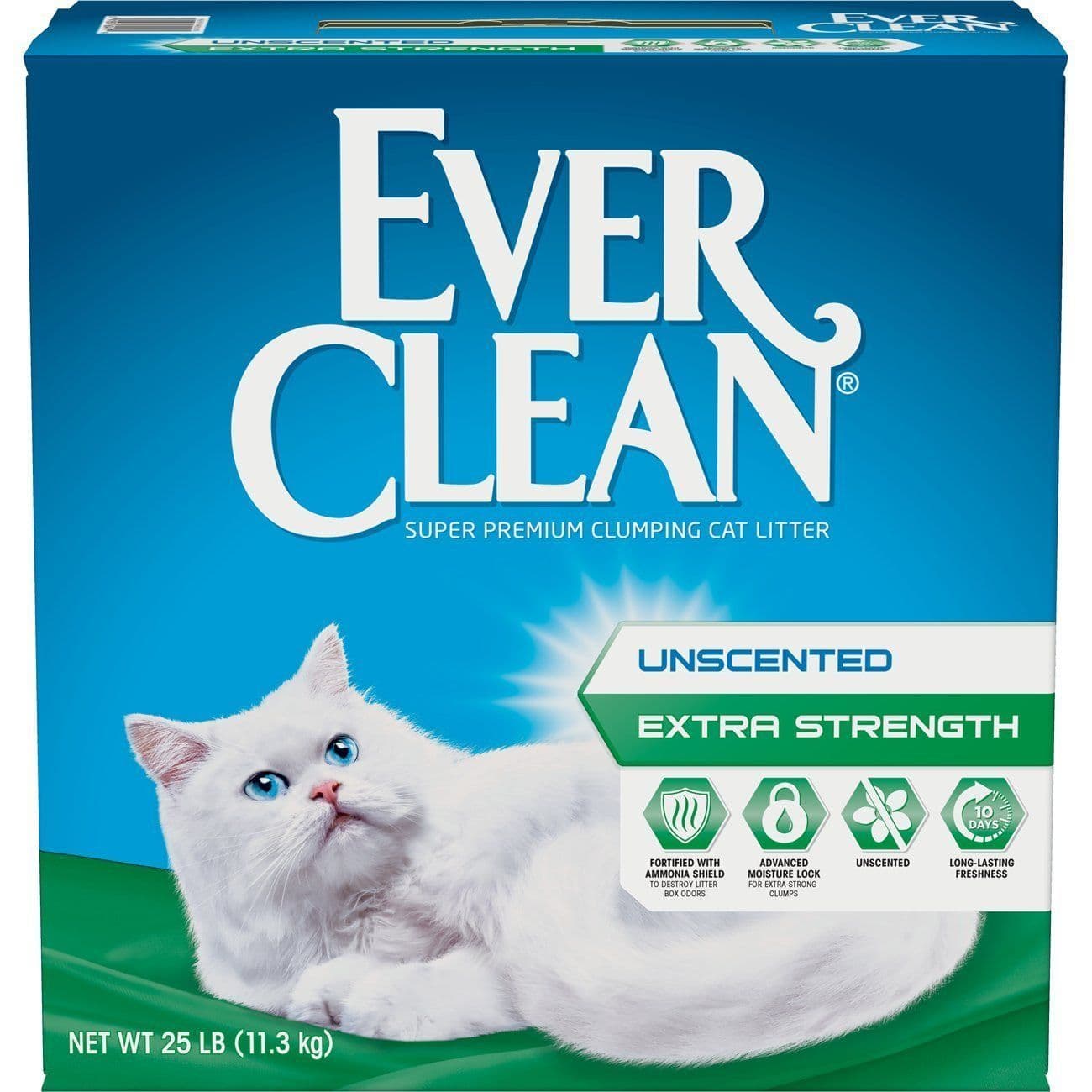
Activated-carbon clumping clay that absorbs ammonia instead of perfuming over it; our Best Overall odor-control pick.
Petful may earn a commission when you click through to Chewy, at no extra cost to you.
The fit-first cat litter decision matrix
The product list becomes useful only when it leads to a household fit decision. Score each candidate in two separate columns: cat acceptance and owner fit. Do not average them into one number. Cat acceptance is a pass-or-fail checkpoint because a litter the cat will not use cannot be rescued by excellent odor control or low package weight.
Start with the cat side:
- Texture familiarity: Is the particle size close to what the cat already uses?
- Digging comfort: Does the cat enter and dig with a relaxed, ordinary posture?
- Covering behavior: Does the cat have enough material and room to cover waste normally?
- Return behavior: Does the cat come back to the box without hesitation over several days?
- No avoidance signals: Is there no hovering at the edge, balancing on the rim, rushing out, or choosing another surface?
Then score the household side:
- Scoop quality: Can wet material be removed cleanly under your real schedule?
- Floor impact: Is tracking manageable in the actual room, not just in an ideal setup?
- Air and scent: Is pouring and digging tolerable for cats and people in the home?
- Physical handling: Can the regular caregiver carry, store, and pour the package safely?
- Cost per usable cycle: Does the price make sense after waste during scooping and top-ups?
This fit-first decision matrix separates cat preference from owner priorities instead of naming one universal winner. For example, Dr. Elsey's may pass both columns in a typical clay-using home. Feline Pine may score highly for package weight and low scatter but fail the first cat acceptance checkpoint. SmartCat may pass texture acceptance and carrying ease yet lose owner-fit points in a home where light granules spread across polished floors. A product advances only when the cat accepts it and the household can maintain it.
How to use the matrix without false precision
You do not need a ten-point laboratory score. Use simple labels such as pass, concern, and not yet known. Give the cat enough time to reveal a pattern unless there is an urgent safety problem or complete box refusal. Record what happens rather than what the package promises.
A useful trial note might read: "Cat used both boxes, covered normally in the grass litter, no accidents, but tracking reached six feet beyond the mat." That observation supports a real decision. "Natural litter seems healthier" does not, because it combines a vague label with an unmeasured conclusion.
The fit-first system also prevents an expensive mistake: buying several large packages before the cat has accepted the substrate. Start small when the material is new. A higher unit price for the trial can cost less than discarding a bulk box the cat avoids.
Clumping, dust, tracking, and odor tradeoffs
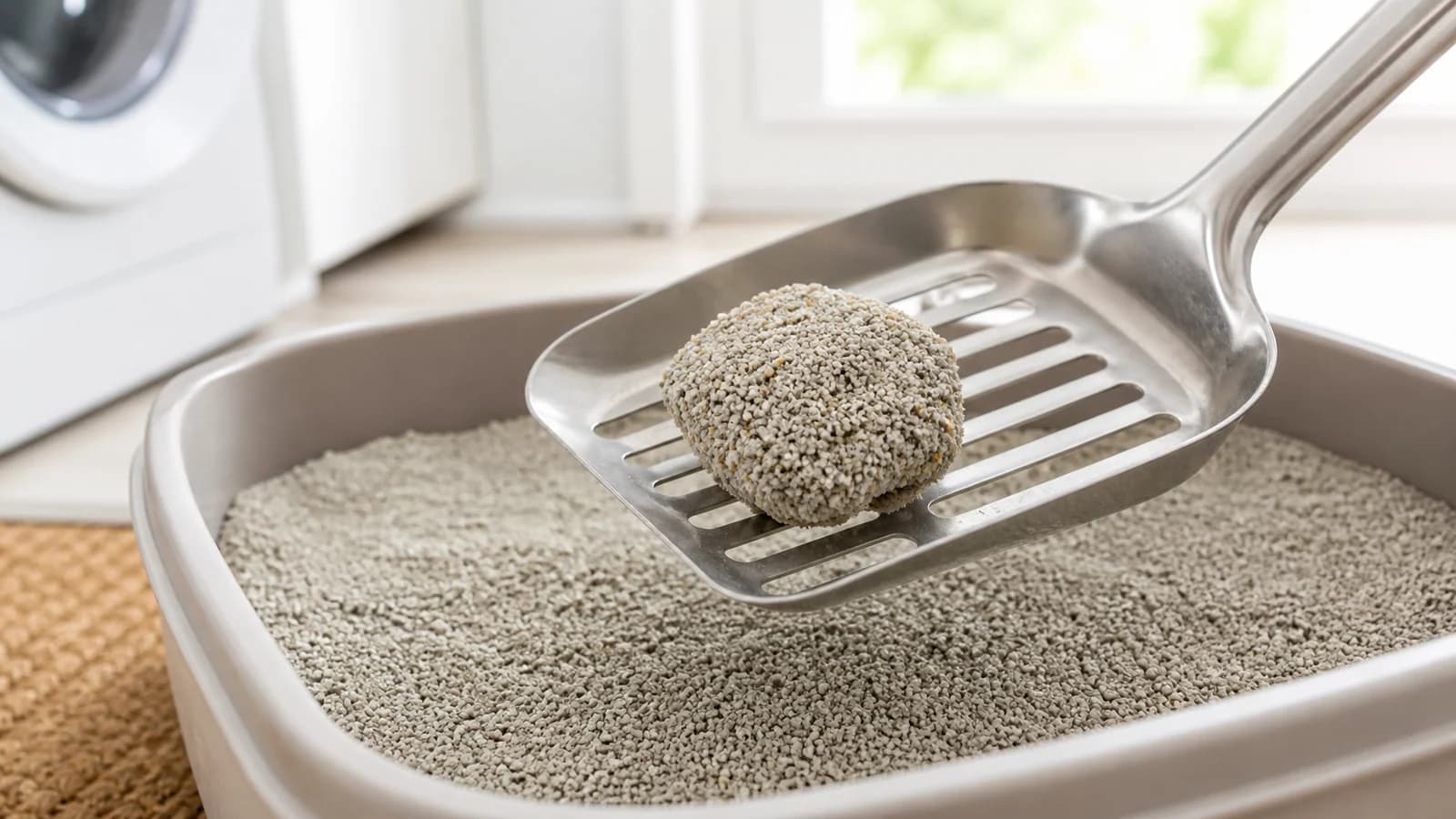
The four most common shopping claims do not rise and fall together. A litter can form strong clumps and still track. A very light litter can be easy to pour but spread farther. A large pellet can stay near the box but feel uncomfortable to a cat used to sand-like material. Strong odor control can come with a scent or texture the cat rejects.
- Performance tradeoffs are real. Low dust, low tracking, hard clumps, light package weight, strong odor control, and high cat acceptance do not arrive as one guaranteed package. The best choice solves the household's biggest problem without creating a box-avoidance problem for the cat.
Clumping strength
Clump strength matters because broken wet fragments remain in the box and can create odor. Yet clump performance depends on more than formula. Litter depth, urine volume, box surface, and the time between use and scooping affect the result.
Keep enough litter in the box that urine is less likely to hit the bottom. Slide the scoop beneath a clump rather than attacking it from the side. If a clump repeatedly breaks, test whether waiting a little longer or increasing depth helps before assuming the product alone is at fault.
Dust level
Visible dust during pouring and digging is a practical warning sign, especially in a small or poorly ventilated room. Reduce the drop distance when pouring. Avoid shaking the bag over the box. Clean nearby surfaces so you can tell whether a new litter changes the amount of settled dust.
"Low dust" is a relative claim, not zero dust. Clay, plant fibers, and pellets can all produce particles through manufacturing, shipping, abrasion, or breakdown. If a cat coughs, wheezes, develops eye irritation, or shows other concerning respiratory signs, contact a veterinarian rather than relying on a package label to solve the problem.
Tracking
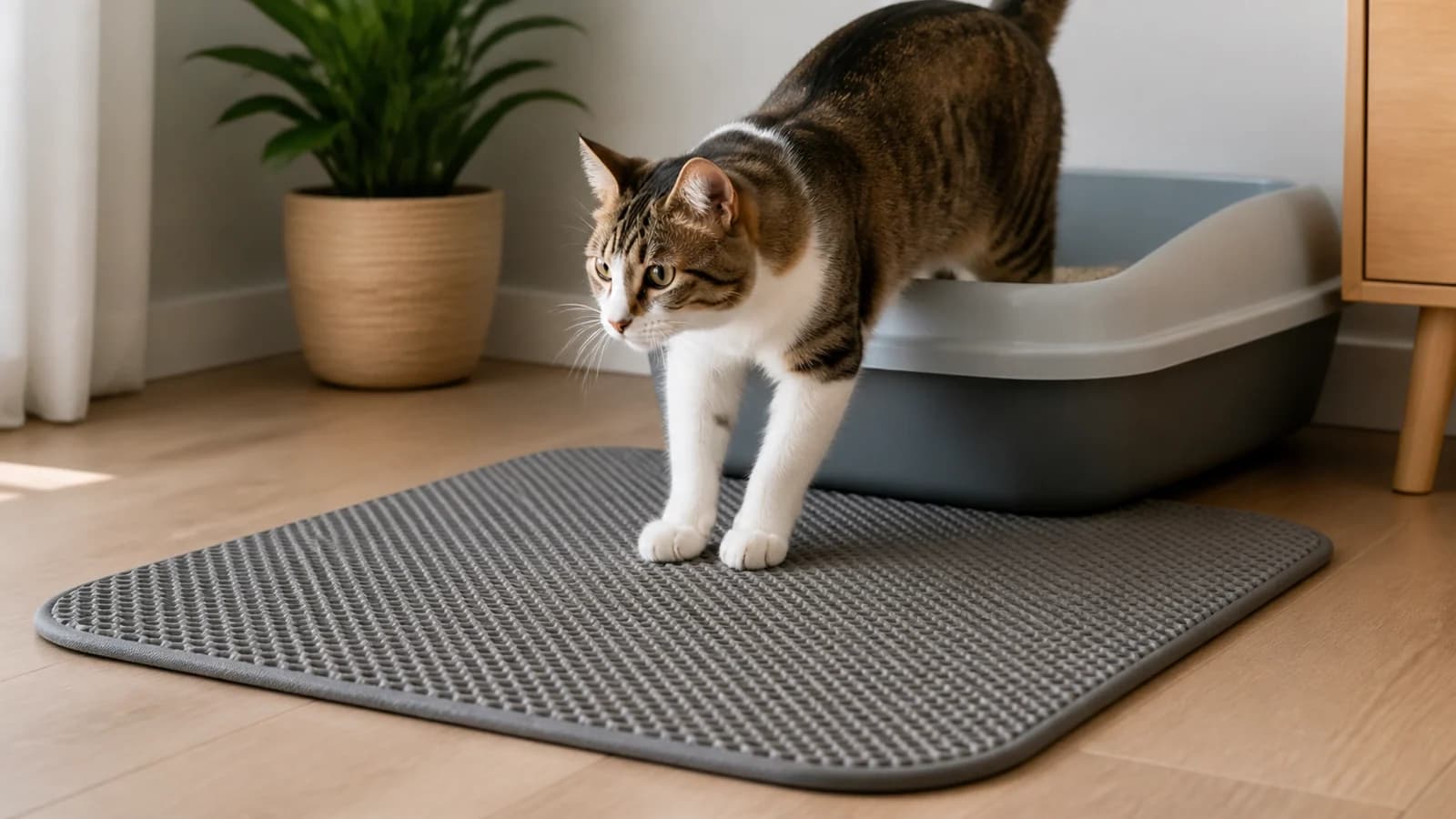
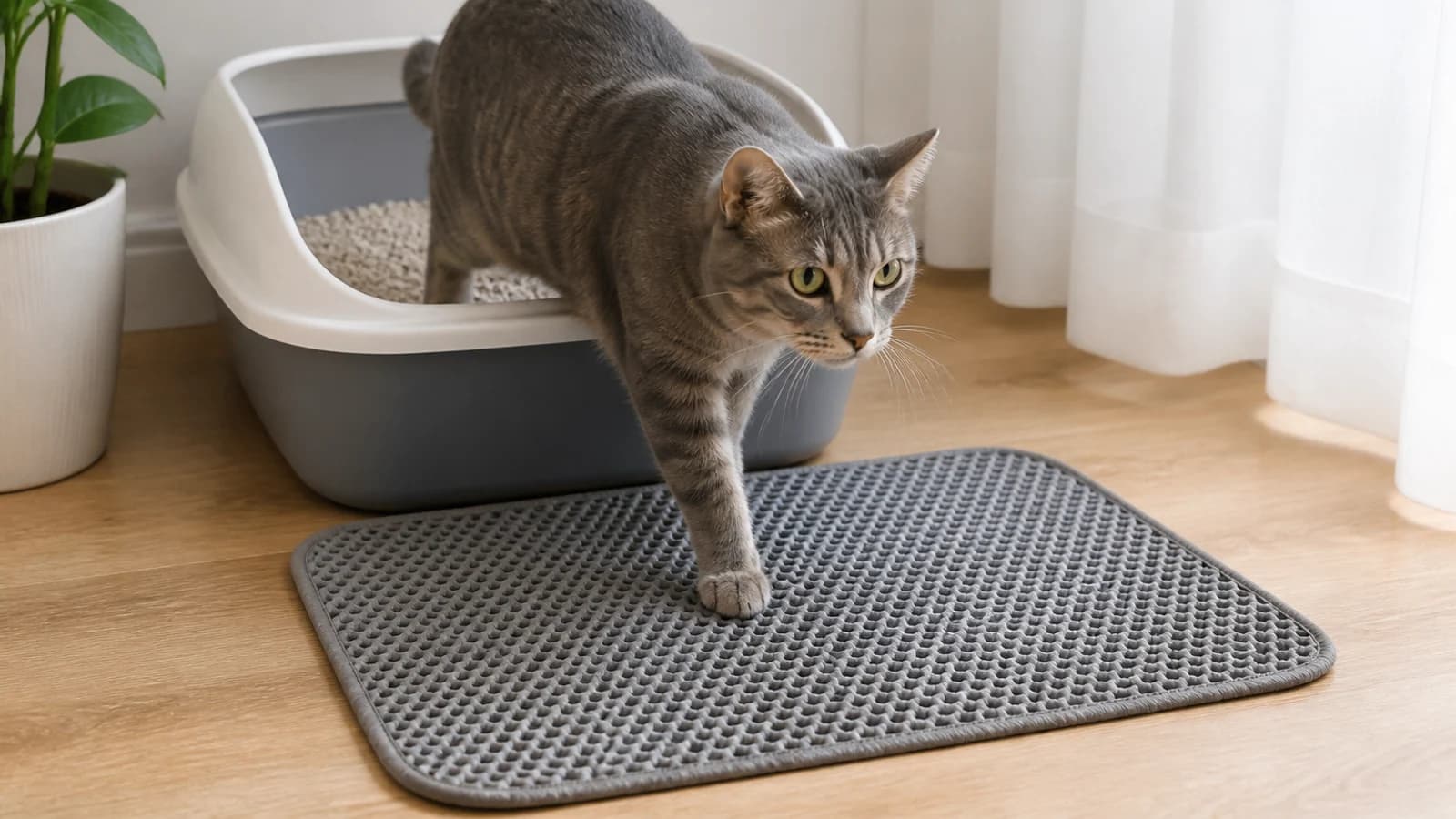
Tracking follows the cat. Long fur between the toes, energetic digging, a shallow exit, and light granules can move litter well beyond the box. A mat works best when it covers the direction the cat actually walks. Trapping the box in a cramped cabinet can reduce visible scatter while creating an enclosed space the cat dislikes, so do not solve a cleaning problem by making access worse.
If tracking is the only problem, adjust the environment before forcing a new material. Try a larger open box, a longer mat, a strategically placed washable runner, and more frequent sweeping. Those changes preserve a litter the cat already accepts.
Odor control
The odor-control specialist intent deserves a short boundary here. Litter material can support odor management through absorption, clumping, and odor-binding ingredients, but prompt removal is the foundation. Added fragrance may smell clean to a person while making the box less appealing to a scent-sensitive cat.
If odor is the household's dominant concern, the best litter for odor control guide compares that specialist problem in depth. For day-to-day hygiene and replacement frequency, use Petful's guide on how to clean a litter box. As a broad rule, scoop at least daily, clean more often when use is heavy, and let the condition of the box guide full changes rather than waiting for odor to announce a problem.
Match litter to your cat, not just your home
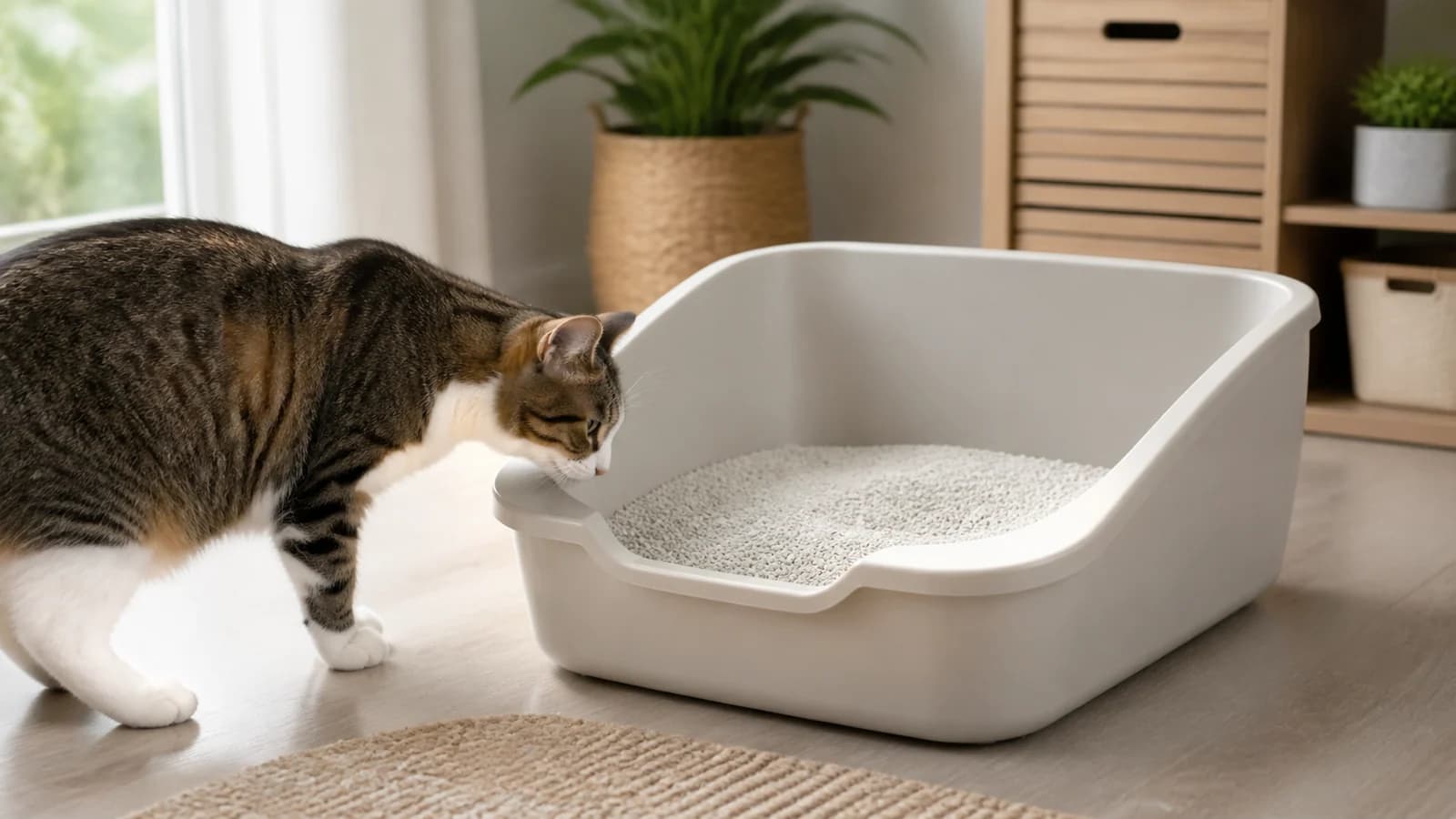
What kind of litter is best for cats? A generally strong starting point is an unscented, scoopable litter with a soft texture and enough depth for normal digging, but the individual cat decides whether that starting point works. A vet recommended cat litter is still an individualized choice rather than a universal brand label. Previous experience, paw sensitivity, age, mobility, coat, health, and box history can all change the answer.
Kittens
Kittens investigate with their mouths and can be messy learners. Ask your veterinarian or adoption organization what material the kitten has been using and whether a non-clumping option is appropriate during the youngest stage. Keep the box easy to enter, watch for eating of litter, and do not assume an adult cat's setup is automatically right for a small kitten.
Familiarity is especially useful after adoption. The new home already changes scent, sound, people, territory, and routine. Keeping the litter and box style stable for the first transition can make the bathroom location easier to understand.
Senior cats and cats with limited mobility
A senior cat may care more about access than material. A low entry, spacious box, stable footing, and short route from resting areas can matter more than a premium formula. Some cats with painful joints stop climbing into a high-sided box or avoid balancing on a shifting substrate.
If an older cat suddenly changes litter-box habits, do not write it off as stubbornness or normal aging. Urinary disease, constipation, pain, cognitive changes, kidney disease, diabetes, and other conditions can alter elimination. A veterinary examination is more appropriate than cycling through products without a plan.
Long-haired cats
Light granules and fine particles can cling to fur around paws and legs. Large pellets may scatter less but feel more distinct underfoot. Keep fur and nails maintained, choose a roomy box, and position the mat for the cat's exit pattern. Do not trim between paw pads aggressively without veterinary or grooming guidance.
Cats with a history of box avoidance
Preserve what works. If a cat currently uses one litter reliably, changing every box to fix an owner inconvenience creates unnecessary risk. Offer the new litter as an additional choice and track actual use. Keep the preferred box clean and accessible while the cat evaluates the alternative.
Avoidance can also be driven by location, conflict, noise, privacy, pain, box size, hooded design, or a frightening event near the box. Litter is only one variable. A cat who is straining, visiting repeatedly, producing little urine, crying, or showing blood needs veterinary attention, not another product trial.
Health, dust, fragrance, and individual sensitivity
Which cat litter is the healthiest? There is no single material that is healthiest for every cat. A practical low-risk choice is unscented, produces minimal visible dust during normal use, supports regular cleaning, and is readily accepted by the cat. The healthiest box system is also large enough, easy to reach, kept clean, and monitored for changes in elimination.
Avoid equating natural with harmless or clay with automatically dangerous. Materials can produce dust, be eaten, irritate an individual, or create a texture the cat avoids. Health depends on exposure, the cat's condition, the room, and the maintenance routine, not a category label alone.
Fragrance
Cats experience the box at close range. A fragrance designed to reassure a person can be intense inside a covered or poorly ventilated box. Unscented litter is a sensible default because it removes that variable. Unscented does not mean odorless, and it does not excuse delayed scooping.
If you switch away from a scented litter, the cat may accept the new version readily because the base texture remains similar. Still, make the change gradually when there has been any history of elimination problems.
Respiratory and skin sensitivity
Choose a product that produces little visible airborne material under your real pouring and digging conditions. Pour slowly and keep the box in a ventilated but calm area. If a cat or person in the home has asthma or another respiratory condition, ask the relevant medical professional about individual precautions.
Skin irritation, persistent paw licking, coughing, eye discharge, or a change in box use deserves attention. Stop treating the litter as the only possible cause and assess timing, other household products, cleaners, illness signs, and veterinary advice.
Ingestion
Repeated litter eating is not a normal shopping preference. Kittens may investigate, while adult cats can ingest litter because of curiosity, stress, anemia, gastrointestinal problems, or other medical issues. Contact a veterinarian if ingestion is repeated or substantial, and keep packaging information available so the material is known.
What low-toxicity claims can and cannot tell you
What is the least toxic cat litter? No product earns that title for every cat based on material alone. A litter with low visible dust, no added fragrance, clear ingredient information, and a texture the cat uses consistently is a reasonable starting profile. It still has to be stored safely, kept dry, scooped regularly, and used as directed.
"Non-toxic" usually does not mean edible, risk-free, or suitable for every medical condition. It also does not tell you how much dust appears after shipping, whether a specific cat will ingest it, or whether the box will be maintained well enough to limit waste exposure.
Use a low-toxicity claim as one screening question:
- What material is actually in the bag?
- Is fragrance added?
- Does the manufacturer explain safe use and disposal?
- Does the product create visible dust in your setup?
- Does the cat use it without eating it or avoiding it?
- Can the caregiver remove waste on a reliable schedule?
Plant-based products such as walnut, grass, and wood may fit a household that wants renewable materials, but "plant-based" is not a health guarantee. Clay can be a highly accepted and practical substrate for many cats. Silica can be lightweight and absorbent but has a distinct texture. The fit-first selection system prevents one marketing adjective from replacing the whole decision.
Best cat litter for indoor cats and apartments
The best cat litter for indoor cats should be easy to maintain in the space you actually have, but apartment size does not change the cat's need for a large, accessible box. Start with an unscented litter the cat accepts, then prioritize clean clumps, manageable tracking, package storage, and a realistic waste-removal routine.
In a small apartment, litter choice interacts with placement. Avoid putting the only box beside a noisy washer, slamming door, or food station. A box hidden deep inside furniture may look better but concentrate odor and restrict escape routes. An open box in a calm, cleanable location is often easier for the cat and easier for the caregiver to monitor.
Package format matters when storage is tight. A large clay bag can be economical but difficult to keep dry in a small closet. A lighter litter may be easier to carry upstairs but need a larger mat. Choose the problem you can solve reliably.
- For odor, prompt scooping and enough boxes remain the first line. If a neighbor, roommate, or landlord complaint makes odor the decisive issue, use the dedicated odor-control guide rather than assuming the strongest fragrance is best. For automatic hardware in a compact home, compare the machine separately before selecting its compatible substrate.
Cat litter types and claims to approach carefully
What cat litter should you stay away from? Avoid any product your cat repeatedly refuses, any litter that creates heavy visible dust in normal use, strongly fragranced formulas that provoke avoidance or irritation, damaged or contaminated packages, and any substrate your veterinarian has told you not to use for a specific medical reason.
Also approach these claims carefully:
- Flushable: Local plumbing, septic systems, and municipal rules vary. Cat waste can carry pathogens, and a package claim does not override local disposal guidance.
- Zero dust: Shipping and abrasion can create particles even in a low-dust product. Judge the actual bag and use conditions.
- Zero tracking: No loose substrate can guarantee that every cat, paw, mat, and floor stays clean.
- Natural: The word does not establish safety, sustainability, cat acceptance, or performance by itself.
- Health monitoring: A color cue can prompt observation, but it does not diagnose a disease or rule one out.
- Multi-cat: A formula cannot replace enough boxes, fair access, and frequent scooping.
- Extra strength: More odor control is not a reason to delay waste removal.
A concerning batch should not be used simply because the brand worked before. If litter arrives wet, unusually dusty, discolored, strongly different in odor, contaminated, or with damaged packaging, stop and contact the retailer or manufacturer.
Need a specialist cat litter guide?
This master roundup is designed to help a reader choose among broad material and household priorities. Clear ownership handoffs for natural, multi-cat, odor-control, and automatic-box intent protect the reader from shallow or conflicting recommendations. Each specialist guide can go deeper on its defined problem while this page retains the overall litter-choice decision and shows how the narrower paths relate.
Natural-material comparison
If your decision begins with wood, grass, wheat, paper, walnut, corn, cassava, or another plant-derived substrate, use the best natural cat litter roundup. It compares disposal limits, clumping, dust, tracking, transition demands, and household fit across natural materials rather than treating them as one category.
This article includes walnut, softwood, grass, and pine representatives so you can see where they sit in the overall market. It does not attempt to rank every natural formulation or duplicate the specialist guide.
Litter for multiple cats
A home with several cats creates questions beyond a formula label: box count, territory, access, clump load, odor load, cleaning frequency, and whether one cat guards a resource. The dedicated guide to the best litter for multiple cats owns that heavy-use comparison.
Naturally Fresh appears here as a broad walnut option, not as proof that one bag solves every multi-cat arrangement. If one cat starts waiting, ambushing another near the box, or eliminating elsewhere, increase and redistribute resources instead of only buying a stronger litter.
Need maximum odor control?
For a household where odor is the deciding problem, use the best litter for odor control guide. It can go deeper on odor-specific formulas and the cleaning routine that makes them work.
Ever Clean represents the premium odor-control clay lane here. It is not a substitute for evaluating the specialist options, box ventilation, daily removal, and the cause of an unusual odor. A sudden strong urine odor or change in elimination can also warrant veterinary attention.
Choosing litter for an automatic box
Automatic box hardware intent is a separate purchase. Start with Petful's Litter-Robot 4 vs. 5 vs. EVO comparison when you are comparing those machines. Size, cycle design, safety sensors, waste drawer, cat weight, and household use determine whether a unit fits.
After choosing a machine, follow its substrate requirements. Readers considering a Litter-Robot can use the same Litter-Robot model comparison to narrow the hardware first, then confirm the selected model's current litter requirements. Do not assume pine pellets, large crystals, or every lightweight litter will work in an automatic system simply because it works in an open box.
What veterinarians consider when discussing litter
What cat litter do veterinarians recommend? Many veterinary discussions begin with cat acceptance, low dust, no added fragrance, easy monitoring, and a box setup that supports normal elimination. The recommendation may change for a kitten, a recovering surgical patient, a cat with respiratory disease, a cat who eats litter, or an individual with urinary or mobility problems.
A veterinarian is also likely to ask about behavior around the box rather than the brand alone:
- How often does the cat urinate and defecate?
- Is the amount or appearance different?
- Does the cat strain, vocalize, or make repeated trips?
- Has the box, litter, location, household, or schedule changed?
- Are there enough boxes in separate accessible areas?
- Does another pet interrupt or guard access?
Those answers can separate a product mismatch from a medical or environmental problem. A sudden change in a cat who previously used the box reliably should not be treated as a consumer preference until health concerns have been considered.
For an ordinary healthy adult, an unscented clumping litter with low visible dust and a soft, accepted texture is a sensible baseline. The word "veterinarian-recommended" on packaging is less useful than a recommendation tailored to the cat in front of the veterinarian.
How to switch cat litter without box avoidance
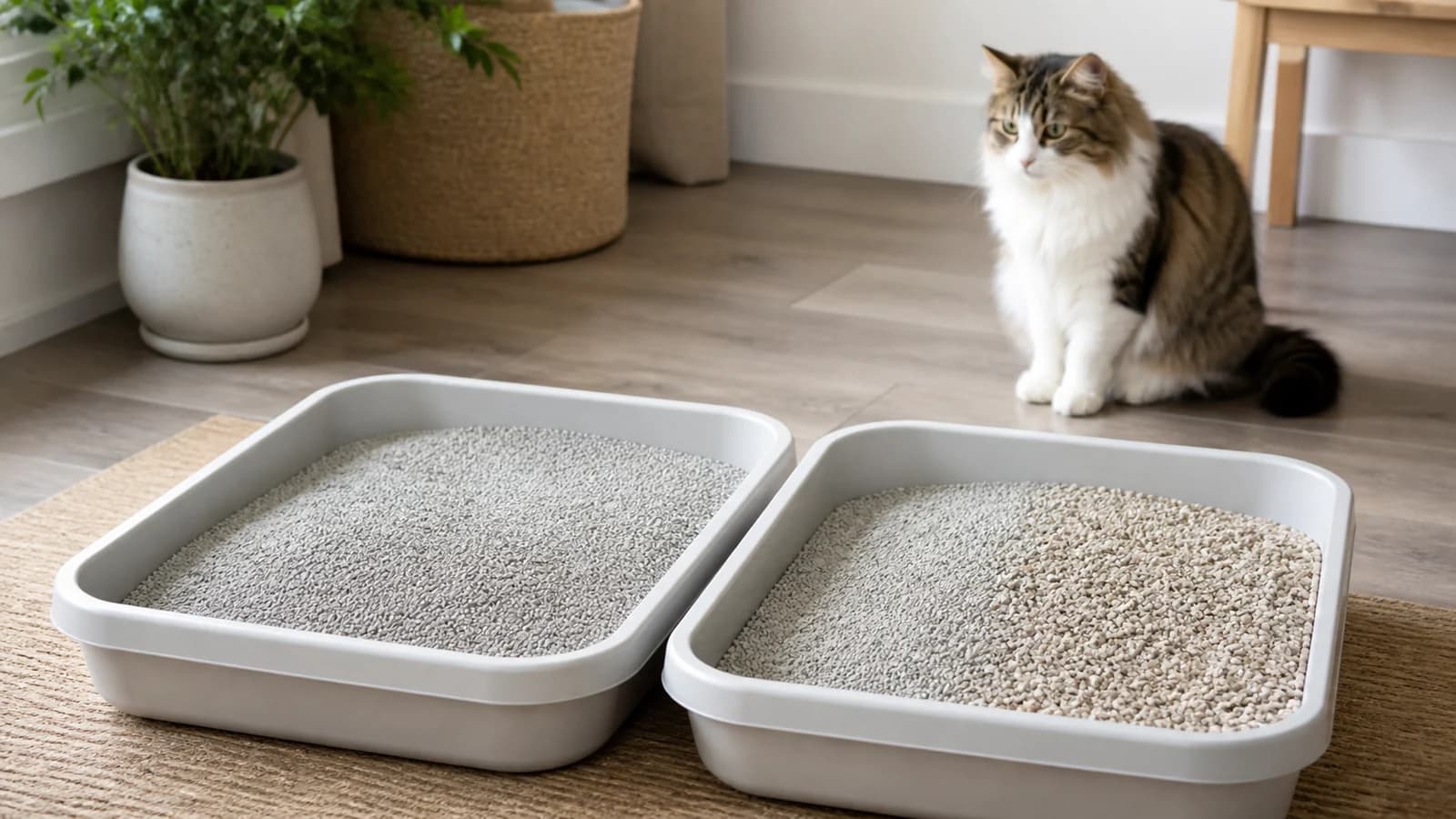
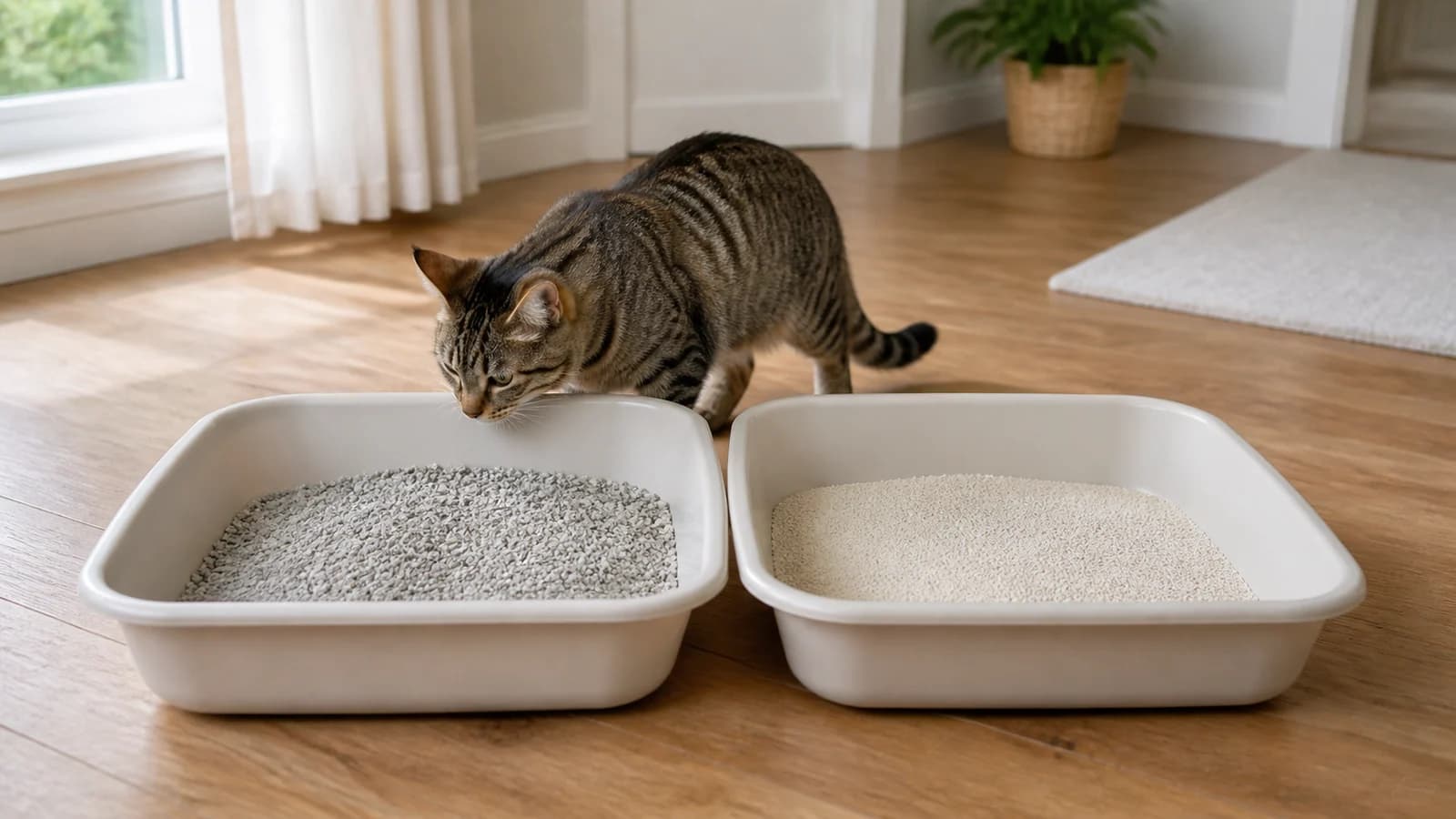
A gradual litter transition protects the habit you care about most: reliable box use. The safest method is to keep one familiar box available and offer the new material as a separate choice. That lets the cat compare without losing access to a known acceptable substrate.
Step 1: Keep the box setup stable
Do not change litter, box style, location, and cleaning product on the same day. Keep the familiar box in its usual place. If you add a trial box, use a similar size and open design so the litter is the main new variable.
Step 2: Offer the new litter separately
Fill the trial box to an appropriate depth with the new litter. Place it in a calm, accessible location. Avoid forcing the cat into it, carrying the cat to it repeatedly, or moving paws through the material. Exploration should be voluntary.
Step 3: Observe behavior, not just waste
Evidence of acceptance begins before elimination. Watch whether the cat approaches, sniffs, steps in, digs, turns, squats normally, covers, and exits without rushing. Rim balancing, very shallow entry, frantic jumping out, or repeated visits to the familiar box can signal discomfort.
Step 4: Change slowly if you must mix
If separate boxes are not possible and the cat has no avoidance history, introduce a small amount of the new litter into the old, then increase gradually over several changes. Mixing works best when textures are similar. Large pine pellets mixed into fine clay can create an inconsistent surface and may be more confusing than two clear choices.
Step 5: Keep the accepted option long enough
One use is not proof of stable acceptance. Keep the familiar option available while the cat establishes a pattern. Multi-cat homes need enough time to see whether every cat uses the new substrate, not just the most confident one.
Step 6: Stop if the cat refuses
If the cat eliminates outside the box, repeatedly avoids the new material, or seems distressed, return to the last reliably accepted setup. Clean accident areas with an appropriate enzymatic cleaner and avoid punishment. Contact a veterinarian when a change is sudden, persistent, paired with physical signs, or occurring in a cat with urinary risk.
- 1Make a gradual litter transition by changing one variable at a time and offering the new substrate as a separate choice when possible
- 2Keep one familiar box available until the cat uses the new litter comfortably and consistently
- 3Stop the trial and restore the accepted setup if avoidance begins
How much litter should you buy for a first trial?
Buy enough to prepare one trial box at a usable depth and maintain it through a meaningful observation period. Do not buy a three-month supply of a radically different material because the unit price is lower. The cheapest litter is expensive when the cat refuses it.
Package weight is a poor cross-material comparison because different materials have different density. A pound of pine pellets, grass granules, silica crystals, and clay does not occupy the same volume or last the same way. Compare cost over an actual box cycle after the cat accepts the litter.
Track three quantities during the trial:
- How much fresh litter is needed to establish and maintain depth?
- How much clean litter is discarded with each scoop?
- How quickly does the box need a full refresh under your routine?
That produces a household-specific cost rather than a shelf-price impression. It also reveals whether strong clumps conserve clean litter or whether a very light material leaves the box faster than expected.
Common cat litter mistakes
Buying for the owner and ignoring the cat
Low tracking, low package weight, or plant-based material may be a legitimate priority. It still cannot override refusal. Treat the cat acceptance checkpoint as the first gate and household convenience as the second.
Changing every box at once
An all-at-once switch removes the familiar option and makes it difficult to tell whether the problem is material, location, box style, or stress. Keep one familiar box unless a veterinarian has given a reason for an immediate change.
Using fragrance instead of cleaning
Fragrance can mask odor for a person while making the box less appealing to a cat. Remove waste, maintain depth, wash appropriately, and investigate unusual odor before adding stronger scent.
Making the litter bed too shallow
Too little litter can let urine reach the box bottom, weaken scoop results, and limit covering. Too much can feel unstable and increase waste. Follow product guidance, then adjust within a reasonable range based on the cat's digging and clump behavior.
Blaming litter for every accident
Litter is one variable among health, box access, inter-cat conflict, location, cleanliness, size, pain, stress, and prior learning. Sudden elimination outside the box warrants a broader assessment, especially when physical signs are present.
Assuming one box is enough for several cats
Even an excellent multi-cat formula cannot create another route, territory, or escape option. Multiple boxes in separate areas help prevent one cat from controlling all access. The multi-cat specialist guide covers that resource plan in detail.
Treating a monitoring color as a diagnosis
A color change is a reason to observe and, when appropriate, call a veterinarian. It cannot identify a disease, measure severity, or guarantee that no disease is present when the color appears ordinary.
Final verdict
Dr. Elsey's Ultra Unscented is the best overall starting point in this seven-product comparison for many healthy adult cats already comfortable with clumping clay. It offers a familiar format, daily scoopability, and no added fragrance. Naturally Fresh is the walnut alternative for a busy household. Catalyst and SmartCat offer lighter plant-based clumping paths. PrettyLitter serves a narrow crystal and observation use case. Feline Pine fits pellet-friendly cats and caregivers. Ever Clean is the premium odor-control clay choice.
The final decision should still be conditional. Pass the cat acceptance checkpoint first. Then use clumping, dust, tracking, odor, weight, cleaning routine, and cost to determine household fit. A litter that scores well for the owner but sends the cat to another surface is not the best cat litter for that home.
Frequently Asked Questions
There is no single number-one litter for every cat. In this roundup, Dr. Elsey's Ultra Unscented is the best overall starting point for many homes because it combines a familiar fine texture, clumping convenience, and no added fragrance. The recommendation changes if the cat rejects clay, needs a lower-dust choice, prefers pellets, or has an individual medical or mobility need.
Veterinarians commonly focus on an unscented, low-dust litter with a texture the cat accepts and a box setup that is easy to access and keep clean. A veterinarian may recommend a different material for a kitten, a recovering patient, a cat with respiratory sensitivity, a cat that eats litter, or an individual with urinary or mobility concerns.

Coreen Saito is a pet writer and longtime shelter volunteer with more than a decade in animal rescue. She covers cat behavior, breed care, and the small, ordinary science of sharing a life with companion animals, with a particular focus on honest takes about the products and decisions that actually matter. At home in Arizona, she's outranked by Mac (a dog with the loudest opinion in the house), Rebel (a cat who governs by quiet authority), and Meri (an orange tabby who runs the late shift and the laundry basket). She writes about all three, plus the rescues that keep coming through her life, at LifeWithMinty.com.
Sign up for expert-backed reviews and safety alerts all in one place.