Eco-Friendly Cat Litter: A Cat Owner's Guide
Eco-friendly cat litter made from wood, corn, wheat, or recycled paper is lighter, lower-dust, and gentler on the environment than clay. Here is what to consider before switching.

Eco-friendly cat litters made from upcycled softwood are lighter, lower-dust, and biodegradable.
Petful is reader supported. As an affiliate of platforms like Amazon and Chewy, we may earn a commission when you buy through links on this page. There is no extra cost to you.
If your experience with cat litter mostly involves lugging a heavy box of clay and watching dust clouds settle over everything nearby, you're not alone. That is exactly why more cat parents are looking at eco-friendly cat litter alternatives, and why brands like Catalyst Pet have built a following.
- Eco-friendly cat litter is litter made from renewable or biodegradable materials (wood, corn, walnut, grass, paper) instead of strip-mined clay. It tends to be lighter, lower in dust, and gentler on cats with sensitive airways. Catalyst Pet natural cat litter is one of the leading examples: an upcycled softwood fiber formula that clumps as solidly as clay while staying low-dust and biodegradable.
- 1Eco-friendly cat litter is made from renewable or biodegradable materials like wood fiber, corn, wheat, walnut, grass, or paper instead of strip-mined clay.
- 2Catalyst Pet natural cat litter is engineered from upcycled softwood fiber, with a fine texture that feels close to clay so cats accept it easily.
- 3Natural litters are typically lighter, lower in dust, and gentler on cat (and human) airways than traditional clay.
- 4Transition gradually over a week or two so your cat has time to adjust to the new texture and scent.
This guide breaks down what eco-friendly cat litter actually is, what makes Catalyst Pet stand out among natural options, how the different material types work, and the questions cat parents ask before switching from clay. Bringing home your first cat? Use our first-time cat owner checklist to plan the rest of your supplies and home setup.

Sign up for expert-backed reviews and safety alerts all in one place.
What Is Eco-Friendly Cat Litter?
Eco-friendly cat litter is litter made from renewable or biodegradable materials instead of clay. Common materials include:
- Soft wood fiber or wood pellets
- Corn or wheat
- Walnut shell
- Grass seed fibers
- Recycled paper
- Pea husk
- Tofu (soybean fiber)
Traditional clay litter is mined from bentonite through strip mining. Eco-friendly options skip the mining, weigh less, and produce significantly less dust, which is better for cats and people.
Why Switch From Clay Litter?
Most cat parents switching from clay are looking to fix one of three things:
- Environmental impact: Clay is strip-mined, which disrupts land and ecosystems. A single cat goes through 30 to 40 pounds of clay litter per month, which adds up across millions of households and burns transportation emissions at every step.
- Heavy bags: Hauling clay is a real chore, especially in multi-cat homes.
- Dust: Clay creates noticeable airborne dust, which can irritate cat and human airways. Low-dust eco litters tend to be a better fit for cats with asthma or sensitivities.
Eco-friendly cat litter solves all three. The trade-off is that not every formula clumps as hard as clay, which is why brand choice matters.
Why Catalyst Pet Natural Cat Litter Stands Out
Most natural cat litters fall into a familiar pattern: they are gentler on the environment than clay, but they ask cats to accept a noticeably different texture or smell. Catalyst Pet was designed to close that gap. The formula is engineered from upcycled softwood fiber and refined into a fine, clay-like texture that clumps solid, traps ammonia at the source, and keeps dust at a fraction of clay levels.
Upcycled Softwood Fiber Cat Owners Can Feel Good About
The base material is the part that sets Catalyst apart. The softwood fiber is sourced from regional sawmills, where it would otherwise end up as landfill waste. Catalyst takes that byproduct, refines it, and turns it into a high-performance litter. That single design choice is why the formula is biodegradable, lightweight, and grown from a renewable supply chain.
A Texture Cats Actually Accept
Plenty of natural litters fail in the litter box, not because they perform poorly, but because cats reject the texture. Catalyst sidesteps that problem by refining the softwood fiber into a fine grain that feels much closer to clay underfoot. For cats coming off a clay litter, that familiarity is often the difference between a clean transition and a kitchen-floor accident.
Strong Clumping and Source-Level Odor Control
Catalyst clumps solid on contact, which keeps the rest of the box cleaner and makes scooping fast. Where it really stands out is odor: the wood fiber locks in ammonia at the source instead of masking it with synthetic fragrance. The result is a quieter, lower-fuss litter box, even in single-cat households where smell can build up between scoops.
Lighter Bags, Better Day-to-Day
A 15-pound bag of Catalyst Pet Original Formula provides up to a two-month supply for a single cat, where the equivalent in clay would be 60 to 80 pounds. Less weight to carry from the car. Less weight stocking the closet. Less transportation footprint at every step of the supply chain. Cat parents in multi-cat homes (or anyone tired of hauling heavy bags) feel the difference quickly.
- Upcycled softwood fiber sourced from regional sawmill byproducts
- Refined fine texture closer to clay than traditional wood pellets
- Strong clumping that holds shape during scooping
- Source-level ammonia odor control (no fragrance masking)
- Significantly lower dust than clay (better for cat and human airways)
- 15-lb bag delivers up to a 2-month supply for one cat (also available in 34-lb)
- Natural light pine scent (no synthetic fragrance)
- Biodegradable
- Premium price compared to basic clay litter
- Multi-cat households may prefer the larger 34-lb size for fewer refill trips
- Distribution still expanding (Chewy plus a growing list of pet specialty stores)
- Cat parents transitioning from clay who want a low-dust, lightweight, biodegradable option without sacrificing clumping or odor control.
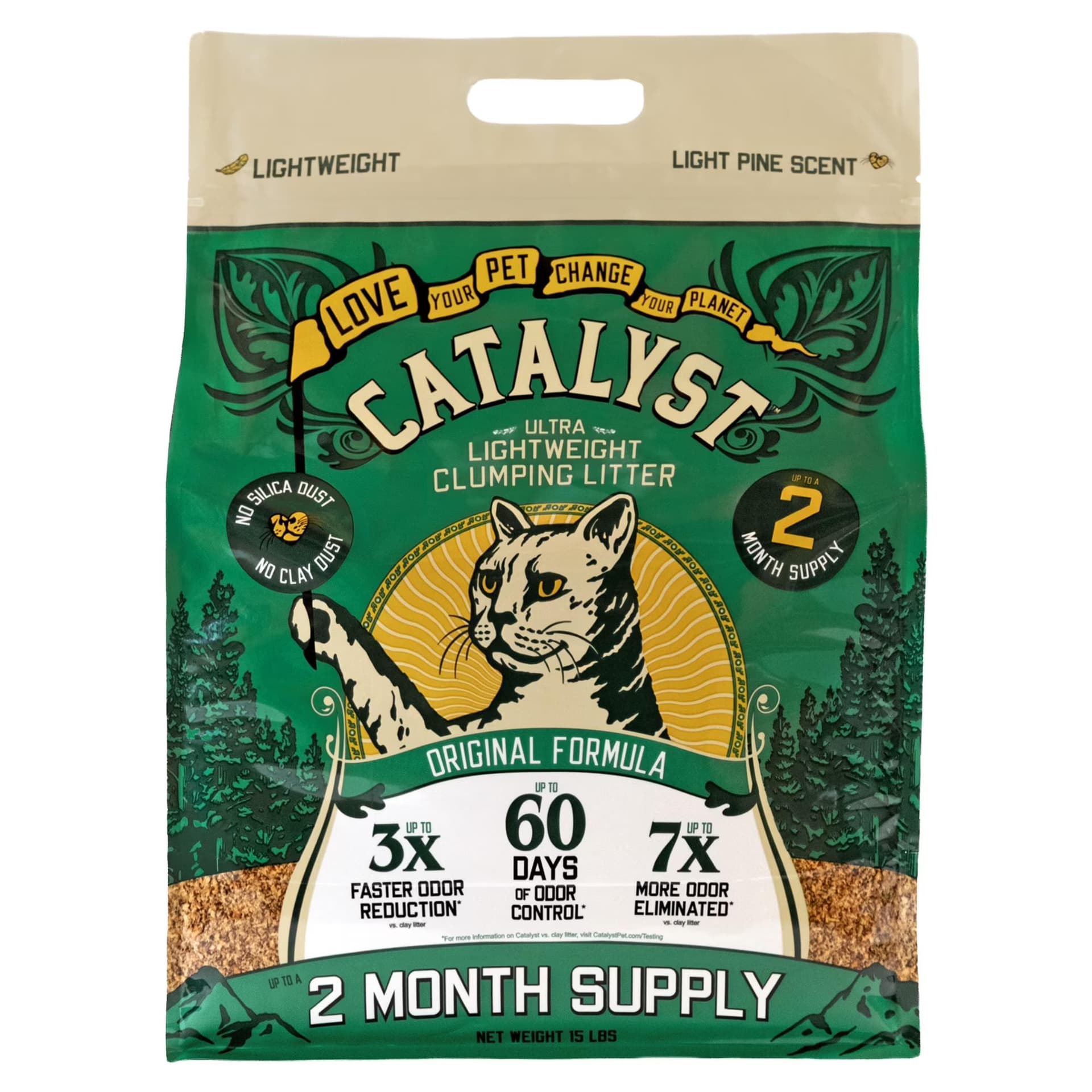
Lightweight softwood clumping cat litter that delivers up to a 2-month supply per 15-lb bag. Up to 7x more odor reduction and 3x faster odor elimination than clay, with up to 95% less airborne dust. No clay, no silica, light pine scent.
Petful may earn a commission when you click through to Walmart, at no extra cost to you.
Catalyst Pet vs. Traditional Clay Litter: Side by Side
Most cat parents come to eco-friendly litter from a clay habit. Here is how Catalyst Pet stacks up against the bentonite clay formulas that still dominate pet store shelves.
| Feature | Catalyst Pet Natural | Traditional Clay |
|---|---|---|
| Material | Upcycled softwood fiber (renewable byproduct) | Bentonite clay (strip-mined) |
| Bag weight (single-cat 2-month supply) | 15 lb | 60 to 80 lb |
| Dust level | Low | High in many formulas |
| Odor control | Source-level (traps ammonia in fiber) | Surface-level (often masked with fragrance) |
| Scent | Natural light pine | Often heavy synthetic fragrance |
| Texture | Refined fine fiber, close to clay | Granular |
| Biodegradable | Yes | No |
| Environmental footprint | Renewable byproduct, lighter shipping | Strip mining + heavier shipping |
What Types of Eco-Friendly Cat Litter Are Available?
Knowing how each material behaves helps you pick the right format for your cat and your routine. For product-level comparisons across wood, grass, paper, wheat, and other plant-based materials, see Petful's best natural cat litter guide.
Wood Cat Litter
Wood cat litter comes in two formats: refined soft wood fiber (looks and feels close to clay, clumps solid) and pressed wood pellets (breaks down to sawdust when wet, often paired with a sifting box). Soft wood fiber formulas like Catalyst Pet are the easier transition for clay cats.
Corn or Wheat Litter
Corn-based and wheat-based litters clump naturally and tend to be biodegradable. Performance varies a lot by brand: some clump as hard as clay, while others fall apart under digging. Worth a shortlist if your cat does well on plant-based textures.
Walnut Shell Litter
Walnut shell is denser than wood or grass and excels at odor absorption. It tends to be slightly darker, which some cat parents prefer because soiled clumps are easier to spot.
Grass Seed Litter
Grass seed litter is the lightest of the natural options. It clumps quickly and feels soft, but it can track outside the box more than denser materials, so a quality litter mat helps.
Tofu Litter
Tofu litter is made from soybean fiber and is biodegradable, low-dust, and often safe to flush in small quantities. Texture varies by brand; some cats love it, others need a transition period. For more on this format, see our guide to tofu cat litter.
Pea Husk Litter
Pea husk litter (made from upcycled pea shells) is one of the newest formats. It is plant-based, biodegradable, and tends to clump well with very low dust. A good fit for cats with respiratory sensitivities.
Recycled Paper Litter
Recycled paper litter is made from repurposed paper fibers. It is typically very low in dust and can be a good option for kittens or cats with sensitive paws. The texture is softer and less granular, which some cats may take time to get used to.
How Does Wood-Based Eco-Friendly Litter Work?
Wood-based litter absorbs moisture into the fiber and traps odor-causing molecules in the wood structure rather than masking them with fragrance. The natural compounds in softwood are particularly effective at neutralizing ammonia.
Soft wood fiber formulas refine the wood into a fine texture that clumps when wet and scoops cleanly. Pressed pellet wood litter takes a different approach, breaking down into sawdust when soiled, which is then sifted out.
Catalyst Pet uses the soft wood fiber approach. Its upcycled fiber absorbs on contact and clumps solid, which makes the switch from clay feel a lot less dramatic for both you and your cat.
Lightweight softwood clumping cat litter that delivers up to a 2-month supply per 15-lb bag. Up to 7x more odor reduction and 3x faster odor elimination than clay, with up to 95% less airborne dust. No clay, no silica, light pine scent.
Petful may earn a commission when you click through to Walmart, at no extra cost to you.
What Is the Healthiest Cat Litter?
The healthiest cat litter is generally a low-dust, fragrance-free litter made from natural materials. Unscented soft wood fiber, walnut, or paper litters tend to be a better fit for cats with asthma, allergies, or sensitive airways.
Two things to avoid: heavy synthetic fragrances (often masking poor quality litter) and very dusty clay formulas that aerosolize when poured. Catalyst Pet, Naturally Fresh, and Yesterday's News are all good starting points for cats with sensitivities.
Where Should You Throw Out Used Cat Litter?
Most eco-friendly litter still goes in the regular trash, ideally in a biodegradable bag. Pair this with a regular litter box cleaning routine to keep odor and bacteria in check. Three rules to keep in mind:
- Do not flush most litters: Even "flushable" labels are unreliable. Cat waste contains pathogens (most notably Toxoplasma) that wastewater plants do not always remove, which can harm wildlife in waterways.
- Compost only with caveats: Some plant-based litters are technically compostable, but the cat waste itself should not go into compost used for edible plants. A dedicated waste-only compost bin works for some homeowners.
- Bag and bin is safest: A biodegradable liner plus regular trash is the standard for most households.
What Are the Pros and Cons of Eco-Friendly Cat Litter?
Like any product, eco-friendly cat litter has trade-offs. Here is the honest breakdown:
- Lighter than clay, easier to carry and pour
- Lower dust, better for cat and human airways
- Made from renewable or biodegradable materials
- Widely available online and at major retailers
- Often unscented (the format most cats prefer)
- Many formulas are flushable in small amounts (where local rules allow)
- Some cats need time to adjust to a new texture
- Clumping strength varies by material and brand
- Some formulas cost more per bag (though many last longer per fill)
- Lighter materials like grass can track more than clay
- Disposal rules vary by municipality (check before composting)
A gradual transition is the single most important step. Mix the new litter with your current one over five to seven days to give your cat time to adjust without stress.
Eco-Friendly Cat Litter vs. Clay Litter: Which Is Better?
Both eco-friendly and clay cat litters have their strengths. Eco-friendly options win on environmental impact, weight, and dust. Clay still wins on raw availability and price per bag.
Eco-friendly cat litter may be a better fit if you want:
- Lighter bags
- Renewable or biodegradable materials
- Lower dust
- A more sustainable cat litter choice
Clay litter may still appeal because:
- Many cats are already used to it
- It consistently offers strong, reliable clumping
- It is widely available and often more affordable
Some modern eco-friendly options, like Catalyst Pet natural cat litter, bridge the gap by offering natural materials with clay-level odor control, absorbency, and clumping.
If odor control is your top priority, our roundup of the best cat litters for odor control is a useful starting point.
How to Transition Your Cat to Catalyst Pet
Cats are creatures of habit, so a sudden litter change is the most common reason switches fail. A gradual transition over five to seven days lets your cat get used to the new texture and scent without breaking the box habit.
- Days 1 to 2: Mix 25% Catalyst Pet with 75% of your current litter.
- Days 3 to 4: Move to a 50/50 blend.
- Days 5 to 6: Shift to 75% Catalyst Pet, 25% old litter.
- Day 7: Full Catalyst Pet.
- In multi-cat homes, transition every box at the same pace. Cats notice mismatched setups quickly and may default to the box that smells most familiar.
Should You Try Catalyst Pet Natural Cat Litter?
Catalyst Pet is worth a try if you are looking for:
- A natural, biodegradable alternative to strip-mined clay
- Significantly lower dust for cats and people with sensitive airways
- A 15-lb bag that delivers up to 2 months of use for a single cat
- Strong clumping and source-level odor control without synthetic fragrance
- A more sustainable cat-care routine
For cats coming off clay, Catalyst Pet is one of the easiest natural litters to transition into because the refined softwood fiber texture is the closest match in the eco category.
Lightweight softwood clumping cat litter that delivers up to a 2-month supply per 15-lb bag. Up to 7x more odor reduction and 3x faster odor elimination than clay, with up to 95% less airborne dust. No clay, no silica, light pine scent.
Petful may earn a commission when you click through to Walmart, at no extra cost to you.
FAQs
Catalyst Pet is made from upcycled softwood fiber sourced from regional sawmills. The fiber is refined into a fine, clay-like texture that clumps solid, traps ammonia at the source, and stays low in dust. The formula is biodegradable with a natural light pine scent (no synthetic fragrances).
Yes. Catalyst Pet is made entirely from natural softwood fiber with no synthetic fragrances, dyes, or additives. It is significantly lower in dust than clay, which is better for cats with respiratory sensitivities or asthma.
No. Even though the formula is biodegradable, used cat litter should not be flushed. Cat waste contains pathogens (most notably Toxoplasma) that wastewater plants do not always remove. Dispose of used litter in a biodegradable bag in the regular trash.
Per Catalyst, a 15-lb bag of the Original Formula provides up to a 2-month supply for a single cat. Multi-cat households go through bags faster (a 34-lb size is also available for households that prefer fewer refill trips).
Yes. The natural softwood fiber and lack of synthetic fragrance make Catalyst Pet a good fit for kittens, especially those with sensitive paws or respiratory systems. As with any new litter, transition gradually.
Catalyst Pet matches clay on clumping and odor control while weighing significantly less per bag, producing far less dust, and being made from a renewable byproduct. The main trade-off is a slightly higher price per bag, though the lighter weight and lower dust are quality-of-life upgrades.
Catalyst Pet is available through Chewy and a growing list of pet specialty retailers. Buying through Chewy with autoship can lock in recurring delivery and a small discount.
Final Thoughts on Eco-Friendly Cat Litter
Switching to an eco-friendly cat litter does not mean sacrificing performance. Today the best natural formulas match clay on clumping, odor control, and absorbency while being lighter, lower-dust, and gentler on the environment.
Catalyst Pet stands out in the natural-litter category because the refined softwood fiber is engineered to feel close to clay underfoot, which makes the switch easier on cats. The upcycled sourcing, natural light pine scent, and source-level odor control add up to a litter you can feel good about putting in the box.
If you are curious about making the switch, start with one bag, transition gradually, and let your cat tell you whether the new format works. Most cat parents who try Catalyst Pet stay with it.

Carol Bryant is the founder FidoseofReality.com and SmartDogCopy.com. A pet product expert, Carol is the Past President of the Dog Writers Association of America (DWAA) and winner of Best Dog Blog. A dog lover of the highest order is how Gayle King introduced Carol when she appeared with her Cocker Spaniel on Oprah Radio’s Gayle King Show to dish dogs. She helps pet, animal, and lifestyle brands achieve copywriting and content marketing success using well-trained words that work and is well-known in the pet industry.
Sign up for expert-backed reviews and safety alerts all in one place.

A Final Word (Disclaimer)
At Petful, our review integrity is paramount; we never exchange special treatment in our reviews for monetary or material rewards.
Nonetheless, when our readers click through to online merchants (including Chewy or Amazon), we receive a referral commission. This supports the running of our free blog, and we appreciate your backing.