Best Joint Supplements for Dogs: Vet-Reviewed Picks
Joint supplements for dogs vary sharply in the research behind them. A vet grades glucosamine, green-lipped mussel, MSM, UC-II and omega-3, compares the top brands for senior dogs, and names four picks.

BVMS, MRCVS

Petful is reader supported. As an affiliate of platforms like Amazon and Chewy, we may earn a commission when you buy through links on this page. There is no extra cost to you.
Joint supplements for dogs are one of the biggest categories in the pet aisle, and they are also the one where the science is least settled. Some of the actives printed on these labels have real controlled research behind them in dogs. Others are there because they sell. That gap is the whole story, and it is why this guide grades every major ingredient before it names a single product.
Below you will find four picks we would put in front of a real owner, an honest evidence grade for each active ingredient, a side-by-side comparison of the big brands for senior dogs, straight answers on Cosequin versus Dasuquin and Dasuquin versus YuMOVE, and the one label check that matters more in supplements than in almost any other pet category. The guide is written by Dr. Pippa Elliott, BVMS, MRCVS, so the calls in it carry a named veterinarian's credentials rather than an anonymous panel's.

Sign up for expert-backed reviews and safety alerts all in one place.
The best joint supplements for dogs
Owners ask which is the most effective joint supplement for dogs and expect one name. The honest answer is that no single product has been proven best in head-to-head canine trials, so the best joint supplement for dogs is the one whose actives match your dog's situation, whose label amounts you can check, and that your dog will take every day for months. For a first trial in a dog with early stiffness, start with Nutramax Cosequin. For a diagnosed dog, step up to Dasuquin with MSM. The best joint health supplement for dogs that are already losing mobility is a stronger, broader formula such as GlycoFlex 3, chosen with your vet.
We have not tested these supplements in a lab or a clinic, and we are not going to pretend otherwise. Every pick below was selected on the published research behind its actives, on label amounts you can verify yourself, on the manufacturer's quality record, and on fit to a specific kind of dog. Here is what separates a good joint supplement for dogs from an expensive placebo:
- Named actives at printed amounts. A joint health supplement for dogs that buries its glucosamine inside a proprietary blend cannot be compared with anything.
- Evidence-led ingredients in front. Omega-3s and green-lipped mussel carry more canine research than the ingredients the marketing usually leads with.
- The NASC Quality Seal on the company behind the product.
- Size-specific dosing. A joint support supplement for dogs sold in one size for a Chihuahua and a Great Dane is dosing one of them wrong.
- A form your dog will actually eat daily, because a joint care supplement for dogs that stays in the cupboard has an effect size of zero.
- A price you can sustain for months, since every top joint supplement for dogs needs weeks before it can be fairly judged.
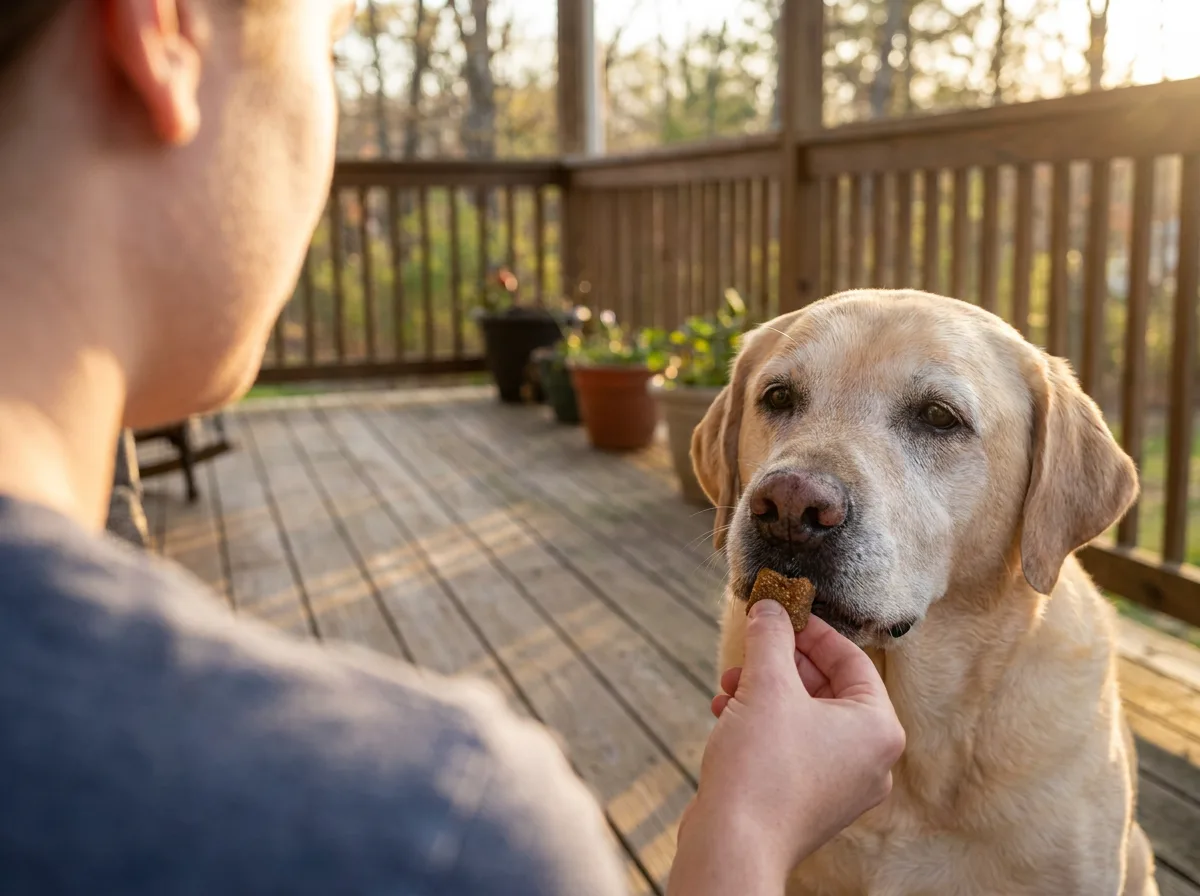
Popular brands that did not make the four, including the YuMOVE joint supplement for dogs and Virbac's Movoflex, are compared further down so you can see where they fit.
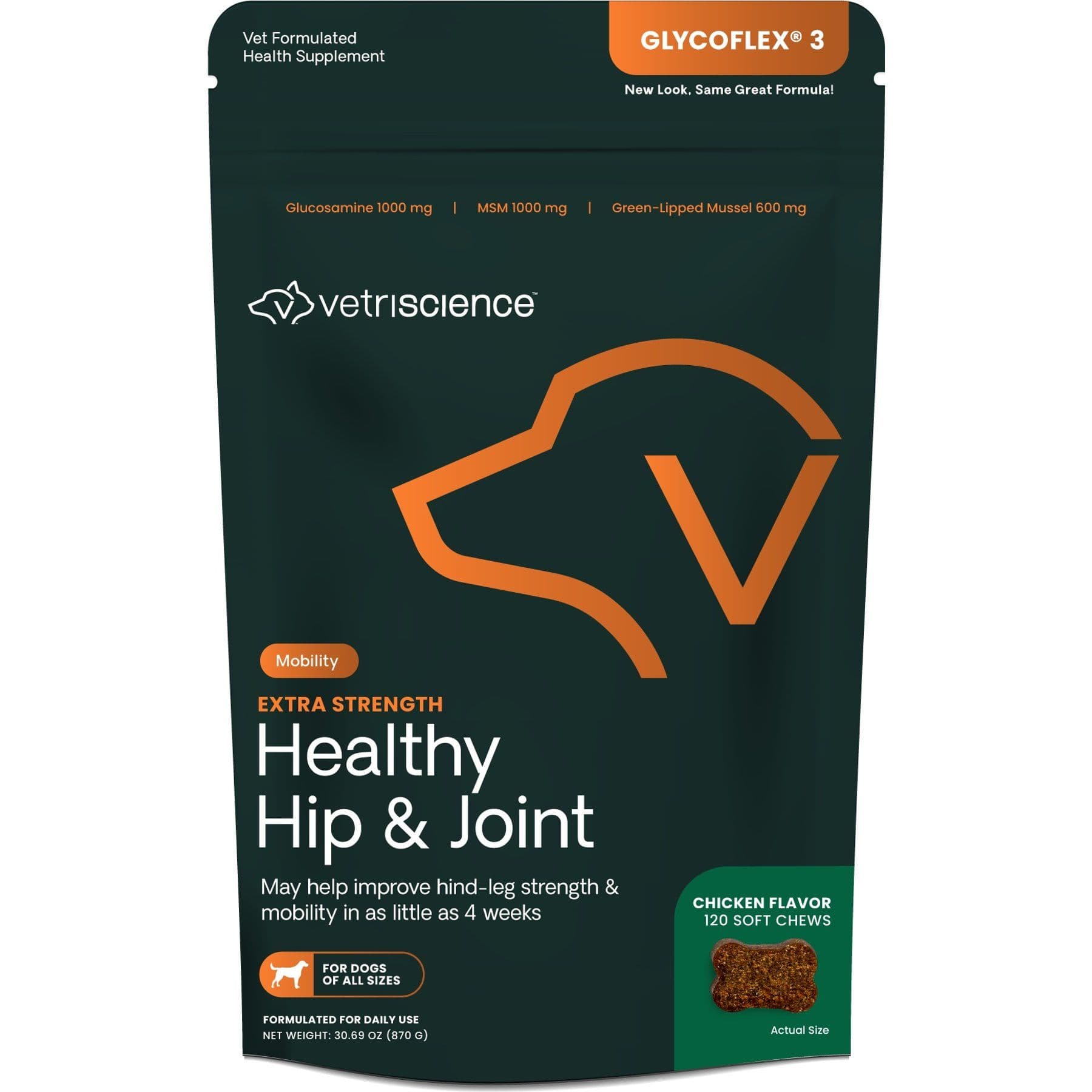
GlycoFlex 3 is the extra-strength tier with green-lipped mussel, glucosamine, MSM and DMG for dogs already showing joint wear or recovering from surgery.
Petful may earn a commission when you click through to Chewy, at no extra cost to you.
Nutramax Dasuquin with MSM Soft Chews: best for diagnosed arthritis
Dasuquin is the Cosequin base of glucosamine and chondroitin plus avocado soybean unsaponifiables, usually shortened to ASU, and that single addition is what the premium buys. Dasuquin with MSM Soft Chews carry both the ASU and added methylsulfonylmethane in one chew, which makes it the step-up product in the Nutramax range rather than a parallel choice.
- Best for: a dog with a confirmed osteoarthritis diagnosis, or a dog that completed a fair Cosequin trial with nothing worth keeping.
- Why it earns the premium: no other pick here combines glucosamine, chondroitin, ASU and MSM in a single veterinary-channel soft chew.
- What to know: expect a noticeably higher cost per day than Cosequin at the same dog weight, and buy the correct size band, because the small and medium dog chew and the large dog chew deliver different doses.
VetriScience GlycoFlex 3 Extra Strength: best for advanced mobility loss
GlycoFlex is sold as a three-stage system, and VetriScience GlycoFlex 3 Extra Strength chicken-flavored chews are the most concentrated tier, built for dogs with the greatest mobility support needs rather than as a starting point. It leans on Perna canaliculus, the green-lipped mussel, and adds glucosamine, MSM, dimethylglycine and manganese around it. VetriScience is a long-standing name in the veterinary supplement channel.
- Best for: senior and large-breed dogs already showing real mobility loss, and dogs stepping up from a lighter formula that stopped being enough.
- Why the staging helps: you can start lower in the range and move up on evidence rather than guessing at the top from day one.
- What to know: Stage 3 costs more per day than the entry stages, and it is the pick on this list we would raise with a veterinarian first, because a dog that needs it usually needs a mobility exam too.
Zesty Paws Mobility Bites: best for picky eaters
Zesty Paws is the volume leader in retail joint chews. Popularity is not evidence, and we are not going to dress it up as evidence, but it does mean palatability has been stress-tested across an enormous number of dogs. If you have already lost the tablet argument at home, Zesty Paws Mobility Bites or any supplement your dog treats like a snack is worth real money, because adherence is the one variable in this whole category that you control completely.
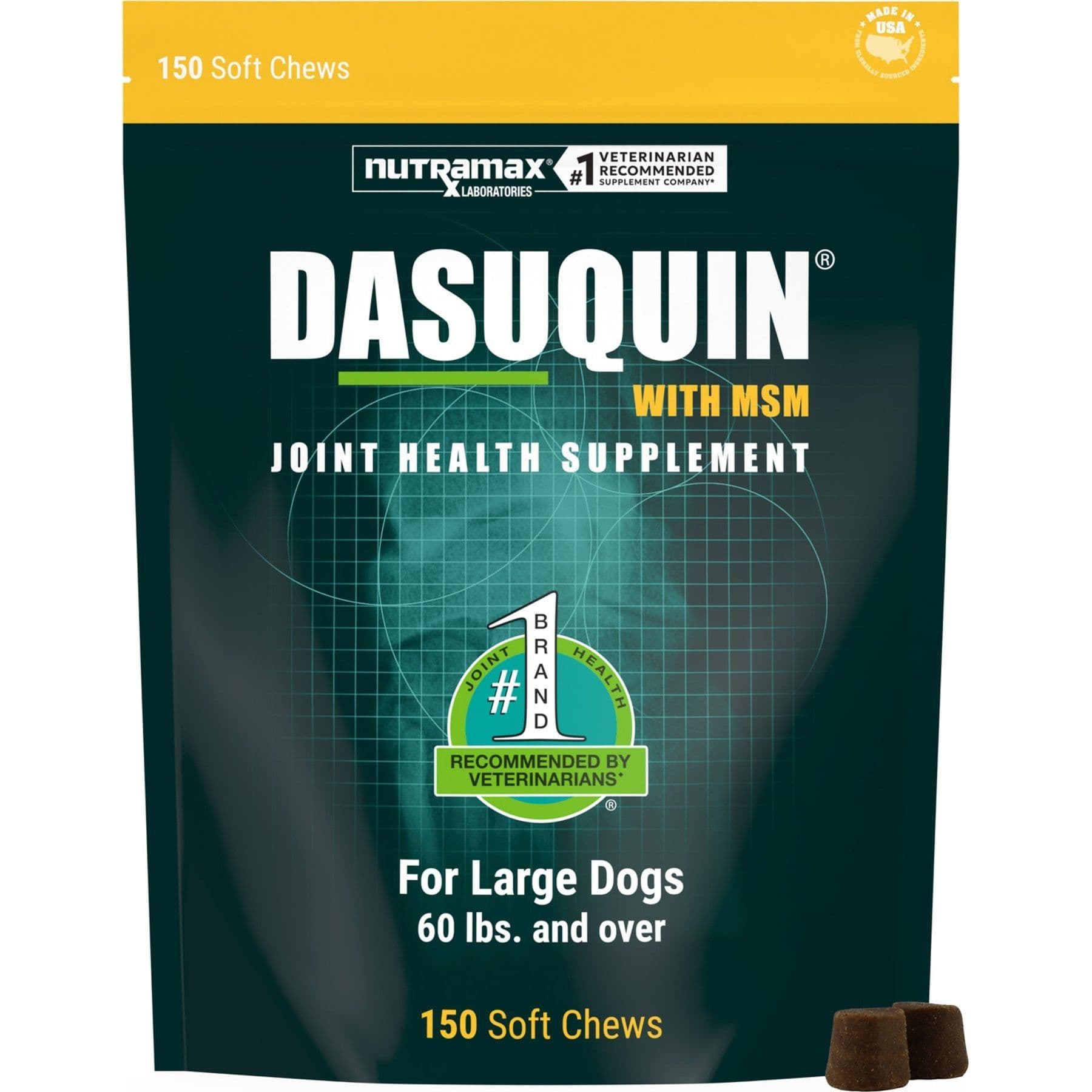
Dasuquin with MSM adds ASU and MSM to the Cosequin base, the combination most often reached for when a dog's stiffness has moved past mild. Soft chews, large-dog strength, 150 count.
Petful may earn a commission when you click through to Chewy, at no extra cost to you.
- Best for: picky dogs, and owners who need the daily dose to be effortless rather than a negotiation.
- On the label: glucosamine, chondroitin and MSM, with the advanced formulas layering further joint actives on top.
- What to know: Zesty Paws sells several mobility products under closely related names, so read the active panel on the exact bag you add to the cart rather than the front of the pack.
Nutramax Cosequin: best budget first trial
Cosequin is the joint supplement most likely to be sitting on your veterinary clinic's own retail shelf. It prints its glucosamine and chondroitin amounts per tablet, the Plus MSM versions add methylsulfonylmethane, and it is the lowest cost per day of the two Nutramax lines. That makes the Nutramax Cosequin chewable tablets with MSM the cheapest honest way to run a first four to six week trial.
- Best for: a first trial in a dog with early stiffness, before anything has been formally diagnosed.
- Why it makes the list: verifiable label amounts, an audited manufacturer, and a low daily cost.
- What to know: glucosamine and chondroitin sit on genuinely mixed evidence, so treat this as a well-made trial rather than a proven treatment. It is a chewable tablet, so some dogs need it hidden in food.
Do joint supplements for dogs actually work?
Some of them, for some dogs, some of the time. That hedge is the honest answer to whether any joint supplements really work for dogs, not a dodge. Controlled trials in dogs support omega-3 fatty acids most strongly, give green-lipped mussel and UC-II undenatured collagen a smaller but real body of support, and leave glucosamine and chondroitin on genuinely mixed evidence. What no joint supplement does is act as a cure. None of them rebuild cartilage a joint has already lost, and none of them replace veterinary diagnosis or treatment.
- 1Omega-3 fatty acids carry the strongest research of any joint ingredient in dogs, with green-lipped mussel and UC-II behind them
- 2Glucosamine and chondroitin sit on mixed evidence, so treat them as a reasonable trial rather than a proven fix
- 3A joint supplement is not a cure for osteoarthritis and never replaces veterinary diagnosis or prescribed medication
- 4Give any joint supplement four to six weeks at the labeled body-weight dose before you judge whether it helped
- 5Buy from a company carrying the NASC Quality Seal, because pet supplements are not approved before sale the way drugs are
- 6Pick one measurable behavior to track, such as how easily your dog rises, so you judge function rather than hope
The picture looks muddled because the strong canine research is concentrated in a small number of ingredients. Randomized controlled trials published in the Journal of the American Veterinary Medical Association reported that dogs with osteoarthritis fed a diet enriched with fish-oil omega-3s improved on owner-assessed lameness and on measured weight bearing. A systematic review of joint nutraceuticals in the Journal of Veterinary Internal Medicine reached a similar ranking, finding the best support for omega-3 supplementation and weaker support for most of the other products sold for joints. The Merck Veterinary Manual's musculoskeletal section places these products alongside, not instead of, weight control, exercise and pain relief.
The Cornell Riney Canine Health Center takes the same line: supplements can be a useful part of managing a joint problem, the quality of the evidence varies sharply by ingredient, and supplements are not regulated the way drugs are. If you want the longer argument about whether this category earns its money at all, our explainer on whether joint supplements are helpful or hype makes the case in detail. What none of that research resembles is the two things owners routinely mistake for evidence:
- A top rated joint supplement for dogs is rated on sales rank and star count. Retail rankings measure palatability, price and shipping far more reliably than joint function.
- The best rated joint supplement for dogs on a retailer page is a popularity list. Joint supplement for dogs reviews from owners are genuinely useful on taste and stool quality and close to useless on cartilage.
Owners searching for what is the most effective joint supplement for dogs are usually hoping the research has named a winner it has not named. Whatever you buy, give it four to six weeks at the labeled dose, choose the behavior you will watch before you start, and reassess with your vet at the end of the window instead of quietly renewing the order.
Joint supplement ingredients, graded by the evidence
Cornell explains the science without naming products, and the commercial roundups name products without grading the science. Below is our evidence grade for each of the six actives you will meet on a canine joint label, with the reasoning spelled out underneath.
| Ingredient | Evidence grade | What the research actually supports |
|---|---|---|
| Omega-3 EPA and DHA | Strongest evidence | Randomized controlled canine trials report improved weight bearing and owner-assessed lameness in dogs with osteoarthritis |
| Green-lipped mussel | Moderate | A natural omega-3 source with a modest but real set of canine trials and a good safety record |
| UC-II undenatured collagen | Emerging | Small canine studies report reduced lameness, but most were funded by the ingredient maker and independent replication is thin |
| Glucosamine | Mixed evidence | Widely used and well tolerated, but controlled trials disagree and systematic reviews rate the support as weak |
| Chondroitin sulfate | Mixed evidence | Almost always studied combined with glucosamine, so its independent contribution in dogs is not established |
| MSM | Limited canine data | Studied mainly in people and inside combination products, so its own effect in dogs is unproven |
- Omega-3 EPA and DHA, strongest evidence. Fish-oil omega-3s have the best controlled canine research of any joint active. If you only add one thing to your dog's bowl, add this. Our guide to omega-3 fatty acid supplements for dogs covers dosing and product types, and WebVet's explainer on omega-3 fatty acids for dogs walks through EPA and DHA sources.
- Green-lipped mussel, moderate evidence. Perna canaliculus is a natural omega-3 source with a smaller but genuine set of canine trials and a good safety record, which is why a green lipped mussel joint supplement for dogs deserves more attention than it usually gets.
- UC-II undenatured collagen, emerging evidence. Small canine studies have reported reduced lameness, but most of that work was funded by the ingredient's manufacturer. Promising rather than proven is the fair description.
- Glucosamine, mixed evidence. A glucosamine joint supplement for dogs is the default purchase in this category and it is generally safe and well tolerated, but the controlled trials disagree with each other.
- Chondroitin sulfate, mixed evidence. It is nearly always tested combined with glucosamine rather than alone, so there is no clean canine answer on what it contributes by itself.
- MSM, limited canine data. It is inexpensive and well tolerated, which is why it appears on so many panels, but its individual effect in dogs is unproven.
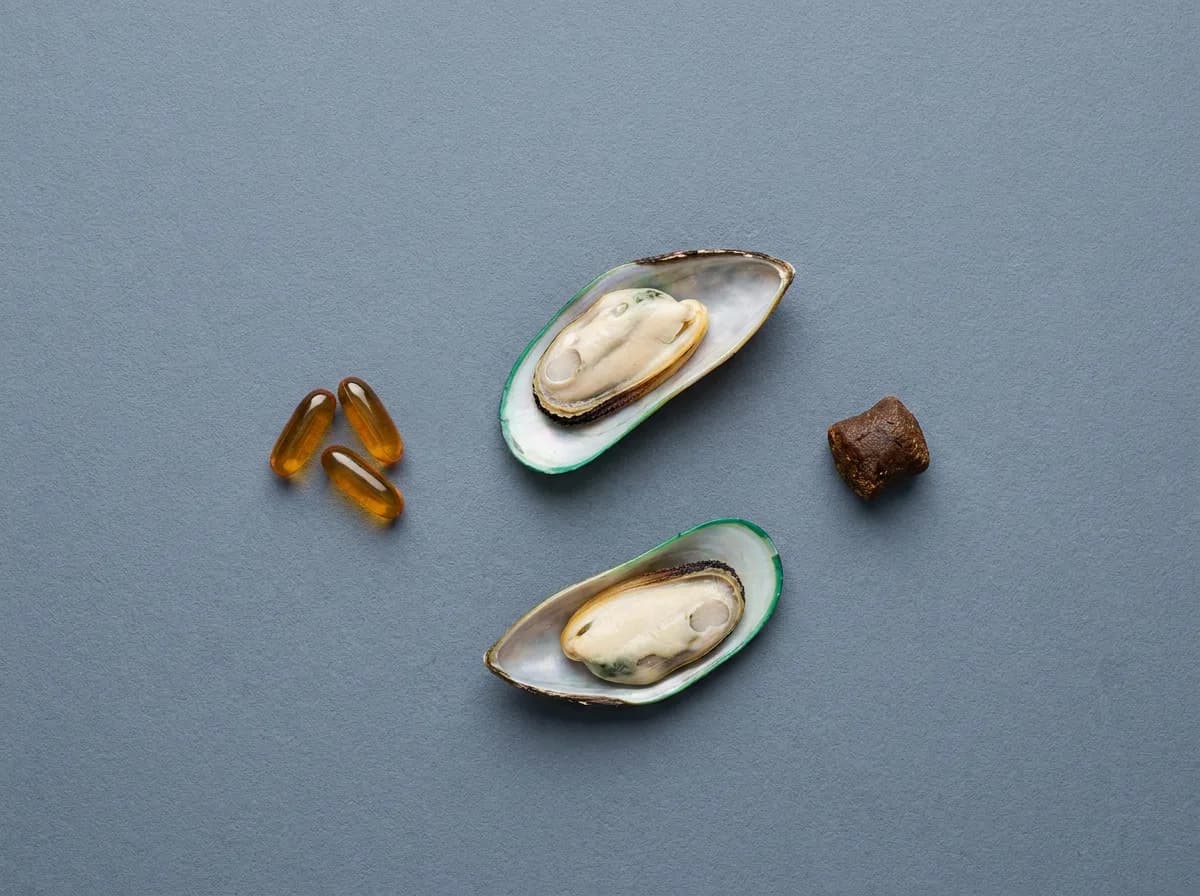
None of these grades means an ingredient is useless, and none of them promises that a supplement will work for your dog. An evidence grade tells you where to put your money first when two products cost the same and make the same promises. Read it as a ranking of confidence, not a ranking of outcomes.
Comparing top joint supplement brands for senior dogs
When owners compare Wuffes dog supplements with other top joint care brands for senior dogs, the useful comparison is not the brand name but three things: which active class does the work, what form the dog will accept, and whether the dose is scaled to body weight. Senior dogs add two complications. They are more likely to be on other medication, and new stiffness in an older dog can have causes other than arthritis, so the best joint supplement for senior dogs is chosen after a mobility exam rather than instead of one.
| Brand and formula | Lead active class | Form | Best fit for senior dogs |
|---|---|---|---|
| Nutramax Dasuquin with MSM | Glucosamine, chondroitin and avocado soybean unsaponifiables | Soft chew | A senior with diagnosed osteoarthritis |
| VetriScience GlycoFlex 3 | Green-lipped mussel with glucosamine and MSM | Soft chew | A senior with obvious mobility loss, under vet supervision |
| Nutramax Cosequin | Glucosamine and chondroitin | Chewable tablet | A first, low-cost trial in an older dog with early stiffness |
| Zesty Paws Mobility Bites | Glucosamine, chondroitin and MSM | Soft chew | A picky senior who refuses tablets |
| YuMOVE | Green-lipped mussel with glucosamine and hyaluronic acid | Tablet or soft chew | An owner who wants the omega-3 class doing the work |
| Wuffes Advanced Hip and Joint | Glucosamine, chondroitin and MSM with turmeric and omega-3s | Soft chew | A broad everyday chew for a senior with no diagnosis |

How to read the grid for a joint supplement for older dogs:
- A senior already on an NSAID needs any supplement cleared by the vet first, whichever brand you lean toward.
- A senior losing appetite or condition needs the dose recalculated from a current weight, not the weight on last year's chart.
- A senior with dental pain will often take a soft chew more reliably than a hard tablet.
- Do vets recommend YuMOVE for dogs? Many veterinary practices, especially in the UK, stock it and its maker markets it as vet recommended. That is a distribution and survey claim rather than trial evidence, so judge its green-lipped mussel panel the way you would judge any row here.
- Broader panels are not automatically stronger. Turmeric, for example, has far less canine trial support than the omega-3s sitting next to it.
If you came here specifically for the Wuffes brand, our full Wuffes hip and joint review covers the Wuffes Advanced Hip and Joint panel, the subscription model and the value math, including how Wuffes vs Dasuquin compares on actives, in more depth than a comparison row can carry. For owners who also want context on how senior dog care changes over time, WebVet's guide to the stages of arthritis in dogs maps which interventions fit which stage.
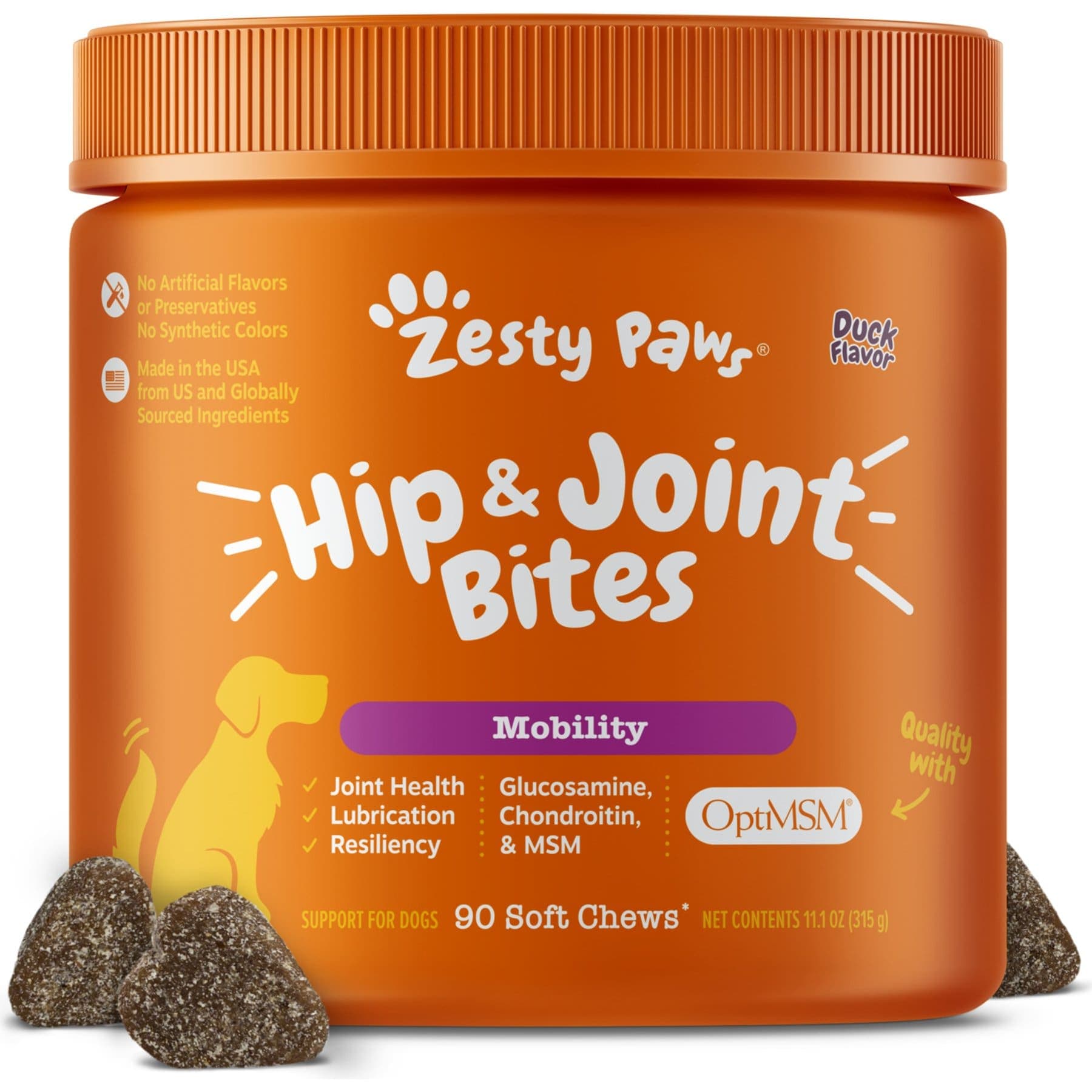
Zesty Paws Mobility Bites pair glucosamine and chondroitin with OptiMSM and curcumin in a soft chew most dogs take as a treat. A sensible first supplement for an aging dog.
Petful may earn a commission when you click through to Chewy, at no extra cost to you.
Cosequin vs. Dasuquin: which one does your dog need?
Dasuquin is the stronger formula and Cosequin is the better first purchase for most dogs. Both come from Nutramax and share the same glucosamine and chondroitin base. Dasuquin adds avocado soybean unsaponifiables, and Dasuquin with MSM adds methylsulfonylmethane on top. If your dog has early stiffness and no diagnosis, start with the Cosequin joint supplement for dogs. If your dog has confirmed osteoarthritis, or finished a fair Cosequin trial with nothing to show for it, the Dasuquin joint supplement for dogs is where the extra spend is justified.
| Feature | Cosequin DS Maximum Strength Plus MSM | Dasuquin with MSM Soft Chews |
|---|---|---|
| Core actives | Glucosamine and chondroitin | The same glucosamine and chondroitin base |
| Avocado soybean unsaponifiables | Not included | Included, and it is the reason the price is higher |
| MSM | Included in the Plus MSM version | Included in the with MSM version |
| Form | Chewable tablet | Soft chew |
| Size options | Regular strength and double strength for larger dogs | Separate small and medium dog and large dog formulas, plus an Advanced tier |
| Cost per day | Lower | Higher at the same dog weight |
| Best for | A first trial in a dog with early stiffness | A diagnosed dog, or one a fair Cosequin trial did not help |
The decision in plain terms:
- Start with Cosequin. The Nutramax Cosequin joint supplement for dogs gives you the base actives at the lowest cost per day, which matters when a fair trial runs over a month.
- Buy the right strength. The Cosequin joint health supplement for dogs comes in regular and double strength, and the Cosequin Maximum Strength joint health supplement for dogs is the double-strength version most medium and large dogs need.
- Step up to Dasuquin when there is a reason to. The Dasuquin joint health supplement for dogs is the same base plus ASU, and it earns its price on a diagnosed dog or after a failed first trial.
- Match the size band. Nutramax sells the Dasuquin Advanced joint health supplement for large dogs separately from the small and medium dog version, and the per-chew dose differs.
- Do not run both at once. They overlap almost entirely, and doubling glucosamine is spending rather than treating.
- Work out cost per day at your dog's weight before comparing tub prices, because counts and daily doses differ.
One thing neither product does is prove itself inside a week. Whichever Nutramax joint supplement for dogs you choose, hold the line for four to six weeks at the labeled dose before you decide it was a waste of money.
YuMOVE, Movoflex, and other green-lipped mussel options
YuMOVE, made by the UK company Lintbells, is built around its own ActivEase green-lipped mussel rather than around a glucosamine base, and that is a defensible choice rather than a gimmick. Green-lipped mussel for dogs is a natural omega-3 source, and omega-3s carry the strongest controlled canine research of any joint active. Two comparison questions come up again and again about it.
- Dasuquin vs YuMOVE: what is better? They work through different active classes, so neither is simply better. Dasuquin leans on glucosamine, chondroitin and ASU and suits a dog whose vet favors that combination. YuMOVE soft chews leans on green-lipped mussel and suits an owner who wants the omega-3 class doing the work. Do not give both without asking your vet, because the glucosamine overlaps.
- Is there a cheaper alternative to YuMOVE? Compare cost per day rather than tub price. A plain fish-oil omega-3 product given at a vet-advised dose delivers the strongest-evidence active class, and adding a basic glucosamine product such as Cosequin covers most of the rest of the panel. Whether the combination is cheaper depends on your dog's weight.
Movoflex, sold by Virbac, is the other brand owners compare. The Movoflex vs Movoflex Advanced question is mostly about strength and stage: the Advanced version is the higher-support tier of the same line, so pick it for a dog with more obvious stiffness and the standard version for maintenance. Read both active panels side by side before you buy, because the actives, not the name, decide the fit. One hard exclusion applies to every green-lipped mussel product: it is a shellfish, so a dog with a known shellfish sensitivity needs a different active class.
Vet-recommended joint supplements and the NASC Quality Seal
The number one vet recommended joint supplement for dogs, by Nutramax Laboratories' own market research, is Cosequin. That claim is worth reading correctly: it is a survey of what veterinarians stock and reach for, not evidence that the product works. A veterinarian recommended joint supplement for dogs earns that label through printed active ingredient amounts, deep clinic distribution and a long quality record.
What a veterinarian actually checks before recommending a joint supplement:
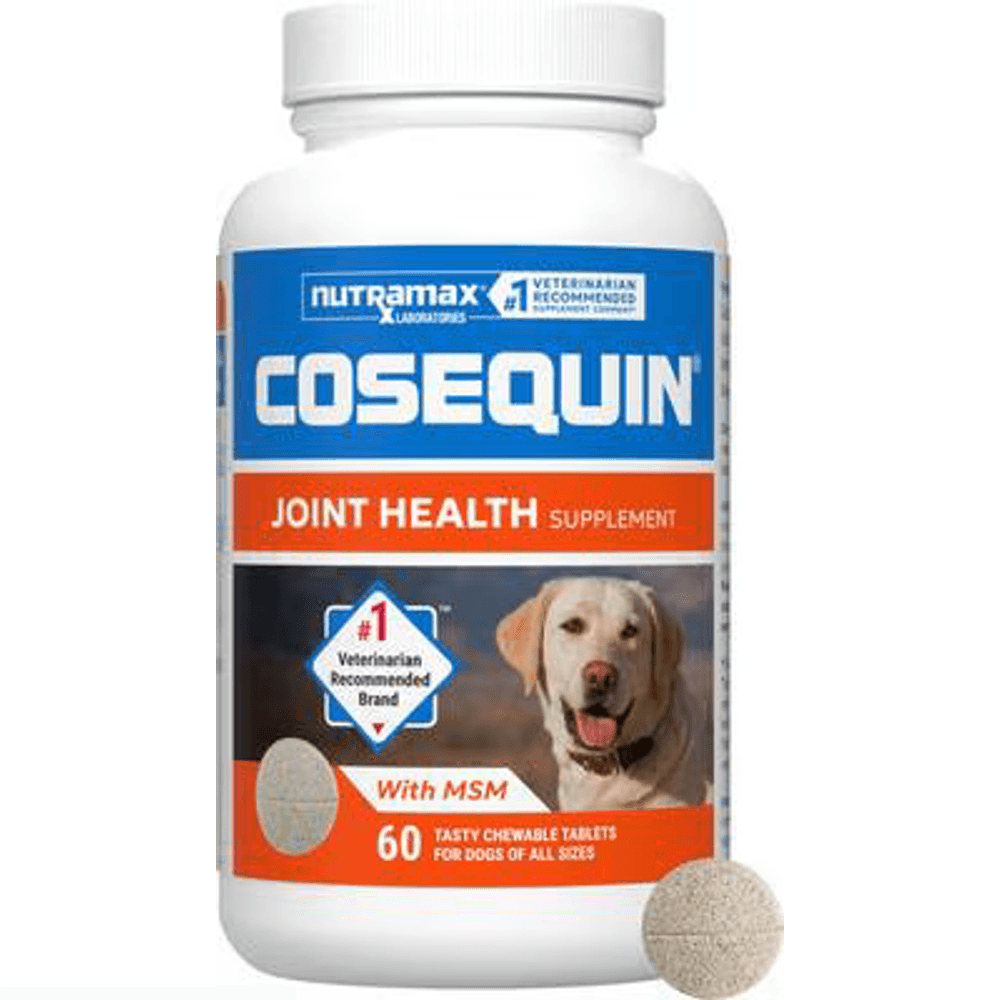
The number-one veterinarian-recommended joint supplement brand. Glucosamine, chondroitin, and MSM support cartilage and cushion the joints, easing the stiffness and hind-end weakness that can leave an older or arthritic dog trembling.
Petful may earn a commission when you click through to Chewy, at no extra cost to you.
- Active ingredient amounts printed per tablet or chew, rather than a proprietary blend.
- The NASC Quality Seal, or at minimum National Animal Supplement Council membership for the company.
- Whether the dose is scaled to the dog's body weight rather than sold as one size for every dog.
- Whether the product duplicates something the dog already receives, such as a second omega-3 source.
- Whether anything on the panel interacts with the dog's current medication.
- Whether this dog needs a diagnosis first, because a vet recommended joint supplement for dogs with arthritis sits alongside treatment and never in place of it.
- Look for the NASC Quality Seal on the label or product page, then confirm the brand yourself in the National Animal Supplement Council member directory instead of trusting a logo image. The seal means the company passed an independent audit of its facilities and quality systems and runs adverse event reporting. It does not mean the product was proven to work.
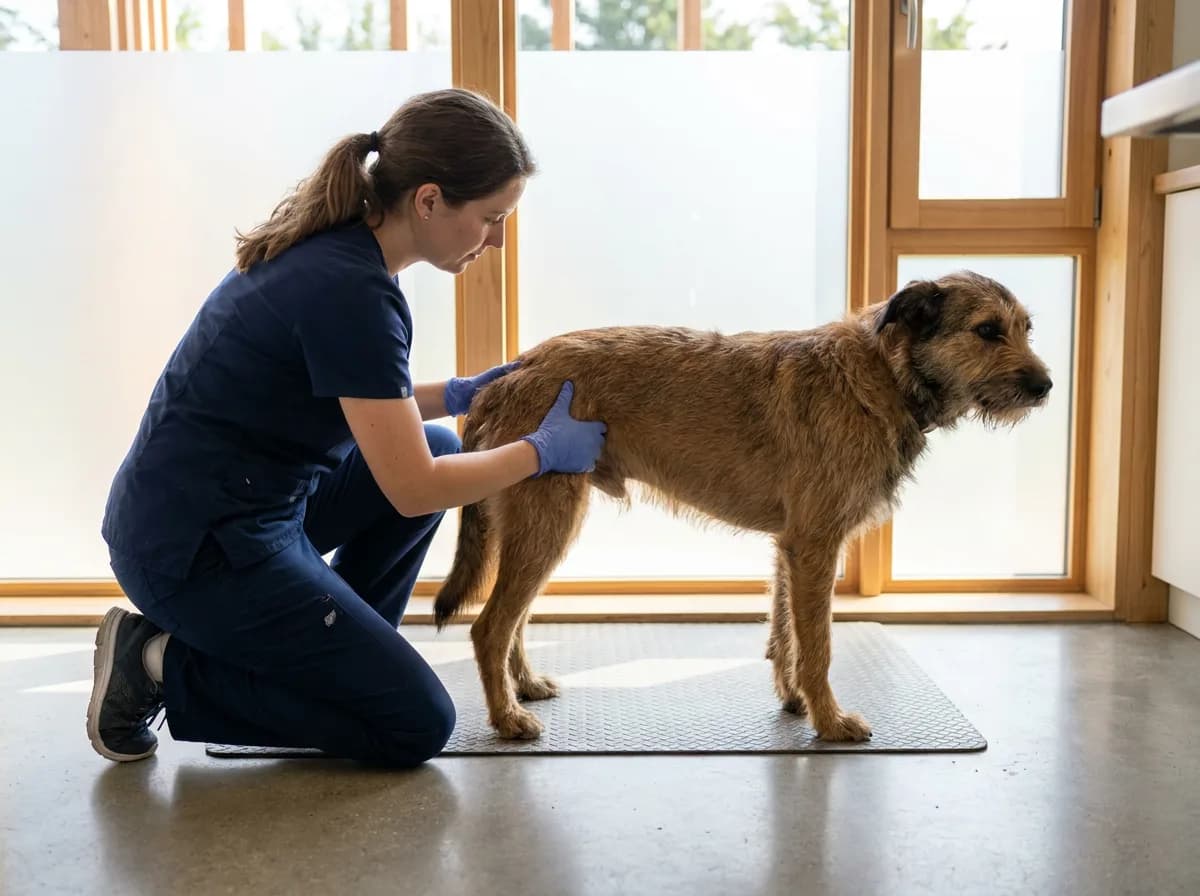
Manufacturing quality matters more here than in food. In the United States, animal supplements are not pre-market approved for safety or effectiveness the way drugs are, a distinction the FDA's Center for Veterinary Medicine sets out plainly. The National Animal Supplement Council fills part of that gap with a voluntary program in which member companies submit to independent audits, follow labeling standards and report adverse events.
A high quality joint supplement for dogs, in practice, is one whose maker chose to be audited when nobody forced them to. If you are shopping for a vet recommended hip and joint supplement for dogs, apply the identical checklist, because the hip wording is a marketing frame rather than a separate product class.
Hip and joint supplements: what the combined formulas add
A hip and joint supplement for dogs is, in almost every case, a joint supplement with the word hip on the label. No active ingredient targets the hip specifically. The phrasing exists because hip dysplasia and hip arthritis are what large-breed owners worry about most. That does not make these formulas pointless, it just means the real differences are somewhere other than the name.
What actually differs between a plain formula and a hip joint supplement for dogs:
- Breadth. A joint and hip supplement for dogs usually stacks more actives, layering MSM, omega-3s, turmeric or hyaluronic acid onto the glucosamine base.
- Dose size. The best hip and joint supplement for dogs of a large breed is usually just the large-breed dose of a good general formula.
- Bone claims. A bone and joint supplement for dogs often adds calcium or manganese. Calcium is not something to add casually, particularly in a growing large-breed puppy, so raise that one with your veterinarian first.
- Price tier. An advanced hip and joint supplement for dogs is generally the same maker's broader panel sold at a higher price rather than a different class of product.
Among our four, GlycoFlex 3 is the hip-focused pick when mobility is already visibly reduced and a veterinarian is involved, while Zesty Paws Mobility Bites covers a broad panel for a dog with no diagnosis. If hip dysplasia is the concern, WebVet's overview of hip dysplasia in dogs explains how it is diagnosed and treated, which is the conversation to have before choosing any hip formula.
Matching a joint supplement to your dog's age, size, and diagnosis
Before buying, work out which of three situations you are in: prevention in a healthy dog, early change you have noticed but not had examined, or a diagnosis your veterinarian has already made. The right product differs in each case, and so does how urgently you should book an appointment rather than shop.
Early mobility changes worth acting on:
- Slow to rise from a lying position, especially first thing in the morning or after a long nap.
- Visible hind-limb effort during the rise, with the back end coming up in stages rather than in one motion.
- Sitting down partway through a walk, or lagging on the way home.
- Hesitating at stairs, the car, or a sofa the dog used to jump onto without thinking.
- Licking repeatedly at a hip, stifle or elbow, or a change in how the dog settles down to lie.

None of those signs prove arthritis, and every one of them is worth a mobility exam. WebVet's walkthrough of how arthritis is diagnosed in dogs shows what that visit involves. A joint pain supplement for dogs bought instead of that exam is how a treatable condition quietly gets a year older. Every product on this list doses by body weight, so weigh your dog rather than estimating.
For large breeds, the most important things to consider about joint support are body weight, growth and the dose band:
- Senior dogs. A joint supplement for senior dogs should follow a mobility exam. GlycoFlex 3 and Dasuquin with MSM are the strongest of our four for an older dog.
- Large breeds. A joint supplement for large dogs needs the large-breed dose, so buy the large dog Dasuquin rather than doubling a smaller version, and keep a large-breed puppy off added calcium unless your vet prescribes it.
- Small breeds. A joint supplement for small dogs is a dosing problem more than a formula problem. Buy the small and medium size, or choose a chew that splits cleanly.
- Diagnosed arthritis. A joint supplement for dogs with arthritis belongs alongside prescribed treatment, and Dasuquin with MSM is the usual step at that point.
- Hip dysplasia. The best joint supplement for dogs with hip dysplasia is whichever broad formula your veterinary team supports, because dysplasia is a structural diagnosis that needs a management plan rather than a purchase.
Chews, liquids, and powders: picking a form your dog will take
The best form is the one that gets into your dog every day for months. Adherence is the variable you control completely, and it swamps most of the differences between two comparable formulas.

How the forms compare in the kitchen:
- Soft chew. Given as a treat, no measuring, and the easiest routine to sustain. Chew size varies widely between brands, so joint supplement chews for dogs sized for a Labrador may need splitting for a terrier. Soft chews also carry more calories and binders than other forms.
- Liquid. A liquid joint supplement for dogs goes over food from a dosing pump, which makes it the easiest to dose precisely and adjust as weight changes. The best liquid joint supplement for dogs that are fussy eaters is usually one with a strong fish-oil smell. Most need refrigerating once opened.
- Powder. A joint supplement powder for dogs is measured with a scoop and stirred through the meal. It is normally the cheapest per dose and the most flexible on dose size, but the scoop over food routine only works reliably with a moist meal.
- Tablet or capsule. Cheapest, most shelf-stable, hardest to administer, and the form most often found under the kitchen table hours later.
Allergy and diet constraints belong in this decision too. A hypoallergenic joint supplement for dogs matters if your dog is on an elimination diet, because chews carry proteins and flavorings that can undo weeks of careful work. Shellfish-derived glucosamine is the norm in this category, so a dog with a shellfish problem needs a synthetic glucosamine source or a different active class. Three safety notes belong here before the first dose:
- Expect some GI upset in the first week or two of any new supplement, usually soft stool or a little gas, and call your vet if it has not settled.
- Never substitute a human glucosamine product to save money, because some are sweetened with xylitol, which is seriously toxic to dogs.
- Dogs on a prescribed NSAID or other long-term medication, pregnant or nursing dogs, growing puppies, and dogs with diabetes, kidney disease or a bleeding disorder should clear any joint supplement with a veterinarian first.
Then make it boring and repeatable. A daily joint supplement for dogs given with the same meal at the same time is far easier to sustain than a routine you have to remember.
Are natural joint supplements for dogs any better?
Natural is a marketing word rather than a regulatory one. A natural joint supplement for dogs is not automatically safer, better absorbed or better studied than a synthetic one, and in this category the two overlap heavily anyway, because green-lipped mussel and fish oil are both natural products and both sit near the top of the evidence ranking.
What the word usually signals on a joint label:
- Whole-ingredient sourcing, such as green-lipped mussel or fish oil rather than an isolated compound. In this category that is a genuine point in the product's favor.
- Botanicals such as turmeric, boswellia or hemp. These carry far less canine trial support than omega-3s, so an all natural joint supplement for dogs built on botanicals alone is a weaker buy than the packaging suggests.
- No artificial colors or preservatives. Fine, and entirely separate from whether the joint actives do anything.
- Nothing at all about dose. The best natural joint supplement for dogs still has to print active amounts you can check against your dog's weight.
Natural also does not mean free of risk. Botanical ingredients can interact with medications, and a natural hip and joint supplement for dogs given alongside a prescribed NSAID is exactly the combination to run past your veterinarian first.
When your dog needs prescription arthritis medication
There is a point where supplements stop being the right conversation. A dog that limps consistently, flinches when a joint is handled, has lost muscle over the hind end, or has quietly stopped doing things it enjoyed needs an examination and, very often, a prescription. Arthritis medication for dogs works directly on pain and inflammation, which is a different job from anything a supplement does.
Owners sometimes ask what the miracle arthritis drug for dogs is. The product most often meant is Librela (bedinvetmab), a monthly injection approved by the FDA in 2023 that targets nerve growth factor, a driver of osteoarthritis pain. It is a prescription drug, not a supplement, it does not suit every dog, and the FDA has since highlighted reported adverse events to veterinarians, so it is a decision for your vet. Our guide to prescription arthritis medication for dogs covers the drug classes, what each one does and the monitoring they require.
- A joint supplement is not a replacement for a veterinary diagnosis or for a prescribed NSAID or any other arthritis medication. Never stop, reduce or space out a drug your veterinarian prescribed in order to try a supplement instead, and tell your vet about every supplement your dog takes so interactions and duplicate ingredients can be checked.
Read the medication guide alongside this page rather than instead of it. Arthritis medicine for dogs manages the pain your dog is in today, and a supplement is a long-game addition your vet may layer on top of it.
Managing your dog's joint pain at home
Supplements are the smallest lever in home joint care. What helps dogs' hips and joints naturally, in order of impact:
- Keeping your dog lean. Every extra pound loads a joint that already hurts, and weight control is the single biggest at-home change.
- Traction on slippery floors, with rugs or runners on the routes your dog uses most.
- A supportive bed up off the cold ground. WebVet's guide to orthopedic dog beds compares supportive options for dogs with joint problems.
- Ramps instead of jumps for the car and the sofa.
- Shorter, more frequent walks and controlled exercise that keeps muscle on the joint without flaring it.
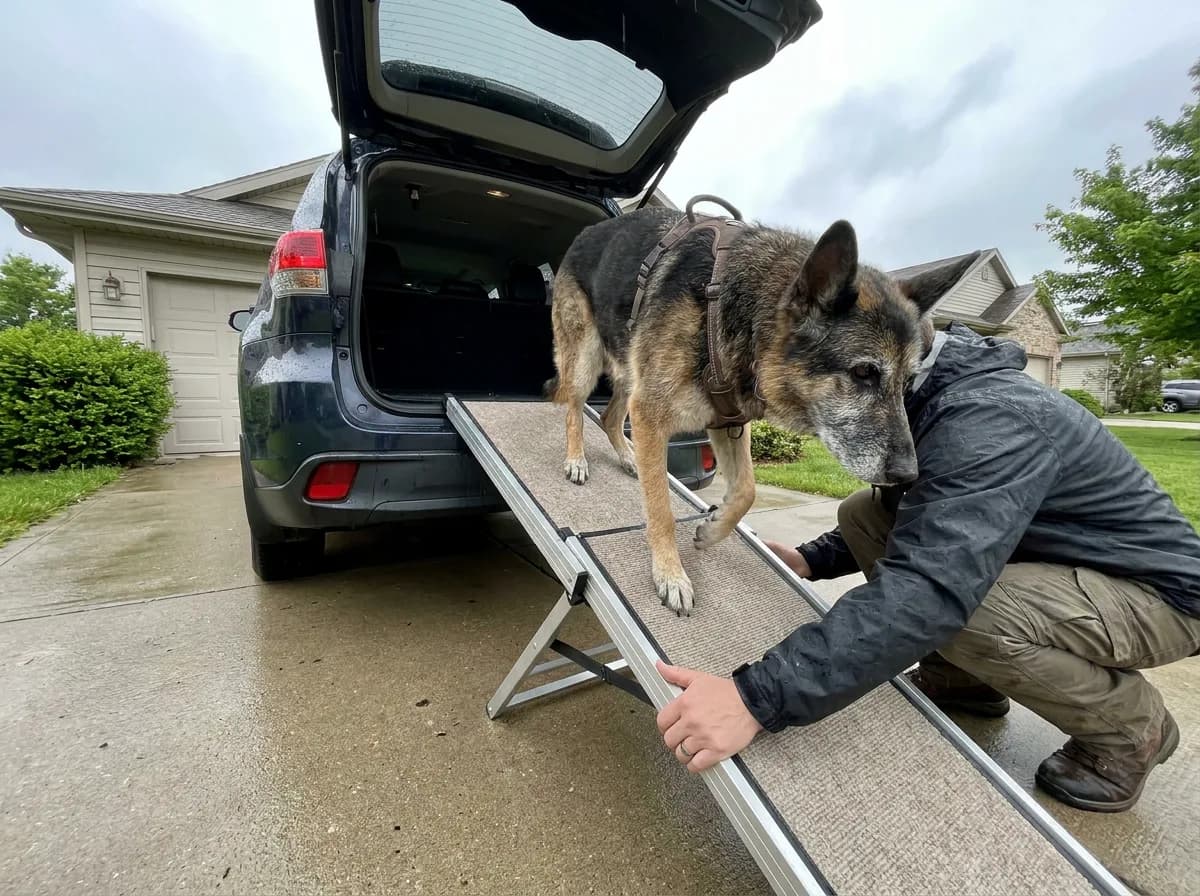
What you must not do is reach into your own medicine cabinet, because human anti-inflammatories are a common cause of serious poisoning in dogs. Our guide on what to give a dog for joint pain at home covers what is safe, what is not, and when the honest answer is a phone call. If you have been searching what can I give my dog for pain, or what can I give my dog for joint pain at home, start there before you give anything.
Joint supplement questions dog owners ask
These short answers cover the brand questions owners ask most, for readers who skipped straight here.
Dasuquin is the stronger formula and Cosequin is the better starting point. Both share the same glucosamine and chondroitin base from Nutramax, and Dasuquin adds avocado soybean unsaponifiables, which is what the higher price buys. Start with Cosequin for a dog with early stiffness and no diagnosis, then step up to Dasuquin if your dog has diagnosed osteoarthritis or completed a fair four to six weeks Cosequin trial with no change worth keeping.
Neither is simply better, because they rely on different actives. Dasuquin uses glucosamine, chondroitin and avocado soybean unsaponifiables, while YuMOVE is built around green-lipped mussel, a natural omega-3 source with a stronger canine research base. Choose by your dog's needs and your vet's advice, avoid green-lipped mussel in a dog with a shellfish allergy, and do not give both at once without checking, since the glucosamine overlaps.
Many veterinary practices, especially in the UK, stock and suggest YuMOVE, and its maker markets it as vet recommended. Treat that as a distribution claim rather than proof of effect, and ask your own veterinary team whether a green-lipped mussel formula fits your dog's diagnosis and current medication.
Compare cost per day at your dog's weight rather than tub prices. A plain fish-oil omega-3 product at a vet-advised dose delivers the strongest-evidence active class, and a basic glucosamine product such as Cosequin covers most of the rest. Never swap in a human glucosamine product to save money, because some contain xylitol, which is toxic to dogs, and remember that shellfish-derived glucosamine is the norm if your dog has a shellfish allergy.
Owners usually mean Librela (bedinvetmab), a monthly prescription injection that targets nerve growth factor to reduce osteoarthritis pain. It is not a supplement and not right for every dog, so your veterinarian decides whether it fits. Supplements can sit alongside it only with your vet's agreement.
Weight control helps most, followed by traction on slippery floors, a supportive bed, ramps instead of jumps, and short, regular walks that keep muscle on the joints. Omega-3 fatty acids are the best-supported natural supplement. Give any supplement four to six weeks before judging it, and have new stiffness examined rather than treated at home.
BVMS, MRCVS
Dr. Pippa Elliott, BVMS, MRCVS, is a veterinarian with nearly 30 years of experience in companion animal practice. Dr. Elliott earned her Bachelor of Veterinary Medicine and Surgery from the University of Glasgow. She was also designated a Member of the Royal College of Veterinary Surgeons. Married with 2 grown-up kids, Dr. Elliott has a naughty Puggle named Poggle, 3 cats and a bearded dragon.
Sign up for expert-backed reviews and safety alerts all in one place.