Why Is My Cat Peeing Outside the Litter Box? Causes & Vet Fixes
A vet-reviewed guide to why your cat is peeing outside the litter box: 7 medical causes (UTI, FLUTD, kidney disease, diabetes, arthritis), behavioral triggers, environmental fixes, and when to call the vet.

Veterinarian · BVMS, MRCVS
Petful is reader supported. As an affiliate of platforms like Amazon and Chewy, we may earn a commission when you buy through links on this page. There is no extra cost to you.
If your cat is peeing outside the litter box, the first job is to figure out whether it is a medical emergency, a treatable health condition, a behavioral issue, or simply a litter box setup problem. About 60 percent of cats brought to vets for this behavior have an underlying medical cause, which is why a vet visit comes first. This guide walks through every cause we see in clinical practice, ranked by likelihood, plus the at-home steps you can take to stop the behavior and clean up so your cat does not repeat the spot.
- 1Always rule out medical causes first: UTI, bladder stones, idiopathic cystitis (FLUTD), kidney disease, diabetes, and arthritis are the most common.
- 2In male cats, straining to pee with little or no urine coming out is a life-threatening urinary blockage. Go to an emergency vet within 24 hours.
- 3Behavioral causes (multi-cat conflict, stress from a move or new pet, marking, cognitive decline in senior cats) explain most non-medical cases.
- 4Environmental causes are fixable at home: too few boxes (use the n+1 rule), wrong location, dirty box, or a litter the cat dislikes.
- 5Use an enzymatic cleaner on every accident. Regular soap and bleach do not break down urine pheromones and the cat will return to the same spot.
- 6Most cases need both a vet visit and an environmental change to fully resolve.
- 7Never punish or rub the cat's nose in it. Punishment increases stress, which makes the behavior worse.
- If your cat (especially a male) is straining to urinate and only producing small drops or nothing at all, vocalizing in the box, or licking the genital area constantly, treat it as a medical emergency. A urinary blockage in a male cat is fatal within 24 to 48 hours without treatment. Go to an emergency veterinary clinic immediately, even at night. Other red flags that need same-day attention: blood in the urine, a cat hiding or refusing to eat, repeated visits to the box with no result, and visible pain when picked up around the belly.

Sign up for expert-backed reviews and safety alerts all in one place.
Medical Causes: Always Rule These Out First
Cats are masters of hiding pain. By the time you see your cat peeing outside the box, a medical problem has usually been brewing for days or weeks. A urinalysis, urine culture, and basic bloodwork rule in or out the vast majority of medical causes in a single vet visit. Tap any condition below for symptoms, diagnosis, and treatment.
- A fresh urine sample (or one collected on non-clumping litter like rice or unused plastic beads), a short video of the cat using the box, photos of the spots where they have been peeing, and a written timeline (when did it start, what changed in the house, eating and drinking habits). This shaves 10 to 15 minutes off the visit and points the workup faster.
UTIs are bacterial infections of the bladder or urethra. The cat associates the box with pain, so they pee on the cool tile of the bathroom, on a soft rug, or anywhere out of the box.
Diagnosis: urinalysis. Treatment: antibiotics for 7 to 14 days. More common in older cats, female cats, and cats with diabetes.
Stones and crystals (struvite, calcium oxalate) form when urine is too concentrated or pH is off. They irritate the bladder lining and partially block the urethra, especially in male cats whose urethra is narrow.
Diagnosis: urinalysis plus X-ray or ultrasound. Treatment: prescription urinary diet, often surgical removal for larger stones. For the daily-routine factors that elevate stone risk, see our guide on bladder infections and dirty litter boxes.
FLUTD is an umbrella term for inflammation of the lower urinary tract. The most common form is feline idiopathic cystitis (FIC), also called Pandora syndrome, where stress triggers bladder inflammation without an infection. The cat strains, urinates small amounts in unusual places, and may have blood-tinged urine.
Treatment: environmental enrichment, Feliway pheromone therapy, anti-anxiety medication like fluoxetine, and a wet-food diet to dilute the urine. Episodes often recur with stress.
Chronic kidney disease is one of the most common diseases in cats over 10. The cat drinks and urinates more, so the box fills faster, smells stronger, and may overflow the comfort zone.
Diagnosis: bloodwork (BUN, creatinine, SDMA) and urinalysis. Management is supportive: prescription kidney diet, subcutaneous fluids, and routine monitoring every 3 to 6 months.
Diabetic cats produce huge volumes of urine and feel extreme thirst. The box fills up between scoops, and the cat looks for fresh spots. Diabetes shows up with weight loss despite a big appetite, an unkempt coat, and weakness in the back legs (diabetic neuropathy).
Diagnosis: bloodwork and urinalysis. Treatment: insulin injections and a high-protein, low-carb diet. Some cats achieve remission with strict management.
Up to 90 percent of cats over 12 have arthritis on imaging, even if they show no obvious limping. A cat with painful hips or knees may avoid a high-sided box or a box up a flight of stairs.
Solution: switch to a shallow, low-entry box (one side under 3 inches), place one on every floor, and ask your vet about joint supplements or pain medication like gabapentin or Solensia. For a clinical breakdown of urinary changes that signal an underlying problem, see when changes in litter box habits signal a medical problem.
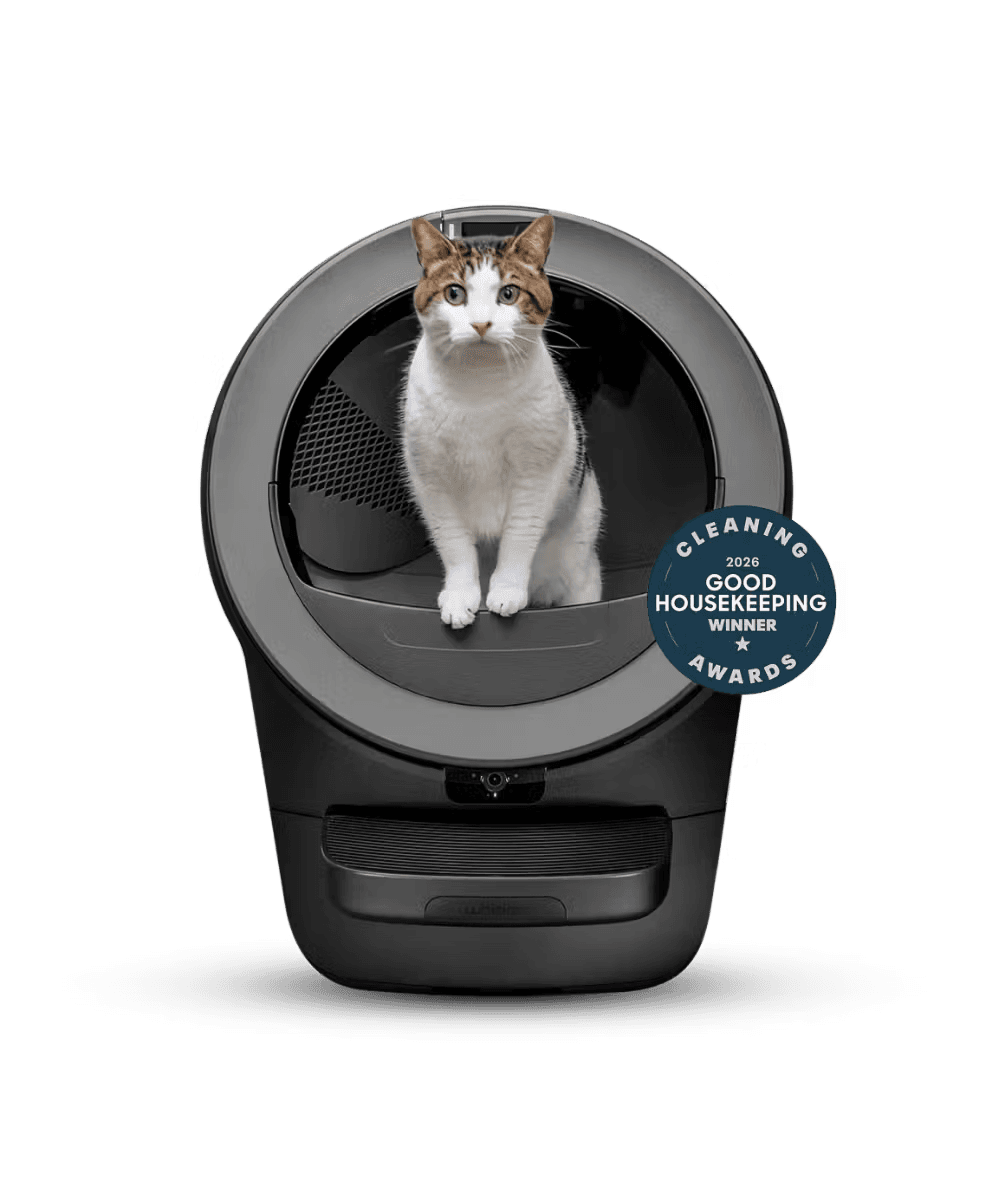
Never Scoop Again® with the Whisker Litter-Robot, the smart self-cleaning automatic litter box. Monitor visits and track weights for better overall care in the Whisker® app. Multi-cat friendly.
Petful may earn a commission when you click through to Whisker, at no extra cost to you.
Behavioral Causes: When the Body Is Fine
Once a vet has ruled out medical causes, the focus shifts to the cat's emotional and social environment. Cats are creatures of routine; small changes you might not even notice can trigger litter box trouble.

 Sponsored
Have questions about your cat's urinary health?
Talk to a licensed vet at Dutch over video, often the same day. They can recommend treatment and prescribe it when it's appropriate.
Use code Pets60
Plans start at $12/month · covers up to 5 pets
- Licensed vets in most states
- Rx for 150+ conditions
- 4.7 on Trustpilot
Multi-Cat Conflict
In homes with two or more cats, peeing outside the box is often a sign of resource competition. A more dominant cat may block access to the box, ambush a smaller cat coming out, or simply make the other cat too anxious to go in. Watch for staring, blocking doorways, and tail-flicking around the box area. The fix: use the n+1 rule (one more box than cats), spread boxes across different rooms and floors so one cat cannot guard them all, and add vertical territory (cat trees, perches) to reduce ground-level conflict.
Stress, Anxiety, and Routine Changes
A move, a new baby, a new pet, construction noise, a new schedule, or even rearranged furniture can push a sensitive cat over the threshold. The behavior usually appears within days to weeks of the change. Reduce stress with Feliway pheromone diffusers, more interactive play sessions (15 minutes twice a day), a predictable feeding schedule, and safe hideout spots the cat can retreat to. For persistent cases, ask your vet about a short course of fluoxetine or gabapentin.
Urine Marking vs. Inappropriate Elimination
Marking and inappropriate elimination look similar but are different. A cat that backs up to a vertical surface (wall, door, side of furniture), lifts the tail, and sprays a small volume is marking. A cat that squats and produces a normal-volume puddle on a horizontal surface is eliminating outside the box. Marking is often triggered by outdoor cats visible through windows, a new pet, or hormonal changes in unneutered cats. Neutering or spaying reduces marking by about 90 percent in male cats.
Cognitive Decline in Senior Cats
Cats over 12 can develop feline cognitive dysfunction syndrome (the cat version of dementia). Signs include confusion, nighttime vocalizing, disrupted sleep, and forgetting where the litter box is. There is no cure, but slowing progression is possible with a prescription diet (Hill's b/d), supplements (SAMe, omega-3), nightlights along the path to the box, and adding more boxes so the cat is never far from one.
- Urine contains ammonia. Cleaning with ammonia-based products reinforces the urine smell to your cat, who will return to the same spot. Bleach is toxic if the cat licks the area and does not break down urine pheromones either. Use a dedicated enzymatic cleaner instead (covered later in this guide).
Environmental Causes: Box and Litter Problems
Even a healthy, well-adjusted cat will quit a box that does not meet their standards. These are the easiest causes to fix because they cost almost nothing and take less than an afternoon.
Wrong Number of Boxes (the n+1 Rule)
The veterinary standard is one more box than cats: 1 cat means 2 boxes, 2 cats means 3 boxes, 3 cats means 4 boxes. Boxes must be in different rooms or different floors so one cat cannot guard the whole set. This rule alone resolves a significant share of multi-cat litter box problems.
Box Location Problems
Cats want privacy, quiet, and a clear escape route. Avoid placing the box next to a noisy washing machine or dryer, in a high-traffic hallway, in a dead-end closet with no escape route, or right next to the cat's food and water (they will refuse). Good spots: a quiet bedroom corner, a spare bathroom, or a laundry area where the appliances are usually off.
Wrong Litter Type
Most cats prefer unscented, soft, clumping clay litter. If you recently switched litter and the behavior started, switch back. This table shows the litter types most cats accept versus the ones that commonly trigger box-quitting:
| Litter type | Cat acceptance | Best for | Watch out for |
|---|---|---|---|
| Unscented clumping clay | High (default for most cats) | All-purpose, multi-cat homes, automatic boxes | Dust sensitivity in asthmatic cats |
| Scented clumping clay | Low to medium | Owners with low odor tolerance | Common cause of sudden refusal |
| Soft paper (Yesterday's News) | Medium to high | Declawed cats, post-surgery, kittens | Lower odor control, must change more often |
| Tofu / corn / wheat | Medium | Eco-conscious owners, low-dust homes | Some cats eat it; check ingredients for safety |
| Pine pellets | Low to medium | Strong odor control, lower cost | Texture is uncomfortable for many cats |
| Crystal / silica gel | Low to medium | Single-cat low-output homes | Cats can dislike the crunch; not for automatic boxes |
| Recycled newspaper pellets | Low to medium | Recovery from paw injury, declaw aftermath | Lower odor control, larger particles |
- To find out which litter your cat prefers, put two boxes side by side, fill each with a different litter, and watch for a week. Count which box has more clumps. Cats will vote with their paws. This is faster and more accurate than guessing.
Dirty Box
Scoop solids and clumped urine at least once a day, ideally twice. Fully empty and wash the box with mild dish soap (not bleach or anything ammonia-based) every two to four weeks. Replace plastic boxes every year because the plastic absorbs odors that humans cannot smell but cats can.
Box Size and Style
A box should be 1.5 times the length of the cat from nose to base of tail. Most retail boxes are too small. A large under-bed storage tote (without the lid) is a cheap upgrade. For senior cats and arthritic cats, low-entry boxes with one side under 3 inches are essential. The covered vs. open debate is also part of this decision:
- Covered: contains odor, contains litter scatter
- Covered: gives shy cats a sense of privacy
- Open: easier for senior and arthritic cats to enter
- Open: better visibility (cat can see who is approaching)
- Open: easier to scoop and clean
- Covered: traps odor inside (the cat does not like that either)
- Covered: feels like an ambush point in multi-cat homes
- Covered: harder to step into for arthritic cats
- Open: more visible litter scatter on the floor
- Open: stronger ambient smell in the room
Recently Declawed Cats
Declawed cats often develop a lifetime aversion to clay clumping litter because the paw pads are sensitive and clay particles hurt. Switch to a soft paper-based litter like Yesterday's News, shredded newspaper, or a pellet litter. The same goes for cats recovering from any paw injury.
If multi-cat conflict or a chronically dirty box is driving the issue, a self-cleaning litter box can solve both at once. Our comparison of the Litter-Robot 4, 5, EVO, and 5 Pro walks through which automatic box fits which household, our hands-on Litter-Robot 4 review covers the $699 flagship in detail, and our guide on whether automatic litter boxes are safe for cats covers the safety profile by life stage. For the compact, lower-cost option, see our Litter-Robot EVO review.
Never Scoop Again® with the Whisker Litter-Robot, the smart self-cleaning automatic litter box. Monitor visits and track weights for better overall care in the Whisker® app. Multi-cat friendly.
Petful may earn a commission when you click through to Whisker, at no extra cost to you.
How to Diagnose the Cause at Home
Before the vet visit, gather information that speeds up diagnosis. Take a short video of the cat in and out of the box, photograph the spots where they are peeing (location, surface type, position), and write down the timeline (when it started, what else changed in the house, eating and drinking habits).
Then run this quick decision tree:
- Cat is straining or producing little urine? Emergency vet today.
- Blood in the urine? Vet visit within 24 hours.
- Cat is over 8 years old, drinking more, or losing weight? Vet visit this week.
- Started after a move, a new pet, or a new baby? Likely behavioral. Address stress first; vet visit if it persists more than 2 weeks.
- You changed litter, moved the box, or got a new box recently? Likely environmental. Revert the change and watch for 1 to 2 weeks.
- Cat is peeing in only one specific spot? Often environmental or stress. Try blocking access to that spot temporarily.
SponsoredVet care that's always there
Unlimited video calls and messaging with licensed vets for less than a typical vet visit. One membership covers up to five pets.
Use code Pets60
Plans start at $12/month · covers up to 5 pets
- Licensed vets in most states
- Rx for 150+ conditions
- 4.7 on Trustpilot
How to Stop It: Vet-Approved Solutions
A real fix usually combines medical treatment (if needed), environmental change, and stress reduction. Here is the protocol most veterinary behaviorists recommend.
- Get a full vet workup with urinalysis, urine culture, and bloodwork. Treat any underlying condition.
- Set up the n+1 rule: add boxes until you have one more than the number of cats. Place them in different rooms on different floors.
- Switch to an unscented, soft, clumping clay litter unless your cat has a known reason to need a different type.
- Scoop twice a day. Replace the litter completely every 2 to 4 weeks.
- Use Feliway pheromone diffusers in the rooms where the cat spends most of their time.
- Add interactive play sessions (15 minutes twice a day) to burn off anxiety energy.
- Clean every accident spot thoroughly with an enzymatic cleaner (covered next).
- Never punish the cat. Punishment increases stress, which makes the behavior worse, and breaks the bond.
If the problem persists after 4 weeks of consistent application, ask your vet about a short course of fluoxetine, gabapentin, or buspirone. For a deeper look at the medical workup process, see how veterinarians diagnose urinary problems in cats.
Never Scoop Again® with the Whisker Litter-Robot, the smart self-cleaning automatic litter box. Monitor visits and track weights for better overall care in the Whisker® app. Multi-cat friendly.
Petful may earn a commission when you click through to Whisker, at no extra cost to you.
How to Clean Up Cat Urine So They Do Not Repeat
Cats have a vastly stronger sense of smell than humans. If even a trace of urine pheromone remains on the carpet, mattress, or hardwood, the cat will return to that spot. Regular cleaners do not work. You need an enzymatic cleaner that contains protease and lipase enzymes to break down the urine proteins at the molecular level.
Our comparison of the best enzyme cleaner for pet urine matches cat and dog formulas to carpet, hardwood, bedding and litter-box areas.
- Blot up as much urine as possible with paper towels (do not rub, which spreads it).
- Saturate the spot with an enzymatic cleaner like Nature's Miracle, Rocco & Roxie Stain & Odor Eliminator, or Anti-Icky-Poo. Use enough to soak through to the carpet pad if it went that deep.
- Let it dry naturally without scrubbing for at least 24 hours.
- Avoid ammonia-based cleaners (urine contains ammonia, so they reinforce the smell to the cat) and avoid bleach (toxic to cats and not effective at neutralizing urine pheromones).
- For mattresses or upholstery that has been soaked through, professional steam cleaning may be needed.
- Use a UV blacklight to find dried spots you missed. Old urine spots glow under blacklight.
When to See a Vet (and What to Expect)
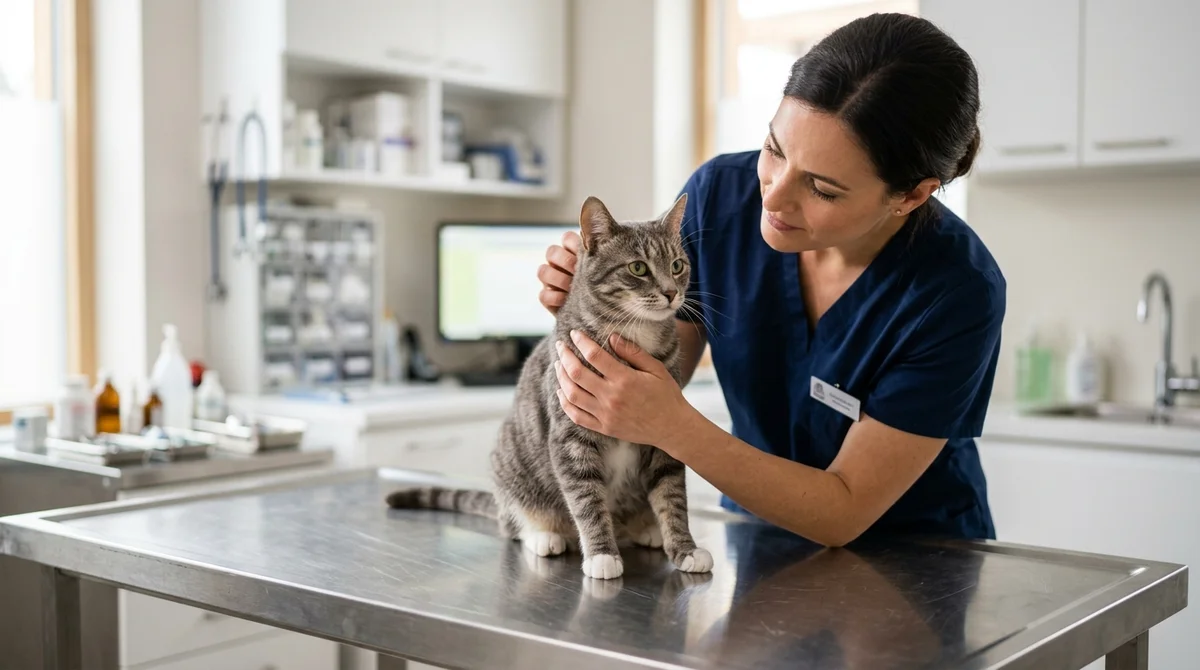
See a vet immediately if the cat is straining, producing little urine, vocalizing in pain, or hiding and refusing food. See a vet within 24 to 48 hours if there is blood in the urine, repeated visits to the box, or excessive licking of the genital area. For all other cases (the cat looks normal otherwise but is peeing outside the box), schedule a vet visit within a week. Two weeks of unexplained inappropriate elimination is too long to wait.
At the visit, the vet will run a physical exam, urinalysis, urine culture, and basic bloodwork (kidney values, thyroid, blood glucose). For cats over 7, expect an SDMA test for early kidney disease. If the workup is clean, the next step is usually environmental review and a behavioral consult. For a preventative approach that catches issues before they cause litter box trouble, see preventative care for feline urinary health: a vet's guide.
If pooping is also part of the picture, see our sibling guide: cat pooping outside the litter box, causes and fixes.
Take a vet visit first to rule out a UTI, bladder stones, FLUTD, kidney disease, diabetes, or arthritis. About 60 percent of cats brought in for this issue have a medical cause. While you wait for the appointment, scoop the box twice daily, switch to an unscented clumping clay litter if you recently changed brands, clean every accident with an enzymatic cleaner, and place one extra box in a different room.
A sudden onset almost always points to either a new medical problem (the cat is in pain or producing more urine than normal) or a sudden environmental stressor (a move, a new pet, construction noise, a different schedule, or a litter brand change). Trace back what changed in the 7 to 14 days before the behavior started. If nothing comes to mind, the cause is medical until a vet rules it out.
Sometimes, but never assume that without a vet workup first. About 60 percent of cats brought to a vet for inappropriate elimination have a medical cause. Once a vet rules out UTI, bladder stones, FLUTD, kidney disease, diabetes, and arthritis, then you can focus on behavioral and environmental causes such as multi-cat conflict, stress, marking, or box dissatisfaction.
No. Never. Punishment, including rubbing the cat's nose in the urine, yelling, spraying water, or hitting, makes the problem worse. Stress is a primary trigger for inappropriate elimination, so adding stress through punishment deepens the behavior and damages the cat's trust in you. Identify and address the actual cause instead.
Peeing-only outside the box is almost always a urinary problem (the cat associates urination specifically with pain). The most common cause is a UTI, idiopathic cystitis, bladder stones, or crystals. The fact that pooping still happens inside the box rules out most environmental and behavioral causes. See a vet within a few days for a urinalysis.
Most cats stop within a few days of starting antibiotics. If the behavior continues for more than two weeks after the infection clears, the cat may have learned to associate the box with pain (behavioral conditioning), or the underlying problem was misdiagnosed. A second vet visit, possibly with imaging, is the next step.
Citrus oils (orange, lemon), eucalyptus, and rosemary smells deter most cats from a spot, but they only work after the original urine smell has been fully neutralized with an enzymatic cleaner. Otherwise the cat still detects the pheromone and returns. Cover the spot with aluminum foil, double-sided sticky tape, or a plastic carpet runner with the spikes facing up for a week as a backup deterrent.
- Most cats peeing outside the litter box are telling you that something hurts or something has changed. The job is to figure out which. Start with the vet to rule out medical causes (especially in cats over 7, male cats, and cats showing any straining or blood). Then layer in the n+1 rule, an unscented clumping clay litter, twice-daily scooping, enzymatic cleanup, and Feliway diffusers. With consistent application, most cases resolve in 4 to 6 weeks.

Coreen Saito is a pet writer and longtime shelter volunteer with more than a decade in animal rescue. She covers cat behavior, breed care, and the small, ordinary science of sharing a life with companion animals, with a particular focus on honest takes about the products and decisions that actually matter. At home in Arizona, she's outranked by Mac (a dog with the loudest opinion in the house), Rebel (a cat who governs by quiet authority), and Meri (an orange tabby who runs the late shift and the laundry basket). She writes about all three, plus the rescues that keep coming through her life, at LifeWithMinty.com.
Veterinarian · BVMS, MRCVS
Dr. Pippa Elliott, BVMS, MRCVS, is a veterinarian with nearly 30 years of experience in companion animal practice. Dr. Elliott earned her Bachelor of Veterinary Medicine and Surgery from the University of Glasgow. She was also designated a Member of the Royal College of Veterinary Surgeons. Married with 2 grown-up kids, Dr. Elliott has a naughty Puggle named Poggle, 3 cats and a bearded dragon.
Sign up for expert-backed reviews and safety alerts all in one place.