Cat Pooping Outside the Litter Box: Causes and Fixes
A cat pooping outside the litter box is almost always solvable. Here are the medical, environmental, and stress causes plus what to try first to fix it.

A cat pooping outside the litter box almost always has a specific cause: medical, environmental, or stress-related.
Petful is reader supported. As an affiliate of platforms like Amazon and Chewy, we may earn a commission when you buy through links on this page. There is no extra cost to you.
A cat pooping outside the litter box is a common problem that leaves many cat parents feeling frustrated and worried. The good news is that litter box issues are almost always fixable once you pinpoint the underlying cause. In most cases, a cat pooping outside the litter box is dealing with a health issue, stress, or dissatisfaction with their litter box environment.
- A cat pooping outside the litter box is almost always caused by a medical issue, an environmental problem with the box, or stress. Start with a vet visit (especially for sudden onset), then audit the box setup: size, cleanliness, location, and number of boxes. Use the n+1 rule (one box per cat plus one extra) and clean accidents with enzyme cleaner. Avoid punishment, which makes the problem worse.
- 1A cat pooping outside the litter box is rarely about spite. The cause is almost always medical, environmental, or stress-related.
- 2Sudden changes in litter box habits often signal a health issue and warrant a vet visit, especially in older cats or male cats.
- 3Box size, cleanliness, scent, and location matter more to cats than most owners realize. Use one box per cat plus one extra.
- 4Punishment makes the problem worse. Positive reinforcement, environmental fixes, and (if needed) a vet visit are what actually work.
This behavior rarely reflects stubbornness or spite. Litter box problems in cats almost always have a specific reason. Start by looking closely at your cat's health, their environment, and anything that may have recently changed in your home.
The issue might be physical discomfort, stress, a dirty litter box, or a setup your cat has decided no longer works for them. Think like a detective. Did the problem start suddenly? Has anything changed at home? Is your cat showing any signs of discomfort or illness? Paying attention to timing and patterns can help you narrow down the cause.
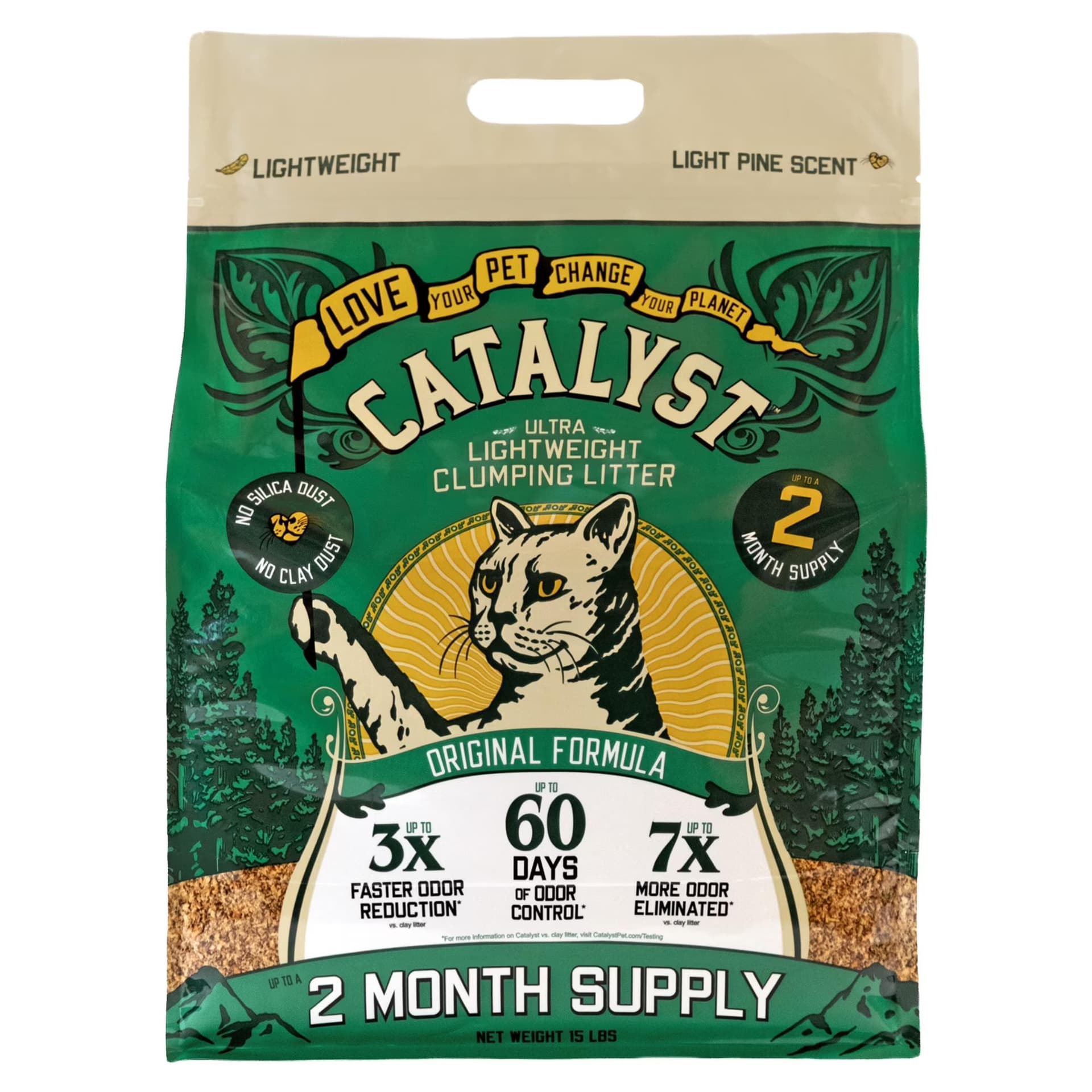
Lightweight softwood clumping cat litter that delivers up to a 2-month supply per 15-lb bag. Up to 7x more odor reduction and 3x faster odor elimination than clay, with up to 95% less airborne dust. No clay, no silica, light pine scent.
Petful may earn a commission when you click through to Walmart, at no extra cost to you.

Sign up for expert-backed reviews and safety alerts all in one place.
Why Is My Cat Suddenly Pooping Outside the Litter Box?
When a cat suddenly starts pooping outside the litter box after months or years of normal behavior, the cause is almost always one of these:
- A new medical issue: Constipation, diarrhea, urinary tract infection, parasites, or early arthritis can all show up as a sudden change in litter box habits.
- A recent household change: A new pet, baby, roommate, schedule shift, or even rearranged furniture can stress a cat enough to break their box routine.
- A change to the box or litter: New litter brand, new fragrance, a recently moved box, or a box that has been less frequently scooped.
- A negative box experience: Being startled or ambushed in the box (often by another pet) can make a cat associate the box with stress.
Sudden onset is the case where a vet visit moves up the priority list. Cats hide pain, and litter box changes are often the first visible sign of a problem that has been brewing.
| What You're Seeing | Most Likely Cause | First Action |
|---|---|---|
| Sudden onset (was using box, now isn't) | New medical issue or recent environmental change | Vet visit + audit recent household changes |
| Pooping outside but acting normal | Hidden discomfort or subtle preference shift | Vet check (cats hide pain) + setup audit |
| Same spot every time | Residual scent OR cat prefers that surface | Enzyme cleaner + block access or rethink box |
| Pooping right next to the box | Box setup mismatch (size, location, cleanliness) | Larger box, quieter spot, scoop daily |
| Straining, diarrhea, or vocalizing | Acute medical issue | Same-day vet visit |
| Multi-cat home with scattered accidents | Box competition between cats | Add boxes (one per cat plus one extra) |
| Senior cat suddenly going outside | Arthritis or age-related discomfort | Lower-sided box + vet check for joint issues |
| After a household change (move, new pet) | Stress reaction | Pheromone diffusers, consistent routine, time |
What Medical Issues Can Cause a Cat to Stop Using the Litter Box?
A cat pooping outside the litter box can sometimes be a sign of an underlying health issue. Below are the most common medical causes.
- Digestive upset or diarrhea: A cat experiencing loose stools may not make it to the litter box in time, or may begin associating the box with discomfort.
- Constipation: Painful bowel movements can cause a cat to avoid the litter box, since they may associate the box with straining.
- Intestinal parasites: Parasites can cause digestive issues that throw off normal stool habits.
- Inflammatory bowel disease (IBD): Chronic GI inflammation is a common cause in middle-aged and senior cats; symptoms include intermittent diarrhea, weight loss, and going outside the box.
- Arthritis or mobility problems: Older cats may struggle to step into a high-sided box or walk to one that is too far away. Studies suggest most cats over 12 have some degree of arthritis.
- Urinary tract issues: In male cats especially, urinary discomfort can cause a cat to avoid the box altogether.
- If you have a male cat who is straining in the litter box without producing urine, this is a life-threatening emergency. Urethral blockages can become fatal within 24 to 48 hours. Go to the emergency vet immediately, even at 2 AM. Do not wait for an appointment.
If the behavior starts suddenly or your cat seems uncomfortable or unwell, contact your vet. Changes in litter box habits are often one of the earliest signs of a health problem, sometimes before other symptoms appear.
Why Is My Cat Pooping Outside the Litter Box but Acting Normal?
A cat that seems perfectly normal in every other way but is pooping outside the box is one of the most confusing scenarios for cat parents. The most likely explanations:
- Cats hide pain extremely well. Early arthritis, mild constipation, or low-grade GI discomfort can affect litter box use without any other obvious symptoms.
- Litter or box preference. A subtle change in litter scent, depth, or texture can be enough to push a picky cat to a different surface, even when nothing else has changed.
- Box location. A box near a noisy appliance or in a high-traffic spot can feel unsafe, even if it has been there for months.
- Substrate preference. Some cats develop a preference for soft surfaces like rugs, bath mats, or piles of clothes, especially if they had even one positive experience going there.
A cat acting normal does not rule out a medical cause. A vet checkup is still the safest first step, especially for cats over seven, male cats, and cats whose behavior changed suddenly.
Can Litter Box Setup Problems Cause a Cat to Poop Outside the Box?
Cats are particular about their bathroom setup, and sometimes the problem is not the cat: it's the box. Below are common litter box problems cats experience.
- Box size: Most cats prefer a roomy box they can turn around in. A box that is too small limits a cat's ability to move, dig, and cover comfortably.
- Dirty litter box: Some cats refuse a box that has not been scooped in 24 hours.
- Strong scent: Perfumed litters and deodorizing sprays can overwhelm a cat's sensitive nose.
- Not enough litter boxes: In multi-cat homes, too few boxes means competition and accidents.
- Poor location: Noisy, high-traffic, or hard-to-reach spots can make a cat feel unsafe.
- Provide one more litter box than you have cats, spread across different areas of the home. It is the single highest-leverage environmental change for litter box compliance.
Covered or hooded litter boxes are a separate consideration. Some cats love the privacy; others avoid them because of trapped odor or the "ambush" risk from other pets. Here is how the trade-off shakes out:
- Privacy and a sense of security for shy cats
- Contains stray litter when cats dig vigorously
- Hides smells visually for the human (less obvious in living spaces)
- Can reduce litter scatter onto the floor
- Traps odor inside the box, making it less pleasant for the cat
- "Ambush" risk in multi-pet homes (no escape route)
- Harder to scoop, especially for small entry openings
- Senior cats and large breeds may struggle to enter
- Reduced airflow can amplify ammonia odor over time
If your cat is pooping near the box but not in it, setup is a likely factor. A larger box, a quieter spot, and a simpler litter can make a big difference. If you're looking to try a new litter, Catalyst Pet natural cat litter is made from clean, upcycled softwood with a natural light pine scent (and no synthetic fragrances), which is a good fit for cats or people with scent sensitivities.
Lightweight softwood clumping cat litter that delivers up to a 2-month supply per 15-lb bag. Up to 7x more odor reduction and 3x faster odor elimination than clay, with up to 95% less airborne dust. No clay, no silica, light pine scent.
Petful may earn a commission when you click through to Walmart, at no extra cost to you.
Can Stress Cause a Cat to Poop Outside the Litter Box?
Cats thrive on routine, and changes that seem small to us can feel big to them. Stress is also a documented driver of urinary and bowel issues in cats, sometimes overlapping with conditions like Pandora syndrome. Common stress triggers include:
- Moving to a new home
- A new pet, baby, or roommate
- Loud noises or construction
- Changes in your daily schedule
- Tension with another cat in the home
- Long absences (especially in single-cat households)
Stress shows up differently in every cat. Some withdraw, others start going outside the box. If something has changed recently, even something as simple as moving the litter box to a new spot, that could be the trigger. Helping your cat feel secure again is often part of the solution.
Should You Punish a Cat for Pooping Outside the Box?
No. Punishment, including yelling, spraying with water, or rubbing a cat's nose in the mess, makes the problem worse. Litter box avoidance is almost always driven by pain, fear, or stress; punishment adds more stress and reinforces the cat's negative association with the box area.
- Positive reinforcement (praise or treats when your cat uses the box correctly), enzyme cleaner on every accident spot to remove the scent that draws cats back, and fixing the underlying cause: a vet check for medical issues, a cleaner or larger box, more boxes (the n+1 rule), a quieter location, or a calmer routine.
What Smells Stop Cats from Pooping Outside the Box?
Cats avoid certain smells, and using them on problem spots can deter repeat accidents. The most reliable deterrent scents include:
- Citrus (orange, lemon, grapefruit peels or essential oil dilutions, well-diluted)
- Vinegar (white vinegar diluted with water)
- Lavender (used sparingly, since some cats dislike it strongly)
- Eucalyptus (also used sparingly)
Important caveat: many essential oils are toxic to cats in concentrated form, so always use heavy dilutions and never apply to a cat directly. Deterrents work best as a temporary patch while you fix the root cause. Without addressing the underlying trigger, the cat will simply move to a new spot.
How Can I Help Stop a Cat From Pooping Outside the Litter Box?
A step-by-step approach works better than changing everything at once.
- Start with a vet visit. Especially for sudden onset, older cats, or cats showing other symptoms.
- Scoop daily. Wash the box with mild soap and water once a week.
- Make the litter box easy to reach. Quiet, low-traffic spots where your cat will not feel rushed or cornered.
- Rethink the box itself. A larger box, a lower-sided option for a senior cat, or removing the cover can all help.
- Try a different litter. Many cats prefer something soft and unscented. If you're switching, do it gradually. Catalyst Pet is a good option for cats that don't care for added scents.
- Add more boxes. One per cat plus one extra, in different areas of the home.
- Clean accidents with enzyme cleaner. Keeps the cat from re-targeting the same spot.
- Keep things consistent. Predictable routines and calm, safe spaces to retreat to go a long way toward reducing stress.
Litter box problems rarely resolve overnight. Slow, steady adjustments tend to work better than overhauling the whole setup at once.
When Should You Call the Veterinarian?
Some situations call for professional guidance sooner rather than later. Reach out if:
- The behavior starts suddenly
- Your cat seems uncomfortable or is straining during bowel movements
- Diarrhea or constipation is present
- Your cat stops eating, vomits, or seems unusually tired
- You notice weight loss or other symptoms alongside the litter box issues
- A male cat is straining without producing urine (this is an emergency)
Going outside the box can sometimes be the first visible sign of a health problem, so it's always worth ruling out medical causes before assuming the issue is behavioral.
Lightweight softwood clumping cat litter that delivers up to a 2-month supply per 15-lb bag. Up to 7x more odor reduction and 3x faster odor elimination than clay, with up to 95% less airborne dust. No clay, no silica, light pine scent.
Petful may earn a commission when you click through to Walmart, at no extra cost to you.
FAQs
Sudden onset usually points to a new medical issue (constipation, parasites, arthritis), a recent household change (new pet, baby, schedule shift), or a change to the box or litter. A vet visit is the smart first step for sudden changes.
This usually means the issue is specific to bowel movements rather than urination. Some cats associate the box with pain or difficulty pooping, while others dislike something about the setup that only bothers them during that activity.
Cats hide pain. A cat that seems normal can still have early arthritis, mild constipation, or a litter or location preference issue. A vet check rules out the medical causes; a setup audit handles the rest.
Repeat-spot pooping usually means residual scent (clean with an enzyme cleaner) or that your cat has decided the spot is preferable to the box. Address both: deep-clean the spot and audit the box for size, cleanliness, location, or litter issues.
No. Punishment makes the problem worse by adding stress, which is often the underlying cause. Use positive reinforcement for box use, an enzyme cleaner on accidents, and address the root cause.
It can be. Digestive problems, parasites, constipation, IBD, and arthritis can all affect litter box habits. If it starts suddenly or comes with other symptoms, a vet visit is the safest first step.
For some cats, yes. Natural litters like Catalyst Pet skip the synthetic fragrances and clay dust that can irritate airways. They also tend to stay fresher between scoopings, which encourages consistent use.
Start with a vet check, then audit the setup: box size, cleanliness, location, number of boxes, and litter type. Use an enzyme cleaner on accident spots and avoid punishment.
One per cat plus one extra, spread across different areas of the home.
Yes. Moving, the arrival of a new pet or child, loud noises, or routine changes can all trigger it. For some cats, stress shows up as pooping outside the box.
Final Thoughts on Cats Pooping Outside the Litter Box
A cat pooping outside the box is frustrating, but there is almost always an identifiable cause. Whether the issue is medical, environmental, or stress-related, observation usually points you in the right direction.
A clean, comfortable setup, a vet check when needed, and patience are what move the needle. The sooner you find the cause, the sooner your cat can feel better and get back to using the box reliably.

Carol Bryant is the founder FidoseofReality.com and SmartDogCopy.com. A pet product expert, Carol is the Past President of the Dog Writers Association of America (DWAA) and winner of Best Dog Blog. A dog lover of the highest order is how Gayle King introduced Carol when she appeared with her Cocker Spaniel on Oprah Radio’s Gayle King Show to dish dogs. She helps pet, animal, and lifestyle brands achieve copywriting and content marketing success using well-trained words that work and is well-known in the pet industry.
Sign up for expert-backed reviews and safety alerts all in one place.

A Final Word (Disclaimer)
At Petful, our review integrity is paramount; we never exchange special treatment in our reviews for monetary or material rewards.
Nonetheless, when our readers click through to online merchants (including Chewy or Amazon), we receive a referral commission. This supports the running of our free blog, and we appreciate your backing.