Best Dog Water Bottle: 4 Picks by Bowl Type and Size
Compare four dog water bottles by how your dog drinks, how you carry them and how the parts come apart for cleaning. Find a practical design for neighborhood walks, road trips and trail breaks.
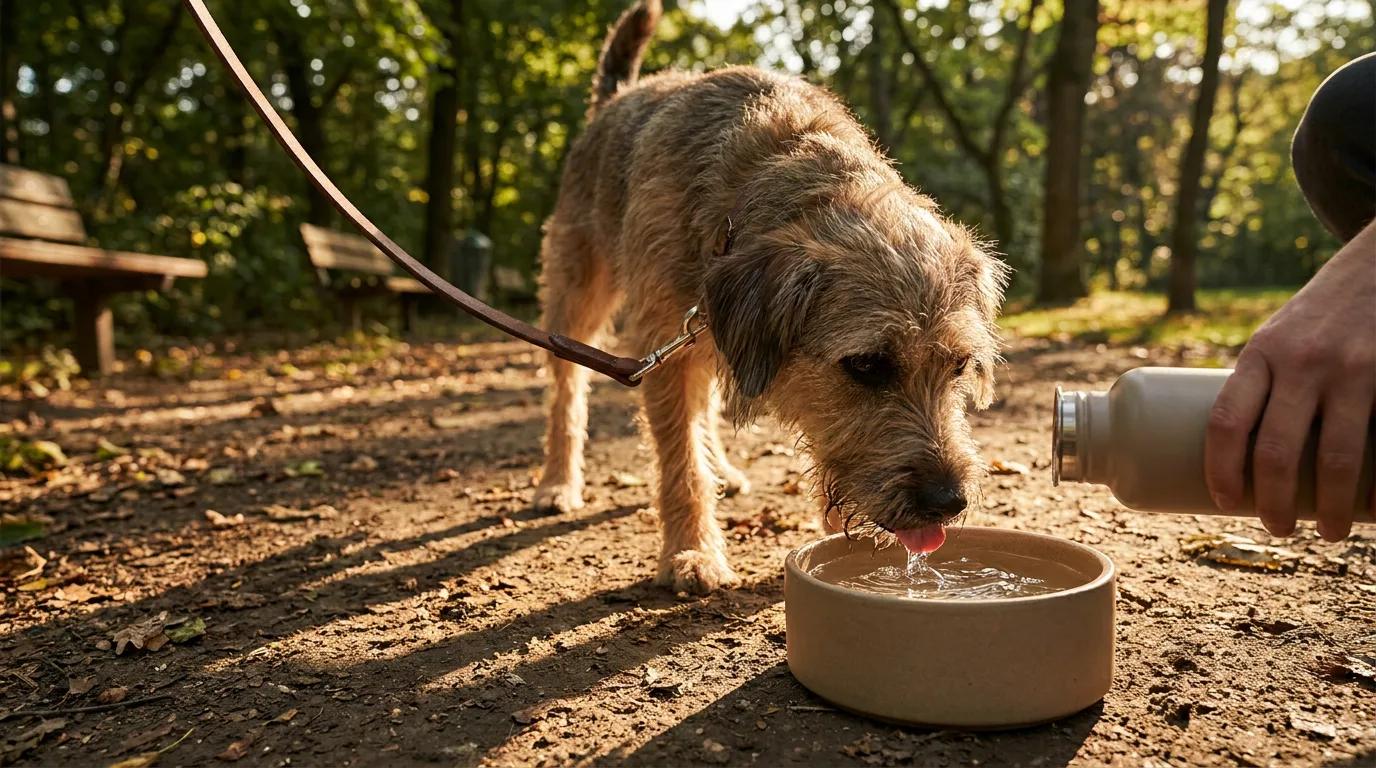
Comfortable drinking access matters during the walk; practical cleaning access matters when you get home.
Petful is reader supported. As an affiliate of platforms like Amazon and Chewy, we may earn a commission when you buy through links on this page. There is no extra cost to you.
The best dog water bottle gives your dog comfortable access to water and gives you a practical way to carry, dispense and clean it. An attached squeeze bowl can simplify a quick stop, a collapsible bottle saves space when empty, and a detachable bowl lets your dog drink without you holding the bottle over their mouth.
Our four picks cover those different routines. We compared manufacturer specifications and care instructions, rather than conducting hands-on tests. The useful differences extend beyond capacity: consider what your free hand must do, where leftover water goes and which parts you can separate afterward. For simple squeeze serving into an attached bowl, the Highwave AutoDogMug is the pick to compare first.
Our picks at a glance:
- Best for squeeze serving: Highwave AutoDogMug, squeeze to fill the attached bowl, then release to return unused water to the bottle.
- Best collapsible bottle: Vapur EZ Lick, the reservoir folds when empty, and a lick-activated PupCap replaces the bowl.
- Best detachable bowl: Kurgo The Gourd H2O, a drinking top for you and an 8-ounce bowl that snaps off for your dog.
- Best compact bottle: Springland Travel Dog & Cat Water Bottle, a 15-ounce attached-bowl bottle with a locking design and an aluminum carabiner.

Sign up for expert-backed reviews and safety alerts all in one place.
Best Dog Water Bottle Picks Compared
Choose drinking access first, then compare capacity and cleaning access. An open bowl suits familiar lapping, a lick-activated cap requires a different drinking action, and a detachable bowl separates serving from carrying. A leak-resistant closure does not establish that a dog will drink neatly from the bottle.
What is the best water container for dogs?
For outings, the best container is one your dog will use comfortably and you can clean thoroughly. A bottle-and-bowl combination is a sensible starting point if your dog already drinks readily from an open bowl. A compact dispenser is useful only if you can operate it while managing the leash. Among these picks, the Springland Mini is the compact attached-bowl option, with a locking design and an aluminum carabiner.
Before choosing, distinguish three separate jobs:
- Carrying: The bottle needs enough water and a secure place in your bag.
- Serving: Your dog needs room to drink without you struggling with the dispenser.
- Cleaning: The reservoir, drinking surface and connecting parts need accessible care instructions.
| Exact bottle | Capacity and format | Drinking access | Leftover water | Cleaning access | Best fit and main tradeoff |
|---|---|---|---|---|---|
| Highwave AutoDogMug, Blue, 20 oz | Polypropylene squeeze bottle | Attached open bowl | Returns when pressure is released | Hand wash or top-rack dishwasher | Simple squeeze serving; a locking feature is not confirmed for this older model |
| Vapur EZ Lick, Element Water, 23 oz | Flexible polyethylene and nylon bottle | Rollerball PupCap | No open bowl to drain | Remove cap and carabiner; open bottle for top-rack washing and uncapped drying | Folds when empty; your dog must accept the lick-activated cap |
| Kurgo Gourd H2O, Coastal Blue, 24 oz | Rigid bottle with an 8-ounce detachable plastic bowl | Pour into the separate bowl | No automatic return mechanism described | Detachable bowl; top-rack dishwasher safe | Human drinking top and dog bowl; requires a separate pouring step |
| Springland Mini, Lilac, 15 oz | Polypropylene squeeze bottle with lock | Attached open bowl | Returns when pressure is released | Bowl unscrews and straw detaches; hand wash or top-rack dishwasher | Compact everyday option; smallest reservoir here |
Product labels can obscure these differences. “Auto” or “automatic dog water bottle” may describe the dispensing mechanism, not unattended drinking. Likewise, a “no drip” or “leak proof” claim concerns containment, not splashing at the bowl.
If you want a metal bottle, a silicone dog water bottle or a bottle with a food container, check the entire design before substituting it for these picks:
- A metal reservoir is not automatically insulated.
- A silicone bowl does not mean the reservoir folds.
- A food container adds another compartment to empty, wash and dry.
- A human-and-dog bottle needs distinct drinking surfaces, not merely enough capacity for both.
Bowl-mouth dimensions are not available for these picks, so judge fit on your own dog, not by breed.
Portable Bottle Picks and Their Tradeoffs
Highwave AutoDogMug Portable Dog Water Bottle & Bowl, Blue, 20-oz bottle
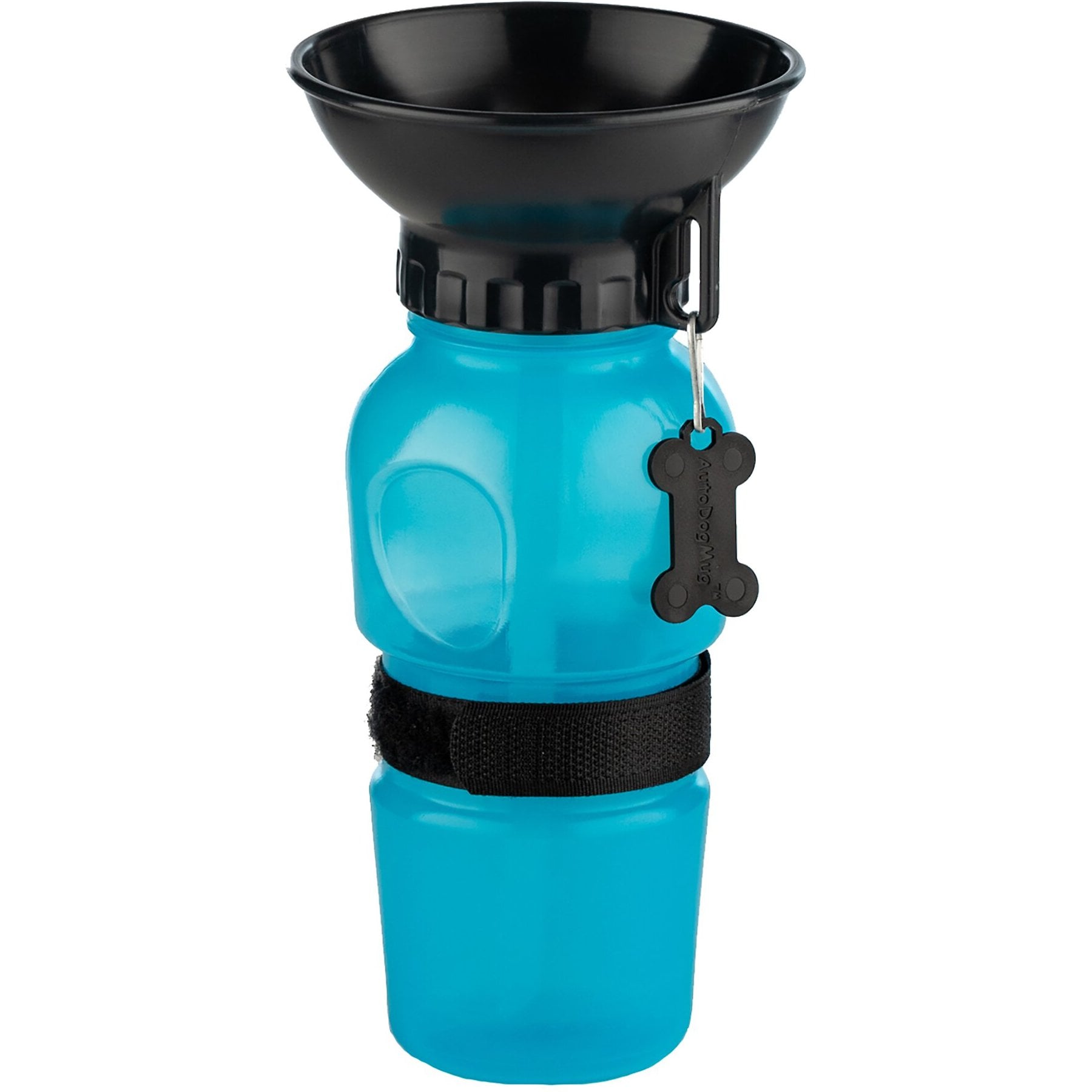
20-ounce squeeze bowl and return-water design
Petful may earn a commission when you click through to Chewy, at no extra cost to you.
The Highwave suits someone who wants an attached drinking bowl without managing a separate cup. Its removable strap provides a carrying or attachment option. Highwave’s original AutoDogMug specifications identify BPA-free polypropylene and the squeeze-and-release operation.
The practical tradeoff is that your hand remains part of the drinking setup. Releasing pressure returns the water, so consider whether holding and squeezing a bottle suits your grip.
- Attached open bowl gives a familiar lapping surface.
- Releasing the squeeze returns unused water to the bottle.
- 20-ounce BPA-free polypropylene bottle with a removable strap.
- Hand wash or top-rack dishwasher.
- Your hand holds and squeezes the bottle for the whole drink.
- The bowl cannot be left out for independent drinking.
- No lock listed for this original model; newer Springland features do not carry over.
Vapur EZ Lick Portable Dog Water Bottle, 23-oz, Element Water
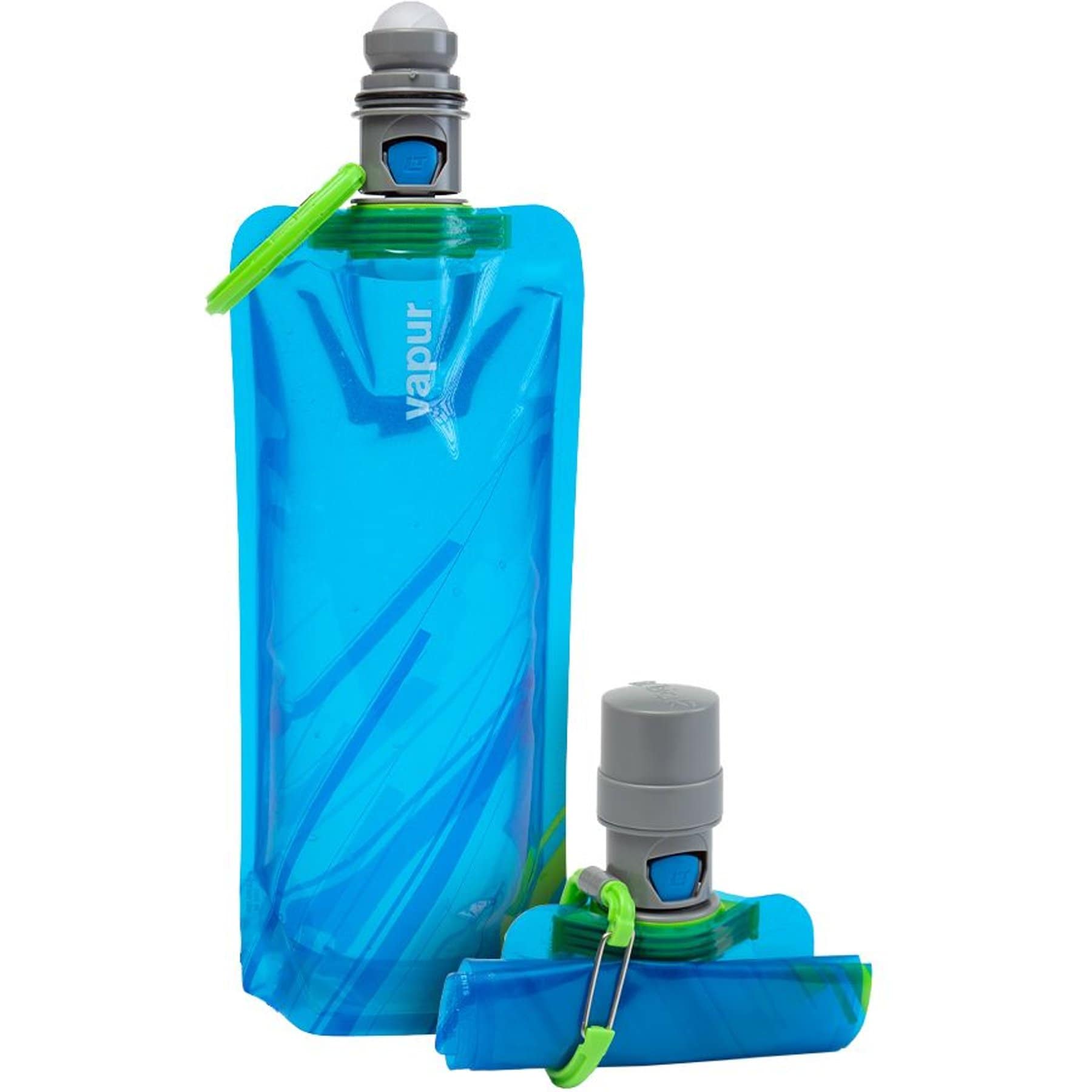
23-ounce collapsible bottle with lick-activated cap
Petful may earn a commission when you click through to Chewy, at no extra cost to you.
Vapur is the distinct choice for reducing empty-bottle bulk. Its EZ Lick design folds after use and replaces the bowl with a lick-activated PupCap. That makes it a different drinking experience, not simply a smaller version of a squeeze bowl.
Choose this format only after considering your dog’s willingness to use the cap. A compact bottle offers little advantage if you must also carry an open bowl because your dog refuses its drinking surface.
- Reservoir folds when empty to cut bulk in your bag.
- Lick-activated rollerball PupCap leaves no open bowl to drain.
- 23-ounce flexible polyethylene and nylon reservoir.
- Top-rack washable once the cap and carabiner are removed.
- Your dog must accept a lick-activated cap instead of an open bowl.
- Dogs that prefer an open water surface may need a separate bowl.
- Reservoir must be opened to wash and dry, not stored folded while damp.
Kurgo The Gourd H2O Dog Water Bottle & Bowl, Coastal Blue, 24-oz bottle
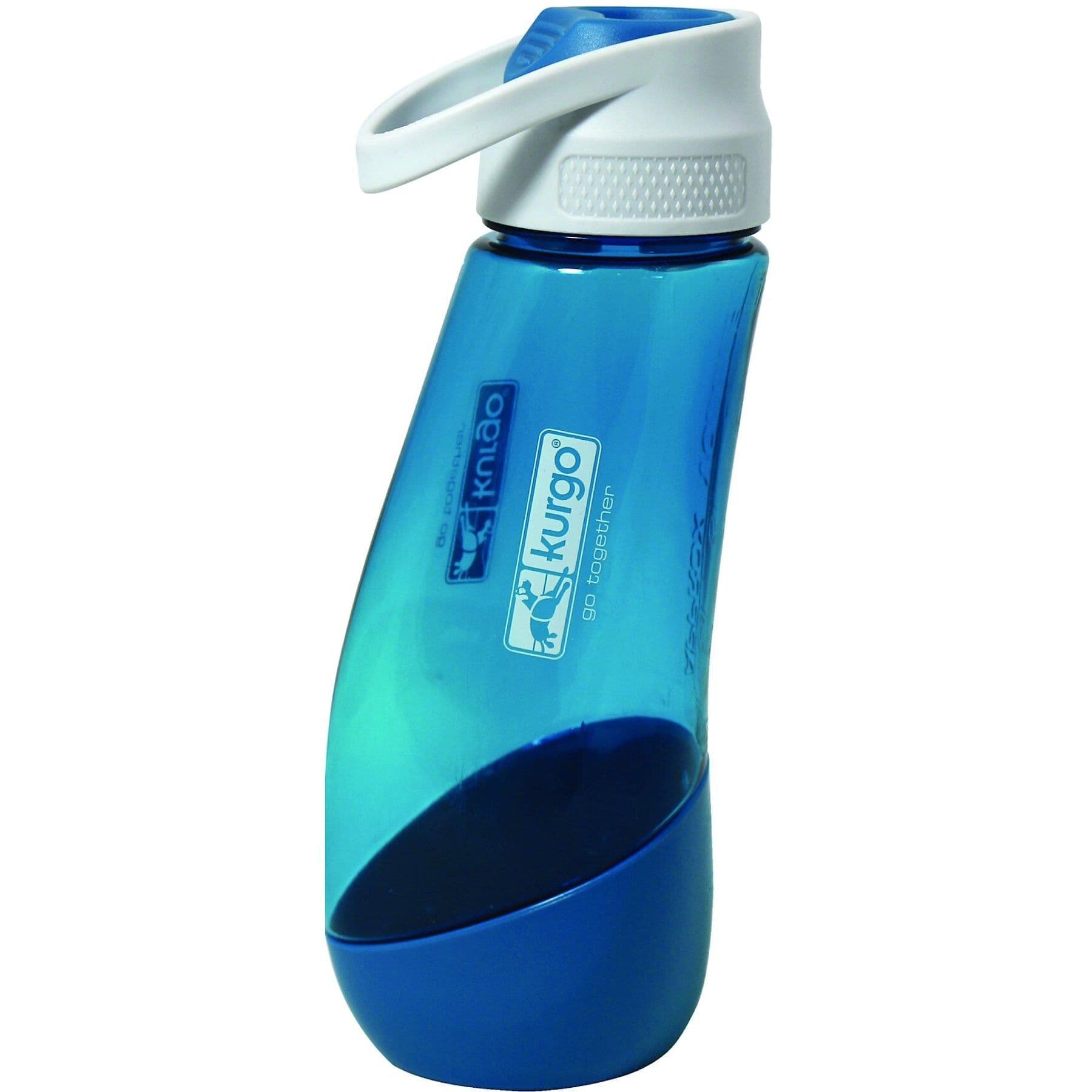
24-ounce bottle with detachable bowl
Petful may earn a commission when you click through to Chewy, at no extra cost to you.
The Gourd is the clearest match for someone who wants one carrying unit with separate human and dog drinking surfaces. Kurgo’s design pairs a drinking top with a bowl that snaps onto the bottom. The maker lists it as PVC- and BPA-free.
That separation gives you more freedom over where to position the bowl, but you must detach it, pour and reattach it. Consider whether your usual stops provide a suitable place to serve water.
- Separate human drinking top and snap-on dog bowl in one unit.
- Detachable 8-ounce bowl can be set down where it suits the stop.
- 24-ounce rigid bottle listed as PVC- and BPA-free.
- Bowl is top-rack dishwasher safe.
- Serving takes extra steps: detach the bowl, pour, then reattach.
- No squeeze-to-serve or automatic water return.
- Bowl capacity is separate from the bottle, not extra water carried.
Springland Travel Dog & Cat Water Bottle, Lilac, 15-oz
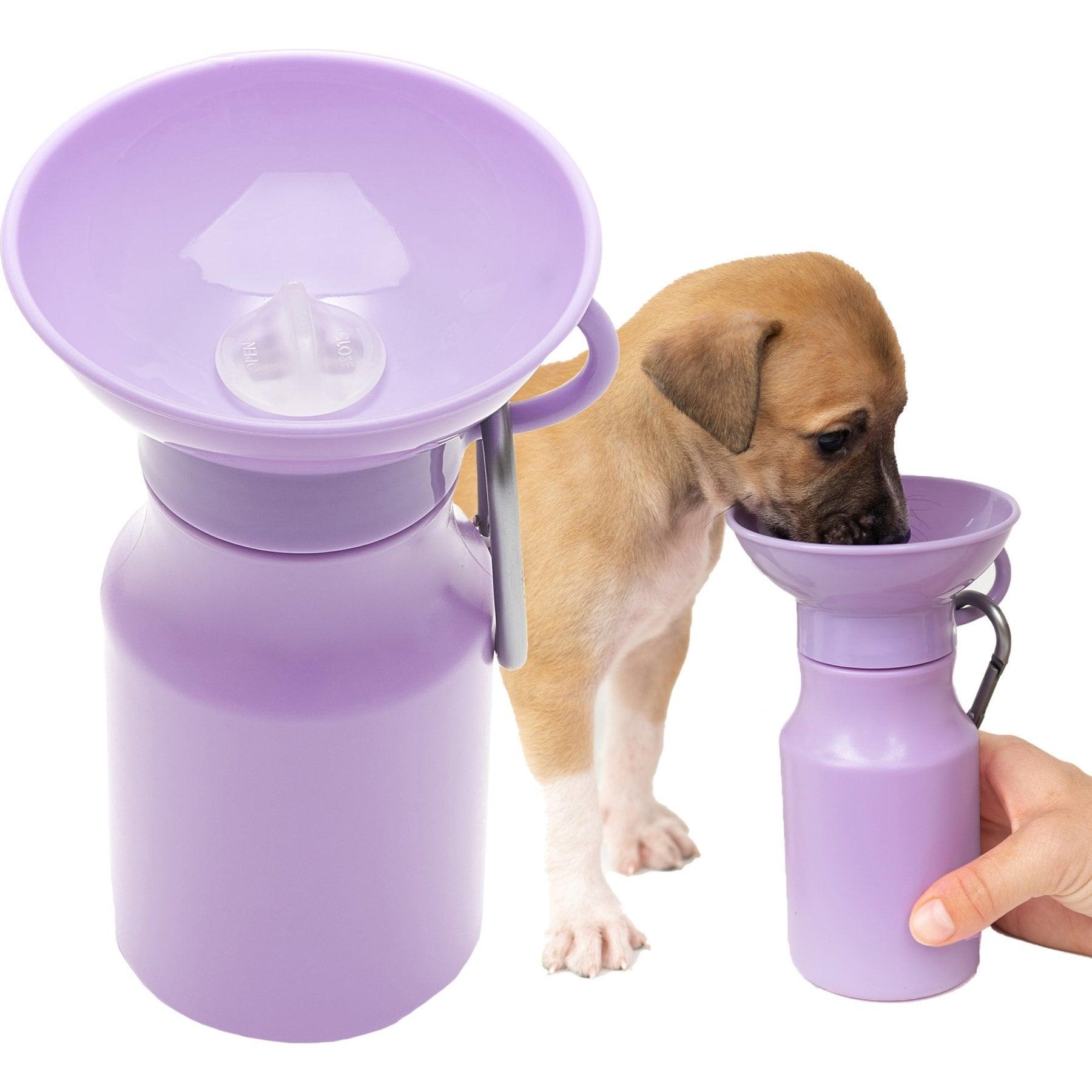
15-ounce compact squeeze bowl
Petful may earn a commission when you click through to Chewy, at no extra cost to you.
The Springland Mini, formerly sold under the Springer name, combines an attached bowl with a locking design and aluminum carabiner. It is the compact choice here for an everyday outing with a known refill plan.
The smaller reservoir is the main compromise. Choose it because its size suits the trip, not because “Mini” establishes that the bowl fits every small dog.
- Compact attached-bowl bottle with a locking design.
- Aluminum carabiner for clipping to a bag.
- Releasing pressure returns water to the bottle.
- Bowl unscrews and straw detaches for hand or top-rack washing.
- 15 ounces is the smallest reservoir here.
- Needs a refill plan or a larger reserve beyond short outings.
- The Mini name does not mean the bowl suits every small dog.
Portable Water Bottles for Travel
A portable dog water bottle should suit the way you stop, not just the way you pack. On a road trip, a detachable bowl can work well during a longer break. During a brief sidewalk stop, an attached dispenser may require fewer loose pieces. For either routine, consider the bottle when full, when partly empty and after your dog has finished drinking.
A large portable dog water bottle may offer more reserve, but size also changes where it fits and how easily you can hold it. Check your actual bag pocket rather than assuming a bottle will fit because the product photo looks compact.
Compare the whole stop
Before buying a travel dog water bottle and bowl, walk through this sequence:
- Retrieve it: Can you reach the bottle while maintaining control of the leash?
- Prepare it: Does the drinking setup require unlocking, unfolding, detaching or pouring?
- Offer water: Can you hold the drinking surface steadily at a comfortable position?
- Finish: Where does leftover water go, and is the outside still wet?
- Pack it: Can you close it properly without wetting the surrounding contents?
- Clean it later: Will you have access to the tools and drying space its design requires?
For a dog that drinks in several short bursts, an attached dispenser keeps everything together. A separate bowl gives you more positioning flexibility but leaves another piece to handle. Neither arrangement eliminates the need to stop and pay attention to your dog.
The Kurgo Gourd’s detachable-bowl format is worth considering if you prefer longer, settled breaks. For a travel bag that must pack down after the water is used, the Vapur EZ Lick’s folding format addresses a different problem.
Pack for refills and cleanup
An on-the-go bottle does not need to hold your entire trip’s supply if you have a dependable way to refill it. For a car journey, distinguish the small container you offer at each stop from the reserve water you carry.
Keep these items accessible:
- The filled bottle and any separate bowl it requires.
- Additional water appropriate to the outing.
- A small towel for the outside of the bottle and wet drinking area.
- The bottle’s cap, cover or other removable pieces.
The best portable dog water bottle is the one you can return to service easily at the next stop. A design that is convenient once but awkward to close or repack can become frustrating over a full day of travel. For planning the rest of a car journey, Vetstreet’s guide to road trips with your dog covers more than water.
Squeeze Bowls, Dispensers and Lick-Activated Bottles
A dog water bottle dispenser controls how water reaches your dog. The reservoir shape tells you relatively little about that experience: two bottles may carry similar amounts while requiring very different actions from you and your dog.
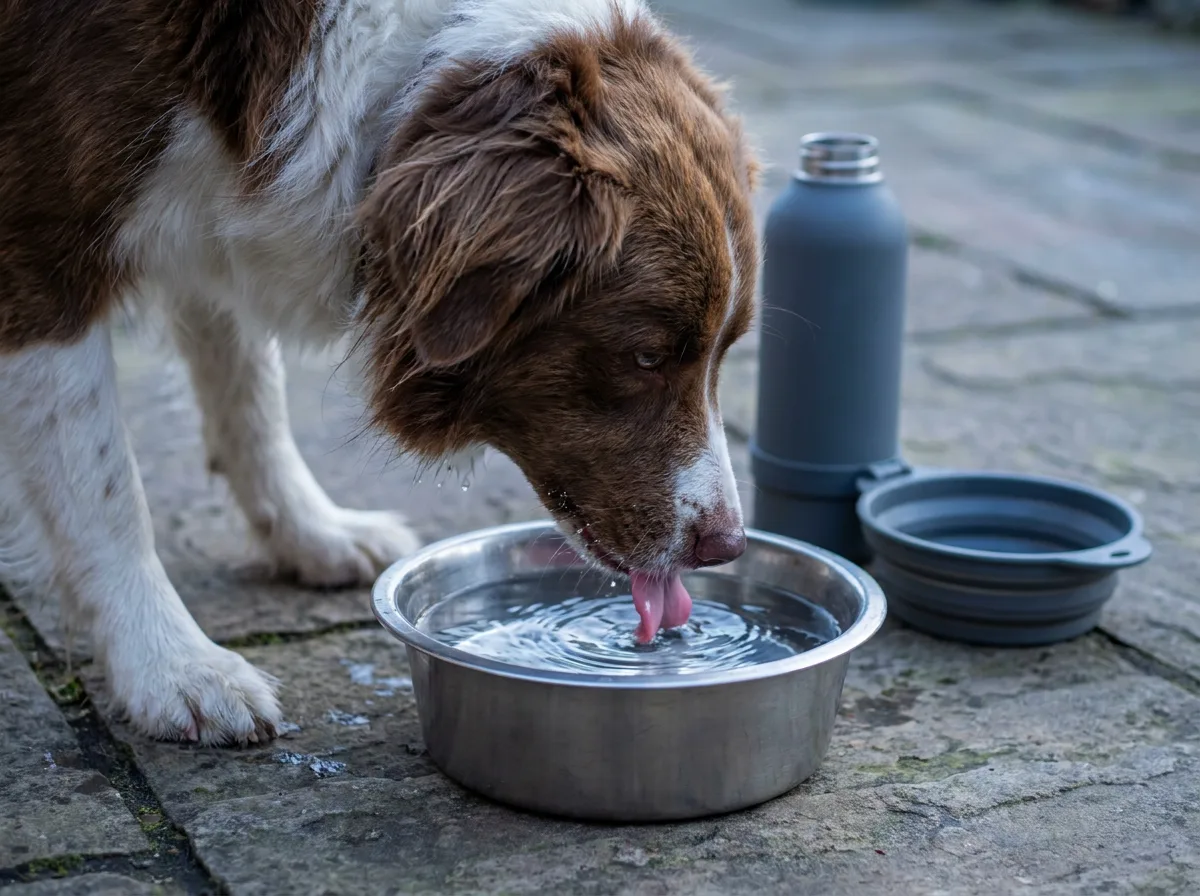
Squeeze bottles with attached bowls
With this format, you support the bottle while supplying water to the bowl. The benefit is fewer separate pieces to deploy. The compromise is that dispensing and supporting the drinking surface happen in the same hand.
Before choosing a squeezable dog water bottle, consider:
- Whether you can comfortably maintain your grip.
- Whether you need your other hand for a leash, walking aid or bag.
- Whether your dog drinks calmly from a held container.
- Whether you want water to remain available in a bowl after you let go.
The 20-ounce Highwave AutoDogMug fits this held-bowl routine. Do not confuse one-handed dispensing with a bottle that can be left out for independent drinking.
Lick-activated caps
A lick-activated bottle supplies water through a small contact point rather than presenting an open bowl. Its appeal is the absence of a bowl to fill and drain. Its limitation is acceptance: a dog that drinks readily from a bowl may not use a valve or rollerball right away. If that adjustment takes time, Vetstreet’s water bottle training guide covers how to introduce it.
- Try a lick-activated cap in a relaxed setting before depending on it away from home. Count real drinking, not one exploratory lick, as the sign your dog has accepted it.
If your dog keeps seeking the familiar bowl, that is useful purchasing information. If your dog seems reluctant to drink from any container, not only a new cap, WebVet’s guide to a dog not drinking water explains possible causes.
Folding bottles and folding bowls
“Collapsible dog water bottle” can describe different things. Establish exactly which part folds:
- The reservoir: A flexible bottle can take up less space after it is emptied.
- The bowl: A folding bowl may pack against a bottle whose reservoir remains rigid.
- A separate accessory: A collapsible bowl can travel beside an ordinary water bottle.
A foldable bottle does not become smaller while holding the same full volume of water. Its storage advantage comes later. Similarly, a folding bowl needs enough room to open properly before your dog can use it.
For every format, inspect the return-water path as well as the outgoing flow. A mechanism that draws bowl water back into the reservoir solves a handling problem. It does not filter that water or establish a hygiene benefit. The Highwave AutoDogMug is one example of that return path: releasing pressure returns the water to the bottle.
Choosing a Bottle for Walks and Hikes
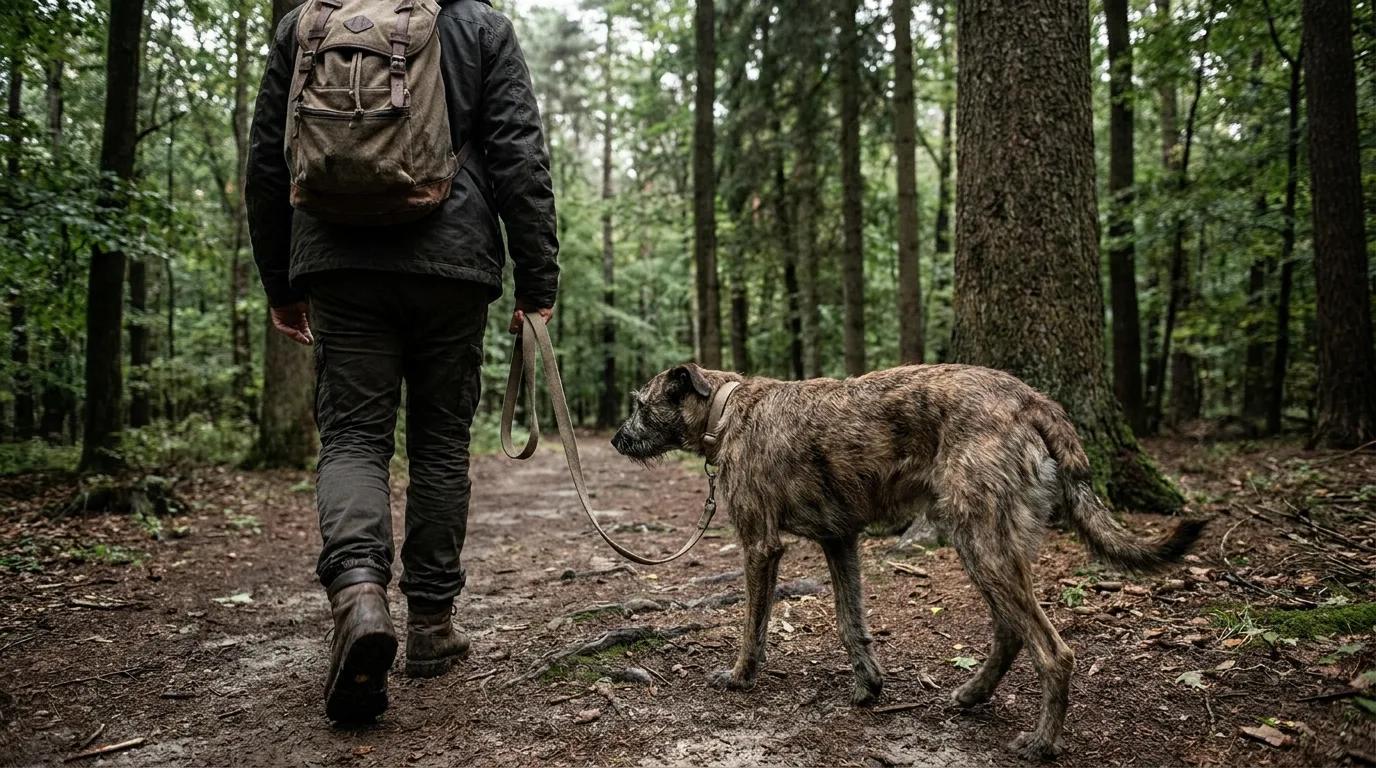
For a neighborhood walk, prioritize easy access and a routine you can manage while holding the leash. For a hike, add carrying comfort, reserve water and the ability to use the bottle at repeated stops. The best dog water bottle for walking around the block may be too small or inconvenient for a longer outing.
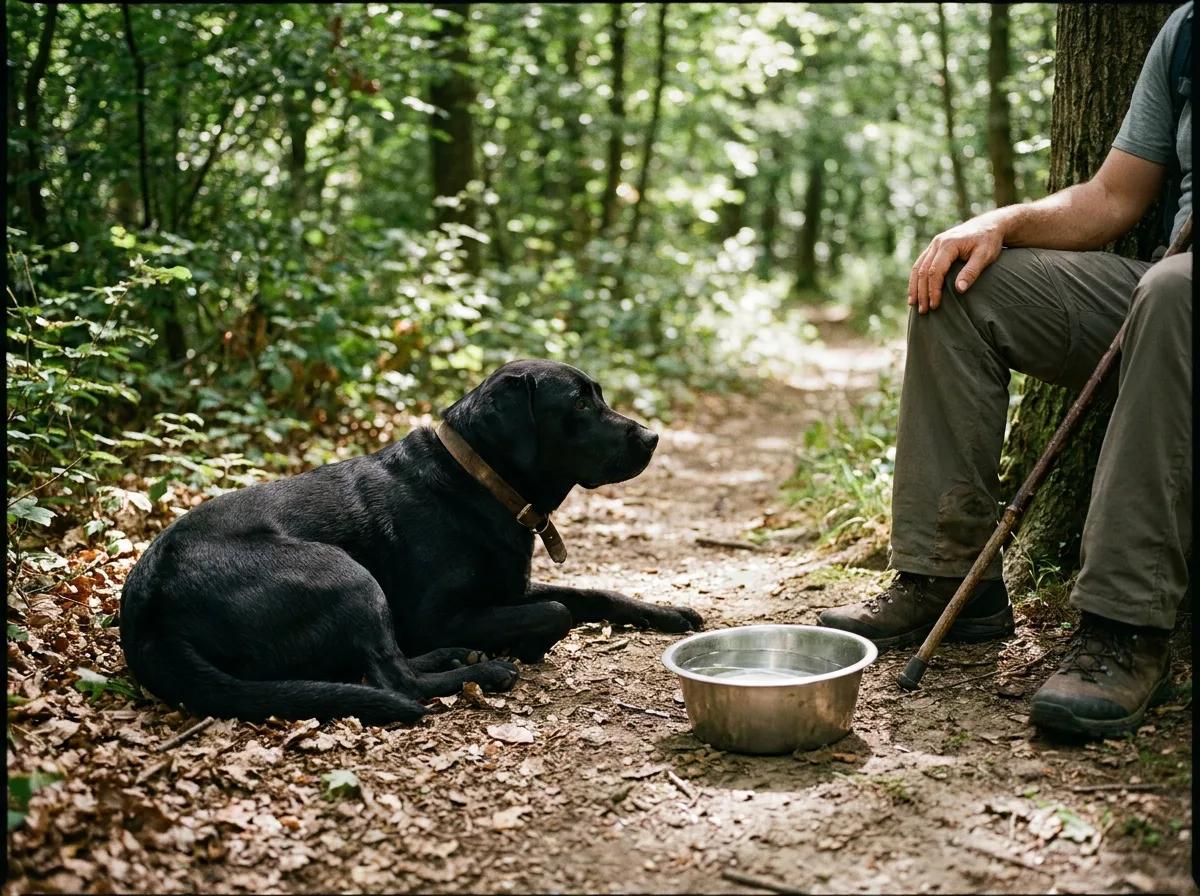
Everyday walks
Think about the route you take most often. A bottle that fits in your usual walking bag is more useful than a larger one you routinely leave behind. However, compactness should not come at the expense of the water you need to carry.
For an everyday walking bottle, check:
- Whether its filled shape fits the pocket you intend to use.
- Whether retrieval requires putting down another item.
- Whether the cap or drinking surface rubs against dirty gear.
- Whether you can close it correctly after a brief stop.
- Whether its carrying loop or clip suits your bag.
The 15-ounce Springland Mini is the compact option in this group. Decide whether that capacity fits your normal route before deciding whether the carrying convenience is worth it.
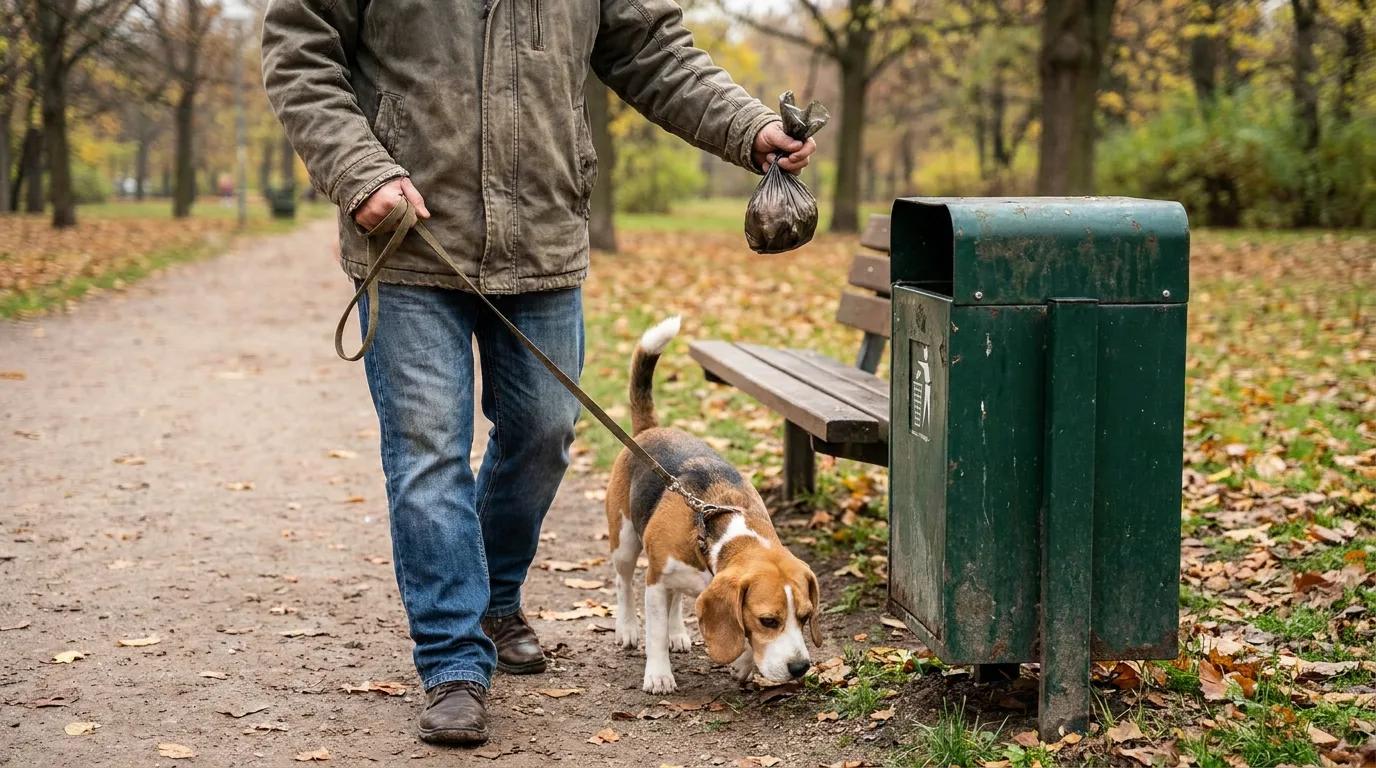
Keep water accessible alongside the other supplies you actually use. Our dog poop bag comparison covers another everyday item that benefits from being easy to reach without unpacking the bag.
Longer hikes and field outings
For hiking, plan the water supply before choosing its dispenser. Include the return journey and the possibility that the outing takes longer than expected. A route’s advertised distance does not tell you everything about its conditions or available refills.
Use the bottle as one component of that plan:
- Identify where reliable refill water will be available.
- Decide how much reserve you will carry between those points.
- Choose a serving format your dog already accepts.
- Position it where you can retrieve it during breaks.
- Recheck the remaining supply as the trip progresses.
Our dog hiking guide covers the broader preparation. If you are considering dog-worn storage, compare the fit and carrying requirements in our guide to dog hiking backpacks before adding a filled bottle.
A bottle marketed for a hunting dog faces the same practical questions about access, carrying and cleaning. A field-oriented label says nothing about impact resistance, sufficient capacity or suitability for your dog’s mouth. None of these four picks was tested by Petful for hunting use or trail durability.
Bottle Materials and Cleaning Access
Choose material and cleaning access together. A BPA-free dog water bottle can still have a narrow opening, a valve or a straw that requires separate attention. Conversely, a simple container may be easy to inspect but inconvenient to carry or serve from.
The most useful question is: Can I reach, rinse and dry every part that contacts the water? Material claims alone do not answer it.
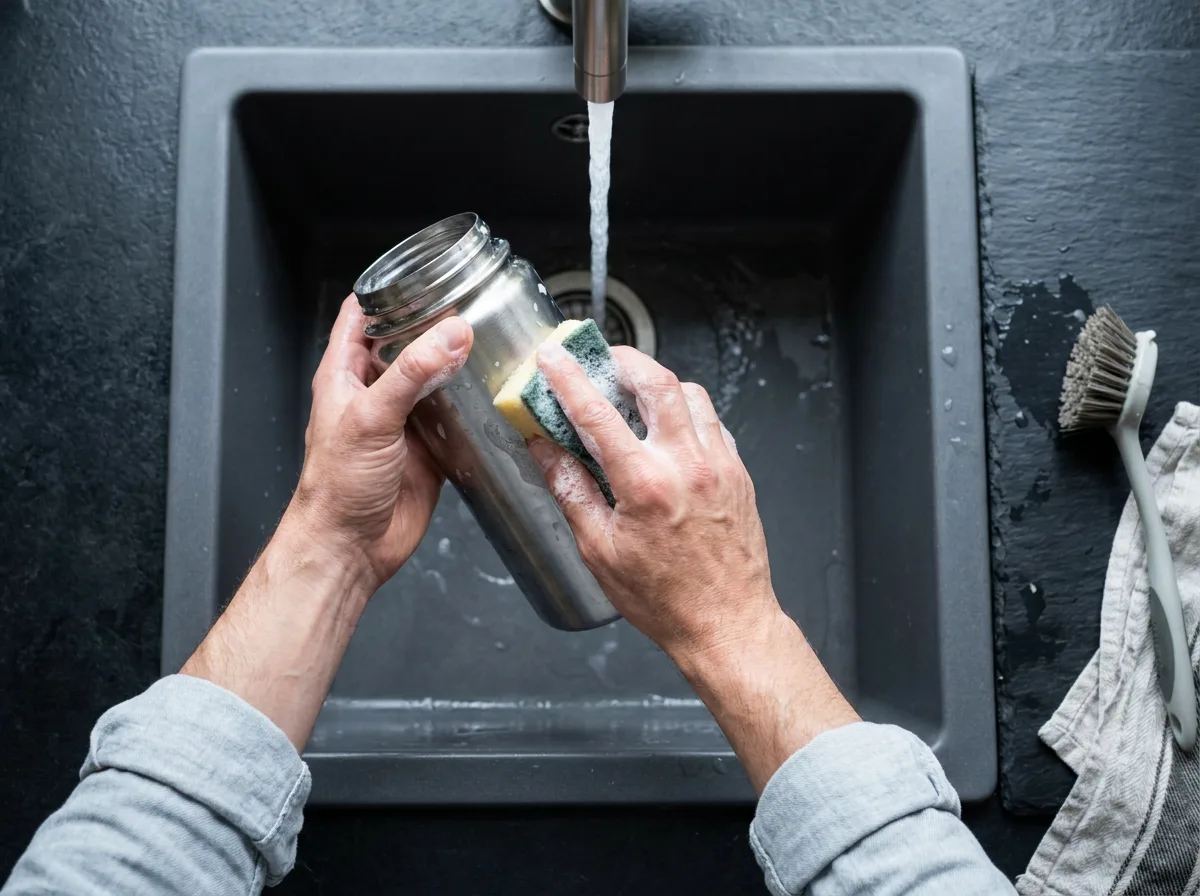
Plastic, stainless steel and insulation
The selected bottles use plastic reservoirs. Their material descriptions help distinguish them, but none is recommended here as an insulated dog water bottle.
If you prefer a stainless steel dog water bottle, evaluate the exact construction:
- Insulation: Look for stated insulated construction and a temperature-retention period; stainless steel alone provides neither.
- Drinking attachment: A metal reservoir may still use a plastic or silicone bowl, cap or seal.
- Care: Check the instructions for every component rather than applying the reservoir’s instructions to the entire assembly.
- Handling: Compare the filled bottle’s shape and weight with the bag and grip you will use.
A stainless bottle can also serve as a reservoir for a separate bowl. That is a reasonable format to consider if you already own a suitable bottle, although it will not provide the same all-in-one dispensing action as an attached squeeze bowl.
Cleaning sequence: separate, wash and dry
A dishwasher-safe label should lead to the care directions, not replace them. Top-rack instructions matter, and removable components still need to be separated as directed.
Two of these designs make the difference particularly clear:
- Vapur: The manufacturer instructs owners to remove the cap and carabiner, open the reservoir and position its spout over top-rack prongs. It then dries uncapped.
- Springland: The bowl unscrews and the straw detaches before hand washing or top-rack cleaning.
For any bottle, use the instructions supplied with the exact model you receive. Do not force apart a valve because another brand’s cap is removable. Likewise, check whether a clip, strap or cover shares the reservoir’s care requirements.
- Read the care directions for the exact model first. Of these picks, the Vapur reservoir is opened, set over top-rack prongs and dried uncapped, while the Springland bowl unscrews and its straw detaches before hand washing or top-rack cleaning. Whatever the material, make sure every part is dry before you close the bottle for storage.
Inspect the parts you will handle every day
Before committing to a design, identify the surfaces that need attention after an outing:
- The drinking bowl or mouth-contact point.
- The reservoir opening and inner surface.
- Threads and sealing surfaces.
- Any removable straw or tube.
- Caps, covers and recesses that can retain water.
After washing, check that the parts are dry before closing the bottle for storage. A collapsible reservoir needs room to remain open during that process; folding it flat immediately after rinsing defeats the space needed for drying. The Vapur EZ Lick is the folding pick here, and its maker directs owners to open the reservoir and let it dry uncapped.
This is also where a combined food-and-water container deserves scrutiny. Added storage may be useful, but removable food compartments, connecting threads and lids add cleaning tasks. Choose that arrangement only if the extra compartment solves a problem you actually have.
Matching Bowl Size and Capacity to Your Dog
Choose bowl fit and reservoir capacity separately. A big dog water bottle may hold plenty of water while offering a cramped drinking surface. A small dog water bottle may be easy to carry but still place its rim or dispenser awkwardly for the dog using it.
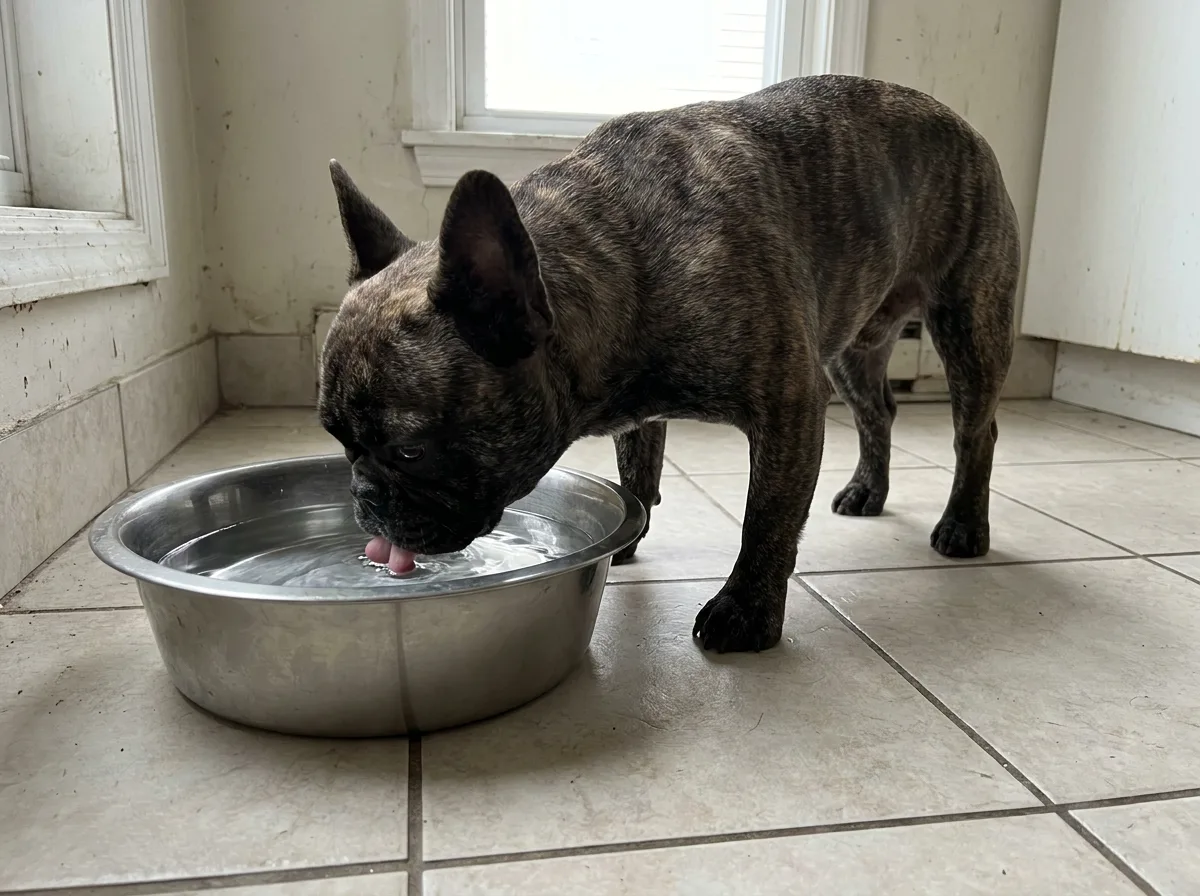
Capacity tells you what the bottle holds, not how much water your dog actually receives. Water can remain in the reservoir, be left in the bowl or be spilled during serving. Compare the amount carried with the way your dog drinks rather than treating the label as a promise about the length of an outing.
Check mouth access before relying on capacity
When trying a bottle at home, watch the interaction:
- Can your dog reach the water without repeatedly bumping the rim?
- Can you hold or position the bowl steadily?
- Does your dog drink normally, or repeatedly pull away?
- Can you refill the drinking area without interrupting every few laps?
- Is the bottle comfortable for you to support throughout the stop?
A larger dog does not automatically need a special drinking mechanism, and a small dog does not automatically need the smallest reservoir. Trip length, refill opportunities and your carrying arrangement also matter.
For more than one dog, include the time needed to offer water to each. A small attached bowl may require several separate servings. A detachable bowl can change how you organize the stop, but its shape still needs to work for the dogs using it. The Kurgo Gourd H2O is the detachable-bowl pick here, which gives you more freedom over where to set the bowl for each dog.
Understand bottle capacity versus bowl capacity
The reservoir is the amount carried inside the bottle. The bowl is the amount available in the drinking area at one time. These measurements answer different questions.
- Kurgo lists the Gourd’s 24-ounce bottle and 8-ounce detachable bowl separately. The bowl is filled from the bottle during use, so do not add the two numbers when planning how much water you carry.
For example, Kurgo lists its Gourd bottle and detachable bowl separately. The bowl is filled from the reservoir during use.
Ask the same question of any product with an attached food container or multiple compartments: which number describes water storage, and which describes a serving vessel? A larger total product capacity can conceal a smaller water reserve than you expected.
Why are some dogs such messy drinkers?
Dogs move water into their mouths by lapping, and the motion itself can create splashes. Researchers studying 19 dogs found that tongue movement pulls a column of water upward; some displaced water moves sideways rather than entering the mouth. The mechanics help explain why an enthusiastic drinker can leave a wet area even when the bowl works normally. Research on canine lapping
For buying purposes, distinguish splashing during drinking from water escaping a closed bottle. A lock may address the latter without changing the former.
Choose a drinking surface your dog can use comfortably, hold it steadily and expect some cleanup. Do not select a cramped opening solely because a product promises less mess. Nor should ordinary splashing be treated as proof that a particular bottle is defective.
Dog Water Bottle Questions
They can be useful for carrying clean water away from home when your dog accepts the drinking surface. Introduce a new design at home and confirm that your dog drinks comfortably before depending on it during an outing.
Highwave and Springland describe designs that return unused water from the bowl to the reservoir. That is a mechanical feature, not filtration or protection against contamination. Do not return visibly dirty water simply because the mechanism permits it.
The manufacturers provide top-rack dishwasher instructions for these four designs, but preparation differs. Follow the exact model’s cleaning directions for removing caps, bowls, clips and internal parts. Allow the parts to dry before reassembly.
The Kurgo Gourd is designed with a human drinking top and a separate bowl for the dog. Pour water into the bowl rather than letting the dog put its mouth on your opening. Wash both surfaces as directed; separating them does not establish sterile contents.
A leakproof claim is not a guarantee for every packing situation. Follow the closure instructions, inspect the seal and check the filled bottle before carrying it beside items that must stay dry. After cleaning, confirm that removable parts are correctly reassembled.
Do not assume every dog will accept a rollerball or lick-activated cap. Try it in a relaxed setting and confirm that your dog actually drinks, rather than only investigates it. If the mechanism is unsuitable, choose an open bowl.
A good dog water bottle is one your dog drinks from comfortably and you can carry, operate and clean easily. A bottle-and-bowl design such as the Highwave AutoDogMug or Kurgo Gourd suits dogs that already drink from an open bowl. The Vapur EZ Lick saves space once empty, and the Springland Mini suits short outings. Check which parts come apart for washing before you buy.
A portable water dispenser is useful when your dog accepts its drinking surface and you can operate it while managing the leash. It makes carrying and serving clean water easier on outings. A dispenser that returns bowl water to the reservoir does not filter it, and one-handed dispensing is not the same as a bowl your dog can use unattended. Introduce it at home first.

Coreen Saito is a pet writer and longtime shelter volunteer with more than a decade in animal rescue. She covers cat behavior, breed care, and the small, ordinary science of sharing a life with companion animals, with a particular focus on honest takes about the products and decisions that actually matter. At home in Arizona, she's outranked by Mac (a dog with the loudest opinion in the house), Rebel (a cat who governs by quiet authority), and Meri (an orange tabby who runs the late shift and the laundry basket). She writes about all three, plus the rescues that keep coming through her life, at LifeWithMinty.com.
Sign up for expert-backed reviews and safety alerts all in one place.