Best Dog Hiking Backpack: 4 Picks by Fit and Storage
Compare four dog-worn hiking packs by chest fit, storage, empty weight and removable saddlebags. Learn how to distinguish useful capacity from a suitable load and plan for water on the trail.
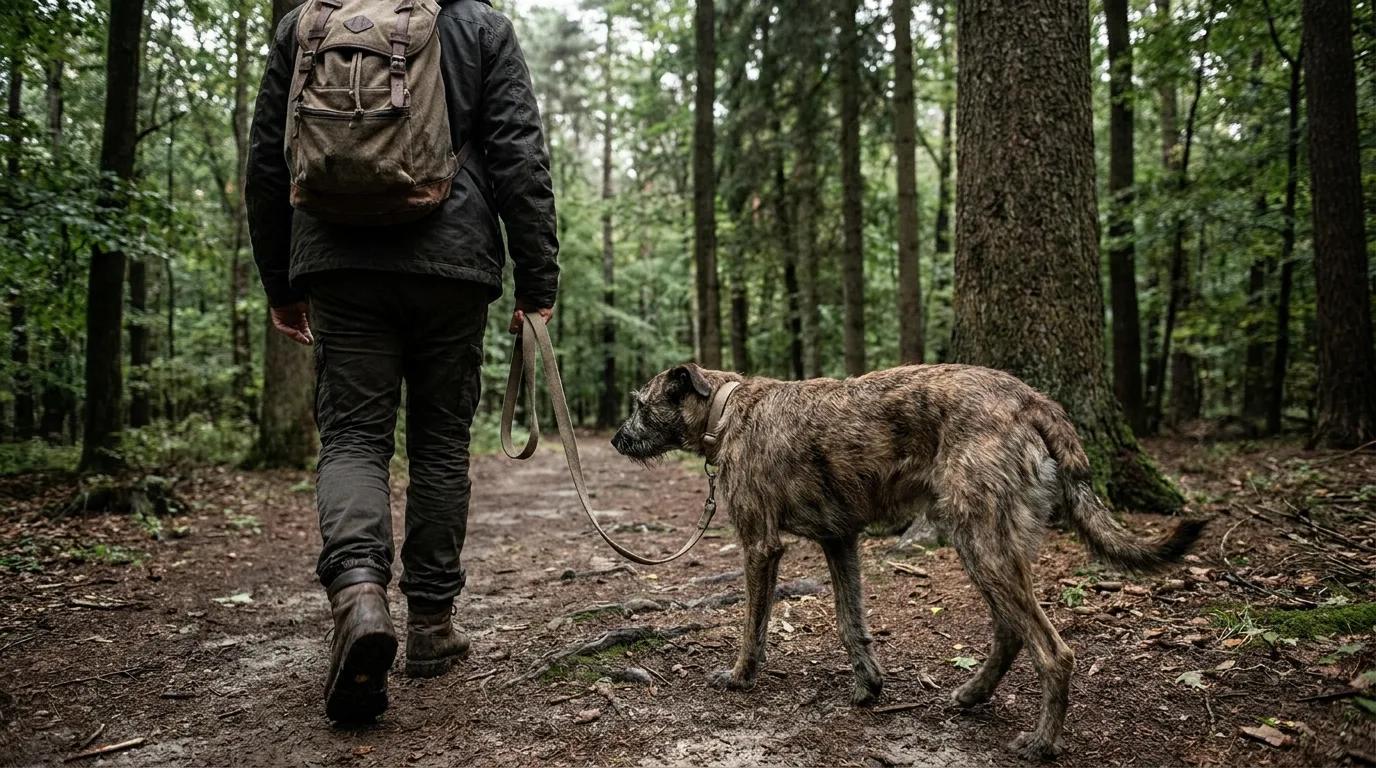
Compare chest range first, then decide whether features such as removable saddlebags suit your hikes.
Petful is reader supported. As an affiliate of platforms like Amazon and Chewy, we may earn a commission when you buy through links on this page. There is no extra cost to you.
The best dog hiking backpack starts with a harness that fits your dog, then adds the storage your outings actually need. A few organized pockets may be enough for short walks. Longer trips can make removable saddlebags and a clear packing plan more useful.
These are backpacks your dog wears to carry supplies. Our four picks compare fit, storage and construction using manufacturer information and exact product identities. We have not tested them on the trail, so we do not claim that one is the most comfortable, most durable or least likely to shift on every dog. For a day hike, the Wilderdog Pockets Dog Backpack in Small divides about 5 liters among four pockets.
Our picks at a glance:
- Best for day hikes: Wilderdog Pockets Dog Backpack, 9.5 ounces empty, with about 5 liters split across four pockets and a waste-bag dispenser.
- Best removable saddlebags: Ruffwear Palisades Pack, the saddlebags come off while the harness stays on, with 10 liters of total storage.
- Best adjustable bags: Kurgo Baxter Dog Backpack, stabilizer straps reposition the two saddlebags, with eight adjustment points across a 27–40-inch chest range.
- Best for simple storage: ZippyPaws Adventure Dog Backpack, dual side pockets and reflective detailing in the older Graphite design, for 28–32-inch chests.

Sign up for expert-backed reviews and safety alerts all in one place.
Best Dog Hiking Backpack Picks Compared
For organized day-hike storage, start with the Wilderdog Small. For a pack whose saddlebags can come off independently of the harness, the Ruffwear Palisades is the clearest choice here. The Kurgo Baxter offers adjustable saddlebag positioning, while the older ZippyPaws Graphite Large provides a simpler dual-pocket option with fewer confirmed measurements.
The size names are not comparable across brands. Ruffwear Small covers a 22–27-inch chest, while the selected ZippyPaws Large covers 28–32 inches. “Small” describes a manufacturer's size, not a guarantee that the pack fits a small dog.
Choose by the exact chest range and harness fit before comparing storage. Removable saddlebags are useful when you want to unload your dog without removing the harness. Published liters describe available space, not a suitable carrying weight for your dog.
The table separates total storage from capacity per side. We have not divided total liters in half and presented the result as a manufacturer measurement. It also shows which features each maker documents and which it leaves out.
| Exact selected pack | Chest range | Empty weight and storage | Adjustment and leash connection | Removable saddlebags | Water carriage and main limit |
|---|---|---|---|---|---|
| Wilderdog Pockets, Huckleberry, Small | Use Wilderdog's illustrated size chart; a numeric Small chest range is not confirmed here. | 9.5 ounces; approximately 5 liters total. Capacity per side not stated. | Four adjustment points; integrated harness and back-mounted leash ring. | Independent removal is not documented in the verified product description. | No included water bladder confirmed. Measure intended containers against the actual pockets. |
| Ruffwear Palisades, Red Currant, Small | 22–27 inches around the widest rib-cage area. | 19 ounces; 10 liters total. Capacity per side not stated. | Six adjustment points; three leash attachment points. | Yes. Harness can remain on without the saddlebags. | Current manufacturer description does not confirm included water bladders. More empty weight than Wilderdog Small. |
| Kurgo Baxter, standard Baxter, Coastal Blue | 27–40 inches; also check the 17–24-inch neck range. | Empty weight, total liters and per-side capacity are not confirmed from the primary specifications used here. | Eight adjustment points; adjustable saddlebag position and rear leash attachment. | Independent removal is not established by the fitting instructions. | No included water bladder confirmed. Broad strap adjustment does not establish fit on every body shape. |
| ZippyPaws Adventure, Graphite, Large, ZP521 | 28–32 inches in the manufacturer's older Graphite catalog. | Empty weight and liter capacities are not confirmed. Dual side pockets. | Exact adjustment count and leash-attachment specification are not confirmed for this older version. | Independent removal is not confirmed. | No included water bladder confirmed. Do not transfer features from the redesigned Pink or Teal version. |
If you specifically want a dog backpack with a water bladder, none of these listings establishes a complete, currently confirmed bladder package. The Palisades deserves a closer look for modular storage, but older descriptions of included reservoirs should not decide your purchase. Confirm the contents of the exact package before paying for that feature.
Our comparisons use the Wilderdog product specifications, Ruffwear Palisades specifications, Kurgo Baxter sizing chart and ZippyPaws' older manufacturer catalog. Missing measurements remain missing rather than becoming estimates.
Dog-Worn Packs and Their Tradeoffs
These four packs earn consideration for different reasons. The comparisons below explain what the documented features can help you do and where the information is less complete.
Color and size are included in each heading to keep the recommendation tied to the selected product. Check those details when shopping, especially for the older Graphite ZippyPaws design.
Wilderdog Pockets Dog Backpack, Huckleberry, Small
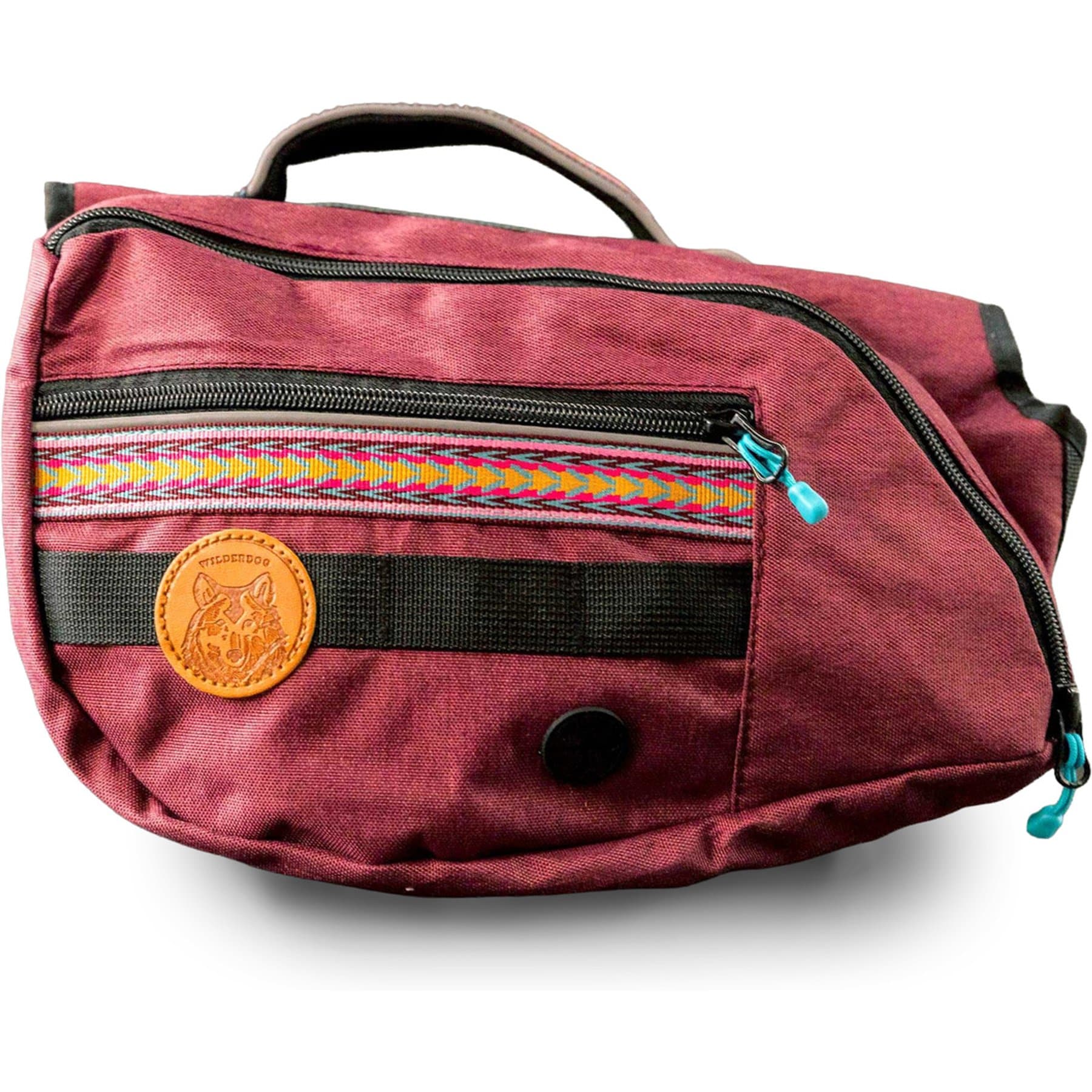
A small day pack with an integrated harness and organized saddlebags.
Petful may earn a commission when you click through to Chewy, at no extra cost to you.
Best fit here: organized storage for a day hike or a modest set of trail supplies. Wilderdog Small is the lighter of the two selected packs with confirmed empty weights. Its approximately 5-liter capacity is divided among two saddlebags with four pockets in total. That layout is useful if you want to separate small supplies rather than place everything into one compartment.
The built-in waste-bag dispenser is a practical distinction for routine walks. It gives a roll a designated place, while the other pockets can hold separate items. Think about what you need to retrieve during the walk and what can stay packed until a break.
- Wilderdog describes its cotton/polyester fabric as water resistant, not waterproof. A light shower and a stream crossing are different challenges, so give anything that must stay dry its own protection.
The principal comparison with the Palisades is not simply 5 liters versus 10 liters. It is whether you need the Palisades' removable storage system. Wilderdog's product description does not list detachable saddlebags; if you want to unload the bags and keep the harness on, that is the Palisades.
For shoppers whose outings call for organized, moderate storage, compare the Huckleberry Small's current offer after checking Wilderdog's illustrated sizing guide. Its Small designation alone is not enough to confirm fit. Tradeoff: Total volume is published, but Wilderdog does not publish the size of each pocket. Check the fit of any bottle or rigid container you intend to carry.
- 9.5-ounce empty weight, the lightest confirmed weight in this group.
- About 5 liters split across four pockets in two saddlebags.
- Built-in waste-bag dispenser gives a roll its own place.
- Integrated harness with a back-mounted leash ring and four adjustment points.
- Strap keepers secure loose ends; fabric is described as water resistant.
- Saddlebags are not described as removable while the harness stays on.
- Fabric is water resistant, not waterproof; protect anything that must stay dry.
- Wilderdog publishes no per-pocket dimensions, so check rigid bottles against the pockets.
- No numeric Small chest range; size from the illustrated chart.
Ruffwear Palisades Pack Reflective Dog Harness, Red Currant, Small
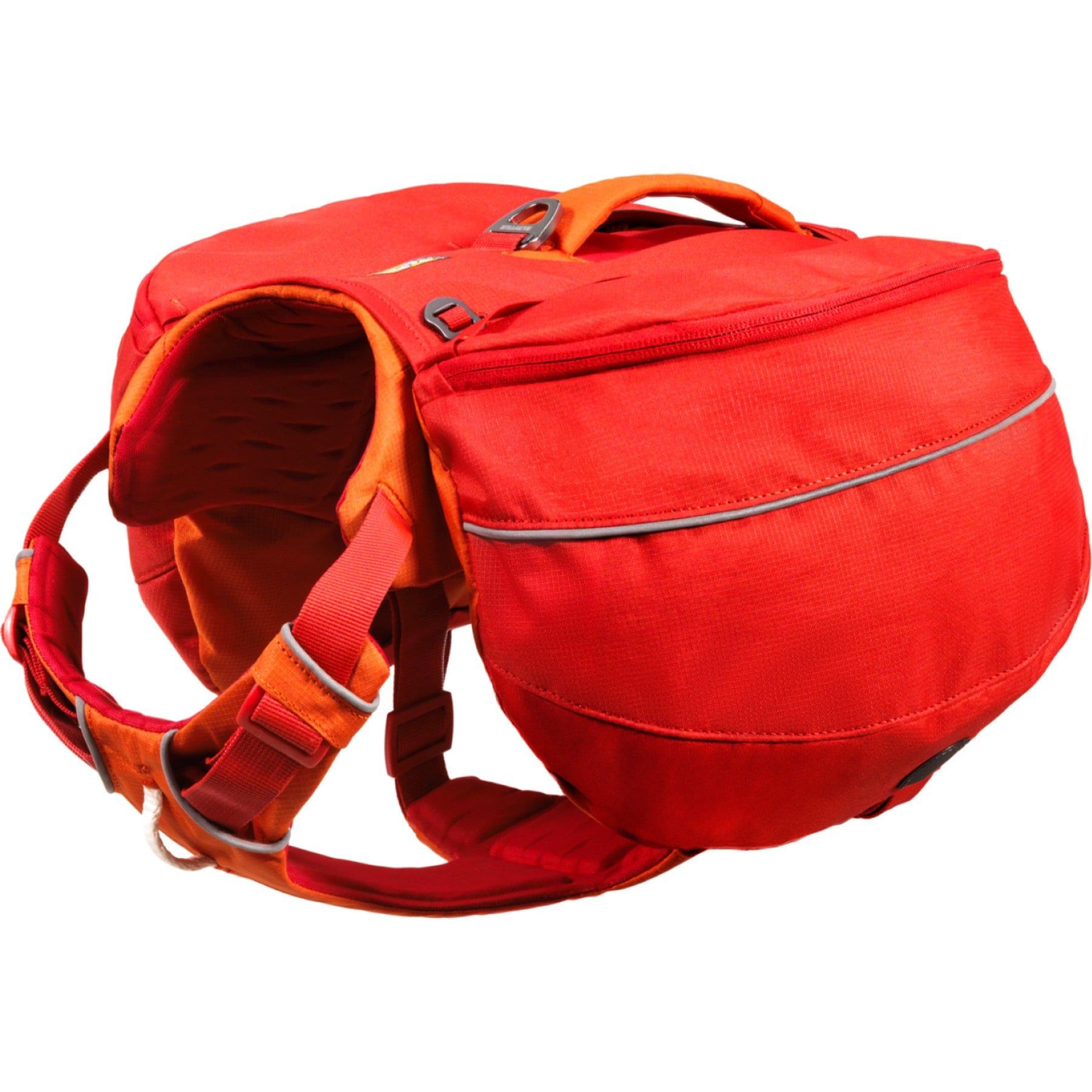
A higher-capacity pack with removable saddlebags.
Petful may earn a commission when you click through to Chewy, at no extra cost to you.
Best fit here: trips where removing the storage independently of the harness is genuinely useful. The Palisades' modular construction is its strongest distinction. You can take off the saddlebags while leaving the standalone harness on. That can simplify unloading at a rest stop or leaving supplies at camp before a shorter outing.
The selected Small has twice the listed total volume and twice the listed empty weight of Wilderdog Small. Those figures describe the products, not a reason to give a dog twice as much gear. Decide whether the additional space and removable construction earn their place in your setup.
If detachable storage is the feature you need, check the Red Currant Small Palisades package. Confirm the size and current contents before deciding whether it replaces any equipment you already own. Tradeoff: More storage comes with more empty pack weight. Ruffwear does not state per-side capacity or list water bladders in the current package.
- Saddlebags detach while the harness stays on, handy at breaks and camp.
- The harness works alone for a shorter walk after unloading.
- 10 liters total, double the Wilderdog Small, for larger light loads.
- Six adjustment points and three leash attachment points.
- Published 22–27-inch chest range, measured at the widest rib cage.
- 19-ounce empty weight, twice the Wilderdog Small.
- Current feature list names no water bladders; older descriptions may reflect another package.
- Ruffwear does not state capacity per side.
- The modular system adds complexity if you never detach the bags.
Kurgo Baxter Dog Backpack, Baxter, Coastal Blue
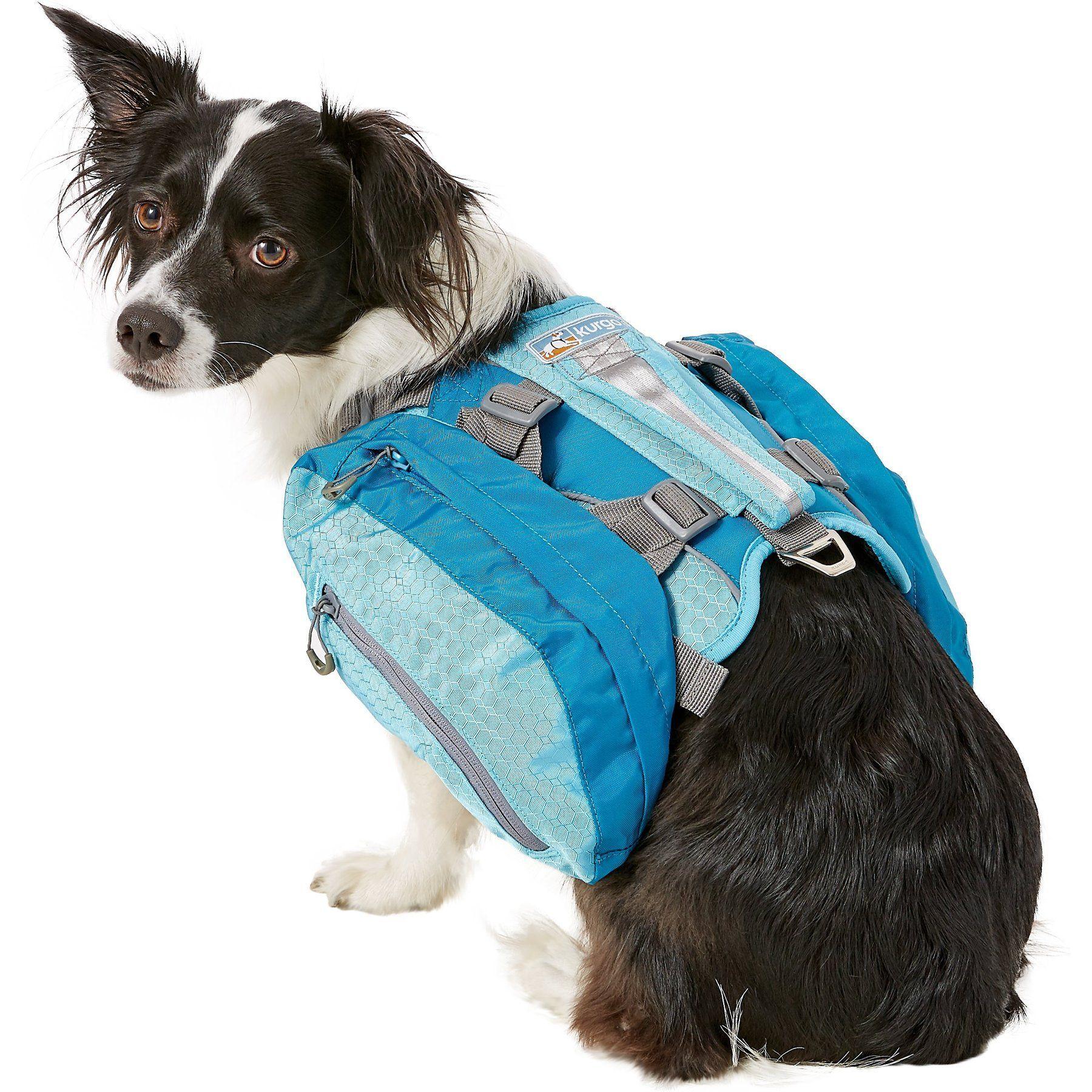
An adjustable two-saddlebag pack for dogs within its chest-size range.
Petful may earn a commission when you click through to Chewy, at no extra cost to you.
Best fit here: a pack whose saddlebag position can be adjusted as part of fitting. The standard Baxter's distinguishing feature is its adjustable saddlebag arrangement. Kurgo's instructions show stabilizer straps used to change where the bags sit on the dog's sides. That gives you a fitting task beyond tightening the harness straps.
This is the standard Baxter, not the larger Big Baxter. Check the neck and chest measurements for the selected version. A wide adjustment range helps, but your dog’s body shape still decides the fit.
For a shopper prioritizing that adjustable arrangement, compare the standard Coastal Blue Baxter. Use the actual measurements and intended load to make the decision, rather than treating the broad dog-weight guidance as a fit guarantee. Tradeoff: The bags can be repositioned, but Kurgo does not describe them as removable the way Ruffwear describes the Palisades bags. Adjustable and detachable are different features.
- Stabilizer straps let you reposition the two saddlebags during fitting.
- Eight adjustment points across a broad 27–40-inch chest range.
- Kurgo also publishes a 17–24-inch neck range for sizing.
- Rear leash attachment and a padded handle.
- Fitting guide covers equal loading and fixing side-to-side slipping.
- Primary specs give no empty weight or liter capacity; measure any container first.
- Bags adjust but are not described as removable like the Palisades bags.
- A wide strap range still has to suit your dog’s body shape.
ZippyPaws Adventure Dog Backpack, Graphite, Large
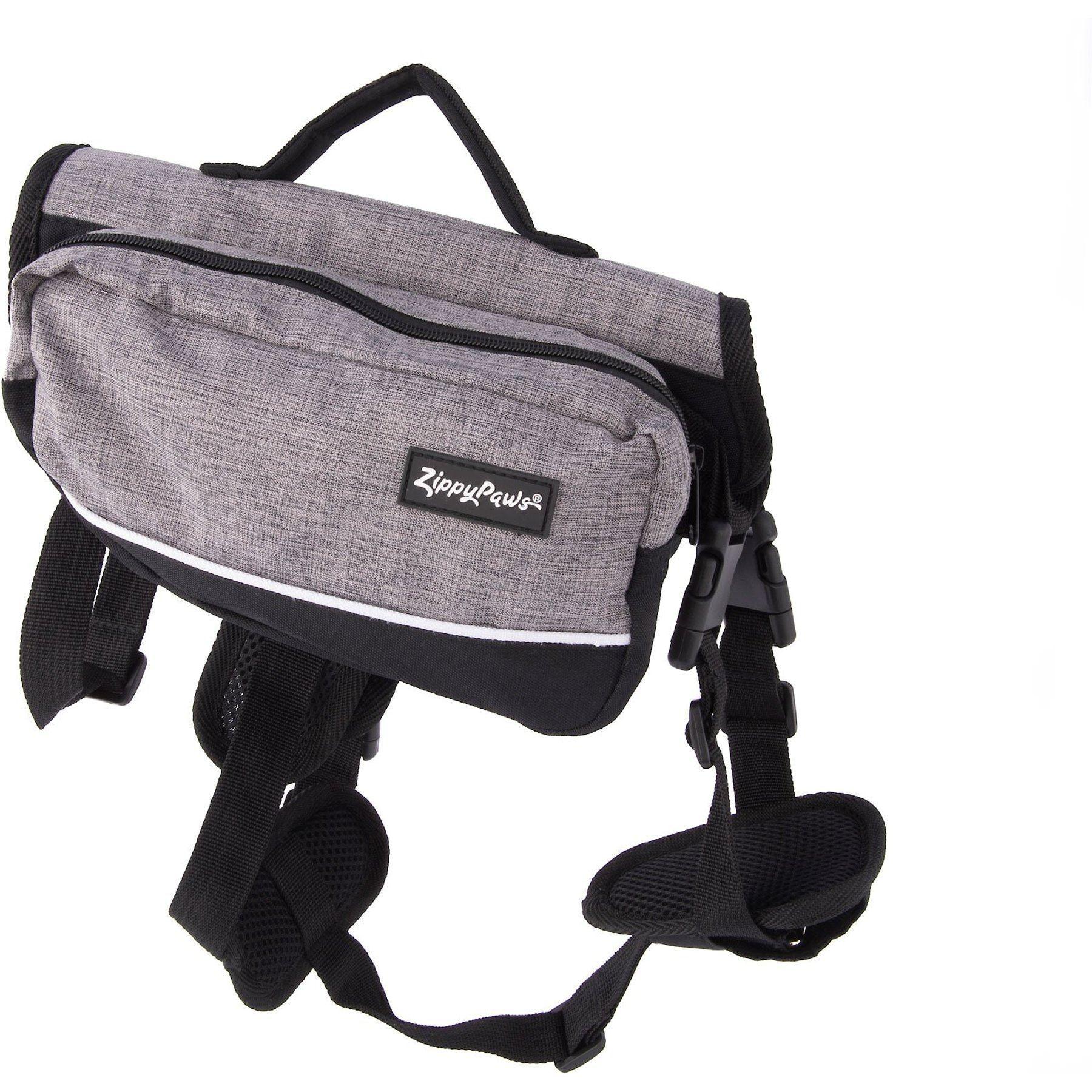
A simpler dual-pocket pack in the older Graphite Large design.
Petful may earn a commission when you click through to Chewy, at no extra cost to you.
Best fit here: a simpler dual-pocket option when its documented chest range matches your dog. The selected Graphite Large is the older ZP521 design identified in ZippyPaws' manufacturer catalog. Its useful confirmed features are straightforward: dual side pockets, reflective detailing and a 28–32-inch girth range.
Before choosing it, resolve the details that matter to your purchase:
- Confirm that the listing is the Graphite Large design.
- Check the fit on your dog's chest and body shape.
- Confirm the intended leash connection if you plan to use it as a harness.
- Check the dimensions of anything that must fit in a pocket.
- Weigh the empty pack before planning its contents.
The main reason to choose this pack is simplicity, provided the actual product meets your needs. It is not a supported choice for someone who needs a precisely documented capacity, a confirmed hydration system or removable storage.
If the two-pocket format and chest range fit your requirements, check the exact Graphite Large offer and its return conditions. Tradeoff: Its older catalog establishes identity and basic fit, but leaves several practical measurements unresolved. Those gaps prevent a confident comparison on weight or storage volume.
- Simple dual side-pocket layout for modest storage.
- Reflective detailing.
- Manufacturer catalog gives a 28–32-inch girth range for this version.
- Least specified pack here: no published empty weight, liters or adjustment count.
- Removable saddlebags and a hydration system are not documented.
- Older Graphite ZP521 design; features of newer Pink or Teal versions may not apply.
Choosing a Backpack Harness That Fits Your Dog
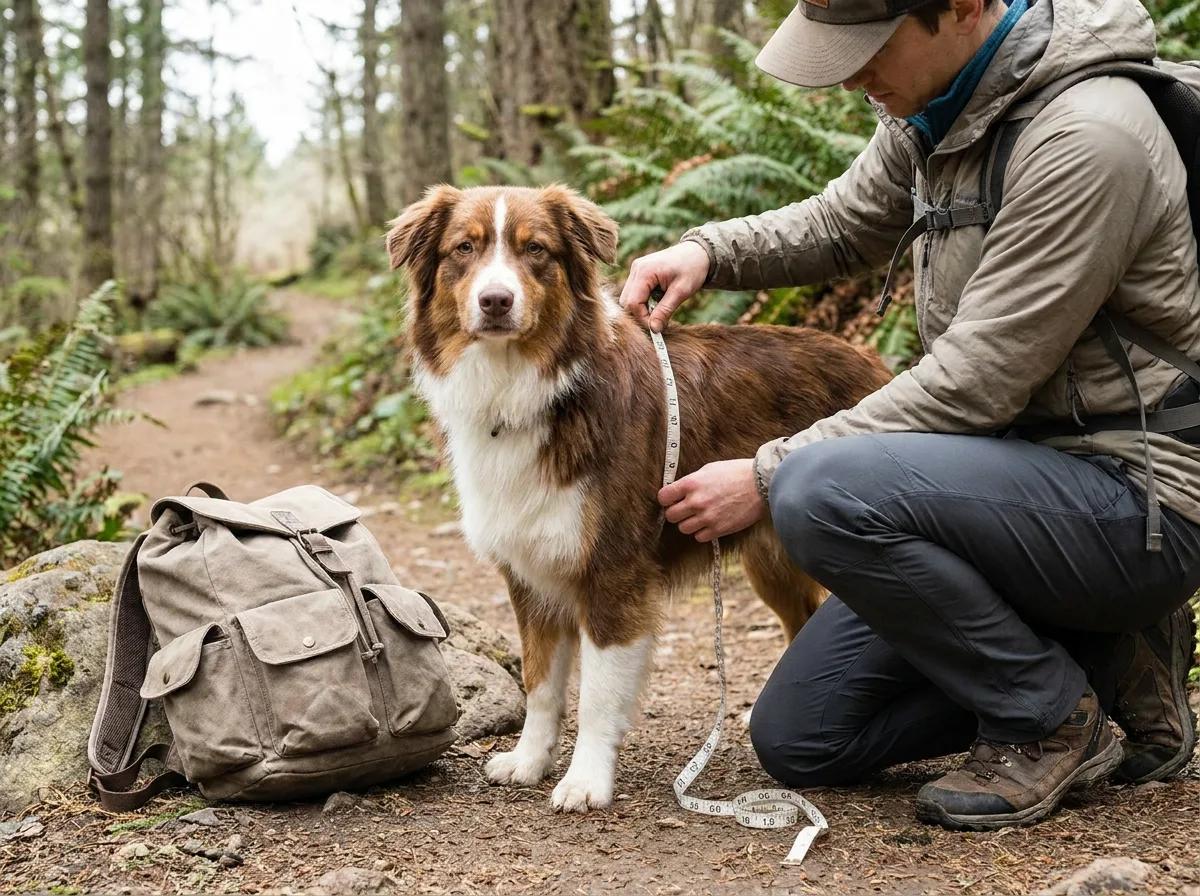
A dog backpack with a harness needs to work as a wearable item before it works as storage. Chest circumference narrows the sizes to consider, but it does not tell you where the straps, pockets and buckles will sit on your particular dog.
Measure with your dog standing naturally. Use the measurement locations shown by the manufacturer, keeping the tape level rather than drawing it diagonally across the body. Record the measurements instead of relying on a familiar harness size.
Read the size chart for the exact pack
Start with these distinctions in the selected models:
- Palisades Small: Ruffwear uses the widest part of the rib cage and publishes a 22–27-inch range.
- Standard Baxter: Kurgo provides both chest and neck ranges. Check both rather than using the chest measurement alone.
- ZippyPaws Graphite Large: Its older catalog identifies the 28–32-inch range for this version.
- Wilderdog Small: Use the illustrated chart linked on its product page. Do not substitute the measurements for a different Wilderdog harness.
A manufacturer's suggested dog-weight range is secondary to the actual fit measurements. Two dogs of the same weight can have different chest shapes, neck sizes and body lengths. Breed photographs can illustrate a product, but they are not a substitute for measuring.
If a listing combines several sizes in one set of specifications, check which figure belongs to the size you are buying. The Palisades Small's storage and empty weight are different from those of its larger sizes. A single product-family name does not make those figures interchangeable.
- Measure your dog standing, with the tape level, at the spot the maker’s chart shows. Ruffwear uses the widest part of the rib cage, and Kurgo adds a neck range. Fit measurements outrank the suggested weight range.
Check the harness with the storage empty
Use the manufacturer's fitting procedure before adding supplies. Empty pockets make it easier to see whether a strap is twisted, a buckle is poorly positioned or the harness is rotating before any load is involved.
Look at the fit from several angles:
- From above, check that the pack sits centrally.
- From the front, compare the position of the two sides.
- From the side, look at the shoulder and front-leg area.
- Check underneath for twisted straps or awkward buckle placement.
- Watch your dog walk and turn on a level surface.
The dog should be able to move normally without the pack visibly interfering with its stride. If the empty pack shifts or rubs, adding weight is not a sensible way to make it settle into place.
Avoid solving every movement problem by tightening all the straps. Adjustment changes both security and pressure. Follow the maker's fitting instructions, and reconsider the size or design if you cannot obtain a stable fit without restricting your dog.
Adjustment count is not a comfort score
Four, six and eight adjustment points describe different designs. A higher count may give you more ways to change the fit; comfort and security still depend on how the pack sits on your dog.
The Baxter illustrates why the location of an adjustment matters. Its instructions allow you to change the saddlebag position using stabilizer straps. That serves a different purpose from adjusting a strap around the chest. The Baxter fitting instructions show how those parts work together.
When comparing an integrated harness pack, identify what you can adjust:
- The part around the neck or front of the chest.
- The straps beneath the body.
- The position of the storage bags.
- Any straps intended to limit bag movement.
- Loose strap ends that need to be secured.
The useful question is whether those adjustments solve the fit issue in front of you. An impressive adjustment count will not compensate for a pack whose overall proportions do not suit your dog.
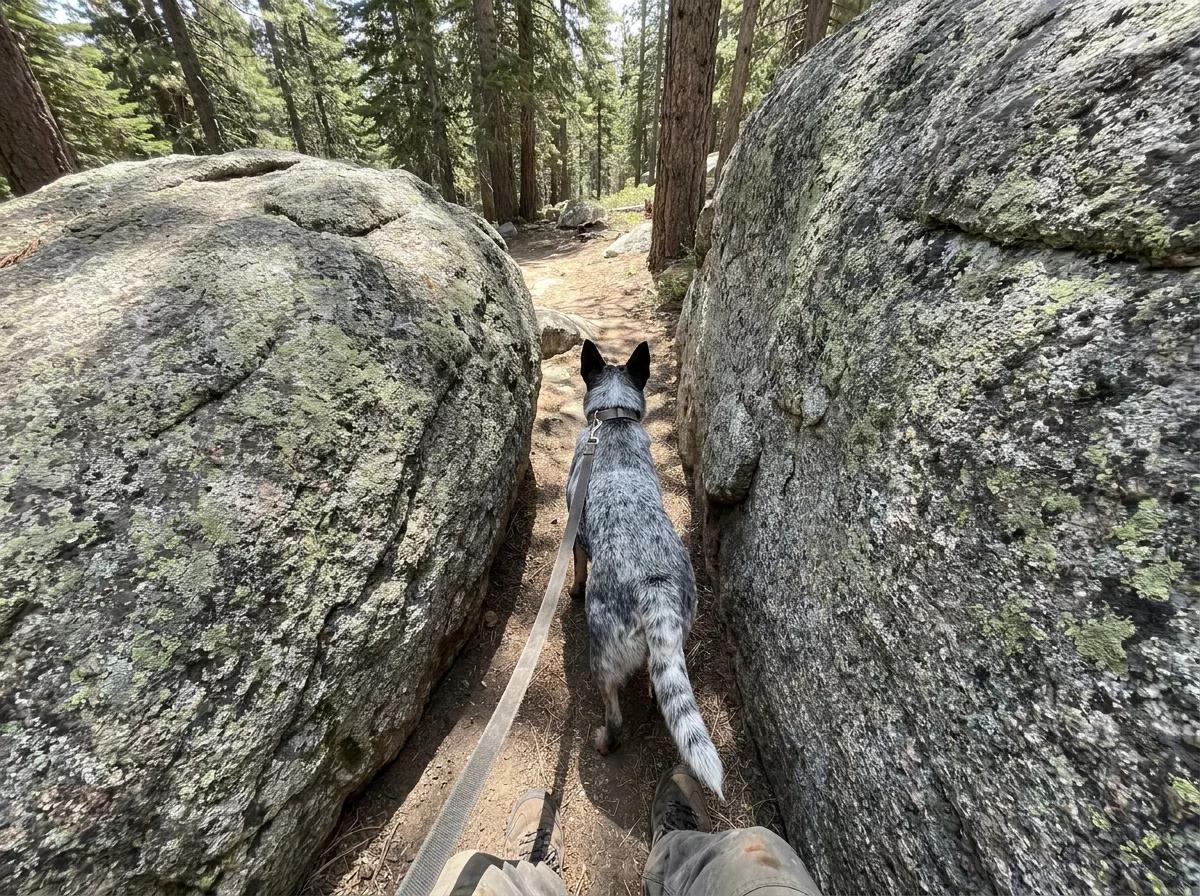
Consider the width your dog will be wearing
Saddlebags add width. A dog accustomed to moving close to trees, rocks or doorframes may need time to get used to that wider outline.
Inspect the loaded shape before a trail outing. Soft items can create a bulky bag even when they are light, while a compact container can create a hard corner. Neither total liters nor a product photograph tells you exactly how your intended supplies will sit.
For a narrow trail, a modest amount of well-organized storage may be more useful than the largest bags available. Choose capacity for the items your dog is suited to carry, not because unused room seems like a future advantage. If modest storage is the goal, the ZippyPaws Adventure Dog Backpack offers dual side pockets, provided its 28–32-inch girth range matches your dog.
Day Hikes or Overnight Trips: How Much Storage Do You Need?
Choose a hiking dog backpack around a real packing list. The useful starting point is what your dog can appropriately carry on the planned outing, not how much empty space the largest model offers.
For a day hike, you may only want room for a few light supplies. For backpacking, the overall gear list grows, but that does not mean the dog's share should grow with it. Plan the human-carried equipment first, including enough room to take over the dog's supplies if needed.
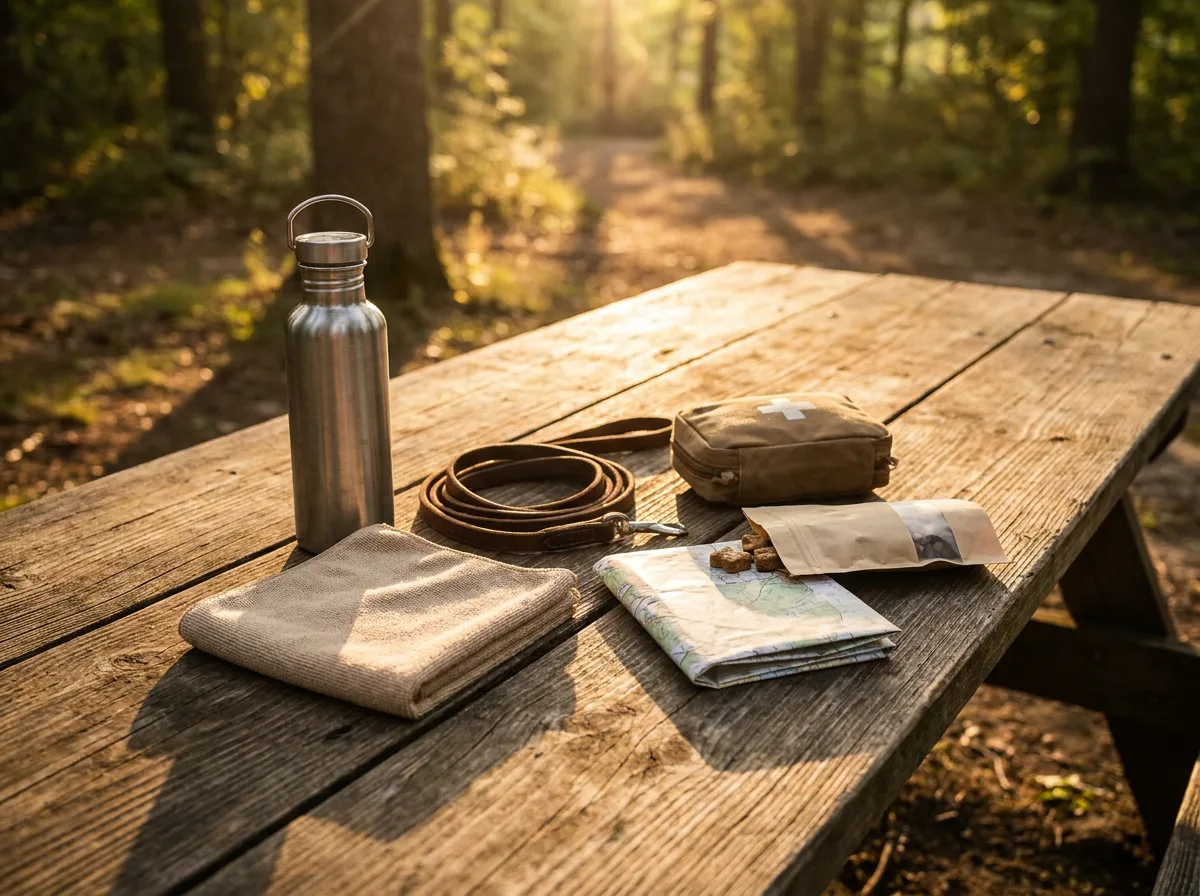
Separate volume from weight
Liters measure space. Ounces and pounds measure weight. A bulky folded towel and a bottle of water can occupy similar-looking pockets while contributing very different loads.
Use three separate figures:
- Empty pack weight: What the dog wears before anything is added.
- Contents weight: Everything inside or attached to the pack, including containers.
- Total worn load: The empty pack plus all contents and attachments.
The third figure is the one to discuss when seeking advice about a suitable load for your dog. Do not leave out water containers, clips or accessories because they are not the main supplies.
The published 5-liter Wilderdog Small and 10-liter Palisades Small illustrate the distinction. More storage gives you more room to organize items. It says nothing about a safe weight, an appropriate trail distance or a reason to fill every pocket.
- Published liters tell you how much fits, not how much your dog should carry. Weigh the empty pack plus every item and container, then discuss that total worn load with your veterinarian before strenuous hiking.
We are not applying a universal percentage of body weight. Manufacturer recommendations vary, and they do not replace consideration of the individual dog's age, health, condition and route. AAHA recommends a veterinary assessment before strenuous hiking. Discuss carrying a pack as part of that plan. AAHA camping and hiking preparation.
For day hikes, prioritize access
On a short outing, the best arrangement may be a small set of supplies that stays organized and easy to retrieve. Decide which items you will use frequently and which should remain with you. For that kind of organized day-hike storage, the Wilderdog Pockets Dog Backpack divides its approximately 5-liter capacity among four pockets.
A useful division is:
- Frequent access: Water and the drinking setup you will use during breaks.
- Routine cleanup: Unused waste bags and a separate plan for carrying used bags out.
- Occasional use: A light towel or other appropriate small item.
- Emergency access: Supplies you need to reach quickly without searching through several pockets.
Our dog hiking gear guide covers the broader outing. A backpack is one part of that setup, not the reason to bring or leave behind an essential item.
A built-in dispenser can make unused dog poop bags convenient to retrieve. It does not automatically provide an appropriate place for filled bags. Keep used waste separate from food, drinking equipment and other clean supplies.
For overnight trips, plan how the load changes
A dog backpack for backpacking needs to work throughout the trip, not just at the trailhead. Food and water are consumed. Wet items may need separate storage. Supplies that began evenly divided can become unbalanced after repeated use. For multi-day trips, Vetstreet’s camping packing list for dogs covers gear beyond the backpack.
Think through the sequence:
- Pack the outward journey.
- Identify what you will remove first.
- Decide how you will keep the remaining sides balanced.
- Plan where the bags go during rest and camp time.
- Leave space in your own pack to carry the dog's gear if necessary.
This is where removable storage can be useful. The Palisades lets you unload the saddlebags as a unit while retaining the harness. That is a practical convenience at camp, but it does not reduce the need to check the harness fit or decide what the dog should carry.
Keep your dog first aid kit accessible within the overall hiking setup. Decide who carries it based on access and the rest of the plan, rather than placing it on the dog simply because there is spare room.
Small dogs need small-dog fit, not just a Small label
When shopping for a small dog backpack for hiking, look beyond the size name. The selected Palisades Small begins at a 22-inch chest, which will not suit every dog commonly described as small.
Consider the proportions as well as the circumference:
- How much of the torso the harness covers.
- How far the pockets extend along the sides.
- Whether the bags interfere with the front legs.
- How low the loaded bags hang.
- How much empty pack weight is present before supplies are added.
If none of the selected sizes fits, carrying the supplies yourself is a straightforward option. A dog does not need its own storage to join an appropriate hike.
Do not size up merely to gain capacity. Harness fit determines the size; the available storage is a consequence of that choice. If your supplies do not fit the correctly sized pack, redistribute them to the human pack rather than buying a looser fit.
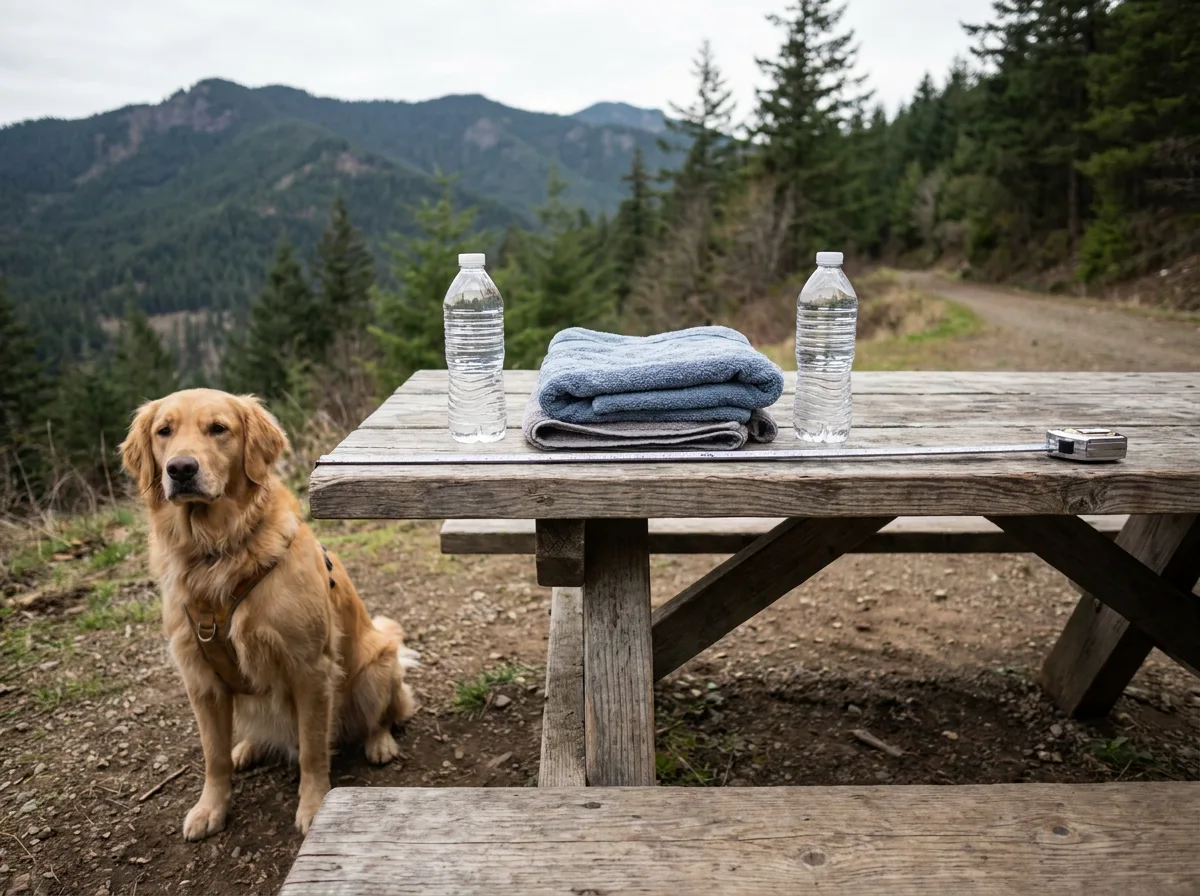
Pack by weight and shape
Two equally full pockets are not necessarily equally weighted. Use a scale for the contents on each side, then check how those items sit inside the bags.
Keep rigid edges and closures from pressing toward the dog. Avoid leaving a dense object loose in a large pocket where it can move around. Use the storage layout as designed, without assuming that external loops are intended for any heavy item you can clip to them.
A practical packing check includes:
- Comparing the weight on the left and right.
- Checking for hard corners against the body.
- Closing zippers without forcing them.
- Securing loose straps.
- Watching whether either side swings or hangs differently.
- Rechecking after removing supplies.
The aim is a manageable, stable arrangement. Adding unnecessary weight to make a nearly empty side match an overloaded side is the wrong solution. Move items, reduce the load or carry them yourself.
Dog Backpacks With Water Bladders
A dog backpack with water bladders can organize drinking water in flexible containers, but the package needs to be verified carefully. “Hydration-ready,” a photograph of a reservoir and a review mentioning included bladders are not equivalent claims.
For the four selected packs, included water bladders are not currently confirmed. The Palisades has a history of bladder-related descriptions, but the current manufacturer's feature list names no included reservoirs. If you still choose the Ruffwear Palisades Pack for its removable saddlebags, plan to supply and fit-check your own water containers.
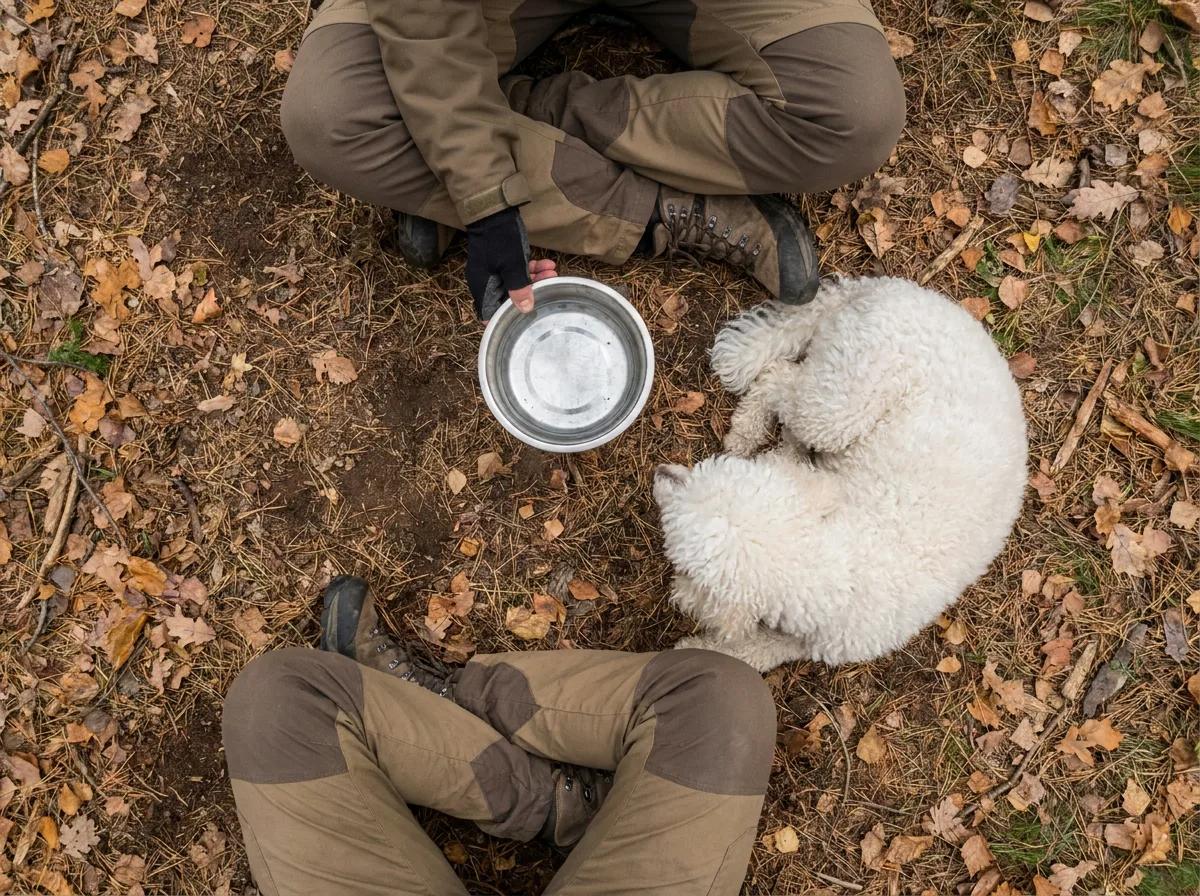
Confirm the container and the pocket separately
Before buying a pack primarily for water carriage, check:
- Whether the reservoir is included or sold separately.
- Its stated capacity.
- The dimensions of the filled container.
- Compatibility with the selected pack size.
- How the closure or outlet sits inside the bag.
- How you will remove, clean and dry it.
A container that fits when empty may take a different shape when filled. A zipper that closes over it does not mean it sits comfortably against the dog.
Per-side capacity is particularly relevant here. The total-liter figures describe the whole pack, so measure the pocket itself before buying a reservoir to fit it.
Water changes the carrying calculation
- Water is a dense supply. One liter adds about one kilogram, or 2.2 pounds, before counting its container. That arithmetic helps you understand the load; it is not a recommended amount for a dog to carry.
Include the filled containers when weighing the complete pack. If you divide water between two sides, compare their actual weights rather than assuming that matching containers contain matching amounts.
The balance can change as water is used. Recheck the remaining load at drinking breaks and redistribute it when needed. A setup that was even at the start of the walk may no longer be even after one side has been emptied.
Plan enough human-carried capacity for the outing. The dog's pack should not become the only way you can bring the water the trip requires. VCA's puppy-hiking guidance emphasizes bringing a bowl and more water than you expect to need because options on the trail may be limited. VCA hiking preparation.
Choose the drinking setup you will actually use
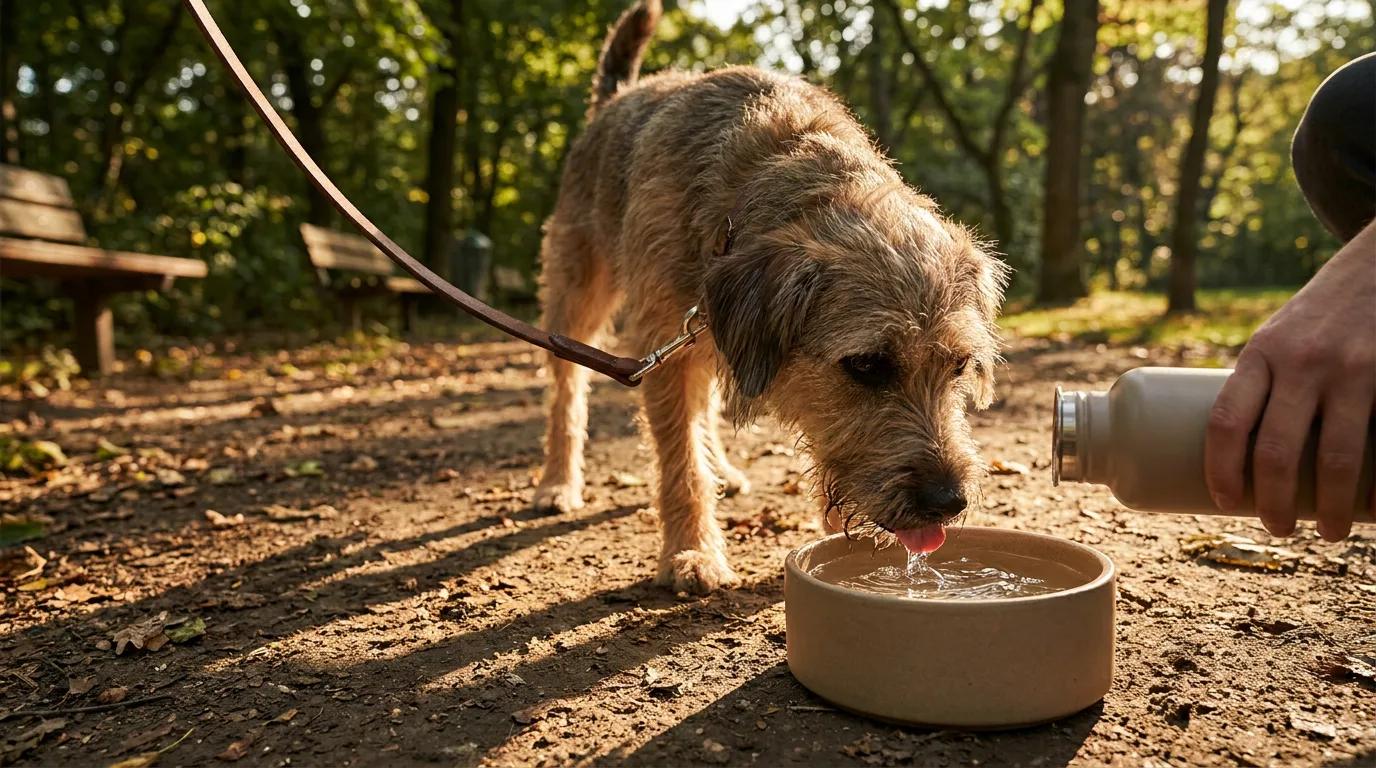
Storage and drinking are separate decisions. A reservoir may carry water efficiently but still require a bowl or another way to offer it. A bottle with an integrated drinking tray offers a different routine.
Compare your dog water bottle options before choosing a pack around a particular container. Consider how easily you can open it, offer water, close it securely and put it away.
Before the first outing, practice the complete sequence at home:
- Fill the container to the amount you intend to carry.
- Check the closure for leaks.
- Place it in the intended pocket.
- Confirm that the shape and weight remain suitable.
- Remove it and offer water using the planned bowl or tray.
- Repack and recheck the balance.
This reveals practical problems such as a closure that is difficult to reach or a filled container that distorts the bag. It also helps you decide whether carrying that container yourself would be simpler.
Fitting, Balancing and Introducing a Dog-Worn Pack
Treat the first use as an introduction to the equipment, not a full-distance hike. Your dog needs a chance to experience the harness, the bags' width and the movement of the pack in a familiar setting.
Begin with an appropriate outing plan for your dog's health and condition. Being accustomed to walking does not automatically establish suitability for carrying added weight. Breed type can also shape a sensible starting point, and Vetstreet’s guide to matching exercise to breed type explains that idea.
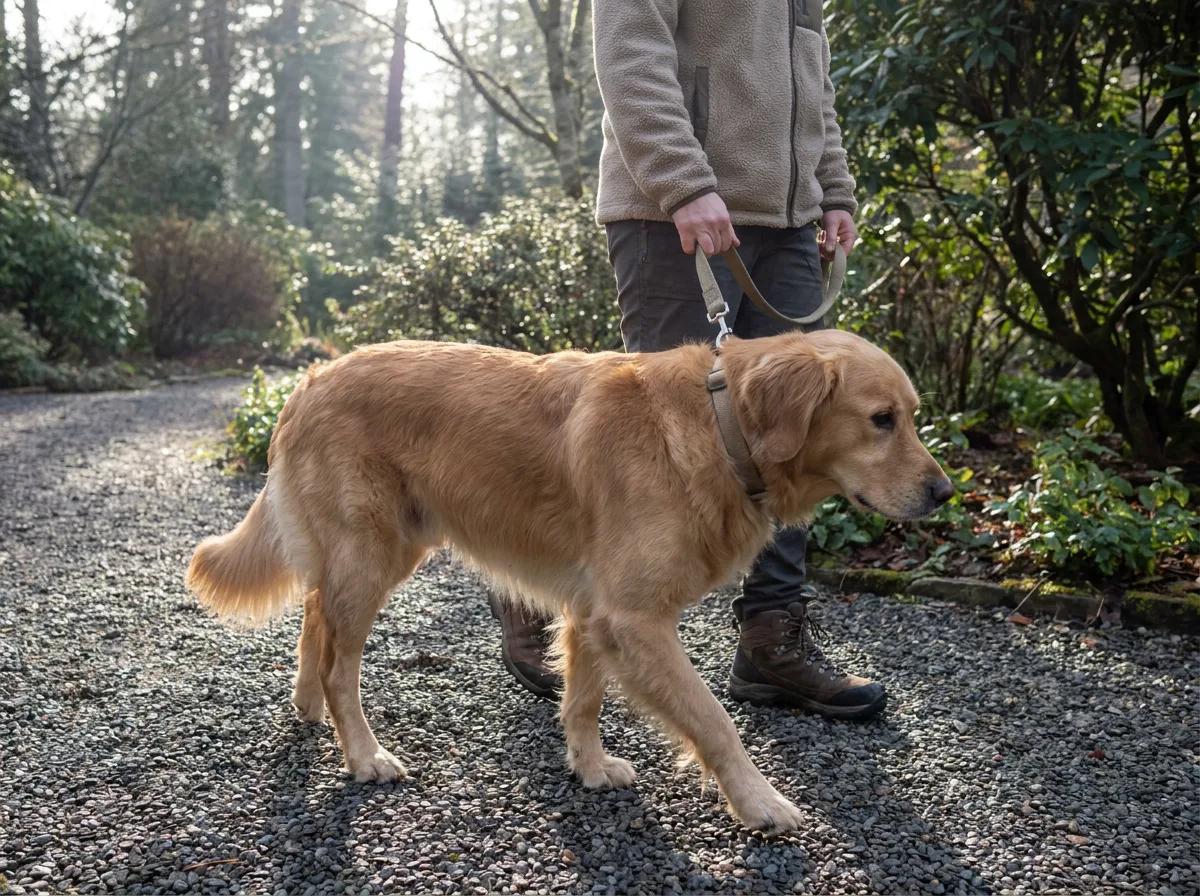
Start with the empty pack
Let your dog investigate the equipment before putting it on. Follow the manufacturer's fitting sequence and keep the first session brief enough to observe the response without committing to a route.
Once the empty pack is fitted, watch for:
- A change in stride or posture.
- Repeated attempts to bite or scratch at the equipment.
- Freezing or reluctance to move.
- Bags contacting the legs.
- A strap or buckle moving into an awkward position.
- One side consistently sitting lower than the other.
If the fit is wrong or your dog is uncomfortable, stop and resolve that issue. Do not use a longer walk or a heavier load as a way to make the dog accept the pack.
When your dog is comfortable with the empty equipment and carrying supplies is appropriate, introduce a light, balanced load. There is no need to fill the available space as a milestone.
Follow the model's adjustment sequence
The pack's instructions should determine how you position and secure it. For the Baxter, for example, Kurgo describes adjusting the stabilizer straps beneath the bags, fastening the body straps and balancing the contents. That is more specific than a general instruction to tighten everything. If that adjustable saddlebag position suits your dog, compare the Kurgo Baxter Dog Backpack against your own measurements.
For any model, distinguish the sources of movement:
- Harness movement: The base itself rotates or changes position.
- Bag movement: The harness stays put but a saddlebag swings or drops.
- Contents movement: The bag is reasonably stable but a loose item shifts inside it.
- Changing balance: One side becomes heavier as supplies are added or removed.
Those problems need different responses. Repacking a loose container will not fix an unsuitable harness size. Tightening the harness may not solve an uneven load.
For the Palisades, check the saddlebag attachment system whenever the bags are reattached. Removable storage is useful only when all intended connections are secured before walking again.
Make the first loaded walk easy to end
Choose a short, familiar route where you can stop, remove the supplies or return home without difficulty. Keep the original load modest and observe the dog rather than treating distance as the goal.
At the first break:
- Check that the harness remains centered.
- Compare the position of the two bags.
- Inspect the strap and buckle locations.
- Look for rubbing or trapped fur.
- Recheck the load if anything has been removed.
- Decide whether to continue with the pack, lighten it or carry it yourself.
A pack that remains level while the dog stands may move differently during turns or on uneven ground. Use the early sessions to learn about that movement before attempting a more demanding route.
Keep hiking preparation broader than the backpack. VCA's trail guidance includes water, waste bags, appropriate control and first-aid supplies, along with following local access and leash rules. A well-packed bag does not replace those decisions. VCA hiking guidance. If the route crosses rough terrain or harsh weather, WebVet’s guide to dog boots for paw protection covers that gear.
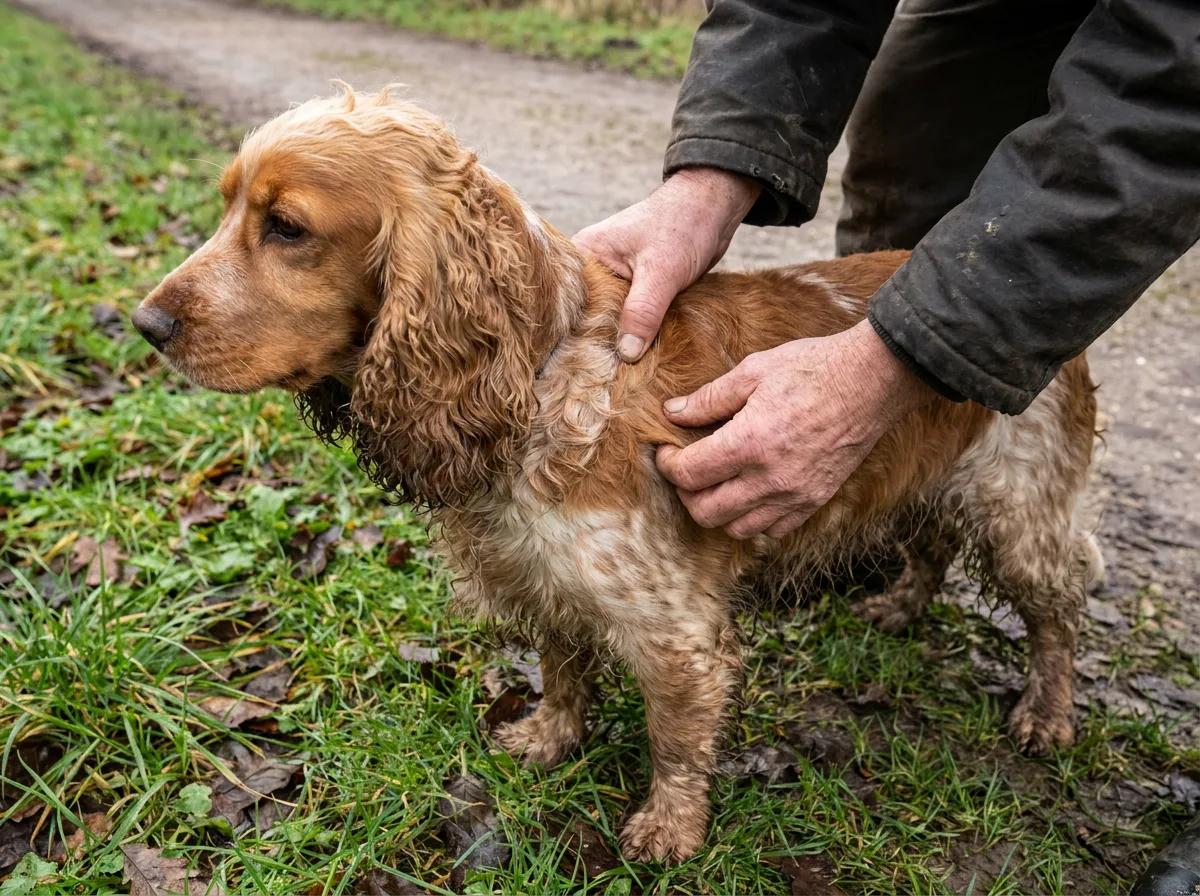
Check the dog and equipment after use
Remove the pack after the outing and inspect the contact areas. Pay attention to places where straps pass near the front legs or where a bag edge may have rested. Run a tick check at the same time, and WebVet explains what kills ticks on dogs if you find one attached.
Then inspect the equipment itself:
- Look for worn stitching or damaged webbing.
- Check buckles and bag attachments.
- Remove loose dirt and debris.
- Empty all pockets before washing.
- Check for leaking containers or damp contents.
- Let the equipment dry before storing it.
For a growing dog or one whose body condition has changed, repeat the measurements before relying on the previous fit. A strap position remembered from an earlier outing is not permanent evidence of correct sizing.
If you notice soreness, skin damage, limping or a persistent change in movement, discontinue the pack and contact your veterinarian. A product adjustment is not a diagnosis.
Use the pack's own care instructions
Cleaning requirements vary. Wilderdog allows gentle machine washing with low or no heat and hanging to dry. Ruffwear specifies hand washing with mild detergent and air drying. Kurgo's instructions favor hand care and permit gentle front-loading machine washing under the stated conditions.
For the older Graphite ZippyPaws, use the care label or obtain the instructions for that exact design. Do not borrow washing instructions from a newer version.
Drying matters for storage as well as comfort. Open pockets and allow the pack to dry thoroughly before putting it away. Keep any water containers separate so they can be cleaned and dried according to their own instructions.
- A simple maintenance routine also helps preserve the fit. After cleaning, check that adjustment straps, keepers and removable components are still arranged correctly before the next walk.
Dog Hiking Backpack Questions
The remaining questions concern specific uses and limits. Use the instructions for the exact pack and size you own, especially when a product family includes older and redesigned versions.
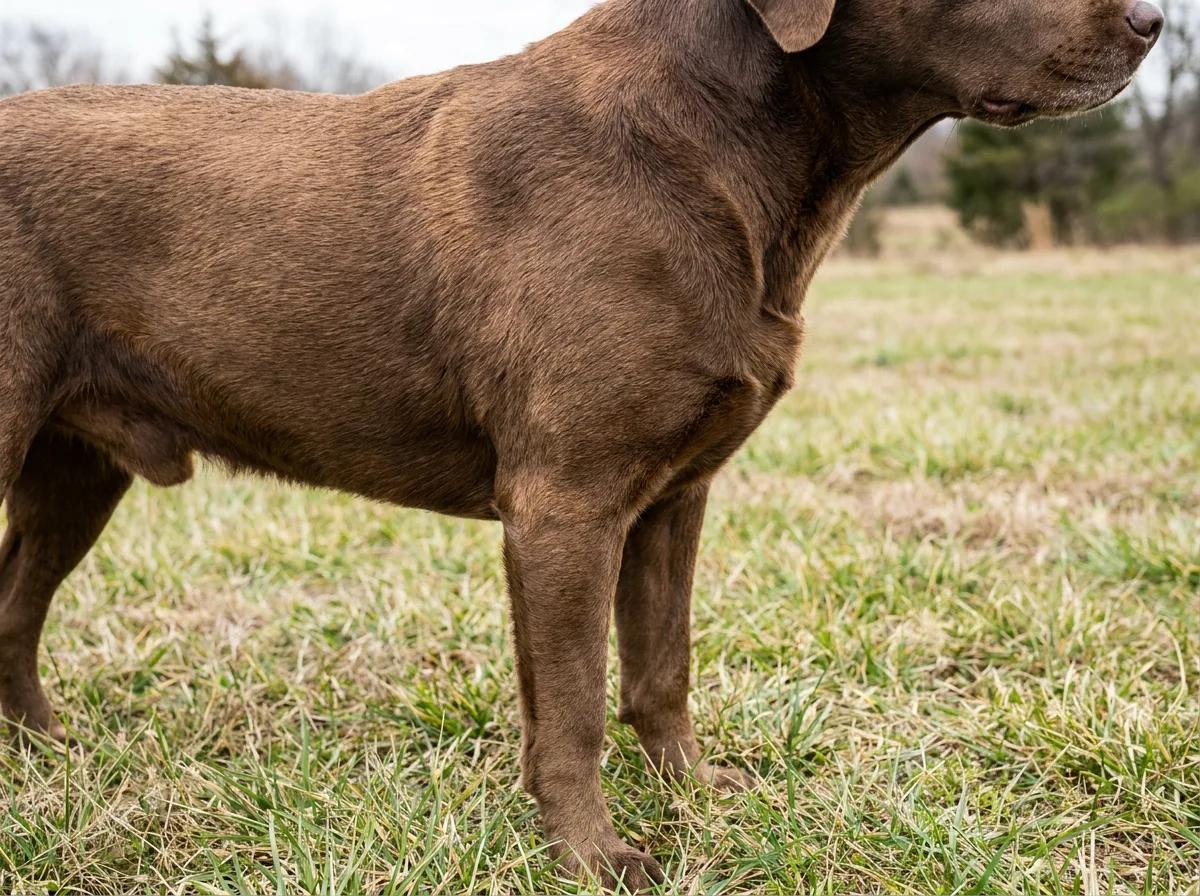
It can serve that role only when the manufacturer documents an appropriate leash attachment and harness use for the exact product. Wilderdog and Palisades have documented integrated harness features, and Baxter has a documented rear leash connection. Do not assume every storage pack is a walking harness. For the older ZippyPaws Graphite version, confirm the intended attachment and use before relying on it for leash control.
The Palisades explicitly has removable saddlebags and a standalone harness. That feature is not established for the other three selected packs. Adjustable bag positioning is different from independent removal: the Baxter's fitting system lets you reposition the bags, but its instructions do not establish the same modular arrangement. Check the exact model rather than assuming every pack with buckles separates this way.
No. Water-resistant fabric does not establish that the complete bag is waterproof. Seams, zippers and openings also affect whether water reaches the contents. Protect items that must stay dry in suitable separate storage, and do not assume rain resistance means the pack can be immersed. Wilderdog describes its fabric as water-resistant, which should not be expanded into a waterproof claim.
A handle alone does not authorize lifting. Ruffwear describes the Palisades' padded handle and belly panel for controlled lifting, but that does not make it a suspension or rescue system. Other packs may describe the handle only for grabbing, guiding or assistance. Follow the exact manufacturer's instructions and obtain appropriate advice if your dog needs regular mobility support rather than choosing a hiking pack for that purpose.
Repeat the chest measurement at the location shown in the size guide, then check the other required measurements and adjustment limits. Ruffwear recommends sizing down between Palisades sizes, but that rule should not be transferred to every brand. Compare the actual chest range and assess the full fit, including strap and bag position. Ask the manufacturer for help when the chart does not resolve the choice.
Ask your veterinarian about that individual dog before adding a load. A puppy's development, a dog's existing condition and the planned activity can change what is appropriate. AAHA recommends a veterinary assessment before strenuous hiking; the fact that a pack physically fits does not establish suitability for carrying supplies. Do not use a general percentage-of-body-weight rule as clearance for a puppy or a dog with mobility problems.
They can be, for a healthy adult dog whose pack fits well and carries a light, balanced load, but no dog needs one to enjoy a hike. A pack should not change your dog’s stride or rub at the legs. Young, older or less fit dogs may be poor candidates, so ask your veterinarian before your dog carries weight; AAHA recommends a veterinary assessment before strenuous hiking.
If your dog may need to be carried, use a human-worn carrier designed for your dog’s weight rather than a dog-worn pack. The packs in this guide are worn by the dog and are not carriers, so follow each pack’s instructions on what its handle is for. Better still, choose a route your dog can comfortably finish, and ask your veterinarian about individual distance and fitness limits.
Pack water and a bowl or other way to offer it, unused waste bags plus a plan for carrying used ones out, a leash and identification, a dog first-aid kit and a small towel. Bring more water than you expect to need, because trail sources may be limited. Plan to carry the essentials yourself rather than relying on your dog’s pack, and follow local access and leash rules.
Not always. Many dogs hike moderate trails without boots, but boots with good traction can help protect paws on rough rock, hot surfaces, ice or snow. Boots need a correct fit and a gradual introduction, starting with short sessions before a longer hike. Check your dog’s paws during and after the outing, and ask your veterinarian about any cut, cracked pad or limp.

Coreen Saito is a pet writer and longtime shelter volunteer with more than a decade in animal rescue. She covers cat behavior, breed care, and the small, ordinary science of sharing a life with companion animals, with a particular focus on honest takes about the products and decisions that actually matter. At home in Arizona, she's outranked by Mac (a dog with the loudest opinion in the house), Rebel (a cat who governs by quiet authority), and Meri (an orange tabby who runs the late shift and the laundry basket). She writes about all three, plus the rescues that keep coming through her life, at LifeWithMinty.com.
Sign up for expert-backed reviews and safety alerts all in one place.