French Bulldog Size, Weight and Growth Guide
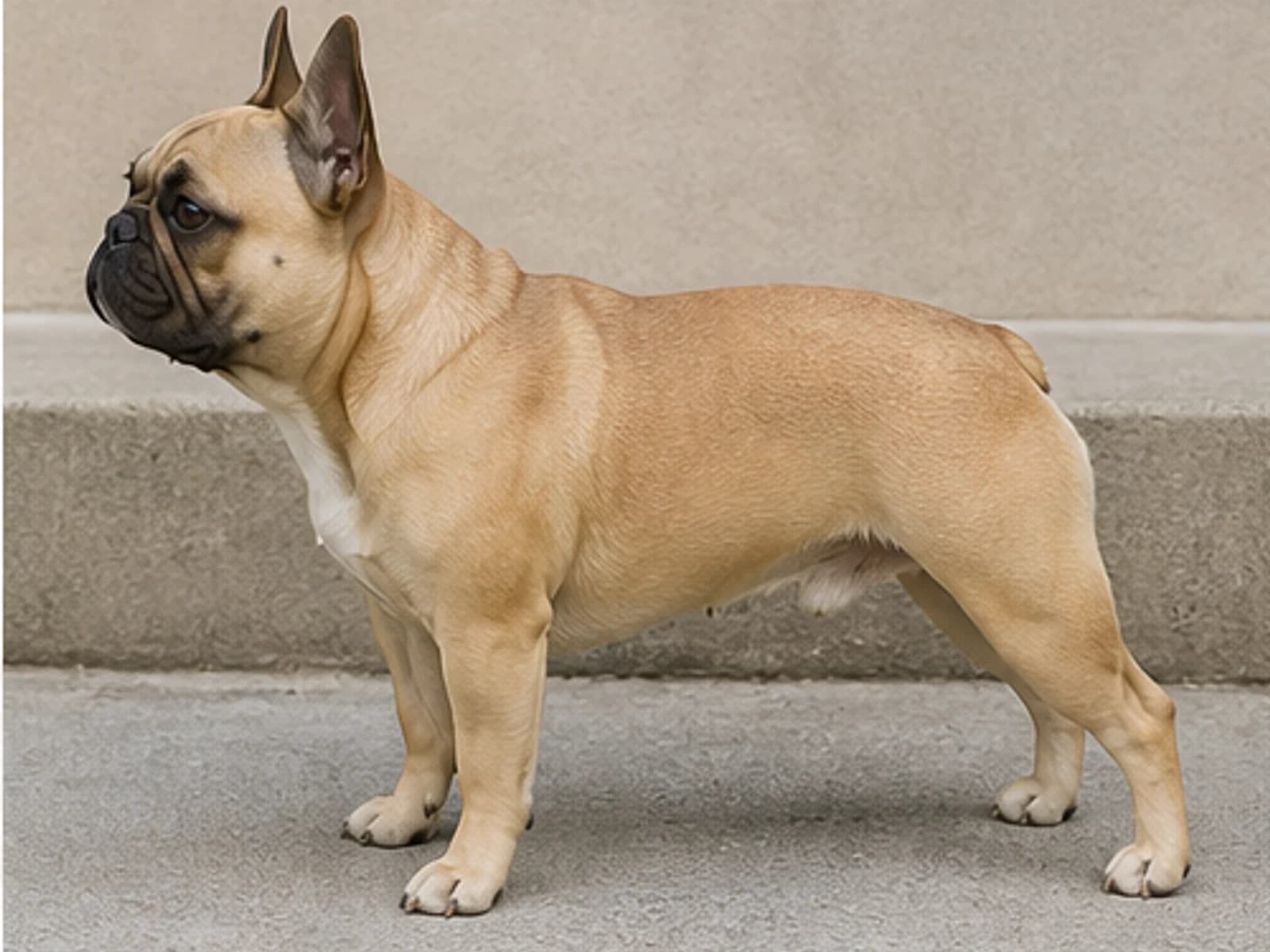
A full-grown French Bulldog is a small, compact dog. The US breed standard describes about 11 to 13 inches in height and no more than 28 pounds, while a healthy individual target still depends on frame, muscle and body condition.
Petful is reader supported. As an affiliate of platforms like Amazon and Chewy, we may earn a commission when you buy through links on this page. There is no extra cost to you.
French Bulldog size at full growth is small and compact. The US breed standard describes about 11 to 13 inches in height and no more than 28 pounds, while a healthy individual target still depends on frame, muscle and body condition.
A growth chart is most useful as a record of one puppy, not a race against an internet average. Adult standards, monthly weights, body condition and veterinary findings answer different questions, so this guide shows how to use each without encouraging overfeeding or growth restriction.
- 1A full-grown French Bulldog is a small, compact dog. The US breed standard describes about 11 to 13 inches in height and no more than 28 pounds, while a healthy individual target still depends on frame, muscle and body condition.
- 2Breed tendencies describe populations, not every individual dog
- 3Records, direct observation and professional findings answer different questions
- 4Products support a plan but do not diagnose, treat or guarantee outcomes
- For feeding or hydration management, compare the Outward Hound Non-Skid Slow Feeder Interactive Dog Bowl with the dog's measured portion, food or water needs, muzzle size and the household cleaning routine. Verify capacity, materials, power needs where applicable and whether another animal can interfere.

Multiple ridges and valleys slow eating, reduce gas and bloating, and turn mealtime into a fun puzzle. Non-skid base, dishwasher safe, 4-cup capacity.
Petful may earn a commission when you click through to Chewy, at no extra cost to you.
- If the Outward Hound Non-Skid Slow Feeder Interactive Dog Bowl fits the care plan, test it while a caregiver is present and continue tracking appetite, water intake, stool, weight and body condition. Feeding equipment cannot set a medical diet, prevent bloat or replace direct observation.

Sign up for expert-backed reviews and safety alerts all in one place.
French Bulldog adult size at a glance
“French Bulldog full size” should mean the dog's measured adult height, length, chest and weight, not a seller's mini, micro or XL label. Measure the individual before buying a crate, carrier, harness, bed or stair aid, and leave appropriate room for normal posture and movement. Use the same scale and measurement landmarks when tracking change. A veterinarian should review unexpected gain or loss, poor muscle, slow growth, a pot belly, digestive signs or reduced activity rather than forcing the dog toward an online average.
| Age | Typical developmental focus | What to record |
|---|---|---|
| 8-12 weeks | Rapid early growth, transition to a new home and feeding routine | Weekly weight at first, appetite, stool, food amount and initial veterinary findings |
| 3-4 months | Steady skeletal growth and frequent equipment-size changes | Weight every 2-4 weeks, body condition, harness and crate fit |
| 5-6 months | Teething and continued height and length gain | Monthly weight, waist and rib feel, appetite and gait |
| 7-9 months | Growth rate often begins slowing, though adolescents still change | Monthly weight, body condition, muscle and exercise recovery |
| 10-12 months | Many approach adult height | Weight trend, body condition and whether calorie needs are changing |
| 12-18 months | Adult height may be established while the body continues filling out | Adult baseline weight, waist, ribs, muscle and veterinarian-set calorie plan |
| 18+ months | Maintenance rather than puppy growth | Monthly or quarterly weight trend plus body-condition checks |
French Bulldog size is compact but sturdy. The US standard describes adults at about 11 to 13 inches at the shoulder and no more than 28 pounds, although pet dogs may fall outside the show ceiling. That number is breed context, not an ideal weight for every dog. Frame, muscle, ribs, waist, abdominal tuck and the direction of the weight trend all matter when judging healthy condition.
“French Bulldog full size” should mean the dog's measured adult height, length, chest and weight, not a seller's mini, micro or XL label. Measure the individual before buying a crate, carrier, harness, bed or stair aid, and leave appropriate room for normal posture and movement. Use the same scale and measurement landmarks when tracking change. A veterinarian should review unexpected gain or loss, poor muscle, slow growth, a pot belly, digestive signs or reduced activity rather than forcing the dog toward an online average.
Is a French Bulldog a small or medium dog?
The short answer is that a French Bulldog is generally classified as a small dog. The breed's muscular frame and relatively heavy bone can make an adult feel sturdier than many small breeds, but the US standard still describes about 11 to 13 inches and no more than 28 pounds. Use actual measurements, not the category label, for carriers, harnesses, beds and lifting plans.
How big is a full-grown French Bulldog?
The short answer to how big a full-grown French Bulldog gets is commonly about 11 to 13 inches at the shoulder and no more than 28 pounds under the US show standard. Pet dogs can fall outside that ceiling. Healthy size depends on frame, muscle and body condition, so a veterinarian should interpret the scale rather than treating 28 pounds as the ideal target for every adult.
Apply adult measurements to the individual
A full-grown French Bulldog is a small, compact dog. The US breed standard sets a weight ceiling of 28 pounds and describes a balanced, muscular build.
A show standard is not a puppy growth prescription and does not make 28 pounds the medically ideal target for every pet. The French Bull Dog Club of America breed standard describes the desired adult form for breed judging.
For health decisions, track weight, body condition, appetite and function on the same scale and discuss the trend at veterinary visits. Do not force a puppy to match an internet chart or pursue mini, micro or teacup labels through food restriction.
Male and female height and weight ranges
Small and large size variation includes small french bulldog, biggest french bulldog, and how big are french bulldogs. These are related but distinct reader decisions, best resolved by using repeated measurements, body condition and functional fit rather than one chart or seller label. Use the measurements, records and observable conditions in this section to identify what is known, what still needs confirmation and which next action the evidence supports. Before acting, record the source, date and individual-dog evidence behind the conclusion. That prevents a broad breed tendency, seller label or isolated number from becoming a promise about one dog and keeps the decision practical, traceable and useful.

The US standard describes French Bulldogs at no more than 28 pounds and about 11 to 13 inches tall. Sex may shift averages, but ranges overlap.
A registry limit defines show eligibility, not an ideal medical target for every pet. The American Kennel Club French Bulldog breed page summarizes the adult range, while a veterinary body-condition assessment determines whether an individual is too lean, appropriate or carrying excess fat.
Males may average somewhat heavier, but male and female ranges overlap. Use frame, muscle, waist, rib coverage and clinical findings to interpret the scale rather than assuming sex dictates the correct weight.
French Bulldog puppy growth by age
Growth and weight charts includes french bulldog weight chart, french bulldog growth chart, and how big do french bulldogs get. These are related but distinct reader decisions, best resolved by using repeated measurements, body condition and functional fit rather than one chart or seller label. Use the measurements, records and observable conditions in this section to identify what is known, what still needs confirmation and which next action the evidence supports. Before acting, record the source, date and individual-dog evidence behind the conclusion. That prevents a broad breed tendency, seller label or isolated number from becoming a promise about one dog and keeps the decision practical, traceable and useful. Revisit the conclusion when the dog's age, health, environment or household capacity changes, because the same label can lead to a different decision as the evidence changes.
- For feeding or hydration management, compare the Petlibro Granary WIFI Automatic Cat & Dog Feeder with Camera with the dog's measured portion, food or water needs, muzzle size and the household cleaning routine. Verify capacity, materials, power needs where applicable and whether another animal can interfere.

Petful may earn a commission when you click through to Chewy, at no extra cost to you.
- If the Petlibro Granary WIFI Automatic Cat & Dog Feeder with Camera fits the care plan, test it while a caregiver is present and continue tracking appetite, water intake, stool, weight and body condition. Feeding equipment cannot set a medical diet, prevent bloat or replace direct observation.
Rapid gain, a flat or falling trend, appetite changes, diarrhea, vomiting or low energy deserve interpretation rather than forced feeding or restriction.
Equipment that should earn its place
Affiliate products do not diagnose, prevent or treat disease. Stop using equipment that causes rubbing, distress, overheating, swallowing risk or restricted movement, and ask the appropriate professional when the need is medical or behavioral.
How to use a growth chart without overreading it
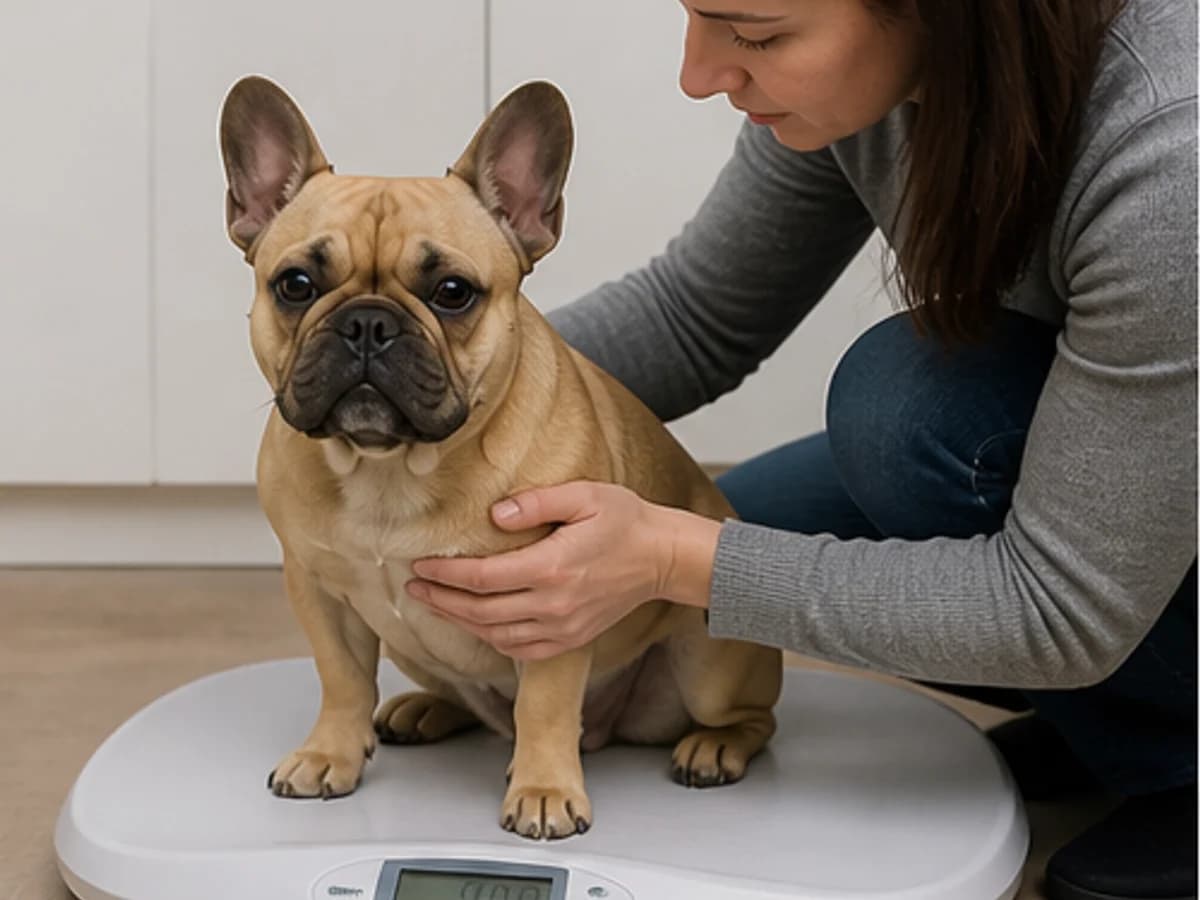
A useful chart needs dates, age, weight, food amount, appetite, stool and any illness or medication. A smooth trend is usually more informative than a single measurement, but even a smooth curve needs body-condition checks because a puppy can gain consistently and still become too lean or too heavy.
Measure on the same scale, ideally before a meal and at a similar time of day. Do not compare a home bathroom scale with a clinic scale as if the difference must be real. WebVet’s dog weight loss or gain guide explains why unplanned changes deserve attention.
Ask the veterinary team to plot clinic weights and show you how they assess rib coverage, waist and muscle. A chart supports that conversation; it cannot diagnose parasites, digestive disease, pain or an unsuitable diet.
- Compare the puppy with their own prior measurements and body condition. Do not add food solely because another puppy or an online chart weighs more.
When French Bulldogs stop growing
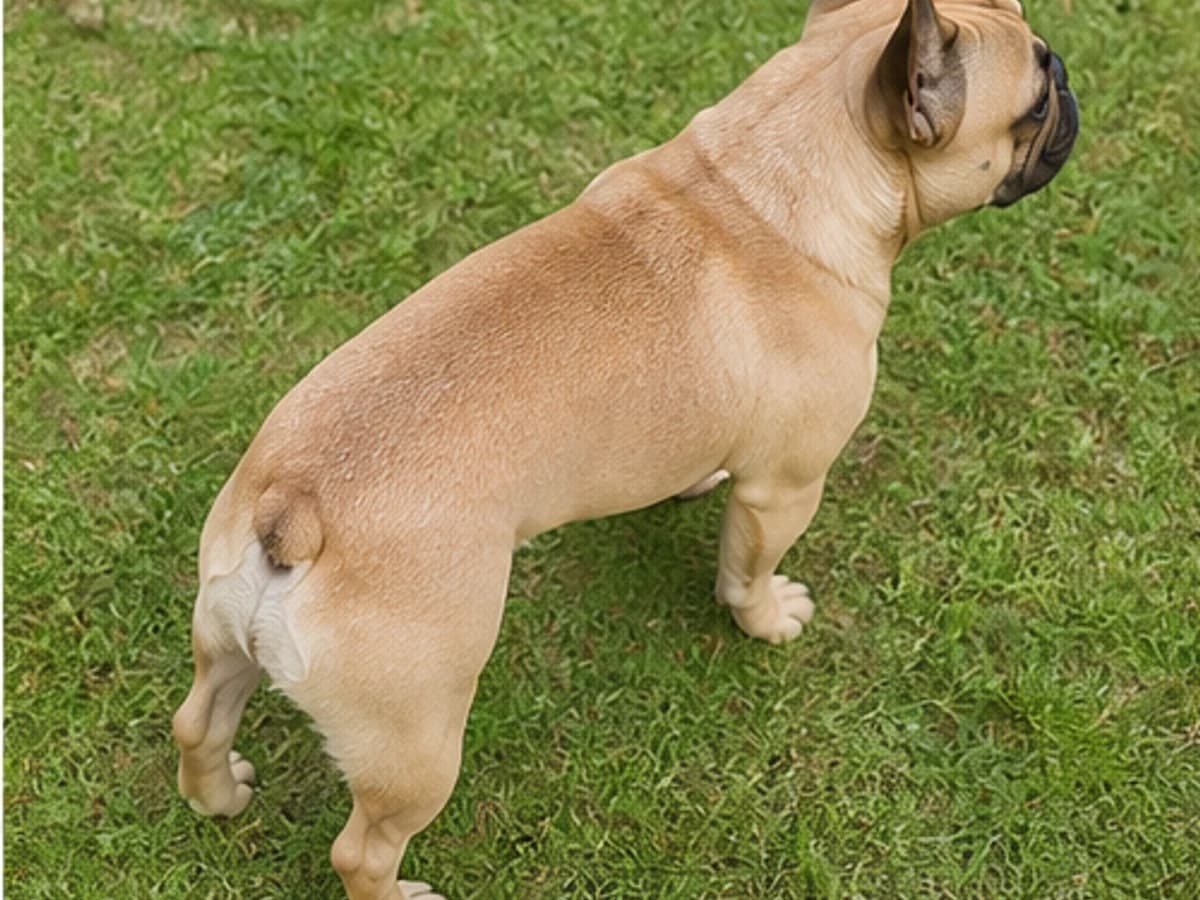
Many French Bulldogs approach adult height by about 10 to 12 months, then continue developing muscle and adult body breadth into roughly 12 to 18 months. Some finish earlier or later.
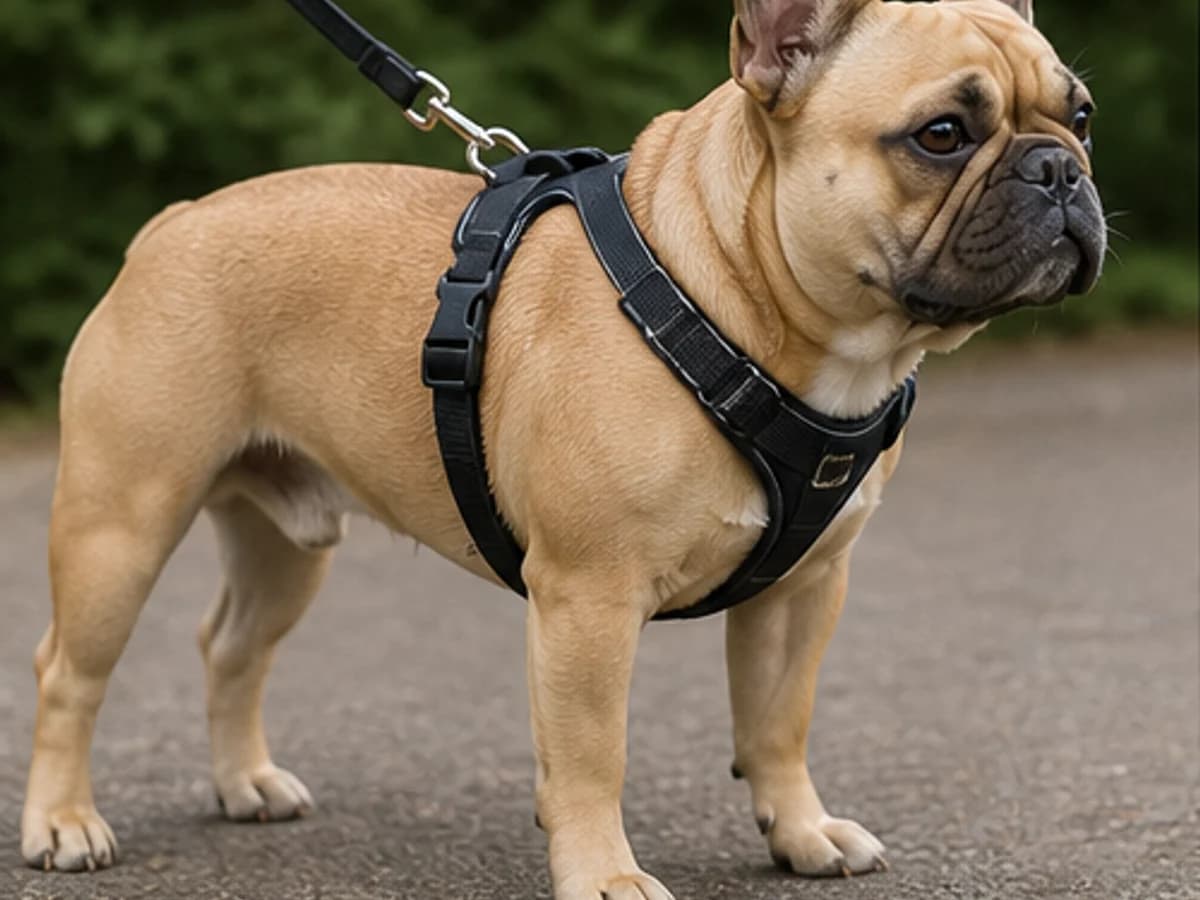
- For the handling decision in this section, compare the Frisco Padded No Pull Dog Harness, Small with the dog's current measurements, movement, coat and behavior. Recheck fit while the dog is standing and moving, inspect the hardware before use, and confirm that the equipment cannot tighten, rub or permit escape.
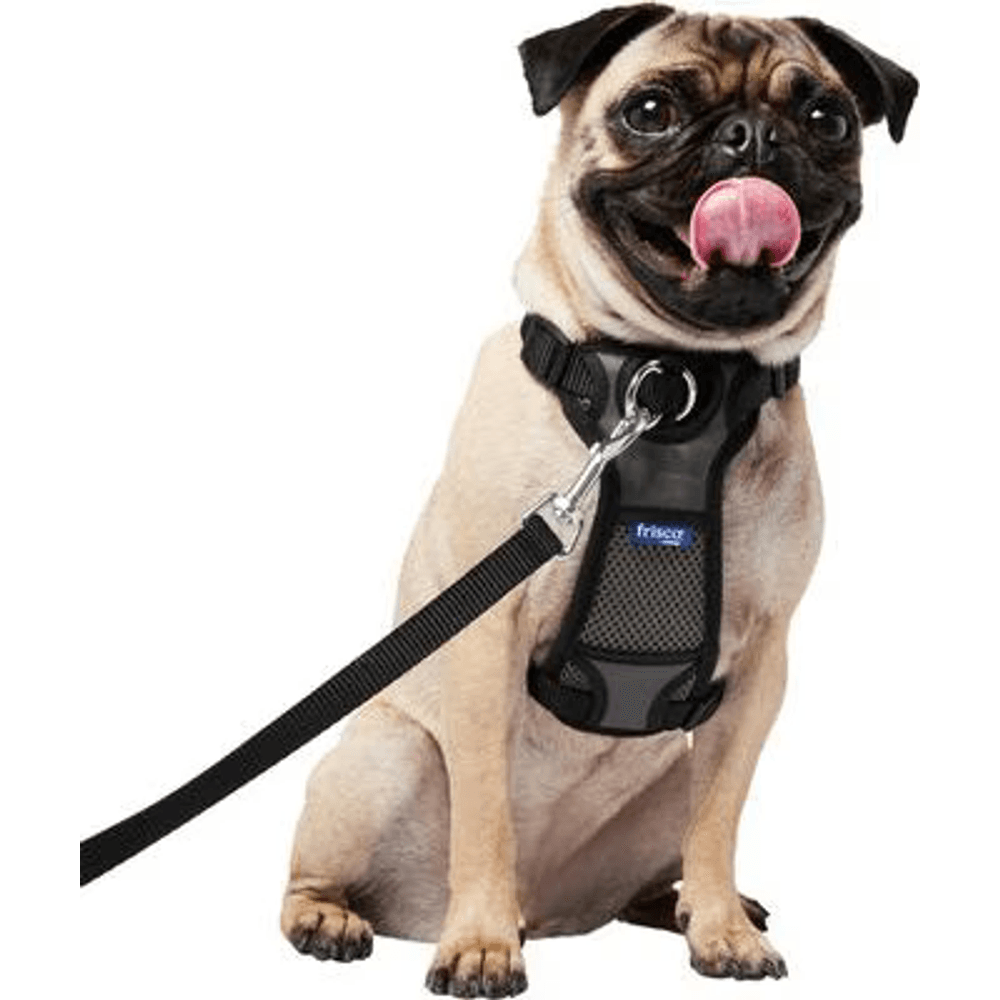
A budget-friendly padded no-pull harness that keeps leash pressure off a coughing dog's neck and windpipe by distributing it across the chest. A simple, affordable way to protect an irritated airway or a collapsing trachea on every walk.
Petful may earn a commission when you click through to Chewy, at no extra cost to you.
- If the Frisco Padded No Pull Dog Harness, Small still fits the documented need, introduce it with rewards and supervise early use. Walking equipment can support a management plan, but it does not teach loose-leash behavior or make a powerful dog safe around triggers by itself.
Height can stabilize while weight still changes, which is why owners sometimes mistake normal filling out for continued skeletal growth. The French Bull Dog Club of America breed standard provides the adult framework but not a month-by-month schedule.
Once height stabilizes, reassess calories rather than continuing a puppy portion automatically. An adult who loses a visible waist or whose ribs become difficult to feel may be gaining fat, not simply “filling out.”
Body condition matters more than one number
- What the scale can show
- Direction and rate of change when measurements are taken consistently
- What the scale cannot show
- Body condition, muscle, diet quality, disease or whether one number is healthy without physical assessment
Do you have to wipe Frenchies after pooping?
You do not have to wipe Frenchies after pooping when the coat and tail area stay clean. Check the area and remove visible stool or moisture gently. Repeated soiling can reflect loose stool, body-condition or mobility difficulty, a tight tail pocket or irritated skin. Persistent problems deserve veterinary assessment instead of increasingly aggressive cleaning.
Assess body condition consistently
Body condition considers ribs, waist, abdominal tuck and muscle in addition to weight. A compact build can make visual assessment harder, especially from photographs.
Hands-on assessment and a consistent scoring method improve repeatability. Ribs should be palpable without a thick fat layer, and a waist should be visible from above, but a compact French Bulldog will not have the same outline as a sighthound.
Photograph from the top and side under similar conditions, feel the ribs gently and compare changes over time. Ask the veterinary team to assign and explain a body-condition score. A target number without body condition can encourage unsafe feeding.
Mini, micro and teacup size claims
Mini, micro and teacup are marketing labels, not separate French Bulldog sizes recognized by the US breed standard.
Very small size does not establish health, maturity or purebred status. It may reflect age, natural variation, inaccurate claims, illness or deliberately selected small parents. None of those possibilities can be resolved from a sales label.
- For supportive rest, compare the FurHaven NAP Ultra Plush Orthopedic Deluxe Dog Bed with the dog's nose-to-rump length, preferred sleeping posture, ability to step on and off, floor traction and cover-cleaning needs. Product dimensions matter more than the size label.
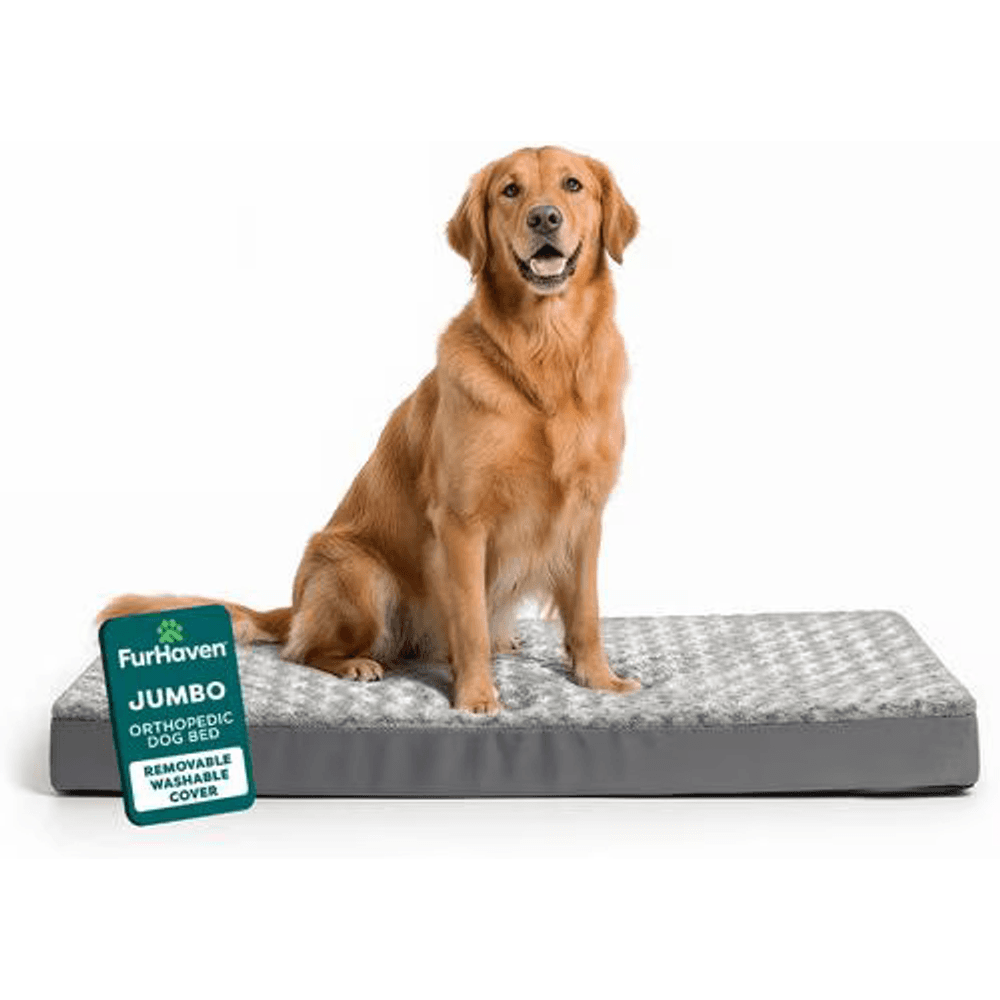
A plush orthopedic foam mattress that cushions aging joints and pressure points, giving a stiff or trembling senior dog warm, supportive rest.
Petful may earn a commission when you click through to Chewy, at no extra cost to you.
- If the FurHaven NAP Ultra Plush Orthopedic Deluxe Dog Bed provides enough usable space, monitor whether the dog can settle, rise and turn comfortably. A bed can improve access and comfort, but it does not diagnose or treat pain; new mobility changes belong with the veterinarian.
Request the puppy’s date of birth, current measured weight, parent identities, veterinary record and health-screening evidence instead of accepting the label. Do not pursue growth restriction or underfeeding to keep a puppy small.
Recheck fit before buying
Affiliate products do not diagnose, prevent or treat disease. Stop using equipment that causes rubbing, distress, overheating, swallowing risk or restricted movement, and ask the appropriate professional when the need is medical or behavioral.
When slow growth or weight change needs a vet
Call the veterinary team when a puppy loses weight, stops gaining over repeated checks, gains abruptly, eats poorly, has persistent vomiting or diarrhea, seems weak or develops a swollen or painful abdomen. A sudden adult weight change also deserves attention.
Bring the timeline, food package, measured daily amount, treats, stool history and medication list. The same scale trend plus symptoms helps the clinician decide whether the issue is intake, feeding technique, parasites, digestive disease, fluid change or another medical cause.
Do not double food or sharply restrict calories based on one number. Follow an individualized plan and reweigh at the interval the veterinarian recommends.
How to measure a French Bulldog consistently
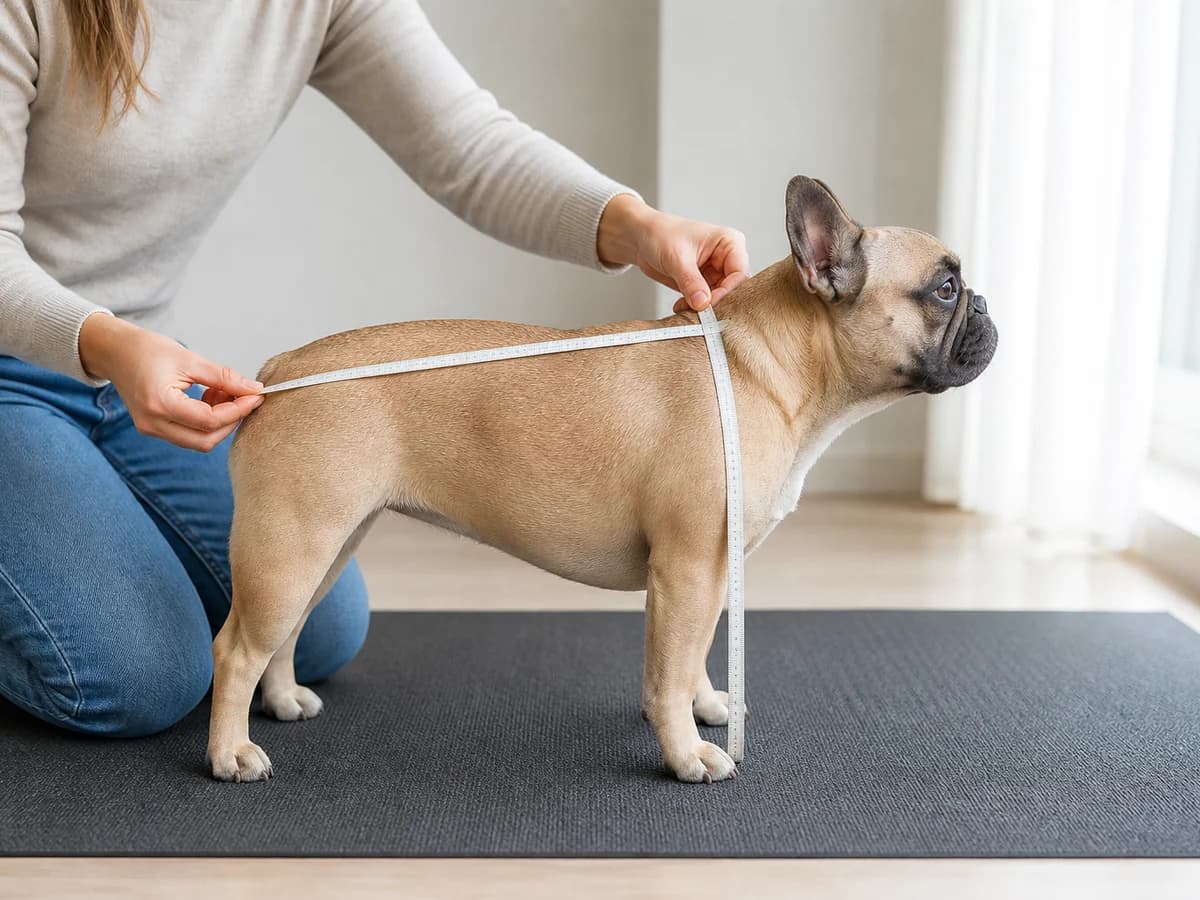
Questions involving crate for french bulldog, french bulldog car seat, and car seat for french bulldog are best resolved by using repeated measurements, body condition and functional fit rather than one chart or seller label. For weight, place the scale on a hard level surface and use the same scale whenever possible. Weigh at a similar time relative to meals and toileting. If using the hold-and-subtract method on a human scale, repeat the measurement twice and note that it came from a different method than the clinic scale. Height is measured from the floor to the top of the shoulder blades while the dog stands naturally, not to the top of the head or ears. Body length for beds and carriers is more practical when measured from the point of the shoulder to the base of the tail, then compared with the product's usable interior dimensions. Chest girth for a harness should be taken around the widest part behind the front legs while the dog stands.
Interpret measurements in context
Measurements need context. A heavier reading after a meal, a different scale or a thick coat is not the same as a true growth jump. Record the method beside the number. For equipment, allow the clearance specified by the manufacturer and confirm fit during movement, sitting and lying down rather than relying only on a tape measurement.
Puppies can outgrow a harness or carrier before owners notice visible weight gain. Check strap placement, rubbing, breathing clearance and the ability to stand and turn at least monthly during rapid growth. Replace equipment when safe adjustment is exhausted instead of loosening it beyond the intended range.
A practical next step
Start a simple growth log today: date, age, weight, body-condition notes, food amount and any health change. Add a top and side photo once a month and bring the log to routine visits.
WebVet’s dog weight loss or gain guide adds context for unplanned changes and what information to bring to the veterinary team.
References for adult size and nutrition assessment include the French Bull Dog Club of America breed standard, American Kennel Club French Bulldog breed page and WSAVA global nutrition resources.
Continue through the French Bulldog cluster
Start with the French Bulldog breed hub and follow only the question that matches the decision:
- french bulldog
- french bulldog health lifespan
- french bulldog puppies
- french bulldog temperament training
- best dog food for french bulldogs
For separate questions, see Petful’s French Bulldog colors guide, merle French Bulldog guide and French Bulldog food guide.
More French Bulldog guides from Petful
Start with Petful's complete French Bulldog: Personality, Size, Care and Breed Guide, then use the dedicated guides below for the next decision.
- French Bulldog Puppies: Breeders, Adoption and Buying Safely
- French Bulldog Price: Puppy Cost and Lifetime Budget
- French Bulldog Lifespan and Health Issues
- French Bulldog Temperament, Training and Apartment Life
- Boston Terrier vs French Bulldog: Key Differences
- Fluffy French Bulldog: Long-Haired Genetics, Price and Care
A repeatable French Bulldog measurement protocol
Growth records become useful only when measurements are comparable. Weigh the puppy on the same scale when possible, at a similar time relative to meals and toileting, and record whether equipment was worn. For height, stand the dog squarely on a level, nonslip surface and measure to the withers rather than the head.
Record the date, age, weight, height, body-condition score and any factor that could affect the result. One odd value may be measurement error. A sustained change in trend, appetite, stool, energy or body condition deserves veterinary discussion.
Measure for equipment separately
Equipment size charts are product-specific. Record chest girth at the maker's stated location, neck circumference, back or sleeping length where relevant, and the dog's weight. Compare those numbers with the current chart every time because labels such as small and medium are not standardized.
Fit-test while the dog stands and moves. A harness should not restrict the shoulders, tighten against the throat or allow backing out. A crate should permit standing, turning, lying comfortably and changing position. A car restraint needs both correct dog fit and safe attachment according to its instructions.
Read growth charts as trends, not promises
A French Bulldog growth chart is a reference, not a diagnosis or guarantee of adult size. Genetics, early nutrition, illness, body condition, age at measurement and the chart's source all affect comparison. The most useful pattern is steady individual progress with appropriate body condition.
Do not push food to force a puppy toward a heavier percentile. Excess weight can add strain without making the dog healthier or more correct. Likewise, do not restrict food based on an internet chart when the puppy's veterinary assessment indicates another plan.
Bring the growth record to appointments and ask which change would trigger testing or a diet adjustment. Sudden loss, failure to gain with other symptoms, persistent vomiting or diarrhea, marked lethargy or a clear body-condition change needs professional assessment.
Translate adult size into household decisions
Adult dimensions affect more than shopping. Confirm whether the dog can use household stairs safely, fit in a travel carrier, turn comfortably in a crate, ride with an appropriate restraint and rest on a bed with usable space. Recheck after growth and any meaningful weight change.
Mini, micro and teacup claims should never replace measured adult parents, puppy growth records, health evidence and direct observation. A marketing label cannot promise final size or remove breed-wide health risk.
A repeatable growth-measurement protocol
Use the same scale, same time and same posture whenever practical. Record the date, age, weight, body-condition observation and any change in appetite, activity or fit. A single number cannot distinguish normal growth, muscle, fat, hydration or measurement error.
Review the trend, body condition and fit together. A harness becoming tight at the chest means something different from a loose waist combined with poor appetite. Bring the series, not only the latest measurement, to the veterinary team when growth changes abruptly or body condition moves outside the individualized target.
Consistency matters more than excessive frequency. Choose intervals appropriate to the puppy's age and veterinary plan, then use the record to decide whether to keep monitoring or ask for an assessment.
French Bulldog Size, Weight and Growth Guide FAQs
The short answer is that a French Bulldog is generally classified as a small dog. Its muscular frame and relatively heavy bone can make an adult feel sturdier than many small breeds, but the US standard describes about 11 to 13 inches and no more than 28 pounds. Use the individual dog's actual measurements, not the category label, for carriers, harnesses, beds and lifting plans.
The short answer to how big a full-grown French Bulldog gets is commonly about 11 to 13 inches at the shoulder and no more than 28 pounds under the US show standard. Pet dogs can fall outside that ceiling. Healthy size depends on frame, muscle and body condition, so a veterinarian should interpret the scale instead of treating 28 pounds as every adult's ideal weight.
The short answer is that owners do not routinely have to wipe Frenchies after pooping when the coat and tail area stay clean. Check the area and gently remove visible stool or moisture. Repeated soiling can reflect loose stool, mobility difficulty, a tight tail pocket or irritated skin. Persistent diarrhea, scooting, pain or odor deserves veterinary assessment instead of more aggressive cleaning.
There is no single healthy weight for every French Bulldog. The standard describes adults at about 11 to 13 inches and no more than 28 pounds, but that show ceiling is context rather than a target. Height, frame, muscle and body condition determine a suitable individual range. Ask the veterinary team to assess ribs, waist, abdominal tuck, mobility and the weight trend beneath the coat.
Many approach adult height by 10 to 12 months and continue filling out through roughly 12 to 18 months. Individual timing varies with sex, parent size, nutrition and health. Recheck food and equipment as growth slows rather than pushing toward an online adult number. A sudden plateau, rapid gain, poor appetite, abnormal gait or body-condition change deserves veterinary review rather than extra calories by default.
There is no safe one number for every French Bulldog puppy at a given age. Sex, parent size, litter history, food, illness and measurement timing all affect the scale. Track the same puppy under similar conditions and record body condition, appetite, stool and gait. Have the veterinarian interpret the individual trend instead of increasing or restricting food solely to match an internet chart.
Males average somewhat larger in some populations, but male and female ranges overlap enough that sex cannot predict one dog's adult dimensions. Parent size, frame, muscle, health and body condition matter too. Measure the actual dog before selecting a crate, harness, carrier or bed, and do not feed a male toward a higher number or restrict a female to a smaller one.
Mini, micro and teacup are marketing labels, not separate sizes recognized by the US French Bulldog standard. A very small dog may be young, selectively bred, underweight or affected by illness, and a listing cannot explain which. Verify age, measured weight, parent identities and health records. Avoid any seller who treats unusually small size as proof of quality or guarantees an exact adult weight.
Assess ribs, waist and abdominal tuck rather than relying on the scale or a photograph alone. The ribs should be easy to feel beneath a light fat covering, a waist should be visible from above and the abdomen should rise behind the ribs. A dense chest and compact build can mislead the eye, so ask the veterinary team to assign and track a body-condition score.
Weekly weighing can be useful during the first transition home, while every two to four weeks is often enough once growth is steady unless the veterinarian requests closer monitoring. Use the same scale and similar timing, then record food changes, body condition, appetite, stool and health events beside the number. Contact the clinic for sudden loss, rapid gain or a clear change in the puppy's curve.
Editorial safety note
Petful does not endorse an individual breeder, rescue, seller, insurer, veterinarian, trainer or product. Affiliate links may earn Petful a commission at no extra cost to the reader. Availability, dimensions, price and instructions can change. Reopen the current product page, measure the individual dog and supervise use. A tracked offer is a commerce option, not evidence that the product is necessary, medically appropriate or safer than every alternative.
Keep the growth record useful
Record the date, age, weight, body-condition notes, measured food amount and any illness or medication change. Use the same scale when possible, and mark when a different scale was used. Revisit equipment measurements during every growth phase because a harness or bed that fit last month may no longer provide safe clearance.

Coreen Saito is a pet writer and longtime shelter volunteer with more than a decade in animal rescue. She covers cat behavior, breed care, and the small, ordinary science of sharing a life with companion animals, with a particular focus on honest takes about the products and decisions that actually matter. At home in Arizona, she's outranked by Mac (a dog with the loudest opinion in the house), Rebel (a cat who governs by quiet authority), and Meri (an orange tabby who runs the late shift and the laundry basket). She writes about all three, plus the rescues that keep coming through her life, at LifeWithMinty.com.
Sign up for expert-backed reviews and safety alerts all in one place.