Boston Terrier vs French Bulldog: Key Differences
Compare Boston Terrier vs French Bulldog size, temperament, exercise, grooming, health, lifespan and cost using the same practical criteria for both breeds.

Petful is reader supported. As an affiliate of platforms like Amazon and Chewy, we may earn a commission when you buy through links on this page. There is no extra cost to you.
A Boston Terrier vs French Bulldog comparison starts with build: Boston Terriers are generally leggier and lighter, while French Bulldogs are stockier and heavier-boned. Both are short-muzzled companions, so the better fit depends on verified health, behavior and household needs.
The Boston Terrier tends to suit someone who prefers a lighter, leggier companion and is prepared for a somewhat livelier routine. The French Bulldog tends to suit someone who prefers a stockier companion and can manage the breed's substantial airway, heat and spinal risks. Neither choice is automatically healthier or easier; the known dog and the household plan decide the practical fit.
- 1Boston Terriers are generally leggier and lighter in outline; French Bulldogs are stockier and heavier-boned. Both are short-muzzled companion breeds, so the better choice depends on the individual dog’s verified health, behavior and fit with the household.
- 2Breed tendencies describe populations, not every individual dog
- 3Records, direct observation and professional findings answer different questions
- 4Products support a plan but do not diagnose, treat or guarantee outcomes
| Trait | Boston Terrier | French Bulldog |
|---|---|---|
| Adult size | About 15-17 inches; no more than 25 pounds in the US standard | About 11-13 inches; no more than 28 pounds in the US standard |
| Build | Lighter, leggier and squarer | Lower, stockier and heavier-boned |
| Typical activity | Often lively and athletic for a companion breed | Often playful with shorter activity bouts |
| Coat | Short, smooth, usually brindle, seal or black with white markings | Short and smooth in the standard variety; several standard colors and markings |
| Major health planning | Airway and heat risk, prominent eyes, patellas and deafness screening | Airway and heat risk, spine, skin folds, eyes, patellas and cardiac screening |
| Common lifespan range | Often cited around 11-13 years | Often cited around 10-12 years |

Sign up for expert-backed reviews and safety alerts all in one place.
Boston Terrier vs French Bulldog at a glance
Core Boston Terrier and French Bulldog comparison includes boston terrier vs french bulldog and difference between boston terrier and french bulldog. These are related but distinct reader decisions, best resolved by comparing daily handling, health, training and care capacity instead of choosing by appearance alone. Use the measurements, records and observable conditions in this section to identify what is known, what still needs confirmation and which next action the evidence supports. Before acting, record the source, date and individual-dog evidence behind the conclusion. That prevents a broad breed tendency, seller label or isolated number from becoming a promise about one dog and keeps the decision practical, traceable and useful. Revisit the conclusion when the dog's age, health, environment or household capacity changes, because the same label can lead to a different decision as the evidence changes.
- For the handling decision in this section, compare the Frisco Padded No Pull Dog Harness, Small with the dog's current measurements, movement, coat and behavior. Recheck fit while the dog is standing and moving, inspect the hardware before use, and confirm that the equipment cannot tighten, rub or permit escape.
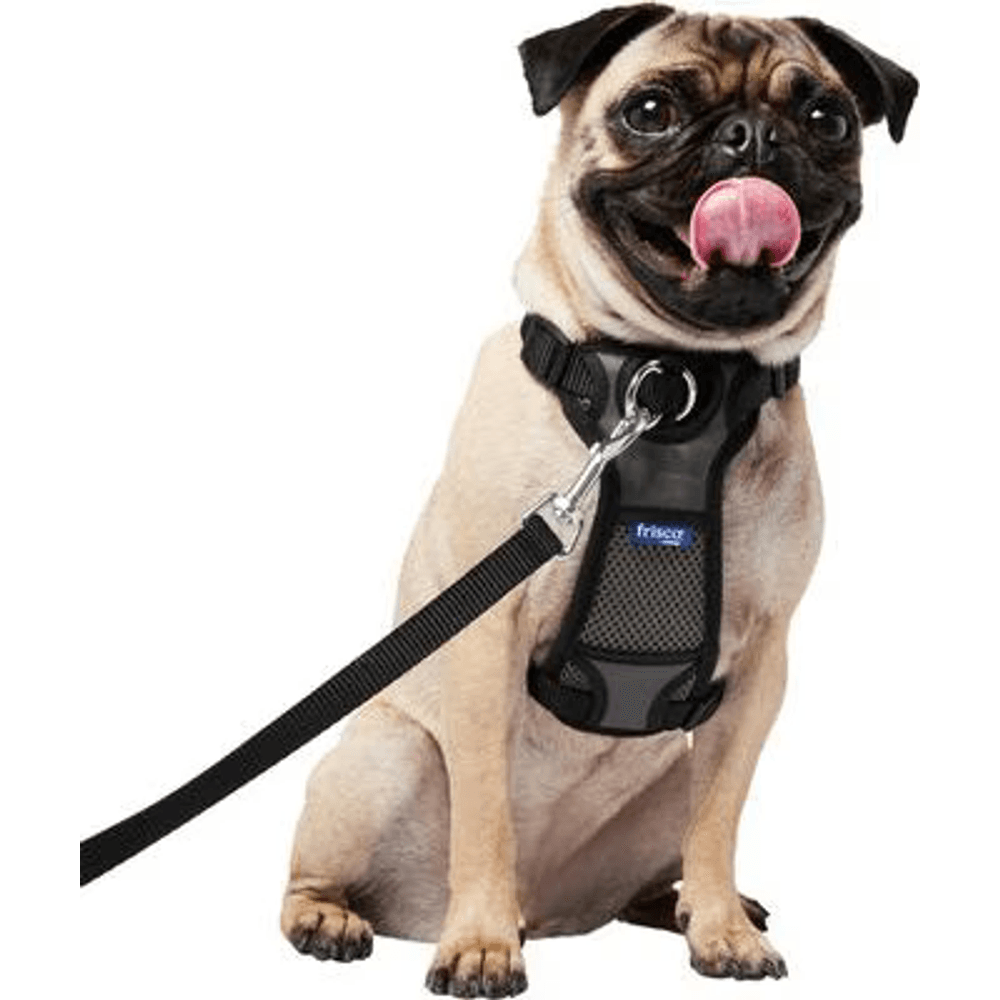
A budget-friendly padded no-pull harness that keeps leash pressure off a coughing dog's neck and windpipe by distributing it across the chest. A simple, affordable way to protect an irritated airway or a collapsing trachea on every walk.
Petful may earn a commission when you click through to Chewy, at no extra cost to you.
- If the Frisco Padded No Pull Dog Harness, Small still fits the documented need, introduce it with rewards and supervise early use. Walking equipment can support a management plan, but it does not teach loose-leash behavior or make a powerful dog safe around triggers by itself.
Boston Terriers and French Bulldogs are compact companion dogs with short muzzles, but they differ in build, typical energy, coat markings, purchase market and some health patterns.
The American Kennel Club breed comparison outlines the visible distinctions. For a real adoption or purchase, compare the actual dog, parent screening where available, veterinary records, breathing at rest and after mild activity, observed behavior and the household weekday schedule.
Neither breed is universally healthier, easier or better for every home. A healthy, behaviorally suitable individual of either breed is a better match than a poorly screened dog chosen from a preferred silhouette.
Origin and breed purpose

The Boston Terrier was developed in the United States from bull-and-terrier ancestry and became known as a compact companion. The American Kennel Club Boston Terrier breed page identifies it as one of the breeds developed in America.
The modern French Bulldog developed from smaller bulldog-type companions taken from England to France, then refined into a distinct companion breed. Both histories help explain their people-oriented roles, but neither history predicts one dog's behavior or health.
Current records matter more than heritage stories. Historical popularity does not establish responsible breeding, appropriate socialization or healthy airway function.
What history can and cannot tell you
Both breeds now live primarily as companions, so origin is most useful for explaining their people-oriented reputations and physical development. It should not be used to predict friendliness, trainability or compatibility with children and other animals in an individual dog.
Size, build, ears and coat differences
Size and build differences includes Which is bigger, a Boston Terrier or a Frenchie? and boston terrier and french bulldog. These are related but distinct reader decisions, best resolved by using repeated measurements, body condition and functional fit rather than one chart or seller label. Use the measurements, records and observable conditions in this section to identify what is known, what still needs confirmation and which next action the evidence supports. Before acting, record the source, date and individual-dog evidence behind the conclusion. That prevents a broad breed tendency, seller label or isolated number from becoming a promise about one dog and keeps the decision practical, traceable and useful. Origin and breed purpose should be considered alongside size, build, ears and coat differences, not as separate trivia. History explains how these two companion breeds developed, while present proportions affect handling, equipment fit, heat management and household logistics. Comparing both dimensions together helps readers screen the individual dog and its records rather than choosing by silhouette or assuming ancestry predicts health or behavior.
Which is bigger, a Boston Terrier or a Frenchie?
The short answer is that neither breed is bigger in every dimension: a Boston Terrier is usually taller at about 15 to 17 inches, while a Frenchie is shorter at about 11 to 13 inches but often stockier and heavier-boned. Boston Terriers should not exceed 25 pounds under the US standard; French Bulldogs should not exceed 28 pounds. Individual ranges overlap, so measure the actual dog for equipment and handling.
Compare the whole build
Boston Terriers are taller at roughly 15 to 17 inches and no more than 25 pounds under the US standard. Their outline is square but comparatively light and leggy, with erect ears, a short tail and characteristic white markings over brindle, seal or black.
French Bulldogs are shorter at roughly 11 to 13 inches and no more than 28 pounds under the US standard. They are compact and muscular, with heavier bone, a broad head and distinctive bat ears. The American Kennel Club French Bulldog breed page provides the breed framework.
Both have short muzzles and prominent eyes. View the whole dog moving and breathing at rest and after mild activity; appearance cannot document parentage, airway function or health. Extreme wrinkles and very closed nostrils should not be romanticized in either breed.
- For supportive rest, compare the FurHaven NAP Ultra Plush Orthopedic Deluxe Dog Bed with the dog's nose-to-rump length, preferred sleeping posture, ability to step on and off, floor traction and cover-cleaning needs. Product dimensions matter more than the size label.
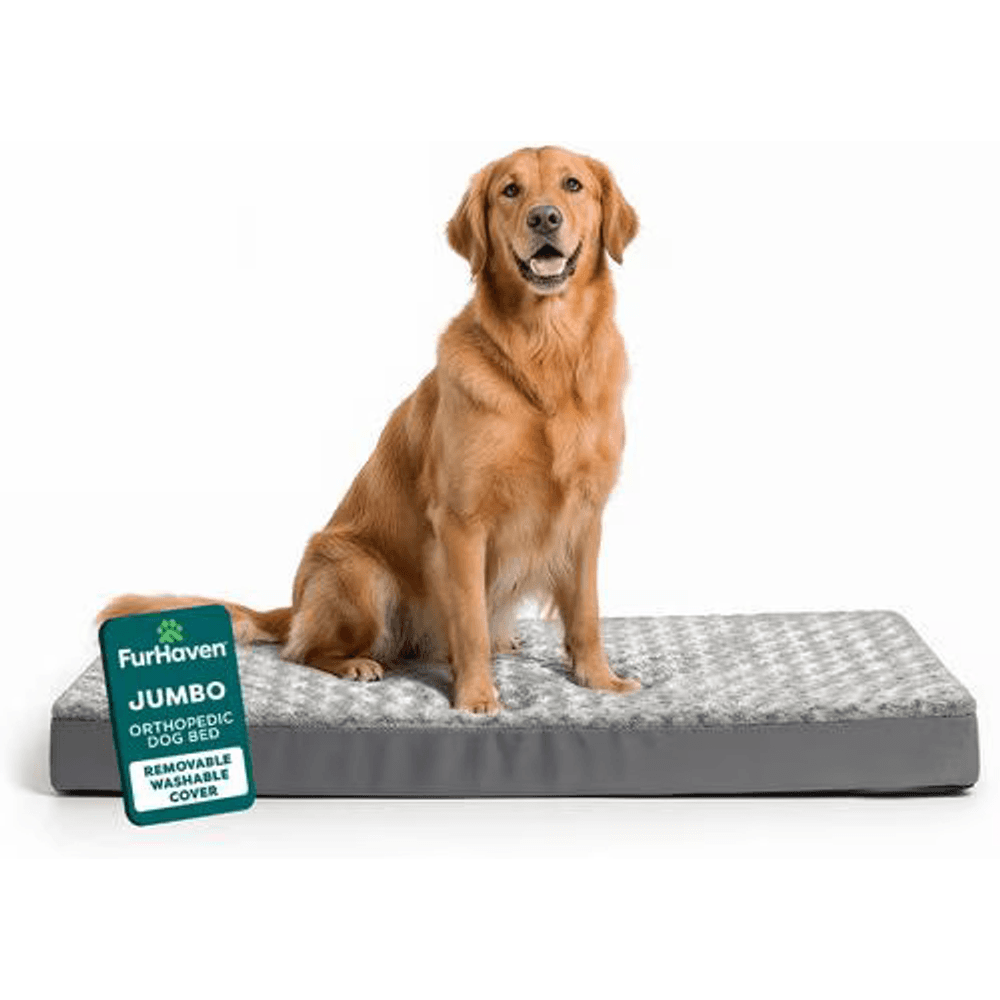
A plush orthopedic foam mattress that cushions aging joints and pressure points, giving a stiff or trembling senior dog warm, supportive rest.
Petful may earn a commission when you click through to Chewy, at no extra cost to you.
- If the FurHaven NAP Ultra Plush Orthopedic Deluxe Dog Bed provides enough usable space, monitor whether the dog can settle, rise and turn comfortably. A bed can improve access and comfort, but it does not diagnose or treat pain; new mobility changes belong with the veterinarian.
Equipment that should earn its place
Affiliate products do not diagnose, prevent or treat disease. Stop using equipment that causes rubbing, distress, overheating, swallowing risk or restricted movement, and ask the appropriate professional when the need is medical or behavioral.
Temperament and trainability
Both can learn well with short reward-based sessions. Boston Terriers may offer a little more speed and repetition; some French Bulldogs work best with especially brief sessions and high-value rewards. Those are tendencies, not rules.

Boston Terriers are often described as friendly, bright and amusing, with a lively social style. French Bulldogs are often described as adaptable, playful and affectionate, sometimes with a more deliberate response to repetitive training. Either breed may be bold, cautious, quiet, busy, dog-social or selective.
Both can learn well with short reward-based sessions. Boston Terriers may offer a little more speed and repetition; some French Bulldogs work best with especially brief sessions and high-value rewards. Those are tendencies, not rules.
Ask how the individual recovers from novelty, handles touch, settles, communicates discomfort and behaves when alone. Do not promise that either breed automatically loves children, strangers or other animals.
- Watch each dog settle, walk, recover from mild activity and respond to handling. A polished breed description cannot substitute for that observation.
Exercise and apartment fit

Both breeds can live in apartments when the household provides toileting, training, enrichment, climate control and company. Boston Terriers often enjoy a brisker or longer daily activity plan, while French Bulldogs often do better with several shorter opportunities for walking, sniffing and play.
Individual airway function overrides the average. Heat, humidity, excess weight and airway disease can reduce safe exercise capacity in either breed. Schedule cooler outings, carry water and stop for concerning breathing, weakness or poor recovery.
- For confinement or access management, compare the Frisco Steel 8-Panel Configurable Dog Gate and Playpen with the measured dog, opening and available floor space. Check height, usable interior dimensions, latch security, stability, chewing and climbing risk before relying on it in the home.

Petful may earn a commission when you click through to Chewy, at no extra cost to you.
- If the Frisco Steel 8-Panel Configurable Dog Gate and Playpen suits the setup, supervise initial use and pair it with gradual, reward-based practice. A barrier can prevent rehearsal and protect rest, but it does not teach comfort alone or replace a secure exterior boundary.
A small dog is not a no-exercise dog, and a yard does not provide social contact or training by itself. For a very active household, a healthy Boston may be the closer average match; for a lower-key household, a healthy Frenchie may be closer. The actual dog's stamina and breathing still decide.
Grooming and shedding
Both standard coats are short, smooth and shedding. Weekly brushing, nail care, dental care and ear checks are reasonable baselines. Neither breed is hypoallergenic, and there is no dependable rule that one always sheds more; season, skin health and the individual coat matter.
French Bulldogs often need more attention to facial and tail folds. Boston Terriers generally have fewer folds but still need eye, skin and ear observation. Skin odor, pain, redness, discharge, hair loss or recurrent irritation needs veterinary assessment rather than stronger cosmetic products.
Introduce handling gradually. More cleaning is not always better; retained moisture or harsh products can worsen irritation.
- Boston Terrier may fit better when
- The household wants a lighter, often livelier companion and can manage brachycephalic, eye, patella and hearing risks
- French Bulldog may fit better when
- The household prefers a stockier companion with shorter activity bouts and can manage substantial airway, heat, spinal and skin risks
Health, heat tolerance and lifespan
Health and lifespan comparison includes Are Bostons healthier than Frenchies? and What is the average lifespan of a French Bulldog and a Boston Terrier?. These are related but distinct reader decisions, best resolved by using veterinary findings, connected records and the individual dog's current signs instead of treating a population range as a promise. Use the measurements, records and observable conditions in this section to identify what is known, what still needs confirmation and which next action the evidence supports. Before acting, record the source, date and individual-dog evidence behind the conclusion. That prevents a broad breed tendency, seller label or isolated number from becoming a promise about one dog and keeps the decision practical, traceable and useful. Revisit the conclusion when the dog's age, health, environment or household capacity changes, because the same label can lead to a different decision as the evidence changes.

Are Bostons healthier than Frenchies?
The short answer is that Bostons are not automatically healthier than Frenchies. Both breeds can have brachycephalic airway disease, heat intolerance and eye problems. French Bulldogs have especially substantial spinal, skin and airway concerns, while Boston Terriers also warrant patella, eye and hearing screening. Compare the individual medical record, breathing function, parent screening and family history rather than treating either breed as low risk.
What is the average lifespan of a French Bulldog and a Boston Terrier?
The average lifespan commonly cited for a French Bulldog is about 10 to 12 years, while Boston Terrier references often cite about 11 to 13 years. Those population ranges overlap and cannot predict one dog. Body condition, inherited disease, airway function, preventive care, environment and access to treatment all influence how long an individual may live.
Compare screening and symptoms
Both breeds are brachycephalic and can develop obstructive airway disease and heat intolerance. Boston Terriers also warrant attention to prominent-eye injuries, patellar luxation and hereditary deafness. French Bulldogs warrant particular attention to airway obstruction, spinal disease, skin folds, eyes, patellas and cardiac findings.
For breeder screening, verify the actual parents rather than accepting “vet checked.” The Boston Terrier Club of America recommends health testing that includes eyes, patellas and hearing. The French Bull Dog Club of America’s CHIC requirements include hips, eyes, patellas and cardiac evaluation, with respiratory function grading among recommended tests.
Commonly cited lifespan ranges are about 11 to 13 years for Boston Terriers and 10 to 12 years for French Bulldogs, but an individual can live shorter or longer. Record videos of concerning breathing when safe and seek prompt help for pale or blue gums, collapse or severe distress. WebVet’s dog heatstroke guide covers emergency signs and first response.
- For feeding or hydration management, compare the Outward Hound Nina Ottosson Lickin' Layers Puzzle and Slow Feeder with the dog's measured portion, food or water needs, muzzle size and the household cleaning routine. Verify capacity, materials, power needs where applicable and whether another animal can interfere.

Petful may earn a commission when you click through to Chewy, at no extra cost to you.
- If the Outward Hound Nina Ottosson Lickin' Layers Puzzle and Slow Feeder fits the care plan, test it while a caregiver is present and continue tracking appetite, water intake, stool, weight and body condition. Feeding equipment cannot set a medical diet, prevent bloat or replace direct observation.
Recheck fit before buying
Affiliate products do not diagnose, prevent or treat disease. Stop using equipment that causes rubbing, distress, overheating, swallowing risk or restricted movement, and ask the appropriate professional when the need is medical or behavioral.
Purchase price and lifetime cost
For initial screening, current public cost guides commonly place Boston Terrier breeder puppies around $1,000 to $3,000 and French Bulldog puppies around $1,500 to $4,500 or more. Adoption fees for either are often lower. These are broad planning ranges, not national averages, endorsements or evidence of quality.
The lifetime budget should include food, preventive care, training, insurance or emergency savings, paid care and breed-related medical risk. French Bulldogs often have the higher acquisition quote and may create greater airway or spinal-cost exposure, but a Boston with chronic eye, airway or orthopedic disease can also be expensive.
Compare written local quotes with identical line items: included veterinary care, parent screening, contract terms, transport and return support. Do not pay a premium for color, sex or coat labels without independently evaluating health and transaction quality.
Which breed fits which household?
Questions involving how much a Boston Terrier puppy cost compared to a French Bulldog puppy? are best resolved by separating the advertised amount from lifetime costs and verifying what each quote includes. The better fit is the individual dog whose verified health, behavior and daily needs match the household’s real schedule and resources. Choose a Boston Terrier when a lighter build and, on average, somewhat livelier activity pattern better match the home. Choose a French Bulldog when a stockier build and generally shorter activity bouts fit, and the household can manage substantial airway, heat and spinal risk. These are conditional fit statements, not a ranking. For either breed, compare weekday care, climate, medical access, exercise, training, travel and emergency budget line by line. Records and direct observation outrank appearance. Do not choose only by face shape, coat color, celebrity popularity or a single anecdote.
Compare a normal day, not an ideal weekend
A fair choice uses the same Tuesday schedule for both breeds: toileting, exercise, alone time, training, climate control and paid care. A Boston's generally livelier activity pattern or a Frenchie's generally shorter activity bouts matter only if the household can provide them consistently. Then repeat the comparison for the hottest local week and for an unexpected veterinary bill.
A practical next step
A Boston Terrier vs French Bulldog decision becomes clearer when the household writes its preferred activity level, maximum alone time, climate plan, grooming tolerance and emergency budget. Apply those same criteria to both candidates and record what was actually observed during handling, settling and mild exercise.
Use the same evidence for both breeds
Write the household’s maximum comfortable activity level, alone time, climate-control plan and emergency budget. Then observe one candidate dog settling, walking and recovering from mild activity before making the choice.
Because either breed can overheat, save WebVet’s dog heatstroke signs and response guide and know the nearest emergency clinic before warm-weather activity.
Breed facts in this guide use the American Kennel Club breed comparison, American Kennel Club Boston Terrier breed page and American Kennel Club French Bulldog breed page.
Continue through the French Bulldog cluster
Start with the French Bulldog breed hub and follow only the question that matches the decision:
- french bulldog
- french bulldog temperament training
- french bulldog health lifespan
- french bulldog size weight growth
For separate questions, see Petful’s French Bulldog colors guide, merle French Bulldog guide and French Bulldog food guide.
More French Bulldog guides from Petful
Start with Petful's complete French Bulldog: Personality, Size, Care and Breed Guide, then use the dedicated guides below for the next decision.
- French Bulldog Puppies: Breeders, Adoption and Buying Safely
- French Bulldog Price: Puppy Cost and Lifetime Budget
- French Bulldog Lifespan and Health Issues
- French Bulldog Size, Weight and Growth Guide
- French Bulldog Temperament, Training and Apartment Life
- Fluffy French Bulldog: Long-Haired Genetics, Price and Care
Use the same normal-day test for both breeds
A fair Boston Terrier vs French Bulldog comparison uses identical criteria. Write the household's real weekday schedule, then ask how each individual dog would handle toileting, climate, exercise, training, stairs, alone time, grooming and veterinary access. Do not compare an ideal Boston with a worst-case Frenchie or the reverse.
Build two columns and record evidence rather than impressions:
- Observed breathing and recovery after mild activity.
- Current body condition, movement and mobility history.
- Behavior around handling, visitors, dogs, children and brief separation.
- Grooming and skin-care needs for the individual.
- Verified veterinary and sourcing records.
- The household's local purchase, insurance and care quotes.
The breed name provides context. The dog and household evidence decides fit.
Price comparison without a false national average
Boston Terrier and French Bulldog asking prices vary by location, acquisition path, age, included care, seller practices and demand. Compare local written quotes with the same worksheet rather than treating one listing as an average.
For each breed, include the acquisition fee, independent veterinary examination, equipment, training, routine care, insurance or reserves and breed-associated risk scenarios. A lower purchase price can still produce a higher first-year total, and a higher fee does not prove better health.
Five household scenarios
Hot climate with limited outdoor shade
Both breeds can face brachycephalic heat risk. Compare the individual airway assessment, building climate control, emergency plan and ability to schedule cool-hour activity. Neither breed label makes hot weather safe.
Long workdays
Compare toileting capacity, observed alone-time behavior and access to a reliable caregiver. A compact dog is not automatically comfortable alone all day.
Children or other pets
Use the individual history, body language and managed introductions. Do not choose on a family-friendly label alone.
Frequent travel
Measure the dog and review transport restrictions, heat exposure, stress, boarding access and medical needs. The dog's short muzzle and the carrier label both matter.
First-time dog owner
Compare access to reward-based training, veterinary care, emergency funds and daily support. The better fit is the dog whose needs the household can reliably meet, not the breed marketed as easier.
Compare both breeds on the same weekday schedule
Write one normal workday from waking through bedtime, then place each breed into that identical schedule. Compare toileting access, safe activity, training, companionship, climate management, noise, stairs and emergency transport using the same assumptions. Do not give one breed an ideal day and the other a difficult day.
Use identical decision criteria for both dogs: the observed individual's health and behavior, housing rules, caregiver time, local veterinary access and full cost. This prevents appearance or reputation from quietly changing the standard. If neither option fits the real schedule, the comparison has produced a useful answer even without a winner.
Repeat the exercise for a disrupted day, such as hot weather, an extended work shift or caregiver illness. The better fit is the plan with verified capacity and backups, not the breed with the more appealing stereotype.
Boston Terrier vs French Bulldog FAQs
The short answer to whether Bostons are healthier than Frenchies is that neither breed is automatically healthy. Both can have brachycephalic airway disease, heat intolerance and eye problems. French Bulldogs have especially substantial spinal, skin and airway concerns, while Boston Terriers also warrant patella, eye and hearing screening. Compare the individual medical record, breathing function, parent screening and family history.
The short answer is that neither breed is bigger in every dimension. A Boston Terrier is usually taller at about 15 to 17 inches, while a Frenchie is shorter at about 11 to 13 inches but often stockier and heavier-boned. Their weight ranges overlap, so measure the actual dog for carriers, harnesses, beds and safe handling instead of relying on breed alone.
The short answer is that the average lifespan of a French Bulldog is commonly cited around 10 to 12 years, while Boston Terrier references often cite about 11 to 13 years. Those population ranges overlap and cannot predict one dog. Body condition, inherited disease, airway function, preventive care and access to treatment influence an individual's lifespan.
Boston Terriers are generally leggier, lighter and often livelier, while French Bulldogs are generally lower, stockier and more heavily built. Ear shape also differs, but appearance alone should not decide fit. Compare exercise style, heat tolerance, grooming, health risks and behavior in the individual dog. Both are short-muzzled companion breeds, yet neither breed label predicts one dog's breathing function, trainability or compatibility.
Both breeds learn through reward-based methods, but motivation and stamina vary by individual. Boston Terriers may offer more repetitions and enjoy a livelier pace, while some French Bulldogs respond best to especially short, high-value sessions with careful heat management. Neither should be labeled stubborn without checking clarity, reinforcement, fatigue, fear or pain. Observe the actual dog learning in normal household settings before comparing trainability.
Neither breed is risk-free. French Bulldogs have especially substantial airway, spinal and skin concerns, while Boston Terriers also face airway, eye, patellar and hearing risks. Population tendencies cannot forecast one dog. Compare breathing function, movement, medical history and verified parent screening, and budget for breed-relevant care. A lower purchase quote or more athletic appearance does not establish better long-term health.
They can both fit apartment life, but the tradeoffs differ. Boston Terriers often need a livelier exercise routine, while French Bulldogs frequently need shorter heat-conscious outings and closer respiratory monitoring. Either dog needs frequent toileting, enrichment, training, climate control and company. Shared walls make barking and separation distress important, and stairs or elevators affect access. Choose the individual whose activity and noise patterns match the building.
Yes, both short coats shed, and there is no dependable breed-wide winner. Season, skin health, indoor climate and individual coat density often matter more than the label. Weekly brushing can collect loose hair and reveal redness or bald spots, but it will not make either breed nonshedding. Sudden heavy loss, odor, itching or inflamed skin warrants veterinary assessment rather than more aggressive grooming.
French Bulldog listings often show higher breeder quotes than Boston Terrier listings. Broad public guides commonly place Boston puppies around $1,000 to $3,000 and French Bulldogs around $1,500 to $4,500 or more, but these are not dependable local averages or proof of quality. Compare written quotes, included care, parent records and contracts, then budget separately for insurance, routine care and breed-relevant medical risk.
On average, Boston Terriers are often livelier and capable of more sustained activity, while many French Bulldogs do better with shorter heat-conscious sessions. Airway function, weather, age, body condition and individual health can reverse that comparison. Observe recovery after ordinary walks and play rather than judging from one energetic meeting. Neither breed should be pushed through noisy breathing, weakness or slow recovery to match a stereotype.
Editorial safety note
Petful does not endorse an individual breeder, rescue, seller, insurer, veterinarian, trainer or product. Affiliate links may earn Petful a commission at no extra cost to the reader. Availability, dimensions, price and instructions can change. Reopen the current product page, measure the individual dog and supervise use. A tracked offer is a commerce option, not evidence that the product is necessary, medically appropriate or safer than every alternative.
Make a balanced final comparison
Use one row for each breed and the same columns: verified health, breathing recovery, observed behavior, daily exercise, alone time, grooming, purchase or adoption terms, insurance quote and emergency budget. A conclusion reached from matching evidence on both sides is more reliable than choosing from appearance alone.

Coreen Saito is a pet writer and longtime shelter volunteer with more than a decade in animal rescue. She covers cat behavior, breed care, and the small, ordinary science of sharing a life with companion animals, with a particular focus on honest takes about the products and decisions that actually matter. At home in Arizona, she's outranked by Mac (a dog with the loudest opinion in the house), Rebel (a cat who governs by quiet authority), and Meri (an orange tabby who runs the late shift and the laundry basket). She writes about all three, plus the rescues that keep coming through her life, at LifeWithMinty.com.
Sign up for expert-backed reviews and safety alerts all in one place.