Cocker Spaniel Personality, Training and Family Fit
Understand Cocker Spaniel personality, training, exercise, barking, separation and family fit through individual evidence, reward-based methods and clear safety boundaries.

Petful is reader supported. As an affiliate of platforms like Amazon and Chewy, we may earn a commission when you buy through links on this page. There is no extra cost to you.
A typical cocker spaniel personality is often described as social, responsive, busy, and sensitive, but those words are breed-level tendencies rather than a forecast for one dog. Genetics, early experience, health, learning history, and the current environment all shape behavior.
Understanding cocker spaniel personality should lead to better observation, not stereotypes. Watch how the individual recovers after surprise, accepts handling, settles after activity, and responds to people, dogs, sounds, and separation.
For breed context, see the complete Cocker Spaniel guide and American Cocker Spaniel profile. The AKC Cocker Spaniel and AKC English Cocker Spaniel pages describe the distinct recognized breeds.

Sign up for expert-backed reviews and safety alerts all in one place.
Cocker Spaniel personality at a glance
Cocker Spaniel personality often includes close cooperation, scenting and retrieving, yet individual dogs vary. Use population tendency as context, direct observation for daily decisions, documented records for history and professional findings when behavior creates risk or distress.
Many Cockers learn quickly when rewards are clear and sessions are short. Their sensitivity can make harsh handling especially counterproductive. A dog who appears "stubborn" may be confused, distracted, afraid, tired, in pain, or working for a reward that is not valuable enough.
Cocker Spaniel personality and Cocker Spaniel temperament are population-level search labels, not verdicts on one dog. Observe recovery after novelty, comfort with handling, play style, frustration, rest, and response to people across more than one setting before drawing conclusions.
Use this evidence ladder:
- Population tendency: Expect a sporting-dog background and possible interest in scent, birds, movement, and people.
- Individual observation: Record triggers, distance, body language, recovery, and what reinforcement works.
- Documented record: Review foster notes, prior training, veterinary history, bites, escapes, and separation behavior.
- Professional finding: Seek veterinary and qualified behavior help for sudden change, aggression, panic, or persistent distress.
Use the evidence ladder to answer one behavior question at a time. Sporting history suggests likely motivations, direct observation shows what the dog can handle today, records reveal repeating contexts, and veterinary or behavior findings guide risk decisions. That order prevents a friendly breed description or one difficult incident from becoming the dog's whole story.
| Is this dog trainable? | Response to clear cues, food, play and short sessions | Simplify the task and reinforce success |
|---|---|---|
| Can the dog cope alone? | Video of gradual absences and recovery | Build duration below the distress threshold |
| Is chasing manageable? | Long-line response around increasing distraction | Prevent rehearsal and strengthen recall |
| Is household interaction safe? | Body language, history and controlled introductions | Add distance, barriers and professional guidance |
A Frisco Steel 8-Panel Configurable Dog Gate and Playpen, 30-in, Black can create distance during management and training. It is not tall or secure enough for every athletic, climbing, or jumping Cocker, and it never replaces supervision around children or pets.
How to weigh behavior evidence
Breed tendencies describe populations, not every individual dog, so a general Cocker temperament description cannot predict one dog's response to handling, separation, visitors, or wildlife. Records, direct observation and professional findings answer different questions: a behavior log captures triggers and recovery, repeated observation tests whether a skill generalizes, and veterinary or qualified behavior assessment addresses pain and risk. An article-specific evidence ladder for cocker spaniel personality that separates population tendencies, individual observations, records and professional findings. The page must give the reader a concrete decision framework rather than a generic fact list: define the behavior, change one condition, measure recovery, and obtain help before safety deteriorates.

Petful may earn a commission when you click through to Chewy, at no extra cost to you.
American, English and working-line differences
American and English Cocker Spaniels are distinct breeds, and English working lines may emphasize field ability more strongly than many show lines. That can influence plausible activity, coat, and training needs, but line labels still do not determine one dog's temperament.
The American Spaniel Club provides American-breed background. When meeting any dog, ask more specific questions:
- What activities have the parents or adult dog actually done?
- How do they recover after a novel sound, surface, person, or place?
- What happens when play ends or food is unavailable?
- Can they rest in the house after appropriate activity?
- How have they responded to grooming, veterinary handling, and restraint?
- Are there documented fear, escape, guarding, or bite events?
A working-bred dog may need more purposeful outlets, yet constant high-arousal exercise can create an athlete who still cannot settle. A quieter show-bred or pet-bred dog can also need substantial training and enrichment. Plan for the individual in front of you.
The first month: protect sleep and collect clean evidence
A staged first month produces better behavioral evidence than an immediate calendar of visitors, dog parks, and long outings. WebVet's dog training schedule explains why predictable routines matter more than perfect timing.
During the first week:
- Establish a quiet rest station and consistent toilet route.
- Limit forced greetings and record appetite, sleep, elimination, and startle recovery.
- Begin name response, a voluntary hand target, and brief cooperative handling.
- Review veterinary records and schedule an examination.
During the next three weeks, add one difficulty at a time. Practice two-minute sessions, quiet sniff walks, very short absences, and carefully selected introductions only while the dog can eat, disengage, and recover. A frightened rescue, puppy, or dog in pain may need a slower pace.
Choose rewards from the dog's response
Food is convenient, but reinforcement is whatever makes the desired behavior more likely. A Cocker may work for a tossed treat, retrieve, sniff break, access to water, permission to greet, or distance from something worrying.
Build a small reward menu:
- Easy-to-swallow food for rapid repetitions.
- A short retrieve or tug game for a dog who releases calmly.
- Permission to sniff after loose-leash steps.
- Distance from a trigger when the dog asks to leave.
- Quiet rest after effort.
An Outward Hound Nina Ottosson Lick N' Flip Treat Puzzle Dog Toy & Slow Feeder can hold part of a measured meal for supervised enrichment. It is not appropriate for every chewer or guarder, and puzzle difficulty should never replace physical movement, sleep, or human interaction.
Use a training log to set difficulty
Record the cue, behavior, environment, distance, reward, and recovery. Three successful recalls in a kitchen do not establish recall near birds, while one failure in a hard setting does not show the dog cannot learn.
Review the log for:
- The distance at which the dog can still orient and eat.
- Rewards that remain useful outdoors.
- Performance after poor sleep, grooming, or heavy exercise.
- Recovery time after surprise or frustration.
- Sudden changes that may indicate pain or illness.
Use the pattern to make the next repetition easier. The record is a planning tool, not a scorecard.
Teach settling as a separate skill
Some Cockers keep moving because activity has always produced more activity. Reinforce a glance toward a mat, one step onto it, and then brief pauses. Add duration slowly and protect undisturbed sleep away from children, visitors, and other pets.
If the dog paces, pants, repeatedly changes position, avoids lying down, or becomes irritable at rest, record the pattern and seek veterinary input. Pain, skin discomfort, digestive trouble, or another health issue can look like a training problem.

Petful may earn a commission when you click through to Chewy, at no extra cost to you.
Training style that fits a spaniel

The American Veterinary Society of Animal Behavior position statements support reward-based methods and explain concerns with aversive techniques. Reward-based training is not permissive. It combines clear criteria, valuable reinforcement, thoughtful prevention, and humane consequences such as removing access to an opportunity.
Cocker Spaniel training should make the desired action easy to understand and worthwhile to repeat. To train Cocker Spaniel behavior safely, use positive reinforcement Cocker Spaniel plans with short sessions, management that prevents rehearsal, and criteria the individual dog can meet.
Build these foundations:
- Mark and reward voluntary attention.
- Teach a hand target for easy movement without grabbing.
- Reinforce four paws on the floor before greeting.
- Build a mat settle in seconds, then minutes.
- Practice recall on a long line before adding freedom.
- Pair ear, paw, mouth, and coat handling with rewards.
- End while the dog is still successful.
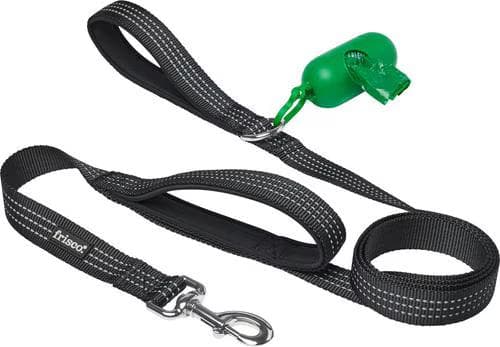
The Frisco Traffic Leash with Dual Padded Handles & Poop Bag Dispenser, Black, 6-ft long, 1 count offers a closer handle for managed walking, but a six-foot leash is not a long line and does not make an unsafe greeting safe. Fit it to secure, comfortable equipment and avoid sudden force on the neck.
Troubleshoot the setup before the dog
Keep records for a week before declaring a training plan ineffective. Note the cue, setting, distance from distraction, reward, result, and recovery. Patterns usually reveal whether the task is too difficult or the environment is doing more work than the cue.
When success drops, change one variable:
- Reduce distance or duration.
- Move to a quieter location.
- Use a reward the dog has already shown it values.
- Split the behavior into a smaller action.
- End the session if fatigue, fear, or discomfort appears.
A PetSafe Easy Walk Dog Harness, Red/Black, Medium/Large is one walking option when chest measurements and shoulder movement fit. It does not teach loose-leash walking, and rubbing under the Cocker's feathering means the fit or tool needs review.
Exercise, scent work and enrichment

Exercise should support health and behavior without relying on exhaustion. Walks, sniffing, retrieving, searching, swimming where safe, and controlled field-style games can satisfy different needs. Puppies need age-appropriate sessions and rest, while adults and seniors need plans adjusted for fitness, heat, joints, and medical history.
Cocker Spaniel exercise and Cocker Spaniel enrichment should be planned as related but distinct needs. Physical movement supports fitness, while scent searches, food puzzles, cooperative handling, and calm skill practice exercise attention without requiring ever-higher intensity.
Simple enrichment includes:
- Scatter feeding in safe grass.
- Searching for food in cardboard boxes under supervision.
- Short retrieve-and-release games.
- Following a scent trail to a hidden toy.
- Cooperative grooming and body-awareness exercises.
- Calm observation from a comfortable distance.
The MidWest Wire Dog Exercise Pen with Step-Thru Door, Black E-Coat, 36-in can define a supervised activity or rest area. It is management equipment, not an exercise substitute, and some dogs can climb, move, or jump a pen.
A KONG Classic Dog Toy, Large can support a supervised retrieve, trade, or food-search session when the size and durability fit the dog. Remove damaged rubber, count food toward the daily ration, and stop if play escalates guarding or frantic arousal.
- More exercise is not the answer to every behavior. Sudden restlessness, reluctance to move, sleep disruption, irritability or reduced tolerance can reflect pain or illness. Record documented evidence of the change and seek professional guidance from a veterinarian.
Barking, chasing and impulse control
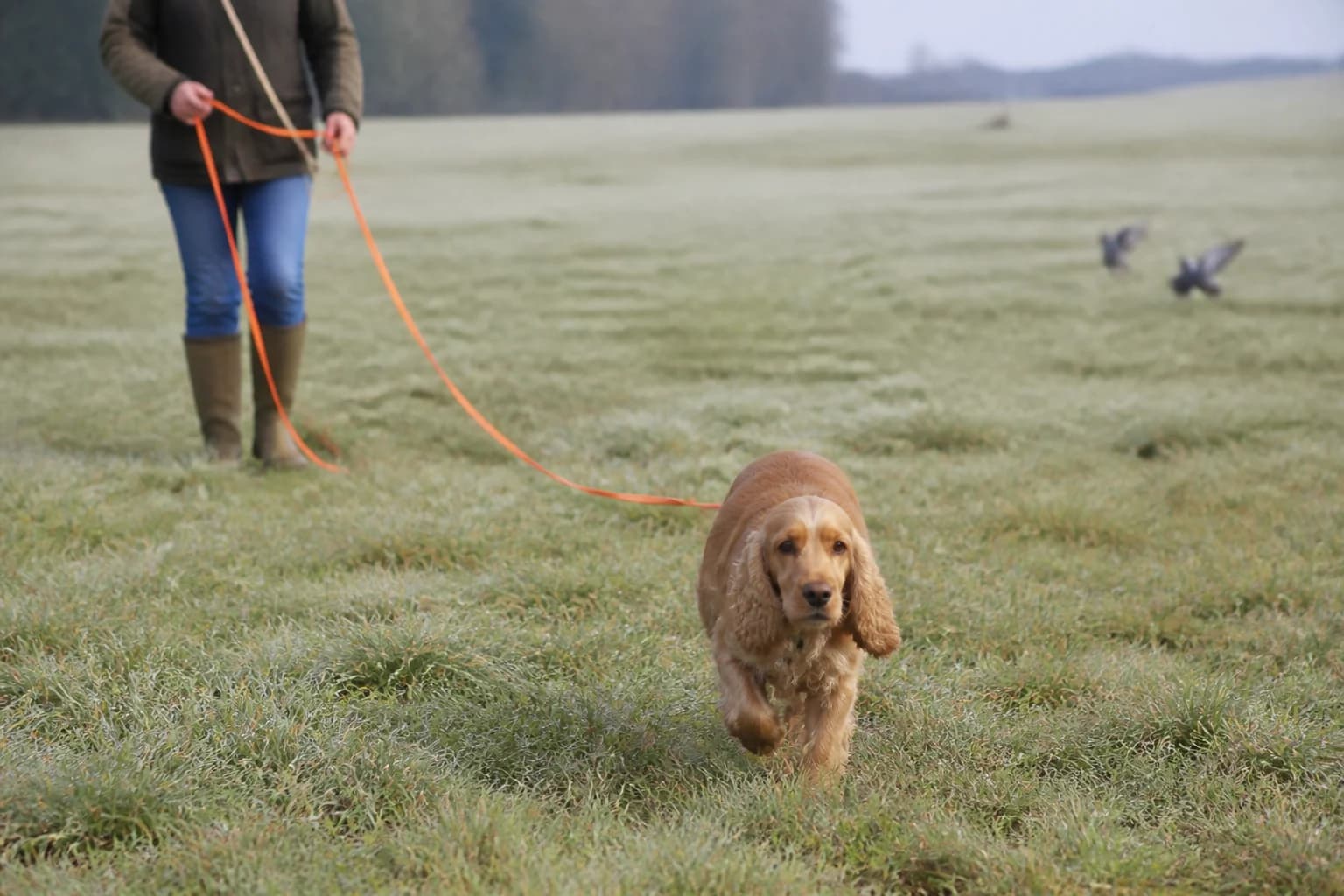
Cocker Spaniels may bark from excitement, alarm, frustration, attention history, fear, boredom, or separation distress. Treating all barking as disobedience misses the cause. Record what happens immediately before and after each episode.
Cocker Spaniel prey drive may appear as orientation, stalking, chasing, or intense scent pursuit, but the label does not predict control in every setting. Use distance, secure equipment, a long line where appropriate, reinforced check-ins, and management around vulnerable animals.
For barking, ask:
- Is the trigger visible, audible, social, or linked to an absence?
- How far away can the dog notice it and still eat or respond?
- Is the dog getting enough sleep and appropriate activity?
- Has barking repeatedly produced attention or access?
- Are pain, hearing change, or cognitive change possible?
For chasing, prevent rehearsal. Use secure fencing and a long line, reward orientation to the handler, and practice recall below threshold. The Frisco Traffic Leash with Dual Padded Handles & Poop Bag Dispenser, Black, 6-ft long, 1 count can support close-control walking, but it is not long enough for distance recall work.
Match the exercise to recovery
After an outing, note breathing, gait, thirst, ability to settle, and behavior later that day. A useful session should not leave the dog repeatedly limping, frantic, sleepless, or unable to recover. Increase duration and distraction separately so the record reveals which change mattered.
Impulse control should not mean making a dog wait for everything. Reinforce useful skills such as pausing at doors, releasing an object, returning from a scent, and settling after play. Alternate activity with predictable rest.
For warm outings, a Frisco Silicone Collapsible Travel Bowl with Carabiner, Teal, Small (1.5 cup) provides a portable water option, but its small capacity may not cover a longer trip. Carry enough clean water, offer breaks, and wash the bowl between uses.

Petful may earn a commission when you click through to Chewy, at no extra cost to you.
Separation and alone-time skills
Build alone time before you need a full workday. Start with the dog relaxed, step away for a duration that does not trigger distress, return calmly, and increase in small increments. A camera can reveal pacing, panting, vocalizing, escape attempts, or an inability to eat.
Cocker Spaniel separation anxiety is a clinical concern, not a synonym for a dog who prefers company. A Cocker Spaniel left alone should remain within a duration the individual can handle. Cocker Spaniel crate training may support safe rest for some dogs, but confinement can worsen panic and is not a treatment for separation distress.
The Petlibro Granary WIFI Automatic Cat & Dog Feeder with Camera & 3 Pet Food Desiccant Bags, White, 5-L may help deliver a measured meal and observe a feeding area, but a feeder camera cannot diagnose separation anxiety or replace human care, exercise, toilet breaks, and emergency planning. Confirm that the kibble size, portion accuracy, security, and camera placement fit the household.
Distress changes the alone-time plan
If distress appears, shorten the absence rather than testing how long the dog can panic. Severe salivation, destruction at exits, self-injury, persistent vocalization, or inability to settle deserves veterinary and qualified behavior support.
The Petlibro Granary WIFI Automatic Cat & Dog Feeder with Camera & 3 Pet Food Desiccant Bags, White, 5-L can automate only food delivery. It should not become evidence that a dog is comfortable alone simply because food was dispensed or eaten.
Children, dogs and other pets

Some Cockers live happily with children, dogs, cats, and other animals. No breed description makes an interaction safe. Household fit depends on the dog's history and body language, the other individual's behavior, the adults' supervision, and the environment.
Whether a Cocker Spaniel is good with kids, a Cocker Spaniel with cats is safe, or a Cocker Spaniel accepts other dogs must be answered from individual introductions and management. Give each participant space, avoid forced contact, and interrupt at early signs of discomfort.
Supervise the interaction in front of you
WebVet's guide to dog body language can help owners notice early discomfort. Watch for turning away, lip licking, freezing, lowered posture, hard staring, hiding, rapid panting, or attempts to leave. One signal needs context, but a pattern should change the plan.
Safer rules include:
- Give the dog an exit and a child-free resting area.
- Do not allow hugging, climbing, cornering, or taking food and toys.
- Separate during high-energy play, meals, deliveries, and adult distraction.
- Introduce pets at a distance with secure handling and short sessions.
- Reward calm disengagement rather than forcing proximity.
The MidWest Wire Dog Exercise Pen with Step-Thru Door, Black E-Coat, 36-in can add a boundary for some households, but spacing, anchoring, climbing, and reach-through contact must be considered. A barrier is not supervision.
When behavior changes need help
Sudden aggression, sensitivity to touch, night waking, house-soiling, reduced play, or loss of training can be a medical warning. Start with a veterinary exam, especially when behavior changed abruptly or the dog is older.
The phrase "Cocker rage syndrome" is often used loosely online. It should not be used to label ordinary growling, guarding, fear, pain, or a dog whose history is unknown. Aggression needs an individual medical and behavioral assessment, with attention to triggers, body language, recovery, and documented incidents.
- Household fit can improve with reward-based work
- Individual evidence clarifies each dog's needs
- Scent and retrieve outlets can be enriching
- Grooming and handling need training
- Chasing or barking can require management
- Sensitive or distressed dogs may need professional support
Seek urgent help when there is a bite, escalating threat, self-injury, inability to recover, or danger to a child, vulnerable person, or animal. Use distance and secure barriers rather than attempting a risky confrontation.
The Frisco Steel 8-Panel Configurable Dog Gate and Playpen, 30-in, Black can support a written safety plan when a professional agrees it is appropriate, but it should not be the only layer between a high-risk dog and a potential target.
Petful may earn a commission when you click through to Chewy, at no extra cost to you.
Turn behavior observations into a training decision
Describe behavior before interpreting it. "Barked and pulled for twelve seconds when a dog appeared across the street, then ate and followed away" is more useful than "reactive." The description identifies distance, duration, recovery, and a reinforcement that still worked.
For each priority behavior, record:
- The exact action and body language.
- What happened immediately before and after it.
- Distance from people, animals, movement, or sound.
- Sleep, exercise, food, pain, and medication context.
- The cue and reward used.
- Recovery time and whether the dog could re-engage.
Use the record to choose the next setup. If the dog can notice a bird and eat at forty feet but lunges at twenty feet, practice beyond forty feet rather than testing twenty again. If performance suddenly worsens across settings, ask a veterinarian whether pain or illness could be changing tolerance.
Household rules should be equally specific. Name who supervises children, which doors require a barrier, where the dog rests, and how resident pets are separated during food or excitement. A vague promise to "watch closely" is not a safety plan.
Progress should appear as easier recovery, more voluntary check-ins, and success in gradually harder environments. Suppressed growling or stillness under force is not proof that emotion improved. Professional findings control decisions involving bites, severe distress, or danger to people or animals.
Related Cocker Spaniel topic owners
Cocker Spaniel at a glance
Use the Cocker Spaniel guide for broad cocker spaniel, am cocker spaniel, cocker spaniel breeds, and dog cocker spaniel questions. It owns history, American and English type context, appearance, care, health, and general fit. This page takes one narrower decision: how the observed dog learns, recovers from stress, responds to handling, and fits the household's training and management capacity. That boundary keeps breed orientation separate from behavior intervention.
English Cocker Spaniel at a glance
The English Cocker Spaniel guide answers english cocker spaniel, cocker spaniel english, english cocker spaniel spaniel, and cocker spaniel vs english cocker spaniel searches. Working and show context may shape useful questions about activity and reinforcement, but it cannot predict one dog's drive. Here, repeated observation across rest, play, wildlife, handling, and novelty sets the actual plan. The observed recovery pattern decides whether difficulty should increase.
Cocker Spaniel puppy buying checklist
The Cocker Spaniel puppy guide owns cocker spaniel puppy, cocker spaniel puppies, for sale cocker spaniel, and duplicated cocker spaniel cocker spaniel puppies queries. It verifies seller records, parent screening, early socialization, contracts, and safe payment. This training guide then turns the puppy's documented history and current responses into gradual exposure, settling, handling, leash, and household routines without relying on a seller's temperament promise.
American Cocker Spaniel at a glance
Use the American Cocker Spaniel guide for american cocker spaniel, american cocker spaniel breeds, american cocker spaniel dog, and american cocker spaniel dogs intent. That owner supplies breed history, structure, health, coat, and broad temperament context. This page avoids treating those tendencies as destiny and instead measures the individual's triggers, preferred rewards, recovery, and ability to generalize skills. This keeps the training plan individual rather than label driven.
Best dog food for Cocker Spaniels at a glance
The Cocker Spaniel food guide owns cocker spaniel food, food for cocker spaniel, cocker spaniel dog food, and dog food for cocker spaniel decisions. It covers adequacy, calories, labels, and medical boundaries. Training treats and food puzzles remain part of that ration, but food cannot diagnose fear, cure separation distress, or replace a behavior plan based on observable evidence. Reinforcement value and nutritional suitability remain separate questions.
Do Cocker Spaniels shed?
The Cocker Spaniel grooming guide directly answers do cocker spaniels shed and owns brushing, bathing, haircuts, ears, paws, and coat referral signs. This temperament page contributes cooperative-care skills: voluntary approach, stationing, chin rest, paw touch, and brief tool exposure. A dog who freezes or withdraws needs the handling step reduced, not force to finish the grooming task. Cooperation is measured by voluntary participation, not silent endurance.
Cocker Spaniel mixes at a glance
Use the Cocker Spaniel mixes guide for cocker spaniel mix, cocker spaniel mixed, cocker spaniel mixes, and cocker spaniel and a poodle mix questions. A cross name cannot forecast sociability, guarding, trainability, or family fit. That page owns ancestry uncertainty; this one bases behavior decisions on current body language, documented history, health, reinforcement, environment, and recovery. Unknown ancestry increases the value of careful observation rather than guesswork.
Cocker Spaniel colors at a glance
The Cocker Spaniel colors guide explains cocker spaniel colors and searches such as black cocker spaniel, cocker spaniel black, or cocker spaniel in black. Pigment and pattern do not predict aggression, friendliness, working drive, or training response. Keep color with the appearance owner and use this page to evaluate the whole dog's behavior in context. Appearance never substitutes for a behavior history or safety assessment.
English vs American Cocker Spaniel at a glance
The English vs American Cocker Spaniel comparison owns english vs american cocker spaniel, american cocker spaniel vs english cocker spaniel, cocker spaniel english vs american, and english cocker spaniel vs american searches. It compares recognized breeds without ranking personalities. This page uses type as background only, then documents the individual's energy, recovery, handling comfort, chase behavior, and household fit. Type comparisons cannot set one dog's training threshold.
Cocker Spaniel lifespan at a glance
Use the Cocker Spaniel health and lifespan guide for cocker spaniel lifespan, cocker spaniel life expectancy, average lifespan cocker spaniel, and average lifespan of a cocker spaniel questions. Pain, sensory change, endocrine illness, neurologic disease, or medication can alter behavior. A sudden training regression therefore starts with veterinary context instead of harder repetitions or a breed-based explanation. Health findings therefore remain part of every behavior reassessment.
Cocker Spaniel FAQs
The pros and cons of a Cocker Spaniel depend on the individual and household. Cocker spaniel personality strengths can include cooperation, affection, sociability, and enthusiasm for scent or retrieve games. Tradeoffs can include grooming, sensitivity, barking, chasing, and alone-time work. No list predicts one dog. The evidence points to one clear next step: to compare the individual's history, body language, and recovery with the household's time, supervision, training skill, and care capacity.
Behavioral issues with Cocker Spaniels can appear as several different concerns. Behavioral concerns can include fear, overexcitement, barking, chasing, guarding, handling sensitivity, or separation distress, but none defines cocker spaniel personality in every dog. Pain, sleep, environment, and learning history can change behavior. Use the individual record to choose a clear next step: to record triggers, distance, body language, and recovery, then obtain veterinary or qualified behavior help when risk or distress persists.
Cocker spaniel personality is often described as engaged, responsive, affectionate with trusted people, and interested in sporting activities. Individuals still vary with genetics, development, health, and learning. Before deciding, use this clear next step: to observe the actual dog during handling, rest, novelty, play, separation, and interactions with people and animals instead of accepting a breed-label promise.
Many Cockers learn readily through short, clear, reward-based sessions, but cocker spaniel personality does not guarantee easy training. Motivation, health, distraction, prior learning, and task difficulty all affect results. For this household, choose a practical clear next step: to simplify one behavior, use a reward the dog values, practice below distraction threshold, and confirm the skill in more than one setting.
Some Cockers are vocal and others are quiet, so barking is not a fixed cocker spaniel personality trait. Alarm, excitement, fear, frustration, learned attention, and separation distress require different plans. At that point, take this clear next step: to document what happens before and after barking, including distance and recovery, then prevent rehearsal and reinforce a behavior compatible with the observed cause.
Many can learn comfortable age-appropriate alone time, but cocker spaniel personality does not guarantee tolerance for a full workday. Puppies need frequent care, and panic is not disobedience. When uncertainty remains, choose the safest clear next step: to video very short absences, return before distress, and seek veterinary or qualified behavior help for salivation, escape attempts, self-injury, or persistent vocalizing.
Some Cockers live well with children, but cocker spaniel personality cannot guarantee safe interaction. History, pain, supervision, the child's behavior, and the dog's ability to leave all matter. The decision framework leads to a clear next step: a calm adult-supervised introduction, a protected child-free rest area, and separation during food, high excitement, sleep, or any period without active supervision.
Cocker rage syndrome is an imprecise label applied online to very different aggression cases and should not be treated as a standard cocker spaniel personality diagnosis. Pain, fear, guarding, neurologic issues, and other medical concerns require individual assessment. After reviewing the evidence, keep the clear next step specific: to prevent further exposure, document incidents, and obtain prompt veterinary and qualified behavior evaluation for sudden or serious aggression.

Coreen Saito is a pet writer and longtime shelter volunteer with more than a decade in animal rescue. She covers cat behavior, breed care, and the small, ordinary science of sharing a life with companion animals, with a particular focus on honest takes about the products and decisions that actually matter. At home in Arizona, she's outranked by Mac (a dog with the loudest opinion in the house), Rebel (a cat who governs by quiet authority), and Meri (an orange tabby who runs the late shift and the laundry basket). She writes about all three, plus the rescues that keep coming through her life, at LifeWithMinty.com.
Sign up for expert-backed reviews and safety alerts all in one place.