Cocker Spaniel Colors and Patterns: Complete Guide
See Cocker Spaniel colors and patterns across American and English dogs, including solid, parti, ticking, roan, tan points, sable and merle claim limits.

Petful is reader supported. As an affiliate of platforms like Amazon and Chewy, we may earn a commission when you buy through links on this page. There is no extra cost to you.
Cocker spaniel colors include solid black, red or golden shades, brown or liver, parti-color combinations, tan points and several roan patterns. The exact accepted wording differs between the American Cocker Spaniel and English Cocker Spaniel standards.
Coat color can describe what a dog looks like. It cannot prove pedigree, predict temperament, establish health or justify skipping breeder and rescue records. When color claims matter, compare the visible coat with the applicable standard and documented ancestry.

Sign up for expert-backed reviews and safety alerts all in one place.
Cocker Spaniel colors at a glance
- 1Cocker Spaniel colors follow differently organized American and English standards
- 2Solid, parti, ticking, roan and tan-point terms describe different coat features
- 3Individual dogs vary, and appearance never replaces identity or health records
| Term | What it describes | Records to verify |
|---|---|---|
| Solid | One main body color, sometimes with permitted small markings or tan points | Applicable American or English breed standard |
| Parti-color | White combined with another color in defined patches | Registration and standard terminology |
| Ticking | Small colored flecks within white areas | Close coat observation in natural light |
| Roan | Intermingled colored and white hairs that create an even mixed effect | English Cocker standard and documented ancestry |
| Tan points | Tan markings in genetically and standard-defined locations | Breed standard, registration and parent colors |
Search phrases such as black Cocker Spaniel dog, Cocker Spaniel dog black, Cocker Spaniel in black and Cocker Spaniel black adult describe appearance, not a new breed. A black Cocker Spaniel puppy may change in coat texture and feathering while retaining its base pigment. “Mini black Cocker Spaniel” is not a separately recognized variety.
The American Spaniel Club, English Cocker Spaniel Club of America, AKC Cocker Spaniel profile and AKC English Cocker Spaniel profile provide the appropriate standard context.
Use an evidence ladder:
- Population tendency: colors and patterns accepted or commonly seen across a breed.
- Individual observation: pigment, white distribution, ticking, roaning and coat texture on this dog.
- Documented record: registration, pedigree and verified parent identities.
- Professional finding: veterinary or genetic interpretation when a health question exists.
Cocker Spaniel colors evidence ladder decision framework
This article-specific evidence ladder for Cocker Spaniel colors separates population tendencies, individual observations, registration records and professional findings. Breed tendencies describe populations, not every individual dog with a similar coat. Records, direct observation and professional findings answer different questions about identity, visible pattern and health. That evidence order forms a concrete decision framework rather than a generic fact list that turns pigment into unsupported ancestry, value or behavior claims.
Petful may earn a commission when you click through to Chewy, at no extra cost to you.
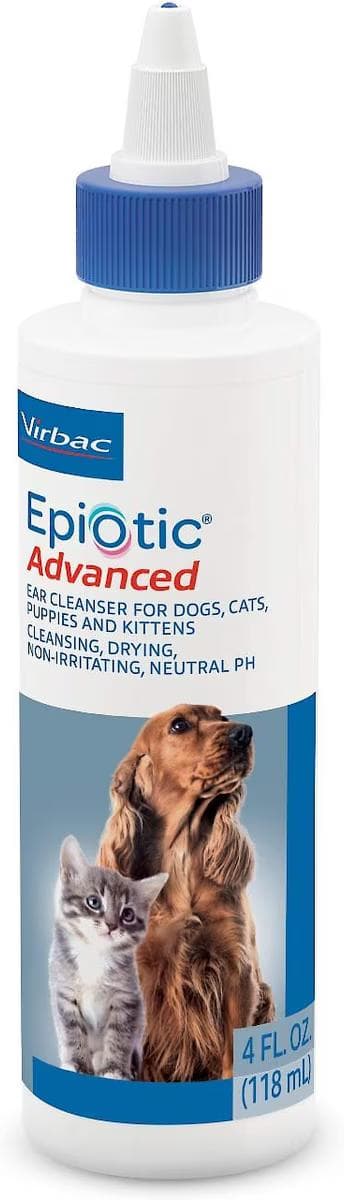
The Virbac Epi-Otic Advanced Ear Cleaner is unrelated to coat color but may be part of care for some long-eared dogs when a veterinarian approves it. It does not treat every ear problem. Ask before using the Virbac ear cleaner, especially when there is pain, odor, discharge or a possible damaged eardrum.
Solid colors

A black Cocker Spaniel has black as the main coat pigment. A red Cocker Spaniel can range visually from deeper red to lighter golden shades, with standard terminology depending on the recognized breed and registry. A chocolate Cocker Spaniel is commonly described as liver in breed-standard language and has brown pigment rather than black.
Lighting, camera exposure, sun fading, clipping and coat condition can change how a color appears in a photograph. Compare in neutral daylight and look at nose and eye-rim pigment where appropriate, but do not use a photo to certify genotype.
An American Cocker Spaniel black coat can fall within the breed standard, as can other solid colors under their defined category. An English Cocker Spaniel black coat is also recognized. The same word does not mean the two dogs share the same outline, ancestry or grooming needs.
Marketing is not evidence
Marketing phrases such as “rare chocolate,” “exclusive golden” or a high black Cocker Spaniel price do not add evidence. The relevant questions concern health screening, temperament, registered identity and the actual placement practices.
An aumuca Self Cleaning Slicker Brush may help work through loose coat on some adult Cockers, but pin length and pressure must suit coat density and skin sensitivity. It should not be dragged through a tight mat. Use the aumuca slicker brush in small sections, check the skin and confirm the result with a comb.
Parti-color and ticking
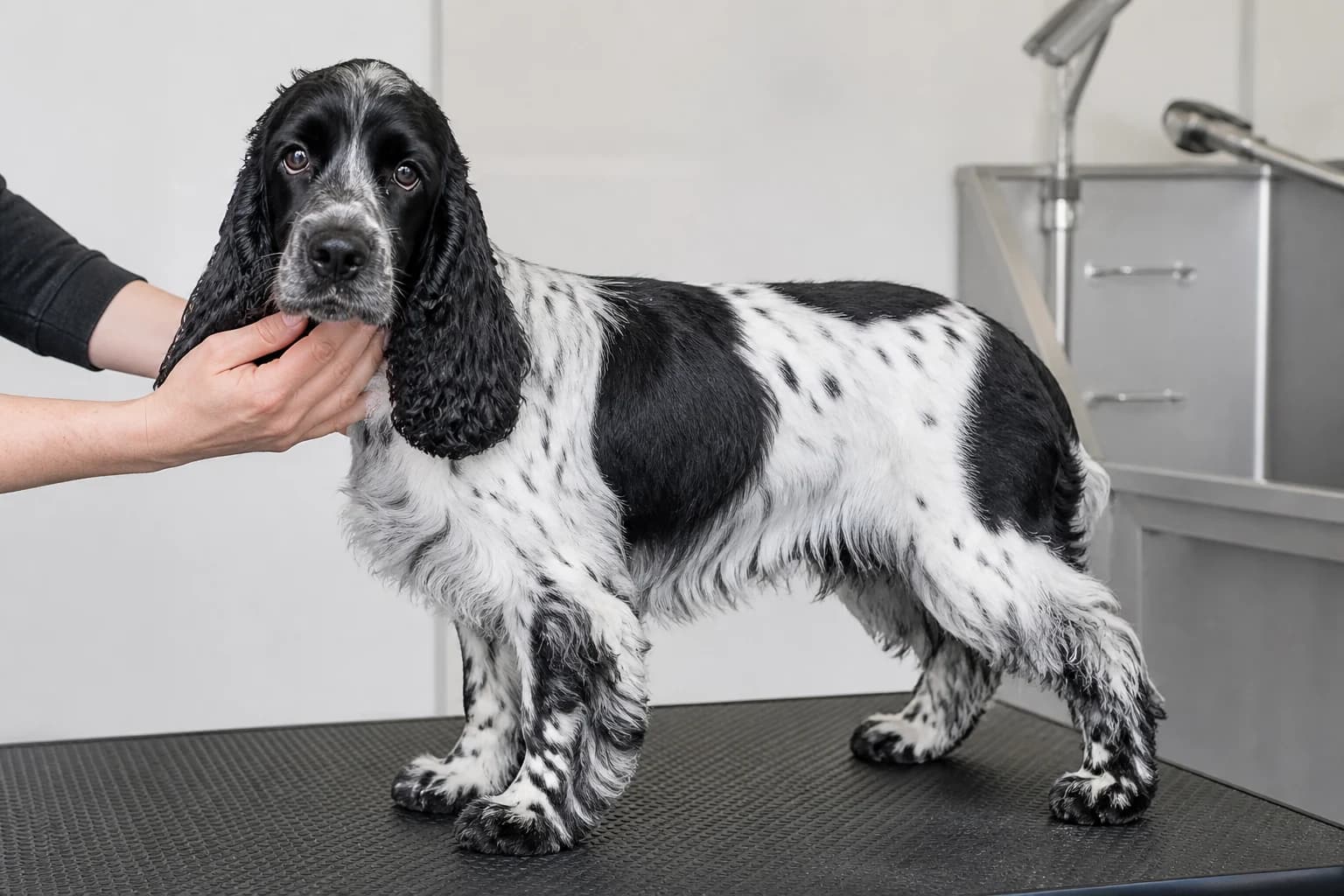
A parti Cocker Spaniel has white combined with another color in patches, subject to the applicable breed standard. A black and white Cocker Spaniel is a familiar example. Other pigment colors can also appear with white.
Ticking refers to small colored flecks in otherwise white areas. It can become more apparent as a puppy matures. Ticking differs from roan because the flecks remain more individually visible instead of forming a broadly intermixed field of colored and white hairs.
Pattern edges, amount of white and ticking density vary between individual dogs. A photograph can help readers recognize the vocabulary, but registration and pedigree provide stronger identity evidence.
Breed context
The Petful Cocker Spaniel breed guide explains how American and English dogs differ beyond coat. The American Cocker Spaniel profile gives the compact American outline in context.
Observe a pattern without overclaiming it
Look at the dog in neutral daylight, part the coat to see whether colored hairs are intermingled or grouped, and note where white and ticking occur. Photograph both a full side view and a close section. Then compare the observation with registration and the applicable standard. The photograph documents appearance on that date, not ancestry or genotype.
A Four Paws Magic Coat Professional Series All-In-One Wet & Dry Dog Glove & Curry Brush can lift loose surface hair on a dog that finds the glove comfortable. It does not identify ticking or roan, and it should not be rubbed over irritated skin or used to pull a mat.

Petful may earn a commission when you click through to Chewy, at no extra cost to you.
Roan patterns
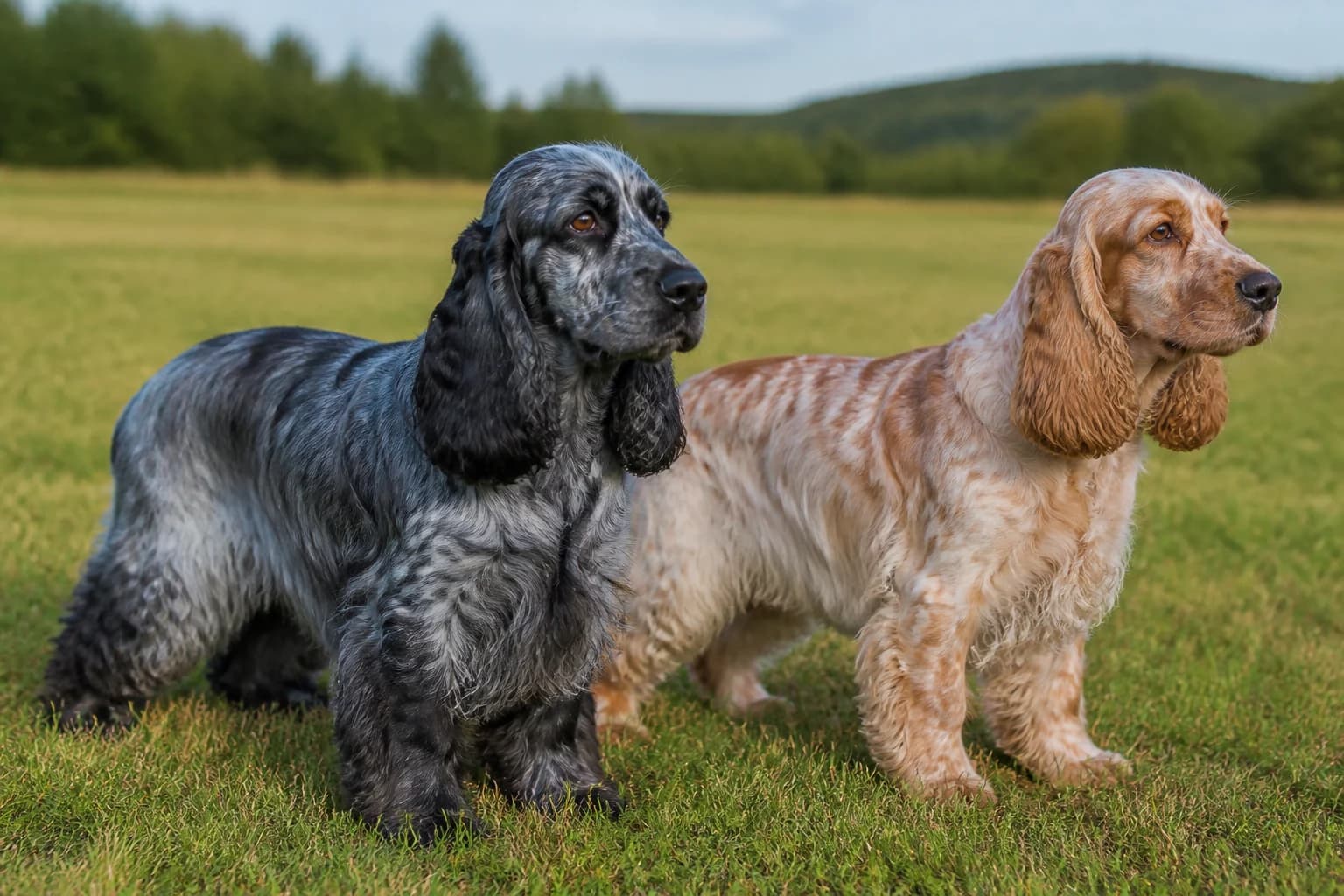
Roan describes a pattern in which colored and white hairs are intermingled across parts of the coat. A blue roan Cocker Spaniel is not literally blue. Black and white hairs combine visually to create a blue-gray impression. An orange roan Cocker Spaniel combines lighter red or orange pigment with white. A chocolate roan Cocker Spaniel combines liver pigment and white.
- Use documented evidence from ancestry records and the applicable breed standard. Color language supplied by a seller, shelter or image caption is an observation, not a pedigree. Seek professional guidance for genetic or health questions.
Roan is strongly associated with English Cockers, but the underlying vocabulary can be confused with dense ticking in casual listings. Look at the actual distribution of intermingled hairs, then use records if the distinction matters.
Color claims should never be used to predict a dog's behavior. A blue roan dog is not inherently calmer, more active or healthier than an orange roan dog.
The Buddy Wash Original Lavender & Mint Dog Shampoo & Conditioner may suit routine bathing for some dogs, but fragrance and ingredients do not fit every sensitive skin case. Shampoo cannot intensify genetic coat color or treat unexplained itching. Patch awareness and veterinary guidance matter when using Buddy Wash shampoo and conditioner on a dog with prior skin trouble.
Tan points, sable and merle claims

Cocker Spaniel tan points are defined markings that can appear above the eyes, on the muzzle, chest, legs and beneath the tail, depending on genotype and standard limits. A black and tan Cocker Spaniel retains a black base with tan in those characteristic locations. Liver and tan also occurs.
Sable Cocker Spaniel terminology can be contentious across registries and breed communities. Sable typically describes hairs with lighter bases and darker tips, producing shaded color rather than clear tan points. If registration or showing matters, read the current standard and ask the registry directly rather than relying on a sales label.
Merle Cocker Spaniel claims require particular caution. Merle is not included as a standard color for either recognized Cocker breed in the cited AKC profiles. A merle-looking pattern can raise questions about ancestry and breeding practices. Appearance alone cannot determine genotype, and DNA information should be interpreted within documented lineage and professional advice.
Breeding decisions need expert guidance
Do not breed based on a color test or internet explanation alone. Genetic combinations can have health implications, and responsible breeding requires breed-specific expertise, screening and veterinary or genetics guidance.

Petful may earn a commission when you click through to Chewy, at no extra cost to you.
American vs English color standards
American Cocker Spaniel colors are grouped by the American standard into black, any solid color other than black and parti-color, with defined allowances and markings. English Cocker Spaniel colors include a wider familiar vocabulary around solid, parti and roan presentations.
A Cocker breed standard color is not automatically “better” for pet life. Standards define conformation eligibility and breed identity. They do not rank affection, trainability or health. Our English versus American Cocker comparison explains the more meaningful differences in build and working style.
For the full English breed context behind roan and solid terminology, use the English Cocker Spaniel profile. Color is one feature within a complete breed standard.
Listing questions
When reading a listing, translate color language into questions:
- Which recognized breed and registry is claimed?
- What are the registered identities and colors of the parents?
- Does the written registration match the seller's wording?
- Are health results independently verifiable?
- Is a “rare” claim being used to justify urgency or price?
Record each answer as verified, documented, reported or unknown. Breed-standard language comes from the registry, visible pattern comes from observation, ancestry comes from records, and a medical conclusion comes from a qualified professional. Keeping those evidence types separate prevents a confident color label from doing work it cannot do.
Coat color, health and identity limits
Cocker Spaniel color health claims are often overstated. Color may sometimes be genetically linked to a specific risk context, but a visible coat cannot diagnose a dog or reveal the complete genotype. A veterinarian and appropriately interpreted genetic information are needed for individual medical decisions.
“Rare Cocker Spaniel colors” is primarily a marketing phrase until the seller defines the standard, registry, genotype and documented ancestry. Rarity does not equal health, quality or value. Breeding narrowly for novelty can reduce attention to broader health and temperament evidence.
A Cocker Spaniel DNA test can answer some ancestry or variant questions, but coverage and accuracy differ by product and population. It cannot replace registration, complete health testing or a veterinary workup. Coat color also cannot prove a shelter dog is a purebred Cocker Spaniel.
Identity and health owner pages
When ancestry is crossed or undocumented, the Cocker Spaniel mixes guide owns the identity and trait-variability decision. For risk, screening and symptoms, the veterinarian-authored Cocker Spaniel health and lifespan guide owns the medical context.
When skin or coat changes
WebVet's guide to skin issues in dogs helps owners separate visible skin signs from assumptions about cause. Redness, odor, hair loss or itching needs an individual evaluation, regardless of coat color.
If a veterinarian is investigating a possible food reaction or weight concern, the best dog food for Cocker Spaniels guide owns the diet-selection framework without claiming that coat color selects a formula.
Coat care by texture and length
Cocker Spaniel coat care is driven more by texture, length, density and lifestyle than pigment. Long feathering can mat behind the ears, under collars and harnesses, in armpits and around feet. Work in small sections and use a comb to confirm the brush reached the skin safely.
- Regular grooming keeps every color visible and reveals skin changes
- Individual evidence supports household fit and coat-care planning
- Neutral-light photographs help distinguish pigment and pattern
- Dark coats may hide debris or skin change during a quick glance
- Pale coats may show staining that has several possible causes
- No shampoo, supplement or brush changes a dog's genetic color
The deeper Cocker Spaniel grooming and shedding guide covers bathing, trimming and mat prevention.

Petful may earn a commission when you click through to Chewy, at no extra cost to you.
The Frisco Deshedding Cat & Dog Brush for medium-to-long hair may remove loose undercoat from some Cockers, but it can be too aggressive for delicate feathering or irritated skin. The Frisco deshedding brush should be used lightly, stopped at any discomfort and never treated as a replacement for line brushing or a groomer's advice.
A short routine can include:
- Finger-checking friction areas before brushing.
- Separating the coat into small lines.
- Brushing in the direction of growth with light pressure.
- Following with a comb.
- Checking ears, feet and skin while the dog is calm.
Additional tools may fit particular steps, but no single tool suits every Cocker coat:
- The Safari Double Row Flea Comb for Dogs can help inspect fine areas and surface debris. It does not replace parasite prevention or veterinary assessment.
- The TropiClean Luxury 2-in-1 Papaya & Coconut Dog Shampoo & Conditioner, 20-fl oz bottle is a routine bathing option for dogs that tolerate its ingredients. Shampoo cannot change genetic color or treat an unexplained coat change.
- The Millers Forge Nail Clipper, Medium may suit some adult nails as part of whole-dog grooming. Nail size, visibility and handling comfort should determine fit.
If brushing reveals redness, hair loss, odor, scaling or pain, stop. Photograph the change in neutral light and contact a veterinarian rather than assuming the coat is simply changing color.
Photographing color accurately
Readers comparing Cocker Spaniel coat colors should be cautious with photos. Warm indoor bulbs can make black look brown or deepen a red coat. Strong sun can wash out pale areas, while phone processing can increase saturation. Wet coat, a fresh clip and sun fading also change appearance.

For a useful record:
- Photograph the dog in open shade or soft neutral daylight.
- Include a full side view and a close view of the pattern.
- Avoid filters, portrait blur and automatic color enhancement.
- Keep the dog the same distance from the camera when comparing individuals.
- Date the image so puppy coat development is clear.
A well-made photograph documents visible appearance at that moment. It still cannot establish genotype or pedigree.
Puppy coats and adult change
Cocker Spaniel puppies can develop more visible ticking or roaning as the coat grows. Feathering length, density and texture also change with maturity, nutrition, grooming and hormones. A puppy that looks lightly marked in an early image may show a more obvious pattern later.
Ask breeders to describe the expected development using adult relatives and registered colors, but treat the answer as an informed expectation. No responsible source should guarantee an exact shade or final distribution of markings. Buyers prioritizing a color should still evaluate health screening, temperament and household fit first.
Color-first sales red flags
A listing deserves extra scrutiny when nearly every claim concerns rarity, eye-catching color or resale value. Responsible breeders can explain color while spending at least as much time on structure, health, temperament, rearing and placement.
Red flags include:
- A premium justified only by “rare” color language.
- No registered parent identities or verifiable screening.
- Merle claims without a clear, documented explanation of ancestry.
- Promises that color guarantees a calm or healthy dog.
- Urgent deposits tied to a coat photo.
- Edited images that make pattern assessment difficult.
The safe response is not to debate color genetics with a seller. Request the records, verify them independently and walk away if the evidence is missing.
The dedicated Cocker Spaniel puppy buying checklist owns breeder, rescue, price and deposit verification when color-first marketing appears.
Coat observation as a health habit
Regular grooming gives owners a chance to notice change. Record new hair loss, redness, odor, broken coat, scaling or a change in pigment, then contact a veterinarian when the change is persistent, painful or accompanied by itching or illness.
Do not assume a pale patch is a new color pattern or that rusty staining on a black coat is purely cosmetic. Saliva, tears, friction, sun exposure, infection and other factors can alter visible coat. The dog's symptoms and examination determine whether a medical workup is needed.
For behavior and household fit, the Cocker Spaniel temperament and training guide owns the decision. Color should never be used as a shortcut for personality.
Related Cocker decision owners
Color vocabulary cannot answer every question about the dog behind the coat. These sibling owners cover the decisions that appearance cannot settle:
Cocker Spaniel at a glance
Search wording such as “cocker spaniel”, “am cocker spaniel”, “cocker spaniel breed” points to the umbrella breed decision, including the two recognized breeds, common care demands, household fit and the limits of general Cocker Spaniel descriptions. The Cocker Spaniel breed overview carries the complete evidence and practical next steps for that intent. The Cocker Spaniel breed overview remains the complete owner; this color and pattern guide supplies only the boundary needed for its separate reader task.
English Cocker Spaniel at a glance
Readers using “english cocker spaniel”, “cocker spaniel english”, “english cocker spaniel spaniel”, “cocker spaniel vs english cocker spaniel” are trying to resolve the English breed decision, including working purpose, line variation, athletic structure, coat care and the evidence needed to judge an individual English Cocker. Use the English Cocker Spaniel profile for the full evidence set, limits and action sequence behind that search intent. The English Cocker Spaniel profile remains the complete owner; this color and pattern guide supplies only the boundary needed for its separate reader task.
Cocker Spaniel puppy buying checklist
When the search language is “cocker spaniel puppy”, “for sale cocker spaniel”, “cocker spaniel cocker spaniel puppies”, “cocker spaniel puppies”, the unresolved question is breeder, rescue, price, deposit, contract, health-record and scam verification before a Cocker Spaniel puppy changes homes. Follow the Cocker Spaniel puppy buying checklist when that decision becomes primary, because it provides the records, distinctions and reader actions this page deliberately keeps brief. The Cocker Spaniel puppy buying checklist remains the complete owner; this color and pattern guide supplies only the boundary needed for its separate reader task.
American Cocker Spaniel at a glance
Phrases including “american cocker spaniel”, “american cocker spaniel breed” belong with the American breed decision, including compact structure, coat, temperament, daily care and responsible placement evidence. The American Cocker Spaniel profile carries the complete evidence and practical next steps for that intent. The American Cocker Spaniel profile remains the complete owner; this color and pattern guide supplies only the boundary needed for its separate reader task.
Best dog food for Cocker Spaniels at a glance
Search wording such as “cocker spaniel food”, “food for cocker spaniel”, “cocker spaniel dog food”, “dog food for cocker spaniel” points to food selection by life stage, body condition, complete-diet labeling and individual veterinary needs rather than breed name alone. Use the best dog food for Cocker Spaniels guide for the full evidence set, limits and action sequence behind that search intent. The best dog food for Cocker Spaniels guide remains the complete owner; this color and pattern guide supplies only the boundary needed for its separate reader task.
Cocker Spaniel mixes at a glance
Readers using “cocker spaniel mix”, “cocker spaniel mixed”, “cocker spaniel mixes” are trying to resolve unknown or crossed ancestry, variable adult traits, shelter-label limits and the evidence that can support a mixed-dog decision. Follow the Cocker Spaniel mixes guide when that decision becomes primary, because it provides the records, distinctions and reader actions this page deliberately keeps brief. The Cocker Spaniel mixes guide remains the complete owner; this color and pattern guide supplies only the boundary needed for its separate reader task.
English vs American Cocker Spaniel at a glance
When the search language is “english vs american cocker spaniel”, “american cocker spaniel vs english cocker spaniel”, “cocker spaniel english vs american”, “english cocker spaniel vs american”, the unresolved question is the side-by-side decision about body shape, coat, working style, grooming and household fit between two separate recognized breeds. The English versus American Cocker comparison carries the complete evidence and practical next steps for that intent. The English versus American Cocker comparison remains the complete owner; this color and pattern guide supplies only the boundary needed for its separate reader task.
Cocker Spaniel lifespan at a glance
Phrases including “cocker spaniel lifespan”, “cocker spaniel life expectancy”, “life expectancy for cocker spaniel”, “life expectancy of a cocker spaniel” belong with lifespan context, screening records, breed-associated risks, preventive care and veterinary action thresholds without predicting one dog. Use the Cocker Spaniel health and lifespan guide for the full evidence set, limits and action sequence behind that search intent. The Cocker Spaniel health and lifespan guide remains the complete owner; this color and pattern guide supplies only the boundary needed for its separate reader task.
Coat appearance makes more sense when the visual labels here are paired with the maintenance steps in the Cocker Spaniel grooming and shedding guide and the individual behavior framework in the temperament and training guide.
Cocker Spaniel FAQs
A source-aware answer first defines the population and standard: “Rarest” among Cocker Spaniel colors depends on the recognized breed, registry, geography and population, and reliable prevalence data are limited. A rare label does not establish health, quality or value. For this decision, the clear next step is to identify the applicable standard, verify registered ancestry and health screening, and avoid paying a premium when a seller cannot support the color claim with consistent records.
Official Cocker Spaniel colors differ between American and English breed standards, so one combined list can misclassify solids, parti patterns or roan. Current kennel-club and parent-club language is the controlling reference for registration. A practical next step: Confirm which recognized breed is involved and compare the dog's documented color with that current standard rather than a commercial listing.
There is no best pet color among Cocker Spaniel colors. Pigment does not guarantee temperament, health, trainability, grooming ease or household fit, and “best” often reflects personal appearance preference. For a clear next step, prioritize verifiable health screening, individual behavior, responsible source and sustainable care, then treat color as a secondary preference that never overrides those records.
The prevalence of Cocker Spaniel colors varies by country, American or English breed population and breeding line, so one universal “most common” answer would be misleading. Black, red or golden, parti and roan coats are all familiar. Before deciding: Use current registry or parent-club population data when prevalence truly matters instead of inferring it from local listings.
Cocker Spaniels can be all black under the applicable breed-standard categories. Yes. Solid black appears among recognized Cocker Spaniel colors in both American and English breeds, subject to the details and marking allowances of each standard. A black coat does not prove purebred ancestry or predict behavior. Use this individual-dog check: Confirm the exact breed standard and registration records, then evaluate health, temperament and source independently of pigment.
A blue roan is usually an English Cocker whose black and white hairs are intermingled so the coat appears blue-gray at a distance. Among Cocker Spaniel colors, “blue” names the visual effect rather than blue pigment, and roan is a pattern. The practical follow-up: Compare the coat in neutral light with documented ancestry and the English standard.
Merle is not listed among standard Cocker Spaniel colors in the cited AKC profiles for either recognized breed. A merle-looking dog may raise questions about ancestry, genotype and breeding practices, but appearance alone cannot answer them. For the household decision: Review registration and parent identities, seek qualified genetic interpretation and avoid breeding or health conclusions from a photograph.
Cocker Spaniel colors do not by themselves predict temperament. Pigment genes are only part of a much larger genetic and environmental picture, while early experience, health, sleep, handling and training shape behavior. To apply this guidance: Assess the individual dog's repeated responses and documented history instead of using black, red, parti, roan or another color as a personality shortcut.
Coat color cannot prove a dog is a Cocker Spaniel because many breeds and mixes share similar pigment and pattern. No. Many breeds and mixes share the same Cocker Spaniel colors, including black, red, liver, white patterning and tan points. A shelter label or photograph is therefore suggestive, not documentary evidence. For a safer decision: Use registration and ancestry records when purebred identity matters, while evaluating the actual dog's behavior, health and care needs regardless of label.

Coreen Saito is a pet writer and longtime shelter volunteer with more than a decade in animal rescue. She covers cat behavior, breed care, and the small, ordinary science of sharing a life with companion animals, with a particular focus on honest takes about the products and decisions that actually matter. At home in Arizona, she's outranked by Mac (a dog with the loudest opinion in the house), Rebel (a cat who governs by quiet authority), and Meri (an orange tabby who runs the late shift and the laundry basket). She writes about all three, plus the rescues that keep coming through her life, at LifeWithMinty.com.
Sign up for expert-backed reviews and safety alerts all in one place.