Cocker Spaniel Dog Food: What to Look For
Learn how to choose Cocker Spaniel dog food by life stage, calories, body condition, label evidence and veterinary needs, with practical comparisons and transition guidance.

Petful is reader supported. As an affiliate of platforms like Amazon and Chewy, we may earn a commission when you buy through links on this page. There is no extra cost to you.
The right cocker spaniel dog food is complete and balanced for the dog's life stage, provides an appropriate number of calories, and comes from a manufacturer that can answer serious nutrition and quality questions. Breed wording on a bag is much less important than those basics.
Choosing cocker spaniel dog food also requires an individual assessment. Age, reproductive status, body condition, activity, allergies, illness, medication, stool quality, and the full treat budget can change the best choice. No list can prescribe one formula for every American or English Cocker Spaniel.
This guide starts with selection criteria, then shows how four existing foods fit different comparison questions. It does not represent hands-on product testing or a veterinary prescription. Review the Cocker Spaniel breed guide for broader care and the Cocker Spaniel health and lifespan guide for breed-health context.

Sign up for expert-backed reviews and safety alerts all in one place.
Best dog food for Cocker Spaniels at a glance
Cocker Spaniel dog food should start with a complete-and-balanced life-stage claim, manufacturer transparency and the calories the individual dog needs. Individual dogs vary. A breed label or ingredient trend cannot replace body-condition checks and professional findings.
Whether a shopper calls it Cocker Spaniel dog food, Cocker Spaniel food, or dog food for Cocker Spaniel households, the selection criteria do not change. Start with nutritional adequacy and the individual dog's needs, then compare format, cost, availability, and feeding practicality.
Use this order of decisions:
- Confirm the food is complete and balanced for the dog's life stage.
- Ask who formulates it and how the company verifies nutrition and safety.
- Compare calories per cup, can, pouch, or gram with the dog's measured needs.
- Choose a format the household can store, measure, afford, and feed consistently.
- Monitor weight, body condition, stool, appetite, skin, ears, and energy.
- Involve a veterinarian when symptoms or medical conditions affect the choice.
A food decision becomes useful when each evidence layer answers its own question. Breed context suggests what to monitor, current observation shows appetite and tolerance, measured records reveal trends, and veterinary findings determine whether disease changes the plan. No ingredient list or popularity ranking can substitute for that sequence.
| Is it nutritionally complete? | Nutritional adequacy statement for the correct life stage | Marketing terms on the front are not enough |
|---|---|---|
| Can the maker answer technical questions? | Qualified nutrition staff, quality-control details and contact access | A long ingredient list does not prove better formulation |
| Does the calorie density fit? | Calories per unit plus measured portions and body condition | A feeding chart is only a starting estimate |
| Is it working for this dog? | Stable weight, acceptable stool, appetite and veterinary findings | One good week does not prove long-term suitability |
The WSAVA Global Nutrition Guidelines offer questions owners can ask about a manufacturer rather than naming a universal best brand. WebVet also explains what complete and balanced dog food means in practical label terms.
Hill's Science Diet Adult Chicken & Barley Recipe is one adult dry-food option in the existing offer library. It may fit an adult dog whose veterinarian agrees with the formula and calorie plan, but it is not a puppy food, prescription diet, or guaranteed answer for skin or ear symptoms.
How to weigh feeding evidence
Breed tendencies describe populations, not every individual dog, so a Cocker's breed label may raise weight, skin, or ear questions without selecting a formula. Records, direct observation and professional findings answer different questions: the label establishes nutrient adequacy, measured intake and a body-condition log show response, and a veterinarian diagnoses disease or sets therapeutic goals. An article-specific evidence ladder for cocker spaniel dog food that separates population tendencies, individual observations, records and professional findings. The page must give the reader a concrete decision framework rather than a generic fact list: confirm life-stage adequacy, calculate total intake, document response, and seek professional direction for medical needs.
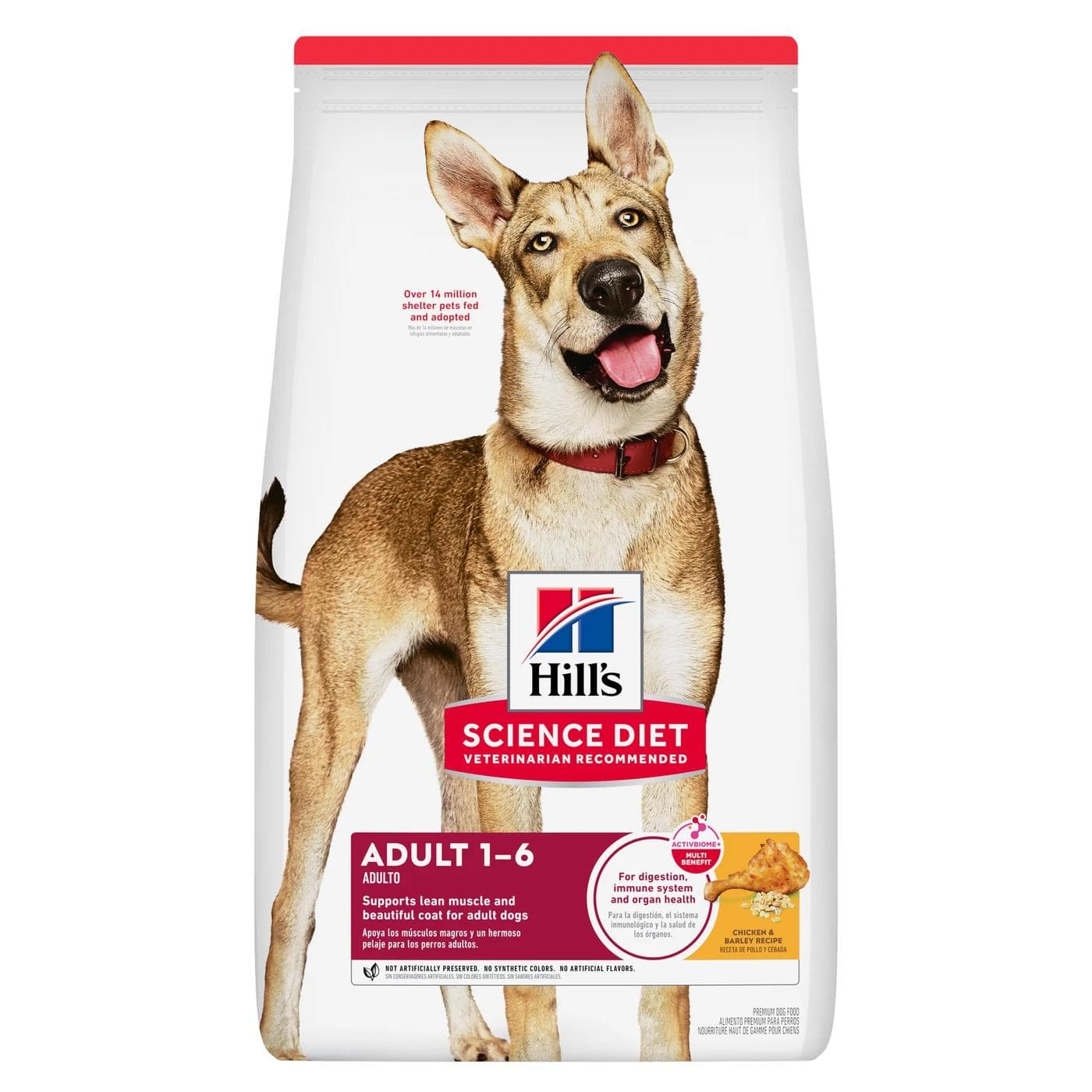
A vet-channel adult-maintenance kibble backed by AAFCO feeding trials. Leaner protein and fat than many competitors at a comparable price.
Petful may earn a commission when you click through to Chewy, at no extra cost to you.
Start with life stage and complete nutrition
Cocker Spaniel puppy food must support growth. Adult maintenance food is designed for mature dogs, while a senior label does not automatically mean a food addresses a particular older dog's disease or calorie needs. Read the nutritional adequacy statement rather than relying on the product name.
For a puppy, coordinate feeding with the breeder or rescue records and your veterinarian. The Cocker Spaniel puppies guide covers the identity, veterinary, and transition records to obtain before bringing a puppy home.
Ask these label questions:
- Does the adequacy statement match growth, adult maintenance, or all life stages?
- Is the calorie content clearly stated per cup, can, kilogram, or other useful unit?
- Are feeding directions measurable rather than vague?
- Can the manufacturer explain formulation expertise and quality controls?
- Is a customer service contact easy to find?
Wellness Complete Health Adult Chicken & Oatmeal Dry Dog Food, 30-lb bag is another adult dry formula to compare. Its suitability still depends on life stage, calories, tolerance, medical history, and manufacturer information, not the phrase "complete health" alone.
Build a life-stage checkpoint
For puppies, record the exact adequacy statement, calories, daily amount, weekly growth trend, stool, and body condition. Rapid gain is not the goal. For adults, review portions after neutering, activity shifts, and changes in treat use. For seniors, track muscle over the back and limbs as well as scale weight because a stable number can hide muscle loss.
Adult and senior dogs should not remain on the same portion automatically. Activity, muscle, neuter status, chronic disease, dental comfort, and appetite can change. A veterinarian can help distinguish normal adjustment from a medical problem. Recheck the label after any formula or package change rather than assuming the old scoop still applies.
Calories, portions and body condition

A Cocker Spaniel feeding chart is an estimate, not a prescription. Start with the manufacturer's measured amount for the dog's current weight and life stage, then adjust with veterinary guidance based on body condition and trend. Kitchen scoops and rounded cups create inconsistent portions, so use a level measuring cup or gram scale.
The AVMA's guide to a pet's healthy weight emphasizes body condition rather than a breed-average number. Owners should be able to feel ribs with appropriate coverage, see a waist from above, and observe an abdominal tuck when those features fit the individual dog.
Count everything that supplies calories:
- Meals from every household member.
- Training treats and chews.
- Table food and pill pockets.
- Toppers, oils, and supplements.
- Food used in puzzles or enrichment.
VICTOR Hi-Pro Plus 30/20 High Protein Dry Dog Food, 50-lb bag is calorie-dense and marketed for active dogs. That does not make it a default adult Cocker choice. A highly active working dog and a quiet pet may require very different calorie density, and some dogs need a veterinarian-directed diet.
Turn calories into a measured daily plan
Record calories per cup, can, pouch, or gram, then multiply by the amount actually served. Add treats, chews, toppers, and training food. If several people feed the dog, place the full daily allowance in one labeled container so duplicate meals and invisible extras are less likely.
Reweigh the dog on a consistent schedule and record portions. Make small, controlled adjustments only after reviewing the trend and body condition. If weight changes despite stable measured intake, or if muscle loss, thirst, urination, vomiting, diarrhea, or lethargy appears, seek veterinary care.
Skin, coat and recurring ear concerns

Itchy skin and recurrent ear inflammation have many possible causes. Food allergy is only one, and switching among over-the-counter foods can obscure the history. A Cocker Spaniel ear infection is not diagnosed by coat color, ingredient folklore, odor alone, or a social-media recommendation.
- Do not use a retail food change as a substitute for examining painful, swollen, smelly or discharging ears. Documented evidence from a complete diet history supports professional guidance, which may include cytology, treatment or a structured diet trial. Randomly rotating proteins is not a reliable allergy test.
Bring a complete diet history to the appointment:
- Every current and recent food, flavor, treat, chew, supplement, and flavored medication.
- Dates when itching, skin lesions, licking, odor, or ear signs changed.
- Photographs and prior test or treatment records.
- Details about fleas, preventives, seasonality, bathing, and environment.
- Exact response during any veterinarian-supervised elimination and challenge trial.
ACANA Free Run Poultry Grain-Free Dry Dog Food, 25-lb bag is a grain-free retail formula, but grain-free is not a treatment claim and does not make the product appropriate for an ear or skin problem. The FDA pet food information hub is a more reliable place to follow current regulatory and safety information than package trends.
WebVet's guide to skin issues in dogs explains why food, fleas, environment, and infection can overlap. Its dog ear infection symptoms page is useful when odor or head shaking is part of the history, but neither page replaces an examination.
The American Spaniel Club's breed overview supplies breed context, but population-level tendencies still do not diagnose the individual dog. Professional findings control a medical diet decision.
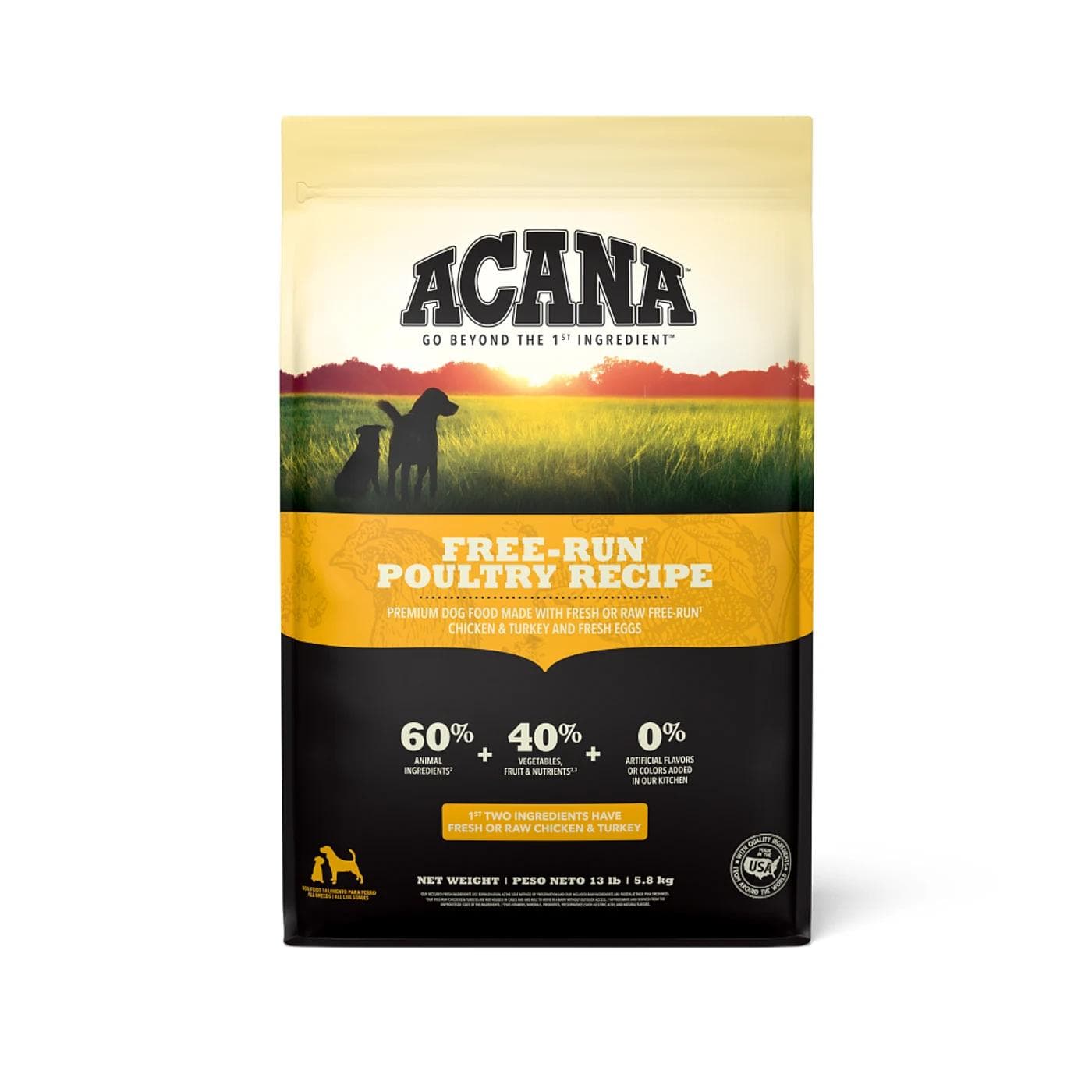
Named chicken, turkey, and chicken meal lead a 60% animal-ingredient recipe from the same Kentucky kitchen as ORIJEN, at a friendlier price. The legume-forward grain-free deck is the trade-off to know about.
Petful may earn a commission when you click through to Chewy, at no extra cost to you.
How to compare labels and manufacturers

The ingredient list alone cannot reveal nutrient availability, quality control, calorie suitability, or whether the finished food was formulated competently. Compare the whole company and product record.
Useful manufacturer questions include:
- Who formulates the diets, and what are that person's qualifications?
- Does the company employ qualified nutrition expertise?
- What finished-product testing and supplier controls are used?
- Where is the food made, and can the company identify the plant?
- How are nutrient analyses and feeding trials used?
- How does the company handle complaints, recalls, and traceability?
Hill's Science Diet Adult Chicken & Barley Recipe and Wellness Complete Health Adult Chicken & Oatmeal Dry Dog Food, 30-lb bag can be compared on adequacy statement, calories, manufacturer answers, cost per day, bag size, and the individual dog's response. Neither should be described as best without that context.
The same review applies to Purina ONE Chicken & Rice Formula High-Protein Dry Dog Food, 31.1-lb bag and Royal Canin Size Health Nutrition Medium Adult Dry Dog Food, 17-lb bag. Product names and breed-size wording are not evidence of individual fit. Verify the current label, life stage, calorie density, storage rate, and manufacturer answers before comparing cost or convenience.
Avoid ranking foods by a single attractive ingredient, protein percentage, or word such as natural, premium, holistic, ancestral, or human-grade. Those terms do not answer whether the full diet matches the dog.
Keep a food decision record
A simple record prevents owners from changing several variables at once and then guessing what mattered. Start with the exact product, flavor, life-stage statement, lot code, calories, and measured daily amount. Add every treat, chew, topper, supplement, and flavored medication.
Track at consistent intervals:
- Body weight and veterinary body-condition score.
- Appetite and how long meals take.
- Stool frequency and form.
- Vomiting, regurgitation, gas, or abdominal discomfort.
- Skin, paw licking, coat, and ear observations.
- Energy, sleep, thirst, and urination.
Do not use the log to diagnose allergy or disease. Its value is chronology. A veterinarian can see whether symptoms preceded a food change, improved during a controlled plan, or appeared alongside weight loss or another warning sign.
Cost belongs in the record too. Calculate cost per measured day, not simply cost per bag. Include waste and storage. A formula that repeatedly becomes stale or is discarded may cost more than a smaller package, while a calorie-dense food can be inappropriate even when the cost per cup looks favorable.
Decide whether the food is working
Evaluate the planned outcome after the transition period and over an interval appropriate to the question. Ordinary tolerance may be reflected in consistent appetite, acceptable stool, stable body condition, and no new symptoms. A medical diet trial has its own veterinarian-directed duration, restrictions, and challenge phase.
Do not declare success from enthusiasm at the bowl. Palatability is useful, but it does not establish complete nutrition, appropriate calories, or treatment of disease. Likewise, one soft stool does not prove intolerance when treats, stress, parasites, and portion errors have not been considered.
At each review, choose one of three actions:
- Continue and monitor: The dog is stable and the plan still fits.
- Adjust measurement: Calories or treats need a controlled change with body-condition follow-up.
- Escalate: Symptoms, weight change, medical history, or repeated intolerance needs veterinary review.
If the household cannot explain why a switch is being made and what outcome will be measured, pause. Unplanned rotation adds expense and can make a later clinical diet history less reliable.
Keep the original package during evaluation. The product name, lot code, best-by date and feeding instructions may be needed if a quality concern appears. Store food in a way that preserves the package information and prevents moisture, heat, pests, or contamination.
Any suspected food problem paired with repeated vomiting, bloody diarrhea, collapse, facial swelling, breathing difficulty, marked pain or dehydration needs prompt veterinary advice rather than continued home comparison.
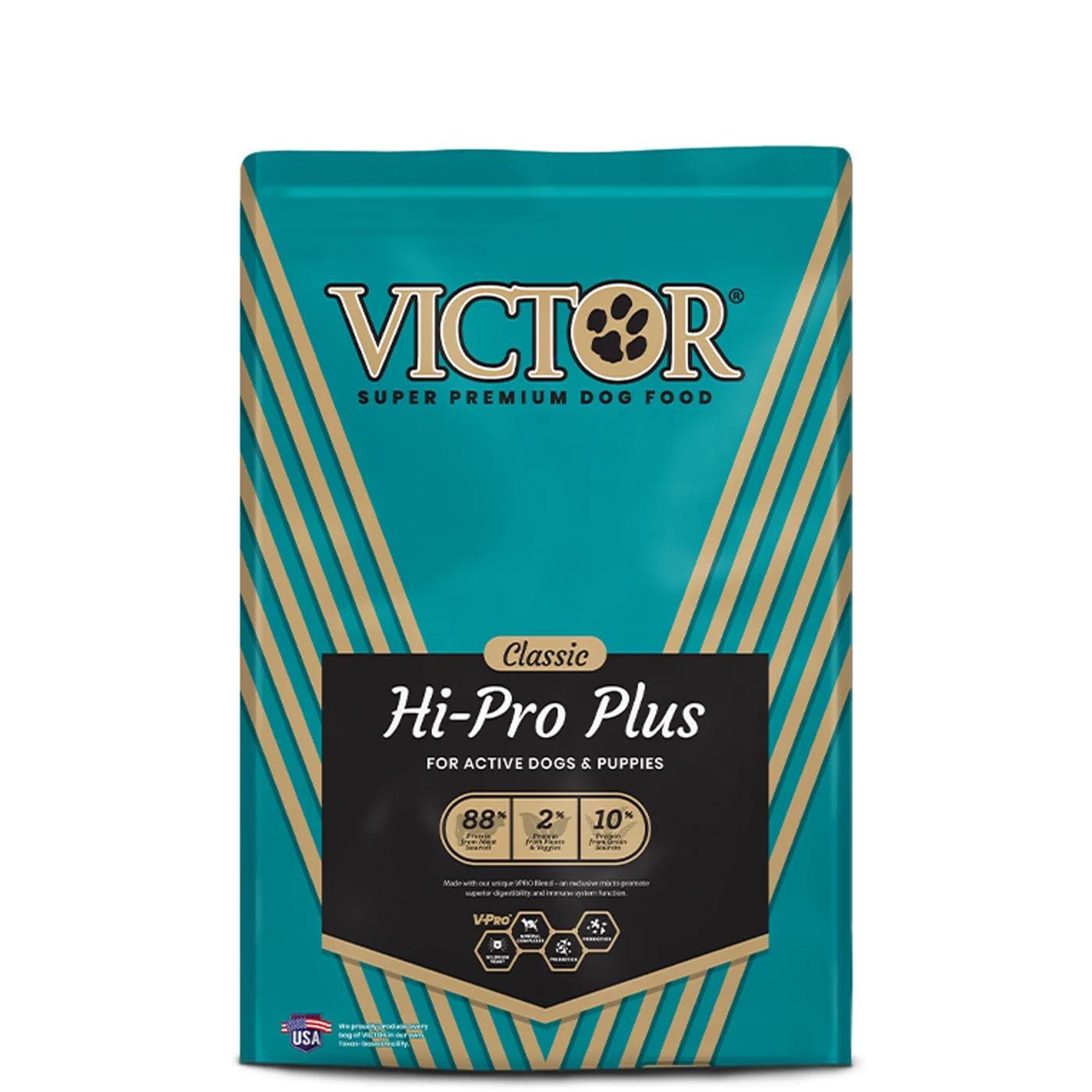
A 30/20 performance formula from a single Texas plant at an unbeatable price per pound. Built for genuinely active and sporting dogs, not couch companions.
Petful may earn a commission when you click through to Chewy, at no extra cost to you.
Dry, wet, fresh and mixed feeding
Dry, wet, fresh, and mixed feeding can all work when the total diet is complete and balanced, safely handled, properly measured, and affordable enough to continue. Format is a household decision, not a moral ranking.
Dry food is convenient to store and measure, but calorie density can make small overpours matter. Wet food adds moisture and may be easier for some dogs to eat, yet open containers need refrigeration and portions can be costly. Fresh formats require close attention to the adequacy statement, storage, expiration, and food safety. Mixed feeding requires calorie math across every component.
Compare fresh and dry formats by constraints
JustFoodForDogs JustFresh Fresh Dog Food is one fresh-format library option to evaluate, while Wellness Protein Bowls Adult Wholesome Grains Fresh Dog Food, 6.2-oz pouch, case of 6 is a portioned pouch example. Neither format is automatically superior. Confirm whether the exact product is complete and balanced, how it must be stored, calories per package, and how it fits the total daily ration.
VICTOR Hi-Pro Plus 30/20 High Protein Dry Dog Food, 50-lb bag comes in a large bag that may not suit a small household's storage or use rate. Confirm the food can stay sealed, dry, and within its best-use period. Buying more than a dog can consume safely is not a savings.
Account for the whole daily diet
When adding wet food or a topper, measure it and reduce the base meal as appropriate. If the topper is not complete and balanced, keep its role limited according to veterinary advice so it does not displace essential nutrition.
Changing food safely
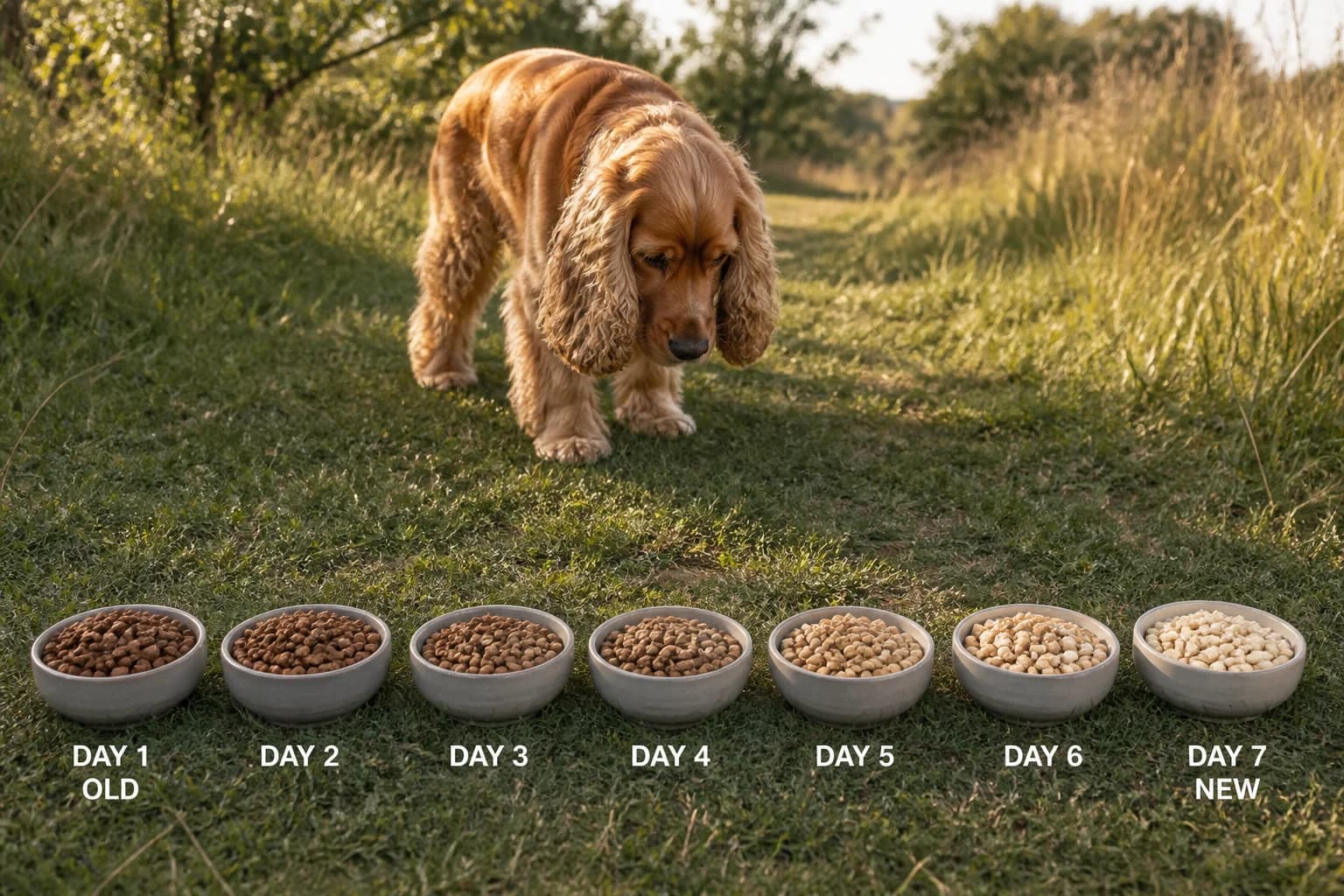
Unless a veterinarian advises otherwise, change foods gradually over several days. Use a written plan that increases the new food while decreasing the old food, and keep total calories in mind. Sensitive dogs may need a slower transition. WebVet's guide to transitioning dog food provides a practical schedule and warning signs.
Monitor:
- Appetite and willingness to eat.
- Stool frequency, form, mucus, or blood.
- Vomiting or repeated regurgitation.
- Itch, ear signs, or skin changes.
- Energy, thirst, urination, and weight.
ACANA Free Run Poultry Grain-Free Dry Dog Food, 25-lb bag should be introduced like any other new retail food and should not be selected solely to avoid grains. Keep the lot code and package until the transition is clearly established.
Diarrhea during a Cocker Spaniel food change can reflect transition speed, portion errors, infection, dietary indiscretion, stress, or another problem. Persistent diarrhea, blood, repeated vomiting, pain, dehydration, marked lethargy, or illness in a puppy warrants prompt veterinary advice.
When to involve a veterinarian
Ask a veterinarian before changing food for a dog with diagnosed disease, unexplained weight change, recurring vomiting or diarrhea, suspected allergy, pancreatitis history, urinary disease, kidney disease, diabetes, significant dental pain, or a need for a prescription diet.
Bring the bag or clear photographs of:
- Product name, flavor, and life-stage statement.
- Ingredient and guaranteed-analysis panels.
- Calorie statement and feeding guide.
- Lot code and best-by date.
- The measured amount fed plus all extras.
- Household fit includes cost, storage and measuring capacity
- Individual evidence can identify a workable option
- Labels provide adequacy and calorie information
- Marketing can obscure the decision
- Retail foods do not diagnose symptoms
- One formula cannot fit every Cocker Spaniel
If the veterinarian agrees that a standard adult food fits, options such as Wellness Complete Health Adult Chicken & Oatmeal Dry Dog Food remain comparison candidates, not endorsements. A prescription diet should be used for the diagnosed purpose and monitored as directed.
Run an evidence-led food comparison
Compare foods in two stages. First, decide whether each product clears the minimum nutrition and manufacturer questions. Remove any option that does not match life stage, cannot be measured accurately, or conflicts with a veterinarian-directed medical plan. Only then compare format, cost, storage, and the dog's response.
Create one row per candidate and capture:
- Exact product and flavor.
- Nutritional adequacy statement and intended life stage.
- Calories per cup, can, package, or gram.
- Manufacturer answers to the WSAVA-aligned questions.
- Package size, storage requirements, and cost per measured day.
- Transition dates and all treats, toppers, and supplements.
- Weight, body condition, stool, appetite, skin, ears, and energy.
Do not give ingredient aesthetics more weight than finished-diet evidence. An appealing meat name, absence of a disliked ingredient, or high percentage on the label does not show whether the complete formula is appropriate, bioavailable, safely produced, or calorie-matched.
The comparison should end with a decision and review date. Continue a suitable food while monitoring, adjust calories with professional guidance, or escalate symptoms to a veterinarian. Avoid leaving four open bags in rotation because no outcome or timeline was defined.
Medical questions change the comparison
For suspected adverse food reactions, the medical plan must control. A structured elimination and challenge trial is different from selecting a retail formula that sounds gentle. Record adherence precisely, because unplanned treats and flavored medication can make the evidence impossible to interpret.
Recheck the decision whenever life stage, activity, diagnosis, medication or body condition changes. A food that fit a healthy adult may no longer fit a senior dog losing muscle or a puppy still growing. Preserve the earlier record so the veterinarian can distinguish a new problem from a long-standing pattern.
Households with several feeders should use one written daily allowance. Remove training food from that amount when appropriate, label scoops and prevent duplicate meals. Consistent measurement creates better evidence than debating ingredients after portions have varied.
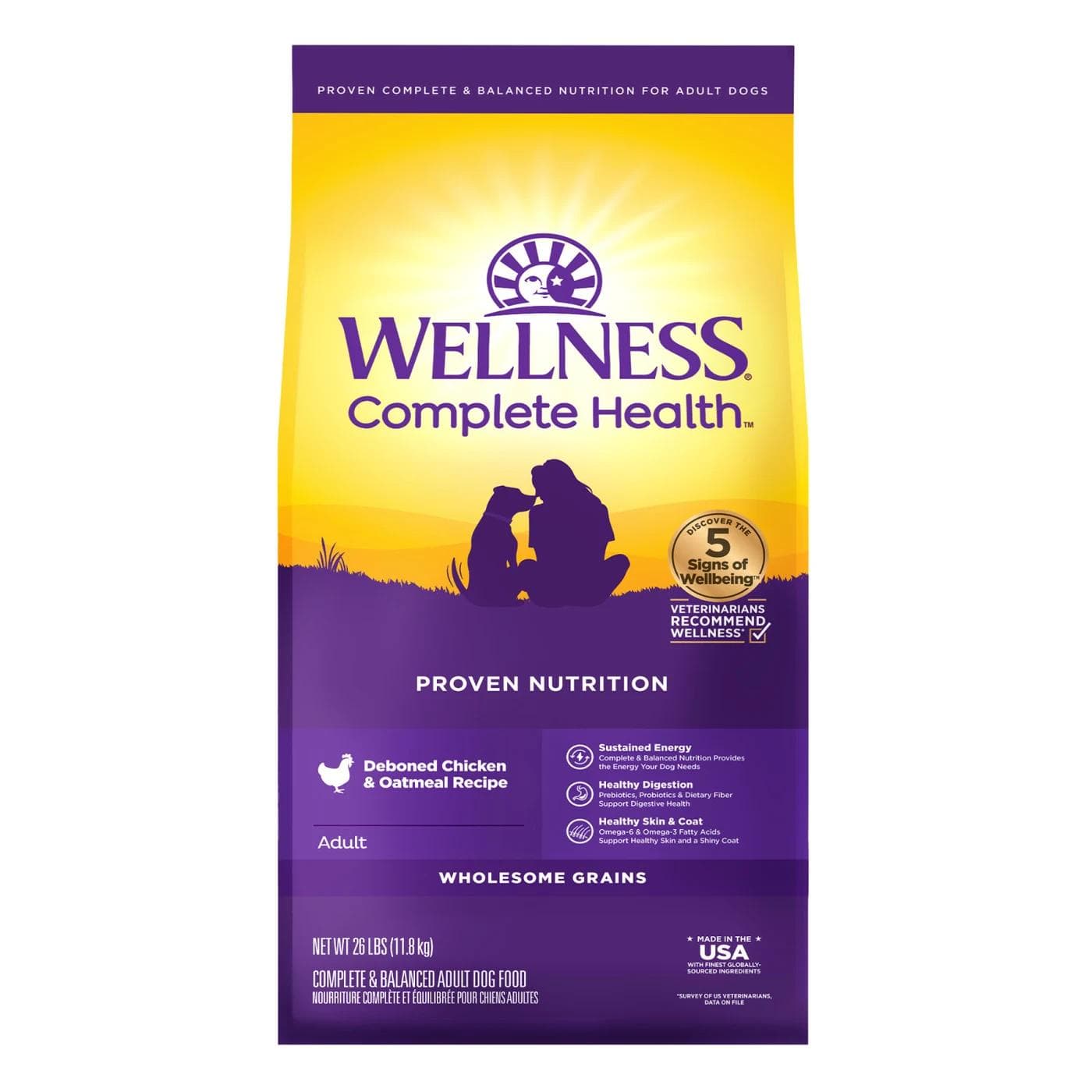
Deboned chicken and whole grains with guaranteed probiotics, taurine, and omegas. The sensible middle of the premium aisle for everyday adult dogs.
Petful may earn a commission when you click through to Chewy, at no extra cost to you.
Related Cocker Spaniel topic owners
Cocker Spaniel at a glance
The Cocker Spaniel guide handles broad cocker spaniel intent, including am cocker spaniel, cocker spaniel breeds, and dog cocker spaniel searches. It explains American and English type context, temperament, exercise, grooming, health, and overall fit. This food article does not replace that decision. It applies life-stage adequacy, calorie data, manufacturer evidence, and measured response after the household understands the individual dog's broader needs.
English Cocker Spaniel at a glance
Use the English Cocker Spaniel guide for english cocker spaniel, cocker spaniel english, english cocker spaniel spaniel, and cocker spaniel vs english cocker spaniel questions. Working history can prompt an activity discussion, but the label cannot determine calorie needs. This nutrition page requires actual condition, activity, life stage, and health before comparing formulas or changing a measured ration. That separation prevents activity stereotypes from becoming calorie prescriptions.
Cocker Spaniel puppy buying checklist
The Cocker Spaniel puppy guide owns cocker spaniel puppy, cocker spaniel puppies, for sale cocker spaniel, and repeated cocker spaniel cocker spaniel puppies wording. It explains records, screening, seller protections, and early care. Before feeding changes, obtain the exact current formula, adequacy statement, portion, schedule, growth record, and veterinary history. A seller's brand preference is not a lifelong nutrition prescription.
American Cocker Spaniel at a glance
The American Cocker Spaniel guide covers american cocker spaniel, american cocker spaniel breeds, american cocker spaniel dog, and american cocker spaniel dogs searches. Its breed context can raise questions about condition, ears, skin, and activity without selecting one food. The feeding decision still rests on the exact product label, calorie density, measured intake, clinical needs, and documented response. The same criteria apply when brand marketing emphasizes breed identity.
Do Cocker Spaniels shed?
Use the Cocker Spaniel grooming guide to answer do cocker spaniels shed and to separate routine shedding from abnormal coat or skin findings. Normal hair release does not prove a diet is failing, while bald patches, itch, odor, or ear changes need veterinary evaluation. This page can organize the diet record, but it does not use coat shine as a product ranking.
Cocker Spaniel mixes at a glance
The Cocker Spaniel mixes guide owns cocker spaniel mix, cocker spaniel mixed, cocker spaniel mixes, and cocker spaniel and a poodle mix intent. Mixed ancestry does not create a standard calorie target or ingredient need. Use that owner for size and trait uncertainty, then select food from expected adult size, life stage, current body condition, health, and the individual's measured response.
Cocker Spaniel colors at a glance
The Cocker Spaniel colors guide explains cocker spaniel colors, black cocker spaniel, cocker spaniel black, and cocker spaniel in black terminology. Pigment does not create a distinct nutrient requirement, prove food allergy, or select a protein source. If skin or coat changes accompany a color concern, document the signs and seek veterinary interpretation rather than starting an unsupported restrictive diet.
English vs American Cocker Spaniel at a glance
Use the English vs American Cocker Spaniel comparison for english vs american cocker spaniel, american cocker spaniel vs english cocker spaniel, cocker spaniel english vs american, and english cocker spaniel vs american questions. It clarifies breed-level differences. Nutrition then moves to the individual: compare actual activity, condition, calories, life stage, health, and feeding practicality rather than assigning one formula to either type.
Cocker Spaniel lifespan at a glance
The Cocker Spaniel health and lifespan guide owns cocker spaniel lifespan, cocker spaniel life expectancy, average lifespan cocker spaniel, and average lifespan of a cocker spaniel intent. Nutrition supports general care but cannot promise longevity. The health owner identifies clinical risks; this page supports accurate intake records and sends disease-related, therapeutic, appetite, weight, or gastrointestinal decisions to the veterinarian. Measured nutrition evidence supports care without promising a particular lifespan.
Cocker Spaniel personality at a glance
The Cocker Spaniel personality guide owns behavior, training structure, settling, and household interactions. Food can function as reinforcement, but training pieces, chews, lick mats, and puzzle meals still count toward daily calories. This nutrition page helps keep the ration measurable while the behavior owner decides when and how reinforcement is used.
Cocker Spaniel FAQs
The best cocker spaniel dog food is complete and balanced for the correct life stage, calorie-appropriate, made by a transparent manufacturer, and workable for the individual's health and tolerance. No formula wins for every dog. The evidence points to one clear next step: to compare adequacy statements, calories, manufacturer answers, and measured response, then review body condition and medical needs with a veterinarian.
English and American Cockers use the same evidence-first cocker spaniel dog food process. A working English Cocker may expend more energy than a quiet pet, but line identity alone cannot set a ration. Use the individual record to choose a clear next step: to choose a complete life-stage diet, measure total calories, and adjust from weight trend, muscle condition, activity, and veterinary findings.
Recommended cocker spaniel dog food changes with life stage. Puppies need complete growth nutrition and a monitored curve, adults need an appropriate maintenance plan, and seniors need individualized calories plus attention to muscle and disease. Before deciding, use this clear next step: to verify the adequacy statement, measure the portion, and have a veterinarian review growth, condition, or age-related changes.
No universal cocker spaniel dog food amount fits every dog. Calorie density, age, activity, reproductive status, body condition, treats, and illness alter the measured portion. For this household, choose a practical clear next step: to calculate calories from the exact product, weigh the serving, count every extra, and adjust only after reviewing repeated weight and veterinary body-condition findings.
No wet cocker spaniel dog food brand is best for every dog. Compare the exact product's adequacy statement, life stage, calories, manufacturer expertise, quality controls, storage after opening, cost per day, and medical fit. At that point, take this clear next step: to shortlist formulas that clear those criteria and ask a veterinarian about dental, digestive, or disease-specific restrictions.
The best cocker spaniel dog food fits life stage, calorie need, body condition, health, tolerance, storage, and household budget. A breed picture or ingredient trend is not sufficient evidence. When uncertainty remains, choose the safest clear next step: to verify complete-and-balanced status and manufacturer transparency, then monitor measured intake, stool, weight, skin, ears, appetite, and energy on a defined review schedule.
A Cocker Spaniel should eat the measured amount of cocker spaniel dog food that maintains an appropriate body and muscle condition for that individual. Package charts are only starting estimates, and treats or toppers add calories. The decision framework leads to a clear next step: to measure the daily ration, track weight consistently, and seek veterinary review for unexpected gain, loss, hunger, or muscle change.
The best cocker spaniel dog food for a puppy is complete and balanced for growth, tolerated by the individual, and portioned to support controlled development. An abrupt arrival-day switch can add avoidable digestive stress. After reviewing the evidence, keep the clear next step specific: to obtain the current feeding record, verify the life-stage statement, preserve the initial routine, and review growth and condition with the veterinarian.
Cocker Spaniels do not have a breed-wide need for grain-free cocker spaniel dog food. Grain-free is a product characteristic, not proof of superior nutrition or treatment for skin and ear disease. The dog's current record supports this clear next step: to choose from complete-diet evidence and discuss any suspected allergy, medical restriction, or ingredient concern with a veterinarian before eliminating grains.
Food allergy can contribute to skin and ear inflammation in some dogs, but cocker spaniel dog food is only one part of a broad diagnostic history. Infection, parasites, environmental allergy, moisture, and other disease may overlap. A durable plan begins with one clear next step: examination of the painful or abnormal ear followed by any veterinarian-directed elimination and challenge trial exactly as written.
Change cocker spaniel dog food gradually unless a veterinarian provides a different medical plan. Measure old and new portions, control total calories, and keep treats and toppers stable while monitoring stool, vomiting, appetite, skin, ears, and weight. Professional findings should set the clear next step: a written transition schedule and prompt veterinary contact for persistent diarrhea, repeated vomiting, blood, pain, weakness, or dehydration.

Coreen Saito is a pet writer and longtime shelter volunteer with more than a decade in animal rescue. She covers cat behavior, breed care, and the small, ordinary science of sharing a life with companion animals, with a particular focus on honest takes about the products and decisions that actually matter. At home in Arizona, she's outranked by Mac (a dog with the loudest opinion in the house), Rebel (a cat who governs by quiet authority), and Meri (an orange tabby who runs the late shift and the laundry basket). She writes about all three, plus the rescues that keep coming through her life, at LifeWithMinty.com.
Sign up for expert-backed reviews and safety alerts all in one place.