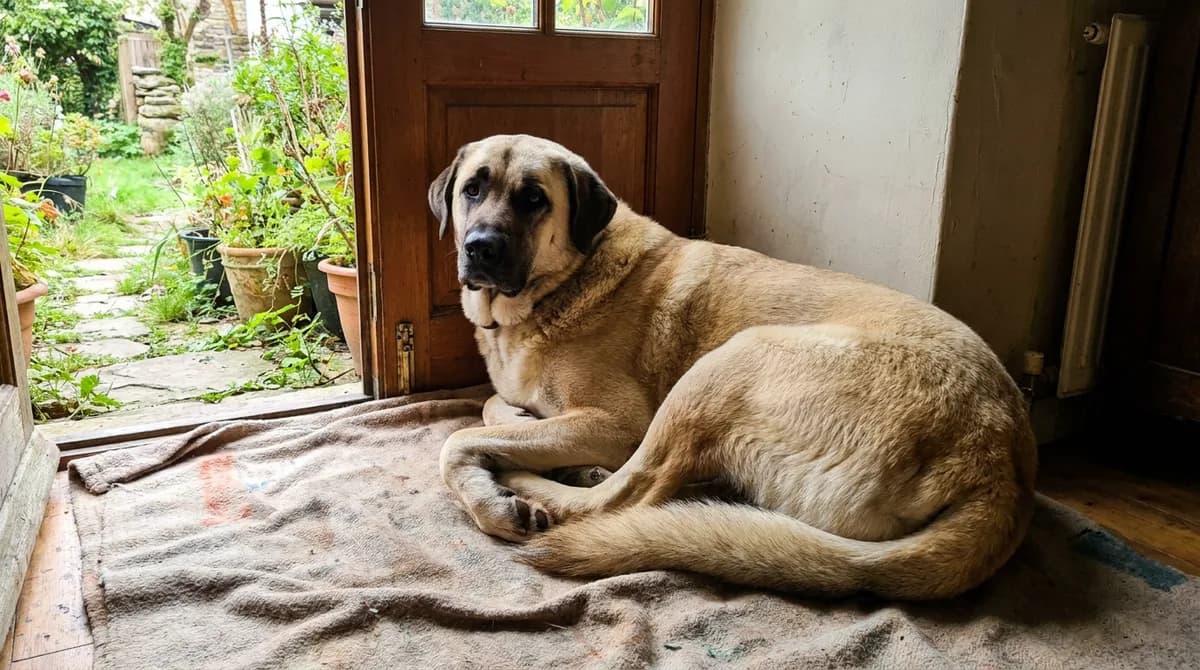
Cavachon: Temperament, Care and Family Fit
A practical guide to Cavachon temperament, exercise, grooming and health screening, with a household-fit checklist to help you choose and care for an individual dog.

A quiet household routine matters as much as a dog’s size.
Petful is reader supported. As an affiliate of platforms like Amazon and Chewy, we may earn a commission when you buy through links on this page. There is no extra cost to you.
A Cavachon is a cross between a Cavalier King Charles Spaniel and a Bichon Frise. These small companion dogs often appeal to people looking for an affectionate housemate, but parentage does not guarantee a particular personality, adult size, coat or ability to stay home alone.
The useful question is whether an individual Cavachon's needs fit your daily routine. Expect to make time for companionship, gentle reward-based training, regular exercise and substantial coat care. Before choosing a puppy or adult, look past the fluffy face to the dog's behavior, family history and documented health screening.

Sign up for expert-backed reviews and safety alerts all in one place.
What Is a Cavachon?
Cavachon traits come from a cross between the Cavalier King Charles Spaniel and Bichon Frise, with individual variation rather than a fixed mixed-breed standard. An AKC reference to either parent does not make a Cavachon an AKC-recognized purebred. Ask what registration paperwork actually records before treating a badge as proof of parentage or health.
- 1Cavachons combine Cavalier King Charles Spaniel and Bichon Frise ancestry; the individual dog still determines household fit.
- 2Plan a daily routine with companionship, training, exercise and coat care.
- 3Read actual parent health results rather than treating a crossbred label as a health guarantee.
Three disadvantages deserve attention before the appealing features:
- Coat maintenance is ongoing. A soft coat can tangle even when very little loose hair appears on your furniture.
- Companionship takes planning. A sociable dog still needs gradual alone-time training, and a puppy needs frequent care breaks.
- Crossbreeding does not remove inherited disease. Parent-specific screening records matter more than claims about hybrid vigor.
Those are workable responsibilities for many households. They become a problem when someone buys a Cavachon expecting a maintenance-free, allergy-safe dog that can immediately cope with a long workday alone. Meeting a suitable adult can reduce uncertainty about size and current behavior, although adjustment to a new home still takes time.
A properly fitted Frisco small-dog harness can support the walking part of this daily routine. Measure the individual dog, check for rubbing and escape risk, and use reward-based leash training alongside the equipment.
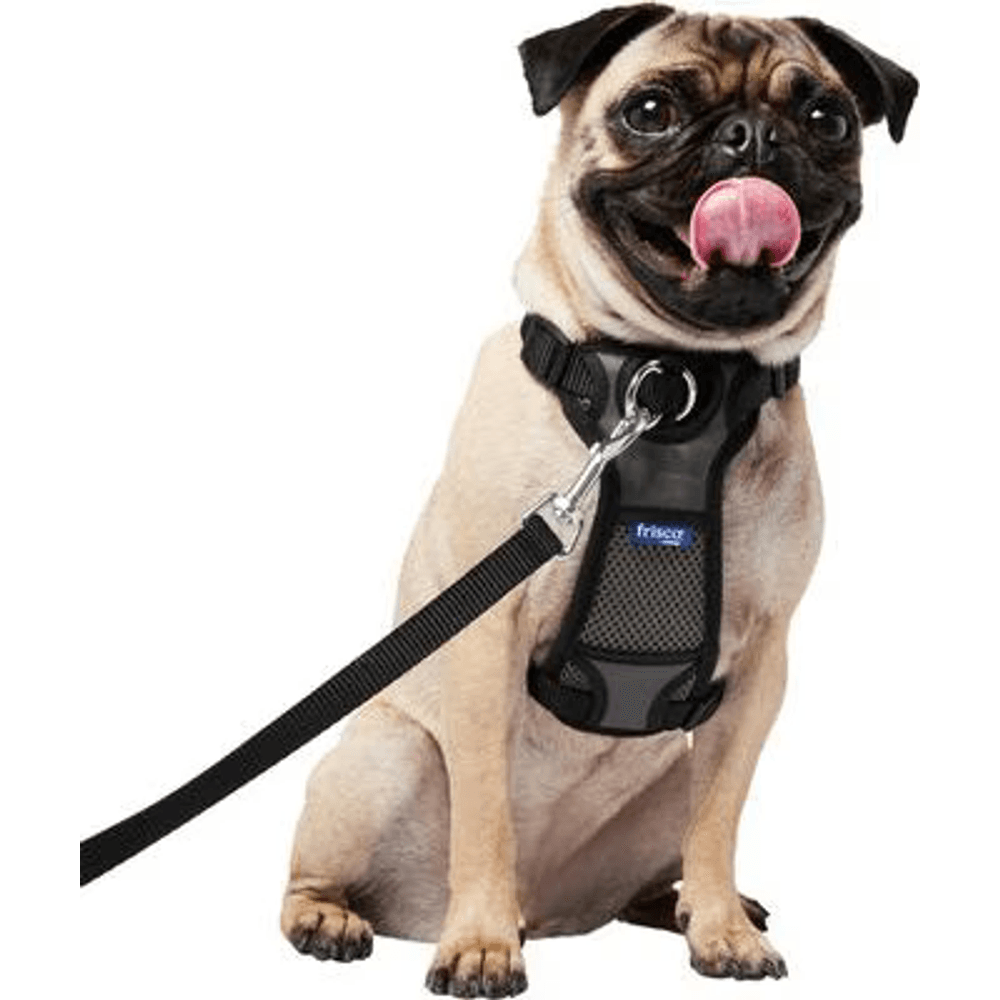
A budget-friendly padded no-pull harness that keeps leash pressure off a coughing dog's neck and windpipe by distributing it across the chest. A simple, affordable way to protect an irritated airway or a collapsing trachea on every walk.
Petful may earn a commission when you click through to Chewy, at no extra cost to you.
Names, history and generation labels
Purina's breed guide describes the Cavachon's origin in North America in 1996 as a companion cross. That history does not create a breed standard or verify any current seller's lineage; the individual family records remain the useful evidence when choosing a dog.
For Cavachon pronunciation, DCDogFinders explains how to pronounce the name as “KAV-a-shon”. The name blends the two parent breeds. A Cavachon can have documented ancestry without being a standardized pedigree breed.
Labels such as F1, F1b and F2 describe breeding generations, not quality grades. Silver Paw Cavachons explains its F1 Cavalier–Bichon cross, F1b backcross to a Bichon and F2 Cavachon–Cavachon pairing. Ask which parents the seller actually means by any label; it does not promise a specific coat or health outcome.
Temperament and Household Fit
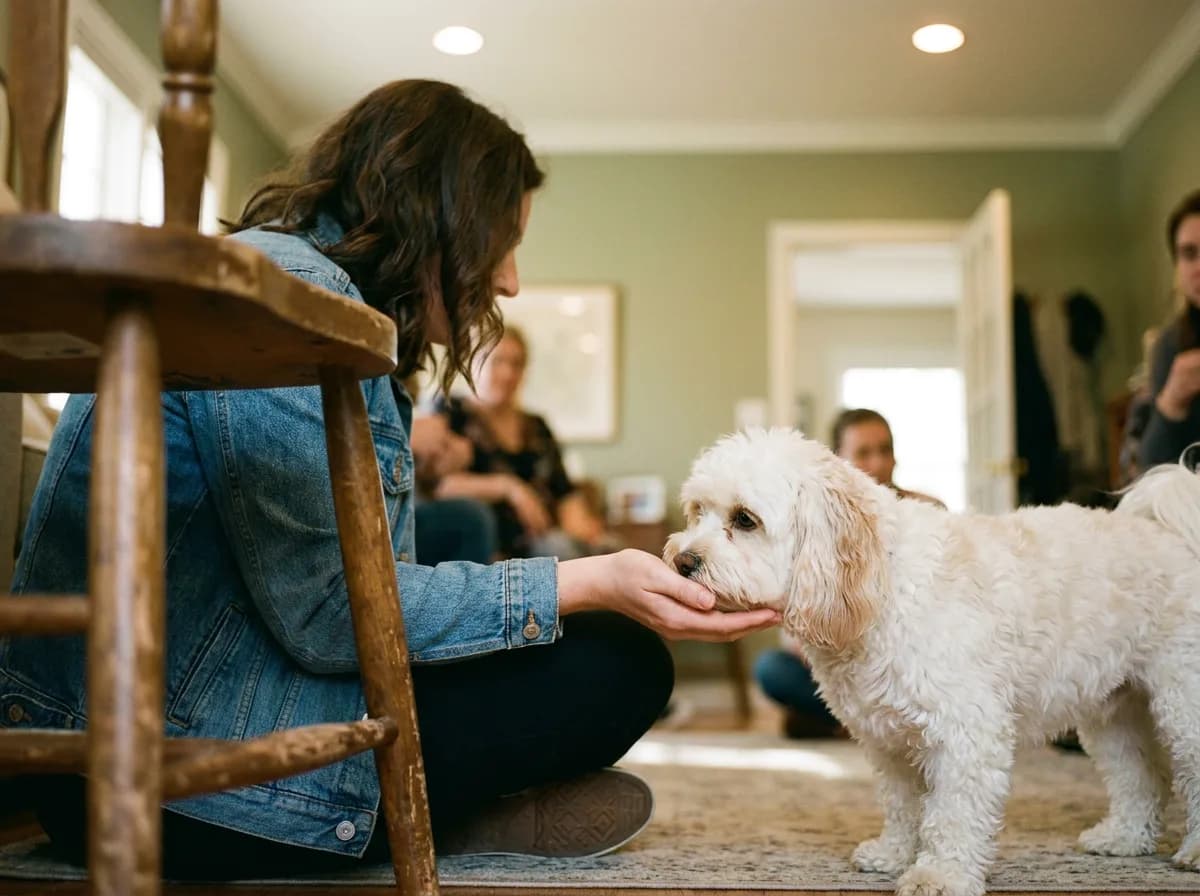
Cavachons are commonly described as affectionate, playful and people-oriented. Treat that as a starting expectation, then assess the actual dog. Genetics, early experiences, health, training and the home environment all affect how a dog responds to children, visitors, other animals and time alone.
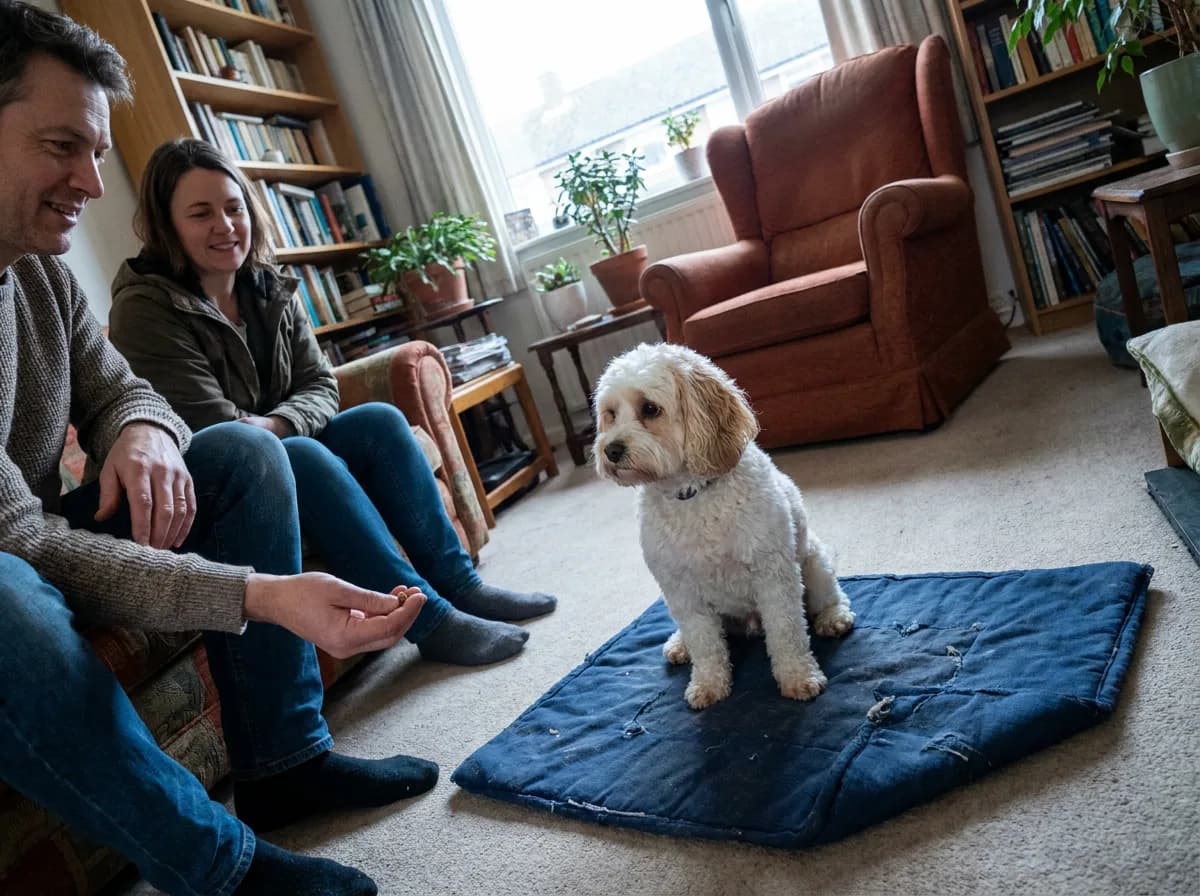
A calm meeting is more informative than watching a puppy become excited during a brief visit. Ask what the dog does after play, during handling and when a familiar person steps away. With an adult rescue, ask the foster carer about the daily routine rather than relying only on behavior in a busy shelter.
| Your household | What to check in the individual dog | Daily commitment to plan |
|---|---|---|
| Apartment or smaller home | Response to hallway noises, ability to settle and toileting access | Outdoor breaks, sniffing walks, enrichment and neighbor-conscious barking training |
| Family with children | Comfort around movement and noise, handling preferences and safe retreat options | Supervised interactions and teaching children to leave a resting or eating dog alone |
| Adults working away from home | Current alone-time experience and signs of distress | A gradual transition, suitable care arrangements and realistic midday breaks |
| Retired or mostly home-based owner | Energy level, handling needs and comfort with visitors | Regular activity plus short, positive practice being apart |
| Home with other pets | Known experience with similar animals and response at a distance | Slow introductions, separate resources and barriers when unsupervised |
Owning a Cavachon means planning for the individual's companionship and care. A good match for someone at home much of the day can be a bad match for a household unable to arrange companionship and care.
Male or female is not a reliable shortcut to a Cavachon's nature. Compare the individual's responses, history and care needs instead of assuming one sex is calmer or easier. The practical pros and cons concern companionship, coat work, training and the household's availability, not a guarantee attached to a male or female puppy.
Children and other pets
A Cavachon may suit a family, but small size is not a safety guarantee for either the dog or a child. Children should not pick the dog up, pull its coat, crowd its bed or interrupt meals. Give the dog somewhere comfortable to withdraw, and teach adults to end an interaction before the dog feels trapped.
For a home with another dog, start with controlled introductions and enough space to move away. A sociable history is useful evidence, but it does not promise instant friendship. Keep food, chews and resting places separate at first. With cats, use barriers and slow introductions that let the cat choose distance rather than allowing a chase to become a game.
Aggression is not a normal obligation for a family to tolerate because a dog is small. If a Cavachon growls, snaps or guards something, create safe distance and prevent children from approaching that situation. Seek veterinary and qualified behavior advice, especially when the behavior is new. Pain, fear and context need assessment; punishing a warning does not establish why it happened.
Barking, cuddling and settling
Some Cavachons enjoy close physical contact; others prefer to rest nearby. Let the dog approach and check whether it stays relaxed during petting. A dog that turns away, becomes still or tries to leave is asking for space, even if a breed description says it loves cuddles.
There is no reliable birthday at which every Cavachon calms down. Puppy excitement may change with maturity, but a calmer household routine also depends on sleep, suitable activity and practiced settling. Do not interpret persistent restlessness or a sudden behavior change simply as the dog's age; discuss a new or concerning change with your veterinarian.
Barking can reflect excitement, alarm, frustration, unmet activity needs or difficulty being alone. Work on the situation that triggers it. Reward noticing a sound and then returning attention to you; use a quieter resting space when a window or hallway repeatedly sets the dog off. Punishing the noise without addressing the cause can make the underlying problem harder to understand.
Introduce handling calmly
Keep the slicker brush available for brief introductions rather than saving all handling for a long grooming session. Likewise, introduce the puzzle feeder while you can supervise and help, before expecting the dog to use it independently. Neither item replaces listening to the dog's response.

Petful may earn a commission when you click through to Chewy, at no extra cost to you.
Alone time needs teaching
Build separations in small, manageable steps. Begin with a comfortable resting place while you are nearby, then brief periods out of sight. Return before the dog becomes distressed, and increase duration according to what the dog can handle. A camera can help you distinguish quiet settling from pacing, repeated vocalizing or other signs that the exercise was too difficult.
Do not assume a chew or puzzle will resolve separation distress. If the dog panics, cannot eat when you leave or risks injury trying to follow, contact your veterinarian and a qualified behavior professional. Daily care arrangements should meet the dog's present needs while training progresses.
Make the first week easier to read
A new home changes the dog's routines, people and surroundings at once. Keep the initial setup simple enough that you can tell what is helping. Start with a quiet sleeping area, predictable meals and toilet opportunities, and short introductions to household members. Avoid filling the first days with visitors who all want to hold the dog.
Agree on a few household rules before arrival: where the dog will rest, who handles early toilet breaks, how children ask to interact and which cue everyone will use for coming when called. Contradictory responses make learning harder. If one person rewards jumping while another tries to discourage it, the puppy is being asked to solve an inconsistent problem.
Use a simple observation log for the first week:
- Settling: Where does the dog relax, and which noises repeatedly interrupt rest?
- Toileting: When does it usually need to go out after eating, waking and playing?
- Handling: Which parts of brushing or being touched are comfortable, and when does it move away?
- Company: Does it choose contact, follow constantly or settle at a distance?
- Separation: What happens during brief, manageable moments behind a barrier or out of sight?
The purpose is to adjust care, not to score the dog. For example, if brushing becomes difficult after several minutes, end earlier and practice a shorter positive session. If the dog cannot rest beside a busy doorway, move the bed somewhere quieter. If toileting accidents cluster after play, offer a break sooner.
Exercise, Training and Daily Care
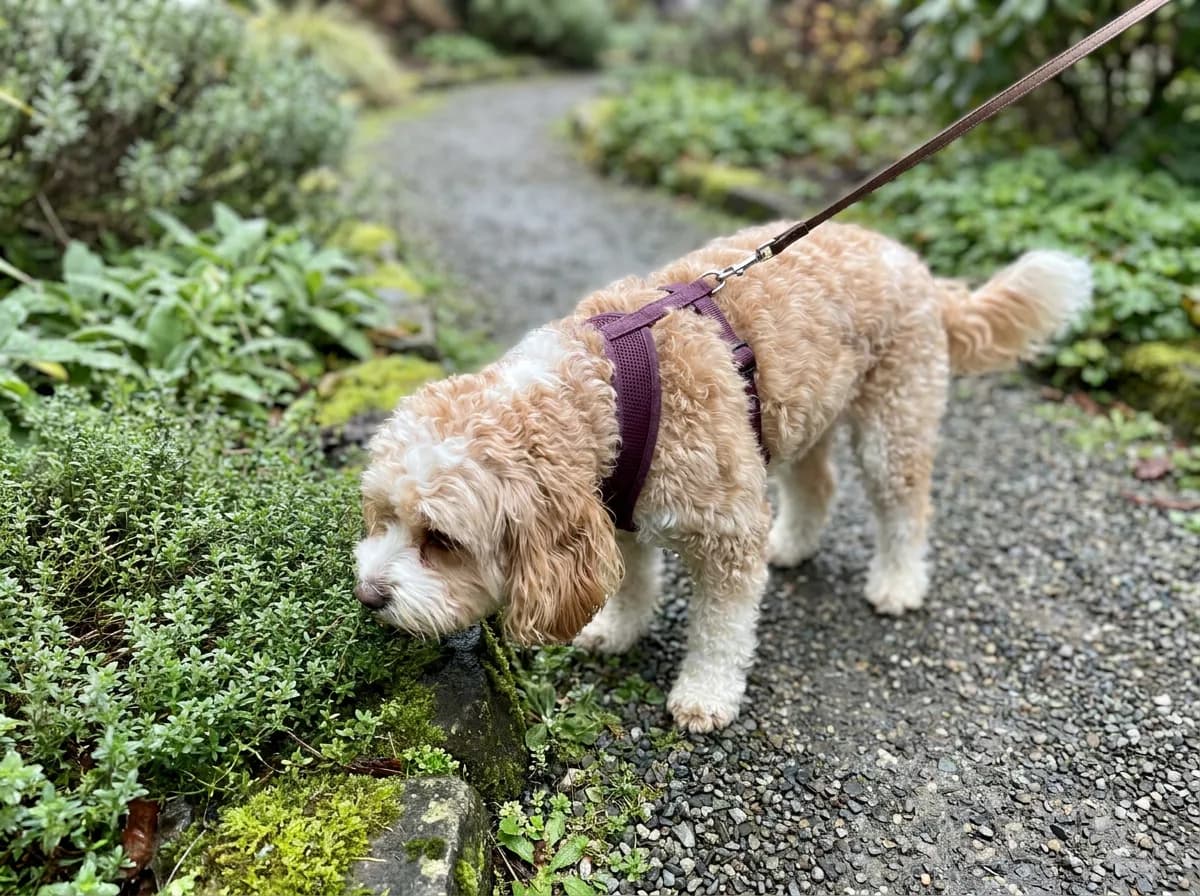
A Cavachon needs opportunities to move, sniff, learn and rest each day. A useful routine combines walks and toileting breaks with short training sessions and indoor enrichment. Adjust the duration and intensity to the dog's age, health, weather tolerance and recovery, rather than requiring every Cavachon to meet one fixed exercise quota.
Watch the dog during and after activity. A comfortable pace, willingness to explore and an easy return to rest are more useful than forcing a distance to finish a route. Puppies need frequent breaks and age-appropriate activity; dogs with health concerns need an exercise plan agreed with their veterinarian.
A practical day at home
Use this as a flexible sequence, not a timetable every dog must follow:
- Start with a toilet break and gentle exploration. Give the dog time to sniff instead of making every outing a brisk march.
- Use part of breakfast for easy training. Reward coming when called, standing for handling or settling on a mat.
- Provide a quiet rest period. Protect sleep from constant handling or play, especially in a busy family home.
- Arrange daytime care around the dog's needs. Puppies, newly adopted dogs and dogs with medical needs may need more frequent breaks.
- Add another outing and an enrichment activity. A simple food search or short game can complement physical activity.
- Finish with a coat check and calm settling. Brief, positive handling sessions make routine care easier to maintain.
A well-fitted Frisco Padded No Pull Dog Harness is one option for walks. Choose by the manufacturer's chest measurements and your dog's actual fit, not by the Cavachon label. Check for rubbing behind the front legs and make sure the dog cannot back out. Equipment supports safe management; it does not teach loose-leash walking on its own.
Food searches, appropriate chew items and supervised puzzle feeding can give a dog something useful to do. Introduce a puzzle at an easy level so the activity stays rewarding. The Nina Ottosson Lickin' Layers puzzle feeder is an option for dogs that enjoy working for part of a meal. Supervise the first sessions, check the product's size suitability and put it away if the dog chews the components.
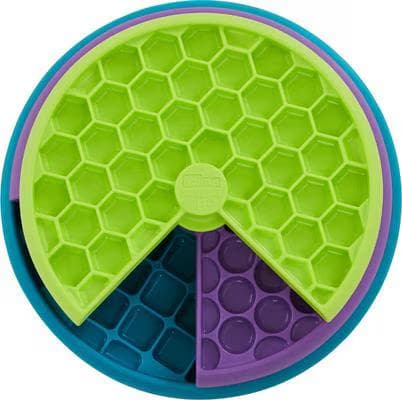
Petful may earn a commission when you click through to Chewy, at no extra cost to you.
Training that builds useful habits
Simple tricks can provide enjoyable practice once the dog understands useful everyday cues. Teach one small step at a time, reward cooperation and finish while the activity is still easy. Stop if the dog is uncomfortable or frustrated; a performance goal should not take priority over confidence.
Reward-based training gives the dog a clear way to succeed. Begin with short sessions in an easy setting, then gradually add distractions. For house training, provide frequent opportunities to toilet in the right place and reward promptly. Supervise indoors and use a manageable area between outings rather than waiting for an accident to discover the puppy needed a break. For cleanup, Nature's Miracle Dog Stain & Odor Remover is an option: follow its surface-test and use directions and keep the dog away until the area is ready for use. Cleaner supports hygiene, not house-training by itself.
Cavachons can learn useful cues and routines, but there is no sound Cavachon-specific intelligence ranking that predicts an individual dog's training. A slow response may reflect distraction, an unclear cue, stress or a reward the dog does not value. Change the training setup before deciding the dog is stubborn or unintelligent.
Practice skills that help daily life
Useful early skills include:
- Coming to a name or recall cue in a safe space.
- Walking with a comfortable leash rather than pulling toward every person.
- Settling on a mat while household activity continues.
- Allowing brief checks of paws, ears and coat without being restrained through fear.
- Exchanging a toy for a reward instead of having possessions forcibly removed.
Keep rewards small and include them in the day's food allowance. Rehearse success: if the dog cannot settle at a busy café, practice first at home, then somewhere quieter. A Cavachon is not automatically easy to train just because it is a small companion dog. Consistent cues, manageable distractions and patient repetition matter.
Enrichment and feeding
How much should a Cavachon eat? Start with an appropriate complete diet and a veterinarian-agreed portion based on life stage, body condition and activity; count training food within that amount. How often it should be walked also depends on age, health and tolerance: several manageable opportunities can be more suitable than one demanding outing. Swimming is optional, requires close supervision and a safe introduction, and should never be assumed from breed ancestry.
The food packet's feeding guide is a starting point, not a measurement of your dog's needs. Check body condition over time rather than assuming a fluffy dog is at a healthy weight because its outline looks rounded.
There is no single best dry food for every Cavachon; choose around life stage, health and tolerance. Coordinate toilet breaks with meals, waking and play. House training, sometimes called potty training, works best with predictable access and prompt rewards.
Include mouth handling
Mouth handling belongs in a gentle care routine too. A Virbac C.E.T. dual-ended toothbrush is one option if the head suits the dog's mouth; pair it with dog-appropriate toothpaste and introduce it gradually. Ask your veterinarian to demonstrate technique, and have pain assessed before trying to brush through it.
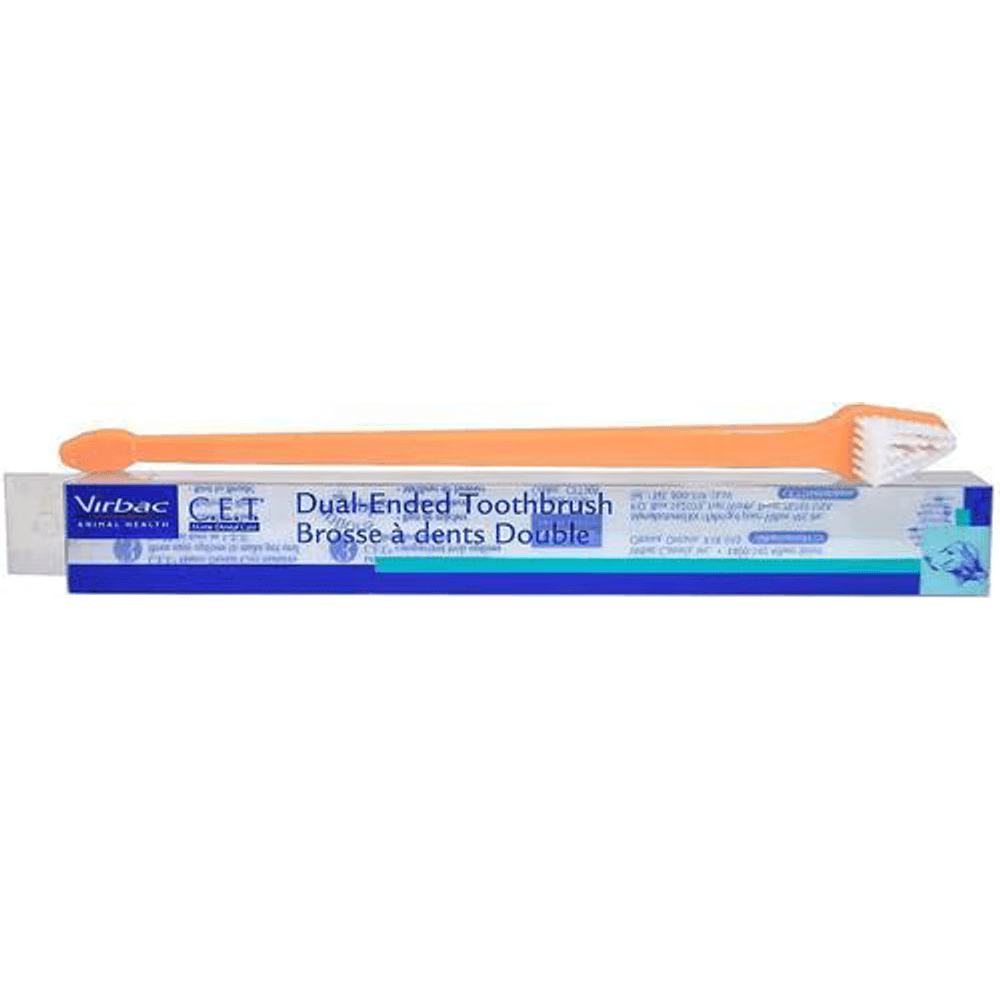
A dual-ended toothbrush with a large and a small head to fit different mouth sizes and reach the back molars where plaque hides. Soft bristles angled for the gumline.
Petful may earn a commission when you click through to Chewy, at no extra cost to you.
Appearance and Coat Variation
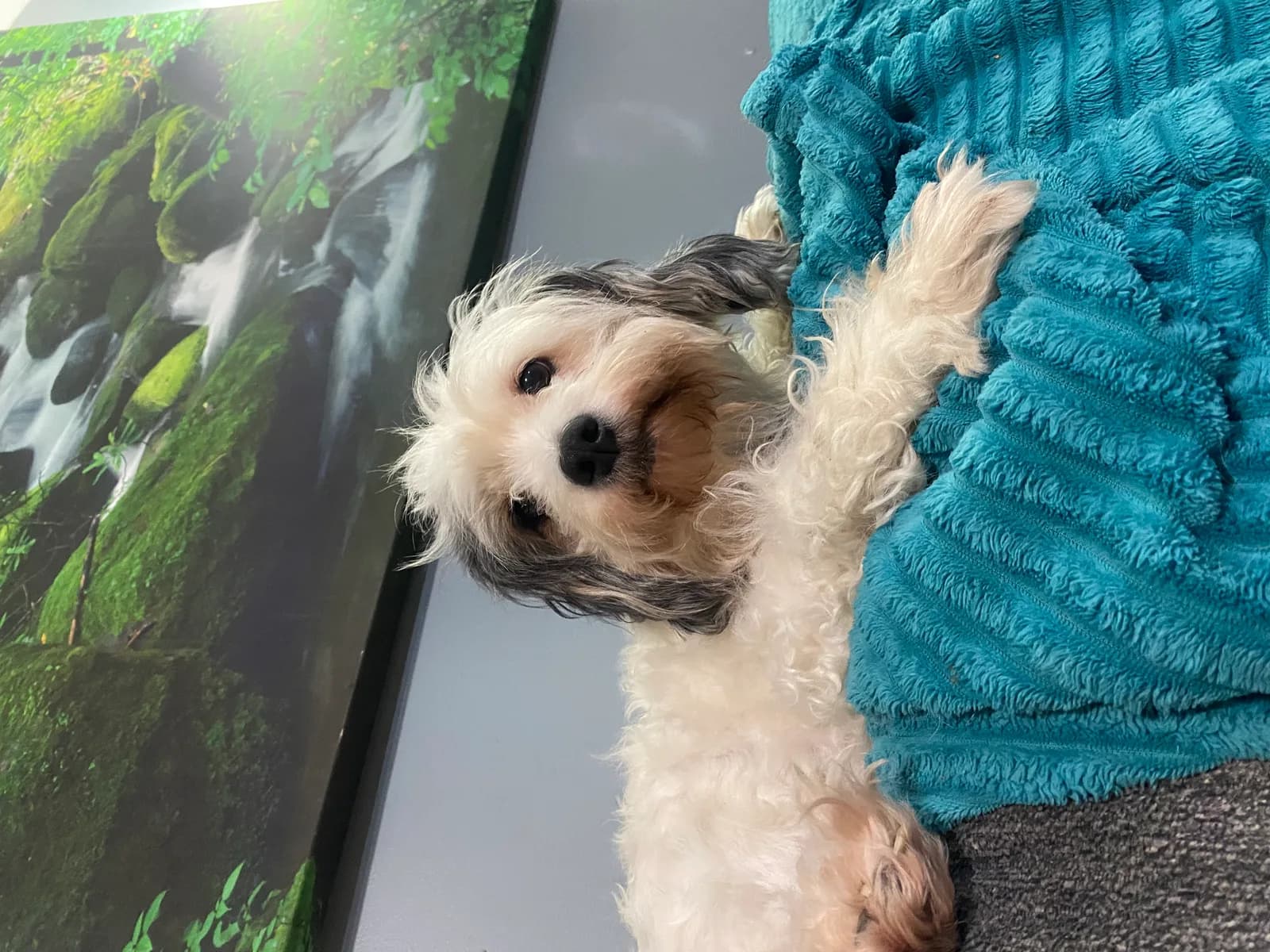
Cavachons commonly have a soft, wavy or curly-looking coat, floppy ears and a small companion-dog build. White, cream, apricot and patches of other colors appear in descriptions and individual dogs. The amount and arrangement of color, coat texture and facial furnishings vary; a puppy's current appearance is not a promise of its adult coat.
For a visual comparison, look at several clearly identified dogs instead of treating one attractive photo as a breed standard. Ask to see the actual parents, where possible, and recent pictures of adult relatives. Even those examples show possibilities rather than proving how a puppy will look.
Interpret coat descriptions carefully
Listings may describe black-and-white, brown or chocolate, apricot or golden, sable, red or ruby, black-and-tan, or tricolor markings (sometimes shortened to tri). Blenheim is a Cavalier color term that may appear in those descriptions. The words describe a claimed appearance; they do not establish ancestry, rarity or a separate Cavachon variety. For an unusual claim such as blue merle, ask for verifiable parent records rather than accepting a color label as proof of a two-breed cross.
Compare the visible tail, eyes, ears, muzzle and body outline as well as the coat. A cute teddy-bear appearance is an aesthetic description, not a separate type or evidence that the dog is comfortable with handling.
Puppy appearance can change
A puppy photograph shows the coat at that moment. Furnishings, clipping, lighting and coat development can change the apparent outline and color intensity. Compare clear recent photographs and, when possible, meet the dog; do not choose a puppy on a promise that its adult coat will exactly match an advertisement.
Use color words as descriptions, not health or value rankings. Terms such as rare, teddy bear or designer do not replace information about parentage, care and temperament. If a seller offers a special color at a higher price, ask the same screening and contract questions you would ask about any other puppy.
Adult Size and Growth
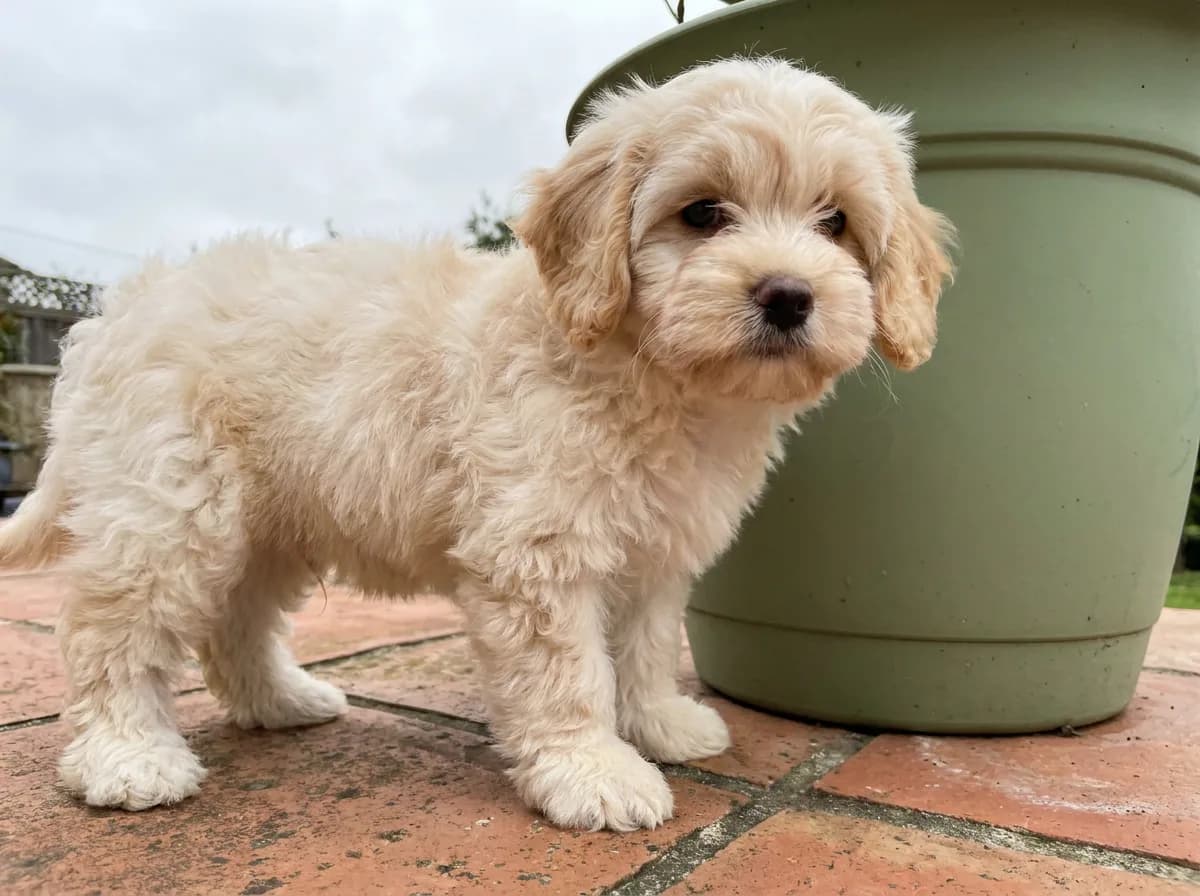
A Cavachon is usually described as a small dog, but published adult weight and height ranges differ substantially. There is no official Cavachon size standard that makes one range a reliable prediction for every litter. Parent size, ancestry and the individual puppy all matter.
For planning, ask for both parents' measured adult weights and heights, not just a label such as mini. With an adult dog, use current measurements for a harness, bed and crate. With a puppy, expect to check and change equipment as it grows. A tight harness can become uncomfortable before the puppy looks noticeably bigger.
Our Cavachon full-grown guide examines published size ranges, growth uncertainty and equipment measurements in more detail. Use it to plan for a range of outcomes rather than treating a puppy-weight calculator as an exact forecast.
Grooming and Shedding
Plan for regular brushing and combing, plus professional grooming when the coat length and your skills call for it. A low-shedding-looking coat can retain loose hair and develop tangles. Check friction areas behind the ears, under the collar or harness, in the armpits and around the legs rather than brushing only the visible top layer.
The American Kennel Club's Bichon Frise guidance recommends frequent brushing and regular clipping for the parent breed. A Cavachon's schedule must be adapted to its own coat. Ask your groomer what maintenance the current haircut needs and choose a length you can realistically keep comfortable between appointments.
An aumuca self-cleaning slicker brush is one possible brushing tool for a suitable coat, but use light pressure and ask your groomer to demonstrate technique. Follow brushing with a comb check where appropriate; a brush that glides over the surface does not prove there are no tangles closer to the skin. Do not force a tool through a tight mat or cut close to skin you cannot clearly see.
A manageable coat-care routine
- Keep handling sessions short and reward cooperation.
- Check the areas where clothing and equipment rub.
- Arrange help when tangles are tight, skin looks sore or the dog finds grooming painful.
- Ask the groomer to describe the haircut's length and maintenance needs rather than relying only on a style name.
A Cavachon is not guaranteed to be hypoallergenic. The American Academy of Allergy, Asthma & Immunology explains that pet allergens come from proteins in sources including dander, saliva and urine; coat length or minimal shedding does not make a dog allergy-free. A person with pet allergies should discuss management with their clinician before bringing a dog home.
See our Cavachon grooming and haircut guide for brushing, bathing, style choices and professional-groomer questions. A practical haircut should support comfortable care, not just reproduce a photo.
Health and Lifespan
For a new puppy, use WebVet's puppy vaccine schedule to organize records and questions for your veterinarian; the actual dates depend on the puppy's history and local risks.
Cavachons can inherit health risks from either parent breed. A cross is not automatically healthier than its parents, and a healthy-looking puppy does not establish that its parents received appropriate screening. Ask for records tied to the actual parent dogs and discuss them with your veterinarian.
For Cavaliers, the Cavalier King Charles Spaniel Club's testing guide discusses cardiac, eye, patella and hip evaluation. The AKC Bichon Frise page identifies patella, hip and ophthalmologist evaluation among recommended health tests. A general DNA panel is not a substitute for all these examinations.
Check the screening paperwork
When reading records, check:
- Which parent the result belongs to and how its identity is recorded.
- The test or examination performed, date and actual result.
- Whether the dog was an appropriate age when tested and whether repeat checks were needed.
- What the breeder or veterinarian says the result can and cannot tell you.
The Orthopedic Foundation for Animals' CHIC program makes an especially useful distinction: a CHIC number means the required testing has been completed and the results made public, not that every result was normal. Read the underlying results instead of stopping at the number.
Everyday care also matters. Keep up with veterinary visits, parasite prevention appropriate to your area, vaccination advice, weight management and oral care. A dog toothbrush such as the Virbac C.E.T. dual-ended toothbrush can support a gradual home dental routine when paired with dog-appropriate toothpaste and your veterinarian's advice. Start with brief, comfortable handling; have painful mouths assessed rather than pushing through brushing.
Aging and individual health
Published lifespan estimates describe expectations, not a guarantee for a particular dog. Our Cavachon lifespan and health guide separates those estimates from the evidence, explains screening documents and covers changes to discuss with a veterinarian. Parent-breed risk does not tell us the rate of a condition in all Cavachons.
A 10-year-old Cavachon is an older adult whose comfort, mobility, weight and routine deserve regular veterinary review. Age alone does not establish poor health or predict how much time remains. Report changes such as reduced enthusiasm for walks, altered appetite or difficulty getting comfortable instead of assuming they are inevitable aging.
Choosing a Puppy and Planning Costs
Responsible acquisition starts with choosing a dog whose needs fit your household before choosing a seller or a color. For a puppy, ask about the parents, early handling, living environment, veterinary care and arrangements if you cannot keep the dog. For an adult, ask about the foster or previous home's experience with grooming, house training, other pets and time alone.
A useful conversation covers these practical questions:
- Can I see the actual parent screening records? A verbal claim that the parents are healthy is different from a dated examination result.
- What has this dog experienced? Ask about household sounds, gentle handling, visitors and age-appropriate exposure.
- What is included in the price or adoption fee? Request an itemized explanation of veterinary care, microchipping, registration claims and other charges.
- What does the contract require? Read deposit, return and health-related terms before paying.
- What support is available after the dog comes home? Establish who to contact for records, adjustment questions and any return arrangement.
Plan beyond the acquisition price. Recurring costs include food, preventive care and grooming; other costs include equipment, training support, pet sitting and unexpected veterinary care. A puppy may outgrow a harness or bed, and a dog that cannot yet cope alone may need more paid care than expected.
Budget for the dog in front of you
Buy essential equipment for the dog coming home, then expand after you understand its preferences. Measure before choosing the small walking harness, confirm what food the dog currently eats and ask your veterinarian how to introduce changes. A shelf of accessories will not compensate for an unsuitable care schedule. Budget time as carefully as money, including the recurring appointments and daily handling that a fluffy coat requires.
Dental supplies can be part of that basic kit. A dog-appropriate toothbrush is useful only when the dog is gradually comfortable with mouth handling and the chosen head suits its mouth. Ask for a demonstration at the first veterinary visit if you are unsure, especially if the dog already has discomfort or visible dental problems.
Our Cavachon price guide separates asking-price examples, deposits and first-year planning. Use local quotes and your own care arrangements to build a budget. A higher price is not proof of better health, while a low initial fee does not remove ongoing responsibilities.
Cavachon or Cavapoo?
Both crosses have Cavalier ancestry. A Cavachon adds Bichon Frise ancestry, while a Cavapoo adds Poodle ancestry. That distinction can affect the range of coat textures, size and activity expectations, but neither name reliably ranks every dog as calmer, easier or better for allergies.
Compare the actual parents and individual dogs, then ask which care routine you can sustain. If coat maintenance is your main concern, meet adult dogs and talk to a groomer. If alone time is the concern, investigate the dog's current experience rather than buying on a promise that one cross is more independent.
Read our Cavachon vs. Cavapoo comparison for a side-by-side decision framework. The best fit is the dog whose needs, temperament and care requirements you can meet consistently.
Other comparisons: Maltipoo, Cockapoo and Poochon
When comparing a Cavachon with these alternatives, start with the parentage difference, then compare the individual dogs. Similar coats and informal mix names can conceal different family histories.
| Comparison | The parentage difference | A useful question before choosing |
|---|---|---|
| Cavachon vs Maltipoo | Cavachon combines Cavalier and Bichon; Maltipoo combines Maltese and Poodle | Which Poodle size and actual parent measurements underpin the Maltipoo estimate, and how do both dogs tolerate daily handling? |
| Cavachon vs Cockapoo | Cavachon combines Cavalier and Bichon; Cockapoo combines Cocker Spaniel and Poodle | What are the actual parents and the individual dog's activity, settling and coat-care needs? |
| Cavachon vs Poochon | Both have Bichon ancestry; Poochon adds Poodle instead of Cavalier | How do the actual coats differ, what maintenance can you sustain, and what do the parent records show? |
The Maltipoo guide, Cockapoo guide and Poochon guide explain those mixes in more detail. Do not choose solely on a claim that one mix is always smaller, calmer or easier for allergies. Compare measured adult size or an honestly bounded puppy estimate, ordinary behavior and a realistic grooming routine. For an adult dog, repeated observations from its current carer can be more useful than a broad mix label.
Frequently Asked Questions
No. A Cavachon is a mixed breed with Cavalier King Charles Spaniel and Bichon Frise parentage. Its parent breeds are recognized purebreds, but the cross does not have an AKC breed standard that guarantees its size, appearance or temperament.
Yes, an individual Cavachon may suit an apartment when it receives daily exercise, toilet breaks, enrichment and companionship. Check its response to noise, ability to settle and current alone-time skills. Floor space alone does not determine whether the home meets its needs.
Some are, but individual temperament and experience matter. Use supervised interactions, teach children gentle behavior and give the dog a quiet retreat. Small dogs can be injured by rough handling and should not be expected to tolerate being grabbed or disturbed while resting.
Do not assume so. Build alone time through gradual training and make care arrangements around the dog's age, health and current ability to cope. Puppies need frequent attention, and dogs showing distress need a plan with veterinary or qualified behavior support rather than longer forced separations.
Bring the acquisition and medical records, vaccine dates, current food information and any medicines or supplements. Write down questions about feeding, parasite prevention, coat and dental care, and safe socialization. Ask the clinic to explain the next-due plan instead of assuming a seller's checklist is complete.

Coreen Saito is a pet writer and longtime shelter volunteer with more than a decade in animal rescue. She covers cat behavior, breed care, and the small, ordinary science of sharing a life with companion animals, with a particular focus on honest takes about the products and decisions that actually matter. At home in Arizona, she's outranked by Mac (a dog with the loudest opinion in the house), Rebel (a cat who governs by quiet authority), and Meri (an orange tabby who runs the late shift and the laundry basket). She writes about all three, plus the rescues that keep coming through her life, at LifeWithMinty.com.
Sign up for expert-backed reviews and safety alerts all in one place.