Cavachon Full Grown: Adult Size, Growth and Appearance
Compare published Cavachon adult-size estimates, parent measurements and growth expectations, then measure your individual dog for equipment and assess healthy body condition.
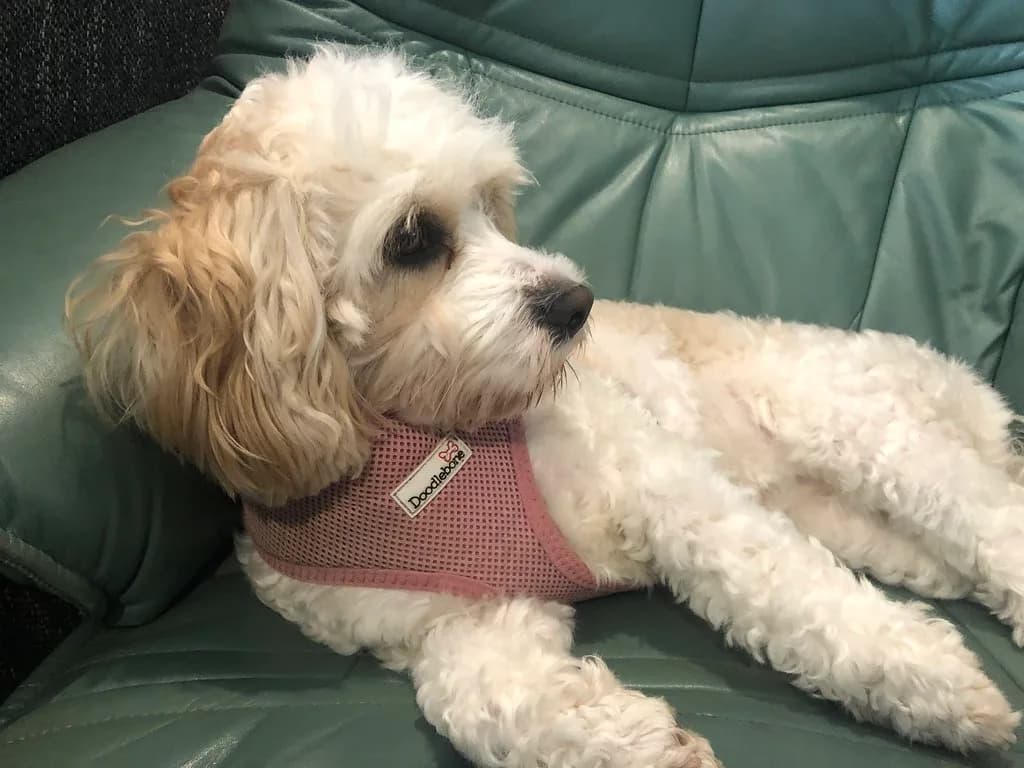
Luna photographed in 2019, after the owner documented her as a puppy in 2017. The photograph does not establish her weight or height. Photo: Tim Walker, CC BY 2.0, resized and converted to WebP.
Petful is reader supported. As an affiliate of platforms like Amazon and Chewy, we may earn a commission when you buy through links on this page. There is no extra cost to you.
A Cavachon full grown is usually a small companion dog, but published size ranges disagree. Adopt a Pet describes roughly 10–20 pounds and 9–11 inches at the shoulder; Puptraveller gives 15–35 pounds and 11–13 inches. There is no official Cavachon breed standard that makes either range an exact rule for every dog.
For a puppy, the actual parents' sizes and the puppy's growth history are useful context. For an adult, measure the dog in front of you and assess body condition with your veterinarian. A fluffy outline, a mini label or one calculator result cannot establish an exact mature size or healthy weight.

Sign up for expert-backed reviews and safety alerts all in one place.
Cavachon Adult Size: What the Ranges Mean
- 1Published size ranges describe expectations and disagree across sources; individual variation remains substantial.
- 2Parent measurements provide context, not a guaranteed midpoint for a puppy.
- 3Body condition and equipment fit require the individual dog's actual measurements.
A Cavachon combines Cavalier King Charles Spaniel and Bichon Frise ancestry. Both parents are generally small dogs, but that does not create a standardized hybrid range. A puppy can inherit different proportions from its parents, and estimates should remain estimates until the dog has matured.
The Cavalier breed standard describes 12–13 inches at the withers and 13–18 pounds in proportion to height. The AKC's Bichon Frise guide describes 9.5–11.5 inches and 12–18 pounds. These parent-breed references help explain why Cavachons are usually discussed as small dogs; they do not mathematically determine each puppy's outcome.
A Frisco Padded No Pull Dog Harness in Small is one equipment option only if the current chest measurements match its chart. Do not buy it solely because a guide calls Cavachons small. Recheck fit during growth and after major coat-length changes.
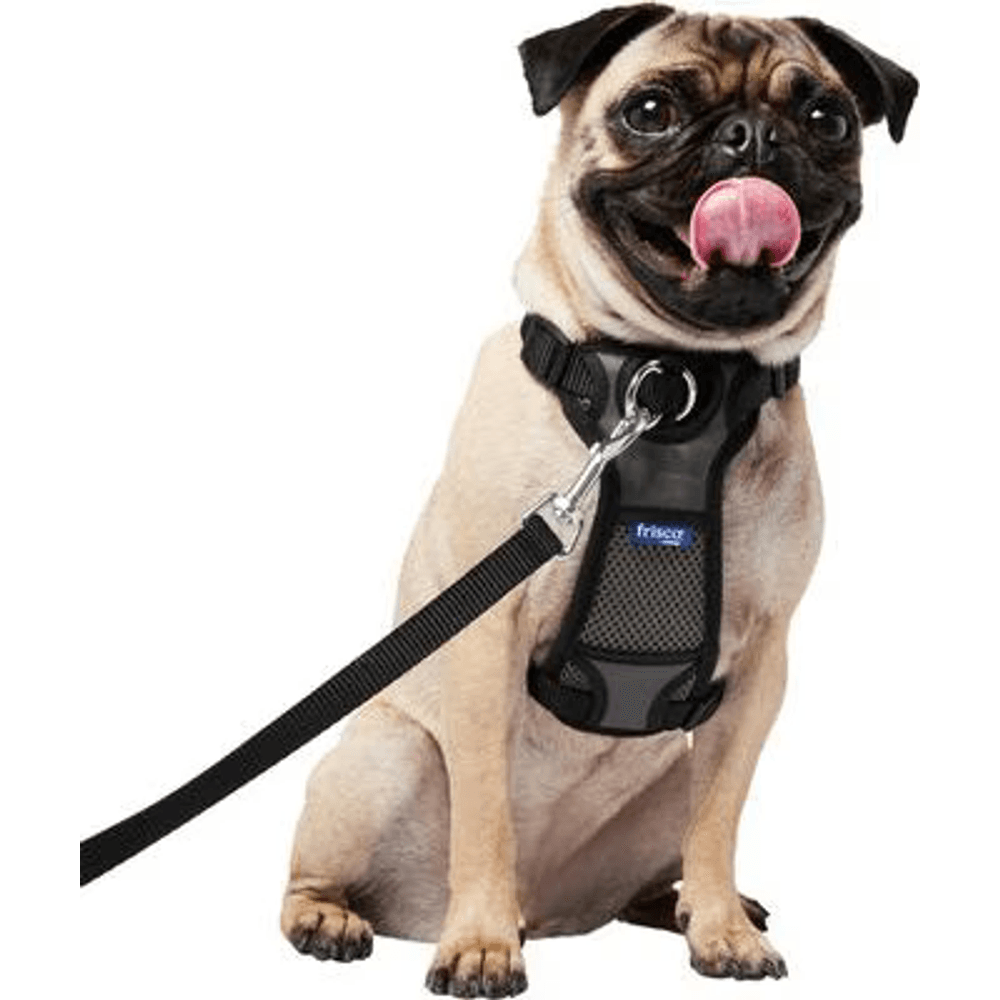
A budget-friendly padded no-pull harness that keeps leash pressure off a coughing dog's neck and windpipe by distributing it across the chest. A simple, affordable way to protect an irritated airway or a collapsing trachea on every walk.
Petful may earn a commission when you click through to Chewy, at no extra cost to you.
| Source or evidence | Published reference | How to use it |
|---|---|---|
| Adopt a Pet Cavachon guide | About 10–20 pounds; 9–11 inches | One editorial estimate, not an official standard |
| Puptraveller Cavachon guide | About 15–35 pounds; 11–13 inches | A different estimate that shows why a universal range is unreliable |
| Cavalier parent standard | 13–18 pounds; 12–13 inches | Parent-breed context, not a guaranteed puppy prediction |
| AKC Bichon parent guide | 12–18 pounds; 9.5–11.5 inches | Parent-breed context, not a guaranteed puppy prediction |
| Actual adult dog | Measured weight, shoulder height, length and chest | Best basis for equipment fit and individual assessment |
The two crossbred estimates come from Adopt a Pet and Puptraveller. Neither supplies a validated prediction method that justifies combining their numbers into a new average. Do not assume the largest number is a healthy weight target or the smallest number is a minimum every dog must reach.
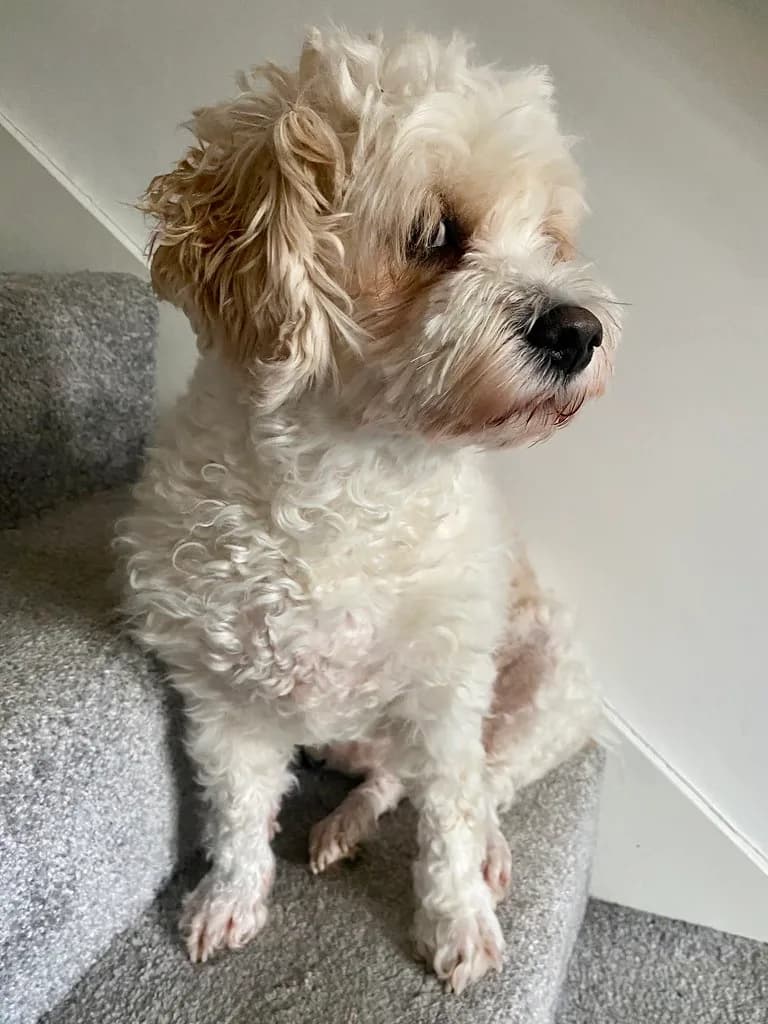
Descriptions such as petite Cavachon or large Cavachon are relative labels, not extra standardized size classes. Ask for actual measurements and the comparison behind the word before planning equipment or judging a dog's growth.
Ask better questions about an estimate
When someone predicts a puppy's adult size, ask what information supports the estimate. The measured weights and shoulder heights of the actual parents are more useful than simply saying both are small. Adult relatives may provide additional context, although they do not guarantee that this puppy will be identical.
Useful questions include:
- What are both parents' measured adult weights and heights?
- Are those measurements recent, and are the parents in healthy body condition?
- Is the puppy a first-generation cross or from a different family arrangement?
- Are there measured adult dogs from earlier related litters?
- How much uncertainty does the estimate allow for?
If a strict travel, housing or handling limit depends on adult size, an adult dog with known measurements can offer more certainty than a puppy. Check the actual travel provider's rules or equipment dimensions rather than assuming that small-breed status automatically meets them.
Food activities can support a routine without increasing the amount fed. A Nina Ottosson Lickin' Layers puzzle feeder can hold part of a suitable meal for supervised enrichment. Begin simply and remove it if the puppy chews the pieces. The feeding plan determines the portion; the toy does not establish how much a growing dog needs.
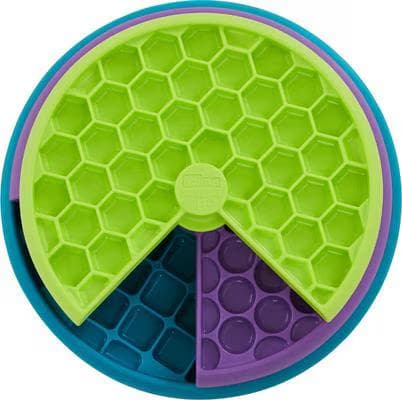
Petful may earn a commission when you click through to Chewy, at no extra cost to you.
At What Age Does a Cavachon Stop Growing?
Many breed guides place the approach to adult Cavachon size around the end of the first year, but the precise timing varies. Adopt a Pet describes approximately eight to 12 months; Puptraveller describes 10–12 months. These are broad guide estimates, not a rule that growth ends on a particular birthday.
Growth slowing, reaching adult height and maintaining an appropriate adult body condition are related but different ideas. A puppy's height may change less while its body continues to mature. A later change in weight might reflect body fat, muscle or a health issue rather than further skeletal growth. Your veterinarian can interpret the trend with the dog's overall condition.
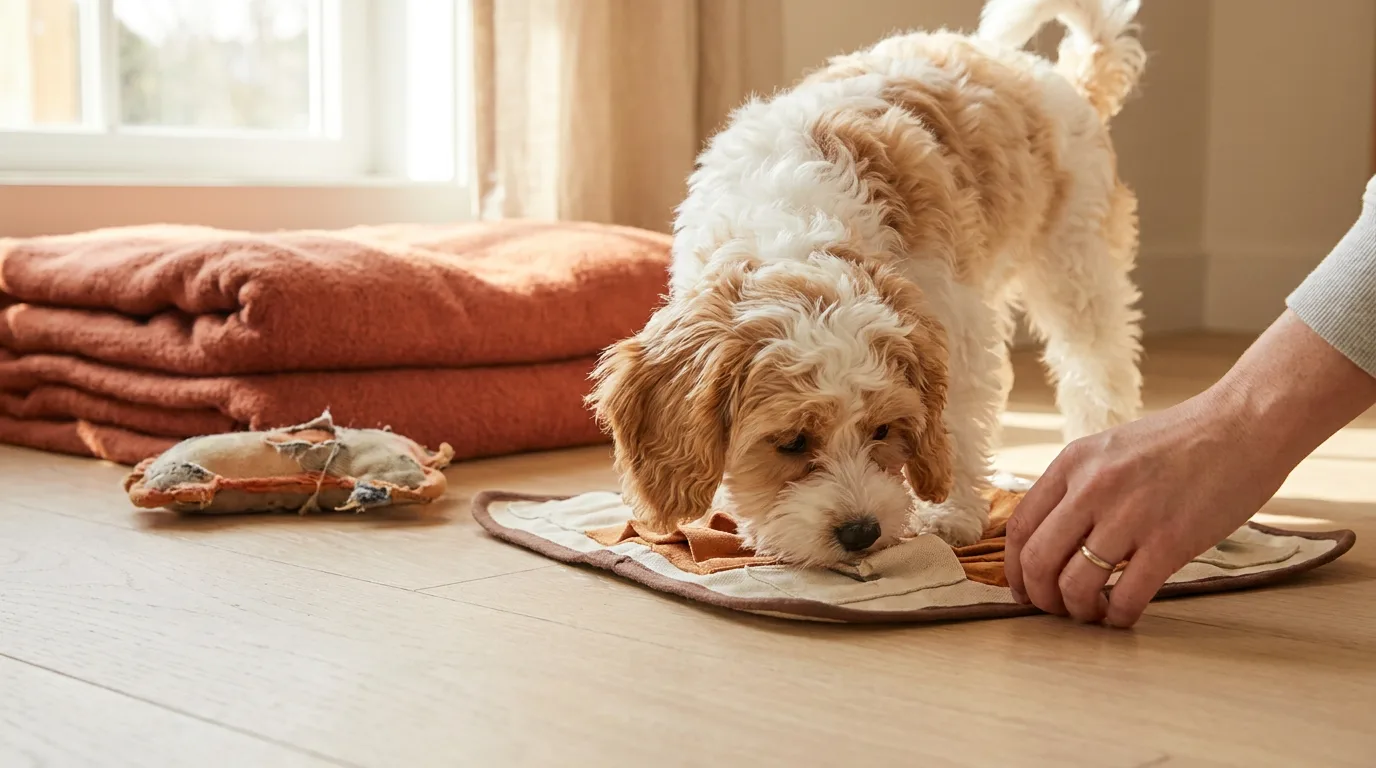
Growth monitoring means comparing dated measurements, body condition and activity over time. Adolescence can bring changes in energy and behavior even after height growth slows; it does not supply a fixed deadline for adult weight.
Track a trend rather than chase a chart
Record age, date and weight at useful intervals, ideally with a consistent scale. Add notes about food, appetite and any concern you want to discuss at the next visit. A simple trend gives the veterinary team more context than a single number copied into a puppy calculator.
Do not treat an online month-by-month table as a feeding prescription. A four-month-old puppy does not need to be forced toward a chart value, and doubling a puppy's weight at a selected age cannot guarantee an exact adult weight. A calculator can provide a rough planning estimate at most; its accuracy depends on the data and assumptions behind it.
Bring these concerns to your veterinarian:
- Growth or weight changes that seem unexpected for the individual.
- Poor appetite, persistent digestive trouble or reduced activity.
- A sudden change after a food or routine adjustment.
- Difficulty assessing body condition under a thick coat.
- Questions about when to move from a puppy feeding plan to an adult plan.
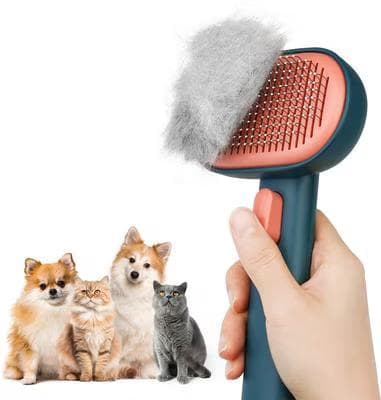
An aumuca slicker brush may suit part of an adult dog's coat routine after a groomer demonstrates appropriate pressure and technique. Brush gently and check for tangles near the skin. A tidy outline is not enough to establish that the coat is comfortable underneath.
Petful may earn a commission when you click through to Chewy, at no extra cost to you.
Mini, toy and teacup labels
Mini Cavachon, toy Cavachon and teacup Cavachon are not standardized size varieties of this cross. Sellers may use them differently. Ask for actual parent sizes, veterinary information and the reasoning behind the prediction rather than assuming the label describes a defined adult weight.
Do not underfeed a puppy to preserve a promised tiny size. Health and development take priority over marketing language. If the puppy becomes larger than expected, assess its body condition and growth with the veterinarian instead of treating the estimate as proof that something is wrong.
What Adult Cavachons Look Like
Adult Cavachons often have floppy ears, a soft face and a wavy or curly-looking coat. Coat length, texture, color and body proportions vary. A freshly clipped dog may look much smaller than the same dog in a longer coat, while a close-up photograph can conceal leg and body length.
Photos are useful examples when their identity and age are documented, but they do not create a breed standard. Compare the actual body rather than the amount of fluffy hair around it. For size, shoulder height and chest measurements are more informative than how much of a chair or lap a dog appears to occupy in a photograph.
The EliteField padded reflective harness in Small is an alternative to the Frisco small harness, not an additional purchase every owner needs. Compare each model's dimensions, adjustment and shape against the dog. Check for rubbing behind the front legs, pressure points and the ability to back out.
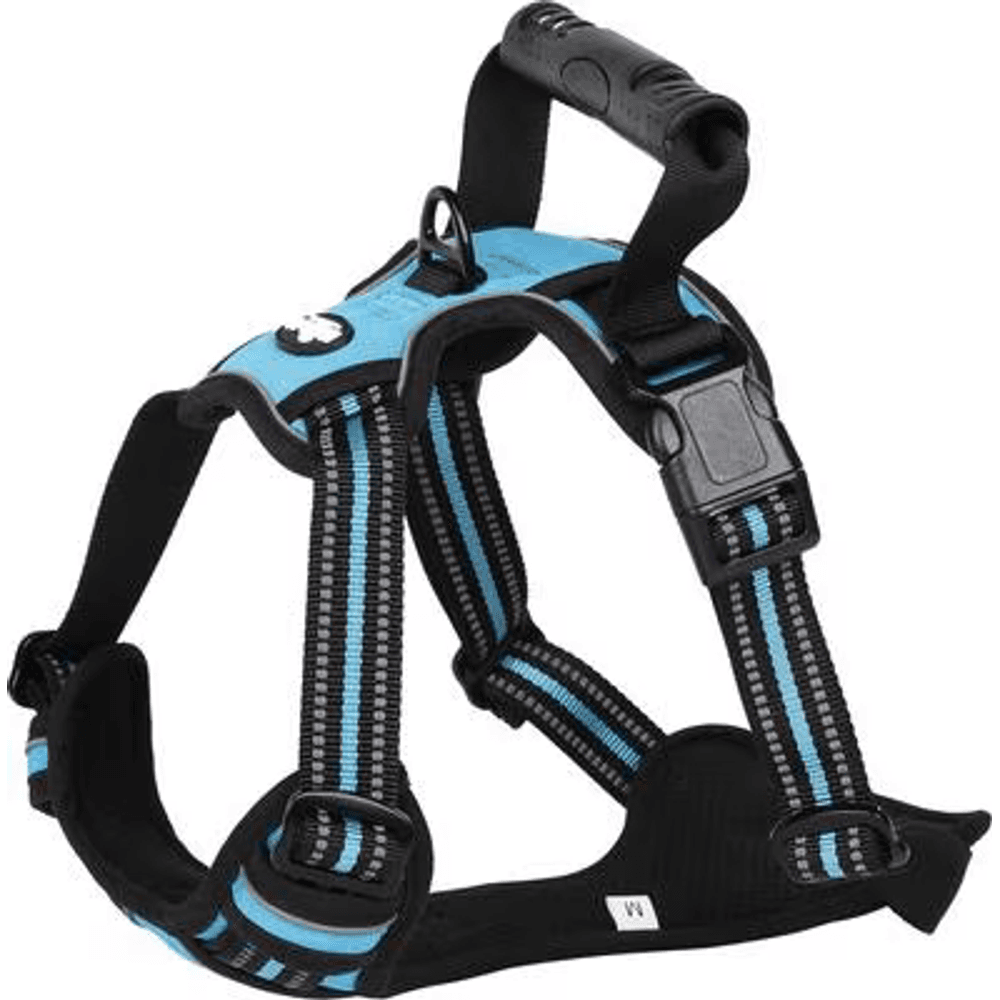
A padded, reflective no-pull harness that spreads leash pressure across the chest instead of the throat, the switch most vets recommend for a dog with a cough, a collapsing trachea, or any airway irritation so the leash never presses on
Petful may earn a commission when you click through to Chewy, at no extra cost to you.
Read photographs with their limits in mind
Ask what the image actually establishes:
- Is the dog identified as a Cavachon by the source?
- Is its adult age documented, or only assumed from appearance?
- Is the full body visible in a natural standing position?
- Does the haircut hide or exaggerate the outline?
- Is there a known measurement, rather than an object of unknown size nearby?
A long-coated dog and a clipped dog photographed from different angles can appear very different even at similar weights. Likewise, separate photographs resized to the same dimensions do not establish equal height. Use photos for appearance examples and measurements for equipment decisions.
Coat descriptions such as cream, apricot, white or patched do not prove parentage, rarity or health. Puppy coat texture and appearance can also change with maturation and grooming. Ask to see the actual parents or adult relatives where possible, while remembering that a family resemblance is not a precise forecast.
Measuring Your Dog and Choosing Equipment
Take measurements when the dog is relaxed and standing naturally on a level surface. Work in short sessions with rewards. If handling makes the dog worried, introduce the tape gradually rather than holding the dog still through distress.
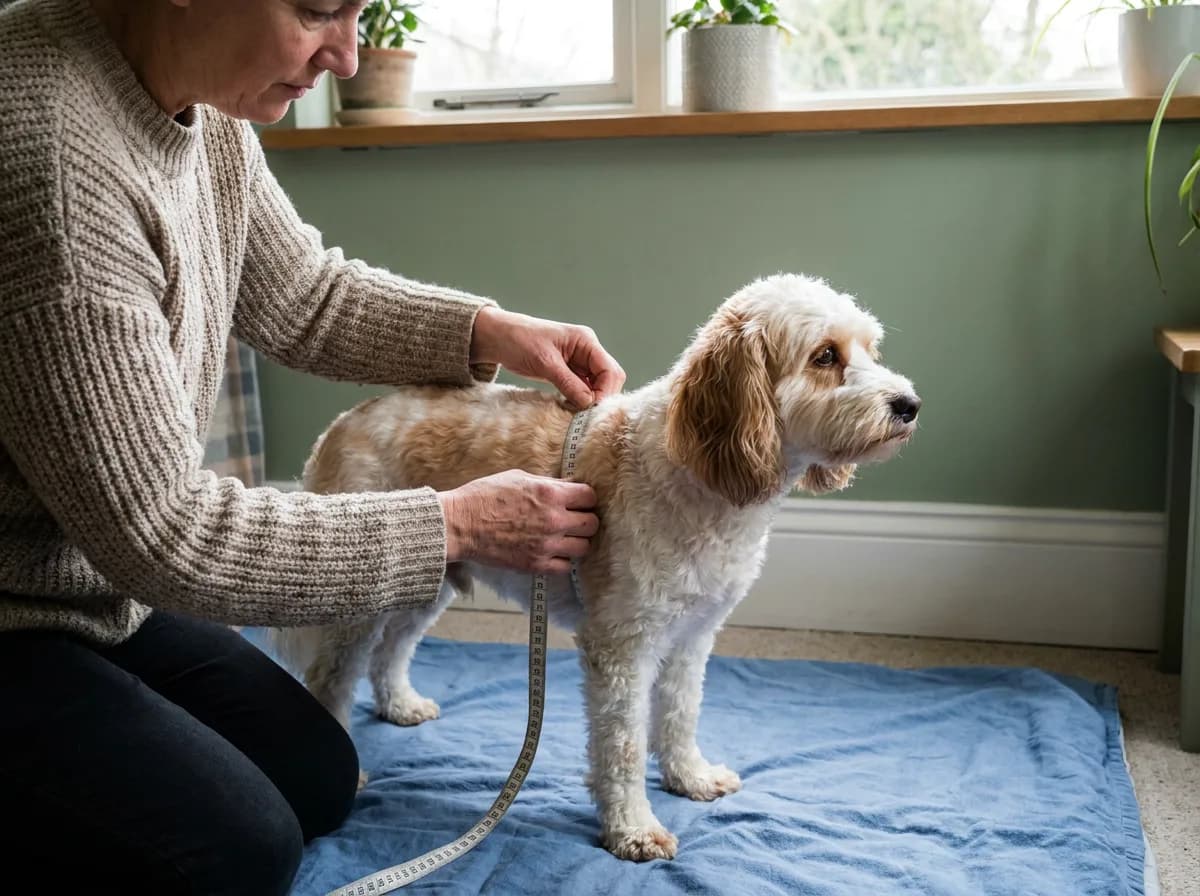
Shoulder height, chest and body length
Measure height from the floor to the highest point of the shoulders, not the head or ears. A dog lifting its head does not become taller at the withers. Keep the measurement consistent so it can be compared with later checks or a manufacturer's instructions.
For a harness, measure chest circumference where the product's chart directs, without compressing the coat and body tightly. Some models also need neck or other measurements. Follow the specific chart rather than using the same size label across brands.
For a bed or crate, measure as the manufacturer directs and check the practical result. The dog should be able to rest comfortably; a crate should allow normal standing, turning and lying down. A weight recommendation alone cannot account for every dog's length and height.
Compare fit, not the small label
After putting on equipment, watch the dog move naturally. A fit that looks acceptable while the dog is sitting may shift during walking. Recheck after adjustment and reassess a puppy as it grows. If a harness repeatedly rubs despite appropriate adjustment, a different shape may be more suitable than simply tightening it.
Keep a dated note of chest, neck, length, height and weight where relevant. This makes replacements easier to compare and helps avoid buying an item based on an old puppy measurement. A winter coat, recent clipping or weight change can make it worth checking fit again.
Temperament and Everyday Care
Reaching adult size does not automatically mean a Cavachon has finished learning or will become calm without training. Adult dogs still need companionship, suitable exercise, rest, enrichment and ongoing coat care. An energetic individual is not necessarily too large, and a small individual is not automatically low-maintenance.
The Cavachon breed guide covers daily routine, household fit, barking, alone time and responsible acquisition. Use it alongside the size information when choosing a dog: physical dimensions are only one part of the commitment.
Healthy Weight and Veterinary Follow-Up
Growth visits are also an opportunity to review preventive care. WebVet's puppy vaccine schedule explains the records to bring and why dose timing should follow the veterinarian's plan.
A larger Cavachon is not automatically overweight, and a lighter one is not automatically underweight. The AAHA body-condition guidance describes assessing ribs, waist and abdominal tuck rather than relying on the scale alone. Ask your veterinary team to demonstrate the check and evaluate muscle as well as body fat.
This matters because some online growth charts attach health labels to fixed breed weights without assessing the individual. A number cannot substitute for a physical examination. Do not sharply increase or restrict food just because the dog falls outside an internet range.
Bring changes to the veterinarian
If weight changes unexpectedly, record what you know about appetite, food amounts, treats and activity, then contact your veterinarian. Keep care decisions separate from a seller's original size promise. The Cavachon lifespan and health guide explains parent screening and preventive-care questions in more detail.
Frequently Asked Questions
Many guides place the approach to adult size near the end of the first year, with estimates around eight to 12 or 10–12 months. Individual growth varies. Ask your veterinarian to assess the dog's growth trend rather than treating one birthday as an exact cutoff.
Not necessarily. Body condition, muscle and frame matter, not weight alone. A dog outside a published range needs individual assessment, not an automatic obesity or underweight label from an internet chart.
No. They are marketing labels without a standardized size definition for this cross. Ask about actual parent size, growth history and health rather than treating the label as a guarantee.
No. It can provide only an estimate based on its assumptions and input data. Use parent information, repeated growth measurements and veterinary assessment for planning, allowing for individual variation.

Coreen Saito is a pet writer and longtime shelter volunteer with more than a decade in animal rescue. She covers cat behavior, breed care, and the small, ordinary science of sharing a life with companion animals, with a particular focus on honest takes about the products and decisions that actually matter. At home in Arizona, she's outranked by Mac (a dog with the loudest opinion in the house), Rebel (a cat who governs by quiet authority), and Meri (an orange tabby who runs the late shift and the laundry basket). She writes about all three, plus the rescues that keep coming through her life, at LifeWithMinty.com.
Sign up for expert-backed reviews and safety alerts all in one place.