Cavachon Grooming and Haircuts: Coat Care and Styles
Choose a manageable Cavachon haircut and learn how brushing, comb checks, bathing and professional grooming work together to keep your individual dog comfortable.
Choose a practical grooming plan around coat condition, comfort and the care you can maintain at home.
Petful is reader supported. As an affiliate of platforms like Amazon and Chewy, we may earn a commission when you buy through links on this page. There is no extra cost to you.
Cavachon grooming should follow the dog's actual coat texture and haircut length. A soft, wavy or curly-looking coat may need frequent brushing and combing even when little loose hair appears on furniture. A practical haircut is one you can keep comfortable between professional visits, not simply the fluffiest photo you can find.
Start by asking a groomer to assess the coat, demonstrate gentle home maintenance and agree on a realistic appointment interval. Terms such as puppy cut and teddy bear cut do not specify one universal length, so discuss the body, face, ears and tail separately.

Sign up for expert-backed reviews and safety alerts all in one place.
Understanding the Cavachon Coat
- 1Coat length and texture determine maintenance needs more reliably than a haircut nickname.
- 2Brushing the surface is not the same as checking for tangles near the skin.
- 3Agree on a professional grooming plan you can maintain comfortably at home.
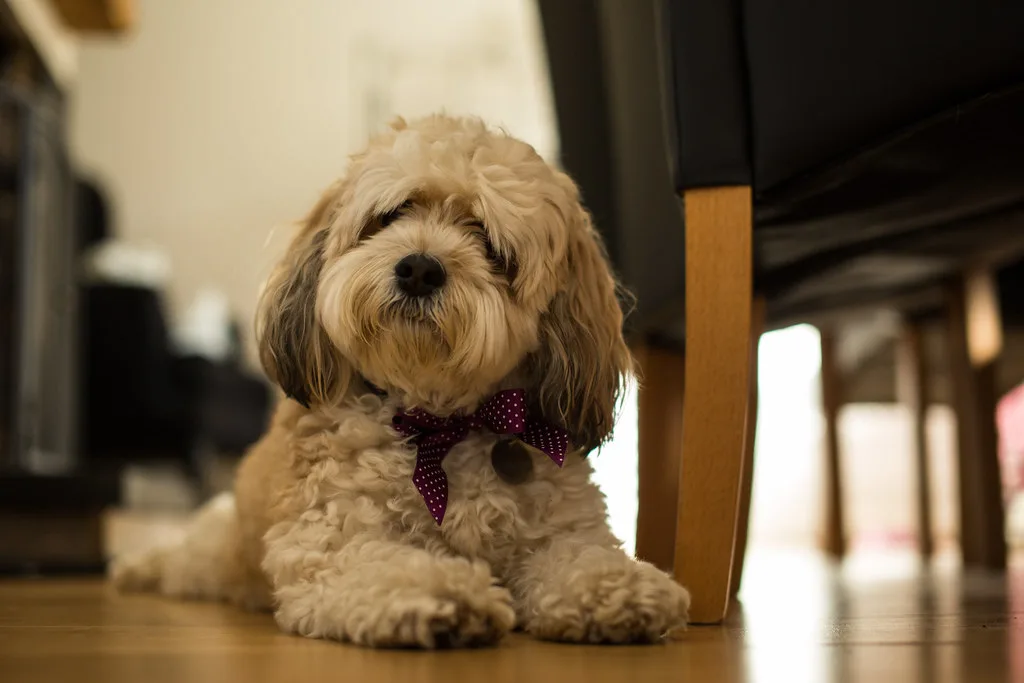
Cavachons combine Cavalier King Charles Spaniel and Bichon Frise ancestry, but the coat is not identical in every dog. Some individuals have looser waves; others look curlier or carry denser hair. Puppy coats and adult coats may also behave differently, so reassess the routine as the dog matures.
The American Kennel Club's Bichon guidance describes frequent brushing and trims around four to six weeks for that parent breed. This is useful context for the level of commitment a fluffy coat can require, not an exact Cavachon schedule. Your groomer should tailor the interval to the actual coat, haircut and home maintenance.
Shedding is not the same as easy care
A coat that leaves relatively little hair around the home can still retain loose hair and develop tangles. Check the coat itself rather than assuming that a clean sofa means grooming can wait. Friction areas under a harness, behind the ears and around the legs can become uncomfortable while the visible top layer still looks tidy.
An aumuca self-cleaning slicker brush is one option for a suitable coat after a groomer shows you the right pressure and technique. Self-cleaning describes removing hair from the tool; it does not mean the brush can safely remove every mat. Use gentle strokes and stop if the dog is uncomfortable.

Petful may earn a commission when you click through to Chewy, at no extra cost to you.
No Cavachon coat is guaranteed to be hypoallergenic. The American Academy of Allergy, Asthma & Immunology explains that pet allergens involve proteins in dander, saliva and urine. A haircut or shampoo cannot make a dog allergy-free. Discuss pet allergies with a clinician rather than using grooming as proof that a particular dog will be suitable.
Cavachon Haircuts and Maintenance
Choose the haircut around the work you can do between appointments. A shorter body can make some maintenance easier, while longer furnishings and a rounded face may require more attention. Neither choice eliminates the need to check friction areas or arrange help with tight tangles.
Use reference photos to communicate the look you like, then ask the groomer how that look would work on your dog's coat. A photograph does not reveal the exact blade, comb attachment or length used. The same nickname can describe different finished styles at different salons.
| Haircut direction | What to discuss with the groomer | Maintenance tradeoff |
|---|---|---|
| Short practical body | Comfortable achievable body length, face shape and ear length | Less long body hair to manage, but friction areas still need checks |
| Rounded face with a shorter body | How much face hair stays and whether it affects comfort or cleanup | The face may need attention more often than the body |
| Longer wavy or fluffy finish | Exact length and the brushing/comb routine needed to preserve it | More hair to check and more opportunity for tangles between visits |
| Puppy introduction or tidy-up | Handling tolerance, small achievable tasks and a positive experience | Builds cooperation; does not imply a full adult-style haircut is required immediately |
| Mat-related welfare trim | What is comfortable and safe for the coat's current condition | The feasible result may be shorter than the preferred cosmetic style |

Use a dog-appropriate product and follow its directions. For routine washing of healthy skin, Earthbath fragrance-free oatmeal and aloe shampoo is one option to discuss with your groomer. It is not a substitute for diagnosis when itching, odor or skin changes persist.

Petful may earn a commission when you click through to Chewy, at no extra cost to you.
What Is a Teddy Bear Cut on Dogs?
A straighter-haired Cavachon and a curlier one may need different lengths and tools to achieve a comfortable, maintainable outline. Ask the groomer to assess texture and skin before choosing clippers or a blade; there is no single best dog clipper that makes an inexperienced home haircut safe. Keep sharp tools away from tight mats and sensitive facial areas.
Describe the parts of the haircut that matter to you. You might want a shorter body for easier upkeep, a soft rounded face and ears that are manageable after meals or walks. Ask the groomer to translate that description into a length and maintenance plan appropriate for the dog.
Useful questions include:
- What body length will be comfortable and realistic with the current coat condition?
- How much brushing and combing will this length need between visits?
- Can the face be kept clear enough for comfortable vision and cleanup?
- What will happen if you find tight mats that make my preferred style unsuitable?
- When should the next appointment be booked to maintain this result?
Do not ask for a specific short blade or a shaved finish merely because an online photo looks neat. Let the groomer assess the skin, coat and safe options. A summer haircut is not a replacement for shade, water and appropriate activity in hot weather.
A haircut can reveal an existing maintenance problem
If you want to learn how to clip a Cavachon at home, first ask a professional to demonstrate on your dog and explain the safe limits. A written haircut guide cannot establish whether hidden mats can be removed safely, which blade suits the skin and coat, or whether the dog tolerates the equipment. Leave close facial work and tight mat removal to a professional.
If a groomer recommends a shorter trim because of matting, ask them to show you the affected areas and explain the next home-care routine. The immediate priority is comfort. Trying to preserve long hair at all costs can make handling unnecessarily difficult.
After the appointment, take your own clear reference photographs and record what the groomer calls the length and shape. That is more useful for the next visit than trying to recreate someone else's dog from memory. Reassess the style if it repeatedly becomes tangled before the next appointment despite a reasonable home routine.
Brushing, Combing and Mat Prevention
Brushing and combing are different checks. A brush may pass over the top while a comb catches tangles underneath. The Bichon Frise Club of America's grooming guidance emphasizes following brushing with a comb check through the coat for the parent breed. Ask your groomer to demonstrate how that principle applies to your Cavachon's texture and length.

Wipe ordinary surface debris gently using an appropriate method, without rubbing the eye itself. A product such as Angels' Eyes face, eye and paw cleansing wipes is an option only for its labeled external use. Read the directions, avoid contact with the eye and stop if irritation develops. A cleansing wipe is not treatment for an eye infection or persistent tearing.

Presoaked wipes that gently clean the fur and skin around a dog's or cat's eyes, lifting away tear stains, discharge, and daily debris. A quick, no-rinse way to keep the eye area clean between baths. For routine cleaning only.
Petful may earn a commission when you click through to Chewy, at no extra cost to you.
Build a short, repeatable routine
Choose a comfortable, nonslip location and keep the dog supported. Start with an easy area and a short session, reward cooperation and stop before the dog becomes overwhelmed. A long struggle once a week is not a good substitute for manageable regular handling.
Use this sequence after a groomer has shown you the technique:
- Look and feel first. Check for soreness, damp areas or tight tangles before running a tool through the coat.
- Work in manageable sections. Use light pressure and avoid repeatedly scraping the same patch of skin.
- Check friction areas. Pay attention behind ears, under collars or harnesses, around armpits and legs, and where the dog repeatedly rubs.
- Follow with an appropriate comb check. A snag is a reason to pause and assess, not pull harder.
- Finish positively. Record trouble spots and ask for help before they become a large grooming problem.
Keep the slicker brush clean and inspect it for damage. A tool that suits one coat may be too harsh or ineffective on another. Ask the groomer which comb and brush design they recommend rather than buying every grooming tool listed for small dogs.
When a tangle becomes a professional job
Do not cut out tight mats with scissors close to skin you cannot clearly see. Skin can be drawn into the tangle, and a small slip can cause injury. If the coat is tightly matted, painful or covers irritated skin, contact a groomer or veterinarian as appropriate instead of continuing to pull or clip at home.
Tell the professional about any handling difficulties, known skin condition or painful area. A dog that suddenly resists a previously comfortable routine may need assessment. Avoid assuming every reaction is stubbornness or that stronger restraint is the answer.
Watch the routine after rain and walks
Check areas that became wet or collected debris, and dry the dog comfortably. Pay attention where a harness or coat presses the hair down. Do not leave a wet, tangled area hidden under equipment because the rest of the dog looks dry.
A short haircut can reduce the amount of hair you manage, but it does not prevent all tangles. The practical goal is to notice and address small problems early with a routine that the dog can tolerate. If you cannot keep the chosen length comfortable, discuss a different style or appointment interval.
Oral care can be practiced in small positive steps. A Virbac C.E.T. dual-ended toothbrush is one option when its head suits the dog's mouth. Use dog-appropriate toothpaste and follow your veterinarian's advice. Have pain or existing dental concerns assessed instead of trying to brush through discomfort.

A dual-ended toothbrush with a large and a small head to fit different mouth sizes and reach the back molars where plaque hides. Soft bristles angled for the gumline.
Petful may earn a commission when you click through to Chewy, at no extra cost to you.
Bathing, Drying and Routine Care
How often should you bathe a Cavachon? Start with the coat, skin, activity and the groomer's plan instead of a fixed weekly rule. A dirty coat may need washing sooner; persistent smell, greasy skin or recurring irritation needs veterinary advice rather than stronger fragrance or increasingly frequent baths.
Prepare before turning on the water
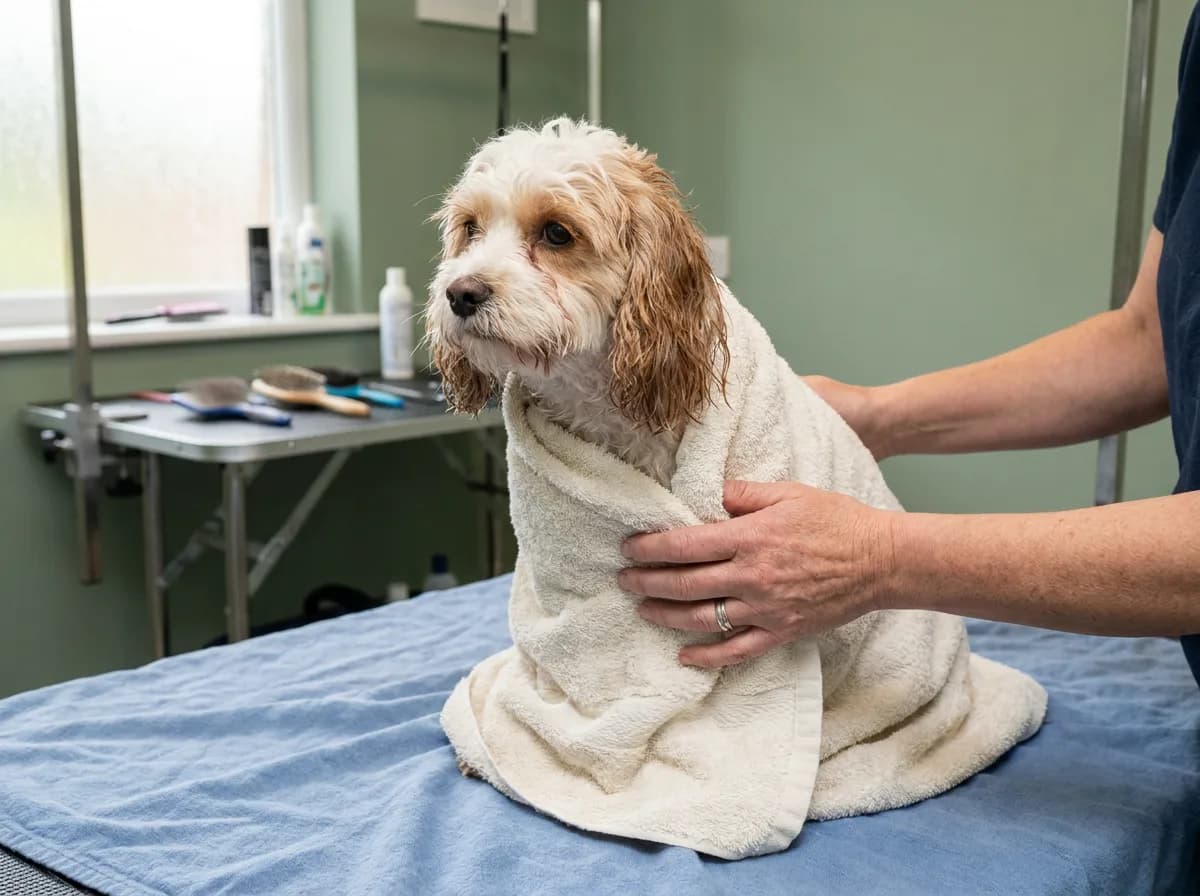
Have towels and the necessary supplies within reach, use a nonslip surface and keep handling calm. Ask a groomer about tight tangles before bathing rather than assuming water will make them easy to remove. Avoid getting shampoo in the eyes or introducing water into the ears.
Rinse thoroughly and dry the coat in a way the dog tolerates. Check that dense areas and places under equipment are not left damp. Do not leave the dog unattended with heated drying equipment. The RSPCA's groomer-selection guidance specifically raises concerns about temperature control and grooming equipment; ask a salon how it monitors the dog during drying.
Face and eye-area cleanup
If there is redness, squinting, pain, a sudden discharge change or repeated staining with discomfort, ask your veterinarian rather than repeatedly applying cosmetic products. The appearance of tear stains alone does not establish their cause. Keep facial hair maintenance and medical concerns as separate decisions.
Ears, nails and teeth
WebVet's guide to brushing a dog's teeth explains how to build cooperation and introduce the routine gradually. Ask your veterinarian to assess pain or disease before attempting home care.
Ask a groomer or veterinary professional to show you safe nail and ear care for your dog. Do not insert tools deeply into ears or assume every dog needs the same cleaning schedule. Pain, odor or repeated ear trouble needs assessment, and a grooming appointment is not a diagnosis.
The RSPCA's dental guidance supports making toothbrushing part of a regular care routine. The useful habit is gradual, comfortable handling and an appropriate technique, not buying a tool and expecting it to solve every dental problem.
Planning a Professional Grooming Visit
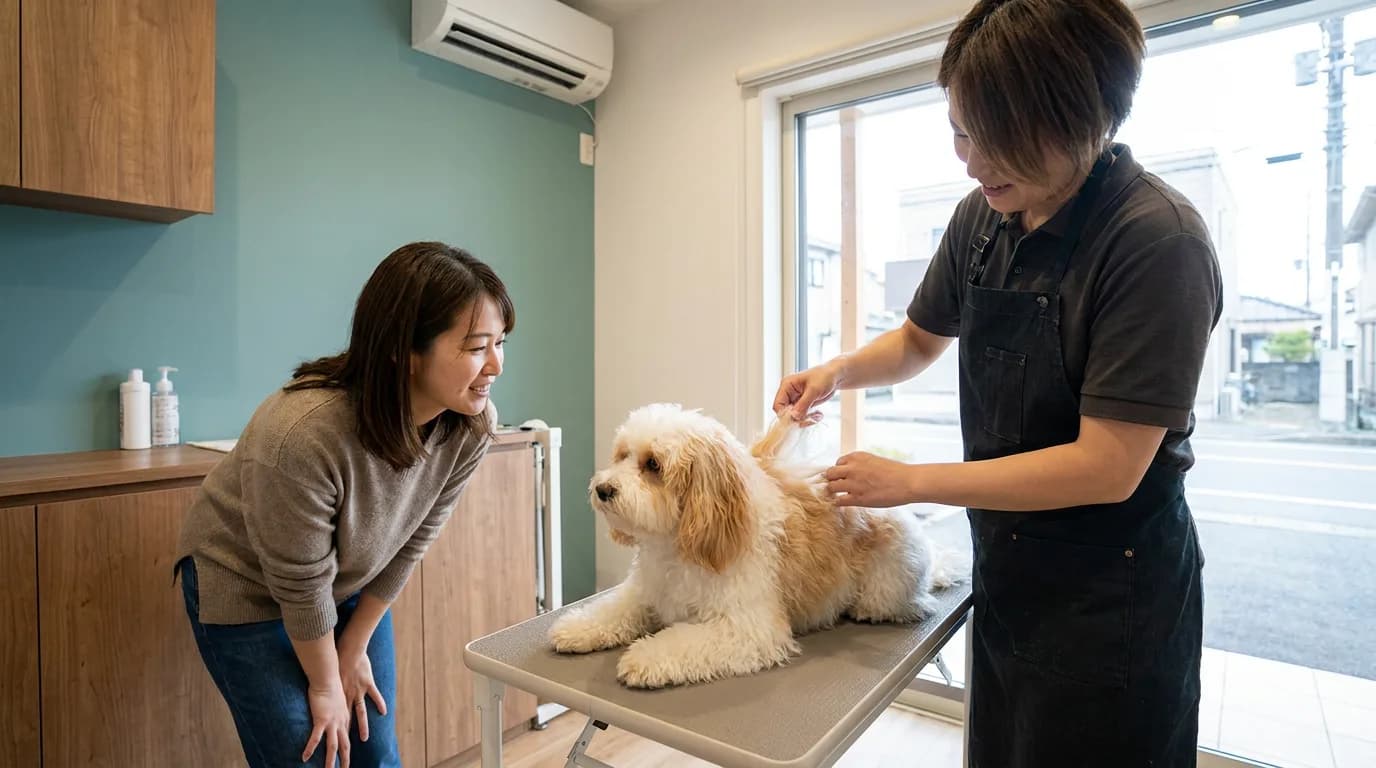
A good grooming plan includes the appointment and the work between appointments. Tell the groomer your dog's age, health concerns, previous experiences and any sensitive areas. Bring a reference photo, then discuss what is achievable with the current coat rather than expecting an identical result on a different dog.

Before booking, ask about:
- Experience with similar coat textures and dogs new to grooming.
- How the dog is supervised during bathing and drying.
- What happens if the dog becomes frightened or uncomfortable.
- Which services are included in the quote and which cost extra.
- How matting, coat condition or additional handling time affects the plan.
- What home maintenance and return interval the finished style needs.
The RSPCA's guidance on choosing a groomer is a useful starting point for evaluating handling and equipment questions. Ask practical questions about the service rather than treating a social-media photo or a qualification label as a complete assessment of how your dog will be cared for.
Set the next appointment
Separate home coat checks from professional appointments. A longer or tangle-prone coat may need frequent, sometimes daily, home attention. A shorter practical cut can reduce the work, but does not eliminate it. Agree on the professional interval based on the coat's condition when the dog returns, not a universal breed calendar.
The Bichon parent's commonly cited four-to-six-week trim interval offers a starting discussion, not a fixed rule for every Cavachon. If the coat repeatedly becomes tight or uncomfortable before the next appointment, shorten the interval, change the haircut or improve the home routine with professional help. Do not wait for a planned date when there is already a welfare concern.
What will grooming cost?
Obtain a local quote for the actual service and coat condition. Location, time required, haircut, matting and the dog's handling needs can affect the price. Ask what is included rather than comparing one salon's full groom with another's bath-only price. The worked example in our Cavachon ownership-cost guide shows how to include recurring grooming in a yearly budget. Its per-visit figure is a hypothetical planning input, not a surveyed salon average; replace it with your own quote.
Budget for an achievable routine. A longer style can require both more home work and professional maintenance. If cost or time makes that difficult, discuss a comfortable lower-maintenance cut. A suitable brush and routine shampoo can support home care, but they do not replace a professional service the dog needs.
Care Beyond the Coat
Coat comfort is part of a larger daily routine that includes exercise, rest, training, nutrition and companionship. A dog that struggles with grooming may benefit from shorter positive handling sessions, an adjusted environment or professional support. Sudden discomfort needs veterinary attention rather than an assumption that the dog dislikes all grooming.
Our Cavachon breed guide covers household fit and daily care. Choose the grooming routine that keeps your individual dog comfortable and that you can sustain consistently; a photograph should help communicate the goal, not override the dog's needs.
Frequently Asked Questions
Home checks and professional visits depend on coat length, texture and condition. Discuss a schedule with your groomer; longer or tangle-prone coats may need frequent home attention. The Bichon parent's common four-to-six-week trim guidance is context, not a universal Cavachon rule.
Bring a reference photo and discuss the body length, face shape, ears and maintenance separately. Ask the groomer to describe the intended length and home-care needs, because the nickname does not mean the same haircut in every salon.
Do not use scissors close to skin hidden by a tight mat. There is a risk of skin injury. Ask a professional groomer for help, or a veterinarian when there is pain, irritation or another health concern.
No. Friction areas behind ears, under equipment and around the legs still need regular checks and gentle combing where appropriate. A shorter coat can make maintenance easier without eliminating it.
No. Pet allergies involve allergen proteins in sources including dander, saliva and urine. Brushing, bathing and clipping cannot guarantee that a dog will be suitable for a person with allergies.

Coreen Saito is a pet writer and longtime shelter volunteer with more than a decade in animal rescue. She covers cat behavior, breed care, and the small, ordinary science of sharing a life with companion animals, with a particular focus on honest takes about the products and decisions that actually matter. At home in Arizona, she's outranked by Mac (a dog with the loudest opinion in the house), Rebel (a cat who governs by quiet authority), and Meri (an orange tabby who runs the late shift and the laundry basket). She writes about all three, plus the rescues that keep coming through her life, at LifeWithMinty.com.
Sign up for expert-backed reviews and safety alerts all in one place.