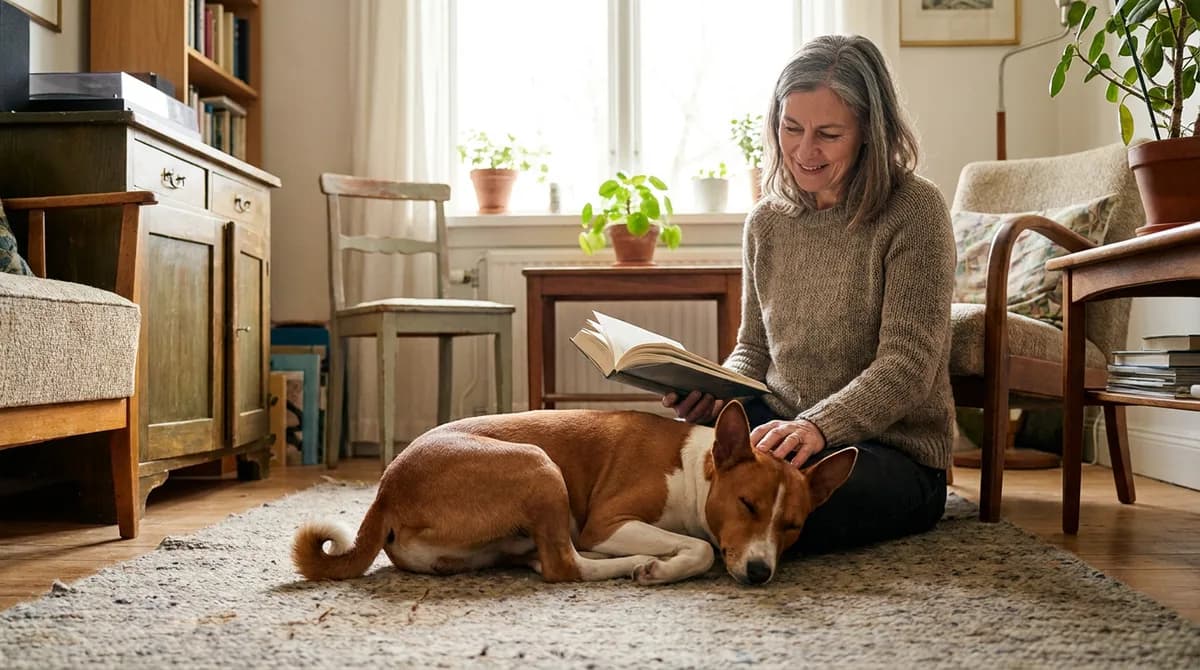
Bloodhound Temperament and Training: Scent Work, Recall and Family Life
Understand Bloodhound temperament and build reward-based training for scent drive, recall, leash skills, howling, alone time, family routines and safety.
Petful is reader supported. As an affiliate of platforms like Amazon and Chewy, we may earn a commission when you buy through links on this page. There is no extra cost to you.
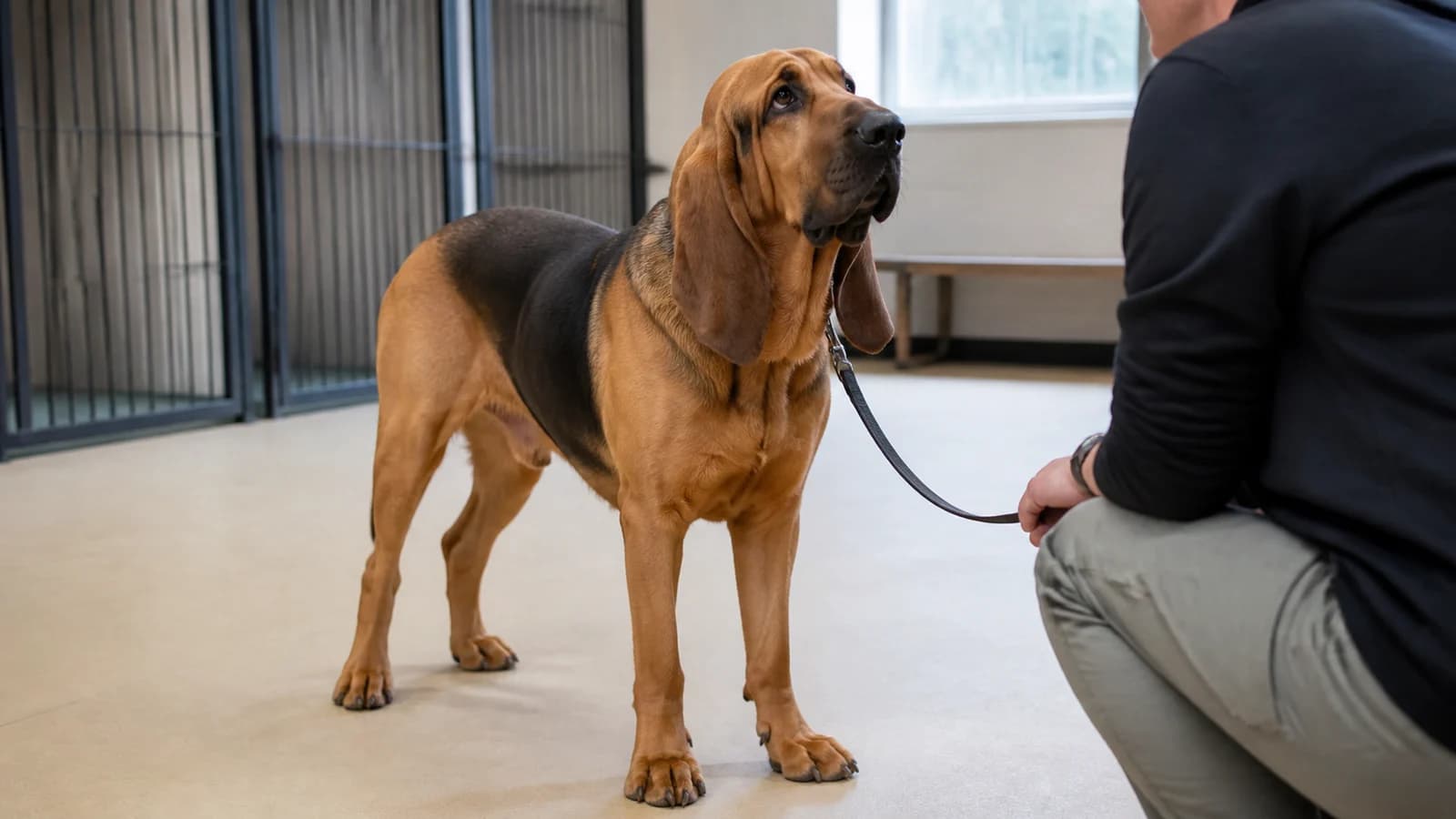
Bloodhound temperament combines social affection with a powerful scent-driven working history. Effective Bloodhound training does not try to erase that nose. It builds reward value, safe management, recall habits, leash skills and predictable family routines around what the individual dog actually finds reinforcing.
The American Bloodhound Club’s owner-reality guidance and AVSAB position statements frame a humane plan: respect scent-hound purpose, reinforce useful behavior and manage risk while the skill develops.

Sign up for expert-backed reviews and safety alerts all in one place.
Bloodhound temperament at a glance
Bloodhound personality is often described as friendly, patient and determined, but breed language is not a guarantee. Genetics, early experience, pain, sleep, environment and learning history shape the individual. Observe how the dog approaches, responds to handling, copes with frustration and recovers after excitement before deciding what “typical” means in that home.
- 1Scent is a powerful reward, so train with the nose instead of fighting it
- 2Recall practice still needs fences, long lines and current identification
- 3Behavior plans should reflect triggers, recovery, health and the individual dog’s learning history
Before changing the training plan, write down these answers:
- What consequence is reinforcing the behavior now?
- Can the skill be practiced safely at a lower distraction level?
- Which reward competes successfully with the current scent or activity?
- Is pain, fear or separation distress a reason to involve a veterinarian or behavior professional?
Build a training plan from the dog’s observed triggers, rewards and recovery rather than assuming every Bloodhound behaves alike. Short notes on context and response make it easier to see progress and adjust difficulty.
Breed tendencies can explain why scent competes with attention, but the individual dog sets the pace. Foster notes, training history and medical records add context; sudden change or safety concerns need qualified assessment.
Bloodhound temperament is best recorded as verbs: approaches, freezes, follows, disengages, recovers or rests. Those observations can be compared across settings and weeks. Labels such as stubborn, dominant or perfect hide the conditions under which behavior occurs and give a trainer less useful information.

Petful may earn a commission when you click through to Chewy, at no extra cost to you.
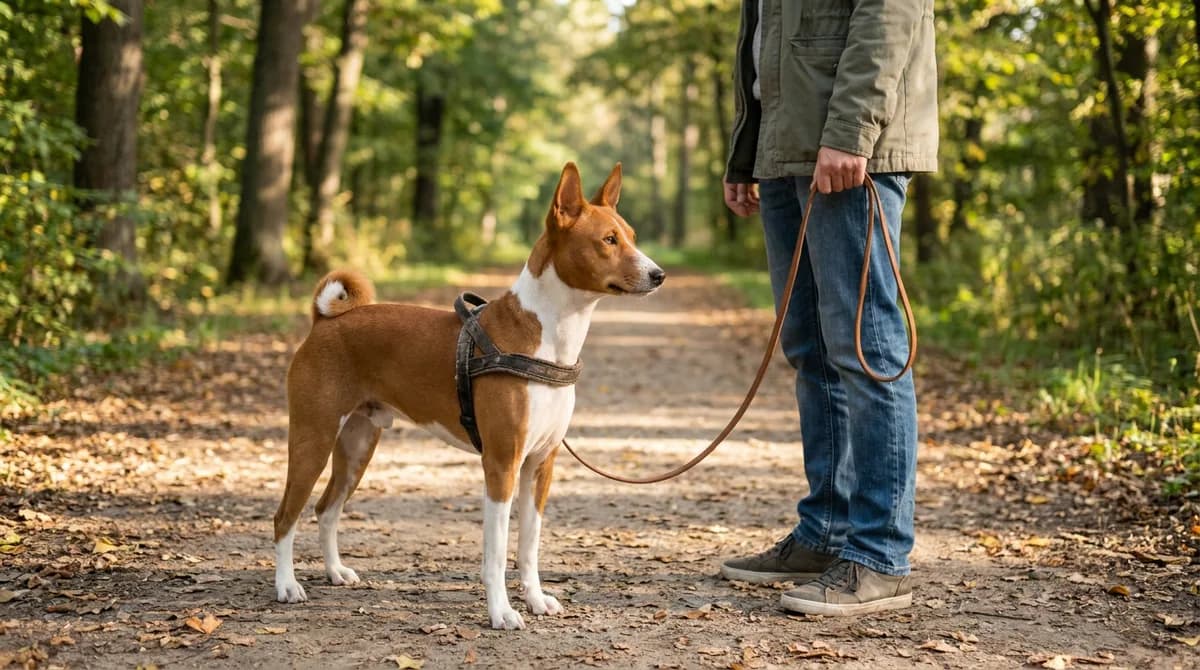
Early loose-leash lessons are easier when equipment fits without restricting movement. The PetSafe Easy Walk Dog Harness, Red/Black, Medium/Large may offer front-attachment management for some adult Bloodhounds after measurement. The PetSafe Easy Walk harness does not resolve fear, pulling or scent pursuit on its own, so pair it with rewarded check-ins and gradual distraction work.
Why scent changes the training plan
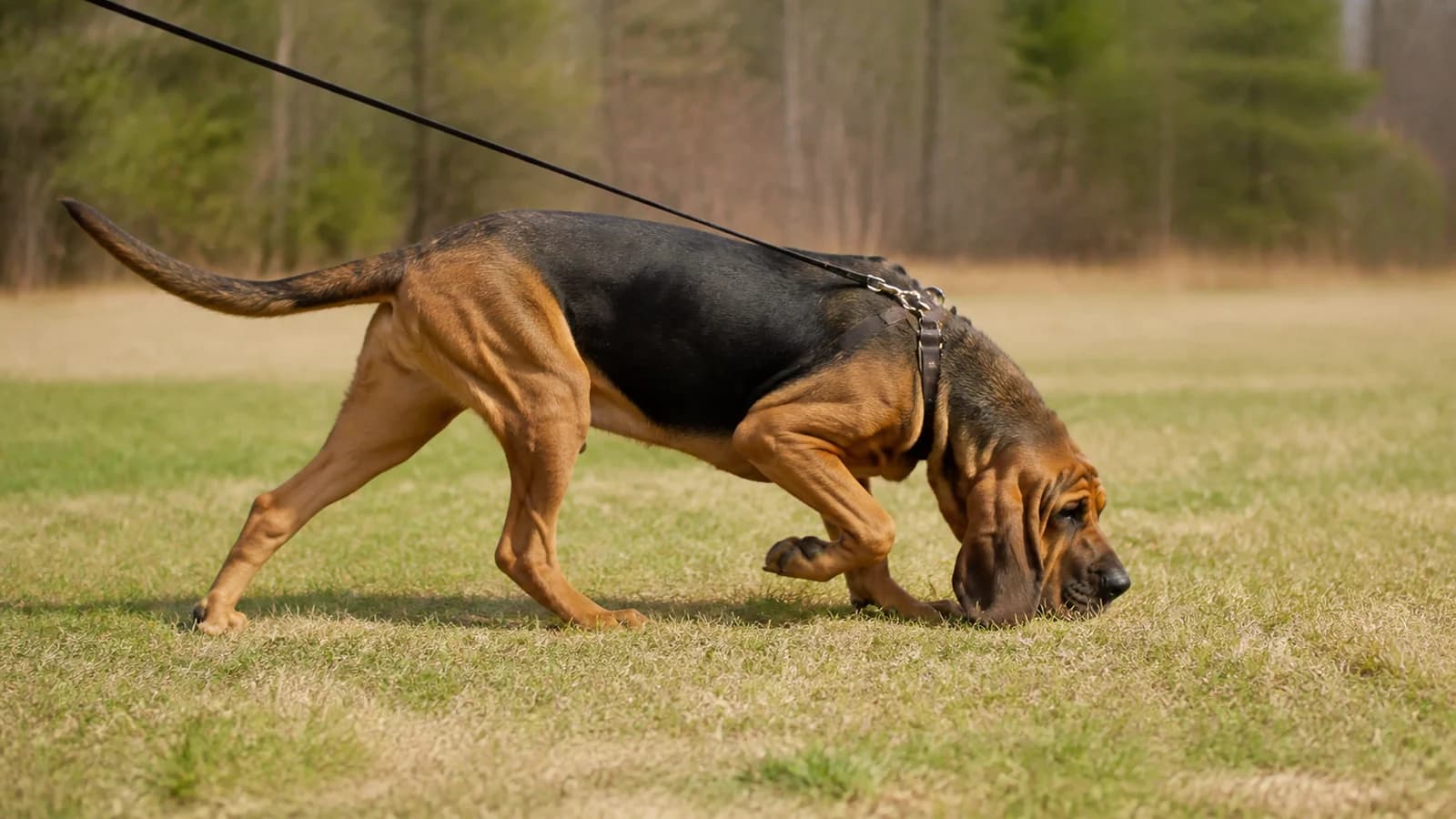
The Bloodhound sense of smell makes odor a powerful environmental reward. Bloodhound scent drive can pull attention away from a handler even when the dog knows a cue indoors. That is not stubbornness in a moral sense. It is a predictable competition between reinforcers, so change distance, location and reward value rather than escalating force.
Begin practice in low-distraction spaces and move gradually to fenced areas or a safely handled long line. Let sniffing become part of reinforcement: check in, earn permission to investigate, then return. The plan should prevent rehearsing unsafe pursuit while still giving the dog meaningful scent access.
Build the odor itself into reinforcement. After a brief check-in or a few loose-leash steps, release the dog to sniff a safe patch. That exchange makes the handler relevant without pretending scent has disappeared. Track which distance and environment still permit an easy response before adding a harder trail.
Reward-based training fundamentals
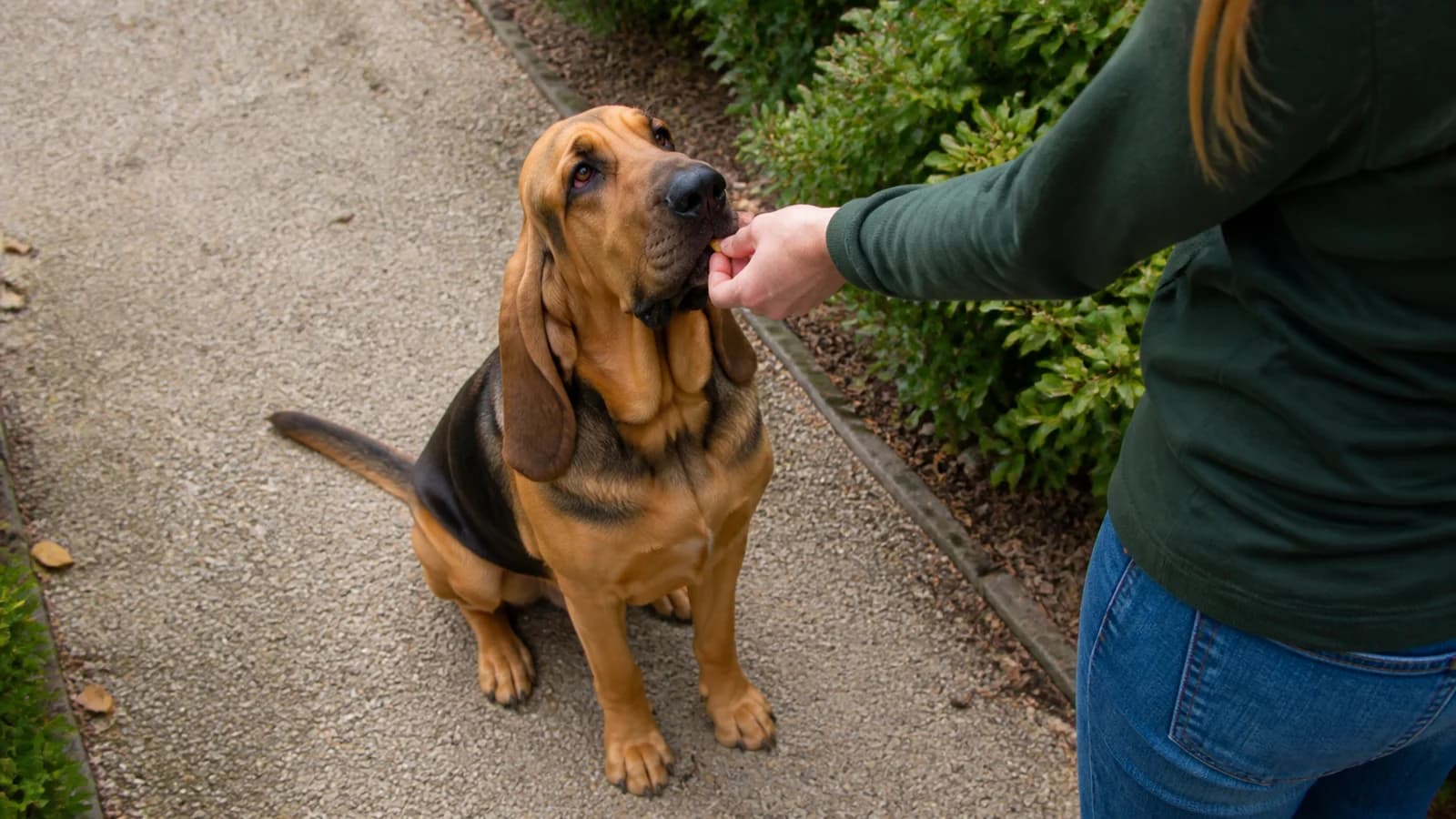
Positive reinforcement Bloodhound sessions should be short, clear and repeatable. Define one observable behavior, mark it consistently and deliver something the dog values. Food, movement, sniffing and access to a favorite activity can all function as rewards. Stop before fatigue or frustration turns practice into conflict.
The AVSAB position statements explain why humane, evidence-based training matters. WebVet’s dog training schedule can help households divide goals across the week. Keep a simple log of location, distraction and success so difficulty increases from evidence rather than guesswork.
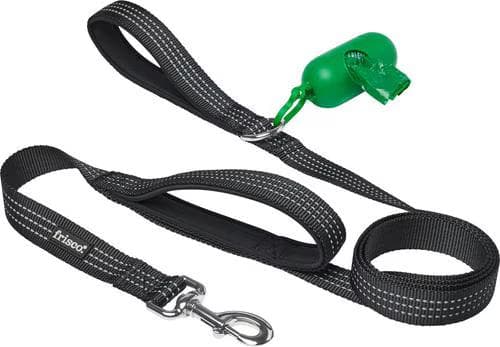
Petful may earn a commission when you click through to Chewy, at no extra cost to you.
Busy crossings sometimes require a shorter handling point than an open sniff walk. The Frisco Traffic Leash with Dual Padded Handles & Poop Bag Dispenser, Black, 6-ft long, 1 count provides two padded handles, while the Frisco traffic leash still depends on safe technique and suitable fitted equipment. Use close control briefly, create distance from triggers and avoid wrapping any leash around a hand.
Scent work for Bloodhounds
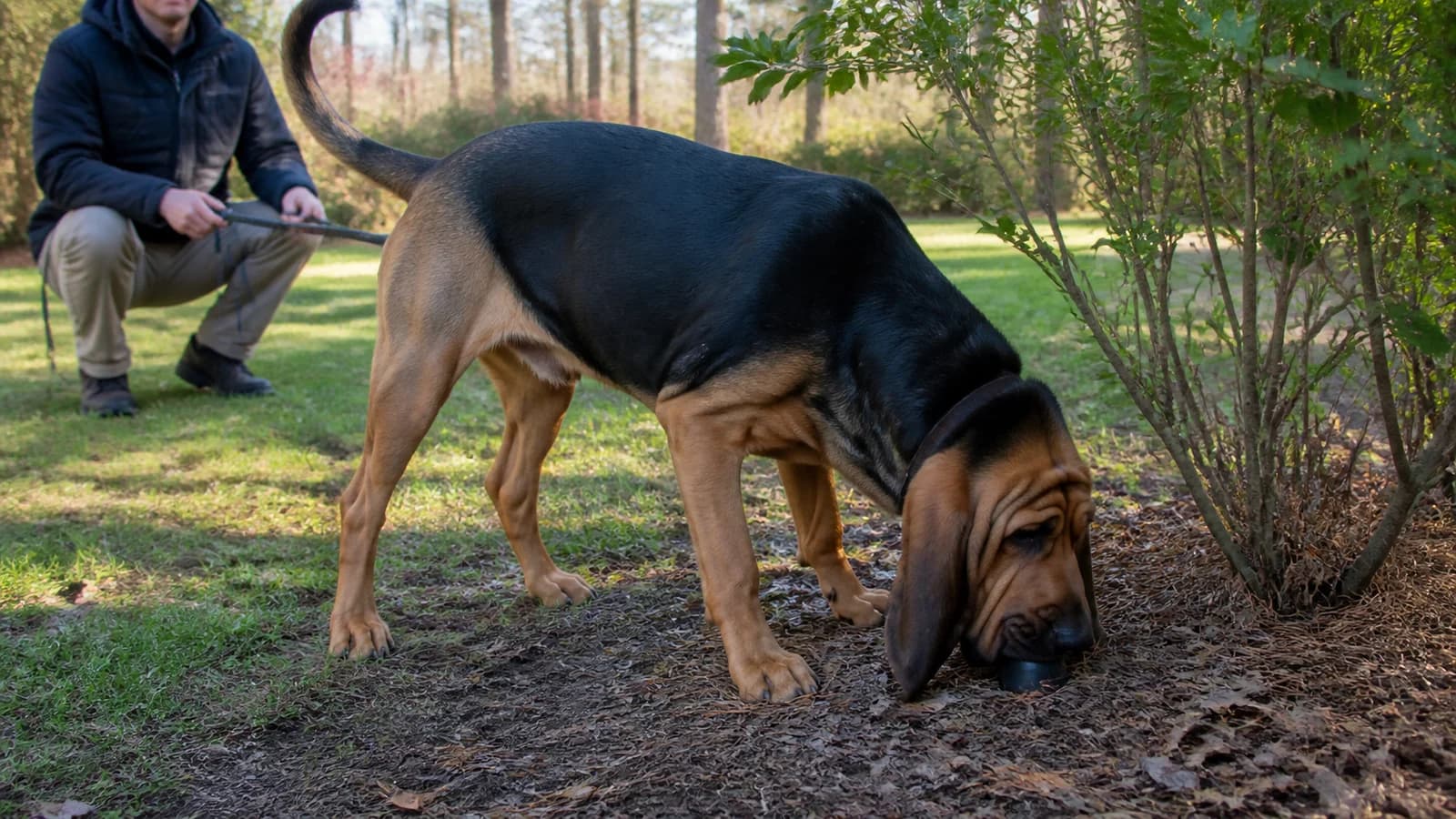
Bloodhound scent work can range from scattering a measured meal in grass to formal tracking with qualified instruction. Beginner games should be easy enough that the dog understands the task. Use safe terrain, check weather, inspect paws afterward and keep sessions brief enough that the dog can recover and rest.
Bloodhound tracking training is not the same as turning a pet loose to follow any trail. Establish a start ritual, use suitable equipment, know the search area and have a plan for wildlife, roads and other dogs. Formal groups can teach handlers how wind, contamination and line handling affect performance.
End searches with an unmistakable finish routine: reward, water, a short decompression walk and rest. A dog that remains frantic, overheated or unable to settle is giving feedback about difficulty or duration. Adjust the next problem rather than assuming more excitement always means better enrichment.
Recall, leash skills and secure spaces
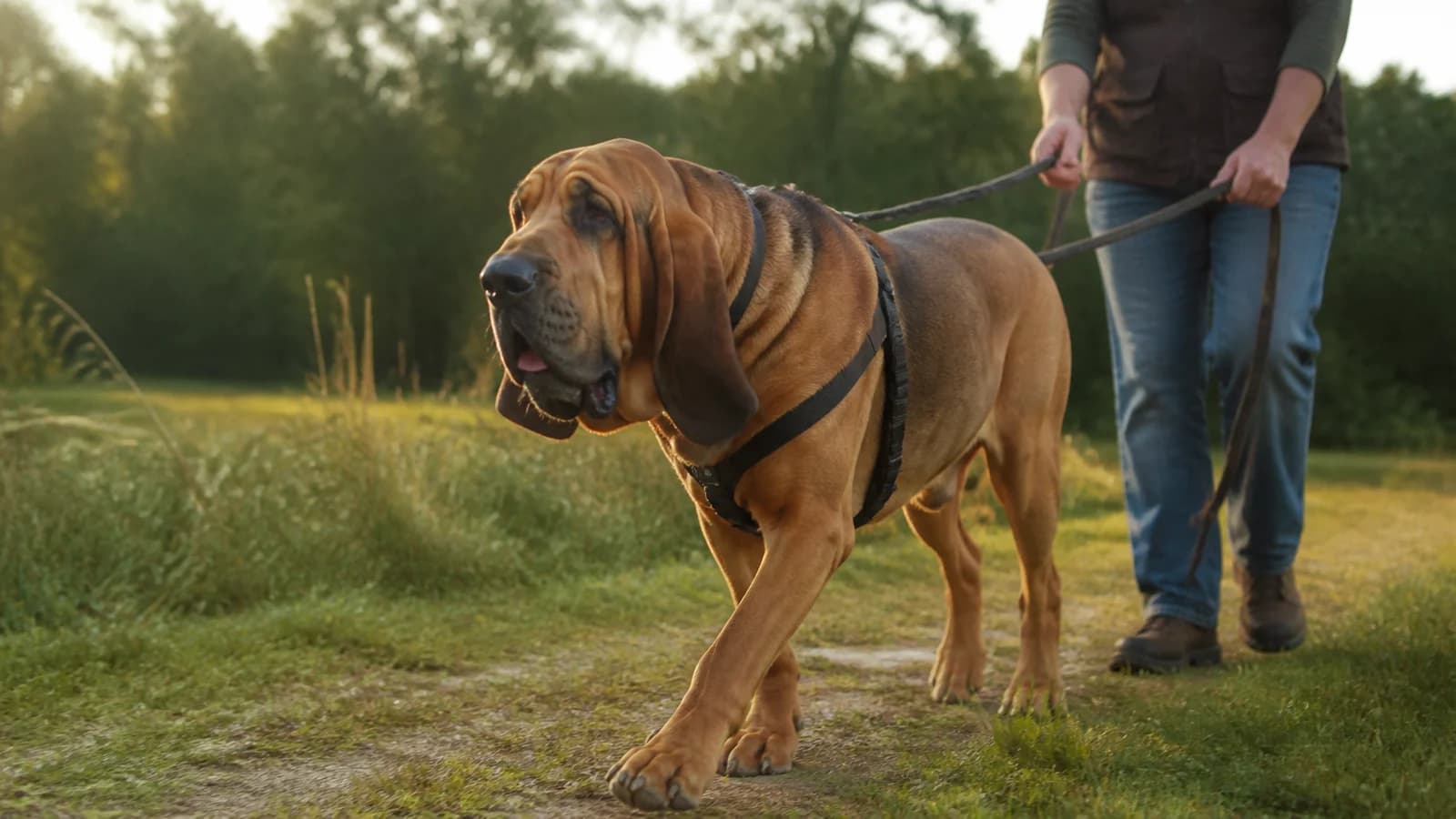
Bloodhound recall should be treated as a practiced skill plus a safety system, not as permission to test the dog near traffic. Use a secure fence or long line while building response around scent. Reward generously, avoid calling only to end fun and occasionally release the dog back to sniff after a successful return.
Bloodhound leash training starts with equipment that fits the dog and allows comfortable movement. Reinforce a loose line and check-ins before adding busy environments. Secure gates, updated identification and a vehicle restraint cover the moments when training is not enough. No harness makes an unsecured area safe by itself.

Petful may earn a commission when you click through to Chewy, at no extra cost to you.
Predictable food delivery can support routine, but it should not become the only enrichment or interaction. The Petlibro Granary WIFI Automatic Cat & Dog Feeder with Camera & 3 Pet Food Desiccant Bags, White, 5-L can portion compatible kibble on selected days. Keep using the Petlibro feeder as one household tool while preserving hand-delivered training rewards, social contact and daily checks of appetite and behavior.
Howling, digging and household management
Bloodhound barking and Bloodhound howling can occur with alerting, excitement, isolation, frustration or learned attention. Record what happens before and after the sound. Meeting exercise, toilet and social needs may help, but persistent distress needs a different plan from occasional communication.
Digging and counter-surfing are managed by preventing access, storing food securely and teaching alternatives. Provide legal sniffing and foraging outlets, then reinforce settling. Punishing after the event cannot teach what to do instead. Sudden vocalization or restlessness also warrants a health check when pain or illness could be involved.
Bloodhound barking and Bloodhound howling should be logged by trigger and consequence. Note whether the sound begins at a window, during separation, around food or after activity. That pattern separates alerting from distress or learned attention and helps the household reinforce a specific alternative instead of shouting over the dog.
Alone time and predictable routines
Bloodhound alone time should be built below the individual dog’s stress threshold. Begin with brief, ordinary departures after needs are met, return before panic and increase duration gradually. A camera may help observe behavior, but it does not treat distress. Puppies need frequent toilet, feeding and social care regardless of training progress.
A Bloodhound routine can include predictable meals, walks, scent games, rest and short skill practice without making the dog unable to cope with small changes. Persistent vocalization, escape attempts, drooling, destruction near exits or refusal to eat during absence merits veterinary and qualified behavior support.

Petful may earn a commission when you click through to Chewy, at no extra cost to you.
A scent-driven dog can reach an open exterior door faster than a recall cue. The Frisco Steel 8-Panel Configurable Dog Gate and Playpen, 30-in, Black can create a second household boundary when anchored securely. Build stationing and door manners alongside the Frisco configurable gate, and inspect the full setup regularly because management only works while every panel and latch holds.
Children, dogs and other pets
A Bloodhound family dog still needs adult supervision around children. Protect food and sleep, give the dog an exit and stop interactions when either child or dog becomes overexcited. Size matters because even friendly movement can knock over a small child. Teach children not to climb, hug tightly or disturb a resting dog.
Bloodhound other-pet compatibility varies. Use gradual introductions, parallel movement, barriers and separate resources. Scent interest should not be assumed harmless around small animals. Read the whole body and consult WebVet’s dog body language guide if you need a refresher on context and recovery.
Use physical separation before anyone becomes tired or crowded. Gates, closed doors and individual rest areas let animals disengage and keep children from approaching food or sleep. Repeated calm parallel experiences are more informative than placing everyone together once and hoping friendly breed language will manage the interaction.
When to get professional help
Seek a qualified Bloodhound trainer when handling strength, recall, leash safety or household behavior exceeds the current plan. Ask about credentials, methods, goals and how progress will be measured. Fear, aggression, separation distress or sudden behavior change should also involve a veterinarian because pain and disease can alter behavior.
After a bite, escalating threat or serious fear response, prevent another rehearsal, separate the dog from triggers and document what happened. Arrange veterinary and qualified behavior help while management is in place.
Choose help that matches the risk. A veterinarian assesses pain and medical change; a qualified trainer may teach routine skills; a credentialed behavior professional addresses fear, aggression or complex cases. Bring videos only when safely captured, plus a trigger log and medical history, so the consultation begins with evidence.
Related Bloodhound decision guides
These companion guides cover sourcing, health, costs, appearance and ancestry while this page stays focused on behavior:
Bloodhound puppy sourcing checklist
Before training Bloodhound puppies, use the sourcing checklist to assess Bloodhound breeders, puppies for sale, adoption records, socialization and placement terms.
Bloodhound at a glance
For the adult Bloodhound dog, size, how long Bloodhounds live, whether Bloodhounds are good family dogs and how much Bloodhounds shed, see the complete breed guide.
What a Bloodhound mix label can and cannot tell you
When a Bloodhound mix or Bloodhound Lab mix has uncertain ancestry, the mixed-dog guide separates label-based guesses from observed behavior.
Bloodhound colors at a glance
Recognize Bloodhound colors such as a red Bloodhound, black and tan Bloodhound or liver and tan Bloodhound in the coat guide; pigment does not predict temperament.
Bloodhound lifespan at a glance
For Bloodhound lifespan, life expectancy and health problems, read the vet-written health guide and seek care for sudden behavior change.
Bloodhound price at a glance
Budget Bloodhound price and long-term Bloodhound cost for fences, equipment, classes and professional help with the price guide.
Sources and related Bloodhound guides
The following behavior authorities and sibling guides complete the training evidence:
Bloodhound FAQs
Bloodhound training becomes more reliable when the reward competes with scent and the environment is arranged for success. Define one observable response, practice below the dog’s distraction threshold and increase only one variable at a time. A fence or long line remains part of recall safety. Track performance by location rather than deciding the breed is either easy or impossible to teach.
An unfenced Bloodhound should not be treated as reliably safe merely because recall worked in a quiet place. Odor, wildlife or distance can change the problem instantly. Practice behind a secure fence or on a safely handled long line, reinforce voluntary check-ins and keep identification current. Management remains appropriate even as training improves.
Bloodhounds may bark or howl in response to alerting, excitement, frustration, isolation or learned attention, but frequency varies. Record what happens before and after the sound, meet exercise and social needs, and reinforce quieter alternatives. Persistent vocalization during absence may indicate distress rather than disobedience. Sudden or painful-sounding change also warrants veterinary assessment.
A simple Bloodhound scent game is a short food or toy search in a safe room or fenced yard. Let the dog watch you place the first target, release with a consistent cue and make success easy. Increase distance or hiding complexity gradually. Use measured food, inspect the area for hazards and stop while the dog can still settle comfortably afterward.
Some Bloodhounds live comfortably with children and compatible dogs, but successful sharing depends on the individuals and the home’s management. Use gradual introductions, protect sleep and food, provide separate resources and let either dog disengage. Adults must supervise children. Repeated calm behavior is stronger evidence than one greeting or a breed description.
Use brief sessions, varied rewards and safe sniffing access instead of repeating cues until the dog disengages. Teach one visible response, practice where it is achievable, then release to investigate as reinforcement. Change only distance, duration or distraction at a time, record the result and stop while the dog can still settle.
A Bloodhound may live well with a family when adults manage greetings, food, sleep, doors and leash handling while reinforcing calm behavior. Do not assume friendliness from appearance or punish warning signals. Watch the whole body and recovery, give the dog space to leave, and use controlled introductions. Any history of threats or bites needs a qualified risk assessment and active safety management.
A Bloodhound is not automatically aggressive; aggression describes behavior in context, not a fixed breed personality. Record the trigger, distance, body language and recovery without staging another incident. Use barriers and distance to prevent rehearsal, then involve a veterinarian because pain can alter behavior. A credentialed behavior professional can assess risk and design humane training. Do not rely on dominance methods or promises of a quick cure.

Coreen Saito is a pet writer and longtime shelter volunteer with more than a decade in animal rescue. She covers cat behavior, breed care, and the small, ordinary science of sharing a life with companion animals, with a particular focus on honest takes about the products and decisions that actually matter. At home in Arizona, she's outranked by Mac (a dog with the loudest opinion in the house), Rebel (a cat who governs by quiet authority), and Meri (an orange tabby who runs the late shift and the laundry basket). She writes about all three, plus the rescues that keep coming through her life, at LifeWithMinty.com.
Sign up for expert-backed reviews and safety alerts all in one place.