Bloodhound Price: Puppy, First-Year and Lifetime Costs
Plan the real cost of a Bloodhound with current puppy and adoption ranges, first-year and annual scenarios, a lifetime estimate, local-price caveats and scam checks.

Petful is reader supported. As an affiliate of platforms like Amazon and Chewy, we may earn a commission when you buy through links on this page. There is no extra cost to you.
Bloodhound price is more than a puppy listing or adoption fee. A realistic Bloodhound cost plan separates the acquisition decision from first-year setup, recurring food and preventive care, training, large-dog equipment and an emergency reserve, using local quotes instead of pretending one national number fits every household.
An August 31, 2026 U.S. research snapshot found breeder-puppy estimates spanning roughly $600–$2,000 across Adopt a Pet and Good Dog, adoption fees around $50–$250 through Adopt a Pet listings, a $3,000+ first-year baseline in the captured SpiritDog cost guide, and $1,550–$2,700 in ordinary annual costs after year one from Wooffy. These are dated planning anchors, not current local quotes; verify location, availability, included services and written terms.

Sign up for expert-backed reviews and safety alerts all in one place.
Bloodhound price at a glance
Use a three-column budget: upfront, recurring and contingency. Upfront costs include the adoption or purchase transaction and equipment. Recurring costs include food, routine care, preventives, licensing, training and replacement supplies. Contingency money covers urgent care, damaged equipment or a temporary need for professional help.
- 1Separate acquisition, first-year setup, recurring care and contingency money
- 2Use current local quotes and written records instead of viral averages
- 3A high or low purchase price cannot compensate for missing identity, health or contract evidence
| Budget stage | Research-backed planning figure | What to verify locally |
|---|---|---|
| Adoption fee | $50–$250 | Confirm included vaccines, sterilization, microchip and transport. |
| Breeder puppy | $600–$2,000 | Request a current written price, screening, contract and travel terms. |
| First year | $3,000+ | Replace this snapshot baseline with local setup, food, training and veterinary quotes. |
| Each later year | $1,550–$2,700 | Treat this as an ordinary-care scenario and keep major emergencies outside the range. |
| Illustrative 10–12-year base scenario | $17,000–$34,700 | Derived from the ranges above; excludes major emergencies and is not a quote or ceiling. |
The lifetime scenario combines a $50–$2,000 acquisition cost, a $3,000 first-year baseline and nine to 11 later years at $1,550–$2,700. That arithmetic yields about $17,000–$34,700 before major emergencies. It is not a forecast, quote or spending ceiling, so replace every line with current local information. Recalculate the scenario after a move, diagnosis or major care change.
Build the first worksheet around these four budget prompts:
- Which costs occur before the dog comes home?
- What will repeat monthly or annually at local prices?
- How will the household fund urgent large-dog veterinary care?
- Which quoted items are documented and which remain assumptions?
Start with published ranges only as planning anchors. Replace them with current local quotes, written fees and the dog’s actual food, equipment and medical needs before deciding whether the household can afford the commitment.
Keep confirmed costs, estimates and contingency money in separate columns. Save invoices and written quotes, note the date and location for each figure, and revise the worksheet when the dog’s size, diet, health or care arrangements change.
Use the phrase Bloodhound cost consistently on the worksheet so every household member is discussing the same scope. One person may mean only the purchase fee while another includes a decade of care. Label the time period and assumptions beside each figure before comparing scenarios.

Petful may earn a commission when you click through to Chewy, at no extra cost to you.
When estimating equipment costs, the Petlibro Granary WIFI Automatic Cat & Dog Feeder with Camera & 3 Pet Food Desiccant Bags, White, 5-L is an optional convenience rather than a required Bloodhound expense. Price the Petlibro automatic feeder only if measured dry meals fit the dog’s diet and someone will clean and verify it daily. Budgeting should never assume automation replaces appetite monitoring or care.
Purchase price versus adoption fees

Bloodhound puppies for sale may carry a higher acquisition price than an adult placed through Bloodhound adoption, but the payment alone does not establish value or ethics. Compare screening, veterinary care, identification, contract terms, transport, return support and what supplies are included. A low fee can still accompany high immediate medical needs, while a high fee does not guarantee quality.
Ask breeders, rescues and shelters for an itemized explanation and written terms. Do not treat a donation or fee as a complete first-year budget. The Bloodhound puppy guide explains how to verify the organization, records and dog before sending a deposit.
Compare timing as well as totals. An adoption may include current vaccines or sterilization, while a breeder contract may assign those services to the buyer. Neither route is automatically cheaper once transport, follow-up care and missing equipment are included. Put every included item and remaining obligation on the same worksheet.
What changes the upfront price?
Bloodhound breeder price can vary with region, demand, verifiable parent screening, veterinary work, transportation and the breeder’s actual puppy-raising program. Color marketing, “rare” labels and inflated size claims do not prove better health or temperament. Ask which evidence supports the price and which parts are simply market positioning.
Bloodhound puppy price factors also include travel and timing. Add a pre-purchase veterinary visit if offered, safe transportation, temporary lodging when relevant and the cost of replacing equipment that does not fit. Never pay an unverified seller extra shipping or insurance charges merely because a deadline is approaching.

Petful may earn a commission when you click through to Chewy, at no extra cost to you.
Large-dog containment can be a meaningful first-year purchase. Measure before budgeting for the Frisco Heavy Duty Fold & Carry Single Door Collapsible Wire Dog Crate, X-Large, including room to turn and stretch. The Frisco X-large crate may last through adulthood when used with an appropriate divider, but transport, toilet access and gradual crate training still belong in the plan.
First-year Bloodhound costs
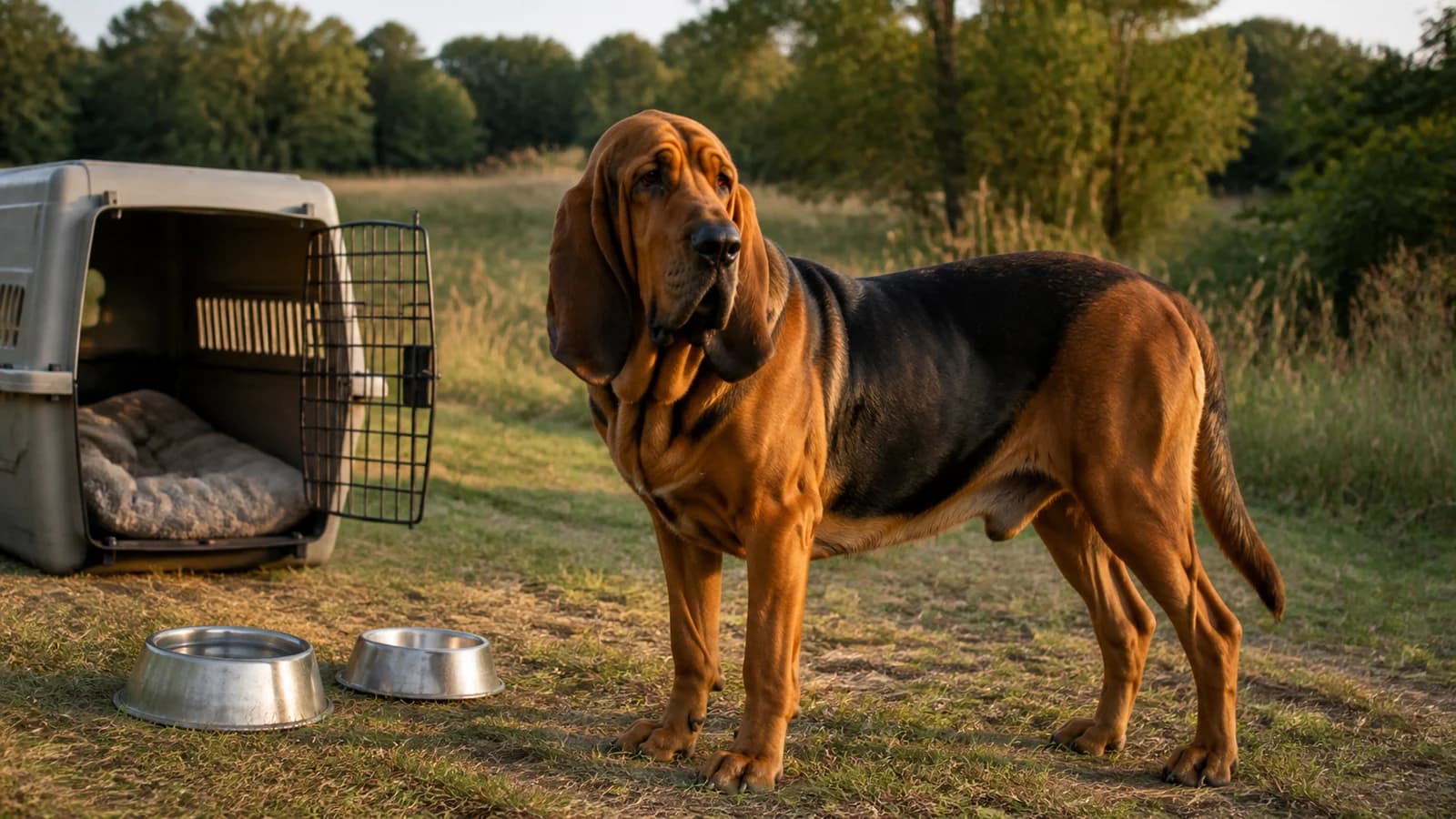
Bloodhound first year cost is usually front-loaded. A growing dog may outgrow collars, harnesses, bedding and crate dividers. Veterinary visits, vaccines, parasite prevention, licensing, identification, training classes and household barriers can arrive close together. Put expected dates beside each item so cash flow is as realistic as the total.
Bloodhound supplies should fit an adult-size trajectory without becoming unsafe for the puppy. Prioritize secure containment, washable materials and correct dimensions. Borrowing or buying some durable equipment secondhand can help, but do not use a damaged crate, frayed leash, unstable gate or product that cannot be cleaned.
A useful first-year calendar separates predictable appointments from flexible purchases. Put veterinary due dates, license renewal, class enrollment and food reorders on the timeline first. Then decide which convenience products can wait. This prevents a decorative purchase from consuming money needed for identification, containment or medical care.
Food, equipment and training

Bloodhound food cost depends on body size, life stage, calorie density, health needs and local pricing. Compare cost per day from the actual feeding amount, not package price alone. WebVet’s dog feeding schedule explains why age, routine and individual needs matter more than one universal timetable.
Bloodhound training cost may include a puppy class, private help for recall or leash skills, scent-work instruction and safe transport to practice locations. Training is not only remediation. Early support can make handling a powerful adult easier. Ask about credentials, methods and total session requirements before committing to a package.
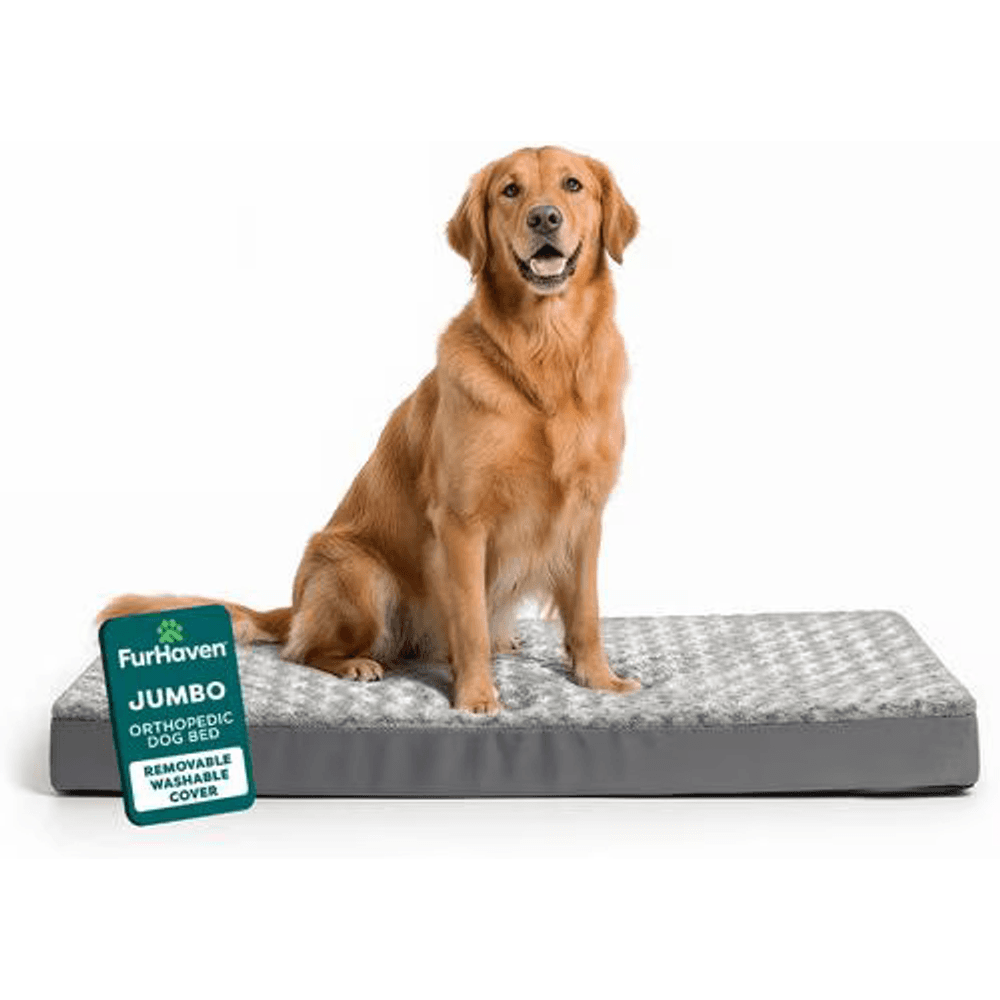
A plush orthopedic foam mattress that cushions aging joints and pressure points, giving a stiff or trembling senior dog warm, supportive rest.
Petful may earn a commission when you click through to Chewy, at no extra cost to you.
Bedding estimates should reflect adult dimensions and replacement frequency. The FurHaven NAP Ultra Plush Orthopedic Deluxe Cat & Dog Bed with Removable Cover, Gray, Jumbo offers one current price point for a jumbo washable bed. Treat the FurHaven bed as a comfort line item, not a medical intervention, and leave room in the budget for veterinary evaluation if mobility changes.
Veterinary, preventive and emergency costs
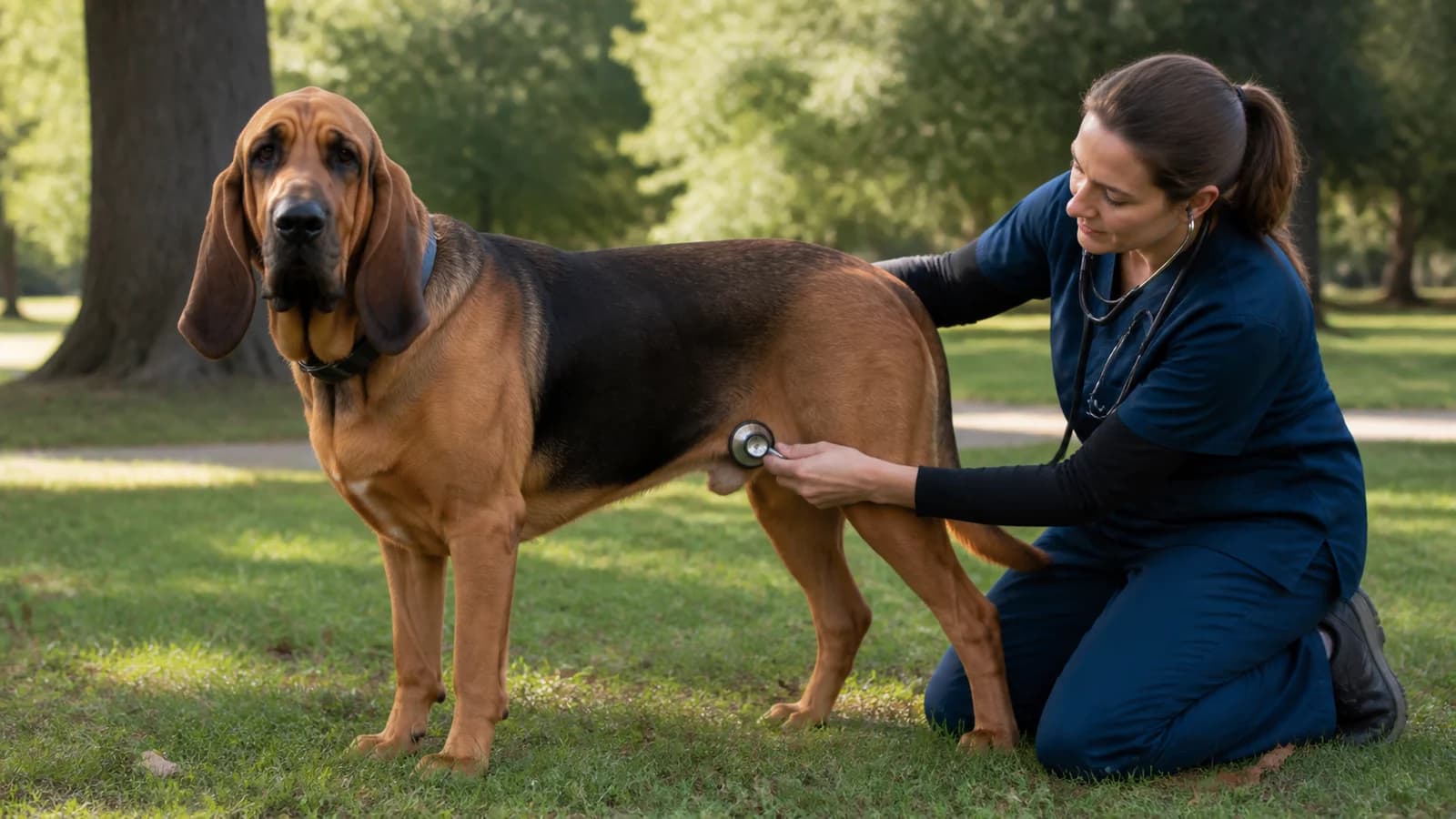
Bloodhound vet cost should include routine examinations, vaccines selected for lifestyle and location, parasite prevention, dental care and care for ears, skin, eyes or mobility when needed. Ask a local clinic for current prices. Online averages can be outdated and may omit diagnostics, medication, follow-up or after-hours fees.
Bloodhound health cost can change quickly in an emergency. A separate reserve, insurance chosen after reading exclusions, or another documented payment plan can reduce delay, but none makes care free. Know the nearest emergency facility and what transportation can safely move a large dog. Suspected bloat or GDV cannot wait for budget shopping.
Ask clinics how estimates are structured before an emergency occurs. Examination, imaging, laboratory work, hospitalization, anesthesia and medication may be quoted separately. Record the hospital address, payment options and a backup transport contact. Preparation does not predict illness, but it reduces decisions that otherwise arrive during a crisis.
Annual and lifetime budget scenarios
A Bloodhound annual cost scenario should use low, expected and high ranges for each category. The low column is not permission to omit care. It reflects verified local prices and fewer unplanned events. The high column can include professional training, boarding, major diagnostics, mobility support or replacing large equipment sooner than expected.
Bloodhound lifetime cost is the sequence of those annual budgets plus changing needs. Puppy setup, healthy adult maintenance and senior care are different phases. Revisit the plan at least yearly and after a diagnosis, move, food change or care-provider change. A budget is useful because it changes with evidence, not because it predicts every bill.

304 food-grade stainless steel pet water fountain, 101 oz. The circulating, filtered water encourages cats to drink more, which supports urinary tract and kidney health.
Petful may earn a commission when you click through to Chewy, at no extra cost to you.
A second water station may be useful in a large home, but it is optional equipment. The Petlibro Stainless Steel Dog & Cat Fountain, 101-oz adds filter and cleaning costs alongside its purchase price. If choosing the Petlibro stainless steel fountain, monitor actual drinking and keep a plain backup bowl rather than assuming the device guarantees hydration.
Price red flags and records
Bloodhound scam patterns include copied photographs, sellers who cannot show the dog appropriately, payment through difficult-to-recover methods and new fees invented after the first transfer. Search the seller’s name and contact details, reverse-search listing photos when possible, and keep all terms in writing.
Before payment, verify the dog, seller or rescue, parent screening where relevant, contract and invoice. A low price does not offset missing records, and a premium price does not prove health, temperament or ethical sourcing.
A genuine invoice should identify the provider, service, date and dog rather than display an unexplained total. Match registry and veterinary records to the animal’s identity, and confirm the contract describes what happens if information proves false. Bloodhound price is never a substitute for traceable evidence.
Related Bloodhound decision guides
Use these companion guides to verify the dog and understand the care behind each budget line:
Bloodhound puppy sourcing checklist
Before budgeting for Bloodhound puppies or Bloodhound puppies for sale, use the sourcing checklist to verify Bloodhound breeders, adoption records, contracts and scam signals.
Bloodhound at a glance
The adult breed guide connects cost with the Bloodhound dog, adult size, how long Bloodhounds live, whether Bloodhounds are good family dogs and how much Bloodhounds shed.
What a Bloodhound mix label can and cannot tell you
For a Bloodhound mix or Bloodhound Lab mix, the ancestry guide helps base equipment and care estimates on the individual dog.
Bloodhound colors at a glance
Before paying for Bloodhound colors marketed as rare, compare a red Bloodhound, black and tan Bloodhound and liver and tan Bloodhound in the coat guide.
Bloodhound lifespan at a glance
Use the health guide to connect Bloodhound lifespan, life expectancy and health problems with realistic reserves.
Bloodhound temperament at a glance
Estimate support after reviewing Bloodhound temperament, sense of smell and training work in the behavior guide.
Sources and related Bloodhound guides
Use the American Bloodhound Club for parent-club context, then use the linked screening, consumer-protection and veterinary sources to validate specific budget inputs.
Bloodhound FAQs
In the August 31, 2026 U.S. research snapshot used for this guide, breeder-puppy estimates spanned roughly $600–$2,000. That is a planning range, not a current quote. Verify the breeder, parent screening, puppy record, contract and exactly what the price includes, then add travel, veterinary review, training and equipment.
In the same snapshot, adoption fees were commonly around $50–$250, compared with roughly $600–$2,000 for a breeder puppy. Adoption may include some veterinary services, but the lower fee does not guarantee a lower first-year total. Compare included care, transport, equipment and known medical needs locally.
The August 2026 snapshot placed ordinary costs after year one around $1,550–$2,700 annually, before major emergencies. Local food, veterinary, licensing, training, boarding and insurance prices can move the total. Build a dated local worksheet and keep emergency funds separate.
A large adult may consume more food than a smaller dog, but bag size does not reveal daily cost. Divide the current package price by the number of days it lasts at the dog’s measured portion. Include treats and any veterinarian-directed diet, then recalculate after growth, activity or health changes rather than relying on a breed average.
Plan for examination, diagnostics, hospitalization, medication and safe transport to an emergency facility, while recognizing that one fund target cannot cover every event. Ask local hospitals about estimate and payment procedures, document any insurance exclusions, and choose a reserve that does not depend on delaying care during suspected GDV or collapse.
No purchase price guarantees health. A higher amount may reflect documented screening, veterinary work or responsible rearing, but those claims still need independent verification. Match parent identities to results, review the puppy record and contract, and budget for future care. Walk away when price or prestige language is offered instead of evidence.
Bloodhounds can be a good pet choice when the household can fund secure containment, large-dog food, training, routine veterinary care and emergency access for years. Affordability is only one fit test. Compare the individual dog’s observed needs with the family schedule, physical handling ability and available backup care before committing to the long-term cost.
There is no durable, authoritative ranking of the single most expensive dog breed because sale prices and care costs vary by region, source and individual need. Novelty lists do not help a household budget for a Bloodhound. Replace the ranking question with current quotes for acquisition, food, equipment, training, preventive care and contingencies.

Coreen Saito is a pet writer and longtime shelter volunteer with more than a decade in animal rescue. She covers cat behavior, breed care, and the small, ordinary science of sharing a life with companion animals, with a particular focus on honest takes about the products and decisions that actually matter. At home in Arizona, she's outranked by Mac (a dog with the loudest opinion in the house), Rebel (a cat who governs by quiet authority), and Meri (an orange tabby who runs the late shift and the laundry basket). She writes about all three, plus the rescues that keep coming through her life, at LifeWithMinty.com.
Sign up for expert-backed reviews and safety alerts all in one place.