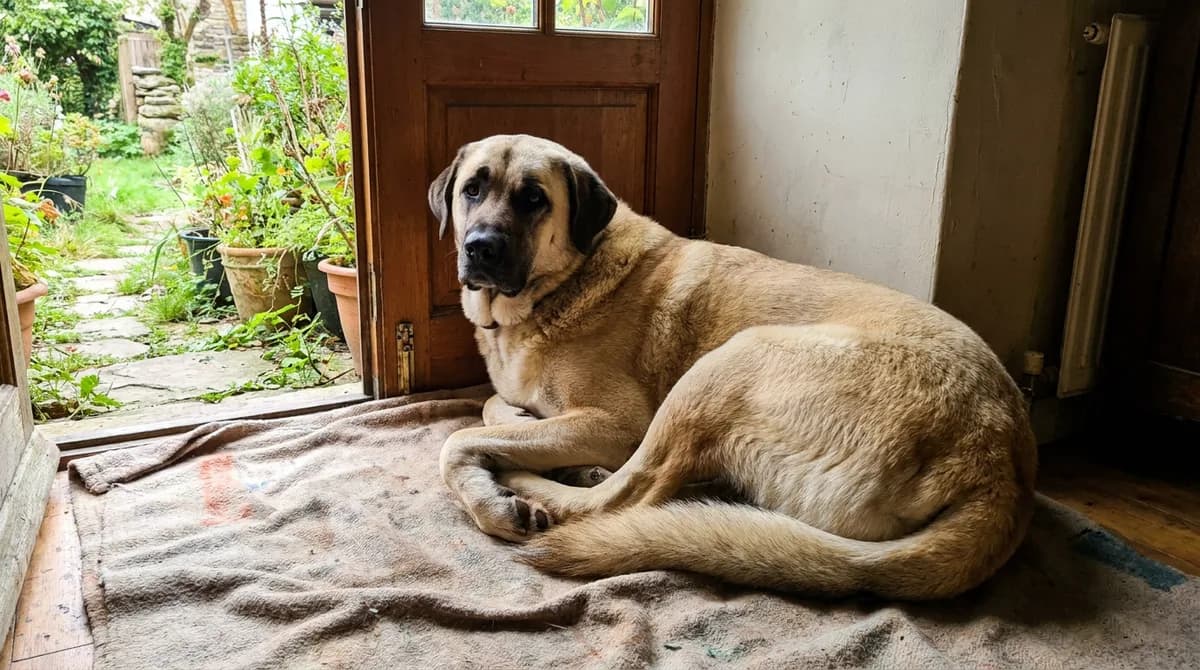
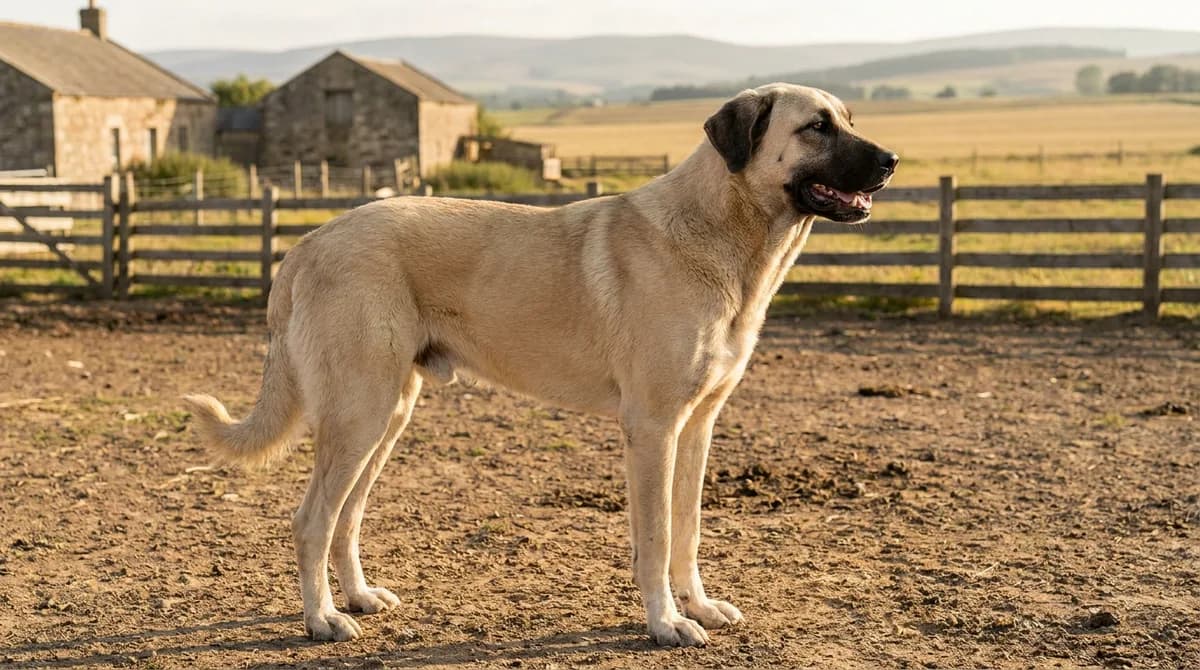
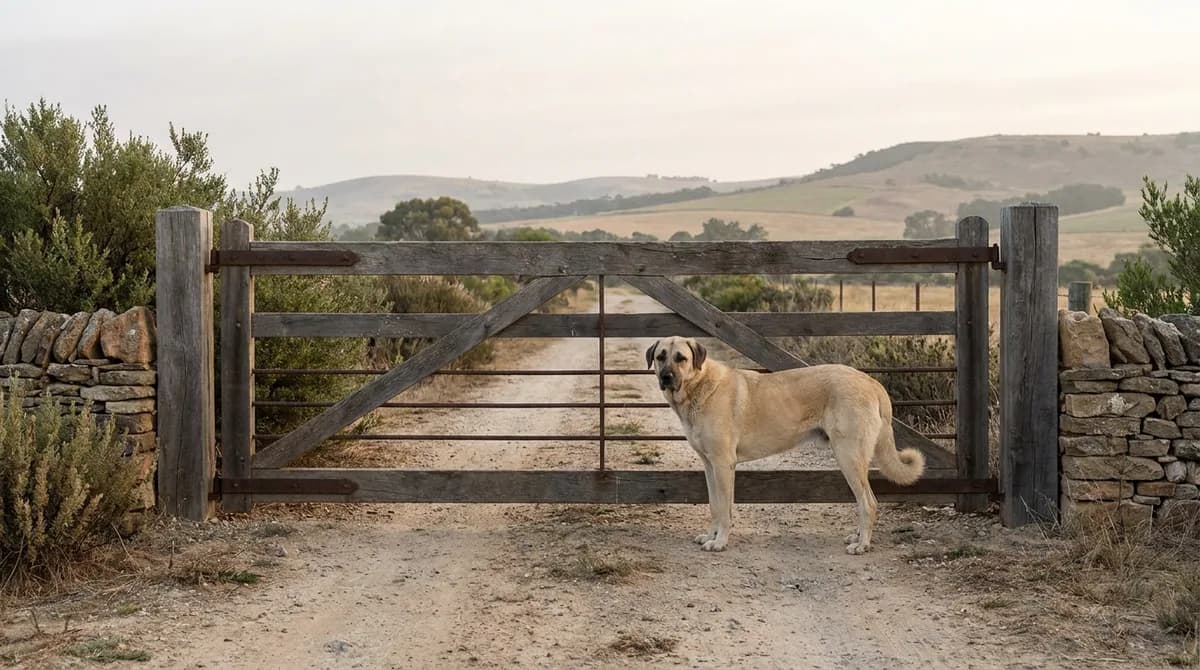
Anatolian Shepherd Mixes: Size, Traits and Adoption Fit
Explore Anatolian Shepherd mixes, including Pyrenees, German Shepherd, and Labrador crosses. Learn what ancestry labels can tell you and which observations matter when choosing a dog for your home or property.
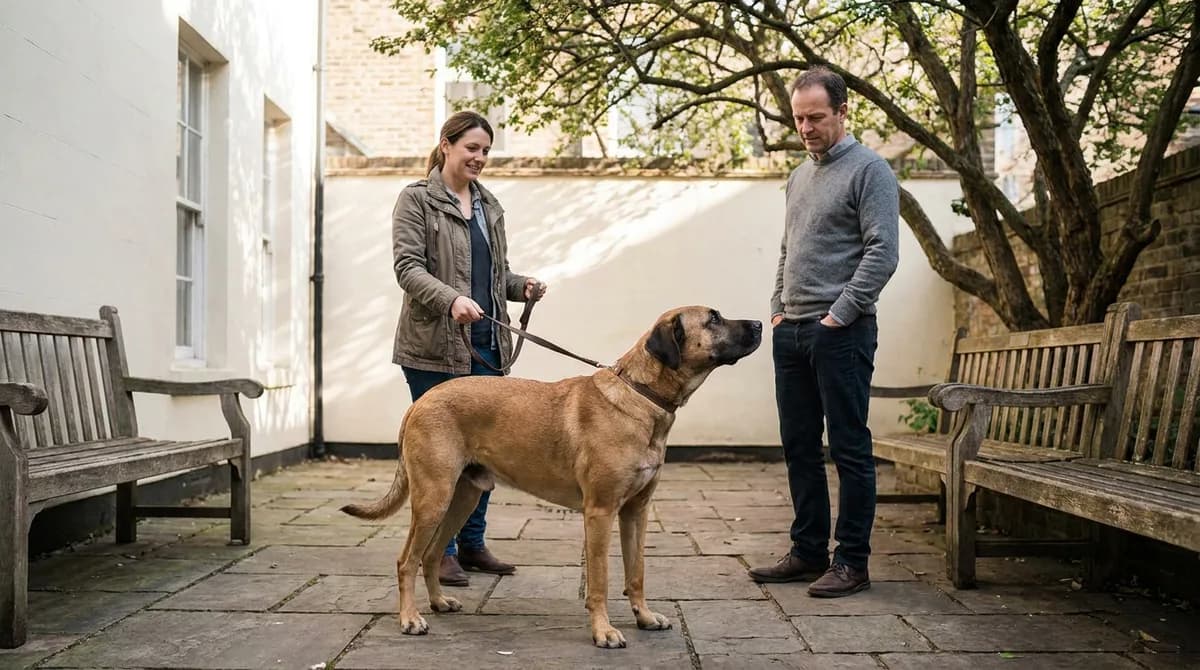
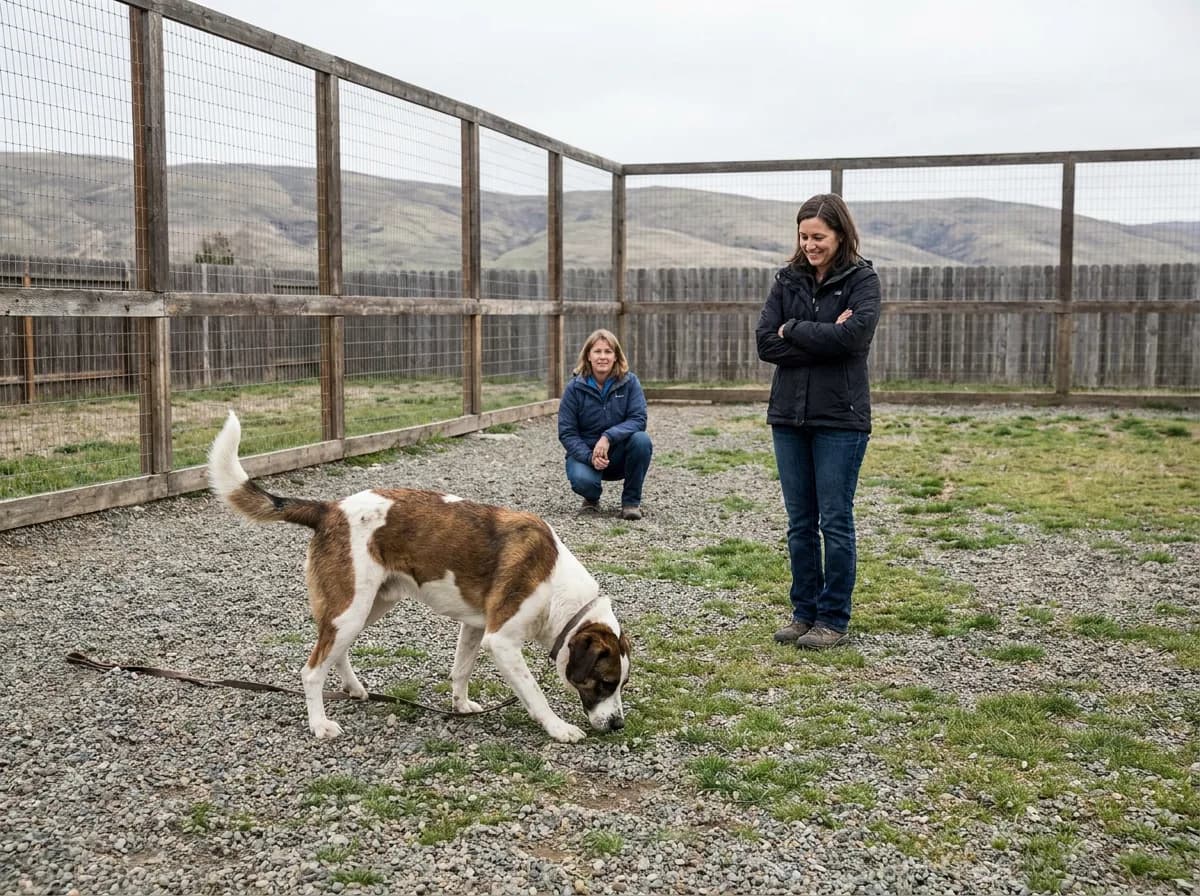
A large adult dog and prospective adopter in a calm setting; appearance alone does not verify a named cross.
Petful is reader supported. As an affiliate of platforms like Amazon and Chewy, we may earn a commission when you buy through links on this page. There is no extra cost to you.
An Anatolian Shepherd mix label tells you about reported ancestry, not a fixed set of traits. A dog described as an Anatolian Pyrenees, German Shepherd cross, or Labrador mix may have very different size, coat, experience, and household needs from another dog with the same label.
Start with what is known about the individual. Parent records, ancestry estimates, adult measurements, and a foster family's observations answer different questions. Together, they can help you decide whether the dog fits the home or working environment you can provide.

Sign up for expert-backed reviews and safety alerts all in one place.
What does an Anatolian Shepherd mix label tell you?
An Anatolian Shepherd dog mix may have a documented Anatolian parent, an ancestry estimate, or a visual label assigned during rescue intake. Ask which applies. Describing a dog as an Anatolian Shepherd cross, sometimes written with an “x,” does not tell you how the ancestry was established.
A black Anatolian Shepherd mix or a brindle dog may look distinctive, but coat color cannot authenticate parentage. The same limitation applies to Anatolian Shepherd mix puppies, whose adult proportions and coats are still developing. A photograph is useful for observing appearance, not for proving a family tree.
| Information | What it can contribute | What remains uncertain |
|---|---|---|
| Documented parentage | Identifies known parents when records are reliable | Which combination of traits the puppy will express |
| Estimated ancestry | A DNA test can estimate breed contributions within its methods | Exact future size, temperament, working ability, or lifespan |
| Known history | Describes the dog's previous home, care, and experiences | Responses to situations the dog has not encountered |
| Observed traits | Shows current measurements, coat, and behavior in a described setting | Whether behavior will remain the same in another setting |
| Unknown predictions | Identifies claims that have not been established | Fixed cross-specific size, health, and personality promises |
Keep the source of a claim attached to it when discussing a dog with a veterinarian or prospective caregiver. “The rescue suspects Anatolian ancestry from appearance” and “one parent is documented as an Anatolian Shepherd” convey different levels of certainty. This also helps when a listing changes: you can ask whether new information became available instead of assuming the dog's actual needs have changed with its label.
When ancestry testing helps
A breed-identification test may help clarify mixed ancestry when records are unavailable. The Embark Breed Identification Dog DNA Test Kit is one option to consider for that purpose. Its role is ancestry information, not certification that the dog will guard livestock, welcome visitors, or suit a particular household.
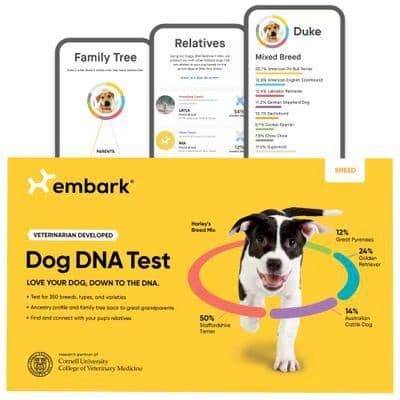
Explore reported mixed ancestry with a breed-identification test. Results cannot guarantee temperament, adult size, or livestock-working ability.
Petful may earn a commission when you click through to Chewy, at no extra cost to you.
Use a result alongside the dog's history. If an ancestry estimate differs from a shelter label, update your understanding without dismissing the foster caregiver's real observations. The test and the caregiver are describing different kinds of information.
Ask what unusual labels actually mean
A Kangal and Anatolian Shepherd mix description needs clarification from the person using it. Request the parent identities and supporting records rather than assuming the wording refers to two clearly documented parents. Regional or informal naming can make an advertisement less precise than it appears.
Treat an Anatolian Shepherd wolf mix claim with particular care: a wolf-like appearance is not proof of wolf ancestry. Do not infer special behavior, ownership suitability, or a legal status from the photograph. The first step is establishing what evidence supports the description.
Anatolian Shepherd breed overview
The Anatolian Shepherd's background is livestock protection, which is relevant when asking about independence, boundaries, and responses to unfamiliar activity. That background does not automatically transfer as reliable working performance to a mixed puppy. Our Anatolian Shepherd breed overview explains the parent breed's history and care. Use that context to frame questions about the individual rather than to assign a predetermined personality.
If you are comparing ancestry-testing options, the Wisdom Panel Essential Breed Identification test is another option. Compare the current test descriptions and decide what question you need answered. Buying two tests is not necessary to assess everyday handling, and an ancestry result does not replace health records or a veterinary examination.
Adult size, coat and growth expectations
How big will an Anatolian Shepherd mix get? For an adult, measure the dog. For a puppy, known parent information and veterinary growth monitoring offer context, but adult size cannot be averaged from parent-breed ranges.
A full-grown Anatolian Pyrenees mix does not have a separate recognized size standard. Neither does an Anatolian German Shepherd mix. A fixed height or weight range attached to those cross names should not be treated as a guarantee or a target for feeding.
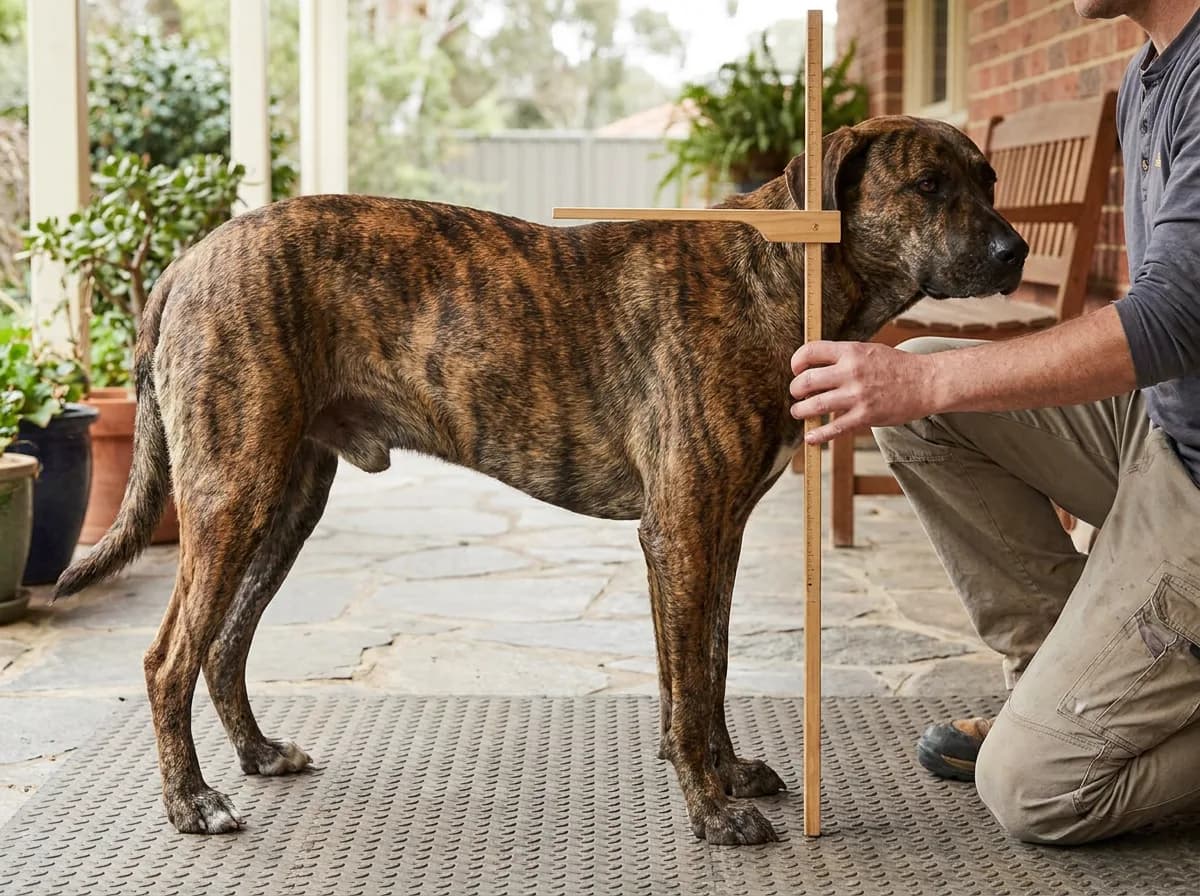
Measure for the decisions you need to make
Measure height at the withers, the top of the shoulders, while the dog stands comfortably on level ground. Obtain weight from a suitable scale, and ask the veterinary team to assess body condition. These measurements answer different questions.
- Use the manufacturer's measurements to choose a harness or other walking equipment.
- Check usable crate and vehicle space against the actual dog.
- Allow adequate resting room without assuming a size label fits every large dog.
- Review puppy equipment as the dog grows rather than buying everything from an adult prediction.
For a height measurement, use a level measuring aid at the shoulders rather than following the outline of the neck or head. Let the dog stand naturally; do not pull it into position to obtain a preferred number. If the dog is uncomfortable with the equipment, stop and ask for help with a gradual approach. A photograph of the measuring process illustrates the method, but only the recorded measurement of your own dog should guide an equipment decision.

Compare this ancestry-testing option with the information you need. Breed estimates do not replace health screening or observed behavior history.
Petful may earn a commission when you click through to Chewy, at no extra cost to you.
Look at the coat itself
Coat variation means the actual length, density and handling needs matter more than the cross label.
Part the hair gently when the dog is comfortable with handling. Observe length, density, areas that tangle, and how the dog responds to brushing. A fluffy puppy coat or a particular color does not establish the adult grooming workload.
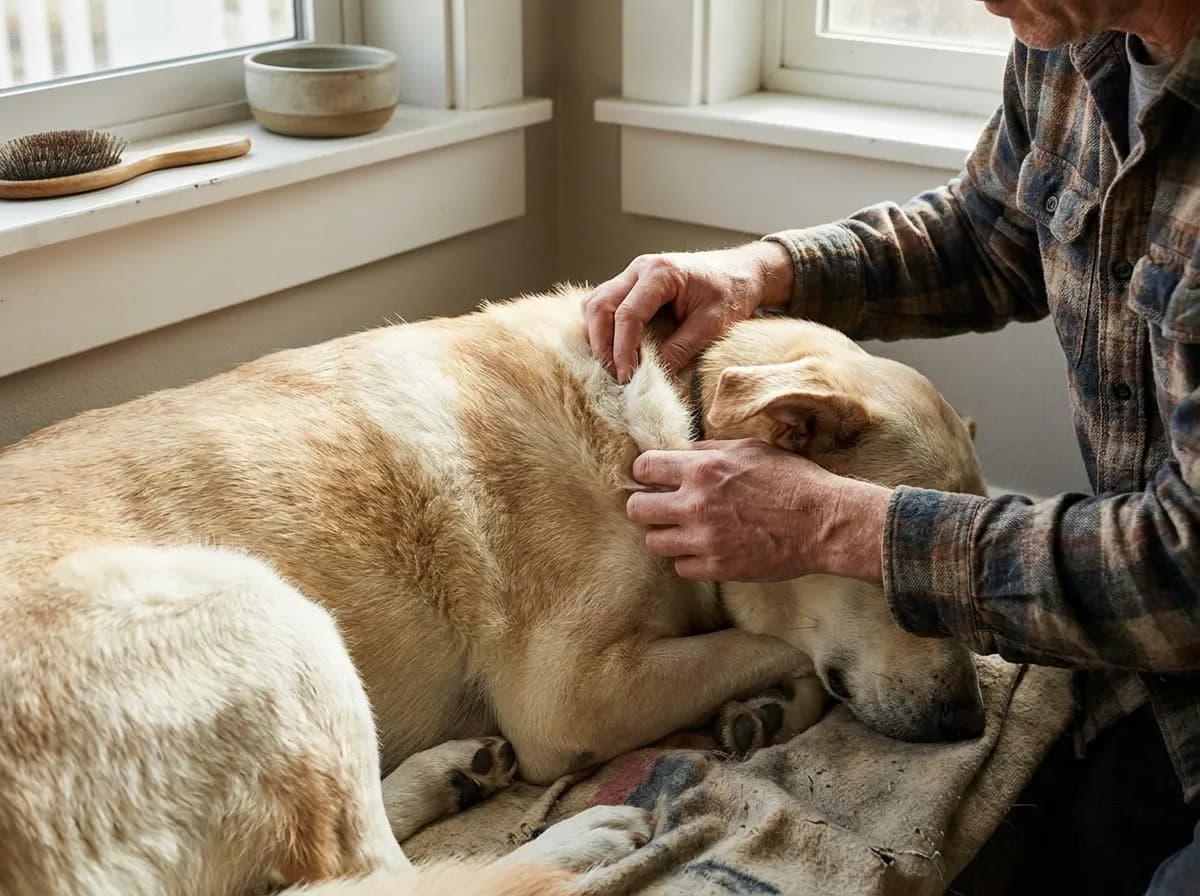
Ask the current caregiver about shedding and practical coat care. If the dog dislikes grooming, find out which steps are comfortable and which need gradual practice or professional help. Coat appearance and handling tolerance both affect the routine you will need.
Anatolian Shepherd size and measurements
The purebred Anatolian standard provides context, including measurements for dogs aged two or older, but those values are not a growth chart for a cross. Our Anatolian Shepherd size and measurement guide separates standard figures from individual measurements. For a mixed dog, use actual dimensions for equipment and veterinary guidance for growth rather than trying to make the dog match either parent's standard.
Anatolian Shepherd and Great Pyrenees mixes
“Anatolian Pyrenees” usually describes reported Anatolian Shepherd and Great Pyrenees ancestry. Both parent breeds have livestock-guardian backgrounds, which makes working context an important question. It does not make every Anatolian Shepherd and Great Pyrenees mix a trained guardian.
Our Anatolian Pyrenees overview in the Great Pyrenees mixes guide introduces this named cross. The parentage, coat, growth, health and placement questions below help you assess the particular dog rather than treating the label as a guarantee.
Ask about observed livestock experience: which animals, what age the dog was, how contact was supervised, and what happened over time. Sharing a property with livestock is different from being reliable around them. An advertisement showing a puppy beside a goat does not establish future working ability.
Parent coats give context, not a cross standard
The Great Pyrenees standard describes a long double coat and double rear dewclaws. The Anatolian Shepherd standard permits a short to rough coat with an undercoat. Those are descriptions of the parent breeds, not a requirement that the mixed dog fall neatly between them.
For an Anatolian Pyrenees puppy, ask to see the parents' coats and learn what care the puppy already accepts. For an adult, inspect the actual coat, paws, and nails and ask the veterinarian or groomer about the care needed. Do not use the presence or absence of a dewclaw, a dark mask, or a long coat as proof of the exact cross.
Working conditions also affect the grooming routine. A dog that spends time outdoors may need checks for material caught in its coat or around its feet. Plan care the dog can accept comfortably rather than assuming a working background makes handling unnecessary.
Match the placement to the dog's experience
A puppy raised around livestock still needs appropriate supervision and training. A household-raised adult may have no relevant working experience. Conversely, a dog accustomed to a particular rural routine may need substantial adjustment to close neighbors, frequent visitors, or living indoors.
Ask specific working-placement questions:
- Has the dog lived with the species you keep, and under what supervision?
- Were chasing, rough play, escape attempts, or other difficulties observed?
- How did the dog respond to unfamiliar people entering the property?
- What fencing and overnight arrangements were used?
- Is support available from someone familiar with this dog and the intended work?
Anatolian Pyrenees puppies may be described as three-quarter Great Pyrenees and one-quarter Anatolian Shepherd. That fraction is meaningful only when the parentage supports it, and it still does not predict a matching fraction of temperament or coat. A black or brindle Anatolian Shepherd Great Pyrenees mix is not a separate standardized variety.
Comparing Anatolian Shepherds and Great Pyrenees
Which is better, Great Pyrenees or Anatolian Shepherd? That depends on the situation and individual dog, not a universal ranking. Our Anatolian Shepherd vs Great Pyrenees comparison explains the parent breeds' real differences. Those distinctions provide context for a mixed dog without guaranteeing that it will inherit your preferred traits from each parent.
Temperament, barking and household fit
What is the temperament of an Anatolian Shepherd mix? There is no single cross-wide answer. Reported guardian ancestry makes it sensible to investigate responses to unfamiliar people, animals, boundaries, and everyday handling. The dog's documented behavior around visitors and ordinary routines is more useful than a label such as “protective but friendly.”
An Anatolian Shepherd/Great Pyrenees mix temperament should be evaluated the same way. Ask what the dog does when someone enters, when another dog passes, and when it cannot reach something that attracts its attention. These examples help you plan the environment rather than relying on a broad personality description.
A Frisco Traffic Leash with Dual Padded Handles is one fixed-length option for supervised outings. Check equipment fit and your ability to manage the actual dog. A lead supports control during practice; it does not establish compatibility with another animal.
Visitors, barking, and personal space
Is an Anatolian Shepherd a good house dog? A particular dog may fit household life when its exercise, containment, resting space, and visitor-management needs can be met. An ancestry label alone cannot answer that question.
Do Anatolian dogs bark a lot? Ask for the individual barking history, including triggers, time of day, and what helps the dog settle. A rural history does not tell you how that dog will respond to apartment corridors or nearby neighbors.
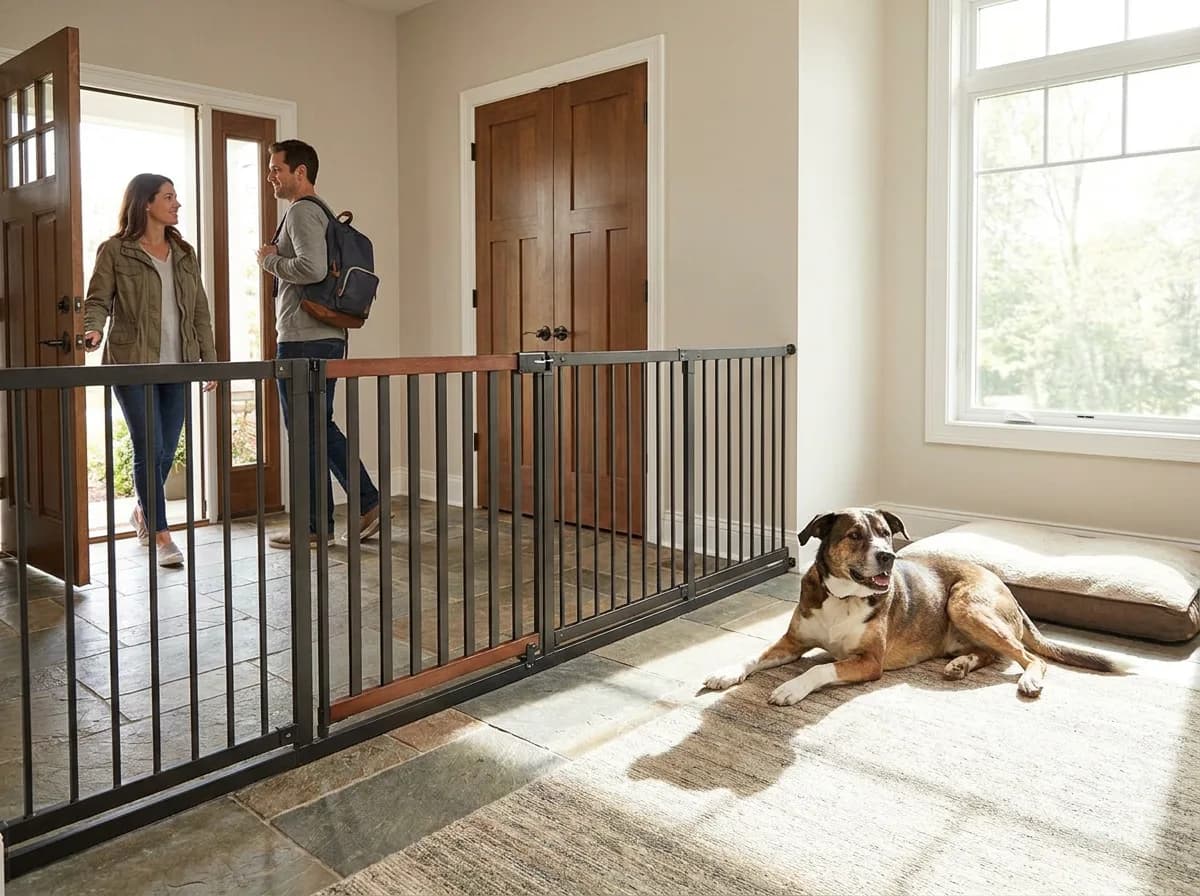
Do Anatolian Shepherds like to cuddle? Some seek close contact; others prefer resting nearby. Let the dog choose contact and give it an undisturbed resting place. Affection should not be measured by how much hugging or handling it tolerates.
Plan for behavior rather than promising protection
Do Anatolian Shepherds show aggressive behavior? Some dogs respond aggressively in particular circumstances. Ask about actual incidents, their context, and the management already in place. Do not assume either danger or safety from a breed description.
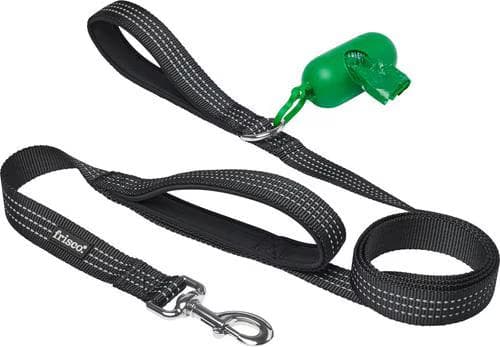
Support supervised walking with a fixed-length lead. Check fit, hardware, and your ability to manage the individual dog's size.
Petful may earn a commission when you click through to Chewy, at no extra cost to you.
Will an Anatolian Shepherd protect you? No ancestry label guarantees a dependable response to an emergency. Choose a companion or working dog for a suitable placement, not as a promise of personal protection. Prevent confrontations rather than encouraging suspicion of visitors.
Anatolian Shepherd temperament and behavior
Our Anatolian Shepherd temperament guide explains guardian-related management in greater detail. For a mixed dog, use reward-based practice and realistic distances from distractions. WebVet's training-treat guide can help account for rewards within the daily food plan. A useful goal is comfortable, manageable behavior in the situations your household actually encounters.
Anatolian Shepherd and German Shepherd mixes
An Anatolian Shepherd and German Shepherd mix may be advertised as an Anatolian German Shepherd or Anatolian GSD mix. Ask whether the parentage is documented, then focus on how the dog responds to direction, unfamiliar activity, and ordinary handling.
For a puppy, investigate the parents' behavior and the experiences already provided. For an adult, ask for examples of walking near distractions, resting indoors, and being left in the usual containment arrangement. “Intelligent” is not a substitute for knowing which skills have been taught.
A black German Anatolian Shepherd is a color description, not a temperament category. Likewise, an Anatolian Pyrenees German Shepherd mix may have three reported parent families without any dependable formula for size or working ability. Clarify what the caregiver knows about that history before choosing equipment or assuming the dog will suit a particular job.
- Can the dog disengage from movement?
- Does it settle after activity?
- Can it cooperate with necessary handling?
Those observations help you build a realistic routine without promising a predictable blend of guardian and shepherd traits.
A practical adoption and placement checklist
If you are looking at Anatolian Shepherd mix puppies for sale or a Great Pyrenees Anatolian Shepherd mix for adoption, ask the same initial question: what is known about this dog, and what supports the claims in the listing? Price, attractive photographs, and a confident description do not answer suitability questions.
For Anatolian Pyrenees puppies, meet the available parent or parents when practical and ask about their health and ordinary behavior. For an adult, a detailed foster history can be particularly useful. Distinguish direct observations from information passed along by someone who previously had the dog.
Prepare an ordinary first week
Plan where the dog will rest, how it will go outside, and how visitors and other animals will be managed. Avoid making the arrival day a series of greetings. A calm introduction to the household routine gives you better opportunities to observe the dog.
Give each resident animal a place it can use without being approached by the newcomer. Keep meals separate initially and decide who manages doors so that one person's arrival does not release the dog into an unplanned encounter. If the intended placement involves livestock, agree on supervision and containment with someone experienced in that setting before the dog arrives.
The first week also needs a clear point of contact. Ask the rescue or breeder whom to call if the dog struggles with the proposed arrangement and what support is available. Clarify any return or placement terms in advance. That allows an early difficulty to be addressed honestly rather than hidden while the household hopes it will disappear.
Offer a quiet activity
A Pet Parents Forager Snuffle Mat can provide a supervised food-search activity when the dog is comfortable enough to participate. Introduce it individually, use part of the usual food allowance, and remove it if the dog begins chewing the fabric.
WebVet's dog training schedule can help organize short practice around normal care. Keep the first goals simple: comfortable walking equipment, a manageable route outdoors, and a resting area the dog can use without interruption.
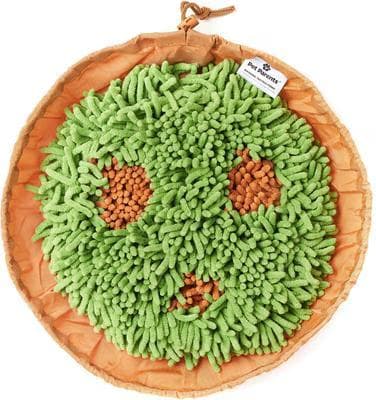
Offer a supervised food-search activity during a settled routine. Use part of the dog's meal and remove the mat if it becomes a chew toy.
Petful may earn a commission when you click through to Chewy, at no extra cost to you.
Ask questions that change the placement decision
- What is known about the parents, and how was the ancestry label assigned?
- What happened around visitors, children, dogs, cats, and livestock?
- Has the dog escaped, climbed, dug under boundaries, or struggled with confinement?
- What handling and veterinary procedures are comfortable or difficult?
- Has there been a bite or serious near miss, and what were the circumstances?
- What daily routine, support, and follow-up are recommended?
Is a male or female Anatolian Shepherd better? Sex alone cannot choose the better match. Consider the dog's adult physical needs, known behavior with your other animals, and the household's ability to manage introductions. A compatible history is more useful than assuming every female is easier or every male is a better guardian.
Anatolian Shepherd costs and budgeting
The price of an Anatolian Shepherd or mix is only one part of ownership. Budget for appropriate containment, food, veterinary care, training support, and someone capable of caring for the dog when you are away. Our Anatolian Shepherd price and budgeting guide explains documented price context and planning. Obtain actual quotes for your circumstances instead of assuming mixed ancestry makes all ongoing costs lower.
Anatolian Shepherd and Labrador mixes
An Anatolian Shepherd Labrador Retriever mix may be called an Anatolian Lab mix. Labrador ancestry does not guarantee a smaller dog, easy visitor greetings, or compatibility with other pets. Ask about the individual dog's actual social experience rather than relying on the reputation of either parent.
A black Lab cross, white Anatolian Shepherd Lab mix, or brindle puppy should receive the same assessment. Color does not establish the proportion of either breed or the adult personality. An Anatolian Pyrenees Lab mix adds another ancestry claim that should be clarified rather than converted into a three-breed trait prediction.
When considering a Labrador cross, ask what the dog enjoys doing with people and how it behaves when activity ends. Does it settle in the house, tolerate necessary handling, and respond comfortably when a visitor arrives? If there are other animals, request specific examples of their interactions. These questions turn “more social” into observable situations you can evaluate.
Other Anatolian Shepherd crosses
The named crosses below are reported-parentage descriptions, not separate breeds with established standards. Use the index to identify the right questions. Observed traits, health records, and individual assessment remain more useful than a fixed personality assigned to a cross name.
| Other reported parent family | What to clarify in the individual assessment |
|---|---|
| Siberian Husky or Husky | Containment history, response to movement, and the existing activity routine |
| Mastiff, English Mastiff, Spanish Mastiff, or Bullmastiff | Exact parent identity, adult dimensions, handling, and parent health records |
| Great Dane | Actual growth and measurements, transport, and comfortable movement |
| Pit Bull or American Staffordshire Terrier | Exact reported parentage and observed behavior with people and animals |
| Akbash, Maremma, or Caucasian Shepherd | Observed livestock experience, boundaries, and visitor management |
| Border Collie, Collie, or Australian Shepherd | Response to moving animals and ability to settle after activity |
| Australian Cattle Dog, Blue Heeler, or Red Heeler | What moving people or animals trigger and how the dog is managed |
| Golden Retriever or unspecified Retriever | Actual social history rather than an assumed personality |
| Black Mouth Cur or Catahoula | Meaning of the ancestry label and previous home or working experience |
| Boxer | Adult handling needs, familiar skills, and response during greetings |
| Saint Bernard or St. Bernard | Individual size, resting access, coat care, and transport |
| Belgian Malinois | Existing training, handling, and response to distractions |
| Greyhound or Saluki | Observed response to small animals and secure exercise arrangements |
| Hound, Beagle, Bloodhound, or Coonhound | Exact parent family if known and behavior around scents and wildlife |
| Rottweiler, Cane Corso, or Doberman | Visitor history, physical handling, and household management |
| Poodle | Actual coat texture, grooming needs, and handling comfort |
| Terrier | Which terrier is reported and what is actually known about behavior |
| Leonberger or Bernese Mountain Dog | Coat care, adult space, mobility, and parent health records |
| Rhodesian Ridgeback | Activity history, containment, and response to animals |
| Chow Chow, Akita, or Shar-Pei | Comfortable handling, visitors, and interactions with other pets |
| Corgi or Chihuahua | Documented parentage, body proportions, and veterinary growth assessment |
| Pointer | Response to wildlife, learned recall, and secure outings |
Large-parent labels need practical measurements
For a Mastiff cross, clarify whether the listing means English Mastiff, Spanish Mastiff, Bullmastiff, or an unspecified mastiff-type dog. Those names should not be silently treated as interchangeable. Meet or measure the adult when possible and plan transport before committing.
The same practical approach applies to an Anatolian Great Dane, Saint Bernard, Leonberger, or Bernese Mountain Dog mix. Ask about getting into vehicles, navigating stairs, grooming, and resting comfortably. A puppy's expected large size is a reason to plan ahead, not a reason to invent a guaranteed adult weight.
Working backgrounds need demonstrated experience
An Akbash cross, Maremma cross, or Caucasian Shepherd cross raises questions about the work the dog has actually performed. A Great Pyrenees Anatolian Shepherd Akbash mix does not become livestock-ready simply because three guardian names appear in the description.
For Border Collie, Collie, Australian Shepherd, and Australian Cattle Dog crosses, ask what happens around moving animals. Blue Heeler and Red Heeler labels should be clarified as reported cattle-dog ancestry. Do not assume any chase or circling behavior is appropriate livestock work.
Black Mouth Cur and Catahoula mixes may also arrive with vague “farm dog” descriptions. Ask what that meant day to day: where the dog lived, which animals were present, what supervision was used, and whether any difficulties occurred.
Social and handling claims need examples
A Golden Retriever or unspecified Retriever cross is not automatically a more outgoing guardian mix. The same applies to a three-way Great Pyrenees Anatolian Shepherd Golden Retriever puppy. Ask about greetings and handling rather than treating a familiar parent name as reassurance.
For a Boxer, Pit Bull, American Staffordshire Terrier, Rottweiler, Cane Corso, or Doberman mix, request specific visitor and animal history. These labels do not establish either a danger category or a guarantee of easy family life. Include the actual dog's strength and handling skills in the decision.
An Anatolian Shepherd Belgian Malinois mix needs an equally concrete account of training and daily activity. Find out which cues the dog knows, in which settings they work, and what happens when the dog cannot access something it wants. A claim of exceptional intelligence is less useful than those details.
Coat, movement, and smaller-parent surprises
A Poodle cross does not promise a particular coat or freedom from shedding. Examine the coat and ask what grooming it currently requires. For a Chow Chow, Akita, or Shar-Pei cross, include comfortable brushing and other necessary handling in the assessment.
A Corgi or Chihuahua ancestry claim may be surprising in a large dog. Request the basis for it and assess the actual proportions. Do not use a parent-average calculation to decide whether the dog is growing correctly or whether its body will remain easy to lift.
Ask about scents, wildlife, and containment
For a Husky or Siberian Husky mix, ask about the existing boundaries and escape history. For Greyhound, Saluki, Rhodesian Ridgeback, or Pointer ancestry, investigate the dog's response to wildlife and smaller animals rather than assuming recall will be reliable.
“Hound mix” is broad. If Beagle, Bloodhound, or Coonhound ancestry is reported, clarify the evidence and ask how the dog behaves when interested in a scent. A generic Terrier label is similarly incomplete. Knowing which parent family is claimed helps frame questions, but secure outings and the observed behavior remain the basis of the plan.
For any puppy in this index, ask which everyday experiences have already occurred and how the puppy responded. Car travel, brief separation, grooming contact, and calm encounters with unfamiliar people are distinct experiences. A long list of parent breeds cannot answer those questions. With an adult, look for examples from its established routine and consider whether your proposed home resembles that routine closely enough for the transition to be manageable.
Health history and lifespan expectations
There is no verified cross-specific lifespan here for an Anatolian Shepherd Great Pyrenees mix. A published range assigned to the cross should not be treated as an individual prognosis. Parent-breed lifespan figures cannot simply be averaged to calculate mixed-breed life expectancy.
Request available veterinary records and documented parent screening when parentage is known. For the Anatolian parent, hip and elbow evaluations are relevant. A DNA ancestry test does not replace those evaluations, and the other parent's breed-specific screening needs should also be considered.
Anatolian Shepherd lifespan and health
Our Anatolian Shepherd lifespan and health guide explains the attributed parent-breed estimate and care context. For a mixed dog, establish a veterinary plan around its current condition, age, and history. Monitor changes in movement, appetite, and comfort instead of assuming the cross name predicts either exceptional longevity or inevitable illness.
Anatolian Shepherd mix questions
No. Appearance cannot prove ancestry, including a black, white, or brindle coat color. Reliable parent records or DNA testing may provide more information, with different limits. Use photographs to observe the dog rather than authenticate the breed label.
No. There is no work guarantee from the cross name. Experience and supervised training matter, along with the individual dog's responses to the species involved. Ask for directly observed working history and do not leave an unproven dog to guard livestock unsupervised.
It may be, but traits vary and Labrador ancestry does not promise either result. Assess the individual through actual measurements and descriptions of interactions with people and animals. For a puppy, preserve uncertainty rather than turning a hoped-for trait into an adult prediction.
Ask about visitors, animals and confinement, along with handling, resting, activity, and time alone. Request examples from the known behavior history and clarify which situations have not occurred. Foster history is especially useful when it describes circumstances rather than relying on labels such as friendly or protective.

Coreen Saito is a pet writer and longtime shelter volunteer with more than a decade in animal rescue. She covers cat behavior, breed care, and the small, ordinary science of sharing a life with companion animals, with a particular focus on honest takes about the products and decisions that actually matter. At home in Arizona, she's outranked by Mac (a dog with the loudest opinion in the house), Rebel (a cat who governs by quiet authority), and Meri (an orange tabby who runs the late shift and the laundry basket). She writes about all three, plus the rescues that keep coming through her life, at LifeWithMinty.com.
Sign up for expert-backed reviews and safety alerts all in one place.