Anatolian Shepherd: Breed Traits, Care and Household Fit
The Anatolian Shepherd is a large, independent livestock guardian. Learn how its working history, coat, size, and protective instincts affect fencing, visitors, family life, and everyday care.

Petful is reader supported. As an affiliate of platforms like Amazon and Chewy, we may earn a commission when you buy through links on this page. There is no extra cost to you.
The Anatolian Shepherd was developed to protect livestock, and that background shapes more than its imposing appearance. Independence, watchfulness, and concern about unfamiliar activity can be useful on a working property. They also require thoughtful management when the dog shares a home with visiting friends, children, delivery drivers, or other pets.
Understanding the job behind the breed is the first step toward deciding whether it fits your life.

Sign up for expert-backed reviews and safety alerts all in one place.
What is an Anatolian Shepherd?
The Anatolian Shepherd is a large Turkish livestock-guardian breed recognized by the American Kennel Club in its Working Group. The Anatolian Shepherd Dog Club of America, or ASDCA, is the AKC-recognized parent club. Its breed information describes a rugged dog associated with the rural districts of Turkey and Asia Minor.
The name can be misleading if “shepherd” makes you picture a dog gathering sheep on command. Anatolian Shepherd characteristics reflect protection and independent decisions around a flock, not the same working role as a herding dog. That distinction matters when selecting a puppy for livestock or evaluating an adult for a residential home.
| Breed trait | Practical meaning | Question for the owner |
|---|---|---|
| Livestock guardian | Historically protects livestock rather than moving the flock | Is the proposed job appropriate for this dog? |
| Independent decisions | May assess unfamiliar activity without waiting for repeated direction | Can you provide consistent training and managed access? |
| Large adult size | Requires suitable equipment, handling, and transport | Is the home prepared for the adult dog? |
| Short or rough coat with undercoat | Coat care varies with the individual and season | Can you maintain the actual coat? |
| Territorial awareness | Boundaries and arrivals need planning | Is secure containment in place? |
“Anatolian mastiff” and “Anatolian sheepdog” can appear as informal descriptions, but the recognized breed name in the AKC standard is Anatolian Shepherd Dog. Clarify what a breeder or rescue means instead of treating a nickname as proof of identity. Registration information, known parentage, and the individual dog's records are more informative than a label alone.
Newborn puppies and older Anatolian Shepherd pups cannot show you every aspect of the adults they will become. Meet mature dogs where possible and ask how their behavior changes between familiar people, routine work, and visitors. A purebred puppy's appearance or a dog-show photograph is only one part of choosing a suitable companion.
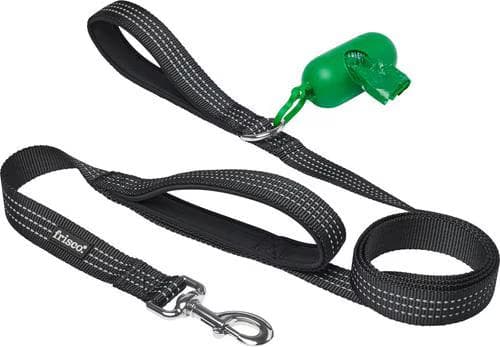
Compare this fixed-length leash for supervised handling and introductions. A walking lead does not replace secure fencing or a visitor-management plan.
Petful may earn a commission when you click through to Chewy, at no extra cost to you.
Anatolian Shepherd history and the Kangal question
Anatolian Shepherd origin is rooted in Turkey and the working needs of people keeping livestock. The ASDCA's account describes a shepherd's companion and protector of animals. This is more useful background for an owner than an unsupported claim that every modern dog has exactly the same appearance, ancestry, or working ability as an ancient population.
Is a Kangal dog an Anatolian Shepherd? The answer needs a registry context because registry naming differs. The AKC publishes an Anatolian Shepherd Dog standard, while the United Kennel Club publishes its own Kangal Dog standard and states that it recognized the Kangal in 1998. Those documents do not justify treating the names as universal synonyms across registries and countries.
Checking registry documents
A useful Kangal comparison begins with documents, not a photograph of a fawn dog with a black mask. Ask the seller to identify the registered breed name and explain any different terminology used in the advertisement. A forum discussion or informal label does not establish the registration status of the dog you are considering.
For an Anatolian Shepherd versus Kangal size comparison, the published figures overlap. The UKC Kangal standard gives typical adult males as 29–33 inches at the withers and 110–145 pounds, and females as 27–31 inches and 90–130 pounds. Greater height or weight is permitted when overall balance is maintained. The Anatolian standard gives males as 29 inches and 110–150 pounds, and females as 27 inches and 80–120 pounds. Both describe dogs at least two years old. These are separately defined registry figures, not evidence that every Kangal is larger than every Anatolian. Measure the individual dog when choosing equipment.
For a puppy described with both names, request the parents' registration documents and the litter information. Check which organization issued them, what breed name appears, and whether the seller can explain the description consistently. Dogs similar to an Anatolian Shepherd can share a guardian outline or coat pattern without having the same documented identity. This is a records question before it becomes a comparison of size, appearance, or behavior.
Size, coat colors and appearance
The AKC Anatolian Shepherd standard gives adult male height from 29 inches at the shoulder and weight of 110–150 pounds. For females, it gives height from 27 inches and weight of 80–120 pounds. These measurements apply at age two or older; the height figures are not maximums.
The ASDCA discusses full maturity at around three years. That is a different point from the standard's age-two measurement condition, not a reason to invent a monthly growth chart. A female Anatolian Shepherd puppy should be assessed as a growing individual, not fed toward the larger male range.

Consider this grooming glove for gentle surface care on suitable coat areas. It does not replace the tools needed to work through a dense undercoat.
Petful may earn a commission when you click through to Chewy, at no extra cost to you.
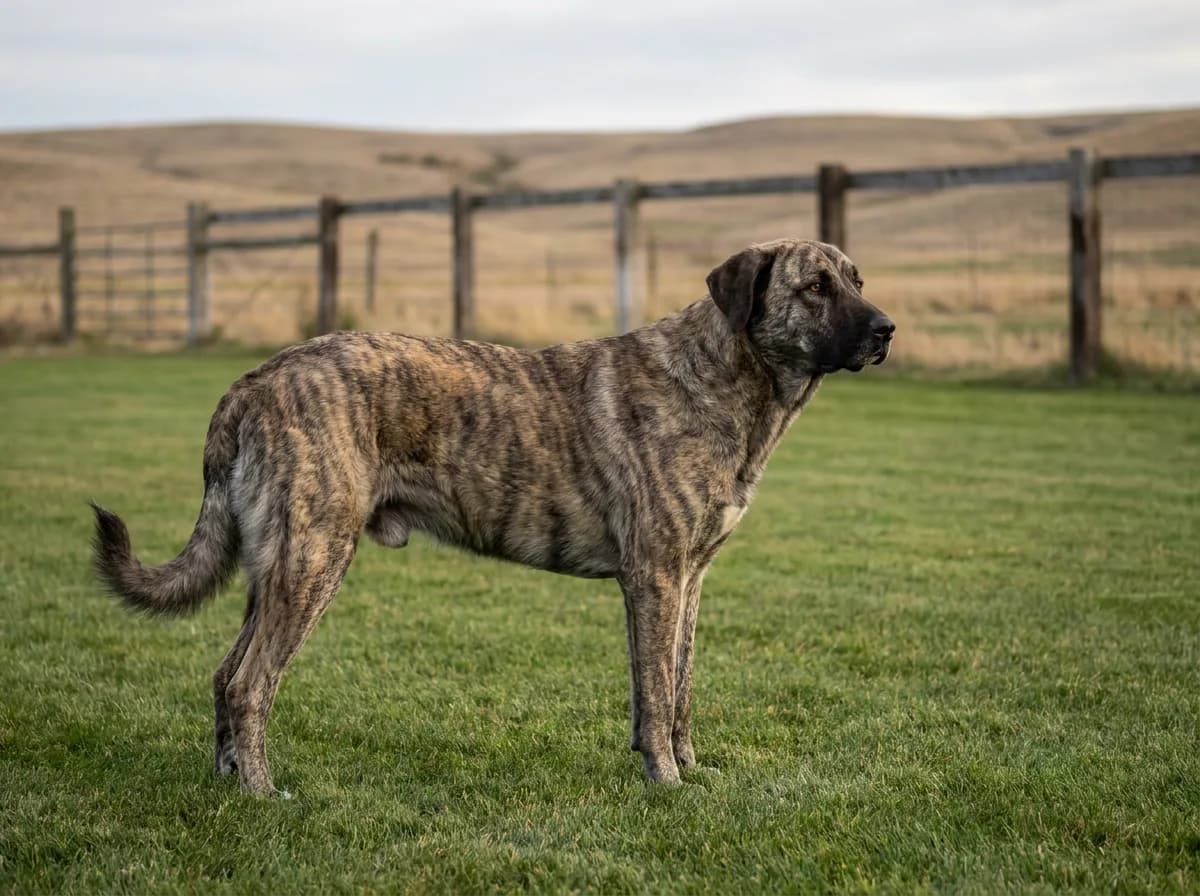
Fawn with a black mask is the classic appearance described by the ASDCA, but it is not the only one. The club also identifies brindle, pinto, and white dogs, and the AKC standard accepts all color patterns. A brindle Anatolian Shepherd has visible striping, while pinto describes areas of color against white. These appearances do not establish separate working abilities.
Color words in advertisements can be less precise than they sound:
- Red, red fawn, brown, and golden may be used for different shades or informal descriptions.
- Gray or grey fawn, blue fawn, and sable need explanation from the person using the term.
- Black, black brindle, black and tan, black and white, and biscuit and white describe appearance rather than proving ancestry.
- A dark puppy or a white puppy still needs the same record and suitability checks as any other color.
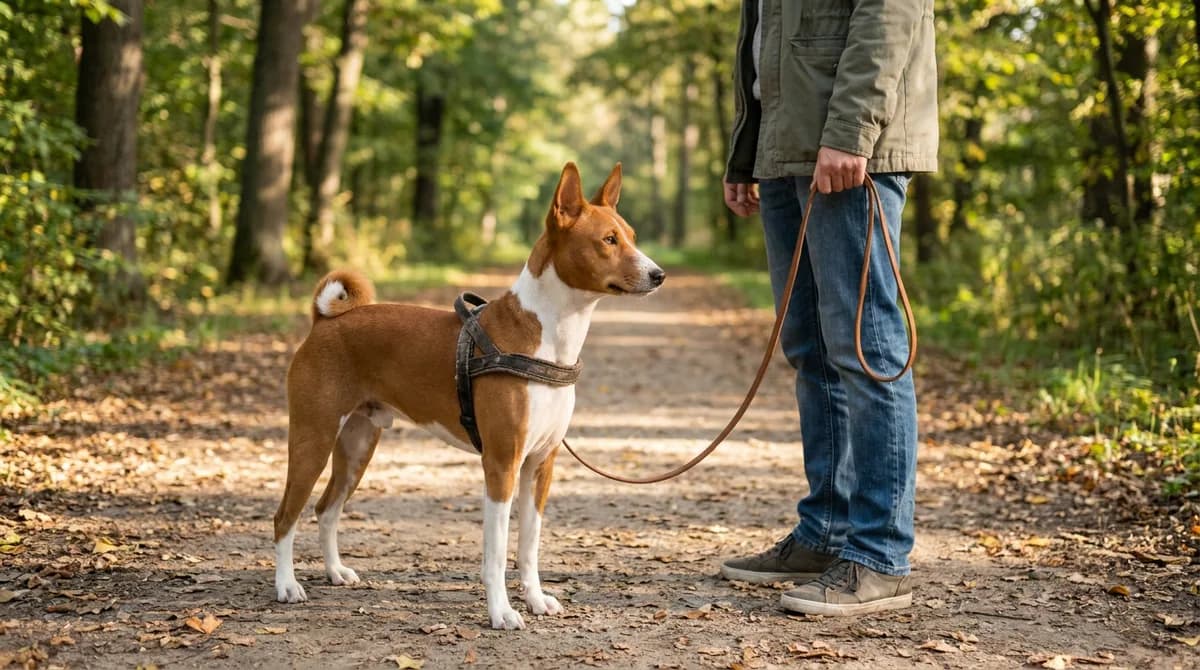
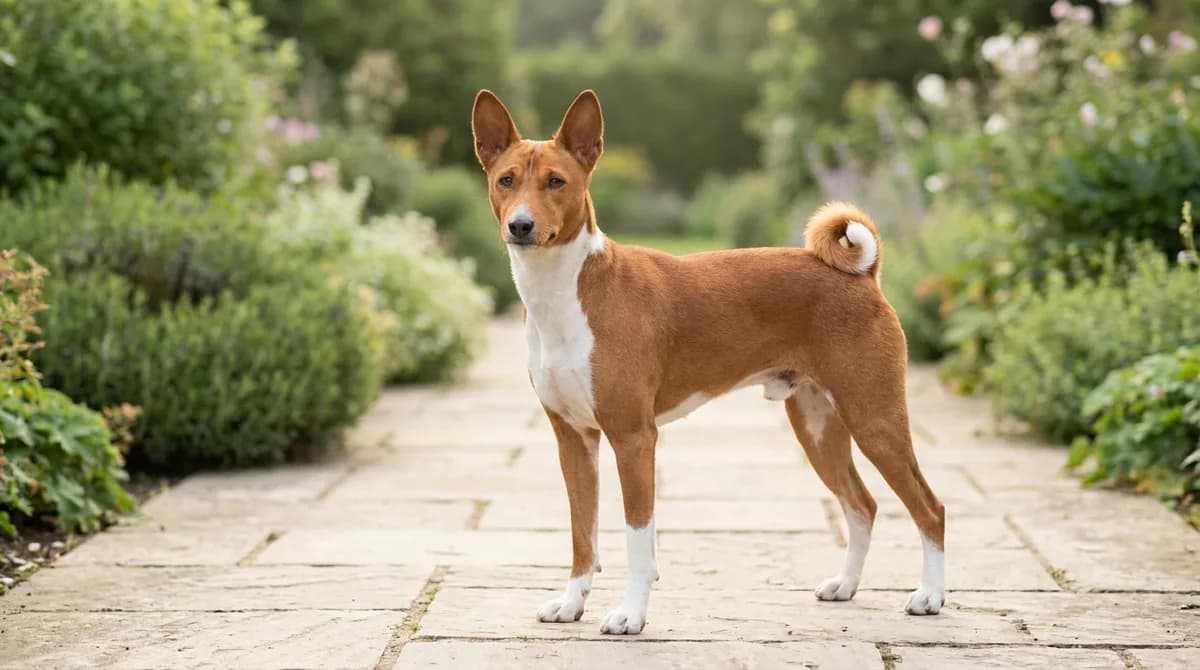
Anatolian Shepherd pictures are most useful when they show the whole dog standing naturally. Look at the head, body proportions, coat, ears, and tail together. Photographs, videos, and close-ups of the face cannot confirm a pedigree or tell you how the dog behaves with unfamiliar people.
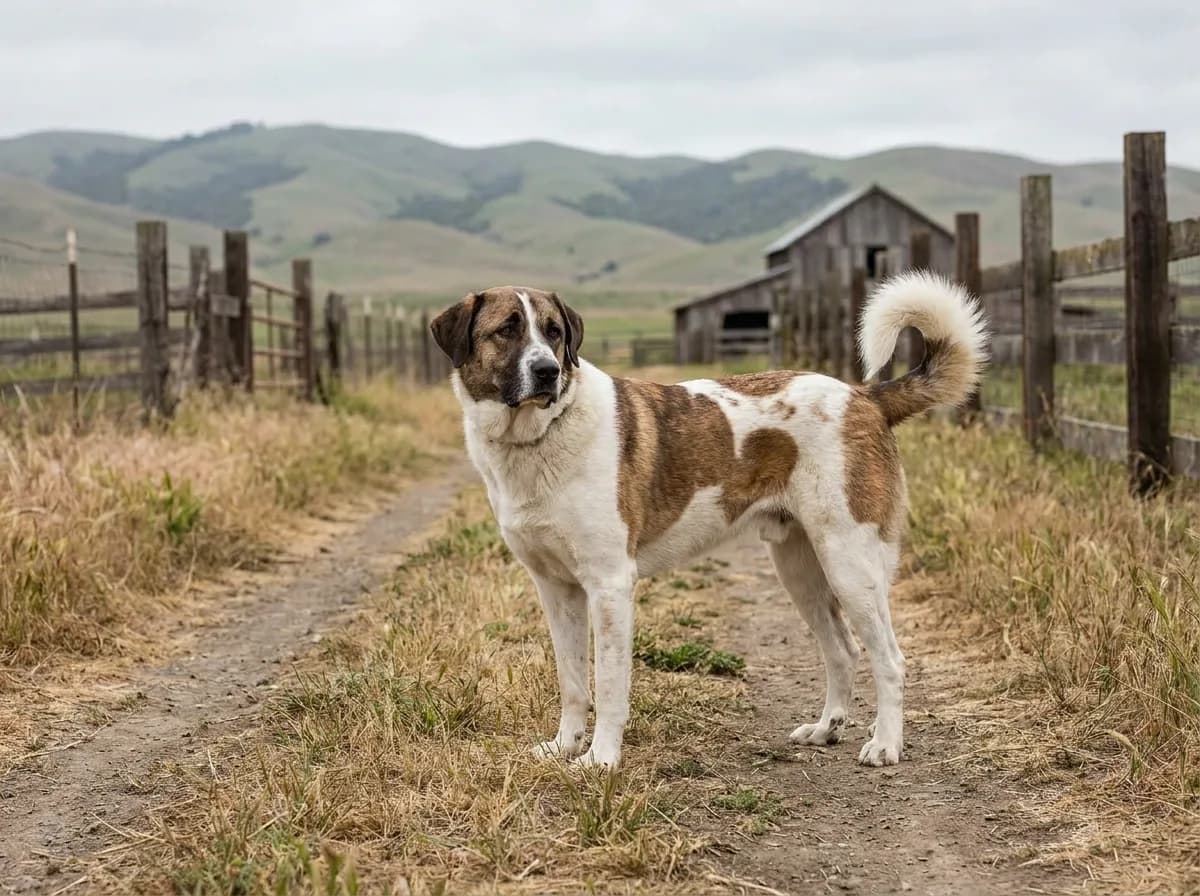
Natural ears hang down, and the tail can be carried with a curl. Pictures of Anatolian Shepherds with cropped ears show an altered ear shape, not a requirement for recognizing the breed. Ear appearance should not replace a discussion of the dog's history and records.
Dewclaws, also written dew claws, including double dewclaws, are also not a stand-alone identification test. Nor do unusual-looking eyes prove that a dog is purebred or mixed. If an advertisement emphasizes blue eyes, a rare color, or another distinctive feature, ask for the documentation behind the breed claim rather than assigning extra value to the description.
Anatolian Shepherd size and measurements
Anatolian Shepherd size affects beds, gates, transport, and safe handling long before it becomes a question of show measurements. Our Anatolian Shepherd size guide distinguishes the standard's adult figures from puppy development and practical equipment fit. Measure the individual dog and the usable space involved; a weight label on a product does not by itself establish that a long-bodied dog will fit comfortably.
A livestock guardian, not a herding dog
The Anatolian Shepherd is a livestock guardian rather than herder. Its historical task was to remain with and protect animals, including flocks of sheep. Calling it an “Anatolian cattle dog” does not turn it into a dog developed to gather, drive, or precisely position cattle under close direction.
What is the difference between an Anatolian Shepherd and a German Shepherd? The central distinction here is working background: the Anatolian developed as a livestock protector, whereas the German Shepherd has a herding background and is also used in other trained working roles. The shared word “shepherd” does not make their original jobs or everyday training expectations identical.
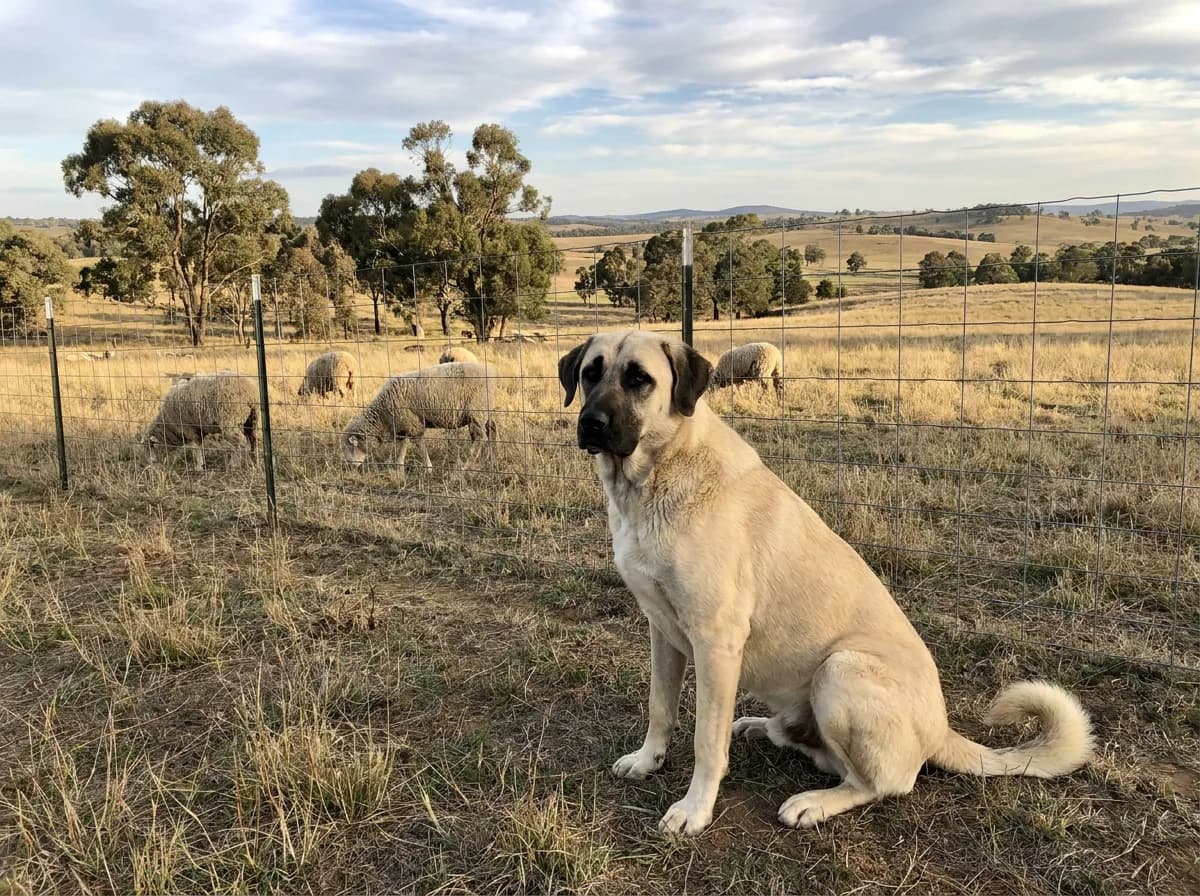
Are Anatolian Shepherds good guard dogs? They have a livestock-guardian background and can be watchful and territorial. That does not make every dog a suitable personal-protection dog or justify encouraging aggression. A prospective owner needs secure containment, thoughtful introductions, and a plan for controlling access to the property, not a promise that the dog will decide correctly in every encounter.
For a working placement, establish what the dog has actually experienced:
- Which livestock species and ages has it lived around?
- Was it supervised with those animals, or working independently?
- What boundaries, shelter, feeding, and human contact were provided?
- How did it respond to routine handlers and unfamiliar visitors?
- What training or support does the receiving property still need to supply?
A dog experienced with adult sheep is not automatically ready for every goat, poultry flock, newborn animal, or household pet. Discuss the proposed job with people who understand livestock-guardian development. Do not test suitability by leaving an inexperienced dog alone with vulnerable stock. Ask the current owner to describe the conditions under which the dog has worked: how stock were introduced, who provided daily care, what fences were used, and where the dog rested. A claim of successful work is more useful when those conditions are clear. Compare them with your own property before assuming that the same dog can immediately take on a different job without support.
The Cheetah Conservation Fund describes its livestock-guarding dog program in Namibia, begun in 1994, as using Kangal and Anatolian dogs that bond with herds and deter predators. The program includes farmer selection, training, owner education, and follow-up veterinary care. The Anatolian Shepherd and cheetah connection is therefore about managed livestock protection, not staging encounters between dogs and wildlife.
That support is part of the example, not an optional detail. A puppy's breed name does not recreate an established program on a different property. Ask who will guide its development, how the livestock will be protected while it learns, and what will happen if the arrangement does not work. The aim is to prevent conflict while meeting the needs of the dog, livestock, and people.
Comparing Anatolian Shepherds and Great Pyrenees
Both the Anatolian Shepherd and Great Pyrenees have livestock-guardian backgrounds, but their standards, coats, and individual histories differ. Our Anatolian Shepherd vs. Great Pyrenees comparison separates those differences from broad friendliness rankings. Choose a working or companion dog by the actual setting, records, and observed behavior rather than assuming that one guardian breed will automatically require less management.
Training, socialization and containment
Independent work does not remove the need for training. Teach ordinary handling, calm movement through gates, settling in a designated area, and comfortable participation in necessary care. These skills help the owner manage daily situations without relying on physical strength or expecting the dog to interpret every arrival correctly.
Use reward-based methods. The American Veterinary Society of Animal Behavior's humane training guidance supports this approach. Avoid treating independence as a reason for physical confrontation. Make tasks manageable and obtain qualified help when behavior creates difficulty.
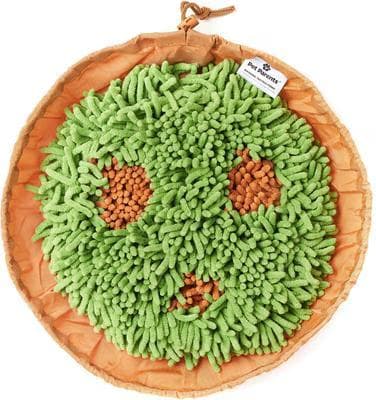
Offer supervised food-search enrichment using part of the planned allowance. Separate dogs when needed and remove the mat if it is chewed.
Petful may earn a commission when you click through to Chewy, at no extra cost to you.
WebVet's dog training schedule can help organize consistent practice. Begin in a quiet, familiar place and add distractions gradually. A dog that responds indoors has not demonstrated the same response when a stranger reaches toward a gate or another animal crosses the property boundary. Prioritize a few useful routines:
- Waiting while an adult checks and opens a gate.
- Moving calmly to a separated area before someone arrives.
- Walking on a loose lead in a manageable setting.
- Accepting gentle checks of paws, ears, and coat.
- Settling away from busy household traffic.
A Frisco Traffic Leash with Dual Padded Handles is one fixed-length option for supervised handling. A leash does not replace physical fencing, and an additional handle cannot guarantee control of a large, excited dog. Practice before relying on the equipment in a difficult situation.
Socialization should make unfamiliar experiences manageable, not require the dog to accept touching from everyone. Ask visitors to follow the household routine, give the dog space, and avoid crowding it. Calm observation at a comfortable distance can be a more useful starting point than a forced greeting.
Inspect containment as an everyday system. Consider gaps, gates, latches, delivery access, and what happens when someone forgets a routine. A secure perimeter needs everyone using it to understand the plan. Do not assume that acres of land, a visible boundary, or training alone will keep a territorial dog in the intended area.
Anatolian Shepherd temperament and behavior
Anatolian Shepherd temperament includes watchfulness, independence, and potential reservation around strangers, but individual behavior varies. Our Anatolian Shepherd temperament guide expands on visitors, barking, children, other animals, and training. Ask about the particular dog's history and observe it in relevant settings. A breed description cannot guarantee safe behavior, and a new or concerning change deserves appropriate professional assessment.
Exercise, food and grooming
Energy level in an Anatolian Shepherd should be assessed through actual activity and the ability to settle. Plan secure exercise and rest around age, condition and the individual routine.
Exercise should reflect age, health, and the dog's actual work. An adult moving around a livestock property and a companion spending much of the day resting indoors may need different routines. Neither a fixed number of acres nor an impressive breed label proves that the dog's activity needs are being met.
Provide opportunities for suitable movement and calm engagement alongside rest. Avoid turning a growing puppy's exercise into a test of endurance. Ask your veterinarian and knowledgeable breeder about activity appropriate to the individual rather than applying a universal distance or expecting it to perform an adult's job.
Supervised food-search activity
The Pet Parents Forager Snuffle Mat & Slow Feeder can provide supervised food-search enrichment using part of the planned allowance. Use it separately when dogs need space around food, and put it away if the dog chews the fabric. It is an activity option, not proof of livestock suitability or a treatment for behavioral distress.
Choose food and portions around the dog's life stage, body condition, and veterinary advice. Record treats and enrichment food as part of intake. The breed's history does not establish that every Anatolian should eat a low-protein diet, and a large adult weight range is not a target to reach through extra feeding.
For outdoor routines, provide water, shade, shelter, and an appropriate plan for the weather. A working background does not make a dog immune to heat illness. WebVet's guide to dog heatstroke signs and what to do explains warning signs and the need for prompt action.

Compare coverage choices for your pet, then request a quote directly on Lemonade.
- Check a price for your pet
- Review available coverage choices
- See the terms before you decide
Eligibility, waiting periods, limits and exclusions apply.
Petful may earn a commission when you click through to Lemonade, at no extra cost to you.
Short and rough coats need individual care
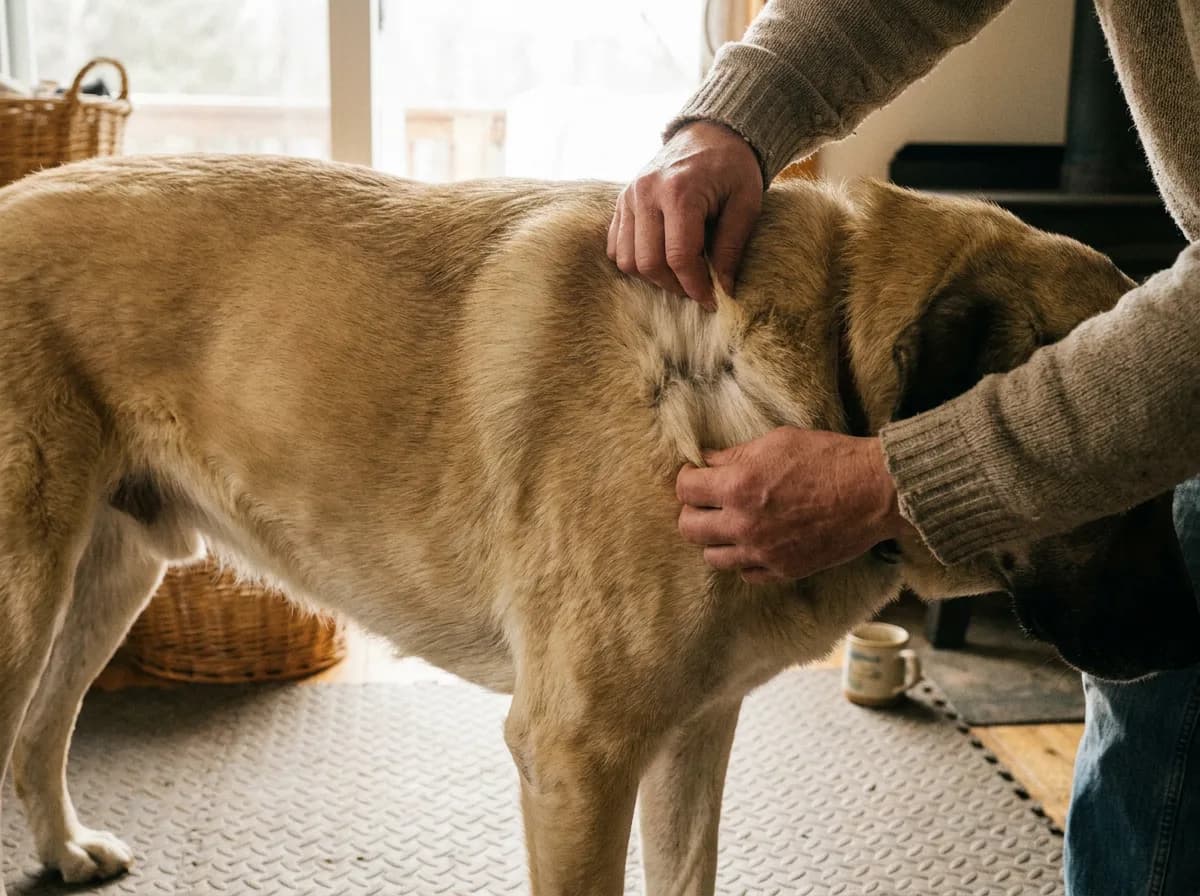
Anatolian Shepherds can shed a lot during seasonal coat changes. Both short and rough coats have an undercoat. The ASDCA notes that both coat lengths can occur within the same litter. A fluffy or long-haired advertisement does not establish a separate breed, and a short-haired Anatolian is not automatically free of undercoat care.
Adjust grooming to the coat you can feel and inspect. Work gently through appropriate areas, check where equipment rubs, and ask a groomer to demonstrate suitable tools. Do not wait until the surface looks untidy to notice whether loose undercoat or tangles are accumulating beneath it.
The Four Paws Magic Coat Wet & Dry Glove and Curry Brush may suit gentle surface grooming on appropriate coat areas. It is not a complete tool for working through a dense rough coat. Stop at discomfort and obtain help with tangles rather than pulling through them.
- Keep grooming sessions comfortable and manageable.
- Check nails, paw pads, ears, and skin as part of routine care.
- Wash resting covers and clean the areas where the dog spends time.
- Discuss sudden coat or skin changes with your veterinarian.
A shaved Anatolian Shepherd has an altered coat, not a different coat variety. Discuss clipping for a medical need or difficult matting with the professional treating the problem. Do not assume that shaving will make the dog hypoallergenic or remove the need for heat precautions.
No coat description guarantees a comfortable allergy response for every person. Spend time around the individual dog when considering household fit, and seek medical advice for significant allergy concerns. Drooling also varies with the dog and circumstances; a reassuring breed description should not make you ignore a new or excessive change.
Household fit, children and other pets
Acreage alone does not make a home suitable. A rural working property still needs secure fencing, managed visitor access, a way to supervise developing skills, and people who understand the dog's responsibilities. A rural companion home needs the same attention to ordinary arrivals, household boundaries, and relationships with other animals.
Residential settings need particular thought about nearby neighbors, shared boundaries, visitors, and daily noise. Consider what the dog can see and hear from its resting areas and yard. Repeated exposure to passing people without a workable management plan can make the environment difficult for both the dog and household.
| Setting | Requirements to plan | Questions before placement |
|---|---|---|
| Rural livestock property | Secure fencing, supervised development, livestock-specific support, visitor management | Does the dog's experience match the stock and job? |
| Rural companion home | Daily care, appropriate activity, safe boundaries, managed arrivals | Who supervises visitors and unfamiliar animals? |
| Residential household | Secure containment, nearby neighbors, practical separation, predictable routines | Can the household manage traffic, noise, and access? |
| Home with children or pets | Adult supervision, protected resting places, controlled introductions | Can separation be maintained whenever supervision is unavailable? |
With children, plan adult supervision rather than relying on the dog's loyalty to its family. Size alone creates a risk of accidental injury. Children should leave resting or eating dogs undisturbed, avoid climbing on them, and ask an adult before beginning contact or a game.
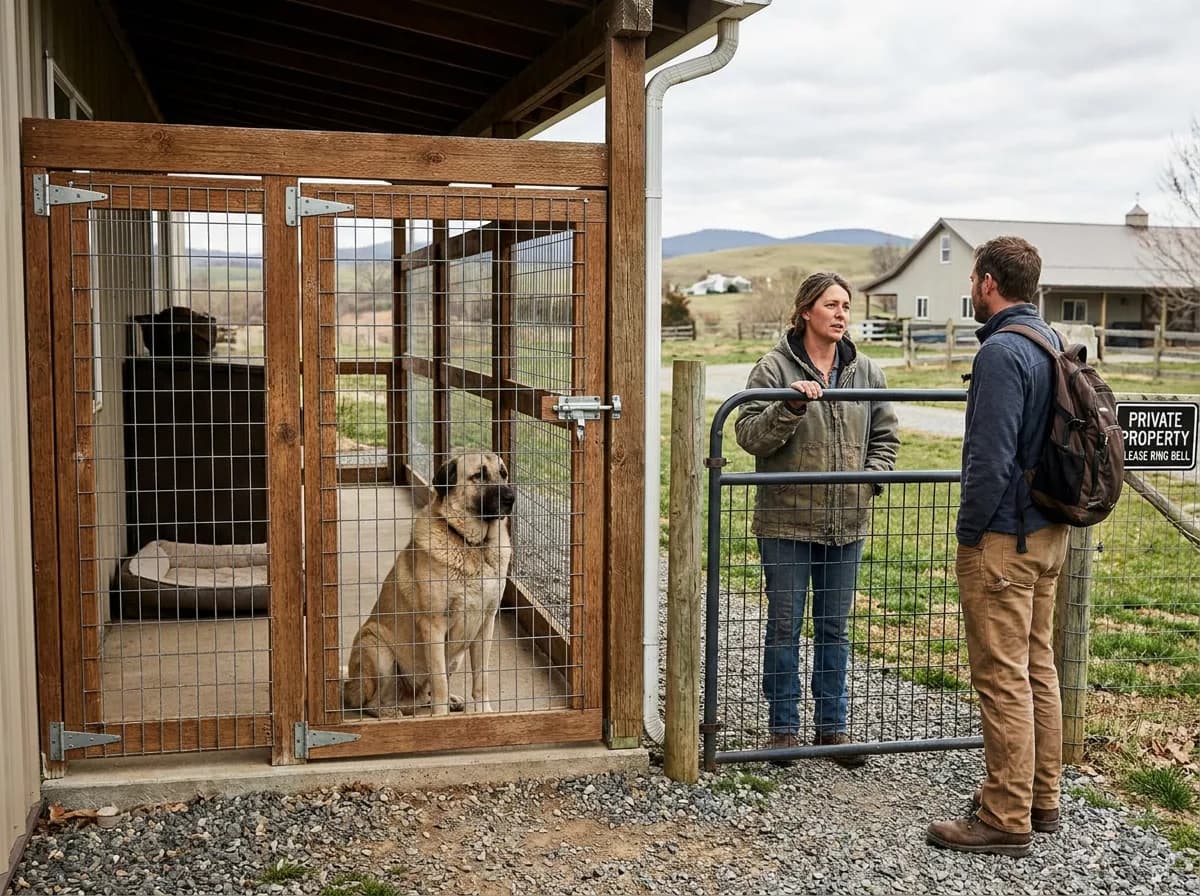
Managed visitor access means deciding what happens before the door or gate opens. Give the dog a comfortable separated space and make sure guests know where to wait. Include delivery drivers, repair workers, visiting children, and anyone who might enter through a different route from the usual front door.
Practice the arrival routine before a busy occasion. Decide who moves the dog, which barrier closes first, and who admits the visitor. Give regular helpers the same instructions and arrange a place for deliveries that does not require someone to enter the dog's area. If a repair needs access to that area, plan comfortable separation elsewhere in advance. The purpose is to make ordinary work possible without asking an unfamiliar person to negotiate with a watchful dog at the gate.
For other pets, begin with the individual's history and arrange controlled introductions. Familiarity with livestock does not prove compatibility with cats or another dog in the home. Provide room to retreat, separate resources where necessary, and barriers that remain effective when no adult is actively supervising. Walk through the setup with everyone who will care for the dog. A plan that depends on one person's memory or physical strength is fragile. Clear routines, suitable equipment, and prepared helpers make management more consistent without requiring the dog to tolerate every unexpected interaction.
Choosing a breeder, rescue or working dog
When looking for Anatolian Shepherd puppies for sale, begin with the kind of life you can offer. A puppy intended for livestock work, a prospective show dog, and a household companion may need different matching discussions. Do not let a striking photograph or a nearby advertisement replace that conversation.
The ASDCA's puppy-buyer guidance recommends questions about the parents, registration, health records, references, written terms, and the owner's facilities. Reputable Anatolian Shepherd breeders should also ask about your experience, livestock, children, other animals, fencing, and time for training.
Ask for hip and elbow screening records for breeding dogs. The AKC's breed-club testing recommendations identify both evaluations for Anatolian Shepherds. A general DNA panel is not a substitute for those orthopedic assessments, and completed screening is not a lifetime health guarantee. Before agreeing to buy or adopt, clarify:
- Which parents, registration details, and health results are documented.
- What the puppy or adult has experienced with people and animals.
- Which veterinary records transfer with the dog.
- What written contract, support, and return arrangements apply.
- What the total purchase price or adoption fee includes.
For Anatolian Shepherd rescue, ask how the dog's breed identity was assigned and what has been observed in its current placement. The National Anatolian Shepherd Rescue Network, or NASRN, is a name you may encounter while searching. Confirm current contact details, application arrangements, and availability directly; do not assume that a search listing establishes an active placement or a particular fee.
An adult rescue may come with useful observations about home life, while a puppy's future behavior remains less developed. Neither option should be promised as automatically easier. Ask the caregiver to distinguish known history from estimates and explain what support helped the dog succeed. For an adult offered as a working dog, ask why it is being rehomed and whether the proposed job differs from its previous one. For a household placement, ask about visitors, time alone, transport, handling, and other animals. Request examples from ordinary life rather than a single demonstration. Make sure the contract and follow-up arrangements match the placement you discussed, and identify whom to contact if the dog's needs turn out to differ from expectations.
If comparing a personalized Lemonade pet insurance quote, describe the actual dog and circumstances accurately. Check eligibility, waiting periods, exclusions, deductibles, and reimbursement terms. Do not assume a policy covers livestock work or every expense simply because the breed is accepted.
Anatolian Shepherd costs and budgeting
Anatolian Shepherd price should be compared using a current written quote or adoption fee, with its inclusions stated. Our Anatolian Shepherd price guide separates acquisition from the costs of food, equipment, training, fencing, transport, and veterinary care. Build the budget around your property and the individual dog rather than treating one breeder's price as a national average.
Anatolian Shepherd lifespan and health
The ASDCA gives an 11–13-year lifespan reference for dogs in a normal, safe environment. That is broad breed guidance, not a prediction for an individual. Our Anatolian Shepherd lifespan guide covers the evidence, screening, and practical health planning. Keep hip and elbow records, routine veterinary assessment, and attention to changes in comfort separate from any assumption that a working breed is automatically free of health problems.
Anatolian Shepherd mixes and ancestry
An Anatolian Shepherd mix may have documented parents, a DNA ancestry estimate, or a label based largely on appearance. Those are different kinds of information. Our Anatolian Shepherd mix guide explains named crosses and how to assess the individual without predicting a fixed blend of size or temperament. Mixed ancestry does not by itself establish working ability, health, or suitability around livestock and household pets.
Anatolian Shepherd questions
Anatolian pronunciation is approximately an-uh-TOH-lee-un; say Shepherd as SHEP-erd. The breed pronunciation puts the main stress on TOH in Anatolian Shepherd. The name refers to the breed's connection with Anatolia, in Turkey.
Indoor living can be part of an appropriate home, but household management matters. Consider space and routine, safe access to outdoor activity, visitor arrangements, and separation when needed. The dog still requires suitable care and containment rather than being expected to adapt to any home solely because it has room to lie down.
Yes. Their double coat requires attention during seasonal shedding, when loose hair and undercoat may need more grooming. Short coats still shed. Choose tools and frequency for the individual coat, and ask a groomer for help if you cannot work through it comfortably.
No. Puppy development requires supervision and maturity, along with gradual livestock experience suited to the dog and stock involved. An inherited guardian background is not proof that a puppy can be left to work independently. Arrange knowledgeable support and assess progress before increasing responsibility.

Kristine Lacoste has been researching dog and cat breeds for nearly a decade and has observed the animals up close at dog shows in both the United States and the United Kingdom. She is the author of the book One Unforgettable Journey, which was named as a finalist for a Maxwell Award from the Dog Writers Association of America, and was host of a weekly pet news segment on the National K-9 Academy Radio Show. In addition, she was the New Orleans coordinator for Dogs on Deployment, a nonprofit that helps military members and their pets, for 3 years. Kristine has researched and written about pet behaviors and care for many years. She holds a bachelor’s degree in psychology, another bachelor’s degree in English and a Master of Business Administration degree.
Sign up for expert-backed reviews and safety alerts all in one place.