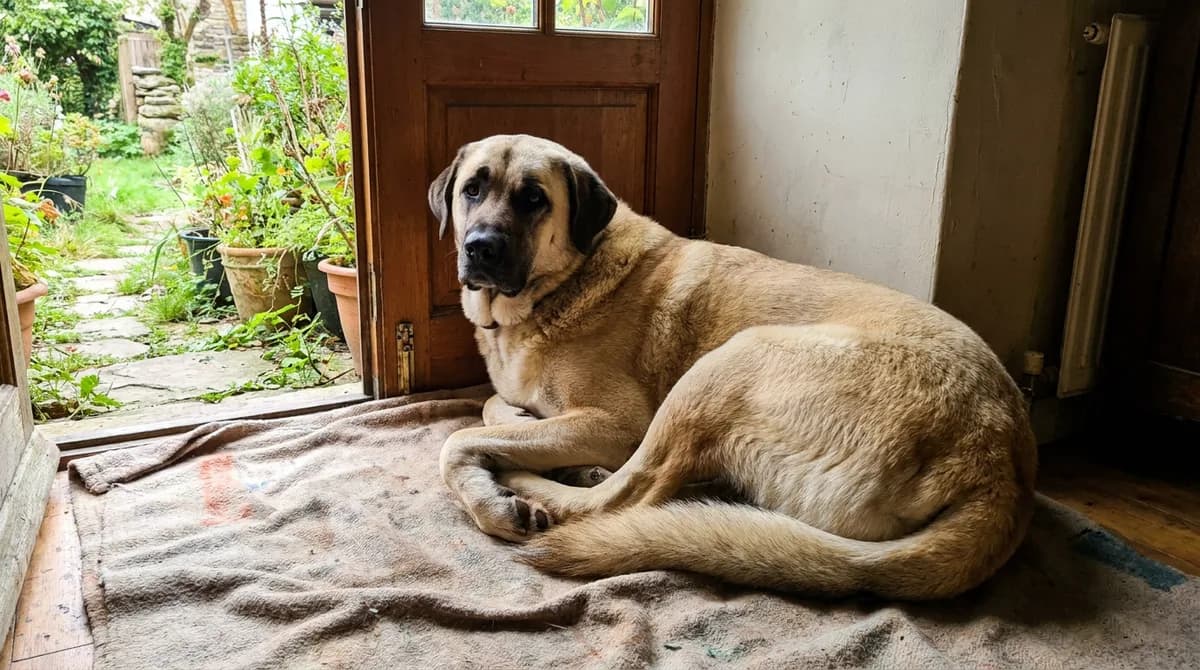
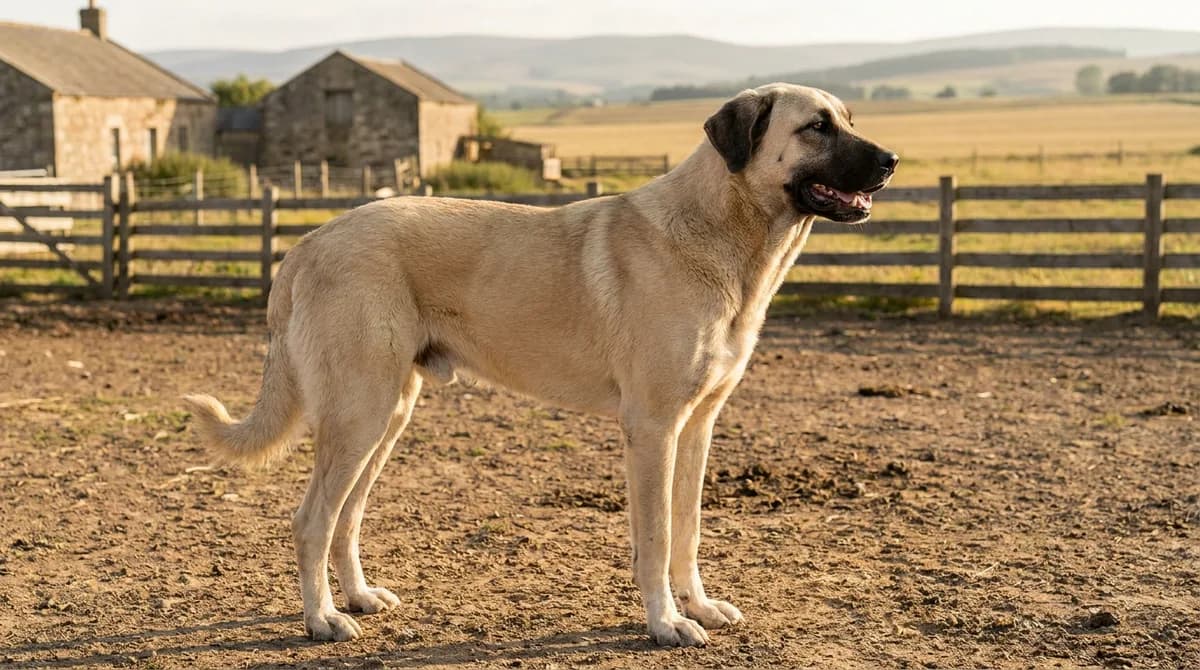
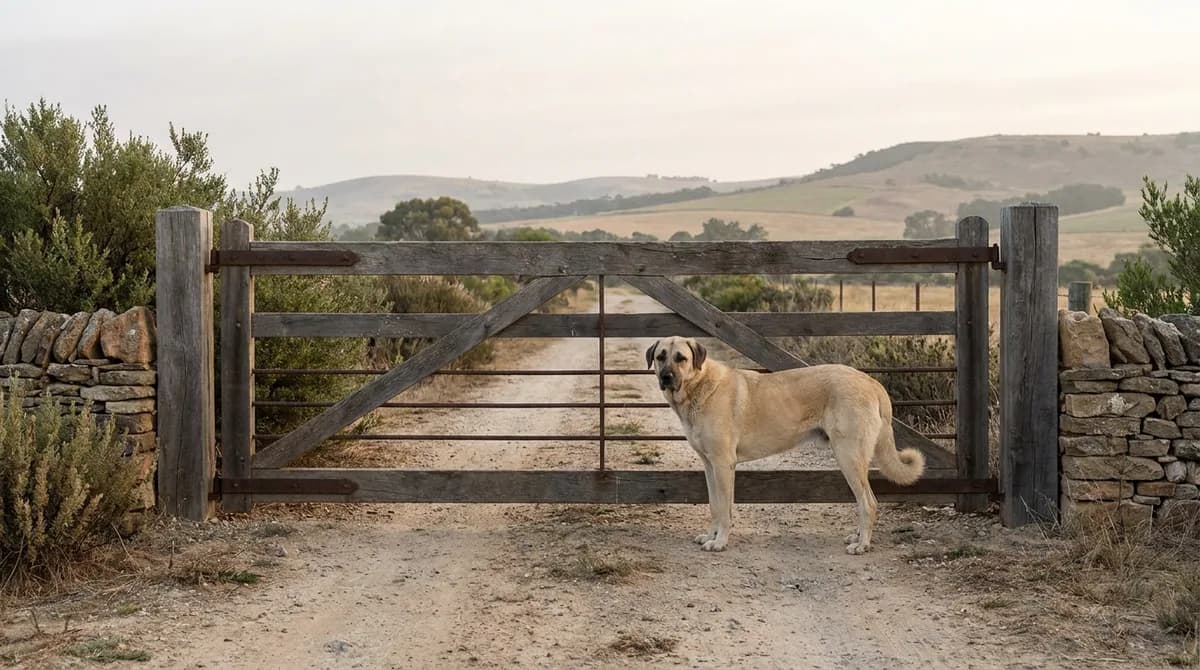
Anatolian Shepherd vs Great Pyrenees: Which Fits You?
Both breeds are independent livestock guardians, but their coats and breed standards differ. Compare the practical demands of grooming, boundaries, visitors, livestock experience, and long-term care.
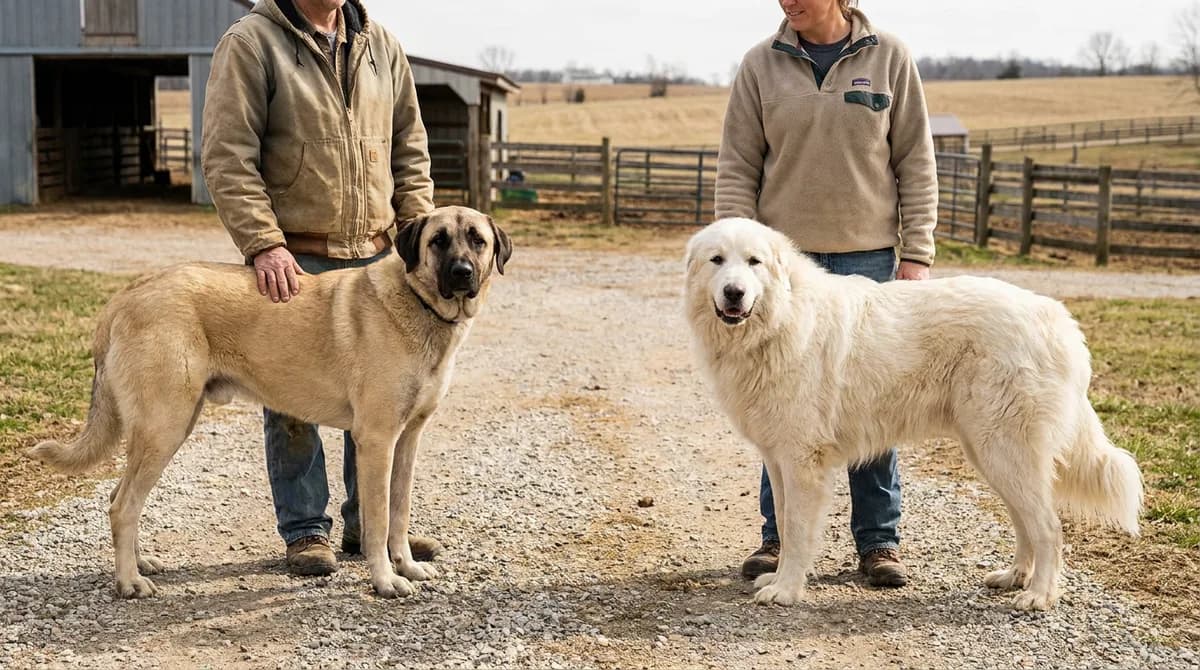
Compare the breed standards and each individual dog.
Petful is reader supported. As an affiliate of platforms like Amazon and Chewy, we may earn a commission when you buy through links on this page. There is no extra cost to you.
An Anatolian Shepherd vs Great Pyrenees decision starts with two questions: what job will the dog have, and what daily care can your household provide? Both are substantial livestock guardians. Their physical differences are easier to document than claims that one is always calmer, tougher, or better with children.
The Great Pyrenees has a long, principally white double coat and double rear dewclaws. The Anatolian has a short or rough coat with an undercoat and a wider range of accepted colors. Beyond those visible differences, choose through the working experience, behavior, health records, and needs of the individual dog.

Sign up for expert-backed reviews and safety alerts all in one place.
Anatolian Shepherd vs Great Pyrenees at a glance
The comparison below uses adult measurements from breed standards published by the AKC. Read the qualifications alongside the figures: the Anatolian standard specifies dogs age two or older, while the Great Pyrenees standard gives weight examples tied to particular heights rather than one universal weight range.
| Feature | Anatolian Shepherd | Great Pyrenees |
|---|---|---|
| Male measurements | From 29 inches; 110–150 pounds | 27–32 inches; about 100 pounds at 27 inches, with weight proportional to size |
| Female measurements | From 27 inches; 80–120 pounds | 25–29 inches; about 85 pounds at 25 inches, with weight proportional to size |
| Measurement qualification | Age two or older; height at the shoulder | Adult standard; weight examples refer to the stated heights |
| Coat | Short or rough with undercoat; all color patterns accepted | Long weather-resistant double coat; principally white |
| Rear dewclaws | Do not use this feature alone to identify ancestry | Double rear dewclaws required by the standard |
| Traditional role | Livestock guardian from Turkey and Asia Minor | Flock guardian associated with the Pyrenees |
What dog breeds are most similar to the Great Pyrenees? If you mean working purpose, the Anatolian Shepherd is a relevant comparison because both developed as livestock guardians. If you mean appearance, coat, or ease of household management, the answer changes. A shared guardian role does not establish identical behavior, and a white coat does not identify one breed reliably.
Use the Anatolian Shepherd standard and Great Pyrenees standard as reference descriptions. A standard is not a survey of every living dog or a promise about the puppy you meet.
When comparing candidates, use three separate categories: what the standard describes, what the current caregiver can document, and what you observe yourself. A breed description helps you anticipate questions. A medical or training record answers some of them. A meeting provides another limited view. None should be stretched to cover information it does not contain. For example, knowing that both breeds are guardians does not tell you whether a particular adult has lived with children, traveled calmly in a vehicle, or accepted routine grooming. Put those household requirements in writing before visiting. That makes it easier to notice a mismatch rather than letting an appealing appearance decide the placement.
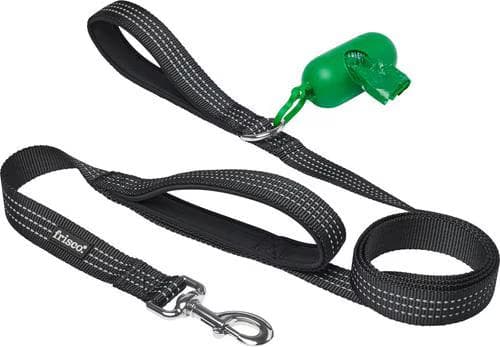
Compare the Frisco Traffic Leash for supervised handling. Check the attachment and hardware for the individual dog; training still matters.
Petful may earn a commission when you click through to Chewy, at no extra cost to you.
Anatolian Shepherd breed overview
The Anatolian's background helps explain its independent decisions and watchfulness around its surroundings. Those traits can support livestock work while requiring thoughtful management around a household's visitors and neighboring animals. Our Anatolian Shepherd breed overview explains history, breed identity, coat variation, and care. Read that background alongside the individual dog's records so a broad description does not become an assumption about an unfamiliar dog.
Size and physical differences
There is substantial overlap in shoulder height. A large Great Pyrenees can stand taller than an individual Anatolian, and the reverse can also be true. Sex, age, frame, and the actual measurement matter. A thick coat can make a dog appear broader without establishing that it weighs more.
The Anatolian figures in the table apply at two years of age or older. Their stated heights are starting points, not maximums. The Great Pyrenees weight examples should not be turned into a claimed minimum for every male or female, nor stretched into an invented adult range. Keeping the two standards' conventions visible makes the comparison more useful.
Strength and practical handling
Is the Anatolian Shepherd the strongest dog? The breed standard does not establish a strongest-dog ranking, and no validated comparison here supports that claim. Body weight, physical power, endurance, and behavior are different things. For an owner, the useful question is whether the dog can be handled safely in ordinary situations, including when distracted or reluctant to move.
Compare practical fit before choosing either breed:
- Can the adult dog enter and rest comfortably in your vehicle?
- Is there enough usable floor space for a bed and clear walking routes?
- Can the responsible adults manage doors, leads, and appointments?
- Are barriers and equipment suitable for the actual dog's dimensions?
- Is there a plan if the dog later needs help with mobility?
If two adult dogs are available to meet, compare them on level ground and use shoulder height rather than head position. Ask for recent recorded weights instead of estimating through the coat. Watch the dogs turn, lie down, and move through an ordinary doorway. Those observations do not diagnose soundness, but they help you picture how each dog uses space and whether your planned setup is realistic.
Anatolian Shepherd size and measurements
A puppy's present weight does not specify its exact adult dimensions. Our Anatolian Shepherd size guide explains shoulder measurements, the adult-age qualification, and individual growth records. Use it to plan equipment and space without trying to push a puppy toward the top of a weight range. Measure either adult directly when evaluating transport, resting areas, or the fit of a harness.
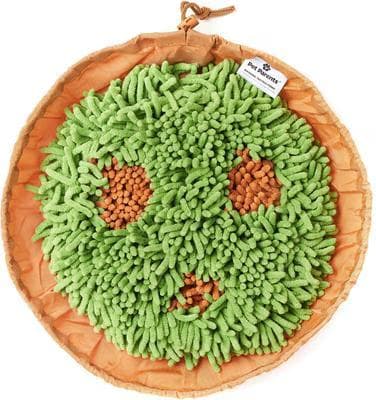
Use the Pet Parents Forager for supervised individual food searching. Keep food activities separate if either dog needs its own space.
Petful may earn a commission when you click through to Chewy, at no extra cost to you.
Coats, grooming and rear dewclaws
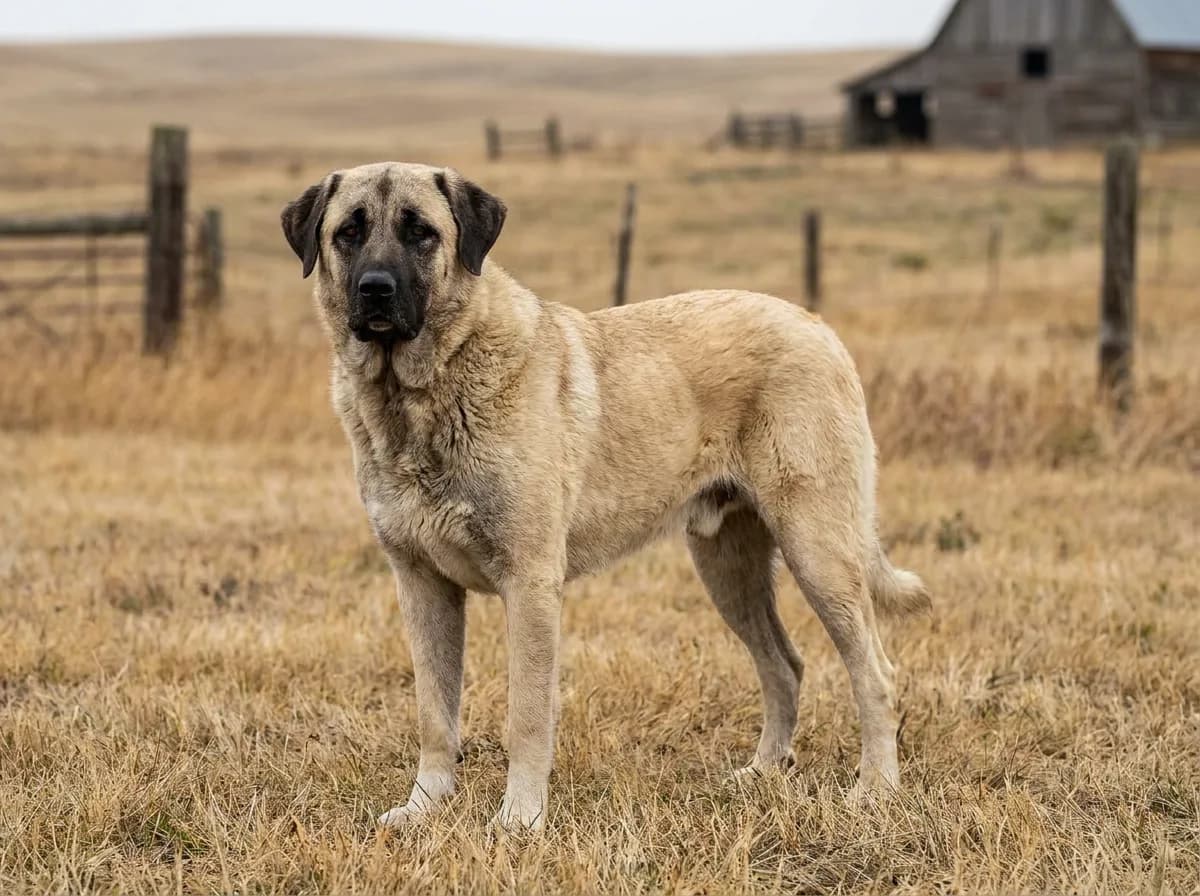
The Anatolian standard permits a short or rough coat with an undercoat. A shorter outer coat can make the dog's outline easier to see, but it does not eliminate loose hair, seasonal coat changes, or the need to check the skin. Natural ears hang down rather than standing upright.
A rough-coated Anatolian may have more hair to work through than the short-coated dog in a breed photograph. Ask to see the actual dog and discuss its grooming routine. Choose tools and technique for that coat rather than buying an item because its packaging lists “large dogs.”
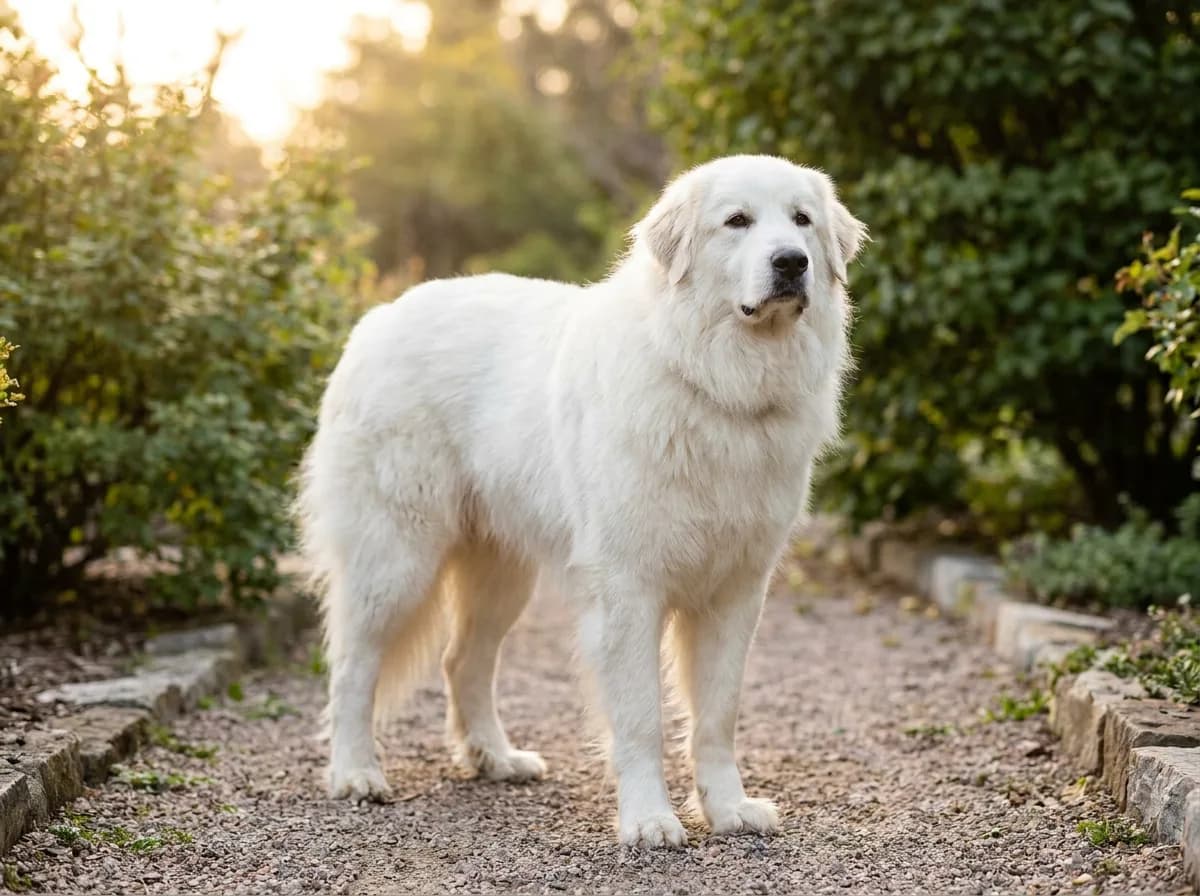
The Great Pyrenees standard describes a long double coat with a weather-resistant outer layer. Its principally white appearance and feathering create a distinct silhouette. That coat gives you more length to inspect, particularly where hair overlaps, rubs, or collects debris. A quick pass over the surface may leave tangles underneath unnoticed.
Grooming capacity is a concrete selection question. Consider whether someone can calmly work through the coat, handle the feet, and check less visible areas on a regular basis. If the answer is a professional groomer, ask about appointments, handling expectations, and costs before choosing the dog.
For either coat, build a routine that includes:
- Checking the skin beneath the hair rather than inspecting only the surface.
- Working gently through areas where tangles or debris collect.
- Looking at paws and nails, including any dewclaws.
- Teaching comfortable handling in brief sessions.
- Seeking help if brushing causes pain or the coat is tightly matted.
A grooming visit is also a handling task. A dog that allows its owner to touch a paw may still need gradual practice with another person in an unfamiliar room. Begin cooperative care before the coat or nails urgently need attention. That planning can make appointments easier without assuming that either breed naturally welcomes all handling.
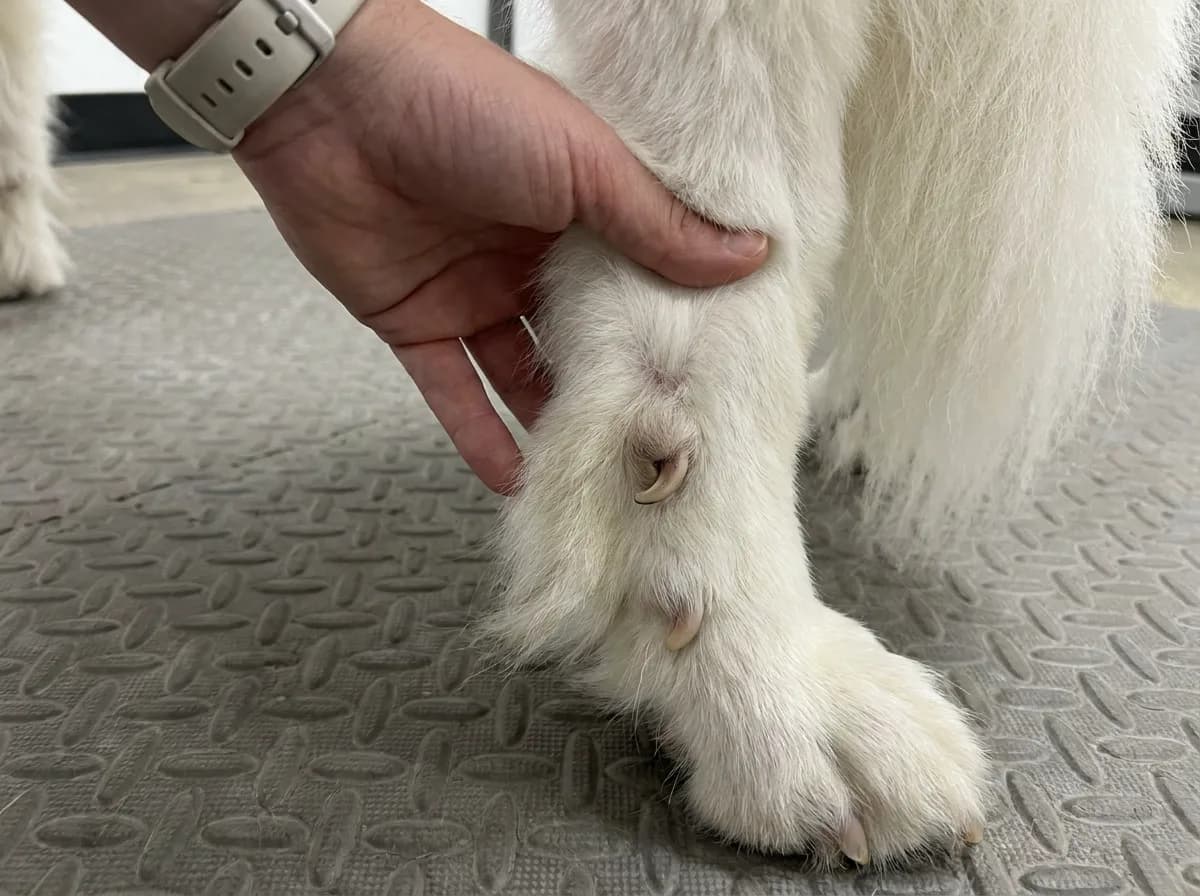
The time required for coat care also depends on the environment. Mud, plant material, and bedding can affect what you need to remove after an outing. Check the coat after activities rather than relying only on a fixed calendar. If the dog spends time outside, arrange a clean area where it can dry and be handled comfortably before entering shared household spaces. The Great Pyrenees standard requires double rear dewclaws: two dewclaws on each hind leg. Look on the inner side above the main paw. These are an anatomical detail to notice and include in nail care, not proof of a particular dog's registration or ancestry. A close view can explain the feature without using it as a breed-identification test.
Include grooming access in your plan: good footing, comfortable positioning, and a way to stop the session safely. Avoid turning a necessary task into a wrestling match with a large dog. If your current plan depends on one person physically holding the dog still for every procedure, discuss cooperative handling and professional support before deciding that the care routine is manageable. If you are unsure which nails need care or how to handle them comfortably, ask a veterinarian or groomer to demonstrate. Do not make assumptions about removal from a photograph or breed comparison. A painful, injured, or abnormal nail needs an individual assessment.
Coat color and rear dewclaws cannot authenticate ancestry. Use documented history where available and assess the individual coat, handling and care needs.
Family, visitors and other animals
Both dogs' guardian backgrounds make household routines important. A calm encounter with an unfamiliar visitor is useful information, but it does not guarantee the same response when someone enters through a different door or approaches the dog's resting area. Ask the current caregiver what the dog has actually experienced.
Families should decide who controls entry, where the dog can rest undisturbed, and how children are supervised. Do not ask a child to manage a powerful dog's protective response. Gates and separate rooms can create useful options when the household is busy, and those options should be introduced before a difficult situation arises.
Evaluate the dog in everyday contexts that resemble your life:
- Adults arriving through the usual entrance.
- Delivery activity or work near the boundary.
- Calm handling by an unfamiliar professional.
- Children moving around under close adult supervision.
- Other dogs at a comfortable distance.
- Food, resting places, and valued objects kept appropriately separate.
Do Great Pyrenees get along with Australian shepherds? Some individuals may, but that breed pairing does not guarantee compatibility. Look at each dog's history, social behavior, activity, and response to sharing space. Managed introductions, supervision, and separate resources matter more than assuming a guardian and a herding dog will naturally form a suitable team.
If you already have a dog, discuss the introduction plan with the rescue, breeder, or a qualified behavior professional. Give each dog an escape from social pressure and a place to rest without being approached. A successful first meeting is a starting point; continued observation is needed as the dogs begin using the same home. Supervised enrichment can form part of an individual routine. A Pet Parents Forager can hold some of the normal food allowance for searching. Offer food activities separately if sharing causes tension, supervise use, and remove the item if the dog chews its material.
For cats, poultry, or small animals, make the questions specific:
- Ask which animals the dog has actually encountered and what happened.
- Distinguish living nearby behind a barrier from safely sharing space.
- Plan introductions around the more vulnerable animal's safety.
- Avoid using unprotected exposure to test whether the dog will chase.
Also think about changes after the dog joins your home. A new baby, visiting relative, boarding arrangement, or additional pet can alter established routines. You do not need to predict every future event, but you do need workable separation and a handler who can use it. Practice those arrangements when the household is quiet so they are familiar when circumstances change.
Visitors should receive clear instructions rather than being asked to improvise. Tell them which entrance to use, when to wait, and whether to avoid approaching the dog. Some guests may be uncomfortable around a large guardian even when the dog is calm. A secure alternative resting area respects both the dog's space and the visitor's needs.
Which breed fits your property and household?
An Anatolian Shepherd versus Great Pyrenees comparison becomes useful when it answers specific property requirements. Start with the work or companion role, then consider coat grooming, nearby neighbors, visitor traffic, and the working experience of the individual dog. Neither breed should win by default because a description calls it loyal or protective.
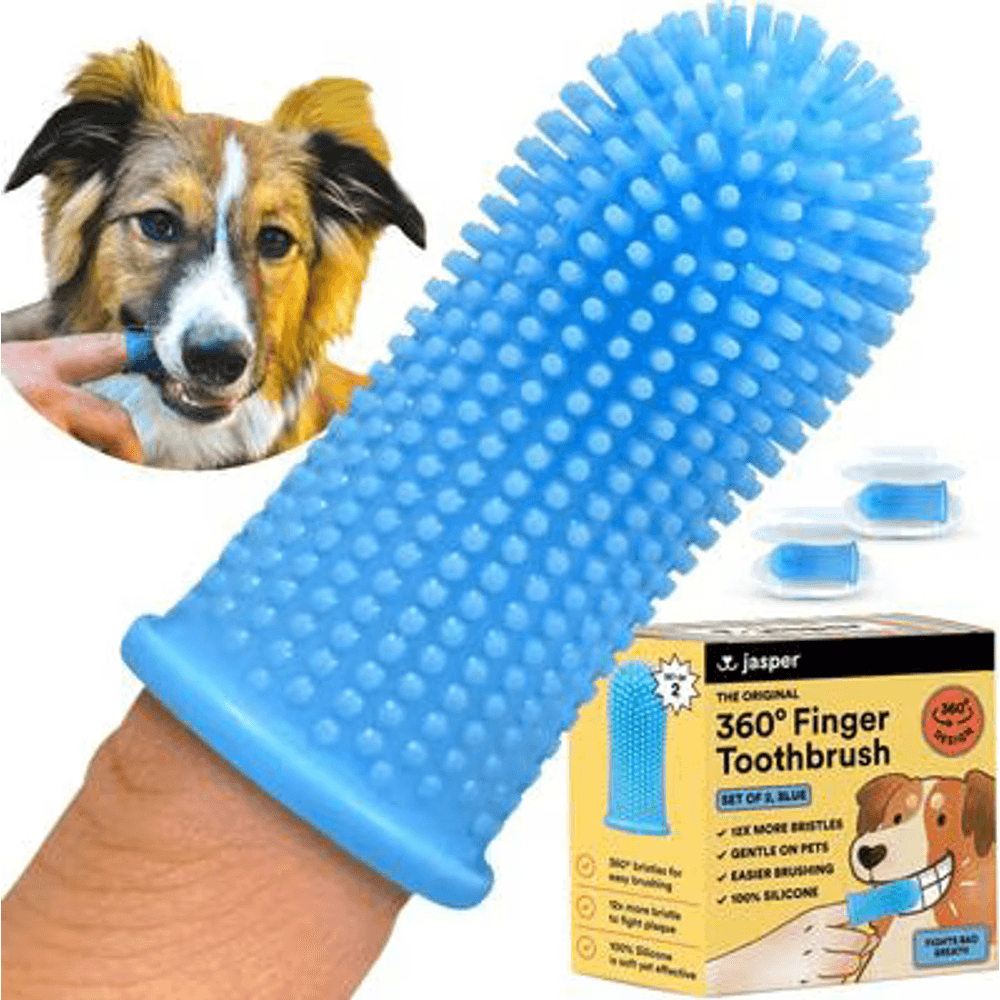
The Jasper 360 finger toothbrush is one option for cooperative oral care. Introduce mouth handling gradually and follow veterinary advice.
Petful may earn a commission when you click through to Chewy, at no extra cost to you.
| Decision | Anatolian Shepherd assessment | Great Pyrenees assessment |
|---|---|---|
| Property requirements | Inspect actual fencing, gate routines, shelter, and separation areas | Inspect the same requirements for the individual dog |
| Nearby neighbors | Ask about observed alerting and boundary responses | Ask about observed alerting and boundary responses |
| Coat grooming | Plan for the actual short or rough double coat | Plan for a long double coat, feathering, and rear-dewclaw care |
| Visitors and family | Evaluate history and establish supervised entry routines | Evaluate history and establish supervised entry routines |
| Working experience | Request documented experience with the relevant livestock | Request documented experience with the relevant livestock |
| Existing animals | Arrange managed introductions and separate resources | Arrange managed introductions and separate resources |
| Long-term care | Review health records, handling, transport, and costs | Review health records, handling, transport, and costs |
Why do so many Great Pyrenees end up in shelters? The sources used here do not quantify surrender rates or establish one cause, so that question's premise should not become a statistic. A useful prevention step is to discuss potential mismatches before adoption: barking, boundaries, grooming demands, independent behavior, and the household's expectations.
Ask the organization about the actual dog's reason for placement and what support is available. A surrender history does not by itself prove a behavior problem, and a lack of detailed history does not justify inventing one. Separate what the caregiver has observed from what remains unknown, then decide whether your household can accommodate that uncertainty.
Plan responsibilities and continuing costs
If insurance is part of the care plan, request a personalized Lemonade quote. Describe the dog's circumstances accurately, including any working role, and confirm eligibility and terms. A breed label or an attractive premium does not establish which expenses will be covered.
Use neighbor and visitor management as a practical test of your plan. Think through a delivery while someone is moving livestock, a tradesperson entering the yard, and a guest arriving when the usual handler is away. Identify the door, gate, or separate area you will use in each situation.
Make the choice with everyone who will regularly care for the dog. If one person expects a guardian while another expects a sociable dog that welcomes every visitor, resolve that difference before adoption. Agree on handling rules, boundaries, grooming responsibility, and who pays for outside help. Consistency is much easier when the household has chosen the same role. A trial or supported transition may be available through some placements, but ask for the specific terms rather than assuming it is offered. Clarify whom to contact, what concerns should be reported promptly, and what return arrangements apply. A suitable placement is one with realistic expectations and a workable response when questions arise, not one sold with sweeping guarantees.
Anatolian Shepherd costs and budgeting
Purchase price is only one part of choosing a guardian. Containment repairs, transport, training, grooming, and veterinary care can change the first-year commitment. Our Anatolian Shepherd price guide uses attributed purchase examples and an individual budget worksheet. Obtain equivalent local quotes for either breed instead of declaring one cheaper from a single advertisement or assuming existing farm equipment is automatically suitable.
Barking, fencing and reward-based training
Barking should be part of the selection conversation for both breeds. A livestock guardian's alerting can be appropriate to its working context while being difficult for nearby households. The sources cited here do not support a numerical ranking of which breed barks more or a promise that one will stay quiet at night.
Ask about the individual dog's usual triggers, where it sleeps, and what happens when people or animals pass the property. A rural dog moving into a busier neighborhood encounters a different stream of events. Before arrival, decide how you will manage access to stimulating boundary areas and where the dog can settle.

Compare coverage choices for your pet, then request a quote directly on Lemonade.
- Check a price for your pet
- Review available coverage choices
- See the terms before you decide
Eligibility, waiting periods, limits and exclusions apply.
Petful may earn a commission when you click through to Lemonade, at no extra cost to you.
Think about the sequence before barking as well as the noise itself. Does the dog spend time watching a busy walkway, rush to a gate, or remain alert long after someone leaves? Record the setting and discuss it with a qualified professional if the response is difficult to manage. A repeated pattern can suggest where to change access or practice a different routine. A useful training plan gives the dog clear actions to practice:
- Move with the handler through a gate without rushing.
- Return from the boundary when called in a controlled setting.
- Settle in a designated safe area during visitor arrivals.
- Accept brief collar, harness, and paw handling.
- Walk on a suitable lead without persistent pulling.
- Pause while a door is opened or equipment is adjusted.
The AVSAB humane training position statement supports reward-based methods. Independence is not a reason to use confrontation or physical punishment. Arrange the setting so the dog can succeed, reward the behavior you want, and obtain help when fear, aggression, or difficult guarding behavior affects safety.
WebVet's dog training schedule offers a framework for consistent practice. Adapt sessions to the individual and the task. Brief, manageable repetitions at a quiet gate are more useful than waiting for a busy delivery and hoping a newly taught cue will work under pressure.
Check the boundary physically. Look at the ground, joins, corners, gates, and areas where materials have loosened. A fence that contains livestock may not contain the dog. A property's size also does not tell you how well entrances are managed or whether people can pass safely through work areas. The Frisco Traffic Leash is a fixed-length option for supervised handling. Check its attachment and hardware against the individual dog's needs. A lead helps with controlled outings and transfers, but it does not replace secure fencing, a suitable introduction plan, or training.
Anatolian Shepherd temperament and behavior
An Anatolian's watchfulness, territorial behavior, and independent decisions need to be understood in context. Our Anatolian Shepherd temperament guide covers management and training in more detail. Do not convert those tendencies into a prediction that every Anatolian is aggressive or that every Great Pyrenees is easier. The relevant comparison is between the candidate dogs' observed behavior and the routines you can sustain.
Livestock-guardian work and individual experience
Both breeds developed to protect livestock, but a guardian is not a herding dog. The goal is not simply to move animals in response to a handler's directions. Selecting a guardian involves the dog's relationship with the animals, its behavior in that setting, and the management that supports the work.
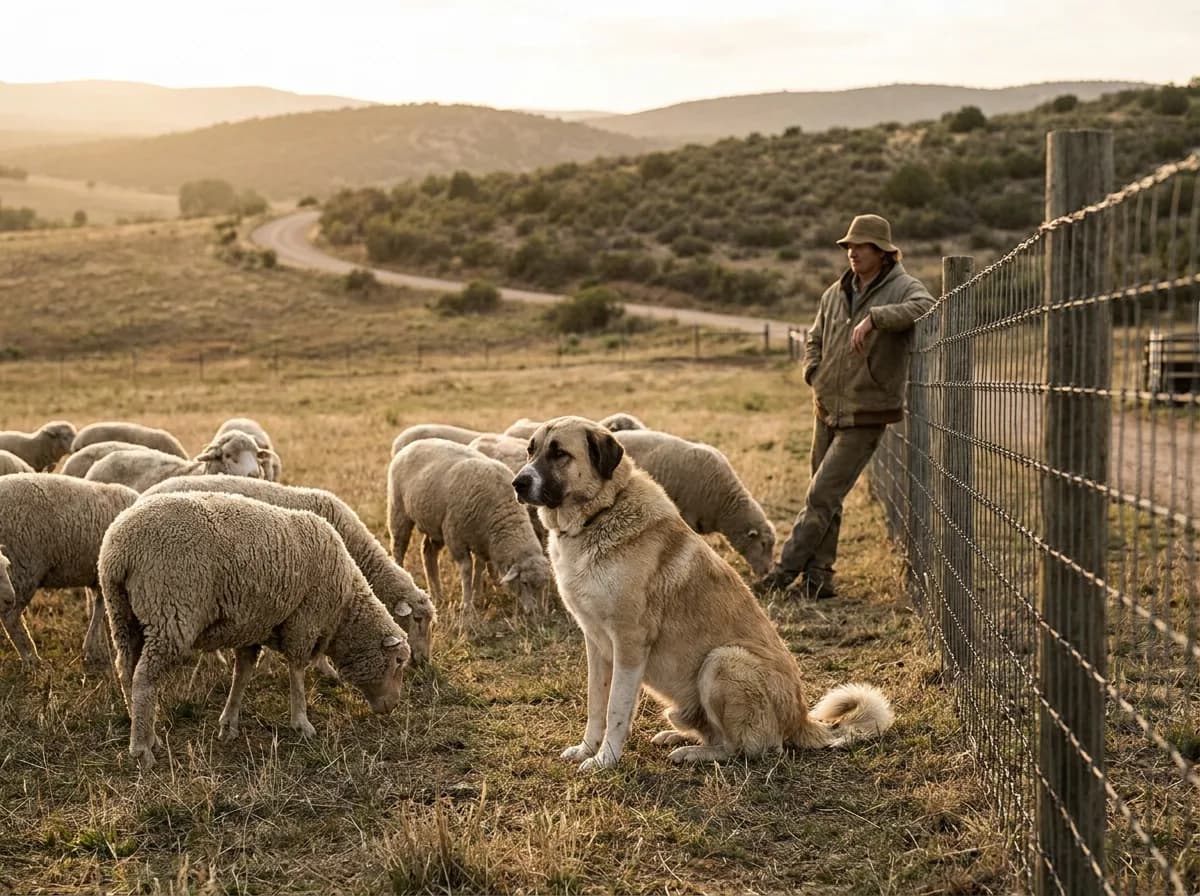
The Anatolian's standard and breed-club history describe livestock protection. That background is relevant, but it does not certify any individual puppy or adult as reliable with your animals. Ask which species and ages the dog has encountered and how that contact was managed.
An experienced adult may offer more observed history than a puppy. It still needs a transition plan for new boundaries, handlers, animals, and routines. A dog described as successful in a large established guardian group is not automatically prepared to work alone in a different setting.
Request concrete information about:
- The species, ages, and number of animals in the previous setting.
- The duration and type of supervised exposure.
- Whether the dog worked alone or with other guardians.
- Its behavior during feeding, handling, and movement of animals.
- Any chasing, rough interaction, escapes, or other incidents.
- What ongoing guidance the breeder or previous owner can provide.
Include the people who routinely enter livestock areas in the discussion. A farm worker, veterinarian, or family member may need to handle animals while the guardian is nearby. Establish where the dog will be during those tasks and how the handler will move it. If the current owner manages similar situations successfully, ask to understand that routine. If your setup is different, identify what must change before transfer. Good working placement includes predictable access for people as well as an appropriate relationship between dog and stock.
For a puppy, ask what preparation has already occurred and what remains your responsibility. Proximity to livestock is not the same as demonstrated reliability. You need appropriate supervision, safe separation options, and time to teach the routines of the property. A photograph of a puppy among sheep cannot answer those questions.
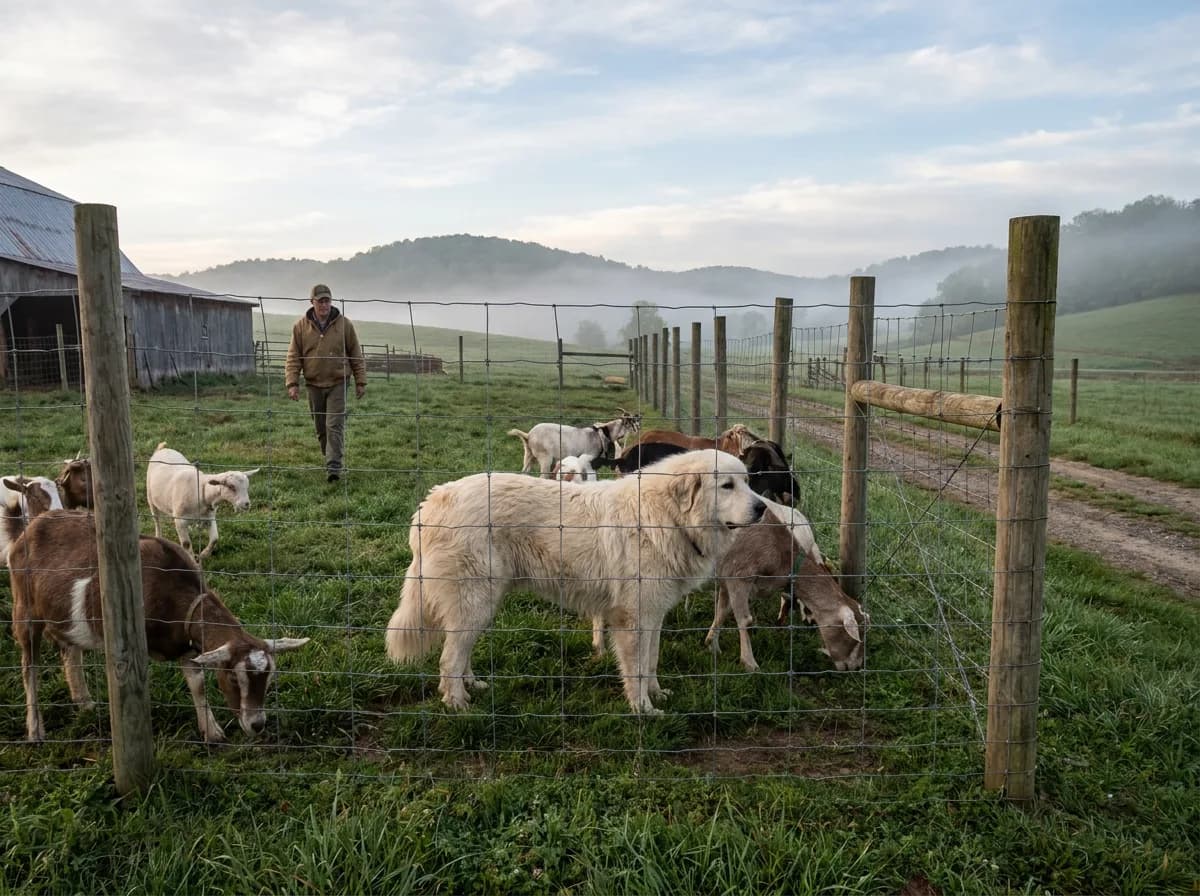
The Great Pyrenees standard likewise describes a flock guardian. Its composed appearance in a pasture should not be interpreted as proof that it needs no instruction or management. Discuss its actual work history with the same care you would apply to an Anatolian.
Ask how the current handler knows when the dog is ready for more responsibility. Useful answers describe observations, the animals involved, and how supervision changes. A statement that the dog comes from working parents adds background, but it does not describe what this individual has learned. Likewise, a young dog being physically large does not make its judgment equivalent to an experienced adult's.
A visit should allow you to observe ordinary routines without staging a dangerous challenge. Watch how the handler moves through gates, how the dog responds to familiar animals, and how it settles after activity. Ask questions about events you cannot see in a short visit. Do not arrange a predator encounter or provoke an animal to evaluate supposed courage. A practical transition plan assigns responsibilities:
- Decide where the dog can rest and be safely separated.
- Introduce the property and handlers without overwhelming it.
- Arrange controlled exposure to the intended livestock.
- Record what is observed rather than labeling progress from one encounter.
- Adjust supervision and access with experienced guidance.
- Review any problem before allowing the situation to repeat.
Changing livestock also changes the setting. Experience with adult sheep does not prove suitability around poultry or newborn animals. If your property includes several species, ask about each separately and plan barriers that allow you to manage them independently. That specificity is more useful than asking which breed is the “best farm dog.”
Keep a practical record during the transition. Note the situation, the animals present, the supervision used, and the dog's response. This is more informative for a breeder or trainer than saying the dog had a “good” or “bad” day. If a concerning interaction occurs, separate safely and ask for guidance before expanding access again.
The owner remains responsible for the whole operation: sound boundaries, animal care, observation, and a response plan if the arrangement is not working. Choosing a breed with guardian history is one part of that preparation. It does not replace the daily work of maintaining a safe setting for the dog, livestock, and people.
Health screening and long-term care
Compare records rather than assigning a healthier-breed winner from appearances. Ask which screening evaluations are recommended for the relevant breed, what has been completed for the parents, and what is known about the individual dog. An adult's veterinary history and current needs are separate from the parents' test results.
For Anatolians, the AKC working-group health-testing requirements identify hip and elbow evaluations. Obtain the actual reports. Do not assume that a general DNA panel, a vaccination record, or a statement that the parents are healthy supplies those orthopedic results.
For a Great Pyrenees, request the breed-specific screening records and have unclear documents explained before purchase. This comparison does not establish that the two breeds share an identical testing list. Verify the relevant dog's identity on the reports and keep copies for your veterinarian. Plan for shared care tasks:
- A suitable diet and feeding amount for life stage and condition.
- Routine veterinary care and recommended prevention.
- Comfortable grooming, nail care, and oral handling.
- Safe transport and an accessible resting place.
- Appropriate activity and opportunities to settle.
- Adjustments when health, mobility, or daily needs change.
A Jasper 360 finger toothbrush is one option for a dog comfortable with gentle mouth handling. Introduce it gradually and follow veterinary advice about dental care. A home-care tool is separate from health screening and does not replace examination or treatment when a problem is present.
Plan for weather without assuming coat length supplies a complete tolerance rating. Both dogs need an appropriate environment, water, shade, and changes to activity when conditions require them. WebVet's guide to dog heatstroke signs and what to do explains warning signs and the need for prompt action. Do not use a working history as proof that a dog cannot overheat.
Consider how ordinary care will happen when the dog is older or temporarily unwell. Can the dog reach its sleeping area without an awkward climb? Is there a realistic way to get it into transport? Is someone available for appointments when the usual caregiver cannot attend? Planning access early is easier than redesigning the routine during an urgent problem. Keep routine expenses separate from a contingency for unexpected needs. Compare actual veterinary and grooming quotes for the candidate dogs and disclose known conditions when seeking insurance. An apparently lower purchase price does not settle the long-term commitment. The relevant cost is the care your chosen dog needs in your location.
Anatolian Shepherd lifespan and health
The Anatolian Shepherd lifespan guide distinguishes breed-club lifespan guidance from a measured survival forecast for an individual. This comparison does not have equivalent modern cohort evidence that would justify saying one breed will live longer. For the dog you are considering, focus on age, records, current condition, and the care commitment you can sustain over time.
Anatolian Shepherd mixes and ancestry
The crossbreed distinction matters: Anatolian Pyrenees is a label used for an Anatolian Shepherd and Great Pyrenees mix. It should not be confused with either purebred standard or with evidence that a particular dog has the stated parents. Our Anatolian Shepherd mix guide explains how to evaluate documented ancestry, appearance-based guesses, and individual needs. Mixed-breed profiles cannot establish reliable comparisons between the two purebred populations.
Anatolian Shepherd and Great Pyrenees questions
They may work together when individual compatibility and the setting support it. Managed introductions and supervision are essential, and each dog needs an appropriate role and access to resources. A complementary breed pairing should not be assumed from names alone.
No. An Anatolian still has a double coat and needs regular brushing, skin checks, and routine nail care. Coat grooming should match the individual coat and its condition. Shorter hair changes the task; it does not remove it.
Neither breed comes with a predator protection guarantee. Secure fencing, supervision, livestock care, and a response plan belong to the whole property-management plan. Do not treat a guardian dog as a substitute for the rest of that preparation.
No. An Anatolian Pyrenees has mixed ancestry and variable traits. Neither parent's standard is a guaranteed description of the offspring. Assess the individual dog's history, health, behavior, and actual measurements rather than assuming a fixed blend.

Coreen Saito is a pet writer and longtime shelter volunteer with more than a decade in animal rescue. She covers cat behavior, breed care, and the small, ordinary science of sharing a life with companion animals, with a particular focus on honest takes about the products and decisions that actually matter. At home in Arizona, she's outranked by Mac (a dog with the loudest opinion in the house), Rebel (a cat who governs by quiet authority), and Meri (an orange tabby who runs the late shift and the laundry basket). She writes about all three, plus the rescues that keep coming through her life, at LifeWithMinty.com.
Sign up for expert-backed reviews and safety alerts all in one place.