Gray Tabby Cat: Patterns, Breeds and Personality
Gray tabby cats are not a breed: the smoky striped coat is a dilute black tabby worn by dozens of breeds. Get the 5 patterns, the genetics behind the gray, a breed list, personality traits, kitten facts, and 50 name ideas.
Petful is reader supported. As an affiliate of platforms like Amazon and Chewy, we may earn a commission when you buy through links on this page. There is no extra cost to you.
A gray tabby cat is not a breed at all: the Cat Fanciers' Association (CFA) recognizes 45 pedigreed breeds, and the smoky striped coat shows up in several of them, plus millions of non-pedigreed domestic shorthairs. The same cat is also spelled grey tabby cat in British English, and cat fanciers use a third word entirely: blue. Genetically, every gray tabby is a black tabby whose pigment has been softened by a dilution gene, which is why no two registries, vets, or neighbors ever seem to call the color the same thing. This guide covers all of it: the 5 tabby patterns gray cats wear, the genetics that turn black to gray, how to tell a gray tabby from a silver tabby, the breeds that come in the coat, personality, kitten facts, care, and 50 name ideas.
- 1Gray tabby is a coat color and pattern combination, not a breed; most gray tabbies are domestic shorthairs
- 2The gray (called "blue" by cat fanciers) comes from a recessive dilution gene (MLPH) acting on black pigment
- 3Gray tabbies wear any of the 5 tabby patterns: mackerel, classic, spotted, ticked, and patched
- 4Unlike orange tabbies (about 80% male), gray tabbies split roughly 50/50 between males and females
- 5Expect a 12-16 year lifespan with good care; health risks follow the breed, not the coat color

Sign up for expert-backed reviews and safety alerts all in one place.
What Is a Gray Tabby Cat? (A Coat, Not a Breed)
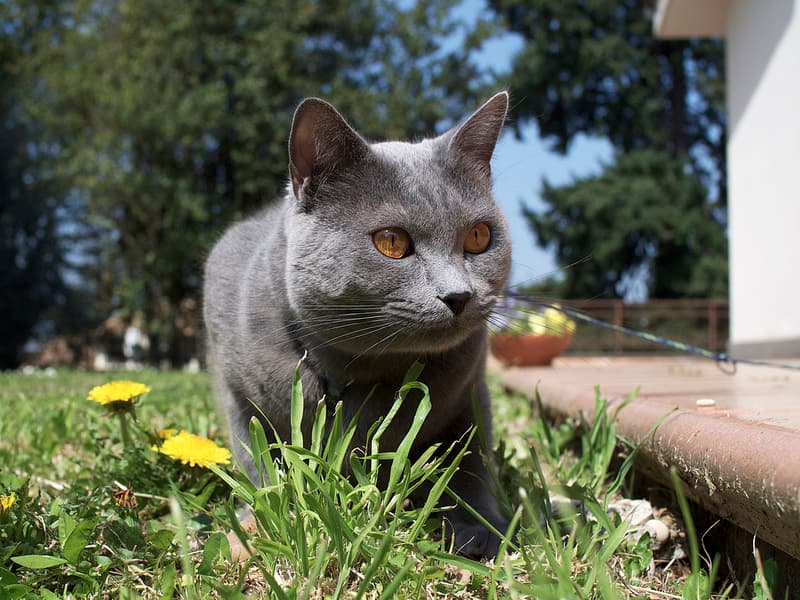
Ask a shelter what breed their gray tabby cat is and the honest answer is usually "domestic shorthair." Tabby is the ancestral wild-type coat pattern of the domestic cat, and nearly every domestic cat carries tabby pattern genes whether you can see the stripes or not. Gray is simply one of the colors that pattern can come in, alongside brown, orange, cream, and silver.
In the cat fancy, gray is registered as "blue." When a breed standard lists "blue mackerel tabby" or "blue classic tabby," that is the gray tabby cat you and I would point to. The shade range is wide: a light gray tabby can look almost silvery-fawn, while a dark one reads as deep slate or blue-gray. All of them are the same genetic recipe, black pigment plus dilution.
So when someone asks "what breed is a gray tabby?", the accurate answer is: any breed whose standard allows blue tabby, and most often no pedigreed breed at all. The pattern says nothing about parentage, which is also why a "rare gray tabby breed" listed at a premium price should make you skeptical.
Color-changing crystal litter that flags pH shifts in your cat's urine, an early warning sign of UTIs, kidney issues, and more.
Petful may earn a commission when you click through to Chewy, at no extra cost to you.
- American English spells it gray, British English spells it grey, and cat registries like CFA and TICA call the color blue. All three words describe the exact same diluted black coat.
The 5 Gray Tabby Coat Patterns, With Pictures
Tabby is not one pattern but a family of them. The International Cat Association (TICA) and CFA both recognize tabby divisions across dozens of breeds, and a gray tabby cat can wear any of the five core looks below. Every one of them keeps the signature tabby field marks: the "M" on the forehead, eyeliner-like rims around the eyes, banded legs and tail, and a spotted belly.
| Pattern | Key Markings | Quick ID Tip |
|---|---|---|
| Mackerel | Narrow vertical stripes down the ribs off a spine line | Looks like a fish skeleton; the most common tabby pattern |
| Classic (blotched) | Bold swirls and a circular "bullseye" on each side | Thick marbled whorls instead of thin stripes |
| Spotted | Stripes broken into round or oval spots | Spots line up where mackerel stripes would run |
| Ticked | Banded (agouti) hairs with little to no body striping | Salt-and-pepper shimmer; stripes only on face, legs, tail |
| Patched (torbie) | Tabby striping mixed with patches of cream or red | A gray torbie is a dilute tortoiseshell wearing stripes |
Mackerel Gray Tabby
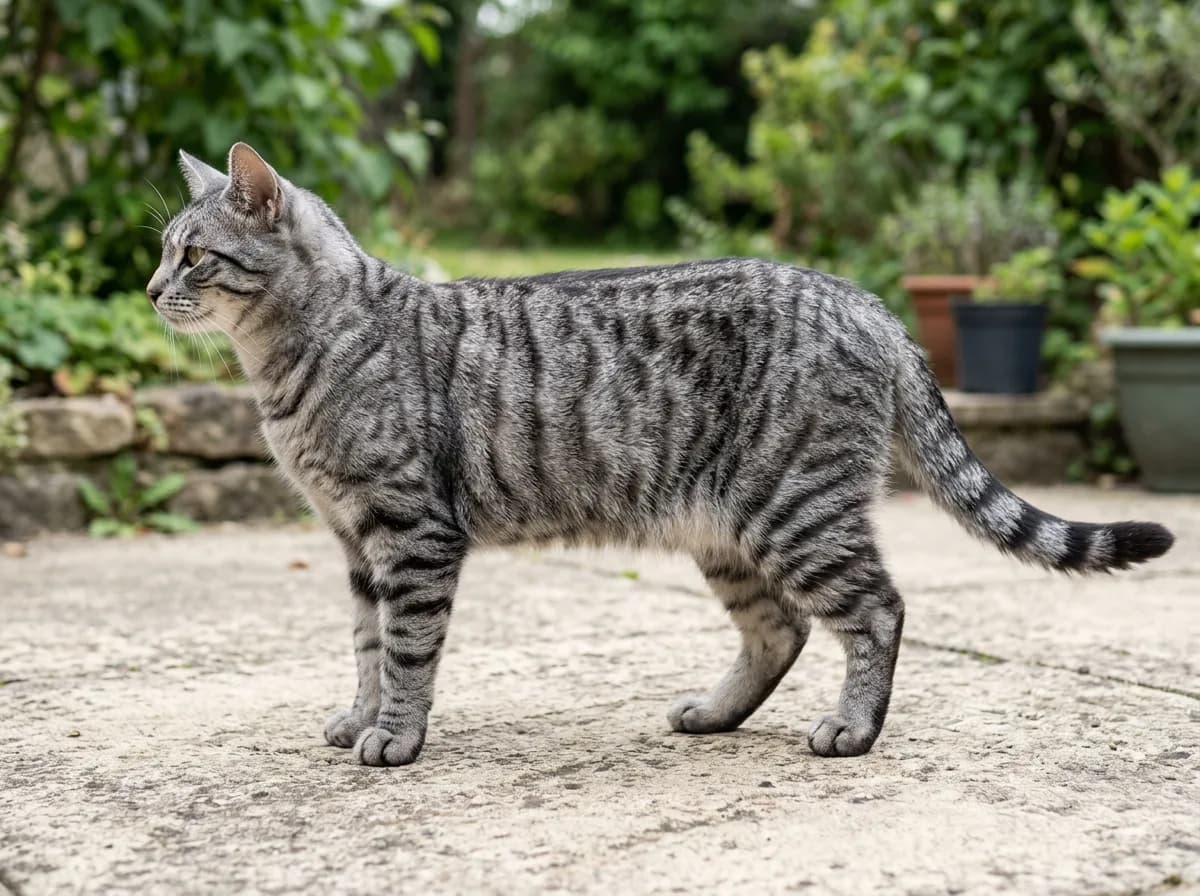
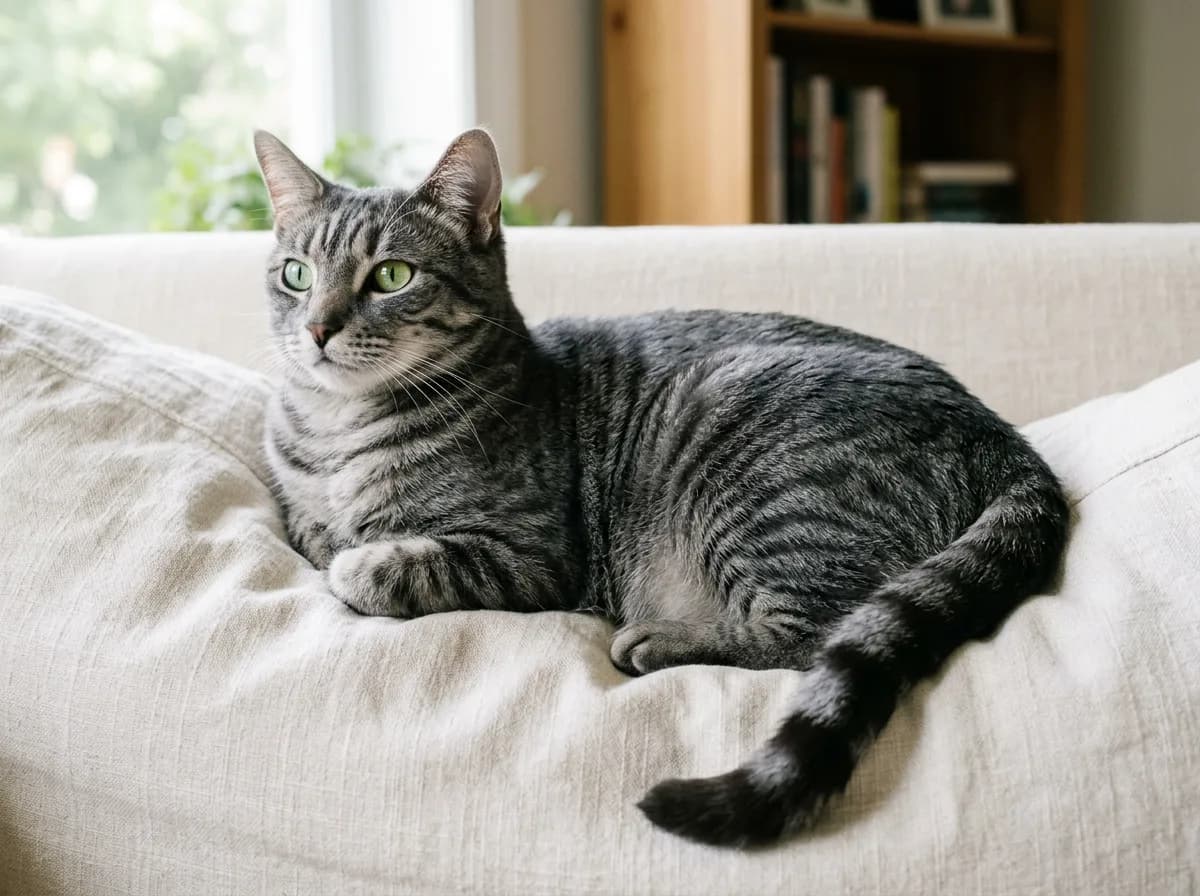
The mackerel pattern is the wild type: narrow, evenly spaced stripes running vertically down the body from a dark line along the spine, like a fish skeleton. It is the most common tabby pattern overall, and the gray mackerel tabby is the classic "alley cat" look. The domestic cat descends from the Near Eastern and African wildcat (Felis silvestris lybica), itself a mackerel tabby, which is why this layout still dominates.
Classic (Blotched) Gray Tabby
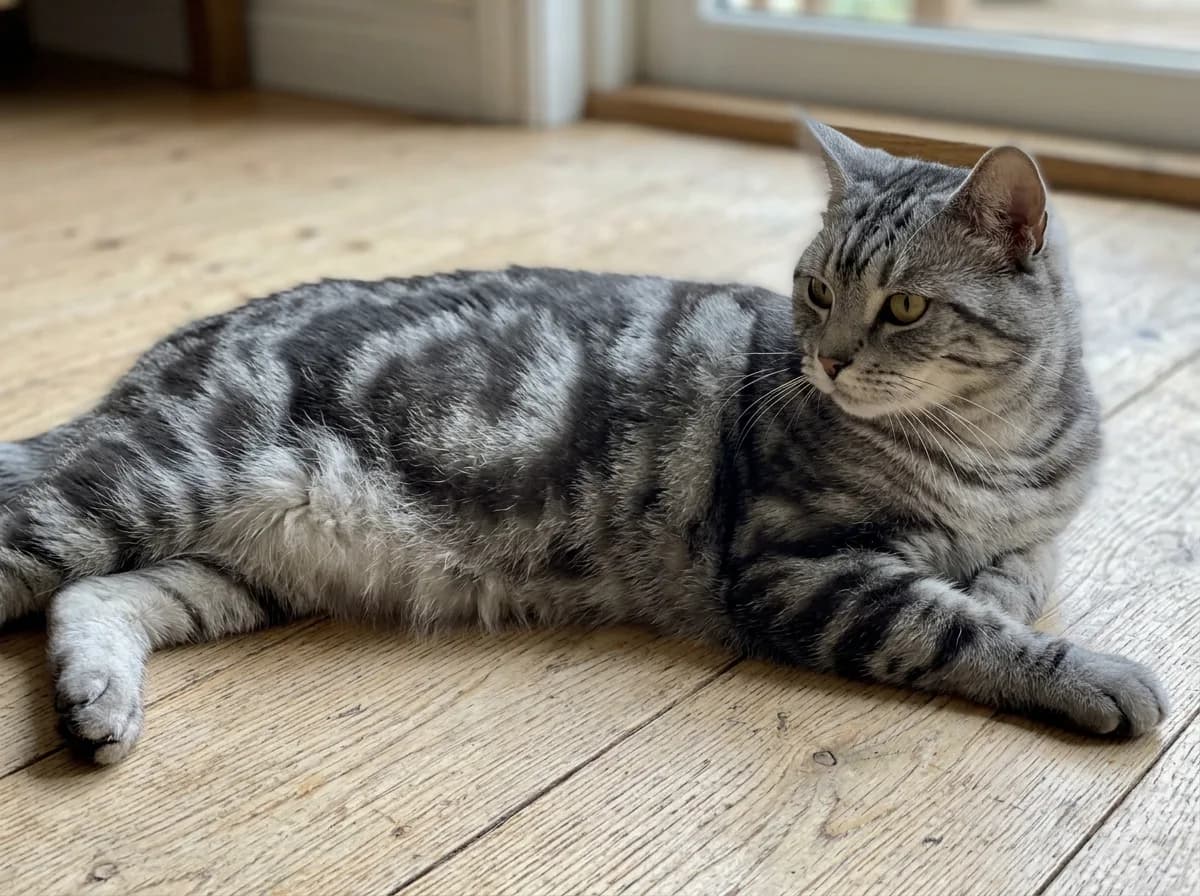
The classic or blotched tabby swaps thin stripes for bold, swirling whorls, with a marbled "bullseye" on each flank. It is caused by recessive mutations in the Taqpep gene, identified by Kaelin and colleagues in Science in 2012 (the same gene behind the king cheetah's dramatic coat). The blotched allele spread through Europe between the medieval and Ottoman eras, according to ancient-DNA work by Ottoni and colleagues published in Nature Ecology & Evolution in 2017.

Never Scoop Again® with the Whisker Litter-Robot, the smart self-cleaning automatic litter box. Monitor visits and track weights for better overall care in the Whisker® app. Multi-cat friendly.
Petful may earn a commission when you click through to Whisker, at no extra cost to you.
Spotted Gray Tabby
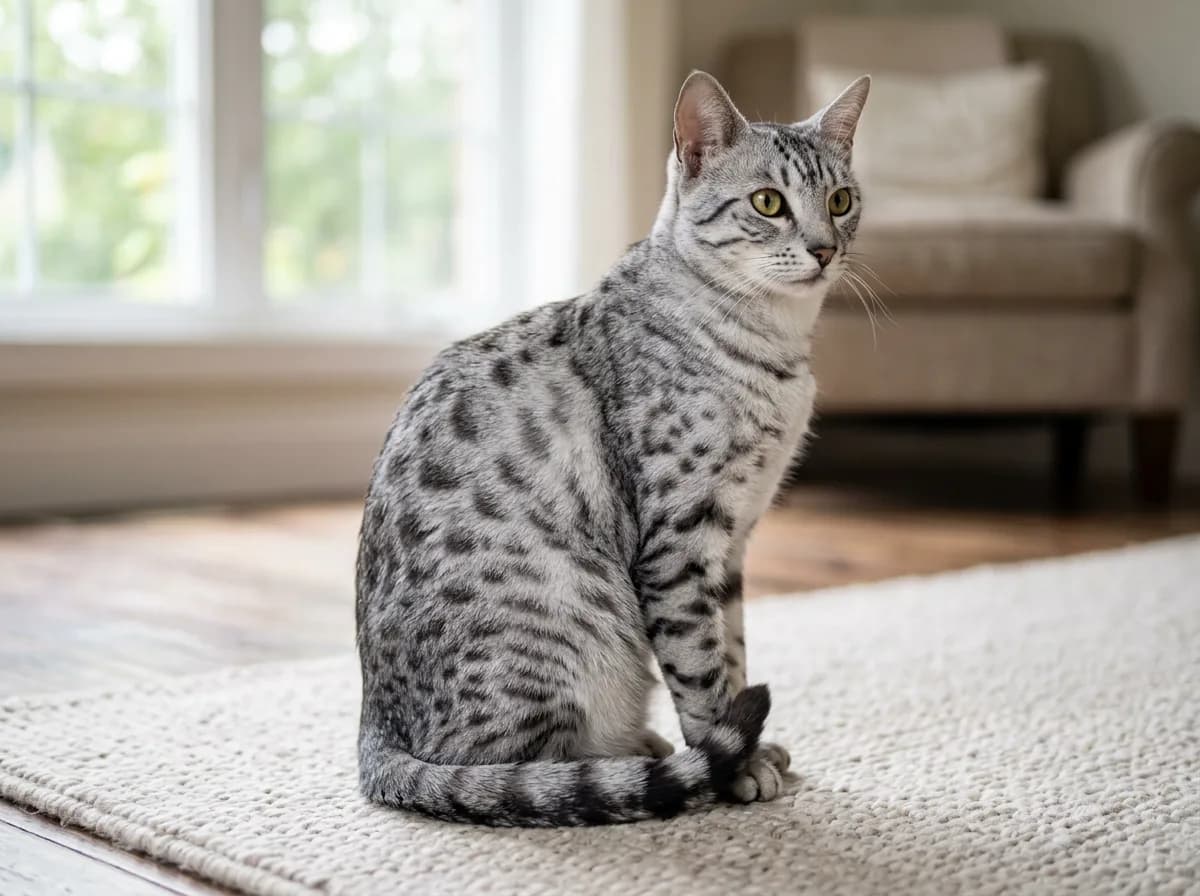
In spotted tabbies the stripes break up into spots, which can be round, oval, or rosette-like. Breeds such as the Egyptian Mau, Ocicat, and Bengal cat are built around spotted coats, and Bengals in particular come in a striking silver-gray spotted version. In random-bred cats, a gray spotted tabby often looks like a mackerel tabby whose stripes shattered into dashes.
Ticked Gray Tabby
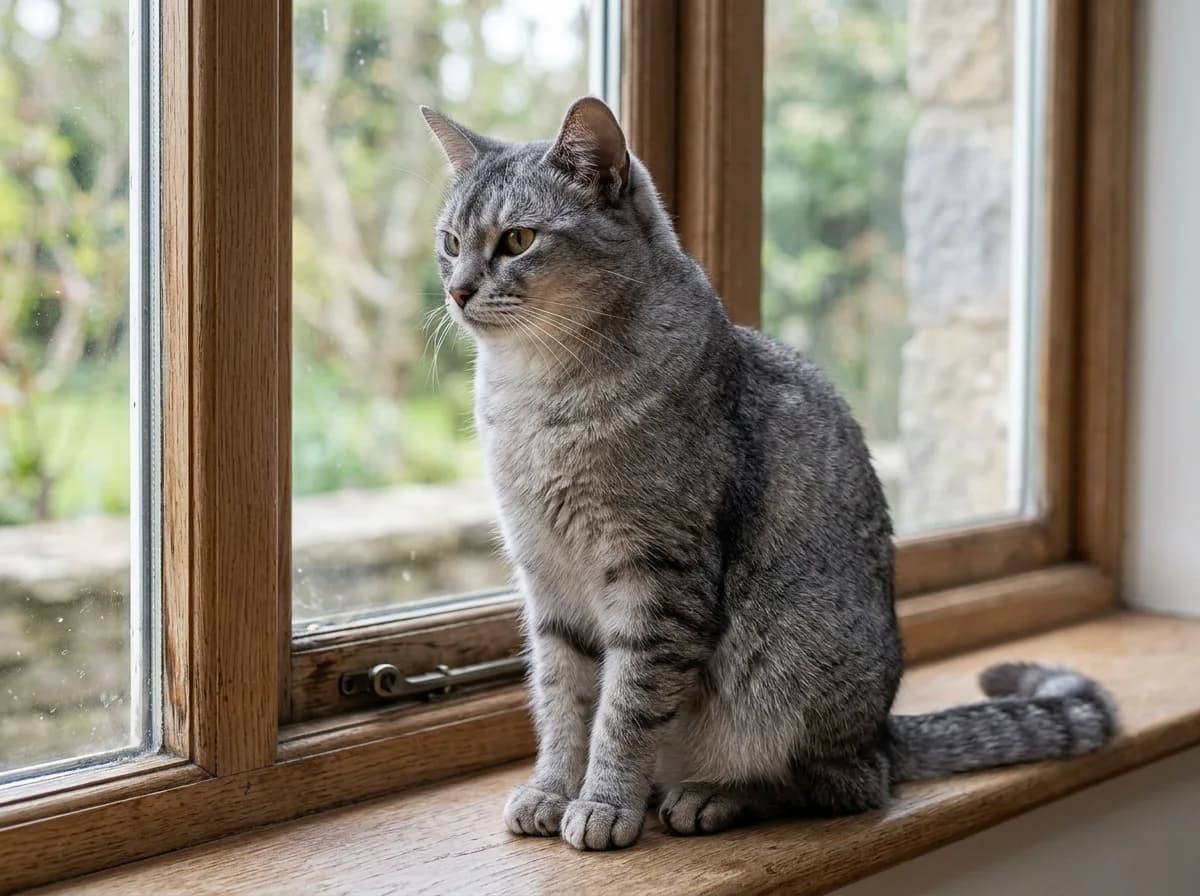
A ticked tabby barely looks striped at all. Each individual hair carries alternating bands of light and dark pigment (agouti banding), creating a shimmering, sand-like coat with tabby markings only on the face, legs, and tail. The Abyssinian is the poster breed; a blue Abyssinian is, genetically speaking, a gray ticked tabby cat.
Patched Gray Tabby (Torbie)
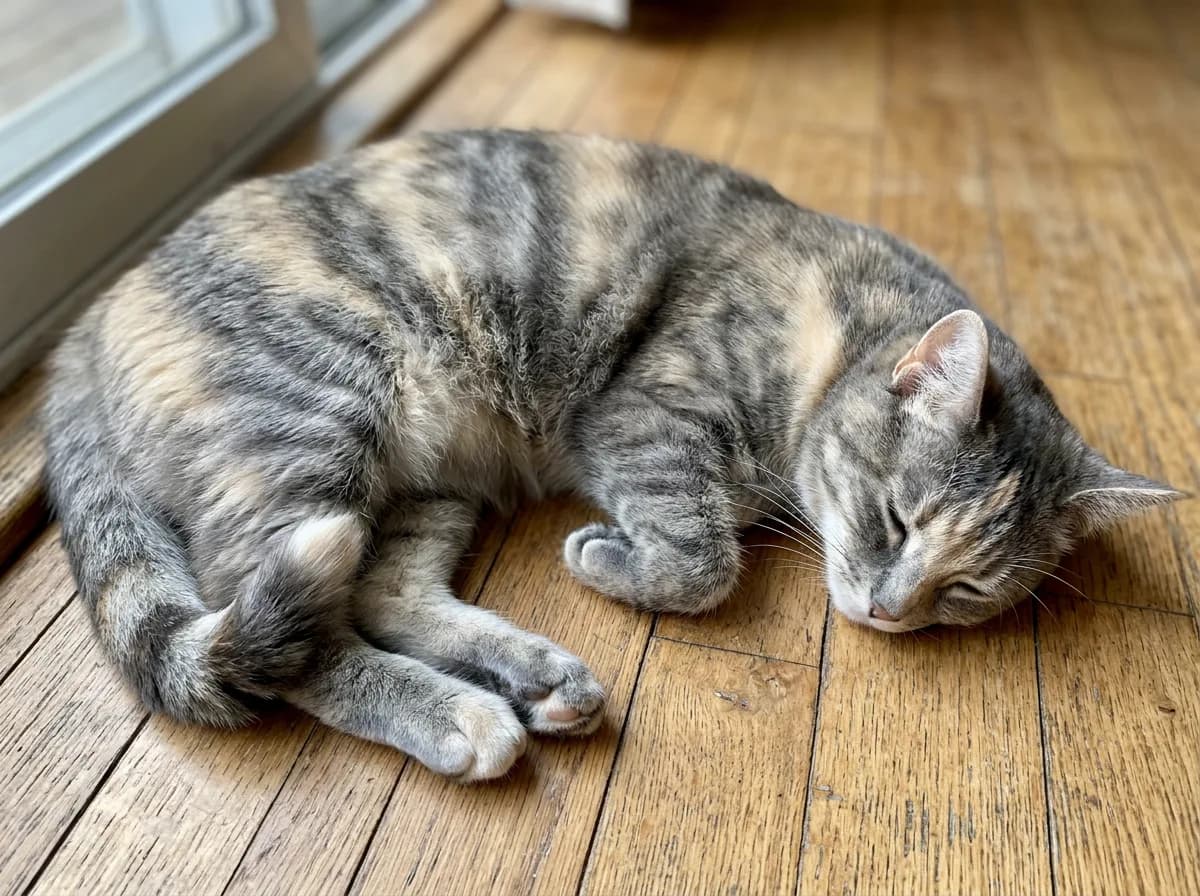
Mix tabby striping with tortoiseshell patching and you get the patched tabby, or "torbie." A dilute torbie shows soft gray tabby areas broken by cream patches. Because tortoiseshell coloring requires two X chromosomes, gray torbies are almost always female, the same sex-linked math behind calico cats.
Gray Tabby vs. Silver Tabby vs. Brown Tabby: How to Tell Them Apart
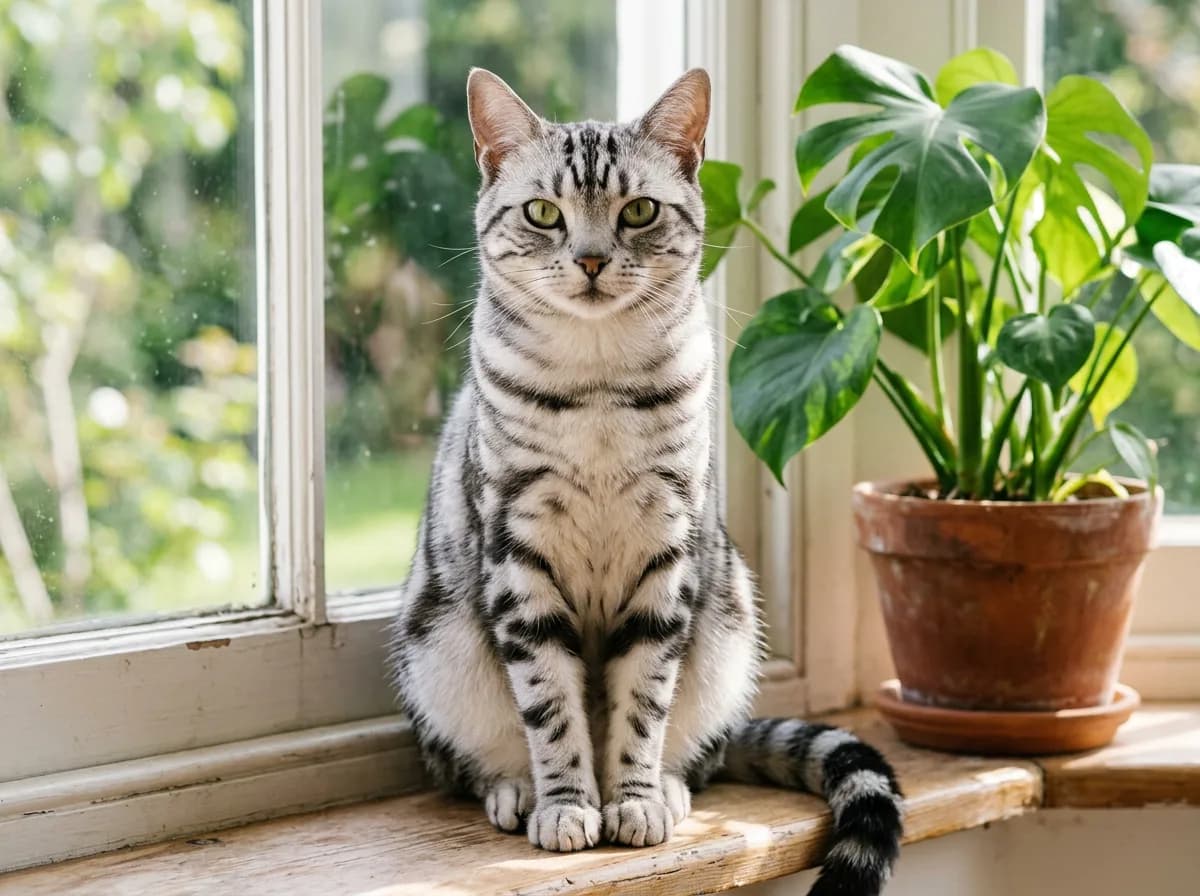
These three get mixed up constantly, including by stock photo sites, but they are three different genetic recipes. A gray (blue) tabby is a dilute black tabby: every hair's pigment is softened, so both the stripes and the ground color are muted gray tones. A silver tabby cat keeps jet-black (or dark) markings but the inhibitor gene (I) suppresses pigment at the base of each hair, producing a gleaming silvery-white undercoat that makes the contrast pop. A brown tabby is the undiluted original: black markings over a warm brown-gray agouti ground, the most common tabby color and the iconic look of the Maine Coon (see the full range of Maine Coon colors).
| Trait | Gray (Blue) Tabby | Silver Tabby | Brown Tabby |
|---|---|---|---|
| Responsible gene | Dilution (MLPH, d/d) | Inhibitor (I) | Standard black + agouti |
| Stripe color | Soft slate to deep blue-gray | Jet black to dark charcoal | Black |
| Ground color | Muted gray-fawn | Pale silvery white | Warm brown-gray |
| Hair root test | Gray or banded to the root | White at the root | Brown or banded to the root |
| Overall impression | Soft, smoky, low contrast | High contrast, sparkling | Rich, warm, wild-type |
- Part the fur on the cat's side and look at the base of the hairs. A silver tabby's hairs are white at the root with dark tips. A gray tabby's hairs carry gray pigment or banding all the way down. It is the fastest way to settle a gray-versus-silver debate.
The Genetics Behind the Gray Coat (Agouti Gene + Dilute Gene)
Two genes do the heavy lifting, and no editorial competitor for this topic actually explains them, so here is the recipe.
First, the pattern. The agouti gene (ASIP) decides whether a cat shows its tabby pattern. Cats with at least one working agouti copy display banded hairs and visible markings. Non-agouti cats (a/a) look solid, although kittens often show faint "ghost" striping before the adult coat fills in. The pattern itself is laid down astonishingly early: a 2021 study by Kaelin and Barsh on the Dkk4 gene showed tabby markings are mapped in the embryo before hair even develops.
Second, the color. The base pigment of a gray tabby is eumelanin, the black pigment. A recessive mutation in the melanophilin gene (MLPH), written d/d, clumps pigment granules unevenly along each hair so the coat reflects light differently and reads as blue-gray instead of black. That is dilution. The same gene softens orange to cream, which is why dilute torbies pair gray with cream. UC Davis' Veterinary Genetics Laboratory offers a standard DNA test for the dilute variant, and breeders use it to predict blue litters.
Because both parents must pass on a d allele, two black tabbies can produce gray tabby kittens if each carries dilution, and two gray cats bred together will produce only dilute kittens. Dilution sits on a regular chromosome, not the X, so gray has no sex bias. Compare that with orange: the orange gene is X-linked (the gene itself was finally identified in 2025 as a regulatory deletion affecting ARHGAP36, by teams at HudsonAlpha/Stanford and Kyushu University), which is why about 80% of orange tabbies are male while gray tabbies run roughly half and half.
Why do fanciers say "blue" instead of gray? Diluted eumelanin scatters light with a faintly bluish cast, especially in sunlight. Early cat fanciers named the color blue in the 1800s and the term stuck in every registry standard, from blue British Shorthairs to blue tabby Maine Coons.
Why Gray Tabby Cats Have an M on Their Forehead
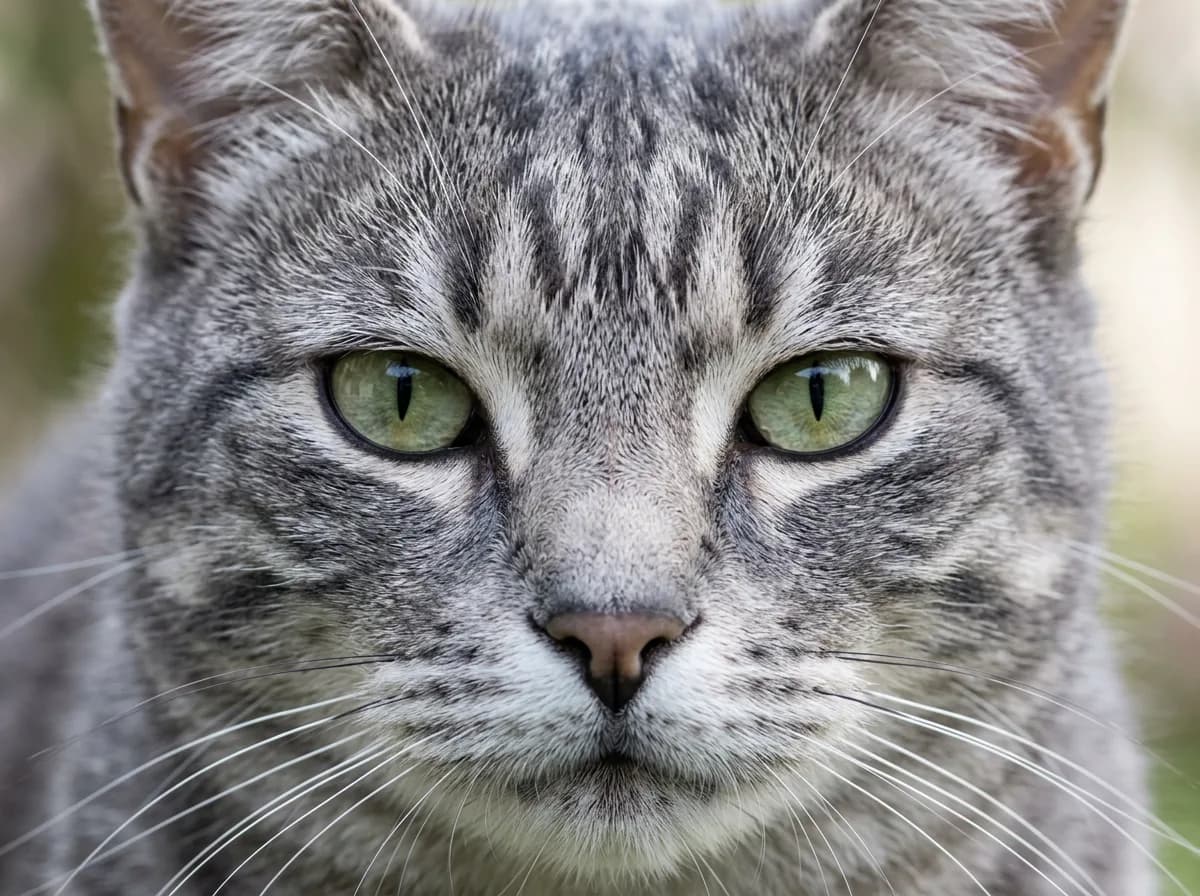
Every tabby, gray included, wears an "M" of darker fur centered above the eyes. Folklore has worked overtime on this one: one legend says Mohammed loved his tabby Muezza and blessed all tabbies with his initial; a Christian legend credits the Virgin Mary, who marked the cat that warmed the infant Jesus; another story ties it to "Mau," the ancient Egyptian word for cat. The science is less romantic. The M is simply part of the tabby head pattern, produced by the same pattern-mapping genes as the body stripes. Even cats whose stripes are suppressed, like ticked tabbies, keep the facial markings, which is why the M is the single most reliable tabby field mark.
Cat Breeds That Come in Gray Tabby
Because tabby is a pattern and blue is a color, "gray tabby" appears in many breed standards. These six are the ones you will meet most often.
Domestic Shorthair
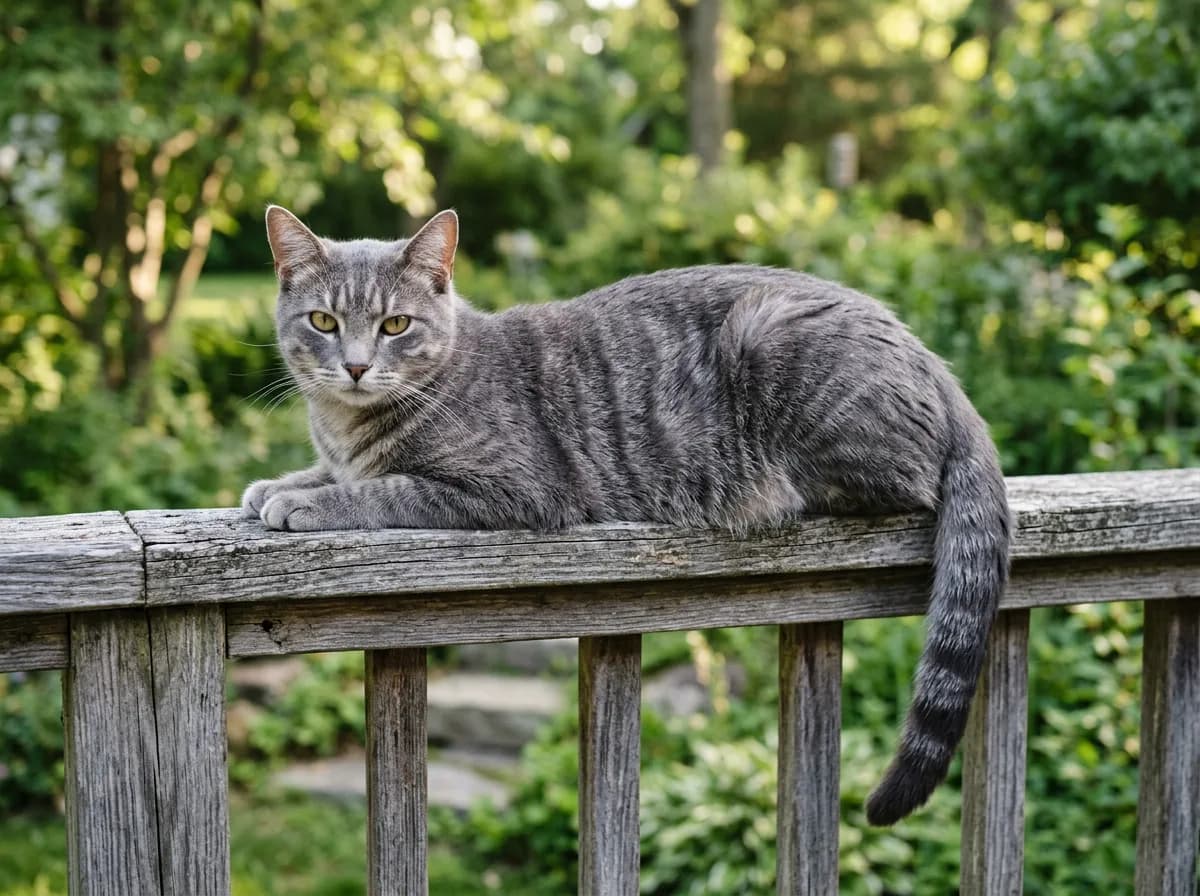
The overwhelming majority of gray tabby cats are domestic shorthairs: random-bred cats of mixed ancestry. A gray tabby cat domestic shorthair is not a lesser cat, just an unregistered one, and shelters are full of them. Domestic shorthairs benefit from broad genetic diversity, which tends to mean fewer inherited disorders than some pedigreed lines.
American Shorthair
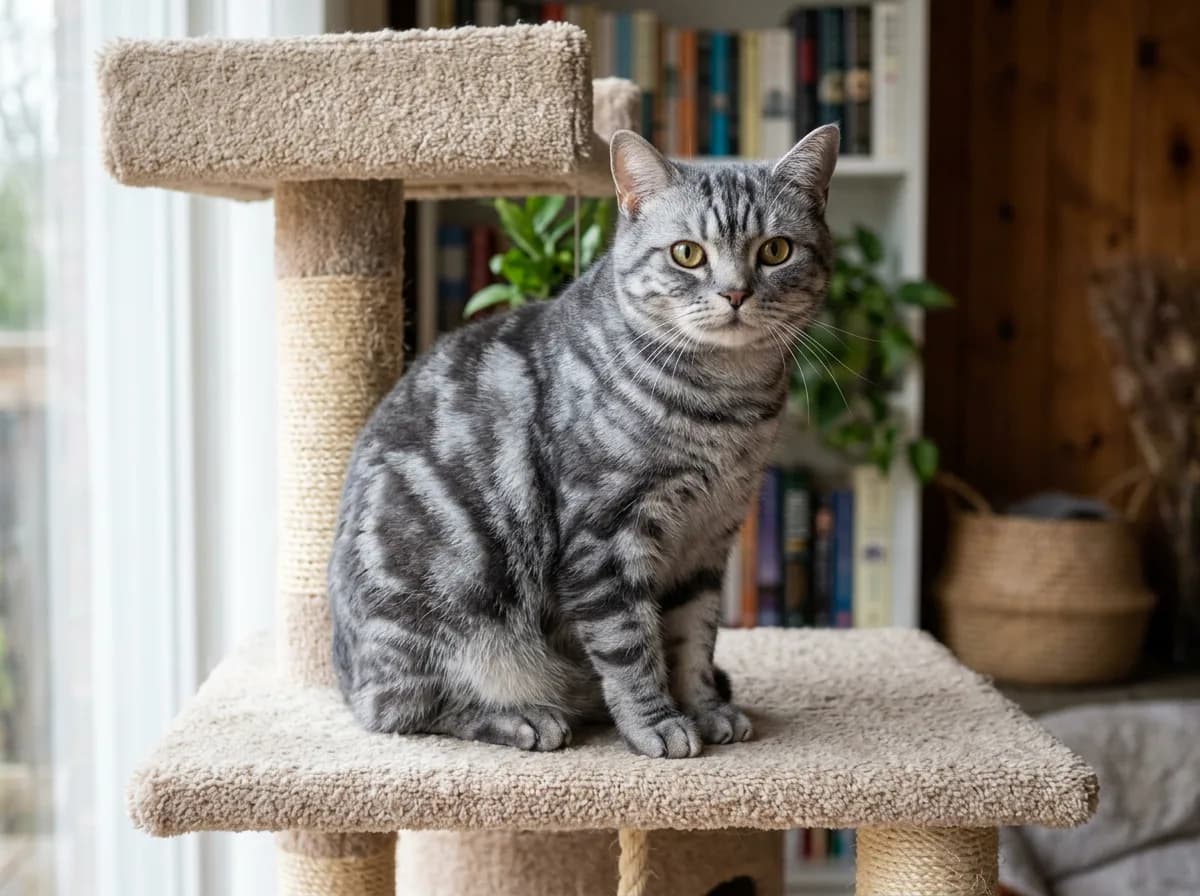
The American Shorthair is the pedigreed descendant of working ships' cats, and tabby is its signature: the silver classic tabby is the breed's icon, but blue tabby is fully accepted in the standard. Expect a sturdy, even-tempered, family-friendly cat that lives comfortably into its mid-teens.
Maine Coon
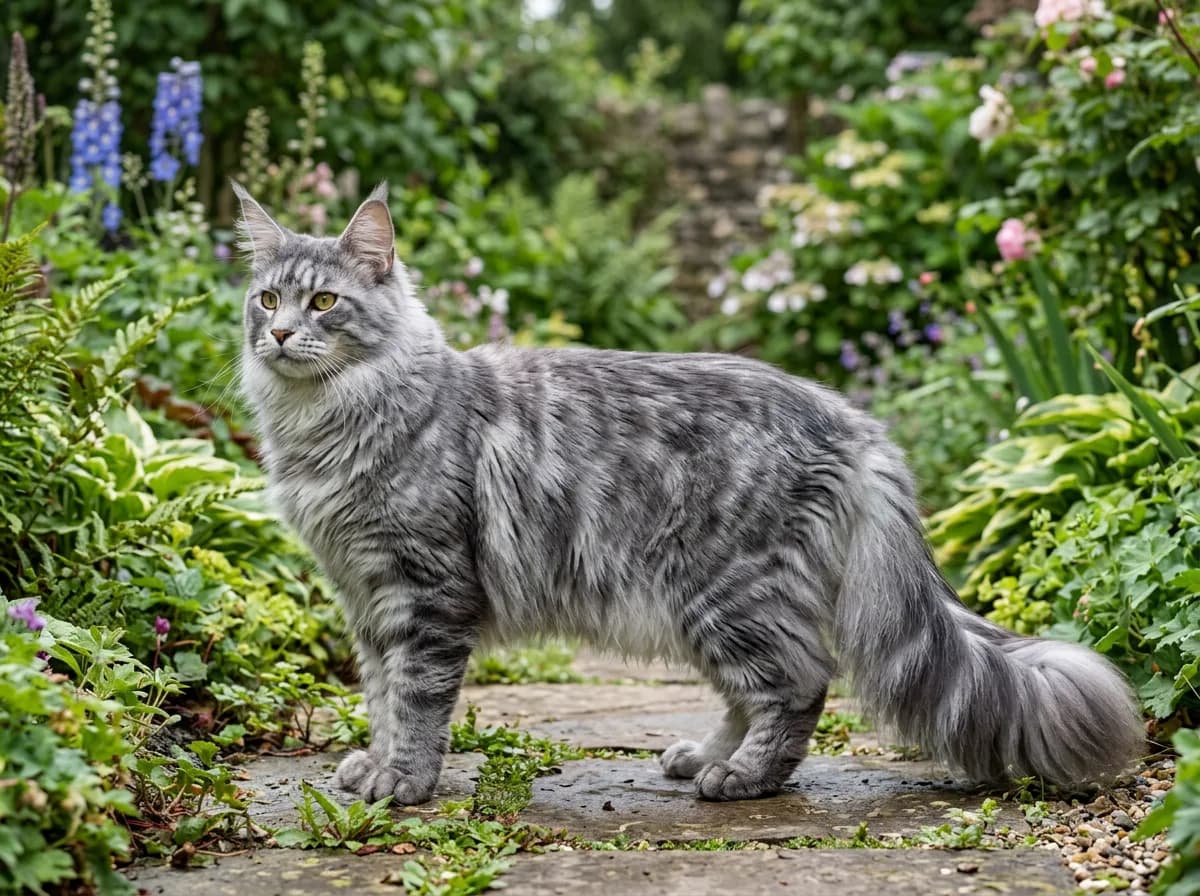
The Maine Coon is best known in brown classic tabby, but blue tabby and blue tabby with white are recognized too. On a 15-20 pound longhaired frame, gray tabby swirls look spectacular. Maine Coons are gentle, social giants, though reputable breeders should screen for hypertrophic cardiomyopathy (HCM), the breed's best-documented health risk.
British Shorthair
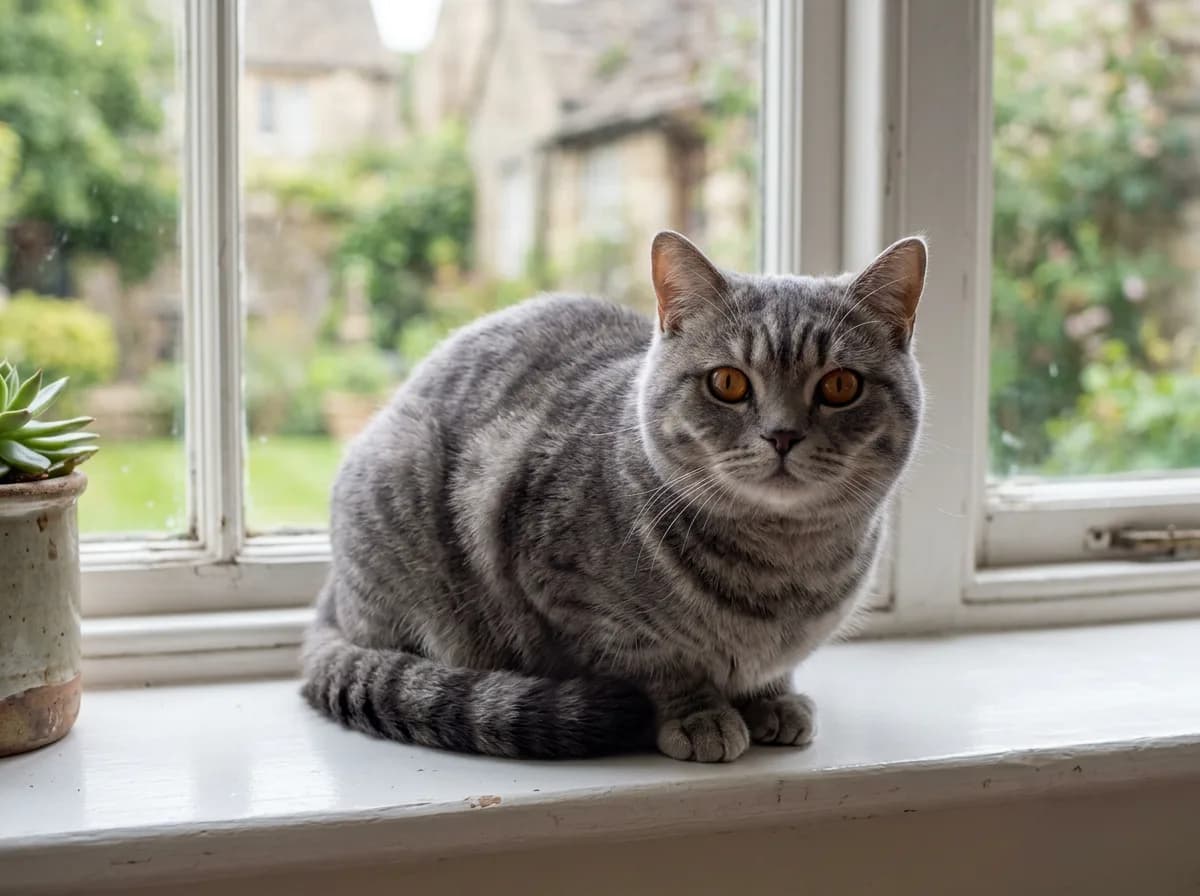
The British Shorthair practically owns the color blue: the solid "British Blue" is the breed's calling card, and the same dilute gene runs through its tabby program, so blue mackerel, classic, and spotted tabbies all appear. Fitting, since its homeland spells the color grey. These are calm, plush-coated, teddy-bear cats that bond deeply without being clingy.
Norwegian Forest Cat
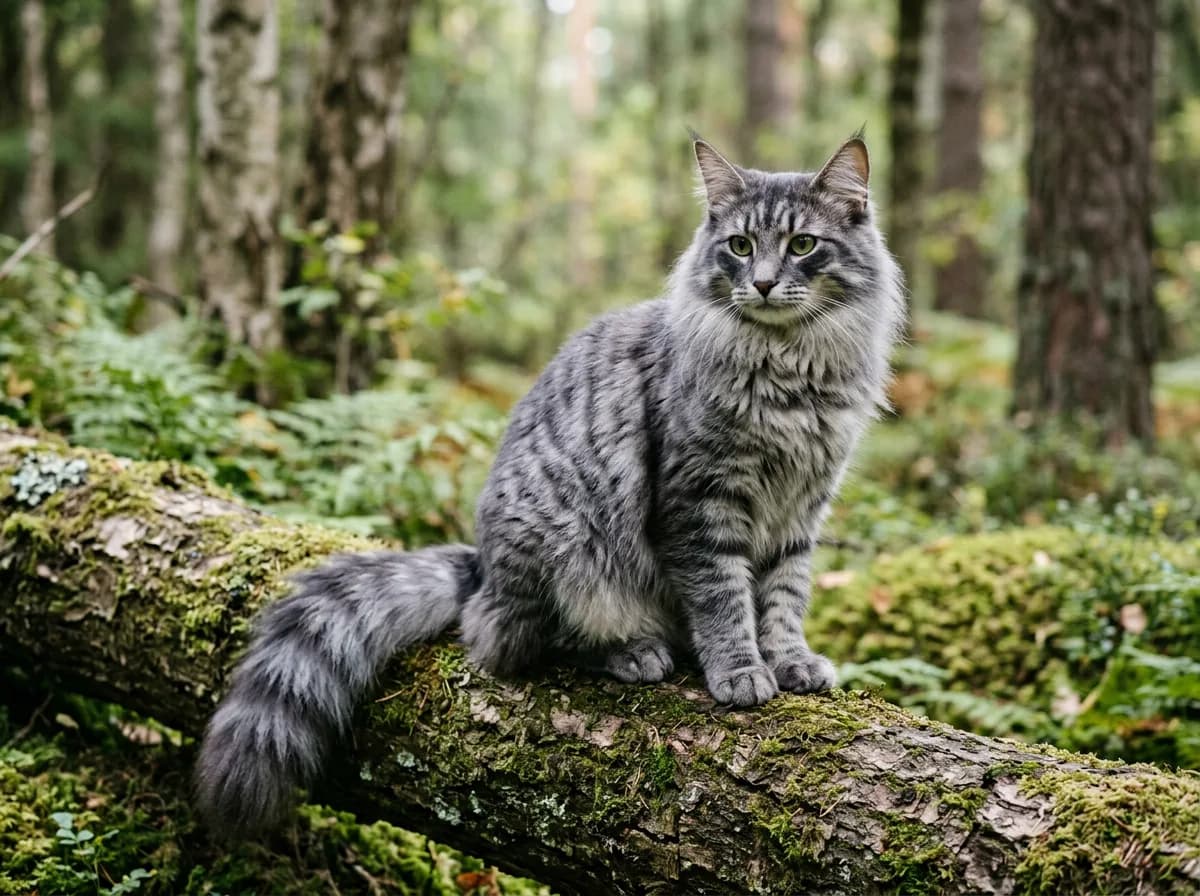
Norway's national cat comes in nearly every color, and blue tabby with white is a recognized combination. A gray tabby Norwegian Forest Cat pairs the smoky coat with a waterproof double layer, a lion-like ruff, and tufted ears built for Scandinavian winters. They are athletic climbers with a friendly, independent streak.

63-inch multi-level cat tree with scratch posts, hammock, plush perches, and dangling toys. Vertical territory is non-negotiable for high-energy climbing breeds like the Bengal.
Petful may earn a commission when you click through to Chewy, at no extra cost to you.
Scottish Fold
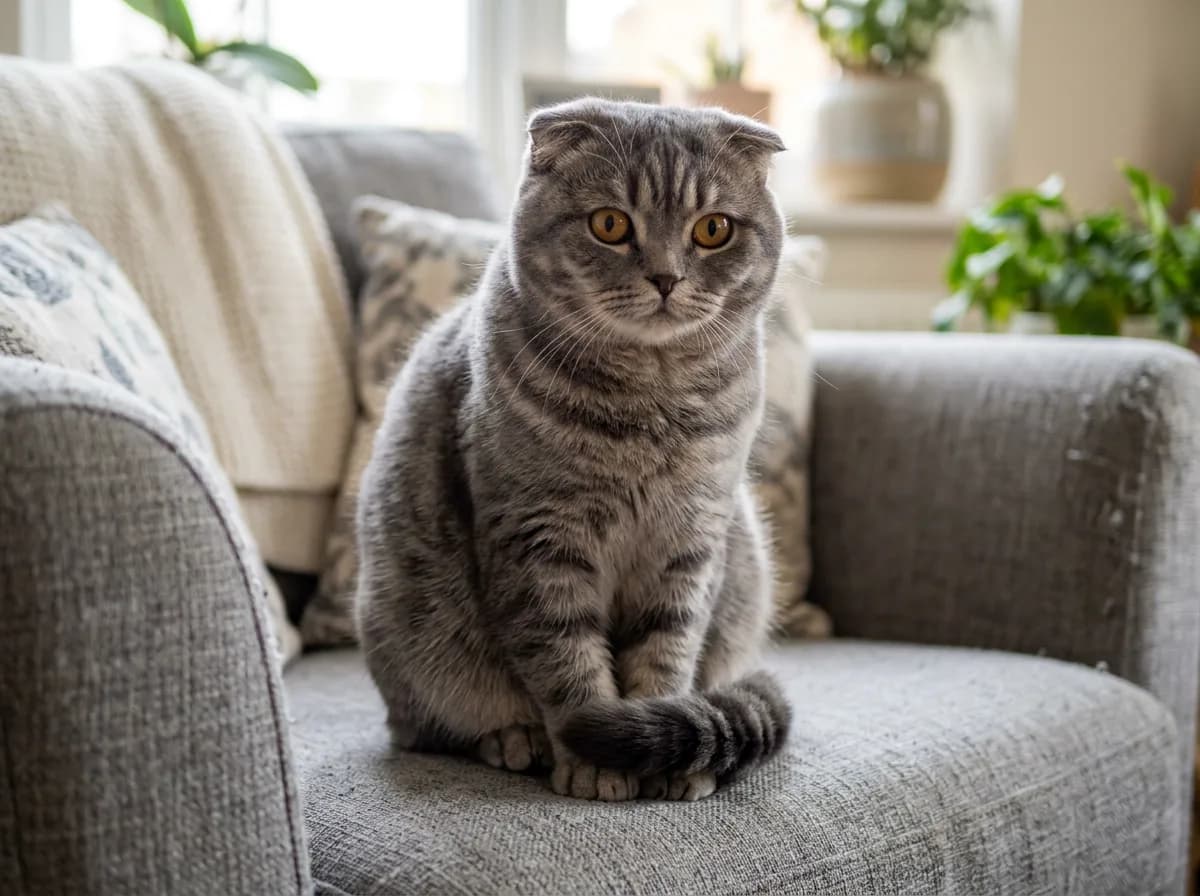
The Scottish Fold's folded ears and owl face come in dozens of accepted colors, including blue tabby. The original Scottish Fold, a barn cat named Susie discovered in 1961, was white, but gray tabby Folds are now among the most photographed cats on the internet. Buyers should know the ear fold comes from a cartilage mutation linked to joint disease (osteochondrodysplasia), so choose breeders who never pair two folded-ear cats. For more, see Petful’s guide to Scottish Fold colors.
Gray Tabby Cat Personality and Temperament
Here is the honest answer the internet rarely gives: coat color does not determine personality. Gray tabby cat personality is a real search, but science has never established a "gray tabby temperament." A 2016 UC Davis study (Stelow, Bain, and Kass, Journal of Applied Animal Welfare Science) surveyed owners about coat color and aggression and found only modest, owner-reported differences, with individual variation dominating across every color. Owner perception is doing most of the work in color stereotypes.
What actually shapes a gray tabby's personality: breed (a blue tabby British Shorthair will act like a British Shorthair), early socialization in the first 8 weeks, and the individual cat. That said, because most gray tabbies are domestic shorthairs from healthy, outbred stock, owners commonly describe them as adaptable, playful, food-motivated, middle-of-the-road cats, which is exactly what you would expect from the general cat population.
One practical takeaway: if personality matters more to you than color, meet adult cats. An adult gray tabby in a shelter shows you its real temperament today, while a kitten's adult personality is still a guess.
Gray Tabby Kittens: What to Expect
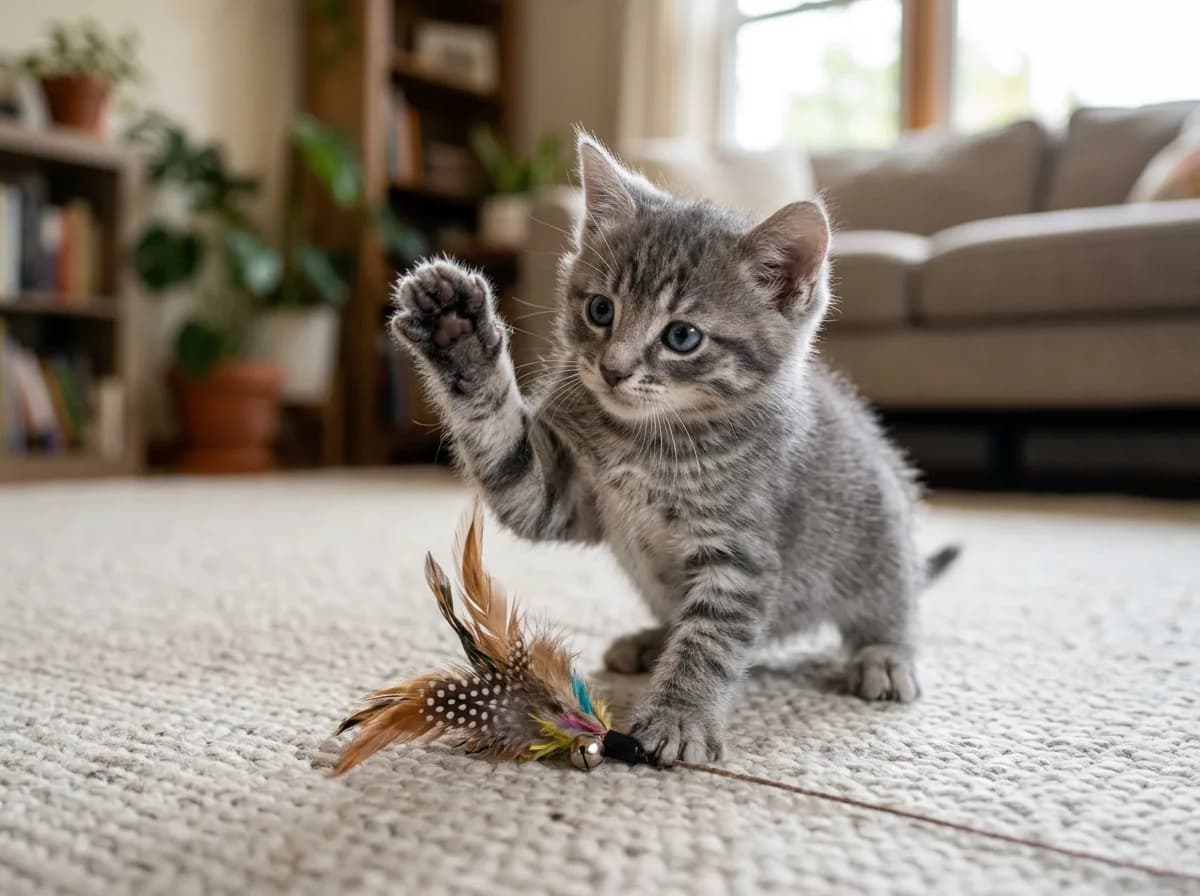
A gray tabby kitten changes more in its first months than most owners expect. Every kitten is born with blue eyes; the adult eye color, usually green, gold, hazel, or copper in tabbies, emerges at around 6-7 weeks as pigment develops in the iris. The coat shifts too: kitten fluff often reads lighter and the stripes lower-contrast, and the true adult shade settles as the sleeker adult coat grows in. Some gray tabby kittens darken noticeably; others develop warmer or cooler tones.
The tabby pattern itself, though, is fixed from birth. A mackerel kitten stays mackerel; a classic kitten keeps its bullseyes. And if you adopted what looked like a solid gray kitten that shows faint stripes, those "ghost markings" usually fade as a genetically solid cat matures, while a true tabby's markings stay crisp.
Gray tabby kitten demand is real (it is one of the most-searched tabby colors), so shelters move them fast. Expect typical kitten milestones: weaning around 8 weeks, adoption readiness at 8-12 weeks, and the gangly teenage phase from 6-12 months.
- Blue at birth, transitional from about 3-6 weeks, adult color visible by 6-7 weeks. If a gray tabby's eyes stay blue into adulthood, white-spotting or colorpoint genes are usually involved.
Gray Tabby Cat Care, Health, and Lifespan
The coat color asks nothing special of you; the cat underneath does. A healthy indoor gray tabby cat typically lives 12-16 years, and plenty reach 20 with good care. The pattern itself carries no health baggage: gray tabbies face the same core risks as any cat, which means your care plan should follow the breed (or the mixed-breed baseline), not the color.
The essentials:

108-oz stainless steel pet fountain with quiet pump and water-level window. Bengals are notoriously water-obsessed; a flowing fountain encourages hydration and pulls them away from sinks and toilets.
Petful may earn a commission when you click through to Chewy, at no extra cost to you.
- Nutrition and weight. Obesity is the most common preventable health problem in pet cats. Measure meals, favor portioned wet food, and watch stocky breeds like the British Shorthair, which gain weight easily.
- Grooming. Shorthaired gray tabbies need a weekly brushing; longhaired wearers of the coat (Maine Coon, Norwegian Forest Cat) need 2-3 sessions a week to prevent mats. Bonus: brushing a dilute coat cuts down on visible shed on dark furniture.
- Dental care. Most cats show dental disease by age 3. Brushing or vet-approved dental treats from kittenhood pays off for a decade.
- Preventive vet care. Annual exams (twice yearly for seniors), core vaccines, parasite prevention, and breed-aware screening: HCM checks matter in Maine Coon and British Shorthair lines, and joint monitoring in Scottish Folds.
- Indoor life. Indoor cats consistently outlive outdoor cats. A gray tabby's camouflage evolved for stalking, not for crossing roads at dusk, when their coat makes them nearly invisible to drivers.
- Soft, dense dilute coats (especially on British Shorthairs and plush domestic shorthairs) visually mask body condition. Do not eyeball it: feel for ribs monthly and ask your vet for a body condition score at every visit.
Where to Adopt or Find a Gray Tabby Cat
Searching "gray tabby cat for sale" mostly returns the wrong answer. Because gray tabby is a common pattern in the general cat population, your local shelter or rescue almost certainly has one, with adoption fees typically running $50-200 including spay or neuter, vaccines, and microchip. Petfinder and Adopt a Pet both let you filter by color "gray/blue" and pattern "tabby."
If you specifically want a pedigreed cat in blue tabby (a blue tabby British Shorthair or Maine Coon, say), go through the breed's CFA or TICA breeder listings. You are paying breed pricing, roughly $800-2,500 for most pedigreed kittens, and the tabby pattern itself should not add a premium. Breed-specific rescues are the middle path: purebred adults at adoption prices.
- Gray tabby is one of the most common cat coats in existence. Anyone marketing a "rare gray tabby breed" at a premium, or selling unregistered "blue tabby purebreds" without papers and health records, is monetizing a pattern your shelter has in stock. Walk away.
Gray Tabby Cat Names: 50 Ideas
Naming the new arrival? Gray tabby cat names tend to riff on the coat: smoke, weather, silver screens, and a little pop culture. Fifty starters:
Classic gray names: Smokey, Ash, Sterling, Slate, Pewter, Graphite, Cinder, Shadow, Silver, Onyx
Nature and weather names: Storm, Misty, Pebble, River, Flint, Cloud, Rain, Dusty, Fog, Thistle
Food and drink names: Earl Grey, Pepper, Sage, Truffle, Oyster, Anchovy, Mushroom, Sardine, Mochi, Blueberry
Pop culture and history names: Pusheen, Jellie, Caesar, Grimalkin, Gandalf, Dorian, Meredith, Tom, Nimbus, Mau
Blue and dilute names: Bluebell, Periwinkle, Indigo, Denim, Navy, Steele, Iris, Lilac, Heather, Wedgwood
- Cats respond best to short names with long "ee" vowel sounds, so Smokey, Misty, and Jellie beat Wedgwood in practice. Whatever you choose, use it consistently from day one and pair it with treats.
Fun Facts About Gray Tabby Cats
1. The word "tabby" comes from Baghdad. The Attabiya district was famed for its wavy striped silk taffeta, called attabi. The fabric name entered French as tabis, then English as "tabby" in the early 1600s, and by the 1690s English speakers were applying it to striped cats.
2. A gray tabby launched America's stuffed-toy craze. The Ithaca Kitty, patented in 1892 by Celia Mattison Smith and Charity Smith of Ithaca, New York, was modeled on Celia's gray tabby Caesar Grimalkin and sold as a printed sew-it-yourself muslin pattern for 10 cents. Caesar had seven toes on each front paw, like today's polydactyl cats, though the toy's designers left the extra toes out.
3. Pusheen is a gray tabby. The world's most famous cartoon cat sticker started in the webcomic Everyday Cute, launched in May 2010 by Claire Belton and Andrew Duff, and was based on Belton's childhood cat. The name comes from puisin, Irish for kitten.
4. A gray cat won a spot in Minecraft. Jellie, a real gray-and-white cat owned by YouTuber GoodTimesWithScar, won Minecraft's community cat-skin vote and was added to the game in 2019.
5. National Tabby Day is April 30. A fine excuse to adopt one.
6. Gray tabbies are equal-opportunity. Unlike orange tabbies (about 80% male) and torties (almost all female), gray tabbies split roughly evenly between the sexes, because dilution is not carried on the X chromosome.
7. Every gray tabby is a black cat in disguise. Strip away the dilute gene's effect on pigment granules and the same cat would be a brown-black tabby. Genetically, gray tabbies and black tabbies differ by a single recessive gene pair.
Gray Tabby Cat Photo Gallery
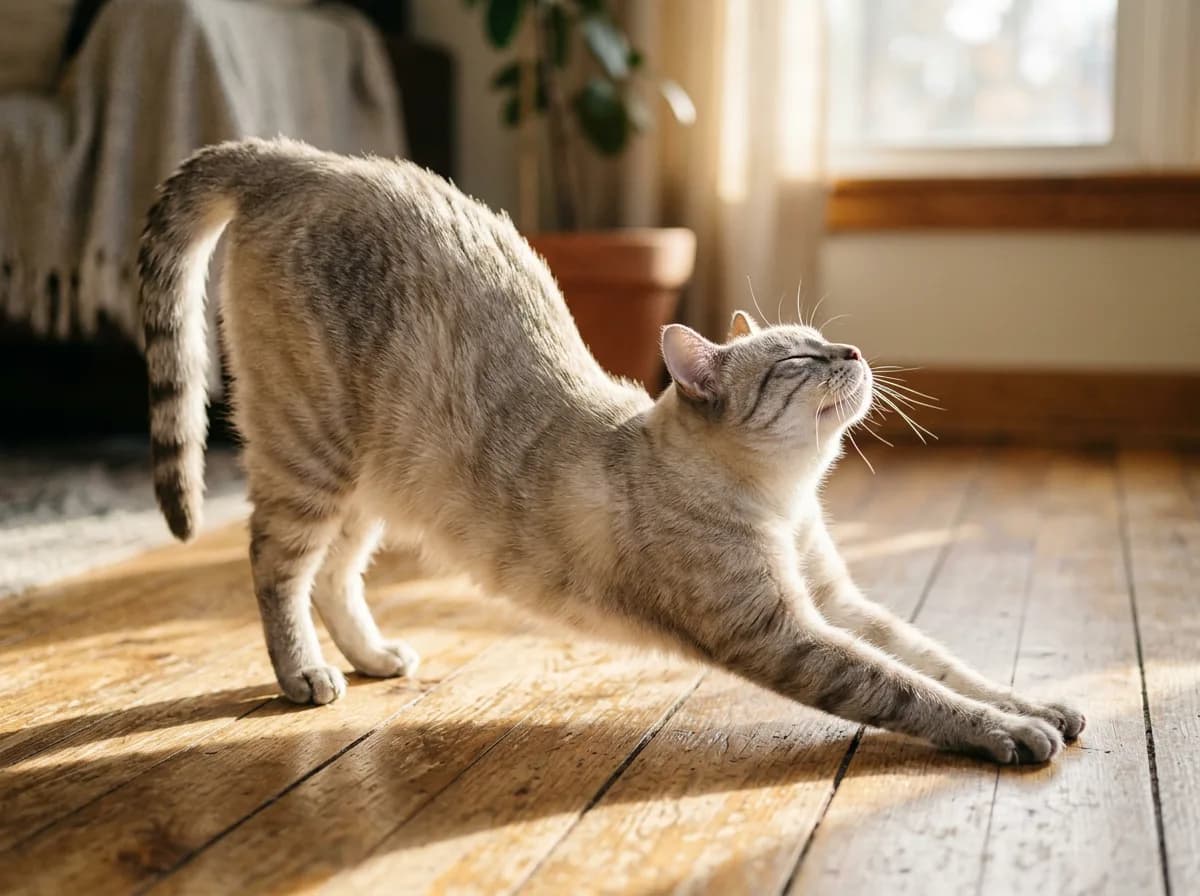
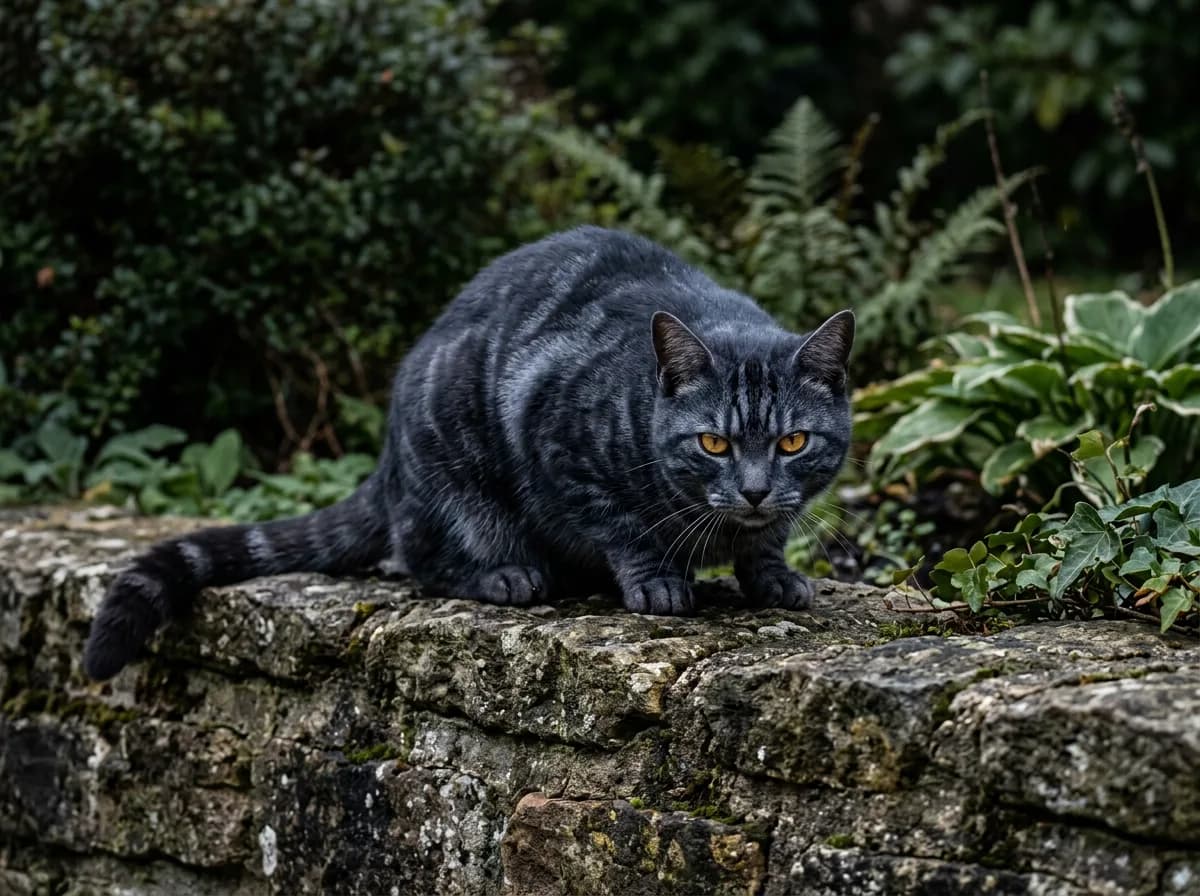
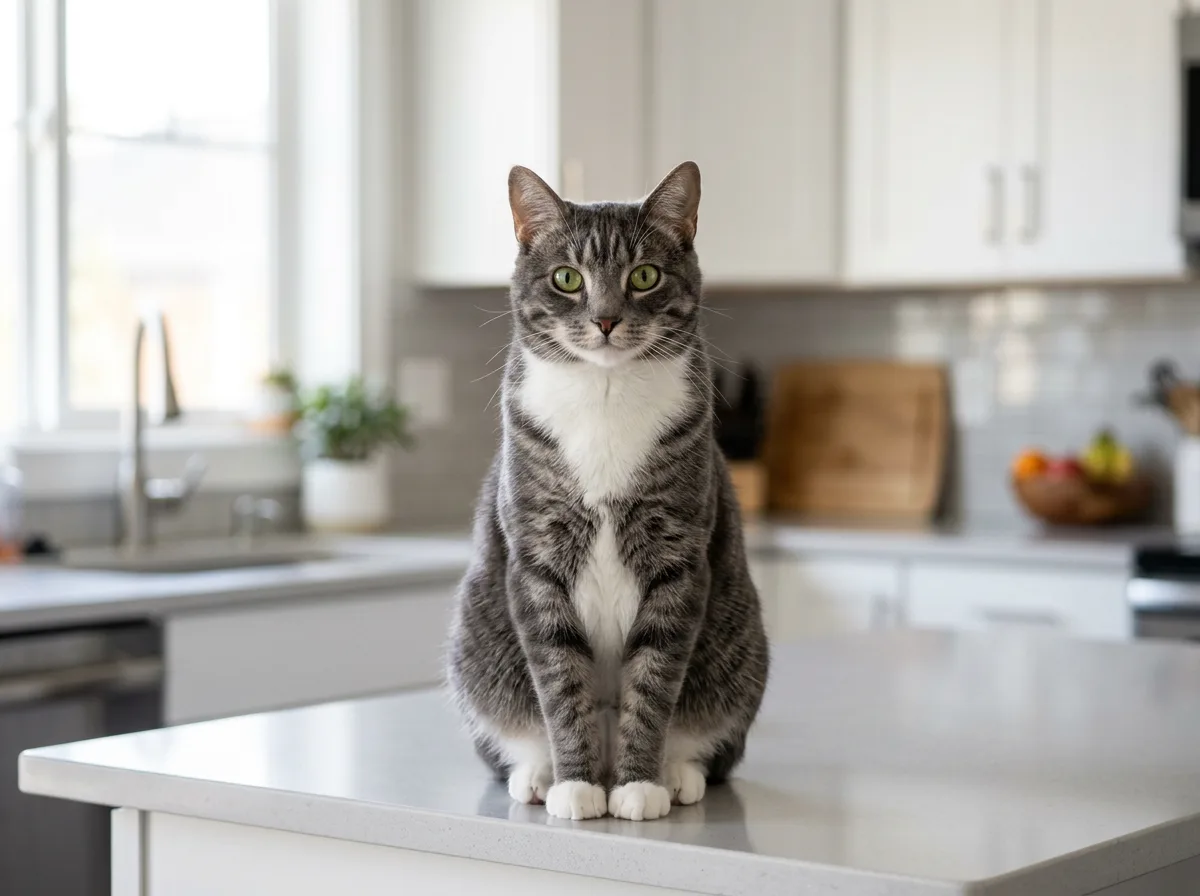
Gray tabby coats span a wider range than most people expect. The shade depends on how densely the diluted pigment is packed, how wide the agouti bands are, and whether white spotting joins the party.
Frequently Asked Questions About Gray Tabby Cats
No. Gray tabby is one of the most common coat combinations in domestic cats. Tabby is the ancestral default pattern, and the dilution gene that turns black to gray is widespread in the cat population, so shelters almost always have gray tabbies available.
Usually none: most gray tabbies are domestic shorthairs. Gray tabby is a color-and-pattern combination, not a breed, though it appears in pedigreed breeds including the American Shorthair, Maine Coon, British Shorthair, Norwegian Forest Cat, and Scottish Fold, where registries call the color "blue tabby."
Neither: the split is roughly 50/50. The dilution gene behind gray sits on a regular chromosome, not the X, so it has no sex bias. That differs from orange tabbies, which are about 80% male because the orange gene is X-linked.
A healthy indoor gray tabby typically lives 12-16 years, and some reach 20. Coat color does not affect lifespan; breed health, weight management, preventive vet care, and indoor living matter far more.
A gray (blue) tabby has dilution acting on all its pigment, so both stripes and ground color are muted gray. A silver tabby carries the inhibitor gene, which whitens the base of each hair while the markings stay nearly black, creating high contrast. Part the fur: silver tabby hairs are white at the root, gray tabby hairs are pigmented to the root.
The M is part of the tabby head pattern, created by the same genes that map the body stripes, and every tabby has it. Legends credit Mohammed, the Virgin Mary, or the Egyptian word "Mau," but it is simply pattern genetics.
No scientifically established one. A 2016 UC Davis owner survey found only modest, owner-reported differences in behavior across coat colors, with individual variation dominating. Breed and early socialization shape personality far more than coat color does.
Popular picks lean on the coat: Smokey, Ash, Sterling, Storm, Misty, Earl Grey, and Pusheen all suit a gray tabby. Short names with a long "ee" sound are easiest for cats to recognize.
The Siamese is the breed most often described as velcro-level clingy, with the Ragdoll and Burmese close behind. Among breeds that come in gray tabby, Maine Coons are famously companionable shadows that follow their people room to room.
Mostly food, plus routine and attention. Cats are crepuscular, wired to be most active at dawn and dusk, so a gray tabby pacing your pillow at 6 a.m. is following instinct. A consistent feeding schedule or an automatic feeder usually buys you the extra hour.
The same toys any cat loves, since pattern does not change play drive: wand teasers that mimic prey, kicker toys, ball tracks, and food puzzles. Rotate toys weekly to keep novelty high, and aim for two short interactive play sessions a day.
There is no objective winner, but the Ragdoll, Maine Coon, and Burmese consistently top friendliness rankings. Temperament varies more between individual cats than between breeds or coat colors, so meet the cat before you commit.

Coreen Saito is a pet writer and longtime shelter volunteer with more than a decade in animal rescue. She covers cat behavior, breed care, and the small, ordinary science of sharing a life with companion animals, with a particular focus on honest takes about the products and decisions that actually matter. At home in Arizona, she's outranked by Mac (a dog with the loudest opinion in the house), Rebel (a cat who governs by quiet authority), and Meri (an orange tabby who runs the late shift and the laundry basket). She writes about all three, plus the rescues that keep coming through her life, at LifeWithMinty.com.
Sign up for expert-backed reviews and safety alerts all in one place.