Brown Tabby Cat: Patterns, Breeds, and Personality
A brown tabby cat is not a breed: it is the most common coat in the cat world, worn by shelter shorthairs and show-winning Maine Coons alike. Learn the 5 brown tabby patterns, how to tell brown from gray, and what these cats are really like.
Petful is reader supported. As an affiliate of platforms like Amazon and Chewy, we may earn a commission when you buy through links on this page. There is no extra cost to you.
The brown tabby cat wears the oldest coat in the feline world: ancient-DNA research published in Nature Ecology & Evolution (Ottoni et al., 2017) analyzed more than 200 ancient cat remains spanning 9,000 years and traced every modern house cat back to a striped Near Eastern wildcat whose coat looks almost identical to today's brown mackerel tabby. That makes the brown tabby less a fashion statement and more a living fossil. It is not a breed, and it is not rare. It is the default setting for the domestic cat, and once you learn to read the swirls, stripes, spots, and ticked hairs, you will never look at a "plain brown cat" the same way again.
- 1A brown tabby cat is a coat pattern plus a color, not a breed: black-based (eumelanin) fur banded by the agouti gene creates the warm brown look
- 2Brown tabby comes in five patterns: classic (swirled), mackerel (striped), spotted, ticked, and patched (torbie)
- 3It is the most common coat in the cat world, the same look worn by the wildcat ancestor of every domestic cat
- 4Breeds from the Maine Coon to the American Shorthair come in brown tabby, and shelter brown tabbies typically cost $50-200 to adopt
- 5Coat pattern does not determine personality: socialization, breed, and individual temperament matter far more

Sign up for expert-backed reviews and safety alerts all in one place.
What Is a Brown Tabby Cat? (A Coat Pattern, Not a Breed)
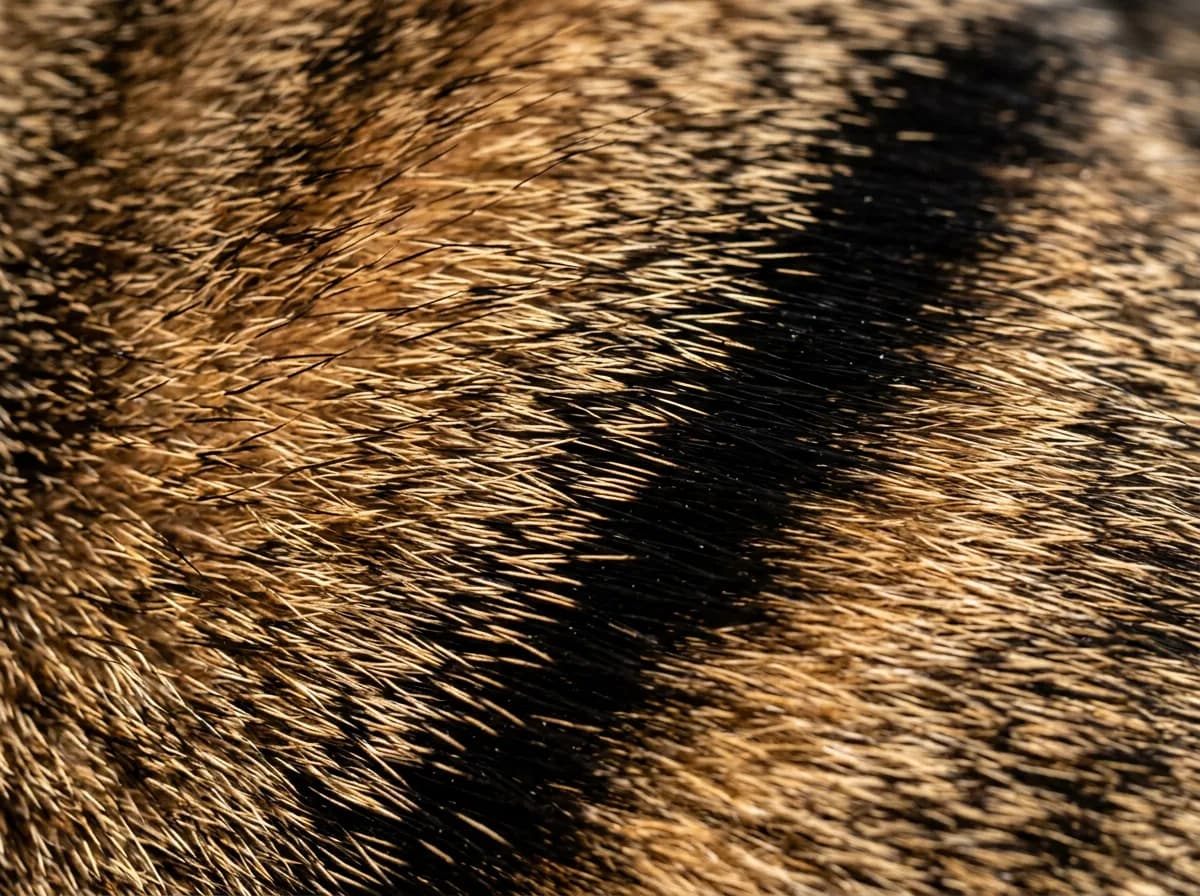
A brown tabby cat is any cat wearing the tabby pattern in its black-based color form. The "brown" you see is not brown pigment at all. Each hair on the cat's body carries alternating bands of black eumelanin and a warm yellowish-tan, a striping effect controlled by the agouti gene (ASIP). Those banded hairs create the brown-looking ground color, while the solid black areas form the stripes, swirls, or spots on top. The Cat Fanciers' Association (CFA) breed standards describe the ideal brown tabby ground color as "brilliant coppery brown" with dense black markings, which is why a healthy brown tabby seems to glow in sunlight.
So how rare is a brown tabby cat? Not rare at all. Brown tabby is widely considered the single most common color-and-pattern combination in domestic cats, because it is the ancestral wild type. Nearly every domestic cat carries tabby pattern genes; in solid-colored cats, the non-agouti version of the gene (a/a) simply hides the stripes. Look closely at a black cat in bright sun, or at a solid-colored kitten, and you can often see faint "ghost" tabby markings underneath.
- Genetically, a brown tabby is a black cat with the agouti gene switched on. The agouti banding breaks the black pigment into stripes of black and warm tan on each hair, and that banding is what reads as brown to the human eye.
The 5 Brown Tabby Patterns: Classic, Mackerel, Spotted, Ticked, and Patched
Tabby is not one pattern. There are four core tabby patterns plus a fifth overlap pattern, and brown tabby cats wear all of them. Here is the quick identification guide, then a closer look at each.
| Pattern | Key Markings | Breeds Known for It |
|---|---|---|
| Classic (blotched) | Bold swirls forming a bullseye on each side | Maine Coon, American Shorthair, Persian |
| Mackerel | Narrow vertical stripes like fish bones down the sides | Domestic shorthair, Toyger, American Shorthair |
| Spotted | Stripes broken into distinct spots or rosettes | Bengal, Egyptian Mau, Ocicat |
| Ticked | Banded hairs all over with little or no body striping | Abyssinian, Somali, Singapura |
| Patched (torbie) | Brown tabby markings mixed with red or cream patches | Almost any breed that allows tortoiseshell |
Classic (Blotched) Brown Tabby
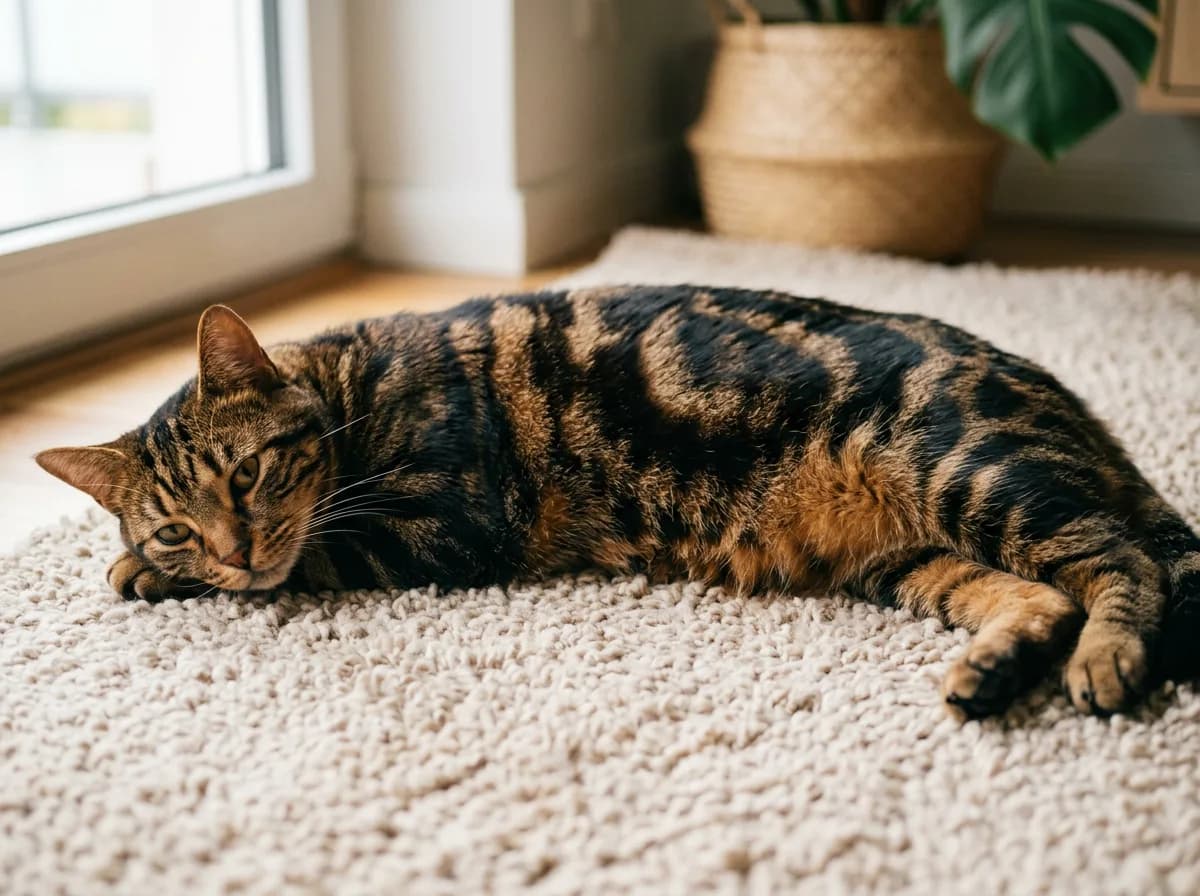
The classic tabby, also called blotched, wears bold, wide swirls of black over the coppery ground, usually forming a circular "bullseye" or "oyster" on each flank. This dramatic marbled look is genetically recessive, caused by mutations in the Taqpep gene identified by Kaelin et al. in Science (2012). Remarkably, the same gene is responsible for the king cheetah's rare blotched coat. The brown classic tabby is the textbook Maine Coon look and a longtime show-ring favorite.
Mackerel Brown Tabby
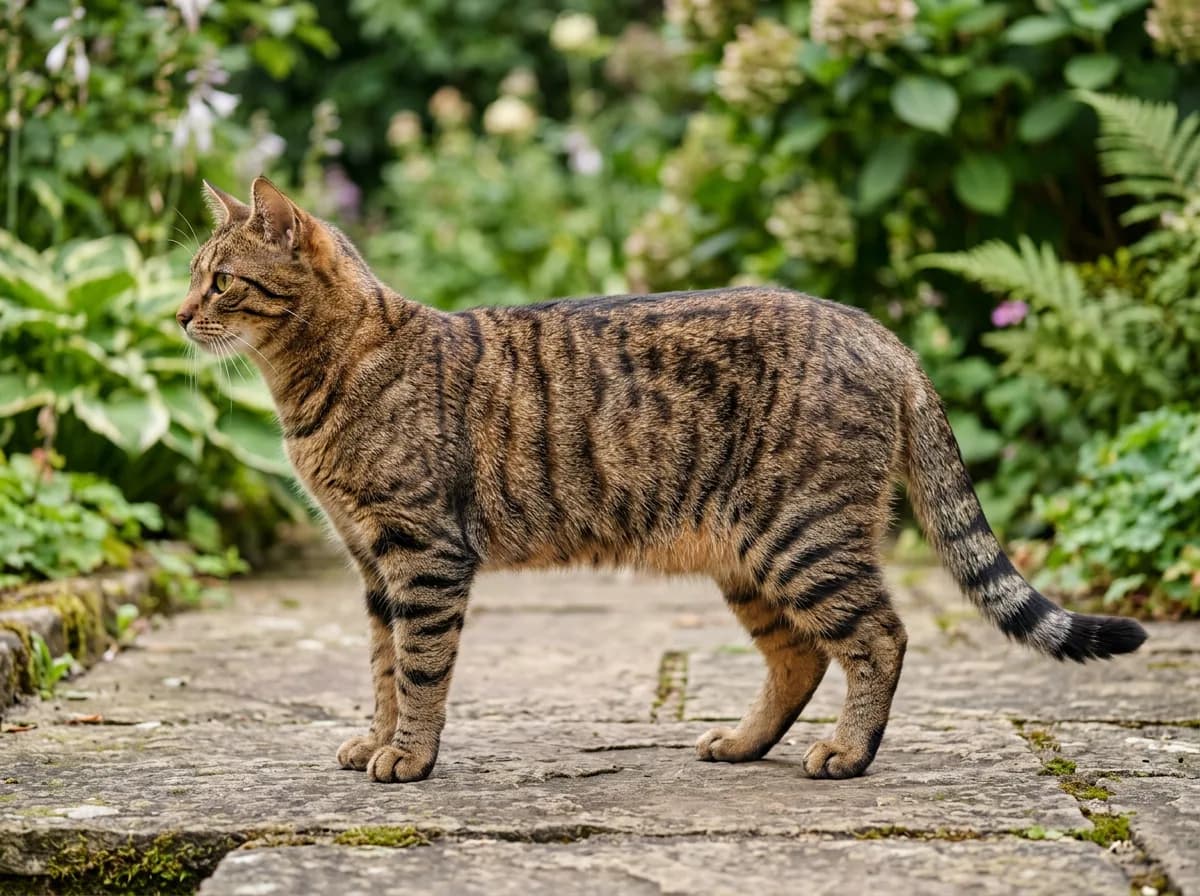
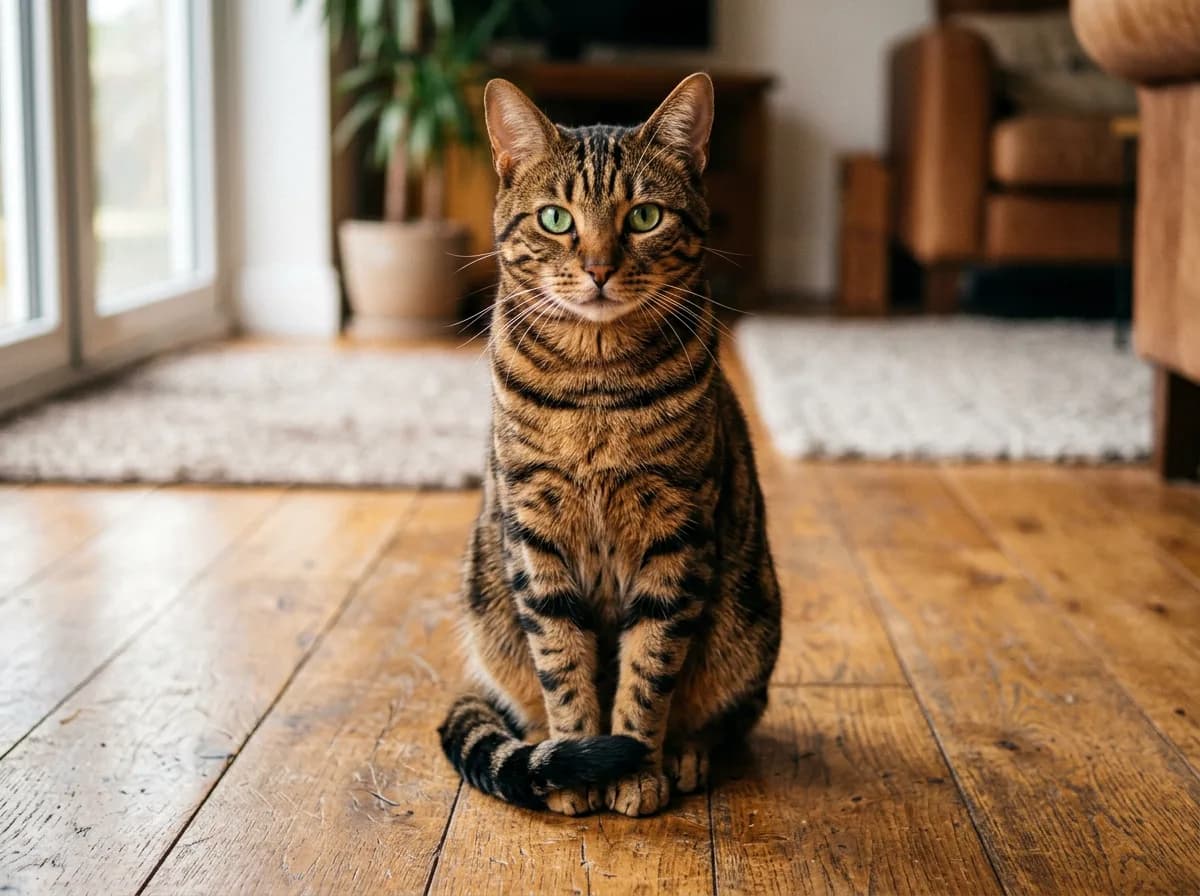
The mackerel tabby has narrow, roughly parallel stripes running vertically down the sides from a dark "spine line," like the bones of a fish, which is where the name comes from. This is the wild-type pattern, the one the domestic cat's wildcat ancestor wore, and it remains the most common tabby pattern today. A brown mackerel tabby is, visually speaking, the closest thing to the original domestic cat.

Never Scoop Again® with the Whisker Litter-Robot, the smart self-cleaning automatic litter box. Monitor visits and track weights for better overall care in the Whisker® app. Multi-cat friendly.
Petful may earn a commission when you click through to Whisker, at no extra cost to you.
Spotted Brown Tabby
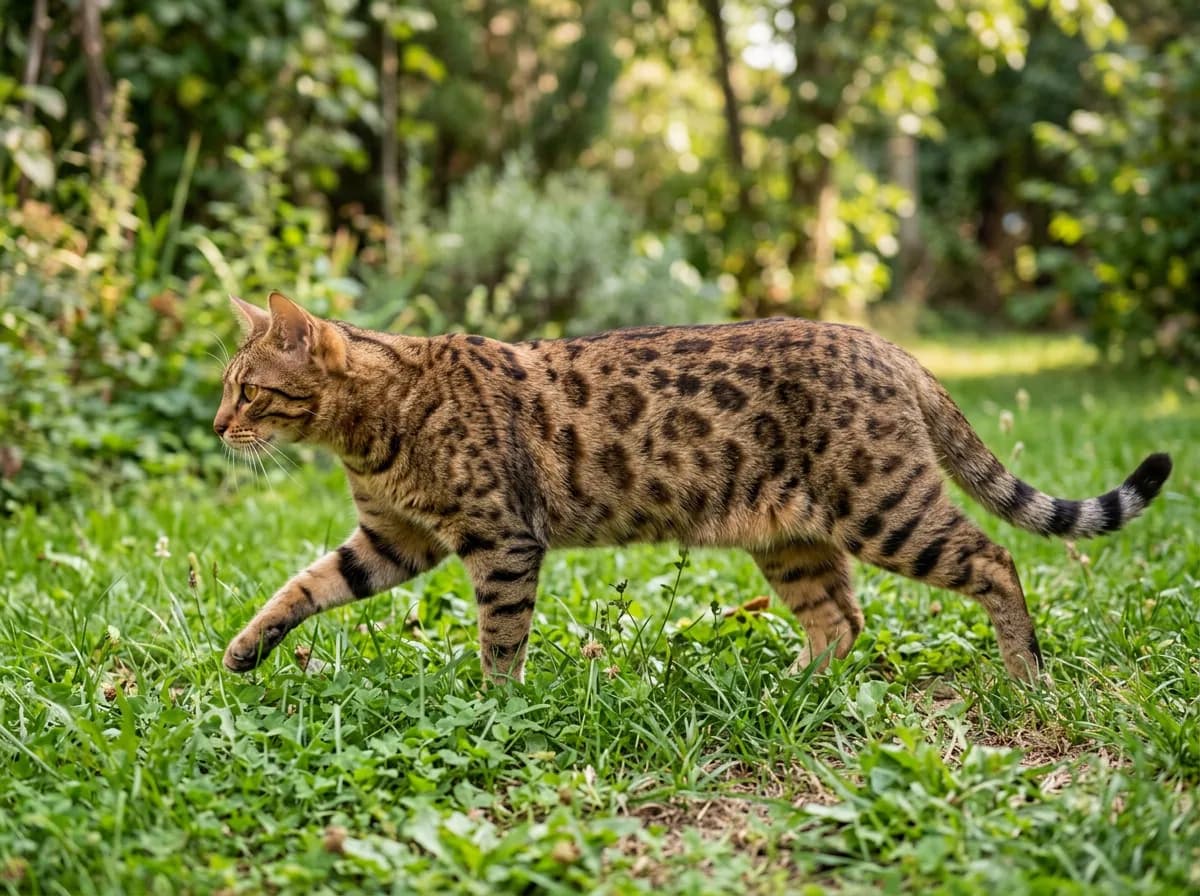
In spotted tabbies the stripes are broken into discrete spots, ranging from small round dots to large rosettes. Brown spotted coats define some striking breeds: the Egyptian Mau, the Ocicat, and the Bengal cat, whose brown spotted and rosetted coats echo a leopard's. Many ordinary domestic shorthairs show a "broken mackerel" pattern that reads as spots along the sides.
Ticked Brown Tabby
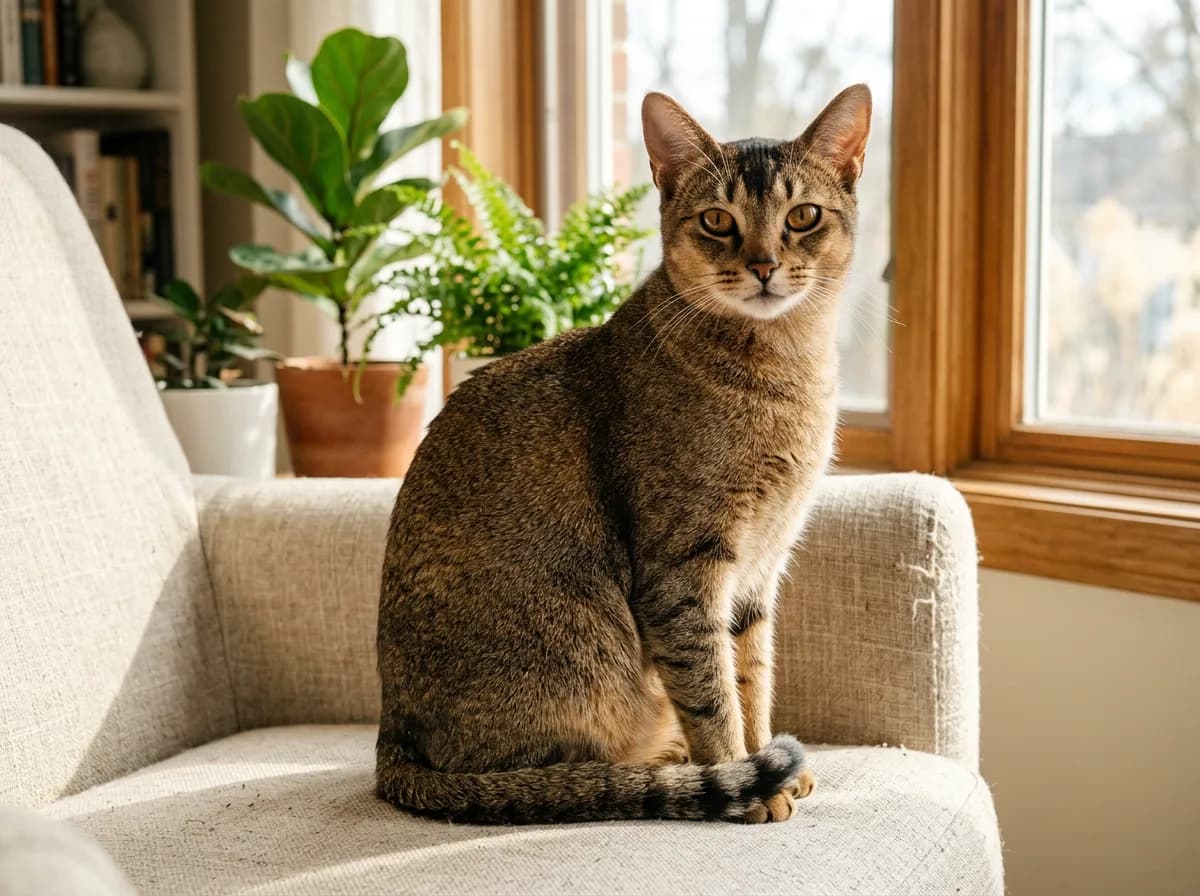
The ticked tabby barely looks striped at all. Each hair carries the agouti bands, but the body shows little or no striping, producing a shimmering, sand-like coat. Look for residual barring on the legs, tail, and face, plus the tabby "M" on the forehead. The Abyssinian is the famous ticked breed; its ruddy coat is essentially a warm brown ticked tabby refined by selective breeding.
Patched Brown Tabby (Torbie)
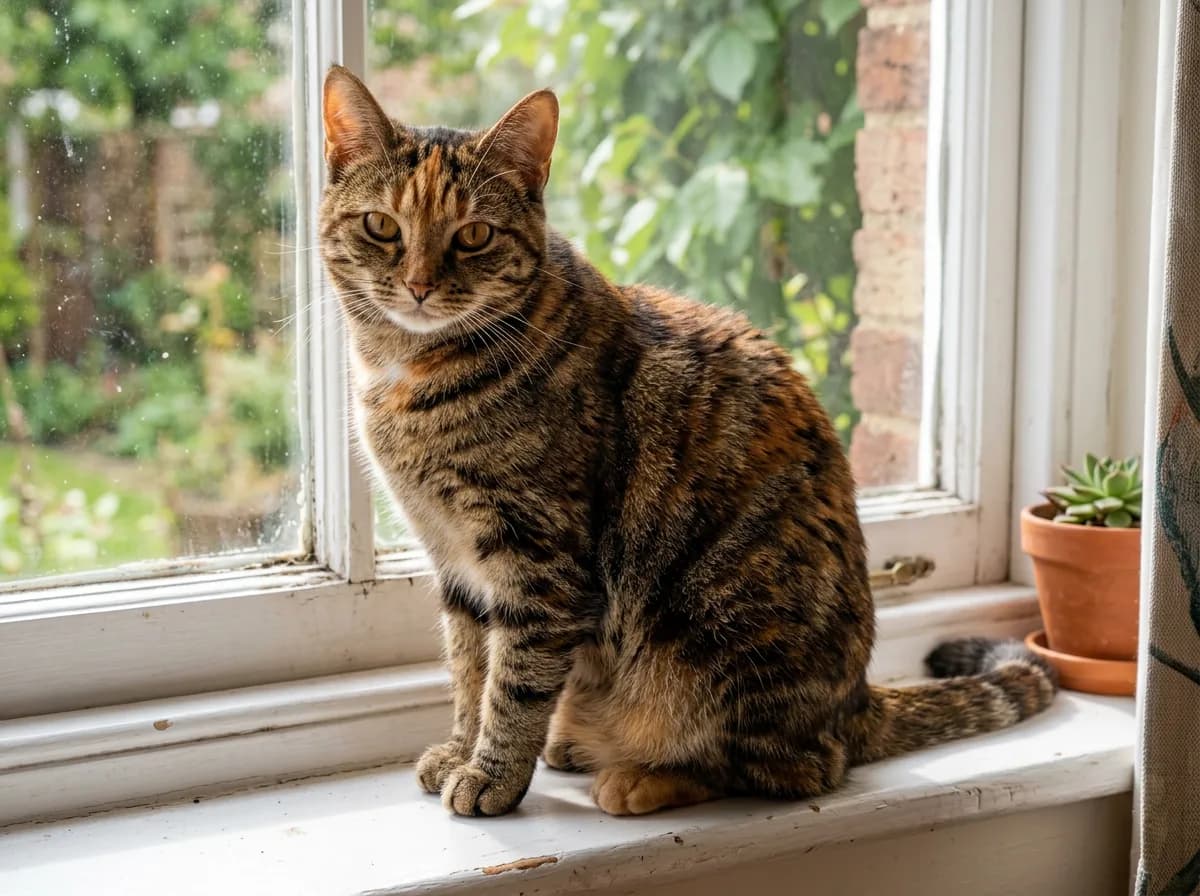
A patched tabby, or torbie, layers tortoiseshell coloring over tabby striping: brown tabby markings interwoven with patches of red or cream. Because the sex-linked orange gene drives the red patches, torbies are almost always female. If the cat also has large white areas with tabby-striped color patches, you are looking at a "caliby," the tabby cousin of the calico cat.
Brown Tabby Colors: Dark Brown, Golden, and Caramel Variations
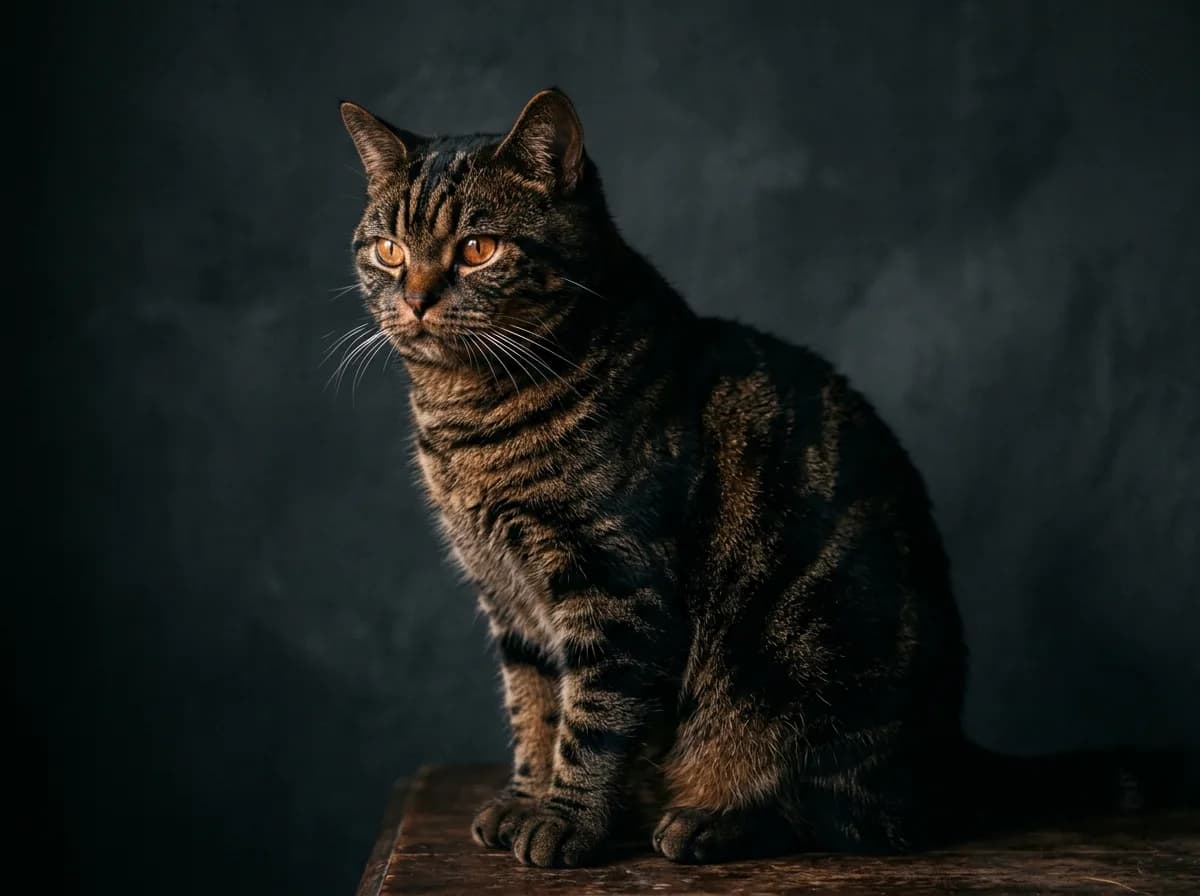
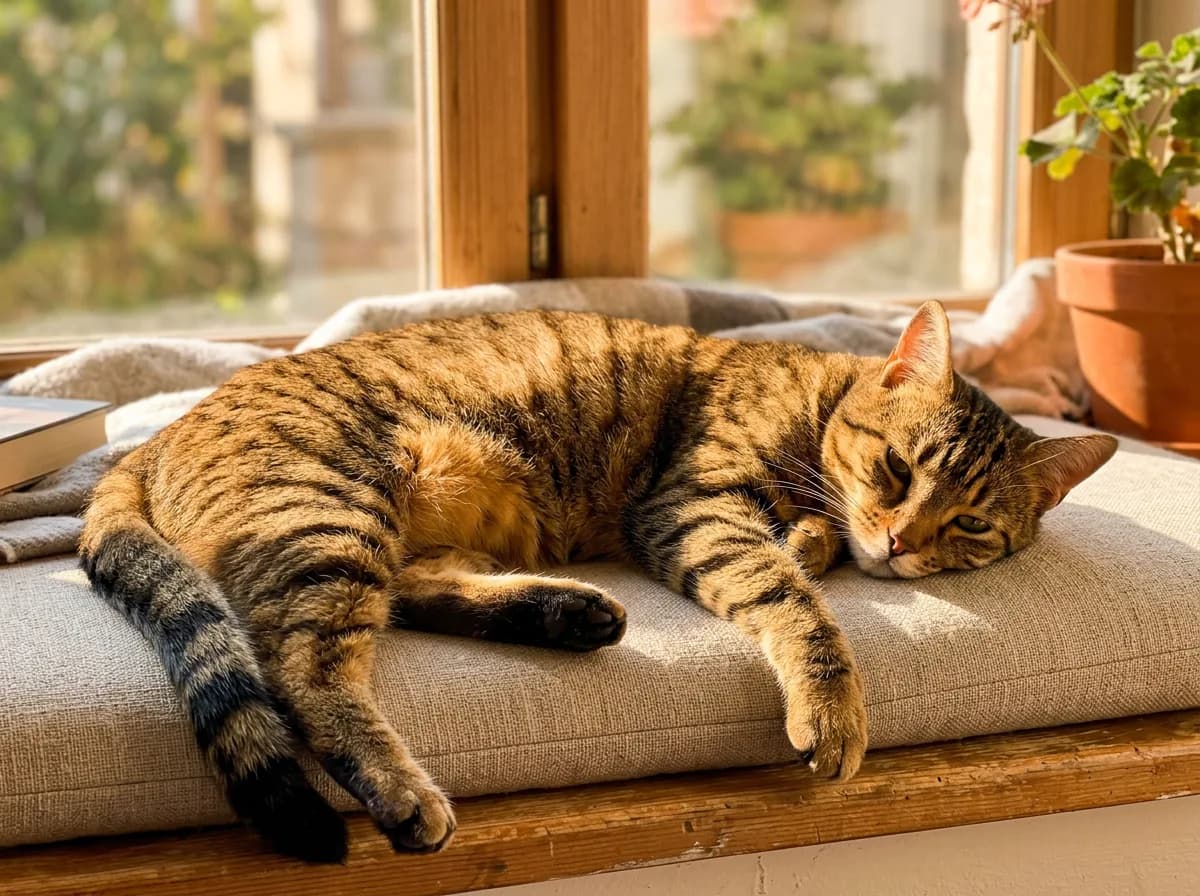
Not all brown tabbies are the same shade. The depth of the black markings, the width of the agouti bands, and polygenetic "rufousing" factors that warm up the tan bands all vary from cat to cat, producing a spectrum of looks:
- Dark brown tabby: heavy, dense black markings over a deep bronze ground. Heavily marked classic tabbies can look almost black-marbled at a distance.
- Golden or warm brown tabby: strong rufousing brightens the ground color toward a rich coppery gold, the show-standard ideal.
- Caramel and fawn-toned tabby: lighter, softer ground colors where the banding is wide and the markings are thinner.
Other tabby colors are close cousins rather than true browns: blue (gray) tabbies are the dilute version, red (orange) tabbies run on a different pigment entirely, and silver tabbies carry an inhibitor gene that erases the warm undercoat, leaving black markings on a pale silver ground.
Brown Tabby Cat vs. Gray Tabby Cat: How to Tell Them Apart
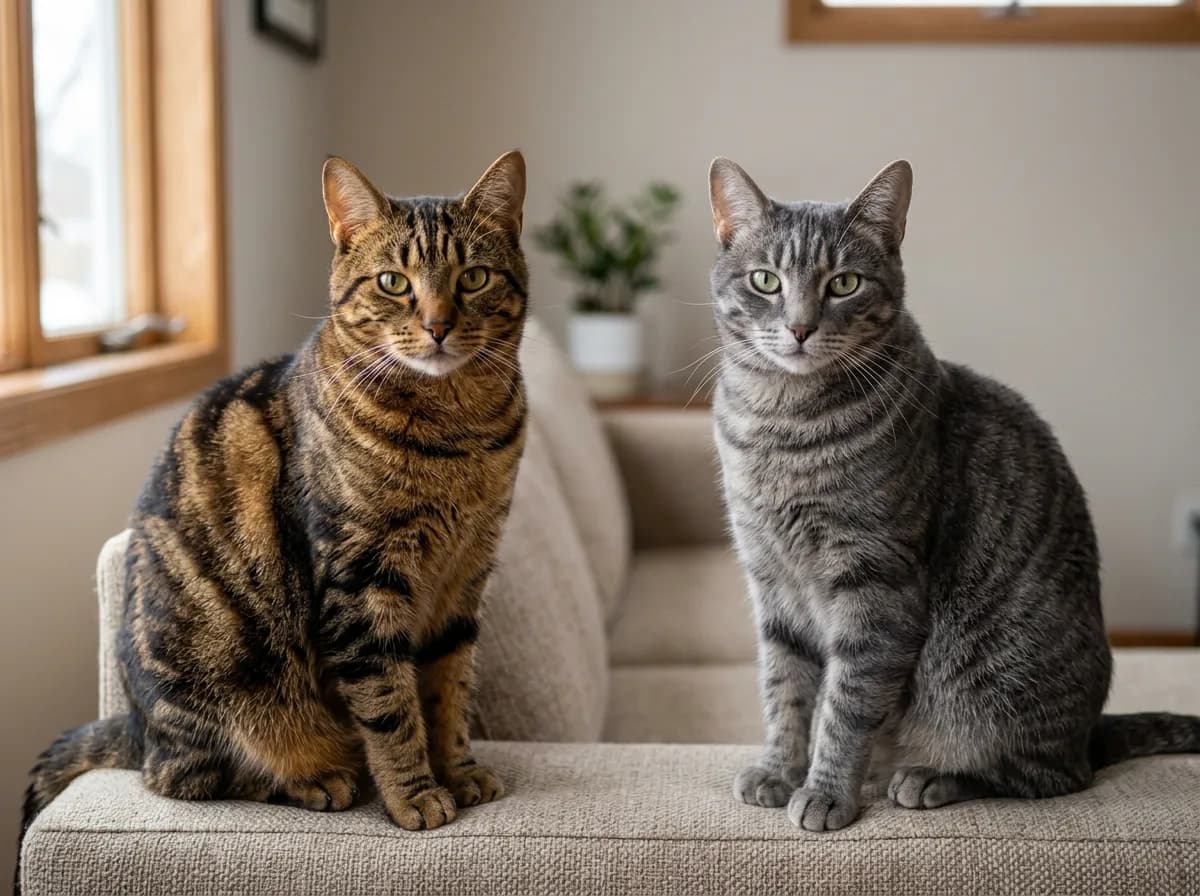
This is the single most common identification question, and entire online threads exist of owners asking "is my cat brown or gray?" The genetic difference is simple: a gray (blue) tabby is a brown tabby with the dilution gene. When a cat inherits two copies of the recessive dilute allele (d/d) in the MLPH gene, black pigment softens to slate blue-gray, cooling the whole coat.
| Feature | Brown Tabby | Gray Tabby |
|---|---|---|
| Stripe color | Jet black | Slate gray or blue-gray |
| Ground color | Warm coppery brown or golden tan | Cool pale gray to buff-gray |
| Overall tone | Warm, glows in sunlight | Cool, silvery or steely |
| Genetics | Full-strength eumelanin (D/-) | Dilute eumelanin (d/d) |
| Nose leather | Brick red to old rose, often outlined | Usually blue-gray to old rose |
- Indoor lighting flattens coat color. Take your cat near a window in natural daylight and look at the stripes themselves, not the ground color: jet-black stripes mean brown tabby, while soft gray stripes mean gray tabby. A warm coppery glow between the stripes confirms brown.
Cat Breeds That Come in Brown Tabby
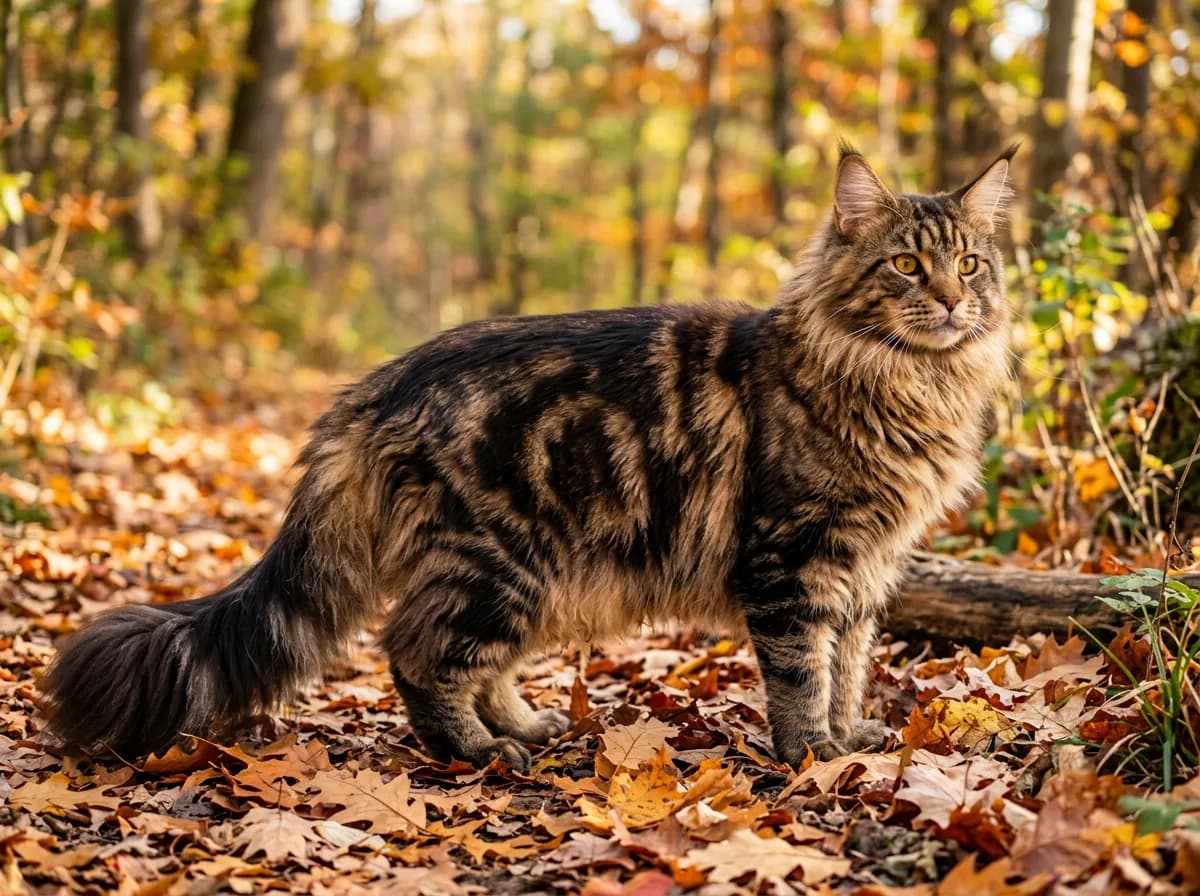
Because brown tabby is the ancestral coat, a long list of pedigreed breeds accepts it, and the vast majority of brown tabbies are beloved domestic shorthairs and longhairs with no pedigree at all. Breeds famous for the look include:
- Maine Coon: the brown classic tabby is the iconic Maine Coon look, so much so that many people picture a brown tabby when they hear the breed's name. It is one of dozens of accepted Maine Coon colors.
- American Shorthair: the silver classic tabby gets the fame, but the brown classic tabby American Shorthair is a show-ring staple.
- British Shorthair: best known in solid blue, the British Shorthair also comes in handsome brown classic and spotted tabby.
- Norwegian Forest Cat and Siberian: rugged natural breeds where brown tabby (often with white) is a signature look.
- Bengal, Egyptian Mau, and Ocicat: the brown spotted specialists.
- Abyssinian: the ticked tabby in its warm ruddy form.
- Manx, Persian, Exotic Shorthair, Devon Rex, and Oriental Shorthair: all accept brown tabby among many other coats.
Brown Tabby Cat Personality and Temperament
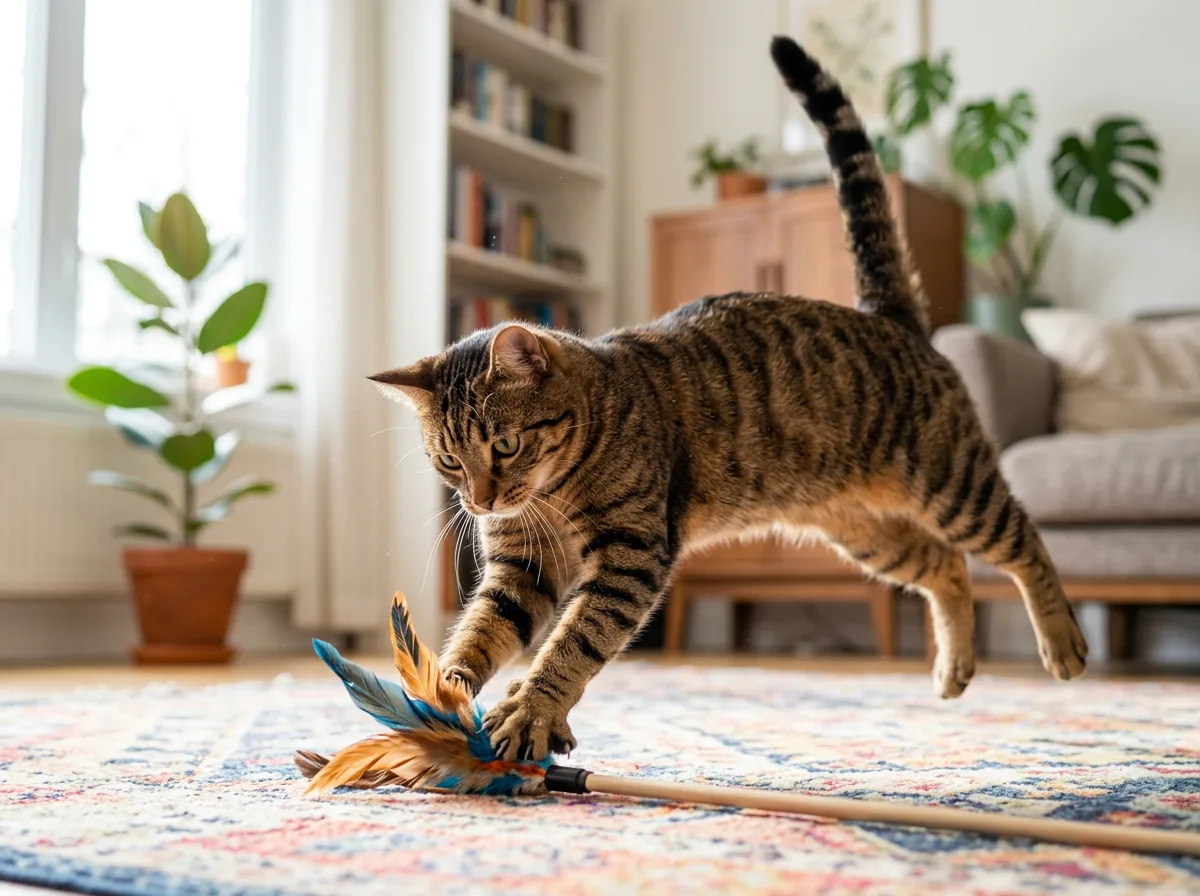
Owners love to describe brown tabbies as friendly, food-motivated, easygoing, and dog-like, and plenty of brown tabbies live up to the reputation. The honest answer, though, is that coat pattern does not determine personality. No peer-reviewed research shows that brown tabby cats share a temperament; the scientific work on coat color and behavior (such as a 2016 UC Davis survey on tricolor cats) relies on owner reports and shows modest differences at best, with individual variation dominating everything else.

63-inch multi-level cat tree with scratch posts, hammock, plush perches, and dangling toys. Vertical territory is non-negotiable for high-energy climbing breeds like the Bengal.
Petful may earn a commission when you click through to Chewy, at no extra cost to you.
What actually shapes a brown tabby's personality is early socialization, breed background, and life experience. A brown tabby Maine Coon will likely be a gentle giant because Maine Coons are; a brown tabby Bengal will be a high-energy climber because Bengals are; and a brown tabby from the shelter will be entirely his or her own cat. Treat the pattern as a paint job, not a personality profile, and judge the individual cat in front of you.
The Famous M Marking (and the Legends Behind It)
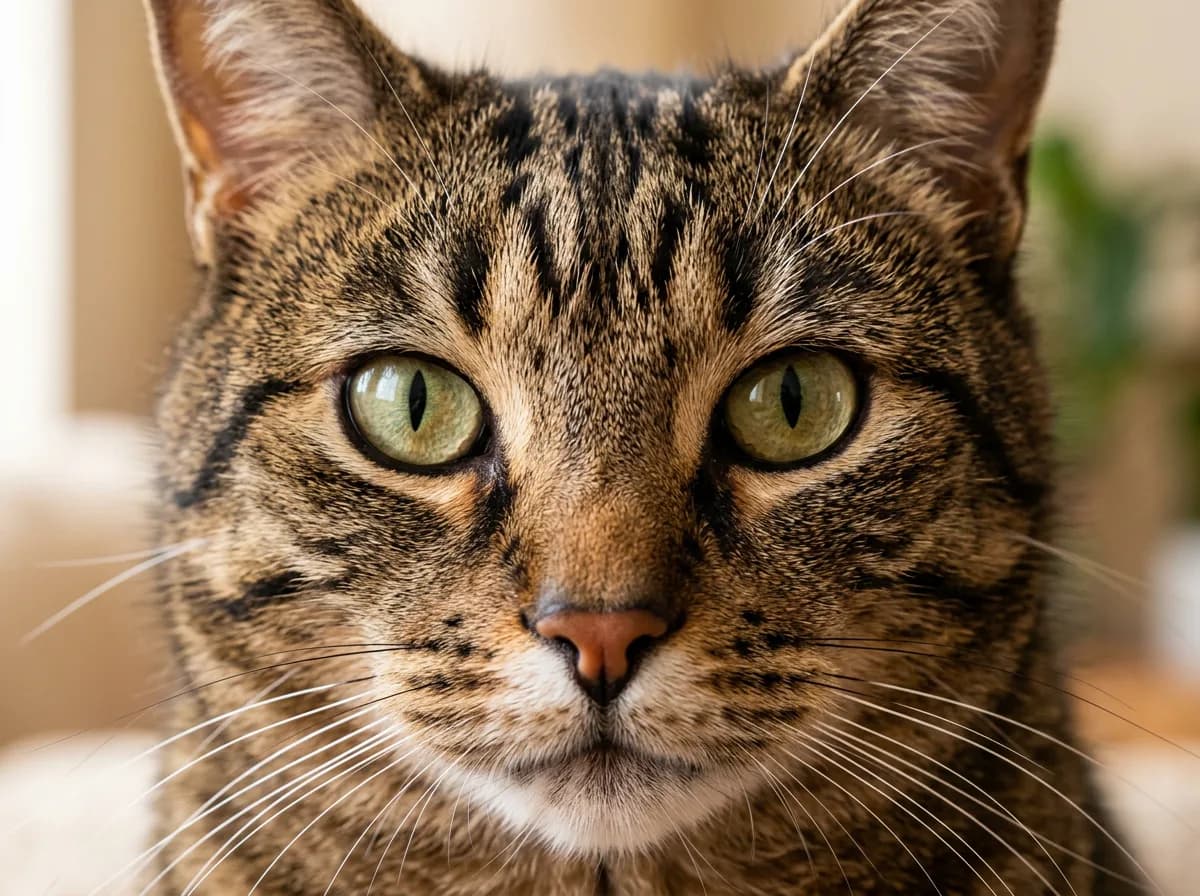
Every brown tabby carries a distinctive "M" shape in the dark frown lines on the forehead, and people have been inventing stories about it for centuries. Islamic tradition says the prophet Mohammed loved a tabby named Muezza and left the M as his mark. A Christian legend says a tabby cat warmed the baby Jesus in the manger, and Mary traced the M onto its forehead in gratitude. Another tale connects it to "Mau," the ancient Egyptian word for cat.
The real explanation is less romantic: the M is simply part of the tabby pattern itself, present on every tabby of every color, from the family tomcat to the tiger. The forehead markings are among the last tabby features to disappear even in heavily ticked cats, which makes the M one of the most reliable tabby identifiers.
Wildcat Ancestry: Why Brown Tabby Is the Default Cat Coat
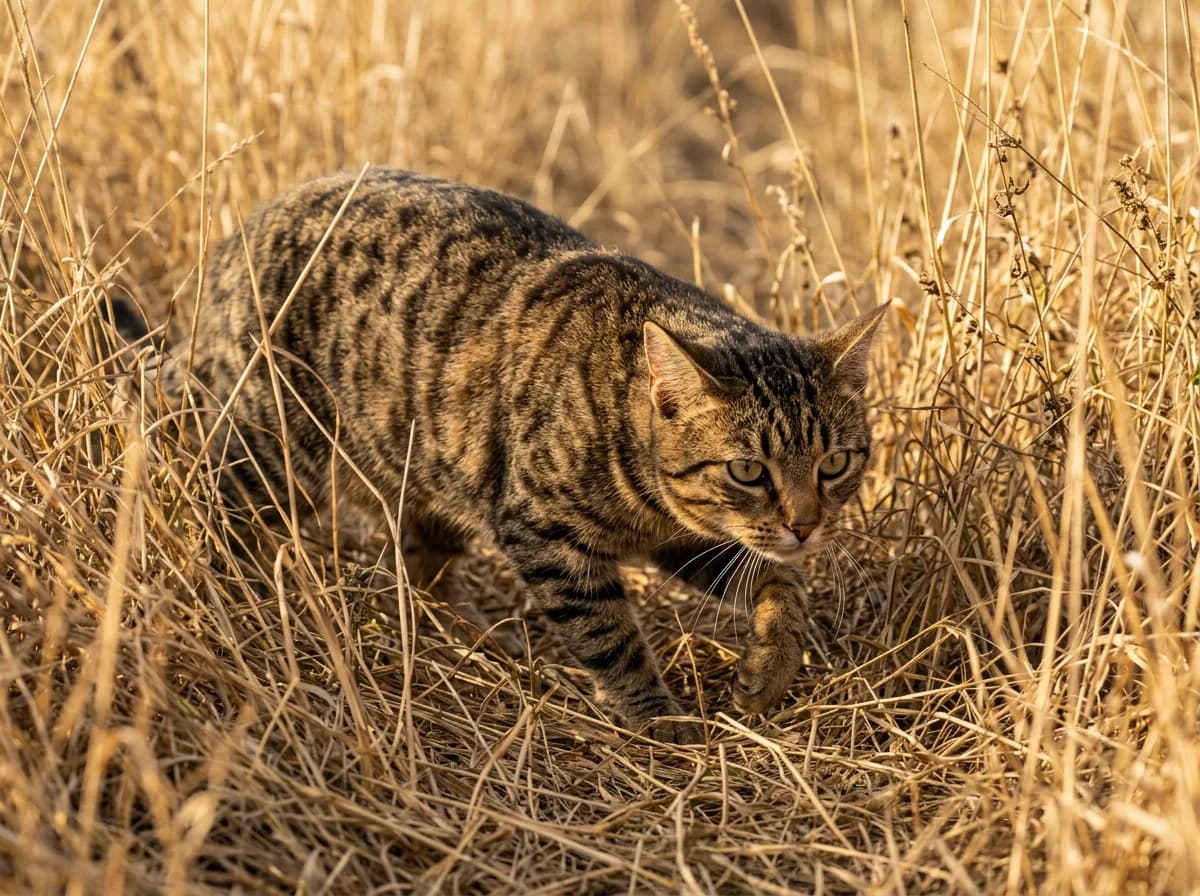
The domestic cat descends from the Near Eastern and African wildcat, Felis silvestris lybica, a sandy-brown mackerel tabby that began living alongside humans when farming created grain stores and the rodents that raided them. The landmark ancient-DNA study by Ottoni and colleagues (Nature Ecology & Evolution, 2017) tracked cat genetics across 9,000 years and found something surprising: for most of history, domestic cats kept the wildcat's striped coat. The blotched (classic) tabby mutation only spread widely through Europe and the Ottoman world in the medieval era and later, meaning the swirled brown tabby is, evolutionarily speaking, a recent fashion.
Modern genetics has filled in how the pattern is built. The Taqpep gene (Kaelin et al., Science, 2012) flips coats between mackerel and blotched, and a 2021 study of the Dkk4 gene by the same research group showed that the tabby pattern is mapped onto the skin in the embryo, before a single hair develops. Your brown tabby was striped before she was born.
Long-Haired Brown Tabby Cats
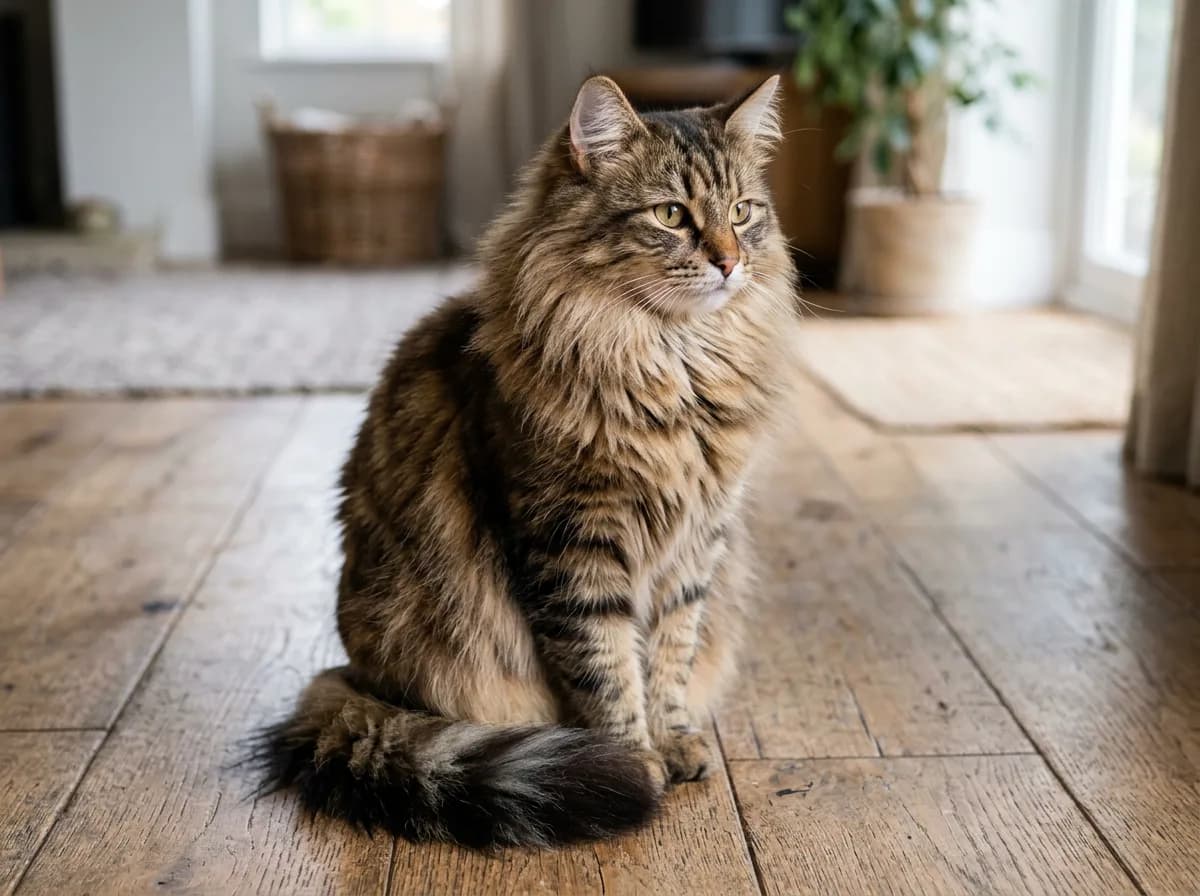
Brown tabby gets even more dramatic on a long coat. Maine Coons, Norwegian Forest Cats, Siberians, Persians, and ordinary domestic longhairs all wear it, and the long fur changes how the pattern reads: crisp stripes soften into flowing marbled streaks, the ruff and britches blur the leg barring, and the plumed tail shows wide, soft rings. On a heavily furnished cat, the clearest pattern clues are the face markings, the M, and the tail rings.
The trade-off is grooming. A long-haired brown tabby needs brushing several times a week (daily during spring and fall shedding seasons) to prevent mats, especially behind the ears, in the armpits, and along the britches. Start young, keep sessions short and positive, and the brush becomes bonding time instead of a battle.
How Much Does a Brown Tabby Cat Cost?
Because brown tabby is a pattern and not a breed, the price follows the source, not the coat. A brown tabby from a shelter or rescue typically costs $50-200 in adoption fees, which usually include spay/neuter, initial vaccines, and a microchip: the best value in the cat world. A pedigreed kitten that happens to be brown tabby follows its breed's pricing, roughly $800-2,500 for most pedigreed kittens depending on breed, breeder, region, and bloodline. A brown tabby Maine Coon costs Maine Coon money; a brown spotted Bengal costs Bengal money.

108-oz stainless steel pet fountain with quiet pump and water-level window. Bengals are notoriously water-obsessed; a flowing fountain encourages hydration and pulls them away from sinks and toilets.
Petful may earn a commission when you click through to Chewy, at no extra cost to you.
| Source | Typical Cost | What You Usually Get |
|---|---|---|
| Shelter or rescue adoption | $50-200 | Spay/neuter, core vaccines, microchip |
| Pedigreed breeder kitten | $800-2,500 (varies by breed) | Registration papers, health guarantee, early vetting |
| Rehoming or stray | Free to minimal | No vetting included; budget for a full vet workup |
- Brown tabby is the most common coat in domestic cats, so any seller charging a premium because a brown tabby kitten is "rare" or "exotic" is misleading you. Pay for the breed, the breeder's health testing, and the kitten's vetting, never for the pattern itself.
Brown Tabby Cat Lifespan and Health
The brown tabby pattern has no effect on lifespan or disease risk. Like other healthy indoor cats, brown tabbies typically live 12-16 years, and plenty reach their late teens or 20. What actually moves the needle: indoor living, weight management, dental care, parasite prevention, and routine veterinary checkups. If your brown tabby is a pedigreed cat, learn the breed's specific health screening (for example, hip and heart screening in Maine Coons) because health risk travels with breed lines, not with coat color.
- A brown tabby's coat should stay glossy and well-defined. If the coat suddenly dulls, thins, fades, or develops greasy mats, or if a previously fastidious cat stops grooming, book a veterinary exam. Coat deterioration is often an early visible sign of illness, pain, or nutritional problems.
Caring for a Brown Tabby Cat
Caring for a brown tabby is simply caring for a cat, with a few pattern-adjacent notes:
- Grooming: weekly brushing keeps a short-haired brown tabby's coat gleaming; long-haired tabbies need brushing several times a week. Regular brushing also distributes skin oils that keep that coppery ground color rich.
- Nutrition and weight: many owners report brown tabbies as enthusiastic eaters. Whatever the cause, measured meals and portion control beat free-feeding for keeping any cat lean.
- Enrichment: the tabby coat evolved for hunting camouflage, and the instincts came with it. Daily interactive play, food puzzles, climbing space, and window perches keep a brown tabby's body and brain busy.
- Routine care: annual vet exams (twice yearly for seniors), dental attention, year-round parasite prevention, and a microchip with current contact details.
Fun Facts About Brown Tabby Cats
- The name comes from silk, not cats. "Tabby" traces back to attabi, a wavy watered silk woven in the Al-'Attabiya quarter of Baghdad. The fabric name passed through French as tabis and entered English in the early 1600s, where the striped cloth lent its name to striped cats.
- A brown tabby won America's first major cat show. At the 1895 show at New York's Madison Square Garden, a brown tabby Maine Coon named Cosey took Best in Show.
- Tabbies have their own holiday. National Tabby Day is April 30.
- Every orange cat is a tabby. The orange pigment cannot be made solid, so every orange cat shows tabby markings.
- Extra toes, same stripes. Brown tabby is a common coat among polydactyl cats, the many-toed cats famously associated with Ernest Hemingway's home in Key West.
- April 30 is National Tabby Day, created to spotlight tabby cats waiting in shelters. Since brown tabbies are the most common cats in rescue, it is the perfect excuse to adopt, foster, donate, or just post your stripey supervisor on the internet.
Brown Tabby Cat Photo Gallery: Identify Your Cat's Pattern
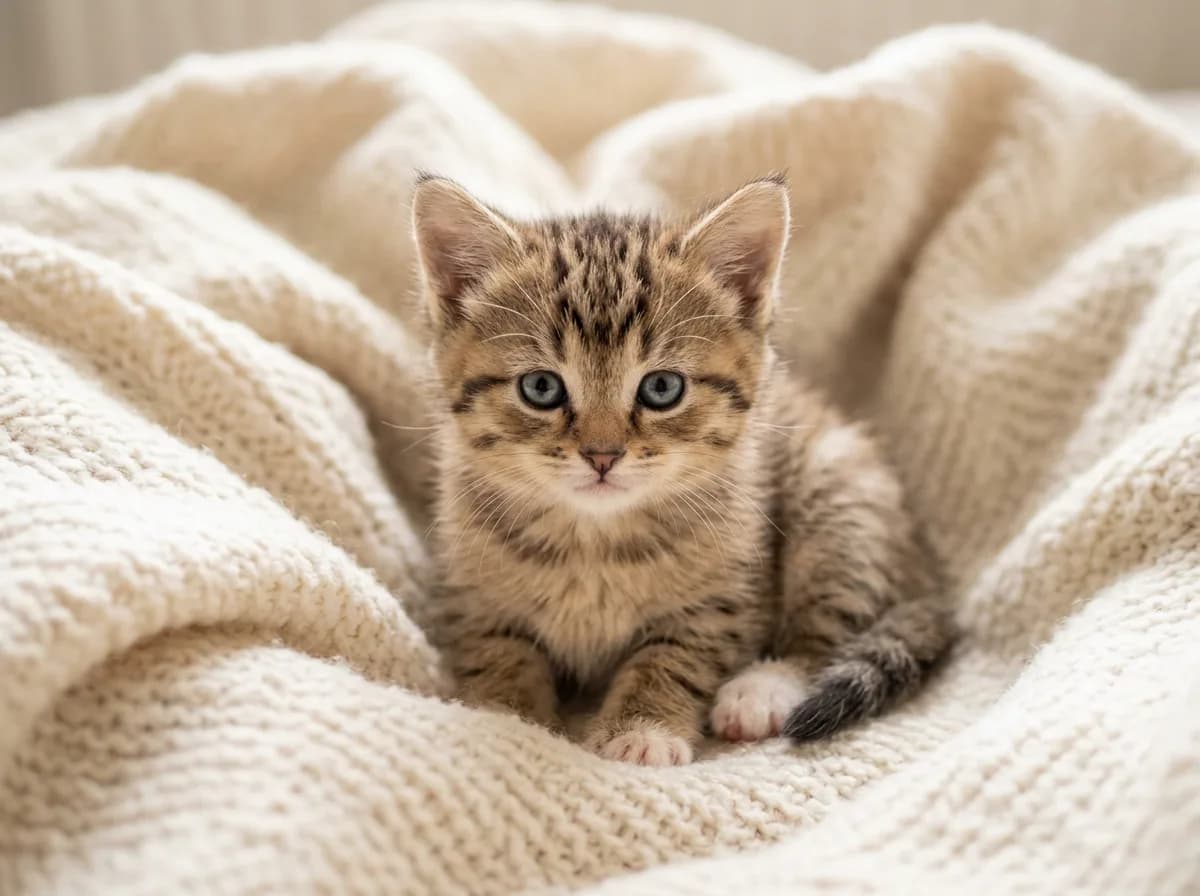
Use the photos above as a field guide and run this three-step check on your own cat:
1. Look at the flanks. Bold circular swirls or a bullseye mean classic tabby. Narrow vertical stripes mean mackerel. Distinct spots or rosettes mean spotted.
2. Look at the individual hairs. If the body looks evenly sandy with bands on each hair and barely any striping, you have a ticked tabby. Check the legs, tail, and face for the residual barring that confirms it.
3. Look for red or cream. Patches of red or cream woven through the brown tabby pattern mean a patched tabby (torbie), and large white areas with tabby-striped color patches mean a caliby.
One caution with kittens: coats change. Kittens are born with blue eyes that shift to their adult color at around 6-7 weeks, coat shade can deepen or warm as the adult coat grows in, and faint ghost markings on solid-colored kittens usually fade. Wait for the adult coat before you make a final call on a borderline brown-versus-gray kitten.
Frequently Asked Questions
Not rare at all. Brown tabby is widely considered the most common color-and-pattern combination in domestic cats because it is the ancestral wild type, the same coat worn by the Near Eastern wildcat every house cat descends from. Within brown tabbies, the mackerel (striped) pattern is the most common and the ticked pattern is the least often seen.
Common offenders include loud noises, strong smells (citrus, perfumes, cleaning products), dirty litter boxes, unwanted handling or belly touching, prolonged eye contact, and sudden changes to routine. Brown tabbies are no different from other cats here; watch the individual cat's body language, such as a twitching tail or flattened ears, and give space when you see it.
Use the slow blink. A 2020 University of Sussex study published in Scientific Reports found that cats respond to slow blinking with eye narrowing of their own and approach slow-blinking people more readily. Meet your cat's gaze softly, close your eyes slowly, hold for a beat, and reopen. Quiet companionship, gentle play, and respecting boundaries say it just as clearly.
The Siamese is the breed most often described as velcro-level clingy, with the Ragdoll, Burmese, Tonkinese, and Sphynx close behind. Clinginess is individual, though, and a well-socialized brown tabby domestic shorthair can be every bit as attached to its person as any pedigreed lap cat.
No. Brown tabby is a coat color and pattern, not a breed. It appears in dozens of pedigreed breeds, from the Maine Coon to the American Shorthair, and in millions of non-pedigreed domestic shorthairs and longhairs. A cat's breed comes from its ancestry, not its stripes.
One gene. Gray (blue) tabbies carry two copies of the recessive dilution gene (MLPH), which softens black pigment to slate gray and cools the whole coat. A brown tabby has jet-black stripes over a warm coppery ground, while a gray tabby has gray stripes over a cool, silvery-buff ground. Check the stripe color in natural daylight to tell them apart.
Many, including the Maine Coon, American Shorthair, British Shorthair, Norwegian Forest Cat, Siberian, Manx, Persian, Exotic Shorthair, Devon Rex, Oriental Shorthair, and the brown spotted specialists: the Bengal, Egyptian Mau, and Ocicat. The Abyssinian wears the ticked version. Most brown tabbies, however, are non-pedigreed domestic shorthairs and longhairs.
The M is simply part of the tabby pattern, formed by the dark frown lines on the forehead, and it appears on every tabby of every color. The legends are better stories: Mohammed's love for his tabby Muezza, Mary marking the cat that warmed the baby Jesus, and a link to "Mau," the ancient Egyptian word for cat.
The same as other cats, because coat pattern does not affect lifespan. Healthy indoor cats typically live 12-16 years, and many reach their late teens or 20. Indoor living, weight control, dental care, and regular veterinary checkups matter far more than coat color.
Shelter adoption typically runs $50-200 and usually includes spay/neuter, vaccines, and a microchip. A pedigreed kitten that happens to be brown tabby follows its breed's pricing, roughly $800-2,500 for most pedigreed kittens. Brown tabby itself carries no price premium because it is the most common coat in the cat world.
There is no scientific evidence that brown tabbies are more affectionate than other cats. Coat color and behavior research relies on owner reports and shows only modest, inconsistent differences. Socialization during kittenhood, breed background, and individual temperament shape affection far more than pattern does.
Brown tabbies are roughly an even split of males and females. Unlike orange tabbies (about 80% male) or calicos and torties (almost all female), the genes behind a brown tabby coat are not sex-linked, so the pattern says nothing about whether the cat is a boy or a girl.

Coreen Saito is a pet writer and longtime shelter volunteer with more than a decade in animal rescue. She covers cat behavior, breed care, and the small, ordinary science of sharing a life with companion animals, with a particular focus on honest takes about the products and decisions that actually matter. At home in Arizona, she's outranked by Mac (a dog with the loudest opinion in the house), Rebel (a cat who governs by quiet authority), and Meri (an orange tabby who runs the late shift and the laundry basket). She writes about all three, plus the rescues that keep coming through her life, at LifeWithMinty.com.
Sign up for expert-backed reviews and safety alerts all in one place.