Best Puppy Training Treats: Soft Rewards and Safe Portions
Compare four puppy training treats by texture, label calories and practical use. Learn how to check age directions, divide rewards and protect a balanced puppy diet.
Petful is reader supported. As an affiliate of platforms like Amazon and Chewy, we may earn a commission when you buy through links on this page. There is no extra cost to you.
The best puppy training treats are easy for a small mouth to eat, appealing enough to reward learning and suitable for the puppy's age and diet. Wellness Soft Puppy Bites offers a puppy-specific starting option, provided you divide its 6-calorie whole bites into smaller rewards. BLUE Bits, Pupford Chicken and Pet Botanics offer other useful formats with different calorie and ingredient tradeoffs.

Sign up for expert-backed reviews and safety alerts all in one place.
Which puppy training treats are best?
Good puppy training treats start with suitability, then convenience. A puppy treat should fit the age guidance on its exact package, be comfortable for your puppy to eat and work within a feeding plan built around complete puppy food. A soft texture is often convenient for small repeated rewards, but softness alone does not establish that a product is suitable for every young puppy.
The four selections here use current product information and reward-based training guidance. We have not conducted hands-on tests. Each “best fit” describes a practical reason to consider that product, not a promise that it will motivate every puppy. Comparing label calories helps you plan small rewards without guessing from their size. Whole-piece calories are especially useful because two treats that look similarly small can contribute quite different amounts to the day's food intake.
- 1Choose small rewards your puppy can eat comfortably and promptly.
- 2Check the exact product's age directions and label calories, even when the brand also makes puppy products.
- 3Divide suitable larger treats and count the whole quantity used across the day.
- For puppies under 6 months, check the precise age guidance even if the product is marketed for puppies. Vet-recommended treats should fit the individual feeding plan.
- Natural, organic or grain-free labeling does not identify the healthiest reward by itself. Use the ingredient list, calories and actual feeding directions.
- Golden Retrievers, German Shepherds and French bulldogs still need small training portions. Choose by the puppy’s mouth and comfortable eating, not a breed name alone.
You can begin with one suitable recipe. Try a small amount in a quiet setting before using it through a full class or introducing several unfamiliar foods together. Blue Buffalo BLUE Bits is one soft option to compare, while a puppy-specific recipe may be a clearer starting point. The best dog treats for puppy training support the lesson without displacing balanced meals.
| Pick | Best fit | Label calories per whole treat | Portion or suitability check |
|---|---|---|---|
| Wellness Soft Puppy Bites Lamb & Salmon | Puppy-specific soft rewards | 6 | Divide into smaller pieces; check exact age directions |
| BLUE Bits Tasty Chicken | Soft rewards with flexible portioning | Check current bag | All-age positioning does not replace the label |
| Pupford Train Chicken | Freeze-dried rewards with a short ingredient list | Under 2 | Check each piece for your puppy's mouth and eating style |
| Pet Botanics Training Reward Chicken | A soft reward in a larger practice bag | 3 | Standard version, not Mini; confirm puppy suitability on the bag |
Soft textures and small pieces for puppy mouths
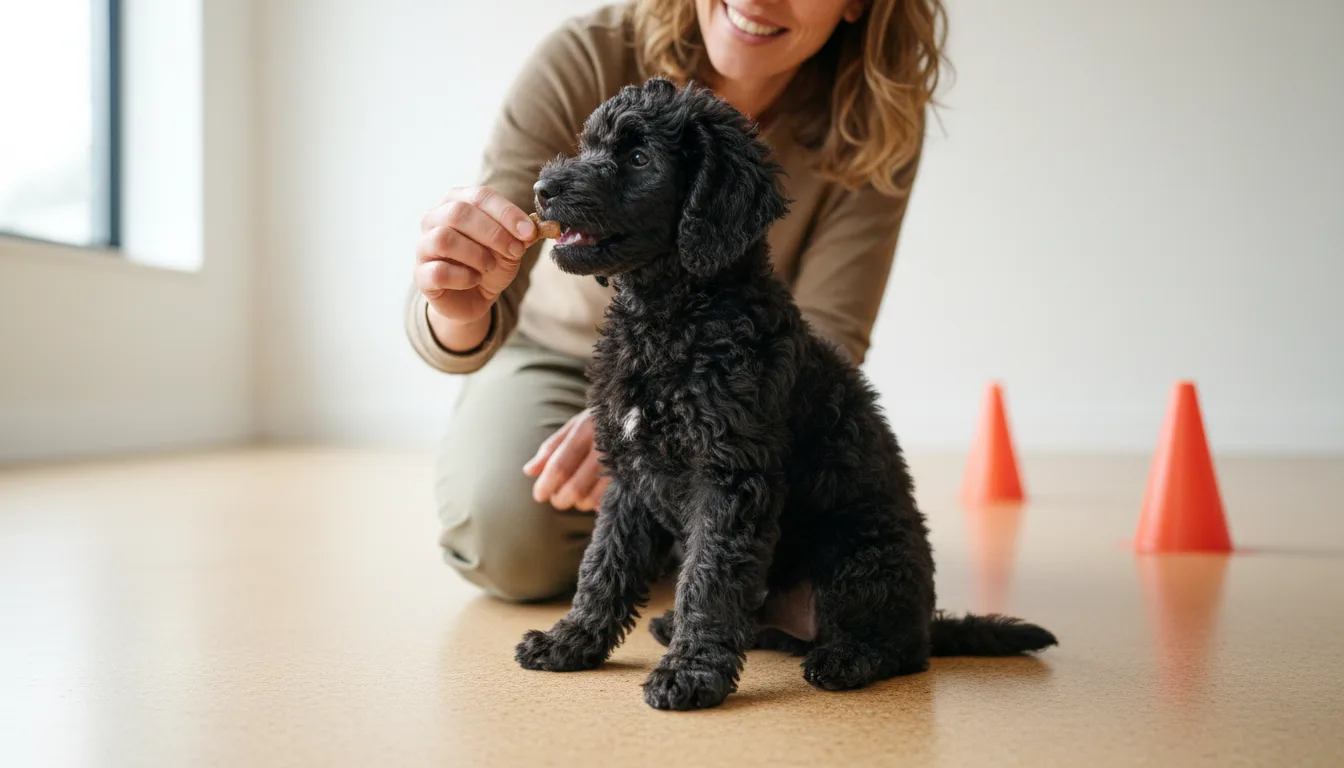
Soft puppy training treats are convenient because you can often tear them into small portions before a lesson. That keeps your hands free to reward promptly and avoids pausing while the puppy works through a large mouthful. The goal is a comfortable, quick reward, not the biggest snack your puppy can manage.
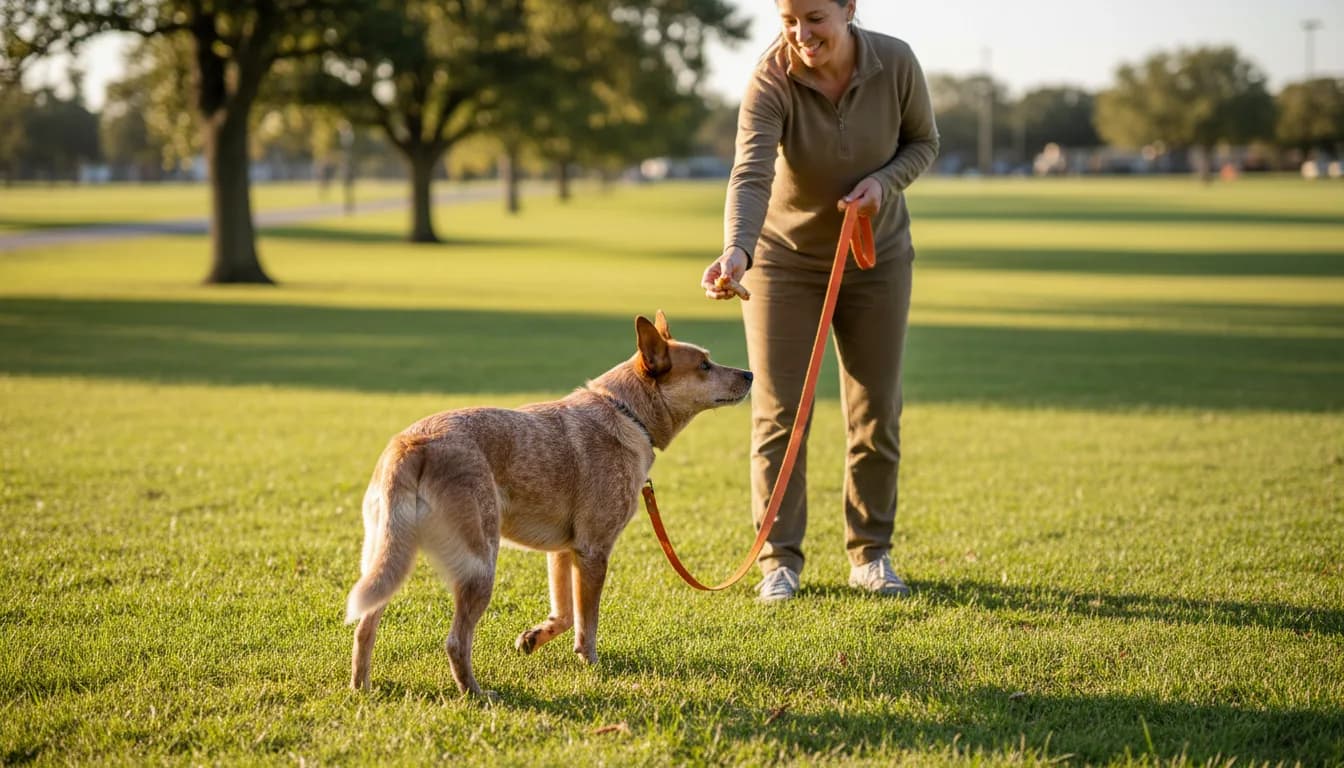
The AKC's advice on training treats emphasizes small rewards that do not interrupt practice. Start smaller for a tiny puppy than you would for a large adult dog. A breed-size label on a package is less informative than watching how your puppy handles the actual piece. Supervise eating and stop if the puppy struggles with the texture or size.
- Tear soft pieces in advance instead of breaking them while the puppy waits.
- Check freeze-dried pieces individually rather than assuming they are all identical.
- Choose pieces you can pick up easily and deliver without dropping a trail of crumbs.
- Keep large biscuits and long-lasting chews separate from quick, repeated training rewards.
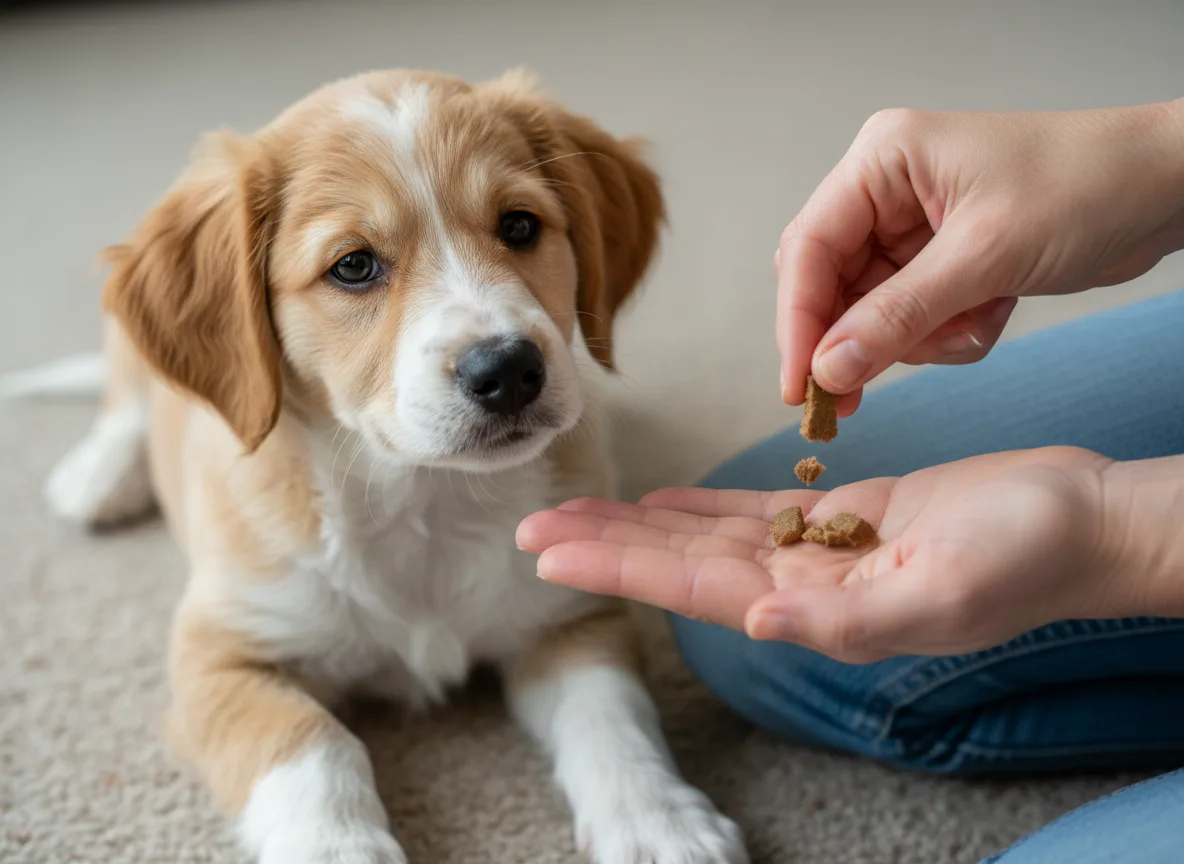
If a puppy takes a long time to eat each reward, first change the portion or format. More chewing time can make it harder to connect several short repetitions into a useful lesson. If a puppy repeatedly coughs, struggles to swallow or seems uncomfortable eating, stop offering that food and seek veterinary advice rather than trying to train through it.
Four puppy training treats compared
Compare these exact recipes by their training role. A puppy-specific soft bite, freeze-dried reward and larger practice bag offer different conveniences. Check that the item in your basket matches the named recipe; another flavor or a Mini version may have different ingredients and calories.
Wellness Soft Puppy Bites: a puppy-specific soft option
Wellness Soft Puppy Bites Lamb & Salmon is our starting choice for owners who want a product specifically positioned for puppies. The manufacturer's US page describes it for puppies under one year. That is useful life-stage information, but it does not establish an automatic minimum-age approval for every puppy. Check your bag's directions and ask the manufacturer or your veterinarian if those directions do not address your puppy's age.
The key tradeoff is portion size. Wellness's published nutrition information lists 6 calories per treat. Handing out a whole bite after every sit can use a small puppy's treat budget quickly. The soft format gives you a practical way to make smaller reward pieces while keeping track of the whole treats used.
- Best fit: a puppy owner who wants a soft, puppy-specific product and will portion it before practice.
- Watch for: a whole bite is a relatively substantial reward in this comparison; dividing it is central to its training role.
- Ingredient check: lamb-and-salmon naming and grain-free labeling do not establish that the formula suits a particular allergy or restricted diet.
If you quarter one bite evenly, each piece supplies approximately 1.5 calories. Count four quarters as one whole treat, not as four calorie-free extras.
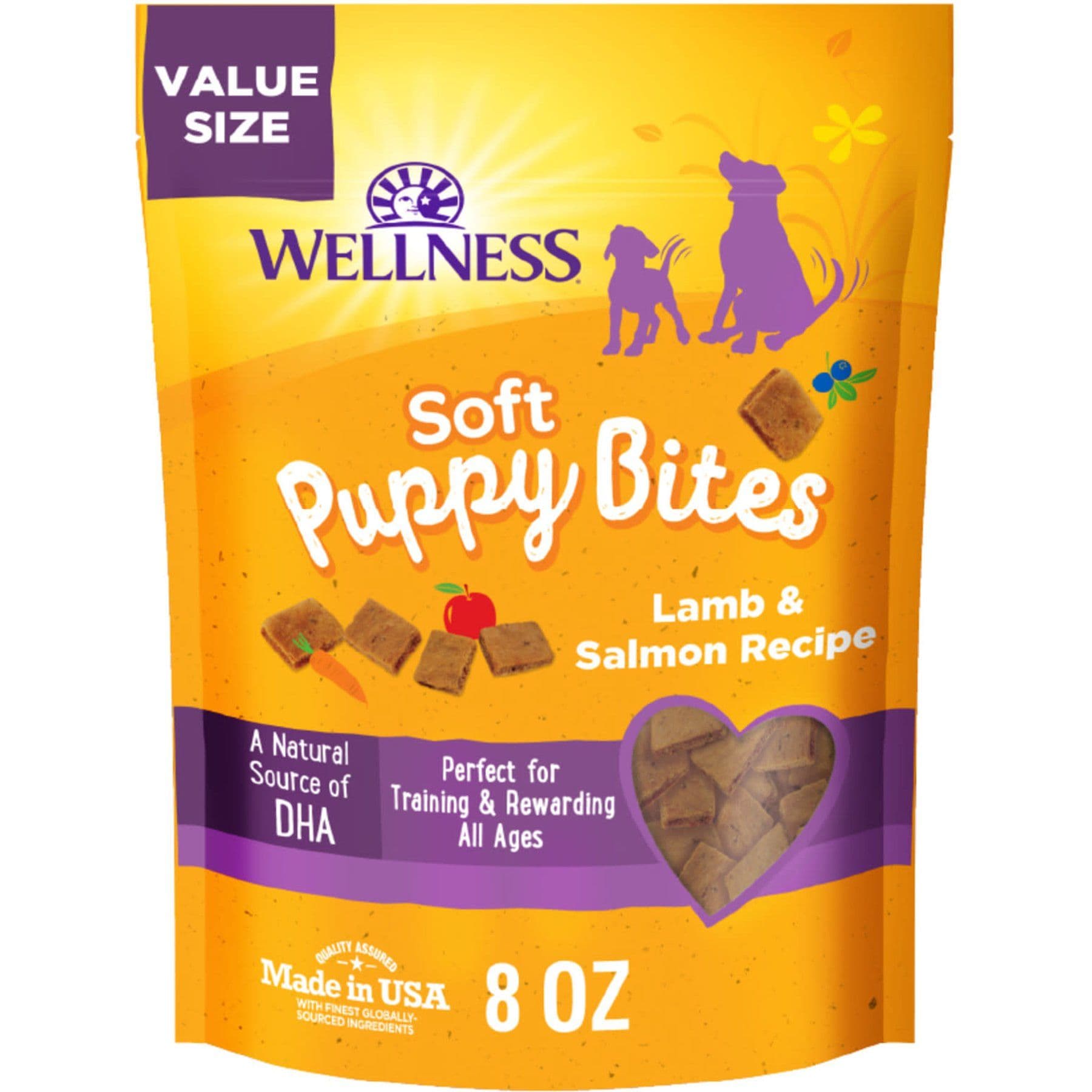
Soft lamb-and-salmon puppy bites formulated for puppies under one year. Tear each bite smaller when rewarding repeated training steps.
Petful may earn a commission when you click through to Chewy, at no extra cost to you.
BLUE Bits Tasty Chicken: soft rewards you can portion
BLUE Bits Tasty Chicken gives you another soft reward to consider when a puppy likes chicken and tolerates the full recipe. The US manufacturer page describes the soft training format. Its all-age positioning makes it worth reviewing for a puppy, but check your own package's age and feeding directions. Use the calorie figure on that exact bag rather than information from another market or a different package.
If a whole piece is larger than your puppy needs, break it into smaller portions before the lesson. Hand-broken portions will not be perfectly equal, so the most reliable tally is the number of whole pieces you start with, followed by any leftovers at the end of the day. Once you have the exact label calories, you can calculate the amount fed without guessing from the treat's size.
- Best fit: a puppy that enjoys soft rewards, with an owner willing to divide and measure them.
- Watch for: repeatedly feeding whole pieces can add up during several short lessons and toilet trips.
- Ingredient check: the chicken flavor is not a single-ingredient claim; read beyond the front of the bag.
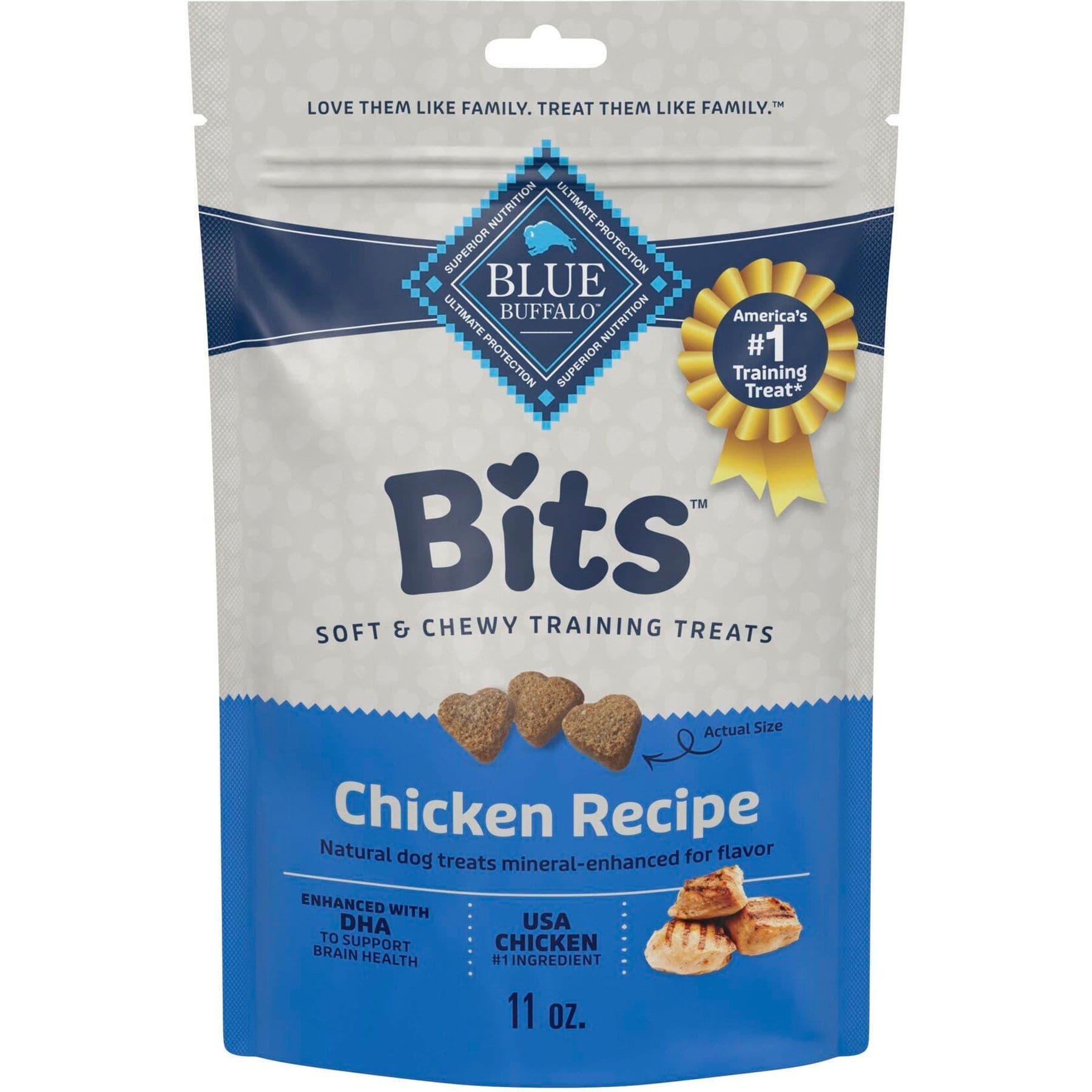
Soft chicken-recipe training bits that can be divided for small rewards. Count treats within your dog's daily food allowance.
Petful may earn a commission when you click through to Chewy, at no extra cost to you.
Pupford Train Chicken: freeze-dried rewards with two ingredients
Pupford Train Chicken is the freeze-dried option in this group. The manufacturer describes it as suitable for all life stages and under 2 calories per piece. Its ingredient list contains chicken and mixed tocopherols used to preserve freshness. That is a short, two-ingredient formula, rather than a literally single-ingredient treat.
This can be useful if you want fewer ingredients to keep track of and chicken fits the puppy's diet. The freeze-dried texture is different from a soft, moist bite, so check it with your individual puppy. Inspect piece size before feeding and follow the product's handling directions. A low per-piece calorie figure is helpful for repeated rewards, but it does not remove the need to account for all extras.
- Best fit: a puppy that likes freeze-dried chicken and eats the small pieces comfortably.
- Watch for: texture and piece size still need checking; all-life-stage positioning is not a substitute for reading age-specific directions.
- Ingredient check: it is unsuitable for a feeding plan that excludes chicken, and a short ingredient list cannot guarantee digestive tolerance.
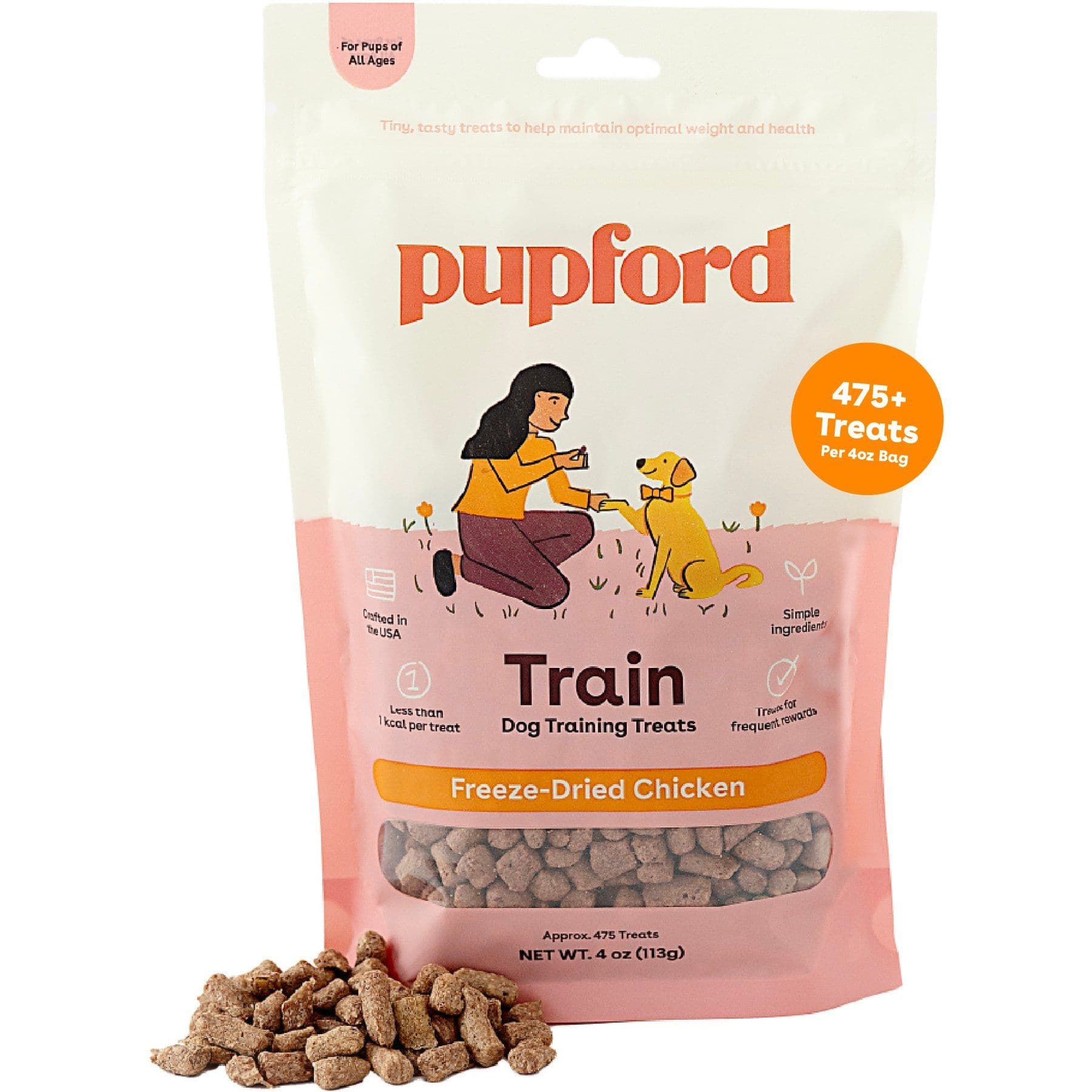
Freeze-dried chicken training rewards with a compact format for rewarding individual repetitions. Check the label for ingredients and feeding directions.
Petful may earn a commission when you click through to Chewy, at no extra cost to you.
Pet Botanics Training Reward Chicken: a larger bag for frequent lessons
Pet Botanics Training Reward Chicken, 20 ounces is a soft, chewy choice to compare once you know the recipe works for your puppy. The manufacturer's standard Chicken recipe has 3 calories per treat. It is a different product from a Mini version with a lower per-piece calorie figure. Match the exact name and recipe when checking feeding information.
The recipe lists pork liver first and also includes chicken. That makes it a poor shortcut if you are shopping solely by a preferred protein name. The product is intended for supplemental feeding, and its directions include supervision. The retailer lists all life stages, but we did not verify a numerical minimum age from the manufacturer. Confirm that your exact bag's directions fit your puppy before feeding it.
- Best fit: regular practice after a successful introduction, when a larger bag is practical.
- Watch for: a big bag may not be a good first purchase if your puppy has never tried the recipe.
- Ingredient check: both pork and chicken matter when reviewing dietary restrictions.
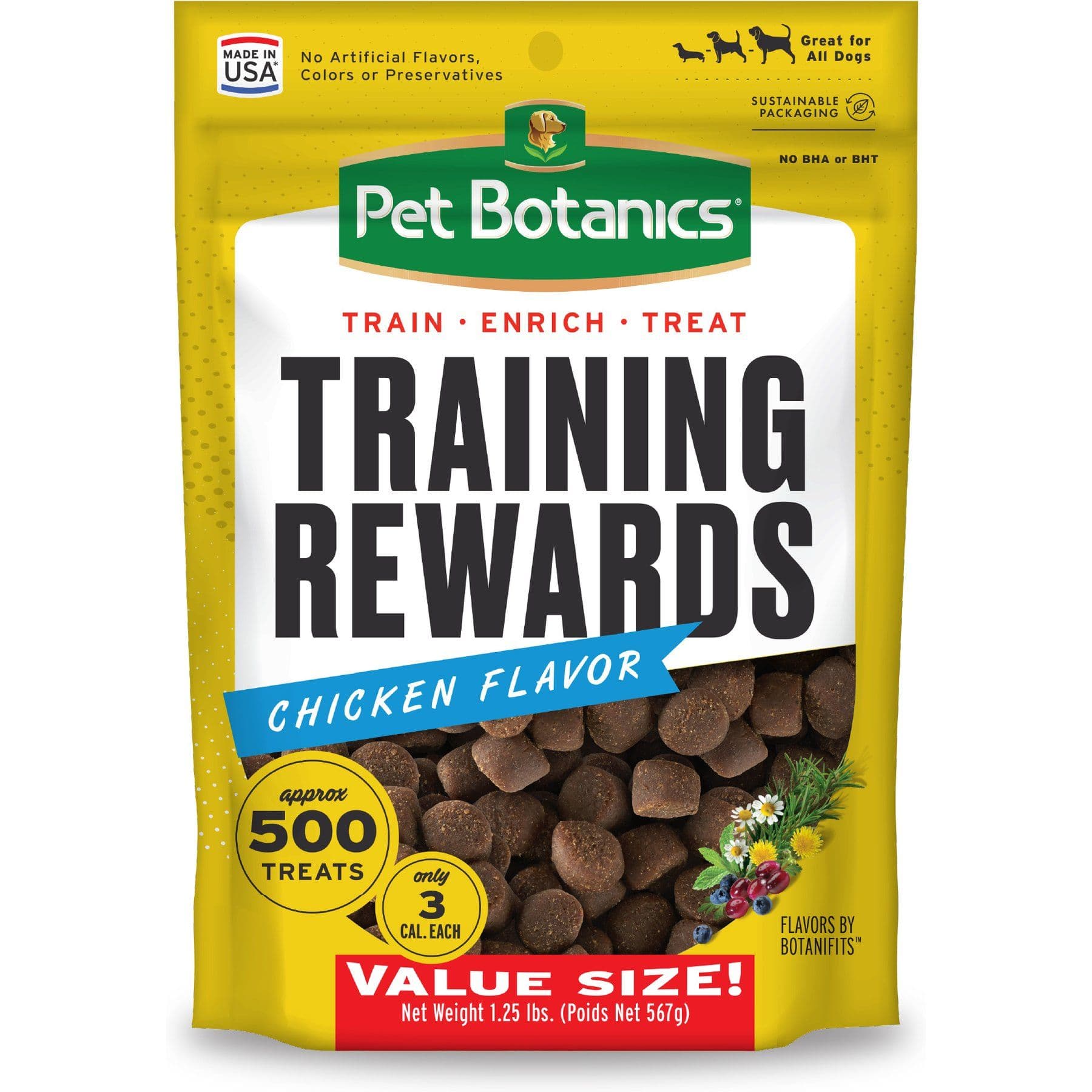
Soft chicken-flavor training rewards in a larger bag for frequent practice. Break rewards into appropriate pieces for your dog.
Petful may earn a commission when you click through to Chewy, at no extra cost to you.
How many puppy treats fit the daily food budget?
- Small pieces help you reward often, but all treats still contribute to daily calories. Count rewards from every household member, class, walk and toilet trip together.
Healthy, low-calorie puppy training treats can make frequent rewards easier to plan, but there is no reliable universal number of treats per day. A growing puppy's needs depend on the individual feeding plan, and products vary substantially in whole treat calories. The useful calculation starts with daily calories, then considers how much room remains for extras. AAHA's nutrition guidance recommends keeping treats and other extras to no more than 10% of daily calorie intake.
Protect balanced puppy nutrition by making complete puppy food the foundation of the diet. Do not cut meals substantially to make room for a large volume of treats. Ask your veterinary team to help set the individual food allowance and how to accommodate training rewards, particularly for a very small puppy or one with a medical feeding plan.
Use this simple portion worksheet when preparing for puppy class. Separate brand-level puppy marketing from the exact product labels: a brand may sell both adult and puppy recipes. Then calculate whole-piece and split-piece calories so larger treats become smaller reward pieces without losing track of the food total. This combines an age check with portion arithmetic instead of letting either stand in for the other.
- Check the exact product label for your puppy's age and dietary needs. A puppy product and an adult product are not interchangeable merely because their pieces look alike.
- Establish the calorie amount available for extras after accounting for other treats or chews that day.
- Divide that amount by the label calories per whole treat to find the upper quantity available from that product.
- Break that measured quantity into pieces your puppy can comfortably eat, and keep unused pieces for the appropriate storage routine.
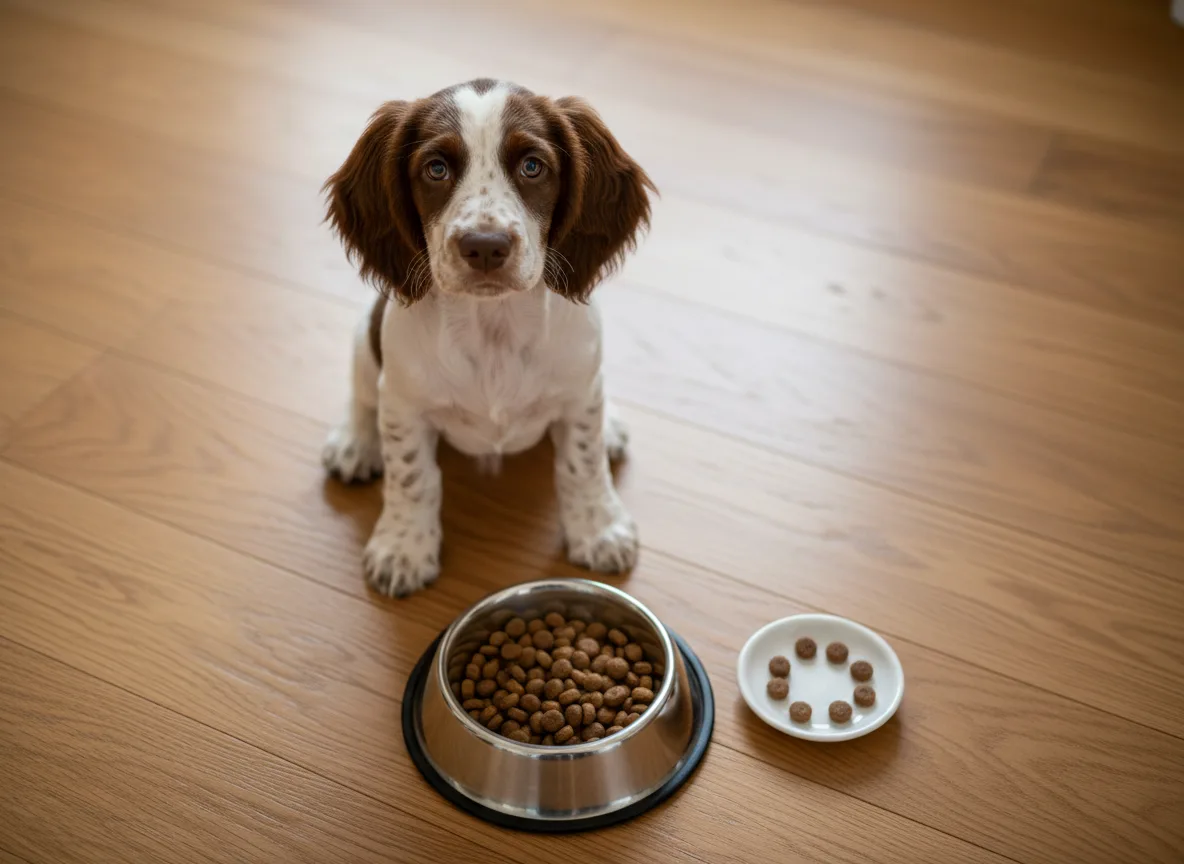
For comparison, five whole Wellness Puppy Bites total 30 calories. Dividing each into four equal pieces gives 20 rewards at approximately 1.5 calories each. Ten whole standard Pet Botanics Chicken treats also total 30 calories; halving them makes 20 rewards, again at approximately 1.5 calories apiece. Those examples explain portion arithmetic, not a recommended serving for your puppy.
Saving part of the puppy's normal meal for easy lessons can also reduce reliance on extra treats. The reward must still be something the puppy is willing to work for in that setting. If the puppy loses interest, shorten the lesson or make it easier before adding more food.
Training treats for puppies under 3 months
Training treats for puppies under 3 months require a closer check than the general word “puppy” on a shopping page. Read the age directions on the exact product, including any stated minimum age. A product described for puppies under a year identifies a broad life stage; it does not, on its own, confirm an eight-week minimum.
For a newly weaned puppy, begin with food already established in the feeding routine when practical. Using a few appropriate pieces from the measured puppy-food allowance can keep an easy first lesson simple. Introduce an additional treat in a small amount, supervise eating and avoid changing several foods at the same time. The AKC's puppy-feeding guidance explains why a balanced puppy diet remains central during growth.
- Look for age or life-stage directions on the precise recipe, not another product from that brand.
- Check ingredients against anything your veterinary team has asked you to avoid.
- Choose a piece the puppy can manage comfortably and watch the first few rewards being eaten.
- Ask the manufacturer or your veterinarian when the package does not clearly address the puppy's age.
Avoid treating “all life stages” as permission to ignore feeding instructions. Also avoid assuming an adult-labeled treat becomes puppy-specific because you cut it smaller. That is why Wellness Soft Puppy Bites has a different role here from the adult-positioned Zuke's Mini Naturals in our broader guide.
At this age, learning opportunities can be brief and ordinary: noticing their name, following you a few steps or settling near you. You do not need to create a long formal session that demands a large pile of food. Keep expectations modest and end while the puppy remains comfortable and engaged.
Ingredients, new foods and sensitive stomachs
When choosing puppy treats for a sensitive stomach, focus on the puppy's actual response and any veterinary restrictions. “Natural,” “grain-free” and a short ingredient list do not guarantee tolerance. Nor does a named meat on the front of a package tell you every protein used in the recipe. Read the whole list before choosing a product.
Pupford Chicken provides a relatively short list to review, but chicken still needs to fit your puppy's diet. Pet Botanics Chicken includes pork liver, and a lamb-and-salmon product name should not be treated as proof that other proteins are absent. If your puppy follows an elimination diet or a prescribed food plan, ask which rewards can be used without disrupting it.
- Introduce one new treat recipe at a time.
- Begin with a small amount and keep the rest of the diet familiar.
- Note what was given, including food offered by family members.
- Stop an unsuitable new treat and get veterinary advice if the puppy develops symptoms.
You can make this easier by keeping the original bag and measuring each day's training portion. A pouch filled with several unidentified treats makes it difficult to know what the puppy ate. Repeated stomach upset, vomiting or reduced interest in food deserves veterinary advice rather than a sequence of new “gentle” products.
Reward timing, lures and short puppy lessons
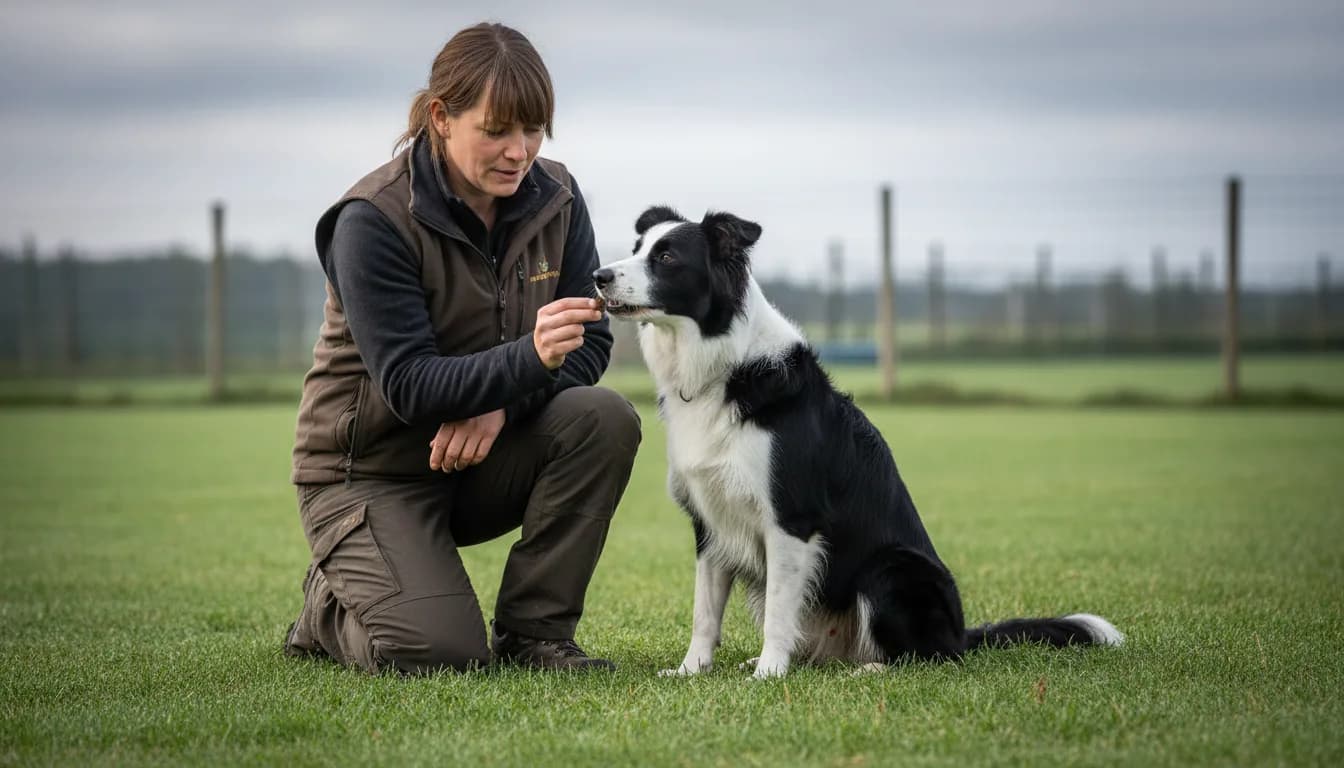
Positive reinforcement works by making a behavior more likely after a rewarding consequence. A well-chosen treat is most useful when the puppy can connect it with the behavior you want. Mark the successful moment with a consistent word or a click, then deliver a small reward promptly. For a new skill, begin with an easy step in a quiet place. A puppy that can follow your hand for a moment does not yet understand every variation of the finished exercise.
Food can help guide a new movement, such as following a hand into a sit. As the puppy learns, practice that hand movement without food in the hand and reward afterward from another hand or pouch. The AKC's food-reward guidance explains this shift away from relying on a visible lure. Keep rewarding success rather than testing how long the puppy will work with no encouragement.
- Prepare several tiny portions before starting so your timing stays consistent.
- Teach one achievable step and reward it clearly.
- Pause while the puppy eats, then reset without rushing.
- Finish the short lesson while the puppy still wants to participate.

If your puppy stops taking treats, do not assume you need a more expensive brand. The room may be too busy, the task too hard or the puppy ready for a break. Lower the difficulty or end the session. Food refusal with other signs of illness or a broader loss of appetite calls for veterinary advice.
AVSAB recommends reward-based methods. Food can work alongside play, social attention and access to activities your puppy enjoys. Learn what your puppy finds rewarding rather than expecting praise or a particular treat to have the same value in every situation.
High-value rewards for distracted puppies
High-value puppy treats are the rewards your puppy especially wants in a particular setting. A favorite soft piece or suitable freeze-dried chicken may be more useful outdoors than the regular food that worked in the kitchen. Liver treats for dogs or lamb lung treats are other formats owners consider, but the exact product’s puppy suitability, ingredients and easy-to-eat portion still need checking. Before increasing reward value, also reduce distractions and make the lesson easier. Treats cannot make every overwhelming situation comfortable. Our guide to high-value dog treats for training explains how to compare preferences and reserve favorite rewards for harder tasks without relying on one supposedly irresistible product.
Puppy potty-training rewards
Carry a small suitable reward outside and offer it promptly after the puppy finishes toileting in the intended place. Waiting until you are back indoors makes the connection less clear. Food works alongside supervision and frequent chances to go outside; it does not replace them. Our guide to the best treats for potty training covers that sequence and addresses the “10-10-10” shortcut people ask about. Match the routine to the individual puppy rather than treating a timing mnemonic as a guarantee.
Crate and leash reward basics
Tiny food rewards can help reinforce a puppy's attention and position as you introduce a leash in a quiet area. Keep the rewards easy to reach, and avoid using them to pull the puppy through something frightening. Begin with short, achievable steps before adding busier environments. Our guide to leash training a puppy explains that progression. The same principle of rewarding voluntary participation applies when introducing a crate: a small treat can mark a comfortable step, while a long-lasting chew is a separate supervised activity.
Homemade treats and regular puppy food
Using familiar puppy food for simple lessons is often convenient, while homemade treats require ingredient, portion and storage checks just like packaged extras. Homemade does not automatically mean balanced, lower calorie or suitable for a very young puppy. A sweet potato recipe or “vet approved” label still needs the same ingredient review. For puppies under 3 months, confirm homemade treats fit the established feeding plan rather than assuming a short recipe establishes age suitability. Petful's two-ingredient homemade dog treats offer a recipe starting point if its ingredients suit your puppy. Make training pieces small enough for comfortable eating, keep extras within the feeding plan and follow appropriate storage instructions rather than leaving moist food in a pouch.
Choosing treats beyond puppyhood
Your puppy's favorite reward may remain useful as they grow, but the appropriate food allowance and product directions still need review. Healthy training treats for dogs, including low-calorie options, must suit the adult dog’s actual diet and reward needs. Choose based on the dog's current life stage, diet and lesson rather than continuing a puppy product automatically. If you are wondering what treats professional dog trainers use, the broader guide focuses on practical selection criteria and individual preference. Our best dog training treats comparison includes adult-positioned options and more detail on treat pouches, bulk bags and everyday reward routines.
Store and prepare a puppy's training portion
Use the package's storage directions when preparing a day's rewards. Reseal the bag after taking out the portion and keep the original package with its date, lot number and feeding information. A clean, dry pouch is useful for appropriate packaged treats, but it is not a substitute for refrigeration when a food requires it.
The FDA's pet-food handling guidance recommends hygienic handling of food and treats. Wash your hands, clean reusable containers and avoid continually mixing a fresh supply into old crumbs. Discard food that appears spoiled or has not been handled safely.
- Portion food before the lesson so you can focus on the puppy.
- Keep different recipes identifiable if you need to track ingredients.
- Tell other household members how much of the daily treat portion has already been used.
- Store unused food as its label requires after training.
Questions about puppy training treats
Vets recommend puppy treats that fit a balanced puppy diet, individual calorie needs, life stage and any medical or ingredient restrictions. Ask your veterinarian which rewards fit your puppy's current feeding plan, especially for a very small puppy or one with digestive problems. A manufacturer's puppy label does not mean every veterinarian endorses that product for every puppy, and none of these picks is presented as a universal veterinary recommendation.
An 8-week-old puppy can use suitable food rewards, but check the exact product label before offering commercial training treats. “Puppy” or “all life stages” does not automatically establish a numerical minimum age. Suitable food from the puppy's established feeding plan can be a simpler first reward. Use tiny reward pieces, supervise eating and ask your veterinarian or the manufacturer when the package does not clearly cover an eight-week-old puppy.
Yes, when both foods suit your puppy and the amounts fit the feeding plan. Set aside measured puppy food from the normal daily allowance, then count additional treats separately as extras. You might use familiar food for easy repetitions and a favorite treat for a harder step. Keep track of the total and avoid introducing several unfamiliar recipes during the same session.
If a new treat causes stomach upset, stop the new treat and contact your veterinarian for guidance, especially if symptoms repeat, the puppy vomits, seems unwell or loses interest in normal food. Keep the package and note how much was eaten and when symptoms began. Do not repeatedly switch to another unfamiliar treat to find a quick fix; a young puppy's symptoms need appropriate attention rather than a shopping experiment.
A Wellness Soft Puppy Bite contains six calories whole, so giving a whole bite each time can use the daily allowance quickly. Smaller reward portions are usually more practical for repeated lessons when your puppy can eat them comfortably. Evenly quartering one bite gives approximately 1.5 calories per piece. Count the whole treats used, check the exact feeding directions and fit all rewards within your puppy's individual food plan.
Adult-labeled training treats are not automatically suitable for puppies. An adult product label needs to be taken seriously even if the treat is small or soft. Check the exact age and feeding directions, and choose a puppy-specific option when it better fits your puppy's needs. Cutting a treat into smaller pieces changes portion size, but it does not change the manufacturer's life-stage positioning or resolve an ingredient restriction.

Coreen Saito is a pet writer and longtime shelter volunteer with more than a decade in animal rescue. She covers cat behavior, breed care, and the small, ordinary science of sharing a life with companion animals, with a particular focus on honest takes about the products and decisions that actually matter. At home in Arizona, she's outranked by Mac (a dog with the loudest opinion in the house), Rebel (a cat who governs by quiet authority), and Meri (an orange tabby who runs the late shift and the laundry basket). She writes about all three, plus the rescues that keep coming through her life, at LifeWithMinty.com.
Sign up for expert-backed reviews and safety alerts all in one place.