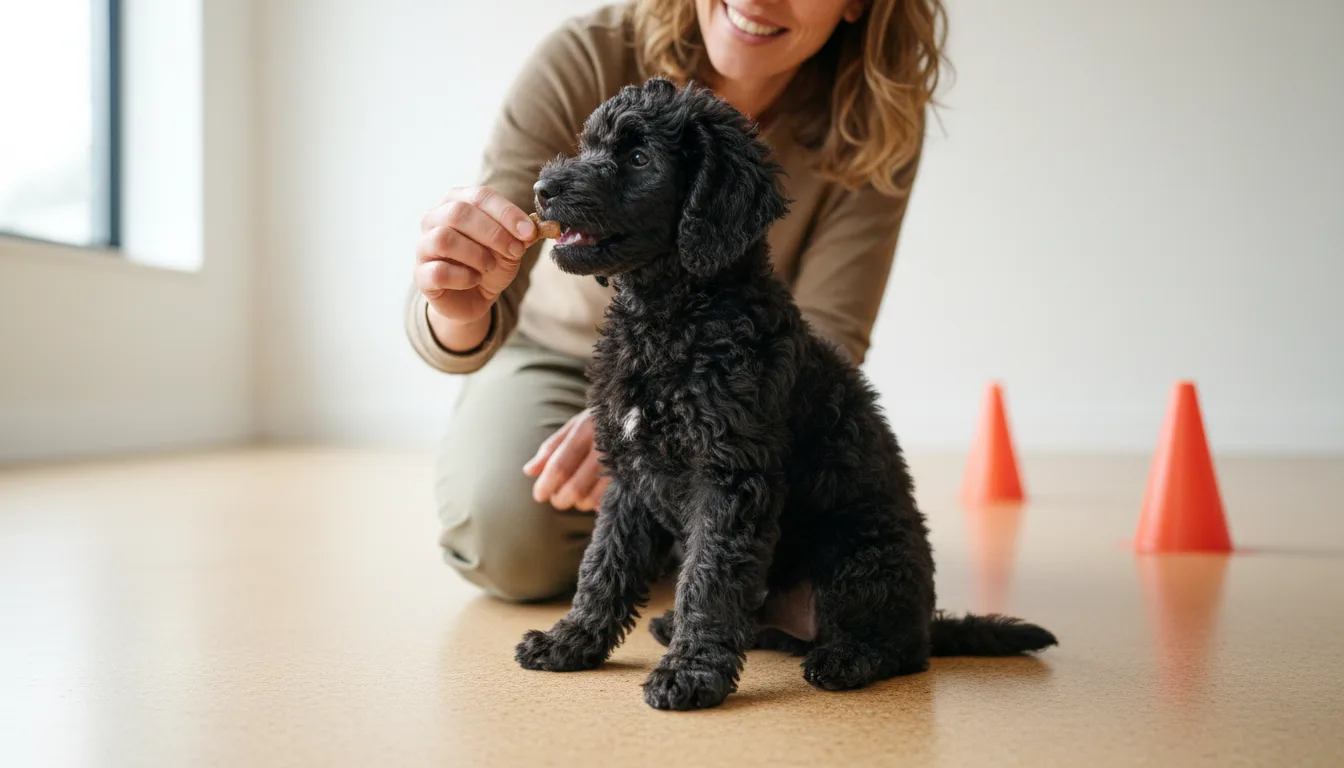
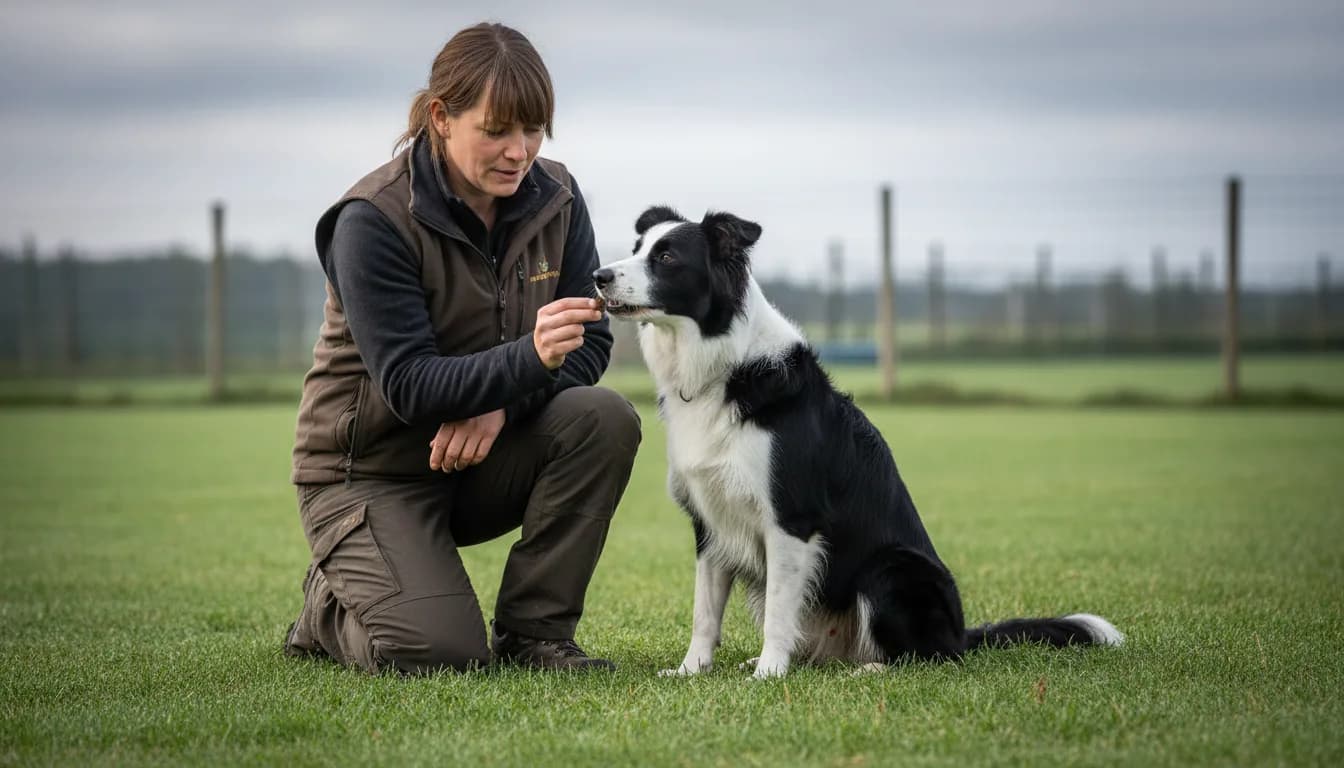
High Value Treats for Dog Training: Picks and When to Use Them
Find rewards your dog values for recall, distractions, and new skills. Compare four convenient treats, build a practical reward hierarchy, and keep portions within the day's food plan.
Petful is reader supported. As an affiliate of platforms like Amazon and Chewy, we may earn a commission when you buy through links on this page. There is no extra cost to you.
The best high value treats for dog training are rewards your dog wants in the situation you are practicing. That might be a tiny piece of cooked chicken, a freeze-dried reward, or a familiar soft training treat. The price and the word “premium” cannot tell you which one your dog will choose.
Start by comparing suitable foods in an easy setting, then use the favorites thoughtfully as the task becomes harder. A more exciting treat can help, but it does not replace clear timing, manageable distractions, or a safe training setup. This guide compares labels and reward-use principles; it does not claim hands-on testing of the featured products.

Sign up for expert-backed reviews and safety alerts all in one place.
What makes a treat high value to your dog?
A high-value treat is food your dog finds especially rewarding compared with other suitable options. Some good candidates are small pieces of an appropriate cooked meat, a freeze-dried training reward, or a soft treat your dog readily eats. The important evidence is your dog's response, not a claim that one flavor motivates every dog.
The American Kennel Club's guidance on food rewards explains that preference is individual and that reward choice can change with the task and surroundings. A food that works during a quiet kitchen session may not hold the same value near an interesting smell, another dog, or a busy path. This is part of positive reinforcement: making the desired response worthwhile with a reward the dog values.
- 1Let your dog's behavior identify the most useful reward rather than buying by price alone.
- 2Use small rewards that can be eaten promptly, and check label calories.
- 3If a dog is overwhelmed, make the situation easier instead of relying on a more exciting treat to push through.
Keep three questions separate when making a choice:
- Preference: Does your dog choose and promptly eat this food in a comfortable setting?
- Practical fit: Can you handle it cleanly, deliver it at the right moment, and divide it into useful portions?
- Diet fit: Do the ingredients and calories belong in your dog's existing food plan?
Separate reward value from nutritional claims: high value describes a training role, not nutritional superiority, allergy suitability, or a reason to feed large amounts. Respect prescribed diet restrictions before comparing foods. A modest reward that your dog enjoys and can eat easily may serve the lesson better than a costly treat that requires a lengthy chew, provided that it fits the dog's food plan.
Choose small rewards and compare label calories before deciding what works best. High-value treats for dogs with sensitive stomachs, and for growing puppies, still have to fit individual dietary needs. Recall practice does not override those limits. Use the puppy guide below for age-specific choices, and ask your veterinarian which foods are permitted when a prescribed diet or digestive history narrows the options.
Four convenient rewards to try
Pupford Train Chicken, Pet Botanics Training Rewards Chicken, BLUE Bits Chicken, and Zuke's Mini Naturals Chicken are convenient packaged candidates to compare. They cover a freeze-dried format and several soft training formats. None is guaranteed to become your dog's favorite, and their recipe and age distinctions still apply when you use them as a special reward.
If “high-end dog treats” means a premium-looking bag, redirect the comparison toward what you can actually use: a suitable recipe, manageable pieces, current calorie information, and reliable product identity. You do not need to buy all four. Start with one appropriate alternative to a food your dog already knows, and compare the response before stocking up.
| Candidate | Format | Relevant label detail | Best fit to consider |
|---|---|---|---|
| Pupford Train Chicken | Freeze-dried | Manufacturer says under 2 calories; chicken and mixed tocopherols | Comparing a short-recipe reward with a soft treat |
| Pet Botanics Training Rewards Chicken | Soft and chewy | Standard selected recipe: 3 calories per treat; pork liver first | A soft option for repeated food rewards |
| BLUE Bits Tasty Chicken | Soft-moist | Check the current US package for calories and directions | Another soft texture to include in a preference check |
| Zuke's Mini Naturals Chicken | Soft | Current recipe: 2 calories per piece; adult-dog labeling | A small packaged reward for adult dogs |
Pupford Train Chicken: a freeze-dried candidate
Pupford's chicken training treats are useful to consider when you want to compare a freeze-dried texture with a familiar soft reward. The manufacturer lists chicken and mixed tocopherols and describes the treats as under 2 calories each. That is a short ingredient list, but it is not literally a single-ingredient product.
- Reason to try it: You want a small, packaged chicken reward that differs in texture from your everyday food.
- Check first: Chicken must fit your dog's diet. Freeze-drying does not remove the relevance of the chicken ingredient.
- Practical limit: Individual pieces can differ; do not assume every crumb has an identical calorie value.
The manufacturer lists suitability for all life stages, but portion and chewing suitability still matter for an individual puppy. Break or crumble a piece when appropriate, supervise eating, and stop if the format is awkward for your dog. The purchase makes sense only if both the food and its handling fit the training you intend to do.
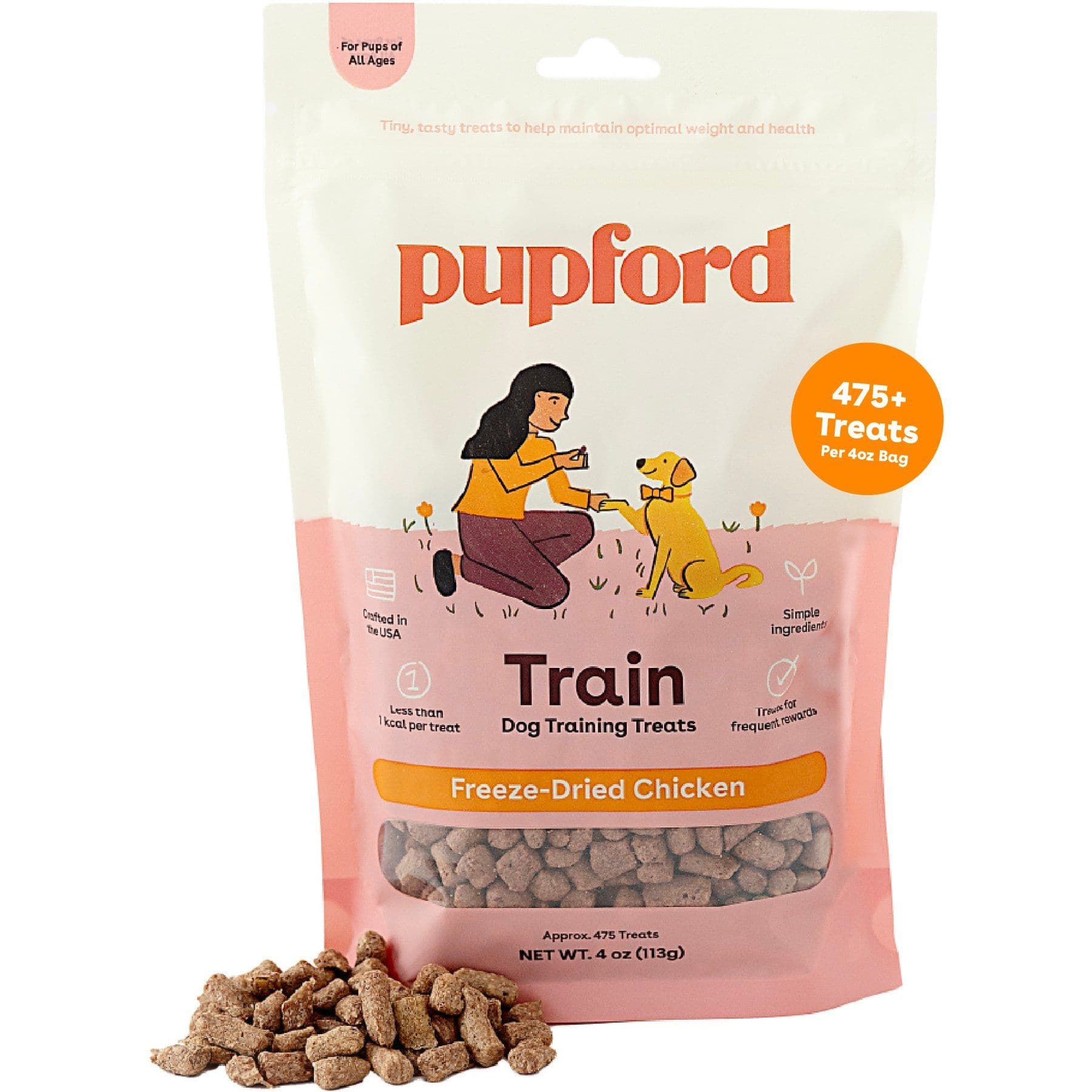
Freeze-dried chicken training rewards with a compact format for rewarding individual repetitions. Check the label for ingredients and feeding directions.
Petful may earn a commission when you click through to Chewy, at no extra cost to you.
Build your dog’s reward hierarchy
The best treats for your dog to enjoy while training are the suitable foods your dog willingly takes and remains engaged with. Build a reward hierarchy from observations rather than assuming that chicken always beats kibble or a branded treat always beats both. Think of the hierarchy as a working note that can change with the dog, task, and distraction level.
This preference-check process gives you observable responses to compare, without claiming that one brand motivates every dog. Begin in a calm place with two or three foods already known to fit the diet, using similarly small portions. If food refusal appears near a difficult distraction, use a distance-first response: move farther away and simplify the task. Do not introduce several unfamiliar foods at once or push ahead just to complete the comparison.
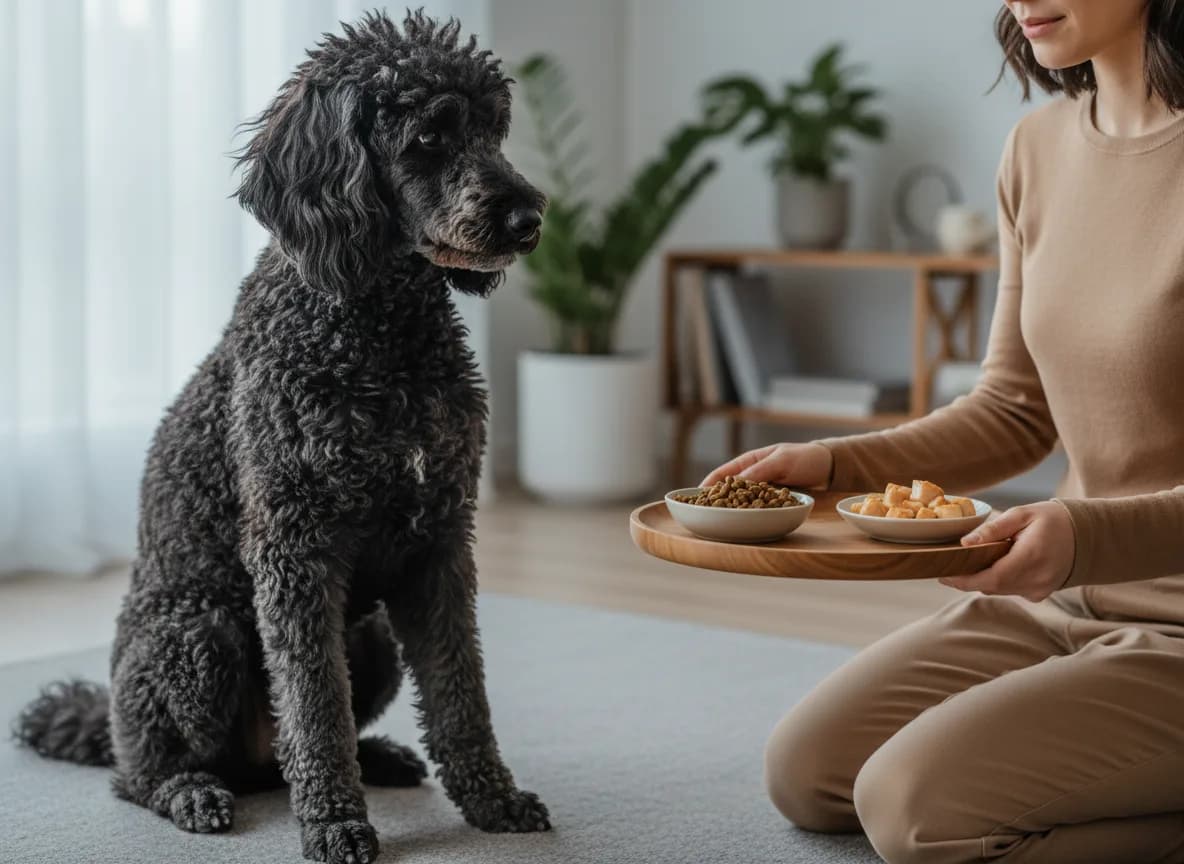
Use this simple preference check:
- Choose an easy, familiar behavior. Ask for something your dog already understands in this setting, so task difficulty does not dominate the comparison.
- Offer one suitable reward. Notice whether it is readily taken, promptly eaten, and followed by willingness to engage again.
- Try the alternative on another easy repetition. Keep the portions and delivery practical rather than making one reward much larger.
- Change the order. Do not conclude that the last food offered is the favorite after a single sequence.
- Record a simple result. Mark options as useful for easy practice, more exciting, or currently unhelpful; leave room for uncertainty.
- Recheck as the setting changes. An outdoor session is a new comparison, not proof that the indoor result was wrong.
Useful observations include taking the food comfortably, chewing without a long interruption, and returning attention for another repetition. Snatching harder is not the goal. Neither is making the dog wait longer simply to create a more dramatic response. You want a reward that supports a clear, comfortable learning exchange.
- Easy practice: A portion of the dog's measured daily food may work well.
- A new skill or moderate distraction: A preferred soft or freeze-dried option may help maintain engagement.
- A situation that overwhelms the dog: Lower the difficulty and increase distance before trying to improve the menu.
This framework is useful to share with a trainer because it records what happened rather than merely labeling a dog “not food motivated.” Note the food, the task, the setting, and whether the dog could eat comfortably. Those details can distinguish a poorly chosen reward from a session that was simply too difficult.
Pet Botanics Training Rewards: a soft alternative
Pet Botanics Training Rewards Chicken give you a soft option to compare with a freeze-dried reward. The selected 20-ounce bag is the standard Chicken recipe. The manufacturer lists 3 calories per treat, with pork liver first in the ingredient list.
- Reason to try it: Your dog responds well to soft, quickly eaten food and the recipe fits the diet.
- Check first: “Chicken flavor” does not mean chicken is the only animal ingredient. Review the complete recipe when a protein restriction matters.
- Practical limit: Do not apply calorie information from a different Mini product to this standard treat.
Try a small portion during an easy session before assigning it a role in a difficult lesson. If it becomes a useful higher-value reward for your dog, reserve an appropriate amount within the day's treat allowance. A large bag can be convenient for an established choice, but bag size should not determine how much your dog receives.
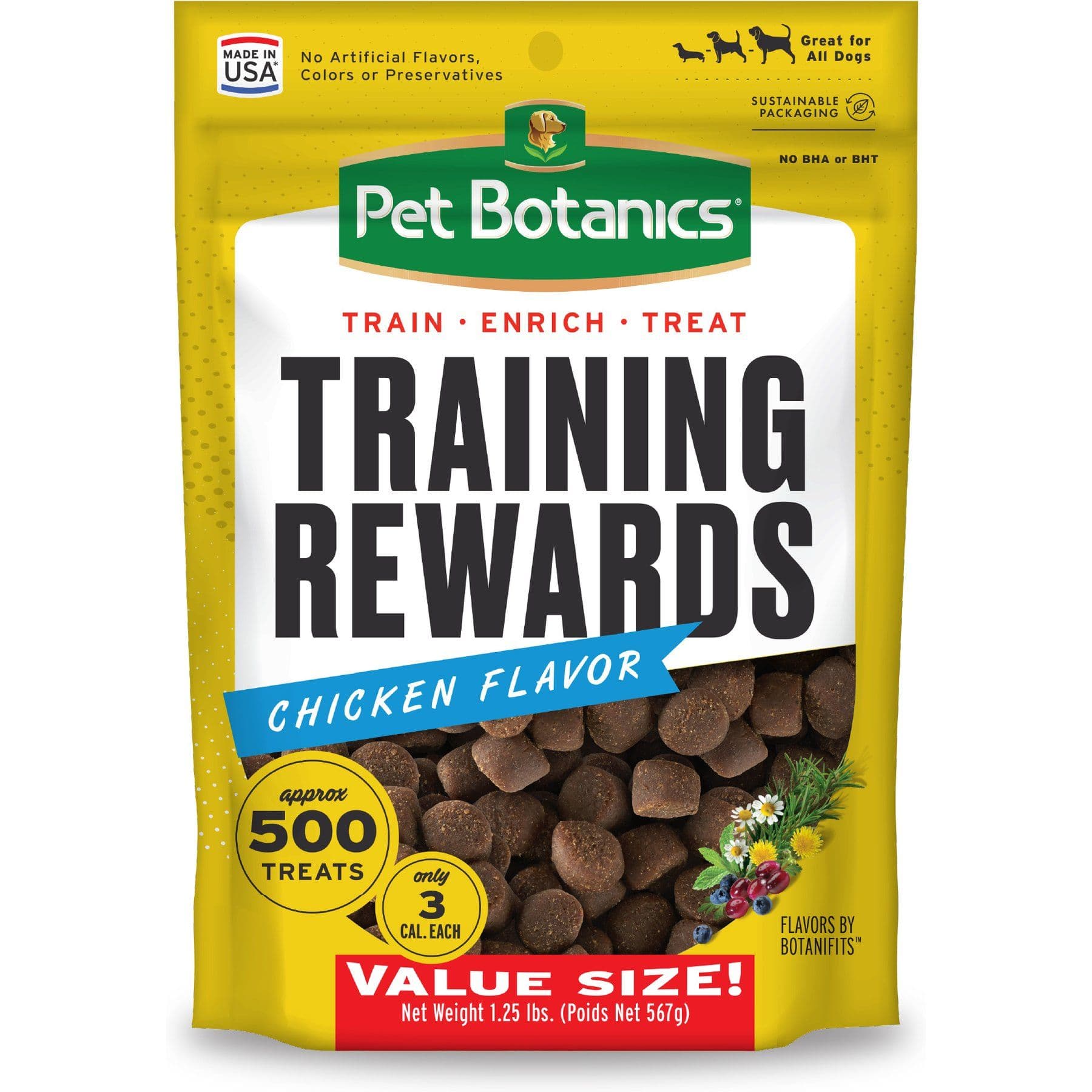
Soft chicken-flavor training rewards in a larger bag for frequent practice. Break rewards into appropriate pieces for your dog.
Petful may earn a commission when you click through to Chewy, at no extra cost to you.
Small pieces keep difficult lessons moving
A reward should be large enough for your dog to handle comfortably and small enough that eating it does not interrupt the lesson for long. A high-value food does not need to be a large serving. The AKC's training-treat guidance favors small, quickly eaten rewards and notes that even large dogs can work for pea-sized pieces, with smaller dogs potentially needing less.
Prepare portions before the session so you can respond at the right moment. If you are tearing a large piece while the dog waits, the handling is competing with the timing. If a treat is too hard or awkward to divide, that format may be better suited to another use than a rapid sequence of training repetitions.
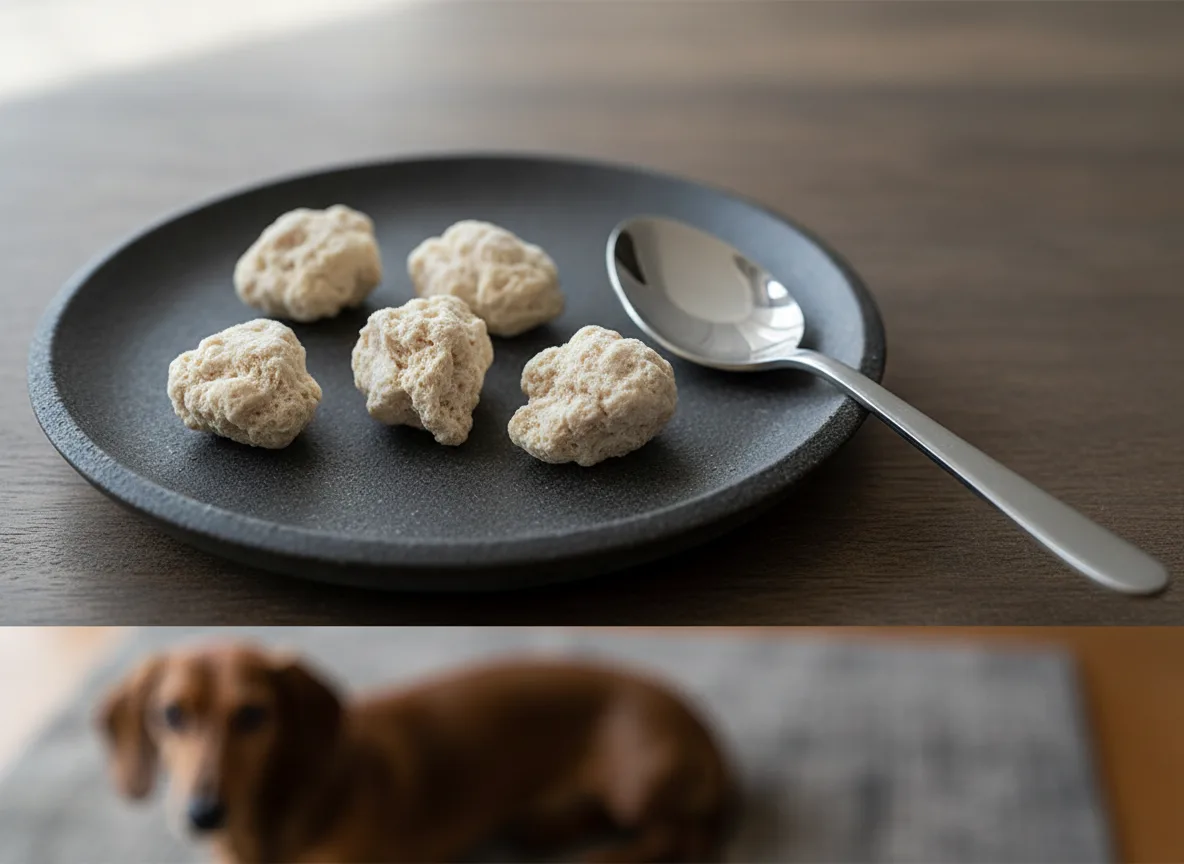
- Break suitable soft rewards into manageable pieces before starting.
- Check how your individual dog chews and swallows the chosen size.
- Keep the next reward accessible without continually displaying it as a prompt.
- Use a different activity for a long-lasting chew rather than treating it as equivalent to a quick training reward.
Several tiny pieces delivered in succession can make one successful response rewarding without requiring one oversized mouthful. Keep that sequence within your calorie plan and the dog's comfort. The point is clear reinforcement, not a contest to see how much food the dog can take before the next cue.
High value does not mean high calorie
Choose rewards within an appropriate daily food plan. AAHA's nutrition guidance recommends limiting treats and other extras to no more than 10% of daily calories. Use the individualized calorie target already appropriate for your dog; this article does not supply one universal allowance based on size or breed.
The limit includes more than the food in your training pouch. Count other treats and extras given that day, and coordinate with everyone feeding the dog. If a veterinary diet plan is more restrictive, follow that plan rather than treating 10% as permission to add any food you like.
- Use small pieces and label calories to keep training rewards within the dog's daily calories. Include other extras and respect any stricter veterinary diet plan.
For an illustrative calculation, suppose a dog's established plan leaves 30 calories for training after other extras are counted. Ten whole 3-calorie treats would use that allowance. Dividing each evenly into three smaller portions could provide about 30 reward deliveries without changing the total food. That arithmetic is an example, not a prescribed serving for your dog.
- Check the current package's calories for the exact product and recipe.
- Use a measured portion of the complete daily diet when it works as a reward; do not add unlimited kibble on top of meals.
- Treat divided-piece calculations as approximate when pieces are uneven.
- Reduce the number or size of food rewards within the plan rather than making meals nutritionally inadequate.
If a longer class or training schedule makes the food budget difficult, ask your veterinarian and trainer to help coordinate it. You can change session length, task difficulty, portioning, and the mix of suitable rewards. You do not have to choose between excessive extras and an unnecessarily frustrating lesson.
BLUE Bits Chicken: another soft texture to compare
BLUE Bits Tasty Chicken are a soft-moist option when your dog prefers that format. The US manufacturer's product page identifies the chicken recipe and the selected 11-ounce size. Use the current US package for calorie and feeding details rather than transferring a number from another country's label.
- Reason to try it: You want another soft packaged reward to compare during an easy preference check.
- Check first: This is a recipe with multiple ingredients, not a single-ingredient chicken treat.
- Practical limit: A soft texture does not establish how much your dog should receive; portioning and the day's food allowance still apply.
If the full piece is more than you need for one repetition, divide it when the texture allows. Keep the amount consistent enough to understand your dog's response. Changing both flavor and serving size at once can make it harder to tell whether a new reward is useful because of preference or simply because you offered more food.
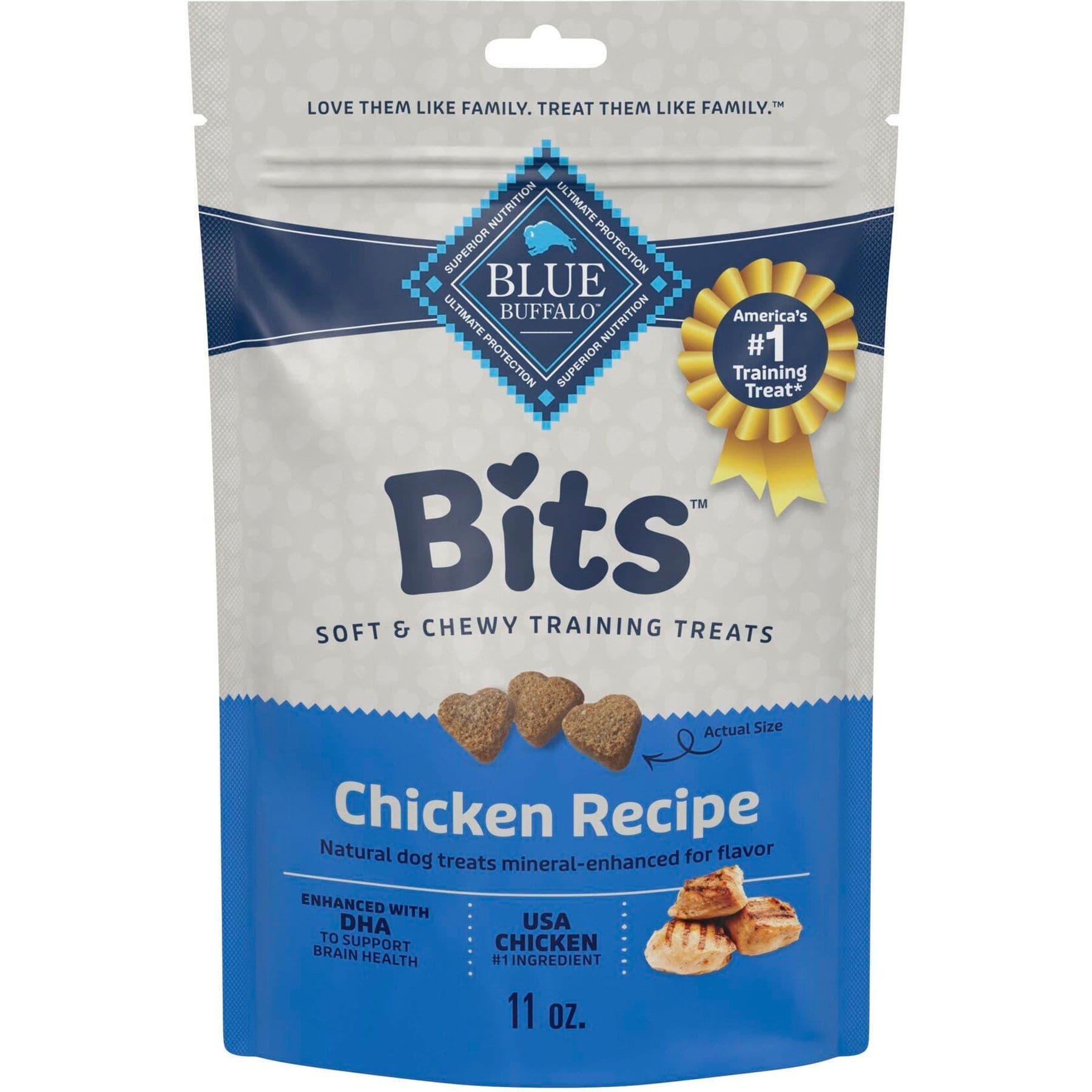
Soft chicken-recipe training bits that can be divided for small rewards. Count treats within your dog's daily food allowance.
Petful may earn a commission when you click through to Chewy, at no extra cost to you.
Using high-value rewards for recall and distractions
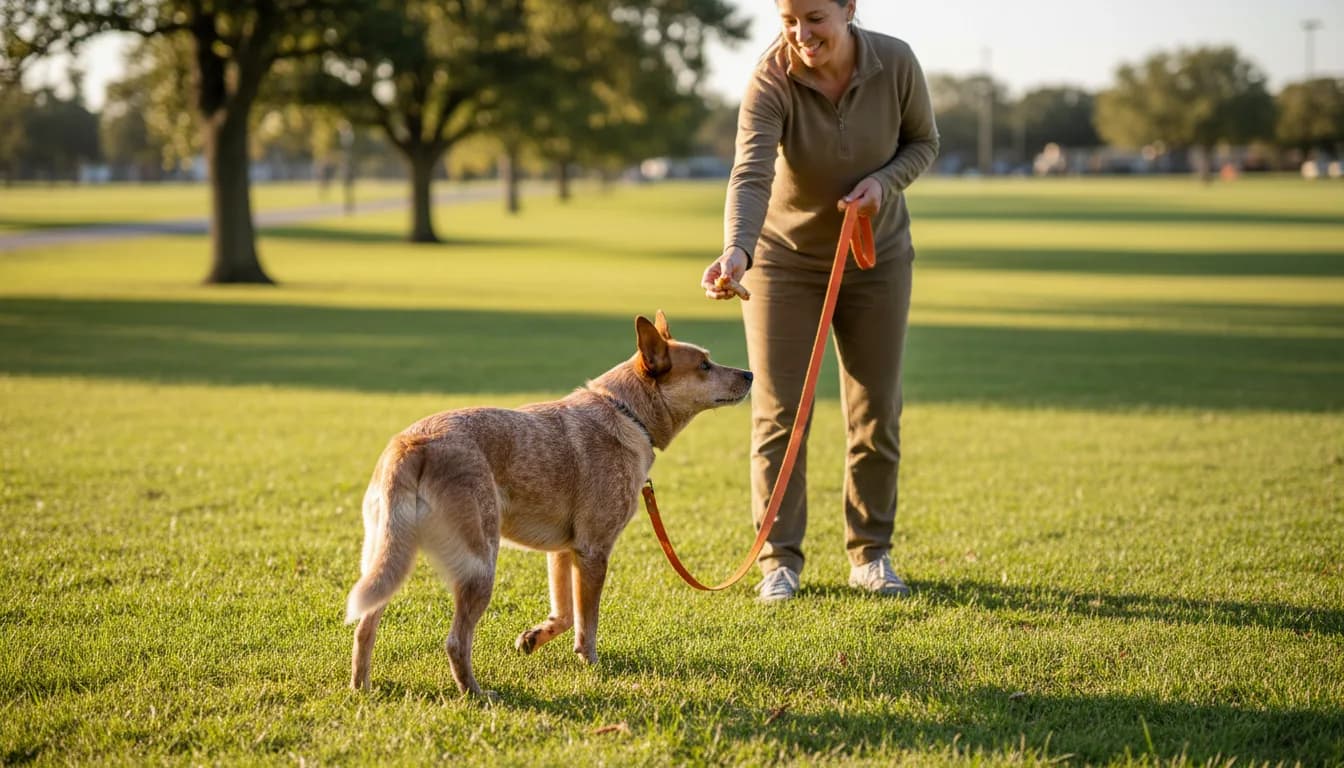
Use a preferred reward when practicing recall or a more demanding skill, while arranging a situation your dog can manage. Begin with an easy distance and low distraction level. A favorite food supports the lesson; it does not make an unsafe location safe or replace a reliable training progression.
For recall practice, use a safely enclosed area or suitable long-line arrangement with qualified guidance as needed. Practice success before adding distance or competing activity. Reward the completed response promptly so the food is connected to what you wanted, rather than spending the moment searching a pocket or debating which treat to use.
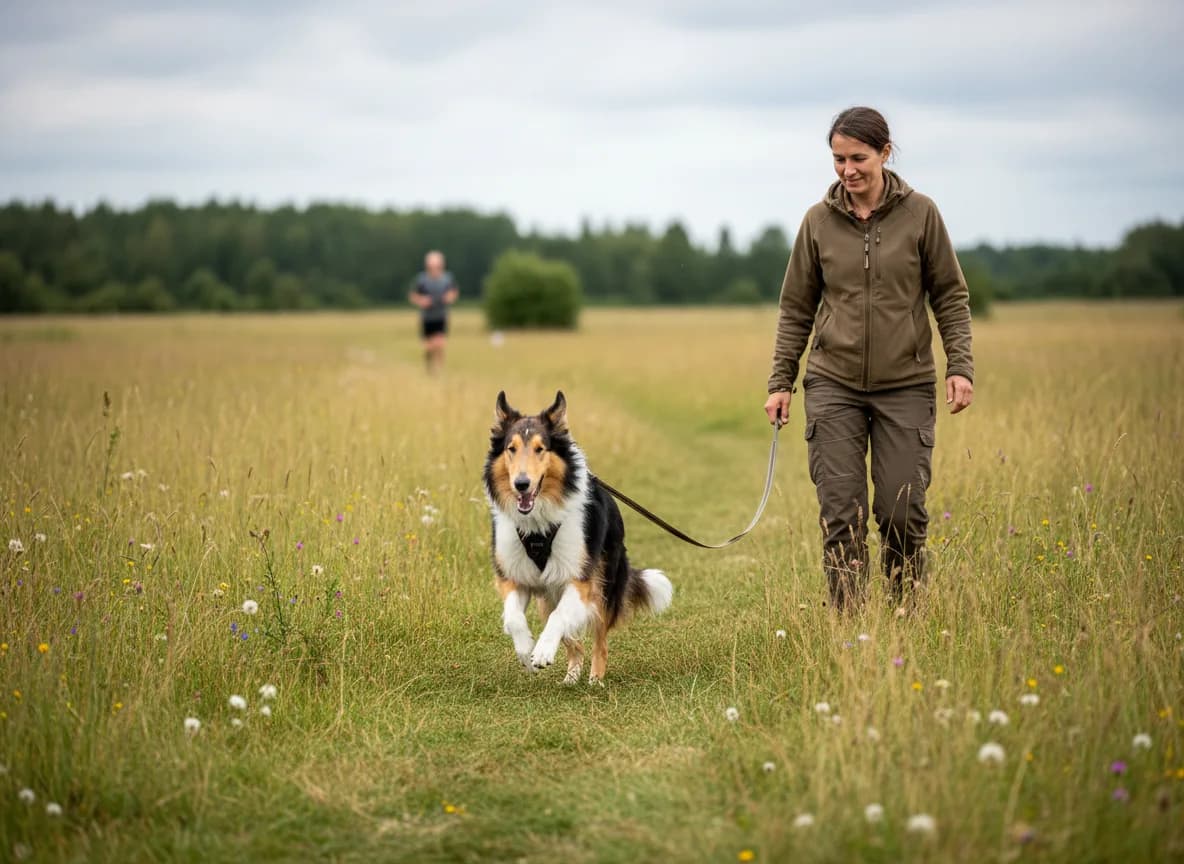
When the task becomes harder, change one manageable part at a time:
- Add a little distance while keeping the environment familiar.
- Practice near a mild distraction with enough space for comfortable engagement.
- Keep a preferred reward ready before the repetition starts.
- Return to an easier version when the dog cannot respond comfortably.
- Food refusal is useful information. If your dog eats readily at home but cannot take the same reward near a busy group of dogs, increase distance and reduce the distraction level. Do not hold the food against the dog's nose and lure them closer to something frightening. The aim is a situation where the dog can learn, not simply a moment when they swallow.
The American Veterinary Society of Animal Behavior recommends reward-based training. That approach does not call for punishing a dog who is afraid, distracted, or refusing food. A qualified reward-based professional can help adjust the setup when the pattern is persistent or the situation is difficult to manage safely.
Distinguish a reward from a visible bribe. Once an appropriate teaching prompt is no longer needed, avoid making a displayed treat the only signal that a familiar behavior is worthwhile. Arrange the cue and task clearly, then deliver the reward after the response. A trainer can help you fade a food lure without abruptly removing reinforcement.
- Keep the food accessible, but do not wave it continuously to compete with the surroundings.
- Reward the response you meant to teach at the moment it happens.
- Avoid repeatedly increasing food value while leaving an overwhelming setup unchanged.
- Finish with a manageable repetition rather than testing the dog until engagement disappears.
If a food seems ineffective, ask what changed besides the reward. Distance, novelty, fatigue, confusing cues, and competing activity can all affect the session. Your notes from the preference check give you a starting point, but the next adjustment may be the environment rather than the product in the pouch.
Zuke's Mini Naturals: a small adult-dog option
Zuke's Mini Naturals Chicken are a soft packaged candidate for adult dogs. The current chicken recipe information lists 2 calories per piece. The Mini Naturals range is labeled for adult dogs, so this is not our puppy-specific selection.
- Reason to try it: You want a small soft reward for an adult dog's preference comparison or an established training routine.
- Check first: Chicken is the first ingredient, but the recipe includes other ingredients and is not single-ingredient.
- Practical limit: “Mini” does not mean unlimited; count portions within the day's allowance.
If your adult dog finds this reward especially useful, it can occupy a higher place in that dog's personal hierarchy. Another dog may prefer a different texture or ordinary food. The recommendation is to evaluate the exact product for your dog, without assuming the current calorie number or age guidance applies to every Zuke's recipe.
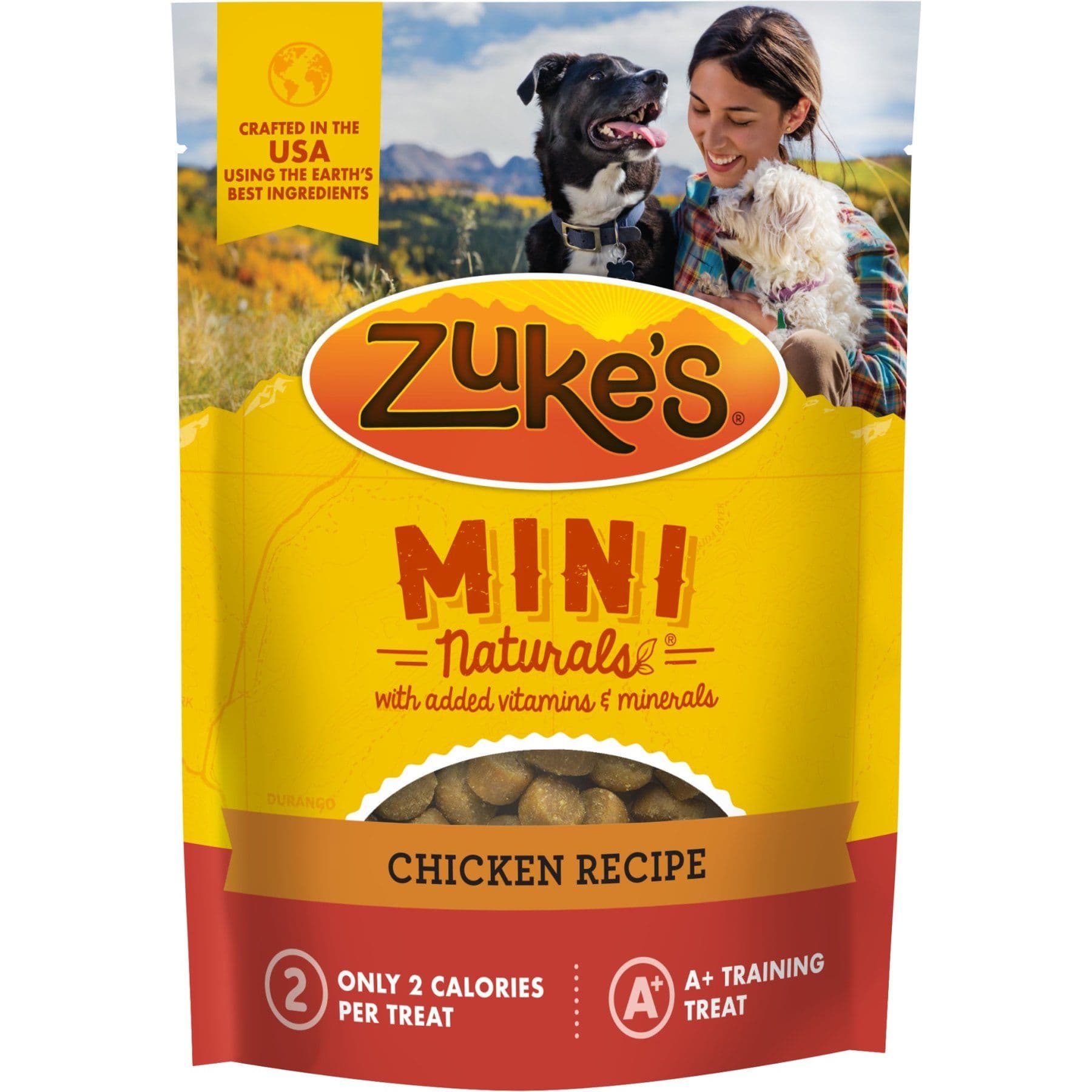
Small, soft chicken-recipe rewards for short adult-dog training sessions. Portion into tiny pieces and include treats in the daily calorie budget.
Petful may earn a commission when you click through to Chewy, at no extra cost to you.
Freeze-dried rewards and single-ingredient choices
Freeze-dried dog treats for training offer a distinct texture and can be convenient to portion, but the processing description does not tell you the full recipe. A bag may contain one ingredient, several ingredients, or a meat ingredient plus a preservative. Read the list rather than treating “freeze-dried” and “single-ingredient” as interchangeable claims.
For example, Pupford Train Chicken contains chicken and mixed tocopherols. A short recipe may make the product easier to identify, but it does not make it appropriate for a chicken-restricted diet. The ingredient remains relevant after freeze-drying.
- Check the exact animal ingredients rather than relying on the front-of-bag flavor.
- Compare the physical size and how readily you can divide a piece for the intended lesson.
- Follow the label's calorie and storage information for that specific recipe.
- Do not assume freeze-drying guarantees that a product is free of pathogens.
Choosing the best freeze-dried treats for puppies starts with the same label and portion checks as other puppy rewards. Liver, salmon, beef, and other formats appear in training-treat searches, but a different protein is not automatically better or safer. If dietary restrictions matter, confirm the options with your veterinarian before running a preference comparison. A clear restriction should narrow the list first, even when a dog appears very enthusiastic about an unsuitable food.
Fresh food rewards, storage and hygiene
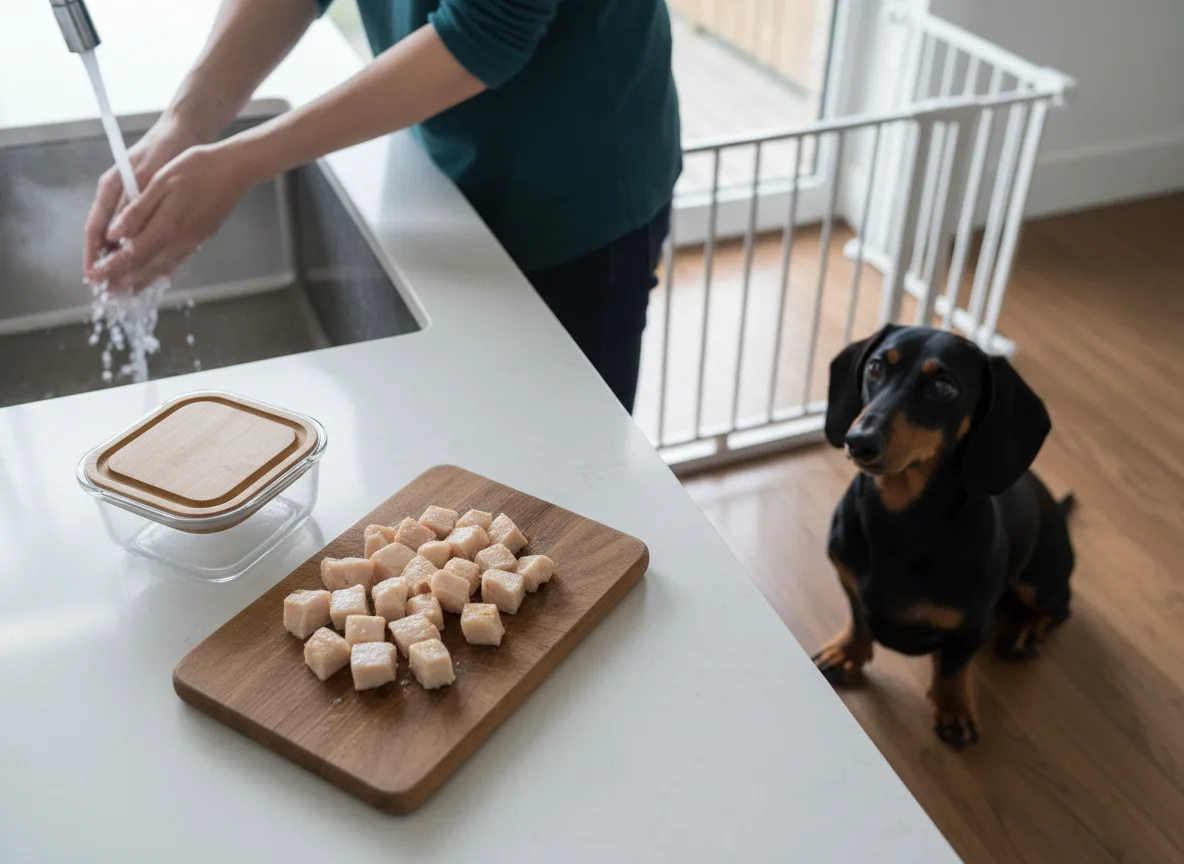
Fresh food can be a useful reward when it is suitable for your dog, easy to portion, and handled safely. Prepare small amounts and keep perishable rewards refrigerated until needed. Do not treat cooked meat as something that can stay in a warm pocket throughout the day simply because each serving is tiny.
The FDA's pet-food and treat handling guidance advises handwashing before and after handling and following storage directions. Apply the same attention to the pouch and surfaces that contact the food. A convenient reward should not come with an overlooked storage problem.
- Prepare only the amount appropriate for the planned session and calorie allowance.
- Use suitable refrigeration or an insulated arrangement for perishable food during transport.
- Follow the food's storage instructions and discard food when safe storage is uncertain.
- Empty and clean the treat pouch rather than adding fresh food on top of old remnants.
- Wash hands and clean preparation surfaces after handling the rewards.
Packaged and fresh rewards can have different practical roles. A labeled packaged treat may be easier for an outing where cold storage is difficult. A suitable fresh reward may be convenient for a short session at home near the refrigerator. Choose according to the actual setup rather than assuming the most aromatic option is always the best training purchase.
Keep the foods identifiable if you take more than one reward. Separate, labeled portions make it easier to follow a diet restriction, see how much remains, and repeat a useful comparison later. Avoid an unplanned mixture of leftover treats from several bags, especially when you are trying to learn which food your dog prefers. The practical question after a successful session should be answerable: which reward did you use, how much, and in what setting?
Apply the reward hierarchy to the session you have
These examples show how the same dog might use different suitable rewards without making a particular brand the answer to every training problem. They are illustrative choices, not results from a product test. Start with your dog's actual diet, preferences, and current ability, then adjust the task to keep the exchange clear.
A familiar cue in the kitchen
Suppose your dog readily follows a familiar cue in a quiet room and eats a portion of the measured daily food afterward. There may be no reason to replace that reward with the most exciting item you own. Save an appropriate amount of the preferred food for another task, keep the repetition easy, and stop while the session remains useful.
The first minutes of a training class
Now suppose the dog can work at home but is busy investigating a new class space. Start with the trainer's recommended setup and enough room to settle. A preferred, quickly eaten reward may be useful for an easy response. If the dog cannot engage, ask for more space or an easier exercise instead of repeatedly offering larger pieces or assuming the next brand will solve the situation.
Replacing an established treat
If an established product is unavailable, compare a suitable alternative during an easy session before depending on it for a difficult outing. Keep the piece size and task reasonably similar, check the new label, and allow uncertainty in the result. One enthusiastic response does not show that the substitute is better in every setting, while one distracted repetition does not establish that the dog dislikes it.
- Record a useful comparison when it helps you choose the next session's supplies.
- Keep both the food and the task within the dog's current abilities and care plan.
- Change the setup first when the obstacle is discomfort or overwhelming distraction.
These small decisions make a reward hierarchy practical. It becomes a way to prepare and respond to the dog, rather than a rigid ranking that requires a premium treat for every cue.
Everyday dog training treats
Healthy training treats for dogs still need to fit the overall diet; a product does not become healthier because it is especially exciting. An easy, familiar task in a quiet room may work well with an ordinary suitable treat or a portion of the measured daily diet. Keep a preferred reward available for a more demanding moment without turning every interaction into a larger serving.
Our guide to the best dog training treats compares everyday options and the practical criteria professional trainers consider, including size, texture, and quick delivery. Use that broader comparison when you need a regular class or practice reward. This guide adds the individual preference decision: what your dog values in this setting and when changing the environment matters more than changing the food.
Homemade high-value rewards
A homemade reward can work when its ingredients fit the dog's diet and the finished texture suits the lesson. Do not assume homemade dog training treat recipes are vet-approved because a website describes them as natural or healthy. Check the actual ingredients and whether the finished food can be divided into small pieces, handled safely, and delivered without a long chewing break.
For a specific recipe rather than a general preference framework, see our two-ingredient homemade dog treats. Review the ingredients and storage directions before making a batch. If you need an exact calorie allowance, do not guess that every homemade bite matches a commercial piece; the recipe and portion size determine the amount.
High-value treats for puppies
Healthy puppy treats begin with age-appropriate labeling, chewing suitability, and the complete growth diet. The best training treats for puppies are suitable foods they can eat comfortably in small portions. A treat that excites an adult dog is not automatically the right size, recipe, or labeled choice for puppies. Introduce dietary changes thoughtfully, especially when the puppy is already adapting to a new home and routine.
Our puppy training treat comparison focuses on those decisions. It is the better starting point for choosing a puppy-specific product. The reward-hierarchy method still applies afterward: compare suitable options in an easy setting, observe what the puppy enjoys, and keep the session manageable rather than increasing food or difficulty too quickly.
Treat value during potty training
During potty training, a suitable reward works best when it follows the completed behavior at the right place and time. A particularly exciting treat given only after returning indoors can reward the return trip instead of clearly reinforcing the outdoor toilet success. Have a small piece ready before the outing, then deliver it after the puppy finishes.
See our guide to treats for potty training for the specific reward sequence and puppy choices. A more valuable food does not replace enough toilet opportunities or an appropriate routine. Use the treat to make a successful repetition clear, and adjust the setup when the puppy has not yet had a fair chance to succeed.
Choose a useful reward, then keep observing
Buy for the task you have, with the dog's diet and preferences guiding the shortlist. If you already have a suitable reward that works, a more expensive bag is not automatically an upgrade. If the dog struggles in a new setting, compare the task and distraction level before concluding that the current food has lost all value.
- Keep a simple note of useful foods, portion sizes, and settings.
- Recheck the current label when replacing a product or trying another recipe.
- Keep reward delivery timely and the food easy to handle.
- Ask for veterinary or qualified training help when diet restrictions, fear, or repeated refusal complicate the plan.
The four packaged options here are candidates with specific label differences. Their role is to make a practical comparison possible, not to promise a recall result or create a universal ranking. Your observations and a well-arranged lesson decide whether a reward earns a place in the pouch.
Questions about high-value rewards
Your dog may take a treat at home but refuse it outside because the distraction level is too high, or because the dog is uncomfortable or overwhelmed. Increase distance from the difficult situation and try an easier task in a calmer place before offering progressively more exciting food. Refusal is information about the session, not a reason to punish or force participation. Seek qualified help if the pattern persists.
Yes, fresh meat rewards need to stay refrigerated. Refrigerate perishable rewards and maintain appropriate storage when taking them to training. Do not leave meat in a warm pocket all day. Carry only what you need, follow food-storage guidance, and use a clean treat pouch. Empty and wash the pouch as appropriate rather than mixing fresh pieces with food left from an earlier session.
Yes, you can mix low-value and high-value rewards in one session when both fit the dog's diet and the training plan. An easy familiar task may need an ordinary reward, while a more difficult repetition may benefit from a preferred food. Keep portions small and delivery clear. If engagement drops, reassess difficulty and comfort rather than assuming that switching treats alone will fix it.
No, high-value does not mean expensive or high in fat. Value reflects individual preference in the training situation, not price or fat content. Compare suitable foods, check label calories, and keep all extras within the dog's nutrition plan. A familiar food may be highly rewarding for one dog, while a premium product may be uninteresting to another. Do not use enthusiasm as evidence that a food is nutritionally appropriate.
You will not necessarily need high-value treats for every repetition forever. A reliable familiar behavior can eventually allow gradual reward variation, but do not abruptly remove reinforcement while adding difficulty. Keep rewarding worthwhile responses and adjust the plan to the setting. A qualified reward-based trainer can help you move from teaching with frequent food rewards to a practical maintenance routine without relying on a constantly displayed treat.
Freeze-dried chicken treats do not suit a chicken-restricted diet: a chicken ingredient remains chicken after freeze-drying. Follow the veterinary diet plan rather than testing whether the dog likes a food that the plan excludes. Ask the veterinarian which rewards are permitted, including whether a measured portion of the prescribed food can be used. A short ingredient list does not override a known restriction.

Coreen Saito is a pet writer and longtime shelter volunteer with more than a decade in animal rescue. She covers cat behavior, breed care, and the small, ordinary science of sharing a life with companion animals, with a particular focus on honest takes about the products and decisions that actually matter. At home in Arizona, she's outranked by Mac (a dog with the loudest opinion in the house), Rebel (a cat who governs by quiet authority), and Meri (an orange tabby who runs the late shift and the laundry basket). She writes about all three, plus the rescues that keep coming through her life, at LifeWithMinty.com.
Sign up for expert-backed reviews and safety alerts all in one place.