Leash Training a Puppy: A Calm, Step-by-Step Guide
Leash training a puppy is easier when you start indoors and reward the right position. This step-by-step guide covers helpful gear, how to teach loose-leash walking, practical responses to pulling and freezing, and when to call a trainer.
Petful may earn a commission when you buy through links on this page, at no extra cost to you.
Leash training a puppy is the difference between a walk you look forward to and one you dread, and the good news is that it starts long before you ever reach the sidewalk. Done well, it turns your pup into a relaxed walking partner who checks in with you, keeps slack in the line, and does not treat every squirrel like a personal emergency. This guide walks you through the whole arc, from the first collar to confident loose-leash walking, including the gear that actually helps, the mistakes that create pullers, and the fixes for a dog who freezes, lunges, or chews the line.
The core idea is simple: reward the position and the pace you want, and never let pulling get your puppy anywhere. Everything below is built on that one principle, layered up in stages your puppy can actually handle.
- This guide is sponsored by DOGISTRY. Petful selected the gear we recommend, and all training advice is our own.

Sign up for expert-backed reviews and safety alerts all in one place.
Start With the Collar, Harness, and Leash
Before any walking happens, your puppy needs to be comfortable wearing gear. Rushing this step is the single most common reason training stalls, because a pup fighting the harness cannot also learn to walk beside you.
Put a flat collar on for short, happy stretches indoors, paired with treats and play, so the collar predicts good things. Do the same with the harness. Let your puppy sniff it, feed a treat through the neck loop, and build up to clipping it on for a minute or two while something fun happens. A pup who dances away from the harness is telling you to slow down, not to push harder.
The Right Gear Makes Loose-Leash Walking Easier
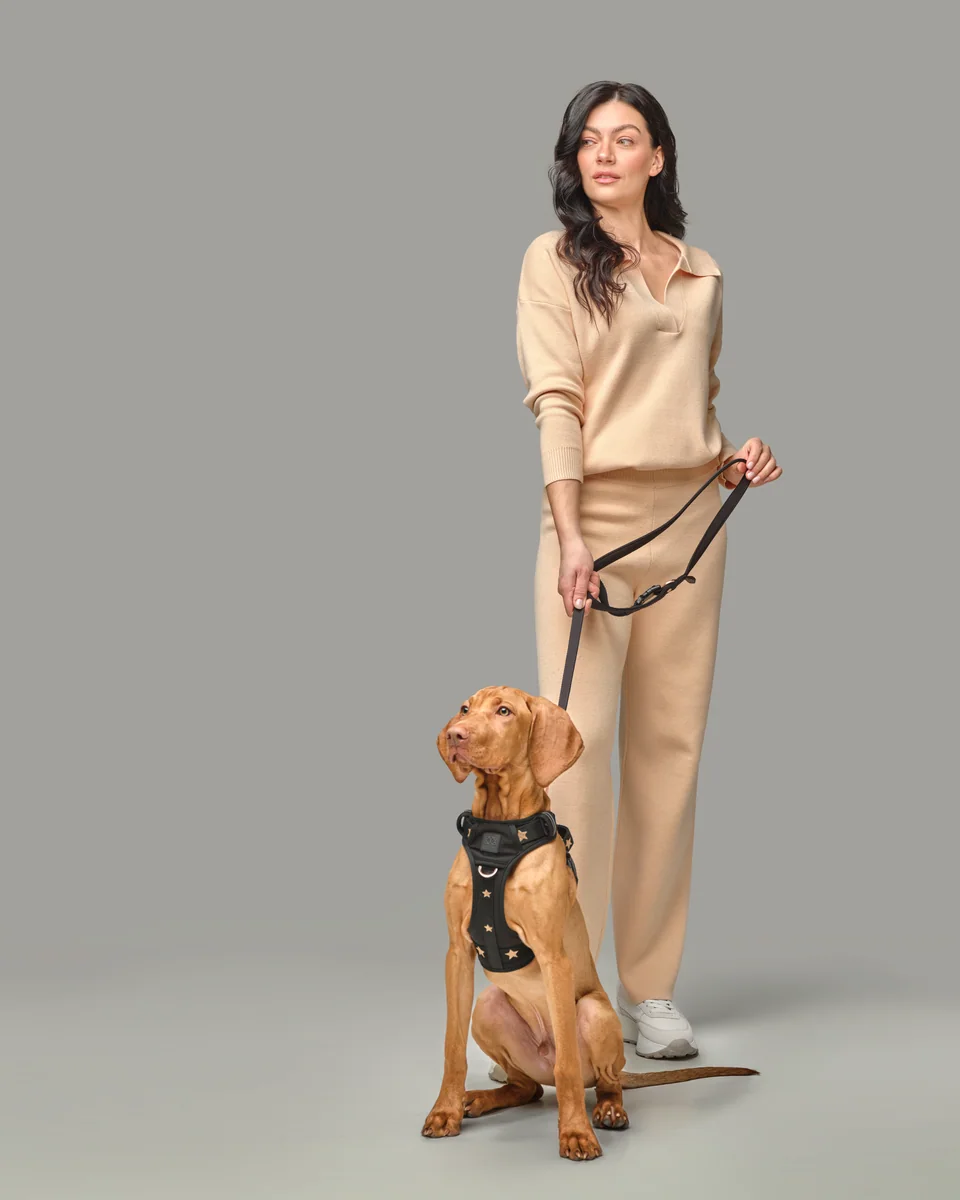
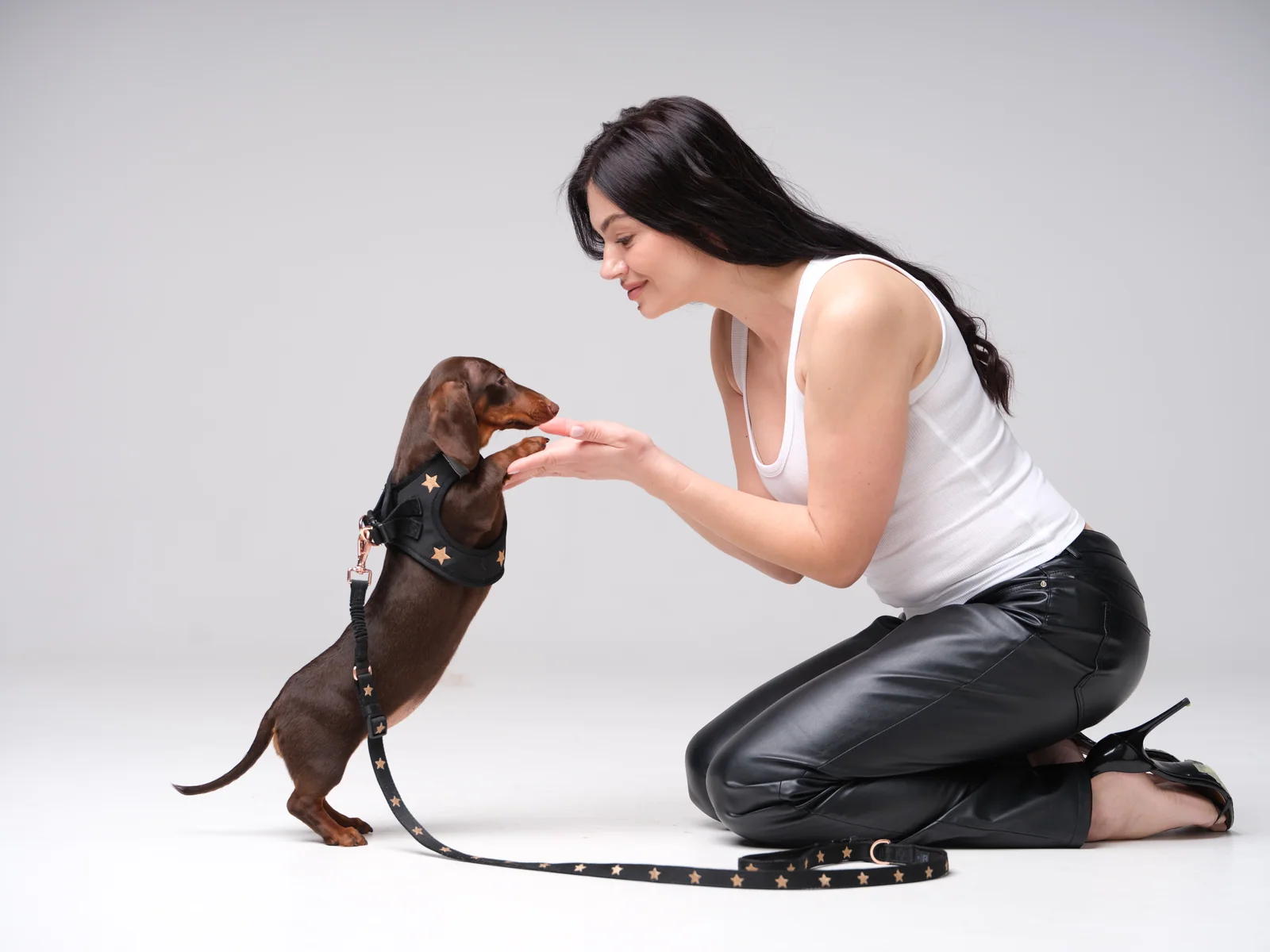
For a puppy just starting out, comfortable, easy-on gear can make those first sessions calmer. We like the DOGISTRY SoHo step-in harness paired with the 3-in-1 City Leash. The front D-ring offers a guidance option for a pup that surges ahead, the back ring suits relaxed walking, and the leash's bungee adds cushioning. Measure the neck and chest, and size up if your puppy falls between DOGISTRY sizes.
Shop the DOGISTRY Rockstar SetGear does not train your dog for you, but the wrong gear works against you every step. Here is what the current expert consensus favors and what to avoid.
- Harness or collar for walks? A well-fitted body harness moves the leash attachment away from the neck, while a front attachment can help guide a puppy during training. For dogs with diagnosed tracheal collapse, the American College of Veterinary Surgeons advises using a body harness rather than a neck lead. That guidance is condition-specific; a harness does not guarantee prevention of injury or airway disease.
- A standard 4- to 6-foot leash. A fixed-length nylon or leather leash gives you consistent feedback. Skip retractable leashes: they teach a puppy that pulling extends the line and gets them where they want to go, which is the exact opposite of the lesson.
- A treat pouch and pea-sized treats. You will reward often at first, so keep a generous supply of soft, high-value treats within easy reach. A clip-on pouch beats digging in a pocket.
- A flat collar for ID. Your collar still carries tags. It just is not the attachment point you rely on for a puller.
- 1Comfort with the gear comes before walking
- 2A well-fitted front-attachment harness moves leash tension away from the collar area and can provide guidance during training
- 3Retractable leashes reward pulling, so use a fixed 4- to 6-foot line
When to Start Leash Training a Puppy
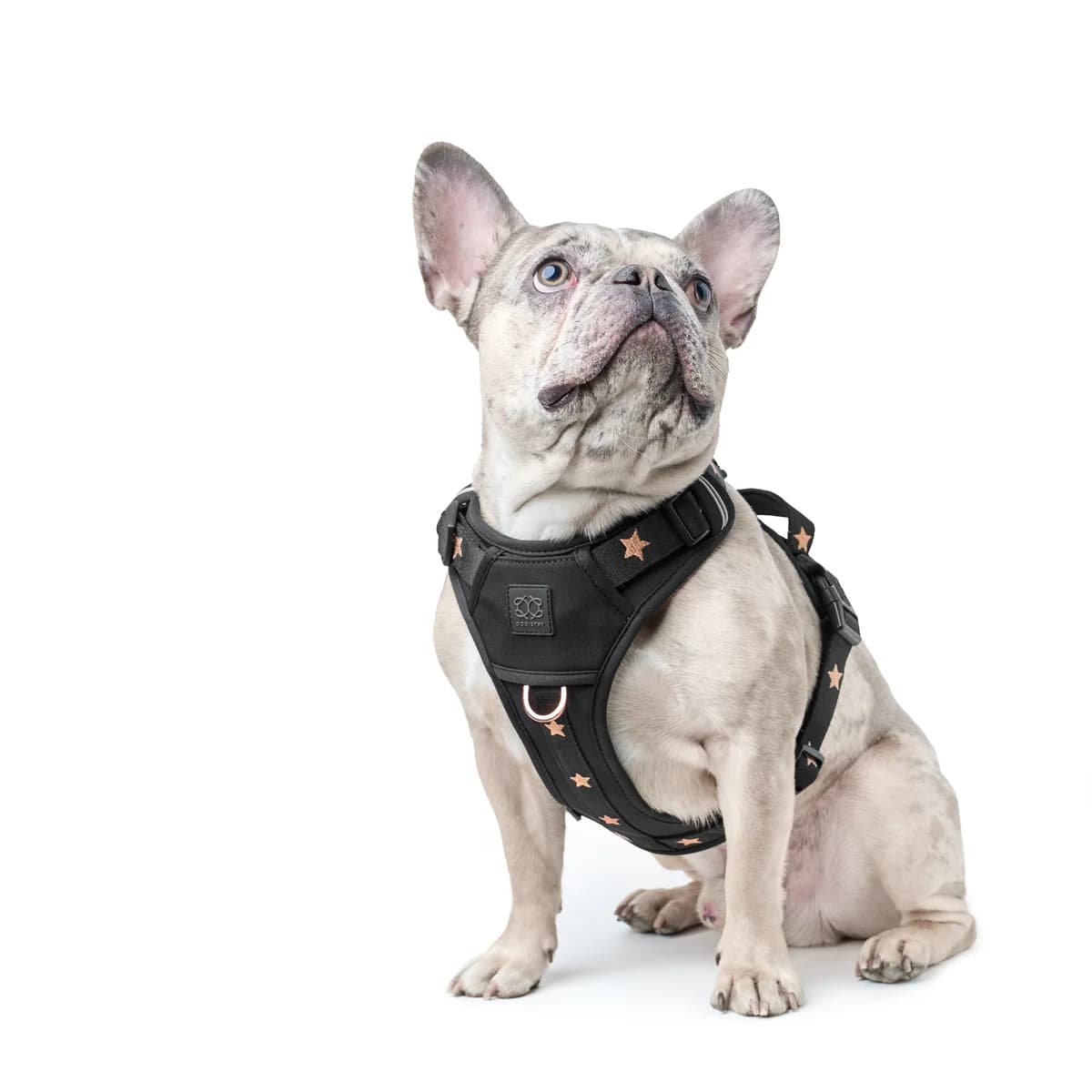
You can begin the moment your puppy comes home, usually around 8 weeks. At that age you are not doing formal neighborhood walks. You are building positive associations with the collar, harness, and leash indoors, and rewarding your pup for choosing to be near you. That groundwork is leash training, even without a single step down the block.
Formal outdoor walking waits on two things: gear comfort and, for public spaces, your veterinarian's clearance on vaccinations. Until your vet gives the go-ahead for high-traffic areas, do your leash work in the house, the yard, and quiet low-risk spaces. Starting early matters because habits form fast, and it is far easier to build loose-leash walking from scratch than to un-teach months of pulling.
- Puppies focus in very short bursts. Keep leash sessions to 5 to 10 minutes and stop while your pup is still winning. Several tiny successful sessions beat one long frustrating one.
Teach the Position Indoors First
Indoors, with no distractions, is where loose-leash walking is actually learned. Clip on the leash, then use a treat to lure your puppy to your side. The instant they take a step or two next to your leg, mark it with a cheerful "yes" and deliver the treat right at your seam, by your leg, so your pup learns that the payoff lives in the correct position.
A few mechanics that make this click faster:
- Reward at your leg, not out in front. Delivering the treat by your side, with your knuckles forward and palm toward the dog, pulls your puppy into the position you want instead of teaching them to swing ahead and beg.
- Mark the exact moment. A clear "yes" or a clicker the second the leash is loose and your pup is beside you tells them precisely what earned the treat.
- Add a cue once the behavior is reliable. Only after your puppy is choosing to walk beside you do you name it, with something like "let's go" or "with me," so the words come to mean the behavior.
Keep the leash loose the entire time. If it goes tight, you are about to reward pulling, so reset before you continue.
Shop the DOGISTRY 3-in-1 City LeashThe Number One Rule: Keep the Pressure Off
Dogs Trust recommends encouraging a dog to stay close, rewarding that position, and stopping when pulling occurs instead of dragging the dog forward. Your job is to make the correct position rewarding, not to steer your puppy like a handle.
Stop the Pulling Before It Becomes a Habit
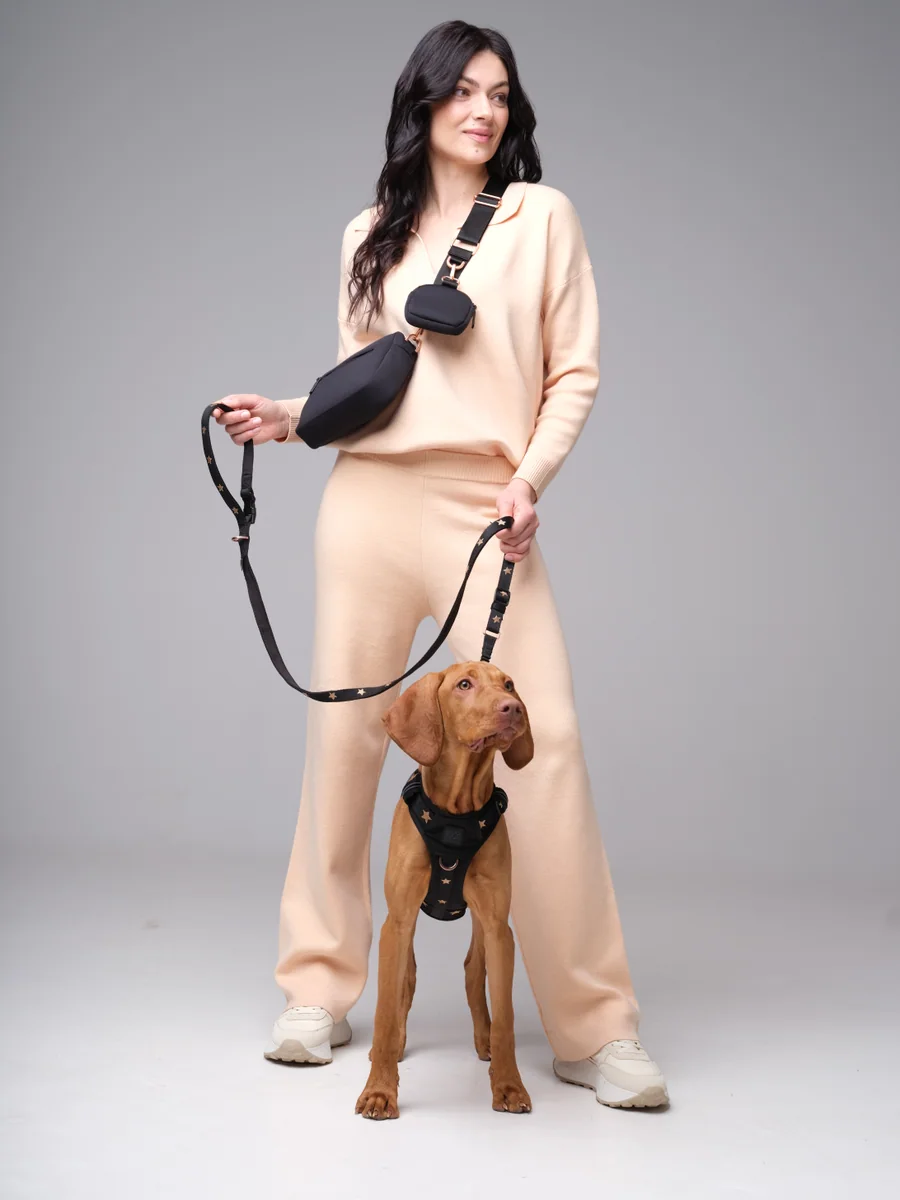
Pulling is not defiance. It is simply what works: your puppy pulls, the world comes closer, pulling gets reinforced. Break that cycle and pulling fades. Two reliable methods, both of which teach that a tight leash stalls the walk:
- Be a tree. The moment the leash tightens, stop moving and stand still. Do not yank back. Wait. The second your puppy releases the tension, even a step back toward you, praise and walk on. A loose leash makes the walk continue; a tight one freezes it.
- The 180 turn. If your pup charges ahead, quietly turn and walk the other direction. Your puppy learns to keep an eye on you and check in, because you are not a reliable follower of their plans.
Pick one, stay consistent, and expect to look a little silly stopping and starting at first. Consistency is the whole game: if pulling works even one walk in five, your puppy will keep trying it.
See the DOGISTRY Rockstar Walking Set| Problem | Why it happens | What to do |
|---|---|---|
| Pulling ahead | Pulling gets the pup where it wants to go | Stop as a tree or turn 180 degrees, reward slack |
| Freezing or planting | Overwhelm, fear, or leash pressure | Lower the distraction, lure with a treat, reward any forward step |
| Leash biting | Overexcitement or a chew outlet | Redirect to a toy, keep sessions short, reward calm |
| Zig-zagging in front | No clear reward position | Reward at your leg with knuckles forward |
Take It Outside Gradually
Once your puppy walks nicely beside you indoors, add difficulty in small steps. Start in the backyard or a quiet driveway, not a busy street. The outdoors is a flood of smells, sounds, and sights, and your pup's brand-new skill is fragile at first.
Expect regression when the environment gets harder, and drop your standards accordingly. If your puppy who nailed it in the kitchen falls apart on the driveway, you have not lost the training. You have just raised the difficulty, so reward more generously and keep sessions short until the new setting feels normal.
If Your Puppy Freezes or Refuses to Walk
A puppy who plants and will not move is usually overwhelmed or unsure, not stubborn. Do not drag. Apply the gentlest tension and release it the instant they step forward, then reward big. Lure with a favorite treat or toy to make moving forward the fun choice. Sit on the ground, get cheerful, and let curiosity win. If your pup seems genuinely fearful rather than distracted, back the difficulty way down and rebuild confidence in an easier spot.
Some breeds bring their own quirks to walks: independent, high-drive dogs like the ones covered in our Rhodesian Ridgeback color guide often need more motivation and shorter sessions than a biddable retriever. Match the plan to the puppy in front of you. For more on shaping calm walking manners, our behaviors and training library has companion guides.
Build Duration, Distraction, and Distance Slowly
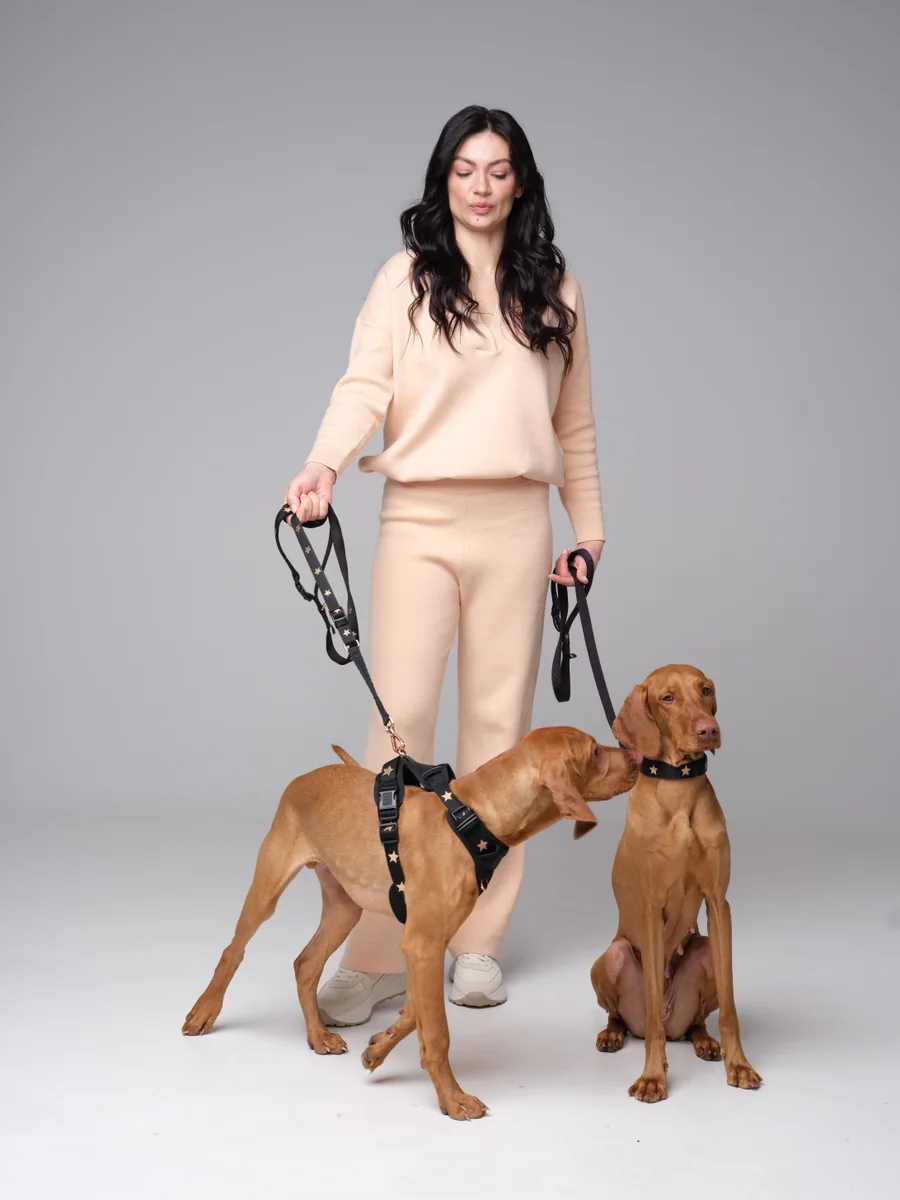
Trainers often talk about the three Ds: duration, distraction, and distance. Push only one at a time. If you add distraction by walking near a park, keep the duration short and the distance from the trigger large. If you want a longer walk, do it somewhere boring where distractions are low. Stacking all three at once is how a promising puppy suddenly falls apart, and it is entirely avoidable.
A practical way to apply this: pick one variable to stretch each session and hold the other two easy. A ten-minute session in the quiet backyard builds duration. A two-minute session at the edge of a busier sidewalk builds distraction tolerance. Passing another dog at fifty feet, then rewarding heavily, builds distance comfort. Over a few weeks those small, separate reps combine into a dog who can handle a real walk.
Reward generously the whole time. Early leash training is not the moment to be stingy with treats. You are paying your puppy to build a habit that will last for years, and the rate of pay drops naturally as the behavior becomes automatic. Fade the food only after the position is genuinely reliable, and keep occasional surprise rewards forever so the good behavior never fully goes stale.
- 1Stretch one of the three Ds at a time, never all three
- 2Pay heavily while the habit forms, then fade treats slowly
- 3A dog who fails a harder setting has not regressed, the difficulty simply went up
Read Your Puppy and Know When to Get Help
Most leash issues resolve with consistency and time. But watch for signs that a pup needs more support than a training plan alone. Behaviors worth flagging to your vet or a certified trainer include intense fear that does not fade with gentle exposure, growling or snapping when handled, freezing paired with trembling, or reactivity that escalates rather than settles. These are not personality flaws, and early professional input prevents small worries from hardening into big ones.
The American Veterinary Society of Animal Behavior recommends reward-based methods and advises against aversive training techniques. If a walk consistently ends in a struggle, that is your cue to get a qualified, force-free trainer involved rather than escalating pressure.
- A puppy who walks beautifully one day and forgets everything the next is completely normal. Expect setbacks around new environments, adolescence, and big life changes, and keep rewarding the behavior you want.
Frequently Asked Questions
Leash Training a Puppy in an Apartment
No backyard is not a setback. Quiet indoor spaces do the same job: run your first loose-leash reps in a hallway, a stairwell, or an empty lobby before your pup ever meets the street. Keep quick potty trips separate from training reps, so bathroom urgency never trains a fast, taut beeline to the door. Time your earliest outdoor sessions for the calmest part of the day, early morning or late evening, when foot traffic, delivery carts, and other dogs are thin. Reward heavily every time your puppy chooses to walk beside you, and treat the elevator or building entrance as its own mini training spot, not a race to get through.
- Even the 30 seconds from your door to the sidewalk is training time. Ask for a loose leash there first, before the bigger, busier walk begins.
When You Adopt a Puppy Who Already Pulls
An older puppy or a rescue may arrive already convinced that pulling works, so you are un-teaching a habit rather than building from a blank slate. The principles do not change. Be a tree, reward slack, and never let a tight leash advance the walk. Expect the process to take longer, because an established pattern fades more slowly than a fresh one, and be patient through the plateau where nothing seems to shift. Start in a low-arousal spot where your pup can actually think, keep those first sessions short, and let calm, successful reps stack up before you ask for a busy sidewalk.
Related on Petful
- Puppy Training 101: A Week-by-Week Guide
- How to Stop Puppy Barking: By-Cause Fixes
- Crate Training a Puppy: A Day-by-Day Plan
- Resource Guarding in Dogs: Causes and Fixes
You can begin as soon as your puppy comes home, typically around 8 weeks old. Early on, focus on getting your pup comfortable in a collar and harness and rewarding them for staying near you indoors, rather than formal walks. Save busy public spaces until your veterinarian confirms your puppy's vaccinations are far enough along, then build outdoor walking gradually.
The 10-10-10 rule is a socialization guideline, not a strict leash rule: aim to expose your puppy to 10 new people, 10 new places, and 10 new surfaces or experiences in a positive, low-pressure way during the early socialization window (roughly up to about 12 to 14 weeks). Pairing calm leash exposure with these new experiences helps your pup grow into a confident walker.
Red flag behaviors include intense or lasting fear that does not ease with gentle exposure, growling or snapping when touched or handled, freezing with trembling, guarding food or objects aggressively, and reactivity that escalates instead of settling. On walks, a puppy who repeatedly panics or shuts down is telling you the situation is too much. Loop in your veterinarian or a certified, force-free trainer early.
The single most effective trick is to make sure pulling never works: the moment the leash goes tight, stop moving (be a tree) or turn and walk the other way, and only move forward again when the leash is loose. Your dog learns that a slack leash makes the walk continue and a tight one stalls it, which removes the payoff for pulling.
A red flag puppy's behavior is any pattern that signals fear, pain, or aggression rather than normal puppy exuberance, such as snapping when handled, persistent trembling, resource guarding, or fear that intensifies with exposure instead of fading. These warrant a check-in with your vet to rule out a medical cause and a certified trainer to address the behavior before it becomes entrenched.
Not exactly. Ignore whining that is just testing whether crying gets her let out, but never ignore whining tied to a real need like a bathroom trip, hunger, or genuine distress. Build positive crate associations with treats and calm entries, keep sessions short at first, and meet legitimate needs promptly so the crate stays a safe, low-stress space. Relaxed crate time supports the same calm mindset that makes leash training go smoothly.
Many owners find the stretch around 8 to 12 weeks (the frantic, everything-is-new phase) and then adolescence (roughly 6 to 12 months, when a previously polished puppy suddenly ignores cues) the most challenging. Leash manners often backslide during adolescence, so keep rewarding loose-leash walking, shorten sessions, and stay consistent until your dog matures out of it.
Putting It All Together
Leash training a puppy is a series of small, winnable steps: get the gear right, build comfort indoors, reward the position and pace you want, refuse to let pulling pay off, and raise the difficulty only as fast as your pup can handle. Keep sessions short, keep the pressure off, and keep it positive. Do that consistently and the walk you pictured, a relaxed dog trotting at your side on a loose leash, becomes the walk you actually get.
Build Your DOGISTRY Walking Setup
Coreen Saito is a pet writer and longtime shelter volunteer with more than a decade in animal rescue. She covers cat behavior, breed care, and the small, ordinary science of sharing a life with companion animals, with a particular focus on honest takes about the products and decisions that actually matter. At home in Arizona, she's outranked by Mac (a dog with the loudest opinion in the house), Rebel (a cat who governs by quiet authority), and Meri (an orange tabby who runs the late shift and the laundry basket). She writes about all three, plus the rescues that keep coming through her life, at LifeWithMinty.com.
Sign up for expert-backed reviews and safety alerts all in one place.

A Final Word (Disclaimer)
At Petful, our review integrity is paramount; we never exchange special treatment in our reviews for monetary or material rewards.
Nonetheless, when our readers click through to online merchants (including Chewy or Amazon), we receive a referral commission. This supports the running of our free blog, and we appreciate your backing.