Puppy Training 101: A Week-by-Week Guide
A week-by-week puppy training guide from 8 weeks to 6 months. Learn exactly what to teach and when, from name and crate to sit, down, recall, and loose-leash walking, plus how to socialize safely and decode the 3-3-3 and 7-7-7 rules.
Petful is reader supported. As an affiliate of platforms like Amazon and Chewy, we may earn a commission when you buy through links on this page. There is no extra cost to you.
Puppy training is the single best investment you can make in the first six months of your dog's life, and this guide walks you through it week by week, from the day an 8-week-old comes home to the confident 6-month-old who sits, stays, comes when called, and toilets outside without a second thought. Instead of a random pile of tips, you get a clear schedule tied to how a puppy's brain and body actually develop, plus links to the deeper how-to guides for each skill so you always know what to teach next.
This is the hub. Every milestone below points to a focused walkthrough, so use this page as your map and follow the links when you want the step-by-step for a specific skill like potty training or recall.
- 1Start training the day your puppy comes home at 8 weeks, not at 6 months.
- 2Keep sessions to 3 to 5 minutes, reward the instant the behavior happens, and train several times a day.
- 3The socialization window closes around 12 to 16 weeks, so gentle exposure now matters more than any single command.

Sign up for expert-backed reviews and safety alerts all in one place.
Why the first few months decide everything
A puppy's brain is wired to learn fastest between roughly 3 and 16 weeks of age. During this stretch, the experiences a puppy has, or misses, shape how it reacts to people, dogs, noises, and new places for the rest of its life. Skip it and you spend the next decade managing fear and reactivity. Use it well and you get a stable, easygoing adult dog.
That is why good puppy training is not one lesson at 6 months. It is a daily habit that starts the moment your puppy walks through the door. The American Veterinary Society of Animal Behavior (AVSAB) is explicit that the primary and most important period for socialization is before 3 months of age, and that the benefits of early, positive exposure outweigh the small infectious-disease risk when it is done sensibly with a partially vaccinated puppy (AVSAB Position Statements, avsab.org/resources/position-statements). We will come back to how to do that safely.
Two things make training stick at this age:
- Timing. Reward within one to two seconds of the behavior you want. A puppy connects the treat to whatever it did in that instant, not to something 10 seconds ago.
- Repetition in tiny doses. Three to five minutes, several times a day, beats one long, frustrating session. Short and frequent matches a puppy's attention span.
If you want the broader behavior context beyond this pillar, our full dog behavior library covers the how-to guides this page links out to.

Petful may earn a commission when you click through to Chewy, at no extra cost to you.
The tools you actually need before week one
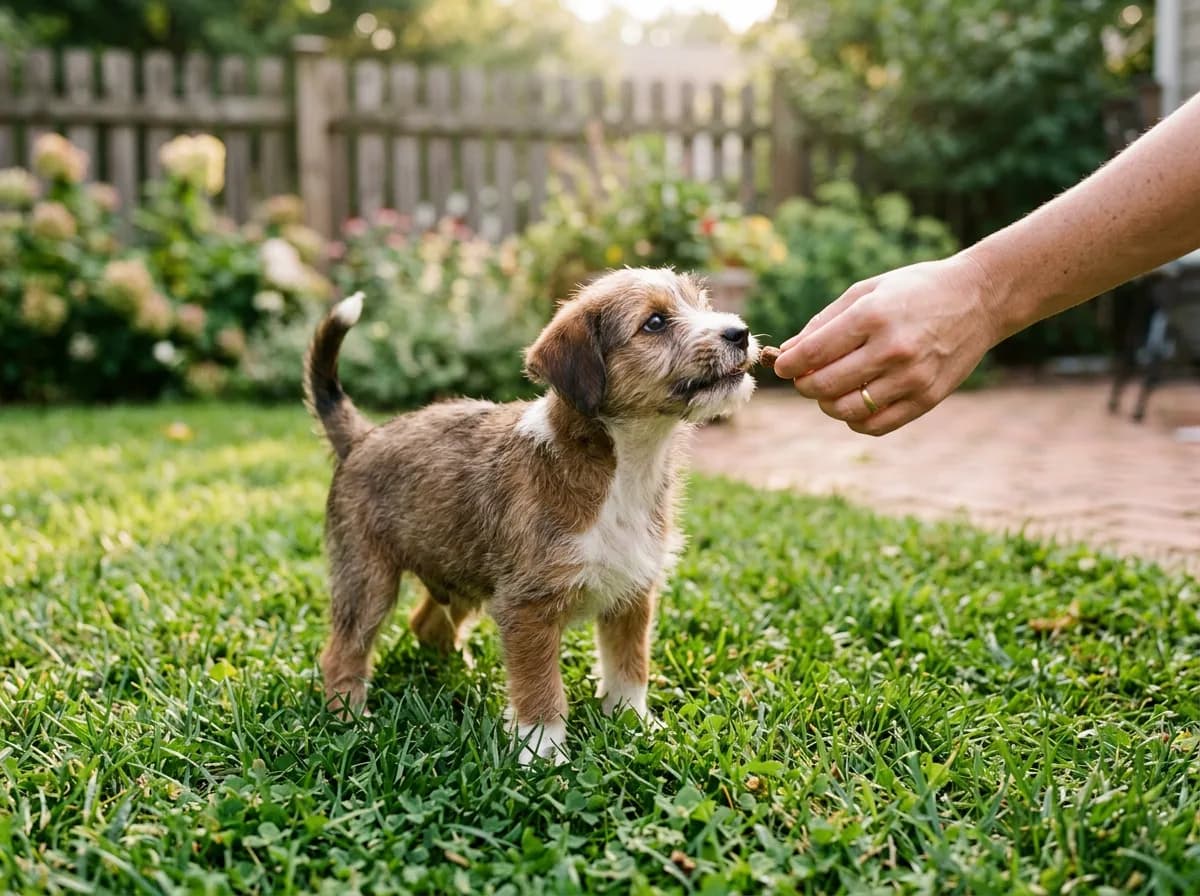
You do not need a garage full of gear. You need a handful of things that make rewarding good behavior easy and make confinement calm rather than scary. Our dog training treats guide compares everyday reward options.
| Item | Why it matters | When you use it |
|---|---|---|
| Flat collar and 6-foot leash | Control and safety for early lead work, no retractable leads | From day one |
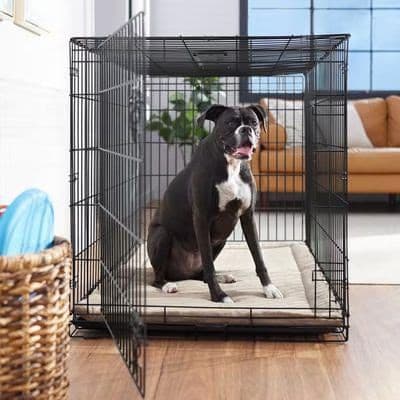
| Properly sized crate | A den for sleep, potty training, and calm time-outs | From day one |
| Soft, pea-sized training treats | Fast rewards you can deliver in one to two seconds | Every session |
| Clicker or a consistent marker word | Marks the exact instant of a correct behavior | From week one |
| Enrichment and chew toys | Redirects biting and beats boredom | Daily |
A few notes on that list. The crate should be just big enough for your puppy to stand, turn around, and lie down, no bigger, because a too-large crate lets a puppy potty in one corner and sleep in another, which sabotages toilet training. Treats should be soft and tiny so your puppy can eat them instantly and get back to work rather than crunching for 20 seconds. Compare puppy training treats by texture, age guidance, and portion size.
- A marker is a sound that means "yes, that, a reward is coming." A clicker works, but so does a crisp word like "yes." Consistency matters more than the tool. Everyone in the household should use the same marker and the same cue words so your puppy is not learning three versions of "sit."
Week-by-week puppy training schedule
Here is the backbone of the whole guide. Ages are approximate because puppies develop at slightly different rates, but the order almost never changes. Teach in this sequence and each skill builds on the last.
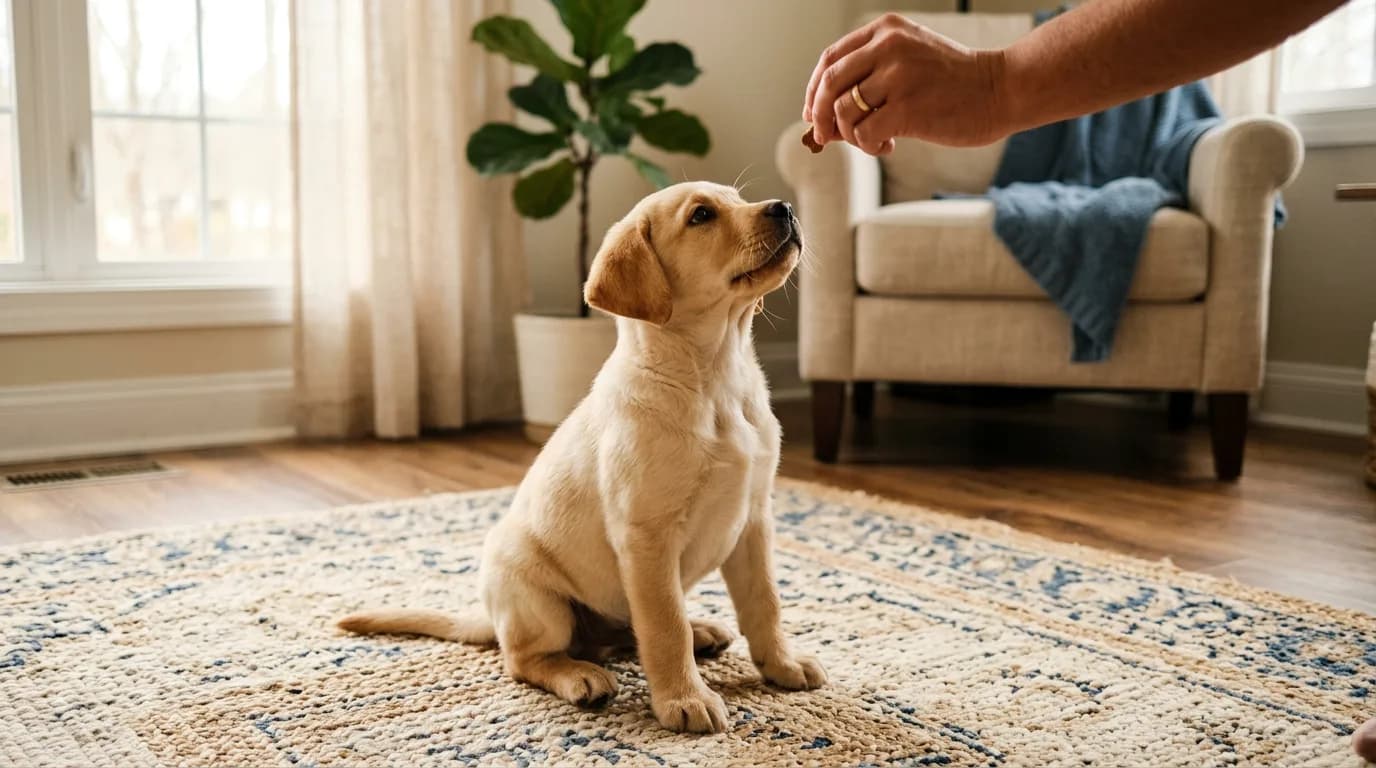
8 to 10 weeks: home, name, crate, and first potty routine
Your puppy's first job is simply to feel safe and start learning that good things come from you. Keep it gentle.
- Name recognition. Say the name, and the second your puppy looks at you, mark and reward. Ten reps a day, done.
- Crate as a happy place. Feed meals in the crate with the door open. Toss treats in. Never use it as punishment.
- Potty routine. Take your puppy out after every sleep, meal, play session, and drink, roughly every one to two hours while awake. Reward outside within seconds of finishing.
- Handling. Touch paws, ears, and mouth briefly and pair it with treats so vet and grooming visits are easy later.
For the full toilet-training method, including how to read the "I need to go" signals and how to handle accidents without setting your puppy back, follow our step-by-step guide to potty training a puppy.
Petful may earn a commission when you click through to Chewy, at no extra cost to you.
10 to 12 weeks: sit, marker games, and gentle socialization
Now your puppy has settled in, add the first real cues and lean hard into socialization, because this is the tail end of the prime window.
- Sit. Lure the nose up and back with a treat until the bottom hits the floor, then mark and reward. Add the word "sit" once the motion is reliable.
- Marker games. Play the "look at me" game and simple hand-target games. These teach focus, which every later skill depends on.
- Socialization. Introduce new surfaces, gentle sounds, calm vaccinated adult dogs, and different people. Keep every exposure short, positive, and at your puppy's pace. Never flood a scared puppy.
12 to 16 weeks: down, come, leash intro, and bite inhibition
Your puppy is more coordinated and can handle slightly longer sessions. This is where the "usable dog" skills go in.
- Down. From a sit, lure the treat to the floor between the front paws, then out, until the elbows hit the ground.
- Recall (come). Start in a boring room, say "come," and reward lavishly every single time. Recall is a paycheck, never a trap, so never call your puppy to do something it dislikes.
- Leash introduction. Let your puppy wear the collar and drag the leash indoors first, then reward walking beside you. No pulling battles yet.
- Bite inhibition. When teeth touch skin, yelp or say "ouch," stop play for a few seconds, then redirect to a chew toy. You are teaching soft mouths, not punishing.
4 to 5 months: stay, loose-leash walking, and impulse control
Adolescence is creeping in, and your puppy will test boundaries. Consistency now prevents the classic "my puppy forgot everything" phase.

Petful may earn a commission when you click through to Chewy, at no extra cost to you.
- Stay. Build duration in seconds, then distance in steps, then distractions, always in that order.
- Loose-leash walking. Reward your puppy for walking with a slack leash. Stop moving the instant it pulls so pulling never earns forward progress.
- Impulse control. Add "leave it" and "wait" at doorways and food bowls. These are the skills that make daily life livable.
5 to 6 months: proofing, real-world distractions, and polish
By now the foundation is built. The job shifts from teaching new cues to proofing the old ones in harder places: the park, the sidewalk, a friend's house. Practice known cues around mild distractions and reward generously. Expect regressions during adolescence and just keep showing up.
- End while your puppy is still winning. Three good reps and a happy break teaches far more than 15 reps that end in frustration. If a session is going sideways, ask for one easy behavior your puppy knows, reward it, and stop on a high note.
The five essential commands, step by step
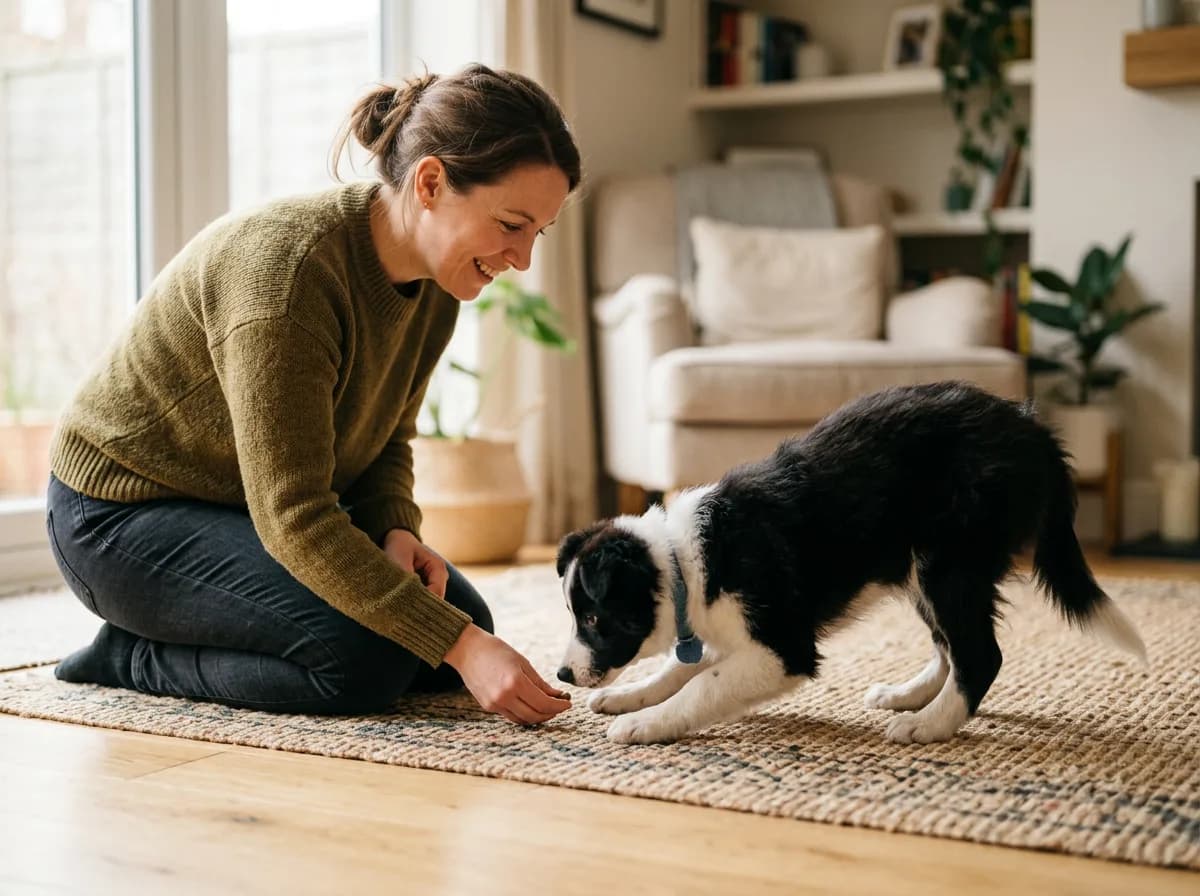
The week-by-week schedule tells you when to teach each skill. This section gives you the how, distilled to the five cues that make daily life with a dog work. Teach them in this order, one at a time, and only add the word once the motion is reliable.
Sit
Sit is the gateway command and the easiest first win. Hold a treat at your puppy's nose, then slowly raise it up and back over the head. As the nose follows the treat up, the bottom naturally drops. The instant it touches the floor, mark ("yes") and reward. After a handful of clean reps, add the word "sit" just before you lure. Within a few days most puppies sit on the word alone.
Down
Down builds directly off sit and is the foundation of calm settling. From a sit, hold a treat at the nose and lower it straight to the floor between the front paws, then slide it slightly out along the ground. Your puppy folds down to follow it. Mark and reward the moment the elbows touch. Add "down" once the fold is smooth. Reward on the floor, not up at your hand, so your puppy learns that the floor is where the good stuff happens.
Come (recall)
Recall is the command that can save your dog's life, so it is worth building carefully. Start in a quiet room with no distractions. Say "come" in a bright, happy voice, and the instant your puppy moves toward you, reward with something excellent. The rule that never bends: coming to you must always pay, and must never predict something unpleasant. Never call your puppy to end play, to get a bath, or to be scolded, or the word loses its power.

Peanut butter soft chews with L-theanine, chamomile, and ashwagandha to ease hyperactivity and support calm, relaxed behavior.
Petful may earn a commission when you click through to Chewy, at no extra cost to you.
Stay
Stay is really three separate skills stacked together, and the order matters: duration first, then distance, then distraction. Ask for a sit, say "stay," wait one second, then mark and reward before your puppy moves. Slowly stretch the seconds. Only when your puppy will hold for 10 to 15 seconds do you add a single step of distance, then two. Add distractions last. Rush the order and stay falls apart.
Leave it
Leave it is impulse control in a single cue, and it is what stops your puppy from grabbing dropped food, trash, or something dangerous on a walk. Put a treat in your closed fist. Let your puppy sniff, lick, and paw at it. The moment it backs off, even for a second, mark and reward from your other hand, never the fist it was fixated on. Build up to a treat on the open floor with your hand ready to cover it, then to the verbal cue alone.
Practice each cue in short bursts across several rooms and, eventually, outdoors. A puppy that sits beautifully in the kitchen often acts as if it has never heard the word at the park, and that is normal. Proofing a cue in new places with mild distractions is a training step in its own right, not a sign your puppy has forgotten.
Surviving puppy adolescence without losing your progress
Somewhere around 5 to 6 months, and lasting on and off until roughly a year, your polite, biddable puppy may seem to develop selective hearing. Recall gets ignored. Known cues get slow or spotty. This is adolescence, driven by hormonal and neurological change, and it is the single most common point at which owners give up. Do not.
Nothing has been forgotten. Your dog is testing which rules still hold, and your job is to keep the rules boringly consistent while raising the value of your rewards. A few tactics that carry you through:
- Go back to basics briefly. If recall falls apart outdoors, put your dog back on a long line and rebuild it with high-value rewards rather than trusting off-leash freedom you have not earned back.
- Increase, do not decrease, engagement. An adolescent dog needs more mental work and structured exercise, not less. A bored teenage dog invents its own entertainment.
- Stay calm and stay the course. Punishment during this phase damages trust exactly when you need it most. Manage the environment, reward what you want, and wait it out.
Adolescence passes. The owners who keep training through it end up with the stable, reliable adult dogs everyone else envies.
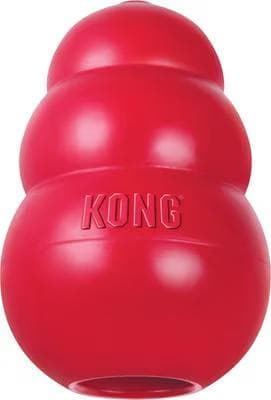
A durable rubber dog toy that can be stuffed with treats and selected by the manufacturer's size guide; supervise use and retire it when damaged.
Petful may earn a commission when you click through to Chewy, at no extra cost to you.
The famous puppy "rules," decoded
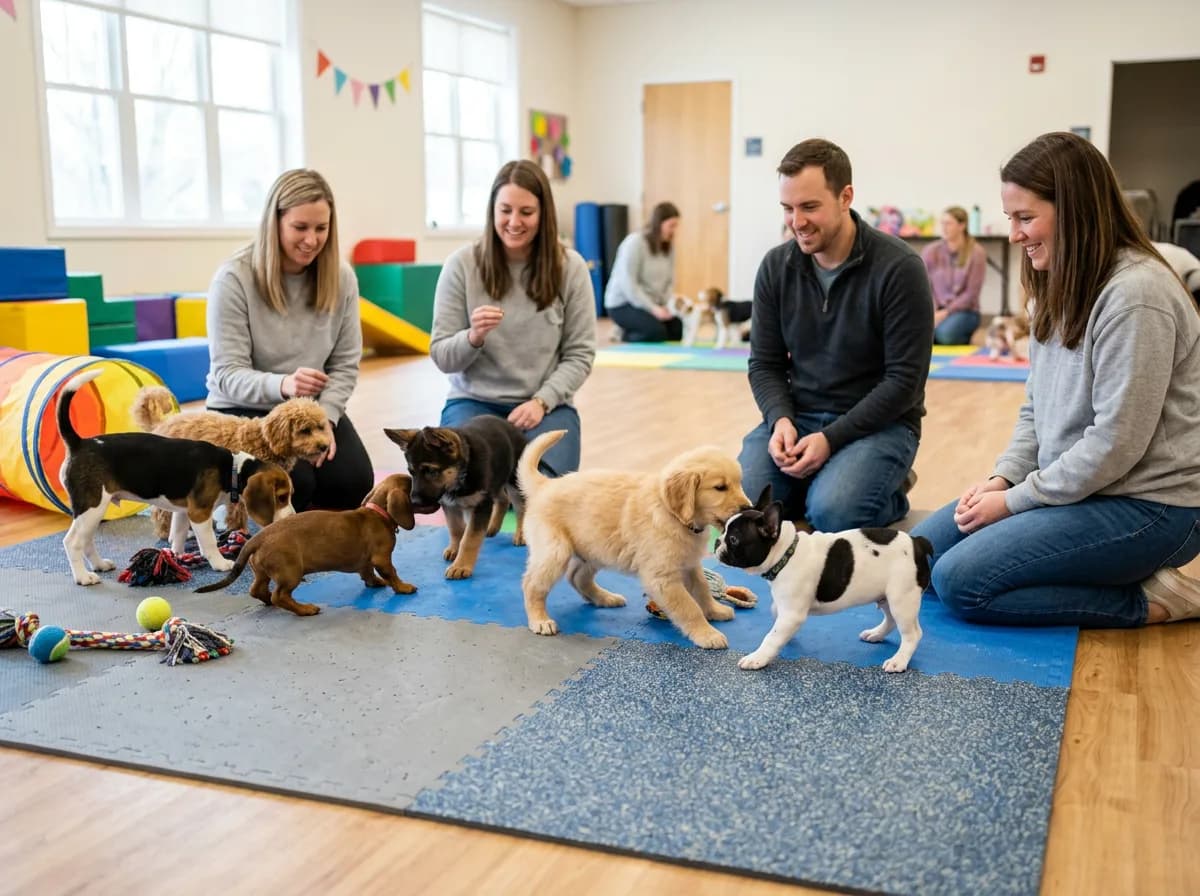
You have probably run into the 3-3-3 rule and the 7-7-7 rule online. They are memory aids, not laws, but they are genuinely useful for setting expectations. Here is what each one actually means.
| Rule | What it describes | Why it helps you |
|---|---|---|
| 3-3-3 rule | 3 days to decompress, 3 weeks to settle into a routine, 3 months to feel fully at home | Sets realistic expectations for a new or newly adopted dog |
| 7-7-7 rule | Expose a puppy to a wide variety of surfaces, places, people, and challenges in structured groups of seven during the socialization window | Turns "socialize your puppy" into a concrete checklist |
| Short-session rule | 3 to 5 minutes per training session, several times a day | Matches a puppy's real attention span and keeps learning fun |
Neither rule replaces the week-by-week schedule above. Think of 3-3-3 as a patience reminder for the settling-in period and 7-7-7 as a socialization checklist for the 8-to-16-week window.
How to socialize safely before full vaccination
This is the part new owners agonize over, and understandably so, because the socialization window (roughly up to 12 to 16 weeks) overlaps with the period before a puppy has finished its core vaccine series. Waiting until full vaccination at 16-plus weeks means missing the most important weeks for shaping temperament.
The veterinary consensus, per the AVSAB, is to socialize during this window while managing risk: attend well-run puppy classes that require proof of first vaccines and deworming, meet healthy, fully vaccinated adult dogs you know, carry your puppy in busy or high-traffic areas, and avoid dog parks, rest stops, and other spots with unknown dogs until the series is complete (AVSAB Position Statements, avsab.org/resources/position-statements). Keeping a simple record of which shots your puppy has had, and when the next is due, makes it easy to know what your puppy can safely do, and a digital record like mypetid.ai keeps those puppy vaccine dates and early training notes in one place you can pull up at the vet or a puppy class.
Positive reinforcement, and why we skip the old-school stuff
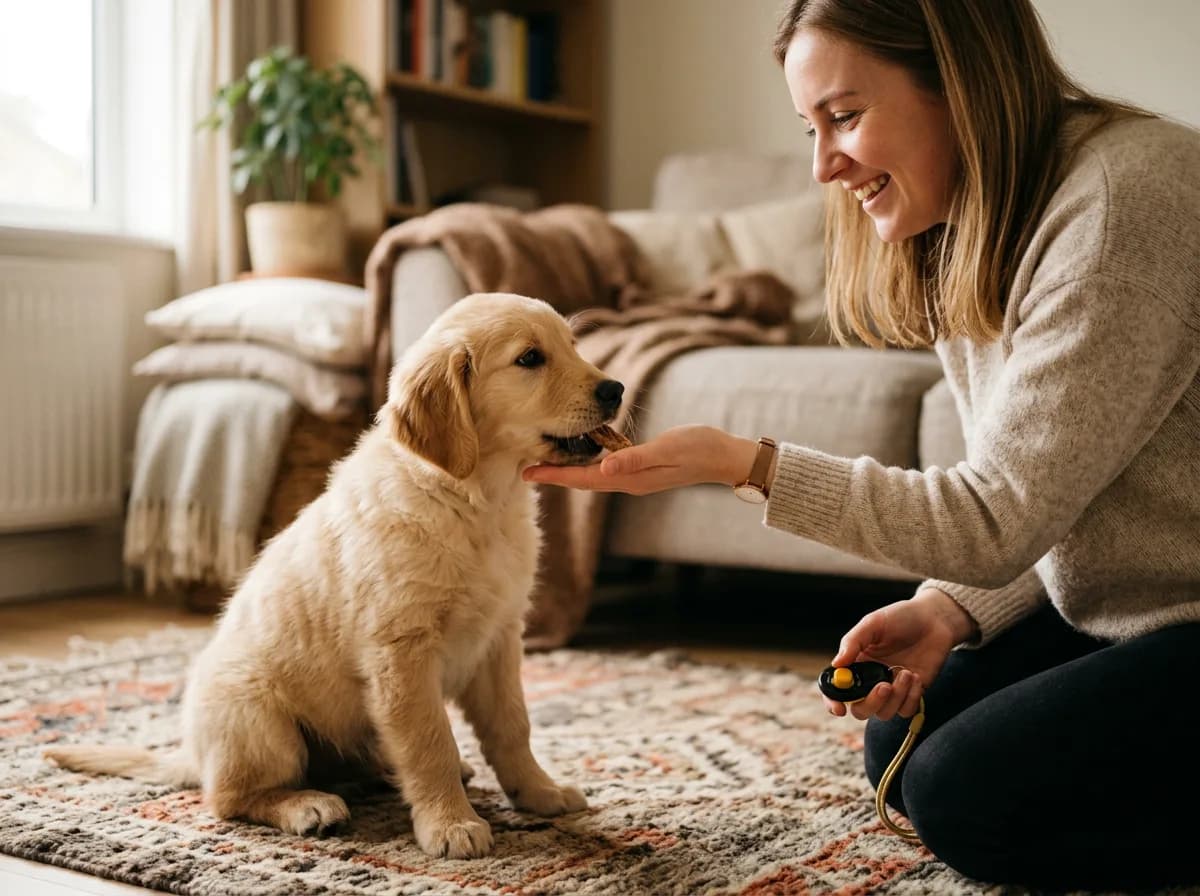
Modern, humane puppy training is built on positive reinforcement: you reward the behavior you want, and the puppy does it more. Aversive methods, such as leash pops, alpha rolls, and yelling, are not just unkind, they are linked in research to more fear and aggression, not less. They also damage the trust that makes a puppy want to work with you.
The mechanics are simple:
- Catch and reward what you like. A puppy sitting calmly instead of jumping gets a treat. Behavior that gets rewarded gets repeated.
- Manage, do not punish, what you dislike. If your puppy chews shoes, put the shoes away and hand over a chew toy. Prevent the rehearsal rather than react after the fact.
- Be boringly consistent. Same cue words, same rules, same rewards, from everyone in the house.
- A puppy that is scolded for an accident often just learns to hide and potty out of sight, which makes toilet training harder, not easier. Redirect and reward instead. If your puppy is doing something you hate, ask what it should be doing instead and teach that.
Common puppy training mistakes to avoid
Most training problems are not the puppy's fault. They come from a handful of avoidable owner habits.
- Starting too late. Waiting for 6 months wastes the prime learning window. Start at 8 weeks.
- Sessions that are too long. A bored, tired puppy learns nothing. Keep it to 3 to 5 minutes.
- Rewarding too slowly. A treat that arrives 10 seconds after the behavior teaches the wrong thing.
- Inconsistent cues. "Down," "lie down," and "get down" are three different words to a puppy. Pick one.
- Skipping socialization. A perfectly obedient dog that is terrified of strangers or traffic is not a well-adjusted dog.
- Ending on a failure. Always finish with an easy win.
What normal looks like, and what does not
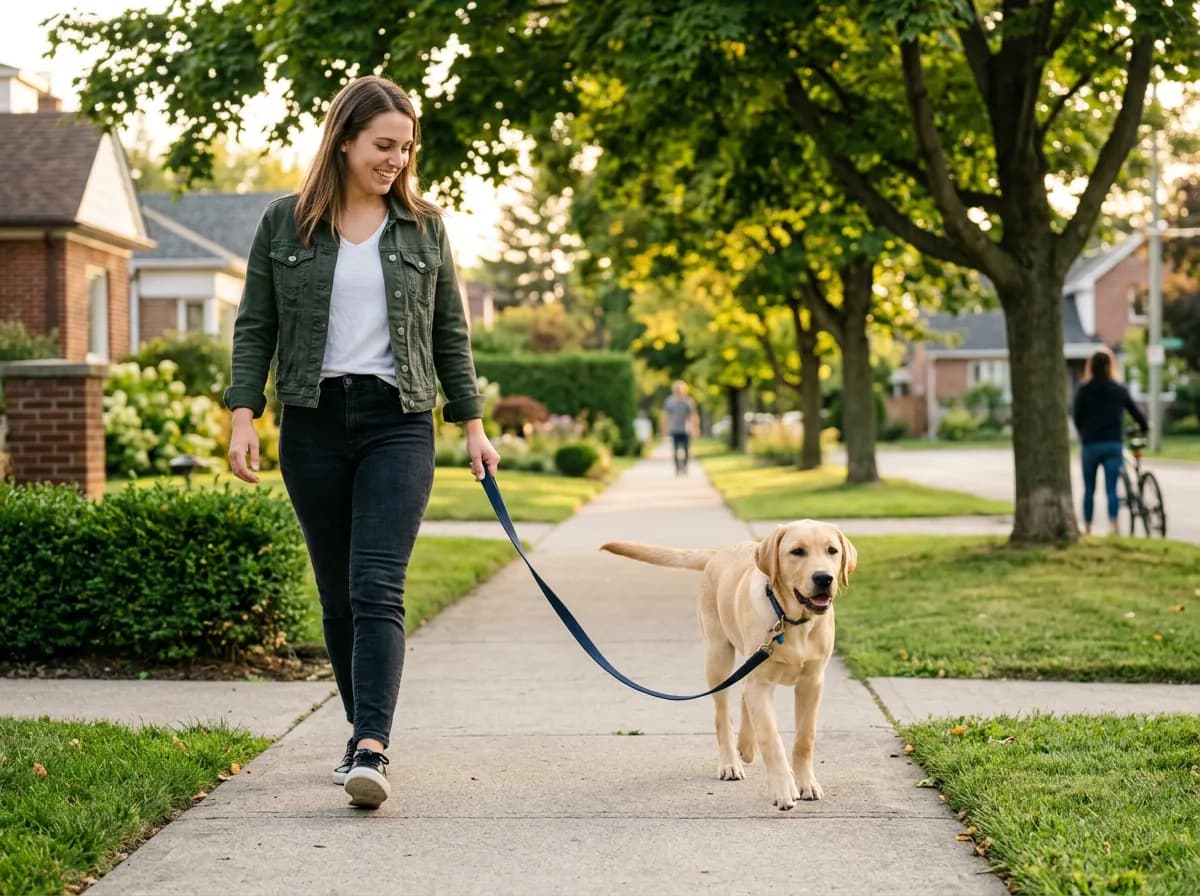
Nipping, chewing, zoomies, the odd accident, and testing boundaries in adolescence are all normal puppy behavior. What is not normal, and worth a conversation with your vet or a certified trainer, is intense fear, stiff freezing, growling and guarding over food or objects, or aggression that seems out of proportion. Early help is far easier than waiting.
Different breeds also bring different energy levels and training needs. If you are choosing a breed or want to understand your puppy's drives, browse our dog breed profiles for temperament and exercise notes, and see how coat and appearance vary within a single breed in pieces like our guide to Rhodesian Ridgeback colors. For health milestones that run alongside training, our pet health hub covers the vaccination and wellness side of the first six months.
A simple daily routine that ties it all together
You do not need a rigid timetable, just a rhythm. A workable puppy day looks like this: potty break on waking, a short training session before breakfast, breakfast in the crate, a nap, a socialization outing or a new experience, another short session, structured play, a chew or enrichment toy while you work, potty breaks throughout, and a final potty break right before bed. Weave three or four 3-to-5-minute sessions into that flow and you will hit every milestone in the schedule above without it ever feeling like a chore.
Frequently asked questions
Troubleshooting the problems that stall most owners
When a skill you have already taught keeps falling apart, the cause is usually one of these three, and none of them is fixed by pushing harder.
- Biting that gets worse, not better, in the evening. This is almost always an overtired puppy, not a stubborn one. An overstimulated puppy bites harder and stops responding to redirection, so the fix is an enforced nap in the crate before the biting escalates, not more correction.
- Potty progress that suddenly reverses. A regression after a good stretch usually means the puppy earned unsupervised freedom too early. Shrink its space, go back to timed breaks, and rule out a urinary infection with your vet if the accidents come with straining, frequent squatting, or blood.
- Crate crying that will not settle. Place the crate beside your bed at first so your puppy is not isolated, drain its energy with play before bedtime, and make one quiet midnight potty trip with no fuss or games. Build the distance from your bed back gradually once nights are calm.
- A brief regression after a growth spurt, a vaccine visit, or a change in routine is normal, not a failure. Hold your routine steady and consistent for a full week before deciding an approach is not working.
Related on Petful
- Crate Training a Puppy: A Day-by-Day Plan
- How to Potty Train a Puppy: The Schedule-First Guide
- Leash Training a Puppy: A Calm, Step-by-Step Guide
- How to Stop Puppy Barking: By-Cause Fixes
- Resource Guarding in Dogs: Causes and Fixes
The 3-3-3 rule describes how a new dog settles in: about 3 days to decompress and feel less overwhelmed, about 3 weeks to learn your routine and start showing its real personality, and about 3 months to feel fully at home and bonded. It is a patience reminder for the adjustment period, not a training schedule, and it pairs well with the week-by-week plan above.
The first things to teach an 8-week-old puppy are its name, that the crate is a safe and pleasant place, and a consistent potty routine. Name recognition and a reliable marker or reward system come before any formal command, because they are the foundation every later cue like sit, down, and come is built on.
For most owners the toughest stretches are the first week or two home, when the puppy is unsettled and night-waking and toilet accidents are frequent, and again during adolescence at roughly 5 to 12 months, when a previously obedient puppy suddenly tests boundaries and seems to forget its training. Both phases pass, and consistency is what carries you through them.
The 7-7-7 rule is a socialization checklist: during the socialization window you aim to expose your puppy, in a positive, controlled way, to seven different surfaces, seven different locations, seven different types of people, and seven different challenges or experiences. It turns the vague advice to "socialize your puppy" into a concrete list you can actually work through.
Dogs communicate affection through body language rather than words, so the closest thing to a dog saying "I love you" is calm, relaxed body language directed at you: soft eyes and slow blinking, a loose wagging tail, leaning against you, bringing you a toy, and following you contentedly around the house. Reinforce that bond with gentle handling and reward-based training rather than a specific phrase.
The 3-3-3 rule for puppies is the same adjustment guideline described above: roughly 3 days to decompress, 3 weeks to learn the routine, and 3 months to settle in fully. It is most often applied to newly adopted or rehomed dogs, but the same easing-in mindset helps any new puppy feel secure.
Red-flag behaviors that warrant a chat with your vet or a certified trainer include intense or persistent fear, freezing and stiffening, growling or snapping while guarding food, toys, or space, and aggression that seems extreme for the situation. Normal puppy behavior like nipping, chewing, zoomies, and the occasional accident is not a red flag; it is expected and improves with training.
Puppy training is not about perfection in the first month. It is about showing up in small, consistent doses during the weeks when your puppy's brain is primed to learn. Follow the schedule, keep sessions short and positive, socialize safely, and lean on the linked how-to guides for each skill. Do that and you will raise a confident, well-mannered dog, one three-minute session at a time.

Coreen Saito is a pet writer and longtime shelter volunteer with more than a decade in animal rescue. She covers cat behavior, breed care, and the small, ordinary science of sharing a life with companion animals, with a particular focus on honest takes about the products and decisions that actually matter. At home in Arizona, she's outranked by Mac (a dog with the loudest opinion in the house), Rebel (a cat who governs by quiet authority), and Meri (an orange tabby who runs the late shift and the laundry basket). She writes about all three, plus the rescues that keep coming through her life, at LifeWithMinty.com.
Sign up for expert-backed reviews and safety alerts all in one place.