How to Stop Puppy Barking: By-Cause Fixes
Barking is a message, not misbehavior. This guide shows you how to stop puppy barking by reading the real cause, attention, alarm, boredom, or fear, then applying a targeted, humane fix for each, plus the responses that quietly make it worse.
Petful is reader supported. As an affiliate of platforms like Amazon and Chewy, we may earn a commission when you buy through links on this page. There is no extra cost to you.
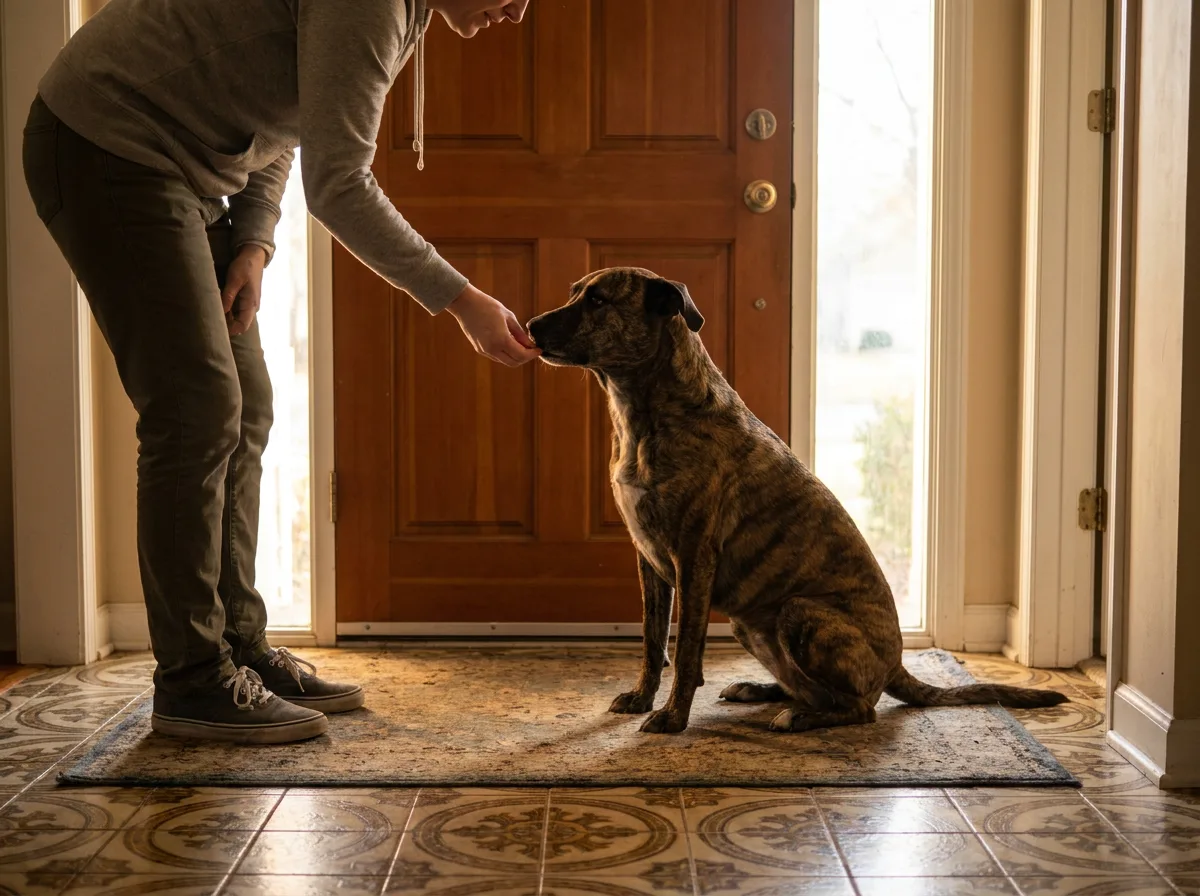
Learning how to stop puppy barking starts with one honest realization: barking is not the problem, it is the message. A puppy who barks at the doorbell, whines in the crate, or yaps for a piece of your sandwich is telling you something specific, and the fix depends entirely on what that something is. Chase the noise without reading the cause and you will spend months frustrated. Match the fix to the trigger and most puppies quiet down faster than you would ever expect.
This guide breaks barking down by its real drivers, attention, alarm, boredom, fear, and frustration, and gives you a targeted plan for each. You will also learn the handful of common responses that make barking worse, so you can stop reinforcing the very behavior you are trying to end.

Sign up for expert-backed reviews and safety alerts all in one place.
Why Puppies Bark in the First Place
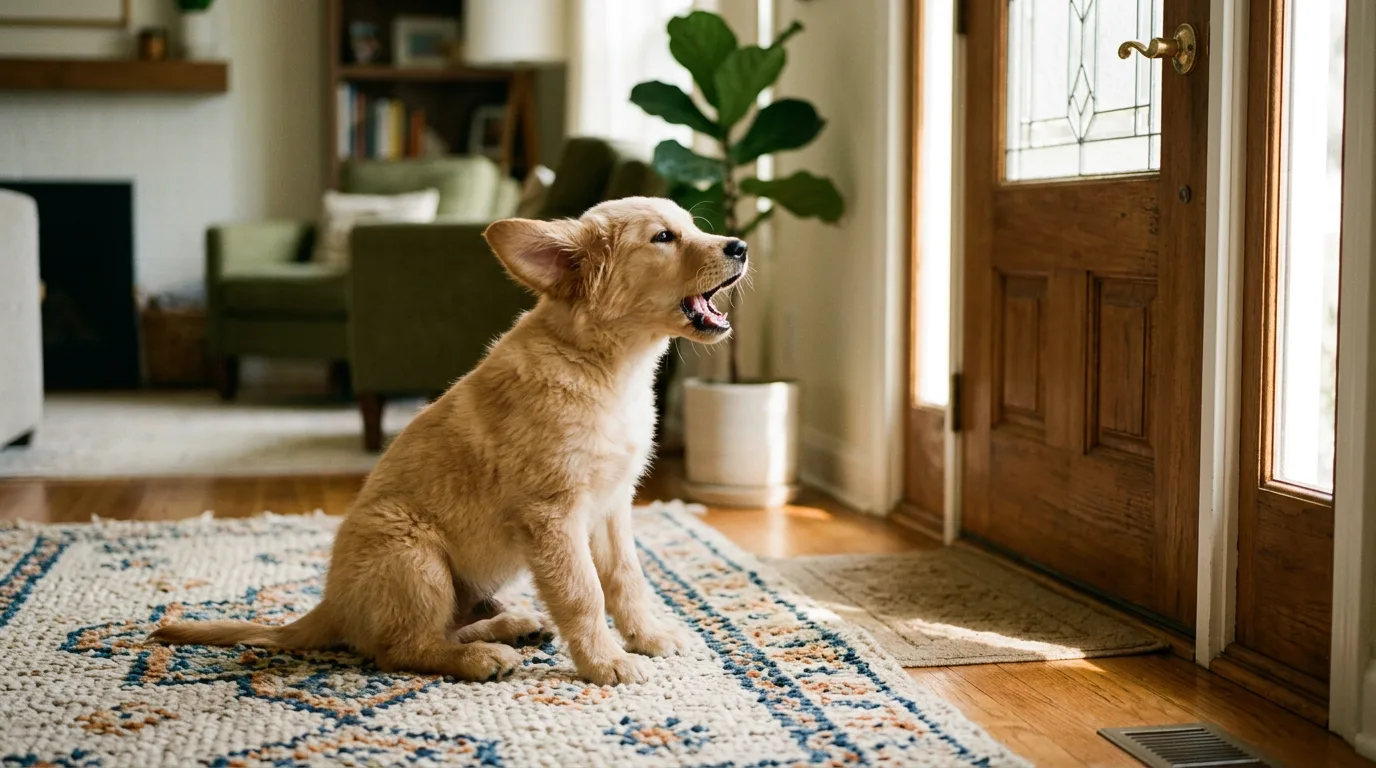
Barking is normal, functional dog communication. Puppies do not bark to annoy you or to assert dominance. They bark because a specific internal state (excitement, fear, boredom, loneliness) or an external trigger (a knock, a squirrel, another dog) pushes them past their threshold and vocalizing is the tool they reach for. For more, see Petful’s guide to dog barks at men.
The reason "just make it stop" fails so often is that it treats every bark as identical. It is not. A bark that means "I am scared of that stranger" needs a completely different response than a bark that means "give me the treat now." When you suppress the sound without addressing the underlying state, you either drive the emotion underground (where it festers) or you accidentally reward it. Both make the next round of barking worse.
So the first job is diagnosis. Watch your puppy for a few days and note the pattern: What is happening the instant before the bark? Where is your puppy? Where are you? What does your puppy get right after barking? Those answers sort almost every bark into one of a few buckets.
- 1Barking is communication, not misbehavior, so the fix depends on the cause.
- 2The four most common puppy-barking drivers are attention-seeking, alarm/territorial, boredom/under-stimulation, and fear/frustration.
- 3Suppressing the sound without addressing the underlying emotion usually makes barking worse over time.
The Main Types of Puppy Barking
Most puppy barking falls into a small set of categories, and naming the category is half the battle.

Petful may earn a commission when you click through to Chewy, at no extra cost to you.
- Attention-seeking (demand) barking: Your puppy wants something you control, food, play, your eyes, being let out of the crate, and has learned that barking gets it.
- Alarm and territorial barking: Your puppy reacts to a sound or sight (doorbell, passerby, delivery truck) with sharp, repeated barks meant to alert or warn.
- Boredom and under-stimulation barking: An under-exercised, under-enriched puppy barks because there is nothing better to do and the barking itself is stimulating.
- Fear-based barking: Your puppy barks at something that genuinely worries them, often paired with a lowered body, tucked tail, or backing away.
- Frustration and greeting barking: Your puppy is over-aroused, they cannot reach a dog across the street, or they are thrilled you walked in, and the excitement spills out as noise.
- Separation-related barking: Your puppy barks, howls, or whines specifically when left alone or confined away from you.
You may see two or three of these in the same puppy. That is normal. Work them one at a time, starting with the one that happens most.
Read the Whole Puppy, Not Just the Bark
The sound of a bark tells you less than the body attached to it. Two puppies can make an almost identical noise for opposite reasons, and the body language is what tells them apart. Before you pick a fix, spend a few sessions reading the whole picture.
- A confident, forward body (weight over the front legs, tail up, ears forward, barking toward the trigger) points to alarm, territorial, or demand barking. Your puppy wants to make something happen.
- A retreating, lowered body (weight shifted back, tail low or tucked, ears pinned, leaning or stepping away) points to fear. Your puppy wants something to stop or go away.
- A loose, wiggly body (whole rear end wagging, play bows, bouncing) around your arrival or a person points to over-excited greeting barking, which is friendly but still worth managing.
- A fixed, hard stare with stiffness around food, a toy, or a resting spot is a different signal entirely and can precede a guarding problem, so treat it seriously and see the "red flags" note later in this guide.
Getting the read right saves weeks, because the single most common mistake owners make is applying a demand-barking fix (ignore it) to a fear barker, which teaches a scared puppy that no one will help. Match the plan to the body, not just the sound.
By-Cause Fix 1: Attention-Seeking (Demand) Barking
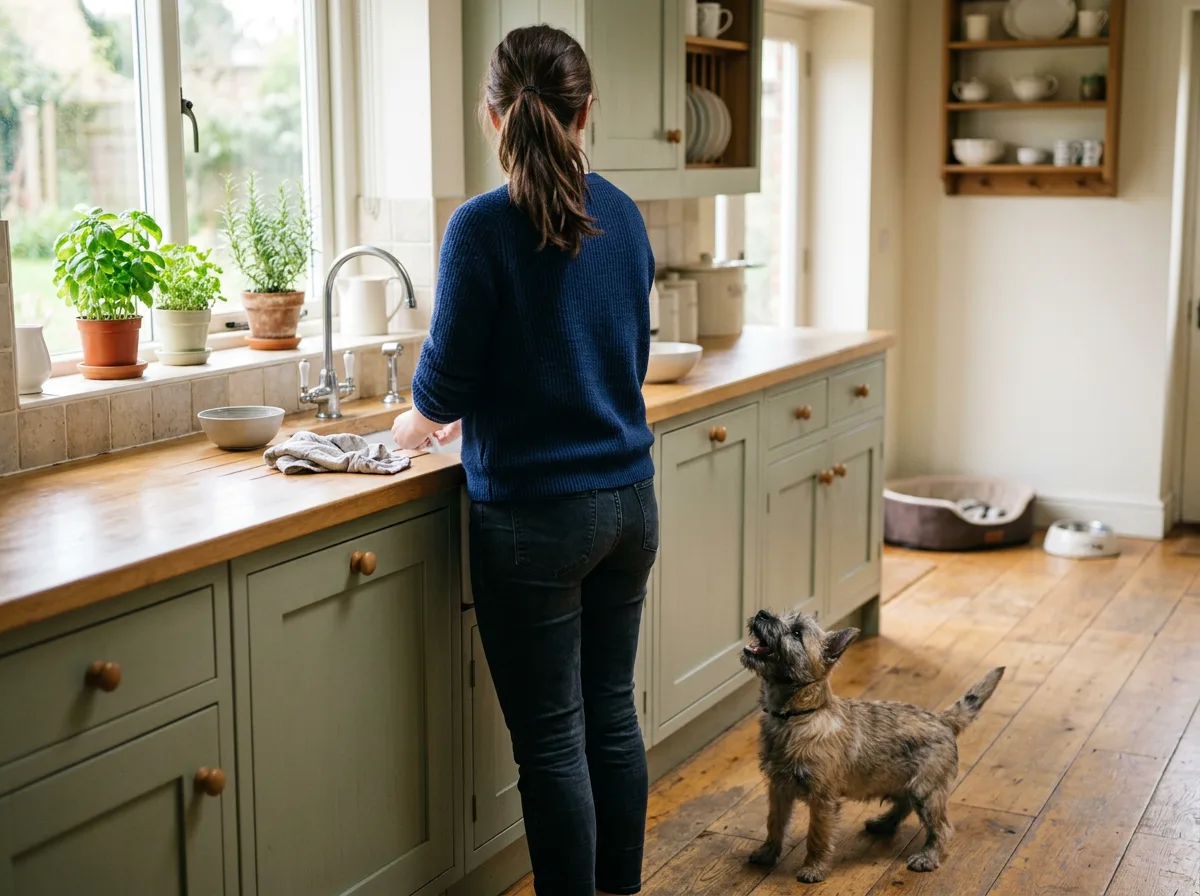
This is the barking that trains you. Your puppy barks, you look over, you say "no," you toss a toy to buy quiet, or you sigh and hand over the crust of toast. To your puppy, every one of those is a jackpot. Even scolding is attention, and attention is exactly what the barking was for.
What Attention Barking Looks Like
Demand barking is usually aimed directly at you or at a resource you control. Your puppy makes eye contact, barks, pauses to check whether it worked, and barks again. It tends to be sharp and repetitive, and it stops the instant the puppy gets what they wanted. If the barking reliably ends the moment you give in, you are looking at demand barking.
The Fix: Ignore the Bark, Reward the Quiet
The core move is to make barking completely stop working while making calm behavior pay. Concretely:

Peanut butter soft chews with L-theanine, chamomile, and ashwagandha to ease hyperactivity and support calm, relaxed behavior.
Petful may earn a commission when you click through to Chewy, at no extra cost to you.
- Withdraw all attention during the bark. No eye contact, no talking, no touching, not even a frustrated glance. Turn your body away or, if it is safe, leave the room briefly.
- Wait for genuine quiet. The instant your puppy stops, count a few seconds to be sure it is real silence and not a breath between barks.
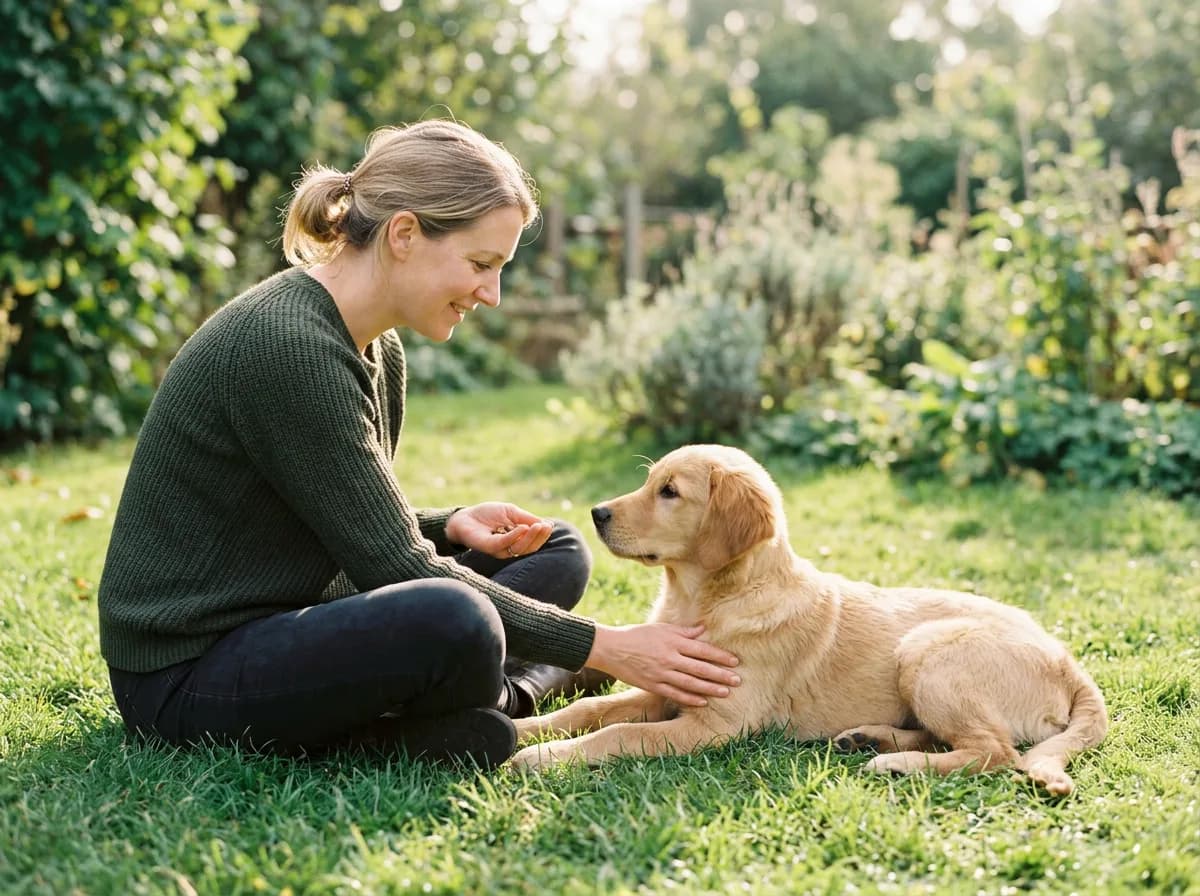
- Mark and reward the silence. The moment of quiet is what you pay for, with a calm "yes" and a treat, a toy, or the thing they wanted, as long as it is something you are happy to give for silence.
- Preempt the demand. Reward your puppy for lying quietly on a mat before they think to bark, so calm becomes the default way to earn good things.
- When you first stop rewarding demand barking, it almost always gets louder and more persistent before it fades. This spike is called an extinction burst, and it is a sign the plan is working, not failing. If you cave during the burst, you teach your puppy that longer, louder barking eventually wins, which is the worst possible lesson. Decide in advance that you will not give in, and wait it out.
Teach an Incompatible Behavior
Ignoring is stronger when you also give your puppy a better way to ask. Teach a quiet default, going to a mat, sitting, or offering a settle, and reward that heavily. A puppy who has learned that lying calmly on a mat earns treats and play has a productive alternative to barking. This "behavior swap" channels the same motivation (I want something) into an action you actually like.
By-Cause Fix 2: Alarm and Territorial Barking
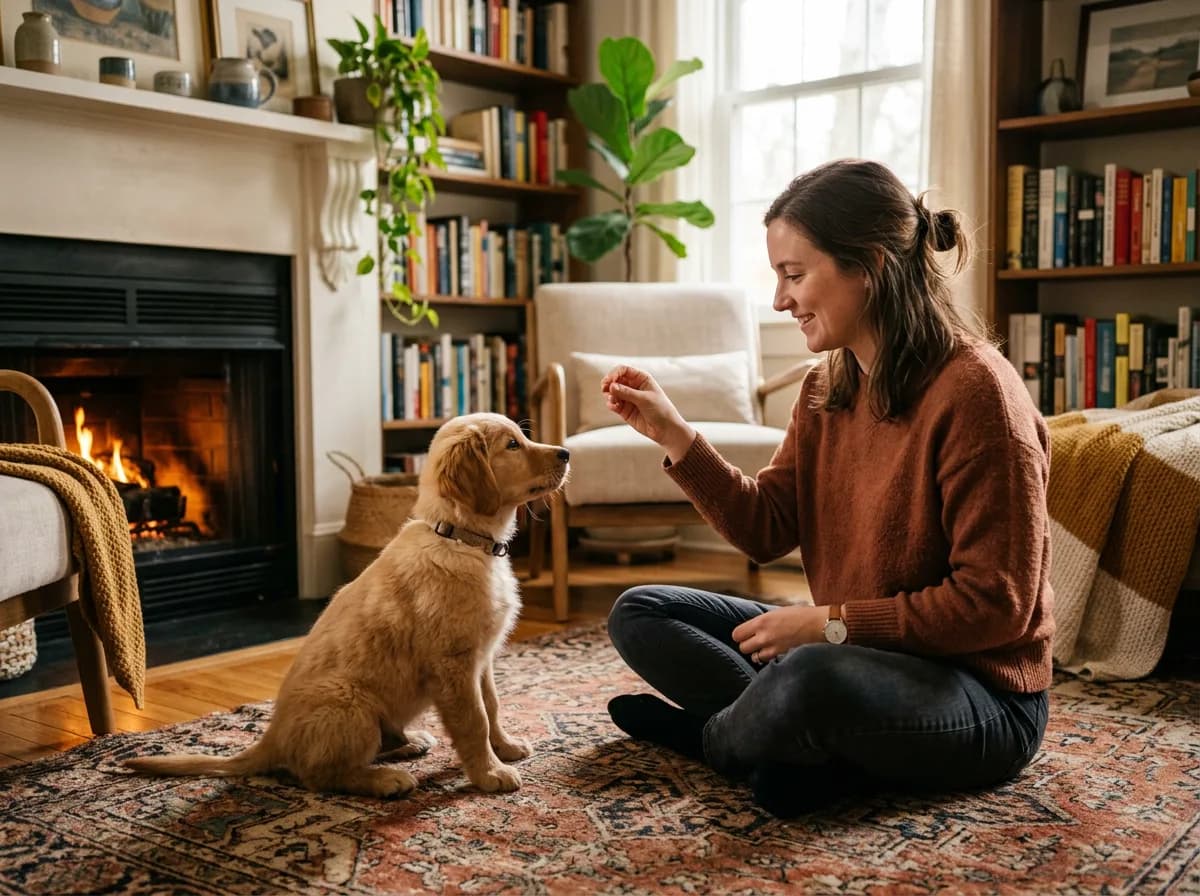
Alarm barking is your puppy reacting to a trigger, the doorbell, footsteps in the hall, a dog walking past the window, with a burst of sharp barks. It is rooted in surveillance and warning, and a little of it is normal and even useful. The goal is not to erase it but to keep it from spiraling into a nonstop reaction to every leaf that moves.
Manage the Environment First
Before any training, reduce how often the trigger fires. Management does half the work:
- Block the view. Close curtains or apply frosted window film so your puppy cannot watch the sidewalk all day. A puppy who cannot see the mail carrier cannot rehearse barking at the mail carrier.
- Mask the sound. A white-noise machine, a fan, or a radio at low volume softens the doorbell, the elevator, and the neighbors, so fewer sounds cross your puppy's threshold.
- Move the resting spot. If your puppy's bed sits by a front window or door, relocate it to a calmer part of the home.
Every trigger your puppy does not react to is a rep of barking that never gets practiced, and practice is what makes alarm barking stubborn.
Teach a "Quiet" Cue the Humane Way
Once you have cut down the constant triggers, teach a real "quiet" cue. The version most trainers and shelters recommend works like this:
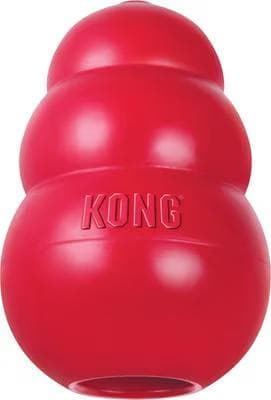
A durable rubber dog toy that can be stuffed with treats and selected by the manufacturer's size guide; supervise use and retire it when damaged.
Petful may earn a commission when you click through to Chewy, at no extra cost to you.
- Let your puppy bark two or three times at a genuine trigger, that is normal alerting.
- Say "Quiet" once, in a calm, even voice. Do not shout. To a barking puppy, a raised voice sounds like you are barking too.
- Hold a treat near their nose. Almost every puppy stops barking to sniff, because they cannot sniff and bark at once.
- The instant the barking stops, mark it with "yes" or "good quiet" and give the treat.
- Repeat, and gradually stretch the quiet you require before the reward from one second to several.
Over many reps, "Quiet" becomes a cue your puppy understands and can follow even when a little adrenaline is running. Pairing an alert-then-quiet routine gives your puppy a job (alert me, then settle) instead of an open-ended license to bark.
- Yelling, spray bottles, and shock or "anti-bark" collars can suppress the sound, but they add fear and stress on top of whatever triggered the bark. A puppy who learns that the doorbell predicts pain or a startling spray can become more anxious and reactive, not less. Reserve corrections-based gadgets entirely and build the quiet cue with rewards instead.
By-Cause Fix 3: Boredom and Under-Stimulation Barking
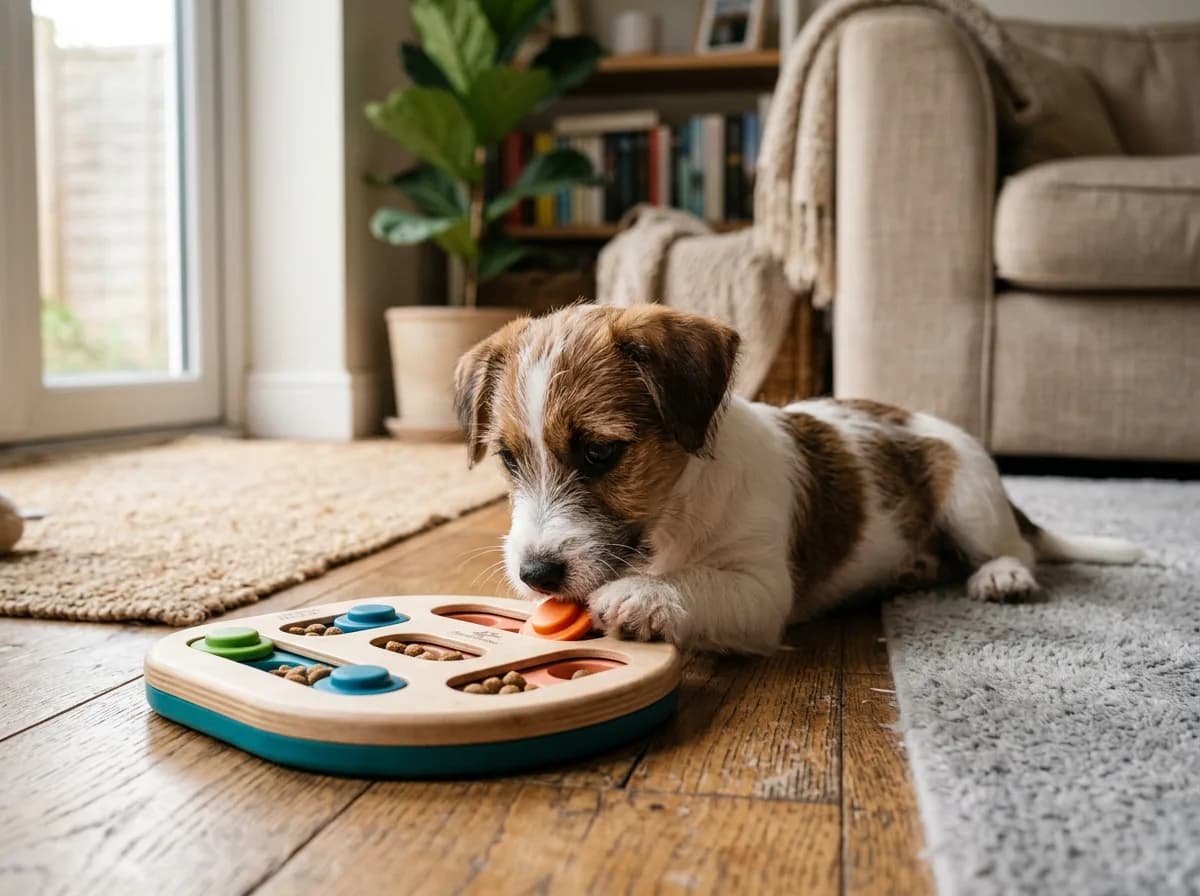
A bored puppy is a loud puppy. Puppies have enormous energy and curious, fast-developing brains, and when neither the body nor the mind gets used, barking becomes self-entertainment. This is the barking that fills the long, empty afternoon, and it is one of the most preventable causes on the list.
Meet the Exercise Requirement
Physical exercise is the first lever. A puppy who has burned real energy on a walk, a training game, or a play session is far less inclined to bark for the sake of it. Match the activity to your puppy's age and breed, young puppies need shorter, more frequent bursts rather than one marathon, and let sniffing walks (where your puppy leads and explores scents) do some of the tiring. Sniffing is mentally draining in the best way.
If you are still figuring out your puppy's energy needs, our dog breed guides can help you understand how much drive and stamina a given breed tends to carry, which shapes how much daily output your puppy will need.
Feed the Brain
Mental enrichment tires a puppy at least as fast as a walk. Rotate through:
- Food puzzles and slow feeders that make your puppy work for a meal instead of inhaling it.
- Lick mats smeared with a safe spread, which are calming and time-consuming.
- Snuffle mats and scatter-feeding, where you hide kibble in fabric or grass and let your puppy hunt.
- Short training sessions, five minutes of teaching a new trick burns real mental fuel and strengthens your bond.
- Durable, appropriate chews, which satisfy the biological need to chew and keep a mouth that would otherwise bark busy.
The goal is a puppy who has genuine outlets, so barking is no longer the most interesting thing available.

Clinically tested vet-formulated chews with a colostrum calming complex, L-theanine, and thiamine to quickly ease everyday stress, thunderstorms, and anxiety.
Petful may earn a commission when you click through to Chewy, at no extra cost to you.
| Enrichment Tool | Best For | Why It Helps |
|---|---|---|
| Food-dispensing puzzle | Fast eaters and afternoon lulls | Turns a meal into 20+ minutes of quiet problem-solving |
| Lick mat | Winding down and settling | Repetitive licking is self-soothing and slows arousal |
| Snuffle mat | High-drive, nose-forward puppies | Scatter-feeding satisfies natural foraging and tires the brain |
| Durable chew | Teething and mouthy phases | Redirects the urge to chew and vocalize into a legal outlet |
By-Cause Fix 4: Fear-Based Barking
Fear barking is different in tone and body language. Instead of the confident, forward posture of alarm barking, a frightened puppy often barks while leaning back, tail low or tucked, ears pinned, sometimes retreating. The bark is asking the scary thing to go away. Punishing it is not just unfair, it makes the fear worse and can turn nervousness into a lasting problem.
Increase Distance and Lower the Intensity
The reliable fix for fear is not confrontation, it is careful exposure at a level your puppy can handle. This is where counterconditioning and desensitization come in:
- Find the distance where your puppy notices the trigger but is not panicking. That is your working distance.
- Pair the trigger with something wonderful. Every time the scary thing appears at that safe distance, your puppy gets a stream of high-value treats. The trigger starts to predict good things.
- Shrink the distance slowly, over many sessions, only moving closer when your puppy stays relaxed and happy at the current level.
- Never flood your puppy by forcing them right up to what scares them. Flooding usually deepens fear and can cause a puppy to shut down.
Fear-based barking can be slow to resolve and benefits from patience. If your puppy's fear seems intense, generalized, or is getting worse despite careful work, that is a flag to bring in a qualified trainer or a veterinary behaviorist, not to push harder on your own.
By-Cause Fix 5: Frustration, Greeting, and Separation Barking
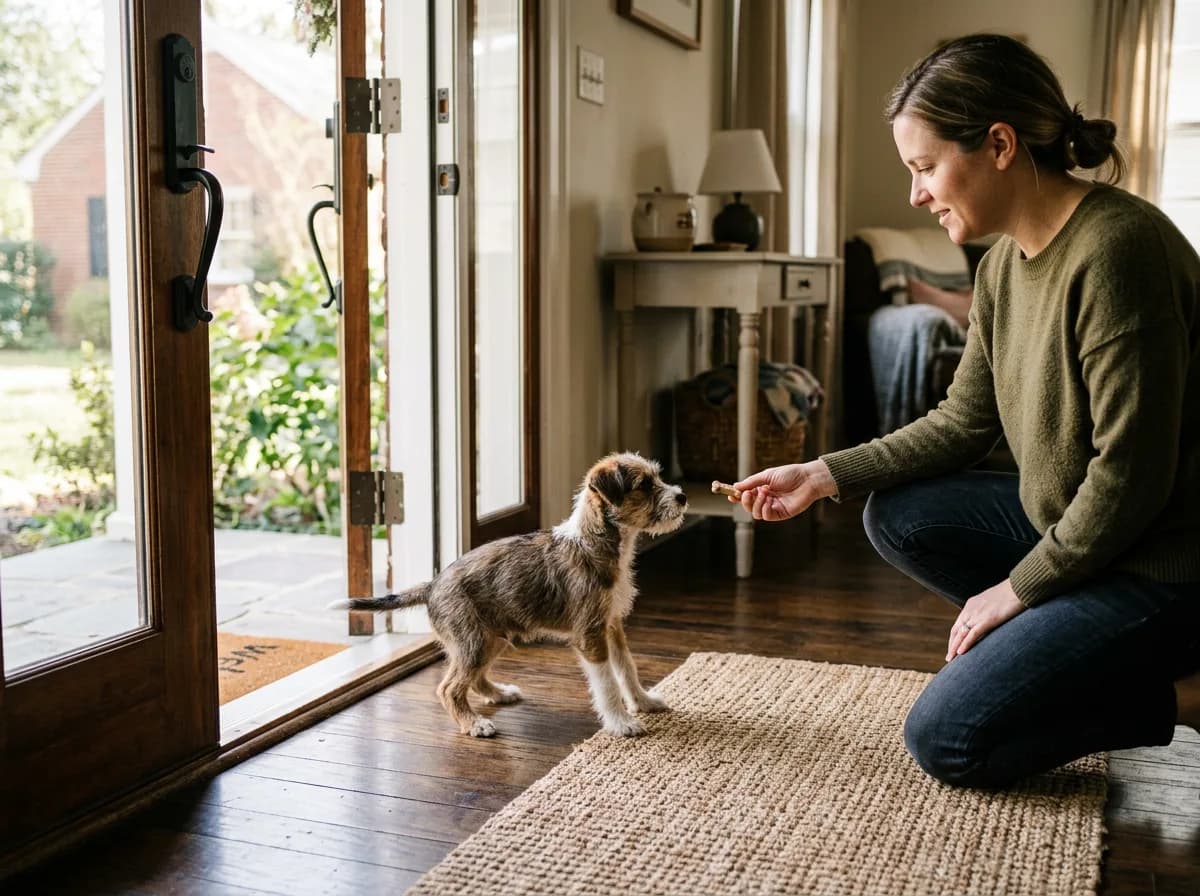
The last cluster is about arousal and connection. Greeting barking is the joyful explosion when you walk in the door. Frustration barking happens when your puppy wants to reach something, another dog, a person, a toy, and cannot. Separation-related barking shows up specifically when your puppy is left alone or shut away from you.
Keep Arrivals and Departures Low-Key
For greeting and frustration barking, dial down the emotional temperature:

Petful may earn a commission when you click through to Chewy, at no extra cost to you.
- Keep your own hellos and goodbyes calm and brief. A huge, high-pitched greeting teaches your puppy that your arrival is a reason to lose their mind.
- Reward four-on-the-floor and quiet. Only give attention when your puppy is calm and not barking, so calm becomes the price of admission.
- Teach an alternative at the door, such as going to a mat or holding a sit, so your puppy has a job to do when guests arrive.
Build Alone-Time Tolerance Gradually
Separation-related barking deserves its own careful plan because it is tied to a puppy's comfort being alone:
- Practice tiny absences. Step out of sight for seconds, then return before your puppy panics, and slowly build the duration.
- Make the crate or confinement area genuinely good, with a stuffed chew or lick mat, so being there predicts pleasant things.
- Return to a quiet puppy, waiting for a lull before you open the crate, so quiet is what earns freedom.
- Everyday alone-time whining usually improves with gradual practice. True separation anxiety is more intense: persistent, distressed barking or howling, destruction aimed at exits, drooling, house-soiling, or self-injury whenever the puppy is left, even briefly. That pattern is a genuine welfare issue and is very hard to fix alone. If you see it, loop in your veterinarian, who can rule out medical causes and refer you to a behavior professional.
How Barking Changes as Your Puppy Grows
Barking is not static, it shifts as your puppy develops, and knowing what to expect at each stage keeps you from overreacting to a normal phase or missing a real problem.
8 to 16 Weeks: The Foundation Window
Early puppies bark relatively little and mostly for immediate needs, hunger, discomfort, wanting company. This is the golden window for prevention. Reward calm from day one, socialize gently and positively to a wide range of sights and sounds so fewer things trigger alarm barking later, and never accidentally teach that barking is how you get let out of the crate. What you reinforce now sets the barking baseline for the whole first year.
4 to 6 Months: Teething and Testing
As adult teeth come in and confidence grows, many puppies get noticeably mouthier and barkier. Frustration barking often appears here, they want to reach a thing and cannot, and demand barking sharpens as your puppy discovers what works on you. Lean hard on enrichment (chews for the teething mouth, puzzles for the busy brain) and stay ruthlessly consistent about not rewarding demand barks. This is one of the two stretches most families find hardest.
6 to 18 Months: Adolescence
Adolescence is when a previously polite puppy can seem to forget everything. Hormones, a maturing brain, and a wider world combine into more reactivity, more testing, and, often, more barking at dogs, people, and novelty. This is not regression, it is a normal, temporary stage. Keep training sessions short and rewarding, protect your puppy from over-threshold experiences that rehearse reactive barking, and hold the line on consistency. Puppies who are guided calmly through adolescence usually settle into quieter, steadier adults.
What NOT to Do When Your Puppy Barks
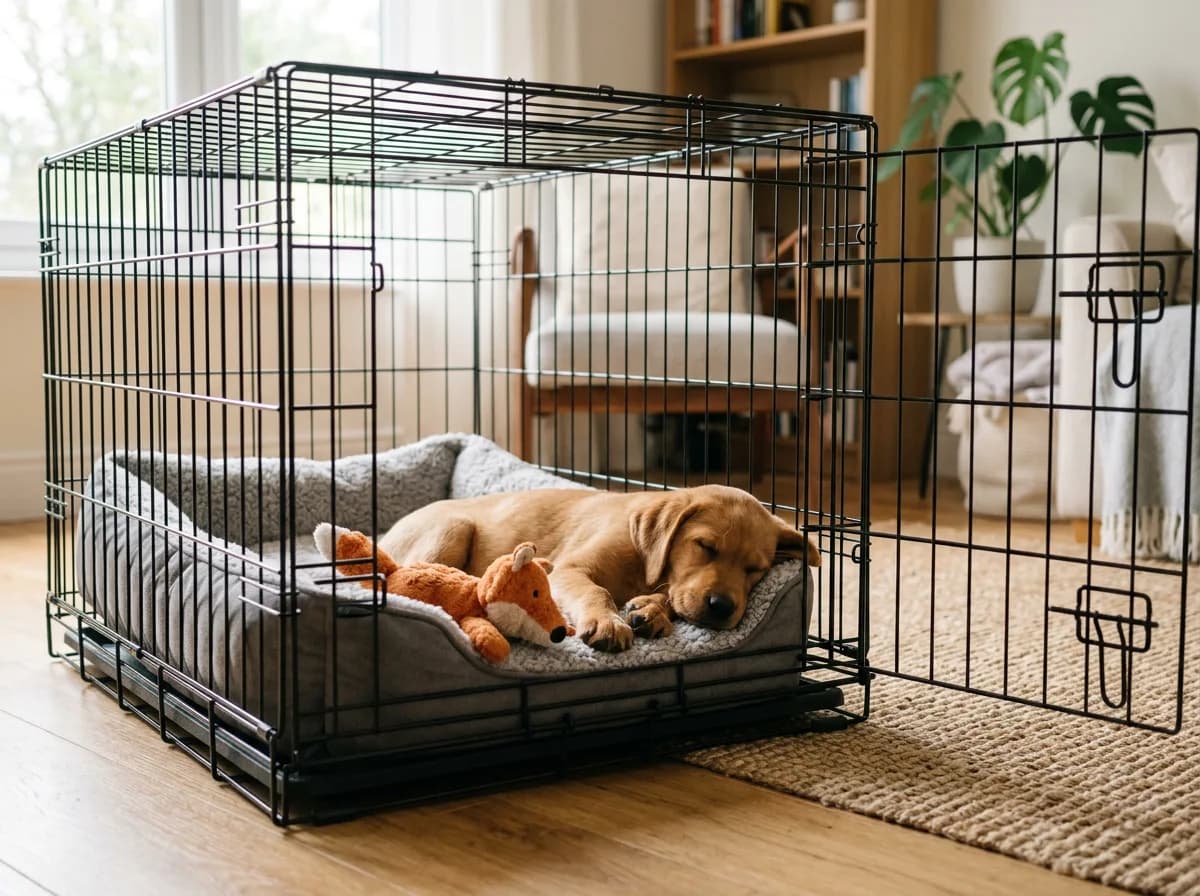
Knowing how to stop puppy barking is as much about what you avoid as what you do. These common responses either reward the barking or add fear that makes it worse.
- Do not yell. Shouting "quiet" or "no" at a barking puppy reads as you joining in. It adds noise and energy without teaching anything, and to some puppies it feels like attention, the exact reward demand barkers are after.
- Do not give in to demand barking, ever, even once. Intermittent payoffs make a behavior far more durable. One caved-in moment can undo days of consistency.
- Do not use shock, spray, or ultrasonic "anti-bark" collars on a puppy. They work by punishment or startle, layering stress and fear onto a developing dog and risking new problems like anxiety and reactivity.
- Do not punish fear or alarm barking. Correcting a scared or startled puppy teaches them that the trigger predicts something unpleasant from you, which deepens the very emotion driving the bark.
- Do not skip the diagnosis. Applying the demand-barking fix to a fear barker (or vice versa) fails and wastes weeks. Always match the fix to the cause.
- Do not expect overnight results. Barking is a practiced behavior with an emotional root. Consistency over days and weeks, not a single dramatic intervention, is what changes it.
- 1Never reward demand barking, not even occasionally, or you make it far harder to extinguish.
- 2Skip shock, spray, and ultrasonic anti-bark collars on a puppy; they add fear and can create new behavior problems.
- 3Never punish fear or alarm barking, because correction deepens the underlying emotion and worsens the response.
Consistency, Household Buy-In, and Realistic Timelines
Even a perfect plan fails if only one person in the home follows it. If you ignore demand barking while your partner slips the puppy a treat to buy quiet, your puppy learns that persistence pays, just aim it at the softer human. Get everyone on the same page: the same cue words, the same rule about not rewarding barks, the same commitment to riding out an extinction burst.
Set realistic expectations, too. A young puppy is still developing impulse control, and some vocal phases (teething, adolescence, a new environment) come with more noise. Progress usually looks like fewer, shorter barking episodes and a puppy who settles faster, not instant, total silence. Keep sessions short and upbeat, reward generously in the early going, and let the wins compound.
For more on shaping a well-mannered puppy, browse our dog behavior articles and our broader dog care library, which cover training foundations that make barking, and every other behavior, easier to manage.
When to Call in a Professional

Most puppy barking responds to the by-cause approach above, applied patiently and consistently. But some situations call for expert help sooner rather than later:
- Barking that is intense, escalating, or unresponsive to weeks of consistent work.
- Fear or reactivity that is generalizing, spreading to more triggers rather than fewer.
- Signs of true separation anxiety (panic, destruction at exits, self-injury, house-soiling only when alone).
- Any barking paired with growling, snapping, or a warning that you feel is heading toward a bite, especially around food or handling.
- A sudden change in barking or behavior with no obvious trigger, which can signal pain or illness and warrants a veterinary exam first.
A certified positive-reinforcement trainer can build a hands-on plan, and a veterinary behaviorist can address the medical and emotional layers of the toughest cases. Reaching out is not a failure, it is the fastest route to a quieter, happier puppy.
The By-Cause Approach at a Glance
Barking is not a single problem with a single cure. It is a message, and your job is to read it, then respond to the actual cause. Ignore and outlast demand barking while rewarding calm. Manage the environment and teach a humane "quiet" cue for alarm barking. Exercise the body and enrich the mind for boredom barking. Add distance and pair triggers with good things for fear barking. Keep arrivals calm and build alone-time slowly for greeting and separation barking. And across all of it, never reward the noise, never punish fear, and never reach for a shock or spray collar.
Do that consistently, get the whole household on board, and give it time. A puppy who barks less is almost always a puppy whose real needs, for information, stimulation, security, and connection, are finally being met.
Frequently Asked Questions
Match Your Plan to Your Puppy's Breed Instincts
Every by-cause fix in this guide applies to any puppy, but how loudly and how often a puppy reaches for barking is partly written into their breeding. Knowing your puppy's genetic job helps you predict which barking bucket you are most likely to fight, and it keeps you from expecting a naturally vocal breed to fall completely silent.
- Herding breeds (Border Collies, Australian Shepherds, Shetland Sheepdogs) were bred to move livestock with voice and motion, so many are quick to bark at anything that moves: bikes, joggers, cars, and running children. Lean hard on impulse-control games and give the herding brain a real job through training and structured exercise.
- Terriers (Jack Russells, Cairns, Rat Terriers) were bred to hunt and flush vermin, work that rewards fast, sharp, persistent alerting. Expect a low barking threshold and channel that drive into digging boxes, flirt-pole play, and scent games.
- Scent hounds (Beagles, Coonhounds, Bassets) bay and howl by design, because vocalizing on a trail was the whole point of the breed. You will rarely erase the voice, so focus on management and a reliable "quiet" cue rather than total silence.
- Guardian and watchdog breeds (many shepherds and spitz-type dogs) alarm and territorial bark readily, since warning the family was their original role. Block the constant window and doorway triggers before your puppy rehearses them for months.
- Toy and companion breeds (Chihuahuas, Pomeranians, Miniature Pinschers) are commonly alarm and demand barkers, partly because owners more easily reward a small dog by scooping it up mid-bark. Hold the same rules you would for a large dog.
- Retrievers and sporting breeds (Labradors, Golden Retrievers) tend toward excitable greeting barking rather than nuisance alerting, so keep arrivals low-key and reward four-on-the-floor.
If you have a mixed-breed puppy, look at the traits pulling hardest in their behavior rather than a label: a herding-and-terrier mix, for example, may combine motion sensitivity with a fast trigger, so plan for both. None of this is destiny. A well-managed Sheltie can be calmer than a poorly managed Labrador. Use the breed read to set fair expectations and to decide which enrichment and which fix deserves your attention first, then let your puppy's real behavior fine-tune the plan.
Three Common Barking Scenarios, Walked Through
Seeing the fixes applied to specific moments makes them far easier to run in real time. Here are three situations owners ask about most, broken down into what to actually do while it is happening.
The 2 a.m. crate whimper that turns into a bark. First, rule out a real need. A young puppy may genuinely need an overnight toilet trip, so take them out on a boring, no-play, no-talk outing, then go straight back to the crate. If you are sure the bladder is empty and your puppy is simply protesting, wait for a pause in the noise before you react, and only then reassure quietly. Responding mid-bark, even to whisper "shh," teaches that noise brings you running. Placing the crate beside your bed for the first few weeks often removes the loneliness driving the protest in the first place.
The leash lunge-and-bark at other dogs. This is usually frustration or fear rather than aggression, and distance is your best tool. The instant you spot a dog ahead, create space by crossing the street or stepping behind a parked car before your puppy locks on. Feed a steady stream of treats the whole time the other dog is in view, and stop the moment it passes. Over many walks, the sight of another dog starts to predict food and a check-in with you instead of a meltdown. Never march your puppy straight at the trigger to "get them used to it."
The bark that starts the second you take a call. When you sit down and your focus shifts to a screen or phone, a demand barker often protests the sudden loss of engagement. Set your puppy up before you begin: hand over a long-lasting chew or a stuffed food toy right as you start, so their mouth and brain are already occupied. If barking still breaks out, resist the reflex to glance over or shush, and reward the settle the moment it arrives.
- Whatever the situation, two principles carry the day: never deliver attention or a reward while the barking is happening, and arrange the environment so the trigger fires less often to begin with. Get those two right and almost every specific scenario becomes a variation on a plan you already know.
Related on Petful
- Resource Guarding in Dogs: Causes and Fixes
- Puppy Training 101: A Week-by-Week Guide
- Leash Training a Puppy: A Calm, Step-by-Step Guide
- Crate Training a Puppy: A Day-by-Day Plan
The "3 bark rule" is a common training guideline that lets your puppy alert-bark two or three times when something happens, such as a knock at the door, and then cues them to stop. You allow the natural alert, say "Quiet" once in a calm voice, and reward the silence. It respects your dog's instinct to warn you while drawing a clear line so alerting does not spiral into nonstop barking.
Many owners find the period around 4 to 6 months the hardest, when teething peaks and the puppy tests boundaries, and again during the adolescent stage from roughly 6 to 12 months, when a previously biddable puppy may seem to forget training and push limits. Barking, mouthing, and selective listening often spike in these windows. Consistency and enrichment carry you through it.
Puppies do not automatically grow out of barking, because barking is normal dog communication rather than a phase. What changes is how much they bark, which depends almost entirely on what you teach and reinforce. A puppy whose barking is consistently rewarded (even by accident) will bark more as an adult, while one taught calm alternatives and given proper outlets typically becomes a quieter dog.
Ignoring is the right response for attention-seeking (demand) barking, where any attention, including eye contact, talking, or scolding, rewards the noise. Withhold all attention during the bark and reward the moment of quiet. But ignoring is not appropriate for fear-based or alarm barking, which needs management and counterconditioning, so first identify why your puppy is barking before deciding to ignore it.
There is no single universal month, but the two toughest stretches for most families are the teething peak around 4 to 6 months and adolescence from about 6 to 12 months. During these phases puppies chew more, bark more, and test limits as their brains and bodies mature. Steady routines, exercise, and reward-based training make these months far more manageable.
Veterinarians and veterinary behaviorists recommend identifying the cause of the barking first, then using reward-based training matched to that cause: ignoring and redirecting demand barking, managing triggers and teaching a "quiet" cue for alarm barking, and adding exercise and enrichment for boredom. They advise ruling out pain or illness behind sudden changes, and they specifically discourage shock and other aversive anti-bark devices.
Red-flag behaviors that warrant professional help include intense or generalizing fear, stiffening, growling, snapping or guarding around food, toys, or handling, panic and destruction when left alone, and any sudden behavior change with no clear trigger, which can signal pain or illness. These go beyond normal puppy noise and mischief and are best addressed early with your veterinarian or a qualified behavior professional.
Dogs read affection through calm, positive interaction far more than words. Soft eye contact with relaxed "blinky" eyes, a gentle and easy tone of voice, unhurried petting where your dog enjoys it, shared calm time, and reward-based training all communicate safety and affection in ways a dog understands. Meeting your puppy's needs for exercise, security, and connection is the clearest "I love you" of all.

Coreen Saito is a pet writer and longtime shelter volunteer with more than a decade in animal rescue. She covers cat behavior, breed care, and the small, ordinary science of sharing a life with companion animals, with a particular focus on honest takes about the products and decisions that actually matter. At home in Arizona, she's outranked by Mac (a dog with the loudest opinion in the house), Rebel (a cat who governs by quiet authority), and Meri (an orange tabby who runs the late shift and the laundry basket). She writes about all three, plus the rescues that keep coming through her life, at LifeWithMinty.com.
Sign up for expert-backed reviews and safety alerts all in one place.