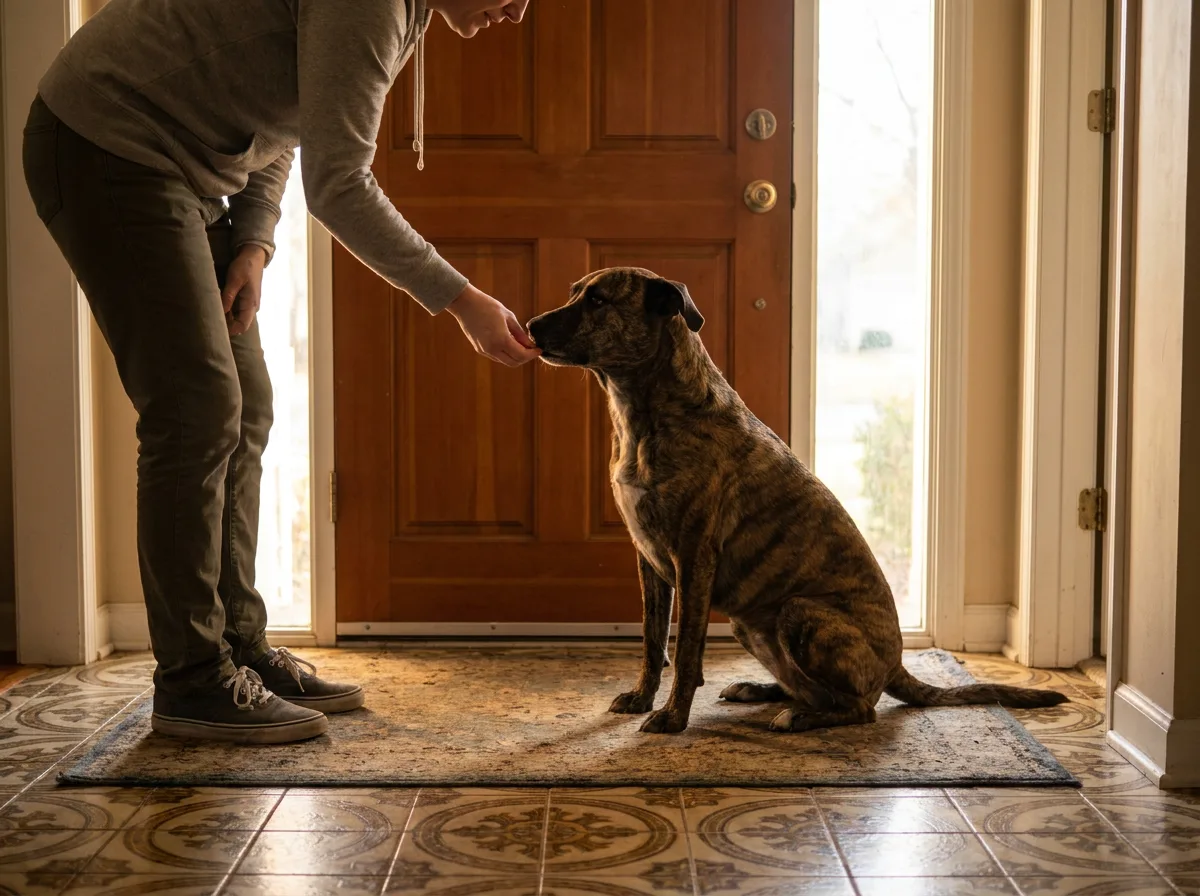
Resource Guarding in Dogs: Causes and Fixes
Resource guarding in dogs looks like growling over food, toys, or a favorite person. Here is what it means, why it happens, how to reduce it step by step, the mistakes that make it worse, and the clear point where you should call a professional.
Petful is reader supported. As an affiliate of platforms like Amazon and Chewy, we may earn a commission when you buy through links on this page. There is no extra cost to you.
Resource guarding is one of the most misread behaviors in dogs, and it is also one of the most fixable when you understand what is actually happening. If your dog freezes over a food bowl, growls when you reach toward a favorite toy, or stiffens when another pet walks past their spot on the couch, you are seeing a normal survival instinct that has tipped into a problem. The good news: it is a behavior, not a character flaw, and behavior can change.
This guide covers what resource guarding is, why it happens, how to read the early warning signs before anyone gets bitten, a step-by-step plan to reduce it, the mistakes that make it worse, and the clear line where you should stop and call a professional. Every dog and every household is different, so read the whole thing before you start a training plan.
- 1Resource guarding is a natural instinct to protect valued items, not disobedience or dominance.
- 2Punishing a growl removes your dog's warning system and makes a bite more likely, not less.
- 3The core fix is teaching your dog that your approach predicts good things, through desensitization and counterconditioning.
- 4Guarding aimed at people, or any guarding that has already caused a bite, is a job for a certified professional, not a DIY plan.

Sign up for expert-backed reviews and safety alerts all in one place.
What Is Resource Guarding in Dogs?
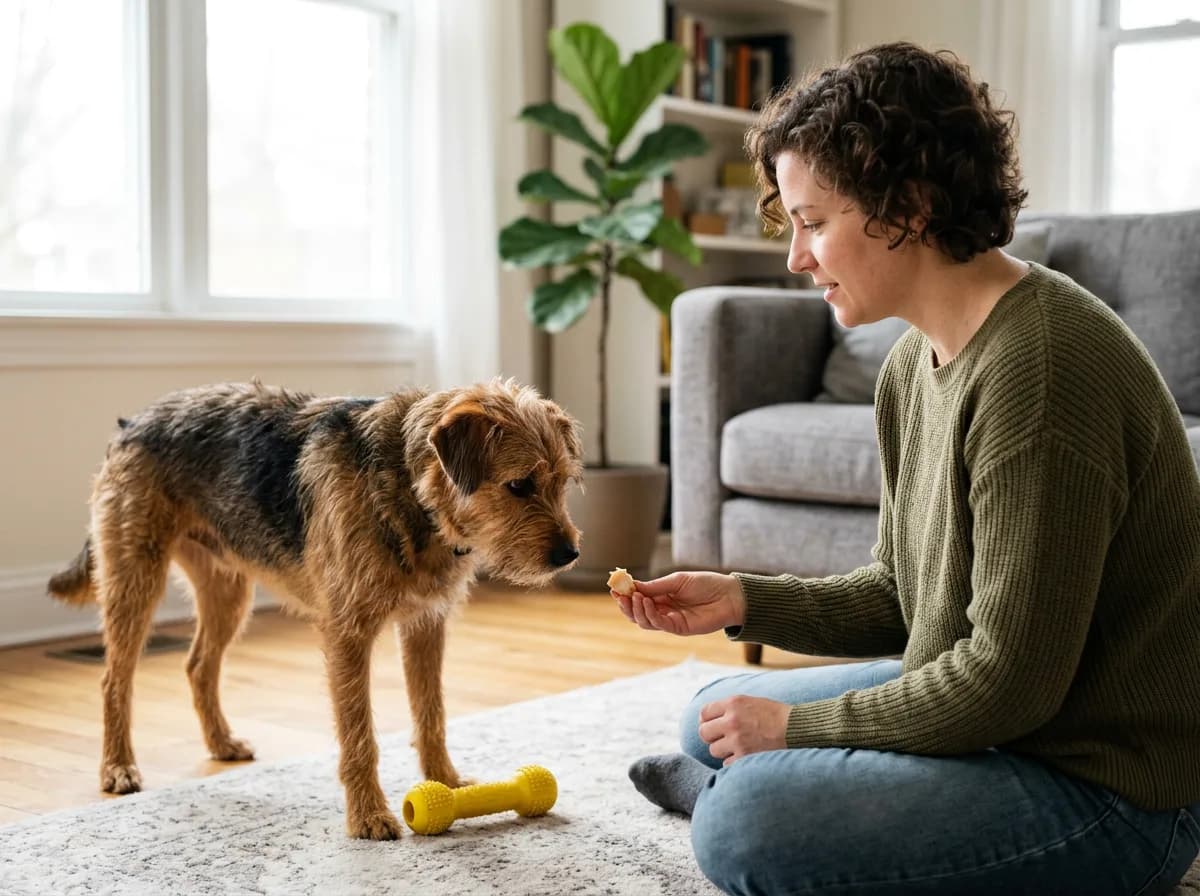
Resource guarding is when a dog uses distance-creating behavior to protect something they value from being taken away. The "resource" can be food, a bone or chew, a toy, a stolen sock, a sleeping spot, a doorway, water, or even a person. The behavior exists on a spectrum: at the mild end a dog might simply eat faster or turn their body away, and at the severe end they may lunge, snap, or bite.
The instinct itself is ancient and adaptive. In a world of scarce food, an animal that let others take its meal did not survive to reproduce. Our dogs are generations removed from that pressure, but the wiring remains. A dog is not "being dominant" or "getting away with it" when they guard. They are doing the canine math that says, "this thing is valuable and it might disappear, so I will make it clear that approaching is a bad idea."
That reframe matters, because how you interpret the behavior determines how you respond to it. Treat guarding as a threat to be dominated and you escalate a scared, defensive dog. Treat it as an emotional response you can change, and you have a path forward.
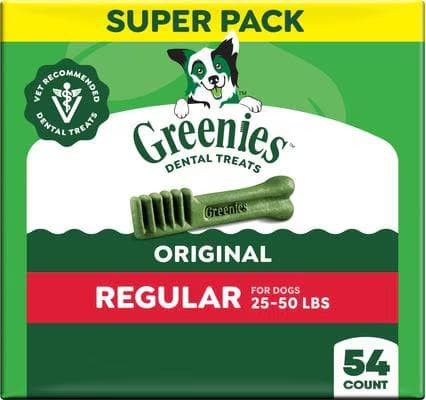
Daily dental chew that cleans teeth, freshens breath, and is accepted by the Veterinary Oral Health Council. Sized for dogs 25 to 50 lbs.
Petful may earn a commission when you click through to Chewy, at no extra cost to you.
Resource guarding versus food aggression
You will see the terms "resource guarding" and "food aggression" used almost interchangeably, and food aggression is really just the most common subtype of resource guarding. A dog can guard food and nothing else, guard everything except food, or guard a single specific object like one particular toy. Do not assume that a dog who is relaxed around the food bowl is automatically relaxed around a high-value bully stick. Value is defined by the dog, not by you.
 Sponsored
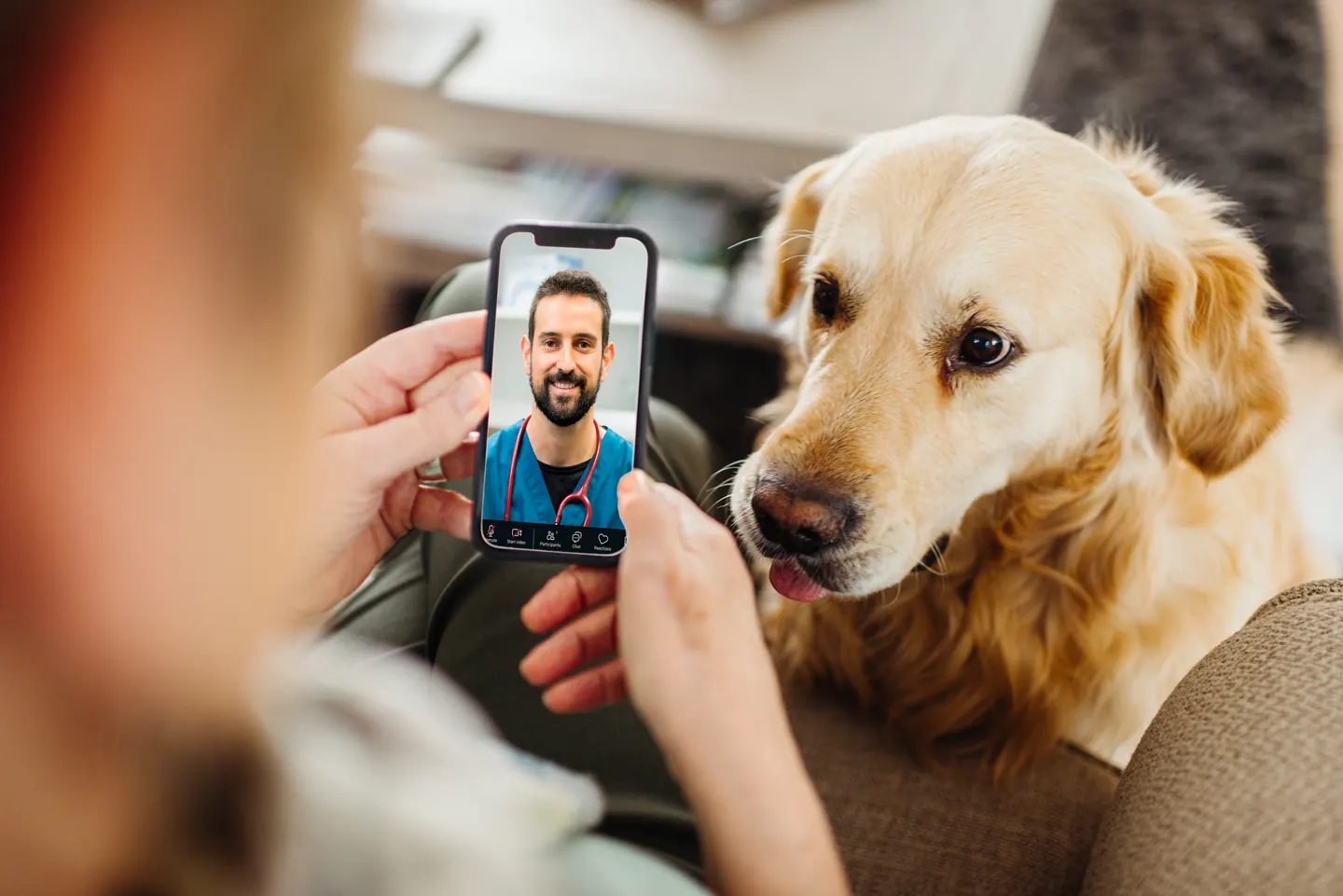
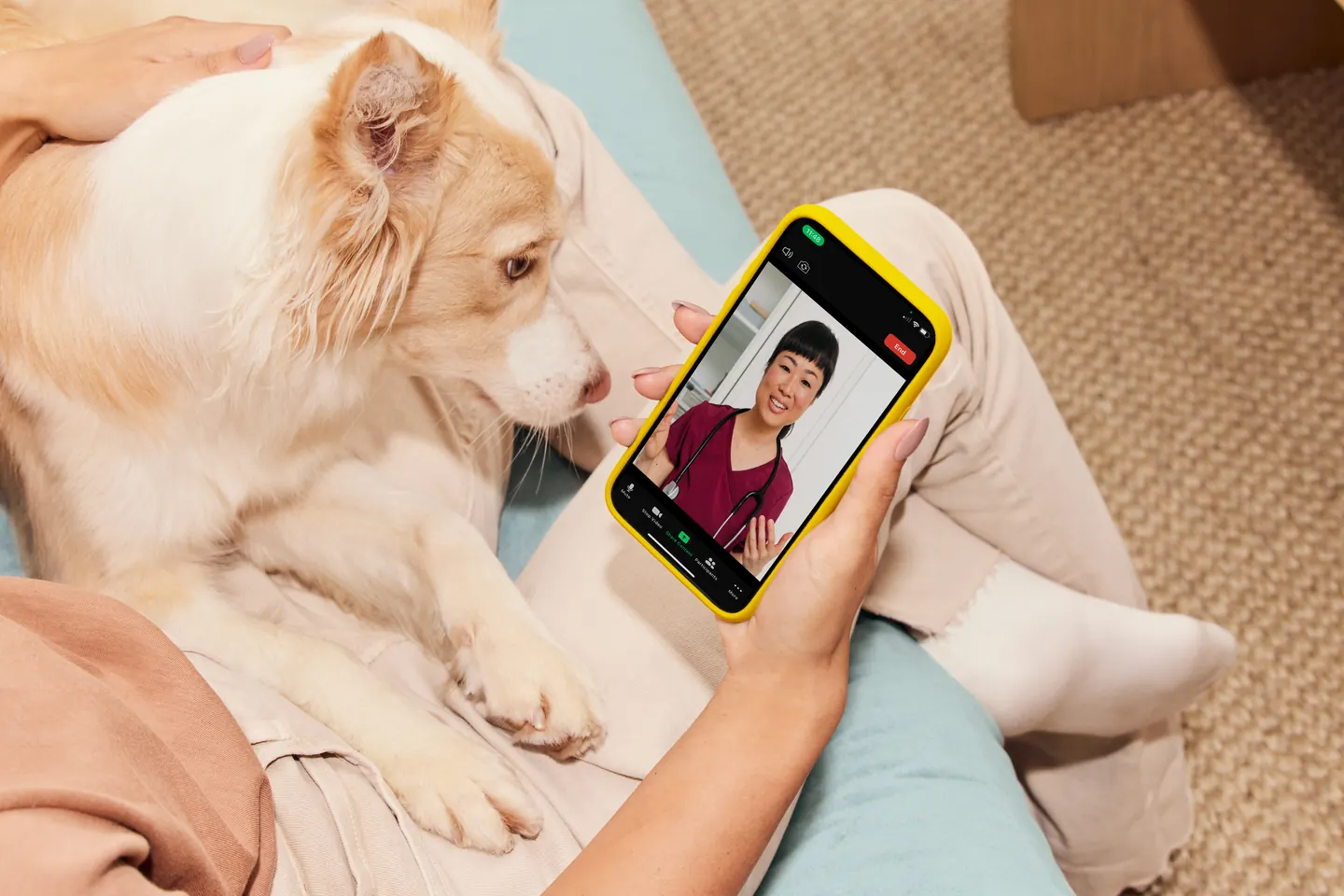
Want a vet's help with your pet's anxiety or behavior?
Talk to a licensed vet at Dutch over video, often the same day. They can recommend treatment and prescribe it when it's appropriate.
Use code Pets60
Plans start at $12/month · covers up to 5 pets
- Licensed vets in most states
- Rx for 150+ conditions
- 4.7 on Trustpilot
Why Do Dogs Resource Guard?
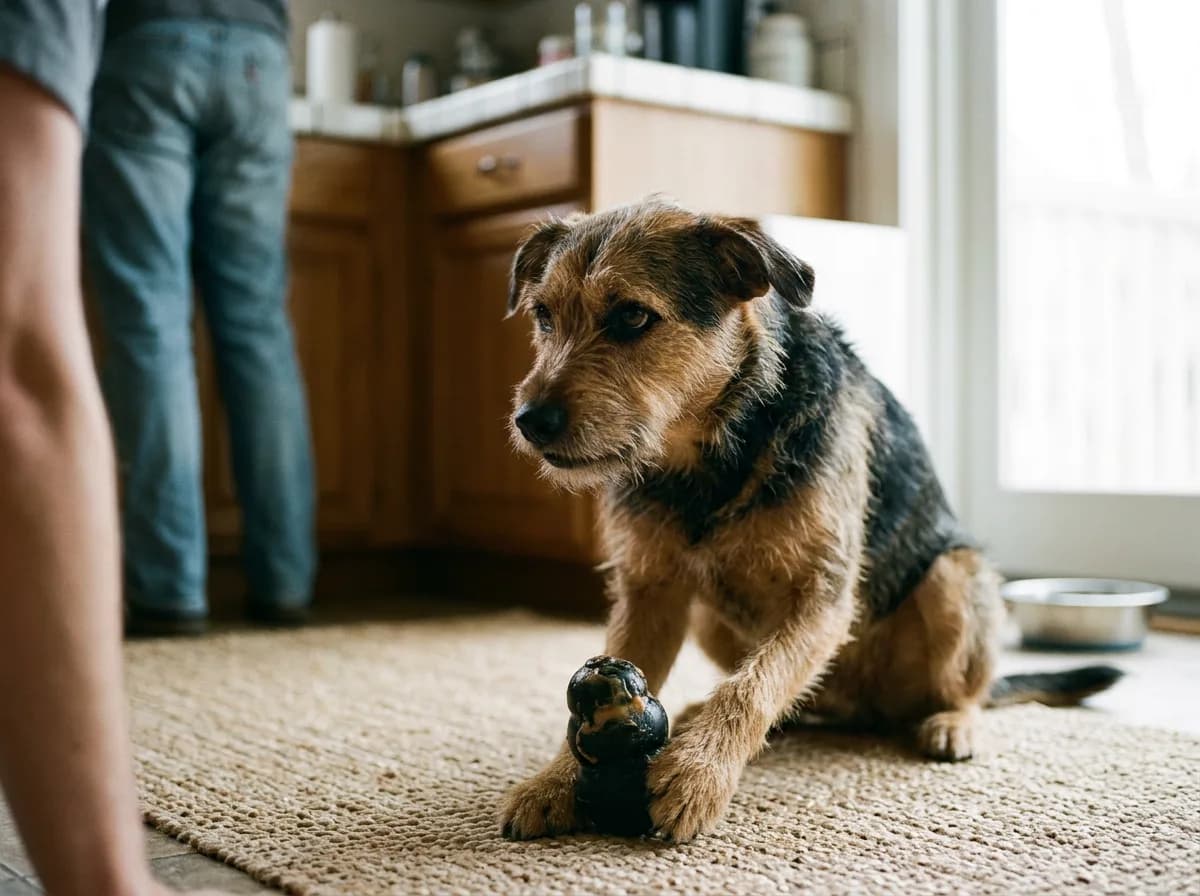
There is rarely a single cause. Guarding usually grows out of some combination of the following factors, and understanding which ones apply to your dog helps you build the right plan.
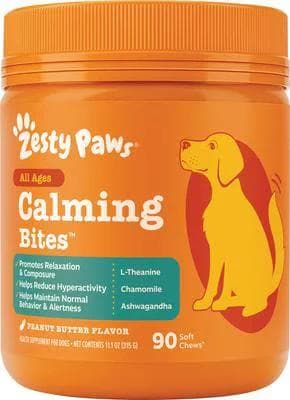
Peanut butter soft chews with L-theanine, chamomile, and ashwagandha to ease hyperactivity and support calm, relaxed behavior.
Petful may earn a commission when you click through to Chewy, at no extra cost to you.
- Genetics and breed tendency. Some individual dogs are simply wired to place higher value on possessions, and some working and terrier types are statistically overrepresented. Genetics load the gun; the environment pulls the trigger.
- Early life and litter competition. Puppies raised in scarcity, in oversized litters, or through unstable early feeding can learn very young that resources are worth defending. Rescue and shelter dogs with unknown histories are more likely to arrive with guarding already installed.
- Learned success. This is the big one. If a dog growls and the scary hand retreats, the growl worked. If snatching the sock and running under the bed ends the chase, that worked too. Every time guarding produces the outcome the dog wanted, the behavior gets stronger.
- Fear and anxiety. A generally anxious dog, or one who has had items taken away suddenly and repeatedly, guards from a place of insecurity. The item is not the real issue; the fear of loss is.
- Pain or medical change. A dog in pain, or one whose appetite or vision has changed, may start guarding when they never did before. Any sudden onset of guarding in an adult dog is worth a veterinary exam first.
- Almost every dog values something. A dog that quietly turns away from you while chewing is not a project. The behavior becomes a training priority when it escalates toward growling, snapping, or biting, or when it is aimed at the people the dog lives with.
The Warning Signs: Reading Guarding Before It Escalates
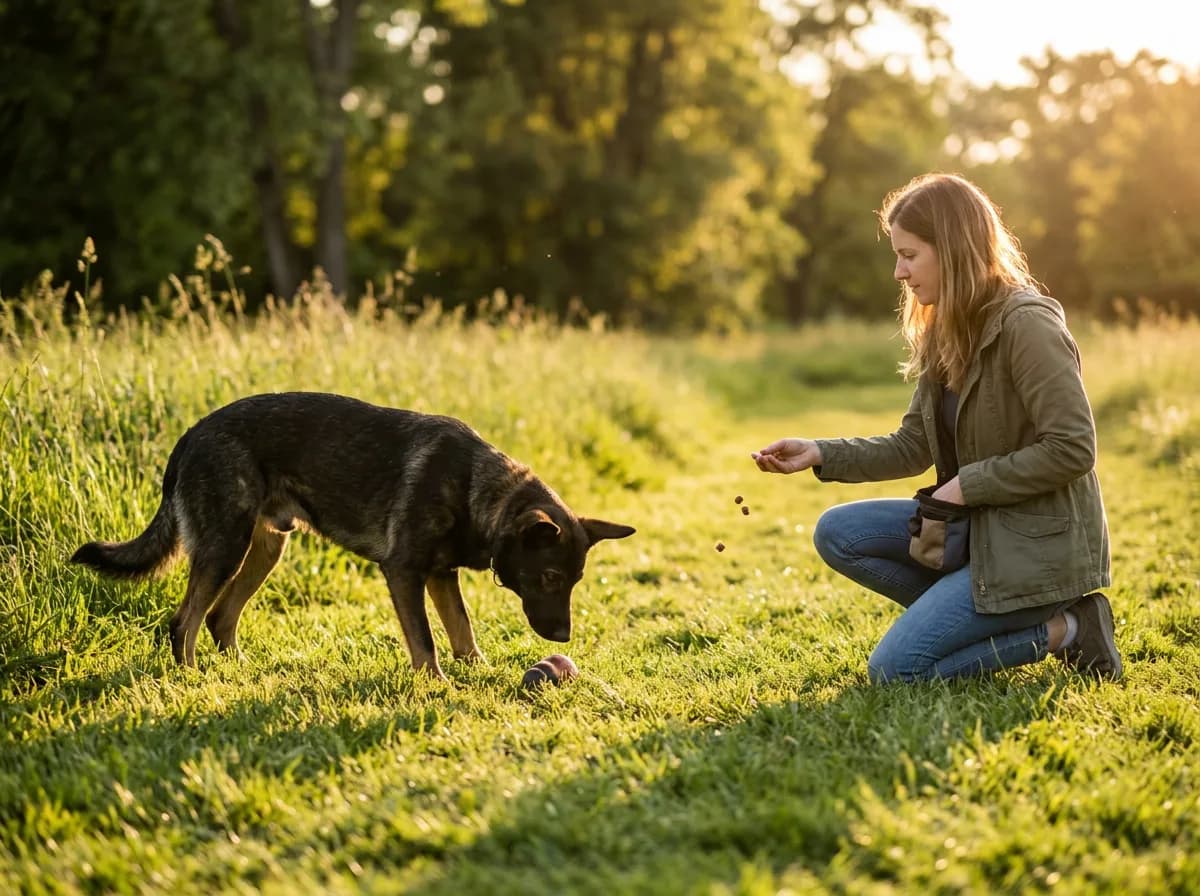
The single most useful skill for any owner is learning to read the early, quiet signals of guarding, because they appear long before a growl and they give you the chance to back off and avoid rehearsing a bite. Dogs almost always ask politely before they shout.
Watch for this ladder of signals, roughly from subtle to serious:
- Faster eating or "inhaling" food as you walk near the bowl.
- Body stillness and freezing, the dog going rigid and stopping mid-chew.
- Whale eye, where the dog turns the head slightly away but keeps the eyes locked on you or the approaching pet, showing the whites.
- Body blocking, using the shoulders or head to put themselves between you and the item.
- Hovering or covering the item with the mouth, chin, or a paw.
- A low growl, which is honest, valuable communication, not defiance.
- Lip lifting, showing teeth, and air snapping, a snap that deliberately misses as a final warning.
- Lunging and biting, the top of the ladder.
If you learn to notice the freeze and the whale eye, you can intervene at the bottom of the ladder and never reach the top. For a deeper walk-through of the whole vocabulary of canine signals, Petful's guide to reading your dog's body language is a useful companion to this section, and the more specific warning signs that a dog may bite breaks down the escalation ladder in detail.
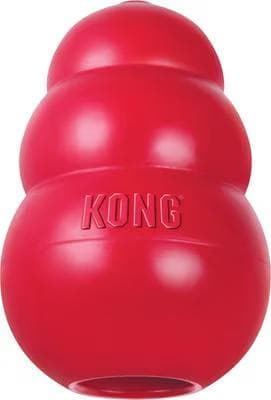
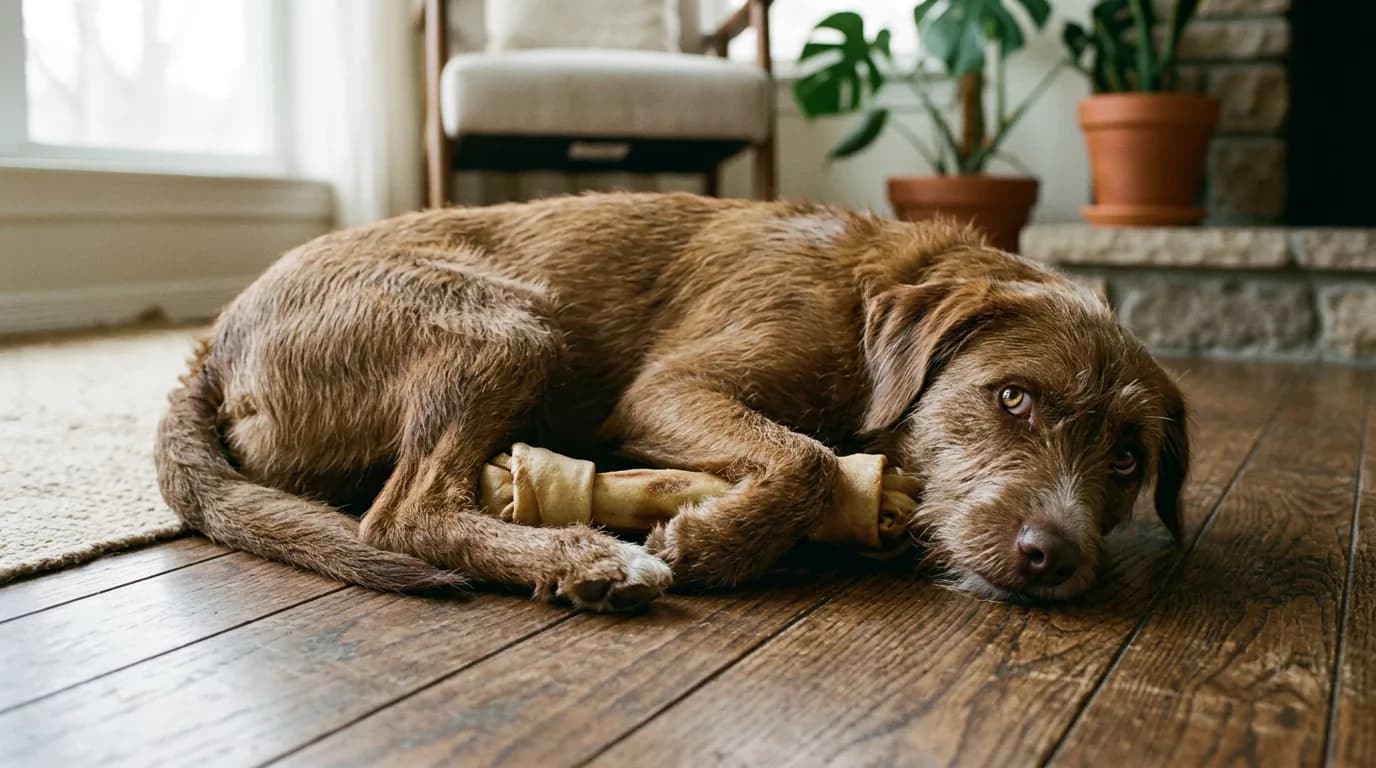
A durable rubber dog toy that can be stuffed with treats and selected by the manufacturer's size guide; supervise use and retire it when damaged.
Petful may earn a commission when you click through to Chewy, at no extra cost to you.
- A growl is your dog telling you they are uncomfortable before they feel forced to act. If you punish or scold the growl away, you do not fix the underlying feeling, you just delete the warning. The dog learns that growling gets them in trouble, so next time they may skip straight to a bite with no warning at all. Keep the growl. Change the feeling underneath it.
Which Dogs Are Prone to Resource Guarding?
Owners often want to know whether their dog's breed predicts guarding. The honest answer is that resource guarding appears in every breed and every mix, and individual temperament, early experience, and learning history matter far more than breed alone. That said, behavior surveys and trainer experience do point to some patterns.
Herding breeds, many terriers, some guardian and working breeds, and food-motivated retrievers show up more often in guarding conversations, partly because of genetics and partly because these are popular, driven dogs placed in busy homes. Small breeds guard just as readily as large ones; a guarding Chihuahua simply does less damage than a guarding Rottweiler, so small-dog guarding is more often laughed off and left to grow.
The practical takeaway is not to shop by breed to avoid guarding, but to assume any dog can develop it and to build good habits from day one. If you want a sense of which breeds carry a stronger reputation for defensive behavior in general, Petful's roundup of the most aggressive dogs by breed puts that reputation in honest context, because reputation and reality often diverge.
| Trigger | Why dogs value it | Typical intensity |
|---|---|---|
| High-value chews (bully sticks, bones, pig ears) | Long-lasting, edible, hard to replace | High to very high |
| Stolen human items (socks, tissues, remotes) | Novel, smell like you, produce a fun chase | Moderate, driven by the chase reward |
| Food bowl and meals | Primary survival resource | Low to high, very individual |
| Toys and stuffed items | Play value, especially a single favorite | Low to moderate |
| Resting spots and furniture | Comfort and a sense of safety | Moderate, rises in multi-pet homes |
| A specific person | Access to attention, safety, and food | Variable, and the most serious to address |
How to Stop Resource Guarding: A Step-by-Step Plan
The goal of a resource guarding plan is not to force your dog to accept having things taken. It is to change how your dog feels when you approach, so their brain learns "human coming closer means something even better is about to happen." That is the whole game. The two techniques that do it are desensitization (exposure at a low enough intensity that the dog stays relaxed) and counterconditioning (pairing your approach with something wonderful). Used together, they rewire the emotional response.
Here is a safe, general framework for mild to moderate guarding of objects and food. If the guarding is aimed at people, or a bite has already happened, skip this and go straight to professional help.
Step 1: Manage the environment first
Before any training, stop the rehearsals. Every guarding episode makes the behavior stronger, so your first job is to prevent them. Feed the dog in a separate room or crate with the door closed. Pick up high-value chews when you are not actively training. In multi-pet homes, feed animals in separate spaces so no one has to defend a bowl. Management is not the cure, but it buys you a calm baseline to train from.
Step 2: Find your dog's distance threshold
Work out how close you can get to the dog and their item before you see the first tiny sign of tension, the freeze or the faster chewing. That distance is your starting line. All early training happens at or beyond that line, where the dog is aware of you but still relaxed. Push inside it and you are practicing the guarding, not curing it.

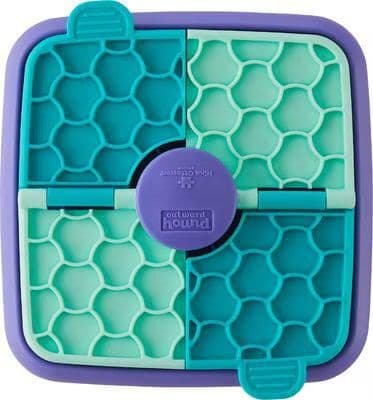
Multiple ridges and valleys slow eating, reduce gas and bloating, and turn mealtime into a fun puzzle. Non-skid base, dishwasher safe, 4-cup capacity.
Petful may earn a commission when you click through to Chewy, at no extra cost to you.
Step 3: Approach, drop something better, retreat
With a lower-value item down, walk toward the dog only to your threshold distance, toss a genuinely high-value treat (think small pieces of chicken or cheese, not kibble) toward them, and immediately walk away. You are teaching a simple, repeated equation: my human approaching predicts an amazing treat appearing, then they leave and my stuff is still here. Repeat this many times across many short sessions.
 Sponsored
Vet care that's always there
Unlimited video calls and messaging with licensed vets for less than a typical vet visit. One membership covers up to five pets.
Use code Pets60
Plans start at $12/month · covers up to 5 pets
- Licensed vets in most states
- Rx for 150+ conditions
- 4.7 on Trustpilot
Step 4: Shrink the distance gradually
Over days and sessions, and only while the dog stays loose and happy to see you coming, take one small step closer before you toss the treat. If you ever see tension return, you moved too fast; go back to the last distance where the dog was relaxed and build up again. Progress is measured in the dog's body language, not your timeline.
Step 5: Add a "trade" and a "drop it" cue
Once your dog is genuinely happy to see you approach, you can teach a formal trade: offer a high-value treat in exchange for the item, mark the moment they let go, and then, crucially, often give the item right back. A dog who learns that "drop it" means they get something great AND usually get their thing back has no reason to guard. A reliable trade is the single most useful cue a guarding dog can learn.
Step 6: Build cooperative extras
Teaching a rock-solid recall and a "go to your place" cue gives you humane ways to move a dog away from a guarded item without confrontation. These are not guarding fixes on their own, but they are essential tools that let you manage real-life situations without a standoff. Structured obedience work also builds the calm, trusting relationship that makes everything else easier; Petful's overview of dog aggression training techniques walks through how these foundation skills fit into a broader behavior plan.
- The mechanism behind every step above is simple: your dog should come to believe that a human near their stuff is the best thing that can happen, not a threat. When you consistently add value instead of taking it, the guarding loses its purpose. That belief, repeated hundreds of times, is what actually changes the behavior.
What NOT to Do (The Mistakes That Make Guarding Worse)
Well-meaning advice, especially old-school "show him who's boss" advice, is responsible for a huge share of guarding that turns into biting. Avoid all of the following:
Petful may earn a commission when you click through to Chewy, at no extra cost to you.
- Do not take things away to "prove you can." Randomly removing your dog's food or toys to demonstrate control teaches the dog that your approach means loss, which is the exact belief that creates guarding. You are confirming their fear.
- Do not stick your hand in the bowl or "mess with" their food. This popular myth backfires. A dog who is fed in peace has no reason to guard the bowl; a dog whose meals are constantly interrupted learns to defend them.
- Do not punish, yell, or use physical corrections. Punishment increases fear and conflict, and it deletes the warning signals that keep everyone safe. It can turn a growler into a silent biter.
- Do not play tug-of-war over a guarded item. Forcing an object out of a defensive dog's mouth is how people get bitten and how dogs learn that they have to fight to keep things.
- Do not flood the dog. Cornering a guarding dog and forcing them to "get over it" by staying close while they panic does not desensitize them, it traumatizes them and can trigger a bite.
Resource Guarding Between Dogs and Other Pets
Guarding is not only a human-directed behavior. In multi-pet homes, dogs frequently guard resources from each other, and this can escalate into serious fights. The management principle is the same and it is non-negotiable: remove the competition. Feed pets in separate rooms or crates, never leave high-value chews out where two dogs share space, provide plenty of duplicate resources (multiple beds, bowls, and toys), and supervise any situation where a valued item is present. If dog-to-dog guarding has already produced a fight with injuries, bring in a professional before someone gets hurt, because inter-dog aggression can be dangerous and hard to read.
Preventing Resource Guarding in Puppies
The easiest guarding to fix is the guarding that never develops. If you have a puppy or a new dog with no history of guarding, you can build a lifelong "humans are generous, not threatening" association from the very first week, and it takes only minutes a day.
The core prevention move is the same equation you use to treat guarding, run proactively: make your approach to your puppy's food and possessions consistently rewarding. As your puppy eats, occasionally walk by and drop a piece of something even tastier into or beside the bowl, then keep walking. Your puppy looks up and thinks, "the human coming near my food is great news," which is the exact opposite of the belief that fuels guarding. Do the same with chews and toys: approach, add value, leave.
Teach an early, cheerful trade game. Offer a treat, say your cue, and when the puppy releases the item, give the treat and usually hand the item straight back. A puppy raised to believe that giving something up leads to a reward and the return of their thing has no reason to ever start defending. Alongside this, feed your puppy in peace rather than hovering, resist the urge to test them by yanking things away, and make sure everyone in the household, especially children, follows the same rules. Prevention is far less work than a cure, and it protects the relationship before any conflict starts.
- Most puppy guarding that turns serious involves kids who were allowed to bother a dog while it ate or chewed. Teach children never to approach, touch, or take from a dog who has food, a chew, a bone, or a favorite toy, and never to disturb a sleeping or resting dog. Supervise every interaction. This single household rule prevents a large share of guarding bites.
When to Call a Professional
DIY training is appropriate for mild, object-focused guarding in a dog who has never bitten. Everything past that belongs with a qualified professional. Contact a certified force-free trainer, a veterinary behaviorist (a DVM with specialty behavior training), or a certified behavior consultant if any of these apply:
- The guarding is directed at a person, especially a favorite human the dog "protects."
- Your dog has already bitten, or snapped and made contact, over a resource.
- The guarding involves children in the home in any way.
- The behavior is getting worse despite your management and training.
- The guarding appeared suddenly in an adult dog, in which case see your veterinarian first to rule out pain or illness.
- You feel unsafe, or you are avoiding rooms and routines to keep the peace.
There is no shame in outsourcing this. A guarding dog with a bite history is a genuine safety and liability issue, and a good professional can build a customized plan far faster and more safely than trial and error. If you are unsure who to call, Petful's explainer on the difference between trainers and behaviorists will help you find the right kind of help for the severity you are dealing with.
- Resource guarding has one of the better prognoses among problem behaviors when it is addressed early, correctly, and without punishment. Most mild-to-moderate cases improve substantially, and many resolve. The dogs that stay dangerous are usually the ones whose warnings were punished away or whose guarding was never addressed at all. Start now, stay patient, and get help when the behavior is aimed at people.
Frequently Asked Questions
Related on Petful
- Dog Resource Guarding Owner: Stop It Safely
- How to Stop Puppy Barking: By-Cause Fixes
- Puppy Training 101: A Week-by-Week Guide
- Crate Training a Puppy: A Day-by-Day Plan
Stop rehearsing the behavior first by managing the environment (feed and chew in a separate space, pick up high-value items). Then change how your dog feels about your approach using desensitization and counterconditioning: from a distance where your dog stays relaxed, walk toward them, toss a high-value treat like chicken or cheese, and walk away, so your approach reliably predicts something better than what they are guarding. Shrink the distance only as fast as your dog stays loose and happy, and teach a "trade" and "drop it" where they usually get the item back. Never punish, never take things away to prove a point, and get a professional if the guarding is aimed at a person or a bite has occurred.
Mild guarding, like a dog quietly turning away while chewing, is normal and not a red flag on its own. It becomes a serious red flag when it escalates to growling, snapping, or biting, when it is directed at the people in the home, when it involves children, or when it appears suddenly in an adult dog (which can signal pain or illness and warrants a vet visit). Guarding aimed at people or any guarding with a bite history should be treated as a safety issue and handled by a qualified professional.
Resource guarding can appear in any breed or mix, and an individual dog's temperament, early experience, and learning history matter more than breed. That said, herding breeds, many terriers, some working and guardian breeds, and highly food-motivated retrievers are mentioned more often by trainers. Small breeds guard just as readily as large ones; their guarding is simply overlooked because they do less damage. Assume any dog can develop it and build good habits from the start.
A dog guarding a person positions themselves on or against that person and reacts when others (people or pets) approach. Watch for the same signals you see with objects: freezing or stiffening as someone comes near their human, whale eye, body blocking to put themselves between the person and the "intruder," growling, or snapping when another individual gets close. Person-directed guarding is one of the more serious forms because the "resource" moves around the house, so it should be assessed by a certified behavior professional rather than handled with DIY training.
No single breed "wins" for resource guarding, and reputable trainers avoid ranking one breed as the guardiest, because early life, individual wiring, and learned success drive the behavior far more than breed. Breeds bred for independent working roles or strong food drive can show it more often, but you will find relaxed individuals in those breeds and serious guarders in breeds with gentle reputations. Judge the dog in front of you, not the label.
Dogs express affection through body language rather than words: soft relaxed eyes and a gentle gaze (not a hard stare), a loose wiggly body, leaning against you, following you room to room, bringing you a toy, a slow sweeping tail wag, and calm physical closeness like resting a head or a paw on you. It is worth knowing this because it is the flip side of guarding signals: the tense freeze and whale eye that signal guarding are the opposite of the loose, soft body a content, affectionate dog offers. Learning to read both keeps you and your dog safe and connected.
The Bottom Line
Resource guarding is a normal instinct that becomes a problem when it escalates, and the path out is not force but a change of feeling: teach your dog that a human near their valued things is the best thing that can happen. Manage the environment to stop rehearsals, work at a distance where your dog stays relaxed, and pair your approach with something better than what they are guarding. Keep the growl, drop the punishment, and know the bright line where DIY ends and a certified professional begins, at guarding aimed at people or any guarding that has already caused a bite. Handled early and correctly, most guarding dogs get meaningfully better.

Coreen Saito is a pet writer and longtime shelter volunteer with more than a decade in animal rescue. She covers cat behavior, breed care, and the small, ordinary science of sharing a life with companion animals, with a particular focus on honest takes about the products and decisions that actually matter. At home in Arizona, she's outranked by Mac (a dog with the loudest opinion in the house), Rebel (a cat who governs by quiet authority), and Meri (an orange tabby who runs the late shift and the laundry basket). She writes about all three, plus the rescues that keep coming through her life, at LifeWithMinty.com.
Sign up for expert-backed reviews and safety alerts all in one place.