Dog Resource Guarding Owner: Stop It Safely
When your dog guards you like a possession, growling at your partner or lunging at another dog who comes near, it is fear-driven person guarding, not dominance. Here is what owner guarding looks like, why it happens, and a safe plan to stop it.
Petful is reader supported. As an affiliate of platforms like Amazon and Chewy, we may earn a commission when you buy through links on this page. There is no extra cost to you.
Dog resource guarding owner behavior happens when a dog treats a specific person as a possession worth protecting, and starts warning off anyone who comes near that person. It can look like a subtle body freeze on the couch, a low growl when your partner sits down, or a full lunge at another dog who wanders toward you. It is one of the most confusing forms of guarding because the "resource" is a human who loves the dog back. This guide walks through why it happens, exactly what it looks like, and a step-by-step plan to lower the intensity safely, without punishment that makes a fearful dog more dangerous.
This article is the person-guarding piece of our larger resource guarding in dogs hub. If your dog guards food bowls, bones, or toys instead of people, start there. If the object your dog defends is you, keep reading.
- 1Guarding a person is fear-driven, not dominance, and it responds to management plus counter-conditioning, not confrontation.
- 2Never punish a growl: it is a warning, and silencing it removes your early-warning system and can push a dog straight to biting.
- 3If the guarding already includes snapping, lunging, or biting, loop in a certified behavior professional before you run any home protocol.

Sign up for expert-backed reviews and safety alerts all in one place.
What Resource Guarding a Person Actually Is
Resource guarding is a normal, hardwired canine behavior. In the wild, an animal that could not defend food, water, or a safe resting spot did not survive to pass on its genes. According to the American Veterinary Society of Animal Behavior, guarding is a survival strategy, not a character flaw, and it shows up in well-loved pet dogs precisely because the instinct is ancient and adaptive.
Person guarding is the same instinct pointed at a human. The dog has decided that access to you, your attention, your warmth, your safety, is a resource worth defending. When another person or animal approaches, the dog perceives a threat to that access and acts to protect it. The uncomfortable part for owners is that the behavior is usually rooted in insecurity rather than affection. A confident, secure dog rarely feels the need to police who gets near their favorite human.
It helps to separate two things that often get lumped together. "Owner guarding" or "handler guarding" is the dog defending a person from others. "Jealousy" is the human word we put on it, and while it captures the flavor, it can steer you toward the wrong fixes (like scolding, which raises anxiety). Richmond Animal League describes this jealous-looking behavior as a blend of protectiveness and fear, and cautions that comforting or punishing the dog in the moment often makes it worse.
Guarding a person versus guarding an object
Guarding a food bowl is easy to manage because you can control the bowl. You decide when it appears, when it is removed, and who is nearby. A person is a moving, unpredictable resource. You cannot put yourself away in a cabinet, and you naturally move toward the dog, hug family members, and let people into your home. That is why person guarding often feels harder to fix than food guarding, and why the plan leans so heavily on managing the human's behavior, not just the dog's.

Daily dental chew that cleans teeth, freshens breath, and is accepted by the Veterinary Oral Health Council. Sized for dogs 25 to 50 lbs.
Petful may earn a commission when you click through to Chewy, at no extra cost to you.
There is also an emotional trap unique to person guarding. When a dog defends its food, owners rarely feel flattered. When a dog defends them, it is easy to read the behavior as love or loyalty and to quietly encourage it. A dog that growls at your partner from your lap can feel, in the moment, like a dog that adores you. Reframing that: the growl is not devotion, it is a dog under stress trying to control an outcome it finds frightening. Naming it accurately is the first step, because you will not fix a behavior you are secretly proud of.
 Sponsored
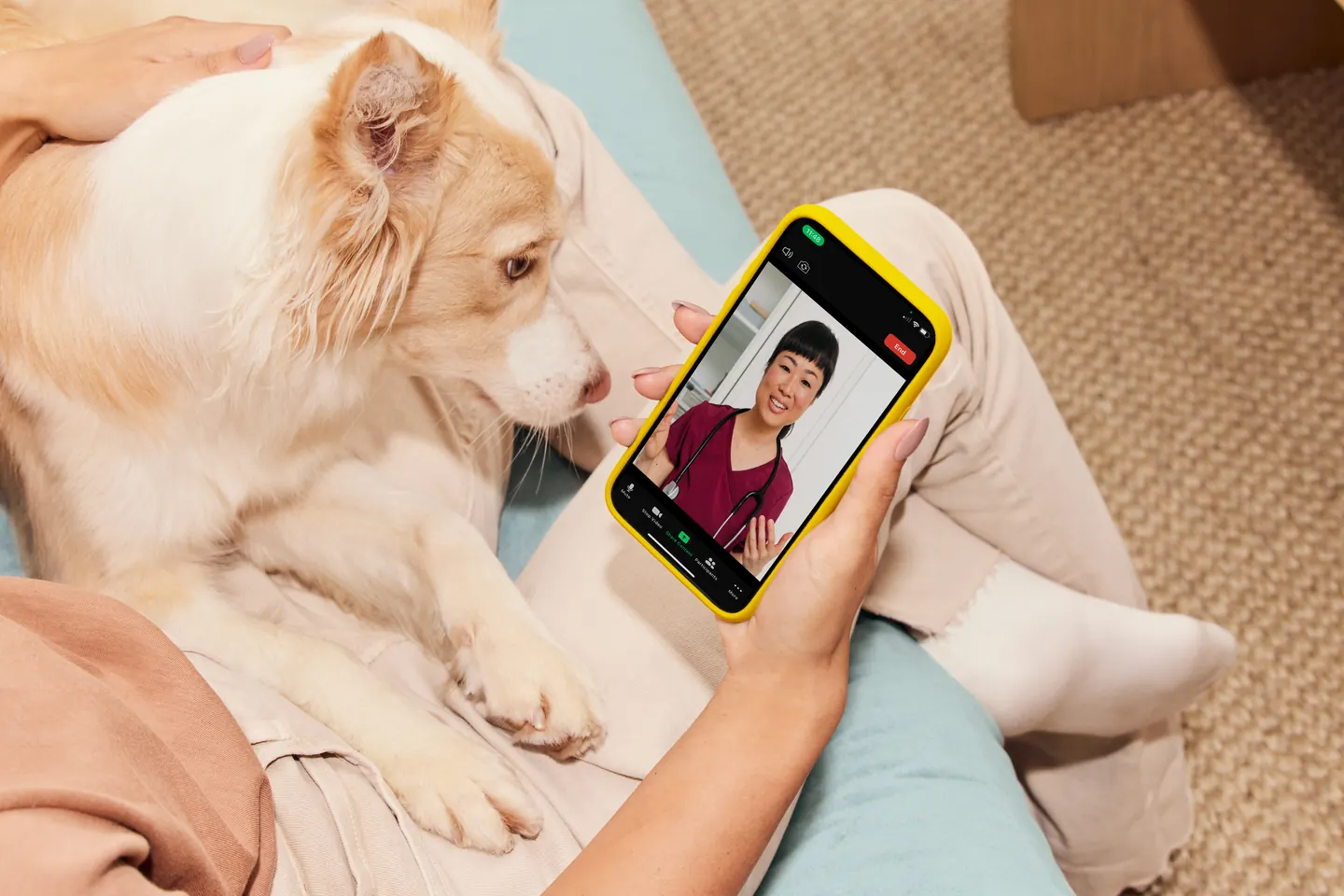
Want a vet's help with your pet's anxiety or behavior?
Talk to a licensed vet at Dutch over video, often the same day. They can recommend treatment and prescribe it when it's appropriate.
Use code Pets60
Plans start at $12/month · covers up to 5 pets
- Licensed vets in most states
- Rx for 150+ conditions
- 4.7 on Trustpilot
What Dog Resource Guarding of an Owner Looks Like
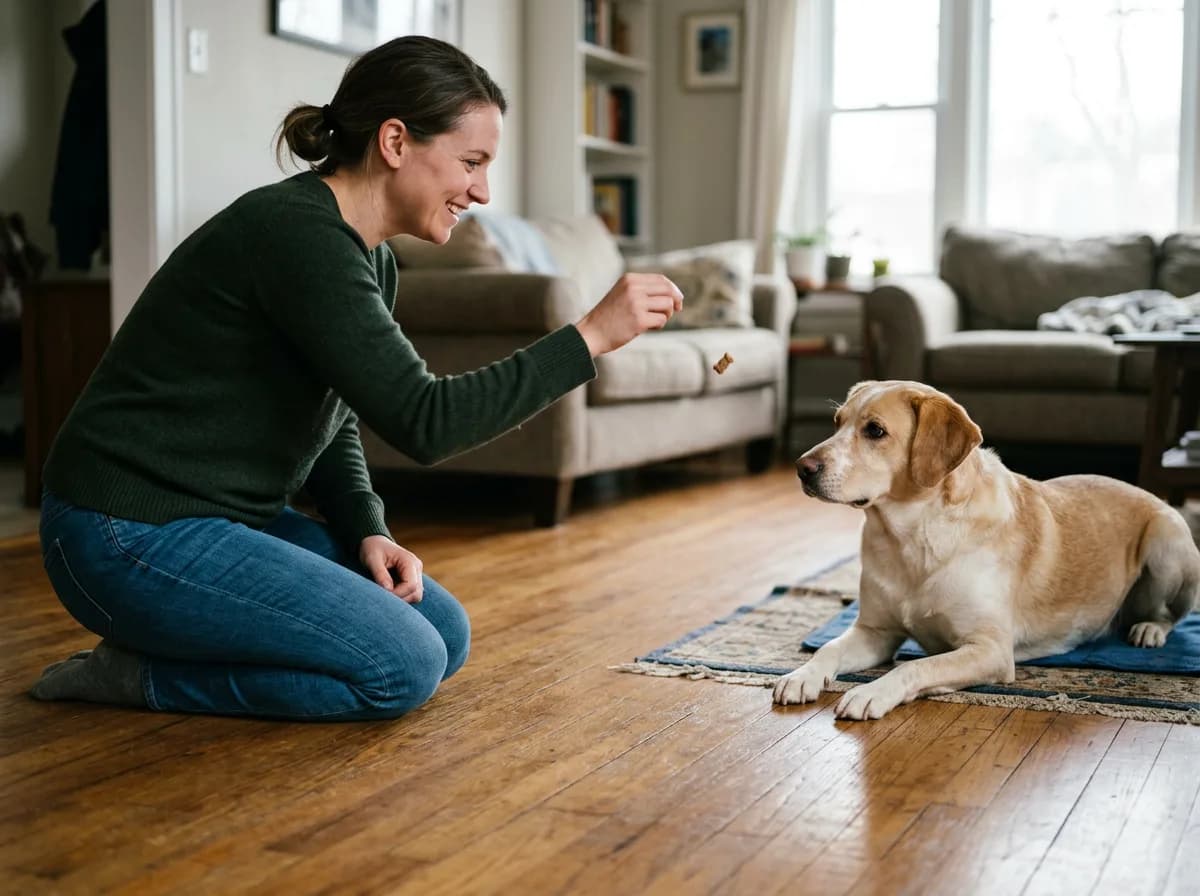
Guarding a person exists on a ladder of intensity. Catching it low on the ladder is the whole game, because the earliest signals are quiet and easy to miss until they have already escalated. Care First Animal Hospital notes that milder cases may show only a stiffen or a soft growl, while more severe cases jump to snapping, lunging, or biting.
Here is the ladder, from subtle to serious:
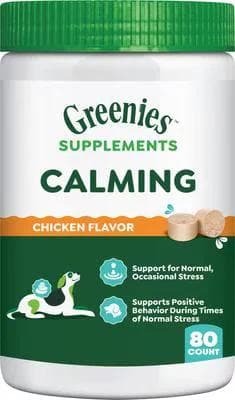
Chicken flavored soft chews that support calm, positive behavior during times of occasional stress like fireworks and storms.
Petful may earn a commission when you click through to Chewy, at no extra cost to you.
- Freezing or stillness. The dog goes rigid, stops panting, or holds unusually still while leaning against or lying on the guarded person.
- Hard staring. A fixed, unblinking look aimed at the approaching person or animal, sometimes with a "whale eye" showing the whites.
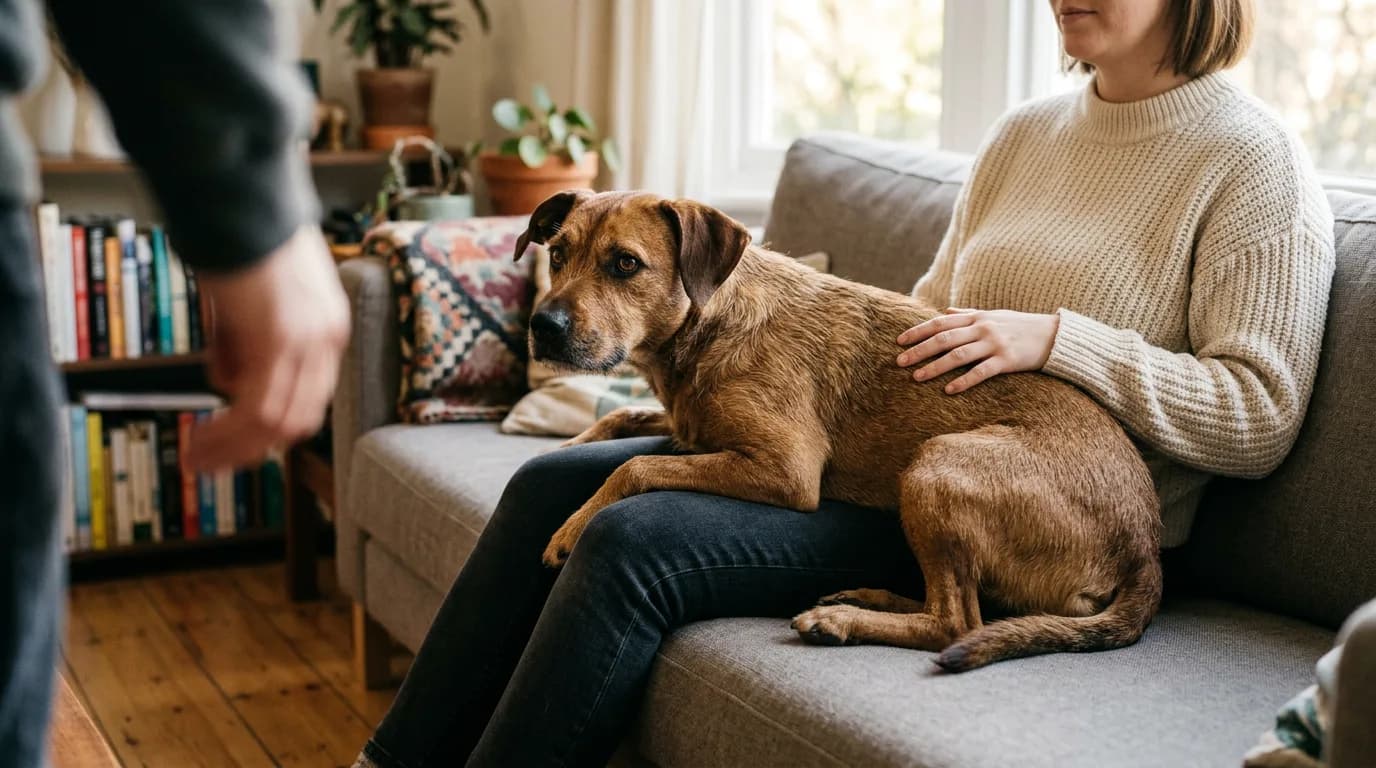
- Body blocking. The dog physically inserts itself between you and the newcomer, or climbs onto your lap to occupy the space.
- Low growling. A warning, often felt more than heard. This is communication, not defiance.
- Lifting a lip, showing teeth, or a muzzle punch. The dog is escalating because earlier signals were ignored or punished.
- Snapping, lunging, or biting. The top of the ladder, and the point at which professional help is not optional.
- If you punish your dog for growling, you do not remove the feeling behind it. You remove the warning. A dog that has learned growling gets punished may skip straight to a bite next time, with no signal in between. Protect the growl.
Common triggers
The pattern is usually situational. Person guarding tends to fire in predictable settings:
- On furniture, especially the bed or couch, where the dog is physically close to the person and elevated.
- When a partner or family member approaches the person the dog has bonded to most tightly.
- Around a second dog or a cat in a multi-pet home.
- When guests enter, or when someone reaches toward the guarded person for a hug.
- During transitions like the person standing up, leaving, or returning.
Why Dogs Guard Their People
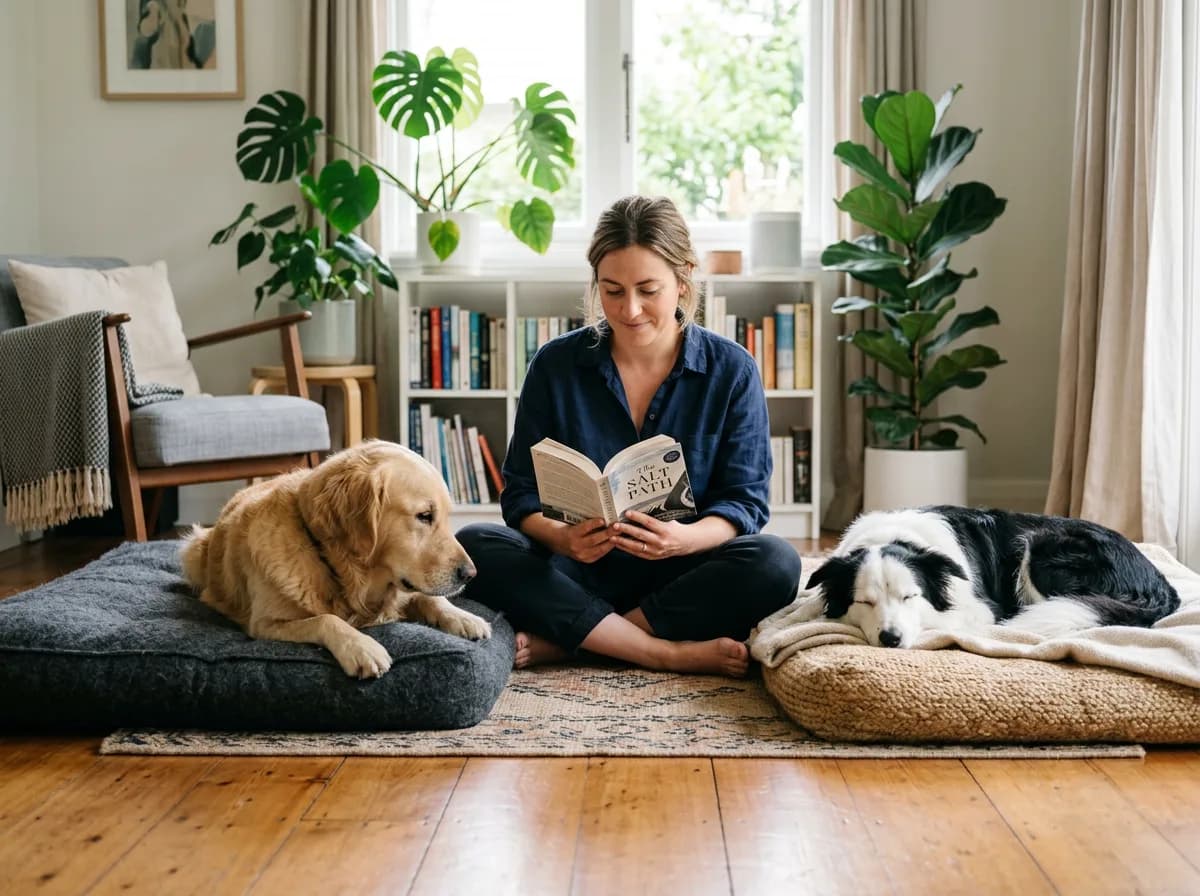
There is rarely a single cause. Most cases are a stack of factors, and understanding yours points you at the right fix.
Insecurity and fear. The core driver. A dog that feels its access to safety is fragile guards that access hard. Rescue dogs and dogs with sparse or rough early socialization are overrepresented, because scarcity taught them the world takes things away.
Genetics and breeding. Some individuals are simply wired to guard more readily. It is heritable to a degree, which is one reason the behavior can appear in a well-raised dog with a loving home.
Reinforcement history. If guarding has worked, if the approaching dog backed off, if the partner retreated, the behavior gets stronger every time it succeeds. Dogs repeat what pays.

A large fabric-covered dog toy for supervised tug and fetch; choose the size for your dog and retire it if seams or material begin to fail.
Petful may earn a commission when you click through to Chewy, at no extra cost to you.
Owner behavior, without blame. How a household interacts with a dog can feed the pattern. Letting a dog velcro onto one person, sleep pressed against them every night, and control access to laps and beds can quietly raise the stakes. This is not about fault (more on that in the FAQ), it is about which habits you can change.
- For one week, jot down every guarding episode: who was near, where the dog was (bed, couch, floor), and how intense it got. A short log almost always reveals a tight, fixable pattern, like "only on the bed, only toward my partner, only after 9pm."
The role of the human bond
A subtle but important driver is over-attachment to a single person. When a dog spends nearly all its time glued to one human, sleeps against them, and gets its food, affection, and reassurance almost exclusively from that person, the stakes around access to that human climb. The dog has effectively put all of its emotional eggs in one basket, and it defends that basket accordingly. This does not mean you should push a bonded dog away or withhold affection coldly. It means spreading the good stuff around: letting other household members feed, walk, train, and play with the dog so that no single person is the sole source of everything the dog values. A dog with several reliable sources of security has less reason to guard any one of them.
Sudden versus lifelong guarding
Timing matters for what you do next. A dog that has guarded people since puppyhood is usually showing a temperament pattern that needs steady, long-term counter-conditioning. A dog that starts guarding suddenly, especially an older dog or one that never did this before, deserves a veterinary workup first. Pain, declining vision or hearing, cognitive change, and endocrine issues can all lower a dog's tolerance and make it guard where it never used to. Rule out a medical cause before you assume the problem is purely behavioral.
How to Stop a Dog From Resource Guarding Its Owner
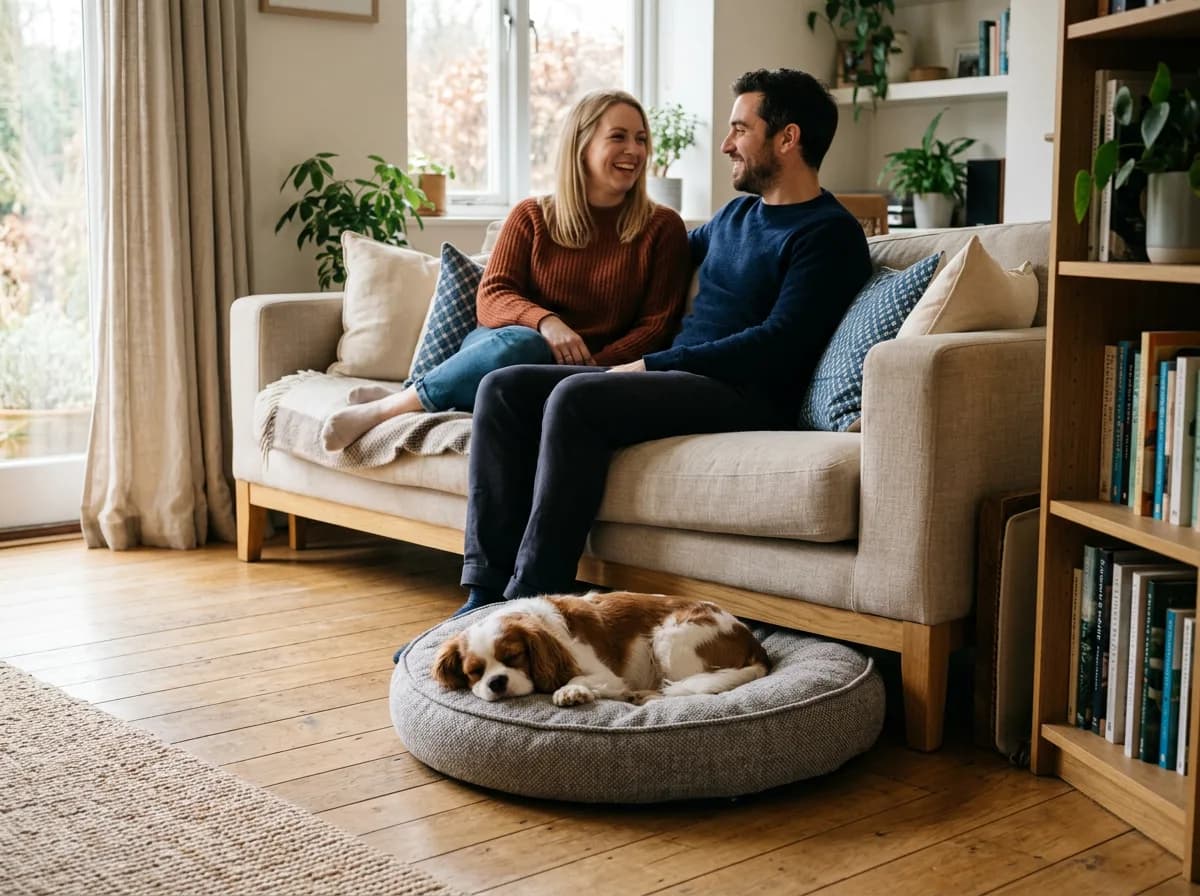
The plan has two halves that run at the same time: management to keep everyone safe and prevent rehearsal, and counter-conditioning to change how the dog feels about people approaching. You do not choose one. You do both.
Step 1: Manage the environment first
You cannot train a behavior your dog keeps practicing. Management stops the rehearsals while the real training takes hold.
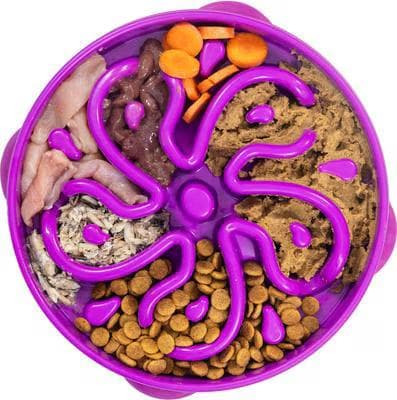
A maze-pattern slow-feeder bowl that makes fast eaters work for each bite, reducing the gulping and swallowed air that trigger regurgitation and vomiting. Holds up to 4 cups.
Petful may earn a commission when you click through to Chewy, at no extra cost to you.
- Change the furniture rules. If guarding happens on the bed or couch, the dog loses that privilege for now. Teach a comfortable dog bed on the floor as the new default spot. Richmond Animal League recommends that the dog reliably gets "off" when anyone asks, and that a guarding dog not be allowed on furniture where the behavior fires.
- Use a leash or tether indoors. A light house line lets you calmly guide the dog away from a brewing situation without grabbing a collar, which can itself trigger a snap.
- Give the dog a real off-switch. A crate or a gated safe space, taught as a good place, lets you separate the dog from a trigger before anything happens.
- Owners sometimes feel that using a crate, a tether, or furniture rules is a failure. It is the opposite. Every episode you prevent is one your dog does not get to practice, and prevented reps are how the behavior shrinks.
 Sponsored
Vet care that's always there
Unlimited video calls and messaging with licensed vets for less than a typical vet visit. One membership covers up to five pets.
Use code Pets60
Plans start at $12/month · covers up to 5 pets
- Licensed vets in most states
- Rx for 150+ conditions
- 4.7 on Trustpilot
Step 2: Shift the good stuff onto the "threat"
This is the heart of counter-conditioning. Right now the dog has learned that the approaching person or dog predicts losing access to you. You are going to flip that prediction so the newcomer predicts good things.
- Transfer the rewards. Have the person the dog is wary of become the source of meals, high-value treats, walks, and play. As one widely shared piece of trainer advice puts it, you cannot stay afraid of the one who feeds you. Over days and weeks, the "threat" becomes the best thing in the room.
- Toss, do not hand. The wary person tosses treats from a non-threatening distance, building a positive association without forcing contact. Let the dog choose to approach.
- Reward calm, not guarding. Mark and treat the moments your dog stays loose and soft while someone is near you. You are paying for the emotional state you want.
The mechanics matter here. Work under the dog's threshold, meaning at a distance and intensity where the dog notices the newcomer but does not react. If the dog is already growling or stiff, you have moved too close, too fast, and you are no longer counter-conditioning, you are flooding a scared animal. Back up to a distance where the dog can eat and stay soft, and shrink that distance gradually over many short sessions. Keep sessions brief, a few minutes at most, and always end while the dog is still relaxed. Consistency beats duration: five two-minute reps across a day will outperform one long, tiring session.
Step 3: Adjust the guarded person's behavior
The guarded human is part of the training, not a bystander.
Petful may earn a commission when you click through to Chewy, at no extra cost to you.
- Withdraw quietly at the first subtle sign. The moment you see a freeze or hard stare, calmly stand up and step away. You are teaching the dog that guarding makes the resource (you) leave, not stay.
- Do not over-treat while the dog guards. Feeding a dog mid-guard can accidentally tell it that guarding you is exactly the valuable thing you just confirmed it to be. Reward calm before guarding, and remove yourself once it starts.
- Reset the closeness. Ask for a "wait" or a settle on the dog's own bed before invited affection, rather than allowing constant, unearned Velcro contact.
Step 4: Build the household toolkit
A handful of trained behaviors makes every hard moment easier. Teaching a rock-solid "place," "off," and "leave it" gives you humane, non-confrontational ways to move your dog without physical conflict. These are the same foundation cues that help with everyday manners, and they are worth building even in a dog who does not guard. If you are polishing recall and impulse control alongside this work, our guide to dog training basics pairs well with the protocol here.
| Tool | What it does | Best for |
|---|---|---|
| Front-clip harness and light house line | Lets you guide the dog away from a trigger without grabbing the collar | Redirecting calmly indoors before an episode escalates |
| Crate or gated pen taught as a safe space | Gives the dog an off-switch and separates it from triggers | Preventing rehearsals during high-risk windows like guests or bedtime |
| High-value treat pouch | Keeps pea-sized rewards ready for counter-conditioning | Paying for calm the instant a person or dog approaches |
Common Mistakes That Make Person Guarding Worse
Well-meaning owners often reach for the exact responses that deepen the problem. Steer clear of these:
- Punishing the growl or the guarding. Covered above, and worth repeating because it is the single most common and most dangerous mistake. Suppressing the signal does not remove the fear underneath it.
- Forcing greetings. Dragging a guarding dog up to the person or dog it fears, or letting a guest reach over the guarded human for a hug, floods the dog and confirms that approaches are threatening.
- Comforting the dog mid-guard. Soothing a stiff, growling dog in your lap reads to the dog as approval of exactly the state you want to reduce. Reward calm before guarding starts, not the guarding itself.
- Inconsistency between household members. If one person enforces furniture rules and another lets the dog back on the bed, the dog never gets a clear picture. Everyone has to run the same plan.
- Rushing the timeline. Moving too close, too fast, is the fastest way to trigger a setback and erode trust. Progress is measured in small, repeated wins.
What a realistic timeline looks like
Owners often want a week-long fix. Fear-based behavior does not work that way. With consistent management and daily counter-conditioning, many households see the intensity of episodes soften within a few weeks, but durable change, the kind where the dog is genuinely relaxed rather than just suppressed, typically unfolds over months. The goal is not a dog that never notices approaches. It is a dog whose default response to a person or animal coming near you has shifted from threat to happy anticipation. Some dogs reach full comfort, others reach reliable, safe management, and both are legitimate successes.
When to Call a Professional
Some cases need expert eyes from day one. Do not run a home protocol solo if any of these apply.
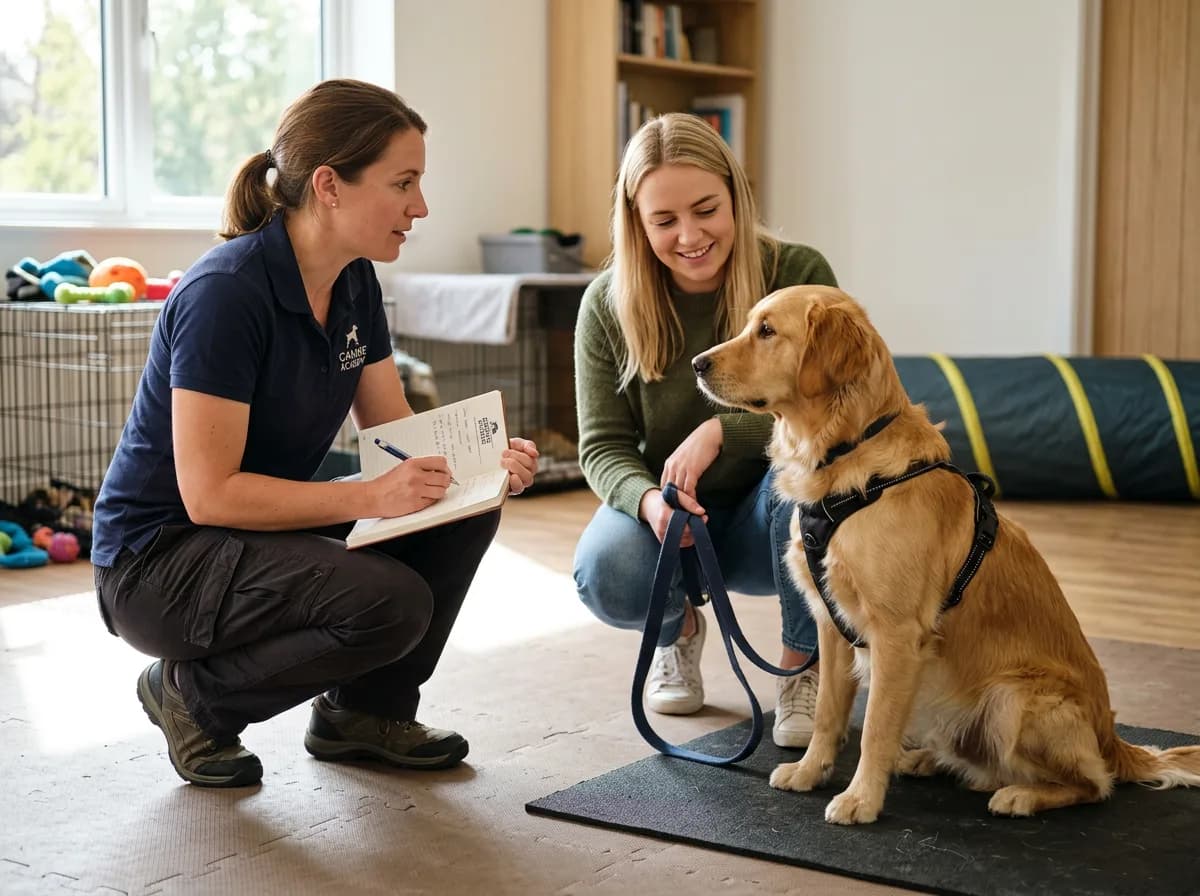
Call a certified professional if the guarding already includes snapping, lunging, or biting; if there are children or vulnerable adults in the home; if the intensity is climbing despite management; or if you feel unsafe intervening. Look for a certified professional dog trainer (CPDT-KA), a Certified Dog Behavior Consultant (CDBC), or a veterinary behaviorist (DACVB). The American College of Veterinary Behaviorists maintains a directory of board-certified veterinary behaviorists, and a vet visit is worth booking too, because pain or an underlying medical issue can lower a dog's threshold for guarding.
- Shock, prong, and "dominance" corrections are the wrong tool for a fear-based behavior. Suppressing the outward guarding without changing the underlying fear tends to produce a dog that guards silently, then bites without warning. The humane, evidence-based path is management plus counter-conditioning, guided by a credentialed professional when the stakes are high.
Frequently Asked Questions
Related on Petful
- Resource Guarding in Dogs: Causes and Fixes
- How to Stop Puppy Barking: By-Cause Fixes
- Puppy Training 101: A Week-by-Week Guide
- Crate Training a Puppy: A Day-by-Day Plan
Run two tracks at once. Manage the environment so the dog cannot rehearse the behavior (furniture off-limits, a house line or crate, separation during high-risk moments), and counter-condition so the approaching person becomes the source of meals, treats, and play. The guarded person should quietly step away at the first subtle sign of guarding, so the dog learns that guarding makes the resource leave. Never punish the growl, and bring in a certified professional the moment snapping, lunging, or biting is involved.
Not in the blame sense. Guarding is a normal, partly heritable canine instinct that can appear in a well-raised dog. That said, some household habits can feed it, like letting a dog Velcro onto one person, controlling access to beds and laps, or accidentally rewarding guarding by retreating when the dog reacts. You are not to blame for the instinct, but you can absolutely change the habits that reinforce it.
It runs from subtle to serious: freezing or going stiff while lying on you, a hard unblinking stare at whoever approaches, body-blocking or climbing into your lap to occupy the space, a low warning growl, then lifted lips, snapping, lunging, or biting if the earlier signals are ignored. The quiet early signs are the ones to catch, because they are your chance to intervene before it escalates.
In a multi-pet home the second dog is seen as competition for access to you. It is common and often situational, flaring on furniture or when both dogs want your attention at once. Feed and reward the dogs separately, avoid forcing them to compete for lap space, reward calm coexistence near you, and manage with gates or tethers so the guarding dog cannot practice driving the other dog off. Escalating conflict between dogs warrants a professional.
Guarding is an individual trait more than a breed one, and it appears across all breeds and mixes. It is somewhat heritable, so it can run in certain lines, and it shows up frequently in rescue dogs whose early experiences taught them that resources are scarce. Any dog of any breed can guard, so judge the individual dog in front of you, not the label.
No, the underlying instinct is not something you caused. Guarding is hardwired and partly genetic. What is within your control is the reinforcement history: if guarding has repeatedly worked (the other dog backed off, your partner retreated), it strengthens. Changing those patterns, plus counter-conditioning, is how you turn it around, and none of that requires self-blame.
Mild guarding is common and very manageable, so it is not automatically alarming. It becomes a genuine red flag when it escalates to snapping, lunging, or biting, when it is aimed at children, or when the intensity keeps climbing despite consistent management. At that point treat it as a safety issue and get a certified behavior professional or veterinary behaviorist involved rather than continuing solo.

Coreen Saito is a pet writer and longtime shelter volunteer with more than a decade in animal rescue. She covers cat behavior, breed care, and the small, ordinary science of sharing a life with companion animals, with a particular focus on honest takes about the products and decisions that actually matter. At home in Arizona, she's outranked by Mac (a dog with the loudest opinion in the house), Rebel (a cat who governs by quiet authority), and Meri (an orange tabby who runs the late shift and the laundry basket). She writes about all three, plus the rescues that keep coming through her life, at LifeWithMinty.com.
Sign up for expert-backed reviews and safety alerts all in one place.