Samoyed Mixes: Traits, Sizes and Care
A Samoyed mix can inherit many combinations of size, coat, energy, sociability and health risk. Parent breeds provide a range of possibilities, not a recipe that splits every trait in half. Plan from both parent ranges, then
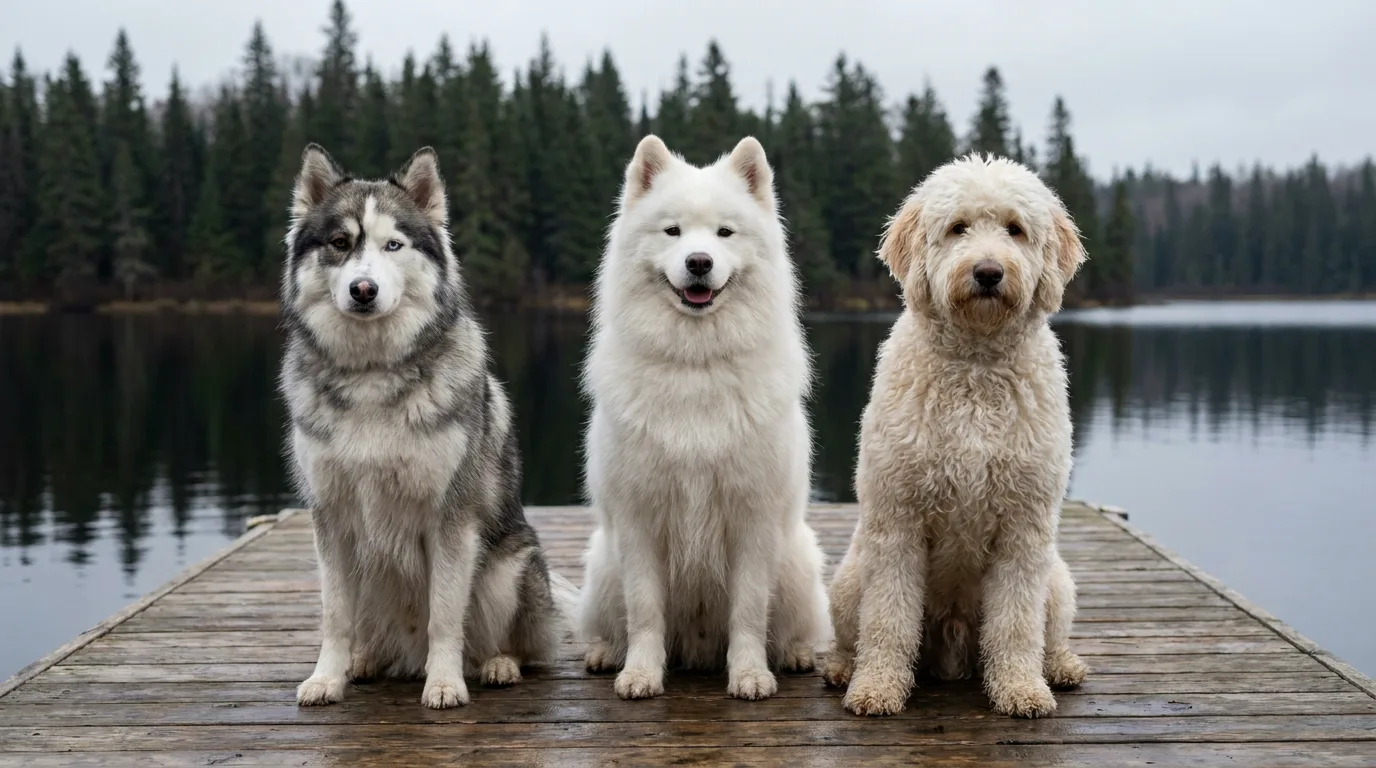
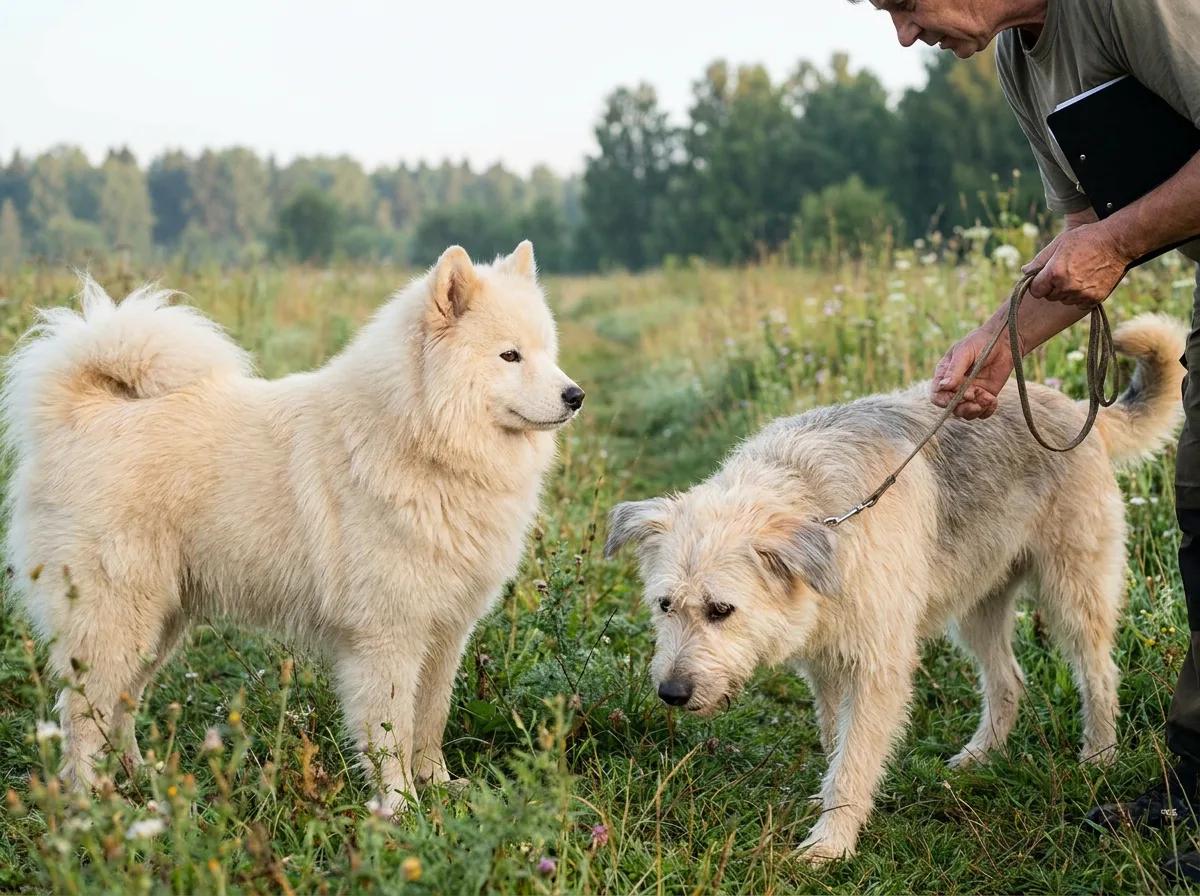
From left: a Samoyed Husky mix, a purebred Samoyed and a Samoyed Poodle mix.
Petful is reader supported. As an affiliate of platforms like Amazon and Chewy, we may earn a commission when you buy through links on this page. There is no extra cost to you.
A Samoyed mix can inherit many combinations of size, coat, energy, sociability and health risk. Parent breeds provide a range of possibilities, not a recipe that splits every trait in half.
The most useful approach starts with the individual dog. Confirm what is documented, observe behavior and body condition, plan for coat and exercise uncertainty, and avoid promises built from a cute hybrid name. A breed-ID DNA test can add clues about the mix, within the limits covered below.

Sign up for expert-backed reviews and safety alerts all in one place.
What a Samoyed mix label can tell you
- 1A mix label does not guarantee ancestry or traits.
- 2Plan from both parent ranges, then assess the individual.
- 3Dense coat and heavy shedding may still occur.
- 4Choose ethical adoption or sourcing and verify records.
A Samoyed mix is a dog with one Samoyed parent or Samoyed ancestry further back, commonly crossed with a Siberian Husky, Poodle or German Shepherd. The label itself may come from documented parents, a seller’s designer name, a previous owner’s report or a shelter’s best guess, and none of those alone proves the percentage of each breed or predicts the adult dog.
Documented parentage provides stronger evidence, and a commercial DNA test can add clues, but DNA limits include reference-database coverage and algorithm assumptions, so individual assessment of the actual dog still sets the care plan. Coat color, ears or tail shape cannot turn a guess into certainty.
Use the label as a list of questions. Ask about adult size range, coat maintenance, vocal behavior, exercise, social comfort and health records. Then build the care plan from what the actual dog shows.

Petful may earn a commission when you click through to Chewy, at no extra cost to you.
Samoyed mixes describe a possible ancestry category, not a predictable recipe. Documented parents, prior history and DNA estimates can add information, but appearance alone cannot establish a percentage. Parent traits create ranges, not averages. Use the label to widen the coat, size, behavior and health needs to consider, then narrow care around direct observation.
Evidence hierarchy
- Documented parents or pedigree
- Reliable rescue or previous-owner history
- DNA result interpreted within its limits
- Observed behavior, coat and health
- Appearance-only guess
Samoyed Husky mix
A Samoyed Husky mix, sometimes called a Samusky, may be athletic, social, vocal and heavily coated. Both lineages can contribute cold-weather adaptations and independent working behavior, but one puppy can differ greatly from a littermate.
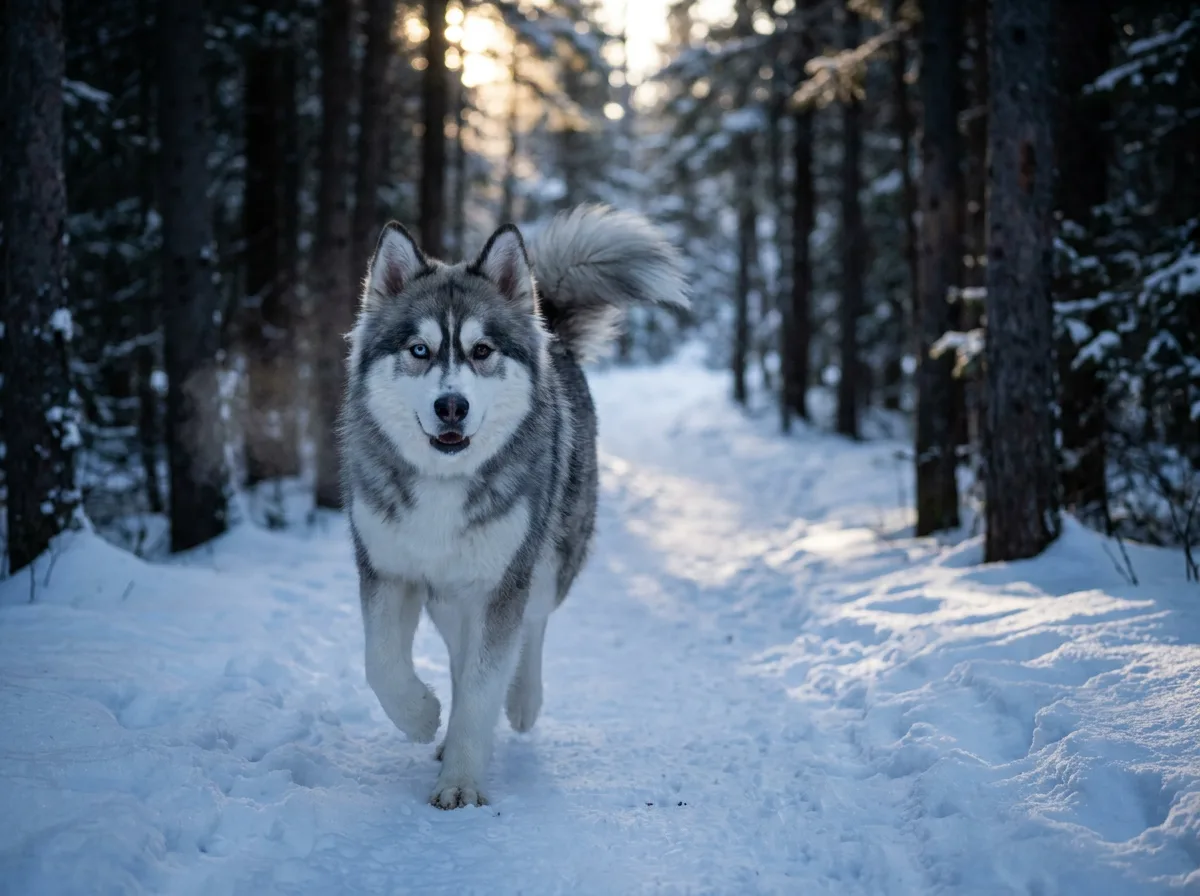
Plan secure containment and gradual recall training. A yard does not guarantee safety or sufficient exercise. Watch heat and humidity, provide cool recovery and never force activity to match a generic hybrid profile.
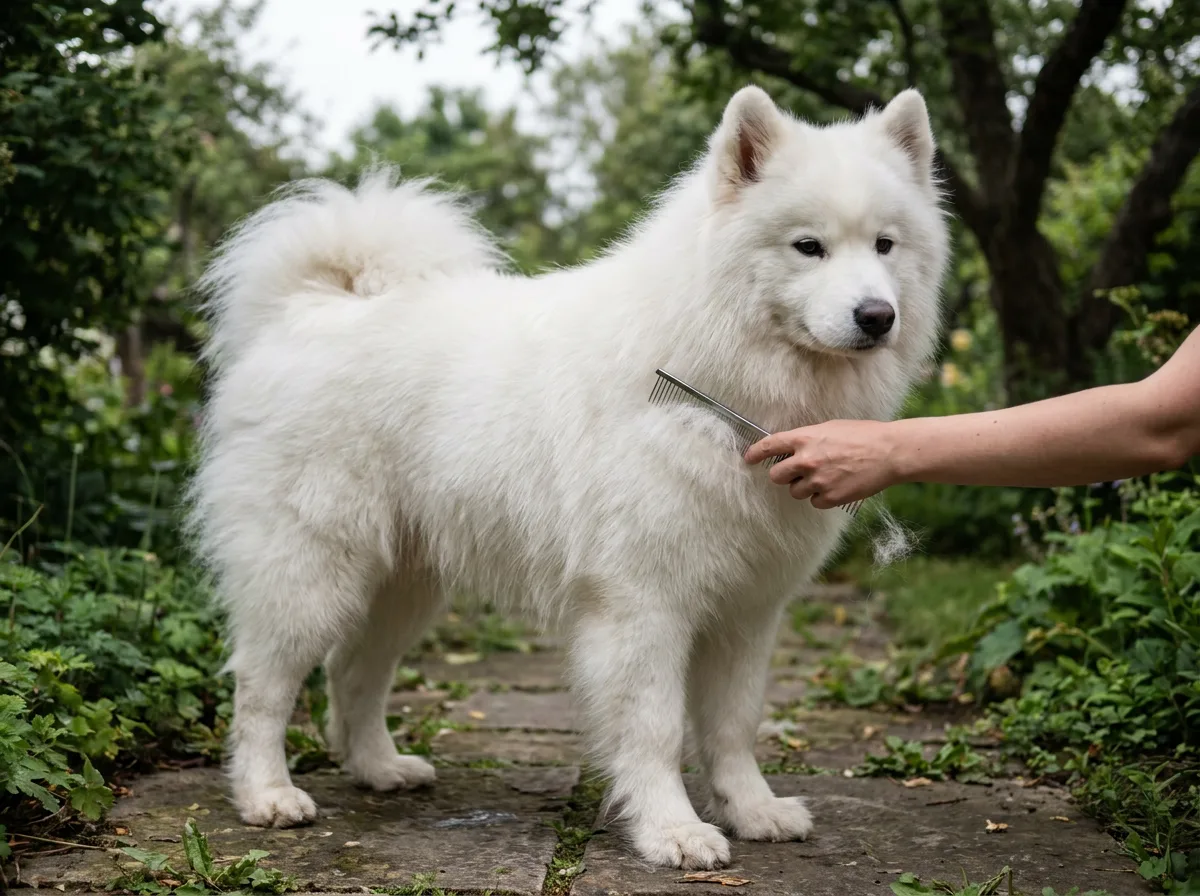
The husky and Samoyed mix coat may release a large amount of undercoat seasonally. Begin cooperative grooming early with an undercoat rake and learn how to check skin and body condition beneath the fur.
A Samoyed Husky mix combines two northern working-dog backgrounds, yet one dog can favor either parent in coat, voice, sociability or chase behavior. Prepare for heavy shedding, secure exercise and warm-weather management. Assess recovery after excitement and handling tolerance instead of assuming that two similar-looking breeds produce one fixed temperament.
Samoyed Poodle mix
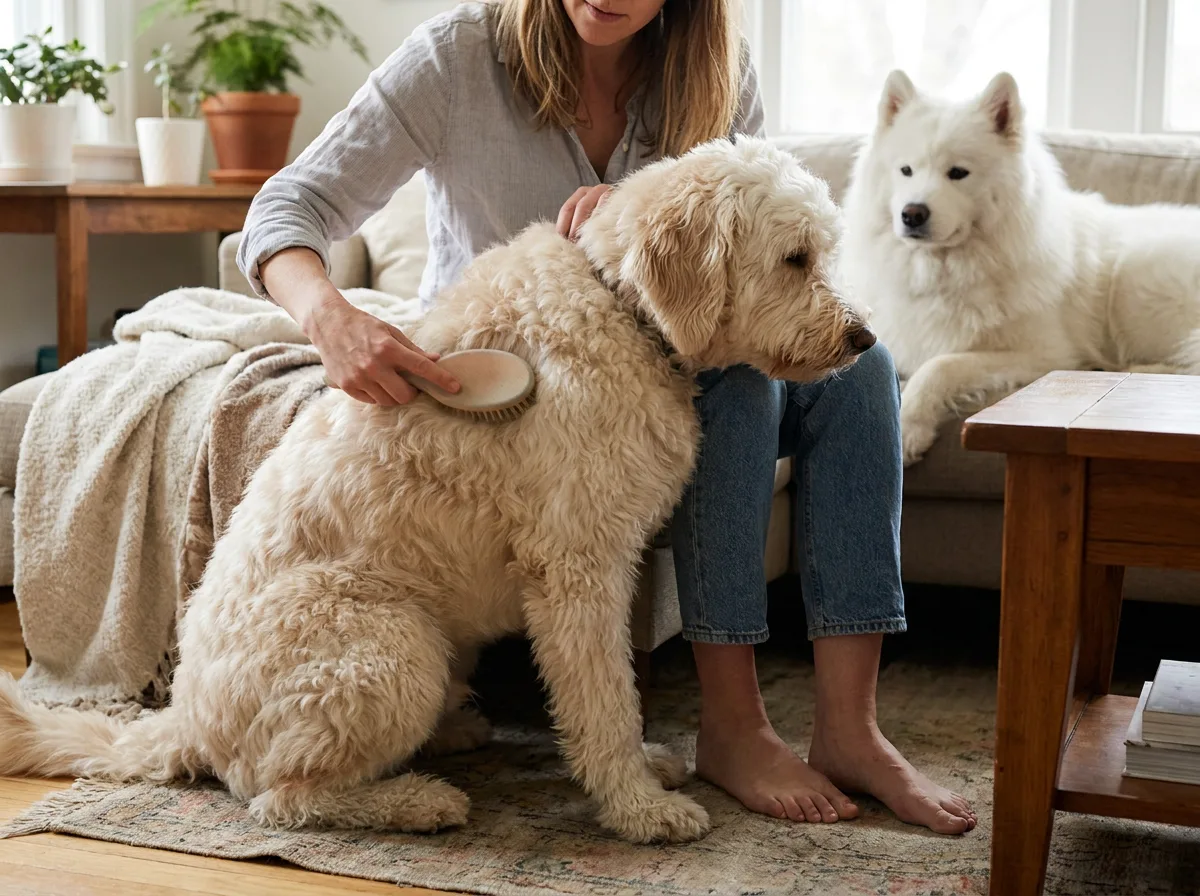
A Samoyed Poodle mix is sometimes marketed as a Samoyedoodle. Coat texture can be straight, wavy, curly or mixed, and shedding can range widely. No cross is guaranteed hypoallergenic.

A wide-spaced stainless steel comb lifts loose undercoat from a Chartreux's dense, woolly coat without stripping it, which is the combing-over-brushing approach the CFA breed standard favors.
Petful may earn a commission when you click through to Chewy, at no extra cost to you.
Curl can trap loose undercoat and form mats close to the skin. Budget for combing, brushing, bathing, thorough drying and possibly professional clipping. Ask a groomer to evaluate the individual coat rather than following a single online schedule. A pin and bristle brush suits longer wavy sections where a slicker can drag through curl.
Both ancestry claims and health testing need evidence. Responsible planning considers the recommended tests for each documented parent breed and does not assume crossing automatically removes inherited risk.
A Samoyed Poodle mix can inherit straight, wavy or curly coat features and may still shed or mat. A Samoyed German Shepherd mix, discussed separately below, introduces another wide size and behavior range. Neither label predicts allergy response, trainability or family safety. Coat inspection, measured body size and observed behavior should drive the care plan.
Samoyed German Shepherd mix
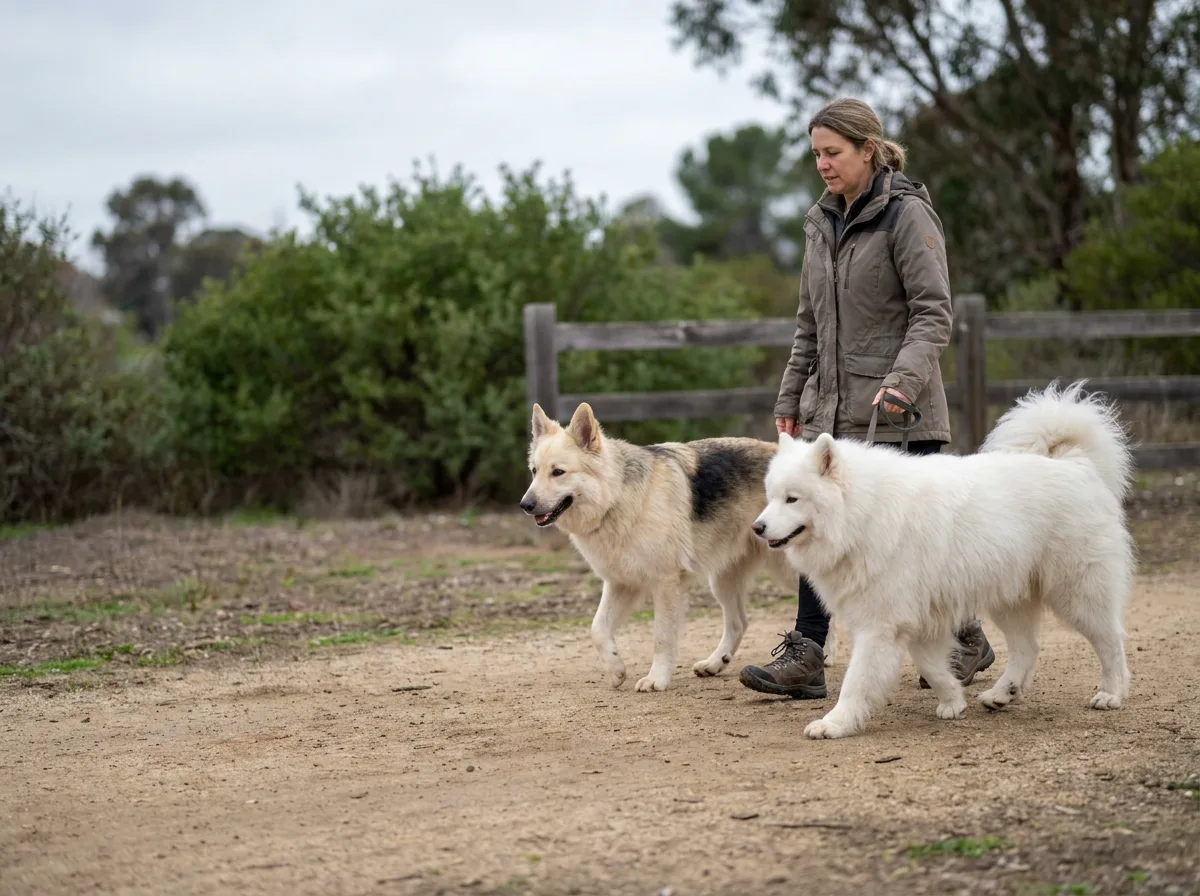
A Samoyed German Shepherd mix may mature into a large, strong dog with substantial exercise and training needs. Protective behavior, sociability and sensitivity vary. Do not select one expecting a guaranteed guard dog or family temperament.
Early management should cover calm greetings, loose-leash walking, handling, recall foundations and safe exposure to ordinary environments. Reward-based work builds skills without relying on confrontation. A front-clip harness reduces leverage while a large adolescent learns loose-leash walking.
Joint health, body condition and gradual conditioning deserve attention. Ask for available parent health records and have the individual assessed by a veterinarian.
- Parent ranges set the bounds. A Samoyed crossed with a German Shepherd could mature anywhere from Samoyed size, 35 to 65 pounds, up to Shepherd size, 50 to 90 pounds, so choose adjustable gear, budget for the heavier coat and confirm adult size only as the dog grows.
Size and growth are ranges
Mixed-breed adult size can fall within or outside simple parent averages because many genes contribute. Use the parent ranges as bounds, not a forecast: the Samoyed and Siberian Husky ranges both sit at roughly 35 to 65 pounds, while a Samoyed German Shepherd mix could reach anywhere from Samoyed size to about 90 pounds. Sex, nutrition, health and individual frame also matter.
| Parent breed | Adult height | Adult weight |
|---|---|---|
| Samoyed | 21 to 23.5 in (male), 19 to 21 in (female) | 45 to 65 lb (male), 35 to 50 lb (female) |
| Siberian Husky | 21 to 23.5 in (male), 20 to 22 in (female) | 45 to 60 lb (male), 35 to 50 lb (female) |
| Standard Poodle | Over 15 in | 60 to 70 lb (male), 40 to 50 lb (female) |
| German Shepherd Dog | 24 to 26 in (male), 22 to 24 in (female) | 65 to 90 lb (male), 50 to 70 lb (female) |
Track puppy weight and body condition with the veterinarian. Avoid overfeeding to reach a predicted size. The dense coat can hide ribs, waist and muscle, so use gentle hands-on checks. For daily walks, a well-fitted dog harness is a practical starting point.

A durable rubber dog toy that can be stuffed with treats and selected by the manufacturer's size guide; supervise use and retire it when damaged.
Petful may earn a commission when you click through to Chewy, at no extra cost to you.
Choose a wire dog crate, gates and transport gear with safe current measurements and room to adjust. Recheck fit through adolescence rather than buying solely from a hybrid chart.
Trait range matrix
- Adult height and weight uncertainty
- Straight, wavy or mixed coat texture
- Low to heavy shedding
- Social to reserved responses
- Moderate to high activity needs
Temperament and training
Breed tendencies can suggest what to prepare for, but training begins with observed motivation and arousal. Some mixes work readily for food, while others value movement, toys or access to the environment. Use what the dog finds rewarding.
Prevent rehearsals of pulling, door rushing, chasing and prolonged barking. A long line protects early recall work. Mat training and planned rest can help an active dog learn to settle after exercise.
If fear, guarding or separation distress appears, seek qualified help early. Calling the behavior a Samoyed trait or German Shepherd trait does not identify its cause or treatment.
Coat care and shedding
Assume a fluffy Samoyed mix may require substantial coat care until the adult coat proves otherwise. Brush to the skin in sections with a slicker brush, comb friction areas and dry thoroughly after bathing. Surface-only brushing can leave hidden mats.
A mixed coat may not respond to the same tools as a purebred Samoyed. An experienced groomer can identify undercoat, curl and clipping needs. Routine shaving should not be used as a substitute for assessment.
Sudden hair loss, redness, odor, sores or intense itching is a health issue, not normal shedding. Contact a veterinarian rather than changing products repeatedly.
Ethical sourcing and adoption
Many wonderful mixed dogs are available through shelters and rescues. Ask what the organization knows, what it inferred and what it observed in foster care. Meet the dog and plan a low-demand transition.
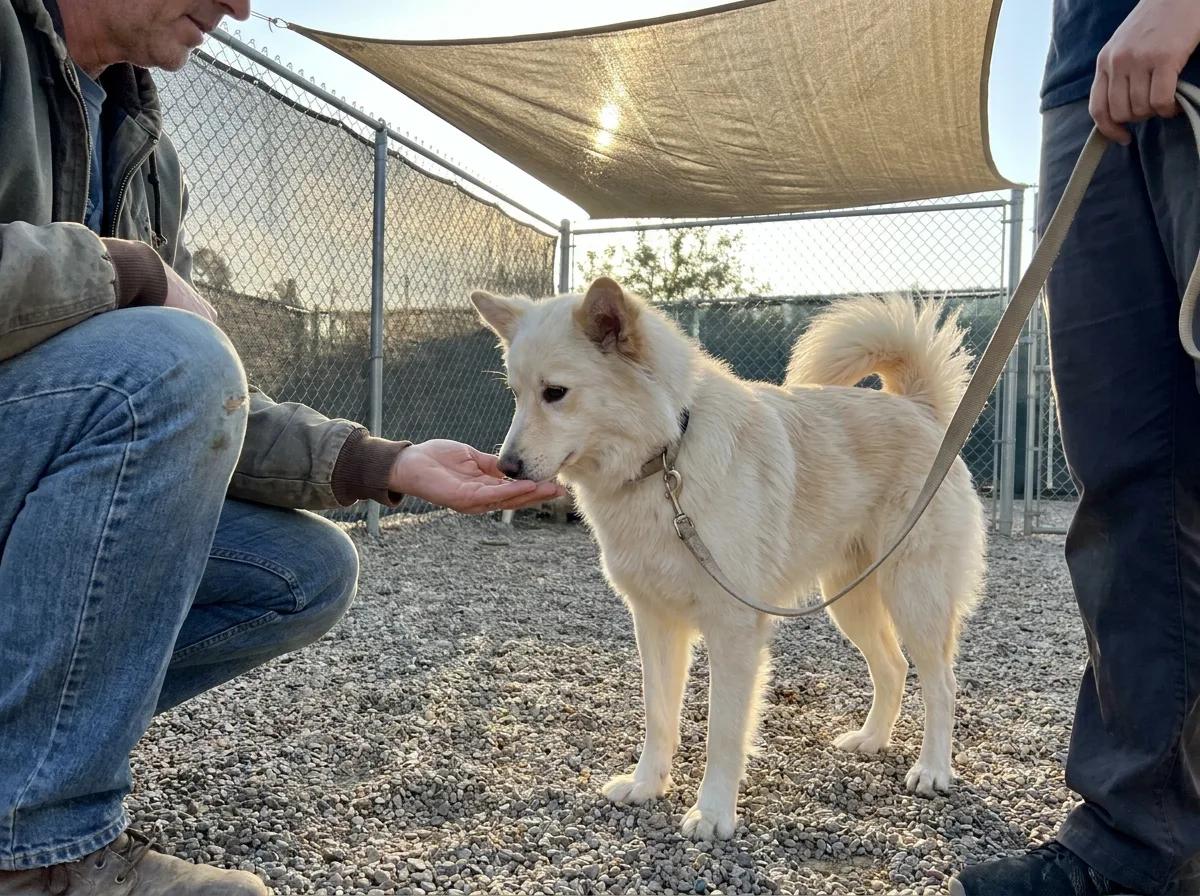
For a deliberately bred litter, identify both parents, verify relevant health results and inspect the contract and living conditions. A designer name and high fee do not prove welfare.
Choose the individual care commitment, not the promise of the best of both breeds. The honest description includes uncertainty and a return or support plan.
Build an individual care profile
Within the first month, record body condition, coat texture, shedding, recovery after exercise, response to handling and comfort alone. These observations turn a vague hybrid label into a usable care profile.
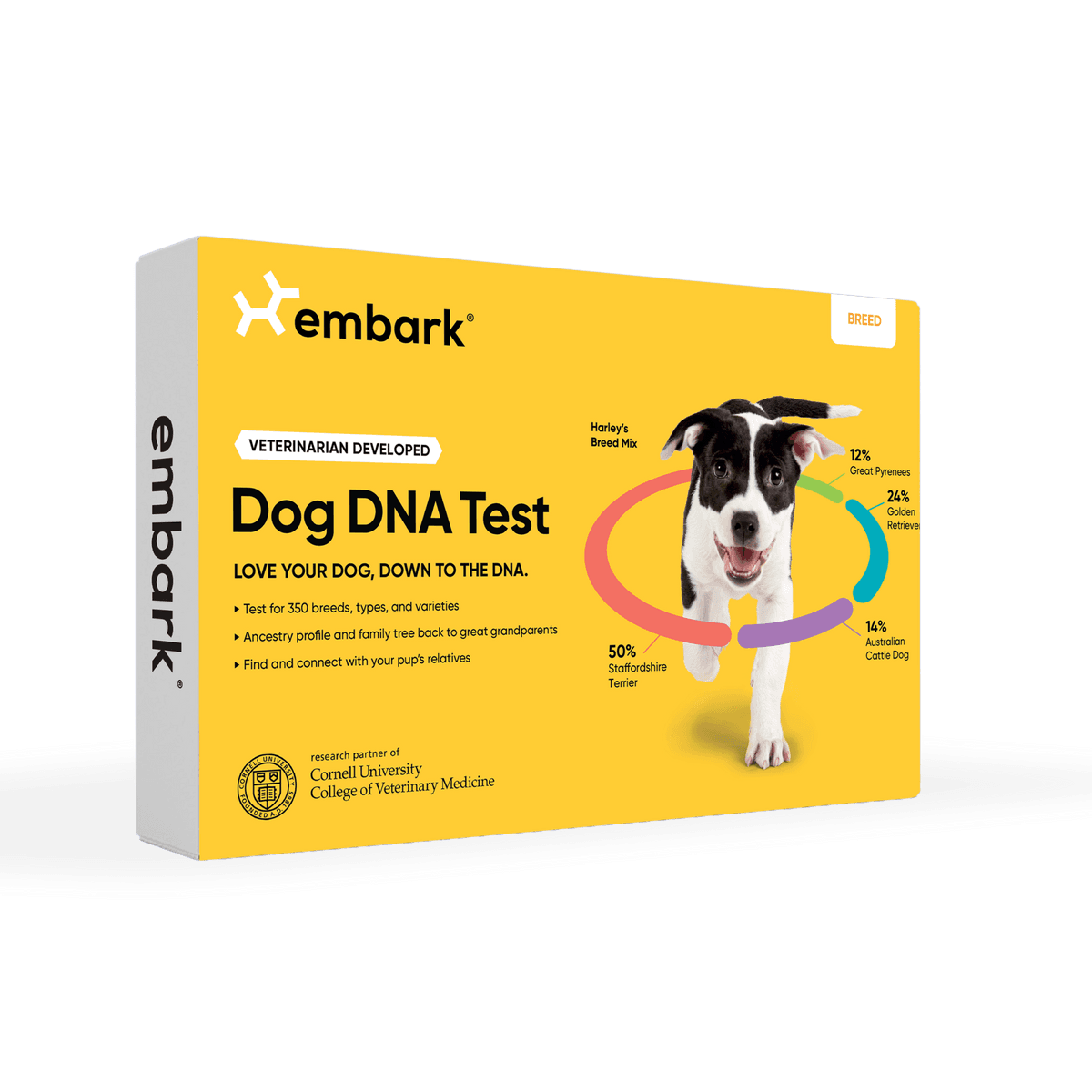
Petful may earn a commission when you click through to Embark, at no extra cost to you.
Share uncertainty with the veterinarian, trainer and groomer. They can assess the dog in front of them without needing a precise ancestry percentage. Update the profile as adolescence and adult coat change reveal more.
The best outcome is not proving the guessed mix correct. It is matching care, management and expectations to the actual dog.
Introductions and household fit
Introduce people and resident dogs with space and short sessions. Protect food, rest areas and valued items until comfort is clear. A friendly first meeting does not prove conflict will never occur.
Use secure separation around cats and small animals while assessing chase behavior. Mixed ancestry cannot guarantee prey drive or safety.
The household fit decision should be based on observed recovery, handling comfort, activity needs and available management. The mix name is secondary.
Review the trait range matrix after 30 days
Review the trait range matrix after the first two weeks, at thirty days and again after the dog has settled into a stable routine. Replace guesses about the mix with observed size, arousal, sociability, coat care, prey interest and recovery. Update management before changing labels. The purpose of a Samoyed mix profile is to widen preparation, then narrow the plan around the individual dog.
Expect traits to recombine
Expect the possible parent traits to recombine rather than average neatly. A mixed dog can resemble one parent in coat, another in size and neither in daily behavior. DNA databases and algorithms can also change. Use ancestry information to prepare a wider range, then let direct observation set exercise, grooming, training and household boundaries.
Practical gear to compare
Compare the four optional products with the mixed dog’s measured body, coat and current behavior rather than a predicted breed size. Recheck fit as a young dog grows and inspect equipment after chewing or heavy outdoor use. Adjustable gear and a DNA result can reduce guesswork, but neither replaces individualized training and handling.
- PetSafe Easy Walk Dog Harness, Red/Black, Medium/Large: offer only after measuring the individual mix; the parent labels do not establish chest size, coat clearance or safe fit.
- aumuca Stainless Steel Dog and Cat Grooming Comb: checks a curly or wavy coat down to the skin after brushing, where trapped undercoat forms mats.
- KONG Classic Dog Toy, Large: select by the individual dog's mouth, chewing style and supervision needs rather than by the Samoyed name in the mix label.
- Embark Breed ID Dog DNA Test Kit: adds ancestry evidence for a dog of uncertain background, read with its database limits in mind and never as a forecast of adult behavior.
Related Samoyed guides
Sources
Questions readers ask
Common Samoyed mixes include the Samoyed Husky mix, sometimes called a Samusky, the Samoyed Poodle mix, often marketed as a Samoyedoodle, and the Samoyed German Shepherd mix, along with shelter dogs labeled Samoyed mix from appearance alone. Labels based on documented parents are far more reliable than ones based on a fluffy white coat, so ask what evidence supports the name before planning around it.
A Samoyed mix is a dog with one Samoyed parent or Samoyed ancestry further back. The label may come from documented parentage, a previous owner’s report, a DNA test or simply appearance, and those carry very different weight. DNA results help but depend on the testing company’s reference database. Plan from both parent breeds’ ranges, then let the individual dog’s size, coat and behavior set the care plan.
The closest look-alikes are other white or mostly white northern and spitz-type breeds. The American Eskimo Dog is a smaller Nordic-type dog, always white or white with biscuit cream, standing 9 to 19 inches across three sizes. The Siberian Husky shares the Samoyed’s height range but comes in many colors, and the Great Pyrenees is a much larger white guardian at 25 to 32 inches. A similar coat does not mean a similar temperament or workload.
Most land somewhere within the two parent breeds’ ranges, though some fall outside them. The AKC lists Samoyeds at 35 to 65 pounds, Siberian Huskies at 35 to 60, Standard Poodles at 40 to 70 and German Shepherds at 50 to 90, so a Samoyed German Shepherd mix can grow much larger than a Samoyed Husky mix. Track the puppy’s growth with the veterinarian rather than buying for a predicted size.
Usually, yes. Samoyed mixes can shed lightly, moderately or heavily depending on the other parent and the coat the individual dog inherits. Straight, wavy or curly hair can also trap loose undercoat and mat, and no cross is guaranteed hypoallergenic. Plan for regular brushing to the skin until the adult coat shows its actual needs.
Many are, but parent breed tendencies cannot guarantee one dog’s behavior. Use foster history and direct observation around adults, children and other animals, supervise interactions and provide a retreat rather than relying on a hybrid label. Size matters too: a large, excitable mix can knock over a small child without any aggression, so calm greetings and management come first.
A purebred Samoyed may be a good family dog when the individual’s behavior, exercise needs, coat workload and handling tolerance fit the household. For a Samoyed mix, the same decision must include the other parentage and direct observation. Neither a breed label nor a friendly first greeting guarantees safe child or pet interactions.
Yes, as individual dogs of any breed can, although Samoyeds are not known as an aggressive breed. Growling, freezing, guarding, snapping or lunging should be assessed from triggers, body language, health and recovery, not dismissed because of a friendly breed reputation. Increase safety and seek qualified veterinary or behavior help when risk is present.

Coreen Saito is a pet writer and longtime shelter volunteer with more than a decade in animal rescue. She covers cat behavior, breed care, and the small, ordinary science of sharing a life with companion animals, with a particular focus on honest takes about the products and decisions that actually matter. At home in Arizona, she's outranked by Mac (a dog with the loudest opinion in the house), Rebel (a cat who governs by quiet authority), and Meri (an orange tabby who runs the late shift and the laundry basket). She writes about all three, plus the rescues that keep coming through her life, at LifeWithMinty.com.
Sign up for expert-backed reviews and safety alerts all in one place.