Samoyed Lifespan and Health Problems
Samoyed lifespan is often discussed as a breed range, but no number predicts one dog's future. Genetics, accidents, body condition, preventive care and the timing of diagnosis all matter. Use a lifespan estimate for

BVMS, MRCVS
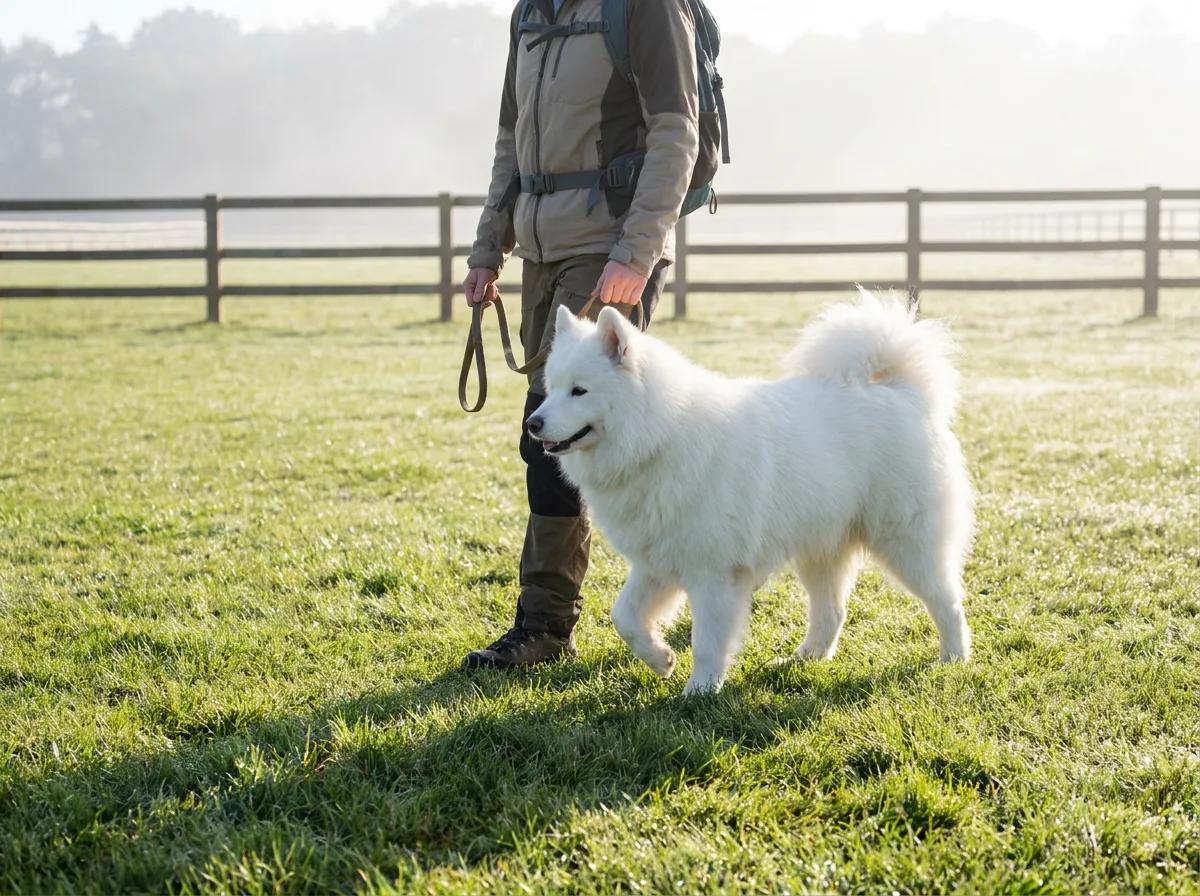
Petful is reader supported. As an affiliate of platforms like Amazon and Chewy, we may earn a commission when you buy through links on this page. There is no extra cost to you.
Samoyed lifespan is often discussed as a breed range, but no number predicts one dog's future. Genetics, accidents, body condition, preventive care and the timing of diagnosis all matter. Use a lifespan estimate for planning, not as a promise or countdown. For reference, the AKC lists a typical Samoyed life expectancy of 12 to 14 years.
A useful health guide connects breed screening with everyday observation. It explains what responsible breeders can test, what owners should monitor, which changes can wait for a routine appointment and which warning signs need urgent veterinary care. For a dog without parent records, a breed and health DNA test can flag some inherited risks to discuss with the veterinarian.

Sign up for expert-backed reviews and safety alerts all in one place.
Samoyed lifespan and healthy aging
- 1Treat lifespan as a planning range, not a guarantee.
- 2Verify each parent’s actual health-test results.
- 3Know the dog’s normal appetite, thirst, movement and behavior.
- 4Use urgent care for sudden severe signs rather than breed assumptions.
The AKC breed profile lists a typical Samoyed life expectancy of 12 to 14 years, while the parent club describes ten years or more with good care. Treat 12 to 14 years as a population planning range, not a prediction for one dog. These figures cannot account for inherited risk, environment, accidents or access to care.
- A 7-year-old Samoyed is not automatically old or near the end of life. Use age 7 as a checkpoint to review body condition, dental care, mobility, screening history and changes from the dog's own baseline. Function and examination findings matter more than a universal senior label.
- Plan for a long commitment without promising a specific age. Keep preventive visits, dental care, parasite control, exercise, nutrition and identification current. Senior care should respond to the dog's function and examination findings rather than begin on one universal birthday.
Healthy aging means preserving comfort and participation. Small changes in pace, sleep, hearing, vision, appetite or house habits may be early clues. A written baseline helps owners notice trends before memory turns gradual change into normal aging.

An orthopedic sofa bed with three bolstered sides for dogs who like to rest their head and joints against a cushion. The supportive foam base cradles hips and elbows, a comforting spot for an older or shaky dog to settle.
Petful may earn a commission when you click through to Chewy, at no extra cost to you.
Samoyed life expectancy is a population range, not an appointment on the calendar. Healthy-aging decisions should start with the dog’s current body condition, mobility, appetite, preventive care and diagnosed conditions. Tracking change across life stages creates a more useful plan than choosing one optimistic age and treating it as a personal guarantee.
Aging observations to record
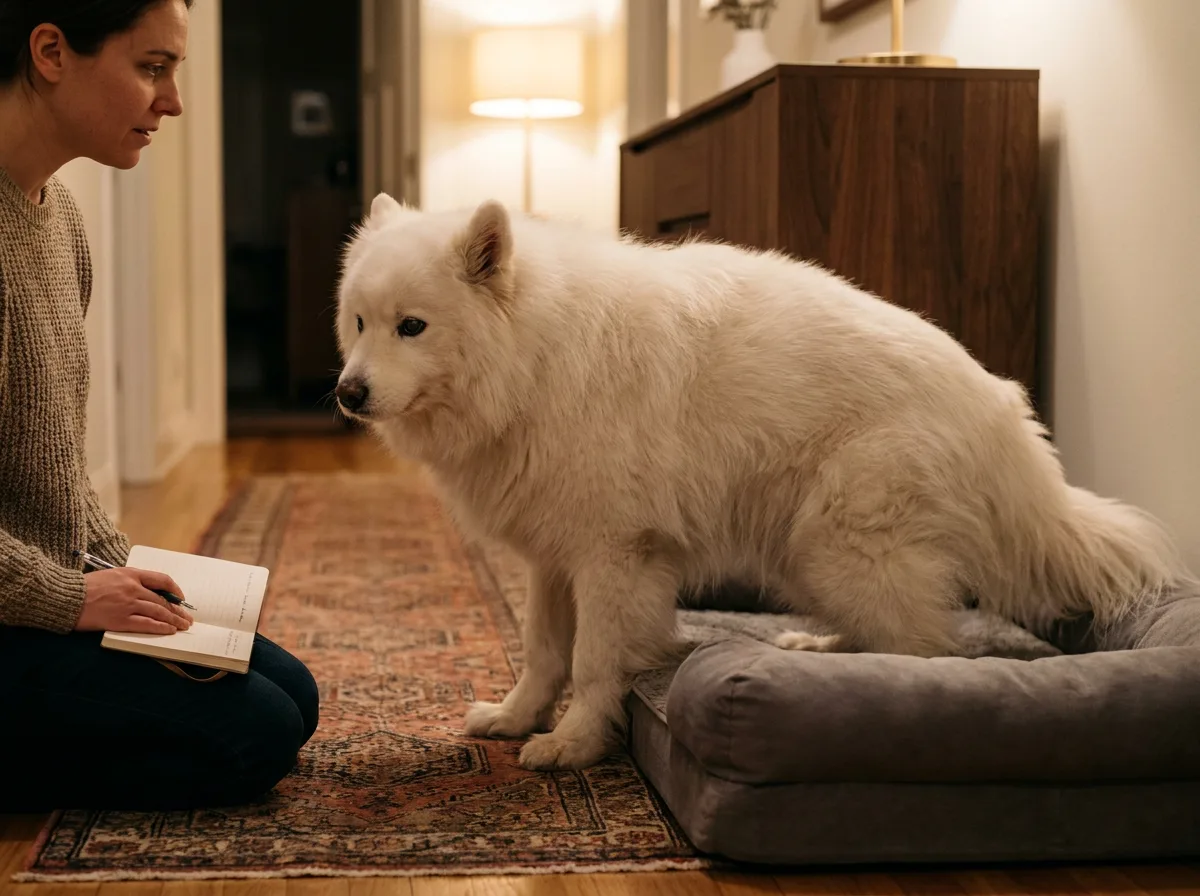
- Body weight and hands-on body condition
- Appetite, thirst and toileting
- Comfort rising, walking and using stairs
- Vision, hearing and sleep changes
- Interest in family activity and recovery after exercise
Health screening before breeding
- Breathing difficulty, collapse, repeated unproductive retching, a swollen abdomen, obvious eye pain or suspected toxin exposure need an emergency clinic now. Gradual weight change, mild stiffness or a slowly changing coat can wait for a routine visit if the dog is otherwise stable.
The Samoyed Club of America and AKC list a breed-specific screening set: hip evaluation, cardiac examination, ophthalmologist evaluation, RD/OSD2 DNA testing and X-linked progressive retinal atrophy (XLPRA1) testing. These tests address known concerns in breeding decisions, but they do not cover every possible disease.
Ask for registered names or numbers and search the OFA database. Read each result, test type and date. A CHIC number means the required testing was completed and made public. OFA explicitly notes that CHIC does not mean every result was normal.
Screening changes risk information, not certainty. A puppy from tested parents can still become ill, and a dog without records is not automatically affected. The responsible decision is to use available evidence honestly and maintain appropriate veterinary care.
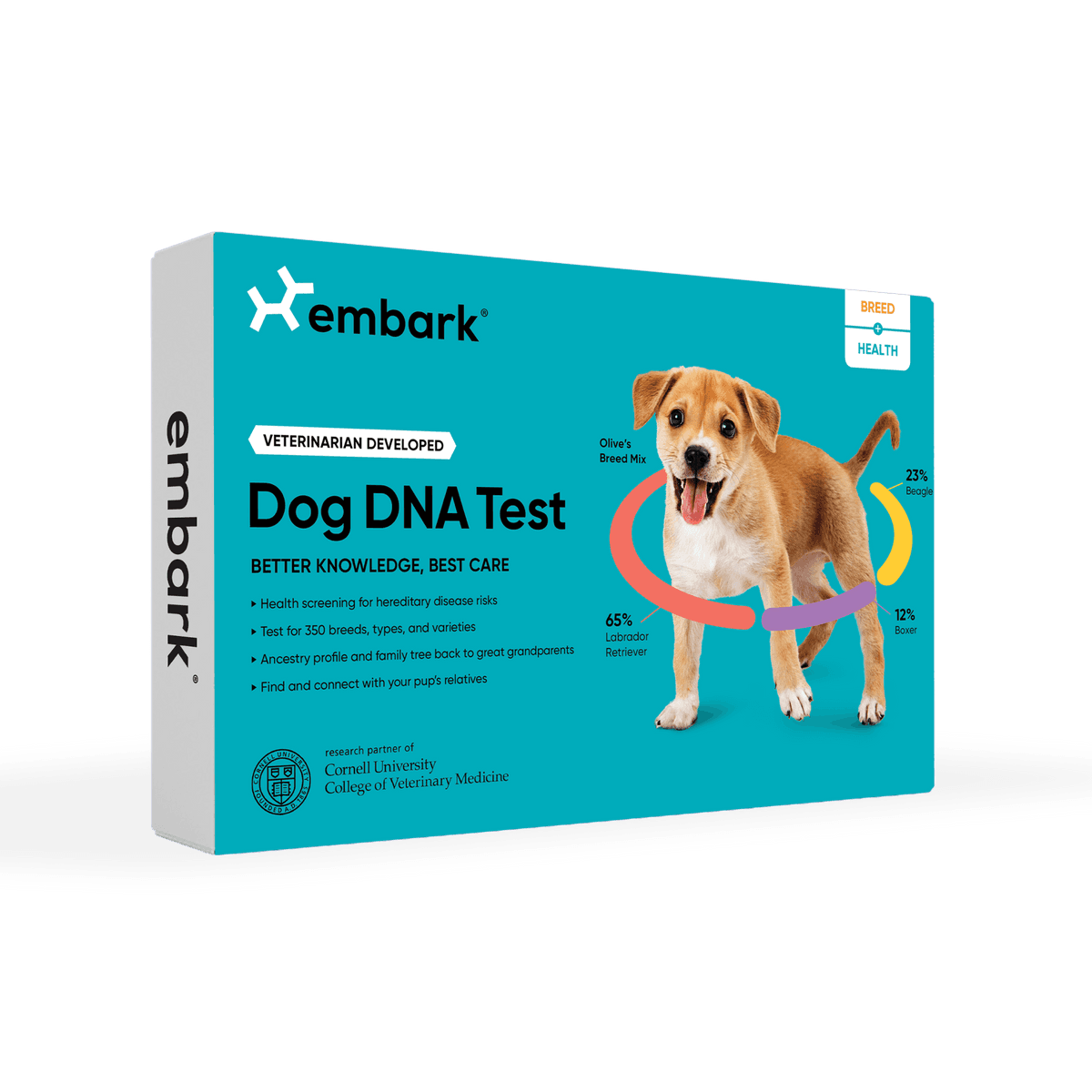
Petful may earn a commission when you click through to Embark, at no extra cost to you.
Samoyed health problems are not predicted by appearance or a breeder’s general reassurance. Verify the named parents’ hip, cardiac, ophthalmology and breed-specific DNA results, then read what each result means. Screening can reduce uncertainty and inform breeding choices, but it cannot prove that every puppy will remain free of inherited or acquired disease. Ongoing care also needs diabetes, kidney and joint monitoring tailored to the individual.
Recommended parent-club screening
- Hip evaluation
- Cardiac examination
- Ophthalmologist evaluation
- RD/OSD2 DNA test
- XLPRA1 (X-linked progressive retinal atrophy) DNA test
Eye health and vision changes
Eye conditions discussed in Samoyeds include inherited retinal disorders and other problems found across dogs. Breeding tests can identify specific genetic risks, while a veterinary ophthalmologist evaluates the eyes directly. One normal puppy exam does not replace the parent-club protocol.
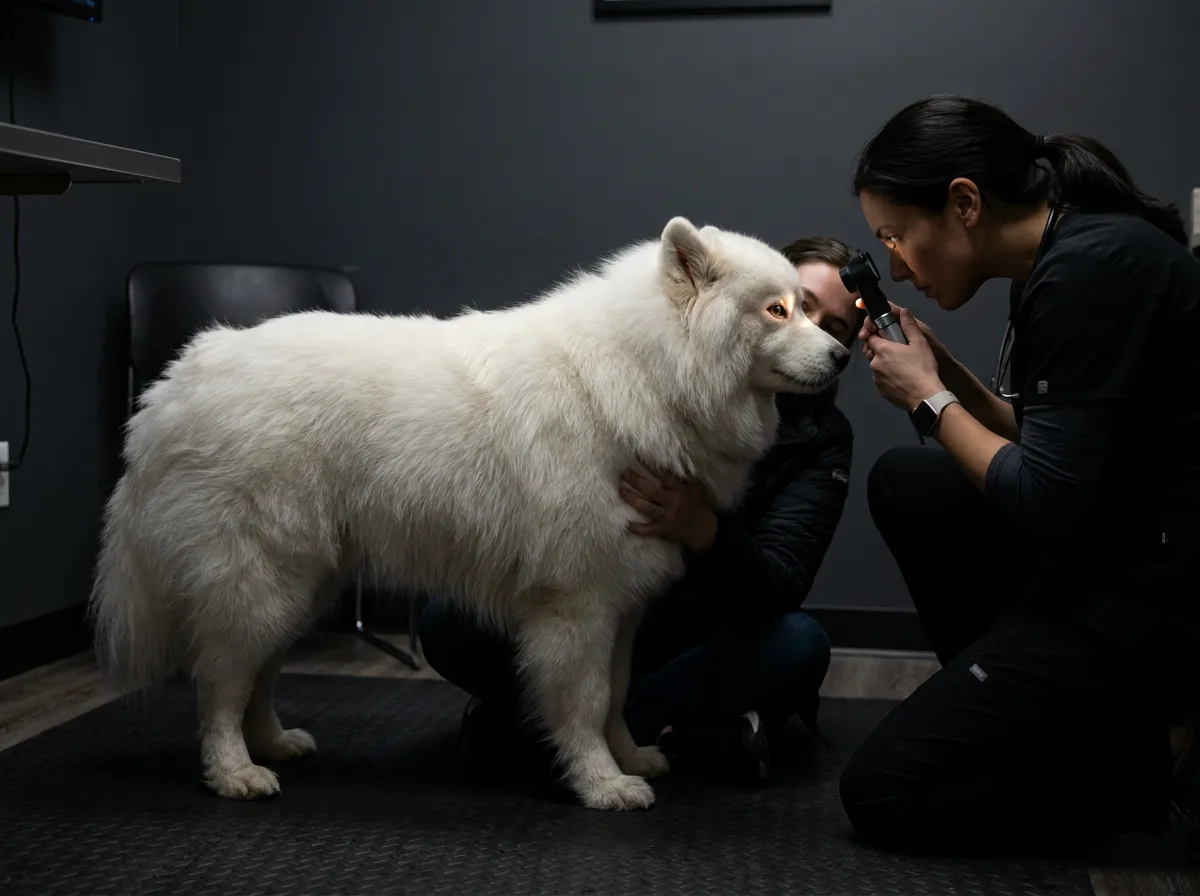
At home, watch for squinting, redness, cloudiness, discharge, bumping into objects or reluctance in dim light. Sudden eye pain, a visibly enlarged eye or rapid vision loss is urgent. Eye medication for another pet should never be reused without veterinary direction.
The American College of Veterinary Ophthalmologists lists Samoyeds among breeds predisposed to primary glaucoma. Predisposition is not diagnosis. Prompt pressure measurement and examination are needed when glaucoma is suspected because vision and comfort can deteriorate quickly.
Normal eye color is not the same as redness, pain, discharge, cloudiness or sudden vision change. Photographs may help document onset, but eye discomfort needs prompt veterinary assessment. Parent screening and DNA results provide inherited-risk context; they do not diagnose the dog showing a new sign.
Hips, joints and mobility
Hip screening for hip dysplasia informs breeding decisions, but owners still need to observe movement across life. Repeated stiffness, reluctance to rise, shortened stride, difficulty jumping or a change in willingness to exercise deserves evaluation. Coat can hide muscle loss and changes in posture. A supportive orthopedic bed is one practical option for a comfortable rest area.

Keep the dog lean enough that ribs can be felt with light pressure, while accounting for individual frame and veterinary advice. Excess weight adds mechanical load and can make activity harder. Sudden restriction or intense conditioning is not a safe correction. Measuring each meal and serving part of it from a slow feeder bowl makes steady portion control easier.
Build fitness gradually with footing, weather and recovery in mind. Puppies need age-appropriate free movement rather than repetitive forced mileage. Seniors may benefit from shorter, more frequent activity and environmental support after the cause of change is assessed. A folding car ramp is one example of that support for a senior that hesitates at the vehicle door.
Diabetes, thirst and weight change
Samoyed health issues can include conditions that affect appetite, thirst, urination or weight, including diabetes mellitus. Those signs are not specific to one disease. Recording when they began and how they changed helps a veterinarian decide what tests are appropriate.
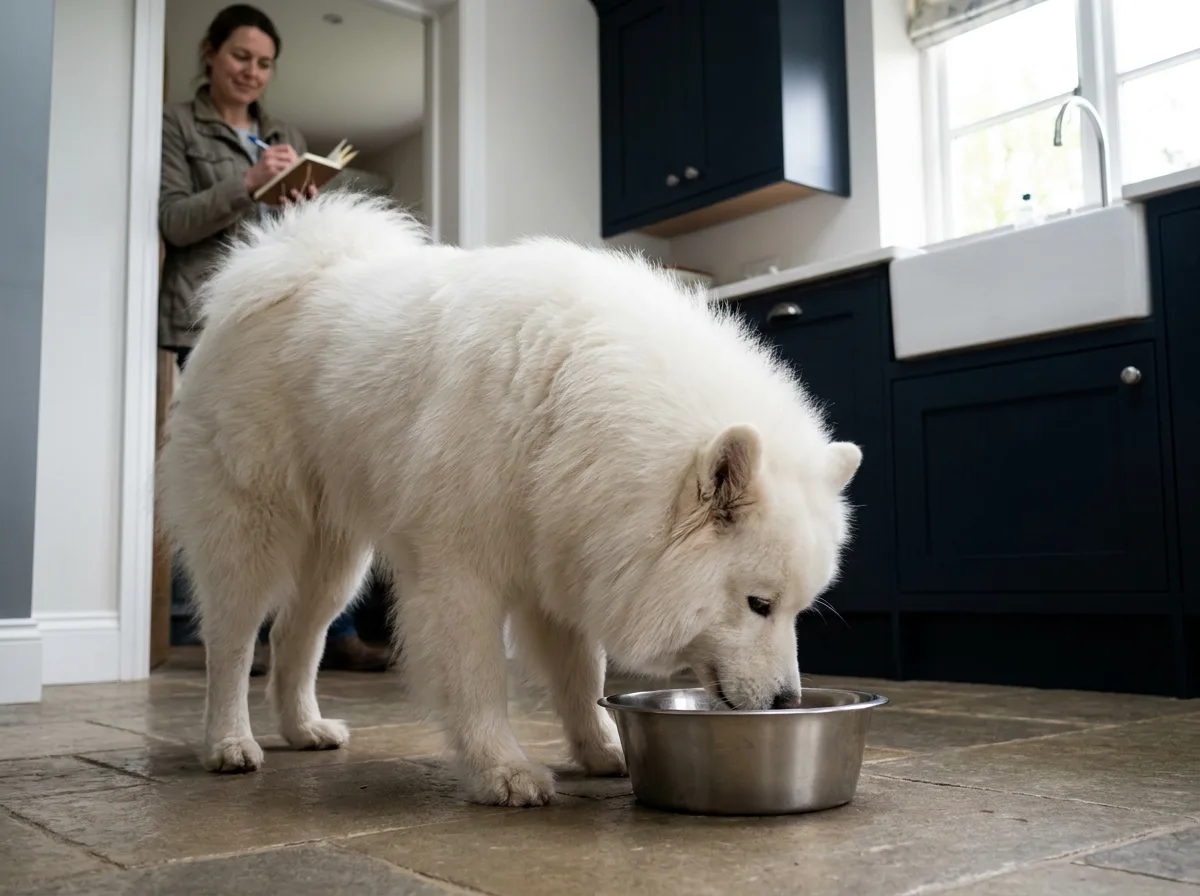
Contact the clinic for sustained increases in thirst or urination, unexplained weight loss, appetite change or recurrent infections. Do not restrict water to reduce accidents. Water access is essential, and dehydration can make an ill dog worse.
Diagnosis requires veterinary examination and testing. Insulin, diet changes and monitoring plans are individualized. Online breed lists should not be used to start treatment or predict outcome.
Kidney and urinary concerns
Inherited and acquired kidney problems are described in the breed. The best-known inherited form is Samoyed hereditary glomerulopathy, an X-linked disease caused by a COL4A5 gene variant: affected males lose protein in the urine and develop rapidly progressive kidney failure, usually within the first year of life, while carrier females usually stay healthy for years but can develop protein loss and, in some cases, kidney failure later in life. Similar signs can arise from many causes, including increased thirst, urination, appetite loss, vomiting, weight loss or poor growth. Puppies with concerning development need prompt assessment rather than a wait-and-see growth comparison.
Blood tests, urine tests, blood pressure, imaging and genetic context may contribute to diagnosis. The appropriate combination depends on age and signs. A family history is useful evidence but cannot confirm or exclude disease by itself.
Keep records from breeders, previous clinics and laboratories. If a hereditary condition is diagnosed, share accurate information with the source and veterinarian so related dogs can be considered appropriately.
Skin, coat and endocrine clues
The dense coat can hide redness, sores, parasites, swelling or changes in body condition. Part the hair with a fine comb during regular grooming and feel the skin. Sudden thinning, brittle coat, persistent odor or intense itching needs more than cosmetic treatment.

VOHC-accepted 4.2-ounce pet toothpaste paired with a dual-ended toothbrush.
Petful may earn a commission when you click through to Chewy, at no extra cost to you.
Skin and coat changes may reflect allergies, infection, parasites, nutrition, hormonal disease or local irritation. Because causes overlap, repeated shampoo changes can delay diagnosis. Photograph a change, note timing and bring the products currently used to the appointment.
Mats can pull painfully and trap moisture. Remove them safely with professional help when needed. Routine shaving is not a cure for a medical coat problem and can make the skin harder to protect during recovery. Short, regular sessions with an undercoat rake keep loose coat from packing into new mats.
Urgent versus routine action guide
| Urgency | Signs | What to do |
|---|---|---|
| Emergency now | Breathing difficulty, collapse, uncontrolled bleeding, repeated seizures, severe weakness, rapidly enlarging abdomen, repeated unproductive retching, obvious eye pain, major trauma or suspected toxin exposure | Go to the nearest emergency hospital and call while traveling so staff can prepare |
| Same-day call | Repeated vomiting or diarrhea, inability to keep water down, sudden lameness, painful urination, marked appetite loss or a new neurologic change | Call the clinic the same day; puppies, seniors and dogs with chronic disease can deteriorate faster |
| Routine appointment | Gradual weight change, mild recurring stiffness, dental buildup or slowly changing coat in a dog that is otherwise stable | Book a regular visit and move the dog up a row if severity or pace changes |
Urgent care is the right call whenever a sign from the first row appears, even if the dog seems to recover. The urgent versus routine action guide is a starting point, not a diagnosis.
Information to give the clinic
- Exact signs and when they began
- Breathing, appetite, drinking and urination changes
- Medications, supplements and possible exposures
- Photos or video when safe to obtain
- Current location and estimated arrival time
Preventive care by life stage
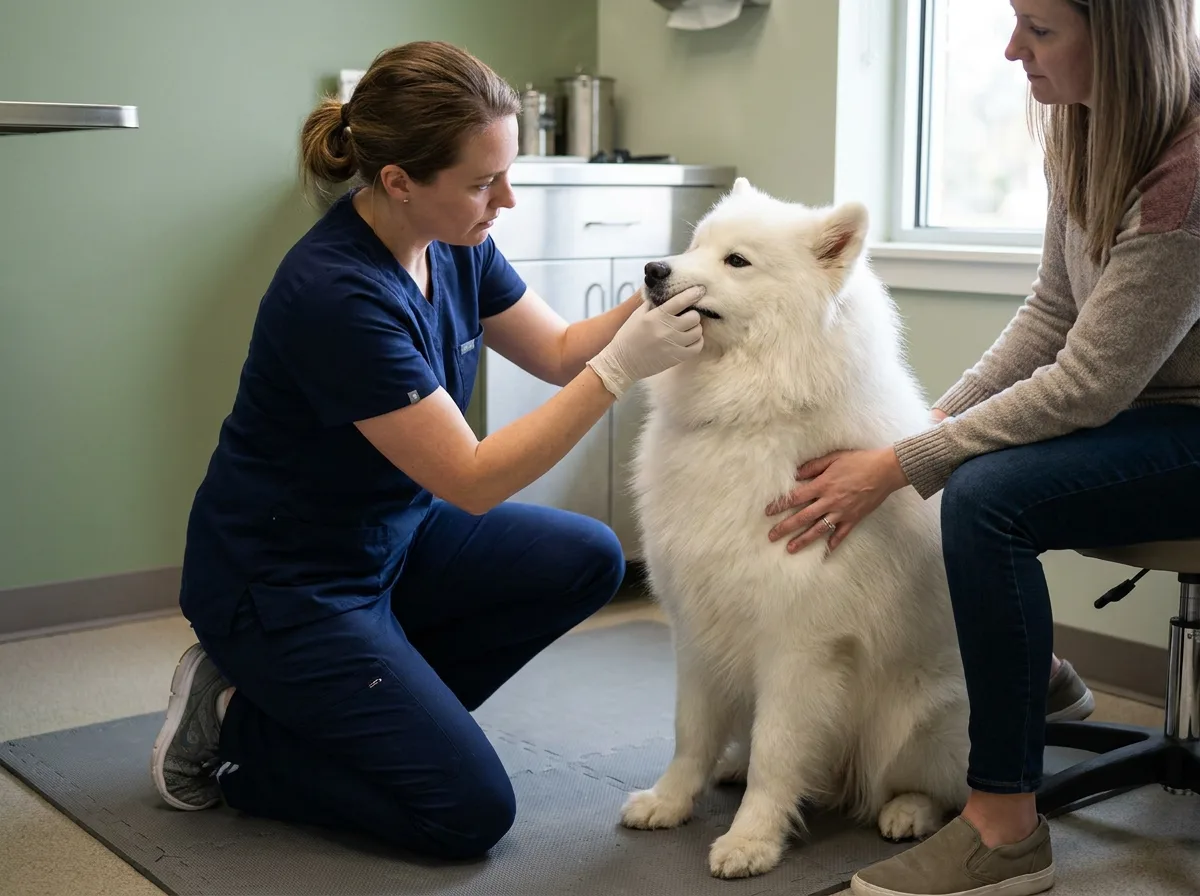
| Life stage | Preventive focus | Ask the veterinarian about |
|---|---|---|
| Puppy | Intake examination, individualized vaccination and parasite plan, growth monitoring, early handling practice and current identification | Nutrition, portion guidance and why unplanned supplements are best avoided |
| Adult | Regular examinations, dental care, weight and body-condition review, parasite prevention and exercise adjusted to climate | Parent-club evaluations if the dog may be bred; ordinary clinical care if not |
| Senior | More frequent monitoring based on findings, with attention to pain, mobility and sensory change | Laboratory screening and home modifications that keep the dog comfortable |
Update the preventive plan after each visit rather than following a fixed breed schedule. Nonbreeding pets still need ordinary clinical care even without parent-club evaluations. Between visits, a finger toothbrush and an enzymatic dog toothpaste keep the home dental routine going.
Turn health records into decisions
Keep the microchip number, medication list, allergies or adverse reactions, vaccine records, laboratory results, insurance terms and emergency contacts in one accessible place. Add the names and results of parent screening for a purchased puppy. A reflective ID tag engraved with a current phone number backs up the microchip if the dog slips away.
Record weight and major changes with dates. A photo of normal standing posture and short video of ordinary movement can provide context if a problem develops later. Avoid turning the record into self-diagnosis.

Get a free quote in 90 seconds. Coverage for vet emergencies like obstruction surgery and allergic reactions.
- AI-powered claims paid in minutes
- Cancel anytime, no fees
- Covers accidents and illnesses
Petful may earn a commission when you click through to Lemonade, at no extra cost to you.
Review the file before travel and leave a care authorization with the responsible person. Fast access to accurate information reduces guesswork during an emergency and helps a new clinic understand the dog.
Questions for the veterinarian
Ask which preventive schedule fits the dog's age, location, travel and health. Bring parent screening records and family history when available, but allow examination findings to drive the plan.
Discuss body condition, dental health, mobility, eye changes and any medication sensitivity recorded in the chart. The parent club notes concern about sulfonamide reactions in the breed, so accurate medication history is useful, but treatment decisions remain veterinary.
Before leaving, confirm which signs should trigger a same-day call and which emergency hospital to use after hours. Write the advice in the health record.
Medication history and adverse reactions
Keep an accurate list of medications, supplements and prior reactions. The parent club highlights concern about adverse reactions to sulfonamide drugs in Samoyeds. That information should be shared with the veterinarian, not used by owners to reject or select treatment on their own.
Ask the clinic to document confirmed reactions and the circumstances. Similar signs after medication can have different causes, so the treating veterinarian must interpret them.
Never use leftover prescriptions or change a dose based on breed information online. Contact the clinic when vomiting, swelling, breathing trouble, collapse or another concerning change follows medication.
Quality of life and end-of-life planning
Quality of life is broader than age. Track comfort, appetite, hydration, mobility, toileting, sleep, social engagement and the balance of good and difficult days. A written record can make gradual change easier to discuss.
Ask the veterinarian what can be treated, what can be supported and which signs indicate suffering. Palliative care, mobility support and environmental changes should be tailored to the diagnosis and family capacity.
Planning ahead does not shorten Samoyed lifespan. It gives the household time to identify emergency contacts, financial limits and humane goals before a crisis makes every decision urgent.
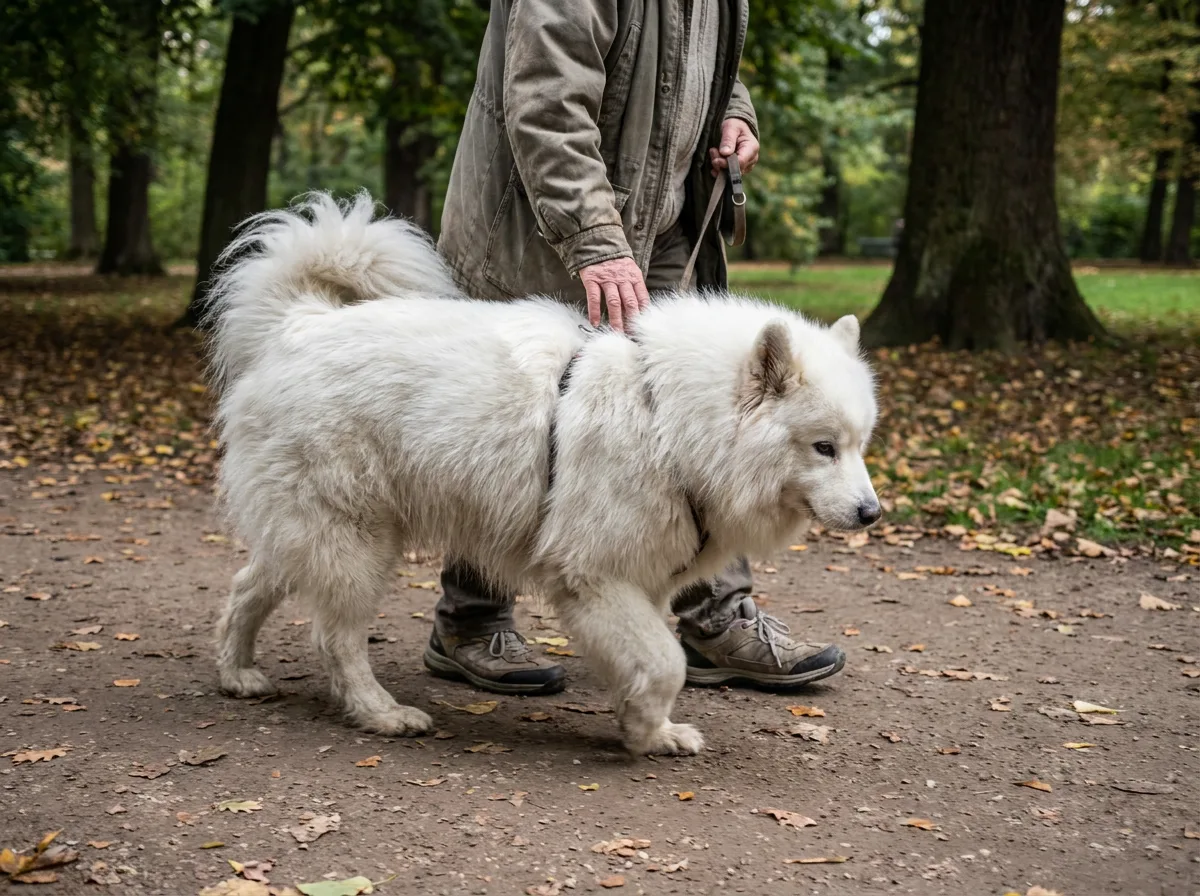
Emergency readiness protects time
Store the regular clinic, nearest emergency hospital and poison-control contact with the dog's records. Know the transport route and how payment authorization works. A current medication list should travel with the dog.
Teach safe loading and identify a second adult who can help. A painful or frightened dog may resist handling, so use barriers and professional guidance rather than risking a bite.
Preparation does not prevent disease, but it shortens avoidable delay. In an emergency, call the clinic and follow its instructions rather than searching for a breed-specific home remedy.
Revisit the record after each visit
Revisit the life-stage prevention record after every wellness visit, new diagnosis or meaningful change in appetite, thirst, movement, vision or behavior. Compare current findings with the dog's own baseline and write down the next monitoring date. Senior care should become more specific as needs change. A lifespan plan is useful because it prompts timely action, not because it predicts one dog's final age.
Ask the right triage question
Ask the veterinarian which signs deserve monitoring, a prompt appointment or emergency care for this dog's age and diagnoses. Bring the timeline, medication doses and any screening documents instead of asking whether a symptom is normal for all Samoyeds. For inherited-risk questions, identify the named dog and family record. Specific context supports triage without turning an article into a diagnosis.
Practical gear to compare
Evaluate the four optional products against the dog’s current mobility, health records and veterinary plan. Confirm dimensions and cleanability for comfort items, and read coverage limits and exclusions for insurance. These products may support daily routines or planning, but none can treat pain, confirm a diagnosis or substitute for screening, examination and prescribed care.
- FurHaven Velvet Waves Perfect Comfort Orthopedic Sofa Cat & Dog Bed with Removable Cover, Brownstone, Large: consider only after measuring the dog and resting area; a supportive surface may help routine comfort but does not diagnose or treat joint pain.
- Embark Breed + Health Dog DNA Test Kit: useful for a dog without parent records, since it screens for many inherited variants; bring any result to the veterinarian rather than treating it as a diagnosis.
- Petsmile Professional Rotisserie Chicken Toothpaste + Toothbrush: supports a veterinarian-approved home dental routine once the dog accepts gradual mouth handling.
- Lemonade Pet Insurance: compare a quote before any diagnosis, checking waiting periods, hereditary-condition coverage, deductible and annual limit for a Samoyed’s age and location.
Related Samoyed guides
Sources
- American Kennel Club Samoyed breed information and standard
- Samoyed Club of America
- OFA CHIC program
- AKC Working Group health testing requirements
- American College of Veterinary Ophthalmologists glaucoma guidance
Questions readers ask
Samoyeds are generally healthy, but the breed has known inherited risks. The parent club screens breeding dogs for hip dysplasia, heart disease, eye disease and two retinal DNA variants, RD/OSD2 and XLPRA1, and the breed is also associated with diabetes mellitus, glaucoma and an inherited kidney disease called Samoyed hereditary glomerulopathy. Verify parent results, keep preventive care current and report changes in thirst, appetite, movement or eyes promptly.
No. With a typical life expectancy of 12 to 14 years, a 7-year-old Samoyed is middle-aged, not near the end of life. Use age 7 as a checkpoint to review body condition, dental care, mobility and any change from the dog’s own baseline with the veterinarian, and ask whether more frequent exams or laboratory screening make sense from here.
Typically 12 to 14 years, according to the AKC breed profile, while the Samoyed Club of America describes ten years or more with good care, nutrition and exercise. Treat that as a population range, not a promise for one dog. Genetics, accidents, body condition, dental and preventive care, and how quickly problems are diagnosed all shape an individual outcome.
Reported concerns include hip dysplasia, inherited retinal disease, primary glaucoma, diabetes mellitus, heart conditions screened by cardiac exams and Samoyed hereditary glomerulopathy, an inherited kidney disease that mainly affects young males. The parent club also notes more frequent adverse reactions to sulfa drugs. Normal parent screening lowers some risks but cannot guarantee lifelong health.
The parent club recommends a hip evaluation, cardiac examination, ophthalmologist evaluation and DNA tests for RD/OSD2 and X-linked progressive retinal atrophy (XLPRA1). Verify the named sire and dam in the OFA database and read each result. A CHIC number confirms that required testing was completed and made public, but it does not mean every result was normal or guarantee a healthy puppy.
Samoyeds can inherit retinal disorders, including the conditions targeted by the RD/OSD2 and XLPRA1 DNA tests, and the American College of Veterinary Ophthalmologists lists the breed among those predisposed to primary glaucoma. Breeding dogs should also have an ophthalmologist evaluation. At home, squinting, redness, cloudiness, an enlarged eye or sudden vision loss needs prompt veterinary attention.
BVMS, MRCVS
Dr. Pippa Elliott, BVMS, MRCVS, is a veterinarian with nearly 30 years of experience in companion animal practice. Dr. Elliott earned her Bachelor of Veterinary Medicine and Surgery from the University of Glasgow. She was also designated a Member of the Royal College of Veterinary Surgeons. Married with 2 grown-up kids, Dr. Elliott has a naughty Puggle named Poggle, 3 cats and a bearded dragon.
Sign up for expert-backed reviews and safety alerts all in one place.