Samoyed Puppies: Care, Training, Growth and Sourcing
Samoyed puppies are bright, social and visually irresistible, which is exactly why sourcing decisions need evidence rather than urgency. A responsible plan verifies the adults behind the litter, the puppy's care record, the
Petful is reader supported. As an affiliate of platforms like Amazon and Chewy, we may earn a commission when you buy through links on this page. There is no extra cost to you.
Samoyed puppies are bright, social and visually irresistible, which is exactly why sourcing decisions need evidence rather than urgency. A responsible plan verifies the adults behind the litter, the puppy's care record, the contract and the seller's willingness to remain accountable.
The first year then shifts from shopping to development. Safe confinement, sleep, socialization, reward-based training, grooming practice and veterinary care matter more than perfect obedience. The goal is a resilient young dog whose needs fit the household, not a puppy rushed through milestones. A puppy exercise pen or a crate with a divider gives that confinement a safe shape from the first night.

Sign up for expert-backed reviews and safety alerts all in one place.
Samoyed puppy sourcing checklist
- 1Verify parent identities and health results independently.
- 2Compare written records and support, not sales language.
- 3Protect sleep, gradual socialization and age-appropriate activity.
- 4Start cooperative grooming and training on the first calm day.
A search for a Samoyed puppy or Samoyed puppies for sale can surface national clubs, local breeders, rescues, marketplaces and copied advertisements in the same result set. Treat them as different source types. Start with identity: who owns the adults, where the litter is raised and which organization can verify the records.
The Samoyed Club of America advises buyers to look for hip, cardiac and eye evaluation plus the breed-specific DNA tests recommended for Samoyeds. Ask for registered names or numbers, then search the OFA record yourself. A screenshot or a claim that a veterinarian checked the dog is not the same as the named result.
A responsible source asks questions about the home, discusses the breed's coat and social needs, uses a written contract and has a return plan. No single badge guarantees quality, so assess housing, adult condition, early experiences, veterinary records and support together.

A large-breed puppy recipe to discuss with your veterinarian when planning growth-stage feeding. Adjust portions to the puppy's condition and growth.
Petful may earn a commission when you click through to Chewy, at no extra cost to you.
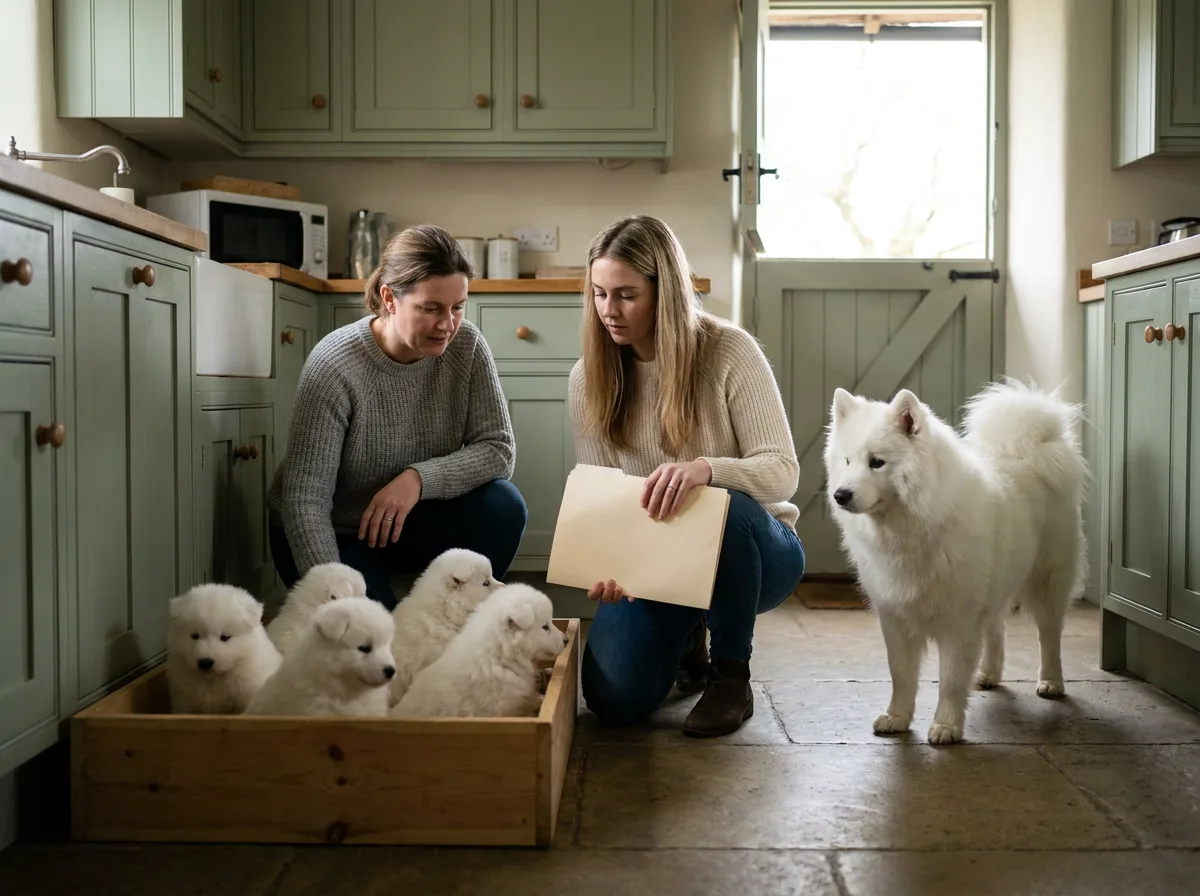
Photos sell Samoyed puppies, but the usable evidence is the named parent record, contract, veterinary history and the source’s return policy.
Records to verify before a deposit
| Record | What to check | How to verify |
|---|---|---|
| Parents’ registered identity | Registered names or numbers for both the sire and the dam | Match them to the registration papers and use them for your own OFA search |
| Parent health results | Hip, cardiac and eye evaluations plus RD/OSD2 and XLPRA1 DNA tests, with dates | Search the OFA database yourself and read each result |
| Puppy veterinary record | Examination, vaccines, parasite care and microchip | Ask the issuing clinic to confirm anything that looks inconsistent |
| Contract and pickup plan | Health terms, return policy and handoff arrangements | Read the full signed copy before any money changes hands |
Red flags and puppy scams
- Search both parents’ registered names in the OFA database yourself, read the contract and return terms, and see where the litter is raised in person or on live video before sending money. A screenshot, a deadline or a cheap transport fee is not evidence.
Urgency is a poor substitute for proof. Be cautious when a seller refuses live contact, will not show where the puppy is raised, changes payment instructions or adds repeated transport fees. Reverse-search photos and contact clubs or clinics through independently located channels.
A low price does not prove fraud and a high price does not prove welfare. Checking records first separates price from identity, health evidence and accountability. Preserve messages, invoices and the contract, and use a payment method whose terms you understand.
Do not let a deposit turn into pressure to ignore new concerns. If the story changes, the puppy cannot be verified or records conflict, pause. The FTC warns that fake pet listings use irresistible photos, push buyers to pay up front and demand gift cards, payment apps, cryptocurrency or wire transfers.
Petful may earn a commission when you click through to Chewy, at no extra cost to you.
Listings for Samoyed puppies for sale should be treated as advertisements until identity and records are verified. Anyone advertising Samoyed puppies still needs to identify both parents, show where the litter is raised, explain health testing and use a traceable payment process. Scam and welfare red flags include urgency, copied photographs, gift-card demands and refusal to meet by secure video. Any one is a reason to stop.
Rescue and adoption options
Samoyed adoption may involve a national breed rescue, local shelter, foster network or owner rehoming. Availability is unpredictable, and a dog described as a Samoyed mix may have unknown ancestry. Ask what staff observed after the dog had time to settle.
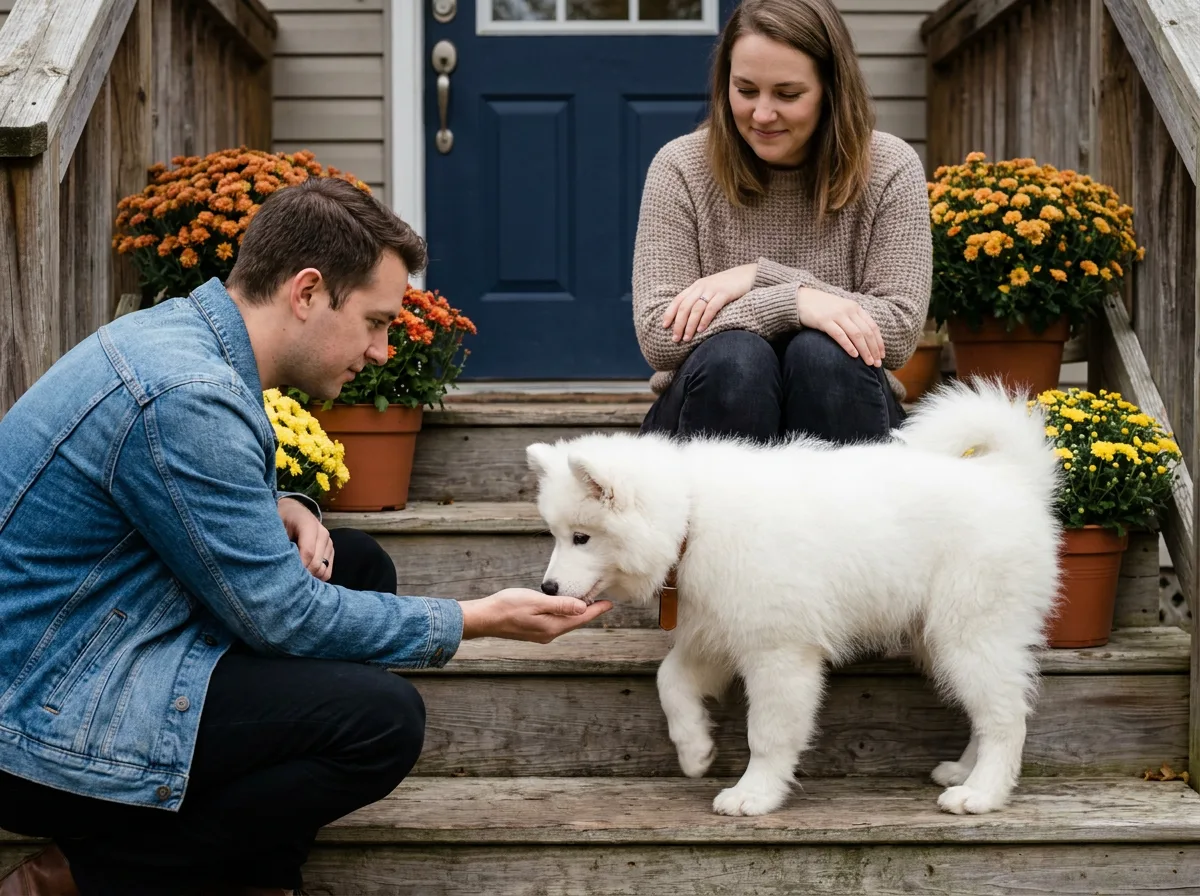
For an adult, discuss handling, grooming, confinement, vocal behavior, other animals and medical needs. For a young puppy, ask how the litter arrived and what follow-up care is due. A transparent organization distinguishes documented history from best estimates.
Meet the dog more than once when practical. A quiet shelter dog may become more active at home, while an overwhelmed dog may look less social than usual. Plan decompression, secure transport and a low-demand first week.
Adopting through a Samoyed rescue requires the same record-first judgment. Ask what history is documented, what foster caregivers directly observed and which medical or behavior needs transfer with the dog. Rescue labels may be provisional, so plan for the individual in front of the household. A quiet transition and a written return pathway matter more than proving a perfect pedigree.
Questions for a rescue or foster
- What behaviors were seen in the home and outside?
- How does the dog respond to brushing and restraint?
- What medical records and medications transfer?
- What support or return policy is available?
The first 72 hours at home
Set up one quiet rest area, predictable toilet trips, measured meals, water and simple boundaries such as a dog gate and playpen before arrival. Keep visitors and outings light. A first week decompression plan gives the puppy time to sleep and learn where safety, food and relief happen.
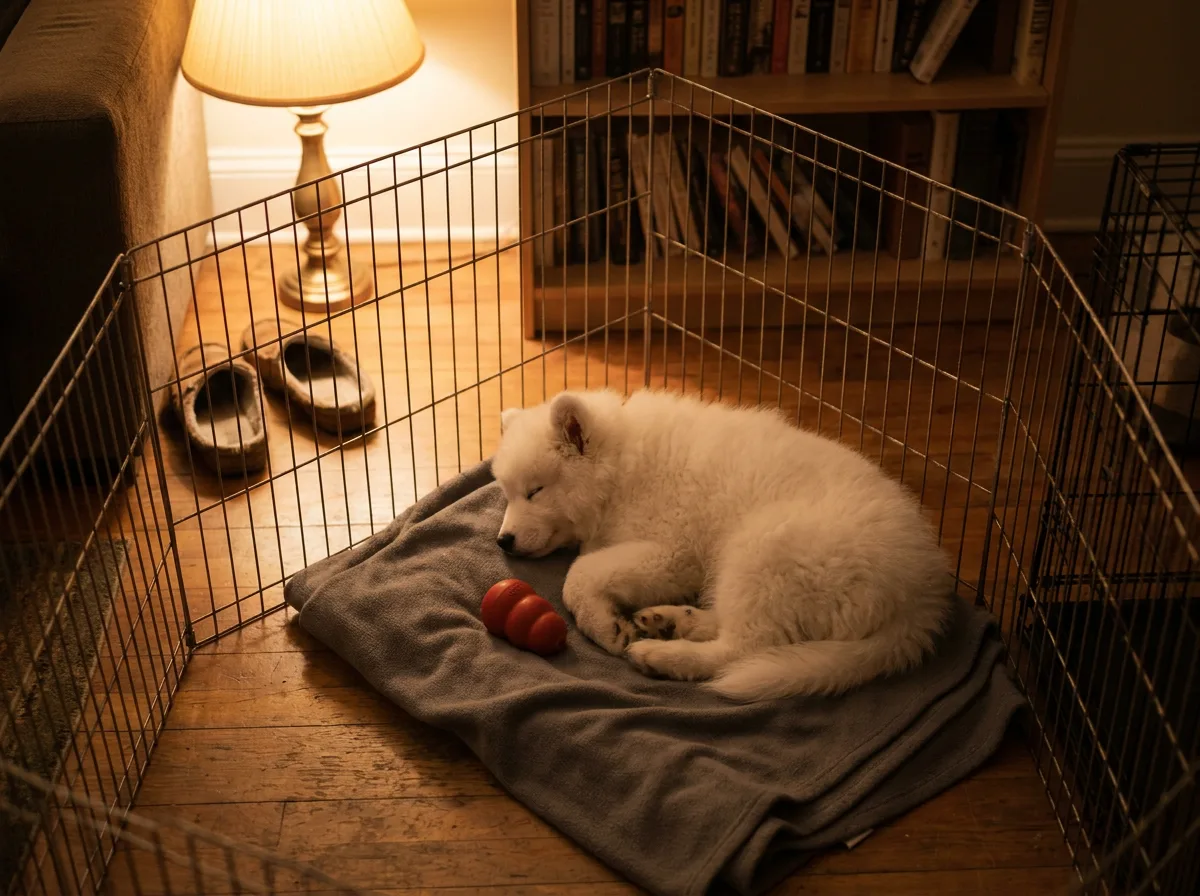
Use a crate or pen as a supported rest space, not punishment. Stay close at first, reward voluntary entry and increase separation gradually. Overnight waking and accidents are normal learning events; clean calmly and adjust the schedule.
Book a veterinary intake visit and bring every record. Confirm the puppy's identification, current health, vaccine and parasite plan, nutrition and next preventive steps. Contact the clinic promptly for repeated vomiting or diarrhea, breathing trouble, collapse, severe lethargy or refusal to drink.
Socialization without flooding
Socialization means safe, positive exposure and the ability to recover, not meeting the maximum number of people and dogs. Pair new surfaces, sounds, handling, vehicles and calm people with food, play or distance. End before the puppy becomes overwhelmed. A lick mat spread with a little of the puppy’s measured food gives a calm pairing during handling practice and new sounds.
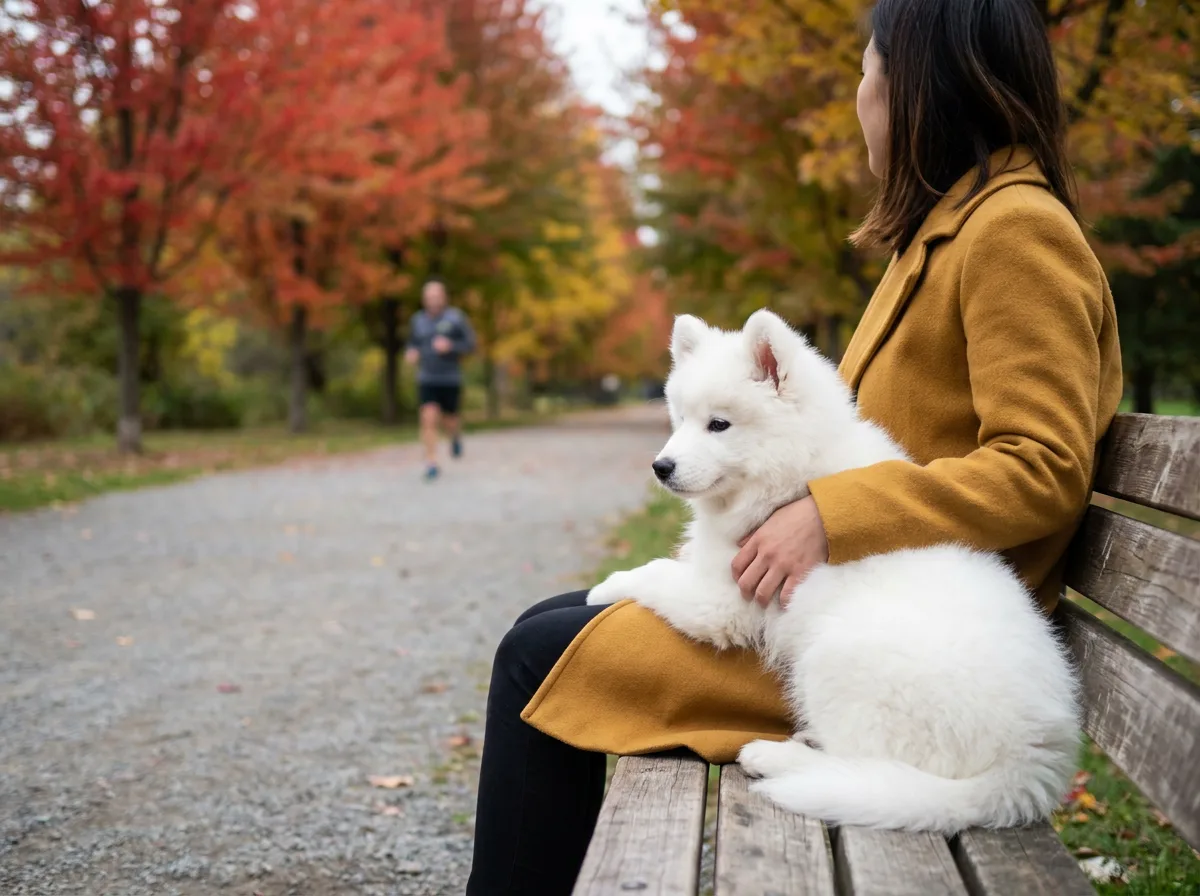
Avoid forced greetings. Let the puppy observe from a comfortable distance and choose whether to approach. Well-run puppy classes can help when health precautions, reward-based methods and controlled groups are clear.
Record what the puppy noticed, the distance, body language and recovery time. That log is more useful than a checklist marked complete after one frightening event. Ask a qualified trainer early if fear or frantic arousal is increasing.
Training and daily rhythm
Begin with name response, toileting, recall games, a calm introduction to a padded puppy leash, trading objects and settling. Keep sessions brief and successful. How to train a Samoyed puppy is less about drilling commands than arranging many easy repetitions in ordinary life.
Sleep is part of learning. Overtired puppies often become mouthier and less able to respond. Alternate activity with protected rest, and give age-appropriate chewing outlets. Prevent rehearsals of counter surfing, door rushing and pulling through gates and barriers.
All household members should use the same cues and reinforcement rules. If one person rewards jumping while another punishes it, the puppy receives an unstable lesson. Write a simple family plan and review it each week.
First-month training priorities
- Name response and recall games
- Toileting rhythm and quiet rest
- Comfort with collar, harness and leash
- Cooperative brushing, feet and mouth handling
Growth, exercise and feeding
Puppy growth is uneven. Use the veterinarian's body-condition assessment and a growth trend rather than pushing toward an online target weight. The heavy coat can hide ribs and waist, so learn a gentle hands-on check.
Choose a complete and balanced puppy food appropriate for the dog and follow the veterinarian's portion guidance. Measure meals, count training rewards and change foods gradually. Sudden restriction or supplementation can create problems rather than improve growth.
Age-appropriate activity means free play, exploration and short skill sessions rather than repetitive forced mileage. Avoid using exhaustion as the behavior plan. Increase duration gradually and stop when gait, enthusiasm or recovery changes.
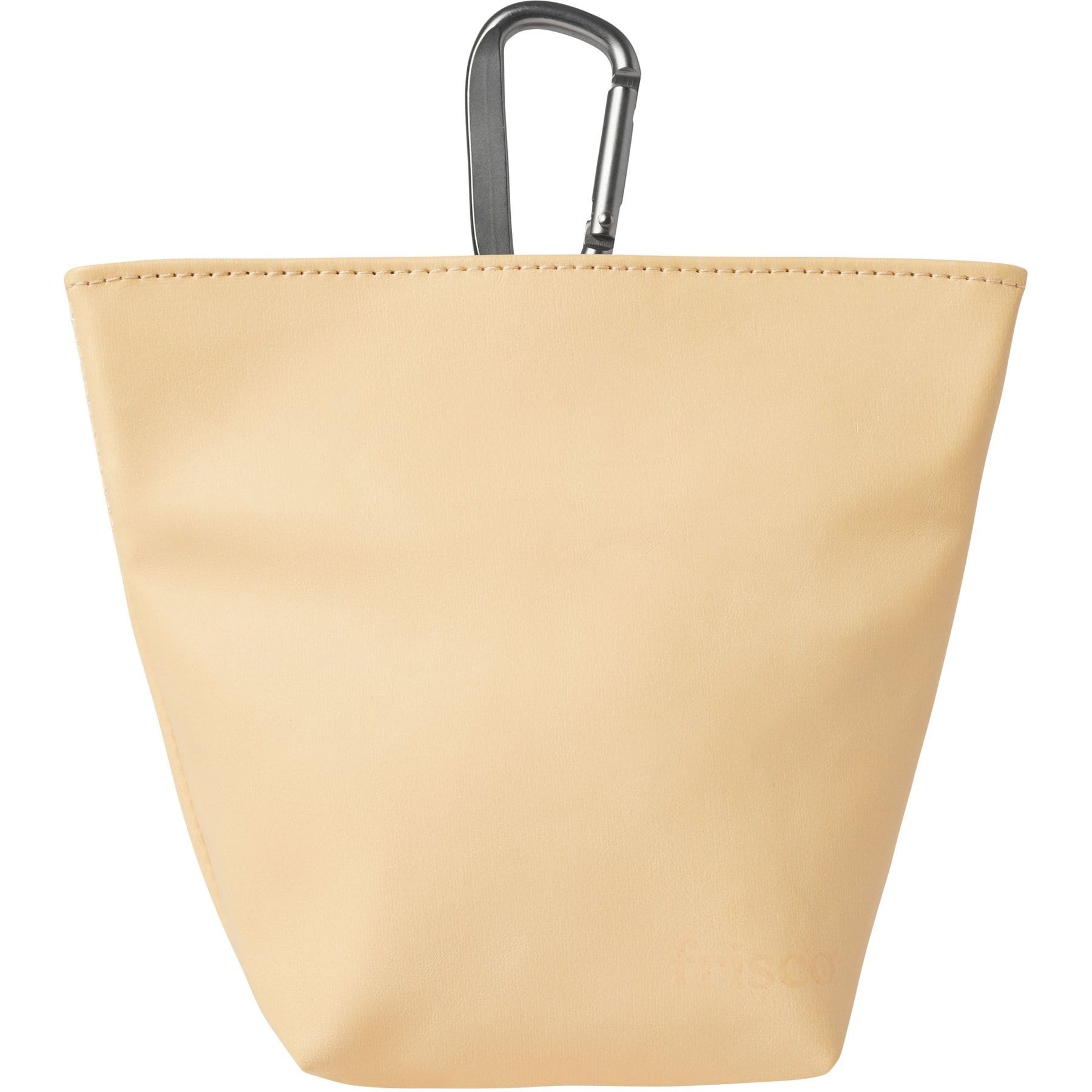
Frisco Dog Training Treat Pouch Bag, Beige
Petful may earn a commission when you click through to Chewy, at no extra cost to you.
Coat care from puppyhood
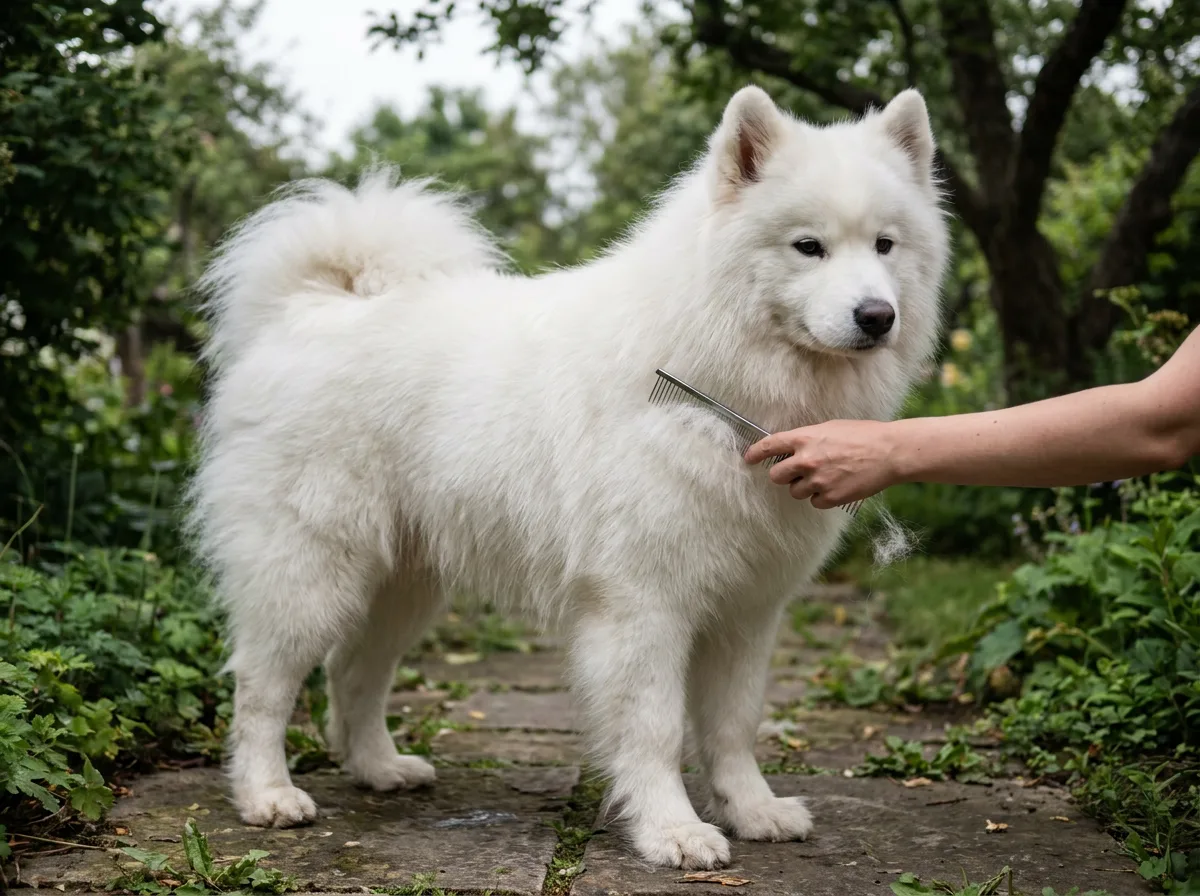
Introduce grooming in seconds, not marathons. Touch one area, reward calm behavior and stop before struggling. Gradually add the brush, comb, dryer sound, foot handling, ear inspection and brief standing on a nonslip surface. An absorbent microfiber towel shortens drying time once baths begin, which keeps those early sessions short.
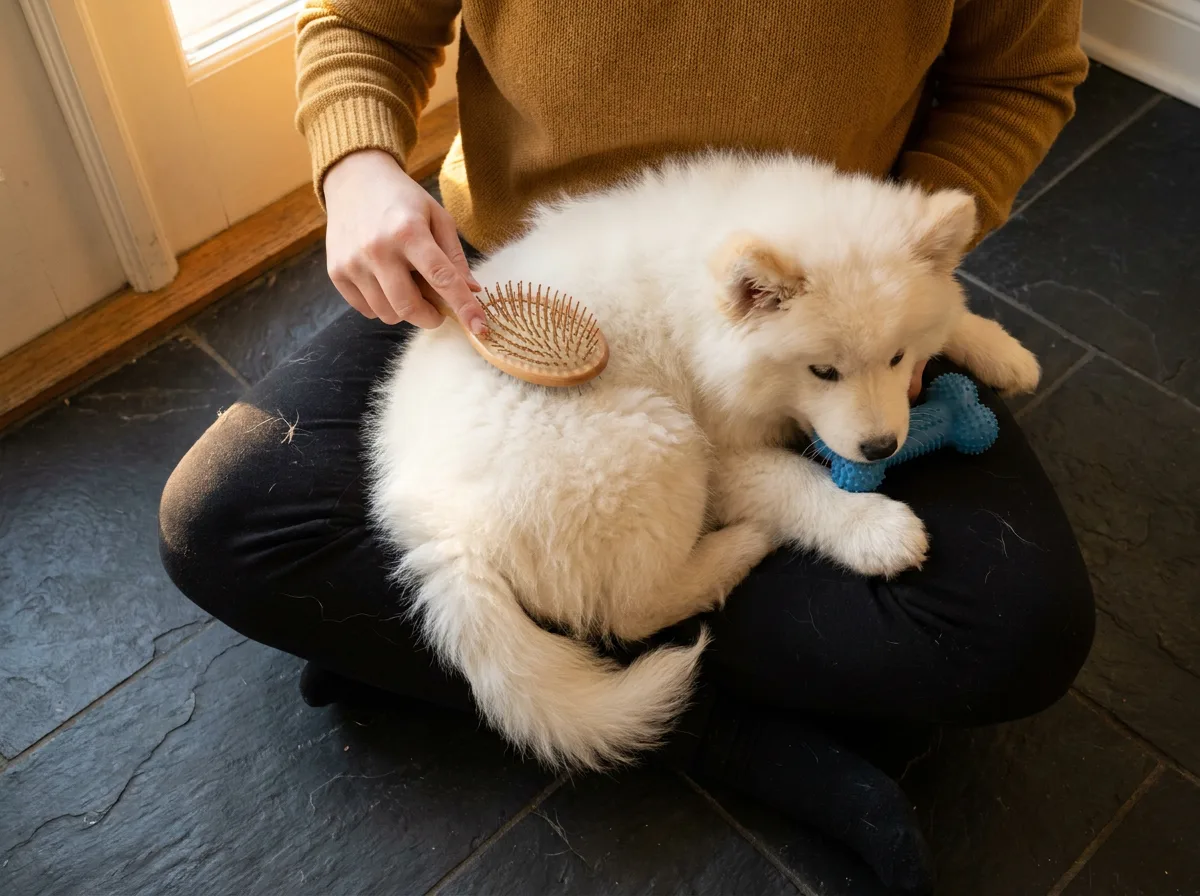
Use tools that reach the undercoat without scraping skin, such as a slicker brush used with light pressure. Check behind ears, under the collar, in armpits and around furnishings where friction can form tangles. Ask an experienced groomer to demonstrate line brushing on the actual coat.
Dry thoroughly after bathing and keep sessions comfortable. If handling suddenly becomes painful, inspect for mats, skin irritation or injury and seek professional advice. Cooperative care should protect trust, not prove that the puppy can be held still.
Adolescence and changing behavior
Adolescence can bring stronger pulling, selective attention, vocal frustration and renewed chewing. This is not a reason to abandon early skills. Reduce freedom, increase reinforcement and practice in easier environments while the dog matures. A durable stuffable rubber toy gives that renewed chewing a legal outlet during quiet time.
A growing Samoyed can become physically powerful before judgment is reliable. Recheck fences, gates, harnesses and vehicle restraint. Continue calm exposure rather than assuming the socialization window made later learning unnecessary. A front-clip harness refitted to the current chest measurement helps manage pulling while loose-leash skills catch up.
Behavior changes can also reflect pain or illness. Sudden irritability, handling sensitivity or reluctance to move deserves veterinary assessment before being treated as a training problem.
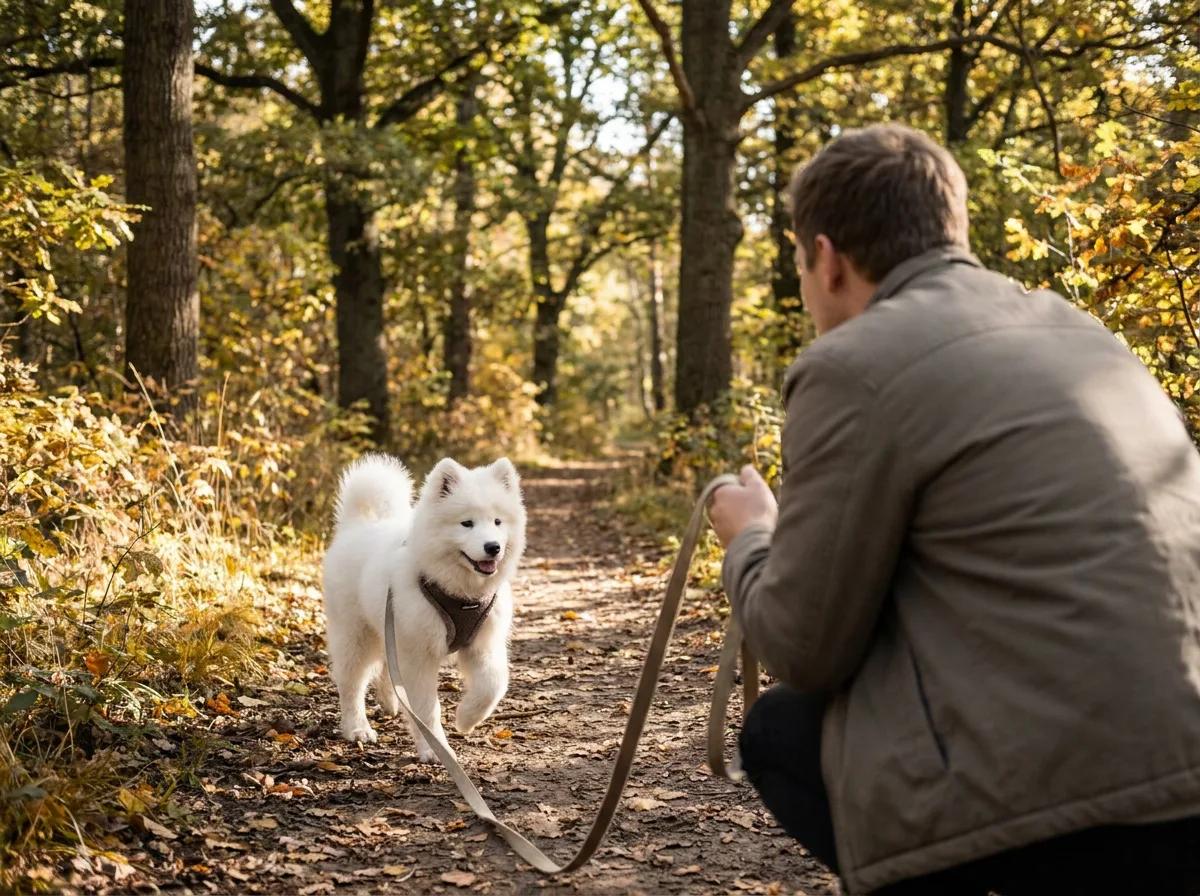
Support through the first year
The AKC describes this as a fearful, wary period, so keep new experiences short, calm and positive. Sleep, toileting, gentle handling and the first name and recall games come first.
Permanent teeth start coming in from about 12 weeks, so chewing and mouthing increase. The AKC suggests starting a reward-based training class around 16 weeks, once the veterinarian is comfortable with the vaccine schedule.
Adolescence brings stronger pulling, selective attention and renewed chewing. Height growth slows toward adult level by about 12 months while the adult coat replaces puppy fluff.
Most Samoyeds keep filling out with muscle and coat until about 15 to 18 months. The AKC advises waiting until about 14 to 18 months before sustained jogging, so keep activity age-appropriate.
Groomer and veterinary preparation
Practice standing on a nonslip mat, accepting brief touch and hearing low dryer noise before a full professional appointment. Tell the groomer what the puppy has experienced and ask how breaks and restraint are handled.
For clinic visits, rehearse entering the car, stepping on a scale and allowing gentle examination. Bring high-value food if appropriate and tell staff about fear or motion sickness in advance.
Cooperative preparation cannot guarantee a stress-free visit, but it gives the puppy familiar behaviors. If fear escalates, ask the professionals for a plan rather than forcing repeated exposure.
Travel, identification and safe handoff
Confirm a microchip is registered to the current owner and attach a reflective ID tag. Use a secure crate or tested restraint for transport. A loose puppy can escape when a door opens at a rest stop.
Carry the contract, veterinary record, food and water for pickup. Avoid crowded dog areas until the veterinarian explains the puppy's infection risk and vaccine status.
At handoff, verify the actual puppy, identification and record one last time. Do not accept a different animal or unexplained medical change because travel plans are already paid.
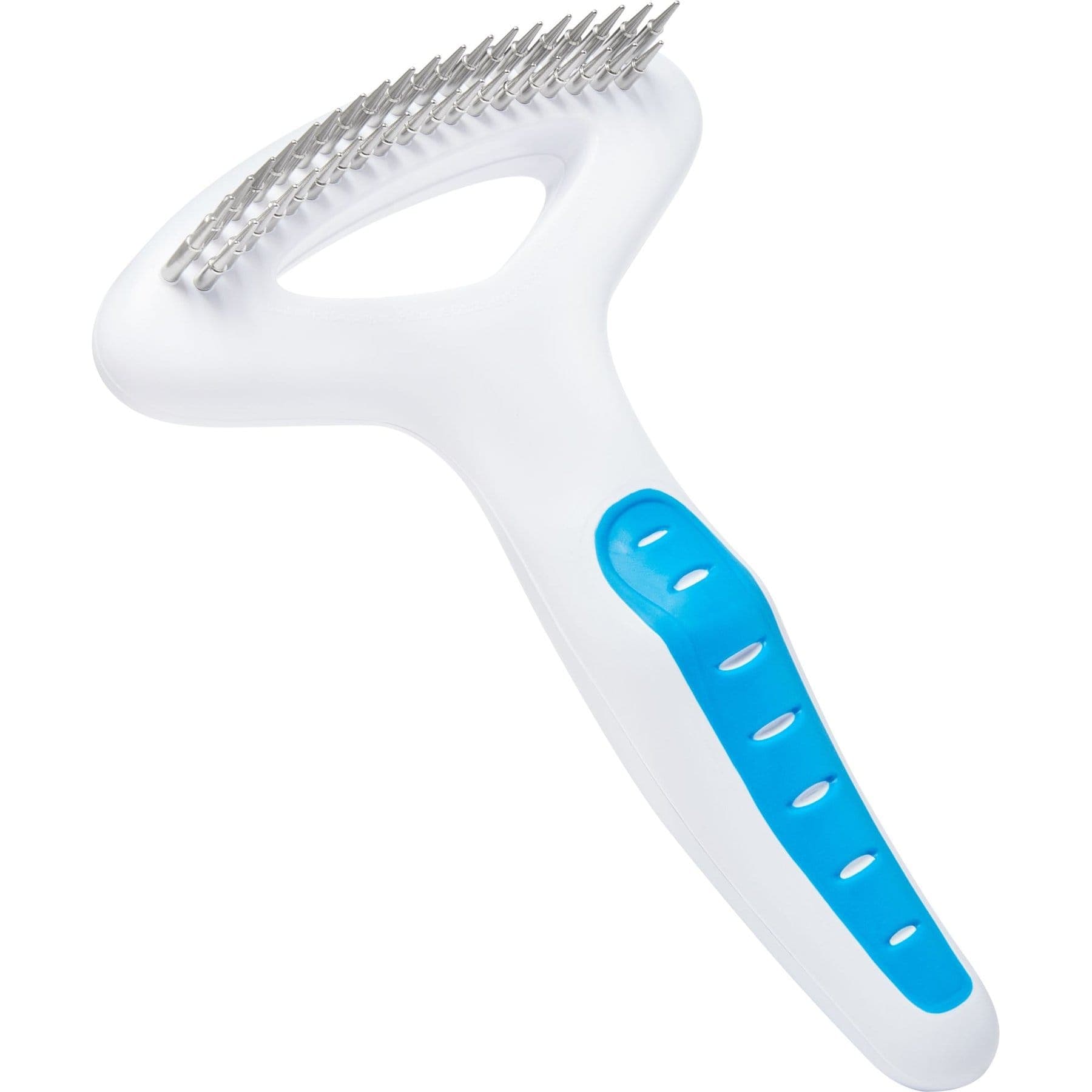
Metal teeth in two lengths lift shedding hair from the undercoat and loosen lightly matted fur; teeth sit parallel to the skin so the rake does not scrape it. Rubber-sheathed non-slip handle.
Petful may earn a commission when you click through to Chewy, at no extra cost to you.
Support after the first month
A responsible source remains available for questions and will take the dog back if placement fails. Keep communication factual and share veterinary diagnoses that may matter to the family line.
Maintain relationships with a veterinarian, reward-based trainer and groomer before a crisis. Early help with fear, separation distress or coat handling can prevent months of rehearsal.
Review the family plan every month through the first year. Sleep, exercise, feeding, training and alone time should change with development, not stay frozen at the eight-week schedule.
Sleep, toileting and bite management
Young puppies need frequent toilet opportunities and a great deal of sleep. Schedule trips after waking, eating, play and excitement, reward the correct location and clean accidents without punishment. Night needs change quickly as capacity develops.
Mouthing often increases with fatigue and arousal. Redirect to safe chews, pause interaction and protect rest rather than using physical corrections. Keep children separated when the puppy is too excited to interact gently.
Record patterns for one week. Timing data usually improves the plan more than blaming the puppy for accidents or biting.
Food transitions and stomach changes
Bring home the current food and feeding instructions. If a change is appropriate, make it gradually unless the veterinarian directs otherwise. Sudden switches can cause digestive upset that complicates the first days.
Measure meals and training rewards. Repeated vomiting, bloody diarrhea, marked lethargy or inability to keep water down needs prompt veterinary advice, especially in a young puppy.
Do not add supplements to accelerate coat or growth without professional guidance. A complete puppy diet is designed to provide balanced nutrients.
Review the plan as the puppy grows
Review the puppy plan at the end of each week for the first month, then at each vaccine, growth and training milestone. Note sleep, toileting, appetite, handling comfort, time alone and recovery after new experiences. Adjust the setup before adding freedom. A growing Samoyed puppy needs the plan to change with development rather than a fixed schedule copied from the day of arrival.
Questions to bring to the vet and trainer
Ask the veterinarian how local disease risk should shape safe socialization before the vaccine series is complete, and ask a reward-based trainer how to stage handling, recall and alone-time practice. Bring the puppy's actual medical record and daily log. A bounded question about this puppy's age, environment and response is more useful than asking when all Samoyeds should reach the same milestone.
Practical gear to compare
Choose the four optional puppy items by current size, safe confinement needs and the skill being taught. Recheck crate and collar fit every week, measure food rather than free-feeding and keep grooming sessions short. Puppy gear is temporary support for sleep, transport, training and supervision; it does not replace a development plan or direct care.
- Purina Pro Plan Large Breed Dry Puppy Food: a complete large-breed puppy formula to discuss with the veterinarian, fed in measured portions with training treats counted toward the daily total.
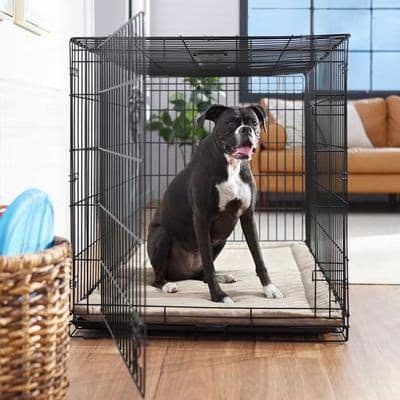
- Frisco Heavy Duty Fold & Carry Single Door Collapsible Wire Dog Crate, X-Large: consider only with a secure divider and a measured adult-size plan so the sleeping area remains appropriate during house-training.
- Frisco Dog Training Treat Pouch Bag: keeps small rewards at hand so name, recall and leash practice can happen in short, well-paid repetitions throughout the day.
- JW Pet Gripsoft Double Row Undercoat Rake: introduce it in seconds-long sessions on the growing coat, using light pressure and a comb check, so the adult undercoat routine is familiar before the first coat blow.
Related Samoyed guides
Sources
- American Kennel Club Samoyed breed information and standard
- Samoyed Club of America
- OFA CHIC program
- Samoyed Club of America breeder guidance
- FTC pet scam guidance
Questions readers ask
Breeder prices commonly run about $1,500 to $3,500, according to Figo’s breed guide, and Good Dog listed an average of $3,700 for a responsibly bred Samoyed puppy as of November 2026. Rescue fees are usually far lower. A higher price does not prove health testing or good rearing, so compare each quote with the parents’ public results and the contract. The Samoyed price guide breaks down first-year and lifetime costs.
Start with the Samoyed Club of America’s breeder guidance, then verify both parents by registered name. Read their public health results in the OFA database, the puppy’s veterinary record, the contract and the return terms. Visit or video-call to see where the litter is raised. A breeder who asks about your home and stays available after pickup is a better sign than a badge, a price or a quick sale.
The parent club recommends a hip evaluation, cardiac examination, ophthalmologist evaluation and DNA tests for RD/OSD2 and X-linked progressive retinal atrophy (XLPRA1). Ask for registered names, search the OFA database yourself and read every result. A CHIC number confirms that the required tests were completed and made public, not that every result was normal or that a puppy will stay healthy.
Yes, but puppies are less common in rescue than adolescents and adults, and availability is unpredictable. Breed rescues, shelters and foster networks can place Samoyeds and Samoyed mixes. Ask what history is documented, what foster caregivers observed, which medical records transfer and what return support exists. Plan a quiet first week, and be ready for an adult with known needs rather than a young puppy.
Start on the first calm day at home, usually around eight weeks for a puppy from a breeder. Keep sessions short and easy: name response, toileting, recall games, calm leash introduction, trading objects and settling. Protect sleep, because overtired puppies learn less, and add a reward-based puppy class once the veterinarian is comfortable with the vaccine schedule.
Yes, especially in the first year. Grooming practice, social learning, toilet routines, short training sessions, safe management and companionship all compete for daily time, and adolescence brings stronger pulling and more vocal frustration. The workload changes rather than ending after the first weeks, so write a weekday care plan and line up backup help before bringing a puppy home.
The main downsides are heavy coat care, seasonal shedding, vocal behavior, strong activity needs, a long adolescence and difficulty with long, unplanned time alone. Compare those demands with ordinary workdays, climate and grooming capacity before choosing a puppy. The Samoyed breed guide covers the full adult picture, from exercise to heat management.

Coreen Saito is a pet writer and longtime shelter volunteer with more than a decade in animal rescue. She covers cat behavior, breed care, and the small, ordinary science of sharing a life with companion animals, with a particular focus on honest takes about the products and decisions that actually matter. At home in Arizona, she's outranked by Mac (a dog with the loudest opinion in the house), Rebel (a cat who governs by quiet authority), and Meri (an orange tabby who runs the late shift and the laundry basket). She writes about all three, plus the rescues that keep coming through her life, at LifeWithMinty.com.
Sign up for expert-backed reviews and safety alerts all in one place.