Samoyed Temperament and Training Guide
Samoyed temperament is usually social, alert and energetic, with the independence of a working dog bred to function in demanding conditions. Many want to be near people, but friendliness does not automatically create quiet
Petful is reader supported. As an affiliate of platforms like Amazon and Chewy, we may earn a commission when you buy through links on this page. There is no extra cost to you.
Samoyed temperament is usually social, alert and energetic, with the independence of a working dog bred to function in demanding conditions. Many want to be near people, but friendliness does not automatically create quiet behavior, reliable recall or comfort alone.
Training should translate those tendencies into household skills. Use rewards, secure management, enough mental and physical work, and planned rest. The result depends on the individual dog and the consistency of the environment, not a breed stereotype. A treat pouch keeps those rewards ready on every walk and training session.

Sign up for expert-backed reviews and safety alerts all in one place.
Samoyed temperament in daily life
- 1Expect a social working dog, not a decorative white pet.
- 2Manage barking, chasing and pulling before they become habits.
- 3Use rewards and short daily practice.
- 4Balance exercise with sniffing, problem solving and rest.
Yes, most Samoyeds are very friendly. The breed standard describes the Samoyed as intelligent, gentle, loyal and friendly but conservative, not distrustful or shy, and the AKC says the breed tends to get along well with new people and other animals. Friendly does not mean calm, though: many greet with jumping, barking and bounce, and some individuals are more selective. Samoyed behavior should be read from body language and context, not reduced to friendly or stubborn.
Working independence can look like delayed response when the environment is more rewarding than the owner. Build reinforcement history and make early tasks easy. Repetition without value often teaches a dog that the cue is optional.
A household should be comfortable with fur, vocal communication, close social contact and regular activity. The daily balance of work, rest and companionship has to fit weekdays, not only weekends.
Samoyed dog temperament is only useful as a label when it leads to observable behavior. Track greeting intensity, frustration, recovery, rest and response to handling in real settings. Social, people-oriented tendencies can coexist with independent working-dog tendencies and prey interest. Household decisions should rest on the individual pattern rather than a friendly or stubborn label.
Temperament strengths and challenges
- Friendly with family, visitors and often other dogs
- Gentle and loyal, with a strong wish to be included
- Learns quickly with short, rewarding sessions
- Enjoys work, play and dog sports
- Vocal behavior and frustration barking
- Pulling and outdoor excitement
- Chasing or roaming risk
- Needs patient grooming cooperation
- Can struggle to settle after activity
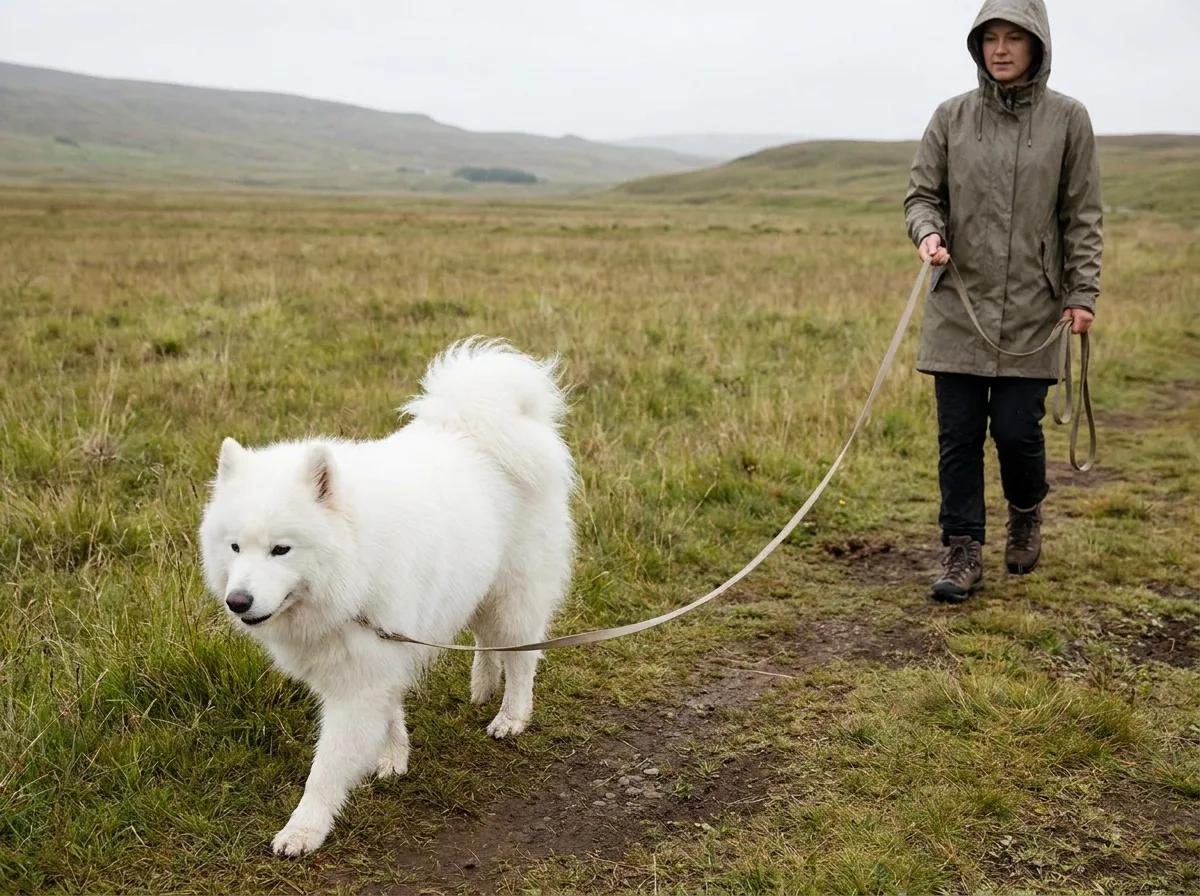
Are Samoyeds hard to train?
- Gates, a long line and a secure door routine keep barking, chasing and door rushing from becoming habits while training catches up. Add freedom one setting at a time, and only after the dog responds reliably there.
They can learn quickly, but quick learning includes habits owners did not intend. If pulling reaches interesting smells or barking brings attention, those behaviors are reinforced. Management prevents practice while training builds an alternative.

Petful may earn a commission when you click through to Chewy, at no extra cost to you.
Keep sessions short, reward generously and train in gradually harder locations. Start with name response, hand target, recall games, loose-leash steps and settling. Stop before attention is exhausted. Low-calorie training treats let you reward generously without overfeeding a dog whose thick coat can hide weight gain.
Avoid labeling a confused, frightened or under-rewarded dog dominant. If progress stalls, simplify the environment and check motivation, health and the clarity of the cue.
Samoyed behavior changes through learning as well as maturity. To understand how to train a Samoyed, identify the cue, reward and environmental distraction, then lower difficulty until success is repeatable. Management before freedom prevents pulling, chasing or barking from becoming self-rewarding. Barking and boredom need a fix matched to the cause, not a long correction after the dog is over threshold.
Barking and vocal behavior
Samoyeds can be vocal. Barking may signal alerting, excitement, social contact, frustration, fear or unmet needs. Record what happens immediately before and after so the fix targets the cause of the vocalization, not just the noise.
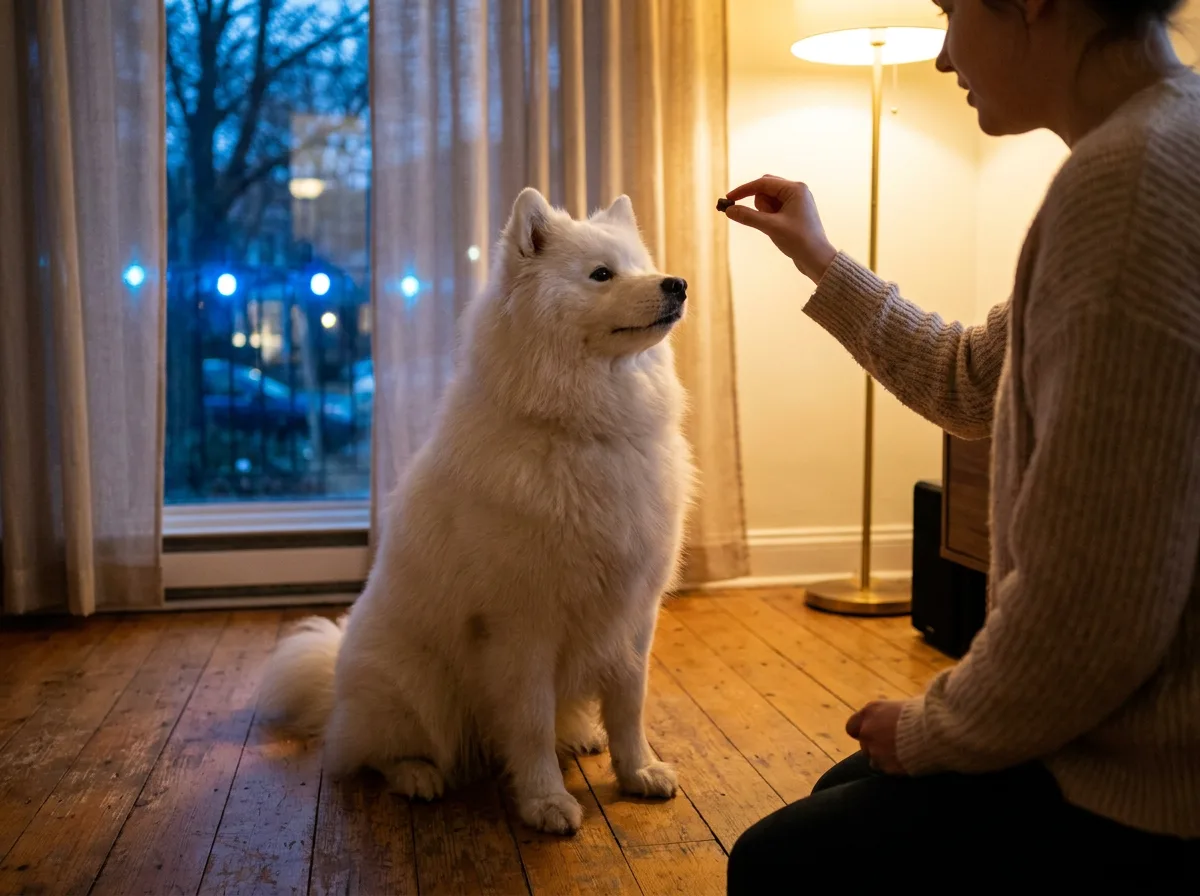
Reduce unnecessary triggers where possible, reinforce quiet observation and teach a predictable response such as going to a mat. Shouting can add more sound and attention. A sudden change in vocal behavior deserves a health check.
Provide acceptable outlets for communication and activity. The goal is not a silent dog but manageable behavior that does not depend on distress or constant rehearsal. A lick mat spread with a little soft food gives a calm, quiet outlet during busy household moments.
Barking log
- Time and location
- Trigger or event
- Duration and intensity
- What the dog did next
- What consequence followed
Exercise needs without an hour formula
Samoyed exercise needs vary by age, health, weather and conditioning. Combine walks, sniffing, play, training and suitable working activities. Increase duration gradually instead of forcing one daily number.
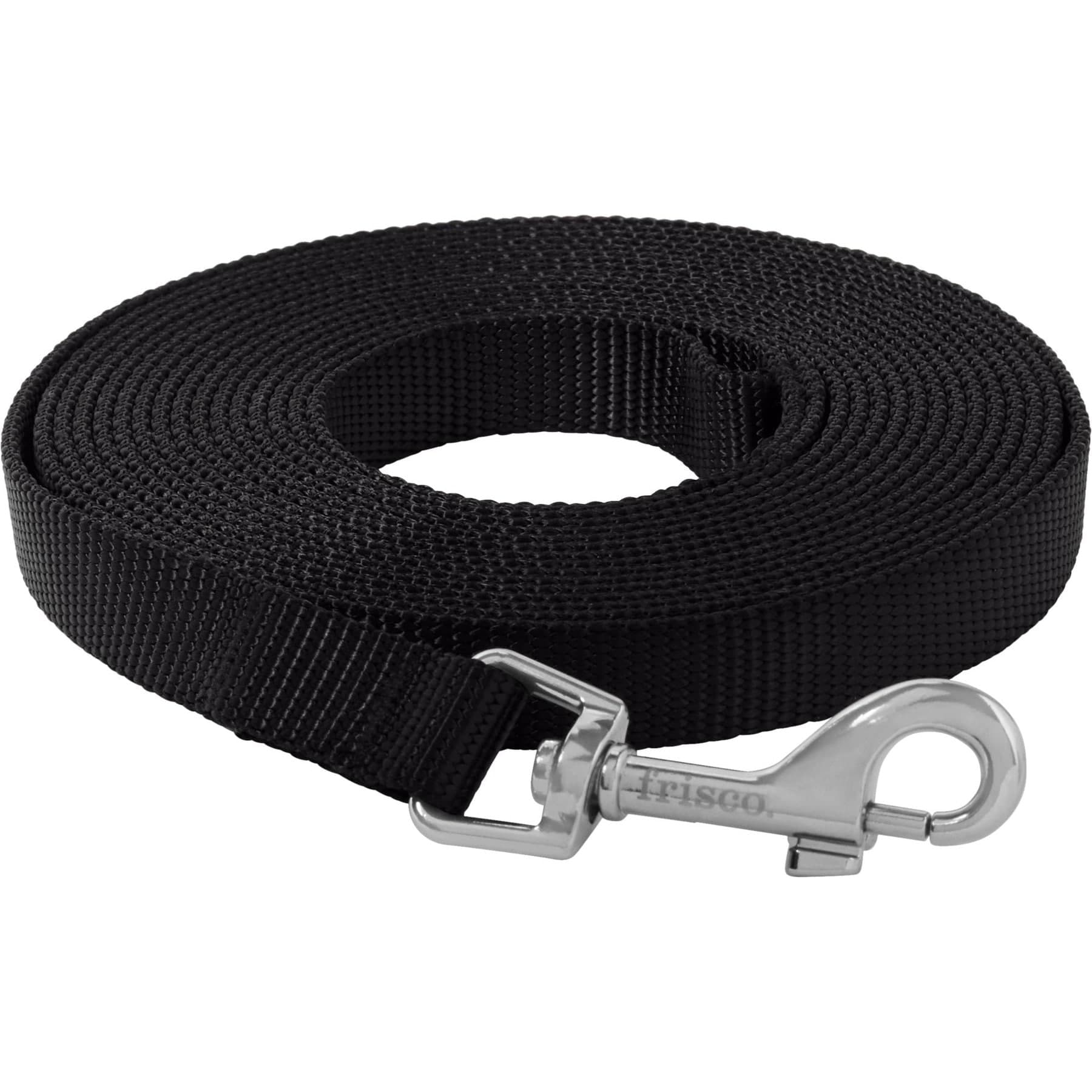
Polyester long line made for outdoor recall practice, offered in three lengths up to 50 feet.
Petful may earn a commission when you click through to Chewy, at no extra cost to you.
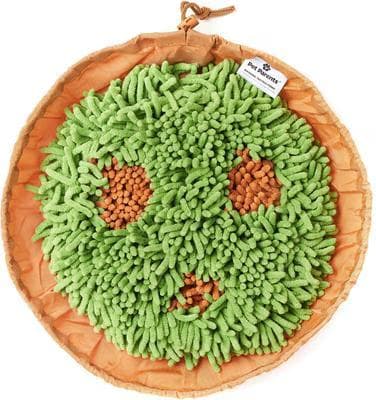
This dense cold-weather coat changes warm-day planning. Choose cooler hours, provide water and shade, and watch pace and recovery. Indoor scent games on a snuffle mat and skill work can add challenge without dangerous heat exposure.
Exercise alone does not teach an off switch. Follow active periods with a stuffed food toy, a mat routine or protected rest so the dog learns how the day changes gears.
Recall, prey drive and secure freedom
Samoyed prey drive varies, but chasing can be self-rewarding. Begin recall indoors, then use fenced spaces and a long line. Pay well and release back to safe activity sometimes so coming when called does not always end fun.
Management before freedom means gates, secure doors, correct identification and suitable restraint stay in place until the skill is reliable under real distraction. An unfenced field is not the place to discover the limit.
Never punish the dog after it returns, even if the response was slow. Reinforce the completed behavior and adjust the next setup.
Samoyed exercise needs should combine movement, sniffing, skills and deliberate recovery rather than follow one hour formula. Samoyed prey drive can make wildlife more rewarding than a recall cue, even in a social dog. Use secure fencing and a long line while training, and grant freedom only where the consequence of one missed response remains safe.
Recall progression
- Name response indoors
- Short recalls between family members
- Fenced practice around mild distractions
- Long-line practice outdoors
- Carefully tested reliability without removing safety too soon
Loose-leash walking and pulling
Start where the dog can think. Reward position, check-ins and a loose line for a few steps, then pause or sniff. Forward movement should follow the leash behavior the household wants.
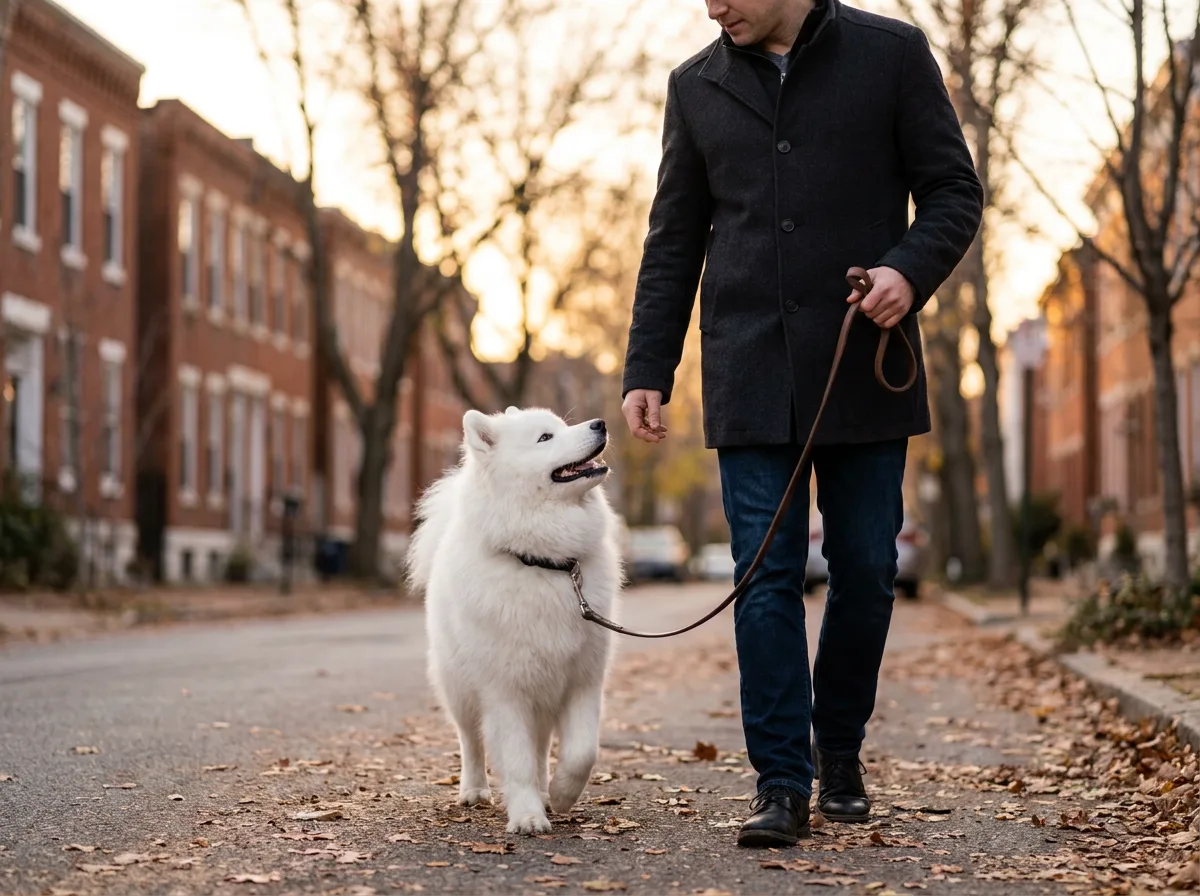
A harness can improve management but does not teach the skill by itself. Fit must allow shoulder movement and prevent escape. Recheck under the coat and through seasonal changes.
When pulling is intense, reduce distance and increase successful repetitions. A qualified reward-based trainer can help with equipment, mechanics and environments.
Children, dogs and smaller pets
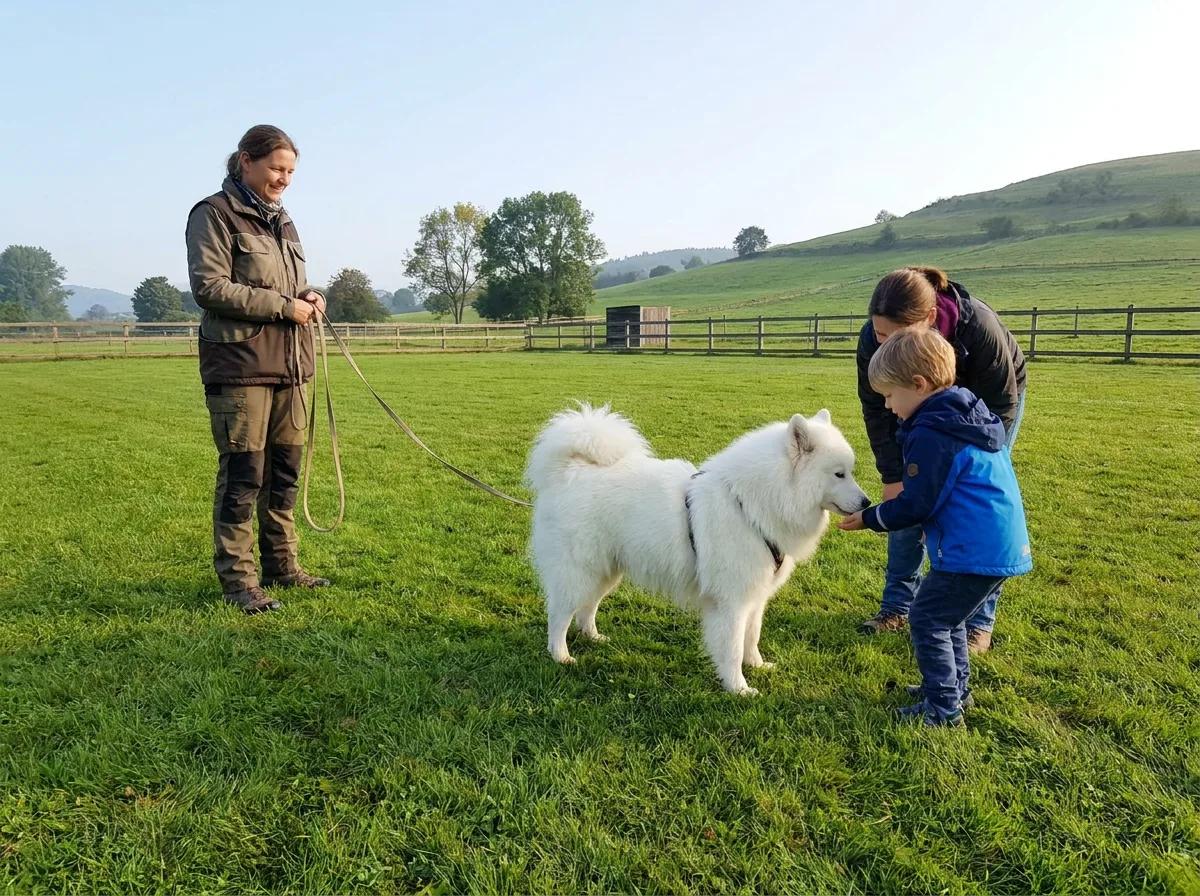
Supervise child interactions and give the dog a retreat. Teach children not to climb, hug, disturb sleep or take items. Excited play should stop before jumping and mouthing escalate.
- Dog compatibility is individual. Use parallel movement and space rather than face-to-face pressure. Avoid forcing shared toys or food before both dogs are comfortable.
- A Samoyed does not automatically need another dog. Some enjoy a compatible canine companion, while others are content as the only dog when their social, exercise and enrichment needs are met. Decide from the resident dog's behavior, the proposed match and the household's ability to separate resources and provide individual attention.
Smaller pets may trigger chase even in a friendly dog. Use secure separation and assess behavior carefully. No social-media example can guarantee household safety.
Alone time and separation concerns
Many Samoyeds are clingy in the sense that they want to be where their people are. The Samoyed Club of America says the breed needs human company and is not suited to solitary life in a back yard, and the AKC notes Samoyeds do not tolerate long periods alone. A people-oriented dog may struggle when alone time appears suddenly. Build it in small increments after exercise and toileting, beginning with calm separation inside the home. Return before distress escalates.
- Camera observation can show whether the dog settles or spends the absence pacing, vocalizing or trying to escape. Do not use a crate to contain panic. Severe separation behavior needs professional help.
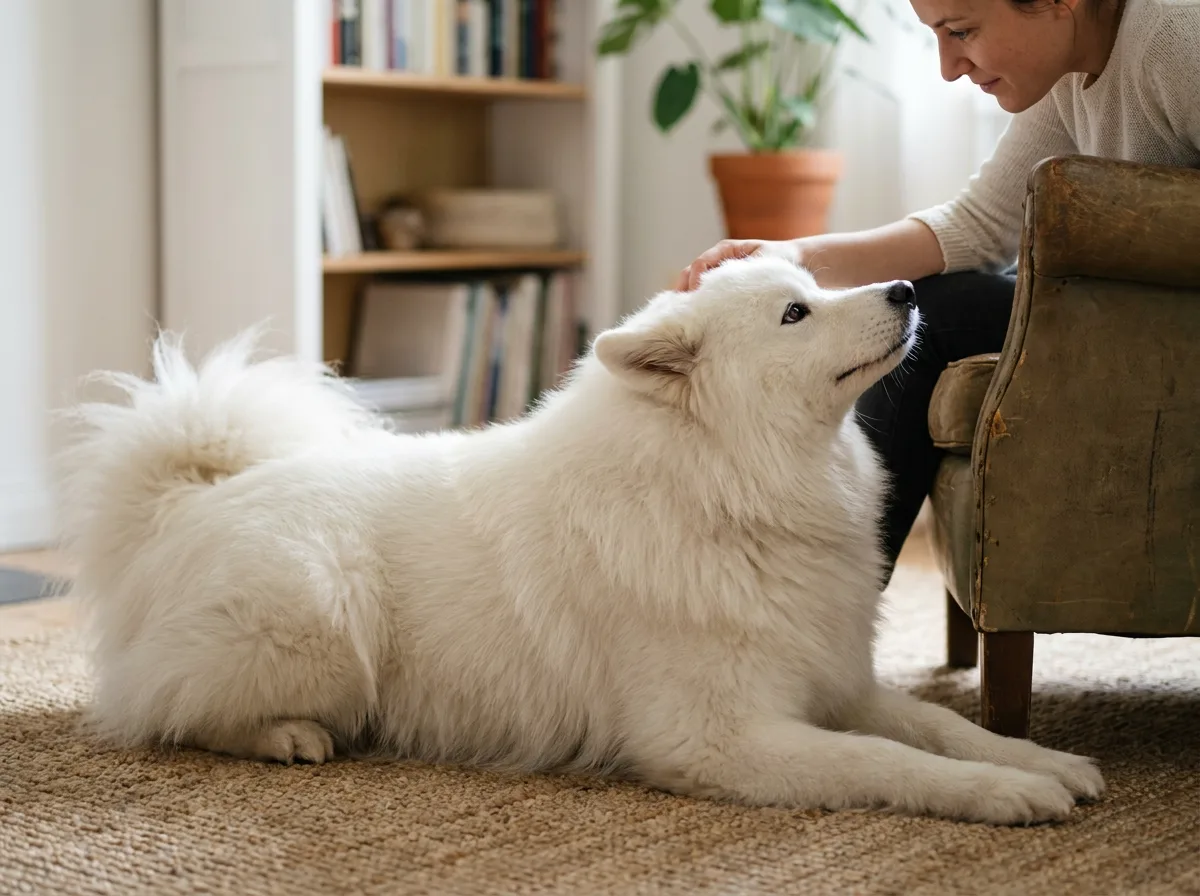
- Many Samoyeds seek contact, but cuddling preference varies by individual and moment. Offer proximity and let the dog opt into touch rather than using breed sociability as a reason to hold or hug a dog that is moving away.
The schedule may need a walker, sitter or different work arrangement. Training cannot make an unrealistic daily absence socially sufficient for every dog. A pet camera lets you check whether the dog settles during short practice absences.
A practical weekly training plan
Choose three current priorities and practice them in brief sessions across the week. Include one calm skill, one safety skill and one cooperative-care skill. Record success by environment rather than assuming a cue is finished everywhere.
Use rewards the dog values, including food, toys, sniffing and access. Fade prompts gradually but keep meaningful reinforcement in difficult situations. Skills maintained only by constant pressure are fragile. A flirt pole turns toy play into a reward for a dog who values chasing more than food.
Reassess after adolescence, moves, illness or schedule changes. Behavior is dynamic, and the plan should change when the dog's needs change.
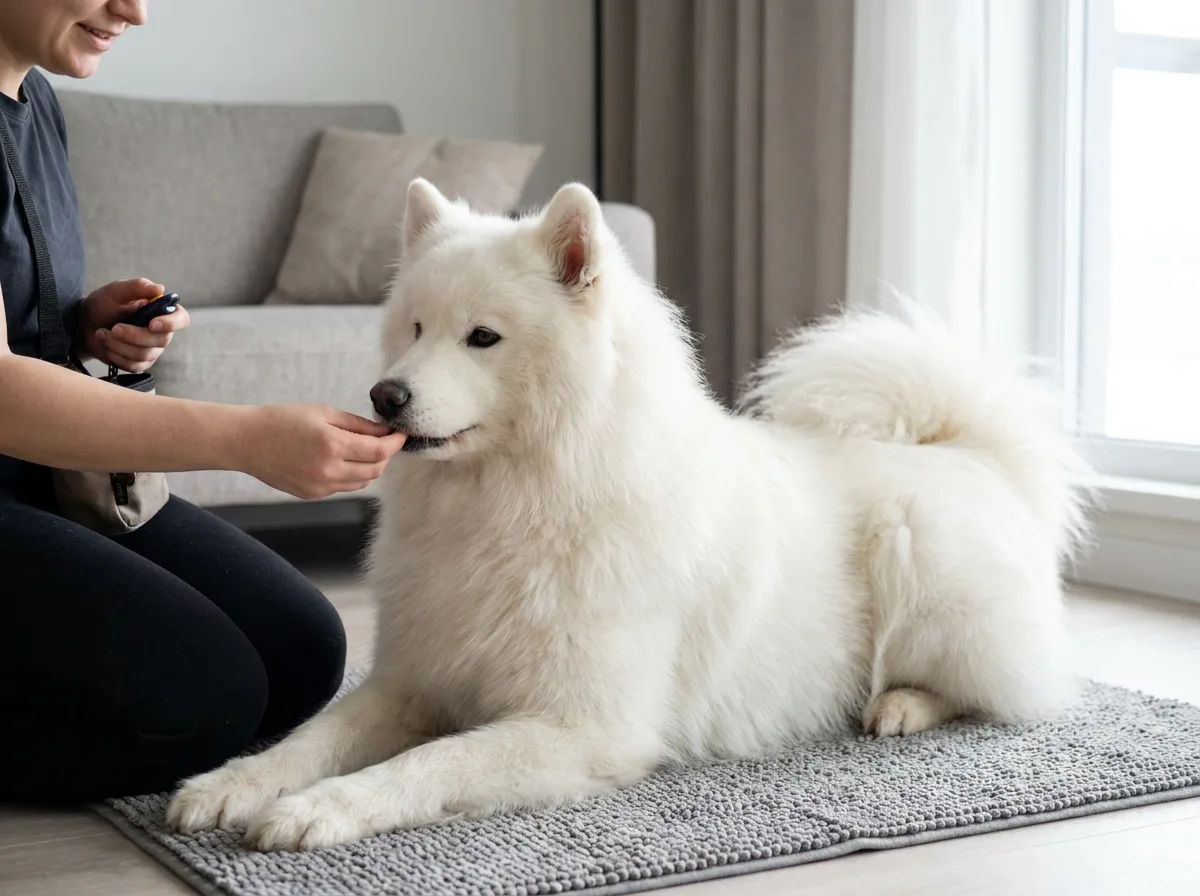
Manage adolescence and household friction
A weekday schedule that can actually work
Map toileting, exercise, meals, training, rest and alone time on a normal workday. The plan should name who covers each block and what happens when weather changes.
| Time of day | What happens | Why it helps |
|---|---|---|
| Early morning | Toilet break, a walk with sniffing time, then breakfast | Meets movement needs before the house goes quiet; use cooler hours in warm weather |
| Mid-morning | Rest in a quiet area with a stuffed food toy | Teaches the dog that the day has an off switch |
| Midday | Toilet break and short outing from a family member, walker or sitter | Keeps time alone to a span the dog can handle |
| Late afternoon | Short training session: one calm skill, one safety skill, one cooperative-care skill | Builds skills in brief, successful repetitions |
| Evening | Longer outing, play or scent games, dinner and a brushing check | Covers activity and coat care while people are home |
| Night | Settle on a mat near people, then a last toilet trip | Rehearses calm rest as part of the routine |
Front-load enough activity to help the dog settle, but avoid creating an athlete who can rest only after exhaustion. Use sniffing and simple problem solving as well as movement.

A durable rubber dog toy that can be stuffed with treats and selected by the manufacturer's size guide; supervise use and retire it when damaged.
Petful may earn a commission when you click through to Chewy, at no extra cost to you.
Review camera evidence and household stress after two weeks. Adjust the plan before barking, pacing or destructive behavior becomes a rehearsed routine.
Adolescent Samoyed behavior
Adolescence often increases strength, exploration and selective response. Reduce access to difficult environments and reward the skills you want rather than testing them until they fail.
Continue social learning with distance and choice. A previously outgoing puppy can pass through sensitive periods. Forced greetings can turn uncertainty into defensive behavior.
Recheck health when behavior changes suddenly. Pain, gastrointestinal discomfort or skin irritation can reduce tolerance for handling and rest.
Fear, guarding and aggression concerns
Growling, freezing, hard staring, snapping or guarding should not be dismissed because Samoyeds are described as friendly. Increase distance, prevent rehearsal and seek qualified help. Punishing warnings can remove communication without changing the emotion.
Keep children and other animals safe with barriers and supervision. Do not stage confrontations to prove the dog is fine. A behavior professional can help identify triggers and design a plan.
Veterinary assessment is important because pain and illness can contribute. Serious aggression needs individualized risk management, not breed-level reassurance.
Cooperative grooming as training
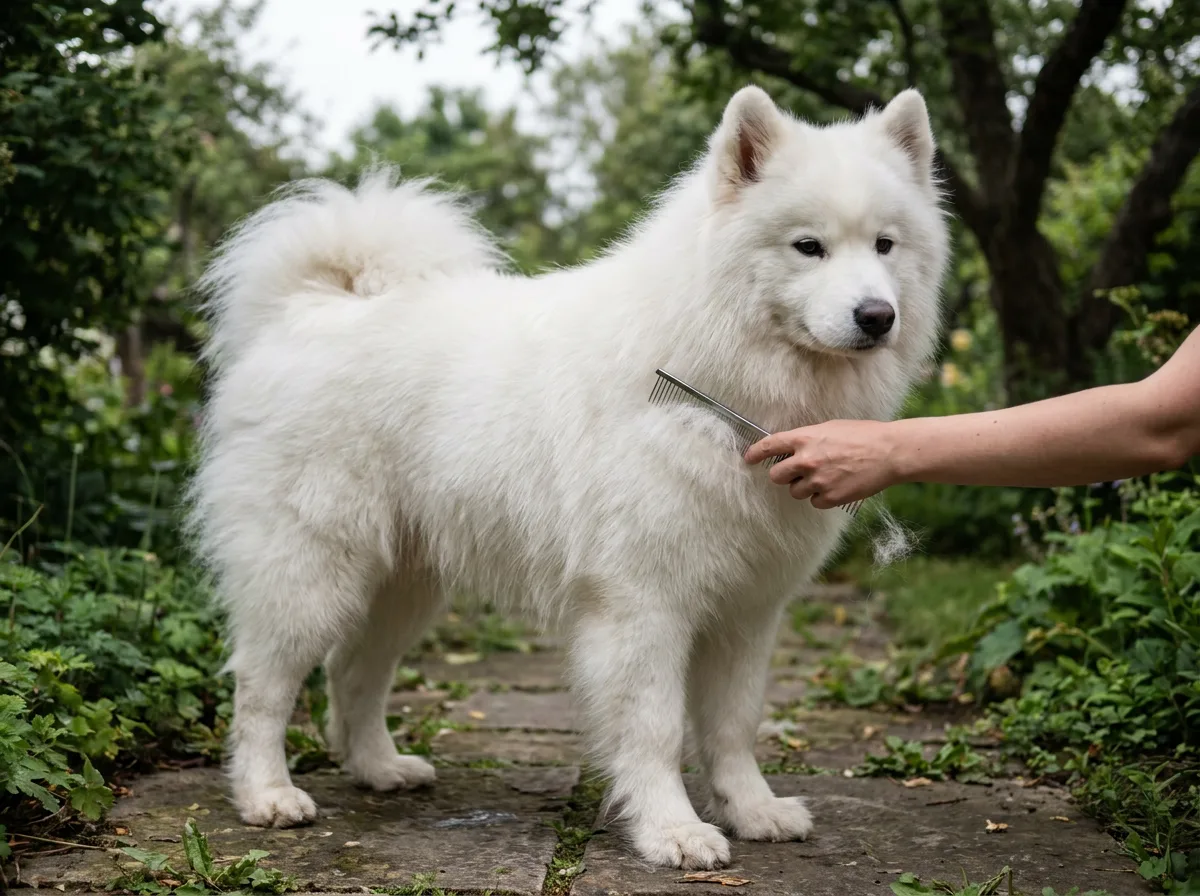
The grooming workload makes consent-based handling a core life skill. Teach standing on a mat, chin rest, brief coat parting and foot touch in small rewarded steps. Introduce a slicker brush with a few slow strokes and a reward before attempting a full session.
Stop before struggling and separate tool introduction from full grooming. If mats already hurt, solve the discomfort with professional help before asking for calm behavior.
Cooperative care reduces conflict but does not remove the need for safe restraint during urgent treatment. Discuss a clinic plan for a dog who is fearful.
Preventing boredom without constant entertainment
Boredom prevention does not mean supplying activity every minute. Rotate safe chews, food searches, training and outdoor exploration, then teach predictable rest.
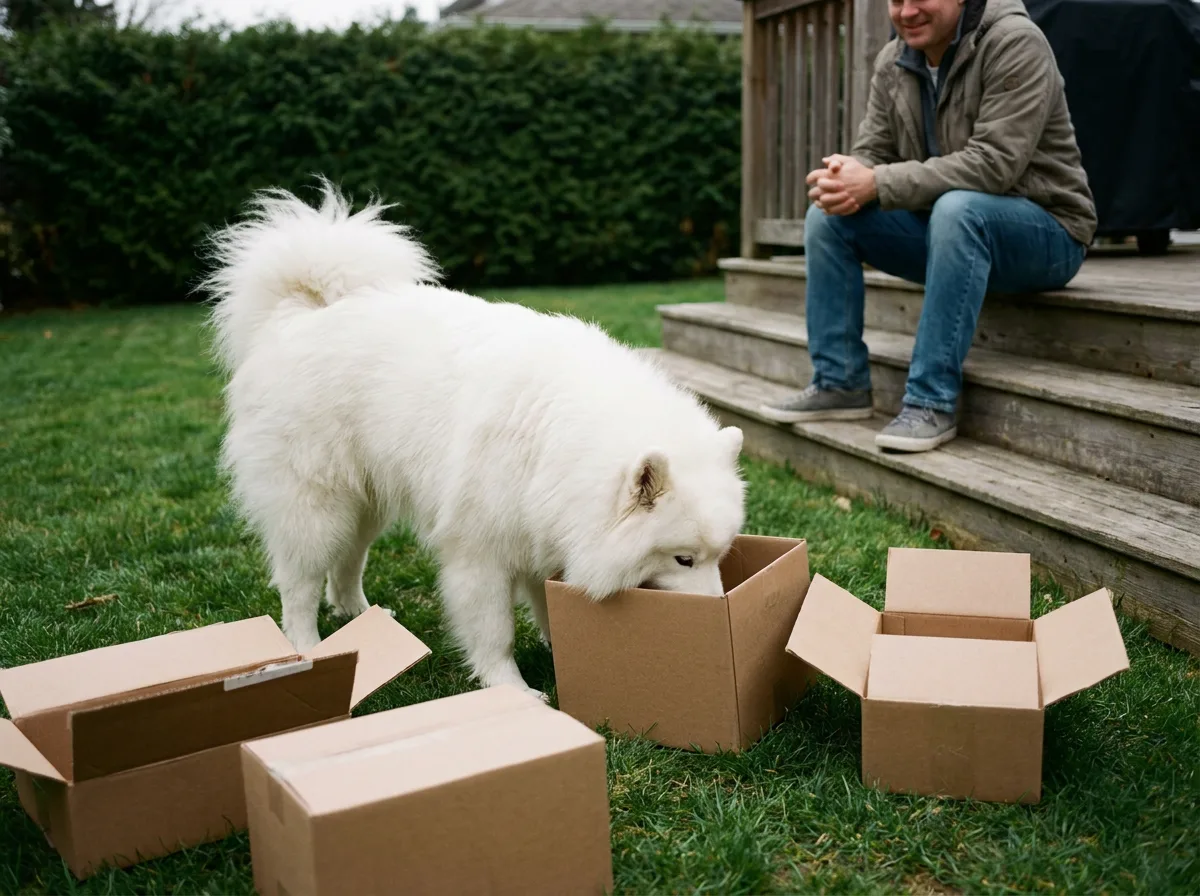
Novelty should be controlled. Too much high-arousal play can make settling harder. Track which activities produce calm recovery and which leave the dog frantic.
Independent relaxation is a trained skill for a social breed. Reinforce the dog for choosing a bed or mat while the household is present before expecting the same behavior alone.
Calm greetings and visitors
Use a dog gate, leash or mat before opening the door. Reward four feet on the floor and give the dog enough distance to think. Visitors should ignore jumping rather than adding touch and voice.
Some dogs prefer to observe. Do not force interaction because the breed is known as social. Choice and predictable exits help prevent overwhelm.
Practice with one helper before a crowded event. Management keeps training possible while excitement is still high.
Digging, chewing and escape behavior
Digging and chewing can meet normal needs or reflect boredom and distress. Provide safe outlets, supervise outdoor time and block dangerous locations. Punishment after the fact does not explain the rule.
Petful may earn a commission when you click through to Chewy, at no extra cost to you.
Check fences at ground level and around gates. A thick coat can hide the dog's body position near a small gap. Identification should remain current even with a secure yard.
Repeated escape attempts require a cause-based plan. Increase safety immediately and seek help if separation distress or panic is involved.
When to hire professional help
Get help early for aggression, severe fear, resource guarding, separation distress or behavior that threatens safety. Choose a professional who uses humane, evidence-based methods and can explain the plan.
Training classes are also useful before a crisis. Controlled practice around distractions can improve handling and provide feedback on timing and reinforcement.
A trainer does not replace veterinary assessment. Pain, skin disease and other health problems can change behavior and learning.
Measure progress without expecting perfection
Count successful repetitions, recovery time and the difficulty of the environment. A dog who settles in five minutes instead of twenty has made meaningful progress even if the behavior is not finished.
Generalize one context at a time. Sit in the kitchen does not automatically become sit near a running dog. Lower criteria when distractions rise.
Review the log monthly and choose the next small step. Training remains maintenance throughout life.
Review the behavior plan weekly
Review the behavior plan weekly using triggers, distance, response, recovery time and successful repetitions. Change one training variable at a time and note whether the dog is calmer afterward. If vocalizing, pulling or distress is escalating, increase management and seek help early. Samoyed temperament is not a verdict; the useful record shows what the individual can do under defined conditions.
Ask one observable question
Ask a reward-based trainer how to change one observable pattern, including what happens before it, what the dog does and what follows. Ask the veterinarian about sudden changes, touch sensitivity or inability to settle. Bring the record and describe recovery, not just intensity. A bounded question supports a humane plan better than asking whether Samoyeds are hard to train.
Training after the basics
Once recall, leash walking and settling work in easy settings, add difficulty one element at a time. Change distance, duration or distraction, not all three together. Continue rewarding strong responses in real life. Samoyed temperament does not make a finished behavior permanent without practice.
Practical gear to compare
Use the four optional training products only for the skill and setting they fit. Check harness motion, long-line handling, toy value and snuffle-mat supervision, then watch whether the item lowers or raises arousal. Equipment can create a safer rehearsal space, but it cannot replace reinforcement timing, gradual exposure or professional support for fear, aggression or separation distress.
- PetSafe Easy Walk Dog Harness, Red/Black, Medium/Large: a front-clip option to compare for managed leash practice when the fit stays clear of shoulder motion and remains secure under a Samoyed's coat.
- Frisco Training Leash, Black, 15-ft: a long line for recall practice in open spaces, clipped to a harness so the dog can explore while a missed cue stays safe.
- KONG Classic Dog Toy, Large: a durable food-toy format to compare for supervised settling practice, with size and filling matched to the individual dog.
- Pet Parents Forager Snuffle Mat & Slow Feeder Dog Bowl, Meadow Natural: a controlled indoor scent-search option for warm days or quieter enrichment, used under supervision rather than left as an unattended chew item.
Related Samoyed guides
Sources
Questions readers ask
Yes, most are. The AKC breed standard calls the Samoyed intelligent, gentle, loyal and friendly but conservative, and it penalizes unprovoked aggressiveness. Many greet strangers, visitors and other dogs with obvious enthusiasm, which makes them poor guard dogs but sociable companions. That friendliness still needs manners: teach calm greetings early, because an excited adult can jump on or knock over a child without any aggression.
Yes, many Samoyeds are vocal. They bark, howl and make other sounds during excitement, frustration, isolation or boredom. Record the trigger and what happened right afterward, meet exercise and companionship needs, and reinforce a calm alternative such as going to a mat. A sudden change in vocal behavior can have a medical cause and deserves a veterinary check.
Samoyeds learn quickly, but independence and environmental rewards can make training inconsistent. Use short reward-based sessions, gates and a long line to prevent rehearsal of unwanted habits, and clear household rules. Begin recall, loose-leash walking, settling and cooperative grooming early, then add distractions one step at a time as the dog succeeds.
A Samoyed can be a good family dog when the individual’s energy, handling tolerance and social comfort fit the household. Supervise children, provide a retreat and manage excited greetings, because a large happy dog can knock a child over without any aggression. Name who covers daily exercise, training and company so friendliness is never treated as a safety guarantee.
Often, yes, although frequency varies with the individual, setting and routine. Alert barking at outdoor noises, frustration barking when bored and protest barking when left alone are the common patterns. Log triggers and consequences, meet exercise and social needs, reduce repeated rehearsal and reinforce quiet behavior. Neighbors in shared buildings should be part of the planning.
Not all day without help. The AKC notes that Samoyeds do not tolerate long periods alone, and extended isolation can lead to boredom and destructive behavior. Build alone time gradually after exercise and toileting, and use a walker, sitter or daycare on long workdays. Persistent pacing, vocalizing, destruction or escape attempts may indicate distress and call for a veterinarian or qualified behavior professional, not stronger confinement.
Samoyeds do not automatically need another dog. A compatible companion may enrich some individuals, while others thrive as the only dog with enough human contact, exercise and independent rest. Decide from individual compatibility, safe introductions and resource management. The household must also have time, space and money to provide separate attention, training and rest for each dog.
Samoyeds are not guaranteed to be social with every dog, and some can show aggressive behavior toward other dogs. Risk depends on health, arousal, learning history, resources and the introduction setup. Begin with parallel movement and enough distance to keep both dogs responsive. Avoid forced face-to-face contact and seek qualified help for freezing, guarding, snapping or escalating aggression.
Yes, for most households. Coat care, daily exercise, training, vocal behavior and companionship all take regular time every week. Write down who handles daily movement, mental work, grooming, rest and alone time, then test whether that plan still works during busy days, warm weather and routine disruptions before deciding the workload is sustainable.
The downsides of having a Samoyed can include heavy shedding, vocal behavior, pulling or chasing, demanding grooming, heat-sensitive activity planning and difficulty with long isolation. Adolescence may amplify strength and selective response. These are planning realities, not defects in every dog, so compare the individual dog’s behavior and care needs with the actual household schedule.
Many do. The AKC describes Samoyeds as gentle, loving dogs that love to give and receive affection, and many lean in, nudge for attention or settle against their people. Contact preference still varies with the individual, heat, fatigue and discomfort, so offer closeness and let the dog opt in, then stop when it moves away. Breed sociability is not permission to restrain a dog that is moving away.

Coreen Saito is a pet writer and longtime shelter volunteer with more than a decade in animal rescue. She covers cat behavior, breed care, and the small, ordinary science of sharing a life with companion animals, with a particular focus on honest takes about the products and decisions that actually matter. At home in Arizona, she's outranked by Mac (a dog with the loudest opinion in the house), Rebel (a cat who governs by quiet authority), and Meri (an orange tabby who runs the late shift and the laundry basket). She writes about all three, plus the rescues that keep coming through her life, at LifeWithMinty.com.
Sign up for expert-backed reviews and safety alerts all in one place.