Miniature Schnauzer: Temperament, Health, and Care
Meet the Miniature Schnauzer, including temperament, health, grooming, size, exercise, and the daily care this alert companion needs.
Petful is reader supported. As an affiliate of platforms like Amazon and Chewy, we may earn a commission when you buy through links on this page. There is no extra cost to you.
miniature schnauzer ownership suits people who want a bright, sturdy small dog and can commit to training, grooming, and close companionship. This breed can be lively outdoors and settled indoors, but the familiar beard and eyebrows come with real maintenance, and alert barking needs a plan rather than wishful thinking.

Sign up for expert-backed reviews and safety alerts all in one place.
Miniature Schnauzer at a glance
- 1The official AKC height range is 12 to 14 inches at the withers.
- 2Expect an alert companion that learns quickly and notices activity around the home.
- 3The low-shedding double coat still needs combing, beard care, and regular trimming.
- 4Good fit depends on barking tolerance, supervision, grooming time, and preventive care.
- 5Small sturdy watchdog traits come with a high grooming workload.
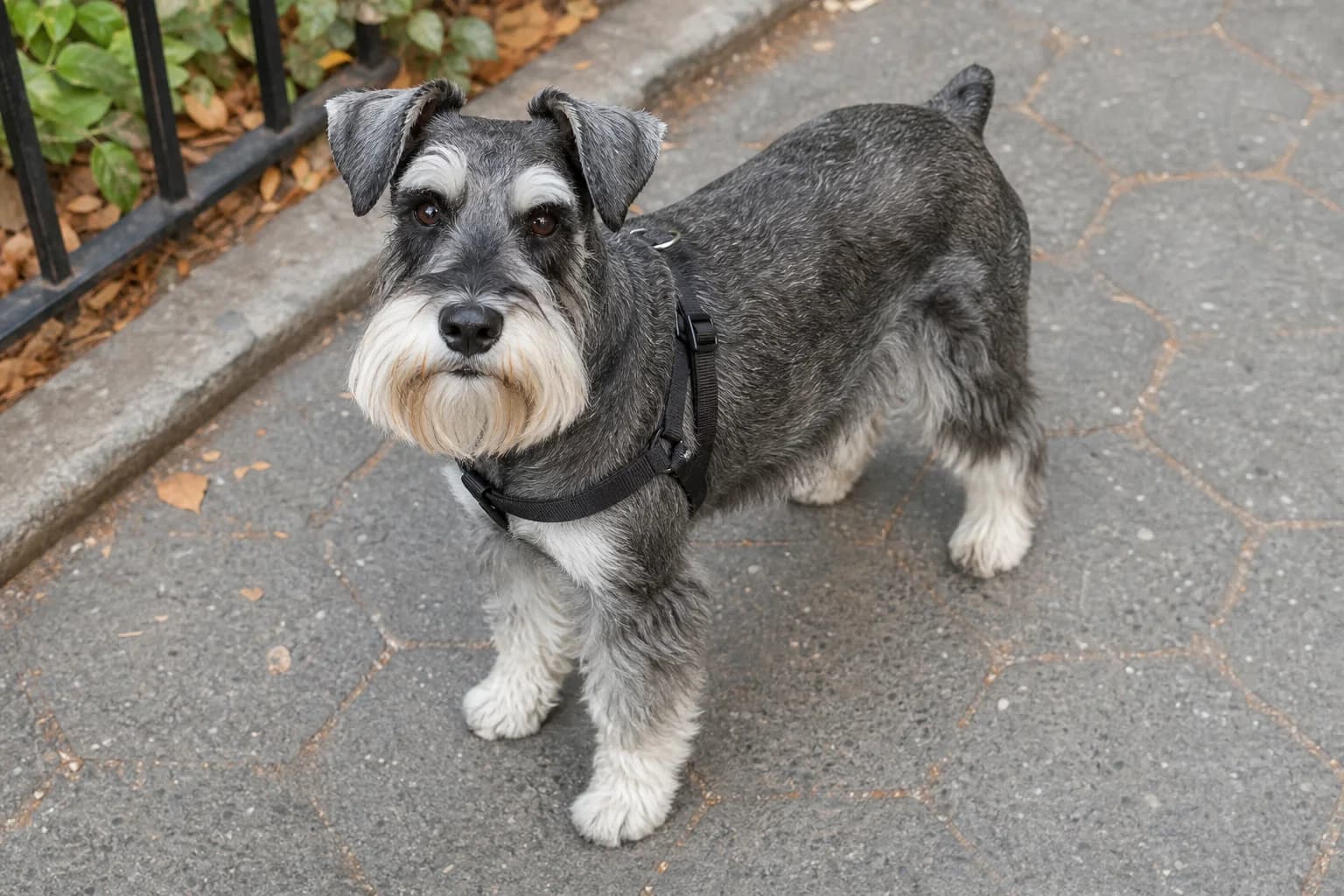
The Miniature Schnauzer is the smallest of the three recognized Schnauzer breeds, yet it should look compact and substantial rather than fragile. The square outline, harsh jacket, leg furnishings, beard, and keen expression explain why photographs can hide as much as they reveal when the coat is overgrown.
- Official height is measured at the withers, not at the head or ears.
- A beard and furnished legs are coat features, not proof of sound structure.
- Individuals vary in sociability, barking, prey interest, and handling comfort.
- A clipped pet coat is practical, while a hand-stripped show jacket is a specialized commitment.
Miniature Schnauzer at a glance: practical checks
- Meet an adult as well as a puppy.
- Ask to see the dog moving on a nonslip surface.
- Price grooming and veterinary care locally.
- Test whether the household can provide quiet rest and daily engagement.
Use the AKC Miniature Schnauzer standard as a description of the recognized breed, not as a promise about one dog's health or temperament.
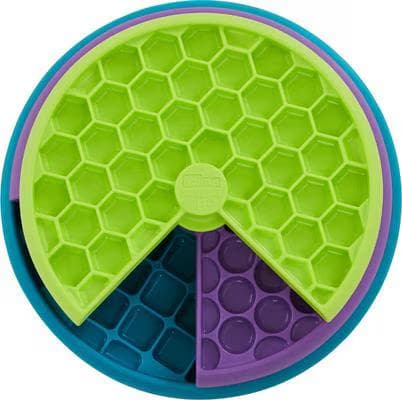
For budget planning, a current Lemonade pet insurance quote lets you compare the premium, deductible, reimbursement rate, waiting periods, and exclusions before a need arises. For coat maintenance, the aumuca self-cleaning slicker brush is one tool to compare; use light pressure, work in small sections, and stop if the skin becomes irritated. The Nina Ottosson Lickin' Layers puzzle feeder can turn part of a measured meal into supervised enrichment; start easy and remove it if frustration or chewing replaces problem-solving.
What Miniature Schnauzers were bred to do
The breed developed from small farm dogs used for ratting and general watch work. That history helps explain quick reactions to movement, interest in scent, persistence around small animals, and a voice that can appear before the owner has identified what changed.

Petful may earn a commission when you click through to Lemonade, at no extra cost to you.
- Ratting work rewarded attention to small moving animals.
- Watch work favored noticing arrivals and unusual sounds.
- Independent problem solving can coexist with strong engagement with people.
- Historic function does not determine every modern dog's behavior.
What Miniature Schnauzers were bred to do: apply the plan
- Use food puzzles and scent games.
- Teach a recall without testing it near traffic.
- Reward check-ins around wildlife.
- Provide legal digging or searching outlets when the dog enjoys them.
Treat breed history as useful context. Observe the individual dog and manage the environment that actually exists today.
Home life, exercise, and supervision
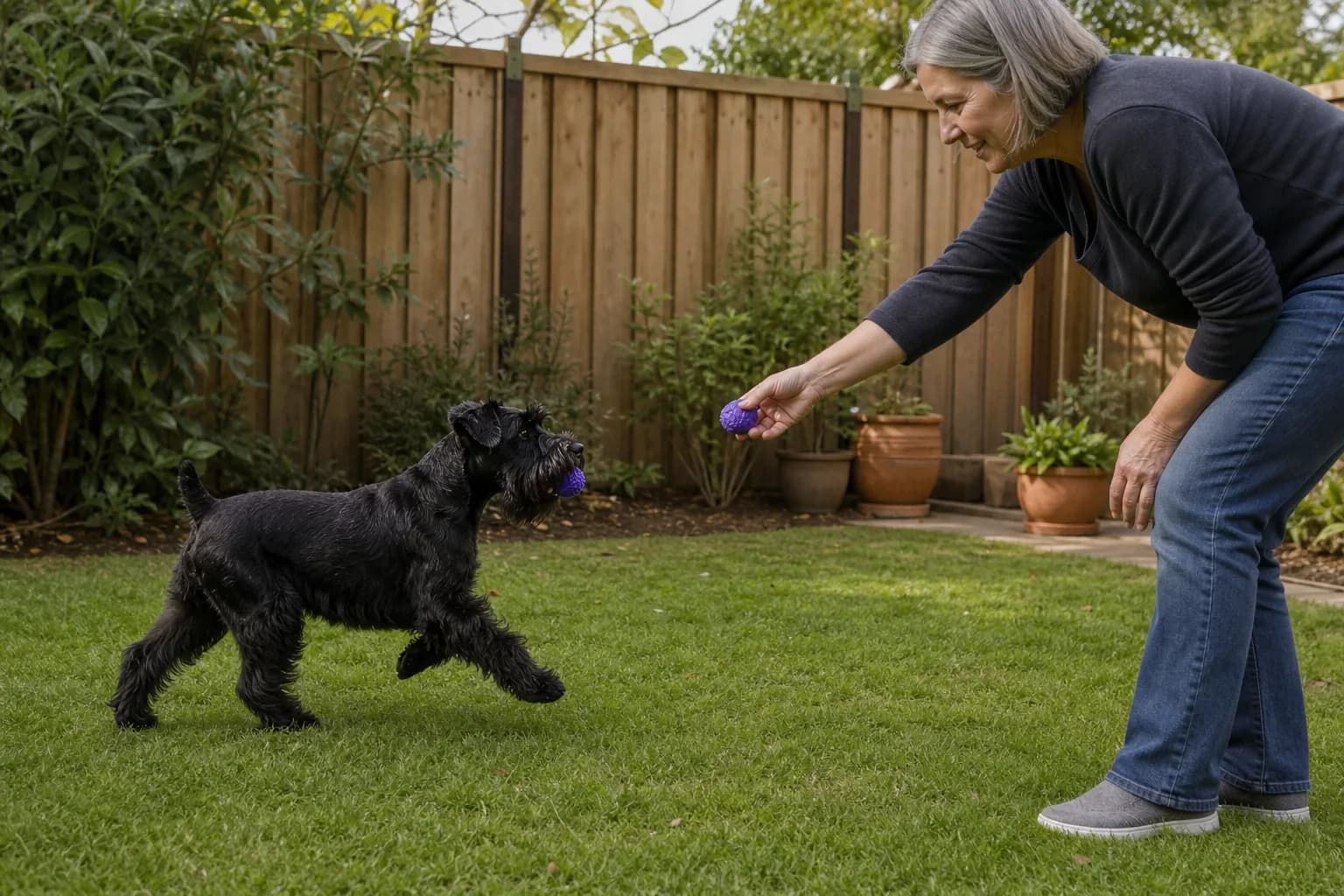
- Prey interest changes the safety plan | Use a secure leash or fence and supervise around small animals. A practiced cue is valuable, but it is not a reason to test the dog near traffic or wildlife. Small-animal supervision remains necessary.
A Miniature Schnauzer can be a good house dog when exercise, toilet access, mental work, and barking management are built into the day. Small size can make apartment living possible, but shared walls amplify every alert and a fenced yard does not replace walks or interaction.
- Short training sessions can tire the brain without exhausting the body.
- A secure leash or fence matters because prey interest can override practiced cues. For controlled walks, the Frisco dual-handle traffic leash offers two handling points, but secure harness fit and practiced technique still matter more than the hardware alone.
- Children need rules for doors, food, sleeping areas, and respectful handling.
- Small pets require careful separation or supervision rather than assumptions.
Home life, exercise, and supervision: questions to answer
- Schedule sniff walks and active play.
- Create a quiet resting place away from constant traffic. For a dedicated rest spot, the FurHaven orthopedic sofa bed is one washable-cover option to measure against the dog's fully stretched length; it is a comfort product, not a medical treatment.
- Use gates to prevent rehearsed window patrol.
- Practice calm departures and brief alone time gradually.
Do not rely on size as a safety system. A small dog can bolt through a door, chase wildlife, or be injured by rough handling just as quickly as a larger dog.
Temperament, barking, and trainability

Miniature Schnauzers are often described as bright, spirited, and alert. Those traits feel delightful when the dog is learning with the owner, and exhausting when every sound starts a long barking sequence. Training should teach what to do after the alert, not punish the dog for noticing.
- Barking frequency varies among individuals and homes.
- Repeated window access can strengthen territorial routines.
- Reward-based training makes the desired alternative clear.
- A dog can be affectionate without enjoying every kind of touch.
Temperament, barking, and trainability: practical checks
- Teach a check-in cue away from distractions.
- Reward one alert followed by movement to a mat.
- Use curtains, film, or room arrangement to reduce visual triggers.
- Keep sessions short enough that success remains likely.
Sudden behavior change, irritability, or handling sensitivity can have a medical component. Arrange veterinary assessment before treating new discomfort as disobedience.
Petful may earn a commission when you click through to Chewy, at no extra cost to you.
For walking equipment, measure the neck and chest before trying the Frisco padded no-pull harness, then recheck movement and strap clearance after the coat or weight changes. The DentaLife dental treats are one dental-treat option to discuss with a veterinarian while accounting for calories, chewing style, and choking risk. Measure standing height and body length before comparing the Sherpa soft-sided carrier, and verify the exact car or airline rules that apply to the trip.
Turning Miniature Schnauzer personality into a daily plan
Miniature Schnauzer personality is often described as alert, engaged, and persistent. Those broad Miniature Schnauzer personality traits can be useful planning clues, but they do not predict one dog. Are Miniature Schnauzers good dogs? They can be excellent companions when the household enjoys interaction, teaches recovery after an alert, and provides appropriate outlets for searching and problem-solving. A dog that notices every hallway sound may need more visual management than a quieter individual.
Do Miniature Schnauzers bark a lot? Some are very vocal and others are more selective. Reinforce a brief alert followed by a check-in, reduce repeated window patrol, and use positive reinforcement in short training sessions. Are Miniature Schnauzers easy to train? Many learn quickly, although prey interest and environmental excitement still require management. The breed can be an effective Miniature Schnauzer guard dog in the sense of alerting, but its small size and companion role make reliable management more useful than encouraging confrontation.
Size, coat, and breed-standard appearance
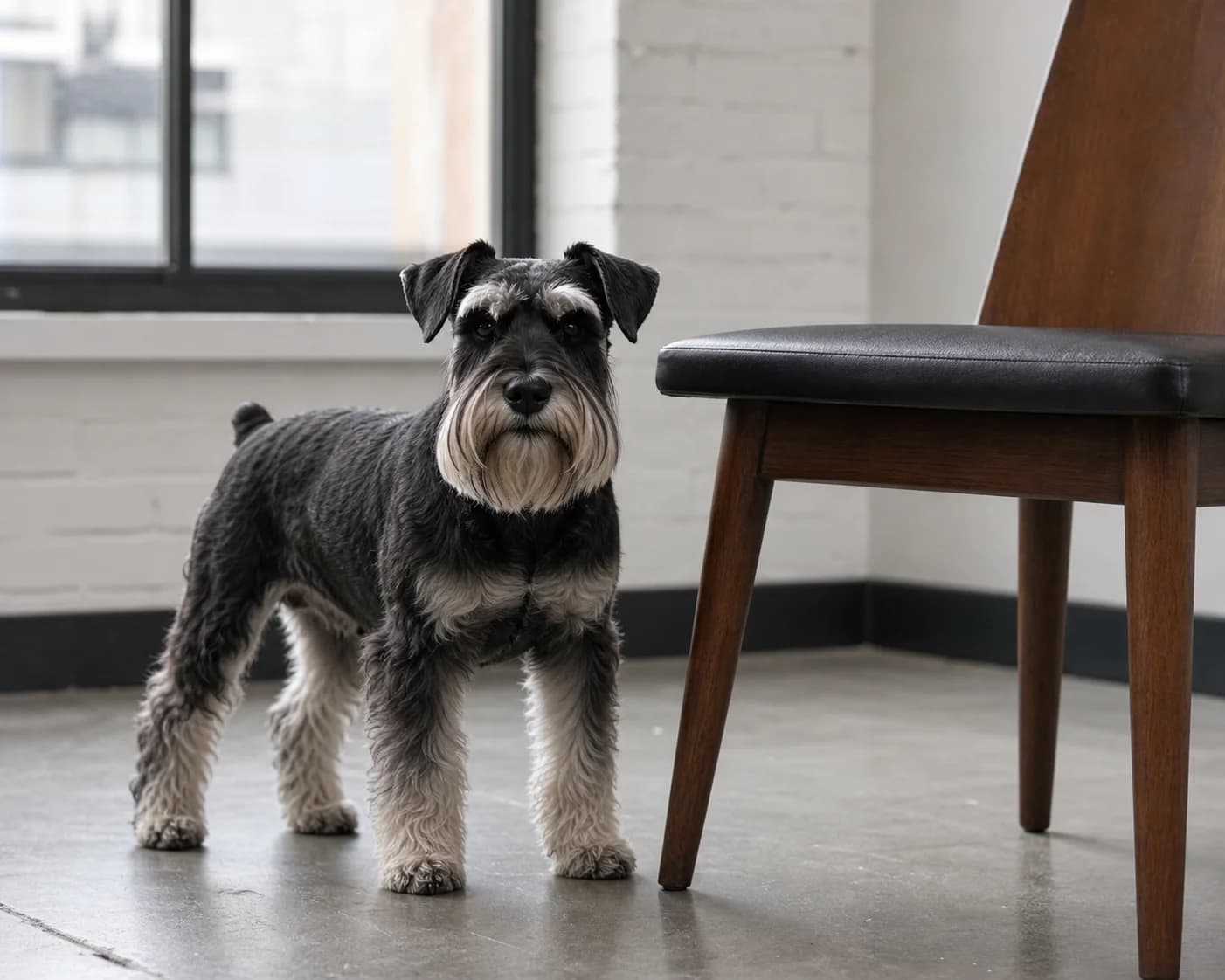
The official outline is square, with height at the withers about equal to body length. The coat has a hard, wiry outer layer and close undercoat in the standard description, while many pet coats feel softer after repeated clipping.
- The recognized height range is 12 to 14 inches.
- The three AKC-recognized colors are salt and pepper, black and silver, and solid black.
- Coat color can look different after clipping, sun exposure, or under warm indoor light.
- Body condition must be checked with the hands beneath the furnishings.
Size, coat, and breed-standard appearance: apply the plan
- Measure height on a level surface.
- Run a comb to the skin rather than brushing only the outline.
- Feel ribs and waist regularly.
- Compare color claims with the registry being discussed.
For deeper decisions, use the dedicated size guide and color guide.
What the Miniature Schnauzer breed standard describes
What does a Miniature Schnauzer look like? The Miniature Schnauzer breed standard describes a sturdy, nearly square small dog with a wiry jacket and distinctive eyebrows, beard, and leg furnishings. The official height range is 12 to 14 inches at the withers. A pet may be clipped into a softer outline, so haircut and coat preparation can change the visible silhouette without changing the dog's underlying structure.
Puppies, sourcing, and first-year planning
A puppy decision is also a source decision. Health records, the condition and behavior of adult dogs, transparent contracts, and a return policy matter more than urgency, color, or a seller's promise that one puppy is unusually rare.
- A responsible source can explain socialization without relying on vague claims.
- Records should identify vaccinations, deworming, microchip status, and veterinary findings.
- A buyer should be able to meet the mother when that is appropriate.
- First-year costs extend well beyond the purchase or adoption fee.
Puppies, sourcing, and first-year planning: questions to answer
- Ask for records before sending money.
- Verify where and how the puppy was raised.
- Arrange a prompt veterinary examination.
- Budget for training, grooming, preventive care, food, and replacements.
The Miniature Schnauzer puppy and price guide owns current sourcing, setup, and cost decisions.
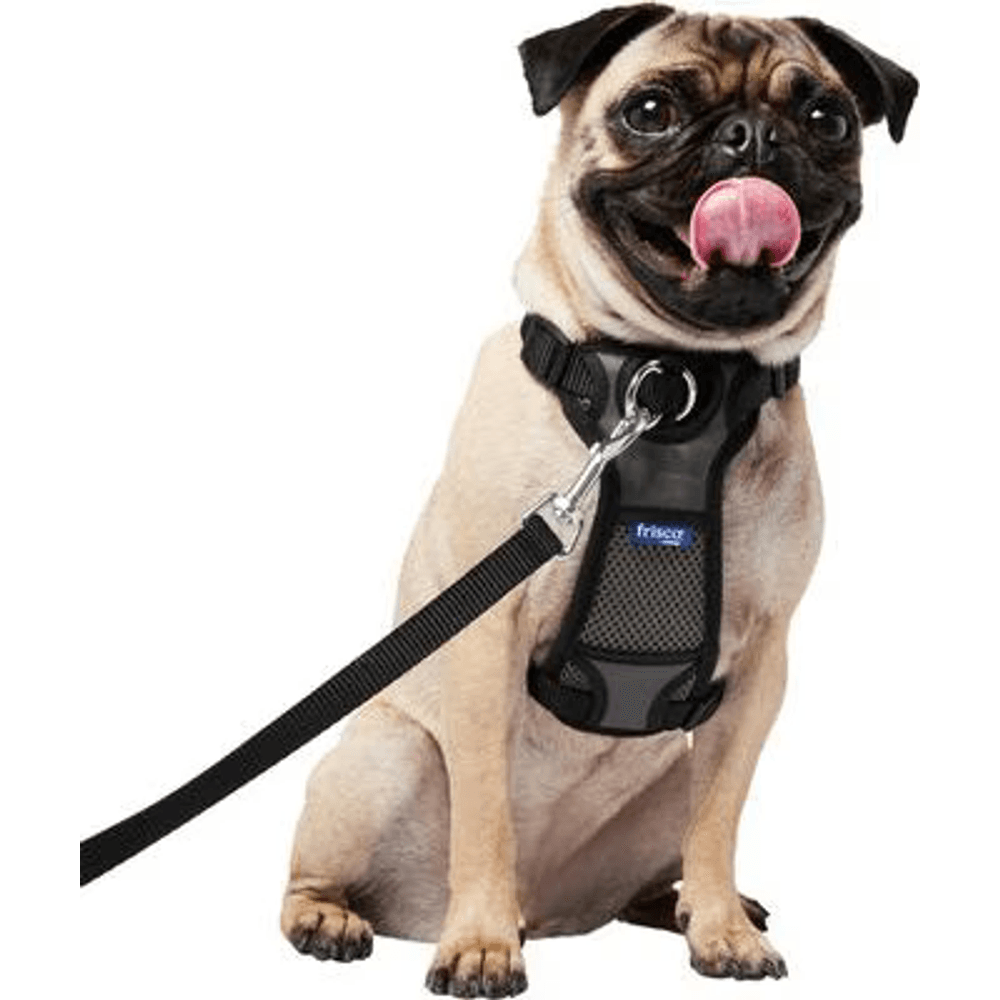
A budget-friendly padded no-pull harness that keeps leash pressure off a coughing dog's neck and windpipe by distributing it across the chest. A simple, affordable way to protect an irritated airway or a collapsing trachea on every walk.
Petful may earn a commission when you click through to Chewy, at no extra cost to you.
Food and body-condition decisions
There is no single best bowl for every member of a breed. Choose a complete food for the dog's life stage, measure it, count treats, and adjust with weight, body condition, muscle condition, stool, appetite, and veterinary findings. If faster eating is a concern, the Outward Hound 0.75-cup slow feeder is one small-dog format to test with a measured portion while watching comfort, frustration, and muzzle access.
- Package calorie density can change the correct volume.
- Treats and dental chews belong in the daily calorie total.
- Breed predisposition does not justify a therapeutic diet without clinical direction.
- A full coat can hide both weight gain and muscle loss.
Food and body-condition decisions: practical checks
- Read the nutritional adequacy and calorie statements.
- Weigh portions when practical.
- Record extras for several days.
- Ask the veterinarian to demonstrate body and muscle condition scoring.
Use the veterinarian-led food guide for label screening, portions, and the limited evidence around fat and lipid questions.
Where the dedicated food guide takes over
The best food for Miniature Schnauzers depends on life stage, calorie needs, body condition, health history, and the nutritional adequacy statement. The best food for a Miniature Schnauzer is not selected from breed name alone, and the best dry dog food for a Miniature Schnauzer may be different for a healthy adult than for a dog with a diagnosed condition. Use the dedicated food guide for label screening, portion review, and veterinary decision points.
For the source and full decision framework, see the best food for Miniature Schnauzers.
Grooming workload and haircut choices
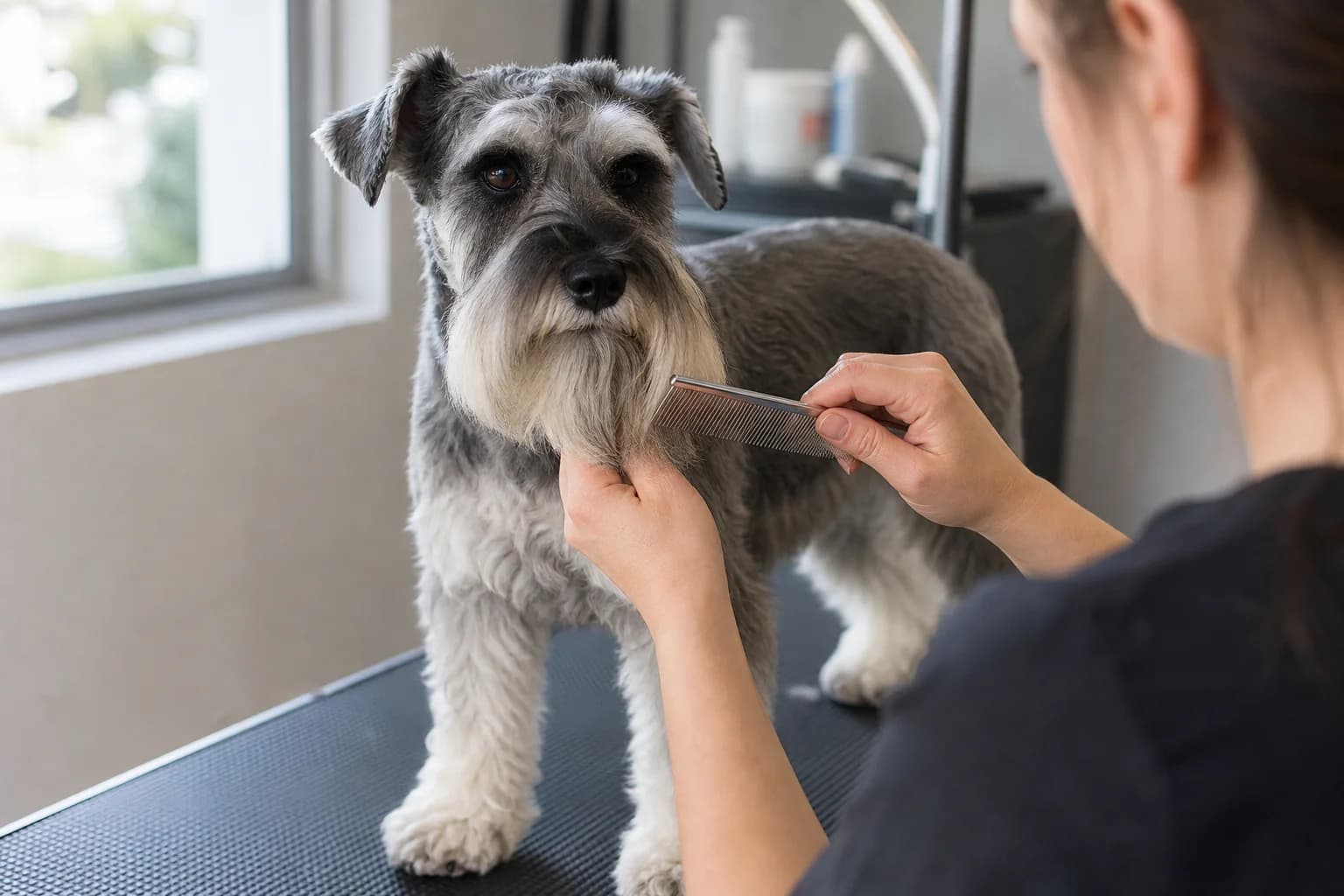
A clipped pet coat reduces length but does not remove coat care. The beard becomes wet and collects food, furnished legs tangle where they rub, and the undercoat can compact beneath a tidy surface. For home coat maintenance, the OneIsAll cordless clipper and paw-trimmer kit is one tool to compare, but noise training, cool blades, nonslip footing, and a safe stopping point remain essential.
- A metal comb reveals tangles that a brush can pass over. The aumuca self-cleaning slicker brush is one brush to compare for section-by-section work before the comb check.
- Beard skin should be dried after cleaning.
- Mats can tighten next to thin skin.
- Professional intervals depend on length, coat texture, home care, and dog comfort.
Grooming workload and haircut choices: apply the plan
- Check the beard after meals.
- Comb friction areas to the skin.
- Introduce tools with brief rewards.
- Choose a haircut the household can maintain between appointments.
See the full haircut and grooming guide before buying clippers or requesting a style by name.
Petful may earn a commission when you click through to Chewy, at no extra cost to you.
Where the grooming guide takes over
Miniature Schnauzer haircuts range from a traditional Schnauzer outline to a shorter Miniature Schnauzer puppy cut. Both still require beard care, combing to the skin, and a schedule that prevents mats. The grooming guide compares style, maintenance, tools, and safe home-grooming limits without changing this breed overview into a haircut tutorial.
For the source and full decision framework, see the Miniature Schnauzer haircuts.
Lifespan, health, and preventive care
Population studies help frame expectations, but they cannot predict one dog's lifespan. Preventive care works best when the owner tracks trends in teeth, weight, skin, mobility, appetite, thirst, urination, stool, and behavior while the dog is well.
- Dental disease can progress before an owner sees a dramatic sign.
- Body condition and muscle condition are different measures.
- Vomiting, abdominal pain, urinary change, or sudden weakness needs clinical context.
- Insurance or a dedicated reserve is easiest to arrange before illness appears. A current Lemonade pet insurance quote can be compared with other policies before symptoms or diagnoses affect eligibility.
Lifespan, health, and preventive care: questions to answer
- Keep a current medication and supplement list.
- Brush teeth with dog-safe toothpaste. One dog-safe option to compare is Sentry Petrodex enzymatic dog toothpaste; introduce brushing gradually and follow veterinary dental guidance.
- Bring trend notes to routine examinations.
- Ask which screening is appropriate for age and history.
The veterinarian-authored lifespan and health guide explains the evidence and urgent warning signs in more depth.
Weekly and annual care plan
| Cadence | Owner check | Escalation |
|---|---|---|
| Daily | Appetite, movement, beard, teeth | Call for rapid or severe change |
| Weekly | Comb, skin, ears, nails, body | Book help before mats or pain |
| Monthly | Weight and condition trend | Discuss unexplained change |
| Veterinary | Examination and tailored prevention | Follow the individual plan Include weekly beard cleaning and scheduled coat clipping. |
A written care cadence prevents small tasks from disappearing during busy weeks. Frequency should respond to the dog's coat, teeth, health, activity, and professional advice rather than to a generic calendar alone.
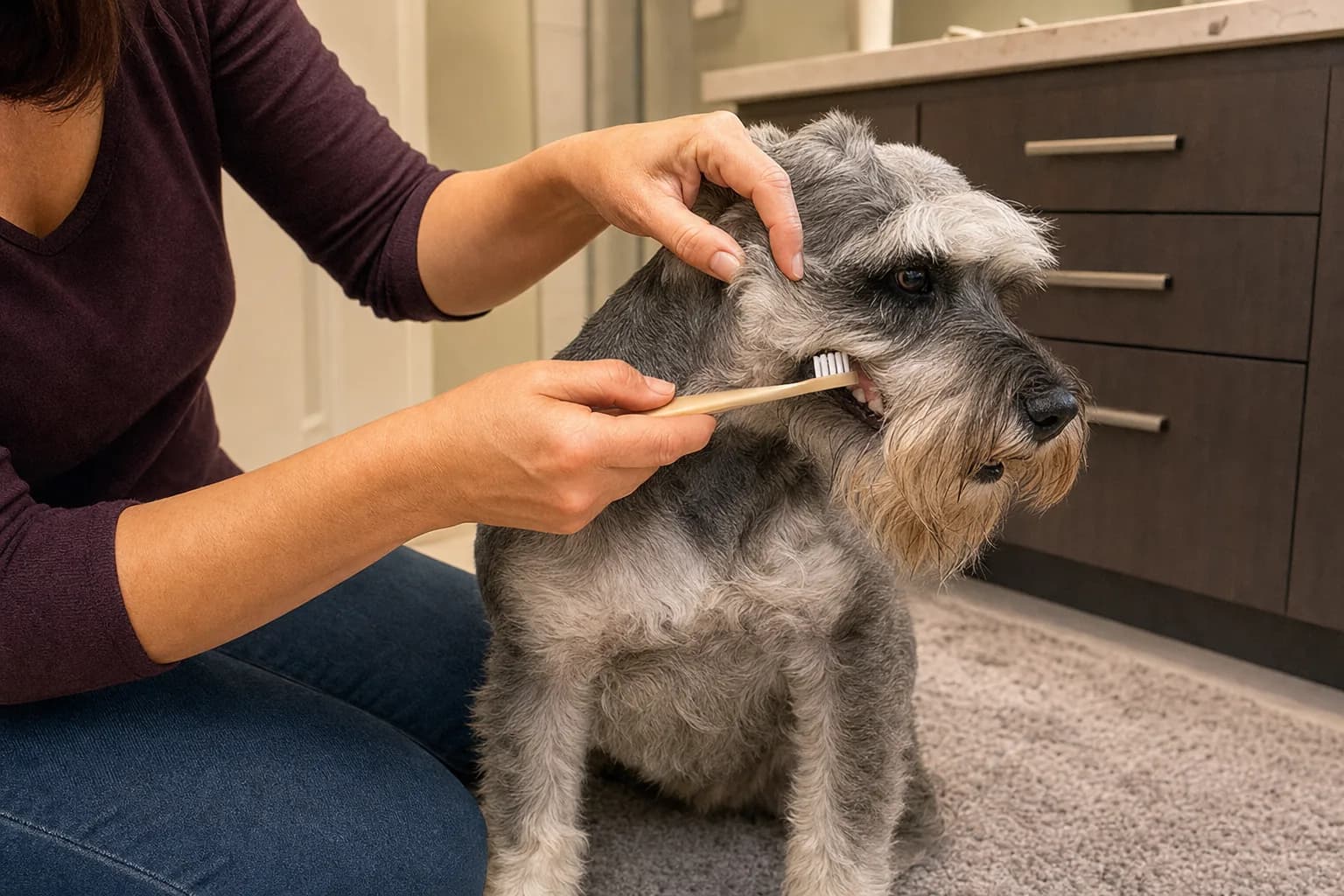
- Daily observation catches changes in appetite, movement, and elimination.
- Weekly hands-on checks make the coat less able to hide the body.
- Grooming appointments should be booked before mats determine the schedule.
- Annual and senior-care plans should be individualized with the clinic.
Weekly and annual care plan: practical checks
- Assign each recurring task to a person.
- Keep supplies in the place they are used.
- Record completion rather than relying on memory.
- Review the cadence after illness, a haircut, or a life-stage change.
A realistic plan is better than an ideal schedule no one follows. Short, calm repetitions protect both care quality and the dog's willingness to participate.
Miniature Schnauzer pros, cons, and owner fit
| Factor | Potential strength | Plan before adoption |
|---|---|---|
| Size | Portable and sturdy | Do not confuse small with low effort |
| Training | Quick and engaged | Provide daily mental work |
| Voice | Excellent alerting | Manage triggers and teach recovery |
| Coat | Low visible shedding | Budget combing and professional trims |
| Prey interest | Enjoys searching | Use secure equipment and supervision Barking tolerance and training engagement belong in the decision. |
The best match is a household that enjoys an engaged dog and accepts visible maintenance. The same traits can be strengths or friction points depending on the environment, schedule, and owner expectations.
- Small but sturdy size can suit many homes.
- Trainability rewards consistent interaction.
- Alertness can become nuisance barking without management.
- Low shedding does not mean low grooming or allergen free.
- Prey interest changes off-leash and small-pet decisions.
Miniature Schnauzer pros, cons, and owner fit: apply the plan
- Rate the household's tolerance for barking.
- Price a six-week grooming rhythm.
- Plan daily training and enrichment.
- Decide who manages doors, wildlife, and visiting children.
Choose the breed for the work and companionship you genuinely want, not for a photograph of a freshly groomed dog.
A five-part household-fit decision
A practical household-fit decision weighs five separate questions: Can the home manage alert barking? Will someone provide daily training engagement and exercise? Is the household comfortable with a high grooming workload? Can small-animal supervision and secure-leash rules be consistent? Is there a realistic plan for companionship and alone-time training? A small sturdy watchdog can fit many homes, but the best match comes from the complete routine rather than size alone. This decision-ready household-fit framework separates trainability, barking tolerance, grooming workload, prey interest, and alone-time planning so each factor can be evaluated on its own.
Use this overview for the broad Miniature Schnauzer household-fit decision, then use the dedicated guides for detailed measurements and care steps. Those spoke ownership boundaries keep the answer clear: the size guide owns adult measurements, the colors guide explains a salt and pepper Miniature Schnauzer and other registry terms, the shedding guide separates loose hair from allergens, and the mixes guide covers a Miniature Schnauzer terrier mix or Miniature Schnauzer Yorkshire Terrier mix. A responsible breeder or rescue should still describe the individual dog's observed needs rather than promising that every breed trait will appear.
For the source and full decision framework, see the Miniature Schnauzer mixes guide.
Owner workbook: a weekday exercise and enrichment map
Use this a weekday exercise and enrichment map to record the current baseline, the decision being made, who is responsible, the timing or cost involved, and the evidence that should trigger a change.
For a weekday exercise and enrichment map, include a weekday exercise and enrichment map, monthly costs and an emergency reserve, and records, photographs, and measurements that can be compared over time. Keep the record brief enough that every caregiver can maintain it.
Related Miniature Schnauzer guides
Use the page that owns the next decision:
- Miniature Schnauzer Puppies: Price, Care, and Sourcing
- Best Food for Miniature Schnauzers
- Miniature Schnauzer Haircuts and Grooming Guide
- Miniature Schnauzer Lifespan and Health Problems
- Miniature Schnauzer Size and Weight Guide
- Miniature Schnauzer Colors and Coat Patterns
- Do Miniature Schnauzers Shed? Hypoallergenic Facts
- Miniature Schnauzer Mixes: Traits and Care
Choose the detailed guide for the next decision
Use the puppy guide for Miniature Schnauzer puppies and price, the size guide for a Miniature Schnauzer size and weight chart, and the shedding guide for the difference between low visible hair and allergy exposure. Each guide keeps the practical steps with the topic it owns.
For the source and full decision framework, see the Miniature Schnauzer colors guide.
Miniature Schnauzer owner FAQs
Do Mini Schnauzers like to cuddle? Many enjoy close contact, but individual preference, temperature, context, pain, and handling history all matter. Invite contact, watch for a loose body and voluntary approach, and use consent-based handling by allowing the dog to move away. A dog that rests beside a person can be strongly attached without wanting to be held. Sudden touch sensitivity deserves veterinary attention rather than being dismissed as a personality change.
What are the cons of a mini schnauzer? Common tradeoffs include alert barking, a substantial grooming commitment, beard cleanup, prey interest, and the need for daily training engagement. These traits can be manageable strengths in the right home, but they are frustrating when a household expects a quiet, wash-and-wear companion. Price local grooming, plan trigger management, and decide who will handle exercise, coat care, and small-animal supervision before adoption.
Is a Miniature Schnauzer a good house dog? Yes, when the household fit includes daily exercise, toilet access, enrichment, companionship, barking management, and secure supervision. Small size can suit an apartment, but shared walls make alert barking more consequential. A yard is useful only as managed space and does not replace walks, training, or time with people. The home's routine matters more than square footage alone.
Do all mini schnauzers bark a lot? No. Individual variation, genetics, learning, environment, and daily activity affect both frequency and duration. Reduce repeated trigger rehearsal, reward a check-in or mat behavior after a brief alert, and use reward-based training below the dog's threshold. Sudden new vocalizing or irritability deserves veterinary attention before it is treated only as a behavior problem.
Are Miniature Schnauzers easy to train? Many are engaged learners when short training sessions use clear reinforcement and sensible management. Their alertness and persistence can also make wildlife, window activity, or barking more rewarding than the handler. Begin in a quiet setting, reinforce check-ins and recall, and increase difficulty gradually. Training does not remove prey interest or guarantee off-leash safety.
What were Miniature Schnauzers bred for? They developed from small German farm dogs used for ratting and watch work. That history helps explain why many notice movement, investigate scent, alert to arrivals, and persist at a problem. Historic purpose is context, not a prediction of individual behavior. Provide safe searching activities, secure-leash management, and training that channels those tendencies positively.
Bottom line
A Miniature Schnauzer can be a funny, attentive, highly involved companion. The right home plans for the voice, the coat, the quick mind, and the preventive work before those traits become problems.

Coreen Saito is a pet writer and longtime shelter volunteer with more than a decade in animal rescue. She covers cat behavior, breed care, and the small, ordinary science of sharing a life with companion animals, with a particular focus on honest takes about the products and decisions that actually matter. At home in Arizona, she's outranked by Mac (a dog with the loudest opinion in the house), Rebel (a cat who governs by quiet authority), and Meri (an orange tabby who runs the late shift and the laundry basket). She writes about all three, plus the rescues that keep coming through her life, at LifeWithMinty.com.
Sign up for expert-backed reviews and safety alerts all in one place.