Miniature Schnauzer Lifespan and Health Problems
Miniature Schnauzer lifespan and health depend on genetics, preventive care, weight, dental health, and early veterinary attention to changing signs.

BVMS, MRCVS
Petful is reader supported. As an affiliate of platforms like Amazon and Chewy, we may earn a commission when you buy through links on this page. There is no extra cost to you.
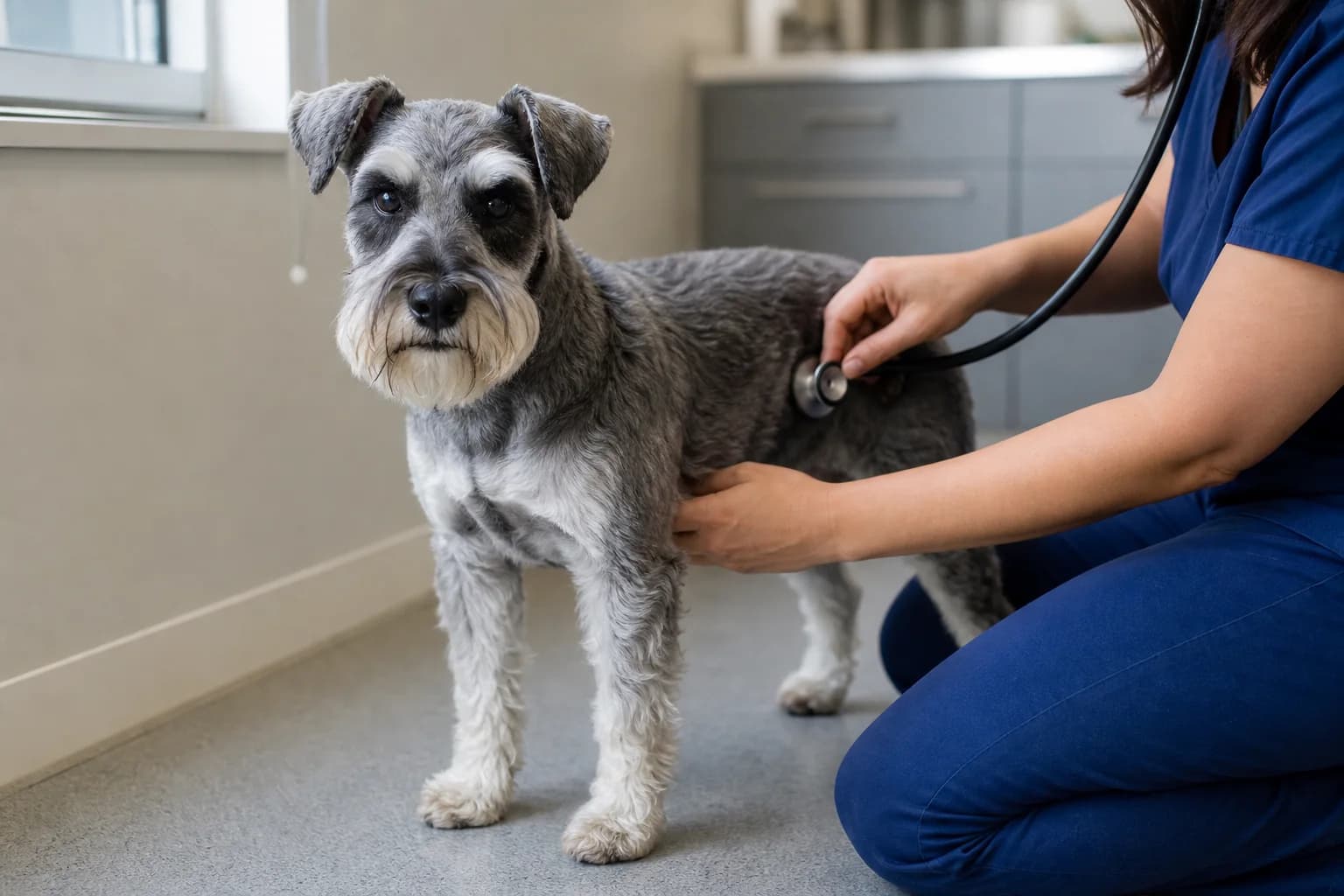
miniature schnauzer lifespan is a population question, while the health of one dog depends on genetics, environment, preventive care, body condition, disease, and access to treatment. Use breed research to prepare useful questions, not to predict an exact birthday or diagnose symptoms at home.

Sign up for expert-backed reviews and safety alerts all in one place.
How long do Miniature Schnauzers live?
- 1A UK VetCompass study reported an average age at death of 11.7 years in its Miniature Schnauzer sample.
- 2An average is not a ceiling or a promise for an individual dog.
- 3Dental care, healthy body condition, examinations, and trend records support preventive decisions.
- 4Prompt care matters when vomiting, pain, urinary change, collapse, or rapid decline appears.
- 5Population estimate is not an individual promise.
The RVC research summary reports an average lifespan of 11.7 years for Miniature Schnauzers in the studied UK primary-care population. Read that number with the underlying VetCompass study, which describes the records, dates, and population used.
- A mean combines dogs that died younger and older.
- Study populations differ by place, era, veterinary access, and inclusion rules.
- Living dogs are not represented in age-at-death calculations the same way as deceased dogs.
- One dog's prognosis changes with diagnosis and response to treatment.
How long do Miniature Schnauzers live: practical checks
- Use the study as a planning anchor.
- Ask the veterinarian about the individual record.
- Avoid treating 11.7 as an expiration date.
- Update expectations when clinical evidence changes.
Exceptionally old dogs exist, but anecdotes cannot replace population evidence. Longevity claims should identify how age was verified.
For budget planning, a current Lemonade pet insurance quote lets you compare the premium, deductible, reimbursement rate, waiting periods, and exclusions before a need arises. For gradual home dental care, the Jasper finger toothbrush is one size-conscious option to discuss with a veterinarian and introduce without forcing the mouth open. The DentaLife dental treats are one dental-treat option to discuss with a veterinarian while accounting for calories, chewing style, and choking risk.
Use lifespan figures as ranges, not promises
Miniature Schnauzer lifespan estimates describe populations, not a guaranteed age for one dog. Median longevity summarizes the midpoint in a study population, while an average can be pulled by unusually short or long lives. Breed-club summaries, insurance data, referral-hospital records, and primary-care studies may measure different dogs and outcomes. This lifespan evidence view separates population medians, an owner-observed range, and the unknowable outcome for one dog. The most responsible answer keeps the estimate beside the study limits and makes individual variability explicit.

Petful may earn a commission when you click through to Lemonade, at no extra cost to you.
Can a Miniature Schnauzer live 20 years? An individual may reach an unusually advanced age, but 20 years should be treated as an outlier rather than an expected planning number. Genetics, preventive care, body condition, dental health, disease, accidents, and access to treatment all influence outcome. Use a realistic range for planning, then base decisions on the dog's current examination and quality of life.
For the source and full decision framework, see the population longevity research.

 Sponsored
Have a health question about your pet?
Talk to a licensed vet at Dutch over video or message, including nights and weekends.
Use code Pets60
Plans start at $12/month · covers up to 5 pets
- Licensed vets in most states
- Rx for 150+ conditions
- 4.7 on Trustpilot
Miniature Schnauzer health priorities
| Area | Owner evidence | Veterinary question |
|---|---|---|
| Dental | Breath, chewing, gums | When is treatment indicated? |
| Body condition | Weight, ribs, muscle | What is this dog's target? |
| Lipids and abdomen | History, diet, vomiting, pain | Is fasting testing useful? |
| Urinary | Frequency, straining, blood | How urgent is this pattern? |
| Mobility | Pace, rising, sleep | Could pain be contributing? Use a prevention map with evidence limits. |
Breed-aware care means knowing which questions deserve attention while still evaluating the whole dog. Teeth, weight, lipids, digestive or abdominal signs, urinary changes, eyes, skin, and mobility all belong in a prevention map.
- Predisposition does not mean certainty.
- Common conditions can matter more than a dramatic rare disease.
- Medication and supplement history affects interpretation.
- Early signs may be subtle changes in routine rather than a visible lesion.
Miniature Schnauzer health priorities: apply the plan
- Keep current records.
- Bring a complete diet and treat list.
- Report timing and frequency of signs.
- Ask which tests are justified now and which are not.
Screening should be chosen by a veterinarian using age, family history, examination, symptoms, and prior results. More testing is not automatically better when it lacks a clinical purpose.
What causes death cannot be reduced to one breed slogan
What is the leading cause of death in Miniature Schnauzers? The answer depends on the population, time period, age distribution, diagnostic detail, and how causes are grouped. Cancer, cardiac disease, neurologic disease, kidney disease, trauma, and other categories can rank differently across datasets. A single cause quoted without the source and denominator can sound more certain than the evidence supports.
The practical prevention map is broader: maintain a lean body condition, provide dental care, use parasite and vaccine plans appropriate to the dog, protect against traffic and falls, review new lumps or symptoms, and keep routine examinations. Screening and early care can improve decisions, but no checklist can guarantee injury prevention or a particular lifespan.
Dental care and routine prevention
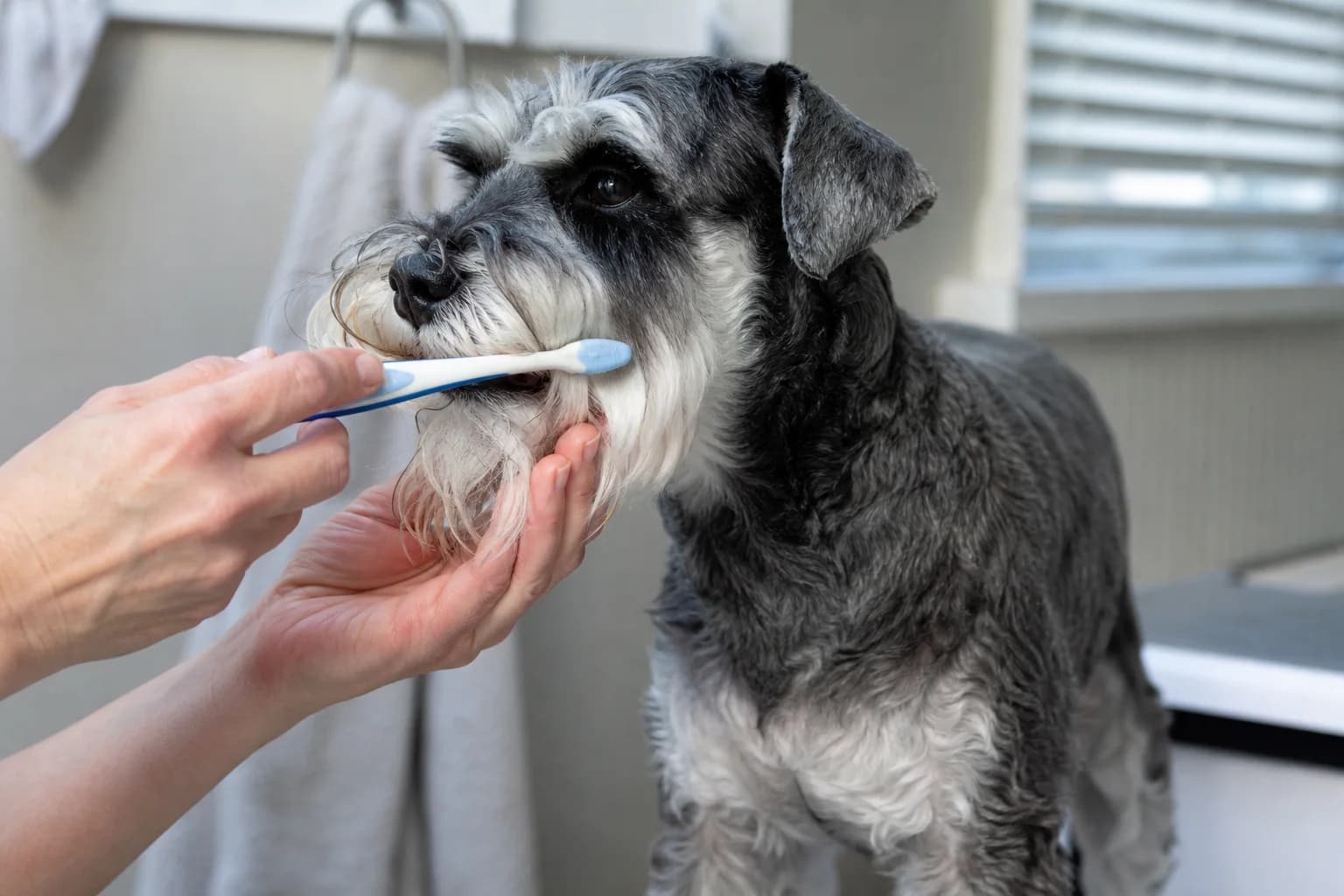
Small mouths can accumulate plaque and periodontal disease even when the front teeth look acceptable. Daily brushing with dog-safe toothpaste is the strongest home habit, supported by professional assessment and treatment when needed.
- Bad breath can be a disease sign rather than a cosmetic problem.
- Dental chews do not clean every surface.
- Loose teeth, bleeding, swelling, or refusal of hard food needs assessment.
- Anesthesia-free surface cleaning does not replace care below the gumline.
Dental care and routine prevention: questions to answer
- Lift the lip regularly.
- Introduce brushing gradually.
- Ask for a dental assessment at examinations.
- Discuss anesthesia, imaging, and pain control when a procedure is proposed.
Do not scrape teeth with sharp home tools or give bones and very hard objects that can fracture teeth.
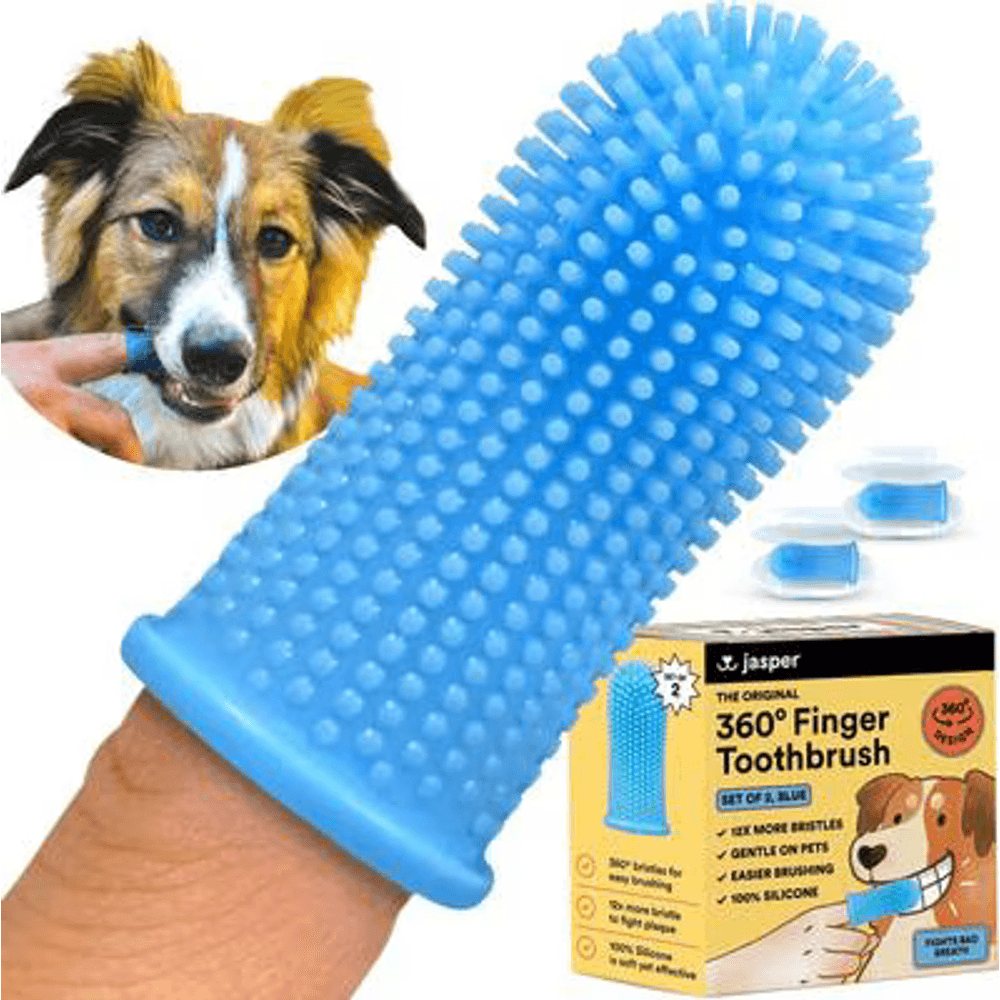
A 360-degree silicone finger toothbrush that brushes every side of a tooth at once. Gentle on gums and ideal for dogs new to brushing or owners who find a handled brush awkward.
Petful may earn a commission when you click through to Chewy, at no extra cost to you.
Lipids, pancreatitis, and evidence limits
A case-control study compared 17 Miniature Schnauzers with a history of pancreatitis with 34 controls and found an association with hypertriglyceridemia. That design cannot prove that one laboratory value caused pancreatitis in every dog.
- Fasting status and laboratory context matter.
- Pancreatitis can have several contributors.
- A normal result at one time does not explain every future sign.
- Dietary treatment should match the diagnosed problem.
Lipids, pancreatitis, and evidence limits: practical checks
- Ask whether fasting testing is appropriate.
- Bring prior results for trend comparison.
- Follow the prescribed diet exactly when used therapeutically.
- Recheck on the schedule the clinician recommends.
Repeated vomiting, abdominal pain, weakness, collapse, or marked lethargy needs prompt veterinary evaluation. Do not attempt to confirm pancreatitis by changing food at home.
Choose rest space by sleeping posture and mobility; the FurHaven orthopedic sofa bed is one washable-cover option to measure against the dog's full stretched length. The Petlibro stainless-steel fountain is one water-station format to compare for capacity, cleaning access, filter cost, and whether the dog actually prefers moving water. Use only pet-safe toothpaste, such as Virbac C.E.T. enzymatic pet toothpaste, after veterinary guidance; human toothpaste is not an appropriate substitute.
Ask for the full lipid and symptom context
Hypertriglyceridemia is reported in Miniature Schnauzers, but one nonfasting result or a breed label is not a complete diagnosis. Lipid and pancreatitis study limits matter: ask whether the sample was fasting, whether the value was repeated, whether cholesterol and other laboratory results were abnormal, and whether medications or endocrine disease could contribute. The veterinarian may recommend further testing or a diet change based on the complete case.
A pancreatitis history changes the conversation because recurrence risk and fat tolerance are individual. Repeated vomiting, abdominal pain, poor appetite, dehydration, or pronounced lethargy needs prompt assessment. Do not wait for every classic sign, and do not use an internet fat percentage as a substitute for the plan. Evidence limits should make the decision more careful, not less responsive.
Connect the medical history to the food decision
The best food for Miniature Schnauzers is therefore not one universal recipe. For a healthy dog, the decision starts with nutritional adequacy, calories, portions, and body condition; for a dog with abnormal lipids or pancreatitis history, the best food for a Miniature Schnauzer may be a veterinarian-directed plan with different targets. Bring the full label, treats, supplements, measured daily amounts, and laboratory timeline to the discussion so the recommendation reflects the complete intake rather than the front of one package.
For the source and full decision framework, see the best food for Miniature Schnauzers guide.
Weight, body condition, and changing needs
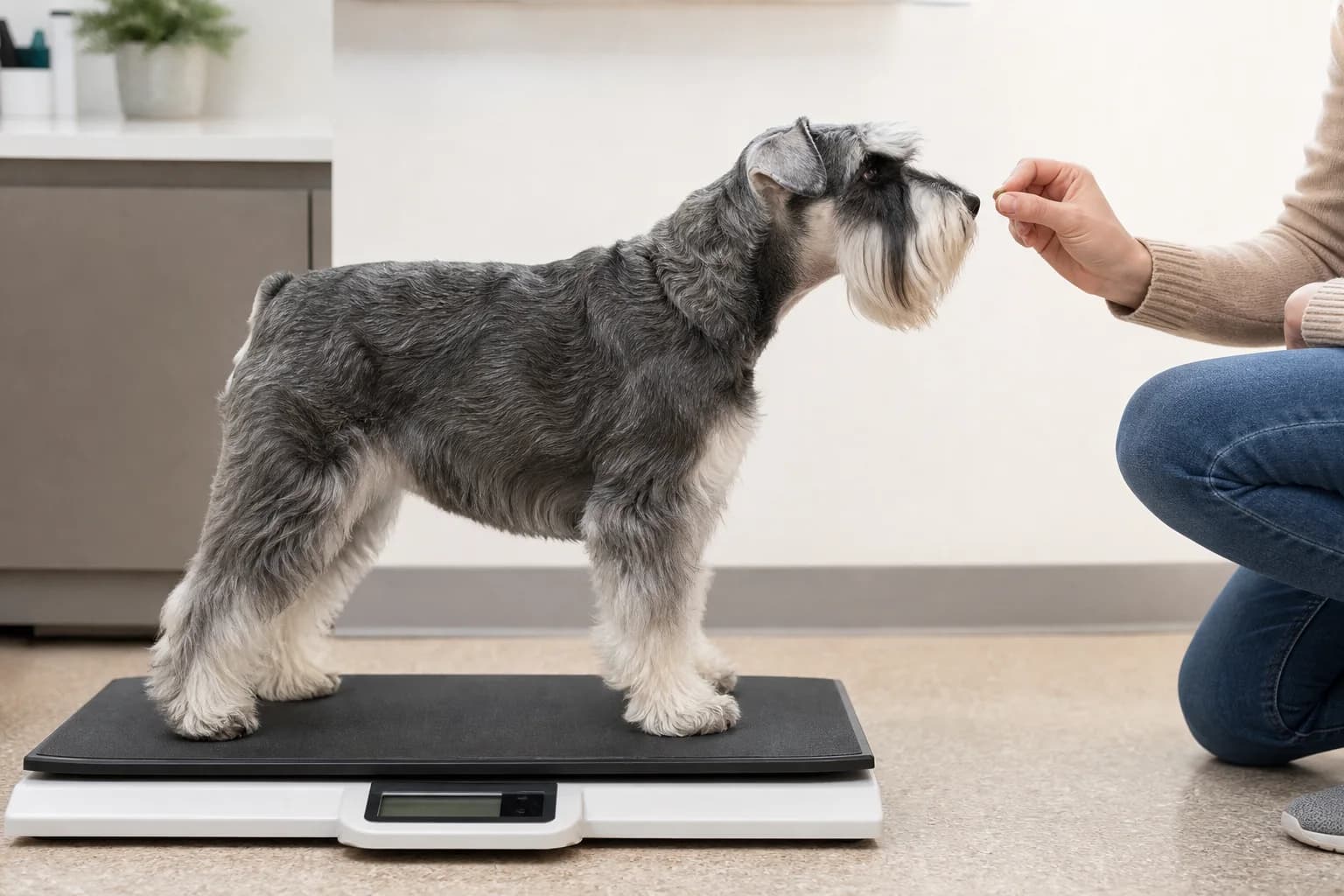
Scale weight is one observation. Body-condition scoring assesses fat, while muscle-condition scoring looks for tissue loss over the spine, shoulders, head, and limbs. A dense coat makes hands-on checks essential.

An orthopedic sofa bed with three bolstered sides for dogs who like to rest their head and joints against a cushion. The supportive foam base cradles hips and elbows, a comforting spot for an older or shaky dog to settle.
Petful may earn a commission when you click through to Chewy, at no extra cost to you.
- A stable weight can hide muscle loss and fat gain.
- Age does not make obesity harmless.
- Unexplained loss can signal disease.
- Calorie needs change with activity, medication, illness, and life stage.
Weight, body condition, and changing needs: apply the plan
- Feel ribs and waist monthly.
- Use the same scale when possible.
- Photograph from above and the side.
- Discuss trends rather than one isolated number.
Use the size and weight guide for measurement technique and the food guide for portion review.
Nutrition questions for the veterinary team
Nutrition advice becomes safer when the exact diet, amount, treats, supplements, and clinical goal are visible. Bring labels or product links rather than a description such as premium or low fat. If the veterinary plan supports slower eating, the Outward Hound 0.75-cup slow feeder is one small-dog format to test with a measured portion; it is a pacing tool, not a treatment for disease.
- Therapeutic diets target diagnosed needs.
- Supplements can duplicate nutrients or interact with treatment.
- Home-prepared food needs formulation, not ingredient improvisation.
- A dog can dislike a diet that is medically appropriate, requiring a workable alternative.
Nutrition questions for the veterinary team: questions to answer
- Write the goal.
- Measure actual intake.
- Ask what outcome and recheck define success.
- Report cost or acceptance problems instead of quietly abandoning the plan.
Do not combine therapeutic diets or add oils, vitamins, fiber, or herbs without checking how the change affects the clinical goal.
 Sponsored
Vet care that's always there
Unlimited video calls and messaging with licensed vets for less than a typical vet visit. One membership covers up to five pets.
Use code Pets60
Plans start at $12/month · covers up to 5 pets
- Licensed vets in most states
- Rx for 150+ conditions
- 4.7 on Trustpilot
Exercise, safety, and healthy aging
Movement supports physical function, enrichment, and routine, but the amount and intensity should match the dog's current capacity. Older dogs can benefit from shorter, more frequent activity and safer footing. For controlled activity, measure neck and chest before trying the Frisco padded no-pull harness, then recheck movement and strap clearance as weight, coat, or mobility changes.

A convenient 100-count liner option for adding absorbency to a correctly fitted washable dog diaper.
Petful may earn a commission when you click through to Chewy, at no extra cost to you.
- Heat, pain, heart or respiratory disease, and medication can change tolerance.
- Slowing down is a sign to interpret, not an automatic consequence to ignore.
- Nonslip surfaces can reduce hesitation.
- Mental enrichment remains valuable when distance decreases.
Exercise, safety, and healthy aging: practical checks
- Record walking pace and recovery. For controlled walks, the Frisco dual-handle traffic leash offers two handling points, but secure harness fit and practiced technique still matter more than the hardware alone.
- Use ramps or steps only when they are stable and appropriate.
- Trim nails for traction.
- Ask about pain when movement or sleep changes.
Collapse, severe breathing difficulty, inability to stand, or rapidly progressive weakness requires urgent veterinary guidance.
Signs that need prompt veterinary care

- Call promptly for rapid or severe change | Repeated vomiting, a painful abdomen, collapse, breathing difficulty, inability to urinate, sudden neurologic change, or rapid deterioration needs veterinary triage. Straining to urinate and repeated vomiting need prompt veterinary contact.
Urgency depends on the sign, severity, duration, age, medical history, and what else is happening. When in doubt, call a veterinary professional who can triage the actual dog.
- Repeated vomiting can cause dehydration and signal serious disease.
- Straining to urinate or producing little urine can be urgent.
- A painful swollen abdomen is not a wait-and-see grooming issue.
- Sudden neurologic change, collapse, or breathing difficulty is an emergency.
Signs that need prompt veterinary care: apply the plan
- Note time of onset.
- Photograph or video when safe.
- Do not give human medication unless directed.
- Bring packaging for anything the dog may have eaten.
This guide cannot diagnose a symptom. Immediate danger takes priority over finishing an online checklist.
Include urinary signs in the urgent-change screen
Straining to urinate, producing only drops, blood in urine, repeated attempts, pain, vomiting, weakness, or inability to pass urine warrants prompt veterinary contact. Increased thirst, larger urine volumes, new accidents, or new incontinence also deserves assessment, even when the dog otherwise seems bright. Record timing, frequency, color, medications, water intake changes, and whether stool or appetite changed.
A washable dog diaper with a disposable liner can support short-term cleanup for a dog with incontinence, but it does not diagnose or treat the cause. Change the liner promptly, keep skin and furnishings dry, check for rubbing, and follow the veterinarian's plan. Sudden continence changes should never be normalized as aging before medical causes are considered. Petful’s guide to best disposable dog diapers has the full breakdown.
For this optional cleanup role, PAWPANG Disposable Dog Diaper Liners, Medium, 100 count can be used inside a correctly fitted washable dog diaper; replace promptly when wet.
Senior changes and quality of life

| Domain | Record | Reason |
|---|---|---|
| Comfort | Rest, panting, guarding | Identify pain or distress |
| Mobility | Rising, turning, surfaces | Adapt access and treatment |
| Daily function | Eating, elimination, sleep | Track independence |
| Engagement | People, play, sniffing | Protect meaningful activities Track a healthy-aging baseline and quality of life. |
Healthy aging plans track function that matters to the individual dog: appetite, sleep, comfort, movement, elimination, social contact, grooming tolerance, and enjoyment. Trends help families act before a crisis narrows the choices.
- Nighttime restlessness can have medical causes.
- House-soiling may reflect mobility, urinary, cognitive, or gastrointestinal change.
- Pain can appear as withdrawal or irritability.
- Good and bad days should be recorded with concrete observations.
Senior changes and quality of life: questions to answer
- Choose three favorite activities as reference points.
- Use a simple daily comfort record.
- Plan transport and medication support.
- Discuss palliative and end-of-life options before an emergency.
Quality of life is not one score or one person's failure. It is a continuing clinical and family conversation centered on comfort and meaningful function.
When do Miniature Schnauzers slow down?
At what age do Miniature Schnauzers slow down? There is no universal birthday. Some remain active well into older age, while others change earlier because of pain, sensory loss, dental disease, heart or lung disease, medication effects, or another condition. Compare the dog with its own healthy-aging baseline rather than assuming reduced activity is normal for the breed.
Track walking speed, willingness to climb, sleep, appetite, social engagement, grooming tolerance, toilet habits, and recovery after activity. Modify surfaces, step height, temperature, and exercise duration while the veterinary team investigates meaningful change. Quality of life is a pattern across comfort and function, not a single good day or one age threshold.
Owner workbook: a healthy-aging baseline
Use this a healthy-aging baseline to record the current baseline, the decision being made, who is responsible, the timing or cost involved, and the evidence that should trigger a change.
For a healthy-aging baseline, include a healthy-aging baseline, monthly costs and an emergency reserve, and records, photographs, and measurements that can be compared over time. Keep the record brief enough that every caregiver can maintain it.
Build a prevention and monitoring map
A useful health map separates everyday prevention, scheduled review, and urgent change. Everyday observations include appetite, water intake, movement, stool, urine, sleep, comfort, and social engagement. Scheduled review includes dental care, body and muscle condition, tailored vaccination and parasite prevention, medication review, and laboratory testing when the veterinary team recommends it. Urgent change includes breathing difficulty, collapse, unproductive urination attempts, repeated vomiting, severe pain, or rapid deterioration.
This map does not prevent every injury or disease. Its value is creating a personal baseline and a clear response threshold. Bring dated notes, photographs, medication lists, and exact food and treat details to appointments so the veterinary team can interpret change with better context.
Related Miniature Schnauzer guides
Use the page that owns the next decision:
- Miniature Schnauzer: Temperament, Health, and Care
- Miniature Schnauzer Puppies: Price, Care, and Sourcing
- Best Food for Miniature Schnauzers
- Miniature Schnauzer Haircuts and Grooming Guide
- Miniature Schnauzer Size and Weight Guide
- Miniature Schnauzer Colors and Coat Patterns
- Do Miniature Schnauzers Shed? Hypoallergenic Facts
- Miniature Schnauzer Mixes: Traits and Care
Use measured trends for weight decisions
A Miniature Schnauzer size and weight trend is most useful when the same scale, body-condition method, and dated observations are used consistently. A Miniature Schnauzer weight chart provides context, while the veterinary team interprets unexpected change.
For the source and full decision framework, see the Miniature Schnauzer size and weight guide.
Miniature Schnauzer health FAQs
Can a Miniature Schnauzer live 20 years? An individual may reach an unusually advanced age, but 20 years should be treated as an outlier rather than the expected Miniature Schnauzer lifespan. Population longevity estimates vary with study design and records. Genetics, preventive care, body condition, dental health, disease, accidents, and access to treatment all influence outcome. Plan for senior care without treating one exceptional age as a promise.
What is the leading cause of death in Miniature Schnauzers? No single answer should be stated without naming the population, time period, age distribution, and cause categories. Different datasets can rank cancer, cardiac, neurologic, kidney, trauma, or other causes differently. The practical response is broad prevention: routine examinations, lean body condition, dental care, safety management, and prompt assessment of meaningful changes.
At what age do Miniature Schnauzers slow down? There is no universal age. Some remain active well into later life, while pain, sensory loss, dental disease, cardiopulmonary disease, medication effects, or another condition can cause earlier change. Track walking, stairs, sleep, appetite, social engagement, toilet habits, and recovery against the dog's own healthy-aging baseline, and ask the veterinary team about a meaningful decline.
Seek prompt guidance for repeated vomiting, marked abdominal pain, collapse, breathing difficulty, inability or straining to urinate, sudden neurologic change, severe weakness, or rapid deterioration. Urgency depends on severity, duration, age, medical history, and accompanying signs. Note when the change began, photograph or video it when safe, and bring packaging for anything the dog may have eaten. Do not give human medication or attempt to diagnose pancreatitis or another condition from breed reputation alone.
Maintain an appropriate body and muscle condition, brush teeth with dog-safe toothpaste, keep preventive visits and prescribed rechecks, and provide activity matched to current capacity. Track appetite, water intake, elimination, sleep, movement, breathing recovery, social interest, grooming tolerance, and medications while the dog is well. Use nonslip surfaces and practical access changes as mobility evolves. Discuss pain, nutrition, laboratory trends, and quality of life early so decisions are based on evidence rather than a crisis.
Bottom line
Use lifespan data for preparation, not prediction. Consistent preventive care, body and dental monitoring, prompt attention to warning signs, and decisions tied to the individual dog's evidence are the practical priorities.
BVMS, MRCVS
Dr. Pippa Elliott, BVMS, MRCVS, is a veterinarian with nearly 30 years of experience in companion animal practice. Dr. Elliott earned her Bachelor of Veterinary Medicine and Surgery from the University of Glasgow. She was also designated a Member of the Royal College of Veterinary Surgeons. Married with 2 grown-up kids, Dr. Elliott has a naughty Puggle named Poggle, 3 cats and a bearded dragon.
Sign up for expert-backed reviews and safety alerts all in one place.