Miniature Schnauzer Puppies: Price, Care, and Sourcing
Miniature Schnauzer puppies need careful sourcing, early grooming, training, and a realistic first-year budget. Learn price factors and setup needs.

Petful is reader supported. As an affiliate of platforms like Amazon and Chewy, we may earn a commission when you buy through links on this page. There is no extra cost to you.
miniature schnauzer puppies vary in price because geography, source, veterinary work, pedigree, and included support differ. A quoted number is only useful when you know what it includes, what health and identity evidence exists, and whether the source will protect the puppy after payment.

Sign up for expert-backed reviews and safety alerts all in one place.
Miniature Schnauzer puppy price and sourcing
- 1Compare sources, records, contracts, and support before comparing price.
- 2Treat online price ranges as planning estimates, not guarantees.
- 3Budget for the full first year, including grooming, training, and veterinary care.
- 4A color or urgent deposit request is not evidence of quality.
- 5Complete source verification before payment.
A breeder puppy may cost more up front than a shelter or rescue placement, but price alone cannot tell you which route is ethical or appropriate. The comparison needs the same categories on each line: identity, medical work, behavior information, contract terms, transport, and support.
- Advertised prices can omit deposits, delivery, taxes, and required supplies.
- An adoption fee may include sterilization, vaccination, or microchipping.
- A high price does not prove health testing.
- A low price can become expensive when records or care are missing.
Miniature Schnauzer puppy price and sourcing: practical checks
- Ask for a written total.
- List what is included and excluded.
- Verify records independently when possible.
- Do not send irreversible payment under artificial urgency.
Use ranges to build a budget. The exact local amount should come from current, transparent sources you can evaluate.

For budget planning, a current Lemonade puppy insurance quote lets you compare the premium, deductible, reimbursement rate, waiting periods, and exclusions before a need arises. For a managed puppy zone, compare panel spacing, height, and room layout before choosing the Frisco configurable gate and playpen, and never leave an unsafe climber unsupervised. Measure standing height and body length before comparing the Sherpa soft-sided carrier, and verify the exact car or airline rules that apply to the trip.

Petful may earn a commission when you click through to Lemonade, at no extra cost to you.
Verify the source before comparing the price
Listings for Miniature Schnauzer puppies, Miniature Schnauzers for sale, and Miniature Schnauzer breeders can look similar while offering very different evidence. An AKC Marketplace Miniature Schnauzer puppies listing is a starting point, not a substitute for source verification. Confirm the adult dogs' identities, relevant health records, the puppy's veterinary record, the written total, the contract, and the return policy before sending money.
Pause when the seller creates same-day pressure, refuses a live conversation, changes the handoff location, or cannot provide matching names and dates. These sourcing red flags become easier to compare when they are written beside the records provided. A responsible breeder, rescue, or source should welcome careful questions and explain what support remains after placement. Treat price ranges as estimates rather than guarantees: price is one line in the comparison, while documentation, welfare, and long-term fit determine whether the transaction is sound. Treat dated photographs, a live video conversation, or an in-person meeting as visual sourcing evidence, while remembering that images do not replace matching records.
People searching to adopt a pet Miniature Schnauzer can apply the same verification habits to shelters and rescues. Ask what is known, what is estimated, which veterinary care has been completed, and what post-adoption support is available. Adult Miniature Schnauzers for adoption may already have observable grooming tolerance, house-training habits, and activity patterns, which can make the household-fit comparison more concrete than relying on a puppy photograph or sales label.
Adoption, rescue, and adult alternatives
| Route | Useful evidence | Main caution |
|---|---|---|
| Breeder | Parents, health testing, contract | Price does not prove quality |
| Breed rescue | Foster behavior and records | History may be incomplete |
| Shelter | Independent assessment | Short observation window |
| Adult rehome | Daily-life history | Verify identity and medical records Confirm a written return policy. |
Breed rescue, all-breed rescue, municipal shelters, and adult rehomes can offer excellent companions. An adult may provide clearer information about size, coat, activity, and household behavior, though no placement comes with perfect certainty.
- Foster observations can be more useful than a kennel snapshot.
- Adults still need veterinary and behavior assessment.
- Return policies protect both dog and adopter.
- Transport-only arrangements reduce the evidence available before commitment.
Adoption, rescue, and adult alternatives: apply the plan
- Ask what is observed versus assumed.
- Request medical and microchip records.
- Discuss children, other animals, alone time, and grooming.
- Confirm what happens if the placement fails.
Review the complete Miniature Schnauzer breed guide before deciding that puppy age is the most important criterion.
Questions to ask before paying
- Pause before paying | Do not send money when records are missing, identities do not match, the handoff location changes, or urgency is being used to prevent verification. Same-day pressure and missing veterinary records are reasons to pause.
A good sourcing conversation welcomes specific questions and gives verifiable answers. Review documents while you are calm, not while a countdown timer or another alleged buyer is pushing the decision.

Petful may earn a commission when you click through to Chewy, at no extra cost to you.
- Ask which health tests were performed on each parent and see the results.
- Ask to see the mother and the environment where the litter lives when appropriate.
- Check that names and dates match across records.
- Read the health guarantee, return clause, and ownership restrictions.
Questions to ask before paying: questions to answer
- Verify the seller's identity and physical location.
- Use a traceable payment method.
- Keep advertisements and messages.
- Walk away when the story changes or records cannot be produced.
Red flags include parking-lot handoffs, many unrelated breeds, shipping without meaningful screening, payment by gift card or cryptocurrency, and claims that color makes health evidence unnecessary.
For walking equipment, measure the neck and chest before trying the Frisco padded no-pull harness, then recheck movement and strap clearance after the coat or weight changes. The Nina Ottosson Lickin' Layers puzzle feeder can turn part of a measured meal into supervised enrichment; start easy and remove it if frustration or chewing replaces problem-solving. A Pet Parents Forager snuffle mat can slow a supervised search game when its food is counted in the daily ration and the dog is not allowed to shred or swallow the fabric.
The first weeks at home

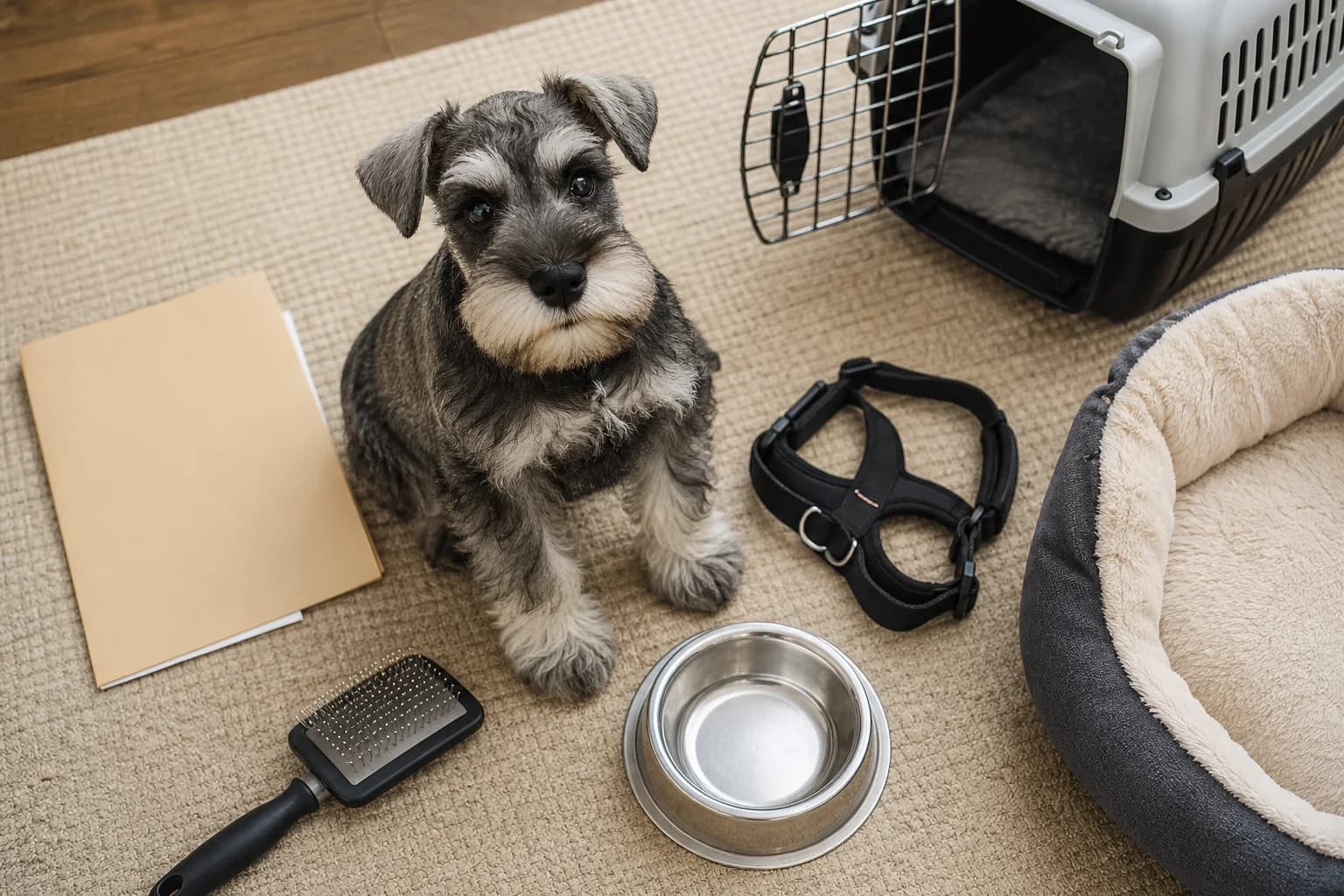
The first weeks should be predictable, quiet, and observable. Keep the puppy on the familiar food initially, restrict unsupervised space, protect sleep, and record meals, stool, urine, play, and signs of illness.
- Puppies need frequent toilet opportunities after waking, eating, drinking, and play.
- A crate is a management tool, not an all-day storage plan.
- New exposures should remain below the puppy's fear threshold.
- A prompt veterinary visit establishes an independent baseline.
The first weeks at home: practical checks
- Book the appointment before pickup.
- Puppy-proof cords, gaps, stairs, and toxic items.
- Use gates and a safe resting area.
- Begin short, rewarded separations before the puppy becomes distressed.
Contact the veterinary clinic promptly for repeated vomiting or diarrhea, marked lethargy, breathing difficulty, collapse, refusal to eat within the clinic's safe window, or any rapidly worsening sign.
A calm first-week setup
Miniature Schnauzer newborn puppies need care from their mother and an experienced source, so buyers should not receive a puppy before an age-appropriate transition. Cute Miniature Schnauzer puppies still need a secure floor setup, an open crate or pen, a water bowl, frequent toilet access, protected sleep, and gradual introductions. Newborn Miniature Schnauzers are not a do-it-yourself handoff unless a veterinarian and qualified neonatal caregiver are directing the plan.
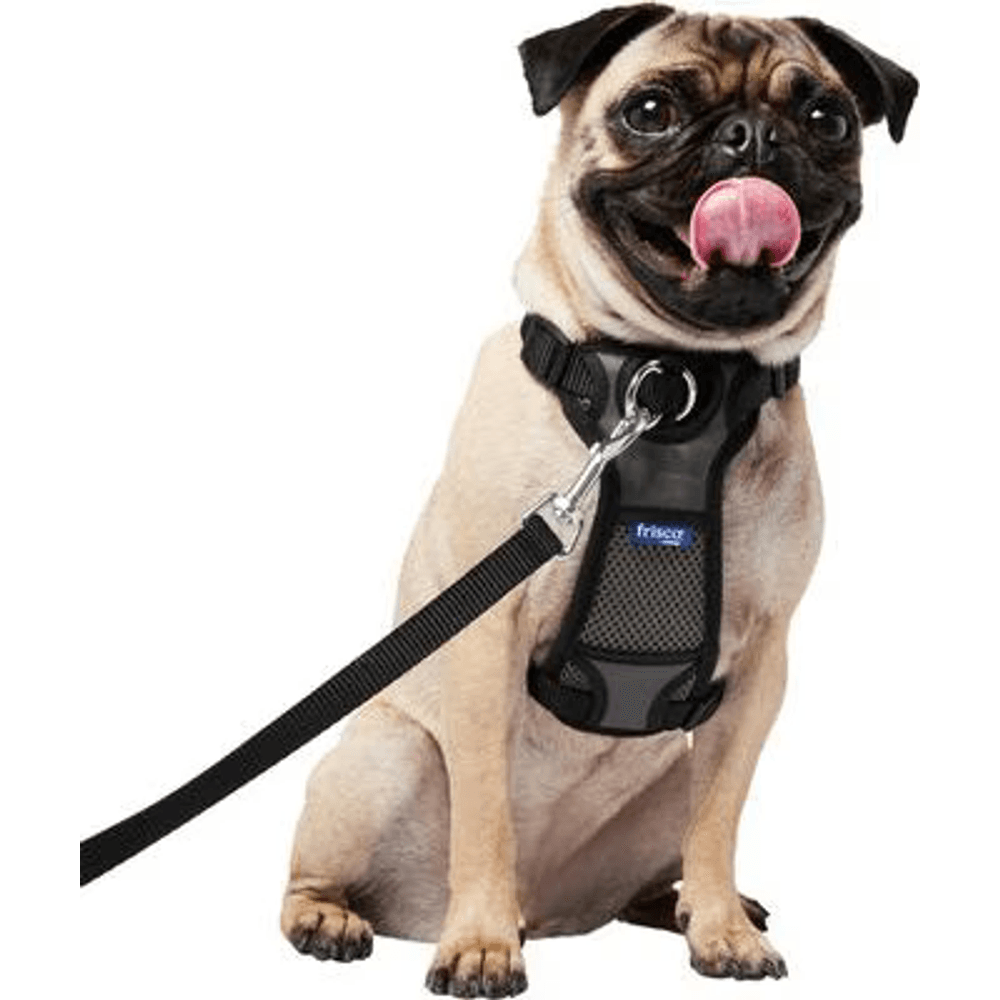
A budget-friendly padded no-pull harness that keeps leash pressure off a coughing dog's neck and windpipe by distributing it across the chest. A simple, affordable way to protect an irritated airway or a collapsing trachea on every walk.
Petful may earn a commission when you click through to Chewy, at no extra cost to you.
For house-training management, use frequent trips and supervision as the primary plan. A correctly fitted washable dog diaper with a disposable liner may help protect surfaces during short, supervised management periods, but it does not teach the puppy where to eliminate. Change wet materials promptly, keep skin and coat dry, and stop if rubbing or irritation appears.
For this optional cleanup role, PAWPANG Disposable Dog Diaper Liners, Medium, 100 count can be used inside a correctly fitted washable dog diaper; replace promptly when wet.
Connect crate comfort with the feeding schedule
Crate training should build comfort gradually and should not be used to extend toilet intervals beyond what the puppy can manage. Feed a complete and balanced Miniature Schnauzer puppy food on an age-appropriate schedule, and ask the veterinary team before changing diets or adding supplements. A brand-specific product such as Royal Canin Miniature Schnauzer Puppy Food still needs the same life-stage, calorie, transition, and individual-response review as any other option.
For the source and full decision framework, see the Miniature Schnauzer food guide.
Feeding a Miniature Schnauzer puppy
Feed a diet labeled complete and balanced for growth, using the actual package calories and a starting amount suited to the puppy. Growth should be steady rather than forced, and treats used for training still count.
- Adult maintenance food is not automatically appropriate for growth.
- Cups are less repeatable than gram weights.
- Frequent food changes make digestive history harder to interpret.
- A veterinarian should guide feeding when growth, stool, appetite, or laboratory findings are concerning.
Feeding a Miniature Schnauzer puppy: apply the plan
- Keep the original label.
- Measure the daily amount.
- Reserve part of the meal for training.
- Recheck weight and body condition at veterinary visits.
The veterinarian-led Miniature Schnauzer food guide explains adequacy statements, transitions, and portion review.
Early grooming habits
Puppy grooming begins with cooperation, not a full haircut. Tiny sessions that pair beard, paw, ear, body, and tool handling with rewards create a foundation for lifelong care. The aumuca self-cleaning slicker brush is one brush to introduce with light pressure before longer coat-care sessions.
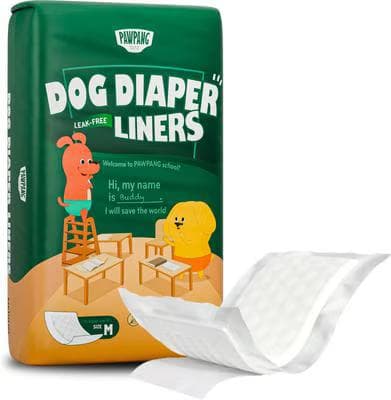
A convenient 100-count liner option for adding absorbency to a correctly fitted washable dog diaper.
Petful may earn a commission when you click through to Chewy, at no extra cost to you.
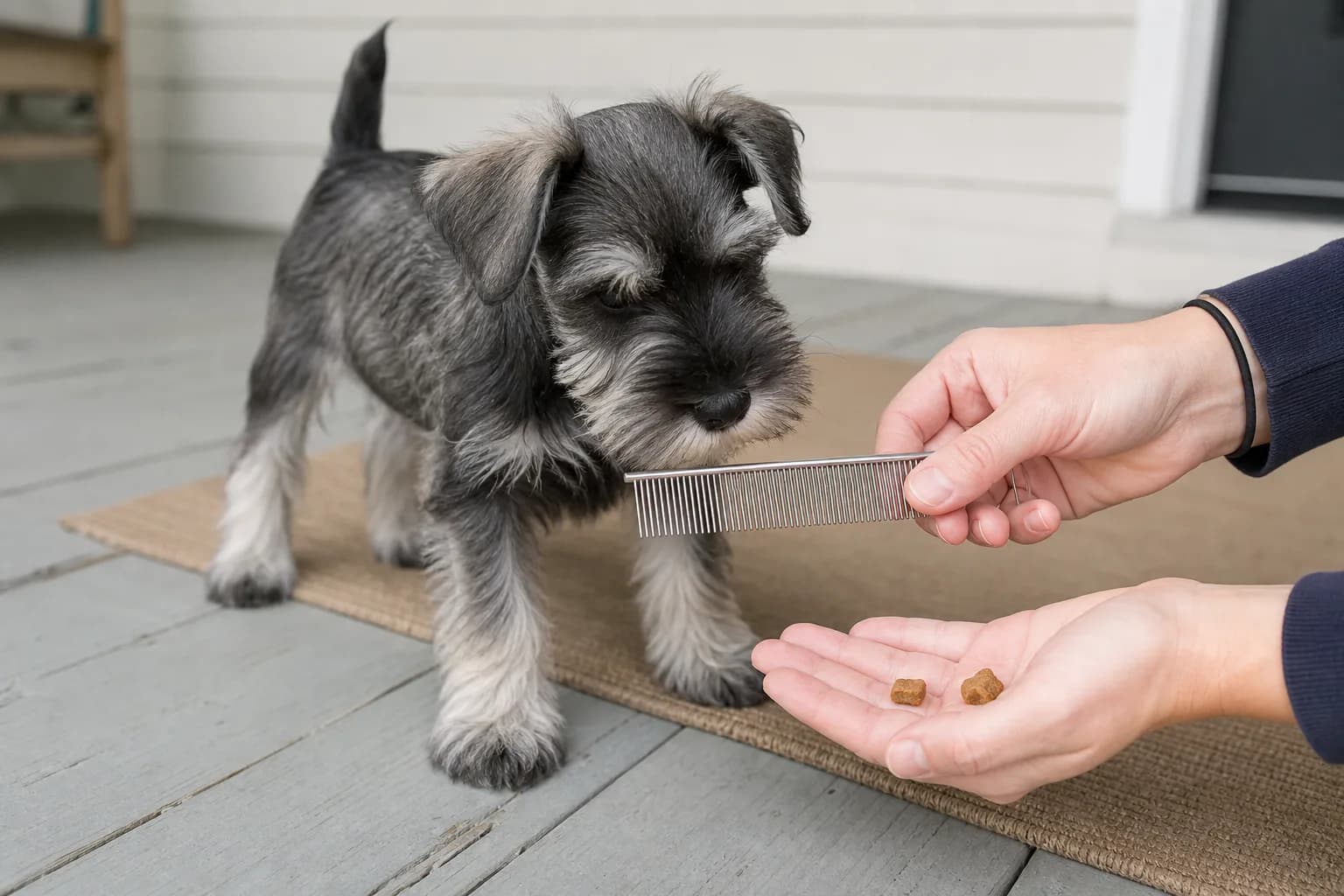
- A puppy can learn to stand on a nonslip mat.
- Clipper sound should be introduced before vibration and cutting. The OneIsAll cordless clipper and paw-trimmer kit is one tool whose sound and vibration can be introduced gradually before any cutting is attempted.
- The metal comb must eventually reach the skin.
- Restraint that causes panic can worsen future appointments.
Early grooming habits: questions to answer
- Touch one paw and reward.
- Lift the lip briefly. For gradual dental care, use only pet-safe toothpaste such as Virbac C.E.T. enzymatic toothpaste after veterinary guidance; human toothpaste is not an appropriate substitute.
- Comb one easy section.
- End while the puppy is still comfortable.
Use the Miniature Schnauzer grooming guide to choose tools and a maintainable haircut.
Make the first haircut a handling lesson
Miniature Schnauzer puppy haircuts can introduce the comb, feet, face, table, clipper sound, and short cooperative handling without demanding a perfect adult outline. Ask the groomer what a Miniature Schnauzer puppy cut means in that salon, agree on a comfortable length, and keep the first sessions brief and positive.
For the source and full decision framework, see the Miniature Schnauzer grooming guide.
Growth and adult-size expectations
Growth is a trend, not a promise from one age-to-weight calculator. Parent size, sex, nutrition, health, and normal individual variation all affect the curve.
- The official adult height standard is 12 to 14 inches.
- Puppy weight alone does not confirm future height.
- Body condition matters separately from growth.
- Unexpected loss, stalled growth, or a swollen abdomen needs veterinary assessment.
Growth and adult-size expectations: practical checks
- Weigh on the same scale when possible.
- Plot dates rather than remembering impressions.
- Photograph the standing outline.
- Ask the veterinary team whether the trend is appropriate.
The dedicated size and weight guide provides measurement instructions and a corrective explanation of size marketing.
First-year Miniature Schnauzer costs
| Category | Examples | How to estimate |
|---|---|---|
| Acquisition | Fee, transport, registration | Get a written total |
| Veterinary | Exam, vaccines, preventives | Ask local clinics |
| Daily care | Food, training, grooming | Convert to monthly |
| Risk reserve | Insurance or savings | Include deductible and exclusions Separate one-time setup from recurring grooming. |
The first year combines one-time setup with recurring and irregular bills. A useful estimate separates acquisition, examination and vaccines, preventives, food, training, grooming, licensing, insurance or savings, travel, and replacements.
- Local veterinary and grooming prices matter more than a national average.
- An emergency reserve should not be counted as ordinary spending money.
- Cheap equipment that does not fit may need immediate replacement.
- Dental habits and coat care begin before adulthood.
First-year Miniature Schnauzer costs: apply the plan
- Call local providers for written ranges.
- Convert annual costs into a monthly reserve.
- Include deductibles and coinsurance when comparing insurance. A current Lemonade puppy insurance quote can be placed beside other policies using the same deductible, reimbursement, waiting-period, and exclusion checklist.
- Review the budget after three months of actual use.
The purchase price is not the total cost of bringing home a puppy. Delay the decision if routine care would compete with rent, food, or urgent veterinary access.
Separate one-time setup from recurring care
A useful first-year budget separates one-time setup from recurring grooming, food, training, routine veterinary care, preventives, licensing, and replacement equipment. Add an emergency reserve rather than treating every dollar as predictable. Local clinic and grooming quotes are more useful than a single national total, and a written monthly view makes the commitment easier to compare with household cash flow. Used together, the source-verification questions create a sourcing scorecard and the budget framework separates acquisition price from predictable care costs.
Owner workbook: a source comparison scorecard
Use this a source comparison scorecard to record the current baseline, the decision being made, who is responsible, the timing or cost involved, and the evidence that should trigger a change.
For a source comparison scorecard, include a source comparison scorecard, monthly costs and an emergency reserve, and records, photographs, and measurements that can be compared over time. Keep the record brief enough that every caregiver can maintain it.
Related Miniature Schnauzer guides
Use the page that owns the next decision:
- Miniature Schnauzer: Temperament, Health, and Care
- Best Food for Miniature Schnauzers
- Miniature Schnauzer Haircuts and Grooming Guide
- Miniature Schnauzer Lifespan and Health Problems
- Miniature Schnauzer Size and Weight Guide
- Miniature Schnauzer Colors and Coat Patterns
- Do Miniature Schnauzers Shed? Hypoallergenic Facts
- Miniature Schnauzer Mixes: Traits and Care
Track growth with measurements, not promises
Record weight, body condition, and height consistently during growth, then compare the trend with veterinary guidance rather than treating one chart point as an adult-size guarantee.
For the source and full decision framework, see the Miniature Schnauzer growth and size guide.
Miniature Schnauzer puppy FAQs
Are boy or girl Schnauzers better? Neither sex is universally better. Individual temperament, health and socialization, early experience, training, and household fit matter more than a blanket male-versus-female rule. Ask for specific observations about handling, recovery after excitement, other animals, alone time, and grooming. Choose the puppy or adult whose documented and observed needs fit the home instead of selecting by sex alone.
How much should a mini schnauzer cost? There is no single national price because geography, source, pedigree, veterinary work, transport, and included support vary. Compare a written total, health records, parent information, contract terms, return policy, and what the fee includes. A high price does not prove responsible breeding. Build a separate first-year budget for routine care, food, training, recurring grooming, equipment, and emergencies.
What are the downsides of Miniature Schnauzers? During puppyhood, the practical challenges include a frequent toilet schedule, interrupted sleep, chewing, socialization work, training, and early grooming practice. Across life, alert barking and recurring coat care can also demand time and money. These are manageable commitments in a prepared home. Practice the schedule, price professional grooming, and confirm that every caregiver will follow the same plan.
Ask for parent records, measured adult sizes, relevant health testing, the puppy's veterinary and microchip records, the contract, source verification, and the return policy. Ask where the litter lives and how socialization is handled. Verify names and dates before paying. Pause when a seller changes the handoff location, uses same-day pressure, refuses records, or relies on color and urgency instead of documentation.
Yes. A breed rescue, shelter, foster placement, or responsible adult rehome may provide clearer information about mature size, coat, activity, household behavior, and grooming tolerance. History can still be incomplete, so request medical and microchip records and distinguish observed behavior from assumptions. Meet the dog in more than one context when possible, confirm the return and support policy, and budget for an independent veterinary examination and adjustment period after placement.
Bottom line
Choose the source and individual puppy before chasing the lowest price. Verifiable records, realistic support, a safe first-week plan, and an honest first-year budget are the useful measures.

Coreen Saito is a pet writer and longtime shelter volunteer with more than a decade in animal rescue. She covers cat behavior, breed care, and the small, ordinary science of sharing a life with companion animals, with a particular focus on honest takes about the products and decisions that actually matter. At home in Arizona, she's outranked by Mac (a dog with the loudest opinion in the house), Rebel (a cat who governs by quiet authority), and Meri (an orange tabby who runs the late shift and the laundry basket). She writes about all three, plus the rescues that keep coming through her life, at LifeWithMinty.com.
Sign up for expert-backed reviews and safety alerts all in one place.