Husky Size: Adult Weight, Height and Growth Guide
Husky size by the AKC standard, when Huskies stop growing, how the Alaskan Klee Kai and Pomsky compare with mini Husky labels, and how to measure for a harness, crate and bed.
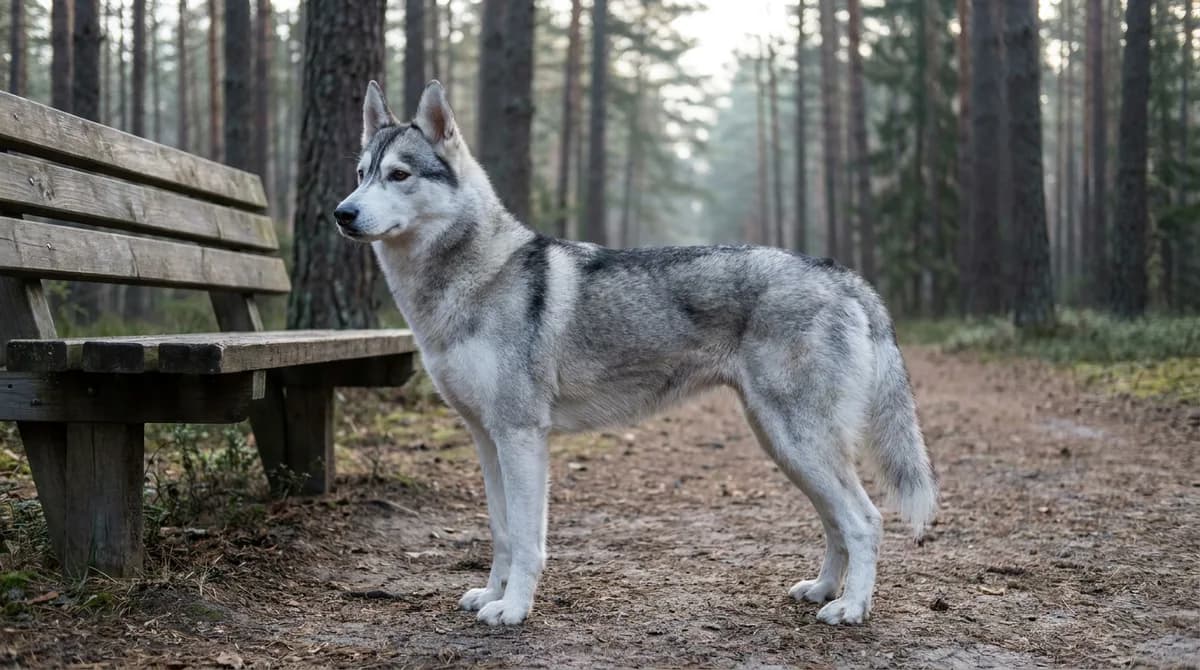
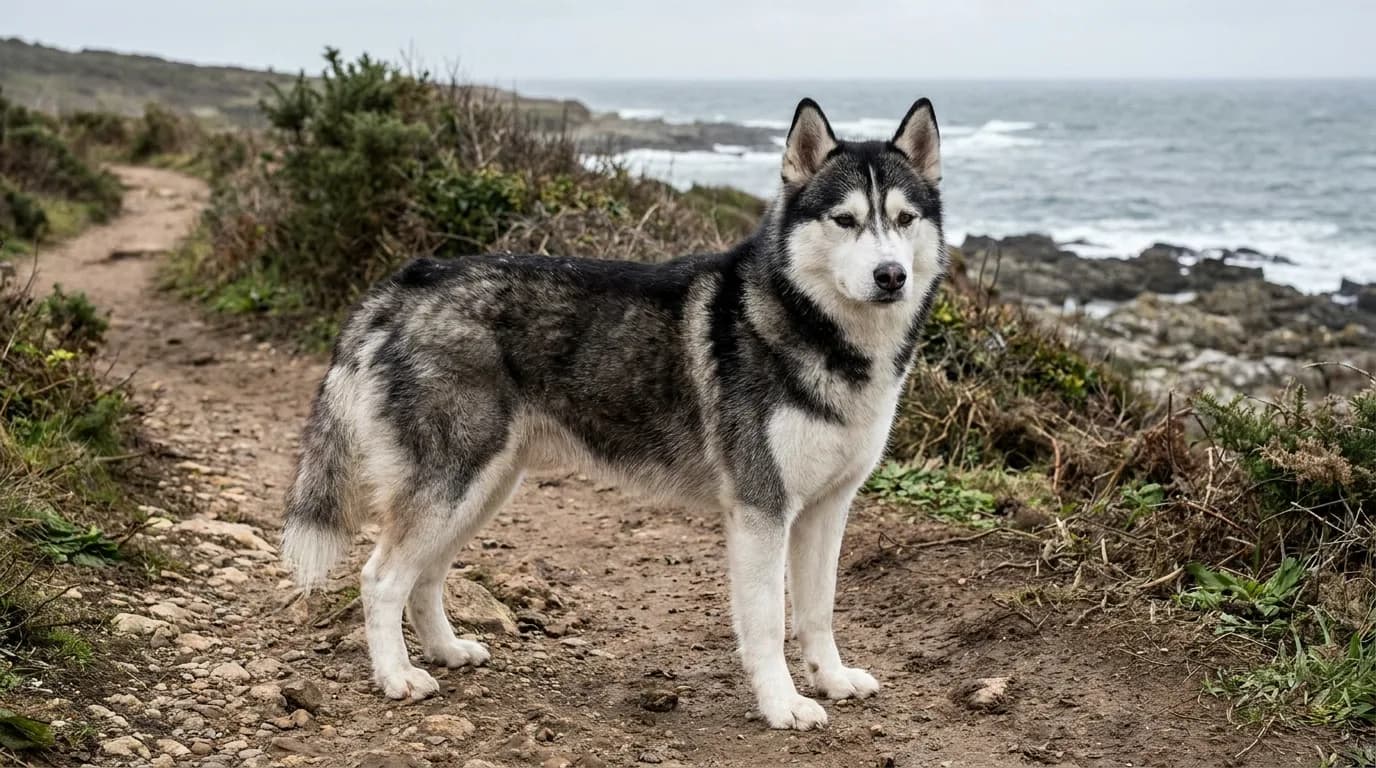
An adult Siberian Husky has a medium-sized, athletic frame beneath its thick coat.
Petful is reader supported. As an affiliate of platforms like Amazon and Chewy, we may earn a commission when you buy through links on this page. There is no extra cost to you.
Adult husky size usually falls within 35 to 60 pounds and 20 to 23.5 inches at the shoulder, with different ranges for males and females. Those numbers help you plan for a Siberian Husky, but your dog's measurements matter more when choosing a harness, crate or bed.

Sign up for expert-backed reviews and safety alerts all in one place.
Adult Husky size: height and weight
The American Kennel Club's Siberian Husky standard gives adult males a weight range of 45 to 60 pounds and females 35 to 50 pounds. Height is measured at the withers, the highest part of the shoulders. A Husky's upright ears are not part of that measurement.
| Adult Siberian Husky | Height at the withers | Weight |
|---|---|---|
| Male | 21 to 23.5 inches | 45 to 60 pounds |
| Female | 20 to 22 inches | 35 to 50 pounds |
The table compares male and female adult height and weight. These are breed-standard ranges, not a feeding target or a pass-or-fail health test. The standard does not favor the biggest dog within either range. Before trying to make a smaller Husky heavier, separate frame size from body condition: adding weight does not make a dog taller.
- 1Adult males and females have different size ranges, with some overlap.
- 2Body condition helps interpret weight; the scale alone cannot describe a dog's build.
- 3Buy equipment from current measurements and a fit check, rather than the word Husky on a size chart.
A bigger Husky at the top of the male range, 23.5 inches and 60 pounds, still fits large rather than giant-breed equipment. A much heavier northern dog may be an Alaskan Malamute, a different breed, so confirm the dog's identity before comparing dimensions.
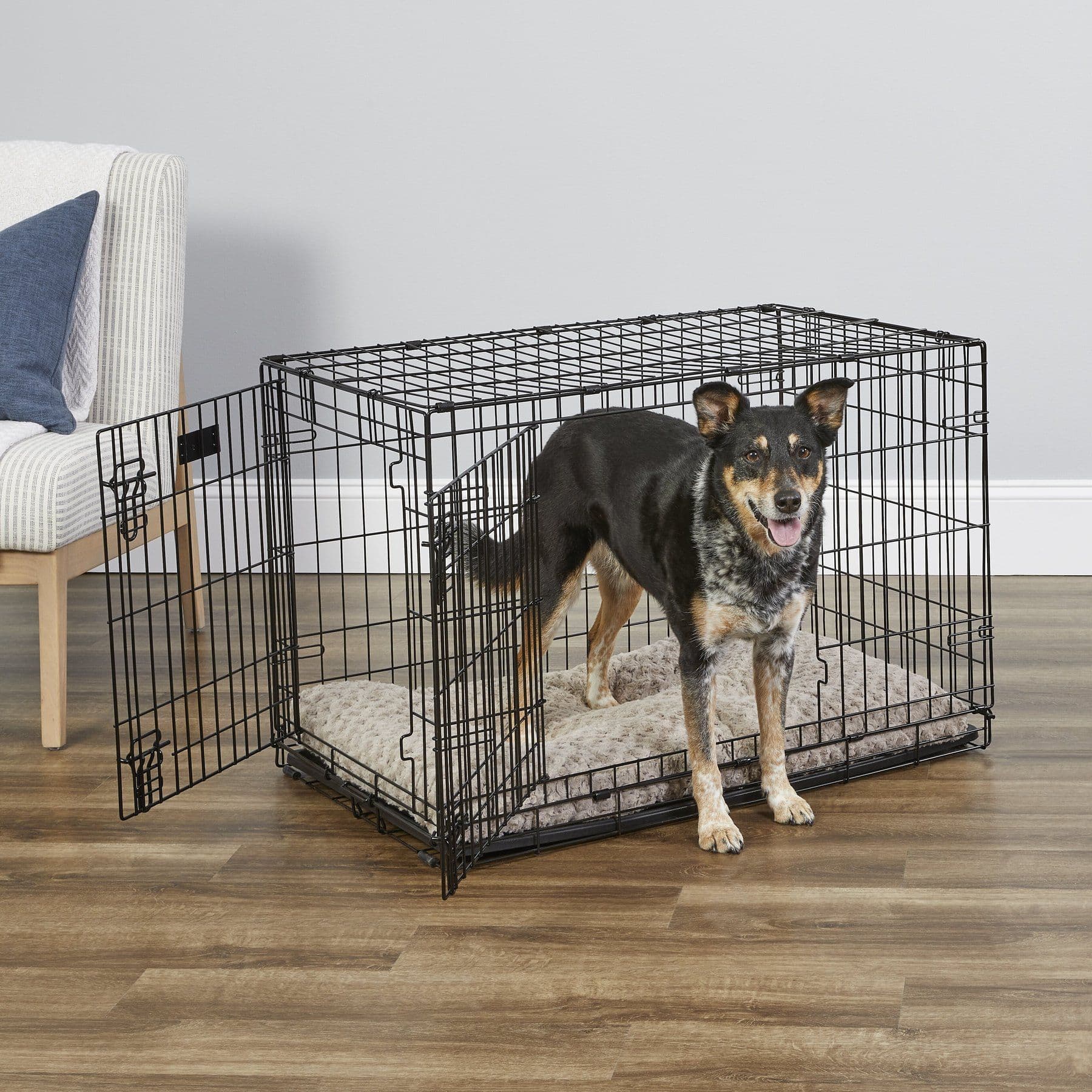
A folding double-door wire crate with a divider and removable tray. Measure your dog and the intended floor space before selecting the 36-inch size.
Petful may earn a commission when you click through to Chewy, at no extra cost to you.
For a crate, compare interior measurements with your dog's standing height and body length. The 36-inch MidWest iCrate is an option to check, not a recommendation for every Husky. A listed weight category does not establish that a tall dog can stand comfortably inside.
Choose equipment from measurements
Two Huskies at the same weight can have different proportions. Before ordering equipment, keep a simple measurement record with the date and units. Use a flexible tape for body circumference, and follow the particular manufacturer's measuring instructions rather than carrying a size label from another brand.
Sleeping space is easy to overlook, especially as a puppy gets longer. Watch how your dog actually rests: curling into a small circle does not show how much room is needed to stretch out. When comparing the large Coolaroo elevated bed, check the usable surface and weight limit against your dog. The word “large” is not a substitute for either check.
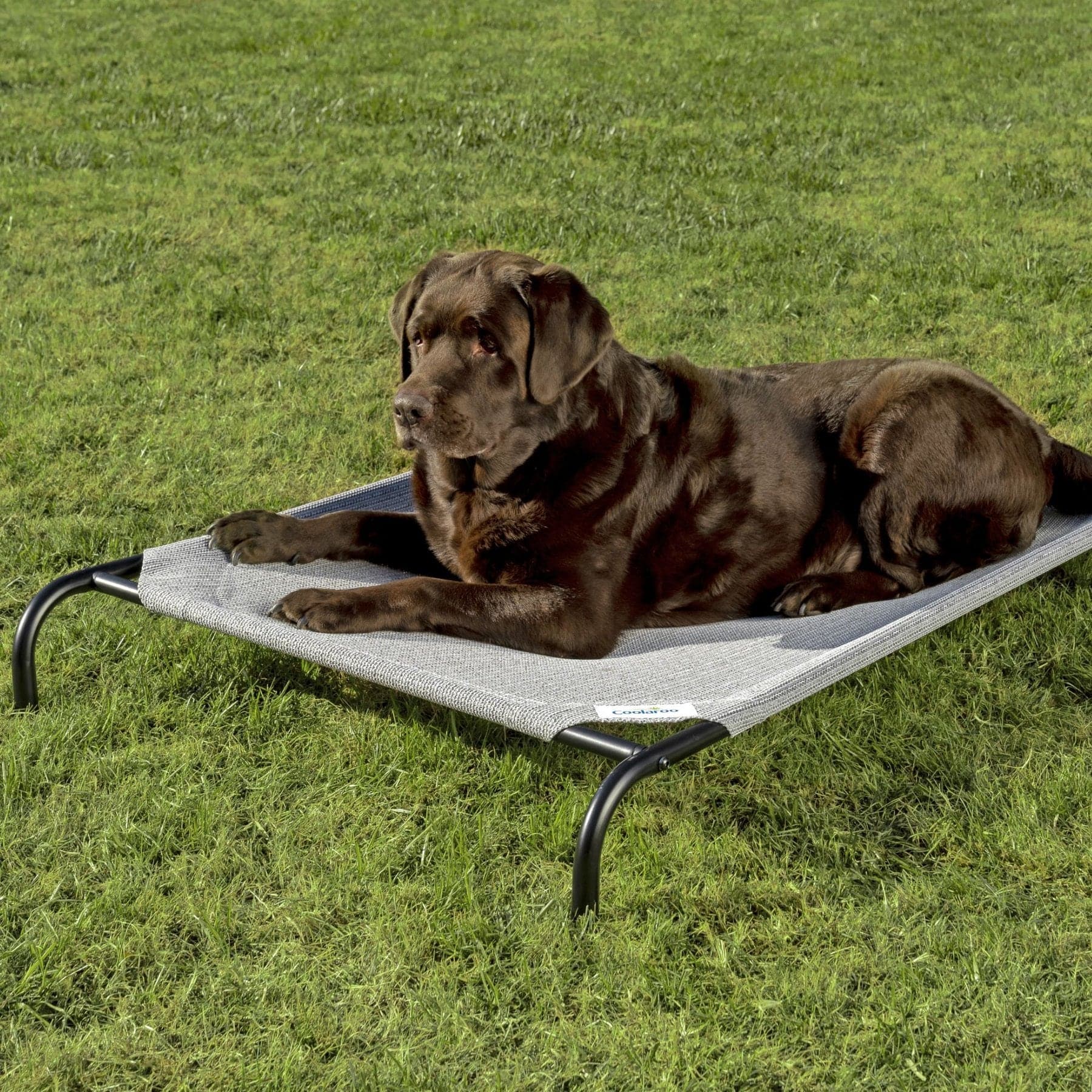
An elevated fabric bed for an airy resting surface indoors or outside. Check the frame footprint and fabric area separately.
Petful may earn a commission when you click through to Chewy, at no extra cost to you.
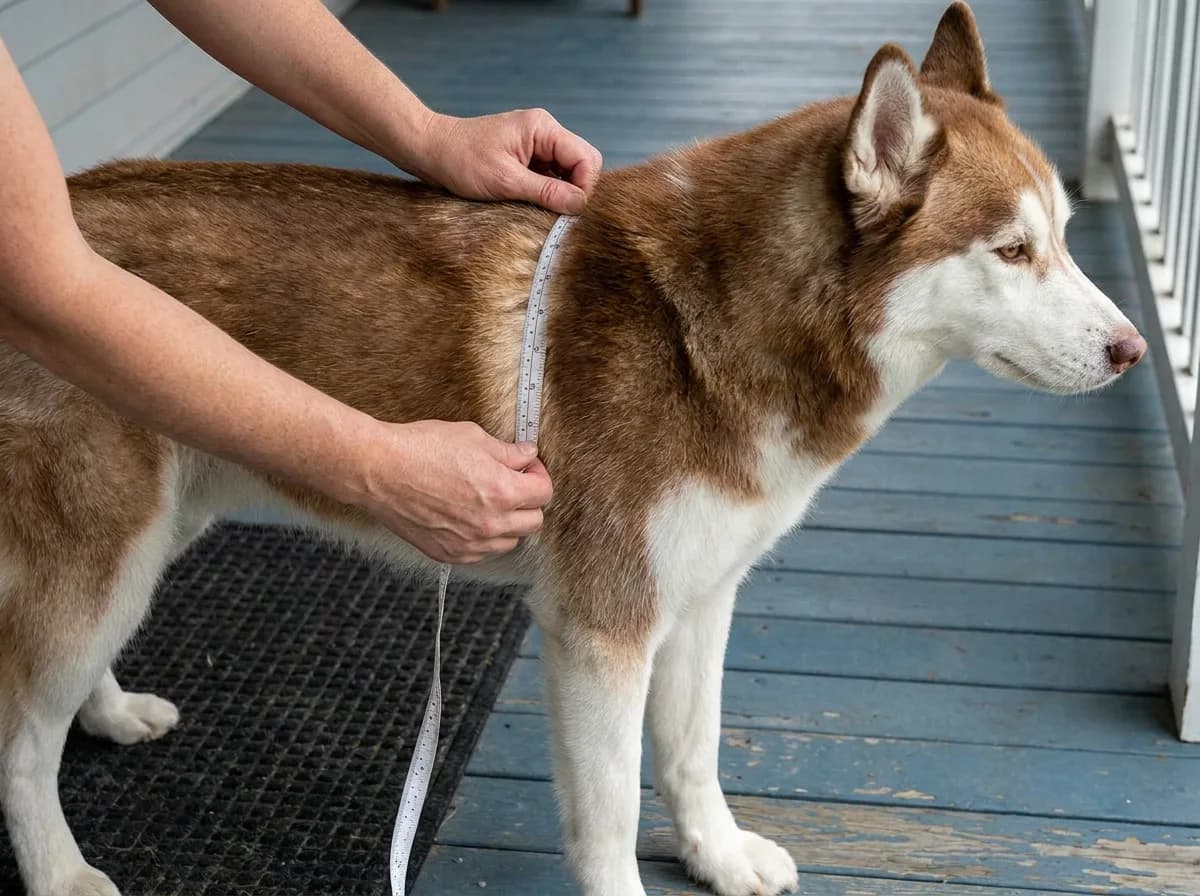
Harness fit starts at the chest
Chest girth is the circumference around the rib cage, behind the front legs. Keep the tape level and close to the body without pulling it tight. Check whether the harness also requires a neck measurement, because a suitable chest range alone may not establish a secure fit.
For example, compare both measurements with the chart for the Kurgo Journey Air harness. The medium version is appropriate only if its adjustment ranges and the fitted shape suit your dog. “Medium dog” and “medium harness” are not interchangeable measurements.
Before heading outside, check the harness while your Husky moves in a secure indoor space:
- Watch for straps rubbing behind the front legs or interfering with a normal stride.
- Follow the manufacturer's snugness guidance at each adjustable point.
- Check that the harness cannot slip over the head when the dog backs up.
- Reposition or exchange it if tightening one area leaves another loose.
Match each measurement to its job
A harness chart, crate chart and bed chart answer different questions. Standing height helps you compare vertical clearance, while resting length helps you judge usable sleeping space. Do not substitute shoulder height for the extra headroom your dog needs to stand naturally in a crate.
| Measurement | How to record it | Equipment decision |
|---|---|---|
| Chest girth | Measure around the rib cage behind the front legs, as the maker directs. | Compare with the harness adjustment range; check neck fit too. |
| Standing height | Record the height requested by the crate maker, including head or ear clearance when specified. | Compare with usable interior height, not only the exterior dimensions. |
| Body length | Use the exact starting and ending points in the crate maker's guide. | Allow comfortable standing, turning and lying down. |
| Resting length and width | Observe the space your dog occupies in a normal stretched-out resting position. | Compare with the usable bed surface; account for frames or raised edges. |
Measure the space in your home as well as the dog. A crate may fit against a wall but leave no room to open its door. A bed frame may fit a corner while its sleeping surface is too short. Check the complete setup before deciding that the larger product is automatically the better choice.
Husky growth stages
A puppy's current weight cannot reliably predict a precise adult size by itself. Keep the adult breed standard as context, then follow your own dog's measurements over time. A growth record is more useful when it shows a consistent pattern than when it compares one weigh-in with an unexplained number online.
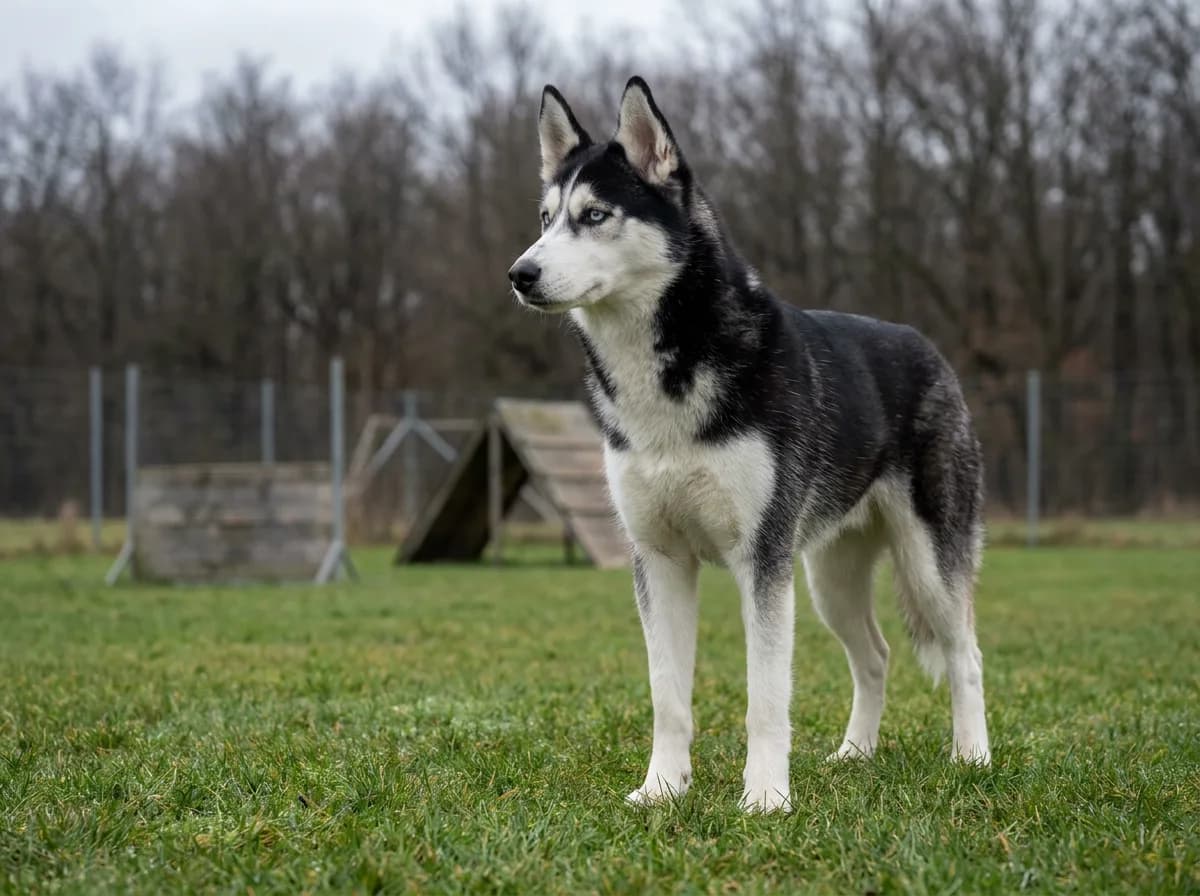
When do Huskies stop growing?
Most Huskies are close to adult size by their first birthday and finish filling out between 15 and 18 months. The AKC's puppy growth chart puts dogs of 21 to 50 pounds at about 95% of adult size at 12 months and 100% at 15 months, and dogs of 51 to 100 pounds at 85% at 12 months and 100% at 18 months. A Husky's adult weight of 35 to 60 pounds spans both groups, and puppies keep adding muscle and body fat after their bones stop lengthening.
A growth chart without false precision
Use this stage-based chart to decide what to observe at each age. The age bands follow the AKC growth chart above; the stages deliberately do not assign monthly weights, because adult height, weight and physical maturity are related observations rather than interchangeable milestones.
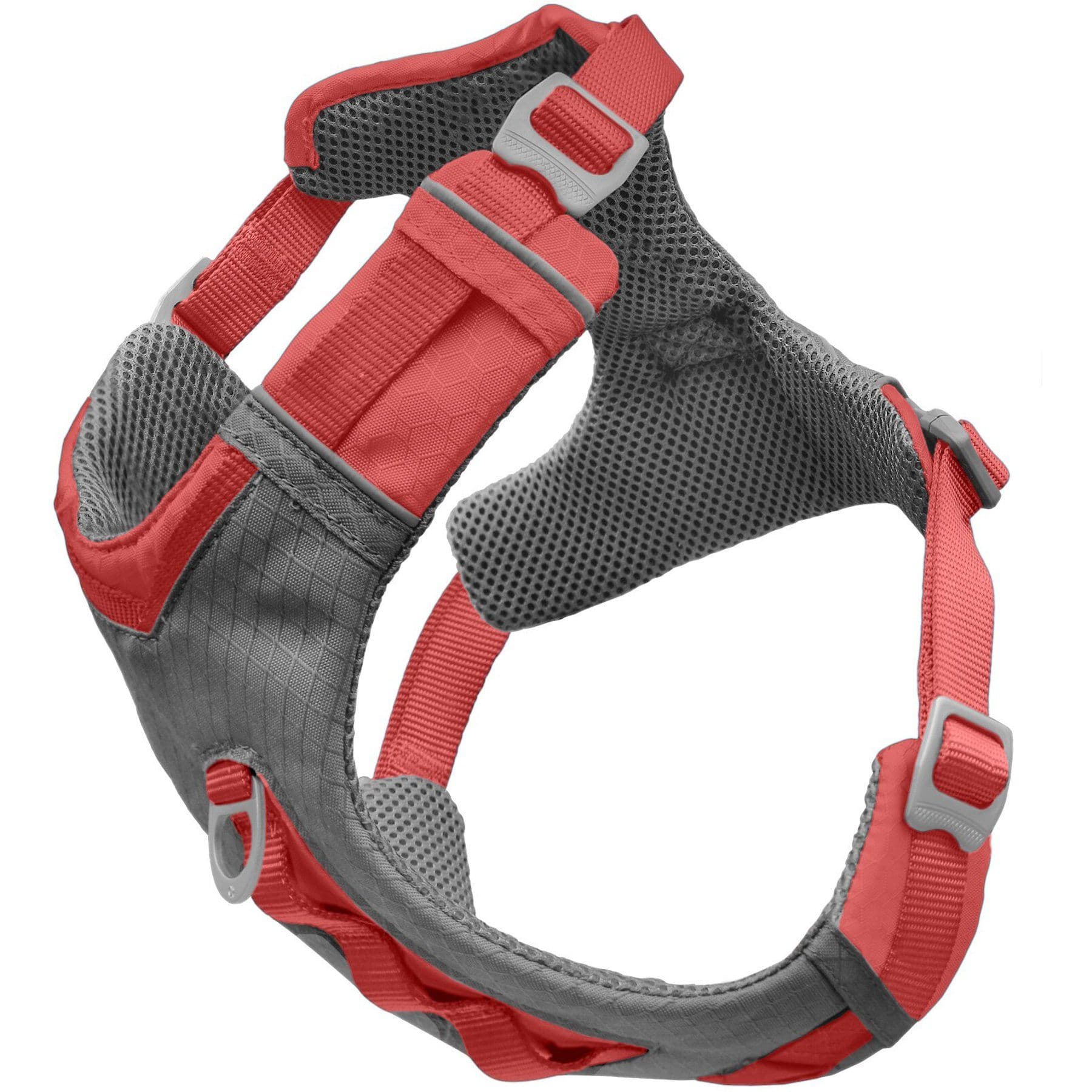
Breathable material, deep V-neck with padded chest plate, back handle, four adjustment points, reflective trim and front and back leash attachments, per the listing.
Petful may earn a commission when you click through to Chewy, at no extra cost to you.
| Growth stage | What to record | Practical next step |
|---|---|---|
| Young puppy (up to about 6 months) | Weight records from routine visits and current equipment measurements. | Fit equipment to the puppy you have now; retain adjustment room only when the current fit remains secure. |
| Adolescent dog (about 6 to 12 months) | Changes in height, body proportions and chest girth. | Reassess harness adjustment, crate clearance and sleeping space. |
| Young adult (about 12 to 18 months) | Height close to final; chest girth and body still filling out. | Recheck harness adjustment as muscle builds; keep feeding to body condition, not to a chart. |
| Adult dog (about 18 months on) | Established measurements, weight trend and body condition. | Use adult ranges as context and investigate meaningful changes rather than chasing a breed average. |
Recheck harness fit at every stage change. Chest girth keeps changing as a young Husky fills out, so measure again before buying a larger size of a harness such as the Kurgo Journey Air, whose medium version still needs its own chest and neck check.
Keep a useful growth record
Consistency makes small changes easier to interpret. If different people measure from different points, apparent growth may be a measuring difference. A short record can help you explain what has changed at your dog's next routine veterinary visit.
- Add the date to each weight or body measurement.
- Use the same units and measuring points each time.
- Note changes in equipment adjustment, rather than relying on memory.
- Bring the record to routine visits so growth and body condition can be considered together.
Do not increase meals simply to catch up with a monthly chart. If your puppy's growth pattern concerns you, ask your veterinarian to interpret it alongside age, feeding and physical condition. A target borrowed from another Husky cannot tell you what your individual puppy needs.
Living with a medium-sized working dog
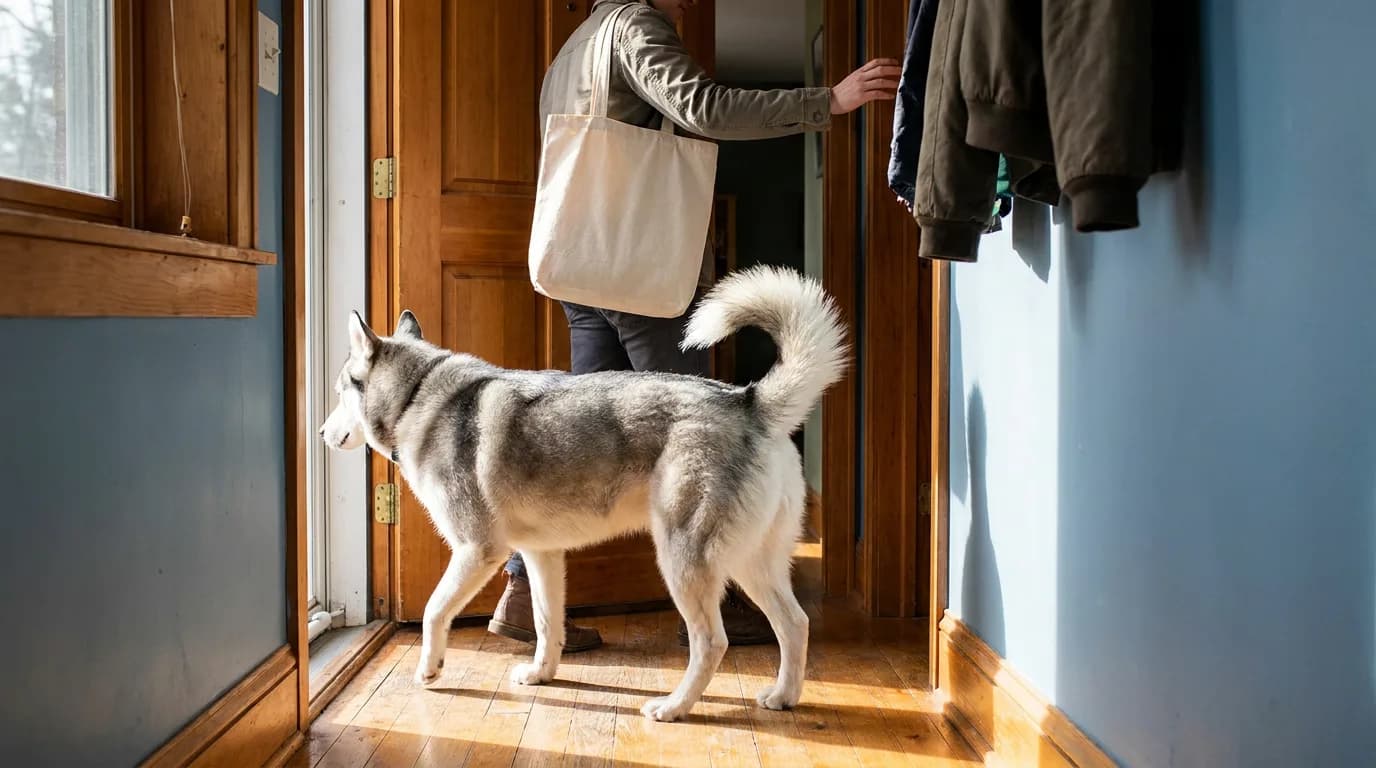
A Siberian Husky's size is only part of the space it takes up in daily life. Think about whether you can comfortably manage your dog through doorways, on walks and around other people. Floor space alone does not account for movement, training or the time you can give a working dog.
For everyday walking, a Frisco six-foot traffic leash offers a shorter handle for closer control when needed. Match the hardware and handling setup to your dog, and use it with properly fitted walking equipment. A second handle does not replace loose-leash training or make a poorly fitting harness secure.
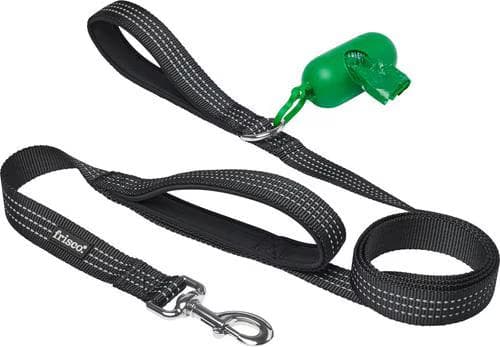
Petful may earn a commission when you click through to Chewy, at no extra cost to you.
Before choosing a Husky, plan for the care that dimensions cannot describe:
- Daily opportunities for suitable activity, training and rest.
- Grooming and cleanup as a thick coat sheds.
- A routine that accounts for warm weather and the individual dog's comfort.
- Time to learn the dog's communication and reward the behavior you want.
A smaller Husky is not automatically calmer or easier to train; our Siberian Husky breed guide covers temperament and daily care.
Small, miniature and teacup Husky labels
“Mini Husky,” “miniature Siberian Husky” and “teacup Husky” are labels you may encounter when researching a smaller dog. A tiny label cannot tell you which breed or mix a puppy is, or guarantee its adult dimensions.
Is there a mini Husky?
Not as a Siberian Husky variety. The AKC Siberian Husky standard sets one adult range, 20 to 23.5 inches and 35 to 60 pounds, with no miniature or teacup category. A dog sold as a mini Husky is usually a small Siberian, a cross such as the Pomsky, or the Alaskan Klee Kai, a separate breed the UKC standard divides into toy, miniature and standard varieties of 17 inches and under.
| Dog | Size standard | Adult height at the withers | Adult weight |
|---|---|---|---|
| Siberian Husky | AKC breed standard | Males 21–23.5 in; females 20–22 in | Males 45–60 lb; females 35–50 lb |
| Alaskan Klee Kai, toy | UKC breed standard (revised Jan. 1, 2019) | Up to 13 in | Proportionate to height; no fixed range |
| Alaskan Klee Kai, miniature | UKC breed standard | Over 13 in to 15 in | Proportionate to height; no fixed range |
| Alaskan Klee Kai, standard | UKC breed standard | Over 15 in to 17 in (over 17.5 in eliminates) | Proportionate to height; no fixed range |
| Pomsky (Pomeranian × Husky cross) | No AKC or UKC standard | Not set | Not set; parent standards span 3–7 lb (Pomeranian) to 35–60 lb (Siberian Husky) |
| "Miniature" or "teacup" Siberian Husky | No standard | Not defined | Not defined |
Because a Pomsky has no standard, its adult size depends on its parents; our Pomsky profile covers the cross, and the Husky mixes guide compares other Husky crosses. The Pomeranian range comes from the AKC Pomeranian standard.
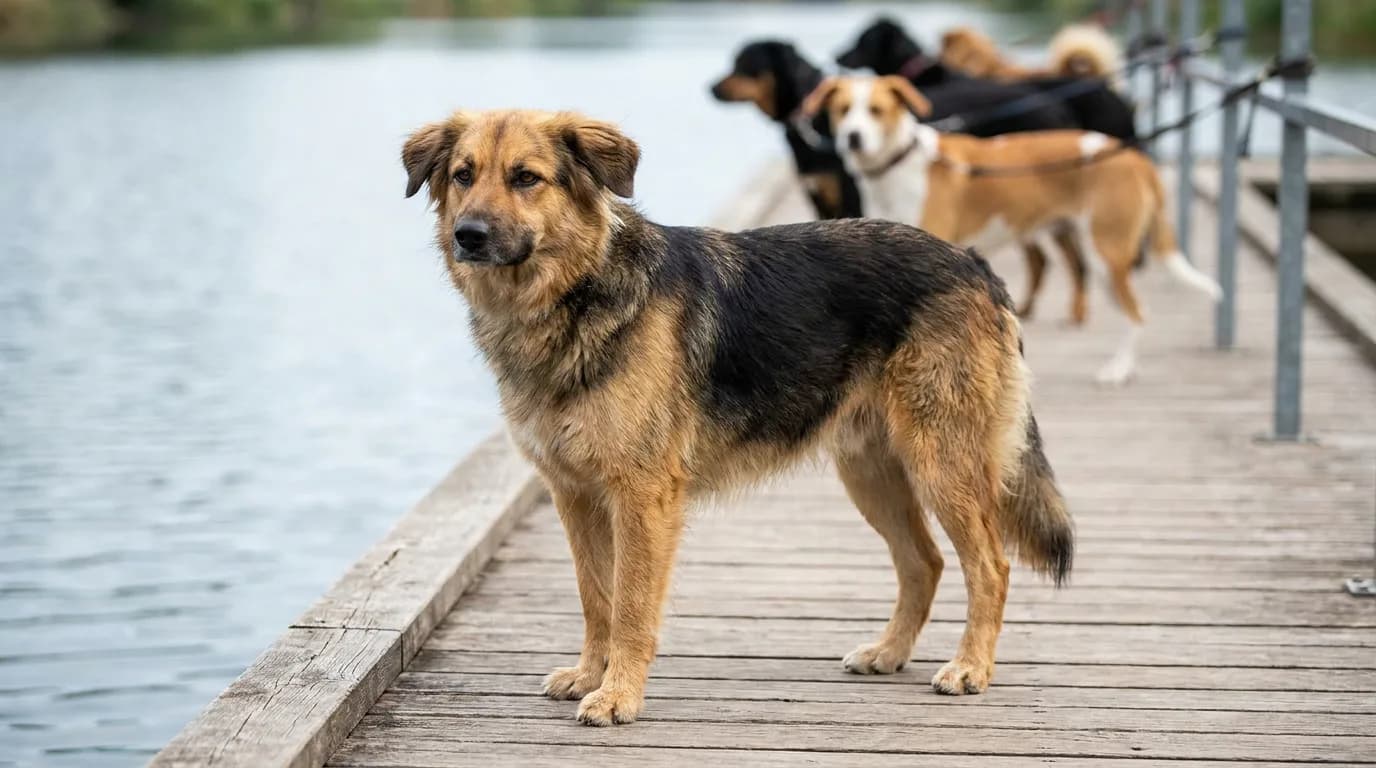
If someone describes miniature Husky puppies, ask what that description means for those particular dogs. A small Siberian Husky, a crossbreed and a separate small Husky-looking dog should not be treated as interchangeable. Photographs can make them look similar while telling you little about their ancestry or eventual size.
- Miniature and teacup descriptions do not create separate categories in the Siberian Husky breed standard. Ask for the dog's actual breed information and measurements rather than relying on the label.
When evaluating a miniature Husky dog breed description, useful questions include:
- What breed or mix is recorded for the dog?
- What are the parents' adult measurements, if known?
- Is the advertised adult size an estimate, and what supports it?
- What information comes from records rather than appearance alone?
The Alaskan Klee Kai may be the small Husky breed name you have in mind. Our Alaskan Klee Kai size guide covers its three varieties, and the Alaskan Klee Kai versus Husky comparison explains why it is not a miniature version of the same dog. Choosing between breeds involves care and household fit as well as the room beside your sofa.
Size is only one part of choosing a Husky
Size does not set what a dog costs. Rescue adoption fees and breeder prices for a full-breed puppy vary widely across the USA, and our Husky price guide compares them and works out the first-year cost of keeping a Husky dog.
Husky size questions
No. The adult size ranges overlap, so choosing a female does not guarantee a smaller dog than every male. If handling size matters, meet the individual dog and ask for current measurements. For the broader choice, the Siberian Husky breed guide explains temperament and household fit.
Have your dog stand naturally on a level floor with all four feet bearing weight. Find the withers at the top of the shoulders, then measure vertically from the floor to that point. A helper can keep the dog still while you hold a level reference across the shoulders. Repeat the measurement if your dog crouches or shifts position.
Individual frame size, age, body condition and, when ancestry is uncertain, a mixed background can affect how a dog compares with the standard. One measurement cannot identify the explanation. Ask your veterinarian to assess the individual dog before changing food to reach the range, especially if the weight has changed unexpectedly.
Yes. Fur can obscure the outline underneath, so a photograph alone is a poor way to judge weight. The World Small Animal Veterinary Association's body-condition chart combines feeling the ribs with assessing the waist and abdominal tuck. Ask your veterinary team to demonstrate the assessment through your Husky's coat rather than judging only how fluffy the dog looks.
An adjustable harness may cover part of your puppy's growth, but it must fit securely today. Measure chest girth before choosing it, then recheck the fit as your puppy grows and whenever straps seem tighter or looser. Buying an oversized harness to save a later purchase can leave a puppy able to slip out.

Coreen Saito is a pet writer and longtime shelter volunteer with more than a decade in animal rescue. She covers cat behavior, breed care, and the small, ordinary science of sharing a life with companion animals, with a particular focus on honest takes about the products and decisions that actually matter. At home in Arizona, she's outranked by Mac (a dog with the loudest opinion in the house), Rebel (a cat who governs by quiet authority), and Meri (an orange tabby who runs the late shift and the laundry basket). She writes about all three, plus the rescues that keep coming through her life, at LifeWithMinty.com.
Sign up for expert-backed reviews and safety alerts all in one place.