Do Cavapoos Shed? A Complete Guide to the Cavapoo Coat
Do Cavapoos shed? Yes, but far less than most dogs thanks to their Poodle coat. Learn how coat type and generation (F1, F1b, F2) affect shedding, whether Cavapoos are hypoallergenic, and how to keep loose hair down.
Petful is reader supported. As an affiliate of platforms like Amazon and Chewy, we may earn a commission when you buy through links on this page. There is no extra cost to you.
Do Cavapoos shed? Yes, every Cavapoo sheds at least a little, because no dog on earth is truly shed-free, but the American Kennel Club and Poodle breed data both confirm that a Poodle cross like the Cavapoo typically drops far less loose hair than most breeds and releases very little visible dander into your home. The Cavapoo is a cross between the Cavalier King Charles Spaniel and the Poodle (usually the Miniature or Toy Poodle), and how much any individual dog sheds comes down to which parent its coat takes after. Some Cavapoos have a curly, Poodle-dominant coat that barely leaves a hair behind. Others inherit a wavier, Cavalier-leaning coat that sheds noticeably more. This guide walks through exactly why that happens, how the generation labels (F1, F1b, F2) change the odds, what to expect through the puppy coat change, and how to keep loose hair to an absolute minimum.
- 1Every Cavapoo sheds a little, but most shed far less than average because of their Poodle ancestry
- 2Coat type (curly vs. wavy) and generation (F1, F1b, F2) drive how much your dog sheds
- 3F1b Cavapoos, which are 75 percent Poodle, are usually the lowest shedding and most allergy friendly
- 4No Cavapoo is 100 percent hypoallergenic, but low dander plus regular grooming makes them a strong pick for allergy sufferers
- 5Brushing 3 to 4 times a week and a professional groom every 6 to 8 weeks keeps shedding and matting under control

Sign up for expert-backed reviews and safety alerts all in one place.
Do Cavapoos Shed a Lot? The Short Answer
For the vast majority of owners, the honest answer is no, Cavapoos do not shed a lot. Compared with a Labrador, a German Shepherd, or even the purebred Cavalier King Charles Spaniel, a typical Cavapoo leaves very little hair on your couch, your clothes, or your floors. The trade-off is that low shedding does not mean low maintenance. Hair that would normally fall out instead stays in the coat, so it needs regular brushing to prevent tangles and mats.
That is the single most important thing to understand about this breed. A Cavapoo is a low shedding dog, not a no-grooming dog. The reduced shedding is a genuine benefit for people who hate vacuuming dog hair, and the coat's low dander output is what makes the breed popular with allergy sufferers. But you are trading loose hair on the floor for a standing brushing and clipping commitment.
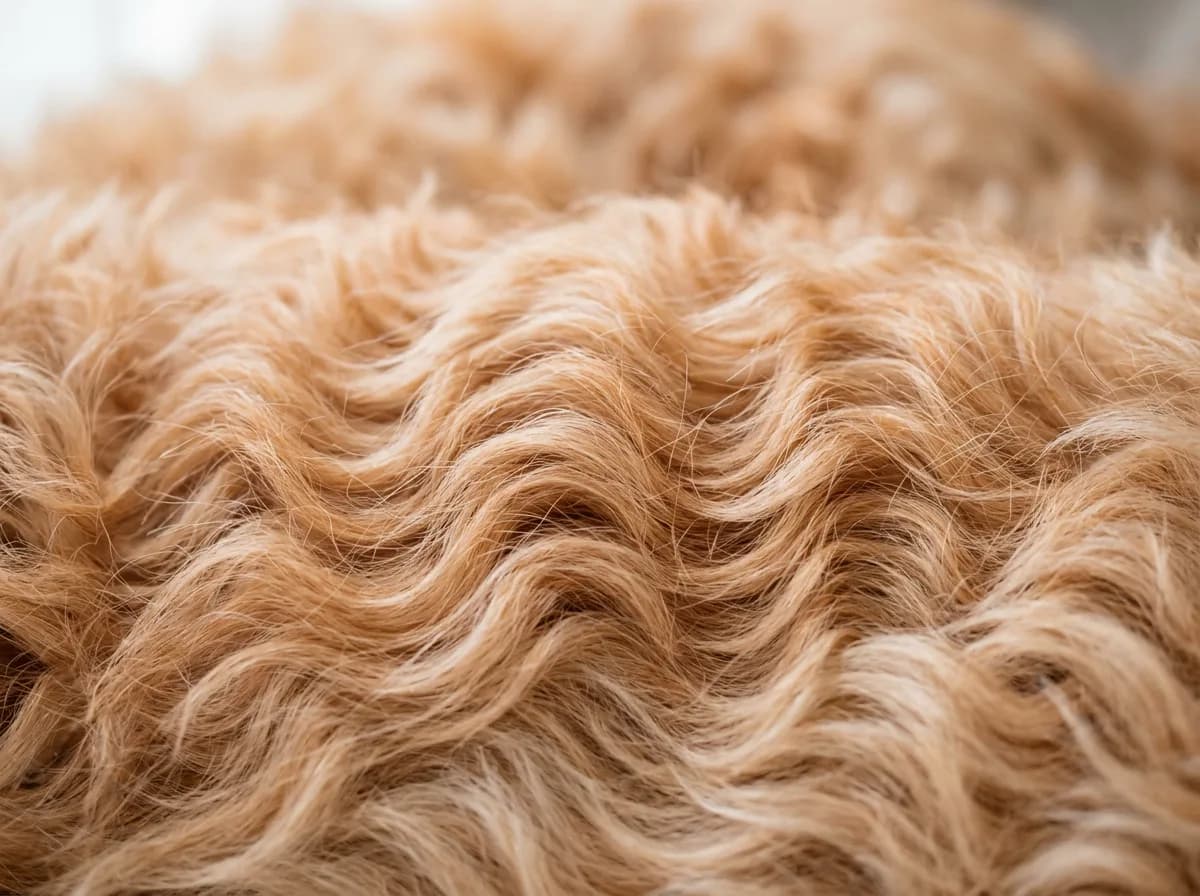
- Any breeder or seller who promises you a completely non-shedding, 100 percent hypoallergenic dog is overselling. Every dog with hair sheds some hair. The realistic promise for a Cavapoo is much less shedding than average and much less dander, not zero.
If you are still deciding whether this breed fits your household, our full Cavapoo breed guide covers temperament, exercise needs, and living requirements alongside coat care.
Why Cavapoos Shed Less Than Most Dogs
To understand Cavapoo shedding, you have to understand the Poodle side of the family. Poodles are one of the lowest shedding breeds recognized by the American Kennel Club. Instead of the typical shed-and-regrow cycle that sends loose hair everywhere, the Poodle's single coat grows continuously, much like human hair, and holds onto shed hairs within the curls rather than dropping them.

Petful may earn a commission when you click through to Chewy, at no extra cost to you.
The Cavalier King Charles Spaniel, on the other hand, is a moderate shedder with a silky, straight-to-wavy coat that goes through normal seasonal shedding. When you cross the two breeds, the puppy inherits a blend of these traits. The more Poodle genetics a Cavapoo carries, the more that shed-trapping, low-dander coat wins out.
- The widely cited rule of thumb is that Cavapoos with enough Poodle genetics simply do not shed much at all. That is why generation matters so much: it is a rough proxy for how much Poodle is in the mix.
Single Coat vs. Double Coat
Heavy shedding breeds like Huskies and Golden Retrievers have a double coat: a dense insulating undercoat beneath a longer outer coat. That undercoat is what "blows" in spring and fall and buries your home in hair. Most Cavapoos inherit a single coat from the Poodle side, with no heavy undercoat to shed out seasonally. That single structure is the core reason the breed sheds so little compared with double-coated dogs.
Do Cavapoos Shed? It Depends on the Coat Type
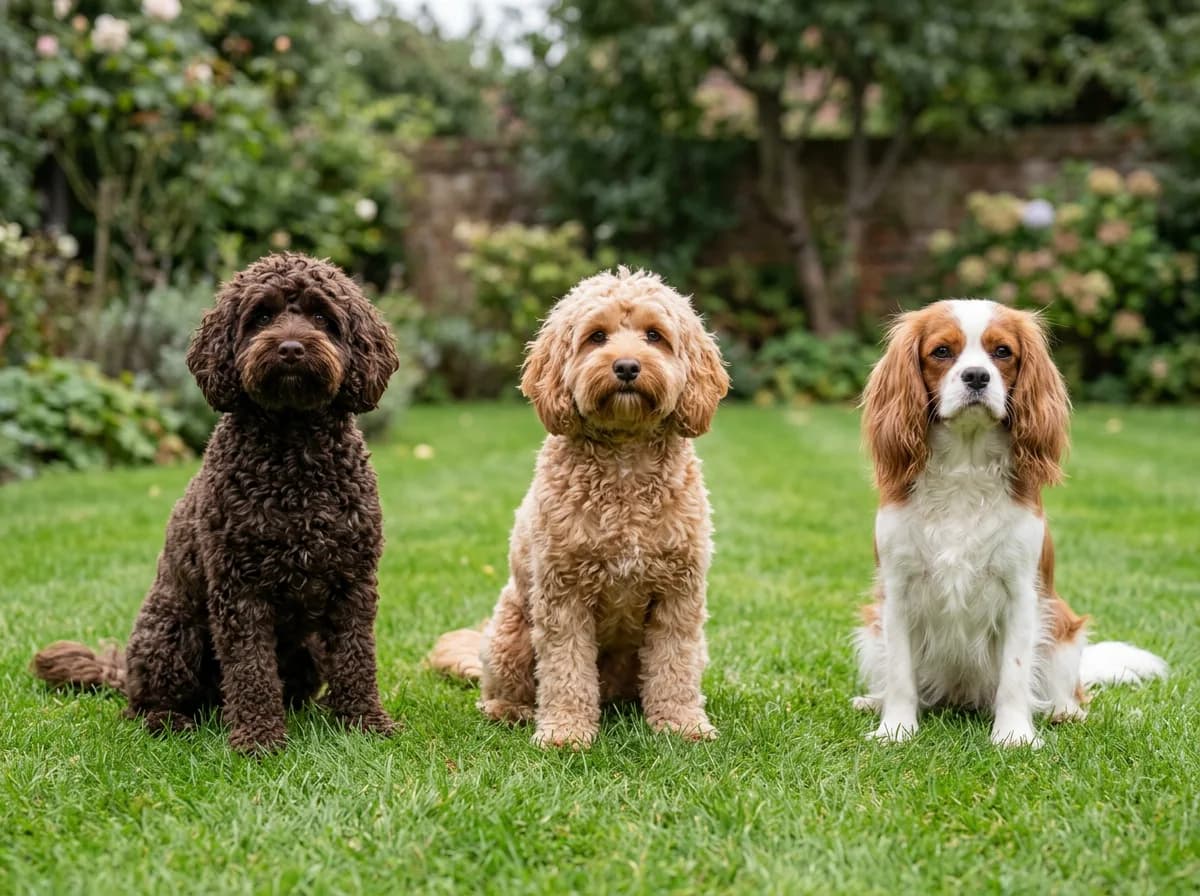
Not all Cavapoos are equal when it comes to shedding, and the biggest variable is coat type. Because the breed is a cross, a single litter can produce puppies with noticeably different coats. There are three broad categories, and they fall on a clear spectrum from lowest to highest shedding.
| Curly (Poodle dominant) | Tight curls, dense | Lowest, minimal loose hair | Highest, brush daily to avoid mats |
|---|---|---|---|
| Wavy (fleece) | Soft loose waves | Low to moderate | Moderate, brush 3 to 4 times a week |
| Straight (Cavalier dominant) | Silky, flat | Moderate, most noticeable | Lower, brush 2 to 3 times a week |
The Curly Coat
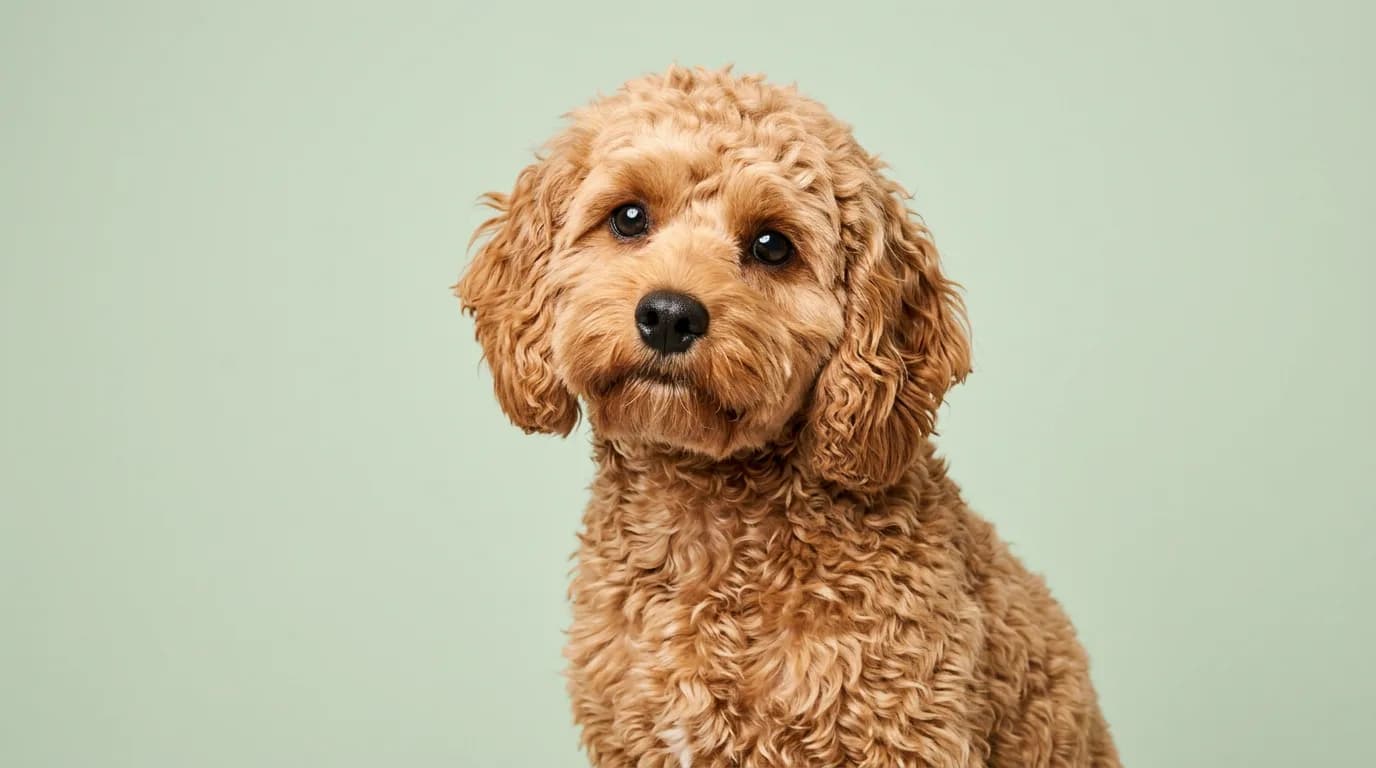
A curly coat is the most Poodle-like of the three. It has tight, dense curls that trap shed hair extremely effectively, so a curly-coated Cavapoo leaves almost no loose hair around the house. This is the lowest shedding and most allergy-friendly option. The catch is that those same curls tangle and mat quickly, so a curly coat demands the most frequent brushing and professional grooming.
The Wavy or Fleece Coat
The wavy coat, sometimes called a fleece coat, is the most common and, for many owners, the ideal middle ground. It has soft, loose waves that shed only lightly and are more forgiving to brush than tight curls. Most people picture this coat when they imagine a classic teddy bear Cavapoo.
The Straight Coat
A straight coat leans toward the Cavalier parent. It is silky and flat, and it is the one that sheds the most of the three, though still typically less than a purebred Cavalier. If your priority is the absolute lowest shedding, a straight-coated Cavapoo is the coat type to be cautious about.
- A young puppy's coat can change as it matures, and a soft puppy coat can grow in curlier or straighter than it first appears. If low shedding is non-negotiable, ask the breeder about the parents' coats and consider an older puppy whose coat has begun to settle.
Do F1b Cavapoos Shed? Generation Explained
One of the most searched questions about this breed is whether F1b Cavapoos shed, and the generation labels are the key to answering it. These labels tell you the genetic mix, which is your best available predictor of shedding before you ever meet the puppy.
Petful may earn a commission when you click through to Chewy, at no extra cost to you.
| F1 | Cavalier x Poodle | 50 percent | Low but variable, coat can go either way |
|---|---|---|---|
| F1b | F1 Cavapoo x Poodle | 75 percent | Lowest, most allergy friendly |
| F2 | F1 Cavapoo x F1 Cavapoo | ~50 percent | Least predictable, widest range |
| F1bb | F1b x Poodle | ~87.5 percent | Very low, extremely Poodle like |
F1 Cavapoos
An F1 Cavapoo is a first-generation cross, one purebred Cavalier bred to one purebred Poodle, so it is roughly 50 percent of each breed. F1 dogs are generally low shedding, but because the genetic split is even, the coat is the least predictable. Some F1 puppies come out very Poodle-like and barely shed, while others lean Cavalier and shed a bit more.
F1b Cavapoos
An F1b Cavapoo is an F1 Cavapoo bred back to a purebred Poodle, which pushes the mix to roughly 75 percent Poodle. This is the generation most breeders recommend to allergy sufferers, because the extra Poodle genetics make a low-shedding, curly, low-dander coat far more likely. If your top priority is the least shedding and the best odds for allergies, F1b is usually the answer.
F2 and Beyond
An F2 Cavapoo is the offspring of two F1 Cavapoos. Because you are combining two already-mixed coats, F2 shedding is the hardest to predict and can vary widely even within one litter. Later generations like F1bb (an F1b bred back to a Poodle again) push the Poodle percentage even higher and tend to shed the least of all.
Treat generation as a way to stack the odds, not a guarantee. Even an F1b can occasionally throw a wavier, higher-shedding coat, and a well-bred F1 can be nearly non-shedding. Use the generation label to narrow your search, then confirm by looking at the actual parents and, if possible, the puppy's early coat.
When Do Cavapoos Shed? The Puppy Coat Change
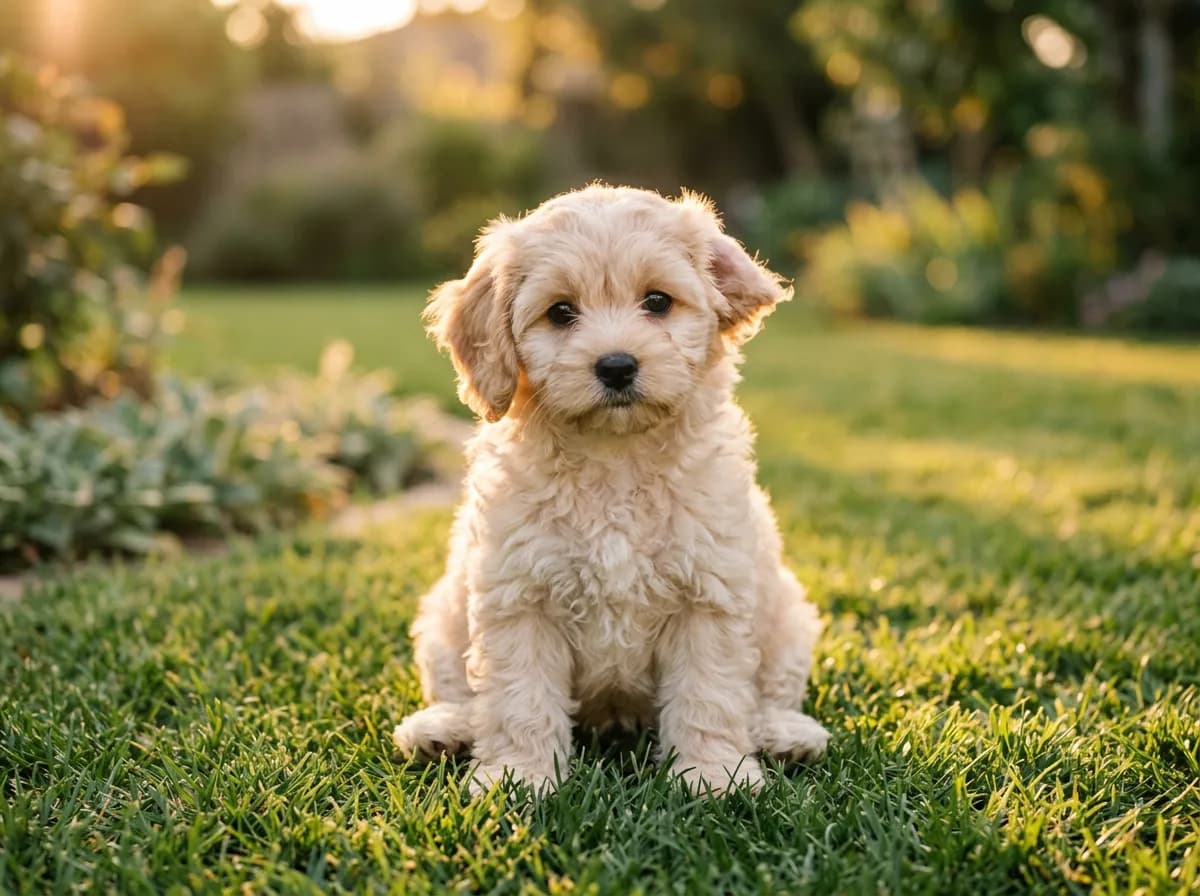
If you own a Cavapoo puppy, there is one shedding event you should know about: the puppy coat change. Somewhere between about 6 and 12 months of age, a Cavapoo sheds its soft puppy coat and grows in its coarser, thicker adult coat. During this transition you may see more loose hair than usual, and, more importantly, the coat mats far more easily than at any other time.
This is the single biggest grooming crunch in a Cavapoo's life, and it catches many first-time owners off guard. The fix is simple but non-negotiable: brush more often, not less, through the transition. Daily brushing during the coat change prevents the fine puppy hair from felting into mats close to the skin, which is uncomfortable for the dog and often requires a groomer to shave out.
- Start a gentle daily brushing routine before the coat change begins, ideally from the day you bring your puppy home. A puppy who is used to being brushed and handled makes the 6 to 12 month transition dramatically easier for both of you.
Do Cavapoos Shed Seasonally?
Because most Cavapoos have a single coat with no heavy undercoat, they do not "blow coat" seasonally the way double-coated breeds do. You will not see the dramatic spring and fall shedding storms that Husky or Golden Retriever owners dread. Any seasonal difference in a Cavapoo tends to be mild and easy to manage with normal brushing.
Are Cavapoos Hypoallergenic? What Low Shedding Means for Allergies
Low shedding and allergies are closely linked, which is why so many people researching whether Cavapoos shed are really asking about allergies. Here is the accurate picture. No dog is truly 100 percent hypoallergenic. The allergen that affects most people is not hair itself but a protein called Can f 1, which is found in a dog's dander (dead skin flakes), saliva, and urine, and it hitches a ride on shed hair.
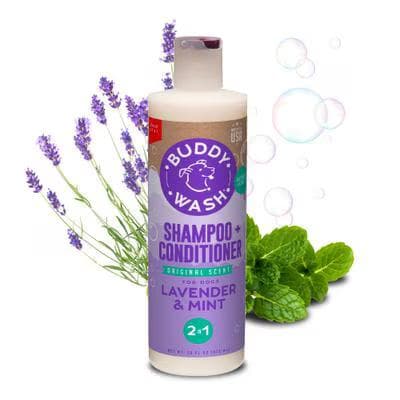
Petful may earn a commission when you click through to Chewy, at no extra cost to you.
Because a Cavapoo sheds less hair, less of that allergen-carrying dander gets distributed around your home. That is the real mechanism behind the breed's allergy-friendly reputation: fewer shed hairs means fewer allergens circulating, not the absence of allergens. Many mild-to-moderate allergy sufferers live comfortably with a Cavapoo, especially a Poodle-dominant F1b, but no reputable source can promise you a reaction-free dog.
- If someone in your home has dog allergies, spend real time with an adult Cavapoo, ideally the specific dog or its parents, before buying. Individual reactions vary enormously, and no generation or coat type guarantees you will be allergy free.
The lowest-dander choice is a Poodle-dominant coat: a curly or wavy F1b (75 percent Poodle) or higher. Pair that with the dander-control routine below and you give an allergy sufferer the best realistic shot at a comfortable life with the dog.
Coat Color and Shedding: Does It Matter?
A common myth is that a Cavapoo's color predicts how much it sheds. It does not. Whether your dog is apricot, ruby, black, chocolate, or the popular tri-color and merle patterns, coat color is controlled by entirely separate genes from coat texture and shedding. A black curly-coated F1b sheds just as little as an apricot one. What actually predicts shedding is the curl and the generation, never the pigment. If a breeder tells you a particular color is more hypoallergenic, treat that as a marketing claim rather than a genetic fact.
Cavapoo Health: Shedding Changes Can Signal a Problem
A sudden change in your Cavapoo's shedding is worth noticing, because unusual hair loss is often the first visible sign of an underlying health issue rather than normal coat behavior. A low-shedding breed that suddenly starts dropping hair, developing bald patches, or scratching constantly is telling you something. Because the Cavapoo draws from two parent breeds, it can inherit skin and systemic conditions from either the Cavalier King Charles Spaniel or the Poodle side, and several of them show up in the coat first.
- Patchy or symmetrical hair loss, red or flaky skin, excessive scratching, or a dull, brittle coat are not normal Cavapoo shedding. They can point to allergies, parasites, hormonal disease, or poor nutrition. A sudden coat change warrants a veterinary exam, not just more brushing.
Skin Allergies and Atopic Dermatitis
Allergic skin disease is one of the most common reasons a Cavapoo scratches and loses hair. Environmental allergens (pollen, dust mites, mold), food ingredients, and flea saliva can all trigger itching that leads to self-inflicted hair loss and secondary infections. The American Kennel Club and most veterinary dermatologists recommend flea prevention year round and a vet-guided elimination approach for suspected food triggers. Keeping the coat clean and well brushed also helps you spot inflamed skin early, before the dog chews a patch bald.
Hormonal and Systemic Causes
Symmetrical hair loss on both flanks, thinning without much itching, weight gain, and low energy can point to hypothyroidism, an under-active thyroid gland that is treatable once diagnosed. Cushing's disease, an overproduction of cortisol, can also thin the coat in older dogs. Neither is a grooming problem, so no amount of brushing fixes them. A simple blood panel from your veterinarian rules these in or out.
Inherited Conditions to Screen For
Beyond the skin, responsible Cavapoo breeding screens the parents for the conditions each breed is prone to. On the Cavalier side, mitral valve disease (a progressive heart condition) and syringomyelia are the headline concerns. On the Poodle side, progressive retinal atrophy (an inherited eye disease), luxating patellas (slipping kneecaps), and hip dysplasia are the ones reputable breeders test for. Ask any breeder for documented health clearances on both parents. A well-screened litter is the single best predictor of a healthy, comfortable coat and a long life.
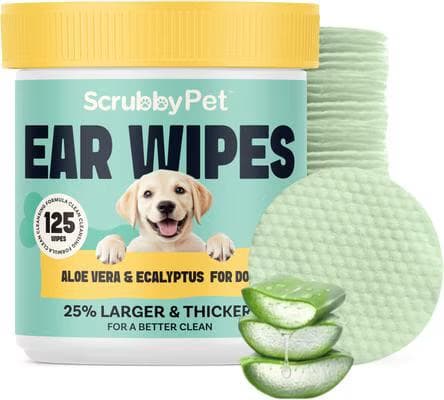
Petful may earn a commission when you click through to Chewy, at no extra cost to you.
- A dull, dry, or excessively shedding coat is often a diet story. A complete and balanced food that meets AAFCO nutritional standards, with adequate omega-3 and omega-6 fatty acids, supports the skin barrier that keeps dander and flaking down. If the coat looks poor despite good grooming, review the diet with your vet before reaching for supplements.
How Much Does a Cavapoo Cost? Purchase and Grooming Budget
Because a low-shedding coat is a grooming coat, the true cost of a Cavapoo is more than the purchase price, and it helps to budget for both up front. Prices vary widely by region, breeder reputation, generation, and coat, but the ranges below reflect typical United States figures. Petful’s separate guide to Cavapoo prices breaks down breeder, adoption, and lifetime costs.
| Puppy from a reputable breeder | 1,500 to 4,000 dollars | Higher for F1b and health-tested lines |
|---|---|---|
| Professional grooming | 60 to 100 dollars per visit | Every 6 to 8 weeks, so roughly 400 to 800 dollars a year |
| At-home grooming kit | 50 to 150 dollars one time | Slicker brush, metal comb, clippers, dryer |
| Routine veterinary care | 300 to 700 dollars a year | Wellness exams, vaccines, parasite prevention |
| Pet insurance | 30 to 60 dollars a month | Optional, but valued given inherited-condition risk |
The purchase price is a single moment; grooming is the recurring cost that owners most often underestimate. A curly-coated dog that needs a professional trim every six weeks plus at-home brushing several times a week is a meaningfully larger time and money commitment than a straight-coated dog on an eight-week schedule. Factor the coat type into your budget, not just the puppy price. Adoption through a breed-specific or doodle rescue is a lower-cost route worth exploring, and it does not change the grooming math at all.
Regional and Lifestage Differences
Expect to pay more in high cost-of-living metro areas, both for the puppy and for every grooming appointment, than in rural regions. Grooming costs also rise as the dog ages into its full adult coat: a puppy's first tidy-up is cheaper and faster than the full clip an adult curly coat requires. Senior Cavapoos can develop thinner or more fragile skin, which sometimes means gentler, more frequent grooming rather than less. Budget for a coat that gets more demanding, not less, as your dog matures.
How to Reduce Cavapoo Shedding and Dander
You cannot change your dog's genetics, but a consistent routine keeps loose hair and dander to the absolute minimum. These are the levers that actually move the needle.
Brush 3 to 4 Times a Week
Regular brushing is the number one tool. It pulls out the loose hairs the coat is trapping before they can drop, and, just as importantly, it prevents the mats that a low-shedding coat is prone to. A slicker brush plus a metal comb to check for tangles at the skin is the standard combination. Curly coats need daily attention; wavy coats do well with 3 to 4 times a week.
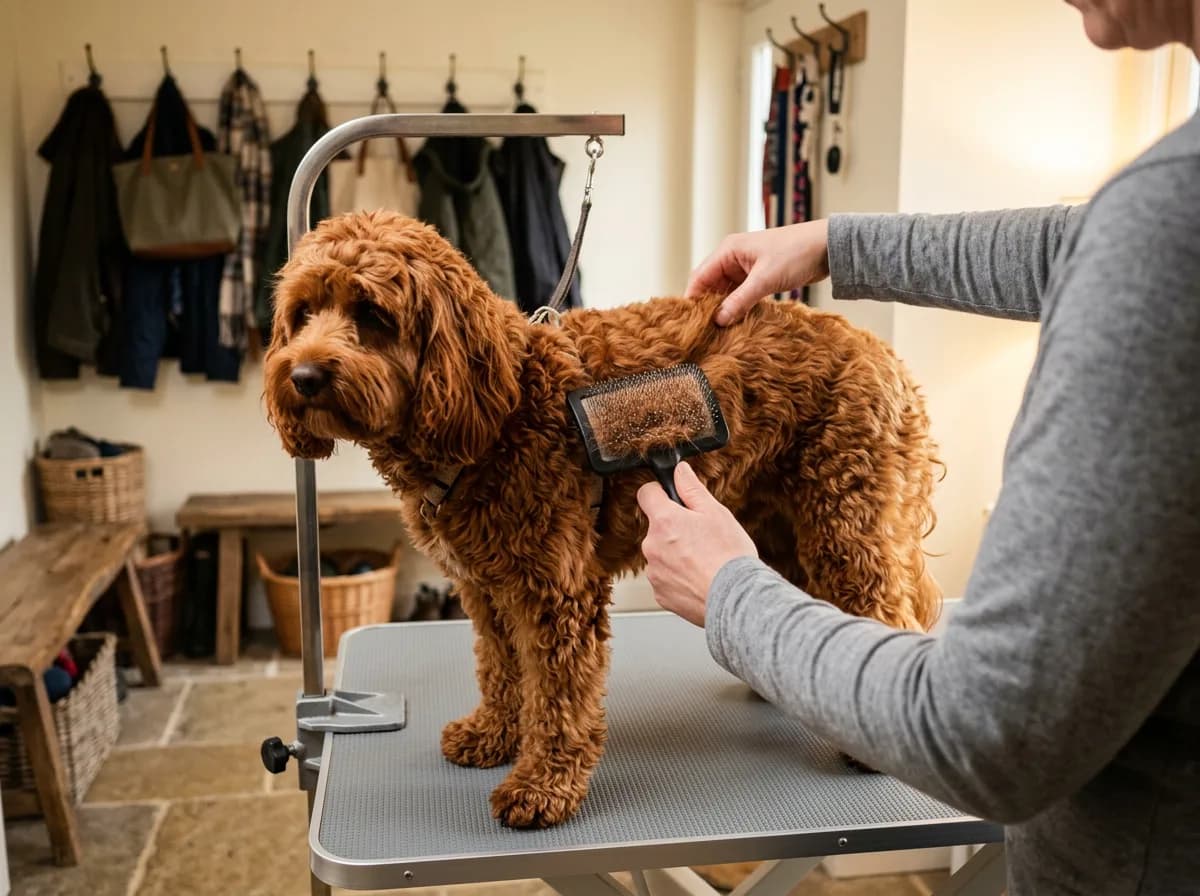
Professional Grooming Every 6 to 8 Weeks
Because the coat grows continuously and does not shed itself out, a Cavapoo needs a professional trim roughly every 6 to 8 weeks to keep the coat manageable and prevent matting. Many owners choose the classic teddy bear clip. Our Cavapoo grooming guide walks through clip styles, tools, and an at-home schedule in detail.
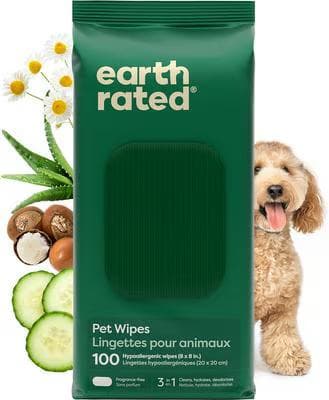
Petful may earn a commission when you click through to Chewy, at no extra cost to you.
Bathe and Manage Diet
Bathe your Cavapoo roughly every 3 to 4 weeks with a gentle dog shampoo. Over-bathing dries the skin and can actually increase dander, so do not overdo it. Skin and coat health also start from the inside: a complete diet with adequate omega-3 fatty acids supports a healthy skin barrier, which means less flaking and less dander overall.
- Beyond grooming, an air purifier with a HEPA filter, frequent washing of the dog's bedding, and wiping the coat down with a damp cloth after outdoor time all reduce the dander load in your home. None of these are needed for shedding alone, but they help sensitive family members considerably.
Cavapoo Shedding vs. Similar Breeds
If low shedding is your priority, it helps to see where the Cavapoo sits next to the breeds people cross-shop it against. The closest comparison is the Cockapoo, a Cocker Spaniel and Poodle cross that shares the same Poodle-driven low-shedding coat. Both are excellent low shedding choices, and the differences come down to size, temperament, and coat texture more than shedding volume.
| Cavapoo | Yes (Cavalier x Poodle) | Low | Curly to wavy, single coat |
|---|---|---|---|
| Cockapoo | Yes (Cocker Spaniel x Poodle) | Low | Similar range, often slightly denser |
| Cavalier King Charles Spaniel | No | Moderate | Silky, sheds seasonally |
| Miniature Poodle | Purebred | Very low | Curly, the low-shedding benchmark |
For a full side-by-side on size, personality, and grooming, see our Cockapoo vs. Cavapoo comparison, or read the standalone Cockapoo breed guide if that cross is on your shortlist too.
Cavapoo vs. Maltipoo and Cavachon
Two other crosses come up constantly when people compare low-shedding companion dogs. The Maltipoo (Maltese crossed with Poodle) is smaller and often even lower shedding, since both parent breeds are low shedders, but it carries the same continuous-growth grooming demand as the Cavapoo. The Cavachon (Cavalier crossed with Bichon Frise) shares the Cavalier parent with the Cavapoo but swaps the Poodle for a Bichon, so it also sheds little; the difference is coat texture and the absence of Poodle-line traits. Across all of these designer crosses the pattern holds: the more Poodle-type or Bichon-type ancestry in the mix, the lower the shedding and the higher the clipping commitment. None of them is a wash-and-go dog. Petful’s guide to Maltese has the full breakdown.
Why the Cavapoo Wins on Shedding for Most Homes
Against a double-coated breed the contrast is stark. A single-coated Cavapoo will never blow its coat across your floors in spring the way a Golden Retriever or Husky does, and it produces far less loose hair day to day than the purebred Cavalier it descends from. For a household that wants a small, affectionate companion and is willing to trade vacuuming for brushing, the Cavapoo lands in the sweet spot: low enough shedding to keep a home tidy, with a temperament built for close indoor life.
Living With a Cavapoo: Beyond Shedding
Shedding is only one piece of the picture, and it is worth knowing what else defines life with this breed before you commit.
Is a Cavapoo a Good House Dog?
Yes, the Cavapoo is one of the best-suited breeds for indoor and apartment life. It is small, adaptable, quiet relative to many small breeds, and thrives on being close to its people. Its low shedding is a bonus for keeping a tidy home. The main requirement is companionship: Cavapoos bond intensely and do not like being left alone for long stretches. For a deeper look at personality, see our Cavapoo temperament guide.
Do Cavapoos Like to Be Cuddled?
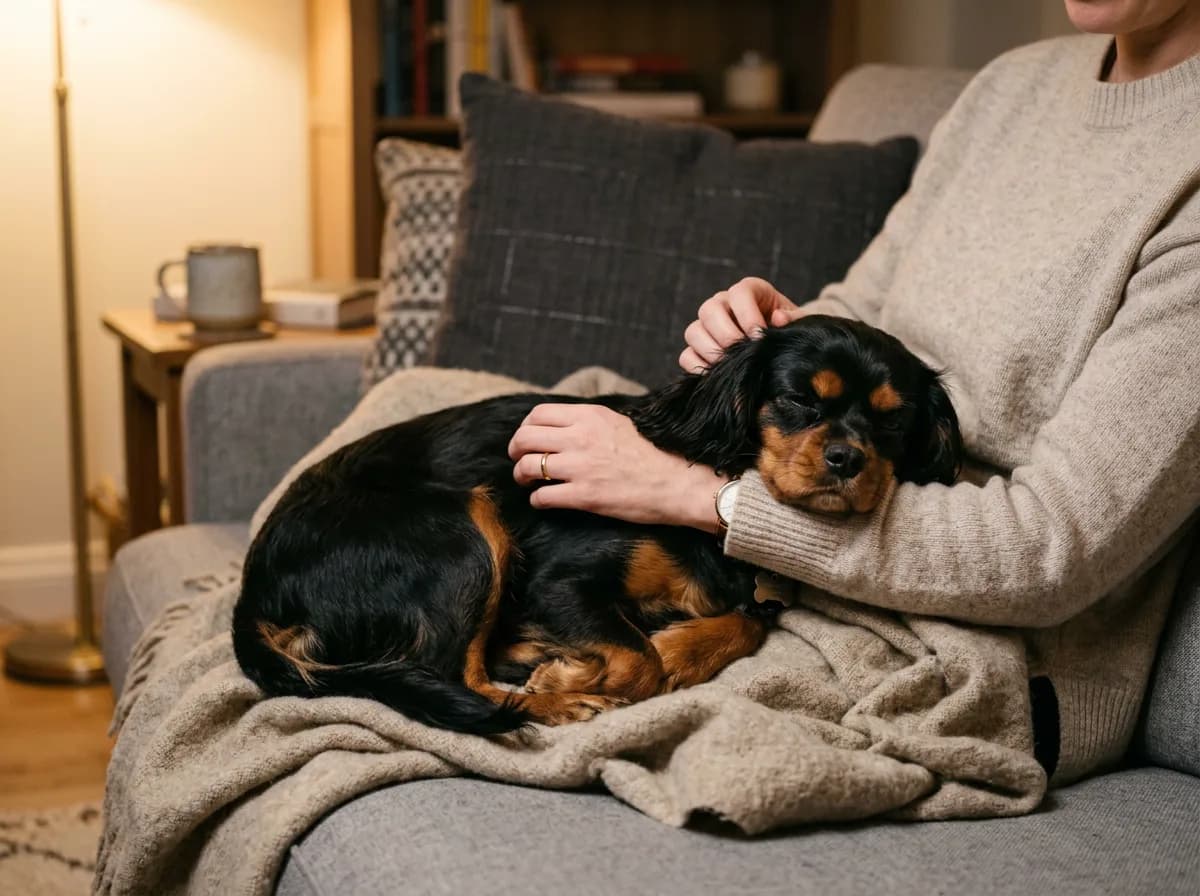
Very much so. The Cavapoo inherits the affectionate, lap-loving nature of the Cavalier King Charles Spaniel, and cuddling is one of the breed's defining traits. Most Cavapoos actively seek out physical closeness and are happiest curled up on a lap or beside you on the couch.
Training, Grooming Tolerance, and Behavior
The Cavapoo inherits the Poodle's intelligence and the Cavalier's eagerness to please, which makes it one of the more trainable small companion breeds. That trainability matters directly for shedding, because the single most useful behavior you can teach a low-shedding dog is to tolerate grooming calmly. A puppy that learns early to lie still for brushing, paw handling, and clipper noise becomes an adult that gets a thorough brush-out without a fight, which is exactly what keeps a mat-prone coat under control. Short, upbeat, reward-based sessions from day one pay off for the dog's entire life.
The flip side of the breed's people-focused nature is a tendency toward separation anxiety. Cavapoos bond hard and do not cope well with long stretches alone, and an anxious dog can chew or over-groom itself into patchy hair loss. Gradual alone-time training, mental enrichment, and enough daily exercise keep both the behavior and the coat healthy. This is a companion breed first, so plan for a dog that wants to be with you.
What Size Do Cavapoos Reach?
A Cavapoo is a small dog, typically standing about 9 to 14 inches tall and weighing roughly 9 to 25 pounds, depending on whether a Toy or Miniature Poodle was used. Full details on growth stages and adult size live in our Cavapoo full-grown size guide.
Frequently Asked Questions About Cavapoo Shedding
The main downsides are high grooming needs and separation anxiety. Because the coat sheds so little, it must be brushed several times a week and professionally trimmed every 6 to 8 weeks or it mats. Cavapoos also bond intensely and can struggle when left alone for long periods. As a mixed breed they can inherit health issues from either parent, including heart and eye conditions, and well-bred puppies are expensive.
The thing most new owners wish they had known is that low shedding does not mean low maintenance. The coat needs constant brushing and regular grooming appointments, and the 6 to 12 month puppy coat change brings a surge of matting that demands daily brushing. Owners also underestimate how much attention and companionship the breed needs to stay happy.
Yes. Cavapoos are excellent house and apartment dogs. They are small, adaptable, relatively quiet, and low shedding, which keeps a home cleaner. They thrive indoors close to their family. The one caveat is that they need companionship and daily interaction and do not do well left alone for long stretches.
Yes, Cavapoos love to be cuddled. They inherit the affectionate, people-oriented temperament of the Cavalier King Charles Spaniel and are known as lap dogs. Most actively seek out physical closeness and are happiest snuggled up with their owners.
Neither is better as a rule, and coat and shedding do not differ by sex. Both male and female Cavapoos are affectionate and trainable. Any personality differences are minor and vary far more by the individual dog and its upbringing than by sex. Choose based on the specific puppy's temperament, not its gender.
The Cavalier King Charles Spaniel, one of the Cavapoo's parent breeds, is often named among the nicest and calmest dog breeds, and the Cavapoo inherits much of that gentle, easygoing nature. Other breeds frequently cited as calm and friendly include the Cavapoo itself, the Bichon Frise, and the Golden Retriever, though temperament always depends on the individual dog and its training.
The Bottom Line on Cavapoo Shedding
So, do Cavapoos shed? Yes, but very little. Their Poodle ancestry gives most Cavapoos a single, low-shedding, low-dander coat that leaves far less hair around your home than the average dog. Coat type and generation set your exact odds: curly and F1b coats shed the least, while straighter, Cavalier-leaning coats shed the most. No Cavapoo is fully hypoallergenic, but for most allergy sufferers a Poodle-dominant Cavapoo plus a steady grooming routine is a genuinely comfortable match. Just remember the golden rule of the breed: the hair that does not fall on your floor stays in the coat, so brushing and regular grooming are the price of a low-shedding dog.

Coreen Saito is a pet writer and longtime shelter volunteer with more than a decade in animal rescue. She covers cat behavior, breed care, and the small, ordinary science of sharing a life with companion animals, with a particular focus on honest takes about the products and decisions that actually matter. At home in Arizona, she's outranked by Mac (a dog with the loudest opinion in the house), Rebel (a cat who governs by quiet authority), and Meri (an orange tabby who runs the late shift and the laundry basket). She writes about all three, plus the rescues that keep coming through her life, at LifeWithMinty.com.
Sign up for expert-backed reviews and safety alerts all in one place.