Chiweenie Price: Adoption, Purchase, and Ongoing Costs
Compare Chiweenie price estimates with adoption fees and ongoing care costs. Build a first-year budget and learn which seller claims deserve scrutiny. Use practical, individual-dog checks to make a care plan that fits your household.
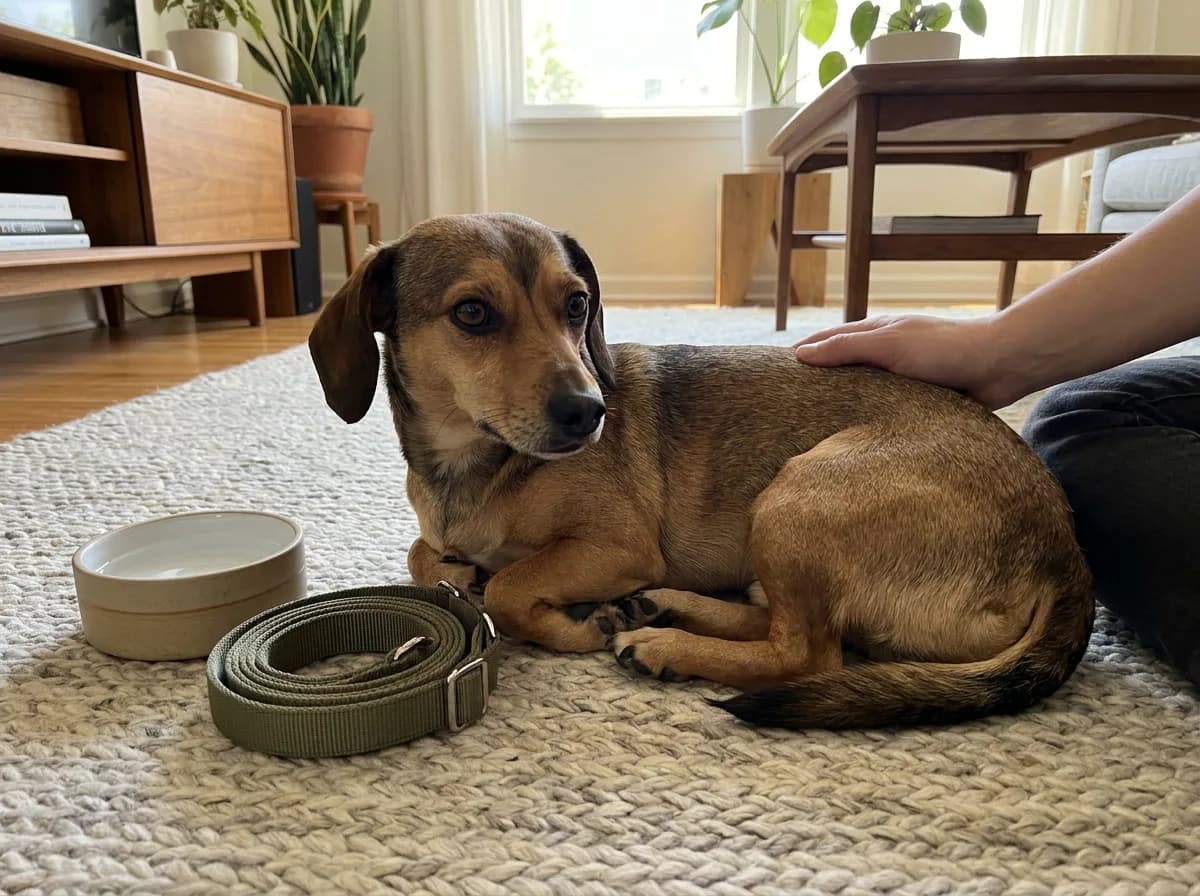
Appearance alone does not establish ancestry or predict adult size.
Petful is reader supported. As an affiliate of platforms like Amazon and Chewy, we may earn a commission when you buy through links on this page. There is no extra cost to you.
Chiweenie price can vary widely, and the amount paid for the dog is only the first part of the cost. Published breed guides commonly place breeder prices in the hundreds to low thousands of dollars, while shelters and rescues set their own adoption fees. Compare what is included, verify the person or organization, and build a care budget before deciding that one offer is cheaper.

Sign up for expert-backed reviews and safety alerts all in one place.
What affects the Chiweenie price?
Chiweenie price depends on the source, location, age, care already provided, and the individual seller's pricing. A widely quoted breeder range is about $500 to $1,500, including in Chewy's breed profile. Treat that as published orientation, not a current nationwide market survey or a guarantee that any particular listing is responsible.
Compare the total first-year commitment, not only the Chiweenie price. Check included veterinary care, equipment fit, recurring bills, and a plan for unexpected treatment before paying an adoption fee or purchase deposit.
A high asking price does not prove good care, and a low adoption fee does not imply poor health or a less desirable dog. Rescue organizations may subsidize substantial care, while a seller may charge a premium for appearance without documenting health testing. Ask for evidence of what the price includes rather than treating cost as a quality score.
Separate price factors from marketing
Age and location can affect availability and asking prices. A puppy may be advertised differently from an adult dog, and transport can add another charge. Coat labels such as dapple, long-haired, mini, or teacup can also be used to create a premium. None of those words establishes temperament, adult size, or responsible breeding.
- Compare dogs and care packages from sources you can verify.
- Ask whether any deposit is refundable and under which conditions.
- Get transport charges and health-record arrangements in writing.
- Confirm who is responsible if a veterinary problem is found after arrival.
- Do not let a limited-time discount rush an important decision.
There is no official Chiweenie size or quality grade that makes a quoted price objectively correct. This is a mixed-breed dog, so vague claims of a special pedigree deserve careful questions. Ask about the actual parents, appropriate health screening, and the puppy's upbringing instead of assuming registration paperwork answers all of those questions.

A budget-friendly padded no-pull harness that keeps leash pressure off a coughing dog's neck and windpipe by distributing it across the chest. A simple, affordable way to protect an irritated airway or a collapsing trachea on every walk.
Petful may earn a commission when you click through to Chewy, at no extra cost to you.
Practical questions in context
How much do Chiweenies cost? The answer depends on whether you mean the initial fee, a puppy purchase, or the cost of living with the dog. A quote must identify what is included before it can be compared fairly. Ask about examinations, vaccinations, identification, and any known ongoing needs. A low acquisition price is not the same as an affordable long-term care plan. Use the guide to dog vaccination costs to prepare questions for a local quote.
Adoption fees and what they include

Chiweenie adoption fees are set by individual organizations. The useful comparison is the included care checklist: examination records, vaccines appropriate for age, parasite treatment, microchip information, spay or neuter arrangements, and any known medical needs. A fee that includes services you would otherwise pay for separately can represent good value without being the lowest advertised number.
Ask the rescue to distinguish completed care from care scheduled for later. A young puppy may not have finished a vaccine series. A microchip may need registration or transfer into your name. An animal described as “fixed” should have a record or a clear explanation of the organization's arrangement. Keep copies of records and take them to your own veterinarian.
Questions for the rescue or shelter
- What care has already been provided, with dates and records?
- What follow-up does the adopter need to arrange or pay for?
- Are there known dental, mobility, skin, or behavior needs?
- Is a trial or return process available, and what does it require?
- What support can the organization provide after adoption?
Availability matters too. A search for a Chiweenie rescue may find dogs labeled as Chihuahua mixes or Dachshund mixes rather than the exact nickname. Ask about known background and observed behavior, but accept that ancestry may be uncertain. A suitable adult dog with a good behavioral history may be a better fit than waiting for an exact appearance.
Budget for the transition
Even when veterinary care is included, plan for the first visit with your own clinic, food, safe transport, equipment, and time at home. Avoid buying an entire collection of breed-branded supplies in advance. A few appropriately sized essentials are more useful until you know the dog's measurements, preferences, and needs.
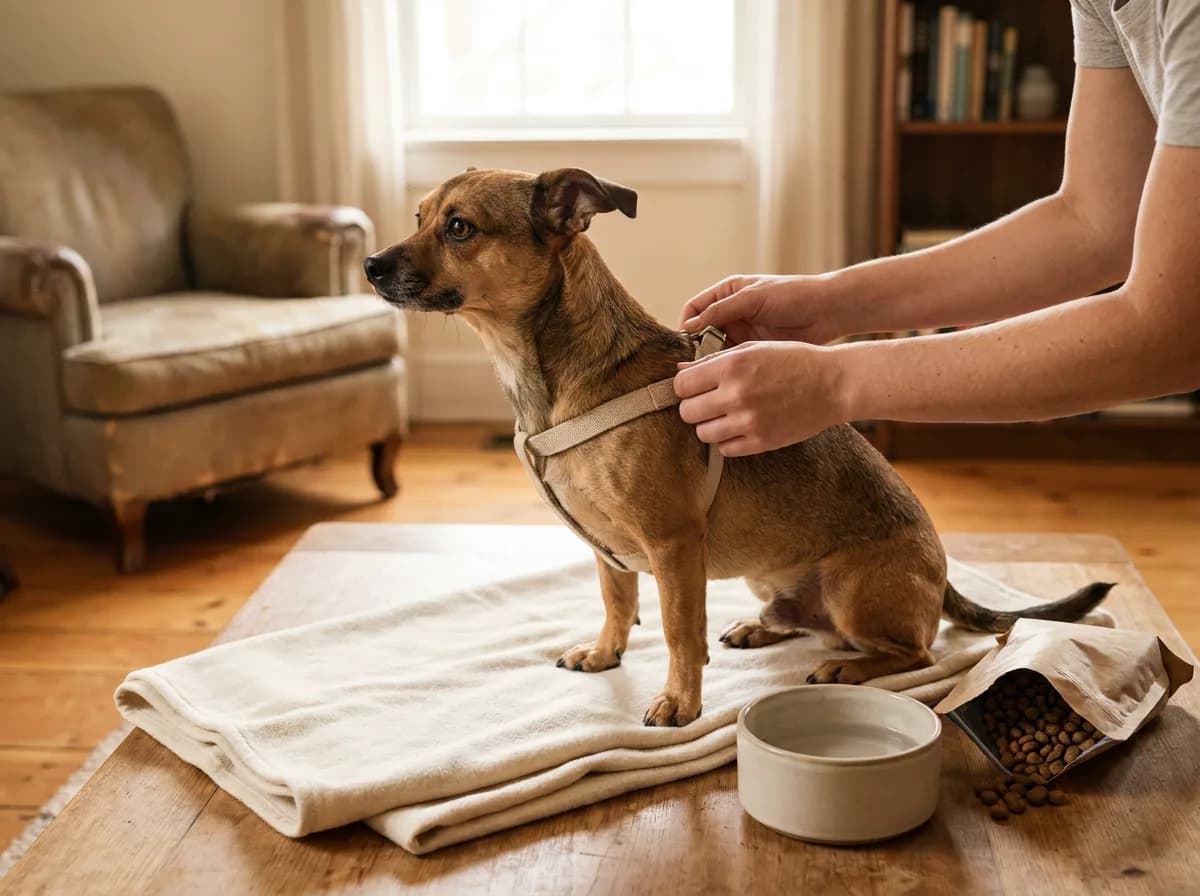
A Frisco Padded No Pull Dog Harness, Black, Small is one option to compare after measuring. Do not assume the small size fits simply because the rescue estimates the dog is a Chiweenie. Check the chart, how the straps sit, and whether the dog can back out before using it outdoors.
Practical questions in context
Chiweenies for adoption may be listed by shelters, rescue groups, or current caregivers. To adopt a Chiweenie, ask how the dog behaves in ordinary situations and request available records. Chiweenie rescues may have adults as well as puppies, but availability changes. If you want to adopt a Chiweenie puppy, do not let scarcity or a free-fee offer rush you past identity, welfare, and included-care checks.

Petful may earn a commission when you click through to Chewy, at no extra cost to you.
Make the next step specific
Long-haired Chiweenie rescue and adoption listings require the same individual assessment as smooth-coated dogs. If a long-haired Chiweenie is available for adoption, compare records, behavior, handling needs, and included veterinary care. Longer hair does not establish a particular fee or guarantee suitability. Ask about coat maintenance as one part of the household routine, alongside food, veterinary care, toilet access, exercise, and company.
Purchase price and responsible seller checks
A Chiweenie puppy price should come with clear information about the puppy and the people raising them. Ask to see the living environment, available parent details, veterinary records, and the written agreement. A polished listing, friendly text messages, or a large social-media following does not independently verify any of those things.
The seller should be willing to answer practical questions. What food does the puppy eat? What age and birth date are recorded? Which veterinary care has been completed? How are the puppies introduced to handling and ordinary household experiences? What happens if the placement does not work? Specific answers and documentation matter more than a promise of the “perfect family dog.”
Avoid paying for unsupported guarantees
No responsible source can guarantee that a mixed-breed puppy will weigh an exact amount, never bark, never shed, or never develop a health problem. Ask how any adult-size estimate was made. Be wary when the advertising focuses on rarity or tiny size while offering little information about welfare, socialization, or health screening.
- See the puppy and verify the seller's identity through a reliable process.
- Read the agreement before paying, including refund and return terms.
- Independently check contact details when something feels inconsistent.
- Avoid payment pressure based on another supposed buyer waiting.
- Walk away if the source cannot provide coherent records or access.
An optional Embark Breed Identification Dog DNA Test Kit can explore ancestry after adoption, but it is not a method of verifying a seller before sending money. It also does not certify welfare or make a high asking price reasonable. Prioritize the dog's care and the reliability of the transaction.
What a health guarantee actually means
A document labeled a health guarantee is a contract whose details need reading. It may have deadlines, examination requirements, exclusions, or a proposed remedy that does not cover treatment costs. Ask for clarification before agreeing, and do not treat the heading as proof that no illness can occur.
Arrange a timely initial veterinary visit and bring the records supplied. A visit provides a baseline and a plan for the dog's needs. It does not erase the importance of checking the source beforehand. If a puppy appears unwell, obtain veterinary guidance promptly rather than relying on the seller's reassurance or waiting for a contract deadline.
Practical questions in context
How much do Chiweenie puppies cost, and how much does a particular Chiweenie puppy cost after included care is considered? Those are questions for an actual written quote. Compare the source's records and practices as carefully as the amount. Coat length, color, and a claimed tiny adult size can affect an asking price without establishing better health or a more suitable family companion.
Building a first-year ownership budget
| Cost type | What to ask or list |
|---|---|
| Acquisition | Fee, included care, and written records |
| Setup | Measured equipment and essential supplies |
| Recurring care | Food, routine veterinary care, grooming, and replacement supplies |
| Unexpected care | Emergency reserve and any insurance terms |
First-year Chiweenie costs include the acquisition fee, initial supplies, veterinary care, and ordinary living expenses. Puppies may need several appointments and more supervision than settled adults. An adult may instead need dental work, training support, or treatment for a known condition. Budget for the individual dog's starting point.
Price a Virbac dual-ended toothbrush and Virbac C.E.T. dog and cat toothpaste separately from food and grooming appointments. These are examples for your supply list, not a claim that every dog needs the same brand or that supplies replace professional care.
Begin with an included care checklist so you do not count a service twice or assume it has already been paid for. Then request local estimates from the clinic, groomer, trainer, and care provider you expect to use. A national article cannot substitute for those quotes, especially when the dog's health needs or your schedule are unusual.

Petful may earn a commission when you click through to Chewy, at no extra cost to you.
A budget example, not a price forecast
Suppose you choose an illustrative acquisition allowance of $500, set aside $200 for initial equipment, and estimate recurring costs at $100 per month. Those assumptions produce $1,900 before any additional initial veterinary work, training, paid care, or emergency treatment: $500 plus $200 plus twelve months at $100. The arithmetic is useful; the example amounts are not claims about what every Chiweenie costs.
Replace every assumption with your own quote. If dog walking adds $60 per week for the weeks you need it, calculate that separately rather than hiding it inside a vague monthly pet budget. If an annual bill is paid all at once, divide it by twelve for planning but remember when the cash will actually be needed.
- Acquisition: adoption fee or purchase price, plus verified transport costs.
- Initial setup: suitable harness, lead, bowls, bedding, barriers, and cleaning supplies.
- Preventive care: clinic recommendations based on age, location, and history.
- Training and support: classes or professional help when needed.
- Ordinary care: food, grooming, replacement equipment, and paid care.
- Unplanned treatment: savings, insurance, or another workable payment plan. Compare pet wellness plans versus pet insurance when deciding which costs to budget separately.
Spend on fit and function first
A tiny dog does not need a tiny version of every accessory advertised online. Start with safe essentials and wait to see what the dog uses. If a slow feeder is appropriate, the Outward Hound Non-Skid Plastic Slow Feeder Dog Bowl, Mint, 0.75-cup is a small-capacity option. Compare its shape with the dog's comfort, and remember that bowl capacity is not a feeding amount.
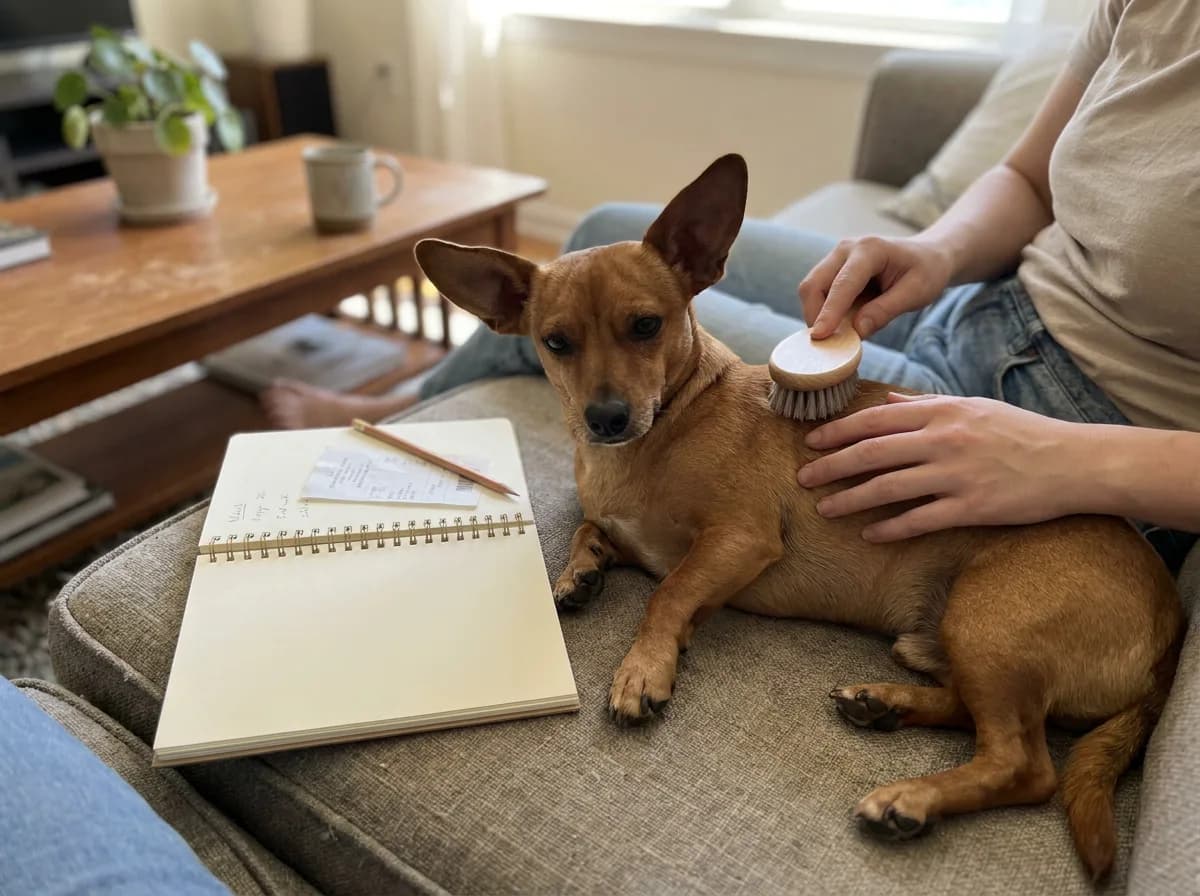
Avoid buying several similar grooming products before identifying coat type. A short coat may need a different tool from a feathered long coat. A Four Paws Magic Coat Wet & Dry Dog Glove & Curry Brush is an option for removing loose hair on a suitable smooth coat, not a solution for tight mats. An inexpensive unsuitable purchase is still wasted money.
Recurring expenses and an emergency reserve
Recurring expenses are easier to manage when you annualize irregular bills. List everything expected during the year, total those items, and divide by twelve to estimate a monthly planning amount. Keep the actual due dates visible. The monthly average helps you save; it does not mean a clinic or insurer will bill on that schedule.
For optional enrichment, compare a washable Pet Parents Forager snuffle mat with a supervised Outward Hound Lick N’ Flip puzzle. Start with one that your dog uses comfortably instead of buying several similar activities at once.
Food may be a modest part of the budget for a small dog, but dental care, veterinary treatment, boarding, and behavior support do not shrink in proportion to body weight. A Chiweenie who needs paid midday care can cost more to maintain than a larger dog in a household where someone is home. Your routine is part of the financial calculation.

Petful may earn a commission when you click through to Chewy, at no extra cost to you.
- Use an included care checklist, then annualize irregular bills. Compare the full care commitment with your budget instead of treating the advertised puppy price as the total cost of ownership.
Savings and insurance are different tools
An emergency fund provides money you can access directly. Insurance may reimburse eligible costs according to a policy, but coverage, waiting periods, deductibles, limits, exclusions, and payment procedures vary. Review the actual policy and request a quote for your dog. Do not assume that a generic monthly estimate includes routine care or an existing condition.
If you consider insurance, compare more than the premium. Ask how claims are paid and whether you must pay the clinic first. A low premium with a deductible or exclusion you cannot manage may not solve the problem you are trying to address. Keep some accessible funds even when you have coverage, and revisit the plan as the dog ages.
Affordable care without cutting essential corners
Useful savings include learning cooperative grooming, comparing complete diets by the cost of the appropriate daily portion, and replacing equipment only when fit or condition requires it. Ask local clinics or shelters about legitimate assistance programs if needed. Do not skip essential veterinary care or choose an unsuitable medicine solely because it is cheaper online.
The best financial decision may be to wait until your schedule and reserve are ready. It may also be to adopt an adult whose needs are better understood, or choose a dog whose care requirements fit your home. The goal is a sustainable commitment to the individual dog, not winning the lowest price on a listing.
Practical questions in context
An included care checklist and annualized budget distinguish a cheap acquisition from an affordable care plan without posing an illustrative budget as market data. Use this practical method with your own dog's observations, available records, and appropriate professional advice. It organizes the next decision without claiming an individual outcome or replacing an examination when one is needed.
More on chiweenie
A Chiweenie is a Chihuahua-Dachshund mix, and the individual dog matters more than the nickname. Temperament, personality, coat colors, and suitability for children or other pets vary. Some enjoy cuddling and close company, while others prefer space or need careful introductions. Pictures show appearance, not a complete behavioral history. Our Chiweenie breed guide explains the household questions, possible downsides, and daily care decisions. It also covers feeding as part of a complete routine: there is no single best food for every dog carrying this mix label. Choose a complete and balanced diet appropriate to age and medical needs with veterinary guidance.
Practical questions in context
Chiweenie puppies and adult dogs can look quite different. Pictures, images, and photos may show a black-and-tan, white, brown, golden, red, brindle, dapple, or merle coat; terms such as blue merle, applehead, and deer head describe claimed features rather than certifying ancestry. A fluffy coat does not identify the parents, and no Chiweenie is guaranteed hypoallergenic. The name is spelled Chiweenie. What a Chiweenie dog looks like cannot tell you whether its personality fits your home, so use the linked breed guide together with the individual's history.
Questions before the next step
Pictures of Chiweenies show appearance, not a complete history. How do you spell Chiweenie? That is the usual spelling for this Chihuahua-Dachshund mix. Look beyond photos and ask about the individual dog's temperament, care, and daily routine. A visual resemblance to either parent is not proof of ancestry, and a puppy's appearance cannot promise its adult behavior.
More on chiweenie full grown
A Chiweenie full grown is generally small, but adult weight, height, and body proportions vary. Parent size matters, and a puppy may mature differently from a look-alike in a photograph. A full-grown black-and-tan dog, a long-haired dog, and a smooth tan dog are not separate size categories. Our Chiweenie full-grown guide explains growth expectations, the limits of puppy calculators, and how to measure for equipment. It avoids a universal monthly weight chart because mixed ancestry and individual development make that falsely precise. Actual measurements and healthy body condition are the useful practical checks.
Practical questions in context
A mini, miniature, or teacup Chiweenie label does not define a separate official size. Ask how big the individual dog may get using actual parent records, and assess how much a Chiweenie should weigh through body condition with a veterinarian. A fat-looking or fluffy dog in a photograph cannot be assessed accurately from that picture alone. Adult size, growth timing, and a puppy's weight are different questions. The linked guide explains these distinctions without treating a seller's label as a guarantee.
Questions before the next step
Chiweenies vary in size, including dogs described as mini or teacup. These labels do not replace actual measurements. Growth records for a Chiweenie puppy at 4, 5, 6, 7, 8, or 12 weeks old answer different questions from records at 2, 3, 4, or 6 months old. Use serial weights and veterinary assessment rather than expecting any one puppy age to predict the final adult exactly.
More on long haired chiweenie
A long-haired Chiweenie can have feathering around the ears, chest, legs, and tail. Puppy coat development, adult appearance, and colors such as black and tan are useful things to observe, but a fluffy coat cannot prove ancestry. Grooming depends on texture and friction areas rather than the name alone. Our long-haired Chiweenie guide explains what pictures can show, how a puppy's coat may change, and when limited tidying or professional help makes sense. It separates appearance questions from the detailed bathing and shedding routine, so you can identify the coat before choosing tools.
Practical questions in context
A long-haired Chihuahua-Dachshund mix may show a soft fringe around the ears, a feathered tail, or a fuller chest. Chiweenie dog long hair searches cover several textures, and not every full-grown long-haired dog has the same amount of feathering. Appearance alone cannot establish a long-haired Dachshund or Chihuahua parent. Use the linked guide to compare useful coat observations, including how a puppy's coat may change, then plan grooming from the actual texture.
More on chiweenie lifespan
Chiweenie lifespan and health questions deserve more than a number in a breed summary. Published life expectancy ranges are broad, and there is no reliable promise that every male or female dog will reach the same age. Dental care, appropriate body condition, routine veterinary assessment, and noticing new symptoms matter throughout life. Our Chiweenie lifespan guide explains the limits of lifespan estimates, health concerns to discuss, and changes to watch for in a senior dog. It also distinguishes ordinary long-term planning from symptoms that call for prompt help rather than an internet age calculation.
More on chiweenie grooming shedding
Chiweenie grooming includes coat, nails, teeth, ears, and comfortable handling. Both short-haired and longer-coated dogs can shed; neither a small body nor a smooth coat makes a dog hypoallergenic. Brushing tools should suit the coat, and bath frequency depends on dirt, skin condition, and veterinary advice. Our Chiweenie grooming and shedding guide explains how to distinguish ordinary loose hair from mats or an abnormal skin change. It also covers when a groomer can help, why shaving is not a dependable shedding solution, and how to introduce routine care without forcing a worried dog.
Questions before the next step
Are Chiweenies hypoallergenic? No Chiweenies can be guaranteed allergy-free, regardless of how much hair is visible. Coat care remains useful for comfort and cleanliness, but it cannot remove every potential allergen or establish whether a particular person will react. Discuss human allergy concerns with an appropriate clinician before adopting rather than relying on a low-shedding label.
More on chiweenie training
Chiweenie training works through clear, reward-based practice rather than assumptions about stubbornness. Potty training, crate comfort, barking, and basic commands are different skills and may need different setups. Intelligence is not measured by whether a distracted dog follows a cue instantly. Our Chiweenie training guide gives step-by-step household routines and a way to identify triggers, actions, and rewards. It also explains why calm behavior has no guaranteed age deadline. If a dog becomes fearful, distressed, or suddenly changes behavior, appropriate professional help is more useful than escalating corrections.
Chiweenie questions
No. A waived fee or free rehoming does not remove the costs of food, safe equipment, veterinary care, or unexpected treatment. Ask for records and use an included care checklist just as you would for a paid adoption. Verify the source and the dog's needs before agreeing. The absence of a purchase price should not pressure you into a commitment you cannot sustain.
A seller may charge more for a pattern, but that does not establish better health, temperament, or welfare. Ask about the parents and appropriate health testing rather than paying for the word rare alone. A dapple label is not a quality certificate. Compare documented care and the full ownership budget before deciding whether an asking price makes sense.
Only after you have verified the source, understood the written terms, and are comfortable with the transaction. Read refund conditions and any deadlines before sending money. Pressure to pay immediately, inconsistent information, or refusal to provide coherent records are reasons to pause. A refundable claim in a message is not a substitute for clear written terms you can keep.

Coreen Saito is a pet writer and longtime shelter volunteer with more than a decade in animal rescue. She covers cat behavior, breed care, and the small, ordinary science of sharing a life with companion animals, with a particular focus on honest takes about the products and decisions that actually matter. At home in Arizona, she's outranked by Mac (a dog with the loudest opinion in the house), Rebel (a cat who governs by quiet authority), and Meri (an orange tabby who runs the late shift and the laundry basket). She writes about all three, plus the rescues that keep coming through her life, at LifeWithMinty.com.
Sign up for expert-backed reviews and safety alerts all in one place.